Home Blog Page 230

Opera Introduces Browser-Integrated AI Agent

Opera Introduces Browser Operator, a Native AI Agent for Seamless Task Automation

Rather than acting as a separate tool, Browser Operator is an extension of the browser itself, designed to empower users by automating repetitive tasks like purchasing products, completing online forms, and gathering web content.

How it Works

Harnessing natural language processing powered by Opera’s AI Composer Engine, Browser Operator interprets written instructions from users and executes corresponding tasks within the browser. All operations occur locally on a user’s device, leveraging the browser’s own infrastructure to safely and swiftly complete commands.

If Browser Operator encounters a sensitive step in the process, such as entering payment details or approving an order, it pauses and requests the user’s input. Users also have the freedom to intervene and take control of the process at any time.

Transparency and Control

Every step Browser Operator takes is transparent and fully reviewable, providing users with a clear understanding of how tasks are being executed. If mistakes occur – like placing an incorrect order – users can further instruct the AI agent to make amends, such as cancelling the order or adjusting a form.

The Key Differentiators: Privacy, Performance, and Precision

What sets Browser Operator apart from other AI-integrated tools is its localized, privacy-first architecture. Unlike competitors that depend on screenshots or video recordings to understand webpage content, Opera’s approach uses the Document Object Model (DOM) Tree and browser layout data – a textual representation of the webpage.

This difference offers several key advantages:

  • Faster task completion: Browser Operator doesn’t need to "see" and interpret pixels on the screen or emulate mouse movements. Instead, it accesses web page elements directly, avoiding unnecessary overhead and allowing it to process pages holistically without scrolling.
  • Enhanced privacy: With all operations conducted on the browser itself, user data – including logins, cookies, and browsing history – remains secure on the local device. No screenshots, keystrokes, or personal information are sent to Opera’s servers.
  • Easier interaction with page elements: The AI can engage with elements hidden from the user’s view, such as behind cookie popups or verification dialogs, enabling seamless access to web page content.

Conclusion

By enabling the browser to autonomously perform tasks, Opera is taking a significant step forward in making browsers "agentic" – not just tools for accessing the internet, but assistants that actively enhance productivity.

FAQs

Q: How does Browser Operator handle sensitive information?
A: Browser Operator handles sensitive information, such as payment details, with caution, pausing and requesting user input if necessary.

Q: Is Browser Operator limited to specific tasks?
A: No, Browser Operator can perform a wide range of tasks, including purchasing products, completing online forms, and gathering web content.

Q: Is Browser Operator available for all browsers?
A: Currently, Browser Operator is available for Opera browsers only, with plans to expand to other browsers in the future.

Q: How does Browser Operator stay up-to-date with changing web page content?
A: Browser Operator uses Opera’s AI Composer Engine to stay up-to-date with changing web page content, ensuring accurate and timely task completion.

Matthews Automation agrees global commercial partnership with Mobile Industrial Robots

0

Matthews Automation has agreed a global commercial partnership between its automation solutions business segment and Mobile Industrial Robots (MiR), a manufacturer of collaborative autonomous mobile robots (AMRs) and part of Teradyne Robotics, a division of Teradyne.

The new partnership combines Matthews’ proven warehouse automation technologies with MiR’s advanced AMRs uniquely suited for internal transportation and material handling tasks in a variety of settings.

This collaboration positions both companies to capitalize on the projected 30 percent compound annual growth rate in the AGV/AMR market by 2028, driven by rising demand in e-commerce and the flexibility of AMRs to deploy without major infrastructure changes.

The Matthews-MiR partnership promises to provide complete, integrated warehouse automation solutions that streamline picking, packing, and material movement.

Matthews’ Warehouse Execution System (WES) software, picking systems, and automation expertise will complement MiR’s best-in-class AMRs, offering customers a new level of customization, flexibility, and performance.

The partnership will enable businesses to seamlessly scale and optimize their operations, from production floors to distribution centers, ensuring a competitive edge in an increasingly complex marketplace.

Lars Vöcking, senior vice president and managing director, Matthews Industrial Automation EMEA, says: “We are excited to partner with MiR to broaden our automation capabilities.

“Our customers face rapidly changing demands in their supply chains and distribution networks. By integrating MiR’s AMRs into our existing suite of material handling solutions, we can help them unlock new efficiencies and build a more resilient, future-ready operation.”

To date, Matthews’ Warehouse Automation solutions have been deployed in over 2,000 manufacturing and distribution centers globally, helping customers boost productivity, improve quality, and reduce operational costs.

Jean-Pierre Hathout, president of MiR, says: “With its strong customer relations and significant experience servicing global brands across multiple industries, Matthews International is the perfect partner for MiR.

“Modern automation is all about cross-technology collaboration and integrability and this partnership will make it easier for operations to integrate and utilize AMRs in their business.”

Microsoft Copilot

0

Microsoft’s New York City Event: What’s New with Copilot and Windows 11

New Copilot Experience

At the recent Microsoft event in New York City, the company announced an all-new Copilot experience. The new design features a card-based look across mobile, web, and Windows. Copilot is now more personalized with new features such as:

  • Copilot Vision: adds the ability to see what you’re looking at
  • Natural Voice Conversation Mode: an OpenAI-like experience
  • Virtual News Presenter Mode: can read headlines to you

Windows 11 Updates

Windows 11 is also getting some exciting new features, including:

  • Phone Link Status in the Start Menu: shows notifications and phone battery life
  • Generative Fill and Erase in Paint and Photos: fun new features for creative users

Copilot Plus PCs

Copilot Plus PCs are getting a revamped AI-powered Windows Search, featuring:

  • "Click to Do" feature: similar to Google Circle to Search
  • Search for Photos with Text Descriptions: search for a photo using just a text description

Executive Shifts

Earlier this year, an executive reorganization put Pavan Davuluri in charge of Windows and Surface, and Mustafa Suleyman became the new CEO of AI. Now, a full year after Panos Panay’s departure, we can expect more information on Microsoft’s "AI PC" push.

Event Updates

You can find all the updates from the event below.

Conclusion

Microsoft’s New York City event has showcased exciting new features and updates for Copilot and Windows 11. With a more personalized Copilot experience, new features in Windows 11, and a revamped AI-powered search in Copilot Plus PCs, users can expect a more seamless and efficient computing experience.

FAQs

Q: What are the key features of the new Copilot experience?
A: The new Copilot experience includes a card-based design across mobile, web, and Windows, with features like Copilot Vision, Natural Voice Conversation Mode, and Virtual News Presenter Mode.

Q: What new features are coming to Windows 11?
A: Windows 11 is getting new features like Phone Link status in the Start menu, Generative Fill and Erase in Paint and Photos, and more.

Q: What’s happening with the AI-powered Windows Search in Copilot Plus PCs?
A: Copilot Plus PCs are getting a revamped AI-powered Windows Search, featuring a "Click to Do" feature and the ability to search for photos using just a text description.

A Reflection of Human Touch

0

A Day in the Life of Kae Neskovic, Executive Creative Director at Superside

A Typical Day

A lot of my day revolves around working closely with my team. As an executive creative director at Superside, a creative service combining human creativity with AI innovation, I know that communication is key to keeping everything running smoothly. This can take the form of one-on-one meetings, team catch-ups, creative workshops, or brainstorming sessions.

I know that meetings often get a bad rap, but I’m a fan when they’re done right. They’re an opportunity to foster creativity and alignment, especially in a remote environment. To make the most of these meetings, I like to create space in my schedule for deep creative work, whether that’s through a quick workout or a walk outside. Sometimes, the best ideas come when I’m not actively trying to find them.

As part of my role, I also think about how we can continue to elevate our creative processes in a remote-first setting. How do we keep the team energized? How do we foster collaboration across time zones? These questions shape my day-to-day decisions.

Early Career

I’ve been creating for as long as I can remember. In high school, I was into graffiti, and one day, a well-known graffiti artist introduced me to Adobe’s Illustrator. It was a revelation. I was hooked immediately and began exploring design in every way I could – creating posters for friends, experimenting with illustrations, and teaching myself the basics.

I went to university in Venice, Italy, and after that, I started working at a design studio. That’s where I truly fell in love with branding. I was fortunate to have a boss who was an expert in the technical side of design – print, typography, layout – and they shared so much of that knowledge with me. It felt like I was attending an unofficial school of design, and those skills became the foundation of my approach to creative work.

Challenging Work-Related Experience

One of the most challenging aspects of creative work – especially branding – is managing client feedback. Branding is high-stakes for any company, and because of that, it often involves leadership teams and a lot of strong emotions. It’s not always easy, but I believe that open communication and active listening are key to navigating these situations.

Industry Development

Two key areas come to mind:

  • Valuing design as a strategic partner – Too often, design is treated as a production arm of marketing rather than a critical component of strategy. We need to advocate for our seat at the table and use data to showcase the value we bring.
  • Changing the toxic agency culture – The cliché of the overworked, underappreciated creative is still alive and well. Agencies are often put in impossible situations, leading to long hours, micromanagement, and vague feedback. While this isn’t always due to bad intentions, it’s a cycle we need to break.

As an industry, we need to prioritize fairness, work-life balance, and respect for the creative process. Ultimately, happier teams produce better work.

AI and Creativity

Can AI and human creativity truly coexist? Absolutely. AI is a reflection of human creativity – it’s built on the ingenuity and teamwork of countless people. Far from replacing creativity, it enhances it.

Favourite Tools

  • Figma – It’s revolutionized global collaboration and made workflows seamless.
  • Runway – Perfect for putting creative work in motion and creating videos.
  • Virtual Electric – Their canvas approach to image generation is fantastic.

Dream Project

I’d love to work on a high-profile creative campaign for a company like Nike or Spotify. Imagine inventing the next Spotify Wrapped or something equally innovative that feels like a festival – it would be an amazing challenge.

Career Advice

Be braver. Trust yourself and your voice – it matters more than you think. Advocate for yourself and don’t hesitate to take risks. Don’t be afraid to ask for help. Reach out, learn from others, and focus on the process, not just the outcome. Creativity is about iteration – don’t get too attached to individual pieces of work. Sometimes the best thing you can do is delete it and start fresh.

FAQs

Q: What inspired you to pursue a career in design?
A: I was introduced to Adobe’s Illustrator in high school, and it was a revelation. I was hooked immediately and began exploring design in every way I could.

Q: What’s the most challenging part of your job?
A: Managing client feedback. It’s high-stakes, and it often involves leadership teams and strong emotions. Open communication and active listening are key.

Q: How do you stay creative?
A: I make time for self-reflection, whether that’s through exercise, meditation, or simply taking a walk. Sometimes the best ideas come when I’m not actively trying to find them.

Q: What’s the most important thing you’ve learned in your career?
A: Be brave. Trust yourself and your voice – it matters more than you think. Advocate for yourself and don’t hesitate to take risks.

Free Gemini Users Get Big Upgrade, Paid Users Get New Live Perk

Gemini gets a memory upgrade for all users

As part of its ongoing quest to continue upgrading its AI, Google is making some changes to Gemini, making a paid feature free to everyone and giving Gemini the ability to "see" what’s around.

Gemini gets a memory upgrade for all users

First up, the ability for Gemini to remember your preferences, interests, work, and more is coming to all users. This feature debuted last November as a Gemini Advanced exclusive (and, for comparison, has existed on ChatGPT for a while).

How it works

Saved info lets you tell Gemini certain details about your life, like your name, your family’s name, or a specific project you’re using ChatGPT for. This means you won’t have to enter this information each time, and you’ll get more relevant answers.

Suggestions for saved info

You can use simple language and avoid jargon, specify that you’re vegetarian and don’t suggest recipes with meat, include a Spanish translation after responding, include the cost per day when trip planning, specify that you can only write code in JavaScript, and prefer short, concise responses.

Adding saved info

You will need to add each piece of saved info manually. To do so, head to the settings menu and find "Saved info." The feature does appear to be rolling out on the desktop version first, but it’s headed to both desktop and the mobile app.

Gemini Live gets eyes

In addition, at last week’s Mobile World Congress, Google announced that Gemini Live can now "see" – either from your screen or from a live video. This feature, which will be rolling out later this month, is only available to paid Gemini Advanced users for now.

How it works

With this feature, you’ll see a "Share screen with Live" button when you open Gemini. Tap it, and you’ll have the option to share your screen or start a video. You can ask the AI questions about your surroundings or about what’s on your phone screen.

Demo

In a demo video, a user asks for outfit ideas using a pair of pants shown on screen. Gemini recommends a top, and the user then asks for a jacket recommendation. In another showcasing live video, a user asks Gemini for help picking a glaze color for a vase they just created. Gemini ends up picking "the first one on the left in the second row" when shown a display of available options—fairly impressive context.

Conclusion

Google’s ongoing quest to upgrade its AI is resulting in exciting features like Gemini’s memory upgrade and ability to "see" what’s around. With these changes, users will be able to get more personalized results and interact with the AI in new and innovative ways.

FAQs

Q: How do I add saved info to Gemini?
A: You can add saved info manually by heading to the settings menu and finding "Saved info."

Q: Is the memory upgrade available to all users?
A: Yes, the memory upgrade is available to all users, not just Gemini Advanced subscribers.

Q: When will Gemini Live’s "see" feature be available to all users?
A: The "see" feature will be available to all users later this month, but only to paid Gemini Advanced users for now.

Q: How do I use Gemini Live’s "see" feature?
A: You can use the "see" feature by opening Gemini and tapping the "Share screen with Live" button.

You Cowards

0

The Case for Best Poster Design: A New Academy Award Category

Why it’s Time to Recognize the Art of Movie Posters

There are plenty of absent Academy Award categories that filmmakers and fans have been begging to instate over the years, including stunt coordination, main title design, and casting. That last one is finally happening next year, proving that the Academy does sometimes listen. And for our money, the next new category should be Best Poster Design.

A Resurgence in Creativity

For a while back in the 2010s, it looked like poster design innovation might be stalling. Thanks to Marvel, the proliferation of the ‘floating head’ design seemed all-encompassing. But things have changed in recent years, with creativity making a comeback. Many of the films nominated for Oscars in 2025 featured truly stunning posters, with some even giving the best movie posters ever a run for their money.

Examples of Exceptional Poster Design

One such example is the poster for Yorgos Lanthimos’s Kinds of Kindness, which was truly stunning. The design features dreamscapes, a classily curated color palette, and a recurring aesthetic of bizarre repeating or oversized heads. These were some of the most unforgettable posters we saw over the last twelve months.

Another standout is the poster for Alien Romulus, which plays on the nostalgia of the Alien series, reviving one of its most iconic enemies. The design feels subdued and stylish in its quietly disturbing imagery, with the red and black color palette adding an additional sense of horror and tension, giving the poster a chilling graphic feel.

Retro Revival

And then there’s the poster for La Chimera, which takes us back to Drew Struzan’s famous posters for the ’70s and ’80s. The hand-painted collage is beautifully rendered, and despite featuring a bunch of floating heads, we don’t have a bad word to say about it.

A Vibrant 80s Vibe

The poster for Challengers, last year’s hugely popular Zendaya-fronted tennis flick, has an extravagantly maximalist 80s vibe, with viewers quick to point out the resemblance to several posters from that era, such as Risky Business.

Conclusion

While it might be too much to hope for the biggest filmmaking award ceremony to start honoring graphic design, it would certainly be nice to see some of the stunning artistry that accompanies the films themselves given a nod. In the meantime, we can continue to appreciate the incredible work of movie poster designers.

FAQs

Q: Why should the Academy consider a Best Poster Design category?
A: Recognizing the art of movie poster design would acknowledge the importance of visual storytelling and the impact it has on film marketing and promotion.

Q: What are some examples of exceptional poster design?
A: The posters for Kinds of Kindness, Alien Romulus, La Chimera, and Challengers are just a few examples of the stunning work being done in movie poster design.

Q: Why is it important to recognize the creative work of movie poster designers?
A: By acknowledging the artistry and creativity that goes into designing movie posters, the Academy can encourage more innovative and engaging visual storytelling in the film industry.

Building a Simple VLM-Based Multimodal Information Retrieval System with NVIDIA NIM

0

Multimodal Information Retrieval System

Introduction

In today’s data-driven world, the ability to retrieve accurate information from even modest amounts of data is vital for developers seeking streamlined, effective solutions for quick deployments, prototyping, or experimentation. One of the key challenges in information retrieval is managing the diverse modalities in unstructured datasets, including text, PDFs, images, tables, audio, video, and more.

Multimodal AI Models

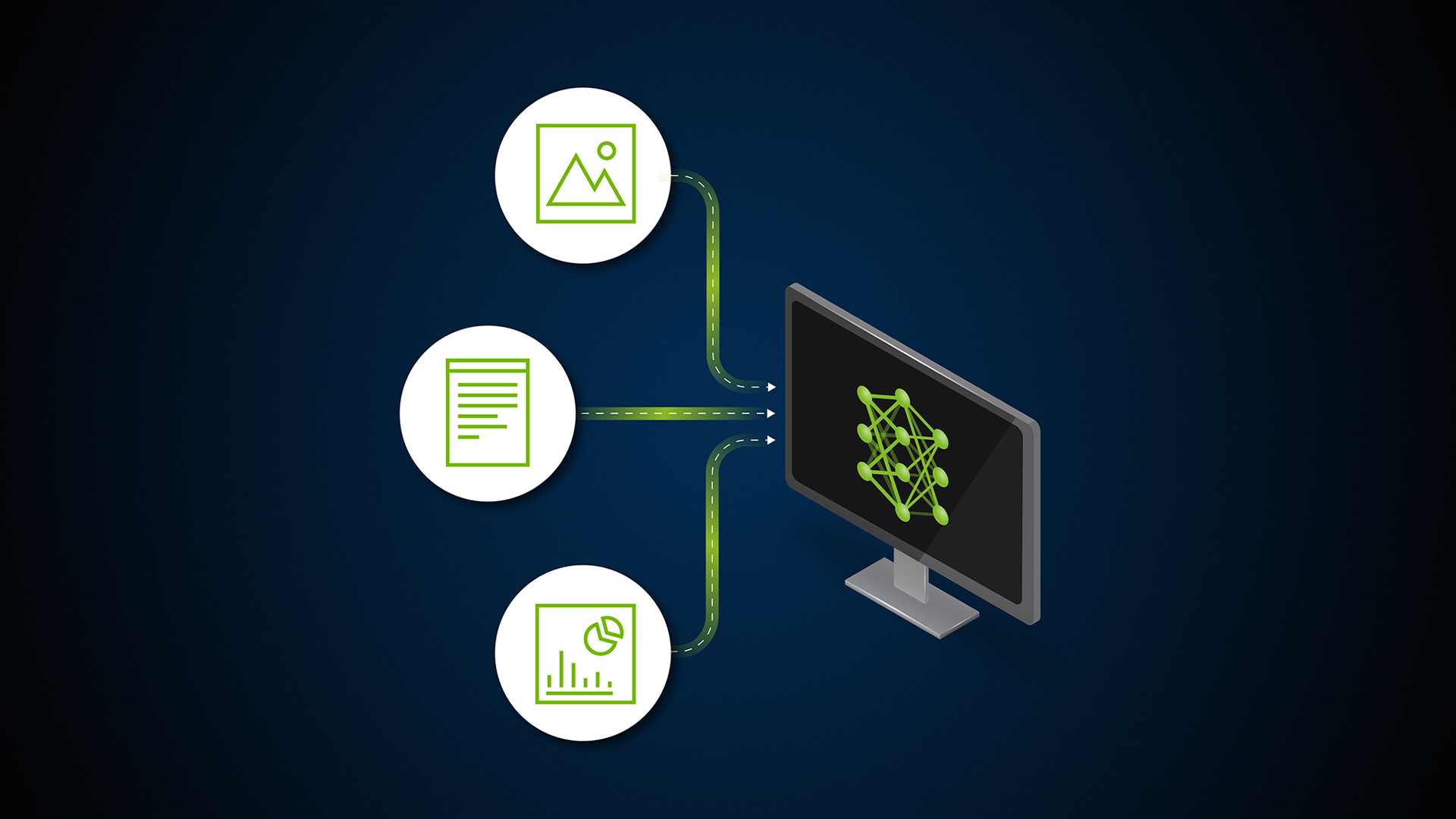
Multimodal AI models address this challenge by simultaneously processing multiple data modalities, generating cohesive and comprehensive output in different forms. NVIDIA NIM microservices simplify the secure and reliable deployment of AI foundation models for language, computer vision, speech, biology, and more.

Implementation

This post helps you get started with building a vision language model (VLM) based, multimodal, information retrieval system capable of answering complex queries involving text, images, and tables. We walk you through deploying an application using LangGraph, the state-of-the-art llama-3.2-90b-vision-instruct VLM, the optimized mistral-small-24B-instruct large language model (LLM), and NVIDIA NIM for deployment.

Data Ingestion and Preprocessing Pipeline

The system consists of the following pipelines:

  • Document ingestion and preprocessing: Runs a VLM on the images and translates them into text.
  • Question-answering: Enables the user to ask questions of the system.

Both pipelines integrate NVIDIA NIM and LangGraph to process and understand text, images, complex visualizations, and tables effectively.

Data Ingestion and Preprocessing Pipeline

This stage parses documents to process text, images, and tables separately. Tables are first converted into images, and images are processed by the NVIDIA-hosted NIM microservice API endpoint for the llama-3.2-90b-vision-instruct VLM to generate descriptive text.

Question-answering Pipeline

All document summaries and their identifiers are compiled into a large prompt. When a query is sent, a LLM with long context modeling (mistral-small-24b-instruct in this case) processes the question, evaluates the relevance of each summary to the query, and returns the identifiers of the most relevant documents.

Structured Outputs

The system generates structured outputs, ensuring consistency and reliability in responses. For more information about the implementation steps of this system, see the /NVIDIA/GenerativeAIExamples GitHub repo.

Challenges and Solutions

As data volumes increase, so does the complexity of processing and retrieving relevant information. Handling large datasets efficiently is essential to maintaining performance and ensuring user satisfaction. In this information retrieval system, the sheer amount of document summaries can exceed the context window of even long-context models, making it challenging to process all summaries in a single prompt.

Hierarchical Document Reranking Solution

To address scalability challenges, we implemented a hierarchical approach in the initial document reranking phase. Instead of processing all document summaries simultaneously, we divided them into manageable batches that fit within the model’s context window.

Future Prospects with Smaller Models

Using language models, especially those with long-context capabilities, involves processing a large number of tokens, which can incur significant costs. Each token processed adds to the overall expense, making cost management a critical consideration when deploying these systems at scale.

Conclusion

This post discussed the implementation of a simple multimodal information retrieval pipeline that uses NVIDIA NIM and LangGraph. The pipeline offers several advantages over existing information retrieval methods:

  • Enhanced comprehension of documents
  • A multimodal model to extract information from images, tables, and text
  • Seamless integration of external tools
  • Generation of consistent and structured output

FAQs

Q: What is the main challenge in information retrieval?
A: The main challenge is managing the diverse modalities in unstructured datasets, including text, PDFs, images, tables, audio, video, and more.

Q: What is multimodal AI?
A: Multimodal AI models address this challenge by simultaneously processing multiple data modalities, generating cohesive and comprehensive output in different forms.

Q: What is NVIDIA NIM?
A: NVIDIA NIM microservices simplify the secure and reliable deployment of AI foundation models for language, computer vision, speech, biology, and more.

Q: How does the system generate structured outputs?
A: The system generates structured outputs, ensuring consistency and reliability in responses, by using LLMs with long context modeling and NVIDIA NIM.

The First AI Scientist Writing Peer-Reviewed Papers

0

The Rise of AI in Academic Research: Meet Carl, the Automated Research Scientist

Meet Carl, a newly developed AI system capable of crafting academic research papers that can pass a rigorous double-blind peer-review process. Carl’s research papers were recently accepted in the Tiny Papers track at the International Conference on Learning Representations (ICLR), marking a significant milestone in the integration of AI into academic research.

What is Carl?

Carl is an automated research scientist that applies natural language models to ideate, hypothesize, and cite academic work accurately. Unlike human researchers, Carl works continuously, accelerating research cycles and reducing experimental costs. According to Autoscience, Carl successfully "ideated novel scientific hypotheses, designed and performed experiments, and wrote multiple academic papers that passed peer review at workshops."

How does Carl work?

Carl’s ability to generate high-quality academic work is built on a three-step process:

  • Ideation and hypothesis formation: Carl leverages existing research to identify potential research directions and generates hypotheses.
  • Experimentation: Carl writes code, tests hypotheses, and visualizes the resulting data through detailed figures.
  • Presentation: Carl compiles its findings into polished academic papers, complete with data visualizations and clearly articulated conclusions.

Human involvement is still necessary

Although Carl’s capabilities make it largely independent, there are points in its workflow where human involvement is still required to adhere to computational, formatting, and ethical standards. These include:

  • Greenlighting research steps: Human reviewers provide "continue" or "stop" signals during specific stages of Carl’s process.
  • Citations and formatting: The Autoscience team ensures all references are correctly cited and formatted to meet academic standards.
  • Assistance with pre-API models: Carl occasionally relies on newer OpenAI and Deep Research models that lack auto-accessible APIs. In such cases, manual interventions – such as copy-pasting outputs – bridge these gaps.

Rigorous Verification Process for Academic Integrity

Before submitting any research, the Autoscience team undertook a rigorous verification process to ensure Carl’s work met the highest standards of academic integrity. This included:

  • Reproducibility: Every line of Carl’s code was reviewed and experiments were rerun to confirm reproducibility.
  • Originality checks: Autoscience conducted extensive novelty evaluations to ensure Carl’s ideas were new contributions to the field and not rehashed versions of existing publications.
  • External validation: A hackathon involving researchers from prominent academic institutions – such as MIT, Stanford University, and U.C. Berkeley – independently verified Carl’s research. Further plagiarism and citation checks were performed to ensure compliance with academic norms.

Undeniable Potential, but Raises Larger Questions

Achieving acceptance at a workshop as respected as the ICLR is a significant milestone, but Autoscience recognizes the greater conversation this milestone may spark. Carl’s success raises larger philosophical and logistical questions about the role of AI in academic settings.

Conclusion

As the narrative surrounding AI-generated research unfolds, it’s clear that systems like Carl are not merely tools but collaborators in the pursuit of knowledge. However, as these systems transcend typical boundaries, the academic community must adapt to fully embrace this new paradigm while safeguarding integrity, transparency, and proper attribution.

FAQs

Q: What is Carl’s purpose?
A: Carl is a newly developed AI system capable of crafting academic research papers that can pass a rigorous double-blind peer-review process.

Q: What makes Carl unique?
A: Carl’s ability to generate high-quality academic work is built on a three-step process, including ideation, experimentation, and presentation.

Q: Is human involvement necessary in Carl’s workflow?
A: Yes, human involvement is still necessary in certain stages of Carl’s process to ensure compliance with computational, formatting, and ethical standards.

Q: What is the potential impact of Carl’s technology?
A: Carl’s technology has the potential to accelerate research cycles and reduce experimental costs, making it an attractive addition to the academic community.

There’s a Technical Explanation for Shrek 5’s Controversial New Look

0

Shrek 5: A New Look for the Beloved Franchise

A Shift in Animation Style

There’s been some criticism of the new look of Shrek 5. A short trailer suggests that DreamWorks has switched to a cleaner animation style, while some say the characters look more cartoony, with more rounded shapes and bigger eyes. The change in animation style may not come as a surprise, given that it’s been 14 years since Shrek Forever After in 2010, and the new Shrek looks to be more in line with the style of DreamWorks’ more recent films.

A Technical Difference

However, the variation isn’t just because of changing trends (and the fact that DreamWorks is now part of NBCUniversal): there’s a significant technical difference too. One reason for the new Shrek look is that since the last film, DreamWorks has switched to the open-source rendering engine MoonRay, which it first used on How to Train Your Dragon: The Hidden World back in 2019. This departure allows for more realistic and accurate lighting and smoother textures. It’s also allowed DreamWorks to refine character features, which is likely to be the reason for the differences in Shrek’s ears, mouth, and nose.

Comparison: Shrek 4 and Shrek 5

The images below show a comparison between the original Shrek 4 and the new Shrek 5. The differences are striking, with Shrek and Fiona’s daughter looking particularly different.

MoonRay: The Key to the New Look

As we noted in our own MoonRay review, the tool boasts high-performance Monte Carlo ray tracing, which is what delivers DreamWorks’ stylized look and photorealism. Like Pixar’s Renderman, MoonRay is available to everyone, but unlike Renderman, it’s totally free of charge.

The Cast of Shrek 5

Shrek 5 reunites much of the original Shrek cast, with Mike Myers voicing Shrek, Eddie Murphy as Donkey, and Cameron Diaz as Fiona. Zendaya will voice Shrek and Fiona’s daughter.

Conclusion

The new look of Shrek 5 has sparked controversy, but it’s clear that DreamWorks is pushing the boundaries of animation technology to create a more realistic and stylized look. With the use of MoonRay, the company is able to deliver a more accurate and detailed visual experience. We can’t wait to see how the final product turns out.

FAQs

Q: What is MoonRay?
A: MoonRay is an open-source rendering engine developed by DreamWorks, which boasts high-performance Monte Carlo ray tracing.

Q: How does MoonRay differ from Renderman?
A: MoonRay is free of charge, unlike Renderman, which is a proprietary software.

Q: What changes can we expect to see in Shrek 5?
A: With the use of MoonRay, Shrek 5 is expected to have a more realistic and accurate lighting and texture, as well as refined character features.

Xiaomi 15 Looms Large Over Samsung

0

Xiaomi 15 Review: A Flagship-Killing Camera Phone?

Introduction

The Xiaomi 15 has been officially launched worldwide, following its announcement at Mobile World Congress in Barcelona. The phone has been making waves in the tech world, with its impressive camera specifications and performance capabilities. As someone who was blown away by the Xiaomi 14, I’m excited to put the 15 through its paces and see if it can outdo its predecessor and become a mainstream rival to the Samsung Galaxy S25 and iPhone 16.

Design and Display

The phone’s design is similar to the iPhone 16, with rounded corners, a sturdy aluminum frame, and a bright 6.36-inch screen. However, the Xiaomi 15 promises better performance and camera capabilities at a lower price point.

Camera

The camera array is where the 15 truly shines, thanks to its collaboration with Leica. The 23mm Leica 1-inch main camera features a 50MP Sony LYT-900 image sensor for exceptional clarity and detail. Paired with a Leica Summilux optical lens, it offers a large f/1.63 aperture, variable focal lengths of 23mm, 28mm, and 35mm, and an impressive 14EV high dynamic range. This ensures stunning performance in low-light and night-time scenarios, capturing vivid and true-to-life images.

Additional Camera Features

The phone also boasts a 70mm Leica floating telephoto camera, perfect for portrait and street photography, as well as a 100mm Leica 200MP ultra-telephoto camera, making it easy to capture distant objects with a focal length of 100mm, extendable to 200mm using in-sensor zoom technology. Finally, a 14mm Leica ultra-wide camera offers expansive perspectives for capturing breathtaking landscapes and group shots.

Performance

The phone’s performance is powered by the latest Snapdragon 8 Elite Mobile chipset, with a reported 45% CPU performance boost and 52% reduction in power consumption, as well as a 44% GPU performance boost and 46% power consumption decrease.

Price and Availability

The Xiaomi 15 will be available from £899, with the 15 Ultra variant priced at £1,299.

Conclusion

The Xiaomi 15 is an impressive flagship phone that offers exceptional camera capabilities and performance at a lower price point than its competitors. With its impressive camera array, powerful processor, and sleek design, it’s a strong contender in the camera-phone space.

FAQs

Q: What is the price of the Xiaomi 15?
A: The Xiaomi 15 will be available from £899.

Q: What is the price of the Xiaomi 15 Ultra?
A: The Xiaomi 15 Ultra will be available from £1,299.

Q: What is the camera array like on the Xiaomi 15?
A: The camera array features a 23mm Leica 1-inch main camera, 70mm Leica floating telephoto camera, 100mm Leica 200MP ultra-telephoto camera, and 14mm Leica ultra-wide camera.

Q: What is the processor like on the Xiaomi 15?
A: The processor is the latest Snapdragon 8 Elite Mobile chipset, offering a 45% CPU performance boost and 52% reduction in power consumption, as well as a 44% GPU performance boost and 46% power consumption decrease.