Home Blog Page 245

Staggering 42% Saving on Samsung Frame TV

0

The Samsung Frame TV: A Stylish and Functional Display for the Modern Home

A Unique TV Experience

When I reviewed the Samsung Frame TV last year, I fell in love with the way it doubled up as a classy wall-mounted frame for all my favorite photography and art – transforming into a rotation of art when I entered the room. Since its release in 2017, it has been a huge hit among creatives, and now, with a whopping 42% off, you can get the 55-inch Frame TV down from $1,500 to $867.99 at Woot!

The 2024 Model

This deal is for the 2024 model, which I used last year, and features a matte finish display that makes the featured art look great, even in bright rooms. For context, I reported on a very similar deal earlier this month with a 40% discount. But at 42%, this is officially the lowest I’ve seen this model go for.

A Great Investment for the Modern Home

The Samsung Frame TV is more than just a TV – it’s a stylish addition to any room. With its sleek design and ability to double as a piece of art, it’s a great investment for anyone looking to upgrade their home entertainment system. And with the current deal, it’s more affordable than ever.

A Range of Sizes Available

Here is a range of the best prices on the Samsung Frame TV in different sizes:

  • 43-inch: $699.99 (41% off, normally $1,199.99)
  • 49-inch: $849.99 (44% off, normally $1,499.99)
  • 55-inch: $867.99 (42% off, normally $1,499.99)
  • 65-inch: $1,099.99 (39% off, normally $1,799.99)

Conclusion

The Samsung Frame TV is a unique and stylish addition to any room, offering a range of features and benefits that make it a great investment for the modern home. With its sleek design, ability to double as a piece of art, and affordable prices, it’s a must-have for anyone looking to upgrade their home entertainment system.

FAQs

Q: What is the 2024 model of the Samsung Frame TV?
A: The 2024 model of the Samsung Frame TV features a matte finish display that makes the featured art look great, even in bright rooms.

Q: How much is the 55-inch Frame TV currently discounted?
A: The 55-inch Frame TV is currently discounted from $1,500 to $867.99, a 42% discount.

Q: What is the best size for a 55-inch TV?
A: The best size for a 55-inch TV depends on the room and personal preference. However, the 55-inch Frame TV is a great option for larger rooms or for those who want a more immersive viewing experience.

OpenAI unveils GPT-4.5 ‘Orion,’ its largest AI model yet

0

OpenAI Launches GPT-4.5, its Largest Model to Date

OpenAI announced on Thursday it is launching GPT-4.5, the much-anticipated AI model code-named Orion. GPT-4.5 is OpenAI’s largest model to date, trained using more computing power and data than any of the company’s previous releases.

Mixed Performance

OpenAI emphasizes that GPT-4.5 is not meant to be a drop-in replacement for GPT-4o, the company’s workhorse model that powers most of its API and ChatGPT. While GPT-4.5 supports features like file and image uploads and ChatGPT’s canvas tool, it currently lacks capabilities like support for ChatGPT’s realistic two-way voice mode.

In the plus column, GPT-4.5 is more performant than GPT-4o—and many other models besides. On OpenAI’s SimpleQA benchmark, which tests AI models on straightforward, factual questions, GPT-4.5 outperforms GPT-4o and OpenAI’s reasoning models, o1 and o3-mini, in terms of accuracy. According to OpenAI, GPT-4.5 hallucinates less frequently than most models, which in theory means it should be less likely to make stuff up.

OpenAI did not list one of its top-performing AI reasoning models, deep research, on SimpleQA. An OpenAI spokesperson tells TechCrunch it has not publicly reported deep research’s performance on this benchmark, and claimed its not a relevant comparison. Notably, AI startup Perplexity’s Deep Research model, which performs similarly on other benchmarks to OpenAI’s deep research, outperforms GPT-4.5 on this test of factual accuracy.

Scaling Laws Challenged

OpenAI claims that GPT‐4.5 is “at the frontier of what is possible in unsupervised learning.” That may be true, but the model’s limitations also appear to confirm speculation from experts that pre-training “scaling laws” won’t continue to hold.

OpenAI co-founder and former chief scientist Ilya Sutskever said in December that “we’ve achieved peak data,” and that “pre-training as we know it will unquestionably end.” His comments echoed concerns AI investors, founders, and researchers shared with TechCrunch for a feature in November.

In response to the pre-training hurdles, the industry — including OpenAI — has embraced reasoning models, which take longer than non-reasoning models to perform tasks but tend to be more consistent. By increasing the amount of time and computing power that AI reasoning models use to “think” through problems, AI labs are confident they can significantly improve models’ capabilities.

Implementation

Subscribers to ChatGPT Pro, OpenAI’s $200-a-month plan, will gain access to GPT-4.5 in ChatGPT starting Thursday as part of a research preview. Developers on paid tiers of OpenAI’s API will also be able to use GPT-4.5 starting today. As for other ChatGPT users, customers signed up for ChatGPT Plus and ChatGPT Team should get the model sometime next week, an OpenAI spokesperson told TechCrunch.

Conclusion

OpenAI’s GPT-4.5 is a significant step forward in AI model development, but its limitations also highlight the challenges facing the industry. As OpenAI and other AI labs continue to push the boundaries of what is possible, it remains to be seen whether GPT-4.5 will live up to its promise or remain a one-off achievement.

FAQs

Q: What is GPT-4.5?

A: GPT-4.5 is OpenAI’s largest AI model to date, trained using more computing power and data than any of the company’s previous releases.

Q: What are the benefits of GPT-4.5?

A: GPT-4.5 is more performant than GPT-4o and other models, and it hallucinates less frequently, making it less likely to make stuff up.

Q: What are the limitations of GPT-4.5?

A: GPT-4.5 is not a drop-in replacement for GPT-4o, and it lacks capabilities like support for ChatGPT’s realistic two-way voice mode. Its performance is also challenged by the limitations of pre-training “scaling laws.”

Q: What’s next for GPT-4.5?

A: OpenAI plans to combine its GPT series with its o reasoning series, beginning with GPT-5 later this year. GPT-4.5 may not take the AI benchmark crown on its own, but it will serve as a stepping stone toward something more powerful.

Spyzie Stalkerware Spies on Thousands

0

A Little-Known Phone Surveillance Operation Compromised Over Half a Million Devices

A little-known phone surveillance operation called Spyzie has compromised more than half a million Android devices and thousands of iPhones and iPads, according to data shared by a security researcher.

Most of the affected device owners, who are unknown, are likely unaware that their phone data has been compromised.

Planted Android Apps and Stolen Apple Credentials

Apps like Spyzie, or Cocospy and Spyic, are designed to stay hidden from home screens, making the apps difficult to identify by their victims. All the while, the apps continually upload the contents of the victim’s device to the spyware’s servers, and are accessible to the person who planted the app.

How to Remove Spyzie Stalkerware

As with Cocospy and Spyic, it was not possible to identify individual victims of Spyzie’s surveillance from the scraped data. But there are things you can do to see if your phone was compromised by Spyzie.

For Android users: Even if Spyzie is hidden from view, you can usually dial ✱✱001✱✱ into your Android phone app’s keypad and then the call button. If Spyzie is installed, it should appear on your screen.

This is a backdoor feature built into the app that allows the person who planted the app on the victim’s phone to regain access. In this case, it can also be used by the victim to see if the app is installed.

For iPhone and iPad users: Spyzie relies on using the victim’s Apple Account username and password to access the data stored in their iCloud account. You should ensure your Apple Account uses two-factor authentication, which is a vital protection against account hacks and a primary way for stalkerware to target your data. You should also check and remove any devices from your Apple account that you don’t recognize.

Conclusion

The latest leak shows how increasingly prevalent consumer phone surveillance apps have become among civil society, even from little-known operations like Spyzie, which barely have any online presence and are largely banned by Google from running ads in search results, and yet have amassed thousands of paying customers. The bug also exposes the email addresses of each customer who signed up to compromise someone else’s device, the researcher said.

Frequently Asked Questions

Q: What is Spyzie?
A: Spyzie is a stalkerware app that allows users to track and monitor the activities of others, often without their knowledge or consent.

Q: How many devices has Spyzie compromised?
A: According to the security researcher, Spyzie has compromised more than half a million Android devices and thousands of iPhones and iPads.

Q: How do I know if my phone was compromised by Spyzie?
A: For Android users, you can dial ✱✱001✱✱ into your Android phone app’s keypad and then the call button. For iPhone and iPad users, you should ensure your Apple Account uses two-factor authentication and check and remove any devices from your Apple account that you don’t recognize.

Q: What should I do if I think my phone has been compromised by Spyzie?
A: If you or someone you know needs help, the National Domestic Violence Hotline (1-800-799-7233) provides 24/7 free, confidential support to victims of domestic abuse and violence. If you are in an emergency situation, call 911. The Coalition Against Stalkerware has resources if you think your phone has been compromised by spyware.

Surveillance Tech Waits for Office Return

0

Write an article about

Under-desk sensors, in particular, have received high-profile backlash, perhaps because they are such an obvious piece of surveillance hardware rather than simply software designed to record work done on company machines. In the fall of 2022, students at Northeastern University hacked and removed under-desk sensors produced by EnOcean, offering “presence detection” and “people counting,” that had been installed in the school’s Interdisciplinary Science & Engineering Complex. The university provost eventually informed students that the department had planned to use the sensors with the Spaceti platform to optimize desk usage.

OccupEye (now owned by FM: Systems), another type of under-desk heat and motion sensor, received a similar reaction from staff at Barclays Bank and The Telegraph newspaper in London, with employees protesting and, in some cases, physically removing the devices that tracked the time they spent away from their desks.

Sapience offers various software packages to deliver workplace data to employers, including return-to-office compliance.

Credit:
Sapience

Sapience offers various software packages to deliver workplace data to employers, including return-to-office compliance.


Credit:

Sapience

Despite the fallout, Barclays later faced a $1.1 billion fine from the ICO when it was found to have deployed Sapience’s employee-monitoring software in its offices, with the ability to single out and track individual employees. Perhaps unsurprisingly in the current climate, that same software company now offers “lightweight device-level technology” to monitor return-to-office policy compliance, with a dashboard breaking employee location down by office versus remote for specific departments and teams.

According to Elizabeth Anderson’s latest book Hijacked, while workplace surveillance culture and the obsession with measuring employee efficiency might feel relatively new, it can actually be traced back to the invention of the “work ethic” by the Puritans in the 16th and 17th centuries.

“They thought you should be working super hard; you shouldn’t be idling around when you should be in work,” she says. “You can see some elements there that can be developed into a pretty hostile stance toward workers. The Puritans were obsessed with not wasting time. It was about gaining assurance of salvation through your behavior. With the Industrial Revolution, the ‘no wasting time’ became a profit-maximizing strategy. Now you’re at work 24/7 because they can get you on email.”

Some key components of the original work ethic, though, have been skewed or lost over time. The Puritans also had strict constraints on what duties employers had toward their workers: paying a living wage and providing safe and healthy working conditions.

“You couldn’t just rule them tyrannically, or so they said. You had to treat them as your fellow Christians, with dignity and respect. In many ways the original work ethic was an ethic which uplifted workers.”

This story originally appeared on wired.com.

.Organize the content with appropriate headings and subheadings ( h2, h3, h4, h5, h6). Include conclusion section and FAQs section with Proper questions and answers at the end. do not include the title. it must return only article i dont want any extra information or introductory text with article e.g: ” Here is rewritten article:” or “Here is the rewritten content:”

Graphic Designers Are Not Magicians

0

The Graphic Design Industry: A Constant Evolution

Recently, a LinkedIn post by creative designer Priyanka Rana went viral, igniting a passionate response from creatives all sharing one poignant sentiment – the graphic design industry is in crisis. Whether we like it or not, the skills that define a graphic designer have changed. With AI advancements and user-friendly tools like Canva readily available, the graphic design industry is changing as clients opt for corner-cutting creative options.

The Current Climate of the Design Industry

I sat down with Priyanka to discuss the current climate of the design industry and what creatives can do to keep up with the changing demands while protecting their worth. Even the most famous graphic designers will tell you the industry is constantly in flux – knowing how to adapt without losing integrity is the key to evolving.

The Changing Demands of Clients

In her original LinkedIn post, Priyanka writes "Graphic Designers Are Not Magicians! It’s time to stop treating graphic designers like ‘one-size-fits-all solutions’ […] it’s ‘exploitation’. Value their expertise, respect their time, and pay them fairly." Many creatives on Reddit agreed, with one user writing "The thing is there are jack of all trade designers who say they can do all these things and fill these positions. But as the saying goes they’re a master of none and their output is often mediocre." Another chimed in "[Recruiters] have no idea what the job requires or what they’re looking for. All they know is they want someone who can do everything brilliantly and who’s willing to work very long hours for a starting salary."

The Impact of AI on the Industry

Priyanka notes that "Tools like Adobe Firefly and Canva’s AI have made design faster and more accessible. But also it replaces designer." With the rise of TikTok, Shorts, and Reels, bite-sized immersive content is being prioritized over large design projects, shifting client demand as consumer behavior evolves.

The Changing Expectations of Designers

Businesses now expect designers to be versatile – combining traditional design skills with motion graphics, UI/UX, and even coding – to stay competitive in a fast-paced digital landscape. "Design trends favor clean aesthetics with strong, expressive fonts," and "Static visuals are less dominant; motion graphics and 3D design are in high demand," she adds.

Advice for Emerging Graphic Designers

For emerging graphic designers, the current climate can seem daunting, yet Priyanka takes a hopeful and practical approach, offering the following advice. "Start by mastering the fundamentals – design principles, typography, and color theory – before diving into tools like Adobe Creative Suite or Figma. Build a strong portfolio with real or personal projects, even if you don’t have clients yet. Stay adaptable by learning new skills like motion graphics or UI/UX, and keep up with industry trends. Networking is key – connect with other designers online, join communities, and seek feedback. Most importantly, be patient and persistent – great opportunities come with time and effort."

Conclusion

The graphic design industry is constantly evolving, and it’s up to designers to adapt and thrive. By valuing their expertise, respecting their time, and paying them fairly, we can ensure that the industry remains a haven for creative expression and innovation.

FAQs

Q: What are the key skills required for a graphic designer in today’s industry?
A: A combination of traditional design skills, motion graphics, UI/UX, and coding, as well as an understanding of industry trends and consumer behavior.

Q: How can emerging graphic designers stay ahead of the curve?
A: By mastering the fundamentals, building a strong portfolio, staying adaptable, and networking with other designers.

Q: What are the key takeaways from Priyanka’s LinkedIn post?
A: The importance of valuing expertise, respecting time, and paying fairly, as well as the need for designers to adapt to changing demands and trends.

Jeff Bezos Sends Katy Perry to Space

0

Katy Perry to Join Blue Origin’s Next Crewed Mission to Space

Katy Perry will fly to space during Blue Origin’s next crewed mission, the Jeff Bezos-owned space company has announced. The pop star will join CBS host Gayle King and Bezos’s fiancé Lauren Sánchez aboard the New Shepard rocket this spring, marking its 11th human flight.

Who’s Joining the Mission?

Along with Perry and Sánchez, who is known for her work as a news anchor and correspondent, the crew will include research scientist and activist Amanda Nguyen, film producer Kerianne Flynn, and former NASA rocket scientist Aisha Bowe. Sánchez first revealed her plans to lead an all-female Blue Origin mission in 2023, but she didn’t mention who she would take on the flight at the time.

What’s the Mission All About?

The mission is part of Blue Origin’s effort to make space travel more accessible to people from diverse backgrounds. By taking an all-female crew to space, Sánchez aims to inspire young girls and women to pursue careers in STEM fields and to show that space travel is achievable for everyone.

When Will the Mission Take Place?

The mission is scheduled to take place this spring, with an exact date yet to be announced. The New Shepard rocket will lift off from Blue Origin’s launch site in West Texas, carrying the six-member crew to an altitude of around 100 km (328,000 feet) above the Earth’s surface.

FAQs
  1. When is the mission scheduled to take place? The mission is scheduled to take place this spring, with an exact date yet to be announced.
  2. Who is part of the crew? The crew includes Katy Perry, Gayle King, Lauren Sánchez, Amanda Nguyen, Kerianne Flynn, and Aisha Bowe.
  3. What is the purpose of the mission? The mission aims to make space travel more accessible to people from diverse backgrounds and to inspire young girls and women to pursue careers in STEM fields.
  4. What is the altitude of the flight? The New Shepard rocket will lift off to an altitude of around 100 km (328,000 feet) above the Earth’s surface.
Conclusion

The mission is an exciting step towards making space travel more accessible and inclusive. With a diverse crew of women joining the mission, Blue Origin is paving the way for a future where space travel is available to everyone, regardless of gender or background.

How to Paint Pokémon’s Venusaur in Photoshop

0

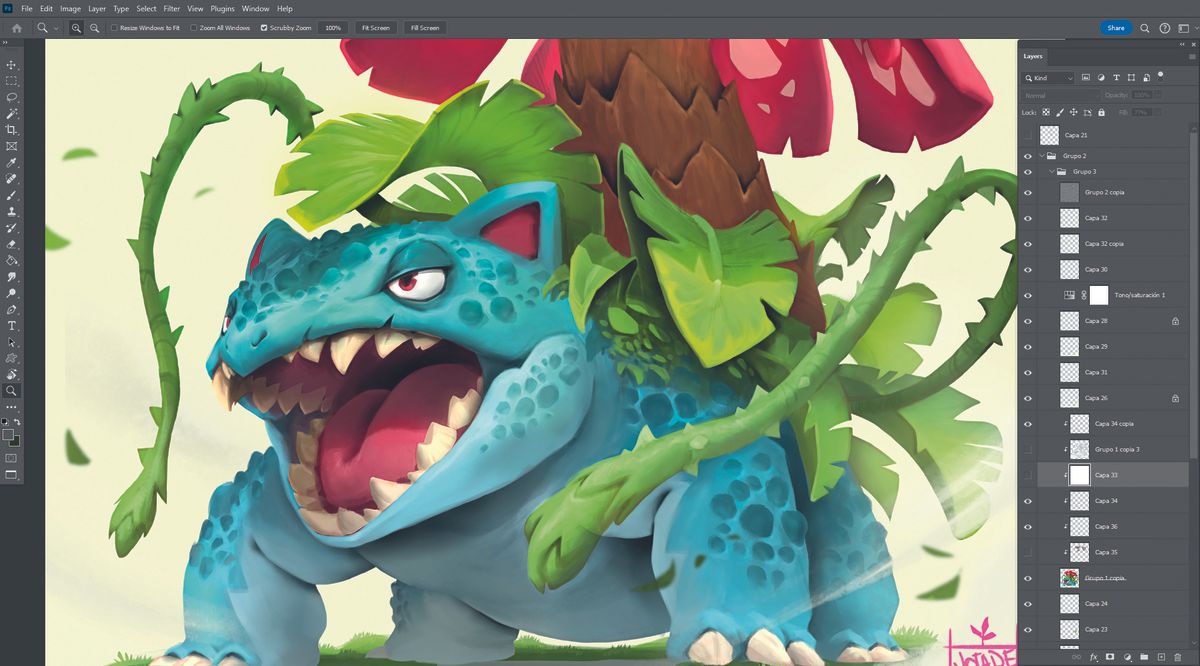
How I Create a Pokémon Illustration: A Step-by-Step Guide

01. Set up your Photoshop canvas and collect necessary references

Create a new canvas with a resolution of 5,000 x 5,000 pixels at 300 DPI. Use PureRef, a free tool, to collect and keep track of visual references for your project.

02. Create design sketches

Use Lasso tool to create the edges of the character, and experiment with different poses and expressions. Take your time to find a dynamic and original pose.

03. Keep your silhouette balanced

Use the Lasso tool to create the silhouette, ensuring it is balanced and visually appealing. A good silhouette will help with movement and posing of the character.

04. Apply local colors

Add subsurface scattering to the character’s skin, leaves, and plants to give them a more realistic and stylized appearance. This step helps to show how light affects the character.

05. Complement the character with a surface, shadows, and details

Add a surface under the character’s feet, plants, and other elements to create a cohesive illustration. This step helps to complete the character’s environment.

06. Adjust in post-production

Make general color corrections, use Color Dodge or Hard Light blend modes, and adjust highlights to create a strong overall atmosphere in the illustration.

07. Apply final filters

Use the High Pass filter and Soft Light blend mode to enhance the illustration’s details and overall sharpness. Lower the opacity to achieve a subtle effect.

Conclusion

In this article, we have walked through the step-by-step process of creating a Pokémon illustration using Photoshop. From setting up the canvas to applying final filters, we have covered the key elements to bring a character to life. Remember to experiment, take your time, and have fun with the process.

Frequently Asked Questions

Q: What is the recommended resolution for a digital illustration?
A: A resolution of 5,000 x 5,000 pixels at 300 DPI is recommended.

Q: What tool do you use to create the silhouette of the character?
A: The Lasso tool is used to create the silhouette.

Q: How do you add subsurface scattering to the character’s skin?
A: This is achieved by adding subsurface scattering to the skin, leaves, and plants to give them a more realistic and stylized appearance.

Q: What is the purpose of using the High Pass filter?
A: The High Pass filter is used to enhance the illustration’s details and overall sharpness.

Agentic AI Leaders to Showcase Latest Advancements at NVIDIA GTC

0

Agentic AI Transforming Industries and Businesses

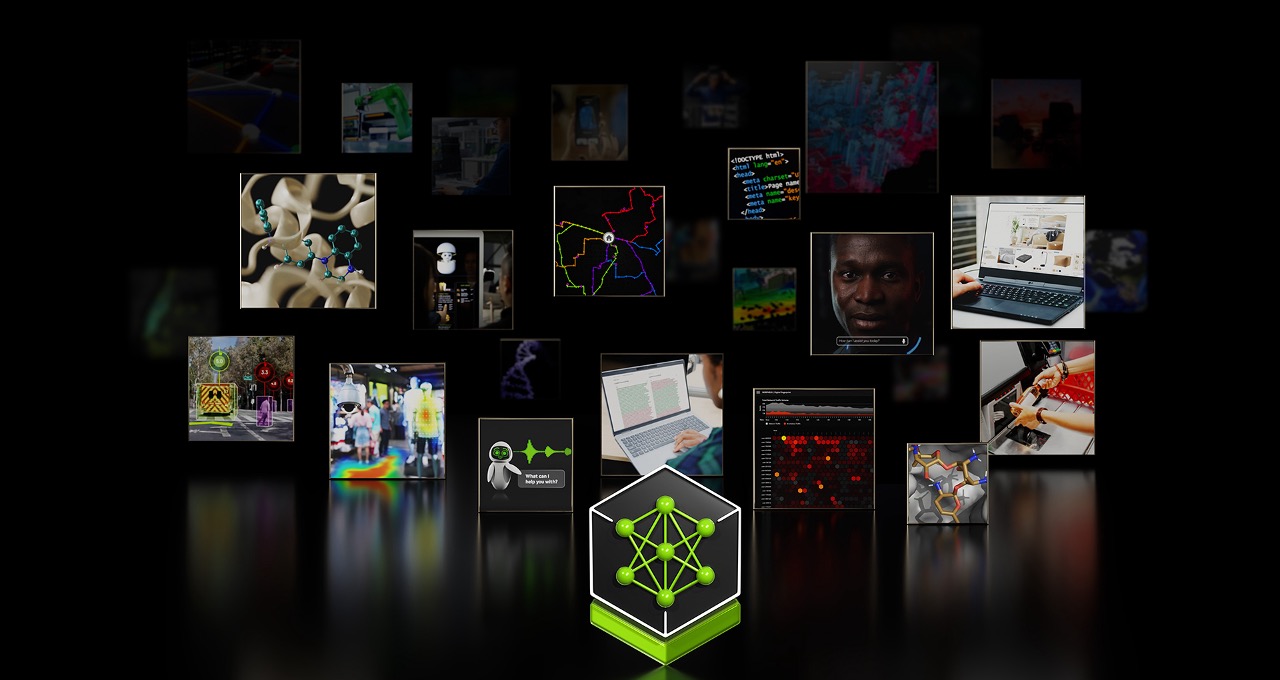
From improving customer experiences to boosting operational efficiency, agentic AI is changing the way people live and work. Across industries, AI agents serve as intelligent personal assistants, helping automate repetitive and time-consuming tasks to free up individuals and organizations to focus on higher-value work.

At NVIDIA GTC, a global AI conference taking place March 17-21 in San Jose, California, industry experts will share how they’re using AI agents to drive innovation in customer service, cybersecurity, retail, automotive, financial services, healthcare, telecommunications and more. In addition, engineers and developers can learn how to build AI agents and multi-agent systems using cutting-edge tools and frameworks.

Agentic AI Sessions for Business Leaders

GTC will feature many sessions where executives and business leaders can learn how generative and agentic AI are transforming enterprises, including:

  • Unlock the Power of AI Agents in Automotive
  • AI at Scale: Lessons from Capital One’s Agentic AI Adoption

Agentic AI Sessions for Developers and Engineers

Developers, engineers, architects, data scientists and all technical professionals attending GTC can stop by the AI Platforms Pavilion and the Generative and Agentic AI Pavilion to meet industry leaders streamlining AI development with end-to-end workflows using resources from the NVIDIA AI Enterprise software platform.

Agentic AI Sessions for Industry Applications

GTC features sessions on how AI can be implemented in nearly every industry, from financial services to healthcare, retail, automotive and more. Some notable sessions include:

  • AI Agents and Digital Humans Shaping the Future of Interaction in Telecoms
  • MOMA: Zero-Shot Multi-Objective Antibody Evolution Using Multi-Agents

Conclusion

Agentic AI is revolutionizing the way industries and businesses operate, and NVIDIA GTC is the perfect platform to learn more about its applications and benefits. Don’t miss out on the opportunity to explore the latest technological advancements and network with industry experts.

FAQs

Q: What is agentic AI?
A: Agentic AI refers to advanced AI systems designed to autonomously reason, plan, and execute complex tasks based on high-level goals.

Q: What industries will be covered at GTC?
A: GTC will feature sessions on AI applications in customer service, cybersecurity, retail, automotive, financial services, healthcare, telecommunications, and more.

Q: Who should attend GTC?
A: Business leaders, developers, engineers, architects, data scientists, and all technical professionals interested in learning about agentic AI and its applications should attend GTC.

Q: How can I register for GTC?
A: Register now for NVIDIA GTC to explore the latest technological advancements, including agentic and physical AI.

Technicolor’s VFX Studio Closure: Is AI the Answer?

0

A 27-Year-Old Interview with Shigeru Miyamoto

Discovering the Unseen: Insights from a 1998 Interview

In 1998, the Japanese-speaking world was treated to an exclusive interview with Shigeru Miyamoto, the legendary creator of The Legend of Zelda: Ocarina of Time. The interview was published in the February edition of GAMEJIN, a multi-format Japanese magazine, but it was never translated into English. Fast-forward 27 years, and thanks to the incredible work of translators Roryj and Javed Sterritt, we can now experience this behind-the-scenes look at one of the most iconic Nintendo 64 games of all time.

The Limits of N64

When creating Mario 64, we pushed the limits of the hardware, using about 64% of its capabilities. With this new Zelda, I think we pushed the limits even more – perhaps to around 90%.

Inspiration from Studio Ghibli

One of the most striking revelations from the interview is how surprised Miyamoto was by the similarities between the game and Studio Ghibli’s Princess Mononoke. He notes that scenes of Link firing his bow and arrow while riding Epona or the Giant Goron walking behind the mountain stirred thoughts like, "Oh, that’s Ashitaka!" or "That looks like the Nightwalker." After struggling with the similarities, the team decided to "really build up Hyrule this time to differentiate it."

Alternative Designs

The interview also sheds light on some of the game’s design decisions. For example, Epona, Link’s loyal horse, could have easily been a unicorn or a moose instead of a horse. Some staff members argued for these alternative animal options, but in the end, the horse won out. It’s intriguing to wonder how the experience would have been different if Epona had been a moose – would we have emotionally connected with the character in the same way?

Miyamoto’s Personal Life

The interview also delves into Miyamoto’s personal life, including his childhood experiences. You’ll also find out whether a Zelda game exists for the Disk Drive or if it’s just a myth. The full transcript is available for more insights, as well as translations of other interviews with Zelda developers who worked on Majora’s Mask and The Wind Waker.

Conclusion

This rare interview provides a unique glimpse into the development process of Ocarina of Time, offering valuable insights into the creative decisions behind one of the most beloved games of all time. From the similarities with Princess Mononoke to the alternative designs considered for Epona, this interview is a must-read for any Zelda fan.

FAQs

Q: What percentage of the N64’s capabilities was used in the creation of Mario 64?
A: About 64%.

Q: How much of the N64’s capabilities was used in the creation of Ocarina of Time?
A: Perhaps around 90%.

Q: What inspired the similarities between Ocarina of Time and Princess Mononoke?
A: Scenes of Link firing his bow and arrow while riding Epona or the Giant Goron walking behind the mountain stirred thoughts of Studio Ghibli’s Princess Mononoke.

Q: Why was Epona not a unicorn or a moose instead of a horse?
A: Some staff members argued for these alternative animal options, but the horse won out in the end.

Q: Can a Zelda game exist on the Disk Drive?
A: According to the interview, it’s just a myth.

Google Pixel 8a: All the AI, for Less

0

Why you can trust Creative Bloq

Our expert reviewers spend hours testing and comparing products and services so you can choose the best for you. Find out more about how we test.

Key specifications

Attributes

Notes

Rating

Chipset

Tensor G3

Memory:

8 GB LPDDR5

OS

Android 14 (at launch, seven years of updates)

Storage:

128 GB/256 GB

Screen size:

6.1in

Screen type:

OLED touchscreen

Resolution:

1080 x 2400

Refresh rate:

Max 120Hz

Peak brightness

2,000 nits

Rear camera

64MP f/1.9 main, 13MP f/2.2 ultrawide

Front camera

13MP f2/2

Ports:

1x USB 3.2 Type-C

Wireless connectivity:

Wi-Fi 6E, Bluetooth 5.3, NFC, 5G

Dimensions:

152x73x9mm

Weight:

189g

Design, build and display

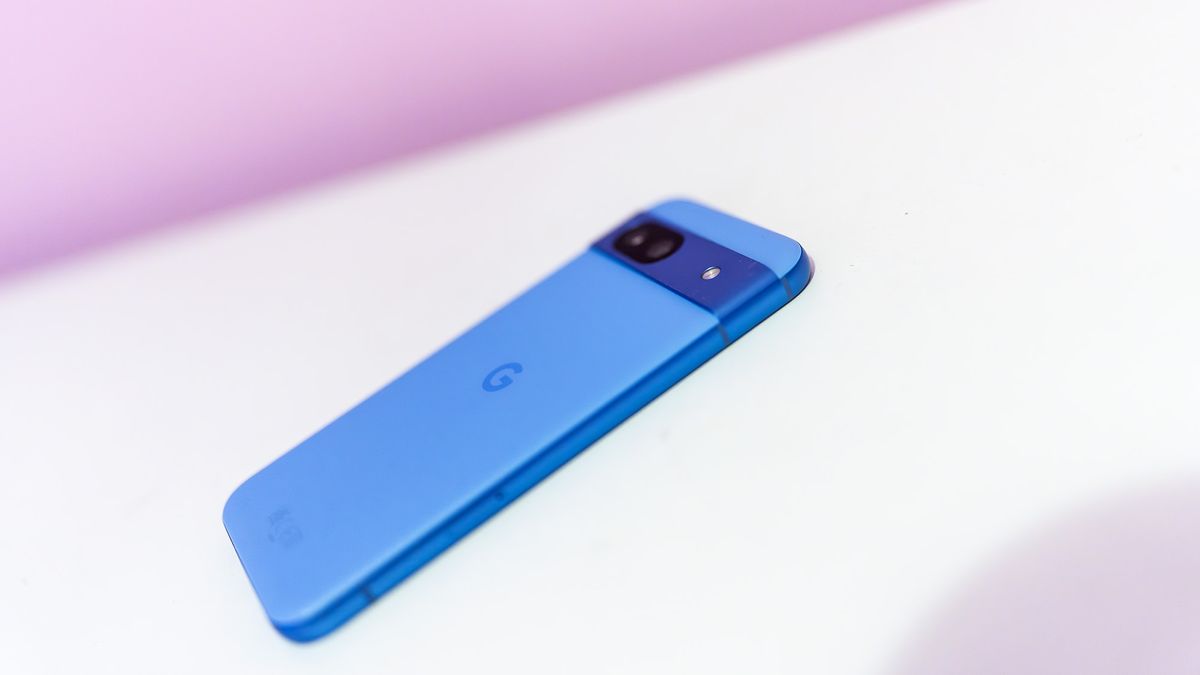
Before we start on this, we’re all keeping our phones in cases, right? Still, an uncased Pixel 8a is a nice thing to hold in your hand. The plastic back – made of 76% recycled plastic – has a slight texture to it, still smooth, but enough to differentiate it from the glass or…

Price

From £499/$499

Conclusion

Value score: 4/5

FAQs

  • Q: Is the Google Pixel 8a a good phone?
    A: Yes, it is a well-designed and well-built phone with good cameras and excellent battery life.
  • Q: Is the Pixel 8a a good choice for creatives?
    A: Yes, it is a good choice for creatives who need a reliable and portable device for inspiration and communication.
  • Q: Is the Pixel 8a available at a discount?
    A: Yes, it is available at a discount, especially since the Pixel 9 range has launched.