Home Blog Page 250

Their Album Is Wordless

0

Artists Protest British Government’s AI Proposal with Mute Album

Background

The British government has proposed changes to the country’s copyright laws, which would allow developers to use copyright-protected works to train artificial intelligence (AI) models without the permission of the original creators. This has sparked outrage among artists, who are concerned that their work will be used without compensation or credit.

The Mute Album

To protest the proposed changes, over 1,000 musicians, including Annie Lennox, Billy Ocean, Hans Zimmer, and Kate Bush, have released a lyric-less album titled "Is This What We Want?" The album features recordings of empty studios, which the artists say represent the impact they expect the government’s proposals would have on their livelihoods.

The Proposals

Under the government’s plans, artists would have to opt out, or "reserve their rights," to keep their works from being used to train AI. The window for public comments on the proposal, which is part of a broader government consultation on copyright and AI, closed on Tuesday.

Critics of the Proposals

Ed Newton-Rex, the chief executive of Fairly Trained, a nonprofit that certifies generative AI companies for the training data they use, argues that the proposals flip copyright on its head. "Opt-out shifts the burden of controlling your works onto the rights holder," he said.

Artists’ Concerns

Many artists are concerned that developers are inappropriately using their work without compensating them. Even as some artists experiment with AI, they fear that their creative work will be taken and used without permission.

The Album’s Message

The album’s title, "Is This What We Want?", is a plea to the government to reconsider its proposals. The 12 tracks on the album have one-word titles that spell out the sentence: "The British government must not legalize music theft to benefit AI companies."

Conclusion

The proposals have sparked a heated debate about the role of AI in the creative industries. While some see AI as an opportunity for innovation and growth, others are concerned that it will lead to the exploitation of artists and the loss of control over their work. As the consultation period comes to a close, it remains to be seen what the government will do with the feedback it has received.

FAQs

Q: What are the government’s proposals for using AI in the creative industries?
A: The government proposes allowing developers to use copyright-protected works to train AI models without the permission of the original creators.

Q: How do artists feel about the proposals?
A: Many artists are concerned that their work will be used without compensation or credit, and are protesting the proposals with a mute album.

Q: What is the purpose of the consultation process?
A: The consultation process is designed to take in feedback and often leads to revisions before decisions are made.

Q: What is Fairly Trained?
A: Fairly Trained is a nonprofit that certifies generative AI companies for the training data they use.

Q: Who are some of the artists involved in the protest?
A: Over 1,000 musicians, including Annie Lennox, Billy Ocean, Hans Zimmer, and Kate Bush, are involved in the protest.

Trump’s AI Gaza video sparks controversy

0

Bizarre AI-Generated Video of Trump’s Vision for Gaza Stuns Even His Strongest Supporters

A Gaudy and Narcissistic Vision

Even ardent Donald Trump supporters on Truth Social have been left in shock after the President of the United States of America posted a bizarre AI-generated video that appears to show his vision to rebrand Gaza as a luxury resort dubbed Trump Gaza.

A Video That Defies Reality

The video shows a Dubai-inspired resort with skyscrapers and luxury yachts, gold statues of Trump, and Teslas in the streets. A boy holds a golden balloon of Trump’s head, money rains from the sky, and bearded bellydancers perform on the beachfront. The video also shows Trump ogling a belly dancer and drinking cocktails with Israeli President Benjamin Netanyahu, while Elon Musk is shown eating flat bread.

Shock and Disgust on Truth Social

Even on Truth Social, a platform created by Trump and mainly used by Trump supporters, responses range from shock and disbelief to disgust. But the video is totally on brand. If the video appeared anywhere else, we would conclude that it was intended as parody. And perhaps it was originally. The video, which includes a rap about Trump Gaza as its soundtrack, does not appear to have been made by the White House. It appeared on other unrelated accounts before Trump himself posted it. But whatever the original intention, Trump appears to have decided that it represents his brand accurately. And he would be right.

A Symbolism That Is Totally in Line with Trump’s Brand

The gaudy and narcissistic wannabe dictator symbolism shown in the video is totally in line with initiatives Trump has plugged before, from peddling watches to supporters to those cringeworthy NFT trading cards that depicted Trump as a superhero. What makes the AI Gaza video on Truth Social more unsettling is the disrespect it shows to the people of Gaza amid the huge loss of life amid the conflict with Israel.

Criticism from Trump’s Strongest Supporters

Trump may not see that as a barrier to his brand, but it seems that even some of his strongest supporters may do. Truth Social users have blasted the video, particularly Christians, who see the Trump statues as idolatry.

Concerns about Sensitivity and Judgment

"I am a true fan of DJT, but I find this very insensitive to be released on a very sad day like today: the funeral for the beautiful Bibas family who were killed in Gaza," was one opinion. "This portrayal of Elon and our President living it up in a place that is suffering so terribly now is just unfathomable," another person wrote. "This lack of judgment erodes confidence in the highest office of our land".

Conclusion

The AI-generated video of Trump’s vision for Gaza has left even his strongest supporters stunned and disgusted. While Trump may see it as a representation of his brand, it is clear that many are deeply troubled by the disrespect it shows to the people of Gaza.

FAQs

Q: What is the purpose of the video?
A: The purpose of the video is unclear, but it appears to be a representation of Trump’s vision for Gaza.

Q: Who created the video?
A: The video’s origin is unclear, but it did not appear to be created by the White House.

Q: Why are Trump supporters criticizing the video?
A: Trump supporters are criticizing the video for its lack of sensitivity and judgment, particularly in light of the ongoing conflict in Gaza.

Q: What is the reaction from the White House?
A: The White House has not commented on the video.

Portable Artisanal Pocket Sculpture

0

Making Every Day Beautiful with 3D Printing

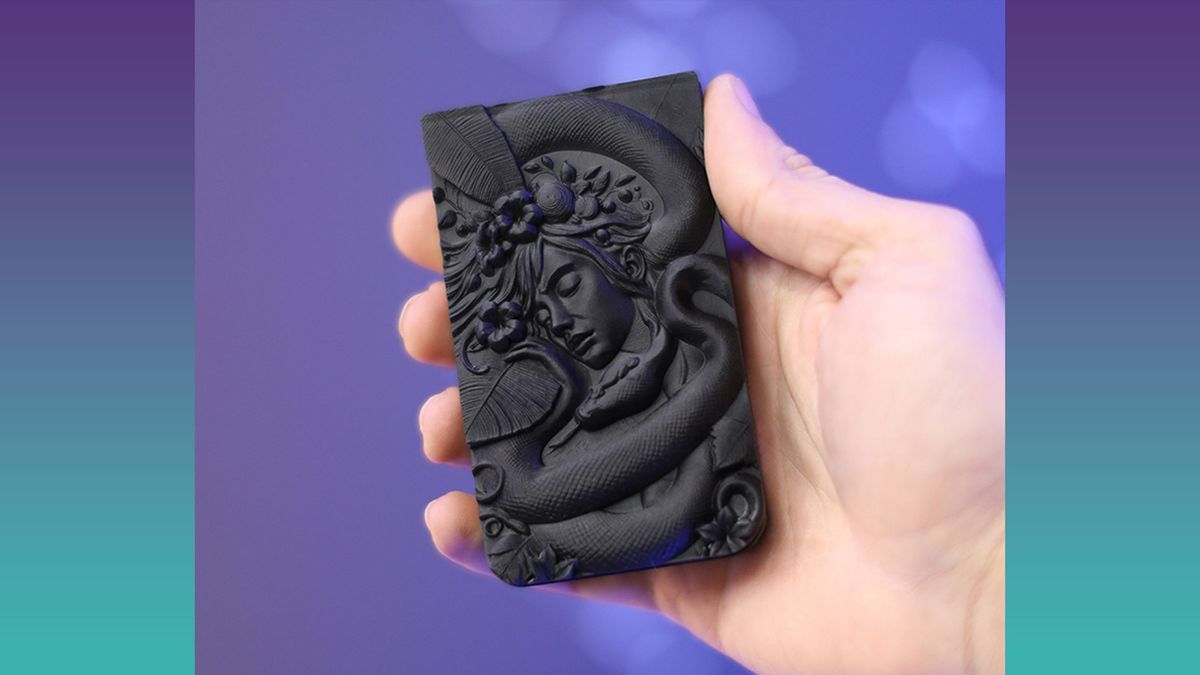
If you’re looking for a way to make every day objects beautiful, you could do worse than explore what can be made with a 3D printer. Although I knew great things could be achieved by this medium, I really had no idea that the output could be as elaborate and intricate as these 3D printed wallets. Called Relio, they’re pitched as a fusion between innovation and artistry – and now that I’ve seen them, I’m completely in love.

The Art of 3D Printing

These wallets have been designed by Italian sculptors, and I know they’re going to serve as some serious 3D printing design inspiration for our resident 3D printing enthusiast Beth. Both beautiful and functional, these wallets show the potential of 3D printing – and how we can add beauty to the mundane in new ways.

The Options

Personally, I love the octopus version, but you can also buy the wallet with a wolf, deer, or snake. The possibilities are endless, and I’m excited to see what other designs will emerge from the world of 3D printing.

The Future of Art and Design

3D printing is opening up possibilities for artists to sell different forms of their work – as well as allowing new products to be created quickly and easily, by anyone who can afford to try out a 3D printer. This is an exciting medium for creatives, and will allow more people to harness creativity at home.

Conclusion

In conclusion, the Relio wallet is a stunning example of what can be achieved with 3D printing. With its intricate designs and attention to detail, it’s a true masterpiece. I’m excited to see what other designs will emerge from the world of 3D printing, and how it will continue to transform the way we create and consume.

FAQs

Q: What is Relio?
A: Relio is a 3D printed wallet designed by Italian sculptors.

Q: What are the different designs available?
A: The wallet is available with an octopus, wolf, deer, or snake design.

Q: Who can create 3D printed products?
A: With a 3D printer, anyone who can afford one can create their own products.

Q: What is the future of art and design with 3D printing?
A: 3D printing is opening up new possibilities for artists to sell their work and create new products quickly and easily, allowing more people to harness creativity at home.

Your Boss Wants You Back in the Office

0

The Dangers of Over-Monitoring in the Workplace

The Human Factor

Maybe an Alzheimer’s patient is frightened, so a nurse has to spend some time calming them down, or perhaps they have lost some ability overnight. That’s not one of the discrete physical tasks that can be measured. Most of the job is helping that person cope with declining faculties; it takes time for that, for people to read your emotions and respond appropriately. What you get is massive moral injury with this notion of efficiency.

Extending to Service Workers

This kind of monitoring extends to service workers, including servers in restaurants and cleaning staff, according to a 2023 Cracked Labs’ report into retail and hospitality. Software developed by Oracle is used to, among other applications, rate and rank servers based on speed, sales, timekeeping around breaks, and how many tips they receive. Similar Oracle software that monitors mobile workers such as housekeepers and cleaners in hotels uses a timer for app-based micromanagement—for instance, "you have two minutes for this room, and there are four tasks."

The Problem with Standardization

As Christl explains, this simply doesn’t work in practice. "People have to struggle to combine what they really do with this kind of rigid, digital system. And it’s not easy to standardize work like talking to patients and other kinds of affective work, like how friendly you are as a waiter. This is a major problem. These systems cannot represent the work that is being done accurately."

The Challenges of Measuring Knowledge Work

But can knowledge work done in offices ever be effectively measured and assessed either? In an episode of his podcast in January, host Ezra Klein battled his own feelings about having many of his best creative ideas at a café down the street from where he lives rather than in The New York Times’ Manhattan offices. Anderson agrees that creativity often has to find its own path.

The Dangers of Over-Monitoring

Say there’s a webcam tracking your eyes to make sure you’re looking at the screen. "We know that daydreaming a little can actually help people come up with creative ideas. Just letting your mind wander is incredibly useful for productivity overall, but that requires some time looking around or out the window. The software connected to your camera is saying you’re off-duty—that you’re wasting time. Nobody’s mind can keep concentrated for the whole work day, but you don’t even want that from a productivity point of view."

The Consequences of Nonstop Monitoring

Even for roles where it might make more methodological sense to track discrete physical tasks, there can be negative consequences of nonstop monitoring. Anderson points to a scene in Erik Gandini’s 2023 documentary After Work that shows an Amazon delivery driver who is monitored, via camera, for their driving, delivery quotas, and even getting dinged for using Spotify in the van.

Trust Issues

The fixes, then, might be in the leadership itself, not more data dashboards. "Our research shows that excessive monitoring in the workplace can damage trust, have a negative impact on morale, and cause stress and anxiety," says Hayfa Mohdzaini, senior policy and practice adviser for technology at the CIPD, the UK’s professional body for HR, learning, and development. "Employers might achieve better productivity by investing in line manager training and ensuring employees feel supported with reasonable expectations around office attendance and manageable workloads."

Conclusion

The dangers of over-monitoring in the workplace are clear. It can lead to damage trust, negative impact on morale, and stress and anxiety. Instead of relying on data dashboards, employers should focus on leadership and line manager training to ensure employees feel supported and productive.

FAQs

Q: What are the consequences of over-monitoring in the workplace?
A: Damage to trust, negative impact on morale, and stress and anxiety.

Q: Can knowledge work be effectively measured and assessed?
A: No, creativity often requires a degree of freedom and autonomy, which can be hindered by over-monitoring.

Q: What is the alternative to over-monitoring?
A: Leadership and line manager training to ensure employees feel supported and productive.

Q: What do most workers think about the use of AI to track their movements and work?
A: 56% of US workers are opposed to the use of AI to keep track of when employees are at their desks, and 61% are against tracking employees’ movements while they work.

The End of an Era

0

Monolith Productions’ Closures and the Future of Game Development

A Kick in the Teeth for Creative, Technical Games and Design

I grew up playing Monolith Productions’ games, so news that this 30-year-old developer is being closed for a "strategic change in direction" is another kick in the teeth to anyone who loves creative, technical games and design. Monolith joins other studio closures since Covid, and it’s why many devs opted for Unreal Engine 5 and launching smaller, niche game studios. And why many artists are picking up the best game development software and making smaller, interesting games. So what’s going on?

Monolith’s Recent History

While I came a little late to Monolith, with the first game of their’s I played was 2000’s The Operative: No One Lives Forever, in recent years the developer behind F.E.A.R., Middle-earth: Shadow of Mordor and the now cancelled Wonder Woman has continued to deliver great games. But, Wonder Woman was in development for seven years and by all accounts changed cause multiple times, likely as a result the poor performance of Suicide Squad Kill The Justice League and a push to jump on the live games trend.

WB Games’ Statement

In a statement to Polygon, a WB Games spokesperson said: "We have had to make some very difficult decisions to structure our development studios and investments around building the best games possible with our key franchises – Harry Potter, Mortal Kombat, DC and Game of Thrones. After careful consideration, we are closing three of our development studios – Monolith Productions, Player First Games and Warner Bros. Games San Diego. This is a strategic change in direction and not a reflection of these teams or the talent that consists within them."

The Future of Game Development

So here we are, another legacy developer being closed, possibly because of a desire to chase a trend like live service games, at the moment gamers are returning to single-player, narrative games like Indiana Jones and the Golden Circle. What comes next for WB Games, but also for other large game studios, is going to be very interesting. The length of time it’s taken to make and never release Wonder Woman, as well as Suicide Kill The Justice League, shows how trends come and go and titles miss their moment.

Conclusion

The future of game development is going to be very interesting, it’s just a shame the devs at Monolith, a team renowned for marrying game design to technology, won’t be there in the form we’ve all known and loved.

FAQs

Q: What is the reason for Monolith Productions’ closure?
A: According to WB Games, the closure is a "strategic change in direction" and not a reflection of the talent that consists within the studio.

Q: What is the future of game development?
A: The future of game development is uncertain, but it’s likely to involve smaller, focused titles and the rise of indie studios.

Q: Will generative AI help or hinder game development?
A: Generative AI has the potential to ease costs and production, but its impact on game development is still unclear.

Q: What is the significance of the Nemesis System?
A: The Nemesis System, developed by Monolith Productions, revolutionized narrative design and allowed for more dynamic NPC interactions. Its potential patent expiration in 2036 raises questions about its future use.

This new text-to-speech AI model understands what it’s saying

0

Text-to-Speech AI Models Get a Boost with Hume’s Octave

Octave: A Text-to-Speech Large Language Model with Contextual Awareness

On Wednesday, Hume launched Octave, a text-to-speech large language model (LLM) with contextual awareness. The LLM can use this awareness to adjust its tone, rhythm, and timbre of speech to the words it is reading based on their meaning, according to the company. For example, an AI-enabled voice can convey a sense of disgust when reading a sentence.

Understanding the Context of the Text

Beyond understanding the context of the text, the model can also take directions. Users can instruct it to be "calm", "whispering", "disgustful", "angry", and more. Hume says the advantage Octave has over a voice actor is that it can take on any voice or even invent a new one based on the user description.

Testing the Model

The user interface is easy to navigate, with one text box for Voice, in which you can describe exactly what you want the voice to sound like, and another for Script, in which you enter what you want the model to say. For my first test, I used the detailed pre-made prompts to see how it sounded.

Impressive Results

After clicking on "Generate", Octave generated three voice results, and upon first listen I was impressed. Although I wasn’t convinced that the generations captured the "valley girl" sound, I was super-impressed with the intonations and inflections.

Conclusion

Overall, it seems like the model’s strength is placing the nuances of human speech in its output. What often gives AI voices away is their monotony, making the output sound quite boring to listen to. With Octave, you could hear the reader’s emotions, whether frustration, defeat, or tiredness. Words like "ugh" have the exact length and breathing a human would use, creating an engaging experience.

How to Access

There are different tiers for accessing the model, including a free one with a 10,000-character limit (around 10 minutes) and unlimited character voices if you want to try it out. Beyond the free tier, there are six additional tiers, ranging from $3 to $900 per month, depending on access needs.

Frequently Asked Questions

Q: What is the difference between Octave and a voice actor?
A: Octave can take on any voice or even invent a new one based on the user description, whereas a voice actor is a human.

Q: What is the character limit for the free tier?
A: The free tier has a 10,000-character limit (around 10 minutes).

Q: How much does the Business tier cost?
A: The Business tier costs $900 per month for 10,000,000 characters (around 10,000 minutes).

Trump ‘Racist’ iPhone Bug Sparks Outrage

0

Google Sees Spike in Searches for Word "Racist" Due to iPhone Bug

iPhone Bug Translates "Racist" to "Trump" in Voice Dictation

Google has reported a sudden surge in searches for the word "racist" over the last 24 hours, and it appears that the reason behind this phenomenon is a peculiar "bug" in the iPhone’s voice dictation feature. The bug, which has been observed by iPhone users, translates the spoken word "racist" into the written word "Trump".

Apple’s Explanation

Apple has acknowledged the issue, stating that the problem is caused by "phonetic overlap" between the words "Trump" and "racist". The company has promised to roll out a fix for the issue, but the explanation has not quelled speculation that the bug may not be as unintentional as it seems.

User Reactions

Many users have taken to social media to test out the bug, with some even joking that it’s not a bug at all. "That’s a feature, not a bug," one Redditor commented, while another added, "I don’t see what the issue is. Seems right." Others have speculated that the bug may have been intentionally implemented by a rogue developer at Apple.

Speculation and Theories

Several users have speculated that the bug may have been deliberately introduced by someone at Apple. "Ten bucks says a rogue dev at Apple did that on purpose," one Redditor commented. Another commenter at The Verge said, "’bug’… some programmer out there is doing God’s Work. This was intentional and it’s a delight. Hats off to you!"

Conclusion

While we may never know for certain whether the bug was intentional or not, it has certainly generated a lot of buzz and attention. The incident has also raised questions about the level of attention and scrutiny that goes into the development and testing of iPhone features.

FAQs

Q: What is the iPhone bug?
A: The iPhone bug is a problem with the voice dictation feature that translates the spoken word "racist" into the written word "Trump".

Q: Why is this happening?
A: According to Apple, the issue is caused by "phonetic overlap" between the words "Trump" and "racist".

Q: Is this a bug or a feature?
A: Apple has labeled it a bug, but some users have jokingly referred to it as a "feature".

Q: Will Apple fix this issue?
A: Yes, Apple has promised to roll out a fix for the issue.

Q: Was this bug intentional?
A: We may never know for certain, but some users have speculated that it may have been intentionally introduced by a rogue developer at Apple.

Handling Crashes & Logging Errors to Firebase in React Native

0

Why Use react-native-error-boundary?

Using react-native-error-boundary is crucial for improving user experience and debugging. This guide will cover how to use react-native-error-boundary to catch errors and send crash logs to Firebase Analytics.

Why Use react-native-error-boundary?

  1. Catches uncaught JavaScript errors and prevents app crashes.
  2. Displays a custom fallback UI instead of a blank screen.
  3. Helps in tracking and debugging errors efficiently.

Install Dependencies

First, install the required dependencies:

npm install react-native-error-boundary @react-native-firebase/app @react-native-firebase/analytics

Create a Global Error Boundary Component

This component will wrap the entire app and catch unhandled JavaScript errors.

Create a Global Error Boundary Component

AppErrorBoundary.js

import React from 'react';
import { View, Text, Button } from 'react-native';
import ErrorBoundary from 'react-native-error-boundary';
import analytics from '@react-native-firebase/analytics';
import { logErrorToFirebase } from './logErrorToFirebase';

const AppErrorBoundary = () => {
  return (
    <ErrorBoundary
      FallbackComponent={() => (
        <View>
          <Text>Something went wrong!</Text>
          <Button title="Try Again" onPress={() => console.log('Try Again')} />
        </View>
      )}
    >
      {children}
    </ErrorBoundary>
  );
};

export default AppErrorBoundary;

Wrap the App with Error Boundary

Now, wrap your main app component with AppErrorBoundary in App.js.

App.js

import React from 'react';
import { View, Text } from 'react-native';
import { AppErrorBoundary } from './AppErrorBoundary';

const App = () => {
  return (
    <AppErrorBoundary>
      <View style={{ flex: 1, justifyContent: 'center', alignItems: 'center' }}>
        <Text>Welcome to the App!</Text>
      </View>
    </AppErrorBoundary>
  );
};

export default App;

What Happens When an Error Occurs?

Without Error Boundary: The app crashes and closes unexpectedly.

With react-native-error-boundary:

  • The error is caught and logged to Firebase Analytics.
  • A friendly UI is shown to users instead of a blank screen.
  • Users can recover using a “Try Again” button.

Viewing Firebase Analytics Logs

To check error logs in Firebase:

  1. Go to Firebase Console → Analytics.
  2. Click on Events → Look for "app_crash".
  3. View error messages and stack traces.

Conclusion

By integrating react-native-error-boundary with Firebase Analytics, you:

  • Prevent app crashes from unhandled JavaScript errors.
  • Log detailed crash reports to Firebase for debugging.
  • Show a user-friendly fallback UI to prevent app disruption.

Would you like to extend this by sending logs to Sentry or Crashlytics as well? Let me know!

Amazon Bets Savings from Automation Can Fuel AI Spending Boom

Unlock the Editor’s Digest for free

Roula Khalaf, Editor of the FT, selects her favourite stories in this weekly newsletter.

Amazon is betting its multibillion-dollar investment in robotics will yield significant near-term savings, as the technology giant races to cut costs in its sprawling retail network amid rising spending on artificial intelligence.

Amazon’s Push to Cut Costs

The Seattle-based group is expected to spend up to $25bn on its retail network, including investment in a new generation of robotics-led warehouses, as it seeks efficiencies across the business and to improve delivery times in the face of growing competition from low-cost rivals such as China’s Temu.

Investment in AI and Robotics

While most of Amazon’s planned $100bn in capital expenditure this year will be spent on expanding AI initiatives such as computing infrastructure, about a quarter will be directed at its ecommerce arm, where the business is investing heavily in automation, according to analyst estimates.

Robotics in Warehouses

The push on robotics comes as chief executive Andy Jassy oversees a cost-cutting effort, having in recent months taken an axe to middle management to ensure the business can operate "like the world’s largest start-up".

Cost Savings and Efficiency

Research by analysts at Morgan Stanley estimate that investments by Amazon in a new generation of robotics-led warehouses could generate about $10bn in annual savings by the end of this decade.

Case Study: Shreveport, Louisiana

Amazon’s fulfillment centre in Shreveport, Louisiana, is one of the most technologically advanced warehouses, featuring mobile drive units, advanced robotic arms, and a 25% cut in costs compared to its previous generation of warehouses.

Investment in Robotics Talent

The tech giant is also investing in robotics talent, having hired Pieter Abbeel and Peter Chen, co-founders of physical AI start-up Covariant, to head up a San Francisco-based lab where it plans to develop more advanced autonomous robots.

Conclusion

Amazon’s investment in robotics is expected to yield significant cost savings and efficiency gains, as the company continues to push for lower delivery times and increased productivity in its sprawling retail network.

FAQs

Q: What is Amazon’s plan for its retail network?
A: Amazon plans to spend up to $25bn on its retail network, including investment in a new generation of robotics-led warehouses.

Q: How much is Amazon investing in AI initiatives?
A: Amazon plans to spend about a quarter of its planned $100bn in capital expenditure on its ecommerce arm, where it is investing heavily in automation.

Q: What is the potential cost savings from Amazon’s investment in robotics?
A: Research by Morgan Stanley estimates that investments by Amazon in a new generation of robotics-led warehouses could generate about $10bn in annual savings by the end of this decade.

Nomagic picks up $44M for its AI-powered robotic arms

0

Regions Revamp Industrial Muscle with $44 Million Funding for Nomagic, a Polish Startup Building Robotic Arms for Logistics

Investment to Fuel Technology and Business Development

Nomagic, a fast-growing Polish startup that builds robotic arms for logistics operations, has announced a $44 million funding round, its largest to date. The investment will be used for both technology and business development, with a focus on breaking into new markets outside of Europe, specifically North America.

A Shift in the Industrial Landscape

The investment is significant not only due to its size but also because of the involvement of the European Bank for Reconstruction and Development (EBRD). The EBRD is a development bank co-owned by more than 70 countries and two European Union institutions, emphasizing the push by governments and institutions to spur private businesses in aid of their missions to rebuild industry.

Challenges in the Industrial Sector

The perennial question of how to make regions more competitive in industry again is a pressing concern. A large part of the workforce that used to run factories and warehouses has moved to other kinds of jobs, and when it hasn’t, industrial operators have been reducing the number of human workers to cut costs and improve efficiency by bringing in more automation.

The Rise of Automation

The currents of human workers versus tech innovation to improve efficiencies have often clashed. For example, the viral story about a Y Combinator startup that has spun up an AI-based workplace observer to highlight when workers are slacking off has sparked controversy. However, it is clear that technological advancements will continue to shape the industry.

Nomagic’s Approach

Nomagic’s focus is on software, using computer vision, machine learning, and other automation technologies to build a "library" of objects and how to move, pack, and handle them. Its robots are powered by AI across a wide range of use cases and can be redeployed relatively easily on a case-by-case basis.

Growth and Competitors

The company has grown its annual recurring revenues by 220% in the last year and is on track for another 200% of ARR growth this year. Its closest competitor, Covariant, was acquired by Amazon, but Nomagic is well-positioned to compete in the market.

Conclusion

The trend of regions revamping their industrial muscle is gaining momentum, with governments and institutions throwing their weight behind private businesses to drive growth. Nomagic’s funding is a testament to this trend, and the company’s innovative approach to robotics is poised to make a significant impact in the market.

FAQs

Q: What is Nomagic?
A: Nomagic is a Polish startup that builds robotic arms for logistics operations.

Q: How much funding did Nomagic receive?
A: Nomagic received $44 million in funding, its largest to date.

Q: Who is leading the funding round?
A: The European Bank for Reconstruction and Development (EBRD) is leading the funding round.

Q: What is Nomagic’s focus?
A: Nomagic’s focus is on software, using computer vision, machine learning, and other automation technologies to build a "library" of objects and how to move, pack, and handle them.

Q: What is the company’s growth trajectory?
A: The company has grown its annual recurring revenues by 220% in the last year and is on track for another 200% of ARR growth this year.