Home Blog Page 263

When Large Models Get Their ChatGPT Moment

The Rise of Large Vision Models (LVMs) in Computer Vision

The launch of ChatGPT in November 2022 marked a watershed moment in natural language processing (NLP), showcasing the startling effectiveness of the transformer architecture for understanding and generating textual data. Now, we’re seeing something similar happening in the field of computer vision with the rise of pre-trained large vision models (LVMs). But when will these models gain widespread acceptance for visual data?

Needed Attention

A major architectural shift occurred in 2017 when Google first proposed the transformer architecture with its paper "Attention Is All You Need." The transformer architecture is based on a fundamentally different approach, dispensing with convolutions and recurrence used in CNNs and RNNs and relying entirely on something called the attention mechanism, where the relative importance of each component in a sequence is calculated relative to the other components in a sequence.

LVMs on the Cusp

The rise of LVMs is exciting folks like Srinivas Kuppa, the chief strategy and product officer for SymphonyAI, a longtime provider of AI solutions for a variety of industries.

According to Kuppa, we’re on the cusp of big changes in the computer vision market, thanks to LVMs. "We are starting to see that the large vision models are really coming in the way the large language models have come in," Kuppa said.

LVMs in Action

SymphonyAI has developed LVMs for one of the largest food manufacturers in the world. It’s also working with distributors and retailers to implement LVMs to enable autonomous vehicles in warehouse and optimize product placement on the shelves, he said.

Conclusion

The availability of pre-trained LVMs that provide very good performance out-of-the-box with no manual training has the potential to be just as disruptive for computer vision as pre-trained LLMs have been for NLP workloads. While LVMs have advantages and disadvantages compared to other computer vision models, their global context baked in from the beginning gives them a fundamental advantage.

FAQs

Q: What are Large Vision Models (LVMs)?

A: LVMs are a type of deep learning architecture that uses the transformer architecture, which dispenses with convolutions and recurrence used in traditional CNNs and RNNs and relies on the attention mechanism to understand and generate visual data.

Q: What are the advantages of LVMs?

A: LVMs have a global context baked in from the beginning, which gives them a fundamental advantage over other computer vision models. They are also already pre-trained, eliminating the need for manual training.

Q: What are the limitations of LVMs?

A: LVMs are more data-hungry than CNNs, requiring a significant amount of data to train. They also require more processing resources for real-time decision-making, which can be a challenge.

Q: What is the future of LVMs in computer vision?

A: The future of LVMs in computer vision is promising, with the potential to be just as disruptive as pre-trained LLMs have been for NLP workloads. However, the adoption of LVMs will depend on the development of more robust data infrastructure and the availability of different processor types, including FPGAs.

The iOS 18.4 beta brings Matter robot vacuum support

0

Apple Adds Matter Support for Robot Vacuums in iOS Beta

Matter Support for Robot Vacuums Confirmed

As spotted by 9to5Mac, Smart Home Centre confirmed the functionality using a Switchbot S10, which offers its own beta support for Matter. (Switchbot first added Matter robot vacuum support last year, but it required a hub and was kind of a hack.)

Features of Matter Support for Robot Vacuums

Apple Home screenshots shared in the story show the robot vacuum’s Home widget (complete with a little robot vacuum glyph) along with a control screen featuring a start / stop button, options for choosing between “Vacuum” and “Vacuum and Mop,” selections for operating modes like “Quiet” or “Deep Clean.” There’s also a “Send to Dock” option, although Smart Home Centre notes that this only paused the S10.

Adding Robot Vacuums to Automations and Scenes

Robot vacuums in the new iOS beta can also be added to automations and scenes. You can see how all of it works in the outlet’s video below.

Current State of Matter Support in Robot Vacuums

Apple was expected to add Matter support for robot vacuum cleaners last year, but that didn’t materialize. Few robot vacuum companies offer Matter support at the moment, and some of those are still waiting on a firmware update to enable it.

Confirmed Robot Vacuums with Matter Support

Robot vacuum makers have confirmed to us that these models will support Matter:

Conclusion

The addition of Matter support for robot vacuums is a significant step forward in the smart home ecosystem. With this feature, users will have more control over their robot vacuums and be able to integrate them seamlessly with other smart devices.

Frequently Asked Questions

Q: What is Matter?
A: Matter is a new smart home protocol that allows different devices to communicate with each other and work together seamlessly.

Q: Which robot vacuums will support Matter?
A: Robot vacuum makers have confirmed that the following models will support Matter: [list of models].

Q: How do I add a robot vacuum to my automation and scenes?
A: You can add a robot vacuum to your automation and scenes by going to the Apple Home app and following the prompts.

Q: Is Matter support exclusive to iOS?
A: No, Matter support is not exclusive to iOS. It will be available on other platforms as well.

Tech Pioneer Wins Prestigious IEEE Medal

0

Henry Samueli Receives IEEE’s 2025 Medal of Honor

Today, I don’t know anybody who can say they know what artificial intelligence is going to bring us in five years, let alone one year or two years," says Henry Samueli, a pioneer in digital modem technology and recipient of the IEEE’s 2025 Medal of Honor.

Early Days of the Consumer Internet

In the early days of the consumer internet, most access was via a dial-up modem, a device hooked up to a phone line that transmitted requests for web pages via squeaks and squawks like someone yelling into the line. That primitive connectivity was dramatically altered by the advent of the digital broadband cable modem, a device that helped turn chip-maker Broadcom into a huge public company.

A Lifetime Achievement Award

On Thursday in New York, Henry Samueli, 70, was honored with the equivalent of a lifetime achievement award in computing for having developed those innovations and founding Broadcom in 1991 with partner Henry T. Nicholas III.

The IEEE’s $2 Million Prize

The $2 million prize was awarded by the IEEE, the Institute of Electrical and Electronics Engineers, a public charity founded in 1884 that is the largest professional society for engineers globally, with half a million members. The IEEE’s CEO, Kathleen Kramer, introduced Samueli, saying his "vision and technological innovations spurred the development of communications products used by nearly every person."

The Future of Communications

"Fasten your seat belts because the world is changing at a pace now that we have never seen before," said Samueli in a fireside chat with Kramer and past IEEE CEO Ray Liu and IEEE COO Sophia Muirhead. "Today, I don’t know anybody who can say they know what artificial intelligence is going to bring us in five years, let alone one year or two years."

The Child of Polish Immigrants

Samueli, the child of Polish immigrants who settled in California, was inspired to study electronics by his success at building a "HeathKit" radio in high school. At UCLA, where he received his bachelor’s and master’s degrees and was awarded a doctorate in electrical engineering, Samueli began working on how to make communications chips in a form far less complicated than was done at the time.

The Birth of Broadcom

Samueli and his collaborators sought grants to integrate different parts but were repeatedly rejected: "They all said, No way, it’s impossible, go away, we’re not interested." Finally, Samueli and co-founder Nicholas got funding from the US Defense Advanced Research Projects Agency (DARPA). "DARPA loves disruptive technologies, super-high-risk, high-reward technology," he observed. With results that were ultimately "really significant", Broadcom was born.

Samueli’s Views on AI

During the Q&A, asked about the future of communications, Samueli emphasized that optical transmissions will increasingly be moved closer to computer chips to make the relationship between compute and communications optimal. "The closer you can bring that to the interface of the chip, the faster your systems will be. And that’s what we’re seeing a lot of these days in the AI networks. It’s more and more optical communication."

Advice for Young Engineers

When it was my turn to ask a question for ZDNET, I asked Samueli how he sees the future for human engineers as artificial intelligence becomes increasingly part of chip design. "AI is becoming an invaluable asset for designers to build their systems because they can offload the more mundane tasks of generating code for certain applications," said Samueli. "I still think, at least as of today, we need the creativity of the high-level thinkers, the architects, the algorithm developers, to see better ways of building the overall system."

Conclusion

Samueli’s is the first $2 million award in over 100 years of the IEEE Medal; previously, the award was $50,000. The organization decided last year to raise the amount to "elevate our recognition of extraordinary individuals," according to the IEEE’s 2024 CEO, Thomas Coughlin.

FAQs

Q: What is the IEEE’s 2025 Medal of Honor?
A: The IEEE’s 2025 Medal of Honor is a lifetime achievement award in computing for outstanding contributions to the field of electrical engineering.

Q: Who is Henry Samueli?
A: Henry Samueli is a pioneer in digital modem technology and founder of Broadcom.

Q: What is the significance of the $2 million prize?
A: The $2 million prize is the first of its kind in over 100 years of the IEEE Medal, and it recognizes Samueli’s outstanding contributions to the field of electrical engineering.

Did AI Lie About Grok 3’s Benchmarks?

0

Debates over AI Benchmarks Spill into Public View

Debates over AI benchmarks and how they’re reported by AI labs are spilling out into public view. This week, an OpenAI employee accused Elon Musk’s AI company, xAI, of publishing misleading benchmark results for its latest AI model, Grok 3. One of the co-founders of xAI, Igor Babushkin, insisted that the company was in the right.

The Dispute

The truth lies somewhere in between. xAI’s graph showed two variants of Grok 3, Grok 3 Reasoning Beta and Grok 3 mini Reasoning, beating OpenAI’s best-performing available model, o3-mini-high, on AIME 2025, a collection of challenging math questions from a recent invitational mathematics exam. However, OpenAI employees pointed out that xAI’s graph didn’t include o3-mini-high’s AIME 2025 score at "cons@64."

What is Cons@64?

Cons@64, short for "consensus@64," gives a model 64 tries to answer each problem in a benchmark and takes the answers generated most frequently as the final answers. This tends to boost models’ benchmark scores, and omitting it from a graph might make it appear as though one model surpasses another when in reality, that’s not the case.

A More Accurate Picture

Grok 3 Reasoning Beta and Grok 3 mini Reasoning’s scores for AIME 2025 at "@1" fall below o3-mini-high’s score. Grok 3 Reasoning Beta also trails ever-so-slightly behind OpenAI’s o1 model set to "medium" computing. Yet, xAI is advertising Grok 3 as the "world’s smartest AI."

A Neutral Party’s Take

A more neutral party in the debate put together a more "accurate" graph showing nearly every model’s performance at cons@64. As Twitter user Teortaxes pointed out, "Hilarious how some people see my plot as an attack on OpenAI and others as an attack on Grok while in reality it’s DeepSeek propaganda."

The Importance of Transparency

As AI researcher Nathan Lambert noted, the most important metric remains a mystery: the computational (and monetary) cost it took for each model to achieve its best score. This just goes to show how little most AI benchmarks communicate about models’ limitations – and their strengths.

Conclusion

The debate over AI benchmarks highlights the need for transparency and clear communication in the AI community. As the field continues to evolve, it’s essential to ensure that benchmark results are accurately reported and that model comparisons are made on a level playing field.

FAQs

Q: What is cons@64?
A: Cons@64, short for "consensus@64," gives a model 64 tries to answer each problem in a benchmark and takes the answers generated most frequently as the final answers.

Q: Why is cons@64 important?
A: Cons@64 tends to boost models’ benchmark scores, and omitting it from a graph might make it appear as though one model surpasses another when in reality, that’s not the case.

Q: What is the most important metric in AI benchmarking?
A: The most important metric remains the computational (and monetary) cost it took for each model to achieve its best score.

Speed Up PDF Analysis

0

Google Gemini: New Feature for Free Users

Google Gemini, a search engine designed for researchers, has announced that it is now offering a feature previously limited to paid subscribers. The new feature allows free users to upload and analyze various file types, including PDFs, text files, Word documents, PowerPoint presentations, and Google Docs files.

How it Works

To use this feature, free users can upload a file to Gemini and request an AI-generated summary and ask questions about the content. The process is simple:

  1. Head to the Gemini website or launch the iOS or Android app.
  2. Click or tap the plus sign at the prompt.
  3. Select "Files" to upload a file from your PC or device, or "Drive" to upload a file from Google Drive.
  4. Choose the file you want to analyze.
  5. At the prompt, you can ask Gemini to summarize the file and submit any questions you have about the content.

Limitations

While the new feature is a welcome addition for free users, there are some limitations. The $20-per-month paid version of Gemini Advanced can handle a wider range of file types, including CSV files, Excel spreadsheets, CSS files, HTML files, JavaScript files, and PHP files, which are commonly used by developers.

Conclusion

The new feature is a significant improvement for free users, providing a convenient and helpful tool for analyzing and understanding various file types. While there are limitations compared to the paid version, this feature is still a valuable addition to the free version of Gemini.

Frequently Asked Questions

Q: What file types can I upload for analysis?
A: Free users can upload PDFs, text files, Word documents, PowerPoint presentations, and Google Docs files.

Q: Can I use the feature on the free version of Gemini?
A: Yes, the feature is available to all Gemini users, including free users.

Q: What are the limitations of the free version compared to the paid version?
A: The paid version of Gemini Advanced can handle a wider range of file types, including CSV files, Excel spreadsheets, CSS files, HTML files, JavaScript files, and PHP files.

Q: How do I get started with the new feature?
A: To use the feature, head to the Gemini website or launch the iOS or Android app, click or tap the plus sign, select "Files" or "Drive," choose the file you want to analyze, and ask Gemini to summarize the file and submit your questions.

The Hottest Ticket in New York on Friday was the Luigi Mangione Hearing

0

The Luigi Hearing: A Study in Cultural Obsession

There are so many people here that nobody can tell where the end of the line is. New people arrive, ask if there’s a line, shuffle into a blob of bodies idling and waiting for someone to give them instructions. The hallway is horribly warm — unclear if it’s from the bodies or the heat — and it’s a little smelly, which could just be me but I don’t think it is. I estimate between 100 and 150 people are hanging around, waiting for 2:15PM to roll around, their anticipation building. This is not a club with a strict bouncer, though it feels like it. This is the Luigi Mangione hearing.

A Minor Pre-Trial Status Update

The hearing is a relatively minor pre-trial status update, but for the people most tapped in, there is a lot riding on it — the Luigi info-drip has been a bit dry lately. Court dates for the 26-year-old accused of murdering UnitedHealthcare CEO Brian Thompson in December keep getting pushed back. Mangione, who is currently being held in federal custody in a Brooklyn jail, has not made a public appearance since before Christmas. (Mangione is accused of gunning down Thompson in December outside a Midtown Manhattan hotel, and has pleaded not guilty.) On TikTok, commenters regularly complain that they haven’t seen Luigi on their For You page in months. When Mangione’s legal team launched a new website with updates on the case, a flood of donations came pouring into his legal fund — more than half a million dollars as of this writing.

A Study in Contrasts

Everyone involved understands that this case is unique: there are the many officers patrolling the hallway to keep us in check, like we are kids waiting to be seen by the principal; the hordes of people, some of whom live in the city and some of whom flew in for the occasion, trying to make sense of what’s about to happen; the members of the media who are just as gobsmacked and wide-eyed, angling to get a good view.

The Press Line

The media frenzy inside the Manhattan courthouse, with press corralled into their own line. Illustration: Molly Crabapple for The Verge

The Cultural Impact of a Tragic Event

In a way, Thompson’s death and Mangione’s fate are two sides of the same wretched coin. Both men have become symbols of an industry that has brought about so much pain — and generated so much profit — that people on both sides of the equation are willing to kill or die for it. And just as the cultural impact of his death has completely obscured who Thompson was as a person (and in many cases, that he was a person at all), so has Mangione’s beatification obfuscated the cold hard reality of a young man — cuffed, chained, and held without bail — who has pleaded not guilty to the murder that has made him an American icon.

The Cycle of Obsession

As he sits in prison, his photos go viral. TikToks and Reels blow up, new jokes and songs and memes are constructed every second. But then the content mills will finish grinding out what they can from the twenty minutes of Luigi the public got on Friday afternoon. The Luigi references on the For You pages will start drying up or get content-moderated out of sight; the die-hards will once again voice suspicions about the Narrative. And when Mangione and his attorneys next return to court, it’ll happen all over again: the crowds, the media, the police, the protest, the green sweaters, the memes, the livestreams, the thinkpieces and the outrage bait, a cultural engine that is ready to roar back to life the moment we catch a glimpse of Luigi Mangione once more.

Conclusion

The Luigi hearing is a case that has captured the public’s imagination, and it will likely continue to do so for the foreseeable future. As we wait with bated breath for the next update on Mangione’s case, it’s worth taking a step back to consider the cultural impact of this tragic event.

Frequently Asked Questions

Q: Who is Luigi Mangione?
A: Luigi Mangione is the 26-year-old accused of murdering UnitedHealthcare CEO Brian Thompson in December.

Q: What is the current status of the case?
A: The case is ongoing, with court dates being pushed back and Mangione being held in federal custody in a Brooklyn jail.

Q: Why is there so much attention surrounding the case?
A: The case has captured the public’s imagination, with many people fascinated by the details of the crime and the subsequent investigation. The case has also sparked controversy and debate, with some people questioning the handling of the case and others defending the accused.

Q: What is the significance of the "Luigi" nickname?
A: The nickname "Luigi" has become a meme and a cultural phenomenon, symbolizing the accused’s notoriety and the public’s fascination with the case.

Working Women

0

WORKING GIRLS: Glitz, Glamour, and Gloom

Awarded AI Artwork

This piece has gained recognition through public voting in the AI ARTS COMPETITION 2024.

Gallery Images

Glitch Effect

The images above are part of the "Working Girls" series, which is designed to evoke a sense of nostalgia and glamour. The series features a mix of vintage-style photographs and modern-day computer-generated imagery, all of which are intended to capture the essence of the working girls of the past and present.

Conclusion

The "Working Girls" series is a thought-provoking and visually stunning collection of images that challenges our perceptions of the working class and their place in society. By combining traditional photography with modern digital techniques, this series pushes the boundaries of what is possible in the world of art and technology.

Frequently Asked Questions

Q: What is the inspiration behind the "Working Girls" series?
A: The series is inspired by the lives of working-class women throughout history, from the Victorian era to the present day.

Q: What is the significance of the glitch effect in this series?
A: The glitch effect is used to add a sense of unease and discomfort to the images, highlighting the harsh realities of the working-class experience.

Q: What is the purpose of the series?
A: The series aims to raise awareness about the struggles and challenges faced by working-class women throughout history and to challenge our perceptions of their place in society.

Acquisition Fallout

0

Week in Review

News

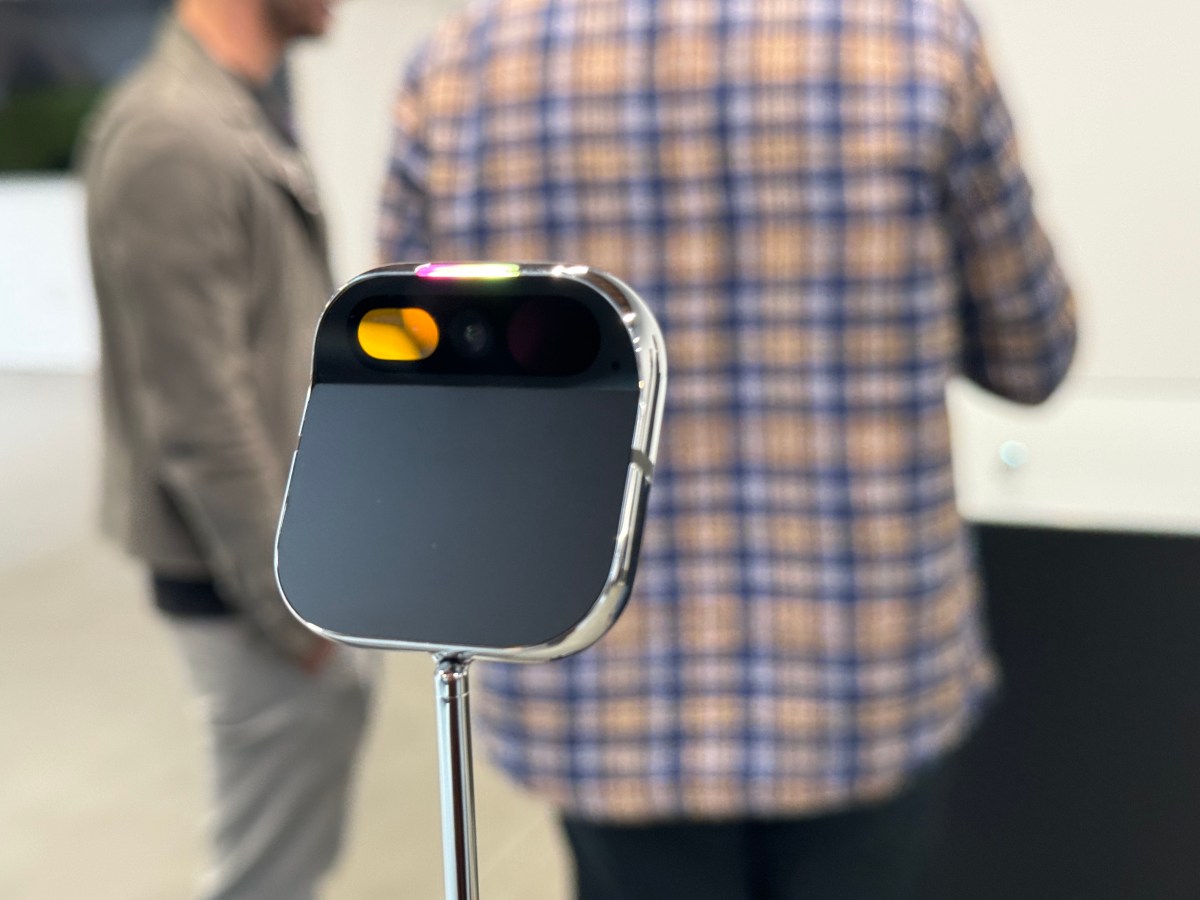
  • Humane’s AI Pin is Dead: The hardware startup announced that most of its assets have been acquired by HP for $116 million, less than half of the $240 million it raised in VC funding. The startup will immediately discontinue sales of its $499 AI Pins, and after February 28, the wearable will no longer connect to Humane’s servers. Customers who bought an AI Pin in the last 90 days are eligible for a refund, but anyone who bought a device before then is not.
  • Apple’s iPhone 16e Revealed: The 16e is part of an exclusive group of handsets capable of running Apple Intelligence due to the addition of an A18 processor. The iPhone 16e also ditched the Touch ID home button in favor of Face ID and swapped out the Lightning port in favor of USB-C. The iPhone 6e starts at $599 and will begin shipping February 28.

RIP, Duo: Duolingo "killed" its iconic owl mascot with a Cybertruck, and the marketing stunt is going surprisingly well. The company launched a campaign to save Duo — and encourage users to do more lessons — as the company says it’s "Duo or die." Read more.

OpenAI "Uncensors" ChatGPT: OpenAI no longer wants ChatGPT to take an editorial stance, even if some users find it "morally wrong or offensive." That means ChatGPT will now offer multiple perspectives on controversial subjects in an effort to be neutral. Read more.

Uber vs. DoorDash: Uber is suing DoorDash, accusing its delivery rival of stifling competition by intimidating restaurant owners into exclusive deals. Uber alleges that DoorDash bullied restaurants into only working with them. Read more.

Mira Murati’s Next Move: Former OpenAI CTO Mira Murati’s new AI startup, Thinking Machines Lab, has come out of stealth. The startup, which includes OpenAI co-founder John Schulman and former OpenAI chief research officer Barret Zoph, will focus on building collaborative "multimodal" systems. Read more.

Introducing Grok 3: Elon Musk’s xAI released its latest flagship AI model, Grok 3, and unveiled new capabilities for the Grok iOS and web apps. Musk claims that the new family of models is a "maximally truth-seeking AI" that is sometimes "at odds with what is politically correct." Read more.

Hackers on Steam: Valve removed a video game from Steam that was essentially designed to spread malware. Security researchers found that whoever planted it modified an existing video game in an attempt to trick gamers into installing an info-stealer called Vidar. Read more.

Another DEI U-turn: Mark Zuckerberg and Priscilla Chan’s charity will end internal DEI programs and stop providing "social advocacy funding" for racial equity and immigration reforms. The switch comes just weeks after the organization assured staff it would continue to support DEI efforts. Read more.

Amazon Shuts Down Its Android App Store: Amazon will discontinue its app store for Android in August in an effort to put more focus on the company’s own devices. The company told developers that they will no longer be able to submit new apps to the store. Read more.

Mark Zuckerberg’s Rebrand Didn’t Pay Off: A study by the Pew Research Center found that Americans’ views of Elon Musk and Mark Zuckerberg are more negative than positive. About 54% of U.S. adults say they have an unfavorable view of Musk, while a whopping 67% feel negatively toward Zuckerberg. Read more.

Noise-Canceling Headphones Could Hurt Your Brain: A new BBC report considers whether noise-canceling tech might be rewiring the brains of people who use it to tune out pesky background noise — and could lead to the brain forgetting how to filter sounds itself. Read more.

Analysis

  • An Exhaustive Look at the DOGE Universe: The dozens of individuals who work under, or advise, Elon Musk and DOGE are a real-life illustration of Musk’s weblike reach in the tech industry. TechCrunch has unveiled the major players in the DOGE universe, from Musk’s inner circle to senior figures, worker bees, and aides — some of whom are advising and recruiting for DOGE. We highlight both the connections between them and how they entered Musk’s orbit. Read more.

Conclusion

This week, we’ve seen a mix of tech updates, company changes, and controversies. From HP’s acquisition of Humane’s AI Pin to Duolingo’s farewell to its iconic owl mascot, there’s been no shortage of interesting news. We’ll continue to bring you the latest updates and analysis in the tech world.

FAQs

Q: What happened to Humane’s AI Pin?
A: The startup announced that most of its assets have been acquired by HP for $116 million, and will immediately discontinue sales of its $499 AI Pins.

Q: What’s happening to Duolingo’s owl mascot?
A: Duolingo "killed" its iconic owl mascot with a Cybertruck, and is launching a campaign to save Duo and encourage users to do more lessons.

Q: Why is OpenAI changing its approach to ChatGPT?
A: OpenAI no longer wants ChatGPT to take an editorial stance, and will now offer multiple perspectives on controversial subjects in an effort to be neutral.

How ‘Based’ Is Grok 3?

0

Transcript of "Hard Fork" Episode

Kevin Roose: I’m having quite a morning. I was on the train today, got off, went up the escalator at Embarcadero, and someone bumped into me and knocked my phone out of my hand and onto the platform below. I thought, "Well, I’m midway up the escalator. Someone will have snatched it or kicked it onto the tracks. My phone is gone."

Casey Newton: So how far did it drop?

Kevin Roose: Probably 15 feet. A significant drop. I thought to myself, if I get to the end of this escalator and come back down, it’s going to be too late. Someone will have snatched it or accidentally kicked it onto the tracks. My phone is gone.

Casey Newton: You don’t have much faith in the citizens of San Francisco.

Kevin Roose: Have you visited San Francisco?

Casey Newton: Yes, I think a phone can generally survive 30 seconds on the ground, but I guess we’ll find out what happens.

Kevin Roose: Anyway, I had severe separation anxiety in the split second before I decided to do what I did, which was to try to run down the crowded up escalator. So I became that guy who was pushing through the commuters, saying, "I’m sorry, I’m sorry."

Casey Newton: You were a character in a bad comedy, running down the up escalator.

Kevin Roose: [Laughing] Yes.

Casey Newton: I was at that platform this morning and I heard a woman screaming. But now I’m realizing that was you. Did you get the phone?

Kevin Roose: I did. It’s safe. No cracks. It was retrieved. But yeah, that was a wild way to start my day.

Casey Newton: Well, thank you to all the good Samaritans of San Francisco who did not steal Kevin’s phone during the 30 seconds when it was on the floor. It kind of restores your faith in humanity a bit.

Kevin Roose: Oh, it does.

Casey Newton: So, this week, another upstart AI lab has the tech world talking with the release of a powerful new large language model. But unlike the others, this one might be running the federal government by springtime.

Kevin Roose: [Laughing]

Casey Newton: This week, xAI, which is Elon Musk’s AI company, released its latest model, Grok 3. And based on their own benchmark results and early reviews, it seems like it’s basically on par with the best models out there right now. And while it hasn’t been subjected to rigorous, independent testing, the early word from AI nerds is that it’s pretty good.

Kevin Roose: Well, Grok 3 is the new premium tier model of Grok, which is xAI’s AI model. It’s available to Premium+ subscribers on X, which is their $40 a month premium tier, which is cheaper than OpenAI’s most powerful plan, which is $200 a month. But it’s also built into X, the former Twitter app.

Casey Newton: Yeah, and I should say that I actually have used Grok 3 for this exact same reason, which is I have just been given free access to this thing for some reason. I guess the Department of X Efficiency or DOXE has not yet uncovered my account.

Kevin Roose: Right. [Laughing]

Casey Newton: We both played around with it a little bit. What were your impressions of Grok 3?

Kevin Roose: Well, like others who have commented, it seems like it’s about as good as some of the other models. When I asked Grok about itself, it said Grok 3 launch is a pivotal moment in AI. It seemed like a bit much. But I also asked it if it had an opinion about Platformer, my newsletter, and it actually said some really nice things – which I had to respect.

Casey Newton: And you?

Kevin Roose: So I put it through some of my proprietary evals. I actually do have things that I test AI models on. The Roose benchmarks. And yeah, I would say it did OK. It was not mind-blowingly good. It was not bad. It got some things that other models missed and vice versa. It did have access to X data, which is interesting. You can do things like tell it to analyze this person’s posts on X and tell me what they think about this topic.

Casey Newton: There’s this famous question that we always love to ask large language models. Can you count the Rs in strawberry? I asked Grok the equivalent question for X, which is, can you count Elon Musk’s children? Which it’s known to be very hard for large language models.

Kevin Roose: Well, a new one just dropped.

Casey Newton: Exactly. And that’s why it’s so hard for them to keep up.

Kevin Roose: And part of Elon Musk’s pitch for Grok for the past year or… are just certain decisions that it will prompt you to make where you’re like, "I don’t actually know what these terms mean or what the right decision is here." And you can ask the AI to just make the decision for you, but you might not be totally happy with the result.

Casey Newton: Now, during this process, I’m curious if you felt like you were learning something about the coding process. Like, if you spent the next year making these little one-off apps, do you feel like you would maybe be a decent junior software engineer? Or is the idea actually not to get into the details, to just let it build things? And if you don’t know what it’s doing, that’s none of your business.

Kevin Roose: Yeah, I think I’m more in the latter camp. I mean, this was the part that I found fascinating about what Andrej Karpathy said about vibe coding. He’s an extremely good programmer. But he says that he now can enter this mode where he basically just says, "OK, OK, OK, accept, accept, accept, and the computer will go off and do its thing."

Casey Newton: You know, I’ve been thinking about a blog post I read this week by a guy named Namanyay Goel. And his blog post was titled "New Junior Developers Can’t Actually Code". This post got a million views, according to the post that I’m looking at. And he is saying that when he talks to junior developers, they are having an experience very similar to you, which is that as they are building these systems, they are essentially just supervising an AI. They aren’t actually getting their hands dirty and understanding which mechanisms are leading to which results.

Kevin Roose: Yeah, I think this is a very real thing. I mean, the flip side of me, a non-coder being able to build stuff, is that if real coders are using these tools, there’s no incentive for them to learn the basic skills of programming and learn the syntax of the different languages. And yeah, I don’t know what to do about that.

Casey Newton: What do you think?

Kevin Roose: It seems like a version of what happened when we all got like Google Maps on our phones is that people started losing their sense of direction. There’s this kind of skill atrophy issue that people worry about. But I think that the returns to knowing how to use these things effectively are still great enough and still require enough knowledge of how the various pieces of code fit together, that it still makes sense for people to learn to code.

Casey Newton: All right.

Kevin Roose: What do you think?

Casey Newton: What I think is that as AI systems get more and more powerful, we need people who do understand them on a very detailed, technical, complex, down-to-the-metal kind of way. And that if we don’t do that, our only alternative will just be to trust the AI when we ask it, "Hey, how do you work?" And there are a lot of reasons why I don’t want to end up in that world. So I’m comfortable having fewer people in this world who know the code at that level of detail. And it’s fine with me if most software engineers don’t. But I want a solid core of people who do.

Kevin Roose: Yeah. And I’d like to continue with my vibe-coding experiments, trying to build increasingly more useful tools for myself and my friends.

Casey Newton: And I’m thinking about starting because if you can do it, surely I can.

Kevin Roose: [Laughing] Yes, anyone can. That is sort of the point. And I also would love to hear from our listeners, what they are vibe coding. What tools and apps are you building using AI that are solving your own personal, specific problems?

Casey Newton: Did you invent a novel bio weapon using ChatGPT? We’d love to hear from you.

Kevin Roose: Yeah, please email that one to tips@fbi.gov.

Casey Newton: [Laughing] But the others, hardfork@nytimes.com.

[Upbeat electronic music]

Kevin Roose: "Hard Fork" is produced by Whitney Jones and Rachel Cohn. We’re edited by Rachel Dry. We’re fact-checked by Caitlin Love. Today’s show was engineered by Alyssa Moxley. Original music by Elisheba Ittoop, Marion Lozano, Diane Wong, Rowan Niemisto, and Dan Powell. Our audience editor is Nell Gallogly. Video production by Chris Schott, Sawyer Roque, and Pat Gunther. You can watch this full episode on

Grok 3 AI is now free to all X users

0

Grok 3 AI-Powered Chatbot Now Free for Anyone to Use

New Features and Capabilities

X’s latest release, Grok 3, is now free for anyone to use, marking a significant change from its initial paid subscription model. Launched earlier this week, Grok 3 is an AI-powered chatbot that offers a range of features and capabilities, including DeepSearch and Think modes.

DeepSearch Mode

DeepSearch is a game-changer for anyone looking to dig deeper into a topic. Similar to other AI-powered chatbots, such as ChatGPT Pro, Gemini Advanced, and Perplexity AI, this feature uses a virtual agent to search the web and present a detailed report on the topic. With DeepSearch, you can get in-depth information on a wide range of subjects, from science and technology to history and culture.

Think Mode

In addition to DeepSearch, Grok 3 also offers a Think mode, which uses a reasoning model to tackle complex problems in math, science, and coding. This feature is perfect for students, researchers, and professionals who need to solve complex problems or understand complex concepts.

Subscription Options

While the new AI is free for all X users, paid subscribers will still enjoy some advantages. X Premium+ and SuperGrok subscribers will have increased access to Grok and advanced features like Voice Mode, which is set to be rolled out soon. Voice Mode will allow the AI to speak using different voices, transcribe audio, and share transcriptions if desired.

Subscription Prices

X has increased the cost of X Premium+ to $40 per month, almost double the previous rate of $22. SuperGrok, a new type of subscription, will offer advanced features without the other aspects of a premium account, but the cost has yet to be revealed.

Using Grok 3

To access Grok 3, simply sign in to X and select the Grok entry on the left. Write and submit your request at the prompt, and Grok will consult a variety of sources to deliver its response. You can even access and view all the sources used to answer your request.

Conclusion

Grok 3 is an impressive AI-powered chatbot that has the potential to give ChatGPT, Google Gemini, and other AIs a run for their money. With its DeepSearch and Think modes, it’s an invaluable tool for anyone looking to dig deeper into a topic or solve complex problems.

Frequently Asked Questions

Q: What is Grok 3?
A: Grok 3 is an AI-powered chatbot that offers a range of features and capabilities, including DeepSearch and Think modes.

Q: Is Grok 3 free?
A: Yes, Grok 3 is now free for anyone to use.

Q: What are the subscription options?
A: X Premium+ and SuperGrok are the two subscription options, which offer increased access to Grok and advanced features like Voice Mode.

Q: How do I use Grok 3?
A: Simply sign in to X and select the Grok entry on the left, then write and submit your request at the prompt.