Home Blog Page 268

Job Search AI

0

Applying for Jobs Made Easier with Google’s Career Dreamer

Applying for jobs is hard work, but, before you get to that stage, you must figure out what roles to apply to. For many, this is challenging due to factors such as pivoting careers, returning to the workforce after years off, or unfamiliarity with the job-search process.

Career Dreamer

On Wednesday, Google unveiled Career Dreamer, a tool that helps users find skills and opportunities that best match their experiences based on a couple of quick prompts. Using AI to analyze patterns between educational backgrounds, skills, and interests, the tool can output career possibilities that could be a match.

My Experience

To get started, I visited the Career Dreamer webpage. There, I hit start and answered some questions about myself, such as my current role, tasks, and skills.

How it Works

After I entered my job title, the experience generated tasks corresponding to what a "tech reporter" typically does and allowed me to pick roles that apply to my job. This part of the process was instrumental because the output was tailored to my role, and oftentimes, it is hard to think of experiences on the spot.

Once I was done with the questions, I could add interests, education, and more experiences before seeing my job results on the web. The tool also generated a "Career Identity Statement," a blurb describing who I am. You can copy and paste this statement for your materials, or if it doesn’t align, you can click the "Re-generate" button.

Results

Below is what my generated statement said about me using my responses:

"I am a skilled journalist and content creator with a proven ability to explain complex technical topics clearly and engagingly. My background as a reporter for Tech has allowed me to develop a deep understanding of the tech industry. I excel at conducting thorough research, interviewing experts, and crafting compelling narratives across various media. I am adept at identifying key trends and insights and passionate about using my communication skills to inform and engage audiences."

Once I was ready, I clicked the button to explore the results and was shown a web of possible opportunities that suited me. Some were generated from job market database results, while others were from AI outputs, both designated:

Conclusion

Even though I am not actively looking for a role change or a new job, I enjoyed seeing all the possibilities, and I can see the tool being a helpful jumping board for career exploration.

FAQs

Q: How do I access Career Dreamer?
A: All you have to do is visit the webpage and follow the instructions you are given. As seen above, the process is seamless, and you’ll access your job web quickly.

Q: Is Career Dreamer free?
A: Yes, the experience is free.

Q: Can I use Career Dreamer even if I’m not actively looking for a job?
A: Yes, you can use Career Dreamer for career exploration and to gain insights into potential job opportunities.

Q: Can I use Career Dreamer to create a cover letter and refine my resume?
A: Yes, you can use the tool to draft a cover letter and refine your resume.

DeepSeek to Open-Source AGI Research Amid Privacy Concerns

0

DeepSeek Aims to Open-Source Five Repositories, Amid Controversies

DeepSeek, a Chinese AI startup, has announced plans to open-source five repositories, starting next week, as part of its commitment to transparency and community-driven innovation. This move is seen as a step towards democratizing technology and increasing transparency in the AI research community.

Rising Fast, Under Fire

DeepSeek has rapidly gained global acclaim for its advanced AI capabilities, but its exponential rise has also sparked debates about innovation and privacy. The company’s business model, offering its AI capabilities for free, has drawn criticism. US lawmakers are pushing for a ban on DeepSeek after security researchers found the app transferring user data to a banned state-owned company. A probe has also been launched by Microsoft and OpenAI over a breach of the latter’s systems by a group allegedly linked to DeepSeek.

DeepSeek’s Commitment to Open-Source

DeepSeek’s commitment to open-source its technology appears timed to deflect criticism and reassure sceptics about its intentions. Open-sourcing has long been hailed as a way to democratize technology and increase transparency. The company’s "daily unlocks," set to begin soon, could offer the community reassuring insight into its operations. However, questions remain over how much of the technology will be open for scrutiny and whether the move is an attempt to shift the narrative amid growing political and regulatory pressure.

Conclusion

DeepSeek’s open-source leap marks another turn in its dramatic rise. The company’s motto of "garage-energy and community-driven innovation" resonates with developers eager for open collaboration. However, its future may rest as much on its ability to address security concerns as on its technical prowess. The move could be seen as a step towards increasing transparency, but it remains to be seen whether it will be enough to satisfy lawmakers or deter critics.

Frequently Asked Questions

Q: What is DeepSeek’s goal with open-sourcing its technology?
A: DeepSeek aims to contribute to the broader AI research community and increase transparency in its operations.

Q: Why is DeepSeek open-sourcing its technology?
A: The company believes that open-sourcing will facilitate collaboration and accelerate innovation in the AI field.

Q: What are the potential benefits of open-sourcing AI technology?
A: Open-sourcing can democratize technology, increase transparency, and foster collaboration among developers and researchers.

Q: What are the potential risks associated with open-sourcing AI technology?
A: Open-sourcing can also increase the risk of security breaches and potential misuse of the technology.

Blurring Reality: A Trippy Odyssey

0

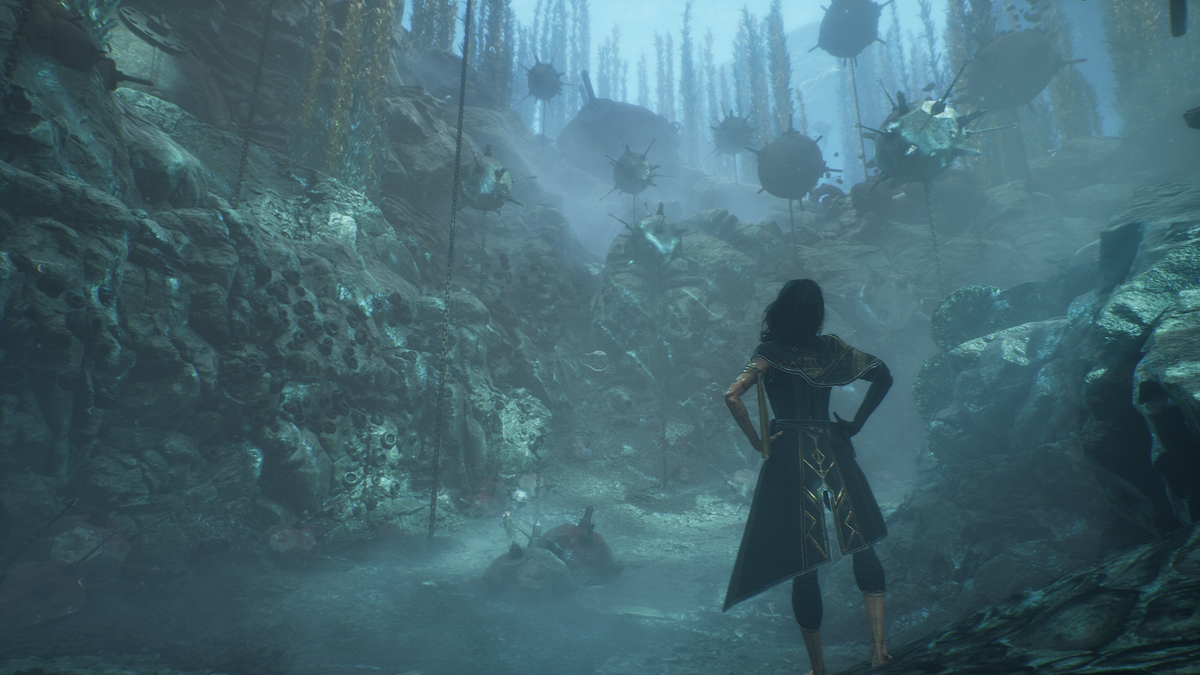
The Watery Design of Clair Obscur: Artistic Freedom and Inspiration

Nicholas Maxson-Francombe, art director on Sandfall Interactive’s Clair Obscur: Expedition 33, shares his creative process and inspirations behind the game’s unique art direction.

The Move to Unreal Engine 5

The transition to Unreal Engine 5 helped the team achieve realistic character faces, thanks to the power of Metahuman. However, with more games using the same powerful tools and engines, there’s a risk of games looking similar. "Maybe more games are going to be realistic, because it’s kind of became easier to do," says Tom Guillermin, CTO and co-founder of Sandfall.

Steampunk and Victorian Influences

Initially, the team drew inspiration from steampunk and the Victorian era. However, they soon shifted towards a more fantastical approach, incorporating elements of Final Fantasy. "I needed to try to find a mix between something like that and something a bit more modern," Nicholas explains.

Artistic Freedom and Inspiration

Nicholas emphasizes the importance of creative freedom in game development. "I try to look at landscapes that haven’t really been explored before," he says. "Like if you had an underwater level that’s not underwater." He cites Arkane Studios’ Dishonored and Bioshock as influences on the game’s design.

Conclusion

Clair Obscur: Expedition 33’s unique art direction is a result of the team’s creative freedom and willingness to experiment. The game’s use of Unreal Engine 5 has allowed for realistic character faces, while its fantastical approach sets it apart from other titles. As the game receives positive feedback, it’s clear that the team has achieved their goal of creating something unique.

FAQs

Q: What inspired the art direction of Clair Obscur: Expedition 33?
A: The team drew inspiration from steampunk and the Victorian era, as well as Final Fantasy and other games.

Q: How did the transition to Unreal Engine 5 affect the game’s design?
A: The new engine allowed for realistic character faces, thanks to Metahuman, but also raised concerns about the homogenization of game styles.

Q: What’s the goal of the game’s art direction?
A: To create something unique and stand out in a sea of similar-looking titles.

Q: How does the game’s design differ from other titles?
A: Clair Obscur: Expedition 33 features a fantastical, dream-like quality, with elements like underwater levels that aren’t actually underwater.

Deep Learning for Advancements in Age and Gender Recognition

0

Age and Gender Recognition: The Future of Identity Verification

The Rise of AI-Driven Age and Gender Recognition

Age and Gender Recognition have changed the game in fields like healthcare, security, and entertainment. Businesses and organizations are scrambling to find better, faster ways to get to know their customers and the need for accurate age and gender detection systems is higher than ever.

The Power of Artificial Intelligence

Enter artificial intelligence (AI) and deep learning—these tools are shaking things up and making these systems way more precise and efficient. AI models and neural networks are pushing age and gender recognition to new heights, offering real-time, scalable solutions that work across different platforms.

Real-Time, Scalable Solutions

With technologies like Face Recognition and Biometric Authentication, we’re changing the way people interact with devices—boosting security and making it easier to use. Add Liveness Detection into the mix, and these systems get even stronger, blocking spoofing attempts and making sure identity checks are spot-on.

Enhancing User Experience and Compliance

It’s helping businesses not just enhance user experience but also comply with global regulations, like age verification rules. In a world where personalized experiences and secure transactions are standard, using these advanced technologies is more important than ever.

Overview of Age and Gender Recognition Systems

Age and Gender Recognition is now crucial in AI-driven systems, transforming multiple industries with its advanced technology. The need for accurate systems is increasing, especially for services demanding strict identity verification.

Conclusion

With deep learning in play, age and gender recognition isn’t just something we can do—it’s the future, and it’s making systems across industries smarter, safer, and way more efficient.

Frequently Asked Questions

Q: Why is Age and Gender Recognition important?
A: Age and Gender Recognition is crucial for accurate identity verification, enhancing user experience, and complying with global regulations.

Q: What technologies are driving Age and Gender Recognition?
A: Artificial intelligence (AI), deep learning, Face Recognition, Biometric Authentication, and Liveness Detection are driving Age and Gender Recognition.

Q: How does Age and Gender Recognition benefit businesses?
A: It enhances user experience, improves security, and helps comply with global regulations.

Q: Where can I learn more about Age and Gender Recognition?
A: Visit https://faceplugin.com/age-and-gender-recognition-deep-learning-techniques/ to read the full article.

DDN Accelerates AI Storage Pipelines with Infinia 2.0

AI’s Insatiable Demand for Data Exposes a Growing Problem

AI’s insatiable demand for data has exposed a growing problem: storage infrastructure isn’t keeping up. From training foundation models to running real-time inference, AI workloads require high-throughput, low-latency access to vast amounts of data spread across cloud, edge, and on-prem environments. Traditional storage systems have often struggled under the weight of these demands, creating bottlenecks that can drastically delay innovation in the AI space.

DDN Unveils Infinia 2.0: A Game-Changer in AI Data Management

Today, DDN unveiled Infinia 2.0, a significant update to its AI-focused, software-defined data storage platform designed to eliminate the inefficiencies in AI storage and data management. The company claims that Infinia 2.0 acts as a unified, intelligent data layer that dynamically optimizes AI workflows.

Breaking Down the Barriers

DDN’s CEO, Alex Bouzari, emphasizes how Infinia builds on the company’s deep-rooted expertise in HPC storage to power the next generation of AI-driven data services. "Infinia 2.0 is not just an upgrade – it’s a paradigm shift in AI data management," Bouzari notes.

The Challenges of Scale, Speed, and Efficiency

As AI adoption grows, the challenges of scale, speed, and efficiency become more apparent. Large language models, generative AI applications, and inference systems require not only massive datasets but also the ability to access and process them faster than ever. Traditional storage solutions struggle with performance bottlenecks, making it difficult for GPUs to receive the data they need quickly enough, limiting overall training efficiency. At the same time, organizations must navigate the fragmentation of data across multiple locations, from structured databases to unstructured video and sensory data. Moving data between these environments creates inefficiencies, driving up operational costs and creating latency issues that slow AI applications.

Infinia 2.0: The Solution

DDN claims that Infinia 2.0 solves these challenges by integrating real-time AI data pipelines, dynamic metadata-driven automation, and multi-cloud unification, all optimized specifically for AI workloads. Rather than forcing enterprises to work with disconnected data lakes, Infinia 2.0 introduces a Data Ocean, a unified global view that eliminates redundant copies and enables organizations to process and analyze their data wherever it resides. This reduces storage sprawl and allows AI models to search and retrieve relevant data more efficiently using an advanced metadata tagging system. With virtually unlimited metadata capabilities, AI applications can associate vast amounts of metadata with each object, making search and retrieval operations dramatically faster.

Seamless Integration and Scalability

Infinia 2.0 integrates with frameworks like TensorFlow and PyTorch, eliminating the need for complex format conversions and allowing AI execution engines to interact with data directly, significantly speeding up processing times. The platform is designed for extreme scalability, supporting deployments that range from a few terabytes to exabytes of storage, making it flexible enough to meet the needs of both startups and enterprise-scale AI operations.

Performance Breakthroughs

Infinia 2.0 boasts 100x faster metadata processing, reducing lookup times from over ten milliseconds to less than one. AI pipelines execute 25x faster, while the system can handle up to 600,000 object lists per second, surpassing the limitations of even AWS S3. By leveraging these capabilities, DDN asserts that AI-driven organizations can ensure their models are trained, refined, and deployed with minimal lag and maximum efficiency.

Industry Endorsements

During a virtual launch event called Beyond Artificial, DDN’s claims were reinforced by strong endorsements from industry leaders like Nvidia CEO Jensen Huang, who highlighted Infinia’s potential to redefine AI data management, emphasizing how metadata-driven architectures like Infinia transform raw data into actionable intelligence. Enterprise computing leader Lenovo also praised the platform, underscoring its ability to merge on-prem and cloud data for more efficient AI deployment.

The Future of AI and Data Management

Reframing storage as an active layer of intelligence, enabling AI to retrieve insights instantly, is a game-changer in the AI landscape. With Infinia 2.0, DDN is positioning itself as a key player in the AI landscape, and its latest funding round of $300 million at a $5 billion valuation underscores its ambitions. As AI’s next frontier isn’t just about models and compute but is about rethinking data itself, DDN is making the case that the future of AI hinges on new paradigms for data management.

Conclusion

Infinia 2.0 has the potential to reshape how enterprises approach AI storage, not as a passive archive, but as an active intelligence layer that fuels AI systems in real-time. By eliminating traditional bottlenecks, unifying distributed data, and integrating seamlessly with AI frameworks, Infinia 2.0 aims to revolutionize how AI applications access, process, and act on information.

Frequently Asked Questions

Q: What is Infinia 2.0?
A: Infinia 2.0 is a software-defined, AI-focused data storage platform designed to eliminate the inefficiencies in AI storage and data management.

Q: How does Infinia 2.0 work?
A: Infinia 2.0 integrates real-time AI data pipelines, dynamic metadata-driven automation, and multi-cloud unification, all optimized specifically for AI workloads.

Q: What are the benefits of Infinia 2.0?
A: Infinia 2.0 eliminates traditional bottlenecks, unifies distributed data, and integrates seamlessly with AI frameworks, enabling faster processing, reduced latency, and increased efficiency.

Q: Who has endorsed Infinia 2.0?
A: Nvidia CEO Jensen Huang, Lenovo, and Supermicro have all endorsed Infinia 2.0, recognizing its potential to redefine AI data management.

Ikea Sends Racy Late-Night DMs

0

Ikea’s Cheeky DM Campaign: A Refreshing Twist on Corporate Audience Engagement

A Late-Night Offer Like No Other

Ikea recently slid into Canadian followers’ DMs with a cheeky "U up?" message, sending waves of excitement and curiosity throughout the marketing world. No, it wasn’t an admin mistakenly sending a risky text, but a crafty new campaign designed to engage potential customers in a unique and playful way.

The Campaign’s Clever Timing

From static billboard advertising to immersive social campaigns, switching things up in the modern marketing world is no easy task. Ikea’s bold and playful new campaign proves that taking risks and subverting expectations can make a big impact, redefining the way we think about marketing.

The campaign, devised by advertising agency Rethink, targeted around 200 Canadian followers between the hours of 10 pm to 5 am, sending them a surprise message with a free mattress offer. The clever timing is what sets this campaign apart, as creative director Robbie Percy explains: "We wanted to engage people exactly when they might be thinking about a better mattress — when they can’t sleep."

A Refreshing Twist on Corporate Audience Engagement

The crafty campaign coincides with a series of minimalist billboards bearing the simple "U up?" message, highlighting the playful and mysterious nature of the campaign. While it’s an unconventional marketing technique, the campaign is a prime example of how simple yet unique concepts can make for a golden viral opportunity, using out-of-the-box ideas to create authentic audience engagement.

Conclusion

Ikea’s cheeky DM campaign is a reminder that taking risks and thinking outside the box can lead to innovative and effective marketing strategies. By capitalizing on the perfect moment, this campaign shows that even the most unexpected approaches can yield impressive results. As the world of marketing continues to evolve, it’s campaigns like this that will shape the future of audience engagement.

FAQs

Q: What was the objective of Ikea’s DM campaign?
A: The objective was to engage potential customers in a unique and playful way, targeting those who might be considering a new mattress.

Q: How many people received the surprise message?
A: Around 200 Canadian followers received the surprise message.

Q: What was the clever timing behind the campaign?
A: The campaign targeted people between 10 pm and 5 am, when they might be thinking about a better mattress due to insomnia.

Q: What was the outcome of the campaign?
A: The campaign resulted in a golden viral opportunity, showcasing the power of unique and out-of-the-box marketing strategies.

The Zizian Saga

0

The Unraveling of LaSota

Fear and Uncertainty

That fear was evident among some rationalists as news of the violent incidents surrounding LaSota had spread. "I don’t want Ziz to ever think about me, ever," a person involved in the Bay Area rationalist community said in an interview in 2023. "I think I know enough to be correctly scared of Ziz."

The Court Ruling

That June, Judge Cappelli ruled against quashing the charges but reduced LaSota’s bail to $10,000, unsecured—meaning LaSota could sign a payment pledge and walk out. McGarrigle informed the court that LaSota’s mother had flown in from Alaska, "and she will take him home and make sure he comes back for all the court dates." The prosecutor seemed skeptical. "The Commonwealth’s concern is the flight," he told the judge. "There is literally zero ties to the community." What were the odds LaSota would show up for the next court date, in late August?

Sergeant Brian Parks’ Remarks

"I personally am not going to lose sleep over this matter," said Sergeant Brian Parks. "If they were here and running amok still, or running amok anywhere in the United States, causing concern for other agencies and people of our communities, then yeah, I’d want them prosecuted."

A Phone Call from Michelle

Around the same time, Michelle Zajko called her aunt Rosanne. They hadn’t spoken since the graveside service for Michelle’s parents that January. She hadn’t shown up at the memorial mass where Rosanne had eulogized Rita and Rick. But now Michelle was calling with a message: "She told me she wasn’t responsible" for the murders, Rosanne said. "But she said that she knew who was." She told her aunt that "LessWrong did it," and that she was "being targeted."

The Aftermath

Not long after, the trust that owned the house in Coventry, Vermont, where Michelle had lived with Alice Monday, sold it off. Michelle and Blank were both gone, having left the previous winter. When realtors came to inspect the property, they found the house had not been winterized, causing the pipes to burst. One of Blank’s family members, meanwhile, filed a national missing persons report, noting that he had last been seen in Pennsylvania, wore thick glasses, and had one eye that didn’t follow the other.

The Court Appearance

When LaSota’s court appearance came, on the morning of August 21, 2023, the courtroom gallery was full of defendants waiting to be called for the day’s pleas. Shortly after court was gaveled into session, an older woman with gray-blond hair pushed a wheelchair into the back of the courtroom. In it, slumped to one side and dressed in flowing black, was LaSota. Now her hair was black, and appeared even more disheveled than when she’d been in jail. She was wearing what appeared to be an industrial N95 respirator mask, with valves on either side. McGarrigle, approaching his client in the back of the courtroom, seemed surprised. "What’s going on?" he said, leaning in. "I mean, what’s going on with your health?"

The New Prosecutor

When LaSota’s case was called, the woman I later learned was LaSota’s mother wheeled her to the front, where she sat impassively in the chair, gazing blankly at the floor. A new prosecutor had replaced the old one, and requested a continuance to get on top of all the facts. The judge assented, pushing the trial to December. "I just want the record to reflect that the defendant is here, and we’re ready," McGarrigle said, before LaSota’s mother wheeled her back out through the doors.

Conclusion

The unraveling of LaSota’s case continued to unfold, with new developments and twists emerging at every turn. As the investigation into the murders and disappearances continued, the public remained on edge, wondering what was to come next.

FAQs

Q: What was the outcome of LaSota’s court appearance?
A: LaSota’s case was continued to December, with a new prosecutor requesting a continuance to gather more information.

Q: What was the reason for the continuance?
A: The new prosecutor wanted to get on top of all the facts in the case.

Q: What was LaSota’s health like during her court appearance?
A: LaSota appeared disheveled and was wearing an industrial N95 respirator mask with valves on either side. Her hair was black, and she seemed to be in a state of disarray.

Q: What was the outcome of the investigation into the murders and disappearances?
A: The investigation is ongoing, with new developments and twists emerging at every turn.

Boosting 3D Printing Yields with Filament Dryers

0

What is a Filament Dryer?

Filament dryers have been around for several years now, but many 3D printing groups and communities online will have you believe that wet filament is nothing more than a myth, quick to dismiss any issues occurring from it, and suggest these problems can be solved with simple software and printer tweaks. Let me save you the headache of troubleshooting and skip to the part where you come to terms with needing a way to dry out your filament (some people use an oven – but I wouldn’t recommend this).

These machines usually take the form of a chamber or boxed container to house your material spools, and remove moisture through heat while you print.

Which One Should I Buy?

When looking to buy a filament dryer to accompany your 3D printer, you’ll most likely come across a ton of options from a company called SUNLU. This manufacturer is one of the most trusted on the market and specialises in 3D printing accessories and materials including plastic filament, resin, ultrasonic cleaners, and it makes some of the best 3D pens too.

SUNLU has several filament dryers, from the more compact and circular S2 models (costing as little as $44.99), to the rectangular S4 FilaDryer – and now the newest SUNLU FilaDryer E2 machine is available to preorder at a price of $349.99 / £282.42, and offers professional-grade results, accommodating up to two 1kg spools of material.

SUNLU FilaDryer E2: A Game-Changer?

The E2 filament dryer from SUNLU is said to offer next-generation drying temperatures between 70°C and 110°C (the ACE Pro from Anycubic offers around 40°C in comparison) and has been designed specifically for advanced engineering hygroscopic materials such as Nylon and PC. If these filaments aren’t dried correctly, the trapped moisture can vaporise during your printing process and cause numerous issues like uneven surfaces on your prints.

Another standout feature of the SUNLU FilaDryer E2 is its annealing mode, which I believe is used to cement and stabilise your prints post-processing using heat for that added layer of strength. According to SUNLU, annealing your prints can improve dimensional accuracy, and enhance any mechanical properties. This isn’t something I’m too familiar with, but it sounds like a great added bonus for those seeking durable and rock-solid prints.

Other Options to Consider

For some alternative brands, you should also consider filament dryers from the likes of Creality (the Space Pi filament dryer is compact and affordable) as well as options from eSUN via Amazon for under $50, and there’s also the Polymaker PolyDryer too. Take a look at the deals below for some top filament dryers in your region.

Conclusion

In conclusion, wet filament can cause a range of issues with your 3D printing, from stringing to poor-quality surfaces, fragile models, rough edges, and even bubbles in your prints. However, with a filament dryer, you can ensure that your material is dry and ready for use, resulting in better print quality and fewer headaches. Whether you’re a seasoned 3D printing enthusiast or just starting out, a filament dryer is an investment worth considering.

Frequently Asked Questions

Q: What is a filament dryer?
A: A filament dryer is a machine that removes moisture from 3D printing filament, ensuring it is dry and ready for use.

Q: Why do I need a filament dryer?
A: Wet filament can cause a range of issues with your 3D printing, including stringing, poor-quality surfaces, fragile models, rough edges, and even bubbles in your prints.

Q: Which filament dryer is best for me?
A: The best filament dryer for you will depend on your specific needs and budget. Consider your 3D printing experience, the type of filament you use, and your desired level of print quality when choosing a filament dryer.

Q: Can I use an oven to dry my filament?
A: No, it’s not recommended to use an oven to dry your filament. This can cause uneven drying, which can lead to poor print quality. Instead, consider a dedicated filament dryer designed specifically for this purpose.

GeForce RTX 5070 Ti for AI & Content Creation

0

Ready for the Generative AI Era

The NVIDIA GeForce RTX 5070 Ti graphics cards — built on the NVIDIA Blackwell architecture — are out now, ready to power generative AI content creation and accelerate creative performance.

Improved Performance

GeForce RTX 5070 Ti GPUs feature fifth-generation Tensor Cores with support for FP4, doubling performance and reducing VRAM requirements to run generative AI models.

In addition, the GPU comes equipped with two ninth-generation encoders and a sixth-generation decoder that add support for the 4:2:2 pro-grade color format and increase encoding quality for HEVC and AV1. This combo accelerates video editing workflows, reducing export times by 8x compared with single encoder GPUs without 4:2:2 support like the GeForce RTX 3090.

Increased Memory and Bandwidth

The GeForce RTX 5070 Ti GPU also includes 16GB of fast GDDR7 memory and 896 GB/sec of total memory bandwidth — a 78% increase over the GeForce RTX 4070 Ti GPU.

Versatile Viewports

DLSS 4 is now available in Chaos Vantage and D5 Render in beta — popular professional-grade 3D apps for architects, animators and designers.

Both apps natively support DLSS 4’s improved Super Resolution and Ray Reconstruction models — powered by transformers — to increase image detail and improve stability.

D5 Render also supports DLSS 4’s DLSS Multi Frame Generation to boost frame rates by using AI to generate up to three frames per traditionally rendered frame.

Conclusion

The NVIDIA GeForce RTX 5070 Ti is a powerful tool for generative AI content creation, with improved performance, increased memory and bandwidth, and versatile viewports. Whether you’re an architect, animator, or designer, this GPU is ready to help you bring your creative vision to life.

Frequently Asked Questions

Q: What is the NVIDIA GeForce RTX 5070 Ti GPU?

A: The NVIDIA GeForce RTX 5070 Ti is a graphics processing unit built on the NVIDIA Blackwell architecture, designed for generative AI content creation and acceleration of creative performance.

Q: What are the key features of the GeForce RTX 5070 Ti GPU?

A: The GeForce RTX 5070 Ti GPU features fifth-generation Tensor Cores with support for FP4, two ninth-generation encoders, and a sixth-generation decoder, as well as 16GB of fast GDDR7 memory and 896 GB/sec of total memory bandwidth.

Q: What is DLSS 4, and how does it improve performance?

A: DLSS 4 is a suite of neural rendering technologies that uses AI to boost frames per second (fps) and improve image quality. It is available in popular professional-grade 3D apps like Chaos Vantage and D5 Render, and can boost frame rates by 3x using AI to generate up to three frames per traditionally rendered frame.

Q: How can I get my hands on a GeForce RTX 5070 Ti GPU or prebuilt system?

A: You can use NVIDIA’s product finder to pick up a GeForce RTX 5070 Ti GPU or prebuilt system, or check back regularly after 6 a.m. PT, as retail partners list their available models. Explore complete specifications and more information on the NVIDIA website.

Wanderstop: Deco Impressions

0

The Art of Wanderstop: A Cosy Game with a Twist

After the acclaim of The Stanley Parable and the polarising response to The Beginner’s Guide, one thing you can be certain of is to expect the unexpected from game developer Davey Wreden’s narrative-based games. You just might not have expected that his next game, Wanderstop, developed under new studio Ivy Road, would be a cosy game about making tea.

Visual Scripting and Cosy Aesthetics

Wanderstop is another example of the visual scripting, or no-code game development. It’s putting more creativity in the hands of artists, like Temi Olujobi, the game’s art director, environment lead, and level designer. "I’ve made tons of games that maybe have ‘cosy’ elements. There might not be a win condition for the game, I’m really just crafting an experience for folks to complete, so there’s no more focus on spending time in the environment rather than competing," Olujobi explains.

The game’s art style is heavily influenced by historical Western art styles, notably impressionist art and art nouveau. "Impressionist art is used for our vegetation, and I think it works for cosy games really well, because it totally evokes a lot of feeling, you can almost feel the colours in the environment and feel the textures of them," Olujobi continues. "Art nouveau is a very decadent and indulgent style of art, making super intricate shapes and silhouettes, all based on natural forms and nature. And I think that also worked for Wanderstop, because the environment is like a character in the game."

Rube Goldberg-Style Tea Making

The centrepiece of Wanderstop is arguably the Rube Goldberg-inspired tea-making contraption that sits at the centre of the shop, simply referred to as the tea machine. It looks wonderfully complex, and quite deliberately so. "Initially, it was one orb, but Davey wanted to make it more elaborate, because that was the main core gameplay that we had at the time," Olujobi explains. "He started iterating on different numbers of orbs to have within the tea-making process. After much testing and feedback from folks on the team, he settled on three orbs, one for mixing, one for heating, and one for pouring."

Story and Ambiguity

Beneath the cosy aesthetic and charming mechanics, it’s all in service of a narrative that’s about a cosy setting that its protagonist Alta doesn’t want to be in. She’s a warrior who only cares about victory in battle, but after running into successive defeats is on her way to train with a master until she finds herself lost in a forest, exhausted and unable to even pick up her own sword. Rather than resting, relaxing, and brewing tea, she’s restless to get back out there. I then can’t help but wonder if there are visual signs that not all is as it seems. If Alta is unable to leave the shop and the forest surrounding it, is it not essentially a prison or purgatory? And what’s with the colour of the sky, which makes the time of day ambiguous?

Olujobi is naturally keen to keep schtum on the story, but not without humouring my theories. "Totally based on perspective, it could be a prison, it could also be sort of like a retreat space, but I think it’s funny that the tea shop that you play in could totally be seen as a panopticon," they tease. "It definitely wasn’t something I was intentionally thinking of, but I totally welcome the analogy!"

Conclusion

Wanderstop releases on 11 March 2025 for PS5 and PC. With its unique blend of visual scripting, cosy aesthetics, and Rube Goldberg-style gameplay, it’s an experience that’s sure to delight. Whether you’re a fan of Davey Wreden’s previous work or just looking for a relaxing game to unwind with, Wanderstop is definitely worth checking out.

FAQs

Q: What is Wanderstop?
A: Wanderstop is a cosy game about making tea, developed by Davey Wreden and published by Ivy Road.

Q: What is the gameplay like?
A: The gameplay is focused on crafting an experience, rather than competing, with a Rube Goldberg-style tea-making contraption at its centre.

Q: Is Wanderstop a relaxing game?
A: Yes, Wanderstop is designed to be a relaxing experience, with a focus on exploration and discovery rather than competition or conflict.

Q: Will Wanderstop be available on multiple platforms?
A: Yes, Wanderstop will be released on PS5 and PC on 11 March 2025.