Home Blog Page 281

Meghan Markle’s Classy Rebrand Shines in Its Simplicity

0

Meghan Markle Relaunches Lifestyle Brand with a Fresh New Era

A New Chapter for As Ever

Meghan Markle has relaunched her lifestyle brand under a new name, As Ever, introducing a fresh new era that captures the brand’s original bespoke charm. The new brand takes a more personal approach, combining sleek design with heartfelt personal flourishes.

A Refined Evolution

The original brand name, American Riviera Orchard, was subject to a rejected logo trademark application in September. As Ever’s new design approach is a refined evolution, with a sleek new crest and classy calligraphic wordmark that celebrates the Duchess’ creative side.

A More Fluid Brand

The Duchess claims that the new title is less restrictive, allowing for a more fluid brand. In an Instagram post announcing the new brand, Meghan shared, "This new chapter is an extension of what has always been my love language, beautifully weaving together everything I cherish – food, gardening, entertaining, thoughtful living, and finding joy in the everyday."

The New Brand Aesthetics

The highlight of the rebrand is the As Ever website, featuring a new wordmark logo and intricate crest. The handwritten calligraphy-style logo has a soft, romantic feel, complemented by a lush Californian backdrop featuring the Duchess and her daughter Lilibet running through their garden. Two hummingbirds frame a delicate palm tree on the brand’s new crest, pairing minimalist illustration with elegant linework to create a classy, scalable design.

A Comparison of the Old and New Logos

As Ever and American Riviera Orchard logo comparison.
(Image credit: As Ever/American Riviera Orchard)

Conclusion

As Ever shines in its simplicity – an unfussy yet refined brand built upon passion and bespoke creativity. Despite its rocky beginnings, the Duchess’ lifestyle brand has evolved into a charming identity rooted in stripped-back style dripping in minimalist class.

FAQs

Q: What is the new name of Meghan Markle’s lifestyle brand?
A: As Ever.

Q: Why was the original brand name, American Riviera Orchard, rejected?
A: The logo trademark application was rejected.

Q: What is the key difference between the old and new logos?
A: The new logo is more simplified and features a more personal approach.

Q: What is the theme of the new brand?
A: Food, gardening, entertaining, thoughtful living, and finding joy in the everyday.


New Method Reveals Control of AI Model Predictions in Protein Sequences

0

Overview

  • Research explores understanding and controlling protein language models using sparse autoencoders
  • Introduces new methods to interpret how these models process protein sequences
  • Demonstrates ability to steer model behavior by manipulating identified features
  • Achieves improved protein feature detection compared to previous methods
  • Validates findings through biological experiments and statistical analysis

Plain English Explanation

Protein language models work like predictive text for proteins, learning patterns in amino acid sequences. This research develops tools to peek inside these models and understand how they work, similar to opening up a black box to see the gears turning inside.

The team used sparse autoencoders to interpret how these models process protein sequences. This allows for a deeper understanding of how the models work and how to control their behavior.

Methodology

The researchers employed a combination of techniques, including:

  • Sparse autoencoders to learn compact representations of protein sequences
  • Transfer learning to fine-tune the models on specific protein sequences
  • Evaluating the performance of the models using various metrics, including precision, recall, and F1-score

Conclusion

This research demonstrates the potential of using sparse autoencoders to interpret and control protein language models. By understanding how these models process protein sequences, researchers can develop more accurate and reliable methods for protein feature detection and prediction.

FAQs

What are protein language models?

Protein language models are machine learning models that learn patterns in amino acid sequences, similar to predictive text models for natural language processing.

What is the goal of this research?

The goal of this research is to develop tools to interpret and control protein language models, enabling researchers to better understand how they process protein sequences and make more accurate predictions.

How does the research achieve this goal?

The research uses sparse autoencoders to learn compact representations of protein sequences, allowing for a deeper understanding of how the models work and how to control their behavior.

What are the implications of this research?

This research has implications for the development of more accurate and reliable methods for protein feature detection and prediction, as well as a deeper understanding of how protein language models process protein sequences.

How does this research impact the field of bioinformatics?

This research has the potential to improve the accuracy and efficiency of protein feature detection and prediction, which can lead to breakthroughs in our understanding of protein function and disease.

I Can’t Believe This Blender Scene Isn’t Real

0

Blender Project: A Cassette-filled Room that Looks Like a Photo

We’ve seen some impressive Blender projects in recent years, but this one caught our attention for a different reason: it looks so real. The digital artist Daniel Skomorovsky created a 3D render that resembles a photo from a retro indie album cover.

The Creation Process

Skomorovsky first created the environment using cassette meshes. He started with a base cassette model and then compiled a range of uniform-size textures into a perfect grid as a form of sprite-sheet. By shifting the projection in the UV editor and applying random offsets, he achieved a sense of variation that makes the texture appear non-repeating.

Adding the Model

Next, Skomorovsky added the model – his girlfriend. He had her pose and then used a greenscreen key in the video editing software Davinci Resolve to add the image plane into the scene. To ensure consistency, he took the greenscreen photos after completing the initial 3D work, matching the pose and lighting to his desired scene look.

The Result

The combined 3D render is impressive, with a real sense of place. "I can smell the record store dank, and I like it," a commenter on Reddit said, and I agree. The image is so convincing that you need to zoom in very close to tell it’s a composite of two scenes.

The Final Touches

To achieve this look, Skomorovsky used a combination of Blender and Photoshop. He drew the textures and edited them in Photoshop to create the desired effect.

Conclusion

This project showcases the capabilities of Blender and the creative potential of its users. With the right techniques and tools, it’s possible to create stunning 3D renders that rival photographs.

FAQs

Q: What is Blender?
A: Blender is a free, open-source 3D creation software.

Q: What is a sprite-sheet?
A: A sprite-sheet is a 2D texture that contains a series of repeating elements, often used in video games and animation.

Q: What is a greenscreen key?
A: A greenscreen key is a technique used to remove the background from a video and replace it with a new background, often used in video editing software like Davinci Resolve.

Q: Where can I see more of Daniel Skomorovsky’s work?
A: You can find more of his work on his ArtStation account.

Tencent Shifts AI Focus

Unlock the Editor’s Digest for free

Roula Khalaf, Editor of the FT, selects her favourite stories in this weekly newsletter.

Tencent’s AI Bet: A Calculated Risk

Tencent’s messaging app operates at a scale few global platforms can match. With 1.4bn users and a 93% share among Chinese internet users, it has long been a part of daily life among locals. Yet scale alone is not a guarantee of continued dominance. With artificial intelligence quickly reshaping industries in China, Tencent is now making a calculated bet on its next big transformation.

A New Direction for AI

Tencent’s stock has risen 15% in the past week, driven by the announcement that its social media and messaging app Weixin will integrate AI-powered search from DeepSeek, China’s answer to OpenAI. This is more than just a feature upgrade. It marks a significant shift in Tencent’s AI strategy: choosing an external partner over its own proprietary large language model.

The Power of AI

Tencent has good reason for its all-in bet on AI. The technology was already driving its growth. Tencent profits rose 47% in the third quarter, beating expectations. Advertising revenue rose almost a fifth to $4.1bn, largely due to AI-powered video ads and recommendation algorithms. This self-reinforcing cycle, where AI drives engagement, engagement generates more data, and data refines AI models, is quickly becoming an important edge.

Beyond Search and Ads

Tencent’s ambitions go beyond search and ads. In China’s cloud sector, it lags behind local rival Alibaba, which has 36% of the market, and Huawei Cloud, which has about a fifth. The Chinese cloud market is growing fast, with infrastructure service spending in mainland China exceeding $10bn and growing more than a tenth in the third quarter, according to Canalys, as companies race to include AI in their operations. Here, DeepSeek’s AI capabilities could serve as a key differentiator for Tencent’s cloud business, boosting its AI development tools and enterprise services as it builds out its market share.

A Calculated Risk

By integrating DeepSeek into its products instead of relying on its proprietary AI, Tencent is making a trade-off: flexibility over full in-house control. In China’s fast-changing, fiercely competitive AI landscape, where speed and scalability matter as much as innovation, this compromise may be a necessary one.

Conclusion

Tencent’s AI bet is a calculated risk, but one that could pay off in the long run. As the company looks to expand its cloud business and stay ahead of the competition, its decision to partner with DeepSeek could be a strategic move. With the Chinese cloud market growing rapidly, Tencent’s AI capabilities could be a key differentiator, driving growth and profitability in the years to come.

FAQs

Q: What is Tencent’s stock performance like?
A: Tencent’s stock has risen 15% in the past week, driven by its announcement to integrate AI-powered search from DeepSeek into its Weixin app.

Q: What is DeepSeek?
A: DeepSeek is China’s answer to OpenAI, a large language model that can be used for a variety of AI-powered applications.

Q: Why is Tencent partnering with DeepSeek instead of using its own AI model?
A: Tencent is making a trade-off: flexibility over full in-house control. By partnering with DeepSeek, it can access the company’s AI capabilities more quickly and scale its applications faster.

Q: What is the Chinese cloud market like?
A: The Chinese cloud market is growing rapidly, with infrastructure service spending in mainland China exceeding $10bn and growing more than a tenth in the third quarter, according to Canalys.

Elon Musk’s xAI adds ‘Big Brain’ reasoning to Grok-3

0

xAI Unveils Grok-3: The Future of Artificial Intelligence

New AI Model Boasts Advanced Reasoning Capabilities

Elon Musk’s xAI has unveiled Grok-3, a new artificial intelligence model that boasts "more than 10 times" the compute power of its predecessor. The new model outperforms OpenAI’s GPT-4o, Google’s Gemini, and DeepSeek’s V3 models in early testing, and features "advanced reasoning" capabilities.

What is Reasoning AI?

So-called reasoning models are trained to answer more complex questions by breaking instructions down into smaller tasks and attempting to fact-check themselves before offering a solution, with the aim of providing stronger results. Similar models have been developed by rival companies, including OpenAI’s o1, DeepSeek’s R1, and Google’s Gemini Flash Thinking.

Grok-3 Features and Modes

There are two Grok-3 reasoning modes available: "Think", which will display Grok’s reasoning as it resolves requests; and "Big Brain" for complex tasks that require more computational power. xAI is also launching a Grok AI agent product called Deep Search, which the company describes as a "next generation search engine".

Pricing and Subscription Plans

The Grok-3 reasoning capabilities are available in the Grok app for subscribers to X Premium Plus, which now starts at $40 per month. This is the second hike for Premium Plus in two months, having increased from $16 to $22 in December. xAI is also launching a new subscription plan called SuperGrok that will provide "the most advanced capabilities and earliest access to new features" for $30 per month.

Upcoming Features and Open-Source Release

Elon Musk said that the Grok chatbot will soon gain a synthesized voice feature that sounds similar to OpenAI’s Advanced Voice Mode for ChatGPT. xAI is also planning to make Grok-2 open source in the coming months.

FAQs

Q: What is the compute power of Grok-3 compared to its predecessor?
A: Grok-3 has "more than 10 times" the compute power of its predecessor.

Q: How does Grok-3 compare to rival AI models?
A: Grok-3 outperforms OpenAI’s GPT-4o, Google’s Gemini, and DeepSeek’s V3 models in early testing.

Q: What are the two reasoning modes available in Grok-3?
A: "Think" and "Big Brain" modes are available, with "Think" displaying Grok’s reasoning as it resolves requests, and "Big Brain" for complex tasks requiring more computational power.

Q: How much does the Grok app cost for X Premium Plus subscribers?
A: The Grok app is available for X Premium Plus subscribers, with a new pricing starting at $40 per month.

Q: What is SuperGrok, and how much does it cost?
A: SuperGrok is a new subscription plan that will provide "the most advanced capabilities and earliest access to new features" for $30 per month.

The Making of Adorable Animals in Stunning Animation

0

Stop-Motion Animation: A Timeless Technique for Captivating Storytelling

Stop-motion is one of the oldest animation styles, dating back to the 19th century. It remains popular today in claymation hits like Wallace and Gromit. And combined with new technology, it continues to be a powerful technique for captivating storytelling, as this stirring new ad shows.

Humane World for Animals’ New TV Ad

The animal welfare charity Humane Society International and Humane Society are rebranding as Humane World for Animals. To announce the new identity, the newly combined organisation has launched a new TV ad that uses a unique hybrid animation approach with stunning results (see our guide to the best animation software and the best laptops for animation if you’re looking to get started on your own animation projects).

Behind the Scenes

The new ad for the Humane World for Animals launch was made by Nexus Studios and director Johnny Kelly. It’s set to music by Sia, who has recorded a rendition of Peter Gabriel’s 1977 hit Solsbury Hill. The animation was made using incredibly lifelike handmade puppets and intricate stop-motion animation to tell the stories and transformations of five animals. Nexus has made the behind-the-scenes film below, revealing the painstaking process involved in creating the piece.

The Creative Approach

The rebranded charity initially decided to use animation to avoid using real animals and the potential harm that could cause. Nexus Studios’ creative approach allowed the brand to depict stories that show how it intervenes to improve the treatment of animals, from farm animals, to endangered species and marine life.

The Result

The use of real puppets and stop motion adds a warmth and emotion to the piece, while the hybrid approach creates a strikingly unique and realistic look.

The Director’s Perspective

Johnny from Nexus said the project was an ambitious experiment. "Summoned by the clarion call of animal welfare and adorable miniature stop-motion puppets, we were able to amass an incredibly talented crew and create a unique hybrid approach incorporating LED screens," he said. "It was an experiment — but Nexus have a knack for jamming traditional techniques and high-end technology together so you get the best of both worlds — and in this instance, it allowed us to dream big with our ambitions and storytelling. To tell stories that hint at the incredible work Humane World for Animals carries out around the globe."

Conclusion

Stop-motion animation remains a powerful technique for captivating storytelling, and this new ad showcases its ability to evoke emotions and convey complex stories. The use of handmade puppets and stop-motion animation creates a unique and realistic look, making it an effective way to communicate the work of Humane World for Animals.

Frequently Asked Questions

Q: What is stop-motion animation?
A: Stop-motion animation is an animation technique that involves physically manipulating objects or puppets and photographing them in small increments, then playing back the resulting frames to create the illusion of movement.

Q: What is the benefit of using stop-motion animation in this ad?
A: The use of stop-motion animation allows for the creation of lifelike puppets and a unique, realistic look, which is particularly effective for telling stories that highlight animal welfare issues.

Q: What is the purpose of the new rebranding?
A: The rebranding is intended to unify the two separate entities, Humane Society International and Humane Society, under one new identity, Humane World for Animals.

Unreal Engine 5: A Double-Edged Sword

0

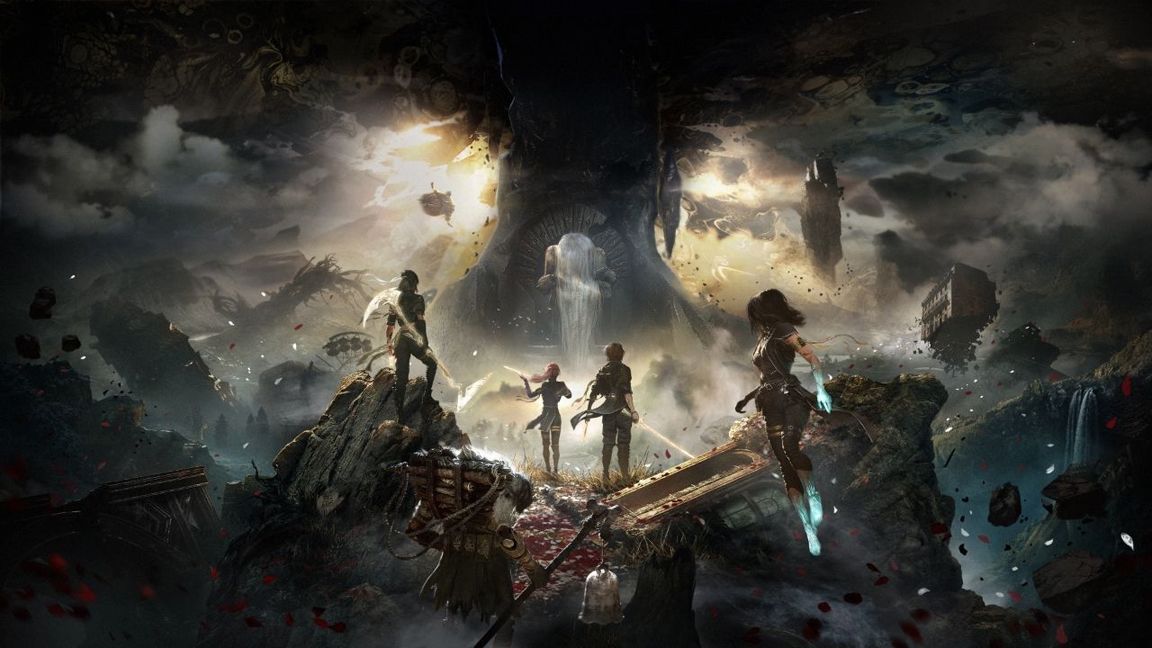
Unreal Engine 5 Powers Small Team to Create Stunning Visuals in Clair Obscur: Expedition 33

Unreal Engine Enables Small Teams to More

Sandfall Interactive has been working on Clair Obscur: Expedition 33 for a number of years, and the team leapt at the chance to upgrade to Unreal Engine 5 in 2022. "It was a game changer for us," says Tom Guillermin, CTO and co-founder of Sandfall, and lead programmer on the game. The engine provided powerful lighting and geometry tech in the form of Lumen and Nanite, as well as easing a lot of pain points around things like character creation.

From UE4 to UE5: A Smooth Transition?

The team had been working with Unreal Engine 4 before the release of Unreal Engine 5, and the switch was not entirely smooth. "It was a bit of a struggle at first," recalls Art Director Nicholas Maxson-Francombe. Many of the plugins they had been using in UE4 didn’t work in UE5, requiring many hacks and workarounds. Tom adds that Lumen’s initial switch completely ruined all of the carefully calibrated lighting the team had already implemented. "We had some locations that had a very specific look to them, and we had to retune everything to get back that look."

Taking Advantage of Free Assets

One thing that has been a big help is all the 3D assets that Epic regularly gives away. "When we started off with Unreal, we used a lot of the free packs that came in monthly," says Nicholas. "We sometimes reuse some of the stuff and retexture it, remodel it to make it fit our mood and our world. So that really helped in terms of our pipeline. Especially with rocks: you’ll find those everywhere." He notes that the team does create some assets from scratch, but many others are freebies that have been carefully remixed and repurposed.

Focusing on ‘Hero Assets’

Tom suggests that it makes sense for the team to focus most of their time on what he calls ‘hero assets’ rather than, say, stones. "That’s what makes the level stand out, in the end, more than having, like, super rocks." Nicholas adds, "It’s really thinking of those unique shapes that will be the landmark of your level. It’s about putting effort into the things that stand out, and spending less time on the things that ‘no one’s going to ever look at’."

Conclusion

Clair Obscur: Expedition 33 is a testament to the power of Unreal Engine 5 in the hands of a small team. With its stunning visuals and engaging gameplay, it’s a game that’s definitely worth keeping an eye on.

Frequently Asked Questions

Q: How did the team transition from Unreal Engine 4 to Unreal Engine 5?
A: The transition was not entirely smooth, with many plugins not working and requiring hacks and workarounds.

Q: What tools did the team use to create the game’s visuals?
A: The team used Lumen, Nanite, and other tools provided by Unreal Engine 5, as well as free assets from Epic Games.

Q: How did the team approach asset creation?
A: The team created some assets from scratch, but also repurposed and reworked free assets to fit their needs.

Q: What is the focus of the game’s development?
A: The team focused on creating "hero assets" that stand out, rather than spending too much time on minor details.

What the US’ first major AI copyright ruling might mean for IP law

0

All about the headnotes

Ross was accused of using headnotes — summaries of legal decisions — from Westlaw, Reuters’ legal research service, to train its AI. Ross marketed its AI as a tool to analyze documents and perform query-based searches across court filings.

Ross’ argument for transformative use

Ross argued that its use of copyrighted headnotes was legally defensible because it was transformative, meaning it repurposed the headnotes to serve a markedly different function or market. In his summary judgment, Stephanos Bibas, the judge presiding over the case, didn’t find that argument particularly convincing.

Bibas’ rejection of Ross’ argument

Bibas said in his opinion that Ross was repackaging Westlaw headnotes in a way that directly replicated Westlaw’s legal research service. The startup’s platform didn’t add new meaning, purpose, or commentary, Bibas determined — undermining Ross’ claim of transformative use.

Narrow in application

Already, at least one set of plaintiffs in another AI copyright case have asked a court to consider Bibas’ decision. But it’s not yet clear whether the precedent will sway other judges.

Future outlook for generative AI

Bibas’ opinion made a point of distinguishing between “generative AI” and the AI that Ross was using, which didn’t generate content but merely spat back judicial opinions that were already written.

Generative AI, which is at the center of copyright lawsuits against companies such as OpenAI and Midjourney, is frequently trained on massive amounts of content from public sources around the web. When fed lots of examples, generative AI can generate speech, text, images, videos, music, and more.

Most companies developing generative AI argue that fair use doctrines shield their practice of scraping data and using it for training without compensating — or even crediting — the data’s owners. They argue that they’re entitled to use any publicly available content for training and that their models are in effect outputting transformative works.

Conclusion

The ruling could have significant implications for the more than 39 copyright-related AI lawsuits currently working their way through U.S. courthouses. While it’s not a slam dunk for plaintiffs who allege that AI companies violated their IP rights, it does provide a potential boost to their cases.

Frequently Asked Questions

Q: What does the ruling mean for AI companies?

A: The ruling may make it more difficult for AI companies to use copyrighted material for training without permission.

Q: What does the ruling mean for copyright holders?

A: The ruling may provide a potential boost to copyright holders who are suing AI companies for allegedly infringing on their intellectual property rights.

Q: Is the ruling limited to this specific case?

A: Yes, the ruling is specific to this case and may not have broader implications for other AI-related copyright disputes.

Q: Will this ruling have an impact on generative AI?

A: The ruling may not directly impact generative AI, but it could have implications for the development and use of generative AI models that rely on copyrighted material for training.

X doubles Premium+ plan prices after Grok 3 release

0

xai Raises Price for Premium+ Subscription Plan

New Pricing Structure for xai’s Premium+ Plan

Hours after the release of xai’s latest AI model, Grok 3, the company has significantly hiked the price for its top Premium+ subscription plan. The monthly subscription price for Premium+ in the U.S. has been updated to $50, with an annual subscription costing $350. This is the second time xai has raised the price for the Premium+ plan in the past couple of months.

Price Hike for Premium+ Plan

The new pricing structure is a significant increase from the original price of $16 per month, with the annual subscription costing $192. The current price hike means that Premium+ subscribers will be paying more than double what they currently pay. This increase is likely to be a shock to many subscribers who were expecting the price to remain the same.

New Features Behind SuperGrok Plan

xai has announced that some of Grok 3’s features will be available only through a separate SuperGrok plan, accessible through the Grok app. This means that Premium+ plan users will not have access to all of the features, including "deep search" and "reasoning".

Pricing Inconsistencies

When attempting to sign up for the Premium+ plan, xai’s website listed different prices. The sign-up page showed a price of $39.83 per month, while the check-out page listed a price of $395 for a year. This lack of consistency highlights the need for xai to clarify its pricing structure.

Image Credits

Image: Screenshot by TechCrunch

FAQs

Q: What is the new price for the Premium+ plan?
A: The new price for the Premium+ plan is $50 per month, with an annual subscription costing $350.

Q: What features will be available to Premium+ plan users?
A: Premium+ plan users will have access to some of Grok 3’s features, but not all of them. Some features, such as "deep search" and "reasoning", will be available only through the SuperGrok plan.

Q: How do I sign up for the Premium+ plan?
A: You can sign up for the Premium+ plan through xai’s website. However, be aware that the pricing structure may be inconsistent, with different prices listed on different pages.

Q: What is the purpose of the SuperGrok plan?
A: The SuperGrok plan is a separate plan that offers access to more advanced features, including "deep search" and "reasoning".

The Best Streaming Service Deals

0

It’s Winter, and You’re Bingeing Shows Indoors? Here’s How to Save on Your Streaming Subscriptions

Quick note: Keep an eye out for free trials and student discounts

Most streaming services offer free trials that typically last from a week to a month, whether you sign up for an annual membership or just a monthly subscription. In all instances, however, you will have to provide your credit card information in advance. You will also automatically be charged once your trial is over, so make a note in your calendar to cancel your subscription if you’re unhappy with the service.

Student Discounts

Some platforms, though not all, also offer student discounts. These include Hulu, Paramount Plus, YouTube TV, Amazon Prime, and more. You’ll have to prove your eligibility and typically be enrolled in an accredited Title IV college or university to take advantage of these deals.

Amazon Prime Video

Amazon Prime members can take advantage of faster delivery as well as an assortment of other benefits. This includes Amazon Prime Video, which encompasses a wide range of movies, some live content, and shows like The Lord of the Rings: The Rings of Power. Customers of Metro By T-Mobile’s unlimited plan can get a free Amazon Prime membership, which provides access to Prime Video for free.

What is Amazon Prime Video?

Amazon Prime Video is an on-demand streaming service owned by Amazon. Its library includes a range of movies, some live content, and shows like Fallout, The Lord of the Rings: The Rings of Power, The Boys, The Marvelous Mrs. Maisel, and more. You can also watch certain titles in 4K and take advantage of deals on rentals and purchases not included in the subscription. There’s also an option to add extra channels with Prime Video channels, or go ad-free for an additional $2.99 a month.

How to Get Amazon Prime Video

Amazon Prime Video is included with an Amazon Prime membership, though you can sign up for the service without a membership for $8.99 a month with ads or $11.98 without. Right now, customers of Metro By T-Mobile’s unlimited plan can also get a free Amazon Prime membership, which provides access to Prime Video and other benefits, for free.

Conclusion

There are many ways to save on your streaming subscriptions, including free trials and student discounts. Take advantage of these deals to enjoy your favorite shows and movies without breaking the bank.

FAQs

Q: What is Amazon Prime Video?

A: Amazon Prime Video is an on-demand streaming service owned by Amazon that offers a range of movies, live content, and shows.

Q: How much does Amazon Prime Video cost?

A: Amazon Prime Video is included with an Amazon Prime membership, which costs $12.99 a month or $119 a year. You can also sign up for the service without a membership for $8.99 a month with ads or $11.98 without.

Q: Can I get a free Amazon Prime membership?

A: Yes, customers of Metro By T-Mobile’s unlimited plan can get a free Amazon Prime membership, which provides access to Prime Video and other benefits, for free.