

Home Blog Page 282

Slick Revival

0

Bourbon Branding: A Masterclass in Legacy-Led Design

Heritage Meets Style

Bourbon branding is all about balancing heritage and style – something that the James B. Beam Distilling Company embodies in every aspect, including the latest release, Old Grand-Dad 16yr. This 100-proof, highly aged, one-time-only edition bottle is a masterclass in legacy-led design with a timeless appeal.

Designing a Legacy

Dating back to 1882, Old Grand-Dad is the distillery’s oldest expression, representing decades of industry excellence. Combining pre-prohibition aesthetics with modern flair, the stylish packaging design is a celebration of the brand’s rich heritage, showcasing the finer details against a contemporary, type-centric look.

Collaboration with Tavern

Created in collaboration with Brooklyn-based branding agency Tavern, the bottle’s design is a masterful blend of old and new. Displayed proudly on the label is a bold red age statement, inspired by the stamping trends of pre-prohibition whiskey bottles. The warm yellow base color reflects Old Grand-Dad’s previous color palette from the brand’s archives. The overall bottle structure pays homage to heritage design, with the neck taking inspiration from Old Grand-Dad 114’s packaging from the 80s and 90s.

Design Philosophy

"Taking a modern heritage approach to design, we dove into the archives, carefully selecting a unique blend of old and new design elements for inspiration," says Mike Perry, founder and CCO of Tavern in a press release. "Boldness and prestige, inspired by the liquid inside, drove every design decision. We decided on a bold, stripped-back, and type-centric approach for a more modern feel that allowed the subtle details of the overall design to sing."

Packaging Design

The label features a bold, hatched design over a solid black fill, paying homage to the brand’s heritage. The Western-style design is complemented by unique copy highlighting the bourbon’s identity, including "established 1882," "high-rye mash bill," and "Clermont, Kentucky," celebrating history, quality, and authenticity. Refined flourishes such as the bottle’s wax seal, ribbon, and subtle raised sheen on the black type give the packaging a sense of tactile luxury, contrasted with a contemporary OGD monogram for a clean, modern look.

Conclusion

James B. Beam Distilling Company’s Old Grand-Dad 16yr is a testament to the power of heritage and style in bourbon branding. By combining the best of both worlds, the company has created a timeless design that honors its legacy while appealing to a modern audience.

Frequently Asked Questions

Q: What is the significance of Old Grand-Dad’s 16-year-old release?
A: The 16-year-old release is a one-time-only edition, making it a unique and exclusive offering from the James B. Beam Distilling Company.

Q: What inspired the design of the Old Grand-Dad 16yr packaging?
A: The design was inspired by a blend of old and new design elements, taking cues from pre-prohibition aesthetics and modern flair.

Q: Who collaborated on the design of the Old Grand-Dad 16yr packaging?
A: The design was created in collaboration with Brooklyn-based branding agency Tavern.
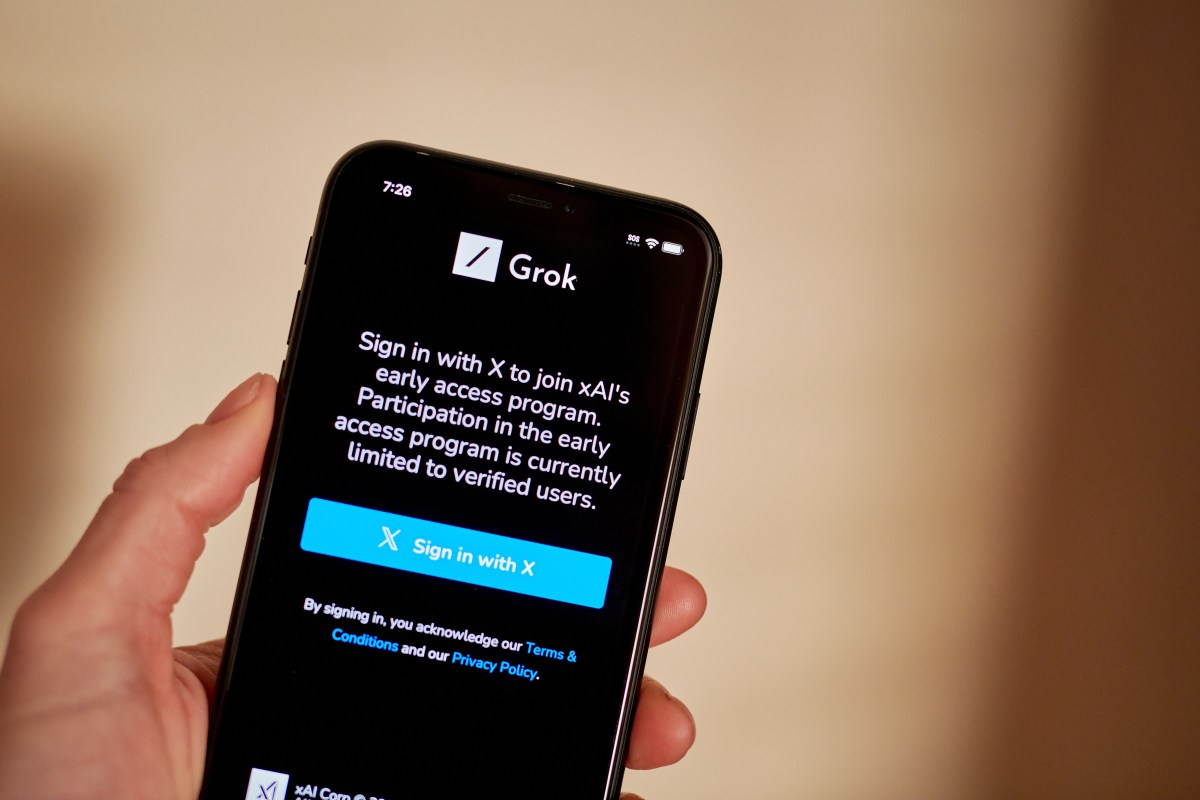
Elon Musk’s AI Company, xAI, Releases Its Latest Flagship Model, Grok 3

0

Elon Musk’s AI Company, xAI, Releases Grok 3, a More Capable AI Model

Grok 3: An Order of Magnitude More Capable than Grok 2

Elon Musk’s AI company, xAI, has released its latest flagship AI model, Grok 3, along with new capabilities in the Grok apps for iOS and the web. Grok, xAI’s answer to models like OpenAI’s GPT-4o and Google’s Gemini, can analyze images and respond to questions, and powers a number of features on Musk’s social network, X.

Grok 3: A Family of Models

Grok 3 is a family of models, not just one. A smaller version of Grok 3, Grok 3 mini, responds to questions more quickly at the cost of some accuracy. Not all models are available as of yet, and some are in beta, but the rollout begins Monday.

Grok 3’s Capabilities

Grok 3 beats GPT-4o on benchmarks including AIME, which evaluates a model’s performance on a sampling of math questions, and GPQA, which assesses models using PhD-level physics, biology, and chemistry problems. An early version of Grok 3 also scored competitively in Chatbot Arena, a crowdsourced test that pits different AI models against each other and has users vote on their preferred responses, according to xAI.

Grok 3 Reasoning Models

Two variations of Grok 3, Grok 3 Reasoning and Grok 3 mini Reasoning, can carefully "think through" problems, similar to "reasoning" models like OpenAI’s o3-mini and Chinese AI company DeepSeek’s R1. Reasoning models thoroughly fact-check themselves before giving out results, which helps them avoid some of the pitfalls that normally trip up models.

Grok 3 Reasoning Models: A New Feature in the Grok App

The reasoning models can be accessed via the Grok app. Users can ask Grok 3 to "Think," or – for more difficult queries – leverage "Big Brain" mode for reasoning that employs additional computing. xAI describes the reasoning models as best suited for mathematics-, science-, and programming-related questions.

Grok’s Reasoning Models Underpin DeepSearch

Grok’s reasoning models underpin a new feature in the Grok app called DeepSearch, xAI’s answer to AI-powered "deep research" tools like OpenAI’s deep research. DeepSearch scans the internet and X to analyze information and deliver an abstract in response to a question.

Grok’s Pricing and Availability

Subscribers to X’s Premium+ tier will get Grok 3 first, and other features are gated behind a new plan xAI’s calling SuperGrok. Priced at $30 per month or $300 per year, SuperGrok unlocks additional reasoning and DeepSearch queries, and throws in unlimited image generation.

Future Plans for Grok

In the future – as soon as about a week from now – the Grok app will gain a "voice mode," Musk said, which will give Grok models a synthesized voice. A few weeks after that, Grok 3 models will arrive in xAI’s enterprise API, along with the DeepSearch capability.

Grok 2 to be Open-Sourced

xAI plans to open-source Grok 2 in the coming months, said Musk. "Our general approach is that we will open-source the last version [of Grok] when the next version is fully out," he continued. "When Grok 3 is mature and stable, which is probably within a few months, then we’ll open-source Grok 2."

Conclusion

Grok 3 is an order of magnitude more capable than Grok 2, with a larger training data set and more computing power. It is a significant upgrade to the already impressive capabilities of Grok, and it will be an important tool for those looking to use AI for a variety of tasks.

FAQs

Q: What is Grok 3?
A: Grok 3 is a new AI model developed by xAI that is capable of analyzing images and responding to questions.

Q: How does Grok 3 differ from Grok 2?
A: Grok 3 is an order of magnitude more capable than Grok 2, with a larger training data set and more computing power.

Q: What is the pricing for Grok 3?
A: Subscribers to X’s Premium+ tier will get Grok 3 first, and other features are gated behind a new plan xAI’s calling SuperGrok, priced at $30 per month or $300 per year.

Q: When will Grok 2 be open-sourced?
A: xAI plans to open-source Grok 2 in the coming months, said Musk.

Build Beautiful Carousels in React Native Expo

0

About Hòa Nguyễn Coder

Hòa Nguyễn Coder

Biography

I’m a developer, and I’m passionate about working with technologies such as Laravel, Node.js, Angular, Vue.js, Asp.net, and React.js.

Contact Information

Conclusion

In conclusion, Hòa Nguyễn Coder is a skilled developer with a strong background in various programming languages and technologies. If you’re interested in learning more about his work or would like to follow him, you can do so by clicking the “Follow” button above.

FAQs
Q: What programming languages and technologies does Hòa Nguyễn Coder work with?

A: Lauderdale, Node.js, Angular, Vue.js, Asp.net, and React.js

Q: Where is Hòa Nguyễn Coder located?

A: Vietnam

Q: What is Hòa Nguyễn Coder’s current work?

A: Nguyễn Thanh Hòa at Vietnam

Q: When did Hòa Nguyễn Coder join Dev.to?

A: August 28, 2019

DOGE Tries to Access IRS Data on Millions of Taxpayers

0

Department of Government Efficiency Seeks Access to IRS Taxpayer Data

Request Sparks Concerns Over Data Privacy and Security

The Department of Government Efficiency (DOGE) has requested access to the Internal Revenue Service’s (IRS) taxpayer data system, potentially allowing it to obtain sensitive information such as Social Security Numbers and tax returns. The move has raised concerns among lawmakers and privacy advocates, who fear that the government may be compromising taxpayer data.

DOGE’s Motivations

DOGE has launched an IRS-specific account on X, soliciting "insights on finding and fixing waste, fraud, and abuse" within the agency. In a statement, Harrison Fields, White House deputy press secretary, said, "Waste, fraud and abuse have been deeply entrenched in our broken system for far too long. It takes direct access to the system to identify and fix it."

Senator’s Concerns

Senators Elizabeth Warren (D-MA) and Ron Wyden (D-OR) have sent a letter to the IRS commissioner, requesting that the agency "immediately disclose to the Senate Committee on Finance the full extent of the potential access to IRS systems and data granted to DOGE team members." The senators expressed concern that DOGE personnel may be trying to gain access to taxpayer records, which could constitute criminal violations of federal privacy laws.

IRS Layoffs

The Times reports that the IRS is planning to lay off thousands of employees in the lead-up to the service’s busiest time of year, Tax Day, which falls on April 15th.

Conclusion

The request for access to IRS taxpayer data has raised concerns over data privacy and security, and the potential for data breaches. The move has also sparked concerns about the government’s ability to identify and address waste, fraud, and abuse within the system. As the debate surrounding this issue continues, it is essential to strike a balance between ensuring the efficient and effective operation of the government and protecting the sensitive information of American taxpayers.

Frequently Asked Questions

Q: What is the Department of Government Efficiency’s (DOGE) request for access to IRS taxpayer data?
A: DOGE has requested access to the IRS’s taxpayer data system, which could potentially allow it to obtain sensitive information such as Social Security Numbers and tax returns.

Q: What is the purpose of DOGE’s request for access to IRS data?
A: DOGE is seeking to identify and address waste, fraud, and abuse within the IRS system.

Q: What are the concerns surrounding DOGE’s request?
A: Lawmakers and privacy advocates are concerned that granting DOGE access to IRS data could compromise taxpayer privacy and security.

Q: What is the IRS planning to do regarding layoffs?
A: The IRS is planning to lay off thousands of employees in the lead-up to Tax Day, which falls on April 15th.

Grok, o3 and ELMo — there’s a reason AI names are so weird

The Confounding World of AI Naming Conventions

A Guide to the Mysterious World of AI Names

At the tail-end of January, artificial intelligence start-up OpenAI released its latest model — a cute-sounding version called o3-mini. Designed to repel cheap Chinese rivals, it chalked up another victory for the sector’s mystifying inability to think up coherent names.

The Problem with Naming Conventions

See if you can spot the problem: the o3-mini came out six months after the 4o mini. And the 4o mini was released after the 4, which came out after the 3.5. Last week, co-founder Sam Altman confirmed that the next release would be the 4.5.

A Brief History of AI Naming Conventions

OpenAI used to employ sensible, sequential numbers, making its AI models as easy to track as iPhone releases. But when the next great leap of technological progress proved difficult to nail down, the company’s naming strategy went skittering off in strange new directions. Instead of going from 3 to 4, it began bolting on additional letters and words.

The Weird World of AI Names

It’s not as if OpenAI isn’t aware of the problem. Last year, Altman agreed with a commenter who said that he needed a naming scheme revamp. In fact, Altman doesn’t seem too keen on any of OpenAI’s nomenclature. He has described chatbot ChatGPT, its most famous product, as a "horrible" name and told one interviewer that if he could go back in time and pick something other than OpenAI, he would.

A Tech Tradition

Weird names are, of course, a tech tradition. Some of the industry’s best-known companies were created in the early 2000s, when nonsense words were cheap to buy as domain names. Think Zynga, Flickr, and Zillow.

A Look at Other AI Start-Ups

AI start-ups of the past decade have taken a more sensible route (OpenAI, xAI, etc.). But the sector has continued the custom elsewhere. A few years ago, the tech website The Verge noticed a trend for model acronyms with Muppet names, including ELMo, Big BIRD, and ERNIE. This appears to have been done for no other reason than researchers amusing themselves and each other.

Inside Jokes and Names

Inside jokes and names that mean more to the people working on a project than those who might one day use it explain a lot of other apparently odd choices — including Elon Musk’s sassy "anti-woke" chatbot Grok. The word is a tech-person term for understanding something (as in you grok a design). It comes from a 1960s sci-fi novel Musk likes called Stranger in a Strange Land about a human raised by Martians who travels to Earth.

A Look at Google’s Approach

Google last year rebranded its own AI chatbot as Gemini, which is also the name of its large language model. What does the name Gemini have to do with AI? Basically, nothing. The company’s official explanation notes that it is a constellation linked to a set of twins in Greek mythology and ties in to the importance of an AI assistant having a "dual-natured personality, capable of adapting quickly."

A Look at Other Companies’ Approaches

Companies with a long history of consumer sales tend to take a more user-friendly approach to AI product names. Microsoft’s AI assistant is Copilot, a neat description for the way in which it is designed to assist users as a copilot helps a pilot.

Conclusion

Eventually, rational naming strategies for AI may prevail. Dell recently announced that it was going to ditch computer sub-brands such as Inspiron and adopt simple names for its PCs based around the term Pro. Of course, Dell sold its first PC in 1985. If AI follows the same trajectory, we’ll have about 40 years to wait.

FAQs

Q: Why do AI companies use weird names?
A: AI companies often use weird names as inside jokes or to reference technical terms that may be confusing to the average user.

Q: What is the problem with OpenAI’s naming convention?
A: OpenAI’s naming convention is confusing and lacks a clear pattern, making it difficult for users to keep track of their AI models.

Q: Are there any examples of good AI naming conventions?
A: Yes, companies like Microsoft and Google have adopted more user-friendly names for their AI products, such as Copilot and Gemini.

Thousands Protest Elon Musk’s DOGE in NYC on Presidents’ Day

0

Protest Against Trump Administration and Department of Government Efficiency (DOGE)

Thousands Gather in New York City to Speak Out Against DOGE’s Actions and Trump’s Executive Order

More than 10,000 protesters gathered in New York City on Presidents’ Day to express their discontent with the current Trump administration and the actions of the Department of Government Efficiency (DOGE), led by Elon Musk.

Protesters’ Concerns

Protesters who spoke to TechCrunch at Washington Square Park expressed concerns about DOGE’s access to sensitive data of millions of Americans and the group’s dismantling of federal agencies. They viewed Musk’s work with DOGE as a veiled attempt at a financial power grab and expressed frustration that Musk, an unelected official, has gained unprecedented levels of power over the federal government.

Concerns about Data Privacy and Power Concentration

"I think it’s extremely dangerous that [Musk] has access to our personal data," said Dmitri, a 53-year-old architect who asked that his last name not be used. "He’s kind of a futurist fanboy who’s basically living in a sci-fi fantasy and trying to implement that, and has the resources to do mass amounts of damage. He’s tinkering with something that he doesn’t have the ability to actually understand."

Criticism of Trump’s Executive Order

A 55-year-old retired teacher, who identified himself only as Tom, held a sign that read: "No one voted for Musk." He told TechCrunch, "As much as I dislike the fact that a significant number of Americans voted for Trump, it is absolutely the case that no one voted for Musk." Tom noted that he didn’t believe the average MAGA supporter voted for Musk and worried that DOGE’s cuts would hurt Americans on a state, local, and individual level.

Consolidation of Power

"The consolidation of power under billionaires is a frightening thing," Tom said.

History of DOGE’s Actions

Trump signed an executive order on his first day in office to create DOGE, giving Musk, the billionaire owner of SpaceX, Tesla, X, and other companies, the reins to root out government fraud, waste, and abuse of taxpayer dollars. Since then, DOGE has fired nearly 10,000 federal workers who handled everything from managing federal lands to caring for military veterans. Another 75,000 workers have accepted the Trump administration’s buyout proposal, which offered federal workers eight months’ pay and benefits to leave their posts if they resigned in early February. DOGE has also cut 104 government contracts related to diversity, equity, inclusion, and accessibility programs and dismantled the U.S. Agency for International Development.

Controversial Access to Treasury Department’s Digital Payments System

Trump also granted Musk’s DOGE team access to the Treasury department’s digital payments system, which controls trillions of dollars in payments to Americans, from Social Security benefits to tax refunds, despite questions about their security clearances, cybersecurity practices, and the legality of Musk’s activities.

Protest and Counter-Protest

Supporters of Trump and Musk applaud their on-paper efforts to root out corruption, inefficiency, and red tape. Opponents object to the way DOGE is going about its stated goals, and warn that the team’s actions will lead to more corruption and national security risks. A wave of legal challenges has followed, alleging a lack of transparency and data privacy violations.

Confronting the Future of DOGE

As protesters chanted "Hey, hey, ho, ho, Elon Musk has got to go" and held signs that touted a range of causes, but Musk and DOGE were a common theme throughout, the New York Police Department estimated the number of attendees to be more than 10,000. Victoria, a 37-year-old teacher, held a sign that read: "Stop the coup," echoing comments made to The Guardian on Monday by Arizona’s attorney general, Kris Mayes, who told the outlet, "In the U.S., we appeal rulings we disagree with – we don’t ignore court orders or threaten judges with impeachment just because we don’t like the decision. This is a coup, plain and simple."

Conclusion

The protests in New York City and other cities across the country demonstrate a growing unease about the direction of the Trump administration and the actions of the Department of Government Efficiency. As the controversy surrounding DOGE continues to unfold, it remains to be seen whether the concerns of protesters will be addressed or ignored.

FAQs

Q: What is the Department of Government Efficiency (DOGE)?
A: DOGE is a government agency created by President Trump in 2025 to root out government fraud, waste, and abuse of taxpayer dollars.

Q: Who leads DOGE?
A: Elon Musk, the billionaire owner of SpaceX, Tesla, X, and other companies, leads DOGE.

Q: What are the concerns about DOGE?
A: Protesters are concerned about DOGE’s access to sensitive data of millions of Americans, the group’s dismantling of federal agencies, and the potential for abuse of power by Musk.

Q: What is the impact of DOGE’s actions on the economy and society?
A: DOGE’s actions have led to the firing of nearly 10,000 federal workers, the cutting of government contracts, and the dismantling of the U.S. Agency for International Development, among other effects.

Trump Destruidrá la Maquinaria del Poder Económico de EE. UU.

0

The End of an Era: The Disruption of the US Economic Security

A New Era of Uncertainty

For the past two decades, the United States has built an unprecedented arsenal of economic security tools that have anchored its foreign policy. Republican and Democratic governments have worked together to develop a shared vision of the world and the best way to defend US interests. Responsible officials have honed these tools, forging great ambitions for a world based on financial sanctions, export controls, and the development of critical technologies. Each new government has strengthened the economic tools inherited from its predecessor, encouraging its successors to build on the structures of US economic power.

The Disruption of the Trump Era

Now, we are about to discover what happens when these structures are controlled by a disruptive government, and what happens when that government inherits these tools without the sense of responsibility that accompanies them. Traditional security technocrats in the new Trump government are just one faction, competing with others: cryptoenthusiasts, Wall Street boosters, and "America First" advocates. With these rivalries and the president’s social media battles with other countries, we may find ourselves in a world where countries disentangle themselves from US dependence, as our machinery of power begins to rust from the inside out.

A New Era of Uncertainty

Before leaving the White House, the Biden team clearly expected to shape the Trump agenda. Just six days before Trump took office, the Biden government published a plan to make the US dominate global artificial intelligence. This document was the culmination of over two decades of US efforts to use technological and economic strangleholds to build lasting US power, and outlined a detailed plan to consolidate US control over cutting-edge AI.

A New Era of Competition

Instead, Trump revealed his own approach to international relations and global issues. Colombia is one of the US’s closest allies in Latin America. When Trump refused to accept two military planes with deportees, he announced that he would impose total financial sanctions, including Treasury, banking, and 50% tariffs on all Colombian products within a week. The Colombian president responded with his own diatribe on the internet. A compromise that allowed for a face-saving solution ended the standoff. Goodbye to the decades-old political deal; in its place, a 190-word post on Truth Social resolved the issue.

A New Era of Competition

Other countries will likely pay attention. At short term, they may be more willing to give in to Trump’s demands. At long term, they will have ample reason to distance themselves from a US government that seems ready to crush an ally’s economy for capricious reasons. Trump’s boasts were seen more like 19th-century diplomacy by Twitter than a strategic calculation.

The End of an Era

The problem is not just that Trump is a chameleon, switching policy positions like a roulette ball. It’s that his government seems poised to become a casino where crypto-enthusiasts, tech oligarchs, and Wall Street boosters will compete for influence. The US will need to navigate the complex interplay between these rival interests, with a president who is increasingly prone to making impulsive decisions. The outcome is uncertain, but one thing is clear: the end of an era is near.

Frequently Asked Questions

Q: What is the significance of the Trump presidency on US economic security?
A: The Trump presidency marks a significant disruption in the US’s economic security apparatus, which has been built over the past two decades.

Q: What are the implications of this disruption on the global economy?
A: The disruption could lead to a decrease in the US’s global influence, as countries may choose to distance themselves from US dependence and look for alternative economic partners.

Q: How will the US government respond to this new era of competition?
A: The US government will need to navigate the complex interplay between rival interests, including crypto-enthusiasts, tech oligarchs, and Wall Street boosters, while dealing with a president prone to making impulsive decisions.

Q: What are the potential consequences of this disruption on the US economy?
A: The disruption could lead to a decline in the US economy, as countries and companies may choose to diversify their supply chains and reduce their dependence on the US.

Hottest AI Models Explained

0

AI Models Overview

AI Models Released in 2025

OpenAI o3-mini

OpenAI’s latest reasoning model, optimized for STEM-related tasks like coding, math, and science. It’s not OpenAI’s most powerful model but is significantly lower-cost. Available for free, but requires a subscription for heavy users.

OpenAI Deep Research

Designed for in-depth research on a topic with clear citations. This service is only available with ChatGPT’s $200 per month Pro subscription. OpenAI recommends it for everything from science to shopping research, but beware that hallucinations remain a problem for AI.

Mistral Le Chat

Mistral has launched app versions of Le Chat, a multimodal AI personal assistant. Mistral claims Le Chat responds faster than any other chatbot. It also has a paid version with up-to-date journalism from the AFP. Tests from Le Monde found Le Chat’s performance impressive, although it made more errors than ChatGPT.

OpenAI Operator

OpenAI’s Operator is meant to be a personal intern that can do things independently, like help you buy groceries. It requires a $200 a month ChatGPT Pro subscription. AI agents hold a lot of promise, but they’re still experimental: a Washington Post reviewer says Operator decided on its own to order a dozen eggs for $31, paid with the reviewer’s credit card.

Google Gemini 2.0 Pro Experimental

Google Gemini’s much-awaited flagship model says it excels at coding and understanding general knowledge. It also has a super-long context window of 2 million tokens, helping users who need to quickly process massive chunks of text. The service requires (at minimum) a Google One AI Premium subscription of $19.99 a month.

AI Models Released in 2024

DeepSeek R1

This Chinese AI model took Silicon Valley by storm. DeepSeek’s R1 performs well on coding and math, while its open-source nature means anyone can run it locally. Plus, it’s free. However, R1 integrates Chinese government censorship and faces rising bans for potentially sending user data back to China.

Gemini Deep Research

Deep Research summarizes Google’s search results in a simple and well-cited document. The service is helpful for students and anyone else who needs a quick research summary. However, its quality isn’t nearly as good as an actual peer-reviewed paper. Deep Research requires a $19.99 Google One AI Premium subscription.

Meta Llama 3.3 7B

This is the newest and most advanced version of Meta’s open-source Llama AI models. Meta has touted this version as its cheapest and most efficient yet, especially for math, general knowledge, and instruction following. It is free and open source.

OpenAI Sora

Sora is a model that creates realistic videos based on text. While it can generate entire scenes rather than just clips, OpenAI admits that it often generates "unrealistic physics." It’s currently only available on paid versions of ChatGPT, starting with Plus which is $20 a month.

Alibaba Qwen QwQ-32B-Preview

This model is one of the few to rival OpenAI’s o1 on certain industry benchmarks, exceling in math and coding. Ironically for a "reasoning model," it has "room for improvement in common sense reasoning," Alibaba says. It also incorporates Chinese government censorship, TechCrunch testing shows. It’s free and open source.

Anthropic’s Computer Use

Claude’s Computer Use is meant to take control of your computer to complete tasks like coding or booking a plane ticket, making it a predecessor of OpenAI’s Operator. Computer use, however, remains in beta. Pricing is via API: $0.80 per million tokens of input, and $4 per million tokens of output.

x.AI’s Grok 2

x.AI, the Elon Musk-owned AI company, has launched an enhanced version of its flagship Grok 2 chatbot it claims is "three times faster." Free users are limited to 10 questions every two hours on Grok, while subscribers to x’s Premium and Premium+ plans enjoy higher usage limits. x.AI also launched an image generator, Aurora, that produces highly photorealistic images, including some graphic or violent content.

Conclusion

With over a million AI models out there, it can be overwhelming to keep track of the latest ones. This list aims to provide an overview of the most advanced AI models released since 2024, with details on how to use them and what they’re best for. We’ll continue to update this list with the latest launches.

FAQs

Q: How do I get started with these AI models?
A: Most models are available for free or require a subscription. Check the specific requirements and pricing for each model.

Q: Are these AI models accurate?
A: While some models excel in certain areas, AI models are not perfect and can still make mistakes. Be cautious when relying on their output.

Q: Can I use these AI models for personal use?
A: Yes, many models are available for personal use, but be sure to check the pricing and usage limits for each model.

Q: How do I keep track of the latest AI model releases?
A: Check back to this list, which will be updated regularly with the latest launches.

Spotify’s HiFi streaming could finally arrive this year

0

Spotify’s Long-Awaited HiFi Tier May Finally Arrive in 2025

What’s Been Delayed

It’s been nearly four years since Spotify announced a HiFi tier for its music streaming service, promising lossless audio. The wait could end this year, with Bloomberg reporting that the company is working to finalize details, including streaming rights.

New Features and Pricing

Spotify could charge as much as $5 or $6 extra per month for the new tier, named "Music Pro," which is in line with estimates from CEO Daniel Ek. The current Premium tier starts at $11.99 per month, with family or student discounts available.

Competitor Comparison

Competitors like Apple Music include lossless streaming in their base prices, but Spotify plans to justify the extra charge by including more features in Music Pro, such as song remixing and concert ticket sales. These would grant subscribers exclusive deals and early access.

Licensing Agreements

Earlier this month, Spotify signed a new multi-year licensing agreement with Warner Music Group to secure future streaming rights and shape the future of audio-visual streaming. The company also inked a deal with Universal Music Group in late January, with UMG teasing HiFi streaming and suggesting what a "superfan" music service could offer. These ideas include priority access to deluxe edition content, early music releases, and exclusive listening party invites and artist Q&A sessions.

Conclusion

It’s taken a little longer than expected, but it looks like the world’s biggest music streaming service may finally be ready to turn up the volume on HiFi in 2025.

Frequently Asked Questions

Q: When can I expect Spotify’s HiFi tier to arrive?
A: Reports suggest that the wait may end this year, although no official release date has been announced.

Q: What features will be included in the Music Pro tier?
A: The new tier will include lossless audio, as well as features like song remixing and concert ticket sales, which will grant subscribers exclusive deals and early access.

Q: How much will the Music Pro tier cost?
A: The additional cost is estimated to be around $5 or $6 per month, on top of the current Premium tier prices.

Q: How does this compare to competitors like Apple Music?
A: Apple Music includes lossless streaming in its base price, but Spotify’s Music Pro tier will offer additional features to justify the extra cost.

Crypto Gamblers, Tech Oligarchs, Wall Street Opportunists. What Could Go Wrong?

0

The Rise and Fall of America’s Economic Security

Over the past two decades, the United States has built an unprecedented arsenal of economic security tools that have anchored U.S. foreign policy. Republican and Democratic administrations have developed a shared understanding of the world and how to pursue America’s interests. Economic security officials have worked across administrations, gradually developing grand ambitions for a global order founded on financial sanctions, export controls, and the development of crucial technologies.

The Disruption

We are about to find out what happens when those structures are controlled by a disruptive administration – and what happens when that administration inherits the weapons without the accompanying sense of responsibility. There are still traditional economic-security technocrats in the new Trump administration, but they are just one faction, vying with others – crypto fans, Wall Street boosters, and America Firsters. With this jockeying, as well as President Trump’s social media beefs with other countries, we may be looking at the beginning of a world in which countries disentangle themselves from U.S. dependence at the same time that our machinery of power begins to rust from within.

The Impact on Global Economy

Before they left the White House, Joe Biden’s people clearly hoped to shape the Trump administration’s agenda. Just six days before Mr. Trump was to take office, the Biden administration published a plan for America to command global A.I. This document was the culmination of over two decades of U.S. efforts to use technological and economic chokeholds to build enduring American power, and it laid out an intricate plan for cementing U.S. control over cutting-edge A.I.

The Rise of Cryptocurrency and its Impact

But then Mr. Trump displayed his own approach to policy and global affairs. Colombia is one of America’s closest Latin American allies. When it refused to accept two military planes of deportees, Mr. Trump announced that he would impose full "Treasury, banking, and financial" sanctions as well as 50 percent tariffs on all Colombian products within a week. Colombia’s president responded with his own online tirade. A face-saving compromise ended the spat. Out was the decades-in-the-making policy understanding; in was a 190-word post on Truth Social.

The Future of Economic Security

Other countries will certainly have paid attention. In the short term, they may be more willing to give Mr. Trump what he wants. In the longer run, they will have every reason to pull away from an America that seems willing to crush an ally’s economy on a whim. Mr. Trump’s bluster seemed more like 19th-century gunboat diplomacy than strategic calculation.

Conclusion

The problem isn’t just that Mr. Trump ricochets through policy positions like a ball on a roulette wheel. It’s that his administration is set to become a casino where crypto gamblers, tech oligarchs, and Wall Street opportunists compete for influence. U.S. policy will then depend on which pocket on the wheel Mr. Trump comes to rest. These different factions have different understandings of America’s interests. Should the nation rely on crypto technologies that were designed to resist government control? Should it loosen or strengthen restrictions on the export of A.I. and semiconductors? Should it strike convenient bargains with wealthy autocratic regimes?

Frequently Asked Questions

Q: What is the current state of America’s economic security?
A: The United States has built an unprecedented arsenal of economic security tools over the past two decades, but the current administration is set to disrupt this structure.

Q: What are the implications of this disruption?
A: The disruption could lead to a world in which countries disentangle themselves from U.S. dependence and the erosion of the markets that underpin U.S. strength.

Q: What are the key factions in the Trump administration?
A: There are traditional economic-security technocrats, crypto fans, Wall Street boosters, and America Firsters, each with their own interests and agendas.

Q: What is the impact of cryptocurrency on the global economy?
A: Cryptocurrency makes it easy for rogue states to move money across borders and promises that technological decentralization can provide alternatives to government power.
