Home Blog Page 306

AI Chatbots Fail News Accuracy Test

0

AI Chatbots Distort News Content, Raising Concerns about Information Accuracy and Trust

Introduction

A recent study by the BBC has revealed that leading AI chatbots are consistently distorting news content, leading to concerns about the accuracy and trustworthiness of the information being disseminated. The study found that AI chatbots are getting news wrong more often than right, with the problem affecting all major AI platforms.

The Problem is Industry-Wide

The study, which analyzed news articles generated by popular AI chatbots, found that the bots were often producing inaccurate or misleading information. This is a significant problem, as AI chatbots are increasingly being used to deliver news to the public.

Trusted Brands Losing Control of Their Content

The study also found that even trusted brands like the BBC are losing control of their content, as AI chatbots are generating news articles that are not always accurate or trustworthy. This is a concern, as the public relies on these trusted brands for accurate and reliable information.

Industry-Wide Issues

The problem is not limited to one specific AI platform or brand. The study found that all major AI platforms are affected, including Google, Facebook, and Apple. This means that the problem is widespread and requires a coordinated effort to address.

Conclusion

The findings of this study are concerning, as they suggest that AI chatbots are not always producing accurate or trustworthy news content. It is essential for AI developers and news organizations to work together to address this issue and ensure that the public has access to accurate and reliable information.

Frequently Asked Questions

Q: How prevalent is the problem?

A: The problem is industry-wide, affecting all major AI platforms and news organizations.

Q: What is the impact of this issue?

A: The distortion of news content can lead to a lack of trust in the media and the public’s ability to access accurate information.

Q: What can be done to address the issue?

A: AI developers and news organizations must work together to ensure that AI-generated content is accurate and trustworthy, and that the public has access to reliable information.


The work tasks people use Claude AI for most

0

As AI Adoption Grows, What Does it Mean for the Labor Market?

Anthropic’s Economic Index

As AI adoption grows, many are wondering how it will impact the labor market long-term. Anthropic is trying to find out. On Monday, the company published its first Economic Index, which investigates what kinds of employees are using Anthropic’s Claude chatbot and for what types of tasks.

Jobs Share Common Tasks and Skills

"Jobs often share certain tasks and skills in common: For example, visual pattern recognition is a task performed by designers, photographers, security screeners, and radiologists," the company explains in the report announcement.

Mapping Conversations to Job Categories

Using its own Clio system for privacy, Anthropic analyzed 1 million anonymized conversations Claude Free and Pro users had with the chatbot. Mapping each to the Occupational Information Network (O*NET), a US Department of Labor database of 20,000 work tasks, Clio identified which task "best represented the role of the AI" in each conversation, Anthropic’s announcement explains. Chats were then grouped into job categories such as arts and media, computer and mathematical, and business and financial.

Software Engineering and Writing Top Queries

Software engineering tasks made up the majority of the queries in the dataset — 37.2% of conversations had to do with debugging code, network troubleshooting, and more, which is somewhat to be expected given that Claude positions itself as a coding-first model. The next-largest category of queries had to do with writing and editing at 10.3%, which Anthropic grouped as "arts, design, sports, entertainment, and media" jobs like copywriting.

Augmenting vs. Automating Work

The report also found that AI augments human capabilities 57% of the time and automates work — directly performs tasks for people — 43% of the time.

Other Findings

Using O*NET’s median salary data, the study found that AI use is more common for tasks in "mid-to-high wage occupations" like data science. People in jobs at the lowest and highest wage bands, like salon workers or doctors, were much less likely to use Claude, often because those roles emphasize manual work.

Takeaways

Anthropic plans to regularly rerun its analysis to see if certain roles are experiencing more automation. "We’ll be able to monitor changes in the depth of AI use within occupations," the announcement says. "If it remains the case that AI is used only for certain tasks, and only a few jobs use AI for the vast majority of their tasks, the future might be one where most current jobs evolve rather than disappear."

Conclusion

The report itself doesn’t make any policy recommendations. "Developing policy responses to address the coming transformation in the labor market and its effects on employment and productivity will take a range of perspectives," Anthropic says. "To that end, we are also inviting economists, policy experts, and other researchers to provide input on the Index."

FAQs

Q: What is the purpose of the Economic Index?
A: The Economic Index investigates what kinds of employees are using Anthropic’s Claude chatbot and for what types of tasks.

Q: What kind of data did Anthropic analyze for the report?
A: The company analyzed 1 million anonymized conversations Claude Free and Pro users had with the chatbot.

Q: What are the most common tasks performed by users of Claude?
A: Software engineering tasks made up the majority of the queries, while writing and editing tasks came in second.

Q: What is the ratio of AI use to human capabilities?
A: AI augments human capabilities 57% of the time and automates work 43% of the time.

Q: What are the implications of the report’s findings?
A: The report suggests that AI is likely to augment certain tasks, rather than replace them entirely.

Is the Fantastic Four Poster AI-made?

0

The Blurring Lines: Is AI Art Becoming Too Good?

The Fantastic Four Poster Controversy

It is getting harder to spot AI art, and the question of that Fantastic Four poster hangs in the air. Marvel may deny the use of AI, but many tell-tale signs are there – including a figure that appears to only have three fingers.

The Debate Rages On

Some disagree that it’s AI (and AI detection websites say it’s likely human-made), but the headlines, and discussion persists – likely due to the overall appearance of the image. When we reported on it, we felt that the whole discussion was symbolic of the kinds of negative effect AI has had on the creative industries, and that ‘AI fail’ has now become the standard critique (where once we would have said ‘Photoshop fail’).

The Rise of AI-Generated Art

The use of AI-generated art is becoming increasingly prevalent in the creative industries, with many artists and designers embracing the technology to produce stunning and often indistinguishable from human-made art. However, this has also led to concerns about the authenticity and ownership of such work, as well as the potential for AI-generated art to be used to deceive or manipulate.

The Impact on Creativity

The rise of AI-generated art has led to a new era of criticism, with many questioning the role of humans in the creative process. With AI able to produce high-quality art, music, and writing, the line between human and machine is becoming increasingly blurred. This has led to concerns about the value of human creativity and the potential for AI to replace human artists, writers, and designers.

Conclusion

The Fantastic Four poster controversy is just one example of the growing concerns around AI-generated art. While AI has the potential to revolutionize the creative industries, it also raises important questions about authenticity, ownership, and the role of humans in the creative process. As the debate continues to rage on, it is clear that the use of AI-generated art will only continue to grow, and it is up to us to navigate the implications and ensure that the value of human creativity is preserved.

FAQs

Q: Is the Fantastic Four poster likely to be AI-generated?
A: The debate is ongoing, with some experts suggesting it is likely AI-generated, while others believe it is human-made.

Q: What are the benefits of AI-generated art?
A: AI-generated art can produce high-quality and consistent results, as well as save time and resources.

Q: What are the potential downsides of AI-generated art?
A: AI-generated art raises concerns about authenticity, ownership, and the potential for AI to replace human artists, writers, and designers.

Q: How can we ensure the value of human creativity is preserved?
A: By recognizing the unique skills and perspective that humans bring to the creative process, and by ensuring that AI-generated art is used as a tool to enhance, rather than replace, human creativity.

The Best Apple Watch for 2025

0

Should You Get an Apple Watch?

Editor’s note: Due to a patent dispute with medical device maker Masimo, new Apple Watch Series 9, 10, and Ultra 2 units sold in the US no longer have the blood oxygen feature. Older models are unaffected. You can tell if you have a unit with the blood oxygen feature disabled if the part number ends in LW/A.

It used to be easy to pick an Apple Watch. All you had to do was choose whether you wanted the larger model or the smaller one. Then, Apple added optional cellular connectivity. Then, a more affordable Watch SE (now in its second generation) and, in 2022, the rugged Apple Watch Ultra (also now in its second generation). Suddenly, there are lots of options.

Now that Apple has released the Series 10, perfectly good older versions of the Apple Watch are getting discounted as retailers try to empty their inventory. You may also see more refurbished versions of these older models pop up. If you’re interested in more premium materials, like stainless steel, this is a great way to get a fancier version of last year’s watch. You won’t be missing out on too much, either. The past few years have seen iterative updates in terms of hardware — and the bulk of new features come from software updates. With that said, keep in mind that the latest version of watchOS, watchOS 11, doesn’t support the Series 4, 5, and first-gen SE.

Buying refurbished is one way that you may be able to upgrade from an older model without giving up blood oxygen. Due to a patent battle with Masimo, new Series 9 and Ultra 2 models sold in the US after January 18th, 2024, no longer have this feature. This is not a big deal for most people, but if that feature is important to you, older watches and Series 9 and Ultra 2 units sold by Apple before January 18th, 2024, still had the feature. (As do watches overseas. The ban only impacts US units.)

What About the New Series 10?

In a nutshell, it’s got a bigger screen, it’s about 10% thinner, and it’s lighter than previous models. It’s also got a new FDA-cleared sleep apnea detection feature. There are a ton of new colors and finishes, with titanium replacing stainless steel. All in all, it’s an iterative update but one we find meaningful in terms of readability and wearability.

Should You Get an Apple Watch?

So much choice can lead to analysis paralysis. But don’t worry. I’ve tested every single version of the Apple Watch you can buy right now — in addition to basically every other fitness watch and smartwatch on the market — and can steer you in the right direction.

Conclusion

If you’re in the market for a new smartwatch, the Apple Watch is definitely worth considering. With its sleek design, user-friendly interface, and robust fitness tracking features, it’s a great choice for anyone looking for a reliable and feature-packed smartwatch.

FAQs

Q: What happens if I already have a Series 9 or Ultra 2 watch with blood oxygen feature?
A: If you already have a Series 9 or Ultra 2 watch with the blood oxygen feature, you won’t be affected by the patent dispute. You can continue to use the feature as usual.

Q: Can I still get the blood oxygen feature on a new Series 9 or Ultra 2 watch?
A: No, new Series 9 and Ultra 2 watches sold in the US after January 18th, 2024, no longer have the blood oxygen feature. If you want to get a new watch with this feature, you may need to look into older models or refurbished versions.

Q: Can I use Family Setup with an Apple Watch?
A: If your relative has an iPhone, you can use Family Setup, but you won’t be able to use features like irregular heart rhythm notifications, EKG, and health data sharing. If your relative doesn’t have an iPhone, Family Setup is a fine option, and you’ll get high and low heart rate notifications, walking steadiness, and fall detection.

Samsung’s T7 SSD with 45% Off

0

Samsung T7 SSD Deal: Get 45% Off the 4TB Model

Reliable and Speedy SSDs for Creative Workflows

Samsung’s SSDs are renowned for their reliability and performance, making them an excellent choice for creative professionals. The T7 series is no exception, offering a mid-range option for backing up your valuable creative assets. Currently, Amazon is offering a significant discount on the 4TB model, bringing the price down to $276.99 from its original RRP of $499.99.

Discounted Options Available

If the 4TB model is not quite what you need, there are other options available with discounts. The 2TB version is available with a 36% discount, while the 1TB model can be had with a 41% discount, bringing its price under $100.

Our Experience with the T Range

We’ve had the opportunity to use various versions of the T range on our team, and we can attest to their reliability and speed. They’re perfect for pairing with one of the best laptops for graphic design, making them an excellent choice for creative professionals.

Other SSD Deals Available

If the Samsung T7 SSD isn’t quite what you’re looking for, we’ve found other deals on SSDs that might be of interest. Check out the options below:

Conclusion

The Samsung T7 SSD is an excellent choice for anyone looking for a reliable and speedy storage solution. With its 45% discount, the 4TB model is an excellent value, and the other options available with discounts are also worth considering. Don’t miss out on this opportunity to upgrade your storage and take your creative workflow to the next level.

FAQs

Q: Is the Samsung T7 SSD compatible with my laptop?
A: The Samsung T7 SSD is compatible with most laptops, but it’s always a good idea to check your laptop’s specifications before making a purchase.

Q: How fast is the Samsung T7 SSD?
A: The Samsung T7 SSD is a fast storage solution, with read and write speeds of up to 1000MB/s and 500MB/s respectively.

Q: Is the Samsung T7 SSD durable?
A: Yes, the Samsung T7 SSD is designed to be durable and resistant to shock, vibration, and extreme temperatures.

Q: Can I use the Samsung T7 SSD with my desktop computer?
A: Yes, the Samsung T7 SSD can be used with desktop computers, making it a versatile storage solution for both laptops and desktops.

AI’s Future: The Race is Far From Over

0

Europe Has No Intention of Playing Catch-up in the Global AI Race

Europe has no intention of playing catch-up in the global AI race, European Commission President Ursula von der Leyen declared at the AI Action Summit in Paris. While the US and China are often seen as frontrunners, von der Leyen emphasized that the AI race "is far from over" and that Europe has distinct strengths to carve a leading role for itself.

The Case for a European Approach to the AI Race

Von der Leyen rejected notions that Europe has fallen behind its global competitors. "Too often, I hear that Europe is late to the race – while the US and China have already got ahead. I disagree," she stated. "The frontier is constantly moving. And global leadership is still up for grabs." Instead of replicating what other regions are doing, she called for doubling down on Europe’s unique strengths to define the continent’s distinct approach to AI.

Accelerating Innovation: AI Factories and Gigafactories

To maintain its competitive edge, Europe must supercharge its AI innovation, von der Leyen stressed. A key component of this strategy lies in its computational infrastructure. Europe already boasts some of the world’s fastest supercomputers, which are now being leveraged through the creation of "AI factories." Beyond these initial steps, von der Leyen unveiled an even more ambitious initiative. AI gigafactories, built on the scale of CERN’s Large Hadron Collider, will provide the infrastructure needed for training AI systems at unprecedented scales.

Building Trust with the AI Act

Crucially, von der Leyen reiterated Europe’s commitment to making AI safe and trustworthy. She pointed to the EU AI Act as the cornerstone of this strategy, framing it as a harmonised framework to replace fragmented national regulations across member states.

€200 Billion to Remain in the AI Race

Financing such ambitious plans naturally requires significant resources. Von der Leyen praised the recently launched EU AI Champions Initiative, which has already pledged €150 billion from providers, investors, and industry. During her speech at the summit, von der Leyen announced the Commission’s complementary InvestAI initiative that will bring in an additional €50 billion. Altogether, the result is mobilising a massive €200 billion in public-private AI investments.

Ethical AI is a Global Responsibility

Von der Leyen closed her address by framing Europe’s AI ambitions within a broader, humanitarian perspective, arguing that ethical AI is a global responsibility. "Cooperative AI can be attractive well beyond Europe, including for our partners in the Global South," she proclaimed, extending a message of inclusivity.

Conclusion

Europe is committed to playing a leading role in the global AI race, leveraging its unique strengths to define a distinct approach to AI. With a focus on high-complexity, industry-specific applications, a cooperative, collaborative approach to innovation, and embracing open-source principles, Europe is poised to carve out a leading role for itself in the AI landscape.

FAQs

Q: What is the EU AI Act?
A: The EU AI Act is a harmonised framework aimed at replacing fragmented national regulations across member states, ensuring AI safety and trustworthiness.

Q: What are AI factories?
A: AI factories are infrastructure initiatives that leverage Europe’s fastest supercomputers to accelerate AI innovation.

Q: What is the InvestAI initiative?
A: The InvestAI initiative is a complementary program that will bring in an additional €50 billion in public-private AI investments.

Q: What is the global responsibility of AI?
A: Von der Leyen emphasized that ethical AI is a global responsibility, highlighting the need for cooperative AI that benefits humanity as a whole.

NVIDIA CEO Wins Precision Medicine Award

0

Advancing Precision Medicine With Accelerated Computing

NVIDIA’s contributions to accelerating medical imaging, genomics, computational chemistry and AI-powered robotics were honored at the Precision Medicine World Conference in Santa Clara, California, where NVIDIA founder and CEO Jensen Huang received a Luminary award.

The Precision Medicine World Conference

The Precision Medicine World Conference brings together healthcare leaders, top global researchers and innovators across biotechnology. Its Luminary award recognizes individuals transforming healthcare by advancing precision medicine in the clinic.

NVIDIA’s Contributions

For nearly two decades, NVIDIA has advanced computing in healthcare, working with researchers and industry leaders to build instruments that enable scientists to better understand life sciences, medical imaging, and genomics.

Acceptance Speech

"We built, if you will, a computational instrument. Not a gene sequencer and all the incredible scientific instruments that you all talk about here — in our case, it was a programmable scientific instrument," Huang said in his acceptance speech. "We built it in service of researchers and scientists as you strive to better understand life in our universe."

The First Use of Accelerated Computing in Life Sciences

The first use of accelerated computing in life sciences was in the 2000s — and the introduction of the NVIDIA CUDA parallel computing platform in 2006 paved the path for researchers to demonstrate how NVIDIA GPUs could be used in medical imaging applications like CT reconstruction.

The Impact of AI and Accelerated Computing

"Today, NVIDIA AI and accelerated computing is ‘impacting analysis, interpretation and translation of sequencing data, new sequencing technologies, imaging data, spatial technologies, single-cell genomics, proteomics, molecular dynamics and drug development, as well as the large language models that can be used by doctors, patients, students and teachers to learn this field,’" said Dr. Gad Getz, an internationally acclaimed leader in cancer genomics and the director of bioinformatics at the Massachusetts General Hospital, as he presented the award.

The Future of AI in Healthcare

Huang spoke about the ways AI will support the work of doctors, scientists and researchers advancing medicine. By investing in AI, he explained, research organizations and businesses can set up a powerful flywheel that continuously improves in accuracy, efficiency, and insights by integrating additional data and feedback from every expert who interacts with it over time.

Conclusion

NVIDIA’s contributions to precision medicine have been recognized with the Luminary award, and its work in AI and accelerated computing is transforming the healthcare industry. With AI, doctors will be able to predict, diagnose, and treat diseases in ways previously thought impossible. As Huang predicts, AI will help doctors scan a patient’s genome in seconds, identify risks before symptoms even appear, and model how a tumor evolves, predicting which treatments will work best.

FAQs

Q: What is the Precision Medicine World Conference?
A: The Precision Medicine World Conference is an annual event that brings together healthcare leaders, top global researchers, and innovators across biotechnology.

Q: What is the Luminary award?
A: The Luminary award recognizes individuals transforming healthcare by advancing precision medicine in the clinic.

Q: What are NVIDIA’s contributions to precision medicine?
A: NVIDIA has advanced computing in healthcare, working with researchers and industry leaders to build instruments that enable scientists to better understand life sciences, medical imaging, and genomics.

Potty Counting Chaos

0

Asset Duplication in Video Games: A Staggering Number of Unique Toilets

A Surprising Source of Inspiration

I think it was a restroom that first made me notice asset duplication in video games. I remember playing the Final Fight arcade game and walking past multiple bust-up toilet stalls with identical damage and graffiti. Today, repetition is still used to save time and memory, particularly in large open-world games. But repeated toilets won’t be an issue for one indie dev working in Unreal Engine.

Procedural Magic in Unreal Engine

I don’t know much about the gameplay or story of Damp Squid’s unnamed work-in-progress. But thanks to some procedural magic in Unreal Engine, I know it boasts a quite staggering number of possible toilets. Over 17 quadrillion, of them.

Creating a Toilet Generator

Damp Squid has created an Unreal Engine 5-powered toilet generator to ensure players will never find a duplicated latrine in the game. And work is progressing fast. A few days ago, he reported that he had created a toilet asset that could randomize itself into 1,728 possible combinations. Now he’s gone further, adding… contents.

The System Generates Random Combinations

The system generates random combinations using parameters such as visibility, seat position, decal, tint, and, yes, latrine contents for 17.23 quadrillion combinations in total. Each one is the same can, so the color and general design is the same: the variation comes in their age, how much is left of them, and their contents. The dev says the lid can be 1 of 24 shades of black/grey to show fading over time, or general ware and grime.

The Odds of Duplication

"If I put 100 of them in my level, there’s a 0.0000000000287% chance two of them will be the same," Damp Squid writes on Reddit. "That’s about 100,000 times less likely than winning the Powerball jackpot 10 times in a row. And about 250 billion times less likely than an asteroid impact ending civilization!"

Conclusion

It’s impossible not to admire the dedication to the craft. Damp Squid’s work is a testament to the power of procedural generation and the attention to detail that can go into creating a unique gaming experience.

Frequently Asked Questions

Q: How does the toilet generator work?
A: The system generates random combinations using parameters such as visibility, seat position, decal, tint, and latrine contents.

Q: How many possible toilet combinations are there?
A: Over 17 quadrillion combinations.

Q: What is the likelihood of finding a duplicated toilet?
A: The odds are extremely low, with a 0.0000000000287% chance of finding a duplicated toilet.

Q: Is this a realistic representation of toilets in real life?
A: While the generator creates unique combinations, the focus is on creating a unique gaming experience rather than a realistic representation of toilets in real life.

America First Approach to A.I.

0

Vance Outlines America First Approach to A.I. at Paris Summit

A New Era for Artificial Intelligence

During his first foreign trip since taking office, Vice President JD Vance recently urged European nations to dismantle regulations that could hinder U.S. domination over the building blocks of A.I. technology.

America’s Lead in A.I.

The United States of America is the leader in A.I., and our administration plans to keep it that way. And to safeguard America’s advantage, the Trump administration will ensure that the most powerful A.I. systems are built in the U.S. with American-designed and manufactured chips.

International Collaboration and Regulation

We want to partner with all of you, and we want to embark on the A.I. revolution before us with the spirit of openness and collaboration. But to create that kind of trust, we need international regulatory regimes that fosters the creation of A.I. technology rather than strangles it. And we need our European friends in particular, to look to this new frontier with optimism rather than trepidation.

Challenges and Concerns

Many of our most productive tech companies are forced to deal with the E.U.’s Digital Services Act and the massive regulations it created about taking down content and policing so-called misinformation. And of course, we want to ensure the internet is a safe place. But it is one thing to prevent a predator from preying on a child on the internet, and it is something quite different to prevent a grown man or woman from accessing an opinion that the government thinks is misinformation.

Countering Hostile Foreign Adversaries

We’ve also watched as hostile foreign adversaries have weaponized A.I. software to rewrite history, surveil users, and censor speech. This administration will block such efforts, full stop.

Conclusion

The United States is committed to leading the world in A.I. research, development, and deployment. We will work with our allies and partners to ensure that the benefits of A.I. are shared by all, while protecting our national security and promoting our economic interests.

Frequently Asked Questions

Q: What is the Trump administration’s plan for A.I. in the U.S.?

A: The administration plans to ensure that the most powerful A.I. systems are built in the U.S. with American-designed and manufactured chips.

Q: What is the administration’s stance on international regulation of A.I.?

A: The administration believes that international regulatory regimes should foster the creation of A.I. technology rather than strangle it.

Q: How does the administration plan to address concerns about A.I. and online safety?

A: The administration is committed to ensuring the internet is a safe place, while also protecting freedom of speech and preventing the spread of misinformation.

Colour’s Unspoken Influence in UX Design

0

The Importance of Color in Digital

The Importance of Color in Digital

In the world of UX design, color is much more than just aesthetics. It’s a powerful tool that can significantly impact a user’s experience with a digital product. Colors evoke emotions, influence behavior, and contribute to a product’s overall usability. For example, the right color palette can make a website more inviting and trustworthy, while strategically chosen accent colors can draw attention to important calls to action, ultimately driving conversions.

Color Associations

Have you ever noticed how certain apps or websites just feel right? How do the colors seem to draw you in and create a specific mood? That’s not by accident. Designers carefully select color palettes to evoke specific emotions and guide user behavior. In the digital realm, where first impressions are crucial, understanding the psychology of color can be the difference between a user engaging with your app or bouncing off to a competitor.

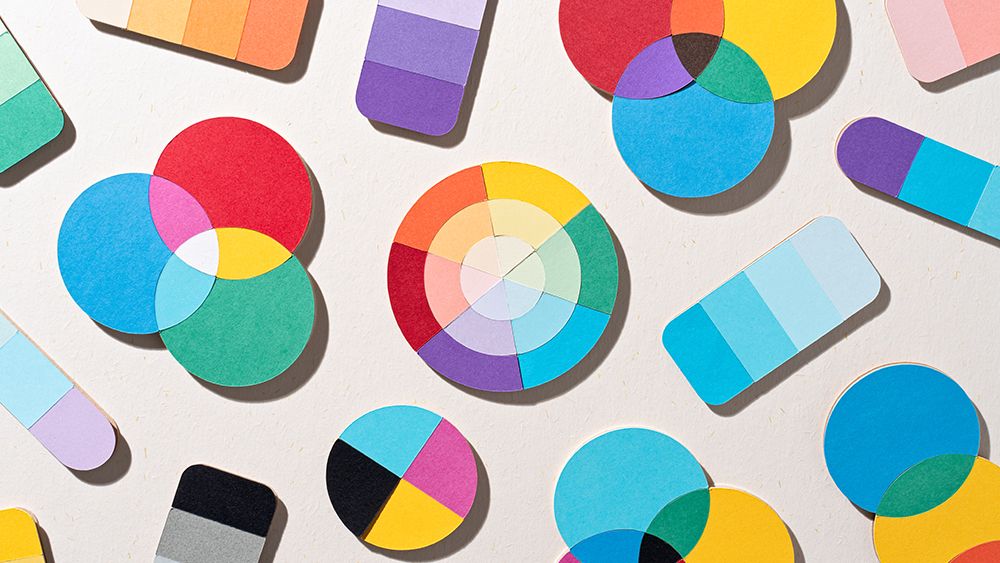
Color Theory

Like in the physical world, colors in digital design carry symbolic meanings and trigger subconscious associations. A calming blue might be used for a meditation app, while an energetic red could drive conversions for a limited-time offer. Colour theory unlocks the secrets of how colors work together. It reveals how different hues can create harmony or contrast, and how these combinations can evoke specific emotions and responses in the viewer.

60-30-10 Rule

The 60-30-10 rule is a classic guideline in design that helps you create balanced and visually appealing color palettes. It suggests that you should use:

  • 60% of your dominant color, often used for backgrounds and larger elements to create a consistent foundation.
  • 30% of your secondary color, providing contrast and supporting the dominant color, often used for key elements like headings or call-to-action buttons.
  • 10% of your accent color, used sparingly to highlight important details, create visual interest, and draw attention to specific elements.

Color Consistency

Maintaining color consistency throughout your digital product is essential for creating a cohesive and user-friendly experience. A consistent color palette strengthens brand recognition, improves navigation, and helps users understand the hierarchy and relationships between different elements.

Why is Color Consistency So Important?

  • Brand recognition: Consistent colors across your app create a strong visual identity, making your brand easily recognizable and memorable.
  • Improved navigation: Using specific colors consistently for buttons, menus, and interactive elements makes your app more intuitive to navigate.
  • Enhanced trust and credibility: A consistent color palette conveys professionalism and attention to detail, signaling to users that your app is well-designed and trustworthy.
  • Seamless user experience: When colors are used consistently, they create a sense of visual harmony and flow, contributing to a more enjoyable and engaging user experience.

Conclusion

Color is a powerful tool in the hands of a UX designer. By understanding the psychology of color and applying it thoughtfully, you can create digital products that are not only visually appealing but also emotionally engaging, user-friendly, and effective in achieving your business goals.

Frequently Asked Questions

Q: What is the importance of color in digital design?
A: Color is a powerful tool that can significantly impact a user’s experience with a digital product, evoking emotions, influencing behavior, and contributing to a product’s overall usability.

Q: How do colors work together in digital design?
A: Colors in digital design carry symbolic meanings and trigger subconscious associations, and understanding color theory can help you create harmonious and contrasting color combinations that evoke specific emotions and responses.

Q: What is the 60-30-10 rule in design?
A: The 60-30-10 rule is a guideline that suggests using 60% of your dominant color, 30% of your secondary color, and 10% of your accent color to create balanced and visually appealing color palettes.

Q: Why is color consistency important in digital design?
A: Color consistency is important because it strengthens brand recognition, improves navigation, enhances trust and credibility, and contributes to a seamless user experience.