Home Blog Page 307

7 Simple Tricks to Make Your Code Cleaner

0

1. Write Code Like You’re Explaining it to a 5-Year-Old

Let me be honest – if you are writing exceedingly clever code that your teammates or someone else can’t easily read, it won’t be helpful to anyone.

You need to write code so simple that anyone, including someone who just opened the file for the first time, can easily go through it.

For example, if your variable names look like this:

let x = y + z;

This isn’t helpful. No one will know what x, y, and z mean—-not even you, three weeks later.

Variables should describe what they hold. Think of them as self-documenting comments.

Here’s a better example:

let totalPrice = productPrice + shippingCost;

Now it’s clear just from looking at the code what’s going on.

2. Use AI Tools (or an AI Code Reviewer)

You can use AI tools to help you write better code. There are many tools available that can help you with code quality, security, and performance.

For example, you can use tools like SonarQube, CodeHeat, or CodeCoverage to analyze your code and identify areas for improvement.

3. Apply Proper Code Formatting Techniques

Code formatting is crucial for making your code easy to read and understand. Here are some best practices to follow:

  • Use consistent indentation and spacing
  • Use meaningful variable names and comments
  • Use functions to group related code together
  • Use consistent naming conventions

4. Structure Your Functions Effectively

Functions are a great way to group related code together and make it reusable. Here are some best practices to follow:

  • Use descriptive function names
  • Use function parameters to pass data
  • Use return statements to return values
  • Use try-catch blocks to handle errors

5. Follow Best Practices

Best practices are guidelines that help you write better code. Here are some best practices to follow:

  • Use consistent coding standards
  • Use version control systems
  • Test your code thoroughly
  • Use code reviews to improve quality

6. Organize Your Files and Folders Properly

Organizing your files and folders is crucial for making your code easy to navigate and maintain. Here are some best practices to follow:

  • Use a consistent file and folder naming convention
  • Use subfolders to group related files together
  • Use a clear and consistent naming convention for variables and functions

7. Organize Your Files and Folders Properly

Now comes the most important part.

When you’re working on a big project, it makes no sense to dump all your code into one single folder with a bunch of random files. It’s become a nightmare for anyone trying to review the code or find a specific file.

Think about it—going through 50 files just to fix a bug. Nobody wants that.

Instead, try organizing your project into multiple folders based on pages or features.

And don’t stop there—break large files into smaller, specific modules based on functionality. This way, everything is neat, easy to find, and makes sense at first glance.

Wrapping Up

In this article, you learned the basics you need to get started writing clean, efficient, and maintainable code.

We discussed how to write clean code, use AI tools, apply proper code formatting techniques, structure functions effectively, and follow other best practices.

If you apply these tips consistently, you’ll significantly improve your coding skills and write cleaner code.

I hope you liked it.

You can connect with me on Substack, and Twitter.

Also, if you’re interested in learning more about AI, you can subscribe to my newsletter, AI Made Simple, where I dive deeper into practical AI strategies for everyday people.

FAQs

Q: What is clean code?

A: Clean code is code that is easy to read, write, and maintain. It is free of errors, duplicated code, and unnecessary complexity.

Q: How can I write clean code?

A: You can write clean code by following best practices, using AI tools, and applying proper code formatting techniques. You can also use functions to group related code together and use meaningful variable names and comments.

Q: What are some best practices for coding?

A: Some best practices for coding include using consistent coding standards, using version control systems, testing your code thoroughly, and using code reviews to improve quality.

Q: How can I improve my coding skills?

A: You can improve your coding skills by practicing regularly, reading books and articles, and taking online courses. You can also join online communities and participate in coding challenges to improve your skills.

Q: What are some AI tools for coding?

A: Some AI tools for coding include SonarQube, CodeHeat, and CodeCoverage. These tools can help you analyze your code and identify areas for improvement.

US and UK Refuse to Sign AI Safety Summit Declaration

US Vice-President Warns Europe Not to Adopt "Overly Precautionary" AI Regulations

US and UK Refuse to Sign AI Declaration

US Vice-President JD Vance has warned Europe not to adopt "overly precautionary" regulations on artificial intelligence (AI) as the US and the UK refused to join dozens of other countries in signing a declaration to ensure that the technology is "safe, secure and trustworthy".

The Summit Declaration

The summit declaration calls for "ensuring AI is open, inclusive, transparent, ethical, safe, secure and trustworthy, taking into account international frameworks for all". While the commitments are non-binding, both the US and UK had signed similar declarations at previous iterations of the AI summit.

Reasons for Non-Signature

One person close to the British government suggested the wording was "too restrictive". The harder US stance comes as competition is heating up with China on developments around AI: chip manufacturing, so-called foundational models and AI chatbots, and the energy needed to power supercomputers.

Europe’s AI Efforts

Europe is seeking a foothold in the AI industry to avoid becoming too reliant on the US or China. At the two-day summit hosted by French President Emmanuel Macron, European leaders and companies unveiled about €200bn of planned investments in data centres and computing clusters to underpin the region’s AI efforts.

Vance’s Speech

On Tuesday, Vance told the assembled leaders the US would not relinquish its lead in AI, while also warning countries not to sign AI deals with "authoritarian regimes", in a thinly veiled jab against China. "Partnering with them means chaining your nation to an authoritarian master that seeks to infiltrate, dig in and seize your information infrastructure," Vance said, referring to CCTV and 5G as previous examples where "cheap tech… [was] heavily subsidised and exported by authoritarian regimes".

Conclusion

The US and UK’s refusal to sign the AI declaration has raised concerns about the potential risks of AI development and the need for international cooperation to ensure the technology is used responsibly. The competition between the US, China, and Europe in the AI industry is expected to continue, with each side seeking to gain a foothold in the market.

FAQs

Q: Why did the US and UK refuse to sign the AI declaration?
A: The US and UK refused to sign the declaration due to concerns that the wording was "too restrictive" and because they did not agree on the terminology around multilateralism and international collaboration.

Q: What are the concerns about AI development?
A: The concerns about AI development include the potential risks of AI being used to manipulate and control people, as well as the potential for AI to be used for malicious purposes.

Q: What is the competition like in the AI industry?
A: The competition in the AI industry is intense, with the US, China, and Europe all seeking to gain a foothold in the market. The competition is driven by the need for countries to develop their own AI capabilities and to stay ahead of their rivals.

Q: What is the significance of the summit declaration?
A: The summit declaration is significant because it represents a commitment by countries to work together to ensure that AI is developed and used responsibly. The declaration is non-binding, but it is seen as an important step towards building international cooperation on AI issues.

Ollama on MacOS Simplified

0

Using Msty with Ollama on MacOS

I’ve turned to locally installed AI for research because I don’t want third parties using my information to either build a profile or train their local language models (LLMs). My local AI of choice is the open-source Ollama. I recently wrote a piece on how to make using this local LLM easier with the help of a browser extension, which I use on Linux. But on MacOS, I turn to an easy-to-use, free app called Msty.

Installing Msty

What you’ll need: The only things you’ll need for this are a MacOS device, and Ollama installed and running. If you haven’t installed Ollama, do that first (here’s how). You’ll also need to pull down one of the local models (which is demonstrated in the article above).

Head to the Msty website, click the Download Msty dropdown, select Mac, and then select either Apple Silicon or Intel. When the installation is complete, double-click on the file and, when prompted, drag the Msty icon to the Applications folder.

Using Msty

1. Open Msty

Next, open Launchpad and locate the launcher for Msty. Click the launcher to open the app.

2. Connect your local Ollama model

When you first run Msty, click Setup Local AI and it will download the necessary components. Once the download completes, it will take care of the configuration and download a local model other than Ollama.

To connect Msty to Ollama, click Local AI Models in the sidebar and then click the download button associated with Llama 3.2. Once downloaded, you can select it from the models dropdown. You can also add other models, for which you’ll need to retrieve an API key from your account for that particular model. Msty should now be connected to the local Ollama LLM.

3. Model Instructions

One of the cool features of Msty is that it allows you to change the model instructions.

For example, you might want to use the local LLM as an AI-assisted doctor, for writing, accounting, as an alien anthropologist, or as an artistic advisor.

To change the model instructions, click Edit Model Instructions in the center of the app and then click the tiny chat button to the left of the broom icon. From the popup menu, you can select the instructions you want to apply. Click “Apply to this chat” before running your first query.

Conclusion

Msty is one of the best tools for interacting with Ollama. With its easy-to-use interface and features like split chats, regenerate model response, clone chats, add multiple models, real-time data summoning, create Knowledge Stacks, a prompt library, and more, you’ll be able to get the most out of your local LLM.

FAQs

Q: What is Msty?
A: Msty is a free app that allows you to use locally installed and online AI models.

Q: How do I install Msty?
A: You can download Msty from the Msty website and follow the installation instructions.

Q: How do I connect Msty to Ollama?
A: To connect Msty to Ollama, click Local AI Models in the sidebar and then click the download button associated with Llama 3.2. Once downloaded, you can select it from the models dropdown.

Q: What are the benefits of using Msty with Ollama?
A: Msty allows you to use your local Ollama LLM with ease, and its features like split chats, regenerate model response, clone chats, add multiple models, real-time data summoning, create Knowledge Stacks, a prompt library, and more make it a powerful tool for interacting with your local LLM.

Kiehl’s: Pubic Hair Font Fights Back

0

Kiehl’s Unveils Provocative New Font Celebrating Body Positivity

A Clap Back to Censorship

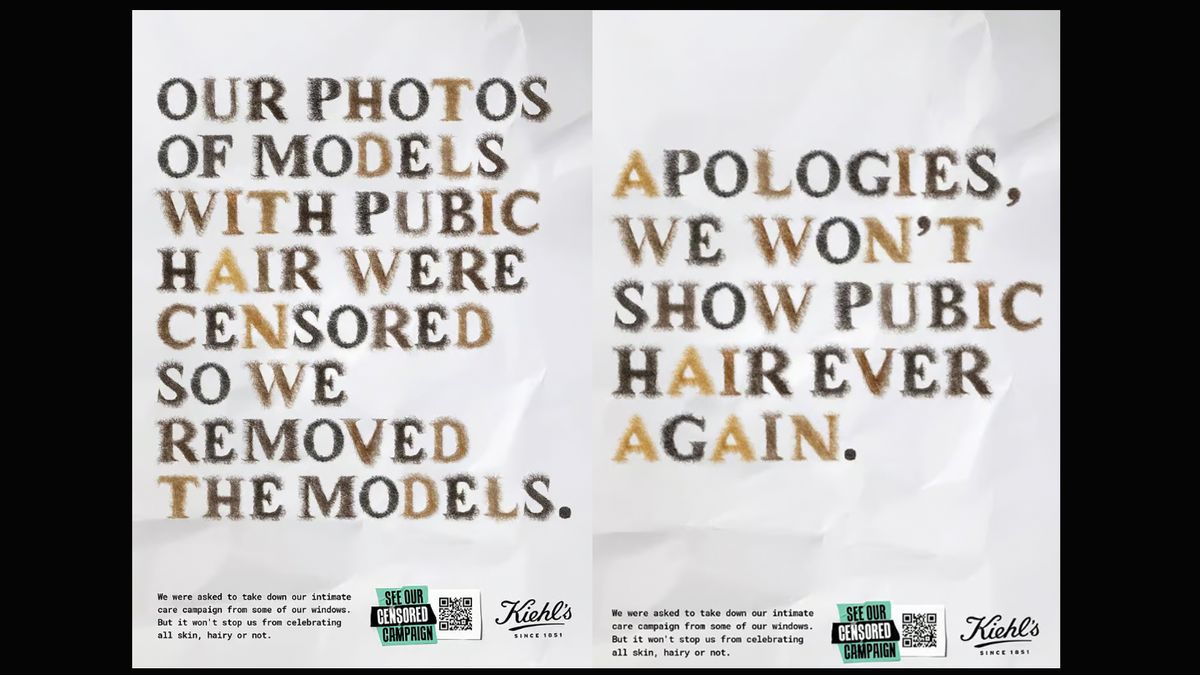
Kiehl’s, a skincare brand owned by L’Oréal, has launched a new campaign that is redefining the way we think about body hair. In response to censorship of their recent intimate care campaign, the brand has created a custom typeface called "Pubic Display Type", which recreates the alphabet using pubic hair. This bold move is a statement against societal norms and body shaming.

A New Font, A New Message

The font is designed to be attention-grabbing, with headlines like "pubic hair don’t care", "our photos of models with pubic hair were censored so we removed the models", and "apologies, we won’t show pubic hair ever again". The message is clear: Kiehl’s is unapologetic about celebrating all skin, hairy or not.

A QR Code to the Censored Campaign

The campaign also includes a QR code that takes viewers to the censored campaign, which was removed from some stores due to its candid portrayal of pubic hair. This move is a nod to the brand’s commitment to body positivity and its refusal to conform to societal standards.

A New Era of Typography

The "Pubic Display Type" font is not the first of its kind, but it is certainly the most high-profile. The font’s irregular shapes and bold design make it stand out, conveying a message that is both thought-provoking and attention-grabbing.

Conclusion

Kiehl’s "Pubic Display Type" font is a game-changer in the world of typography. It is a bold statement against societal norms and body shaming, and a celebration of all skin, hairy or not. The brand’s commitment to body positivity is evident in this campaign, and it is a refreshing change from the usual beauty standards we see in the industry.

FAQs

Q: What is "Pubic Display Type"?
A: "Pubic Display Type" is a custom typeface created by Kiehl’s, which recreates the alphabet using pubic hair.

Q: Why was the "Pubic Display Type" font created?
A: The font was created in response to censorship of Kiehl’s recent intimate care campaign, which featured photos of models with pubic hair.

Q: What is the message behind the "Pubic Display Type" font?
A: The font is a statement against societal norms and body shaming, celebrating all skin, hairy or not.

Q: Is this the first time a brand has created a font inspired by pubic hair?
A: No, it is not the first, but it is certainly one of the most high-profile campaigns of its kind.

AI Action Summit a ‘Missed Opportunity’

0

AI Startup CEO Criticizes Paris AI Summit, Urges Faster Action

In a statement on Tuesday, Dario Amodei, the CEO of AI startup Anthropic, called the AI Action Summit in Paris this week a “missed opportunity,” and urged the AI industry — and government — to “move faster and with greater clarity.”

Amodei’s Criticism

“We were pleased to attend the AI Action Summit in Paris, and we appreciate the French government’s efforts to bring together AI companies, researchers, and policymakers from across the world,” Amodei said. “However, greater focus and urgency is needed on several topics given the pace at which the technology is progressing.”

Academic Criticism

Amodei’s criticism of the AI Action Summit, the latest in a series of conferences that brought together AI companies and regulators to attempt to arrive at a consensus on AI governance, echoes that of several academics earlier this week. One told Transformer that the conference’s commitments, which the U.S. and U.K. refused to sign, said “effectively nothing except for platitudes.”

U.S. Vice President’s Stance

In comments at the conference, U.S. Vice President JD Vance adopted an entirely different stance and denounced what he characterized as “massive” and stiffling regulations on AI championed by Europe. Vance also took issue with content moderation, alluding to the “sustainable” and “inclusive” wording in the conference’s commitments, which he rejected as “authoritarian censorship.”

Amodei’s Warning

Amodei warned in his statement that AI is rapidly becoming more sophisticated, and that failing to regulate it could result in disastrous consequences. “The capabilities of AI systems will be best thought of as akin to an entirely new state populated by highly intelligent people appearing on the global stage,” Amodei said. “Advanced AI presents significant global security dangers, ranging from misuse of AI systems by non-state actors … We must ensure democratic societies lead in AI, and that authoritarian countries do not use it to establish global military dominance.”

Call to Action

Amodei urged governments to deploy their resources to measure how AI is being used, and to enact policy focused on “ensuring that everyone shares in the economic [uplift] of very powerful AI.” He also argued for more government transparency when it comes to AI safety and security, as well as plans to assess AI risks.

Contrasting Views

Amodei’s appraisal of the Paris AI Summit’s proceedings stands in contrast to OpenAI’s, which said in a statement this weekend that it was confident that the conference would be “another important milestone towards the responsible and beneficial development of AI for everyone.”

Anthropic’s Stance

Anthropic has generally shown more of an openness to AI regulation in the past. Indeed, Amodei has made similar pronouncements before, cautioning that unfettered AI could have profoundly negative economic, societal, and security implications. Anthropic was one of the few AI companies to tacitly endorse California’s SB 1047, a comprehensive — and hotly debated — AI regulatory bill. OpenAI opposed the bill, which was vetoed by Governor Gary Newsom last fall.

Conclusion

The AI Action Summit in Paris has sparked controversy, with some calling for faster and more decisive action on AI regulation, while others have expressed concerns about the potential impact of regulations on innovation. As AI continues to evolve, it is clear that the stakes are high, and that the industry and governments must work together to ensure that the benefits of AI are shared by all.

FAQs

Q: What did Dario Amodei, CEO of Anthropic, say about the AI Action Summit?

A: Amodei called the summit a “missed opportunity” and urged the AI industry and government to “move faster and with greater clarity” on AI regulation.

Q: What did U.S. Vice President JD Vance say about the AI Action Summit?

A: Vance denounced what he characterized as “massive” and stiffling regulations on AI championed by Europe, and rejected the conference’s commitments as “authoritarian censorship.”

Q: What did Amodei warn about the potential consequences of failing to regulate AI?

A: Amodei warned that AI is rapidly becoming more sophisticated, and that failing to regulate it could result in disastrous consequences, including global security dangers and the misuse of AI systems by non-state actors.

Q: What did OpenAI say about the AI Action Summit?

A: OpenAI said that the conference would be “another important milestone towards the responsible and beneficial development of AI for everyone.”

I Took Grindr’s AI Wingman for a Spin

0

A New Era of Recommendations for Dating Apps

Unlocking the Power of In-App Conversations

Grindr’s CEO, Scott Arison, believes that in-app conversations can reveal a more authentic version of users than what’s filled out on their profiles. This understanding has led the company to focus on using AI models to analyze conversations and provide more personalized recommendations to users. "It’s one thing what you say in your profile," Arison says. "But, it’s another thing what you say in your messages—how real that might be."

Chat Summaries and Connection Reminders

Grindr’s AI model can summarize recent interactions with users, highlighting potential topics for further discussion. This feature is particularly useful for users who have matched with someone and chatted briefly, but haven’t seen the conversation through. "This ‘A-List’ product actually goes through your inbox with folks you’ve spoken with, pulls out the folks where you’ve had some good connections," Balance says. "And it uses that summary to remind you why it could be good to pick back up the conversation."

AI-Powered Recommendations

Grindr’s AI model can also highlight profiles of users it thinks you’re most compatible with. This feature is designed to encourage users to rekindle connections they may have let die. "If you’ve had a good conversation with someone, you might not have seen each other in a while, but you still might have some good chemistry," Balance says.

Personal Experience and the Importance of AI

As a gay man, my first experiences on Grindr were a mix of liberation and constriction. I was exposed to casual racism and body shaming, which made me feel uncomfortable and self-conscious. AI features that detect addiction to the app and encourage healthier habits and boundaries would be a welcome addition.

The Roadmap for AI Implementation

Grindr’s AI-focused tools are planned for release throughout 2023, with the generative AI assistant expected to roll out in 2027. Arison is cautious, acknowledging that these products are expensive to run. "We want to be kind of careful with that as well."

Conclusion

Grindr’s use of AI to analyze in-app conversations has the potential to revolutionize the dating app experience. By focusing on what users say in their conversations, rather than their profiles, the app can provide more personalized recommendations and connections. While some users may be uncomfortable with AI reading their private chats, others may see the benefits of a more authentic and meaningful experience.

Frequently Asked Questions

Q: How does Grindr’s AI model work?
A: Grindr’s AI model analyzes user conversations to provide personalized recommendations and summaries of recent interactions.

Q: What are the benefits of using in-app conversations to inform recommendations?
A: In-app conversations reveal a more authentic version of users, allowing for more personalized recommendations and connections.

Q: Will all AI features be available to all users?
A: Some AI features, such as the chat summaries and connection reminders, will be available to all users, while others, like the generative AI assistant, are expected to roll out in 2027.

Q: How will Grindr balance the need for AI-powered features with user privacy concerns?
A: Grindr is cautious about implementing AI features, acknowledging that they can be expensive to run and may raise privacy concerns. The company is taking a careful approach to ensure that users are comfortable with these new features.

That Outrageous Super Bowl Logo Conspiracy Theory

0

The Super Bowl Logo Conspiracy: A Growing Phenomenon

Ah, the Super Bowl logo conspiracy. Ridiculous at its core, but with each passing year, just a tiny bit more intriguing. For the uninitiated, the theory is simple – fans believe the colours used in the logo reveal not only which teams will make it to the Super Bowl, but also who will win. Surely the whole thing isn’t rigged, right? And surely the logo designers wouldn’t deliberately reveal the outcome a year early, right? Wrong, according to a small but vocal group that really doesn’t believe in coincidences.

The Theory in Action

The orange and yellow Super Bowl LVI logo reflected the colours of The Bengals and LA Rams, who ended up playing. And the Super Bowl LVII’s green and red echoed The Eagles and Chiefs. So, with the new 2026 Super Bowl featuring a landscape with trees and the Golden Gate Bridge, and the colours blue and purple, fans are already speculating over who might compete in 2026.

Predictions and Speculation

Based on those colours, the top prediction on X appears to be Lions vs Ravens. Other suggestions include Chargers vs Vikings, and Bills vs Rams. Some have even taken the design conspiracy even further. It’s been suggested that the Super Bowl logo also reveals which team will win by placing their colour at the bottom of the logo. So, with purple sitting at the bottom of the new logo, we can safely assume Ravens are going to win. Case closed. Place your bets.

A Growing Phenomenon

This isn’t the first time we’ve seen the Super Bowl logo court controversy. The design a couple of year’s back was accused of looking blood soaked, while the monotony of the last few iterations has raised eyebrows. Yep, we even have a roundup of the biggest Super Bowl design controversies.

Conclusion

The Super Bowl logo conspiracy may be a far-fetched theory, but it’s undeniable that it’s captured the imagination of fans worldwide. Whether you believe in the power of the logo or not, it’s clear that the NFL is aware of the phenomenon and is using it to generate buzz and excitement around the biggest sporting event of the year.

FAQs

Q: Is the Super Bowl logo conspiracy real?
A: No, the conspiracy theory is not supported by any evidence and is likely a coincidence.

Q: How do fans predict the outcome of the Super Bowl based on the logo?
A: Fans use a combination of color analysis and pattern recognition to make their predictions.

Q: Has the NFL ever confirmed or denied the conspiracy theory?
A: The NFL has not commented on the conspiracy theory, but it’s likely that they are aware of the phenomenon and are using it to generate buzz and excitement around the Super Bowl.

Q: Can I place a bet on the outcome of the Super Bowl based on the logo?
A: While some fans may choose to place a bet on the outcome of the Super Bowl based on the logo, it’s important to remember that the theory is not supported by any evidence and is likely a coincidence.

SimboConnect Demo Video

0

Revolutionizing Healthcare Front Desks with AI-Powered Efficiency

We are thrilled to announce the launch of our brand-new SimboConnect demo video! SimboConnect is a state-of-the-art, AI-powered Front-Desk Copilot designed specifically for healthcare practices to automate patient interactions and streamline front-desk operations and patient phone calls.

Why Choose SimboConnect?

Our cutting-edge solution brings Conversational AI to the forefront of healthcare administration, enabling clinics to optimize their front-desk workflows effortlessly. Here’s how SimboConnect can transform your practice:

Streamline Patient Interactions

SimboConnect can automate over 50 front-desk tasks, including appointment scheduling, prescription refills, and patient inquiries, drastically reducing your team’s workload and improving operational efficiency.

Enhance Efficiency & Improve Patient Satisfaction

With AI-powered automation, patients receive instant responses and seamless phone call management, minimizing wait times and enhancing overall patient experience. The Copilot ensures every call is answered within two seconds.

Customizable & Easy to Integrate

SimboConnect seamlessly integrates into your existing workflows, ensuring minimal disruption while maximizing efficiency. With its customizable workflows, you can tailor automation to fit your clinic’s unique needs.

Watch the Demo!

Experience the power of SimboConnect in action! Watch our demo to see how this innovative Conversational AI solution can revolutionize your front-desk operations and help you focus on what truly matters—delivering exceptional patient care.

We’d Love to Hear from You!

What do you think about SimboConnect? Drop a comment or message us at connect@simbo.ai to learn more about how our AI-driven solution can help your practice!

Stay ahead of the curve—hop on the AI train with Simbo AI today!

Conclusion

SimboConnect is a game-changing solution that can revolutionize your healthcare practice by streamlining front-desk operations, enhancing patient satisfaction, and improving overall efficiency. With its customizable workflows and seamless integration, SimboConnect is the perfect solution for any healthcare practice looking to stay ahead of the curve.

FAQs

Q: What is SimboConnect?

A: SimboConnect is an AI-powered Front-Desk Copilot designed specifically for healthcare practices to automate patient interactions and streamline front-desk operations and patient phone calls.

Q: What are the benefits of SimboConnect?

A: SimboConnect can automate over 50 front-desk tasks, reduce team workload, improve patient satisfaction, and enhance overall operational efficiency.

Q: Is SimboConnect easy to integrate?

A: Yes, SimboConnect seamlessly integrates into your existing workflows, ensuring minimal disruption while maximizing efficiency.

Q: Is SimboConnect customizable?

A: Yes, SimboConnect offers customizable workflows, allowing you to tailor automation to fit your clinic’s unique needs.

IIT College’s Bauhaus Revamp

0

A New Look for IIT College of Architecture

The Illinois Institute of Technology (IIT) Institute of Design recently received a beautiful new rebrand courtesy of COLLINS, and this year, it’s the IIT College of Architecture’s turn to get a new look.

A Rich History

The IIT is steeped in history. It became a global centre of modernism under the leadership of Mies van der Rohe, one of the pioneers of modern architecture and one of the directors of the Bauhaus. Mies van der Rohe created 21 buildings on IIT’s campus, including the iconic column-free SR Crown Hall.

New Branding

The new brand was created by Span, whose task was to convey this history in a way that would appeal to potential and current students. As you’d expect from an architectural college, the new brand is all clean lines and sleek edges. The backbone of the new look is the newly released Neue Galerie, a digital revival of Mies van der Rohe’s Allzweck typeface. Based on Mies van der Rohe’s personal sketches, Neue Galerie was created by bBox Type foundry and is also used in the new logo. In a beautiful font pairing, The Future is also used to add energy.

(Image credit: IIT College of Architecture)

New Website and Photography

The new website is built on a grid that uses the same 2×1 proportions as the Crown Hall and has generous portions of white space dotted throughout, which a press release describes as a “visual nod to Crown Hall’s open floor plan”.

Photography was also important in this project, and Span worked with the IIT team to organize over 8,000 images to help tell the story of the brand.

process shot of two men choosing photos(Image credit: IIT College of Architecture)

Design Director’s Perspective

“We’re a branding-led design studio that works across all media and this project perfectly encapsulates that,” says Span partner and design director Bud Rodecker. “We’re not following trends, we are designing with intention and purpose – immersing ourselves in the subject matter to create work that feels authentic and resonant.

“More than that, we’re giving the current faculty and students a brand platform that enables them to work together to design and build the future of architecture. We believe the new brand will help this storied institution continue its modernist tradition, reflecting it in ways that are unexpected, engaging and deeply effective.”

Conclusion

The new brand for IIT College of Architecture is a beautiful representation of the institution’s rich history and commitment to modernism. With its clean lines, sleek edges, and thoughtful typography, the brand is sure to appeal to potential and current students alike. The new website and photography also showcase the college’s dedication to storytelling and showcasing its architectural achievements.

Frequently Asked Questions

Q: Who designed the new brand for IIT College of Architecture?
A: The new brand was designed by Span, a branding-led design studio.

Q: What is the inspiration behind the new brand?
A: The new brand is inspired by the college’s rich history and commitment to modernism, as well as its iconic architecture and design.

Q: What is the significance of the Neue Galerie typeface?
A: The Neue Galerie typeface is a digital revival of Mies van der Rohe’s Allzweck typeface, which was created based on Mies van der Rohe’s personal sketches.

Q: What is the purpose of the new website and photography?
A: The new website and photography are designed to showcase the college’s architectural achievements and tell the story of its brand.

Crawl, Then Walk, Before You Run with AI Agents

0

Welcome to not just a world of AI agents but a multi-agent world. Yet while these functional generative AI (Gen AI) tools have great promise for personal and professional productivity, deploying them is a significant challenge for designers and developers.

The authors of a recent Deloitte report suggested agents have caught people’s attention — 26% of organizations are exploring autonomous agent development. At least 52% of executives are interested in pursuing agentic AI development, and 45% want to extend development to multi-agent systems. However, while agentic AI will be a key enabler of sustainable value, the report suggested it’s no silver bullet.

Getting Started with Agents

The best bet for percolating AI agents throughout the organization is to keep things as simple as possible. "Companies and employees that have already found ways to operationalize intelligent agents for simple tasks are best placed to exploit the next wave with agentic AI," said Benjamin Lee, professor of computer and information science at the University of Pennsylvania.

Refining the Agentic Approach

Quality data is also key, Rowan added: "It’s the foundation for AI agents to work effectively. If data is inaccurate, incomplete, or inconsistent, the agents’ outputs and actions may be unreliable or incorrect, creating both adoption and risk issues. It’s therefore essential to invest in robust data management and knowledge modeling."

Conclusion

Implementing AI agents can be costly, but it’s a necessary step towards achieving sustainable value. To get started, companies should adopt a crawl, walk, run approach, beginning with a pilot program to explore the potential of multi-agent systems in a controlled, measurable environment. Additionally, investing in robust data management, knowledge modeling, and workforce upskilling is crucial for the success of agentic AI.

FAQs

Q: What are the key barriers to deploying agentic AI?
A: Regulatory uncertainty, risk management, data deficiencies, and workforce issues are the key barriers to deploying agentic AI.

Q: What is the best approach to get started with AI agents?
A: The best approach is to keep things as simple as possible, starting with operationalizing intelligent agents for simple tasks.

Q: What is the importance of data in agentic AI?
A: Quality data is essential for AI agents to work effectively. Inaccurate, incomplete, or inconsistent data can lead to unreliable or incorrect outputs and actions.

Q: How can companies ensure the success of agentic AI?
A: Companies can ensure the success of agentic AI by investing in robust data management, knowledge modeling, and workforce upskilling, and adopting a crawl, walk, run approach to deployment.