Home Blog Page 321

China Data Transfer Boosts Security Concerns

US Lawmakers Push for DeepSeek Ban Amid Data Transfer Concerns

US lawmakers are pushing for a ban on DeepSeek, a Chinese AI-powered app that has been collecting user data and transferring it to a state-owned company banned in the US. The app, which has gained popularity for its advanced AI capabilities, has raised concerns over its data collection practices and alleged ties to the Chinese Communist Party (CCP).

A Threat to US AI Dominance

DeepSeek’s rapid growth has positioned it as a major competitor to American AI stalwarts like OpenAI’s ChatGPT and Google Gemini. However, the app’s ties to the CCP have raised concerns over national security and data privacy. According to security researchers, hidden code within DeepSeek’s AI has been found transmitting user data to China Mobile, a state-owned telecoms company banned in the US.

Potential Ban of DeepSeek a TikTok Redux?

The controversy surrounding DeepSeek bears similarities to debates over TikTok, the social video app owned by Chinese company ByteDance. While some may say DeepSeek echoes the TikTok controversy, security experts argue that it represents a much starker and documented threat.

AI Becomes a Geopolitical Battleground

The concerns over DeepSeek exemplify how AI has now become a geopolitical flashpoint between global superpowers, especially between the US and China. American AI firms like OpenAI have enjoyed a dominant position in recent years, but Chinese companies have poured resources into catching up and, in some cases, surpassing their US competitors.

A Nationwide DeepSeek Ban is on the Cards

If the proposed US legislation is passed, it could represent the first step toward nationwide restrictions or an outright ban on DeepSeek. Geopolitical tension between China and the West continues to shape policies in advanced technologies, and AI appears to be the latest arena for this ongoing chess match.

Conclusion

DeepSeek’s rise may have rattled the AI hierarchy, but whether it can maintain its momentum in the face of increasing global pushback remains to be seen. The controversy surrounding DeepSeek serves as a reminder of the importance of data privacy and national security in the development and deployment of AI technologies.

FAQs

Q: What is DeepSeek?
A: DeepSeek is a Chinese AI-powered app that has gained popularity for its advanced AI capabilities.

Q: What are the concerns surrounding DeepSeek?
A: The app’s data collection practices and alleged ties to the Chinese Communist Party (CCP) have raised concerns over national security and data privacy.

Q: Has DeepSeek been banned in any countries?
A: Yes, several federal agencies, including NASA and the US Navy, have already preemptively issued a ban on DeepSeek. The state of Texas has also introduced restrictions.

Q: What is the proposed US legislation?
A: The proposed legislation would prohibit DeepSeek from being installed on all government-issued devices.

Q: Will a ban on DeepSeek impact the development of AI technologies?
A: The controversy surrounding DeepSeek serves as a reminder of the importance of data privacy and national security in the development and deployment of AI technologies.

See AI’s Thought Process with o3-mini

OpenAI Updates o3-mini Model with "Updated Chain of Thought"

What’s New?

Exactly one week ago, OpenAI released its o3-mini model, offering both free and paid users a more accurate, faster, and cheaper alternative to o1-mini. Now, OpenAI has updated the o3-mini to include an "updated chain of thought," which allows users to view the reasoning process behind the model’s conclusions.

Understanding Chain of Thought (CoT)

In the X post announcing the feature, OpenAI throws out the term "Chain of Thought," but what does it actually mean? CoT prompting encourages an LLM to break down a complex problem into logical, smaller, and solvable steps. By sharing these reasoning steps with users, the model becomes more interpretable, allowing users to better steer its responses and identify errors in reasoning.

How Does it Work?

To view the chain of thought, you do not need to do anything other than select the o3-mini model to answer your prompt. If you are a subscriber, you can select "o3-mini" or "o3-mini-high" from the model toggle dropdown in the upper left-hand corner. Once it is selected, any prompt you enter will automatically show its reasoning process. If you are a free user, all you have to do is click on "Reason" in the message textbox or regenerate a response to activate o3-mini. Once you do, you can just enter a prompt as usual and see the magic for yourself.

Why Summarized CoT?

Some reasons OpenAI could have chosen to go with its take on CoT are that it makes it easier for everyone to understand, and that exposing raw CoT could make the model more vulnerable to jailbreaking attempts.

Raw CoT vs. Summarized CoT

Raw CoT would display every intermediate step in real time as the model reasons through a problem. OpenAI’s take on CoT in this update is not raw, as it is summarizing the reasoning for users. This has caused many AI aficionados in the comments of the X post to express discontent with the feature, as raw CoT poses added benefits, such as how to better steer the model and troubleshoot incorrect reasoning.

Conclusion

The updated o3-mini model with "updated chain of thought" is a significant improvement, allowing users to better understand the reasoning behind the model’s conclusions. While some may be disappointed that it’s not raw CoT, the summarized version still provides valuable insights into the model’s thought process.

FAQs

Q: What is Chain of Thought (CoT)?
A: CoT prompting encourages an LLM to break down a complex problem into logical, smaller, and solvable steps.

Q: How do I access the chain of thought?
A: To view the chain of thought, select the o3-mini model to answer your prompt. If you are a subscriber, select "o3-mini" or "o3-mini-high" from the model toggle dropdown. If you are a free user, click on "Reason" in the message textbox or regenerate a response to activate o3-mini.

Q: Why did OpenAI choose to summarize CoT instead of exposing raw CoT?
A: OpenAI may have chosen to summarize CoT to make it easier for everyone to understand, and to avoid making the model more vulnerable to jailbreaking attempts.

More to Switch 2 Joy-Cons Than We Thought

0

New Joy-Con Feature Revealed in Nintendo Switch 2 Trailer

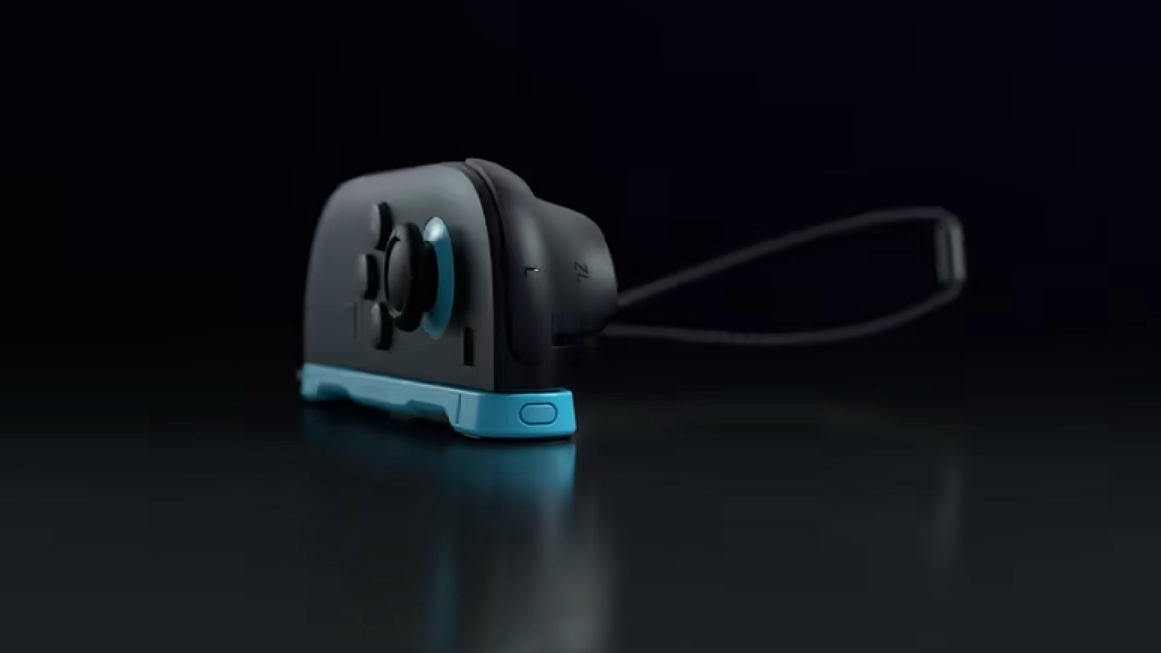
About 1 minute and 15 seconds into the trailer, the new sleek black Joy-Cons can be seen gliding across the surface SL and SR buttons face-down, and with the thin wrist straps trailing behind them in the same way you might picture a mouse running with its long tail. See where I’m going with this?

Mouse-Like Functionality Confirmed

Basically, it’s been all but confirmed that the new Nintendo Switch Joy-Cons will have mouse-like functionality, with filed Nintendo patents surfacing online in the last few days that support this claim. The patents published by WIPO depict a series of diagrams and drawings (see below) that show how this mouse functionality will work for the Joy-Cons.

How it Works

Image 1 of 5

(Image credit: WIPO)

I have to say, this doesn’t look very comfortable to use or ergonomic from the images above. I can’t imagine using a Joy-Con sideways as a mouse, especially given how thin they typically are (at least the old style). Other than for PC-style gameplay and first-person shooter titles, I honestly can’t see this being a very popular or useful feature for Switch gamers (though I could be wrong).

Multi-Joy-Con Support

As far as I can tell from the patents, the mouse functionality won’t be limited to just one Joy-Con either, as both are shown being used at the same time, as well as one Joy-Con in the mouse position and the other held upright in one diagram.

New Accessories

The WIPO patents also hint at some other new Nintendo accessories that we could see for the Switch 2, including what looks like a more beefy Pro controller, and a new charging dock design suggests that Joy-Cons might charge face-down from now on. I really hope that more Joy-Con alternatives pop up for the Switch 2, as I prefer lightweight controllers with Hall Effect sticks personally.

Conclusion

The mouse-like functionality on the new Joy-Cons is an interesting development, but it remains to be seen how well it will be received by gamers. Only time will tell if this feature will be a hit or a miss.

FAQs

Q: Will the mouse functionality be limited to one Joy-Con?
A: No, according to the patents, the mouse functionality won’t be limited to just one Joy-Con, as both are shown being used at the same time.

Q: Will the mouse functionality be comfortable to use?
A: The images above suggest that the mouse functionality may not be very comfortable to use or ergonomic, especially given how thin the Joy-Cons typically are.

Q: Will the mouse functionality be useful for Switch gamers?
A: Other than for PC-style gameplay and first-person shooter titles, I honestly can’t see this being a very popular or useful feature for Switch gamers (though I could be wrong).

Marketing with Integrity: Ethics and Transparency

0

Understanding The Challenges Of Content Saturation

Every second of the day, an influx of content is published across myriad platforms such as email, social media, websites, and more.

Consumers are inundated with content, having to sift through the mountains of information to find what is most relevant to their needs.

Vying for their time and attention can be difficult, especially when your competitors, and even those in different verticals, are attempting to do the same.

The rise of AI technology presents another challenge. Some content marketers and businesses are turning to AI to draft and publish content quickly.

Given its accessibility and capabilities, AI is becoming an easy way to churn out content, although a study has pointed to decreases in search engine visibility with AI-generated content.

The consistent, steady stream of content options can lead to what many refer to as “information overload,” where consumers become overwhelmed with the endless content options at their fingertips.

Information overload makes it increasingly difficult for brands to stand out. Additionally, algorithms are becoming attuned to understanding consumer preferences, surfacing, and prioritizing content based on relevance and engagement.

Generic content marketing strategies no longer suffice. Smart and savvy strategies are required in the ultra-fierce race for audience attention.

Breaking Through The Noise: Strategies That Work To Build Trust

Content isn’t being served in one single location. Long gone are the days of direct mail, email, and blogs being the main content forces to reckon with. The battle for attention is more arduous than ever.

With the emergence of social media platforms like TikTok, Instagram, and YouTube, content creation is no longer just in written form but rather through captivating photos, audio, and video formats.

Innovative content marketing approaches are necessary to truly build trust and differentiate your content from others.

Hyper-targeted content, personalization, and strategic AI usage are among those approaches that lead to the path to content marketing mastery.

1. Hyper-Targeted Content: Reaching The Right Audience

Imagine shouting into a void, one so massive and wide-reaching that your voice barely penetrates the surface.

The effort exerted to scream your message wouldn’t be worthwhile as no one would hear a word you say. Unfortunately, this example is all too common in the world of digital marketing.

By analyzing key data points – like demographic, psychographic, and behavior data – brands can tap into what motivates their target audience most.

Content can then be delivered more effectively to the right audience at the right time with the right message.

Tools like Google Analytics, Google Business Profile, and email and social media marketing platforms are becoming more intelligent, enabling businesses to gain a deeper understanding of their audience through deeper insights.

Takeaway: Craft Content Tailored To Niche Interests

Generic content no longer works. Instead, successful content marketers focus on niche markets, delivering highly relevant content that addresses a specific pain point.

For example, a popular pet retailer offers numerous specialty services to their customers. Bundling all this information on one landing page can cause confusion, leading to lower click-through rates and, in turn, less revenue.

By adding specialty landing pages with unique content for each of their services offered, such as vaccinations, aquatics, grooming, and more, the pet retailer saw dramatic increases in organic search traffic.

2. Effective Use Of Personalization

Addressing a prospect by their first name isn’t personalization.

Content personalization extends far beyond simply knowing the names of your customers. Modern content consumers expect more out of businesses in order to trust them enough to purchase.

They expect content that aligns with their unique needs, such as surfacing previously frequent purchases or highlighting a book that’s similar in style to the last book a customer read.

Customers are savvy, and if they’re presented with options that don’t align with their preferences, they’ll look elsewhere.

Takeaway: Personalization – A Powerful Differentiator That Requires Balance

Personalization walks a fine line. It shows you care about your customers by sharing more relevant content that matches their needs; however, privacy must be considered.

Algorithms are becoming more intelligent by analyzing and refining their content distribution strategies. This requires customer data, a subject that breeds concern and calls ethics into question.

It’s crucial for businesses to share how, when, and where customer data is collected. Disclose this clearly on your website and in your content in a clearly visible and easy-to-locate location.

3. Responsible AI Usage In Content Creation

Many marketers have jumped aboard the AI bandwagon – 64% are already using it. Despite its prominent adoption, AI is seen as both a blessing and a curse.

On one hand, it has significantly impacted the way we work, streamlining tasks and delivering quick results.

On the other, it leads to duplicated content, information bias, irrelevant content, and an abundance of content that all sounds the same.

Takeaway: Use AI To Complement Human Efforts

Relying solely on AI for content creation comes with inherent risks.

AI-generated content often lacks authenticity and loses the author’s unique tone of voice. It can sound the same, reading too crisp and polished.

It loses the human element – interjecting the emotion and spark human writers accomplish that AI simply can’t.

Integrating All 3 Strategies For Maximum Impact

Content marketing strategies work best when used in tandem.

For example, a retailer might use AI to extract common themes in customer feedback, hyper-targeted content to promote relevant content based on customer feedback within a specific region, and personalize outreach with product recommendations based on the buyer’s behavior.

This all-encompassing approach not only improves customer experience but holds the potential to improve return on investment (ROI) as well.

Conclusion

The content overload era has just begun, and the way content marketers used to reach customers will no longer suffice.

Instead, as marketers, we must work diligently to bridge the trust gap that exists between customers and brands.

This has become an increasingly tough task given the advancement of AI technology, where it can be tough to discern who’s behind the messaging – a human or a machine.

Marketers must focus on ethics and transparency to ensure every message they craft is meaningful, useful, and relevant.

By using AI as a supportive tool, adopting hyper-targeted campaigns, and leveraging personalization strategies, brands will create customer experiences that land with their audience.

Content will continue to grow at an astounding pace, but the brands that prioritize top-notch content and connection will continue to stand out.

FAQs

Q: What is the content overload era?

A: The content overload era refers to the current state of the digital landscape, where an overwhelming amount of content is being created and published daily, making it increasingly difficult for brands to stand out and reach their target audience.

Q: How can I effectively use AI in content creation?

A: AI can be used to support human efforts in content creation, such as data analysis, improving drafts, keyword research, content optimization, and technical SEO fixes. However, it is crucial to use AI responsibly and not rely solely on it for content creation.

Q: What is hyper-targeted content?

A: Hyper-targeted content refers to content that is tailored to a specific audience or niche, addressing their unique needs and pain points. This approach requires a deep understanding of the target audience and the use of data and analytics to deliver relevant content.

Q: How can I personalize my content?

A: Personalization can be achieved by using customer data to deliver content that aligns with their unique needs and preferences. This can be done through the use of algorithms, customer feedback, and behavioral data.

OpenAI nears $300 billion valuation

0

OpenAI Secures $40 Billion Fund-Raising Deal, Valuation Doubles

OpenAI is set to complete a $40 billion fund-raising deal that nearly doubles the high-profile company’s valuation from just four months ago.

New Valuation and Investment

The new fund-raising round, led by the Japanese conglomerate SoftBank, values OpenAI at $300 billion, according to three people with knowledge of the deal who spoke on the condition of anonymity. The deal would make OpenAI one of the most valuable private companies in the world, along with the rocket company SpaceX and ByteDance, the maker of TikTok.

Investment Details

SoftBank will invest up to $40 billion in OpenAI and will syndicate the deal, with other investors providing about a quarter of the total funds, the people said. That figure would be a $15 billion increase from a total that was discussed one week ago.

Market Reaction

The deal shows that investors are still bullish on artificial intelligence market leaders like OpenAI, despite the U.S. financial markets’ tumbling late last month after a Chinese company called DeepSeek unveiled rival technology.

Rival Technology

In December, DeepSeek said it had built one of the world’s most powerful A.I. systems using far fewer computer chips than many experts thought possible. The prevailing wisdom had been that only companies like OpenAI — which spent tens of billions of dollars training their A.I. technologies using tens of thousands of specialized chips — could build the most powerful systems.

Future Plans

But many in the field believe that the companies with access to the most computing power will continue to lead the market. Late last month, OpenAI and SoftBank joined Oracle in an agreement to spend $100 billion erecting new computer data centers in the United States that will be used to build A.I. The deal was announced by President Trump on his second day in office.

Legal Dispute

(The New York Times has sued OpenAI and its partner, Microsoft, claiming copyright infringement of news content related to A.I. systems. The two companies have denied the suit’s claims).

Conclusion

The $40 billion fund-raising deal is a significant milestone for OpenAI, demonstrating the company’s continued dominance in the artificial intelligence market. Despite the emergence of rival technology, investors remain confident in OpenAI’s ability to lead the market.

FAQs

Q: What is the new valuation of OpenAI?

A: The new valuation of OpenAI is $300 billion.

Q: Who is leading the fund-raising round?

A: The Japanese conglomerate SoftBank is leading the fund-raising round.

Q: How much will SoftBank invest in OpenAI?

A: SoftBank will invest up to $40 billion in OpenAI.

Q: What is the significance of the deal?

A: The deal shows that investors are still bullish on artificial intelligence market leaders like OpenAI, despite the emergence of rival technology.

How to Watch the Special Switch 2 Nintendo Direct

0

3 Ways to Watch Nintendo Direct on April 2

Nintendo has scheduled its latest Nintendo Direct for April 2 at 9am ET/2PM GMT, the first to be aired in the wake of the oh-so-exciting Switch 2 announcement.

Watch on Nintendo’s YouTube Channel

You can watch the Nintendo Direct event live on Nintendo’s official YouTube channel. Just head to the channel and click on the “Live” button at the scheduled time to catch all the excitement.

Stream on Nintendo’s Twitch Page

Nintendo will also be streaming the event live on its Twitch page. You can tune in and watch the presentation in real-time, complete with commentary and reactions from the gaming community.

Watch with Us on Creative Bloq’s Live Blog

Here at Creative Bloq, we’ll be hosting a live blog alongside the event, where we’ll be sharing our expertise and opinions on the console announcements. You can follow along and get the latest news and updates in real-time.

What to Expect from the Nintendo Direct

According to Nintendo itself, this event will cover the Switch 2 in more detail and hopefully give us a better understanding of exactly what we can expect from the new console. We’ll likely hear more about the release date, price point, and design of the console.

Release Date and Price Point

Rumors suggest that the Switch 2 will retail for slightly more than the OLED console (around $400) but some are hoping for a cheaper console – the original Switch goes for around $300.

Design

It looks like the design won’t be wildly different to what we’re used to with the Switch. Of course, we are still to find out how powerful it will be, and what the ports might be for, but the current most interesting rumors are around the JoyCons.

Games

We have only seen a glimpse of Mario Kart 9 (including an incredible flash of a new Donkey Kong character design). We should find out what else is in store for the Switch 2 during Nintendo Direct.

Conclusion

With the Switch 2 Nintendo Direct just around the corner, we’re expecting a lot of exciting announcements and reveals. Make sure to tune in and join us for the live blog, where we’ll be sharing all the latest news and updates in real-time.

FAQs

Q: When is the Nintendo Direct event taking place?
A: The Nintendo Direct event is taking place on April 2 at 9am ET/2PM GMT.

Q: How can I watch the Nintendo Direct event?
A: You can watch the event live on Nintendo’s YouTube channel or Twitch page, or follow our live blog on Creative Bloq.

Q: What can I expect from the Nintendo Direct event?
A: You can expect announcements and reveals about the Switch 2, including its release date, price point, design, and games lineup.

Q: Will the Nintendo Direct event be available to stream later?
A: Yes, Nintendo will likely upload the event to its YouTube channel and Twitch page after it finishes, so you can catch up on any announcements you might have missed.

Game Devs’ Fears Over FM25 Cancellation

0

Is the Video Game Industry Headed for a Crash?

There’s been quite a lot of gloomy speculation about a potential video game crash coming. After heavy layoffs over the past two years, the cancellation of big budget titles continues to add fuel to the idea that the numbers aren’t adding up.

Recent Disappointments

We saw several disappointments last year. Sony’s Concord was the biggest flop, while Ubisoft’s Star Wars Outlaws failed to ignite and the company delayed Assassin’s Creed Shadows and disbanded its Prince of Persia team. Now Sega and Sports Interactive have scrapped Football Manager 25 (FM25), which has inevitably added to the sense of malaise.

Cancellation of Football Manager 25

The cancellation of FM25 has led to much speculation, but does it really suggest a video game crash is more likely? No, it doesn’t. Sure, it’s a surprising move for an annual sports franchise, but FM25 was so far delayed that it reached the point where releasing it now would make little sense.

Releasing a Game at the Wrong Time

The Football Manager games are usually released in November, early in European football seasons. Releasing one halfway through the season would be terrible timing for a football game, and it would mean barely half a year on the market before the release of a successor, FM26, presumably in November of this year.

Cancellation: A Matter of Time, Not Demand

The cancellation of the game is not because of numbers or a lack of demand (Sports Interactive has said that all pre-orders will be automatically refunded) but of time. We were promised that the game would be a major leap forward for the series, but it seems achieving that in the time available was overly ambitious.

Statement from Sports Interactive

"We’ve had clear validation for the new direction of the game, but we’re not where we need to be," Sports Interactive said in a statement. "As extensive evaluation has demonstrated, including consumer playtesting, we have clear validation for the new direction of the game and are getting close – however, we’re too far away from the standards you deserve."

Focus on FM26

"We could have pressed on, released FM25 in its current state, and fixed things down the line – but that’s not the right thing to do. We were also unwilling to go beyond a March release as it would be too late in the football season to expect players to then buy another game later in the year."

The company says it’s now focusing on polishing things for FM26, which is still slated for a November release.

Is the Video Game Industry Headed for a Crash?

Some still fear we’re at the beginning of a ‘Second Video Game Crash’, the first being that of 1983. But despite the turbulence and devastating layoffs, sales appear to be holding up pretty well overall, with a record year in 2023. According to figures on Statista, there was a slight dip in the US in 2024, but sales in Europe actually rose.

The Industry Today

Things are very different today compared to 1983. There’s lots of competition because there are lots of publishers. And it’s hard to conceive we’re really in the midst of a video game crash when the PS5 Pro has just been released, Nintendo is expected to release Switch 2 on 2 April, and Grand Theft Auto 6 is on the way.

Conclusion

The cancellation of FM25 is not a sign of a video game crash, but rather a decision made by Sports Interactive to focus on delivering a better product. The video game industry is not heading for a crash, and sales are still strong. With new titles and consoles on the horizon, there’s no reason to believe the industry is in for a downturn.

FAQs

Q: What does the cancellation of FM25 mean for the future of the series?
A: The cancellation of FM25 means that Sports Interactive is focusing on polishing things for FM26, which is still slated for a November release.

Q: Is the video game industry headed for a crash?
A: No, the cancellation of FM25 is not a sign of a video game crash. Despite recent layoffs and delays, sales are still strong, and new titles and consoles are on the horizon.

Q: What is the main reason for the cancellation of FM25?
A: The main reason for the cancellation of FM25 is the lack of time to deliver a high-quality product. The game was delayed, and releasing it now would have been too late in the football season.

Reshaping Digital Interactions

0

Digital interactions have become a major part of our life; according to the latest statistics, there were over 5.52 billion internet users as of October 2024, with 67.5% being social media users.

Setting the stage for futuristic digital interactions

Innovation did not stop with the internet or Web 2.0 social media networks. We now have more advanced technologies, notably AI and web 3.0, which are proving to be game-changers in the hyper-personalisation of digital experiences. So, how are the two technologies adding value to today’s static digital profiles?

A case study of the Antix AI-powered SaaS platform

Antix is one of the few innovations that currently uses integrated GPT-4.0 support and a web 3.0 utility token to create hyper-realistic and intelligent digital human avatars.

The AI-powered software-as-a-service (SaaS) platform enhances digital interactions by providing individuals, companies, and influencers an opportunity to use hyper-personalised digital humans to deliver hyper-realistic interactions.

Antix’s digital humans use advanced machine learning and natural language processing to make digital interactions more personalised. Notably, digital humans are designed as non-fungible tokens (NFTs) which means they can evolve alongside the owner. Internet citizens can use the Antix platform to create highly personalised and adaptable digital profiles that feature a multitude of customisations which include style, emotions, appearance, and voice.

Antix’s digital humans can be customised to operate as the face of a brand by representing it in the digital space, and perform key functions like engaging with an audience, and hosting virtual events and marketing campaigns. Digital humans perform customer support functions better than typical chatbots because of their personalised make up.

Digital humans could be useful for influencers consistently producing new content for their audience. Instead of shooting content themselves, influencers can delegate the role to Antix’s digital humans. Some of the benefits of adopting this approach include reduction in equipment cost, simplified content adaptation, and the option to remain anonymous.

A new dawn for digital interactions

For almost three decades now, digital interactions have mostly revolved around static personas. This could be about to change; advancements in 4IR technologies like AI and web 3.0 are bringing more value to the digital space.

While it may take a few years before most people embrace the concept of AI-powered digital humans and decentralised marketplaces, it is only a matter of time before demand for digital twins which mimic real-life personas hits the roof. The shift will mark a new dawn, a time when digital interactions are not only hyper-personalised but feel almost real.

Web 3.0 is poised to be the economic powerhouse of the digital interaction space. In fact, we’re already seeing this evolution with AI-powered agents tasked with operations in the cryptocurrency economy. It is not a question if, but rather when digital humans will become one of the main forms of interaction on the internet.

Conclusion

The future of digital interactions is poised to be revolutionised by the integration of AI and web 3.0 technologies. With the potential to create hyper-realistic and intelligent digital human avatars, the possibilities are endless. Antix’s AI-powered SaaS platform is already leading the way, providing a new era of hyper-personalised digital interactions.

Frequently Asked Questions

Q: What is the Antix AI-powered SaaS platform?
A: Antix is an AI-powered software-as-a-service (SaaS) platform that uses integrated GPT-4.0 support and a web 3.0 utility token to create hyper-realistic and intelligent digital human avatars.

Q: What are the benefits of using Antix’s digital humans?
A: Antix’s digital humans use advanced machine learning and natural language processing to make digital interactions more personalised. They can be customised to operate as the face of a brand, perform customer support functions, and host virtual events and marketing campaigns.

Q: How does Antix’s digital human avatars evolve?
A: Antix’s digital human avatars are designed as non-fungible tokens (NFTs) which means they can evolve alongside the owner.

Venom-Fighting Proteins

Every year, venomous snakes kill over 100,000 people and leave 300,000 more with devastating injuries — amputations, paralysis and permanent disabilities. The victims are often farmers, herders and children in rural communities across sub-Saharan Africa, South Asia and Latin America. For them, a snakebite isn’t just a medical crisis — it’s an economic catastrophe.

Treatment hasn’t changed in over a century. Antivenoms — derived from the blood of immunized animals — are expensive, difficult to manufacture and often ineffective against the deadliest toxins. Worse, they require refrigeration and trained medical staff, making them unreachable for many who need them most.

Breaking the Code with AI

Now, a team led by Susana Vázquez Torres, a computational biologist working in Nobel Prize winner David Baker’s renowned protein design lab at the University of Washington, has used AI to create entirely new proteins that neutralize lethal snake venom in laboratory tests — faster, cheaper and more effectively than traditional antivenoms. Their research, published in Nature, introduces a new class of synthetic proteins that successfully protect animals from otherwise lethal doses of snake venom toxins.

How AI Cracked the Code on Venom

For over a century, antivenom production has relied on animal immunization, requiring thousands of snake milkings and plasma extractions. Torres and her team hope to replace this with AI-driven protein design, compressing years of work into weeks.

Using NVIDIA Ampere and L40 GPUs, the Baker Lab used its deep learning models, including RFdiffusion and ProteinMPNN, to generate millions of potential antitoxin structures ‘in silico,’ or in computer simulations. Instead of screening a vast number of these proteins in a lab, they used AI tools to predict how the designer proteins would interact with snake venom toxins, rapidly homing in on the most promising designs.

A Lifeline for the Most Neglected Victims

Unlike traditional antivenoms, which cost hundreds of dollars per dose, it may be possible to mass-produce these AI-designed proteins at low cost, making life-saving treatment available where it’s needed most.

Many snakebite victims can’t afford antivenom or delay seeking care due to cost and accessibility barriers. In some cases, the financial burden of treatment can push entire families deeper into poverty. With an accessible, affordable and shelf-stable antidote, millions of lives — and livelihoods — could be saved.

Beyond Snakebites: The Future of AI-Designed Medicine

This research isn’t just about snakebites. The same AI-driven approach could be used to design precision treatments for viral infections, autoimmune diseases and other hard-to-treat conditions, according to the researchers.

By replacing trial-and-error drug development with algorithmic precision, researchers using AI to design proteins are working to make life-saving medicines more affordable and accessible worldwide.

Conclusion

Torres and her collaborators are now focused on preparing these venom-neutralizing proteins for clinical testing and large-scale production. If successful, this AI-driven advancement could save lives, and uplift families and communities around the world.

FAQs

Q: How does AI-driven protein design work?

A: AI-driven protein design uses deep learning models to generate millions of potential antitoxin structures ‘in silico,’ or in computer simulations. AI tools then predict how these designer proteins would interact with snake venom toxins, rapidly homing in on the most promising designs.

Q: What are the benefits of AI-designed antivenoms?

A: AI-designed antivenoms are faster, cheaper and more effective than traditional antivenoms. They are also small, heat-resistant and easy to manufacture, making them more accessible to those who need them most.

Q: How can AI-designed antivenoms make a difference in the lives of snakebite victims?

A: AI-designed antivenoms could make a significant difference in the lives of snakebite victims by providing an affordable and accessible treatment option. This could help reduce the economic burden of treatment and prevent the devastating consequences of snakebites.

Acer Predator Helios Neo 16 AI

0

Acer Predator Helios Neo 16/18 AI: A Gaming Laptop with AI-Powered Performance

I’m at Intel Extreme Masters in Katowice, Poland, where Acer has announced their latest gaming laptop range, the Predator Helios Neo 16/18 AI. This year, AI is at the forefront, and I’ve had a close-up, hands-on encounter with the new models.

Design and Specifications

The Helios Neo 16/18 AI is a slightly sleeker, lighter, lower-specced and more rounded version of the hold-up-a-bank-bulky Predator Helios laptops. The 16-inch model weighs 2.7 kilos, while the 18-inch model weighs 3.3 kilos, making it even heavier than the Helios I reviewed in 2023.

Performance

The Predator Helios Neo 16/18 AI comes with the latest Intel Core Ultra ‘Arrow Lake’ processors, a more capable NPU, 64GB of RAM, a choice of NVIDIA GeForce RTX 5070/5070 Ti laptop graphics cards, and WQXGA and options of screens including WQXGA, OLED, and Mini-LED.

Creative Potential

While marketed as a gaming laptop, the Predator Helios Neo 16/18 AI excites me from a creative viewpoint. The internals in a professional creative laptop and a gaming laptop are largely identical. Here we have high-bandwidth RAM, and lots of it, a new 50-series NVIDIA graphics card, Thunderbolt 5 ports, and a high-resolution screen with a (promised) colour gamut, much like you’ll find in an ASUS ProArt or a Lenovo Yoga or an MSI Creator, just with more RGB and maybe slightly different emphasis regarding design.

AI-Powered Performance

More creative software has started utilising AI-boosted NPUs. With the 13 TOPs NPU in the Arrow Lake processor on board here (on top of the 50-series graphics), I’m keen to see how it will handle AI upscaling video, running local processes in Photoshop and DaVinci, and finding out whether you can spend more than 8 minutes away from a power outlet.

Availability and Pricing

The Predator Helios Neo 16 AI (PHN16-73) will be available in North America in April, starting at $1,899.99, and in Europe in May, starting at €1,699. The Predator Helios Neo 18 AI (PHN18-72) will be available in North America in May, starting at $2,199.99, and in Europe in May, starting at €1,799. I’m currently pestering Acer’s representatives for a UK price, and will update this info as soon as they have an answer.

Conclusion

The Predator Helios Neo 16/18 AI is a powerful gaming laptop with AI-powered performance that also excites me from a creative viewpoint. With its high-bandwidth RAM, new 50-series NVIDIA graphics card, and high-resolution screen, it’s a great option for creatives who need a powerful laptop for demanding tasks.

FAQs

Q: What is the weight of the Predator Helios Neo 16 AI?
A: The 16-inch model weighs 2.7 kilos.

Q: What is the weight of the Predator Helios Neo 18 AI?
A: The 18-inch model weighs 3.3 kilos.

Q: What is the starting price of the Predator Helios Neo 16 AI in North America?
A: The starting price is $1,899.99.

Q: What is the starting price of the Predator Helios Neo 18 AI in North America?
A: The starting price is $2,199.99.

Q: When will the Predator Helios Neo 16/18 AI be available in Europe?
A: The Predator Helios Neo 16 AI will be available in May, starting at €1,699, and the Predator Helios Neo 18 AI will be available in May, starting at €1,799.