Home Blog Page 330

Nintendo Switch 2 Announcement

0

It’s Finally Time: Nintendo Reveals the Successor to the Switch

After months of teases and rumors, Nintendo has finally revealed the successor to the Switch. A new console generation is always a big deal, but this is an especially pivotal one for Nintendo.

What’s New?

The new console, codenamed “Switch Pro,” boasts several significant upgrades over its predecessor. These include:

  • A more powerful processor, allowing for smoother gameplay and more complex graphics
  • Improved battery life, with Nintendo promising up to 10 hours of playtime on a single charge
  • Enhanced graphics capabilities, including support for 4K resolution and ray tracing
  • A new controller design, featuring haptic feedback and a share button

What’s the Same?

Despite the many changes, Nintendo has also confirmed that the Switch Pro will retain many of the features that made the original Switch so popular. These include:

  • Portability: the Switch Pro will still be able to be played on the go, thanks to its compact design and long battery life
  • Hybrid gaming: the console will still be able to seamlessly transition between TV and handheld modes
  • Access to the Nintendo Switch Online service: the Switch Pro will still be compatible with the online service, which offers cloud saves, online multiplayer, and a growing library of classic NES and SNES games

What’s Next?

Now that the Switch Pro has been revealed, Nintendo is expected to release more information in the coming weeks and months. This will likely include details on pricing, release dates, and the console’s launch lineup of games.

Conclusion

The Switch Pro represents a significant step forward for Nintendo, offering a more powerful and feature-rich gaming experience than its predecessor. With its improved graphics, longer battery life, and new controller design, the Switch Pro is poised to be a major player in the gaming market for years to come.

FAQs

Q: When will the Switch Pro be released?

A: Nintendo has not yet announced a release date for the Switch Pro, but it is expected to be released in the coming months.

Q: How much will the Switch Pro cost?

A: Nintendo has not yet announced the price of the Switch Pro, but it is expected to be similar to the original Switch, which launched at $299.99.

Q: Will the Switch Pro be backwards compatible with Switch games?

A: Yes, the Switch Pro will be backwards compatible with Switch games, allowing players to continue playing their existing libraries on the new console.

Go Module Mirror Served Backdoor to Devs for 3+ Years

A Backdoored Package Lurked in a Google-Run Go Mirror Proxy for Three Years

A Mirror Proxy with a Dark Side

A mirror proxy service run by Google for the developers of the Go programming language, known as the Go Module Mirror, has been hosting a backdoored package for over three years. This service caches open-source packages available on GitHub and elsewhere, making downloads faster and ensuring compatibility with the rest of the Go ecosystem. By default, when someone uses command-line tools built into Go to download or install packages, requests are routed through the service.

Caching in

The Go Module Mirror has been hosting a backdoored version of a widely used module since November 2021. The malicious file uses "typosquatting," a technique that gives malicious files names similar to widely used legitimate ones and plants them in popular repositories. This means that if someone makes a typo or a minor variation from the correct name when fetching a file with the command line, they will land on the malicious file instead of the one they wanted.

The Malicious Package

The malicious module was named boltdb-go/bolt, a variation of widely adopted boltdb/bolt, which 8,367 other packages depend on to run. The malicious package first appeared on GitHub. The file was eventually reverted back to the legitimate version, but by then, the Go Module Mirror had cached the backdoored one and stored it for the next three years.

A Design Flaw Exploited

"The success of this attack relied on the design of the Go Module Proxy service, which prioritizes caching for performance and availability," Socket researchers wrote. "Once a module version is cached, it remains accessible through the Go Module Proxy, even if the original source is later modified. While this design benefits legitimate use cases, the threat actor exploited it to persistently distribute malicious code despite subsequent changes to the repository."

Conclusion

The discovery of the backdoored package highlights a critical design flaw in the Go Module Mirror. The service’s caching mechanism, while useful for performance and availability, can be exploited to distribute malicious code. This incident serves as a reminder of the importance of security in software development and the need for continuous vigilance.

FAQs

Q: What is the Go Module Mirror?

A: The Go Module Mirror is a mirror proxy service run by Google for the developers of the Go programming language, which caches open-source packages available on GitHub and elsewhere.

Q: How did the backdoored package remain undetected for three years?

A: The malicious package was cached by the Go Module Mirror, making it accessible through the service even after the original source was modified.

Q: How many packages depend on the boltdb/bolt package?

A: 8,367 packages depend on the boltdb/bolt package, making it a widely used and critical component of the Go ecosystem.

TechCrunch Sessions: AI

0

Step into the Future of AI at TechCrunch Sessions

Register your ticket at the lowest rate.

On June 5, TechCrunch is bringing AI’s brightest minds to Zellerbach Hall at UC Berkeley. Join 1,200 industry leaders for a full day of expert-led main stage talks, thought-provoking roundtable discussions, and hands-on exploration of the latest AI innovations in our Expo Hall.

Meet the AI Trailblazers Taking the Main Stage

More AI visionaries are joining the conversation. Check the TC Sessions: AI event page for the latest speaker announcements and see who else will take the stage to share cutting-edge AI insights.

Shravan Narayan, Partner, IVP

As a partner at IVP, Shravan Narayen backs ambitious founders solving complex technical problems in enterprise infrastructure and applications. His investments span leading AI and infrastructure startups, including Perplexity, Baseten, Chainguard, Cortex, Eightfold, and Glean.

Jill Chase, Partner, CapitalG

Jill Chase

Jill is an investment partner at CapitalG, where she leads the AI investing practice for Alphabet’s independent growth fund. With a background working alongside senior Googlers and AI experts, she has refined her AI/ML investment thesis and worked with leading founders and technologists in the space.

Jae Lee, CEO, Twelve Labs

Jay Lee

Jae Lee is the co-founder and CEO of Twelve Labs, where he leads the development of advanced multimodal foundation models. His mission is to transform how developers and enterprises analyze and understand massive

DeepSeek Serves as a Warning About Big Tech

0

A.I.’s Sputnik Moment: A Canary in the Coal Mine

When the Chinese artificial intelligence firm DeepSeek shocked Silicon Valley and Wall Street with its powerful new A.I. model, Marc Andreessen, the Silicon Valley investor, went so far as to describe it as “A.I.’s Sputnik moment.” Presumably, Mr. Andreessen wasn’t calling on the federal government to start a massive new program like NASA, which was our response to the Soviet Union’s Sputnik satellite launch; he wants the U.S. government to flood private industry with capital, to ensure that America remains technologically and economically dominant.

A Different Metaphor

As an antitrust enforcer, I see a different metaphor. DeepSeek is the canary in the coal mine. It’s warning us that when there isn’t enough competition, our tech industry grows vulnerable to its Chinese rivals, threatening U.S. geopolitical power in the 21st century.

The Dominant Technology Firms’ Argument

Although it’s unclear precisely how much more efficient DeepSeek’s models are than, say, ChatGPT, its innovations are real and undermine a core argument that America’s dominant technology firms have been pushing — namely, that they are developing the best artificial intelligence technology the world has to offer, and that technological advances can be achieved only with enormous investment — in computing power, energy generation and cutting-edge chips. For years now, these companies have been arguing that the government must protect them from competition to ensure that America stays ahead.

America’s Tech Giants: Awash in Cash and Resources

But let’s not forget that America’s tech giants are awash in cash, computing power and data capacity. They are headquartered in the world’s strongest economy and enjoy the advantages conferred by the rule of law and a free enterprise system. And yet, despite all those advantages — as well as a U.S. government ban on the sales of cutting-edge chips and chip-making equipment to Chinese firms — America’s tech giants have seemingly been challenged on the cheap.

A History of Anticompetitive Behavior

It should be no surprise that our big tech firms are at risk of being surpassed in A.I. innovation by foreign competitors. After companies like Google, Apple and Amazon helped transform the American economy in the 2000s, they maintained their dominance primarily through buying out rivals and building anticompetitive moats around their businesses.

Conclusion

The recent history of artificial intelligence demonstrates that monopolies may offer periodic advances, but breakthrough innovations have historically come from disruptive outsiders, in part because huge behemoths rarely want to advance technologies that could displace or cannibalize their own businesses. Mired in red tape and bureaucratic inertia, those companies usually aren’t set up to deliver the seismic efficiencies that hungry start-ups can generate.

FAQs

Q: What is the significance of DeepSeek’s A.I. model?

A: DeepSeek’s A.I. model is a powerful innovation that has shocked Silicon Valley and Wall Street, and is a warning that the lack of competition in the tech industry makes it vulnerable to foreign rivals.

Q: Why are America’s tech giants at risk of being surpassed in A.I. innovation?

A: America’s tech giants are at risk of being surpassed in A.I. innovation because they have a history of anticompetitive behavior, including buying out rivals and building anticompetitive moats around their businesses.

Q: What is the best way for the United States to stay ahead globally?

A: The best way for the United States to stay ahead globally is by promoting competition at home, rather than relying on government protectionism or monopolies.

Adobe Slashes 70% Off Creative Cloud for Education

0

Adobe Offers 70% Discount on Creative Cloud All Apps Plan for Students and Teachers

Adobe has announced a significant price cut for its Creative Cloud All Apps plan, reducing the monthly cost by 70% for students and teachers in both the UK and the US. This limited-time offer brings the monthly price down to just $15.99/£16.24, a significant reduction from the usual $59.99/£56.98.

What’s Included in the Creative Cloud All Apps Plan?

The Creative Cloud All Apps plan provides access to a wide range of industry-standard creative tools, including:

* Photoshop
* Illustrator
* InDesign
* Premiere Pro
* After Effects
* Lightroom
* and more

How to Take Advantage of this Offer

To take advantage of this amazing offer, you must sign up by February 17th, 2023. We don’t expect to see another discount of this magnitude until Black Friday, so be sure to act quickly.

What to Do if You’re Not Sure Which Software to Choose

If you’re unsure which Adobe software to download, check out our Adobe software list for detailed information on each of the main programs.

Conclusion

If you’re a student or teacher looking to get started with Adobe’s Creative Cloud, this is an incredible opportunity to access industry-standard tools at a fraction of the cost. With the monthly price reduced by 70%, this offer is not to be missed. Don’t wait – sign up by February 17th to take advantage of this limited-time offer.

FAQs

Q: Who is eligible for this offer?

A: This offer is available to students and teachers in both the UK and the US.

Q: What software is included in the Creative Cloud All Apps plan?

A: The plan includes access to a wide range of Adobe creative tools, including Photoshop, Illustrator, InDesign, Premiere Pro, After Effects, Lightroom, and more.

Q: How long does this offer last?

A: This offer is valid until February 17th, 2023. After this date, the regular price of $59.99/£56.98 will apply.

Q: Can I cancel my subscription if I’m not satisfied?

A: Yes, Adobe offers a 30-day money-back guarantee. If you’re not satisfied with the service, you can cancel your subscription and receive a full refund.

UK hospitals begin live trial of prostate cancer-detecting AI

Three English Hospitals Launch Clinical Trial of AI Technology for Prostate Cancer Diagnosis

ARTICULATE PRO: A Multisite Study Evaluating AI in Prostate Cancer Diagnosis

Three hospital systems across England have begun a live clinical trial of AI technology designed to detect and grade prostate cancer. The study – known as ARTICULATE PRO – is being led by the University of Oxford in collaboration with Paige, a pioneer in clinical AI applications for cancer diagnosis.

The Prostate Suite: A Revolutionary AI System

The Prostate Suite – the AI system being trialled – is designed to assist pathologists in detecting, grading, and measuring tumours in prostate biopsies and tissue samples. Pathologists at the three hospitals are assessing how this AI technology impacts their clinical decision-making, pathology service delivery, and resource utilisation in real-world settings.

Pilot Hospitals and Benefits

North Bristol Trust Southmead Hospital, University Hospitals Coventry and Warwickshire, and Oxford University NHS Foundation Trust are now incorporating Paige’s AI technology into their standard of care. Professor Clare Verrill, OUH Cellular Pathology Consultant, Associate Professor, and Principal Investigator of ARTICULATE PRO, said “The central focus of ARTICULATE PRO is patients. We are striving towards our goal to safely and effectively ensure they benefit the most from powerful AI technology.”

Impact on Pathologists and Hospitals

Pathologists at the three hospitals are assessing how this AI technology impacts their clinical decision-making, pathology service delivery, and resource utilisation in real-world settings. Dr Jon Oxley, Uropathologist and Bristol lead of ARTICULATE PRO, commented: “Using Paige Prostate Suite alongside our standard of care has the promise to increase efficiency and improve reproducibility of results for patients.”

Wider Implications

As prostate cancer rates continue to rise, the integration of AI in diagnosis could potentially lead to earlier detection, more accurate grading, and ultimately improved patient outcomes. The results of this trial could pave the way for wider adoption of AI in cancer diagnosis across the UK and beyond.

Conclusion

The ARTICULATE PRO study has the potential to revolutionize prostate cancer diagnosis and treatment. The integration of AI technology into hospitals across England has the potential to improve patient outcomes, increase efficiency, and enhance the accuracy of diagnosis. With the rising rates of prostate cancer, this trial is a significant step forward in the fight against this disease.

FAQs

Q: What is the goal of the ARTICULATE PRO study?
A: The goal of the ARTICULATE PRO study is to evaluate the potential of AI to improve patient outcomes in prostate cancer diagnosis.

Q: What is the Prostate Suite?
A: The Prostate Suite is an AI system designed to assist pathologists in detecting, grading, and measuring tumours in prostate biopsies and tissue samples.

Q: What hospitals are participating in the trial?
A: Three hospital systems are participating in the trial: North Bristol Trust Southmead Hospital, University Hospitals Coventry and Warwickshire, and Oxford University NHS Foundation Trust.

Q: Who is funding the study?
A: The study is funded by the Accelerated Access Collaborative (AAC) Artificial Intelligence in Health and Care Award, overseen by the Department of Health and Social Care.

Q: What are the potential benefits of the study?
A: The potential benefits of the study include improved patient outcomes, increased efficiency, and enhanced accuracy of diagnosis.

The Thing: Comic Perfect

0

Marvel’s Fantastic Four: First Steps Trailer Sparks Excitement Over The Thing’s Character Design

New Trailer and Character Design

Marvel Entertainment has just dropped a new Fantastic Four: First Steps trailer ahead of the movie’s July release, and everybody’s talking about one ‘thing’ in particular. The character design of The Thing.

A Difficult Hero to Bring to the Screen

Ben Grimm, AKA The Thing, has been a difficult hero to bring to the screen because of his rock-like appearance. The CGI in the 2015 Fantastic Four film made the character feel slightly uncanny and generic. But many fans think the new movie has finally got it right, describing the character as comic-accurate based on what we see in the trailer.

The Fantastic Four: First Steps

The Fantastic Four: First Steps represents the second reboot of the Fantastic Four film series. The 37th film in the Marvel Cinematic Universe (MCU), it’s directed by Matt Shakman and will see the Fantastic Four battle to protect a 1960s-inspired retro-futuristic world from planet-devouring Galactus.

The Thing’s Character Design

The Thing is played by Ebon Moss-Bachrach, and we see quite a lot of him in the trailer. The animation has a certain stiffness, which has to be expected to an extent when we’re talking about a character made from rock, but it looks like the film captures a more believable emotional side of the character too. Many fans are elated.

Fan Reaction

"This is the best The Thing has ever looked and sounded. I actually can’t believe it. I’m lost for words on how amazing this all looks," one person wrote on X. Others have compared a still from the trailer against classic Alex Ross character art of The Thing. "It’s a vibe-perfect tribute to the art," one person wrote.

Mixed Reactions

Some aren’t so sure about the animation and The Thing’s voice. "He looks so animated into the screen to me and not like a person? I can’t explain it," one person wrote. It is so stiff, unnatural and doesn’t match Ebon’s performance at all," someone else claimed. Others suggest the character’s voice should be more ‘gravelly’, although I’m not so sure about that.

Conclusion

The Fantastic Four: First Steps is schedule to show at cinemas from 25 July. With the mixed reactions, there may still be time to polish the animation before the film’s release. Fans are excited to see the final product and how it compares to the comic book series.

FAQs

Q: What is the release date of The Fantastic Four: First Steps?
A: The film is scheduled to show at cinemas from 25 July.

Q: Who plays The Thing in the new movie?
A: Ebon Moss-Bachrach plays The Thing.

Q: What is the plot of The Fantastic Four: First Steps?
A: The film follows the Fantastic Four as they battle to protect a 1960s-inspired retro-futuristic world from planet-devouring Galactus.

Q: What is the reaction to The Thing’s character design in the new trailer?
A: Many fans are excited and think the character design is comic-accurate, while others have mixed reactions, suggesting the animation is stiff and unnatural.

Multisensory Marketing: The Future of Brand Engagement

0

Tapping into our multiple senses is an incredibly effective way to engage consumers. At a time of visual overload, in which it’s difficult for brands to differentiate themselves and stand out, this is an underutilised route to achieving cut-through and differentiation. Yet, sadly, it’s one that many brands either overlook or don’t get quite right.

The Need for a Clearly-Defined Approach

Building a Multisensory Brand

Creating a Powerful, Cascade Effect

Engaging the Power of Our Most Primitive Senses

Conclusion

FAQs

Practice Soft Skills with AI-Powered Guide

0

Startups and Big Tech Companies Leverage AI for Soft Skills Training

CodeSignal Launches Soft Skill Courses with AI Assistants

Startups and big tech companies have aggressively used AI to help developers write code or learn programming better. People have used chatbots to prepare for different scenarios in life, like interviews. Tech assessment platform CodeSignal, which introduced a learning platform for technical subjects with AI assistants last year, launched soft skill courses on its platform today to practice different professional skills and work-life scenarios.

Unlocking Soft Skills with AI

The company thinks that historically, only the top brass of different organizations could afford to hire an expensive executive coach to skill up in areas of leadership and communication. Using different AI models, CodeSignal has created a practice and learning stack to make the skills and knowledge of a coach available to the masses.

Tigran Solyan, CEO of CodeSignal, said that companies hire non-technical people in large numbers. So, it saw an opportunity to train those folks in different areas of their professional life.

AI-Powered Soft Skill Courses

CodeSignal has launched more than 100 courses on its platform, with topics covering areas like effectively running one-on-one meetings, strategic leadership assessment, behavioral profile assessment, sales skills assessment, and improving public speaking. Users can select any of these courses or ask the AI assistant to find them and start practicing different scenarios based on the description. You can use voice to talk to the AI character in the simulation. The company has developed its own voice stack for this instead of using an off-the-shelf solution like ElevenLabs’ conversational agent platform as it thought developing the solution in-house will save costs long-term.

Feedback and Progress Tracking

Each time you ask for the help of the assistant to give you feedback, you lose an energy bar from an energy meter. Free users — which represent 90% of the chunk — get only a limited energy bar per day. Users can unlock unlimited chat with the AI assistant by paying a fee of $24.99. When people complete practices and courses successfully, they progress to different levels of competency in that skill that is marked by developing, intermediate, advanced, and expert markers.

Enterprise Plans and Customization

CodeSignal also has enterprise plans where it designs courses specific to a company using its knowledge base and cultural values. Solyan said that in customized courses, companies can also opt for the AI character to have different personalities to help professionals practice different real-life situations.

Cultural Sensitivity and Limitations

However, there is a question of baking in cultural sensitivity based on location and company culture. If that’s not baked into the courses, they could create an unpleasant experience for employees. Sumit Singla, an India-based HR consultant, said that AI might suggest being assertive in some cases, but in certain locations, that could be frowned upon.

Conclusion

CodeSignal’s AI-powered soft skill courses aim to make professional development more accessible and affordable for everyone. While AI can be a useful tool for practicing soft skills, it’s essential to consider cultural sensitivity and limitations when designing these courses. As the company continues to iterate and improve its platform, it will be interesting to see how it addresses these challenges and provides a more personalized and effective learning experience for its users.

FAQs

Q: What are the topics covered in CodeSignal’s soft skill courses?
A: The courses cover topics like effectively running one-on-one meetings, strategic leadership assessment, behavioral profile assessment, sales skills assessment, and improving public speaking.

Q: How do users interact with the AI assistant?
A: Users can use voice to talk to the AI character in the simulation. The company has developed its own voice stack for this instead of using an off-the-shelf solution.

Q: What is the cost of using CodeSignal’s AI assistant?
A: Free users get only a limited energy bar per day. Users can unlock unlimited chat with the AI assistant by paying a fee of $24.99.

Q: Can companies customize CodeSignal’s courses for their employees?
A: Yes, CodeSignal has enterprise plans where it designs courses specific to a company using its knowledge base and cultural values.

GeForce RTX 50 Series Powers Generative AI

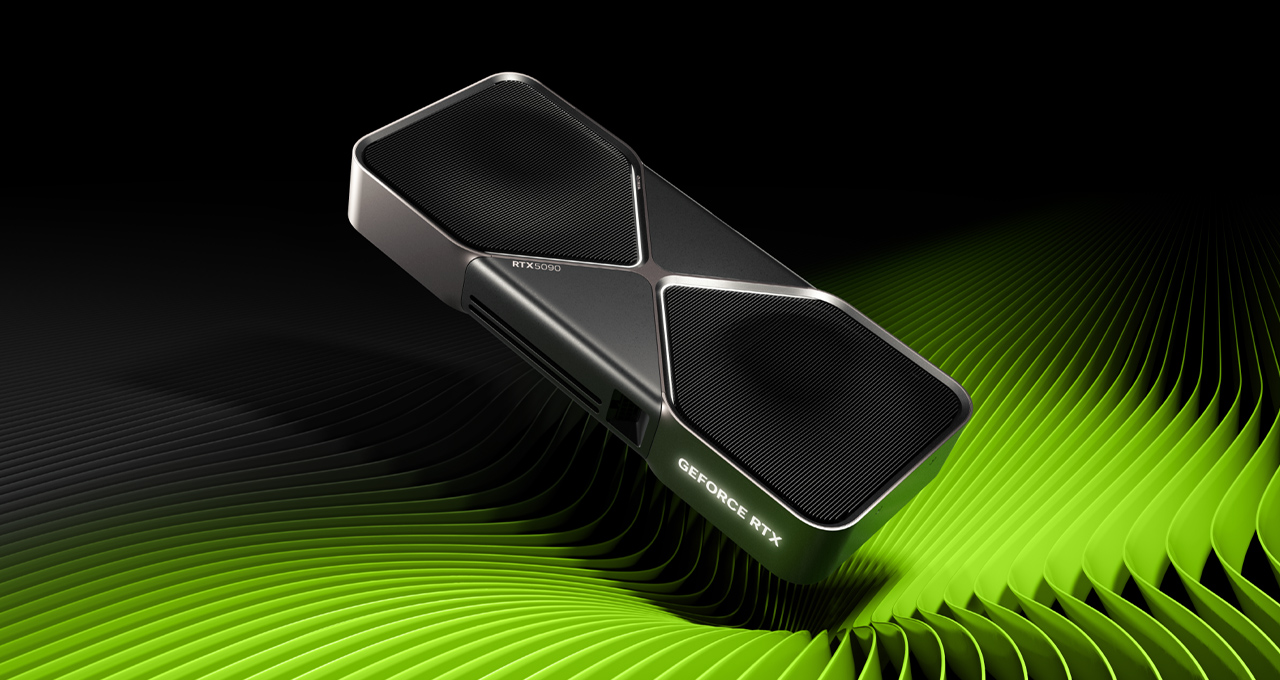
NVIDIA GeForce RTX 50 Series: Unlocking the Power of Generative AI

NVIDIA NIM Accelerates Generative AI on PCs

While AI model development is rapidly advancing, bringing these innovations to PCs remains a challenge for many people. Models posted on platforms like Hugging Face must be curated, adapted, and quantized to run on PC. They also need to be integrated into new AI application programming interfaces (APIs) to ensure compatibility with existing tools, and converted to optimized inference backends for peak performance.

NIM microservices for RTX AI PCs and workstations can ease the complexity of this process by providing access to community-driven and NVIDIA-developed AI models. These microservices are easy to download and connect to via industry-standard APIs and span the key modalities essential for AI PCs. They are also compatible with a wide range of AI tools and offer flexible deployment options, whether on PCs, in data centers, or in the cloud.

Tensor Cores Drive Next-Gen AI Performance

AI calculations are incredibly demanding and require vast amounts of processing power. Whether generating images and videos or understanding language and making real-time decisions, AI models rely on hundreds of trillions of mathematical operations to be completed every second. To keep up, computers need specialized hardware built specifically for AI.

NVIDIA GeForce RTX desktop GPUs deliver up to 3,352 AI TOPS for unmatched speed and efficiency in AI-powered workflows.

FP4 — Smaller Models, Bigger Performance

Another way to optimize AI performance is through quantization, a technique that reduces model sizes, enabling the models to run faster while reducing the memory requirements.

Enter FP4 — an advanced quantization format that allows AI models to run faster and leaner without compromising output quality. Compared with FP16, it reduces model size by up to 60% and more than doubles performance, with minimal degradation.

AI Blueprints Power Advanced AI Workflows on RTX PCs

NVIDIA AI Blueprints, built on NIM microservices, provide prepackaged, optimized reference implementations that make it easier to develop advanced AI-powered projects — whether for digital humans, podcast generators or application assistants.

Conclusion

Generative AI is pushing the boundaries of what’s possible across gaming, content creation and more. With NIM microservices and AI Blueprints, the latest AI advancements are no longer limited to the cloud — they’re now optimized for RTX PCs. With RTX GPUs, developers and enthusiasts can experiment, build, and deploy AI locally, right from their PCs and workstations.

FAQs

Q: What is NIM?
A: NIM microservices are prepackaged generative AI models that let developers and enthusiasts easily get started with generative AI, iterate quickly, and harness the power of RTX for accelerating AI on Windows PCs.

Q: What is FP4?
A: FP4 is an advanced quantization format that allows AI models to run faster and leaner without compromising output quality.

Q: What are AI Blueprints?
A: AI Blueprints are reference projects that show developers how to use NIM microservices to build the next generation of AI experiences.

Q: Which GPUs are supported by NIM and AI Blueprints?
A: Initial hardware support is for GeForce RTX 50 Series, GeForce RTX 4090 and 4080, and NVIDIA RTX 6000 and 5000 professional GPUs. Additional GPUs will be supported in the future.