Home Blog Page 331

Free AI Tools 2025

Free AI Tools to Boost Your Productivity

If you are looking for AI tools to boost Your Productivity without any investment, this article is the perfect source for you. We will list the top free AI tools to boost your productivity.

Why Choose Free AI Tools?

Finding the free and best tool is a daunting task, but bookmark this blog post to explore the list of free AI tools. Discover a list of 43+ free top trending AI tools related to 12+ categories which are available with a free version.

Limitations of Free AI Tools

Free tools’ results are less due to a lack of technology compared to paid tools, therefore we will provide you with 43+ paid tools that are available with a free version such as Chatgpt for content writing or Perchance.org for image generation. There are many best free AI tools. If you are looking for NSFW art generation then explore CreatePorn.com and Porngen.Art tools to explore your creativity.

List of Top Free AI Tools

Here’s a list of 20 top free AI tools with brief descriptions:

Writing and Content Creation

  • ChatGPT (OpenAI): A conversational AI designed to generate human-like responses in natural language.
  • Grammarly: An AI-powered writing assistant that helps improve grammar, spelling, style, and tone.

Image and Video Generation

  • DALL·E Mini (Craiyon): A simplified version of OpenAI’s DALL·E, this tool generates images from text prompts using AI.
  • Runway ML: An AI tool that provides creative professionals with AI models for video editing, design, and machine learning applications.

Machine Learning and Deep Learning

  • TensorFlow: An open-source machine learning framework developed by Google.
  • PaddlePaddle: An open-source deep learning platform developed by Baidu.

Natural Language Processing (NLP)

  • Hugging Face: A platform offering a range of NLP models for tasks like text generation, summarization, and translation.
  • Rasa: An open-source platform for building conversational AI, such as chatbots and virtual assistants.

Computer Vision

  • OpenCV: A widely used open-source library for computer vision tasks.
  • Fast.ai: A deep learning library designed to simplify the process of training models.

Speech Recognition

  • SpeechRecognition (Python): A Python library for performing speech recognition.
  • Vosk: An offline speech recognition toolkit.

Conclusion

These tools offer a wide range of capabilities, from improving productivity and creativity to enhancing machine learning projects and application development. Whether you’re a professional or a student, these free AI tools can help you achieve your goals.

Frequently Asked Questions

Q: Are these free AI tools as good as paid tools?
A: While free AI tools may not offer the same level of performance as paid tools, they can still be useful for many applications.

Q: Can I use these free AI tools for commercial purposes?
A: Some free AI tools may have restrictions on commercial use, so be sure to check the terms and conditions before using them.

Q: Are these free AI tools compatible with my device?
A: Most free AI tools are web-based and can be accessed from any device with an internet connection. However, some may have specific system requirements, so be sure to check the documentation before using them.

Q: Are these free AI tools safe to use?
A: Most free AI tools are safe to use, but be sure to check the terms and conditions and user reviews before using them.

Google Goes Heavy on Investment but Light on Detail

Unlock the Editor’s Digest for free

Roula Khalaf, Editor of the FT, selects her favourite stories in this weekly newsletter.

One of the more irritating things about artificial intelligence bots such as ChatGPT is how reluctant they are to say “I don’t know”. A similar inability to speak plainly plagues the wider technology world. Recently, it cost Google parent Alphabet $200bn.

Google’s Planned Capital Expenditure

That was roughly the sum wiped from the search-engine giant’s market capitalisation on Tuesday after it announced planned capital expenditure of $75bn this year.

A 50% Increase

The amount is 50 per cent more than what the company spent last year, an increase explained by the need to develop ever-better AI. As always, there was little detail on where the spending will go or how much profit it will generate.

Analysts’ Forecasts

Alphabet has only itself to blame if that number was a surprise. Analysts had forecast just $60bn of spending for this year, according to Visible Alpha. Unlike some of its rivals, Alphabet does not give “guidance” to keep investors’ expectations within a reasonable range. But that secrecy is a choice, not a necessity.

A Trend in the Tech Industry

As tech companies raise bets on AI and cloud computing — Microsoft plans to spend $80bn in its fiscal year ending in June and Facebook owner Meta has allocated up to $65bn in 2025 — the absence of detail on what they are buying begins to stretch credulity.

Avoiding Future Market Upsets

Alphabet’s finance chief Anat Ashkenazi said Google’s purchases would mostly be servers and data centres. But there was nothing on what kind, from which suppliers or where they would be located. If Alphabet wants to avoid future market upsets, it could always give investors some numbers to conjure with. It could sketch out its hoped-for returns on capital expenditure or target a certain amount of revenue for each dollar invested. Even a distant goal is better than none.

A Comparison with Other Industries

Other industries worked this out long ago. While tech may not like to compare itself to more earthy sectors, mining companies have learnt the hard way that investors do not tolerate overinvestment forever. Rio Tinto and BHP, for instance, tout “return on capital employed” as a sign of discipline. Investors watch closely, as they should — large mining projects on average run 79 per cent over initial budgets, according to McKinsey estimates.

Conclusion

If Alphabet wants to avoid future market upsets, it should consider giving investors more information on its spending plans. It’s not just about being transparent; it’s about being responsible with investors’ money.

FAQs

Q: Why did Google’s market capitalization decrease by $200bn?
A: The decrease was due to the company’s announcement of planned capital expenditure of $75bn this year, which was 50% more than what was spent last year.

Q: Why did analysts forecast a lower capital expenditure for Alphabet?
A: Analysts had forecast just $60bn of spending for this year, according to Visible Alpha.

Q: Why does Alphabet not provide guidance on its spending plans?
A: Alphabet chooses not to provide guidance on its spending plans, which can lead to uncertainty among investors.

Q: What do other industries do differently?
A: Other industries, such as mining, provide more information on their spending plans and returns on capital employed to keep investors informed and confident in their investments.

OpenAI’s Bold New Rebrand

0

OpenAI Unveils New Visual Identity as Part of Comprehensive Rebrand

A New Era for the AI Giant

Despite recent surprise competition from the likes of DeepSeek, OpenAI remains the biggest name in AI right now. The company behind ChatGPT has experienced exponential growth in recent years, and as a result, wasn’t particularly anchored by a strong visual identity. That’s all changed today with the company unveiling its first ever rebrand.

A Bold and Comprehensive Rebrand

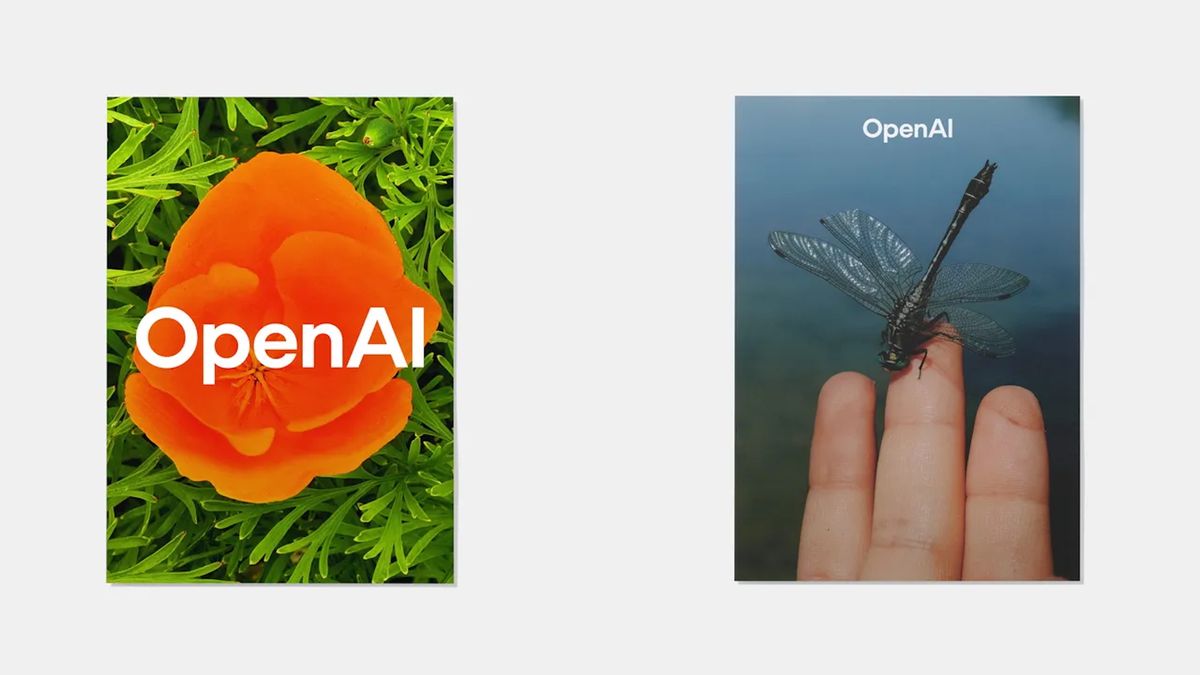
The new identity includes a new color palette, typeface, and wordmark, as well as a long-overdue tweak to its previously unbalanced logo. It’s certainly a bold and comprehensive rebrand, and like all the best rebrands, it’s one that gives the amorphous tech company some much-needed color and personality.

The New Logo and Typography

At the centre of the rebrand is a new font, OpenAI Sans, which is described as merging geometric clarity with a soft, inviting feel. The updated logo now incorporates this typeface, showcasing an "O" with a smooth, uniform outer shape and a deliberately irregular inner form, designed to soften the rigid precision and add a more human touch, according to in-house designer Veit Moeller.

A More Organic and Human-Centric Approach

The world’s leading AI brand has taken a more organic and human-centric approach with its new visual identity. The naturalistic color palette, with its primary base of greys and blues evoking "horizons, skies, and expansive space," is complemented by photographs of landscapes and still lifes, commissioned from several contemporary photographers.

A New Era for OpenAI

The changes are subtle but significant, and the company is looking forward to a new era of growth and innovation. The rebrand is a testament to the company’s commitment to human-centered design and its vision for a future where technology and humanity coexist in harmony.

FAQs

Q: What’s behind OpenAI’s decision to rebrand?
A: OpenAI wanted to create a stronger visual identity that reflects its values and mission to make AI more accessible and beneficial for all.

Q: What’s new about the logo?
A: The logo has been tweaked to make it more symmetrical and balanced, with a more uniform line thickness and a deliberately irregular inner form.

Q: What’s the new font like?
A: OpenAI Sans is a custom-designed font that combines geometric clarity with a soft, inviting feel, making it perfect for the company’s new visual identity.

Q: How does the rebrand reflect OpenAI’s values and mission?
A: The rebrand is designed to reflect OpenAI’s commitment to human-centered design and its vision for a future where technology and humanity coexist in harmony.

Google scraps promise not to develop AI weapons

0

Google Updates AI Principles, Removes Commitments on Harmful Use of Technology

Changes to AI Ethics Guidelines

Google has updated its artificial intelligence (AI) principles, removing commitments to not use the technology in ways that "cause or are likely to cause overall harm." The revised guidelines no longer include a section that committed Google to not designing or deploying AI for use in surveillance, weapons, and technology intended to injure people.

New "Core Tenets" for AI Development

Coinciding with these changes, Google DeepMind CEO Demis Hassabis and Google’s senior executive for technology and society James Manyika published a blog post outlining new "core tenets" for AI development. These tenets focus on innovation, collaboration, and "responsible" AI development, with no specific commitments.

Call for Global Cooperation and AI Leadership

The blog post emphasizes the importance of global cooperation and leadership in AI development, stating, "There’s a global competition taking place for AI leadership within an increasingly complex geopolitical landscape. We believe democracies should lead in AI development, guided by core values like freedom, equality, and respect for human rights. And we believe that companies, governments, and organizations sharing these values should work together to create AI that protects people, promotes global growth, and supports national security."

DeepMind’s Acquisition and Historical Commitments

Hassabis joined Google after its acquisition of DeepMind in 2014. In an interview with Wired in 2015, he stated that the acquisition included terms that prevented DeepMind technology from being used in military or surveillance applications.

Conclusion

The changes to Google’s AI principles and the introduction of new core tenets for AI development aim to refocus the company’s approach to AI development and deployment. While the removal of commitments to not use AI in harmful ways has raised concerns, the emphasis on global cooperation and leadership in AI development is a step towards a more responsible and ethical approach.

Frequently Asked Questions

Q: What changes were made to Google’s AI principles?
A: The company removed commitments to not use AI in ways that "cause or are likely to cause overall harm" and no longer includes a section that committed Google to not designing or deploying AI for use in surveillance, weapons, and technology intended to injure people.

Q: What are the new "core tenets" for AI development?
A: The new core tenets focus on innovation, collaboration, and "responsible" AI development, with no specific commitments.

Q: What is the significance of Google’s new approach to AI development?
A: The new approach emphasizes global cooperation and leadership in AI development, guided by core values like freedom, equality, and respect for human rights.

Q: What does the future hold for AI development at Google?
A: The company’s new approach aims to refocus its approach to AI development and deployment, prioritizing responsible and ethical development and deployment of AI technology.

Super Mario World Reborn in Unreal Engine 5

0

A 3D Reimagining of a Classic: Super Mario World

There are few games more iconic than Nintendo’s Super Mario World. A game that premiered in 1990 on the SNES (Super Nintendo Entertainment System), it’s a classic version of a platform game, entirely in 2D – my favourite kind – and full of characters that have infiltrated popular culture.

A Year of Hard Work

Recently, a game dev has reimagined Super Mario World in 3D – recreating every element in Unreal Engine 5. The result retains the core design of the original, but adds 3D texture to offer a new perspective. It’s a whole load of fun, and an amazing display of creativity. There are actually two videos to watch, the one explaining how he made the game (see below), and a gameplay video as well (see further down the page and then try making your own with the best animation software).

How It Was Made

The videos themselves are beautifully made by dev Bobby Ivar, with excellent sound effects and narrative throughout. Bobby takes us through his process of making levels 1 and 2, and Yoshi’s island. He begins with 3D-ifying Mario himself and then sets his movement. He treats each part of the scenery separately, such as platform tiles, tree assets, and those iconic clouds. A highlight is watching him explain the Monty Mole’s movement patterns, and negotiating the how the Piranha Plants should interact with Mario as he runs past them. Bobby even makes tweaks like introducing multi-coloured Yoshis in Level one because "they’re so cute" he just couldn’t help himself.

The Gameplay Video

Bobby’s explanations of his process is fascinating, and a genuinely entertaining watch – as well as being inspirational to other devs. He’s been true to the original design, while injecting new life through a fresh perspective. Hearing his design decisions and insights into the original designs, such as the Koopa colours, or the way different parts of the game works shows how fond he is of the game (as we all are), and makes the final gameplay video even more interesting to watch.

Conclusion

Unreal Engine 5 is opening up so many possibilities for people to create using the free software, and this is one of the best examples I’ve seen. Comments on both videos agree, with many people asking Bobby to make the entire game in 3D as it looks so playable.

FAQs

Q: What is Super Mario World?
A: Super Mario World is a classic 2D platform game developed and published by Nintendo, released in 1990 for the Super Nintendo Entertainment System (SNES).

Q: Who is Bobby Ivar?
A: Bobby Ivar is a game dev who reimagined Super Mario World in 3D using Unreal Engine 5.

Q: What is Unreal Engine 5?
A: Unreal Engine 5 is a game engine developed by Epic Games, used to create 3D and 2D games for PC, consoles, and mobile devices. It is free to use, making it accessible to developers of all levels.

Private Data Sanctuary

Locally Installed AI: Why Sanctum is the Way to Go

Locally installed AI is the way to go, especially if privacy is important to you. Instead of sending your queries to a third party, you can keep them private, so no one else has access to your questions or the generated answers. When you run a query with the locally installed Sanctum, your data is encrypted, secure, and never leaves the app.

Why Sanctum?

  • It’s local
  • Data remains private
  • Thousands of GGUF models on Hugging Face
  • PDF summaries
  • Works even in an internet outage
  • It’s open-source
  • You can choose your LLM (from Gemma, Llama, Mistral, and more)
  • You can choose if any information is shared
  • Available prompt templates
  • Real-time information on system resources in use

How to Install Sanctum

What you’ll need:
The only things you’ll need are either a MacOS or Windows computer (Linux version coming soon) and a network connection. I’ll demonstrate the installation on MacOS. If you’re using a Windows computer, the installation is as simple as installing any other application.

Step-by-Step Installation:

  1. Download the installer from the Sanctum site and select your OS.
  2. Locate the downloaded file in Finder and double-click it.
  3. A new window will pop up, asking you to drag the Sanctum icon to Applications. Do that, and the installation is done.
  4. You can then eject the Sanctum drive on your desktop and delete the download.

How to Set Up Sanctum

Step-by-Step Setup:

  1. Save your recovery phrase: Click the Get Started button on the main window, and copy and paste your recovery phrase. This is important because if you lose your login credentials, you’ll need it for recovery.
  2. Set a password: Create a strong and unique password, and click Continue.
  3. Download an AI model: Select an LLM (I opted for Mistral) and click Continue.
  4. Select your privacy level: Select the level of privacy you want for Sanctum. I recommend selecting "Don’t share a single byte."

Conclusion:

Sanctum is a powerful tool that allows you to keep your data private and secure. With its locally installed AI, you can run queries without sending your data to a third party. With its easy installation and setup process, Sanctum is perfect for anyone who wants to maintain their privacy and security.

FAQs:

Q: Is Sanctum available for Linux?
A: Yes, Sanctum is available for Linux and will be available soon.

Q: Can I change my LLM later?
A: Yes, you can change your LLM later from within the Sanctum app.

Q: How do I share information with Sanctum?
A: You can choose if any information is shared during the setup process.

Q: Is Sanctum open-source?
A: Yes, Sanctum is open-source.

Q: Can I use Sanctum even in an internet outage?
A: Yes, Sanctum works even in an internet outage.

Google DeepMind unveils protein design system

Google DeepMind Unveils AI System for Designing Novel Proteins

Revolutionizing Drug Design and Disease Research

Google DeepMind has unveiled an AI system called AlphaProteo that can design novel proteins that successfully bind to target molecules, potentially revolutionizing drug design and disease research.

Highly Impressive Performance

The system’s performance is particularly impressive, achieving higher experimental success rates and binding affinities that are up to 300 times better than existing methods across seven target proteins tested. This is evident in a chart demonstrating Google DeepMind’s AlphaProteo success rate.

How AlphaProteo Works

Trained on vast amounts of protein data from the Protein Data Bank and over 100 million predicted structures from AlphaFold, AlphaProteo has learned the intricacies of molecular binding. Given the structure of a target molecule and preferred binding locations, the system generates a candidate protein designed to bind at those specific sites.

Validation and Results

To validate AlphaProteo’s capabilities, the team designed binders for a diverse range of target proteins, including viral proteins involved in infection and proteins associated with cancer, inflammation, and autoimmune diseases. The results were promising, with high binding success rates and best-in-class binding strengths observed across the board.

Limitations and Future Development

The system’s performance suggests it could significantly reduce the time required for initial experiments involving protein binders across a wide range of applications. However, the team acknowledges that AlphaProteo has limitations, as it was unable to design successful binders against TNFɑ (a protein associated with autoimmune diseases like rheumatoid arthritis).

Future Plans and Collaboration

To ensure responsible development, Google DeepMind is collaborating with external experts to inform their phased approach to sharing this work and contributing to community efforts in developing best practices, including the NTI’s new AI Bio Forum. The team plans to work with the scientific community to leverage AlphaProteo on impactful biology problems and understand its limitations.

Conclusion

Google DeepMind’s advancement holds tremendous potential for accelerating progress across a broad spectrum of research, including drug development, cell and tissue imaging, disease understanding and diagnosis, and even crop resistance to pests.

FAQs

Q: What is AlphaProteo?
A: AlphaProteo is an AI system designed to generate novel proteins that successfully bind to target molecules.

Q: What are the potential applications of AlphaProteo?
A: AlphaProteo has the potential to revolutionize drug design and disease research, as well as accelerate progress in cell and tissue imaging, disease understanding and diagnosis, and crop resistance to pests.

Q: How does AlphaProteo work?
A: AlphaProteo is trained on vast amounts of protein data and uses machine learning algorithms to generate candidate proteins that bind to target molecules.

Q: What are the limitations of AlphaProteo?
A: AlphaProteo was unable to design successful binders against TNFɑ, a protein associated with autoimmune diseases.

DeepSeek and the A.I. Nonsense

0

The Unstoppable Rise of Artificial Intelligence

A Sputnik Moment

China’s tech industry recently stunned the world by unveiling DeepSeek, an artificial intelligence model that rivals the best in the US, but at a fraction of the cost. The development has sparked a frenzy of attempts to understand how they achieved this feat, and whether it was done above board. However, these questions miss the point.

The Futility of Containment

The real lesson of DeepSeek is that America’s approach to AI safety and regulations was misguided. It was never possible to contain the spread of this powerful technology, and certainly not by placing trade restrictions on components like graphics chips. This was a self-serving fiction, foisted on out-of-touch leaders by an industry that wanted the government to kneecap its competitors.

The Shift to Preparation

Instead of futilely trying to keep this genie bottled up, the government and industry should be preparing society for the sweeping changes that are soon to come. The misguided focus on containment is a belated echo of the nuclear age, when the US and others limited the spread of atomic bombs by restricting access to enriched uranium and sending inspectors into labs and military bases. Those measures, backed up by the occasional show of force, had a clear effect. The world hasn’t blown up – yet.

The Key Differences

One crucial difference is that nuclear weapons could have been developed only by a few specialized scientists at the leading edge of their fields. The core idea that powers the AI revolution, on the other hand, has been around since the 1940s. What opened the floodgates was the arrival of vast data sets (via the internet and other digital technologies) and powerful graphic processors (like those from Nvidia), which can compute AI models from those data troves.

The Replicability of AI Models

Another difference: each nuclear weapon has to be constructed from steel and fissile material. Some AI models, on the other hand, can fit on a USB stick and can be endlessly replicated and built upon just by plugging that stick into new laptops.

The Rise of Replicable AI

Initially, developing a new model, like ChatGPT, is a costly process, but it’s the output, known as the model weights, that are so valuable and replicable. Companies like OpenAI, which has loudly proclaimed that AI poses an existential threat to humanity, kept these model weights to themselves, lest others piggyback on all that expensive development work to produce something even more powerful.

The Real Turning Point

The real turning point is not the development of AGI (Artificial General Intelligence), but A.G.E. (Artificial Good-Enough Intelligence) – the point at which AI becomes fast, cheap, scalable, and useful for a wide range of purposes. This is the point at which the genie is out of the bottle, and it’s time to engage with what’s happening now.

The Way Forward

Many observers have described this as a Sputnik moment, but that’s incorrect. America can’t re-establish its dominance over the most advanced AI, because the technology, data, and expertise that created it are already distributed around the world. The best way this country can position itself for the new age is to prepare for its impact.

Conclusion

The rise of AI is unstoppable, and it’s time to stop trying to contain it and start preparing for its consequences. It’s time to harden our networked infrastructure, think clearly about how corporations and governments could use AI to entrench their dominance, erode our rights, and worsen inequality, and consider what rights will be threatened and which institutions will need to be rebuilt.

FAQs

Q: How did DeepSeek achieve its feat?
A: The exact methods used by DeepSeek to develop its AI model are not publicly known.

Q: Is OpenAI’s claim that AI poses an existential threat to humanity credible?
A: Some experts have questioned the validity of OpenAI’s claims, while others see it as a legitimate concern.

Q: What is the difference between AGI and A.G.E.?
A: AGI refers to Artificial General Intelligence, while A.G.E. (Artificial Good-Enough Intelligence) refers to the point at which AI becomes fast, cheap, scalable, and useful for a wide range of purposes.

Q: What are the potential consequences of widespread AI adoption?
A: The consequences of widespread AI adoption could include increased job displacement, decreased human interaction, and the erosion of individual freedoms.

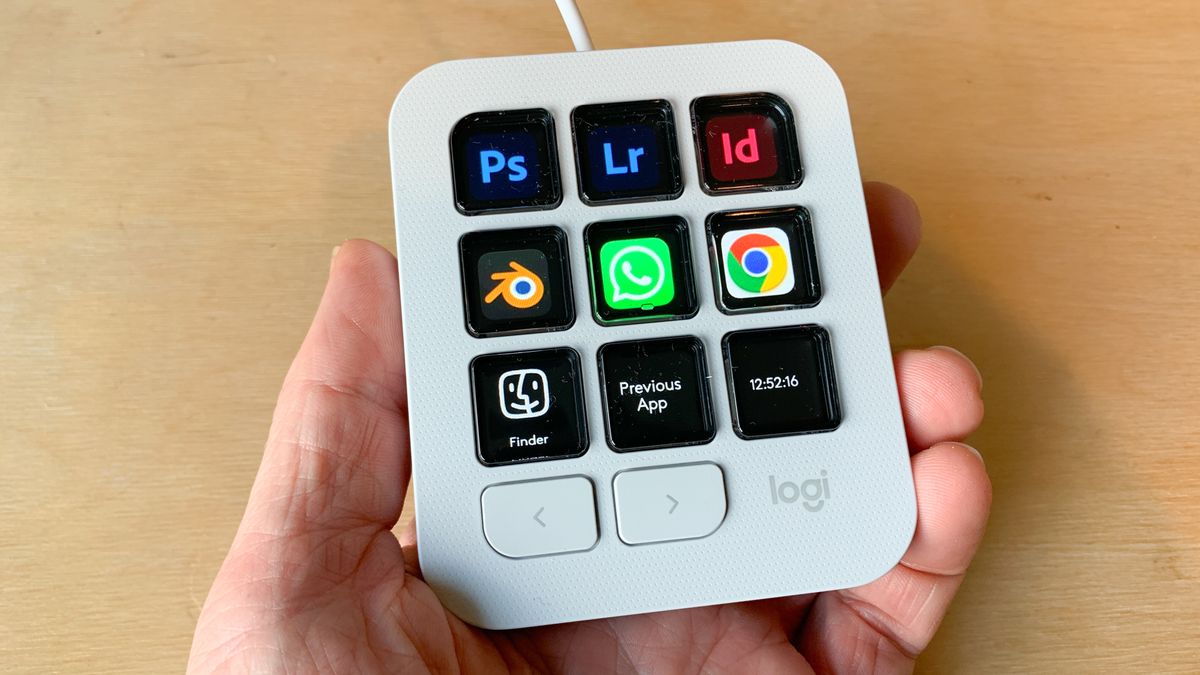
Logitech MX Creative Console Cuts Down Time

0

Pencil2D Review: A Free and Open-Source 2D Animation Software

Getting Started

Downloading Pencil2D is as easy as going to the downloads section of the Pencil2D website and clicking download on your desired platform. After installing and opening the software, you’ll be presented with the Pencil2D interface. This interface is broken down into the canvas, drawing tools, properties, onion skinning, and a timeline. I had absolutely no problems finding my way around the various panels, although some of the tool icons struggle to communicate specifically what they’re for. That being said, after a little while of using the software, I was quickly moving around the interface with no issues at all.

Features

Pencil2D’s animation tools are driven by a timeline that supports keyframes. It’s as simple as drawing your scene on one frame and moving to a new key frame before drawing the next part of your animation. Drawings can be created from scratch each time or copied from one frame to the next. It is also possible to import graphics and animated files that have been generated elsewhere.

To help with the animation process, Pencil2D offers onion skinning functionality. This includes the ability to show any number of previous or post frames and is particularly helpful for locating drawings correctly in between key frames.

Another feature that Pencil2D offers is the ability to seamlessly switch between raster and vector workflows. This is ideal for a freeflowing workflow that allows you to sketch, ink & paint on the go.

User Experience

After initially finding Pencil2D’s interface tricky to get my head around, I couldn’t have found the tools much easier to use. This makes it perfect for beginners who are happy pushing through an initial hour or two of getting used to a new interface and set of icons.

There is quite a lot packed into the Pencil2D interface but I was glad for the ability to be able to detach and resize docks. This was particularly helpful when using the colour picker, which was way too small to use in its default state. Adjusting docks is easy, streamlined, and bug-free. Customising the interface is therefore an absolute breeze.

Price

Pencil2D is 100% free and always has been. It’s available across various platforms, including Windows, macOS, Linux & FreeBSD. You’re encouraged to contribute to the open source project and make a donation. But once downloaded there are no in-app payments or subscriptions.

Who’s it For?

Pencil2D is for anyone wanting to create traditional 2D animations. It’s also free and open-source, which makes it perfect for hobbyists or creators on a limited budget. Additionally, it’s perfect for beginners who are new to this art form.

Buy it If:

  • You’re a beginner to 2D animation
  • You want a free software package
  • You’re happy with basic animation tools

Don’t Buy it If:

  • You’re a pro animator
  • You need next-level animation tools
  • You’re into 3D animation

FAQs:

Q: Is Pencil2D free?
A: Yes, Pencil2D is 100% free and always has been.

Q: What platforms is Pencil2D available on?
A: Pencil2D is available on Windows, macOS, Linux & FreeBSD.

Q: What kind of animation tools does Pencil2D offer?
A: Pencil2D offers basic animation tools, including onion skinning and the ability to switch between raster and vector workflows.

Q: Is Pencil2D suitable for beginners?
A: Yes, Pencil2D is perfect for beginners who are new to 2D animation. The interface is easy to use, and the software is free to download and use.

Hitachi Ventures Raises $400M Fund

0

Hitachi Ventures Secures $400 Million for Fourth Fund

Hitachi Ventures has secured $400 million for its fourth fund, exclusively telling TechCrunch.

Fund Size a Vote of Confidence in Deep Tech Verticals

The size of the new fund is a vote of confidence in a range of deep tech verticals. The corporate VC’s sprawling portfolio mimics that of its limited partner’s, including energy, manufacturing, biotech, and AI.

Focus on Series A Investments and Breakthrough Opportunities

“We are open to other breakthrough opportunities,” said managing director and CEO Stefan Gabriel. “There’s a lot around quantum, nuclear, life science, space tech. Not too broad — we have a clear view on what excites us in these areas.”

Hitachi Ventures will continue to focus on Series A investments. “That is still the sweet spot,” said partner Gayathri Radhakrishnan. Its first investments in a company will average around $5 million, and the fund is reserving around 55% of its capital for follow-on opportunities, partner and CFO Wolfgang Seibold said.

Unique Structure and Relationship with Hitachi

Though it takes its name from the Japanese conglomerate, Munich-based Hitachi Ventures is a bit of an outlier in the corporate VC world. It’s structured more like a typical venture fund, Gabriel said, with Hitachi serving as the solo LP. The investment committee is made up of the firm’s partners, and they do not have to run possible investments past its corporate affiliate, said Pete Bastien, partner and president of the firm’s U.S. operations.

But the fund still works closely with Hitachi, he added, in part to help portfolio companies understand what a potential future customer is looking for. Like other CVCs, Hitachi Ventures doesn’t promise that it can land deals for portfolio companies, but it can make key introductions.

Previous Investments and Portfolio Companies

Hitachi Ventures previous investments span a range of verticals. On the energy side, it has invested in battery recycler Ascend Elements, fusion startup Thea Energy, and Wase, a wastewater-to-energy company. Its AI investments have tended toward workplace applications, including Ema, which focuses on enterprise workflows; Strikeready, which covers cybersecurity; and Makersite, which uses AI to improve supply chains.

Conclusion

Hitachi Ventures’ $400 million fund is a significant vote of confidence in deep tech verticals, and the firm’s focus on Series A investments and breakthrough opportunities is likely to yield exciting returns. Its unique structure and relationship with Hitachi make it an attractive partner for startups looking for support and guidance.

FAQs

Q: What is the size of Hitachi Ventures’ new fund?

A: The fund is valued at $400 million.

Q: What are the focus areas for Hitachi Ventures’ new fund?

A: The fund will focus on deep tech verticals, including energy, manufacturing, biotech, and AI.

Q: What is the typical investment size for Hitachi Ventures?

A: The typical investment size is around $5 million for the first investment in a company.

Q: How does Hitachi Ventures work with its corporate affiliate, Hitachi?

A: Hitachi Ventures works closely with Hitachi to help portfolio companies understand what a potential future customer is looking for, and can make key introductions. However, it does not promise to land deals for portfolio companies.