Home Blog Page 342

Teens Flock to Dub: The Copy Trading App

0

Social Media Meets Investing: Dub’s Influencer-Driven Marketplace

A New Way to Invest

Social media changed everything from news consumption to shopping. Now, Dub thinks it can do the same for investing through an influencer-driven marketplace where users can follow the trades of top investors with a few taps. Think of it as TikTok meets Wall Street.

The Concept

Founded by 23-year-old Steven Wang, a Harvard drop-out who began investing in second grade with his parents’ blessing, Dub is betting the future of investing isn’t about picking stocks but picking people. The app allows users to follow the strategies of traders, hedge funds, and even those mimicking high-profile politicians. Instead of making individual trade decisions, Dub users can copy entire portfolios.

Inspired by Gamestop

Retail investing has evolved dramatically over the past two decades. The days of $7 trading commissions and clunky brokerage interfaces were blown apart roughly a decade ago by mobile-first platforms like Robinhood that invited people to trade for free. At the same time, social media is reshaping how people, and particularly members of Gen Z, make financial decisions.

A Growing Phenomenon

As a Harvard student during the pandemic, Wang came to believe these two trends, retail investing and influencer-driven decision-making, were on a collision course. Between the Gamestop saga, Elon Musk’s ability to "move the Dogecoin and Bitcoin markets with every tweet," and people’s willingness to "really follow ideas and individuals to a whole new level," Wang decided to drop out in 2021 and start building Dub.

The Platform’s Success

Right now, the platform’s average user is between 30 and 35, says Wang, though New York-based Dub is clearly finding its way in front of an even younger audience. In recent weeks, this editor’s 15-year-old has asked more than once about "investing like Nancy Pelosi" after marinating in Dub ads on Instagram.

How it Works

Dub isn’t free. Wang was determined to generate revenue from the outset, and Dub does that today through a $10-per-month subscription model. Wang says further that some "top" portfolios on the platform charge management fees and Dub takes a 25% cut of those fees.

The Future of Investing

Dub is also investing aggressively in advertising, leaning heavily into Meta ads in particular to acquire users, including on Instagram. "We’ve been really lucky where I think the broader American population really believes there are other people out there that have an edge over them when it comes to the investing world," says Wang.

Fighting Words

The question now is whether Dub will follow a similar path as other fast-growing fintech startups, many of which have found themselves in the crosshairs of regulators. Robinhood disrupted finance by making trading free, but it also faced regulatory scrutiny ahead of its 2021 IPO, ultimately ditching a feature that showered users with digital confetti every time they made a trade.

A Safer Alternative

Dub says it’s keen to avoid the same mistakes. The company spent more than two years working with FINRA and the SEC before launching, ensuring its model complied with financial regulations. "We didn’t just navigate regulation at Dub — we embraced it," Wang says. (Like Robinhood, Dub is a fully licensed broker-dealer.)

Conclusion

Dub is an innovative platform that is changing the way people invest. By allowing users to follow the trades of top investors and copy entire portfolios, Dub is making investing more accessible and more educational. While some critics may argue that stock picking underperforms passive investing over the long run, Dub’s success and growth suggest that there is a place for both approaches in the world of finance.

FAQs

Q: What is Dub?
A: Dub is an influencer-driven marketplace that allows users to follow the trades of top investors and copy entire portfolios.

Q: How does Dub make money?
A: Dub generates revenue through a $10-per-month subscription model and takes a 25% cut of management fees charged by "top" portfolios on the platform.

Q: Is Dub a safe and regulated platform?
A: Yes, Dub is a fully licensed broker-dealer and has spent more than two years working with FINRA and the SEC to ensure its model complies with financial regulations.

Q: Can I make money with Dub?
A: Yes, Dub’s success and growth suggest that it is possible to make money with the platform. However, as with any investment, there are no guarantees of returns.

Q: Is Dub a good alternative to Robinhood?
A: Dub’s focus on education and regulation may make it a safer alternative to Robinhood for some investors. However, the best platform for an individual will depend on their personal investment goals and preferences.

Integrating A.I. Into Medical Care

0

The Rapid Rise of Artificial Intelligence in Healthcare: A New Division of Labor

The rapid rise in artificial intelligence (A.I.) has created intense discussions in many industries, including healthcare. The medical community has largely anticipated that combining the abilities of doctors and A.I. would lead to more accurate diagnoses and more efficient care. However, a growing body of research suggests that A.I. is outperforming doctors, even when they use it as a tool.

A.I. Outperforms Doctors

A recent study by M.I.T.-Harvard found that when radiologists were shown A.I. predictions about the likelihood of disease, they often undervalued the A.I. input compared to their own judgment. The study also found that when A.I. worked independently to diagnose patients, it achieved 92 percent accuracy, while physicians using A.I. assistance were only 76 percent accurate.

A New Division of Labor

Instead of forcing both human doctors and A.I. to review every case side by side, a more effective approach is to let A.I. operate independently on suitable tasks, allowing physicians to focus their expertise where it matters most. Research points to three distinct approaches:

Model 1: Physicians Gather Clinical Data

In this approach, physicians start by interviewing patients and conducting physical examinations to gather medical information. A.I. can then apply pattern recognition to analyze that information and suggest potential diagnoses.

Model 2: A.I. Suggests Diagnoses and Treatment Plans

A.I. can begin with analyzing medical data and suggesting possible diagnoses and treatment plans. Physicians can then apply their clinical judgment to turn A.I.’s suggestions into a treatment plan, adjusting the recommendations based on a patient’s physical limitations, insurance coverage, and health care resources.

Model 3: Complete Separation

In this approach, A.I. handles certain routine cases independently, while doctors focus on more complex disorders or rare conditions with atypical features. Early evidence suggests that this approach can work well in specific contexts, such as routine chest X-rays or low-risk mammograms.

Benefits and Challenges

The promise for patients is obvious: fewer bottlenecks, shorter waits, and potentially better outcomes. For doctors, there’s potential for A.I. to alleviate routine burdens, making health care more accurate, efficient, and human. However, this approach raises questions about liability, regulation, and the need for ongoing clinician education.

Conclusion

The rapid rise of A.I. in healthcare has created a new division of labor, where A.I. operates independently on suitable tasks, allowing physicians to focus their expertise where it matters most. While this approach raises challenges, the benefits for patients and doctors are clear.

Frequently Asked Questions

Q: What are the benefits of A.I. in healthcare?
A: A.I. can improve diagnostic accuracy, reduce errors, and alleviate routine burdens, allowing physicians to focus on more complex cases.

Q: How does A.I. outperform doctors?
A: A.I. can analyze large amounts of data quickly and accurately, identifying patterns and relationships that may not be apparent to human doctors.

Q: What are the challenges of implementing A.I. in healthcare?
A: A.I. requires ongoing clinician education, raises questions about liability and regulation, and may require changes to medical training and practice.

Q: What is the future of A.I. in healthcare?
A: The future of A.I. in healthcare is promising, with potential applications in diagnosis, treatment planning, and patient care.

Maximizing Retail Excellence with AI

Microsoft Cloud for Retail: Revolutionizing Operations and Enhancing Customer Experiences

Connect your customers, your people, and your data.

Microsoft agents, whether built on Microsoft Copilot Studio or Azure AI Foundry, provide a conversational AI interface for accessing and managing both data and workflows in retail, enhancing employee productivity and customer experience. Retailers and partners can customize these agents to integrate with business applications, data sources, and workflows, re-imagining interactions between store associates and consumers.

Microsoft Cloud for Retail

At NRF this year, Microsoft and its partners are showcasing agents and solutions designed to help retailers unlock the full potential of their data. These include the latest advancements in AI and generative AI, enabling retailers to transform their operations and drive growth. Microsoft Cloud for Retail helps retailers deliver personalized customer experiences, optimize operations, and empower their workforce, demonstrating how Microsoft retail products are truly better together.

Available Agents and Solutions

  • Personalized Shopping Agent: a conversational commerce experience to improve the shopping experience with a context-aware assistant to help consumers find the perfect products for their needs.
  • Store Operations Agent: a conversational interface, puts safe, company-governed generative AI in the hands of store associates so they can spend less time searching for answers to store policies and procedures and more time helping customers.
  • Retail data solutions in Microsoft Fabric: giving retailers the power to unify and enrich a wide range of retail data sources, enabling real-time, actionable insights.

Personalized Shopping Agent

The Personalized Shopping Agent enables retailers to offer consumers an enhanced shopping experience. Using conversational design and seamless integration with retail ecosystems powered by generative AI, it provides a truly personalized and efficient shopping experience.

When used online, in a retailer’s website, or consumer app, the agent allows consumers to shop through an AI-powered, chat-based product discovery experience. The conversational interface allows consumers to describe their product search in terms of requirements instead of product specifications—for example, "I am a family of five and typically run the washing machine twice a week." Through clarifying questions generated by generative AI, the agent will classify the consumer’s intent such as brand inquiry, gifting, advanced product search, or product recommendations, and specify the item search more precisely.

Store Operations Agent

The Store Operations Agent engages seamlessly to search for appropriate product options without breaking the employee’s flow of conversation with the customer, providing several relevant prompts to narrow down product suggestions, and offers up selling opportunities.

Retail Data Solutions in Microsoft Fabric

Fabric Real-Time Intelligence allows retailers to analyze streaming data for instant insights and actions. This capability is crucial for retailers who need to respond quickly to customer needs and market changes. With Fabric Real-Time Intelligence, retailers can dynamically transform streaming data and query it in real-time to gain immediate insights.

Join Us and Our Partners at Our NRF Booth

Microsoft partners play a crucial role in this AI-powered evolution. Working closely with Microsoft, industry leaders such as XTEL are unlocking new levels of productivity and innovation. These partnerships bring together AI and cloud technologies, enabling retailers to create seamless, data-driven experiences for their customers.

Conclusion

By harnessing the power of data, Retail data solutions in Fabric empowers retailers to make strategic decisions, improve operational efficiency, and deliver exceptional customer value in a dynamic and competitive environment.

FAQs

Q: What is Microsoft Cloud for Retail?
A: Microsoft Cloud for Retail is a suite of solutions designed to help retailers deliver personalized customer experiences, optimize operations, and empower their workforce.

Q: What are the available agents and solutions in Microsoft Cloud for Retail?
A: The available agents and solutions include the Personalized Shopping Agent, Store Operations Agent, and Retail data solutions in Microsoft Fabric.

Q: How does the Personalized Shopping Agent work?
A: The Personalized Shopping Agent uses conversational design and seamless integration with retail ecosystems powered by generative AI to provide a truly personalized and efficient shopping experience.

Q: What is Fabric Real-Time Intelligence?
A: Fabric Real-Time Intelligence allows retailers to analyze streaming data for instant insights and actions, enabling them to respond quickly to customer needs and market changes.

Q: Who are the partners working with Microsoft on Retail data solutions?
A: Industry leaders such as XTEL are partnering with Microsoft to unlock new levels of productivity and innovation in retail data solutions.

Heritable Agriculture

0

Google’s X "Moonshot Factory" Announces Latest Graduate: Heritable Agriculture

A New Approach to Sustainable Agriculture

Google’s X "moonshot factory" this week announced its latest graduate, Heritable Agriculture, a data- and machine learning-driven startup aiming to improve how crops are grown.

The Problem with Traditional Agriculture

Plants are incredibly efficient and impressive systems, but agriculture puts a massive strain on the planet and its resources. It accounts for around 25% of anthropogenic greenhouse emissions, is the planet’s largest consumer of groundwater, and can lead to soil erosion and water pollution via pesticides, fertilizers, and other chemicals.

Heritable Agriculture’s Solution

The newly independent startup is approaching these global issues by analyzing massive datasets through artificial intelligence and machine learning. Founder and CEO, Brad Zamft, a physics PhD, used his expertise to develop a machine learning model that analyzes plant genomes to determine combinations that might improve yields, while lowering water consumption and raising carbon storage capacity.

Testing the Models

The models were tested on thousands of plants, grown to those specifications within a "specialized growth chamber" at X’s Bay Area headquarters. The researchers also conducted field work at sites in California, Nebraska, and Wisconsin.

No Plans for Genetic Modification

Heritable Agriculture has no plans to explore mutagenesis, a GMO process that utilizes either chemicals or radiation to create crop mutations. Zamft adds, however, that CRISP-fueled gene editing will eventually play a role in making plants "programmable." For now, however, the company is focused on more conventional methods.

Commercialization and Funding

The executive adds that the team is most immediately focused on commercializing the technology. Zamft did not reveal anything in the way of specific timelines or commercial partners. Heritable has fittingly raised a seed round, featuring FTW Ventures, Mythos Ventures, and SVG Ventures. Google is also an investor, with an undisclosed amount of equity in the young company.

Conclusion

Heritable Agriculture’s innovative approach to sustainable agriculture has the potential to revolutionize the way crops are grown, making it possible to produce more food while reducing the environmental impact of agriculture.

FAQs

Q: What is Heritable Agriculture?
A: Heritable Agriculture is a data- and machine learning-driven startup aiming to improve how crops are grown.

Q: What is the problem with traditional agriculture?
A: Traditional agriculture puts a massive strain on the planet and its resources, accounting for around 25% of anthropogenic greenhouse emissions, consuming large amounts of groundwater, and leading to soil erosion and water pollution.

Q: How does Heritable Agriculture’s approach differ from traditional agriculture?
A: Heritable Agriculture uses machine learning to analyze plant genomes and develop models that can improve yields while lowering water consumption and raising carbon storage capacity.

Q: Will Heritable Agriculture use genetic modification?
A: No, Heritable Agriculture has no plans to explore mutagenesis, but may eventually use CRISP-fueled gene editing to make plants "programmable."

Q: Who has invested in Heritable Agriculture?
A: Heritable Agriculture has raised a seed round from FTW Ventures, Mythos Ventures, and SVG Ventures, and has an undisclosed amount of equity from Google.

Streaming Budget Breakthrough: The Manhattan Alien Abduction

0

New York housewife Linda Napolitano was living a normal life up until she claimed to be abducted by aliens from her 12th-floor New York apartment in November 1989. The three-part Netflix docuseries The Manhattan Alien Abduction follows her captivating story, with Linda as its main narrator.

As unbelievable as the tale itself sounds, the production team at Story Films wanted the series to explore Linda’s experience. “The premise is less about the paranormal, and more about the belief system surrounding it,” says Dan Vernon, Series Director. “The aim is to focus on people whose lives have been changed by these events.”

Recreating Dreamlike Tech-Noir Sequences

Linda’s alien abduction took place in a groundbreaking era for blockbuster films and the sci-fi genre. The production team took advantage of this by taking inspiration from Kubrick and Spielberg’s in-camera techniques and early-SFX cloud tanks – the process of using water and ink to create cloudlike overlays.

“A large portion of the cloud tank work was applied to the abduction scene,” continues Flett. In this, Linda floats above her apartment block while being beamed up to the spaceship. “We overlaid the textures onto a New York backplate, which was shot by Story Films using a drone.” Linda was recorded in-studio using green and blue screens, which involved on-set wire removal from Hifle and Flett.

Visualising an 80s Spacecraft

With a lot of room to experiment, Lux Aeterna tested multiple iterations of the spaceship during look dev. “UFOlogist Bud Hopkins conducted interviews with various witnesses whose descriptions helped us greatly,” says Flett. “Dan and the production team also wanted the spacecraft to take inspiration from the1996 film Independence Day, so we had plenty of references.”

However, the team only settled on the final image when one eyewitness of Linda’s abduction described the UFO as a ‘classic shape’. Lux Aeterna took this concept and decided to retain its retro feel, but added a contemporary VFX technique to spark interest in modern audiences.

Blockbuster VFX on a Streaming Budget

Creating entire assets from scratch like the spacecraft is no mean feat, especially when working on a streaming project. But the studio managed these expectations by using a cross-CPU render solution and machine learning to assist manual, creative work. “This workflow allowed the team to cut down 60-70% of rendering time,” says Hifle. “We can get quick and efficient results without sacrificing quality.”

Conclusion

The Manhattan Alien Abduction is a testament to the power of storytelling and the importance of visual effects in bringing a captivating narrative to life. With a focus on people whose lives have been changed by paranormal events, the series provides a unique perspective on the alien abduction phenomenon.

FAQs

Q: What was the inspiration behind the spaceship design?
A: The design was inspired by a combination of Kubrick and Spielberg’s in-camera techniques, early-SFX cloud tanks, and the 1996 film Independence Day.

Q: How did Lux Aeterna achieve the retro feel for the spaceship?
A: The team retained the classic shape of the spaceship, but added a contemporary VFX technique to spark interest in modern audiences.

Q: How did the production team manage the budget for the VFX work?
A: The team used a cross-CPU render solution and machine learning to assist manual, creative work, allowing them to cut down 60-70% of rendering time.

Sonic’s Beastly Near-Miss

0

Evolution of Sonic’s Character Designs

Amid the success of Sonic 3 in cinemas, I’ve been pouring over old Sonic the Hedgehog character designs recently. Our favourite blue Erinaceidae has evolved over the years, from the original 1991 platform game to the comics, games and movies of today. But I’m stunned to learn that back in the late 90s, Sonic could have looked very different.

Sonic Adventure Redesigns

A major watershed in Sonic history was Sonic Adventure, which was released in 1998. And early designs for the 3D game show that Sonic could have looked kinda scary – and could even have been a different colour (see our pick of the best game development software if you’re working on designs for your own indie title).

Original Redesigns

Original redesigns for Sonic in Sonic Adventure 1 from r/SonicTheHedgehog

Alternative Designs

But the early explorations above shared on Reddit show that even more radical designs were explored. In the bottom two iterations, Sonic looks kind of monstrous. The one on the bottom left is the biggest departure, showing a sharp-fanged Sonic in teal with red eyes and a yellow chest and over-sized gloves. And surprisingly it seems that Number 3 was designed by Naoto Oshima, who made the original Sonic design.

‘Classic Sonic’ vs ‘Modern Sonic’ (Image credit: Sega)

Conclusion

The bottom designs remind me of Extra Life and Scourge, the evil sonics from the Sonic comic series. It seems that Sega decided the bottom two designs were a step too far and had them toned down, which was probably wise considering that even the more reserved final modern Sonic design still causes controversy among fans even today. In hindsight, I think the new design for Sonic Adventure made sense, but I don’t think I’d feel the same if we’d got a red-eyed zombie hedgehog.

Frequently Asked Questions

Q: What were the main reasons for changing Sonic’s character design?

A: The main reasons were to refresh the brand and keep Sonic cool and relevant for new audiences, as well as to accommodate the change to 3D.

Q: Who designed the original Sonic character?

A: Naoto Oshima, who also designed the alternative Sonic design seen in the article.

Q: What were the alternative designs for Sonic in Sonic Adventure?

A: The article shows three alternative designs, one of which features a sharp-fanged Sonic in teal with red eyes and a yellow chest and over-sized gloves.

Cuda Support for Custom Neural Architecture

Neural Web Architecture: A Novel Approach to Neural Networks

Design and Inspiration

The Neural Web architecture is designed to simulate a neural network with hierarchical memory management, dynamic adaptation, and performance optimization. The inspiration for this architecture comes from the human brain, where neurons are decentralized and organized in layers, allowing them to interact with each other and change over time in more than just states and weights.

Hierarchical Memory Management

The Neural Web architecture features a hierarchical memory management system, which enables efficient storage and retrieval of data. This is achieved through the use of multiple layers of memory, each with its own set of rules and constraints. This approach allows for a more organized and efficient management of data, reducing the complexity and resource requirements of traditional neural networks.

Dynamic Adaptation

The Neural Web architecture is designed to adapt to changing conditions and environments. This is achieved through the use of dynamic neural connections, which allow the network to reorganize itself in response to new information or changing circumstances. This ability to adapt makes the Neural Web architecture more flexible and resilient than traditional neural networks.

Performance Optimization

The Neural Web architecture is optimized for performance, with a focus on efficiency and scalability. This is achieved through the use of parallel processing and distributed computing, which enables the network to process large amounts of data quickly and accurately. Additionally, the architecture is designed to be highly configurable, allowing users to fine-tune the network for their specific needs.

Conclusion

The Neural Web architecture presents a novel approach to neural networks, drawing inspiration from the human brain. By simulating a neural network with hierarchical memory management, dynamic adaptation, and performance optimization, this architecture offers a more efficient and flexible alternative to traditional neural models. The code for the Neural Web architecture is available on GitHub, providing a starting point for further development and experimentation.

Frequently Asked Questions
Q: What is the Neural Web architecture?

A: The Neural Web architecture is a novel approach to neural networks that simulates a neural network with hierarchical memory management, dynamic adaptation, and performance optimization.

Q: What is the inspiration for the Neural Web architecture?

A: The inspiration for the Neural Web architecture comes from the human brain, where neurons are decentralized and organized in layers, allowing them to interact with each other and change over time in more than just states and weights.

Q: How does the Neural Web architecture improve upon traditional neural networks?

A: The Neural Web architecture improves upon traditional neural networks by offering a more efficient and flexible alternative, with features such as hierarchical memory management, dynamic adaptation, and performance optimization.

Q: Is the Neural Web architecture available for use?

A: Yes, the code for the Neural Web architecture is available on GitHub, providing a starting point for further development and experimentation.

A Better Way to Buy and Read Ebooks

0

Welcome to Installer No. 69

This week, I’ve been reading about Elon Musk’s gamer habits and spy satellites and how Bluesky works, trying Llamao for some offline AI-ing, organizing my photos with the Proof beta, buying more BonBon candy than I’m proud of, testing the Marginalia search engine, plotting to break into the new Dude Perfect office, and seeing if a $56 Casio can be enough smartwatch for me.

New Stuff to Check Out

  • Bookshop.org ebooks: Bookshop.org does a great job of supporting independent local bookstores, and now it sells ebooks! The corresponding app is pretty basic so far, but it works, and I’m shifting my book-buying pretty quickly.
  • Mythic Quest season 4: This is one of those shows that would be 100x more popular if it were on Netflix and not Apple TV Plus. I think the first season is basically flawless, and since then it’s been consistently at least very good.
  • "AI Software.": My favorite tech-related SNL skit in a minute — the idea of teaching things via an AI-generated bro-y podcast is barely even a joke anymore, and the cadence of the podcast is perfect.
  • Your Friendly Neighborhood Spider-Man: I am petrified of the possibility that Marvel is going to oversaturate and totally ruin Spider-Man, the way it has, uh, lots of other things. But this? This feels like an updated version of the Saturday morning cartoons I grew up with.
  • The Sirens’ Call, by Chris Hayes: There’s a delightful irony in a long book about our increasingly terrible attention spans, but I’ve really enjoyed what I’ve read so far and really identify with Hayes trying to understand attention at a macro level and just, like, try to take his own brain back.
  • "We made MKBHD’s Dream Phone.": This is so interesting! Nothing got Marques Brownlee to spec out his ideal phone, and it does a really good job of running down what that phone would cost, how companies pick parts, and why it’s all more complicated than it sounds.
  • Spider-Man 2 for PC: Speaking of great Spider-Man things — this is a very good port of a very good PlayStation game. You’ll need a beefy-ish GPU to really make the game sing, but it’s worth it just to spend dozens of hours web-slinging across the city.
  • Nvidia GeForce RTX 5080: And speaking of GPUs! (I’m honestly not doing this on purpose.) The $999 5080 is out now, and my colleague Tom Warren found it to be… fine. It’s fine! But the good news is you can safely bargain hunt for a 4080 or 4090 instead.
  • No Man’s Sky: Worlds Part II: A gorgeous, impossibly huge, endlessly explorable game just got impossibly huge-er. Billions (billions!) of new solar systems, trillions (trillions!) of planets, I think you could play this game for the rest of your life and never see the end of it. Challenge accepted.

What the Installer Community is Into

Here’s what the Installer community is into this week. I want to know what you’re into right now as well! Email installer@theverge.com or message me on Signal — @davidpierce.11 — with your recommendations for anything and everything, and we’ll feature some of our favorites here every week.

Community Recommendations

  • "Great new music video from OK Go. 64 videos on 64 iPhones! There’s also an interesting behind-the-scenes video to go with it." – Owen
  • "Pataal Lok on Prime Video is phenomenal. Season 2 just dropped and is set in a part of India that even most Indians are unaware about. Check it out." – Krishnan
  • "About two weeks ago my Telly finally arrived after ~1.5 years of being on the waitlist and it absolutely lives up to the hype! My one big asterisk is that the integrated soundbar and secondary ‘Smart Screen’ at the bottom make the TV much taller than you expect. It didn’t fit in our entertainment center and we had to get a new one that didn’t have any shelving above the TV to make sure it’d fit." – Drake
  • "Cine2Nerdle Battle has been taking up a lot of time for me this week. You connect films based on shared cast or crew. Super fun for movie nerds." – Mark
  • "I am using ChatGPT Tasks. I’ve since revised my first attempt to include three distinct gratitude writing prompts and three distinct AI news items. I’m also a Dallas Cowboys fan (don’t judge) and have ChatGPT monitoring their hunt for a new head coach. It actually updated me this morning that the Cowboys had in fact hired a new head coach. My wife and I baked a mean Linzer cookie with fig jam based on a recipe that ChatGPT provided me." – Tony
  • "This week I’ll be taking apart my PC and transferring everything into a new Phanteks Evolv X2 case." – Sean
  • "KTool. It lets me get my RSS feeds and my newsletters to my Kindle so I can read them like a magazine and limit my scroll time. It’s amazing." – Murphy
  • "Kvaesitso is an Android launcher that isn’t available on the Play Store, but as someone who loves to dabble in launchers, it’s one of the smartest I’ve ever used. It’s so clean, super intuitive, but thanks to an extraordinary search function, it’s also SO powerful." – Luke
  • "Switched over to Zen Browser. Basically Arc, but open-source and built on Firefox. Hoping for folders to be implemented soon." – Phase
  • "Have made reading a big goal for this year. To that end, my partner and I started some goal tracking through an app called The StoryGraph, where you enter what you’re reading each day and it provides a nice summary, which you can share with others. I’ve already read or finished three books this month, which is a big improvement." – Colin

Conclusion

That’s it for this week’s Installer! I hope you found something new and interesting to check out. If you have any recommendations or just want to say hi, email me at installer@theverge.com or message me on Signal — @davidpierce.11.

FAQs

Q: What is Installer?
A: Installer is a weekly newsletter from The Verge that highlights the best and most interesting stuff in the world.

Q: How do I get the latest issue of Installer?
A: You can subscribe to the newsletter by clicking on the link at the top of this article.

Q: Can I suggest something for the next issue of Installer?
A: Absolutely! Email installer@theverge.com or message me on Signal — @davidpierce.11 — with your recommendations for anything and everything, and we’ll feature some of our favorites here every week.

DeepSeek’s Success to End US-China Tech War

DeepSeek’s Impact on Global Tech Rivalry

The writer is a founding partner of Hong Kong-based VC firm IN. Capital

DeepSeek has forever altered the trajectory of global rivalry in tech. In China, founder Liang Wenfeng has become a local champion. For a country where overseas degrees — especially those in the US — are still perceived as more prestigious than their domestic equivalent, students and parents have been stunned to discover that his artificial intelligence start-up’s research team were all educated domestically.

A Breakthrough in Open-Source AI

The Hangzhou-based company’s decision to release a low-cost, open-sourced AI model, alongside detailed disclosure of its training methods, means that everyone, from researchers in São Paulo to start-ups in Stockholm and doctors in Nairobi, can access state-of-the-art AI at little to no cost.

The Chinese Start-Up Sector Reacts

Within the Chinese start-up sector a chain reaction is taking place. New AI applications are being created. Competition is going to become more fierce. Risk appetite from early-stage venture investment is increasing. DeepSeek’s decision to pursue an open-source AI model is inspiring and putting pressure on others to do the same. The first to react was Alibaba’s Qwen team, which released Qwen2.5 as open source last month on the eve of Chinese new year.

A Shift Away from Centralised Models

This is a remarkable change. After the US start-up OpenAI released its generative AI model ChatGPT in late 2022, the global digital economy was edging towards control by a handful of tech giants. These players chase scale over efficiency — building ever-larger models that demand staggering compute, energy and capital while guarding their training methods as trade secrets.

Breaking the Barriers

Centralised, closed models create a dangerous feedback loop. The more data they amass, the more powerful they become, further marginalising anyone outside their gates. For consumers this means large fees, surrendered data and watching AI’s future unfold without meaningful participation.

A New Era of AI

The promise of DeepSeek’s reasoning R1 model lies in its adaptability. Being open sourced it can be tailored to local needs. It avoids redundant calculations using something called sparse neural network training, meaning that its efficiency reduces compute and energy needs by orders of magnitude.

This means that advanced AI can benefit the masses, not just the few. It proves that the technology is a commodity. Billions of dollars need not be wasted on competition between tech giants with closed models. AI’s value should not lie in proprietary models but in what we are all able to do with it.

The Future of AI

As an investor, I am concerned that DeepSeek’s prominence might lead the US to opt for even tougher sanctions. In China, export restrictions of graphics processing units (GPUs) such as Nvidia’s powerful H100s have hindered start-up growth. Funding from foreign investors is limited due to compliance risk concerns. But the real danger lies in limiting access to global education and research collaboration, which stifles the global knowledge flow that is critical to sustaining progress. Talent can circumvent chip shortages, but erecting barriers to learning risks long-term stagnation.

Conclusion

Yet even additional US restrictions, conspiracy theories and smear campaigns targeting DeepSeek cannot change the reality that the Chinese start-up has put AI into the hands of humanity. Against all the noise, let’s consider this as a moment in history. In 1440, Johannes Gutenberg brought Europe the printing press, an invention that broke the monopoly on knowledge previously held by elites. DeepSeek’s achievement joins this tradition of making information more accessible. Its low-cost reasoning model proves that AI can belong to everyone, not just those who are hoarding codes, chips and capital.

FAQs

Q: What is the significance of DeepSeek’s open-source AI model?
A: The model allows everyone to access state-of-the-art AI at little to no cost, breaking the barriers created by centralised, closed models.

Q: What is the impact of DeepSeek’s decision on the global digital economy?
A: It creates a new era of AI, where the technology is a commodity and its value lies in what we are all able to do with it, rather than in proprietary models.

Q: What are the concerns of investors regarding DeepSeek’s prominence?
A: Investors are concerned that DeepSeek’s success might lead to tougher sanctions from the US, limiting access to global education and research collaboration, and stifling the global knowledge flow.

Q: What is the potential of DeepSeek’s reasoning R1 model?
A: The model is adaptable and can be tailored to local needs, making it efficient and accessible to everyone, not just a select few.

This sneaky design detail has blown my mind

0

The Art of Sprite Recycling in Game Design

When Craftiness Meets Efficiency

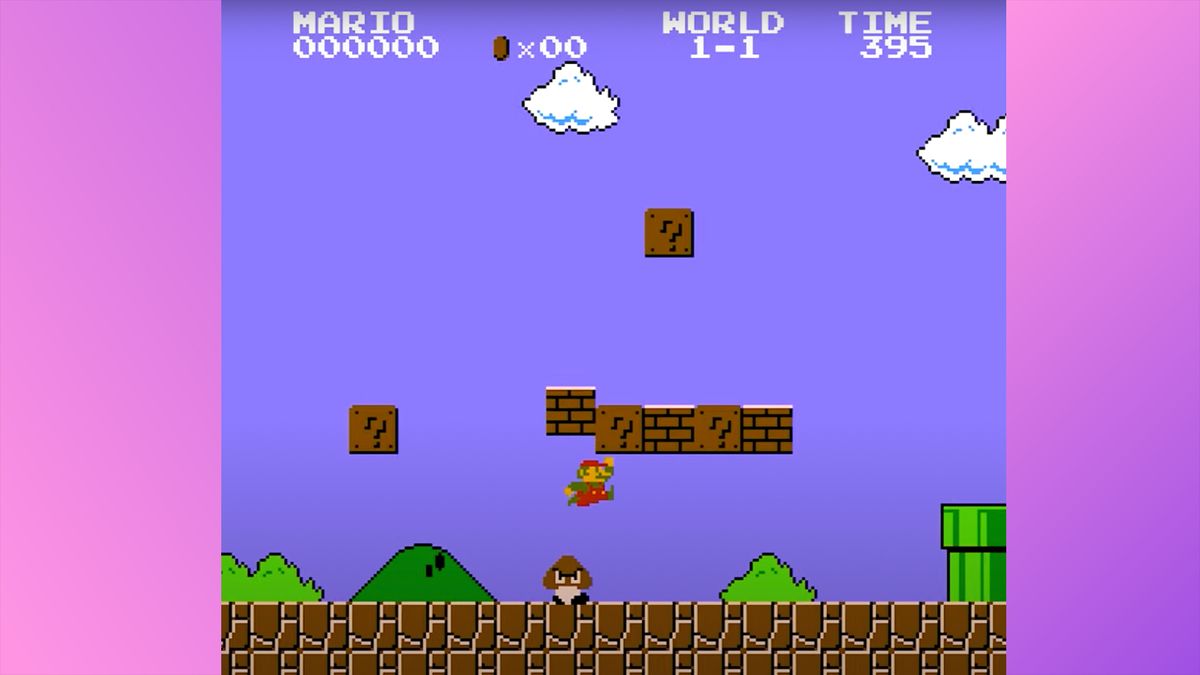
When the original Super Mario Bros was released in 1985, it’s safe to say game design was a little more basic – and that meant getting crafty with your visual assets. The eagle-eyed amongst you may notice that there’s some clever sprite recycling going on with those clouds and bushes but it’s not just lazy game design, there’s actually an important reason behind it.

The Importance of Sprite Recycling

Sprite recycling isn’t an uncommon phenomenon and continues today so once you start noticing it, you can’t unsee it. Arguably today it’s a little more subtle than the original Mario Bros, but perhaps it was easier to ignore on retro game consoles. In a world of AAA releases it’s safe to say standards for game design have shifted for the better but there’s still something charming about that nostalgic 8-bit design.

The Efficiency Factor

You’d be forgiven for missing this crafty design detail thanks to some clever recolouring and the odd sprite stitching that (at a glance) looks like a new asset. While on the surface it’s a clever technique to flesh out the game’s background, the sprite recycling was also a handy way for Nintendo devs to be more efficient when coding the game – with a minuscule 32 KB file size, there wasn’t room for fancy details in the OG Mario Bros.

Conclusion

The art of sprite recycling is a testament to the creativity and resourcefulness of game designers in the past. While game design standards have evolved over the years, there’s still something to be learned from the clever techniques used in the past. Whether you’re a retro gaming enthusiast or a modern game developer, the art of sprite recycling is a fascinating aspect of game design that’s sure to inspire.

FAQs

Q: What is sprite recycling in game design?
A: Sprite recycling is a technique used in game design where the same visual asset is reused in different contexts, often with slight modifications, to create the illusion of more content.

Q: Why was sprite recycling used in the original Super Mario Bros?
A: Sprite recycling was used in the original Super Mario Bros to make the game more efficient in terms of file size and coding complexity.

Q: Is sprite recycling still used today?
A: Yes, sprite recycling is still used today, although it may be more subtle and less noticeable than in the past.