Home Blog Page 343

Recipe for Branding Success

0

Digital Studio Koto Unveils Seasoned, an Online Hub for Creatives

A Feast of Knowledge for Emerging Creatives

Digital studio Koto has unveiled its new project, Seasoned – an online hub for creatives that explores the expansive world of branding. Leveraging the studio’s design expertise, the site is a feast of knowledge for emerging creatives, providing a stylish collection of e-books and expert insights to educate and inspire.

Addressing Barriers to Entering the Creative Industry

Creating impactful branding is no mean feat, but with a diverse range of clients, from Sonos to WhatsApp, Koto’s rich industry experience is an invaluable tool. Reflecting the brand’s commitment to supporting aspiring creatives, Seasoned is a passion project built upon giving back to the creative community, bridging the gap between professional studios and emerging talent.

The Seasoned Site Design

The Seasoned site has a distinctly retro charm, comprised of a collection of unique ‘cookbooks’ filled with handy and palatable design expertise (also be prepared for a banquet of culinary puns). "We were hugely inspired by the visual vernacular of 70s and 80s cookbooks and their simple approach to explaining (even the strangest) dishes. We wanted to bring some joy to a space that can sometimes feel a little stuffy, and hopefully that’s reflected in the digital experience – challenging conventions of what an educational resource should look like with moments of surprise and delight," says Koto’s senior designers Dylan Young & Sienna Mark-Brown.

A True Team Effort

Building Seasoned was a challenge, especially within a busy studio environment where client work often takes priority. However, the team’s shared passion for this initiative drove it forward. "We overcame the time constraints through collaboration, dedication, and a collective belief in the project’s potential. It was a true team effort, fuelled by the desire to create something meaningful and share our gained knowledge," Sam says.

Future Plans for Seasoned

Still in its early days, Seasoned is set to grow by adding more interactive learning resources, eventually expanding its reach with more direct, real-world experiences. "The immediate next Seasoned step is for us to release a couple more ‘cookbooks’. After that, we’d love to start offering real practical advice and insights, in an interactive way – such as portfolio reviews, guest lectures, competition briefs, education tutorials and mentorship schemes," adds Dylan and Sienna.

Conclusion

Seasoned is a testament to Koto’s commitment to supporting emerging creatives and giving back to the design community. With its unique blend of design expertise and playful approach, the site is sure to inspire and educate many. As Koto continues to grow and evolve, it will be exciting to see how Seasoned develops and expands its reach.

FAQs

Q: What is Seasoned?
A: Seasoned is an online hub for creatives that explores the expansive world of branding, providing a stylish collection of e-books and expert insights to educate and inspire.

Q: Who is behind Seasoned?
A: Seasoned is a passion project built by Koto, a digital studio with a diverse range of clients, from Sonos to WhatsApp.

Q: What can I expect from Seasoned?
A: Seasoned offers a collection of unique ‘cookbooks’ filled with handy and palatable design expertise, as well as interactive learning resources and real-world experiences.

Q: How can I get involved with Seasoned?
A: You can stay up-to-date with Seasoned’s latest developments and releases by following the studio’s social media channels or signing up for their newsletter.

DeepSeek AI Model Now Hosted in the USA

0

You.com AI Assistant and Search announced the deployment of the new open-source DeepSeek AI model

You.com AI Assistant and Search announced the deployment of the new open-source DeepSeek AI model, joining advanced models from Anthropic, Meta, Grok, and OpenAI. DeepSeek-R1 is safely hosted on U.S. servers, ensuring that no user data is sent overseas.

DeepSeek-R1

DeepSeek-R1 is a new reasoning model developed in China that has shaken up the AI technology space because of its high performance and novel training methodology which dramatically lowered costs. The model was released as open source which allows anyone to download it, customize it and host it on their own servers, which is what You.com did.

You.com

You.com is a free AI assistant and search engine that provides access to top AI models at lower rates than their individual subscriptions. For example, users that pay $15/month can take advantage of OpenAI’s models for tasks they excel at, then switch to Anthropic’s Claude for creative work, where many find it superior, without the need to subscribe to both services. That’s a saving of approximately $25/month for access to models that cost about $20/month.

Screenshot Of DeepSeek-R1 Availability On You.com

DeepSeek-R1 Integrated Into You.com

You.com Pro users can access DeepSeek’s model in addition to all the other available models. The official You.com X (formerly Twitter) account tweeted:

“@deepseek_ai is officially live at you(dot)com. The hype is real, and it’s spectacular 🔥

DeepSeek R1 & V3 are crushing benchmarks and pushing the boundaries of what LLMs can do. Give them a spin and see why everyone’s buzzing.”

Richard Socher, You.com’s CEO and founder, tweeted:

“@deepseek_ai’s AI models are officially live at ydc. This is the best way to test out these great models and have them be accurate and up-to-date.

For folks worried about their data or China: We do not use the official API, there is zero data retention for our enterprise users and the servers are in the US. The magic of open source dispels these concerns.”

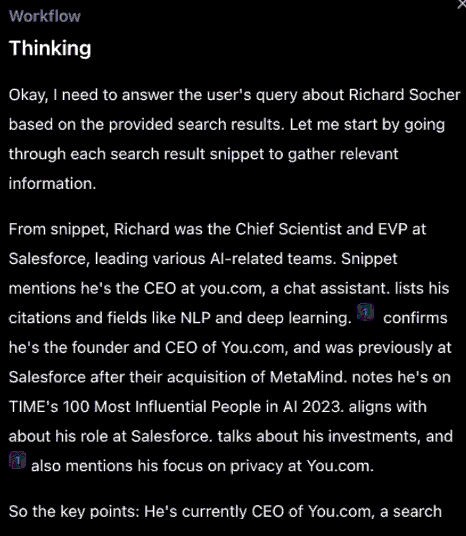
He followed up that tweet with another one accompanied by a screenshot showing how DeepSeek takes a little extra time to output because it’s a reasoning model that takes multiple steps to generate the output.

Socher observed:

“I like how it says that one source confirms the information from another source.

Because of the more advanced reasoning, it is slower that our default modes for now.”

Screenshot Of DeepSeek-R1 on You.com

You.com Continues To Exceed Expectations

You.com offers users an exceptional AI Assistant that allows users to choose between different AI models at essentially discounted prices, enabling users to be more productive at a competitive price.

Conclusion

You.com continues to excel in the AI assistant and search engine space with the addition of DeepSeek-R1. Its open-source approach allows users to customize and host the model on their own servers, ensuring security and control. With its diverse range of AI models, You.com provides an unparalleled AI Assistant experience at affordable prices.

Frequently Asked Questions

Q: What is DeepSeek-R1?

A: DeepSeek-R1 is a new open-source AI model developed in China that uses novel training methodology and has been released as open-source.

Q: How does DeepSeek-R1 differ from other AI models?

A: DeepSeek-R1 is a reasoning model that takes multiple steps to generate output, making it slower than default modes but also more accurate. It also integrates with other sources to confirm information.

Q: Where are You.com’s servers located?

A: You.com’s servers are located in the US, ensuring that no user data is sent overseas.

Q: How does You.com’s AI Assistant work?

A: You.com’s AI Assistant provides access to top AI models at lower rates than their individual subscriptions, allowing users to choose the best model for their task. It also enables users to customize and host models on their own servers.

CEO’s AI Boast

0

Leaning In to Automation

Ask typical corporate executives about their goals in adopting artificial intelligence, and they will most likely make vague pronouncements about how the technology will help employees enjoy more satisfying careers, or create as many opportunities as it eliminates. A.I. will “help tackle the kind of tasks most people find repetitive, which frees up employees to take on higher-value work,” Arvind Krishna, the chief executive of IBM, wrote in 2023.

However, Sebastian Siemiatkowski, the chief executive of Klarna, a Swedish tech firm, has a different perspective. He believes that A.I. can already do all of the jobs that humans do, and his company has saved the equivalent of $10 million annually using A.I. for its marketing needs. Klarna has also cut back on the time its in-house lawyers spend generating standard contracts, and its communications staff uses the technology to classify press coverage as positive or negative.

Saying What Investors Can’t

Mr. Siemiatkowski’s statements are sometimes sweeping or grandiose because, former employees say, he sees himself as a righteous warrior in a fight with powerful forces. However, his views on A.I. are motivated by something altogether different from political naïveté or an impulse for real talk. And those motivations shed light on the A.I. future that many executives and investors are working to bring about.

Mr. Siemiatkowski’s pronouncements about A.I. are motivated by self-interest and a desire to promote his company’s brand. He believes that A.I. will not only make his company more efficient but also make him a thought leader in the industry. In an interview, he said that he wants to encourage people, specifically politicians in society, to treat A.I. as a serious change that’s coming. He also acknowledged that another part of the motivation was “self-promotion, for sure.” He added, “We’re regarded as a thought leader.”

Investors’ Ambition

Many tech investors are already banking on this outcome, effectively counting on automation to save their huge bets on free-spending A.I companies. In an influential analysis last year, the venture capitalist David Cahn estimated that the combined A.I.-related revenue of companies like OpenAI and Microsoft was likely to be hundreds of billions a year less than the amount needed to pay back investors.

But one way to make the numbers add up is if employers can save hundreds of billions of dollars using A.I. to replace workers in the relatively near future. In that case, the revenue of companies like OpenAI could grow rapidly and their investors could earn a profit. However, very few investors and top executives are willing to discuss this in plain language. When it comes to the question of job loss, those with a large financial interest in A.I. tend to euphemize and equivocate.

Conclusion

In conclusion, Sebastian Siemiatkowski’s statements about A.I. are a reflection of the ambition of tech investors and executives to use the technology to displace human workers. While many executives and experts may be reluctant to discuss the potential downsides of A.I., Mr. Siemiatkowski’s honesty has brought clarity to the conversation. As A.I. continues to evolve, it is likely that we will see more and more companies adopt the technology, potentially leading to significant changes in the job market.

Frequently Asked Questions

Q: What does Sebastian Siemiatkowski mean by saying that A.I. can already do all of the jobs that humans do?
A: Mr. Siemiatkowski believes that A.I. has already reached a level of sophistication where it can perform many tasks that were previously done by humans. He may be overstating the case, but his point is that A.I. has the potential to automate many jobs in the near future.

Q: Is it true that investors are counting on automation to make a profit from their investments in A.I. companies?
A: Yes, many investors are betting that A.I. will save them money by reducing the need for human labor. If employers can save hundreds of billions of dollars using A.I. to replace workers, the revenue of companies like OpenAI could grow rapidly and their investors could earn a profit.

Q: Why are investors and executives reluctant to discuss the potential downsides of A.I.?
A: Many investors and executives have a large financial interest in A.I. and are hesitant to discuss the potential downsides of the technology, such as job loss. They may also be worried about being seen as negative or alarmist, or about losing investors or customers if they are too honest about the potential consequences of A.I.

AI in Krita Could Be Your New Secret Weapon

0

Why Use AI and What Are the Options Out There?

The article discusses the use of AI in graphic design and digital art, and how it is becoming increasingly prevalent in the industry. The author shares their personal experience with using AI in Krita, a graphic design software, and provides tips for making it work effectively.

AI in Krita

The author describes how they stumbled upon a plugin called "AI Image Generation" for Krita, which allows for easy image generation. The plugin has a simple interface with four main elements: Workspace Selection, Rendering Style, Text Entry, and Strength Slider. The author provides a step-by-step guide on how to use the plugin, including selecting a workspace, choosing a rendering style, entering a scene description, and adjusting the strength slider.

Content Aware

The author explains how the plugin can be used for content-aware tasks, such as filling or extending selections. They provide a step-by-step guide on how to use the plugin for these tasks, including selecting a canvas area, choosing the desired outcome, and adjusting the strength slider.

Pro Tip

The author provides a pro tip for improving render times by adjusting the GPU control panel settings.

Conclusion

In conclusion, the author concludes that AI is becoming increasingly important in graphic design and digital art, and that Krita’s AI plugin is a valuable tool for creating high-quality images. They encourage readers to try out the plugin and explore its capabilities.

FAQs

Q: What is AI in graphic design?
A: AI in graphic design refers to the use of artificial intelligence to create and edit images, animations, and other visual content.

Q: What is Krita?
A: Krita is a free and open-source graphic design software that is popular among digital artists and designers.

Q: How do I get started with Krita’s AI plugin?
A: To get started with Krita’s AI plugin, download and install the plugin, then follow the step-by-step guide provided in the article.

Q: What are the benefits of using AI in graphic design?
A: The benefits of using AI in graphic design include increased efficiency, improved accuracy, and enhanced creativity. AI can help automate repetitive tasks, improve image quality, and provide new design possibilities.

DeepSeek Won’t Stop AI’s GPU Hunger

0

Andreessen Horowitz General Partner on DeepSeek’s Impact on AI Industry

Andreessen Horowitz general partner and Mistral board member Anjney “Anj” Midha first spotted DeepSeek’s impressive performance six months ago. At that time, DeepSeek introduced Coder V2, which rivaled OpenAI’s GPT4-Turbo for coding-specific tasks, according to a paper it released last year.

Improved Models and Efficiency

That put DeepSeek on a path to release improved models every couple of months, leading to its new open-source reasoning model, R1. This model has upended the tech industry by offering industry-standard performance at a fraction of the cost.

AI’s Ongoing Need for Compute Power

Despite the sell-off of Nvidia’s stock, Midha believes R1 doesn’t mean that AI foundational models will stop spending billions to gobble up GPU chips and build more data centers as fast as they can. Instead, they will make the most of the compute power they can obtain.

Mistral’s Competitive Advantage

Mistral’s open-source nature gives it a competitive edge, according to Midha. Open-source projects like Mistral can tap into essentially free technical labor from those who want to contribute to the project. In contrast, closed-source rivals must pay for all labor and compute power.

a16z’s Oxygen GPU Sharing Program

Midha is also the leader of a16z’s Oxygen program, which aims to provide GPUs to its portfolio companies. The program is "overbooked" and Midha can’t allocate enough GPUs to meet the demand.

Global AI Infrastructure

Midha believes that the recognition of AI as the next foundational infrastructure will lead to a shift in the way governments and companies approach AI. He advocates for "infrastructure independence," where Western nations use Western AI models that follow Western laws and ethics, rather than relying on Chinese models.

Conclusion

DeepSeek’s breakthroughs have significant implications for the AI industry. While Midha doesn’t believe that R1 will change the need for compute power, it does offer a more efficient way to achieve that goal. Mistral’s open-source nature gives it a competitive edge, and a16z’s Oxygen program is a testament to the ongoing demand for GPUs. As the AI landscape continues to evolve, it will be interesting to see how these developments shape the future of the industry.

FAQs

Q: What is the impact of DeepSeek’s R1 model on the AI industry?
A: DeepSeek’s R1 model offers industry-standard performance at a fraction of the cost, which will continue to drive the demand for compute power.

Q: Will AI foundational models stop spending billions on GPUs and data centers?
A: No, AI foundational models will continue to spend billions to gobble up GPU chips and build more data centers, but they will make the most of the compute power they can obtain.

Q: What is Mistral’s competitive advantage?
A: Mistral’s open-source nature gives it a competitive edge, allowing it to tap into essentially free technical labor from those who want to contribute to the project.

Q: What is a16z’s Oxygen GPU sharing program?
A: a16z’s Oxygen program is a program that provides GPUs to its portfolio companies, which is currently "overbooked" and can’t allocate enough GPUs to meet the demand.

Sora’s Global Video Output

Video Creation with Sora: The Frontier of Generative AI

What is Sora?

Video creation is still the frontier of generative AI, and OpenAI leads the pack with its Sora AI video generator. The generator, which launched last month during the 12 days of OpenAI, has caused quite a buzz because of its highly realistic output quality.

Sora’s Popularity

On Wednesday, OpenAI shared with ZDNET that there are 10 Sora generations per second worldwide. That translates to 600 videos being generated every minute. The top five cities for Sora adoption are Seoul, New York City, Tokyo, Los Angeles, and Singapore, listed from highest to lowest.

How Does Sora Work?

With Sora, creating a video from scratch is as easy as dropping in a prompt or an existing asset you own, such as an image or video in your gallery. You can also customize ratios, duration, and even select from presets to get your creative juices flowing.

Remixing and Video Editing Features

Beyond video, OpenAI shared that the second-fastest growing feature on Sora is remixing, which allows users to add, remove, or edit objects in an existing video by using a text prompt, as seen in the video below. When remixing, users are also able to select the strength of the remix, depending on how much of the original video’s essence they want to keep.

Sora also offers other video editing features, such as re-cut, which lets users trim and extend existing clips, and blend, which transitions elements from one video to another. Both Sora’s video editing and generating features have practical applications for content creators and working professionals who could benefit from using the platform to create b-roll, marketing video materials, clips, and more.

Subscription Options

Both ChatGPT Plus and Pro subscribers can access Sora with varying limitations. With the ChatGPT Plus subscription, which costs $20 per month, users can generate up to 50 videos per month, each up to 720p resolution and five seconds in duration. Although the price may seem steep, other perks include first and greater access to some of OpenAI’s latest and greatest features including Advanced Voice, o1 with Canvas, o3-mini, and DALL-E 3.

The ChatGPT Pro subscription costs $200 per month and offers everything ChatGPT Plus does at a much greater scale, as well as o1 pro. At the moment, there is no way to access Sora from ChatGPT Free, Enterprise, and Edu accounts. If you just want to try Sora, but don’t have long-term use for ChatGPT Plus, you can always subscribe for a month and cancel.

Conclusion

Sora is a game-changer in the world of video creation, offering a seamless and intuitive experience for content creators and working professionals. With its ability to generate high-quality videos from scratch, remix existing videos, and offer a range of video editing features, Sora is poised to revolutionize the way we create and consume video content.

Frequently Asked Questions

Q: What is Sora?
A: Sora is a AI video generator from OpenAI that can create high-quality videos from scratch.

Q: How does Sora work?
A: Sora allows users to create a video from scratch by dropping in a prompt or an existing asset they own, and customizing ratios, duration, and more.

Q: What are the subscription options for Sora?
A: Both ChatGPT Plus and Pro subscribers can access Sora, with varying limitations. ChatGPT Plus costs $20 per month and offers up to 50 videos per month, while ChatGPT Pro costs $200 per month and offers more features and capabilities.

Canada to Impose Tariffs on US Goods

0

Canada Retaliates Against US Tariffs with $155 Billion Worth of Goods

Canada Responds to US Tariffs with $155 Billion Worth of Goods

In response to the broad 25 percent tariffs announced by President Donald Trump on Canadian imports, Prime Minister Justin Trudeau has announced a 25 percent tariff on $155 billion worth of American goods. This retaliatory measure will target a total of $30 billion worth of American goods, effective immediately, with an additional $125 billion to be implemented after 21 days.

Retaliatory Measures

Trudeau outlined a "far-reaching" list of products that will be subject to import taxes, including American alcohol, orange juice, clothing, appliances, lumber, and plastics, as well as "much, much more." Non-tariff measures, such as reexamining public procurement policies, are also being considered. However, the Prime Minister emphasized that actions like limiting energy exports would require more careful consideration, as "no one part of the country should be carrying a heavier burden than any other."

US Tariffs and Fentanyl

The sweeping US tariffs, which also include a 10 percent tariff on energy products from Canada, are a significant shift in trade policy between the two countries. Trump claims the tariffs are meant to incentivize these countries to stem the flow of illegal fentanyl into the US.

No Retaliation Clauses

The US tariffs include a clause seeking to prevent retaliation, which would increase the penalties if the countries impacted impose their own tariffs. However, Trudeau believes that Canada’s new tariffs "are strong but appropriate in this case, and we will continue to defend Canada, Canadians, and our future."

Conclusion

The ongoing trade tensions between the US and Canada highlight the importance of finding a balance between economic interests and national security concerns. As the situation continues to evolve, it is crucial for both countries to engage in open communication and find a mutually beneficial solution.

FAQs

Q: What are the retaliatory tariffs imposed by Canada?
A: Canada has imposed a 25 percent tariff on $155 billion worth of American goods, including $30 billion worth of goods effective immediately, and an additional $125 billion after 21 days.

Q: What products will be subject to import taxes?
A: The list includes American alcohol, orange juice, clothing, appliances, lumber, and plastics, as well as "much, much more."

Q: What is the purpose of the US tariffs?
A: The US tariffs are meant to incentivize Canada and other countries to stem the flow of illegal fentanyl into the US.

Q: Can the US impose additional penalties if Canada retaliates?
A: The US tariffs include a clause seeking to prevent retaliation, which would increase the penalties if the countries impacted impose their own tariffs.

AI Coding Tools: Best Options for 2025 and What to Avoid

Article

I’ve been around technology long enough that very little excites me, and even less surprises me. But shortly after Open AI’s ChatGPT released, I asked it to write a WordPress plugin for my wife’s e-commerce site. When it did, and the plugin worked, I was indeed surprised.

That was the beginning of my deep exploration into chatbots and AI-assisted programming. Since then, I’ve subjected 14 large language models (LLMs) to four real-world tests.

ChatGPT Plus

ChatGPT Plus with GPT-4 and GPT-4o passed all my tests. One of my favorite features is the availability of a dedicated app. When I test web programming, I have my browser set on one thing, my IDE open, and the ChatGPT Mac app running on a separate screen.

Perplexity Pro

Perplexity Pro with GPT-4o, Claude 3.5 Sonnet, Sonar Large, Claude 3 Opus, and Llama 3.1 405B passed all my tests. One of my favorite features is the ability to run multiple LLMs. While you can’t set an LLM for a given session, you can easily go into the settings and choose the active model.

GitHub’s Copilot

GitHub’s Copilot integrates quite seamlessly with VS Code. It makes asking for coding help very quick and productive, especially when working in context. That’s why it’s so disappointing that the code it writes can often be so very wrong.

Meta AI

Meta AI is Facebook’s general-purpose AI. As you can see above, it failed three of our four tests.

Meta Code Llama

Meta Code Llama is Facebook’s AI designed specifically for coding help. It’s something you can download and install on your server. I tested it running on a Hugging Face AI instance.

Claude 3.5 Sonnet

Anthropic claims the 3.5 Sonnet version of its Claude AI chatbot is ideal for programming. After failing all but one test, I’m not so sure.

Gemini Advanced

Gemini Advanced is Google’s $20 pro version of its Gemini (formerly Bard) chatbot. I expected the tool to do better than one out of four. Interestingly, it passed the one test that every AI other than GPT-4/4o failed — knowledge of that fairly obscure programming language produced by one programmer in Australia.

Microsoft Copilot

You’d think the company with the "Developers! Developers! Developers!" mantra in its DNA would have an AI that does better on the programming tests. Microsoft produces some of the best coding tools on the planet. And yet, Copilot did badly.

Conclusion

The results of my tests were fairly surprising, especially given the big investments of Microsoft and Google. But this area of innovation is improving at warp speed, so we’ll be back with updated tests and results over time. Stay tuned.

FAQs

Q: Which AI chatbots are best for programming?
A: ChatGPT Plus with GPT-4 and GPT-4o and Perplexity Pro with GPT-4o, Claude 3.5 Sonnet, Sonar Large, Claude 3 Opus, and Llama 3.1 405B are the top-performing AI chatbots for programming.

Q: Can I use GitHub’s Copilot for programming?
A: Yes, GitHub’s Copilot integrates seamlessly with VS Code and can be a useful tool for coding help, but its produced code is not always accurate.

Q: Which AI chatbot is best for my budget?
A: ChatGPT Plus and Perplexity Pro both offer a paid version with more features and better performance. You can choose the one that fits your budget.

Q: How do I use these AI chatbots for programming?
A: Each AI chatbot has its own interface and features. Follow the instructions and tutorials provided to learn how to use them effectively.

Work, Play, and Comfort in a Chair

0

Design and Assembly

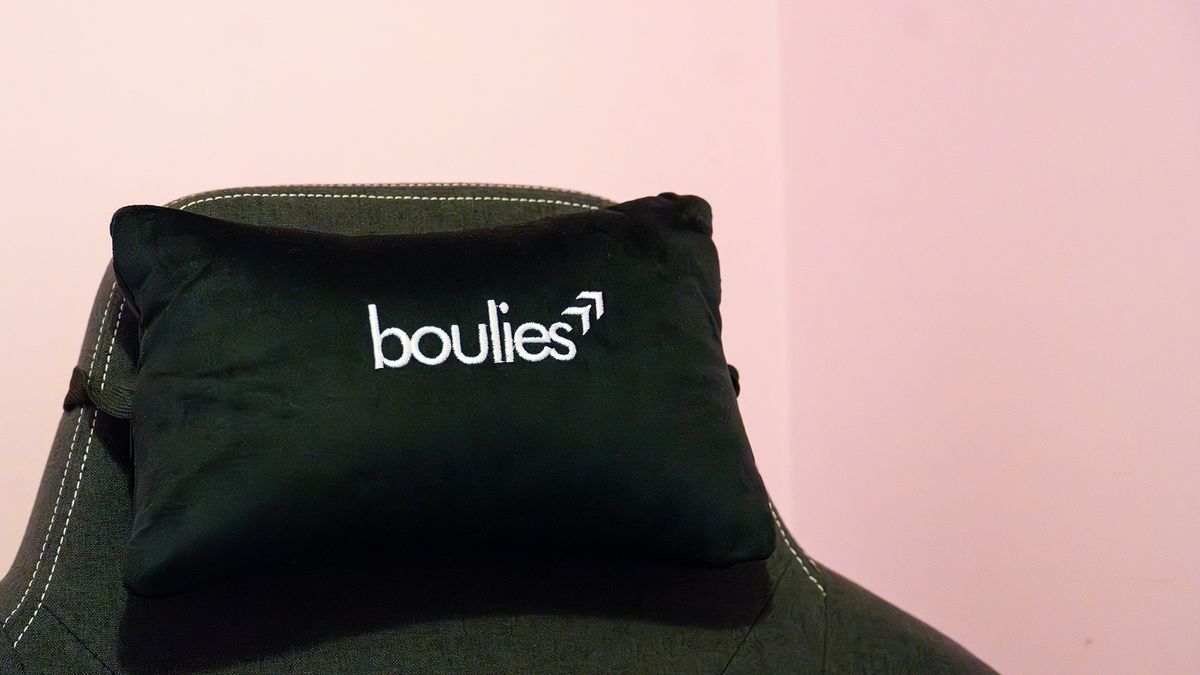
The Boulies Master Max is an office/gaming chair that comes with clear and easy-to-follow instructions. The assembly process requires some tools and a bit of patience, especially when attaching the armrests to the seat. However, the chair’s design allows for easy adjustments to the height and angle of the seat, backrest, and armrests.

Features and Comfort

The Master Max features adjustable armrests that move up and down, in and out, and forward and back. The seat and backrest can be adjusted to suit your body shape and size, and the lumbar support can be customized for optimal comfort. The chair also has a ergonomic design that helps to reduce the risk of strain and discomfort during long periods of sitting.

Price

The Boulies Master Max retails at a competitive price point, with a price tag of $439.99/£399.99. While this may not be the cheapest option on the market, it is a good value for the quality and features it offers.

Who is it for?

The Master Max is suitable for anyone who needs a comfortable and adjustable office/gaming chair. It is a good choice for those who work long hours, gamers, and anyone who values their comfort and well-being.

Buy it if…

  • You need a mid-range office chair
  • You’re taller or heavier than average
  • You want to sit all day

Don’t buy it if…

  • You want a flashy gaming chair
  • You’re after something cheaper

Conclusion

The Boulies Master Max is a solid choice for anyone looking for a comfortable and adjustable office/gaming chair. Its design, features, and price point make it a great value for those who want to prioritize their comfort and well-being.

Also Consider

  • SIHOO Doro-C300: a highly adjustable mesh office chair with lumbar support
  • Herman Miller Embody: an exceptional ergonomic office chair that supports your body
  • ErgoChair Plus: a budget-friendly ergonomic chair with a Herman Miller Aeron-like skeletal back structure

Frequently Asked Questions

Q: How do I assemble the Master Max chair?
A: The assembly process is easy and requires following the instructions that come with the chair.

Q: Is the Master Max suitable for tall and heavy individuals?
A: Yes, the chair has a high weight capacity of 135kg and is designed to accommodate taller individuals.

Q: Can I adjust the lumbar support on the Master Max chair?
A: Yes, the chair’s lumbar support can be customized to fit your body shape and size.

Q: Is the Master Max a good choice for gamers?
A: Yes, the chair is designed to be comfortable and supportive for long gaming sessions.

Visualizing Insights

Data Visualization: My Top Tools for Turning Numbers into Compelling Stories

Matplotlib: The OG of Plotting

When I need full control over my visualizations, I turn to Matplotlib. It’s a Python library that’s incredibly flexible, allowing me to create everything from simple line charts to complex heatmaps. While the syntax can be verbose, the payoff is worth it. I often use it for exploratory data analysis or when I need to customize every detail of a plot.

Seaborn: The Stylish Sibling

If I want to create beautiful, publication-ready visuals quickly, Seaborn is my tool of choice. Built on top of Matplotlib, it simplifies the process of creating complex plots like violin plots, pair plots, and correlation heatmaps. Its default styles are sleek, and it integrates seamlessly with Pandas DataFrames. I use Seaborn when I need to impress stakeholders with clean, professional visuals.

Tableau: The Storyteller’s Dream

For interactive dashboards and storytelling, Tableau is unmatched. It’s a no-code tool that lets me drag and drop data to create stunning, interactive visuals. I love using it to build dashboards that allow users to explore data on their own. Plus, its storytelling feature helps me guide audiences through key insights step by step.

Honorable Mentions

  • Plotly: Great for interactive web-based visualizations.
  • D3.js: When I need custom, web-embedded visuals, D3.js is my go-to.

The Key to Great Storytelling

No matter the tool, the goal is the same: tell a story. I always start by asking, "What’s the one thing I want my audience to remember?" Then, I choose the tool and visualization that best communicates that message.

Conclusion

Data is powerful, but only if you can communicate it effectively. By choosing the right tool for the job, you can turn raw numbers into compelling stories that engage and inform. Remember, the key to great storytelling is to keep your audience in mind and focus on the message you want to convey.

Frequently Asked Questions

Q: What is your favorite data visualization tool?
A: I have a few, depending on the project and my goals. But if I had to choose one, I’d say Matplotlib is my go-to for custom plots, Seaborn for publication-ready visuals, and Tableau for interactive storytelling.

Q: How do you choose the right tool for the job?
A: I start by asking myself, "What’s the one thing I want my audience to remember?" Then, I choose the tool and visualization that best communicates that message.

Q: What makes a good data visualization?
A: A good data visualization is clear, concise, and engaging. It should communicate the message you want to convey without overwhelming the audience with too much information.