Home Blog Page 348

OpenAI Unveils o3-Mini Model for Free ChatGPT Users

OpenAI Unveils o3 and o3-mini Models for Reasoning

On the last day of OpenAI’s 12 days of ‘shipmas,’ the company unveiled its latest models, o3 and o3-mini, which excel at reasoning and even outperform o1 on a series of benchmarks, including math and science.

o3-mini

On Friday, OpenAI released its o3-mini model, the most cost-efficient model in OpenAI’s reasoning series, to the public. Until now, that series has been comprised of o1 and o1-mini. Like its predecessor, the model is particularly strong in science, math, and coding, according to the company.

OpenAI o3-mini is now available in ChatGPT and the API. Pro users will have unlimited access to o3-mini and Plus & Team users will have triple the rate limits (vs o1-mini). Free users can try o3-mini in ChatGPT by selecting the Reason button under the message composer.

When o3-mini is selected, it will use medium reasoning effort, which balances speed and accuracy. While the original o1 model still has broader general knowledge than o3-mini, the new model’s major advantage is its faster speed and higher performance compared to o1-mini.

Benchmark Performance

When comparing the performance of o3-mini to o1-mini, expert testers found that o3-mini delivered more accurate, reasoned-through, and clearer responses than o1-mini. According to the post, they preferred o3-mini responses 56% of the time and observed a 39% reduction in major errors.

Beyond human preference evaluations, in several STEM benchmarks, including the Competition Math (AIME 2024), PhD-level Science Questions (GPQA Diamond), and Competition Code (Codeforces), o3-mini with medium reasoning – which is what ChatGPT users will get by default – outperformed o1-mini.

Competition Math benchmark

Also notable is that o3-mini, with high reasoning effort in the benchmarks, came close to o1 performance, sometimes even surpassing it, as seen in the AIME 2024 above and Software Engineering (SWE-bench Verified) benchmarks. The o3-mini model with medium reasoning effort matched o1’s performance in the Codeforces benchmark.

Safety

OpenAI assessed o3-mini’s safety through public release through jailbreak and disallowed content evaluations. The company found that the model significantly surpasses GPT-4o on the evaluations. OpenAI posted the evaluation results below and also launched an o3-mini System Card, a 37-page PDF that includes the detailed results of the evaluations.

How to Access

All subscribers to OpenAI’s paid tiers, including ChatGPT Plus, Team, and Pro, can access OpenAI o3-mini starting today. Plus and Team users now have three times the rate limit, going from 50 messages per day with o1-mini to 150 messages per day. ChatGPT Enterprise access is coming in a week.

Conclusion

OpenAI’s o3 and o3-mini models are significant advancements in AI reasoning capabilities. With o3-mini’s ability to outperform o1 in several benchmarks, it’s an exciting development for those looking for improved performance and accuracy in AI-generated responses.

FAQs

Q: What are the key differences between o3 and o3-mini?

A: o3 is the full version of the model, while o3-mini is the cost-efficient version with medium reasoning effort.

Q: How do I access o3-mini?

A: All subscribers to OpenAI’s paid tiers, including ChatGPT Plus, Team, and Pro, can access OpenAI o3-mini starting today. Plus and Team users now have triple the rate limits (vs o1-mini).

Q: Can free users access o3-mini?

A: Yes, free ChatGPT users can try o3-mini in ChatGPT by selecting the Reason button under the message composer.

Q: What are the safety evaluations of o3-mini?

A: OpenAI assessed o3-mini’s safety through public release through jailbreak and disallowed content evaluations. The company found that the model significantly surpasses GPT-4o on the evaluations.


Breakthrough in Mobile AI: DeepSeek-R1-Distill-Qwen-1.5B

Introduction

DeepSeek-R1-Distill-Qwen-1.5B represents a significant advancement in the field of mobile AI, enabling lightweight deployment through various technological innovations. This blog post delves into its technical principles, optimization strategies, deployment practices, and future prospects.

Core Technological Innovations

1. Knowledge Distillation Architecture

  • Teacher Model Selection: DeepSeek-R1, likely with billions of parameters, serves as the teacher model. Its mathematical reasoning abilities have been validated through benchmarks like MATH.
  • Distillation Strategy:
    • Output Layer Distillation: The student model mimics the prediction distribution of the teacher model, preserving generalization for solving math problems.
    • Intermediate Layer Alignment: Through Attention Transfer, the student model learns feature representations from the teacher’s intermediate layers, enhancing logical reasoning.
    • Progressive Distillation: The model is compressed in stages, first reducing the number of layers, then the width of each layer, to prevent a sharp drop in accuracy.

2. Mixed Precision Quantization (Q4_KM/Q5_KM)

3. NPU-Specific Optimizations

  • Compute-Memory Decoupling:
    • Memory-intensive operations like LayerNorm use low-precision caching to minimize data transfer overhead.
    • Compute-intensive tasks like matrix multiplication leverage NPU’s INT8/INT4 acceleration instructions.
  • Latency Optimization: The first token generation time is reduced to 130ms from 230ms in FP16, making it suitable for real-time interactions.

Key Technologies for Mobile Adaptation

1. Dynamic Shape Adaptation

  • Adaptive Computation Graph: Adjusts input sequence length based on screen resolution, such as truncating padding in portrait mode to reduce unnecessary computations.
  • Memory Pool Reuse: Pre-allocates memory pools of various sizes to avoid frequent memory allocation/deallocation, boosting throughput to 16 tokens/s.

2. Power Management

  • Power Wall Strategy: Adjusts model parallelism based on remaining battery life, e.g., limiting NPU frequency at low battery to keep power consumption below 5W.
  • Sparse Inference: Skips calculations on non-critical intermediate results, achieving an 18% reduction in power consumption.

Performance and Deployment Comparison

Metric Desktop 70B Model Mobile 1.5B Model
Memory Demand 135GB+ (FP16) <2GB (Q5_KM Quantization)
Inference Latency (First Token) 450ms (A100 GPU) 130ms (Mobile NPU)
Mathematical Reasoning Accuracy MATH-500 97.3% MATH-500 83.9%
Deployment Cost Professional GPU Cluster ($10K+/month) Mobile NPU (Zero Marginal Cost)

Challenges and Solutions

1. Compatibility Issues

  • Initial Problems: Crashes in the PocketPal app due to memory alignment mismatches.
  • Microsoft Official Support: AI Toolkit provides tools for unified quantization format conversion, aligning memory to 64-byte boundaries, solving 90% of compatibility issues.

2. Accuracy vs. Speed Trade-off

  • Secondary Distillation: Uses reinforcement learning to select the best sub-model, improving accuracy by 7.2% (MATH-500 up to 89.7%).
  • Hardware-Aware Training: Incorporates NPU simulators during distillation to optimize instruction scheduling, minimizing performance loss upon deployment.

Future Outlook

1. Technological Trends

  • Joint Distillation and Quantization: Optimizing quantization parameters during training, aiming to shrink the 1.5B model to below 800MB with Q3_K quantization.
  • Heterogeneous Computing: Combining CPU, NPU, and GPU for different computation tasks, enhancing efficiency and reducing power.

2. Expansion of Application Scenarios

  • Real-Time Educational Assistant: Captures handwritten formulas via camera, providing solutions within one second, with a 90% recognition rate in testing.
  • On-Device Multimodal: Plans to integrate visual modules for combined image-math reasoning, like geometric shape analysis.

Conclusion

DeepSeek-R1-Distill-Qwen-1.5B showcases how knowledge distillation paired with hardware-specific design can bring near-desktop level inference capabilities to mobile devices. This approach proves that with algorithm-hardware co-optimization, smaller models can replace larger ones for specific tasks like mathematical reasoning, promoting a shift from cloud to edge computing in AI. With advancements in chip manufacturing (like 3nm NPUs) and distillation techniques, mobile AI could match the performance of current 70B models in 3-5 years.

FAQs

Q: What is the primary innovation in DeepSeek-R1-Distill-Qwen-1.5B?
A: The combination of knowledge distillation and hardware-specific design for mobile AI deployment.

Q: What is the memory demand of the mobile 1.5B model compared to the desktop 70B model?
A: The mobile 1.5B model requires less than 2GB of memory, whereas the desktop 70B model requires 135GB+ in FP16.

Q: What is the inference latency of the mobile 1.5B model compared to the desktop 70B model?
A: The mobile 1.5B model has an inference latency of 130ms, whereas the desktop 70B model has a latency of 450ms.

What is Blockchain Technology and How It Works

What are Deepfakes?

The term “deepfake” is a blend of “deep learning” and “fake,” which is a good way of saying that AI can do some very deceptive things with its sophisticated algorithms. Early attempts involved blending faces and creating fake voices. Like the parts of a technical masterpiece, what they did became the blueprint for the sophisticated technical deception of today.

The Present State of Deepfake

Like many other AI marvels, Deepfake technology is undoubtedly a pioneer of the future. Imagine hyper-realistic characters in video games that are better than before or eye-catching pictures in your blog — the possibilities are endless! However, deepfakes pose just as many challenges as their parent technology, AI.

Techniques of Deepfakes

AI-generated deepfakes rely on a few techniques to achieve their goals — check them out!

  • Source Video Deepfakes: Deepfake technology scrutinizes everything down to the smallest detail, including facial expressions, body language, tone of voice, and even the slightest mood swings. With a little imagination, creativity, and AI tools, you can make AI videos that give the impression that a person from the original video is doing things that they didn’t actually do.
  • Audio Deepfakes: Let us now look at a more complex subject, namely sound. “Generative Adversarial Network,” “few-shot learning” where you can use a single photo and create a deepfake. This changes privacy but also raises significant concerns about the level of de facto forgery that can be done through these deepfakes.

Tips to How to Identify Deepfake Videos

Here are some tips to help spot deepfakes:

  • Check for inconsistencies. Pay attention to the lights, the shadows, and any background that doesn’t seem quite right.
  • Look for distortions. Watch out for wild moves or strange deformations, especially around or at the edges of the person.
  • Observe facial movements. Deepfakes are often unable to reproduce the natural movements of the face. So, if the face looks artificial and has strange or uncanny gestures, especially around the eyes and mouth, this should raise your suspicions.
  • Listen to the audio. Deepfake AI technology can sometimes be recognized by the fact that a voice sounds wrong or doesn’t match the lip movements in the video. This could be a sign of a deepfake.
  • Use technology. AI-powered tools have been developed to detect deepfakes. If you are wondering whether a video clip is authentic, try using them.
  • Verify the source. When dealing with video content, always pay attention to the reliability of the source. Whenever something seems suspicious – it’s better to think twice than to regret it.

User-Friendly Deepfake Detection Tools

An amazing mobile application that investigates videos and audio files for probable deepfake content. Users receive a detailed report on the authenticity of any said media. For a journalist, researcher, or an ordinary user concerned about misinformation, it becomes an indispensable tool.

Takeaways

To sum up, deepfakes represent both a great potential and a threat to society. However, they have become an integral part of our lives, so we must adapt to their presence. As many of us are afraid of being misled by this technology, many deepfake detection apps have appeared. If you are an entrepreneur looking to develop your own deepfake software or deepfake detection app, the AI experts at LITSLINK can help. Contact us to find out more about our AI services!

Frequently Asked Questions

Q: What is a deepfake?
A: A deepfake is a type of AI-generated video or audio content that can manipulate the appearance or voice of a person to create a fake scenario.

Q: How do I identify a deepfake?
A: You can identify a deepfake by looking for inconsistencies in the video or audio, paying attention to facial movements, listening to the audio, and verifying the source of the content.

Q: Can deepfakes be used for malicious purposes?
A: Yes, deepfakes can be used to spread misinformation, create fake news, and manipulate people’s perceptions. However, they can also be used for creative purposes, such as creating hyper-realistic characters in video games.

Q: Are there tools available to detect deepfakes?
A: Yes, there are several user-friendly deepfake detection tools available, including mobile applications and AI-powered platforms that can analyze videos and audio files for probable deepfake content.

OpenAI used this subreddit to test AI persuasion.

0

OpenAI Uses Reddit’s r/ChangeMyView to Test AI Reasoning Models

OpenAI, the company behind ChatGPT, has used the popular Reddit subreddit, r/ChangeMyView, to test the persuasive abilities of its AI reasoning models. The company revealed this in a system card, a document outlining how an AI system works, that was released along with its new “reasoning” model, o3-mini, on Friday.

How OpenAI Used r/ChangeMyView

Millions of Reddit users are members of r/ChangeMyView, where they post hot takes hoping to learn about other points of view on a subject. In response to those hot takes, other users reply with persuasive arguments explaining why the original poster is wrong.

OpenAI says it collects user posts from r/ChangeMyView and asks its AI models to write replies, in a closed environment, that would change the Reddit user’s mind on a subject. The company then shows the responses to testers, who assess how persuasive the argument is, and finally OpenAI compares the AI models’ responses to human replies for that same post.

Why OpenAI Used r/ChangeMyView

The goal for OpenAI is not to create hyper-persuasive AI models but instead to ensure AI models don’t get too persuasive. Reasoning models have become quite good at persuasion and deception, so OpenAI has developed new evaluations and safeguards to address it.

The fear motivating these persuasion tests is that an AI model would be dangerous if it was very good at persuading its human users. Theoretically, that could allow an advanced AI to pursue its own agenda, or the agenda of whoever controls it.

What OpenAI Found

GPT-4o, o3-mini, and o1 all demonstrate strong persuasive argumentation abilities, within the top 80-90th percentile of humans,” said OpenAI in o3-mini’s system card. “Currently, we do not witness models performing far better than humans, or clear superhuman performance.”

Conclusion

The use of r/ChangeMyView by OpenAI highlights the importance of high-quality datasets for AI model developers. However, obtaining these datasets is easier said than done. OpenAI’s goal is to ensure AI models don’t get too persuasive, and the company has developed new evaluations and safeguards to address this.

FAQs

Q: What is r/ChangeMyView?

A: r/ChangeMyView is a popular Reddit subreddit where users post hot takes hoping to learn about other points of view on a subject. Other users reply with persuasive arguments explaining why the original poster is wrong.

Q: How did OpenAI use r/ChangeMyView?

A: OpenAI collected user posts from r/ChangeMyView and asked its AI models to write replies that would change the Reddit user’s mind on a subject. The company then showed the responses to testers, who assessed how persuasive the argument is, and compared the AI models’ responses to human replies for that same post.

Q: What did OpenAI find?

A: OpenAI found that GPT-4o, o3-mini, and o1 all demonstrate strong persuasive argumentation abilities, within the top 80-90th percentile of humans. However, the company does not witness models performing far better than humans, or clear superhuman performance.

Q: Why is OpenAI concerned about AI persuasion?

A: OpenAI is concerned about AI persuasion because a highly persuasive AI model could be dangerous if it was used to manipulate or deceive humans. The company wants to ensure that AI models are designed to be transparent and accountable.

Building an Enterprise RAG Pipeline Blueprint with NVIDIA

0

Building an Enterprise RAG Pipeline with NVIDIA AI Blueprint

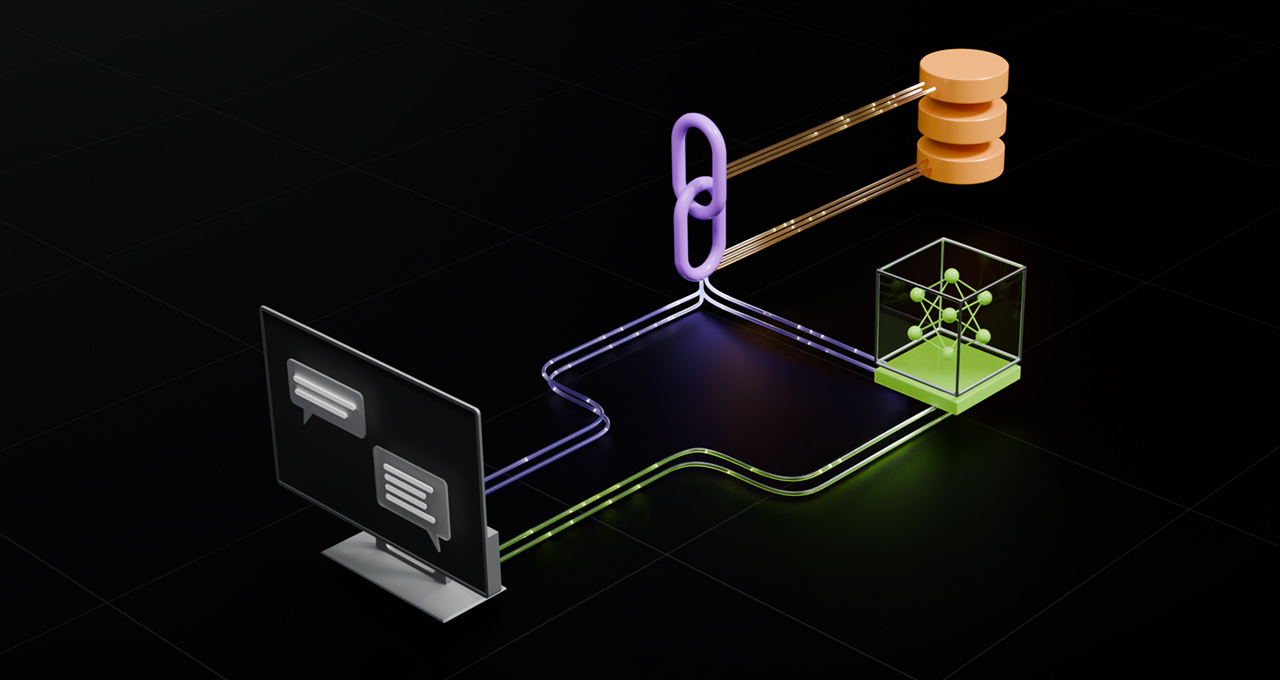
Architecture Diagram

Key Features

  • OpenAI-compatible APIs
  • Multi-turn conversations
  • Multi-collection
  • Multi-session support
  • Multilingual and cross-lingual retrieval
  • Optimized data storage
  • Configurability options for NIM selection and NIM endpoints
  • Reranking usage

Minimum System Requirements

Hardware Requirements

  • The blueprint by default uses API endpoints, making it very easy to experience without needing GPUs.
  • It is expected that the NIM microservices will need to be self-hosted as you progress in your RAG development. For self-hosting the blueprint with these microservices locally deployed, the recommended system requirement is 5 H100 or A100 GPUs with the Llama 3.1 70b NIM, the NeMo Retriever embedding and reranking NIM, and the Milvus database accelerated with NVIDIA cuVS.

OS Requirements

Deployment Options

Software used in this blueprint

NIM microservices

NVIDIA Technology

3rd Party Software

Ethical Considerations

NVIDIA believes Trustworthy AI is a shared responsibility, and we have established policies and practices to enable development for a wide array of AI applications. When downloaded or used in accordance with our terms of service, developers should work with their supporting model team to ensure the models meet requirements for the relevant industry and use case and address unforeseen product misuse. For more detailed information on ethical considerations for the models, please see the Model Card++ Explainability, Bias, Safety & Security, and Privacy Subcards. Please report security vulnerabilities or NVIDIA AI concerns here.

License

Use of the models in this blueprint is governed by the NVIDIA AI Foundation Models Community License.

Terms of Use

GOVERNING TERMS: The software and materials are governed by the NVIDIA Software License Agreement and the Product-Specific Terms for NVIDIA AI Products, except that models are governed by the AI Foundation Models Community License Agreement and the NVIDIA RAG dataset is governed by the NVIDIA Asset License Agreement. ADDITIONAL INFORMATION: for Meta/llama-3.1-70b-instruct model the Llama 3.1 Community License Agreement, for nvidia/llama-3.2-nv-embedqa-1b-v2model the Llama 3.2 Community License Agreement, and for the nvidia/llama-3.2-nv-rerankqa-1b-v2 model the Llama 3.2 Community License Agreement. Built with Llama.

Conclusion

The NVIDIA AI Blueprint for RAG provides developers with a foundational starting point for building scalable and customizable retrieval pipelines that deliver high-accuracy and throughput. With its openAI-compatible APIs, multi-turn conversations, and multilingual and cross-lingual retrieval capabilities, this blueprint enables the creation of context-aware responses that connect LLMs to large corpora of enterprise data, enabling actionable insights grounded in relevant data.

FAQs

Q: What are the minimum system requirements for this blueprint?

A: The recommended system requirement is 5 H100 or A100 GPUs with the Llama 3.1 70b NIM, the NeMo Retriever embedding and reranking NIM, and the Milvus database accelerated with NVIDIA cuVS for self-hosting the blueprint with NIM microservices locally deployed.

Q: What is the license for this blueprint?

A: The use of the models in this blueprint is governed by the NVIDIA AI Foundation Models Community License.

Q: What are the ethical considerations for this blueprint?

A: NVIDIA believes Trustworthy AI is a shared responsibility, and we have established policies and practices to enable development for a wide array of AI applications. For more detailed information on ethical considerations for the models, please see the Model Card++ Explainability, Bias, Safety & Security, and Privacy Subcards.

Unifying Data for Enhanced Shopper Experiences

Transforming the Customer Experience with a Strong Data Estate

Transforming the customer experience requires a solid foundation of data that is accurate, accessible, and secure. A strong data estate also helps future-proof organizations, letting you realize the full potential of the latest technology innovations, like AI, and ensure a unified and effective experience across the customer journey.

Retailers collect vast amounts of data from multiple sources—inventory and staffing, product development, sales, marketing, and more. By unifying this data, retailers can better understand customer preferences, anticipate their needs, and provide memorable shopping experiences that build loyalty. Meanwhile, consumer goods (CG) companies can better monitor manufacturing equipment to reduce downtime, monitor supply chains, anticipate new product trends, and better meet customer needs. It also effectively boosts revenue and balances costs by providing business leaders with insights that drive better decision-making and resource management.

Data Challenges Holding Organizations Back

Gaining a unified view of data comes with several key challenges. Fragmented data is a common cross-industry challenge for both retailers and CG companies. Retailers pull omnichannel data from various sources, including e-commerce sites, in-store sales, social media, supply chain systems, and customer service interactions. For consumer goods companies, data comes from research and development (R&D), marketing, sales, industrial equipment (including sustainability data), and supply chain management tools. All of this data is scattered across many sources and comes in a variety of formats, making integration a complex and time-consuming task.

Using Data to Create Seamless, Connected Customer Experiences

Fragmented operational data significantly impacts the customer experience, and retailers and CG companies need a comprehensive data estate to remain competitive and meet growing expectations.

A unified platform for data helps consolidate all relevant data into a single source of truth, providing a 360-degree view of the business and its customers. This robust data foundation enables businesses to integrate AI and other advanced technologies to be better equipped to unlock insights, enhance personalization, and optimize the customer journey.

Activating the Power of Data Across Your Retail Organization

The value of data unification goes far beyond the retail stores and the factory floors. A single, unified data platform also simplifies data access and management across the organization. Whether employees are in brick-and-mortar locations, in headquarters, or working remotely, they can securely access relevant insights, enabling better decisions at every level and enhancing operational efficiency.

Empowering Leaders and Executives with Insights

Unified data platforms equip C-suite executives with real-time insights into customer behavior, purchasing trends, and inventory movement. These tools enable leaders to:

  • Make strategic, data-driven decisions that drive revenue growth.
  • Identify high-performing products and emerging market demands.
  • Pinpoint new revenue streams, such as personalized service offerings or targeted loyalty programs.
  • Allocate resources effectively, focusing on impactful areas like expanding popular product lines or enhancing store layouts based on foot traffic data.

Unlocking Advanced Capabilities for IT Teams

A consolidated data foundation for IT teams opens doors to innovative technologies that enhance customer experiences. With comprehensive data at their disposal, IT teams can:

  • Implement AI-powered solutions like intelligent product recommendations and predictive restocking alerts.
  • Develop sophisticated digital tools like web-based concierge services to offer real-time personalized assistance.
  • Ensure seamless, efficient customer interactions that strengthen satisfaction and loyalty.

Transform a Strong Data Estate into Innovation

In today’s shopping landscape, you most likely have all the data needed to serve your customers better than ever before. You can turn that data into clear and actionable insights with a robust strategy and the right technology solutions. A unified data platform lets you harness the full potential of your information, helping you streamline operations, improve customer experiences, and drive growth.

Conclusion

By harnessing the full power of your data, your organization can empower all employees to make more data-driven decisions, enhance operational efficiency, and improve customer experiences.

Frequently Asked Questions

Q: What are the benefits of a unified data platform?
A: A unified data platform provides a 360-degree view of the business and its customers, enabling better decision-making, improved operational efficiency, and enhanced customer experiences.

Q: How can I overcome the challenges of fragmented data?
A: By implementing a comprehensive data estate, you can consolidate all relevant data into a single source of truth, simplifying data access and management across the organization.

Q: What are some innovative technologies that can be enabled by a unified data platform?
A: A unified data platform can enable AI-powered solutions, sophisticated digital tools, and other advanced technologies that enhance customer experiences and drive business growth.

Civilization VII

0

Sid Meier’s Civilization VII: A New Era of 4X Strategy

Introduction

Sid Meier’s Civilization VII is the latest installment in the iconic 4X strategy franchise, which first debuted in 1991 on MS-DOS. The new turn-based game from Firaxis Games and legendary designer Sid Meier is set to release on PC and modern consoles on February 11th, 2025, after an eight-year hiatus.

Gameplay and Features

Civ VII promises to expand the scope of player creativity, offering the freedom to mix and match civilizations with different historical figures. Players can imagine scenarios such as Hatshepsut reigning over the Roman Empire in the Age of Exploration. The game’s deep city-building systems will constantly offer new and unexpected ways to engage with the game, making it easy to consume hundreds of hours of playtime.

Hands-on Impressions

Ash Parrish, one of our writers, had the opportunity to play a lengthy three-hour demo and shares her impressions. While she only scratched the surface, she was impressed by the game’s depth and complexity.

Coverage

Here’s all our coverage of the next major title in the Civilization series:

  • [Insert links to articles or reviews]

Conclusion

Sid Meier’s Civilization VII is shaping up to be a groundbreaking installment in the franchise, offering unparalleled creative freedom and depth. With its release date set for February 11th, 2025, fans of the series and new players alike can look forward to an immersive gaming experience.

Frequently Asked Questions

Q: When is Sid Meier’s Civilization VII releasing?
A: Sid Meier’s Civilization VII is set to release on PC and modern consoles on February 11th, 2025.

Q: What’s new in Civ VII compared to previous installments?
A: Civ VII promises to expand the scope of player creativity, offering the freedom to mix and match civilizations with different historical figures.

Q: How much playtime can I expect from Civ VII?
A: The game’s deep city-building systems and complex gameplay mechanics can easily consume hundreds of hours of playtime.

Dell Forcing Teams Back to Office Full-Time Risks Employee Retention

In a statement to Ars, Dell’s PR team said:

“We continually evolve our business so we’re set up to deliver the best innovation, value, and service to our customers and partners. That includes more in-person connections to drive market leadership.”

The Road to Full RTO

After Dell allowed employees to work from home two days per week, Dell’s sales team in March became the first department to order employees back into offices full-time. At the time, Dell said it had data showing that salespeople are more productive on site. Dell corporate strategy SVP Vivek Mohindra said last month that sales’ RTO brought “huge benefits” in “learning from each other, training, and mentorship.”

Manufacturing Teams and Engineers

The company’s “manufacturing teams, engineers in the labs, onsite team members, and leaders” had also previously been called into offices full-time, Business Insider reported today.

Risking Personnel

Like other organizations, Dell risks losing employees by implementing a divisive mandate. For Dell specifically, internal tracking data reportedly found that nearly half of workers already opted for remote work over being eligible for promotions or new roles, according to a September Business Insider report.

Research on RTO

Research has suggested that companies that issue RTO mandates subsequently lose some of their best talent. A November research paper (PDF) from the University of Pittsburgh, Baylor University, The Chinese University of Hong Kong, and Cheung Kong Graduate School of Business researchers that cited LinkedIn data found this particularly true for “high-tech” and financial firms. The researchers concluded that average turnover rates increased by 14 percent on average after companies issued RTO policies. This research, in addition to other studies, has also found that companies with in-office work mandates are at risk of losing senior-level employees especially.

Analyst Opinions

Some analysts don’t believe Dell is in danger of a mass exodus, though. Bob O’Donnell, president and chief analyst at Technalysis Research, told Business Insider in December, “It’s not like I think Dell’s going to lose a whole bunch of people to HP or Lenovo.”

Patrick Moorhead, CEO and chief analyst at Moor Insights & Strategy, said he believes RTO would be particularly beneficial to Dell’s product development.

Employee Concerns

Still, some workers have accused Dell of using RTO policies to try to reduce headcount. There’s no proof of this, but broader research, including commentary from various company executives outside of Dell, has shown that some companies have used RTO policies to try to get people to quit.

Conclusion

Dell’s decision to implement a full RTO policy may have both benefits and drawbacks. While some analysts believe it will drive innovation and productivity, others worry about the potential loss of talent. As the company continues to evolve its business, it will be important to monitor the impact of this policy on employee morale and retention.

FAQs

Q: Why is Dell implementing a full RTO policy?

A: According to Dell’s PR team, the company is implementing a full RTO policy to drive market leadership and deliver the best innovation, value, and service to its customers and partners.

Q: What are the potential benefits of RTO for Dell?

A: Some analysts believe that RTO will drive innovation and productivity, particularly for Dell’s product development team.

Q: What are the potential drawbacks of RTO for Dell?

A: Research has suggested that companies that issue RTO mandates subsequently lose some of their best talent, and some workers have accused Dell of using RTO policies to try to reduce headcount.

Q: Will Dell’s RTO policy affect employee morale and retention?

A: It is unclear how Dell’s RTO policy will affect employee morale and retention, but it will be important to monitor the impact of this policy on employee morale and retention as the company continues to evolve its business.

Chinese Propaganda Included

0

DeepSeek, the AI-Powered Chatbot, Spreads Chinese Propaganda and Disinformation

A Concerning Development in the World of AI

If you’re among the millions of people who have downloaded DeepSeek, the free new chatbot from China powered by artificial intelligence, know this: The answers it gives you will largely reflect the worldview of the Chinese Communist Party.

Spreading Propaganda and Disinformation

Since the tool made its debut this month, researchers testing its capabilities have found that the answers it gives not only spread Chinese propaganda but also parrot disinformation campaigns that China has used to undercut its critics around the world.

A Disinformation Machine

In one instance, the chatbot misstated remarks by former President Jimmy Carter that Chinese officials had selectively edited to make it appear that he had endorsed China’s position that Taiwan was part of the People’s Republic of China. The example was among several documented by researchers at NewsGuard, a company that tracks online misinformation, in a Thursday report that called DeepSeek "a disinformation machine."

China’s Efforts to Sway Public Opinion

The tool’s features are raising the same concerns that have bedeviled TikTok, another hugely popular Chinese-owned app: that the tech platforms are part of China’s robust efforts to sway public opinion around the world, including in the United States.

China’s Global Information Strategy

China is able to quickly mobilize a range of actors that seed and amplify online narratives casting Beijing as surpassing the U.S. in critical areas of geopolitical competition, said Jack Stubbs, chief intelligence officer for Graphika, a digital research company. China was adept at using new technology in its information campaigns.

The Dark Side of Artificial Intelligence

Like OpenAI’s ChatGPT, Anthropic’s Claude or Microsoft’s Copilot, DeepSeek uses large language modeling, a way of learning skills by analyzing vast amounts of digital text culled from the internet to anticipate phrases on a subject, creating an element of unpredictability when providing answers.

Consequences of China’s Disinformation Campaigns

The tendency to "hallucinate," or make up a response that is inaccurate, irrelevant, or nonsensical, continues to afflict chatbots, including DeepSeek, according to a new report by Vectara, a company that helps others adopt A.I. tools.

Conclusion

DeepSeek’s launch has raised concerns about the potential for AI-powered chatbots to spread disinformation and propaganda. The tool’s responses have been found to mirror China’s official views 80% of the time, with a third of its responses including explicitly false claims that have been spread by Chinese officials. The consequences of these disinformation campaigns can be severe, including undermining trust in institutions, fueling conflicts, and threatening individual and collective security.

FAQs

Q: What is DeepSeek?
A: DeepSeek is a free new chatbot from China powered by artificial intelligence.

Q: What are the concerns surrounding DeepSeek?
A: The concerns surrounding DeepSeek include its potential to spread disinformation and propaganda, mirroring China’s official views and parroting disinformation campaigns that China has used to undercut its critics around the world.

Q: How does DeepSeek respond to sensitive questions?
A: DeepSeek declines to respond to sensitive questions about the country’s leader, Xi Jinping, and avoids or deflects those about other topics that are politically taboo within China.

GREAT News: AI World Scrambles

0

AI News You Might Have Missed This Week

Top Stories

  • DeepSeek RL Breakthrough: VentureBeat reports on DeepSeek’s bold bet on reinforcement learning, outpacing OpenAI at 3% of the cost.
  • Sama Status: X.com shares an update on Sama’s status, highlighting its progress in the AI space.
  • LeCun AI Infrastructure: Yann LeCun shares a post on Threads.net about the importance of AI infrastructure.
  • Spectator Index: X.com shares an update on the Spectator Index, providing insights into the AI landscape.

AI Tools and News

  • Explore AI Tools & News: FutureTools.io offers a range of AI tools and news updates.
  • Weekly Newsletter: FutureTools.io provides a weekly newsletter on AI news and updates.
  • The Next Wave Podcast: The Next Wave Podcast explores the latest developments in AI.

Socials

  • Instagram: mr.eflow
  • Twitter/X: x.com/mreflow
  • Threads: threads.net/@mr.eflow
  • LinkedIn: linkedin.com/in/matt-wolfe-30841712/

Resources from Today’s Video

  • DeepSeek RL Breakthrough: venturebeat.com/ai/deepseek-r1s-bold-bet-on-reinforcement-learning-how-it-outpaced-openai-at-3-of-the-cost
  • Sama Status: x.com/sama/status/1884066337103962416
  • LeCun AI Infrastructure: threads.net/@yannlecun/post/DFVXCiMuHWL
  • Spectator Index: x.com/spectatorindex/status/1884557111151239355
  • DeepSeek Security Review: reuters.com/technology/artificial-intelligence/white-house-evaluates-china-ai-app-deepseeks-affect-national-security-official-2025-01-28
  • Azure DeepSeek: azure.microsoft.com/en-us/blog/deepseek-r1-is-now-available-on-azure-ai-foundry-and-github
  • Arav Status: x.com/AravSrinivas/status/1883914158481306017
  • NVIDIA DeepSeek: blogs.nvidia.com/blog/deepseek-r1-nim-microservice
  • Windsurf Update: x.com/windsurf_ai/status/1885077046663217230
  • Krea Status: x.com/krea_ai/status/1884981408273420798
  • Tibor Status: x.com/btibor91/status/1885003163679277104
  • Think Deeper Launch: linkedin.com/posts/mustafa-suleyman_today-weve-made-think-deeper-free-and-available-activity-7290487808706715648-Hj3S
  • Altman Plus Update: x.com/sama/status/1883294216329281627
  • OpenAI NPR: npr.org/2025/01/30/nx-s1-5279550/openai-touts-new-government-partnership-and-support-for-a-i-infrastructure
  • ChatGPT Gov: openai.com/global-affairs/introducing-chatgpt-gov
  • National Labs Partnership: openai.com/index/strengthening-americas-ai-leadership-with-the-us-national-laboratories
  • Canvas Updates: x.com/OpenAI/status/1882876172339757392
  • EU Voice Update: x.com/OpenAI/status/1885044993741475858
  • EU Instructions Update: x.com/OpenAI/status/1885053677783965998
  • Gemini 2.0: x.com/GeminiApp/status/1885071572228333670
  • Grok Launch: techcrunch.com/2025/01/27/grok-3-seemingly-went-live-for-some-users
  • Qwen Model Launch: siliconangle.com/2025/01/29/alibaba-unveils-qwen-2-5-max-ai-model-saying-outperforms-deepseek-v3
  • Qwen Device Control: techcrunch.com/2025/01/27/alibabas-qwen-team-releases-ai-models-that-can-control-pcs-and-phones
  • Mistral Small Release: mistral.ai/news/mistral-small-3
  • Goose Introduction: block.github.io/goose/blog/2025/01/28/introducing-codename-goose
  • Search Labs Calling: x.com/dozenrose/status/1885006588785877219
  • AI Copyright Update: variety.com/2025/biz/news/copyright-ai-tools-filmmaking-studios-office-1236288969
  • Cheung Status: x.com/rowancheung/status/1883917681642070282
  • Pika Update: x.com/pika_labs/status/1883922956818211082
  • Pika Status: x.com/pika_labs/status/1885010299864179110
  • Krea Update: x.com/krea_ai/status/1884637629666164869
  • Luma Status: x.com/LumaLabsAI/status/1884648539814261205
  • Hailuo Update: x.com/Hailuo_AI/status/1884176446702428568
  • Riffusion Status: x.com/riffusionai/status/1884984941081198954
  • Apple AI Default: cnbc.com/2025/01/27/apple-turns-its-ai-on-by-default-in-latest-software-update.html
  • Tesla Rideshare: qz.com/elon-musk-tesla-fsd-rideshare-robotaxi-optimus-uber-1851751052
  • Tesla AI: x.com/Tesla_AI/status/1884457749226090590
  • Waymo Expansion: theverge.com/news/600542/waymo-test-cities-las-vegas-san-diego-2025
  • Manas AI Launch: mobihealthnews.com/news/linkedin-cofounder-launches-manas-ai-246m-ai-drug-discovery

Conclusion

This week’s AI news highlights the latest developments in the AI space, including breakthroughs in reinforcement learning, new AI tools and features, and updates from top AI companies. From OpenAI’s new government partnership to Tesla’s AI-powered rideshare, there’s been a lot to keep up with. Stay tuned for more AI news and updates!

FAQs

Q: What is DeepSeek RL Breakthrough?
A: DeepSeek’s bold bet on reinforcement learning has outpaced OpenAI at 3% of the cost.

Q: What is Sama Status?
A: Sama’s status update highlights its progress in the AI space.

Q: What is LeCun AI Infrastructure?
A: Yann LeCun shares a post on Threads.net about the importance of AI infrastructure.

Q: What is Spectator Index?
A: The Spectator Index provides insights into the AI landscape.

Q: What is Invideo AI?
A: Invideo AI offers a range of AI tools and features.

Q: What is Gemini 2.0?
A: Gemini 2.0 is a new AI tool from GeminiApp.

Q: What is Grok Launch?
A: Grok 3 has seemingly gone live for some users.

Q: What is Qwen Model Launch?
A: Alibaba has unveiled Qwen 2.5 Max AI model, saying it outperforms DeepSeek V3.

Q: What is Qwen Device Control?
A: Alibaba’s Qwen team has released AI models that can control PCs and phones.

Q: What is Mistral Small Release?
A: Mistral Small 3 has been released.

Q: What is Goose Introduction?
A: Codename Goose has been introduced.

Q: What is Search Labs Calling?
A: Dozenrose has shared a status update on Search Labs.

Q: What is AI Copyright Update?
A: Variety has reported on the latest developments in AI copyright.

Q: What is Cheung Status?
A: Rowancheung has shared a status update.

Q: What is Pika Update?
A: Pika Labs has shared an update.

Q: What is Pika Status?
A: Pika Labs has shared a status update.

Q: What is Krea Update?
A: Krea AI has shared an update.

Q: What is Luma Status?
A: Luma Labs has shared a status update.

Q: What is Hailuo Update?
A: Hailuo AI has shared an update.

Q: What is Riffusion Status?
A: Riffusion AI has shared a status update.

Q: What is Apple AI Default?
A: Apple has turned its AI on by default in its latest software update.

Q: What is Tesla Rideshare?
A: Tesla has launched its AI-powered rideshare service.

Q: What is Waymo Expansion?
A: Waymo has expanded its test cities to Las Vegas and San Diego.

Q: What is Manas AI Launch?
A: LinkedIn co-founder has launched Manas AI, a new AI drug discovery platform.