Home Blog Page 363

Shock and Awe Emerge as US Competitors Respond to DeepSeek’s New AI Model

0

The True Price of DeepSeek’s New Models: A Game Changer for AI

The Cost of Innovation

The true price of developing DeepSeek’s new models remains unknown, with one figure quoted in a single research paper potentially not capturing the full picture of its costs. "I don’t believe it’s $6 million, but even if it’s $60 million, it’s a game changer," says Umesh Padval, managing director of Thomvest Ventures, a company that has invested in Cohere and other AI firms. "It will put pressure on the profitability of companies which are focused on consumer AI."

Cutting Costs with DeepSeek’s Techniques

Shortly after DeepSeek revealed the details of its latest model, Ghodsi of Databricks says customers began asking whether they could use it as well as DeepSeek’s underlying techniques to cut costs at their own organizations. He adds that one approach employed by DeepSeek’s engineers, known as distillation, which involves using the output from one large language model to train another model, is relatively cheap and straightforward.

Benefits and Concerns

Padval says that the existence of models like DeepSeek’s will ultimately benefit companies looking to spend less on AI, but he says that many firms may have reservations about relying on a Chinese model for sensitive tasks. So far, at least one prominent AI firm, Perplexity, has publicly announced it’s using DeepSeek’s R1 model, but it says it is being hosted "completely independent of China."

Industry Reaction

Amjad Massad, the CEO of Replit, a startup that provides AI coding tools, told WIRED that he thinks DeepSeek’s latest models are impressive. While he still finds Anthropic’s Sonnet model is better at many computer engineering tasks, he has found that R1 is especially good at turning text commands into code that can be executed on a computer. "We’re exploring using it especially for agent reasoning," he adds.

DeepSeek’s Capabilities

DeepSeek’s latest two offerings—DeepSeek R1 and DeepSeek R1-Zero—are capable of the same kind of simulated reasoning as the most advanced systems from OpenAI and Google. They all work by breaking problems into constituent parts in order to tackle them more effectively, a process that requires a considerable amount of additional training to ensure that the AI reliably reaches the correct answer.

Research Paper

A paper posted by DeepSeek researchers last week outlines the approach the company used to create its R1 models, which it claims perform on some benchmarks about as well as OpenAI’s groundbreaking reasoning model known as o1. The tactics DeepSeek used include a more automated method for learning how to problem-solve correctly as well as a strategy for transferring skills from larger models to smaller ones.

Hardware Speculation

One of the hottest topics of speculation about DeepSeek is the hardware it might have used. The question is especially noteworthy because the US government has introduced a series of export controls and other trade restrictions over the last few years aimed at limiting China’s ability to acquire and manufacture cutting-edge chips that are needed for building advanced AI.

Conclusion

DeepSeek’s latest models are a game changer for the AI industry, offering a less expensive and more accessible alternative to traditional approaches. While there may be concerns about relying on Chinese models for sensitive tasks, the benefits of DeepSeek’s technology are clear. As the industry continues to evolve, it will be interesting to see how companies adapt to this new landscape.

FAQs

Q: What is DeepSeek’s latest model?
A: DeepSeek’s latest models, R1 and R1-Zero, are capable of simulated reasoning and can perform on some benchmarks as well as OpenAI’s o1 model.

Q: How much did it cost to develop DeepSeek’s models?
A: The true price of developing DeepSeek’s models remains unknown, with one figure quoted in a single research paper potentially not capturing the full picture of its costs.

Q: Can I use DeepSeek’s models to cut costs at my own organization?
A: Yes, according to Ghodsi of Databricks, customers are already asking whether they can use DeepSeek’s underlying techniques to cut costs at their own organizations.

Q: Are there concerns about relying on a Chinese model for sensitive tasks?
A: Yes, according to Padval, many firms may have reservations about relying on a Chinese model for sensitive tasks.

The Last Half of Darkness Remake

0

The Return of a Horror Classic: Last Half of Darkness 35th Anniversary Edition

A Blast from the Past

Back in 1989, the Last Half of Darkness was the scariest thing ever seen on a computer. SoftLab’s DOS point-and-click horror video game boasted spine-chilling suspense and fiendish puzzles despite the limitations of 16-color VGA graphics and a soundtrack consisting of loud beeps.

A Successful Franchise

The original shareware game went on to spawn a successful franchise. Now, it’s back to haunt us all over again in a 35th anniversary remake with modern graphics and sound. And if it was scary in just 16 colors, it shouldn’t be a surprise that the new homage looks totally terrifying.

A New Era of Horror

The remake, released by WRFStudios, is the work of the game’s original creator, Bill Fisher. Despite the improved graphics and haunting soundtrack, the eerie atmosphere appears to be loyal to the original game, complete with many puzzles to solve. It looks set to be a nostalgic blast from the past, and one that might keep us up at night if the twin girls make an appearance.

The Gameplay

The Last Half of Darkness remake sticks to the premise of the original game: the protagonist has inherited a haunted house from a mysterious witch aunt and must collect ingredients to complete the unfinished potion she was working on before she was killed. The game is a point-and-click adventure, where players must explore the house, solve puzzles, and face the horrors that lurk within.

Release Date and Availability

The Last Half of Darkness 35th Anniversary Edition has a planned release date of 7 February 2025. You can wishlist the game on Steam.

Conclusion

The return of Last Half of Darkness 35th Anniversary Edition is a welcome addition to the world of horror gaming. With its nostalgic graphics and sound, players are in for a treat. If you’re a fan of the original, or just a horror game enthusiast, this remake is not to be missed.

Frequently Asked Questions

Q: What is the release date of the Last Half of Darkness 35th Anniversary Edition?
A: The release date is set for 7 February 2025.

Q: Can I wishlist the game?
A: Yes, you can wishlist the game on Steam.

Q: Is the game a point-and-click adventure?
A: Yes, the game is a point-and-click adventure where you must explore the house, solve puzzles, and face the horrors that lurk within.

AI Prototyping Series

Identify Unknowns, Weaknesses, and Risks in AI

By Matt Eland for Leading EDJE

January 28

Introduction

As AI technology continues to advance, it is crucial to identify unknowns, weaknesses, and risks in AI to ensure its safe and effective implementation. In this article, we will explore the importance of identifying these factors and provide guidance on how to do so.

Understanding Unknowns, Weaknesses, and Risks in AI

Unknowns refer to the lack of knowledge or understanding about a particular aspect of AI. Weaknesses refer to the limitations or vulnerabilities of AI systems, while risks refer to the potential harm or damage that AI can cause.

Identifying Unknowns

To identify unknowns in AI, it is essential to conduct thorough research and analysis. This can involve studying the latest advancements in AI, reviewing existing literature, and consulting with experts in the field. Additionally, it is important to consider the potential biases and limitations of AI systems.

Identifying Weaknesses

Weaknesses in AI systems can be identified by analyzing their performance, evaluating their accuracy, and assessing their reliability. It is also important to consider the potential vulnerabilities of AI systems, such as the risk of hacking or data breaches.

Identifying Risks

Risks in AI can be identified by assessing the potential harm or damage that AI can cause. This can include the risk of job displacement, the risk of biased decision-making, and the risk of unintended consequences.

Conclusion

Identifying unknowns, weaknesses, and risks in AI is crucial for ensuring its safe and effective implementation. By conducting thorough research and analysis, evaluating the performance of AI systems, and assessing the potential harm or damage that AI can cause, we can mitigate the risks associated with AI and ensure its benefits are realized.

FAQs

Q: Why is it important to identify unknowns, weaknesses, and risks in AI?
A: It is important to identify unknowns, weaknesses, and risks in AI to ensure its safe and effective implementation.

Q: How can I identify unknowns in AI?
A: To identify unknowns in AI, conduct thorough research and analysis, study the latest advancements in AI, review existing literature, and consult with experts in the field.

Q: How can I identify weaknesses in AI?
A: To identify weaknesses in AI, analyze their performance, evaluate their accuracy, and assess their reliability.

Q: How can I identify risks in AI?
A: To identify risks in AI, assess the potential harm or damage that AI can cause, and consider the potential biases and limitations of AI systems.

What’s Holding Up GenAI?

GenAI: The Path to Adoption and Deployment

When generative AI landed on the scene two years ago, it was clear the impact would be sizable. However, the path to GenAI adoption has not been without its challenges. From budgeting and tools to finding an ROI, organizations are figuring out as they go along how to fit GenAI in.

1. What’s the GenAI budget?

In the overall IT budget, AI will be a significant portion of any new or fresh funds that the business allocates for spending. In terms of use cases, the largest share of the Gen AI budget is likely to support applications such as implementing chatbots, getting data from knowledge bases into other conversational content platforms. The goal for this budget will be how to enhance user interaction, streamline information access, and improve support and engagement through conversational AI interfaces.

2. What is the current state of generative AI in production across industries?

Generative AI is still in its early stages of adoption, with most businesses yet to launch their first production-grade applications. While tools like ChatGPT demonstrate potential, the reality is that widespread deployment—especially for business-specific use cases within enterprises—hasn’t occurred. The delay mirrors previous technological waves, where enterprises took between two and four years to integrate new innovations meaningfully.

Chatbots are Step One in the GenAI Adoption Curve

Chatbots are step one in the GenAI adoption curve (sdecoret/Shutterstock)

3. Why do some experts criticize the “more than a chatbot” narrative?

The “more than a chatbot” narrative is seen as premature because most organizations haven’t successfully implemented even basic chatbot systems that deliver on their promises to users. Many IT leaders and vendors who advocate for more advanced applications often lack experience with actual chatbot deployments. Getting the right foundations in place is essential, and that work on GenAI projects should not be devalued in the rush to hype the next big thing in AI.

4. How does the adoption of generative AI compare to previous technological shifts like mobile and social?

Generative AI adoption is following a similar trajectory to previous innovations like mobile apps and social media. Look at mobile – Apple launched the App Store in 2008, and it took to 2009 for Uber to launch and 2010 for Instagram to launch their apps. Each of these apps disrupted industries. For example, Mobile enabled Spotify to disrupt the music industry and Airbnb and Uber disrupted the hospitality and transportation industries. Those companies are now worth billions. It took even longer for traditional enterprises to feel comfortable with mobile, yet now it is essential to them. GenAI is following that same path, and we are now in that two-year timeframe.

5. What are the challenges facing businesses in deploying generative AI?

There are four key problems – inertia in adoption, lack of expertise, getting over the hype and having the right infrastructure in place and ready. Many enterprises are slow to experiment and deploy new technologies, even when they are production-ready. GenAI is still developing, so there’s a lot of work to be done to get the foundation right.

GenAI Startups are Attracting Billions in Venture Funding

GenAI startups are attracting billions in venture funding (TSViPhoto/Shutterstock)

6. How can businesses overcome the challenges in deploying generative AI?

There are four key problems – inertia in adoption, lack of expertise, getting over the hype and having the right infrastructure in place and ready. Many enterprises are slow to experiment and deploy new technologies, even when they are production-ready. GenAI is still developing, so there’s a lot of work to be done to get the foundation right.

8. What predictions exist for the future of generative AI adoption?

2025 will be the year where we go from hype to widespread production use and deployments around AI-powered chat services or where AI gets embedded into other applications. We’ll get where we’re going faster. For Scientists, generative AI is going to reduce the cognitive burden of scientists globally and the world will be a better place for it. For technologists, generative AI will build products faster, fix bugs when we find them, and deliver experiences users love. We’ll get where we’re going faster, we’ll cure cancer faster, and we’ll combat hunger faster, with the power of generative AI in 2025.

9. Why are current chatbot use cases still relevant for 2024 and beyond?

Although conversational interfaces (chatbots) might seem like “last year’s use case,” most organizations haven’t implemented and deployed even one in production effectively. Therefore, deploying conversational interfaces remains a critical goal for 2024. For enterprises, the emphasis is on creating functional and scalable solutions for customer interactions, internal support, and field operations.

10. What is the long-term outlook for generative AI in enterprise use?

Generative AI will likely become the fourth major wave of digital engagement after web, social, and mobile. Over the next few years, it will transition from an experimental technology to a core component of business operations. Companies that embrace generative AI to enhance engagement and efficiency will gain a competitive edge.

Conclusion

The path to GenAI adoption and deployment is complex and multifaceted. With the right approach, budget, and infrastructure, businesses can overcome the challenges and unlock the benefits of GenAI. As we move forward, it’s essential to remember that GenAI is not just about chatbots but about building a more efficient and effective future.

FAQs

Q: What are the biggest challenges facing businesses in deploying generative AI?
A: There are four key problems – inertia in adoption, lack of expertise, getting over the hype and having the right infrastructure in place and ready.

Q: How can businesses overcome the challenges in deploying generative AI?
A: By focusing on the fundamentals, building the right infrastructure, and overcoming inertia, businesses can overcome the challenges and unlock the benefits of GenAI.

Q: What is the future of generative AI adoption?
A: 2025 will be the year where we go from hype to widespread production use and deployments around AI-powered chat services or where AI gets embedded into other applications.

Q: Why are current chatbot use cases still relevant for 2024 and beyond?
A: Because most organizations haven’t implemented and deployed even one chatbot in production effectively, deploying conversational interfaces remains a critical goal for 2024.

About the Author

Ed Anuff is the chief product officer at DataStax, provider of a big data platform. Ed has more than 30 years experience as a product and technology leader at companies such as Google, Apigee, Six Apart, Vignette, Epicentric, and Wired. He led products and strategy for Apigee through the Apigee IPO and acquisition by Google. He was the founder of enterprise portal leader Epicentric, which was acquired by Vignette. In the 90s, at Wired, he launched one of the first Internet search engines, HotBot, and he authored one of

Making Eternal Strands with Unreal Engine 5

0

Using Unreal Engine 5 for Eternal Strands

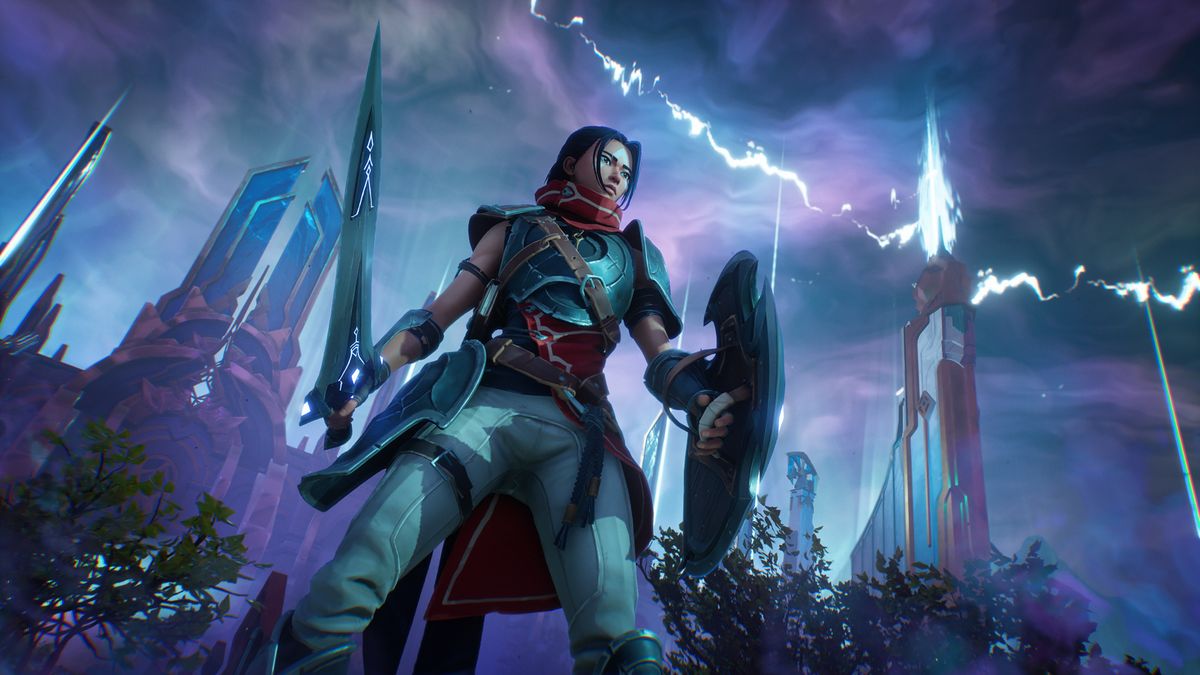
For developers in the triple-A space, chasing high-fidelity photorealism is often the norm as a way to immerse players into believable worlds. The most impressive aspects of Unreal Engine 5 has also been how it’s able to push photorealism to new heights that’s also made more accessible with MetaHumans or its huge Quixel library of 3D-scanned environments. Yet while Yellow Brick Games is founded by Ubisoft veterans, including game director Frederic St. Laurent and CTO Louis Tremblay, for new action RPG Eternal Strands, the decision was made early on to pursue a more stylised aesthetic that also serves the gameplay.

Stylised Aesthetic

Level Design

Conclusion

FAQs

Fell Apart

Here is the rewritten article:

Test Driving DeepSeek, the AI Chatbot from China

DeepSeek exploded into the world’s consciousness this past weekend. It stands out for three powerful reasons: It’s an AI chatbot from China, rather than the US; it’s open source; and it uses vastly less infrastructure than the big AI tools we’ve been looking at.

The Tests

In this article, we’re avoiding politics. Instead, I’m putting DeepSeek through the same set of AI coding tests I’ve thrown at ten other large language models.

Test 1: Writing a WordPress Plugin

This test was actually my first test of ChatGPT’s programming prowess, way back in the day. My wife needed a plugin for WordPress that would help her run an involvement device for her online group.

The short answer is this: impressive, but not perfect. Let’s dig in.

Result: Passed

Only about half of the AIs I’ve tested can fully pass this test. Now, however, we can add one more to the winner’s circle.

Test 2: Rewriting a String Function

A user complained that he was unable to enter dollars and cents into a donation entry field. As written, my code only allowed dollars.

DeepSeek did generate code that works, although there is room for improvement.

Result: Passed

My biggest concern is that the DeepSeek validation ensures validation up to 2 decimal places, but if a very large number is entered (like 0.30000000000000004), the use of parseFloat doesn’t have explicit rounding knowledge.

Test 3: Finding an Annoying Bug

This is a test created when I had a very annoying bug that I had difficulty tracking down.

DeepSeek passed this one as well, bringing us to three out of four wins. That already puts DeepSeek ahead of Gemini, Copilot, Claude, and Meta.

Result: Passed

Test 4: Writing a Script

And another one bites the dust. This is a challenging test because it requires the AI to understand the interplay between three environments: AppleScript, the Chrome object model, and a Mac scripting tool called Keyboard Maestro.

Unfortunately, DeepSeek did not have this level of knowledge. It didn’t know that it needed to split the task between instructions to Keyboard Maestro and Chrome.

Result: Failed

Final Thoughts

I found that DeepSeek’s insistence on using a public cloud email address like gmail.com (rather than my normal email address with my corporate domain) was annoying. It also had a number of responsiveness fails that made doing these tests take longer than I would have liked.

DeepSeek seems to be overly loquacious in terms of the code it generates. The AppleScript code in Test 4 was both wrong and excessively long.

Conclusion

DeepSeek impressed me by passing three out of four tests, beating out some of the big-name AIs. However, it appears to be at the old GPT-3.5 level, which means there’s definitely room for improvement. For a brand new tool running on much lower infrastructure than the other tools, this could be an AI to watch.

FAQs

Q: Is DeepSeek better than other AIs?
A: DeepSeek has its strengths and weaknesses, just like other AIs. It passed three out of four tests, beating out some of the big-name AIs. However, it still has some room for improvement.

Q: Is DeepSeek open source?
A: Yes, DeepSeek is open source.

Q: Is DeepSeek available for programming support?
A: Yes, DeepSeek can be used for programming support, although it has some limitations.

From ChatGPT to Gemini: How AI is Rewriting the Internet

0

Big Players Bring AI Chatbot Technology to the General Public

Microsoft, Google, and OpenAI are making large language model (LLM) programs previously restricted to test labs more accessible to the general public. These LLM programs are designed to assist with tasks such as answering questions, generating text, and translating languages.

How Large Language Models Work

OpenAI’s GPT-3 explains that AI uses a series of autocomplete-like programs to learn language. These programs analyze the statistical properties of language to make educated guesses based on the words you’ve typed previously.

Risks of Relying on AI-Generated Content

As James Vincent, a human person, notes: “These AI tools are vast autocomplete systems, trained to predict which word follows the next in any given sentence. As such, they have no hard-coded database of ‘facts’ to draw on — just the ability to write plausible-sounding statements. This means they have a tendency to present false information as truth since whether a given sentence sounds plausible does not guarantee its factuality.”

Conclusion

As AI chatbot technology becomes more accessible to the general public, it is essential to be aware of its limitations and potential risks. While AI can be a powerful tool for assisting with tasks, it is not a substitute for human judgment and fact-checking.

Frequently Asked Questions

Q: How do I know if the information I’m getting from an AI chatbot is accurate?
A: AI chatbots are only as good as the data they’re trained on, and they can make mistakes. It’s essential to verify information through other sources before accepting it as fact.

Q: Can AI chatbots replace human writers and journalists?
A: AI chatbots are capable of generating content, but they lack the nuance and creativity of human writers and journalists. AI-generated content may be lacking in depth, context, and emotional resonance.

Q: Is AI chatbot technology the future of communication?
A: AI chatbot technology has the potential to revolutionize the way we communicate, but it’s still in its early stages. As the technology evolves, we’ll need to address the risks and limitations associated with relying on AI-generated content.

NVIDIA and OpenAI Worry about DeepSeek: Should You?

0

The Rise of DeepSeek: A New Contender in the AI Space

A New Challenger in the AI Market

For the last few years, a few names have dominated the AI space. Big guns like OpenAI, Google, and Adobe have owned the conversation since 2023, so it’s no surprise that the industry is a little, well, surprised, to see a new contender turning heads. Seemingly out of nowhere, DeepSeek is apparently causing consternation for everyone from OpenAI to NVIDIA.

The Rise of DeepSeek R1

DeepSeek has been quietly impressing the AI community for a couple of years, but it’s suddenly exploded into the mainstream with the release of its R1 model. The model, which claims to have performance on a par with OpenAI’s o1 model, has users impressed. "From my experience, DeepSeek R1 is about the same or better (in some contexts) than OpenAI’s o1," one Redditor comments, while another adds, "As a ChatGPT+ subscriber, I have recently exclusively been using R1. I tried using both and until ChatGPT gets an update, R1 is my go-to for literally everything."

The Cost Advantage

At 1/50th of the cost of OpenAI’s O1, R1 currently feels like a steal. This could be a game-changer for users, giving them more choice and taking the power away from the AI giants and opening the door for smaller players.

The Industry’s Response

A clearly spooked OpenAI has pledged to create "better models" in response to what it calls "invigorating" competition from DeepSeek. Meanwhile, NVIDIA has lost $600bn in market valuation, with some tech companies looking sideways at DeepSeek and wondering whether they now need to buy as many of NVIDIA’s tools.

The Impact on the Industry

This certainly feels like a disruptive moment in the AI race. Even Donald Trump has called the advent of R1 a "wake-up call," and NVIDIA’s stock market fall is the biggest in US history. But aside from the threat to the US industry, it’s not all good news. DeepSeek has already proven itself unwilling to engage with controversial moments from Chinese history. It seems that even if the industry is given a shake-up, the question of AI bias is far from over.

Conclusion

The rise of DeepSeek R1 is a significant development in the AI space, offering a cheaper and more efficient alternative to established players. While it’s not all good news, this could be a game-changer for users, giving them more choice and taking the power away from the AI giants. However, the question of AI bias remains a pressing issue, and it’s unclear how this will be addressed in the future.

FAQs

Q: What is DeepSeek?
A: DeepSeek is a new AI model that has gained attention for its performance on par with OpenAI’s o1 model, but at a fraction of the cost.

Q: What is the cost of DeepSeek R1?
A: DeepSeek R1 is currently available at a cost of 1/50th of OpenAI’s O1.

Q: How is OpenAI responding to the rise of DeepSeek?
A: OpenAI has pledged to create "better models" in response to what it calls "invigorating" competition from DeepSeek.

Q: What is the impact on the industry?
A: The rise of DeepSeek is causing disruption in the AI industry, with some companies looking to adapt to the new competition.

The Posters Are Weird

0

Theatre Company Soho Rep Curates Stunning Posters

Collaborative Efforts Lead to Unique Designs

Theatre company Soho Rep has curated a stunning collection of posters across the decade, combining diverse illustrative artistry with the immersive world of stage performance. Blending the collaborative efforts of illustrators, playwrights, and directors, each unique piece is built upon the expertise of multiple disciplines resulting in a delightfully eclectic collection of bold designs.

No Strict Rules, Just Freedom and Play

There are no strict rules when it comes to creating engaging poster designs, yet Soho Rep’s diverse creations carry a distinct sense of personality and flair making them unmistakably eye-catching. From intricate illustrations to minimalist graphics, Soho Rep’s posters are a standout selection of art and theatre at its finest.

Collaborative Process

Led by branding agency Studio Usher, each design is shaped by a collaborative journey while allowing artists the freedom to experiment. Naomi Usher, founder and chief creative officer at Studio Usher tells Creative Bloq, "As a Creative Director, I believe in providing a detailed brief, including a sketched concept and inspirational imagery. But I always want to leave room for the illustrator’s interpretation so they can offer up something extraordinary."

Creative Freedom

For Luci Gutiérrez, the process of designing posters for Soho Rep is "weird." She says, "The posters for Soho Rep are weird. Naomi Usher is a weird designer too. For an illustrator, it’s rare to find a space of freedom and play – without restrictions or the need to create pleasing images. The only requirement for the posters is to reflect the spirit of the play. And that’s not a strange condition, but a reasonable one."

Influence on Corporate Design Projects

For Naomi, the project isn’t one without some complications, as she claims that "coordinating to get everyone in the same room for the first brainstorming session" can be a difficult task. "There’s something irreplaceable about being in person for that initial exchange of ideas—it sets the tone for the entire creative process," she says.

Future Plans

When asked whether the project is set to expand, Naomi says she sees an opportunity for creative growth on the horizon "Starting with their next production, The Great Privation, Soho Rep is moving to a new location which offers the addition of in-house screens and exciting possibilities. I foresee animation becoming a part of our visual storytelling in the future, which feels like a natural evolution of the work."

Conclusion

Soho Rep’s stunning collection of posters is a testament to the power of collaboration and creative freedom. By allowing artists the space to experiment and push boundaries, the company has created a unique and eclectic collection of designs that showcase the best of art and theatre.

FAQs

Q: What is the secret to Soho Rep’s unique poster designs?
A: The secret to Soho Rep’s unique poster designs lies in the collaborative process between illustrators, playwrights, and directors, allowing artists the freedom to experiment and push boundaries.

Q: How does the company approach the design process?
A: Soho Rep approaches the design process by providing a detailed brief, including a sketched concept and inspirational imagery, while leaving room for the illustrator’s interpretation.

Q: What is the future of Soho Rep’s poster designs?
A: The future of Soho Rep’s poster designs is set to expand with the addition of in-house screens and the possibility of animation becoming a part of their visual storytelling.

Nvidia’s Fall

0

The Ouroboros of Big Tech: How the Magnificent 7 Are Eating Themselves Alive

The Biggest Single-Day Loss for a Public Company

On Monday, Nvidia, the artificial intelligence giant, suffered a massive loss of nearly $600 billion in value, the largest single-day loss for a public company on record. This sudden and dramatic decline has left many investors wondering how the fortunes of one of the leading companies in the tech industry could fall so far so suddenly.

The Ouroboros: A Pervasive Mythological Symbol

The image of the ouroboros, a serpent eating its own tail, is a remarkably durable and pervasive motif across ancient cultures, symbolizing the cyclic nature of life, the totality of the universe, and fertility. Today, the more resonant lesson from the ouroboros is that it helps us understand the most significant financial puzzle of our day.

Big Tech: A Self-Cannibalistic Cycle

I believe Big Tech is eating itself alive with its component companies throwing more and more cash at investments in each other that are likely to generate less and less of a return. This self-cannibalistic cycle is reflected in the staggering disjunction in valuations between Big Tech and the rest of the stock market. The Magnificent 7, comprising Microsoft, Apple, Amazon, Nvidia, Tesla, Meta, and Alphabet, still constitute more than 30% of the market capitalization of the S&P 500, while the Unmagnificent 493, the rest of the market, have much more moderate valuations.

The Myth of the Ouroboros: A Cautionary Tale

The myth of the ouroboros suggests an alternative outcome. The first step in understanding this analogy is to return to some finance basics. Stock prices don’t always rise because the future prospects of companies improve. They also rise when investors judge certain companies to be a safer bet than others and don’t penalize them for taking longer to generate returns for their money.

The Ouroboros of Big Tech: A Cycle of Self-Cannibalization

The image of the ouroboros helps us understand the self-cannibalization of Big Tech. The Magnificent 7 are pouring more and more cash at investments in each other, which are likely to generate less and less of a return. This self-cannibalization is reflected in the massive spending on infrastructure, the buying of products and services from one another, and the practice of stock buybacks.

A Slow Grind of Low Returns on Excessive Spending

This excessive spending on a technological future that will not be nearly as revolutionary or imminent as promised may just yield correspondingly low returns. The self-cannibalization will not just reveal itself to be a mediocre investment but a shaky bet on an illusion propagated by a mythical and messianic belief in technology and these companies.

A Cautionary Tale: The Rail Industry of the 19th Century

Similar dynamics have shaped previous periods in American history. The remarkable expansion of railroads in the 19th century gave rise to similar magical thinking. However, after a few decades of frenzied investment, the rail industry’s low yields fueled spending on steel, and ultimately, the creation of the huge conglomerate U.S. Steel in 1901. What followed? Remarkably low profits from these companies and mediocre returns from the stock market overall.

Conclusion

The ouroboros of Big Tech is a cautionary tale of self-cannibalization, where companies are eating themselves alive with excessive spending on investments in each other. This cycle of self-cannibalization may ultimately yield correspondingly low returns and expose the illusion of the Magnificent 7 as a shaky bet.

Frequently Asked Questions

Q: What is the ouroboros?
A: The ouroboros is an ancient mythological symbol of a serpent eating its own tail, symbolizing the cyclic nature of life and the totality of the universe.

Q: What is the connection between the ouroboros and Big Tech?
A: The ouroboros helps us understand the self-cannibalization of Big Tech, where companies are pouring more and more cash at investments in each other that are likely to generate less and less of a return.

Q: What is the significance of the Magnificent 7?
A: The Magnificent 7, comprising Microsoft, Apple, Amazon, Nvidia, Tesla, Meta, and Alphabet, still constitute more than 30% of the market capitalization of the S&P 500, while the Unmagnificent 493 have much more moderate valuations.

Q: What is the implication of the ouroboros for the future of Big Tech?
A: The ouroboros suggests that the self-cannibalization of Big Tech may ultimately yield correspondingly low returns and expose the illusion of the Magnificent 7 as a shaky bet.