Home Blog Page 364

I Love the Ingenious Design of the New Alien

0

New Alien: Earth Poster Drops, and Fans Are Delighted

A Perfect Blend of Fierce Imagery and Sleek Design

A new poster has been released for the highly anticipated series Alien: Earth, and fans are thrilled by the slick dual design. The creature design of the iconic Xenomorph naturally makes for a terrifying image, and the poster’s minimalist design only intensifies its threatening presence. With the eerie series poster receiving an outpouring of praise from fans, let’s hope the series lives up to the hype.

A Haunting Visual

The simple poster features a close-up of a drooling Xenomorph against a black background, drool dripping from its mouth as it bares its threatening teeth. Playing on the series’ theme, the skull of the creature is mixed with a dark image of Earth, and a menacing tagline reads "We were safer in space", adding an extra layer of fear and anticipation for patient fans.

Fan Reactions

Fans have taken to the r/LV426 subreddit to share their thoughts on the poster, with many praising the design. "Blending the Xenomorph’s carapace with the planet makes for a pretty cool visual," says one user. "This poster looks reminiscent of the early xenomorph games of the mid-90s. Very pastel and translucent," another added. "10/10 design" one fan said, while others shared in the high praise, calling it "fire", "awesome" and "stunning".

Conclusion

The new Alien: Earth poster is a masterclass in design, blending fierce imagery with subtle, sleek design. With the series’ release date still unknown, fans are eagerly awaiting more information about the upcoming series. In the meantime, this poster has certainly whet their appetite for the terrifying world of Alien: Earth.

Frequently Asked Questions

Q: What is Alien: Earth?
A: Alien: Earth is a new series based on the iconic Alien franchise, with a release date yet to be announced.

Q: What is the tagline for the new poster?
A: The tagline for the new poster is "We were safer in space".

Q: What is the design of the poster?
A: The poster features a close-up of a drooling Xenomorph against a black background, with a dark image of Earth and a menacing tagline.

Customizing My iPhone’s Control Button for Seamless ChatGPT Integration

Revolutionizing Productivity with ChatGPT’s Advanced Voice

I never found a helpful use case for the Action Button on my iPhone 16 Pro, so when I saw the option to map ChatGPT’s Advanced Voice, the chatbot’s voice assistant, to the Action Button, I figured it was worth a try. A month after programming the Action Button to summon ChatGPT, I reach for it daily.

Why Advanced Voice is a Game-Changer

As someone who never used ChatGPT’s Advanced Voice before, I didn’t expect to use the tool nearly as much as I do. However, holding down the button has made using Advanced Voice as easy as accessing Siri, while being much more helpful.

The Benefits of Advanced Voice

The biggest perk of using ChatGPT’s tool is that it can understand your prompts in natural language, meaning you can speak to the AI as you would a friend. Because Advanced Voice supports multi-turn conversations, you can keep the conversation going as long as you’d like without losing prior context. The tool can also access the internet, and has on-screen and camera awareness, making its assistance multi-modal.

Real-World Use Cases

To give you some ideas on how you can use Advanced Voice in your everyday life, I looked through my chat history to see how I have been using the tool lately. Here are some of my repeated use cases:

1. Cooking Dinner

When I first got into cooking, I was reliant on recipes because I didn’t have the foresight or, dare I say, talent to whip up a meal from the ingredients in my fridge. However, as of late, I have been experimenting with cooking using the ingredients and seasonings I already have in my fridge and pantry. However, sometimes I need some additional coaching — enter ChatGPT.

2. Composing an Email

The best part of using ChatGPT to compose an email is that it can take an idea and transform your thoughts into a flushed-out email. However, expressing the idea to ChatGPT can be tricky, as finding the words to type out the idea is nearly as much effort as typing out the actual email. When you use Advanced Voice, you can verbally express what you want the AI to write, rambling as much as you need.

3. Researching a Topic Thoroughly but Quickly

Keeping up with what’s happening in the world can mean additional research. Instead of turning to Google, I prefer going to ChatGPT, specifically the Advanced Voice tool when I am at home and can speak to it freely.

4. Planning a Trip

I realized how much I use ChatGPT daily when sitting at JFK Airport in New York having a full-blown conversation with the AI about what I should do in San Francisco once I landed.

5. Providing Context to What You See

Suppose you see something and have a question about it. Instead of taking a photo and reverse-searching it on Google, or attaching the photo to a chatbot text prompt, you can tap the button, click on the camera button on the bottom-left corner, and chat about what you see.

The Limits

All users can access Advanced Voice. However, the limits vary depending on your plan. OpenAI doesn’t specify the limits but does make it known that paid subscribers get more access.

Conclusion

In conclusion, ChatGPT’s Advanced Voice has revolutionized my daily life, making tasks easier and more efficient. With its natural language understanding, multi-turn conversations, and multi-modal assistance, Advanced Voice is an invaluable tool that I use daily.

FAQs

Q: What is Advanced Voice?
A: Advanced Voice is a tool that allows users to interact with ChatGPT using voice commands.

Q: How do I access Advanced Voice?
A: You can access Advanced Voice by holding down the Action Button on your iPhone 16 Pro and selecting ChatGPT’s Advanced Voice.

Q: What are the limits of Advanced Voice?
A: The limits of Advanced Voice vary depending on your plan. Paid subscribers get more access, while free users are limited to a monthly preview.

Q: Can I use Advanced Voice on other devices?
A: Yes, you can use Advanced Voice on other devices that support voice commands.

DeepSeek’s Popular AI App Is Explicitly Sending US Data to China

0

How DeepSeek Collects and Uses Information

DeepSeek, a generative AI system, collects and uses information from various sources. The company reserves the right to collect data from other sources, including Google or Apple sign-on, advertisers, and other third-party companies. This information can include mobile identifiers for advertising, hashed email addresses and phone numbers, and cookie identifiers.

Data Collection from International Users

DeepSeek’s international user base may generate huge volumes of data, which can flow to China. However, the company still has control over how it uses the information. DeepSeek’s privacy policy outlines the ways in which the company will use data, including keeping its service running, enforcing its terms and conditions, and making improvements.

Developing New Models

DeepSeek’s privacy policy suggests that the company may use user prompts to develop new models. The company will “review, improve, and develop the service, including by monitoring interactions and usage across your devices, analyzing how people are using it, and by training and improving our technology.”

Legal Obligations

DeepSeek’s privacy policy also states that the company will use information to “comply with [its] legal obligations.” This includes sharing data with law enforcement agencies, public authorities, and other entities when required to do so.

Geopolitical Concerns

DeepSeek’s data collection and use practices have raised concerns about the potential for Chinese authorities to access user data. China has passed a series of cybersecurity and privacy laws that allow state officials to demand data from tech companies. These laws, combined with growing trade tensions between the US and China, have fueled security fears about DeepSeek.

Conclusion

DeepSeek’s data collection and use practices raise concerns about the potential for Chinese authorities to access user data. While the company has control over how it uses the information, the lack of transparency and accountability in its practices is concerning. As the use of generative AI systems like DeepSeek becomes more widespread, it is essential to ensure that these systems are transparent and accountable in their data collection and use practices.

FAQs

Q: What kind of information does DeepSeek collect?

A: DeepSeek collects information from various sources, including Google or Apple sign-on, advertisers, and other third-party companies. This information can include mobile identifiers for advertising, hashed email addresses and phone numbers, and cookie identifiers.

Q: How does DeepSeek use the information it collects?

A: DeepSeek uses the information it collects to keep its service running, enforce its terms and conditions, and make improvements. The company may also use the information to develop new models and comply with its legal obligations.

Q: Are there any geopolitical concerns about DeepSeek?

A: Yes, there are concerns about the potential for Chinese authorities to access user data. China has passed a series of cybersecurity and privacy laws that allow state officials to demand data from tech companies. These laws, combined with growing trade tensions between the US and China, have fueled security fears about DeepSeek.

Q: What can be done to ensure the transparency and accountability of DeepSeek’s data collection and use practices?

A: To ensure the transparency and accountability of DeepSeek’s data collection and use practices, it is essential to require the company to be more transparent about its data collection and use practices. This could include providing clear and concise information about how the company uses the information it collects, as well as ensuring that the company is accountable for any breaches of user data.

Fanta’s Garish Xbox Branding Collab

0

Fanta Unveils Loud Xbox Console Design

We’ve seen some garish Xbox collaborations in the past, from nail polish with OPI to the Gucci Xbox Series X. But Coca-Cola’s vibrantly coloured drinks brand Fanta has just revealed what could be the loudest video game console design we’ve seen to date.

Fanta Xbox Bundle and Wireless Controllers

Fanta is giving away lurid console bundles and wireless controllers “representing the most popular flavors in the brand’s portfolio”, such as orange, lemon, and grape. The result makes even the flashier Switch color ways look drab.

(Image credit: Coca-Cola / Microsoft)

Design Criticism

I’m wondering if I would be able to concentrate on a game with a controller that looks like it’s been painted with food colorings as bright as a high-vis jacket. And while we rate the Xbox as the best games console for value in our buying guide, the gaudy colors make it look like a cheap toy. I guess at least the design looks less generic than the drab Balenciaga game console.

How to Enter the Competition

Fanta will be picking winners each week for 15 Xbox wireless controllers and two Xbox Series X console bundles. Alongside the limited-edition promotional hardware, the competition also offers chances to win Xbox Game Pass Ultimate subscriptions (only redeemable by new members).

Players need to be 18 or over and must scan a QR code and download the Coke App to see if they’re a winner. If you don’t get lucky, see prices of the standard colored Xbox and other consoles below.

Conclusion

The Fanta Xbox console design is certainly an eye-catching, if not attention-grabbing, collaboration. Whether or not it’s a winner in terms of aesthetics, only time will tell. One thing is for certain, though – it’s sure to stand out in a crowd.

Frequently Asked Questions

Q: Who can enter the Fanta Xbox competition?
A: Players must be 18 or over to participate.

Q: How do I enter the competition?
A: Scan a QR code and download the Coke App to see if you’re a winner.

Q: What do I win if I enter the competition?
A: You could win 15 Xbox wireless controllers and two Xbox Series X console bundles, as well as Xbox Game Pass Ultimate subscriptions.

Q: Is the competition open to everyone?
A: Yes, the competition is open to players of all ages.

Enterprises are hitting a ‘speed limit’ in deploying Gen AI

Companies Struggle to Deploy Generative AI, Survey Finds

According to a new report by Deloitte, most companies are not ready to deploy generative artificial intelligence (Gen AI) in production, despite significant advancements in the technology. The survey of 2,773 senior leaders from 14 countries found that over two-thirds of respondents said that fewer than one-third of Gen AI experiments will be fully scaled in the next three to six months.

Regulatory Uncertainty Hinders Deployment

Regulatory uncertainty and risk management are the top institutional barriers to deploying Gen AI, with 38% of respondents citing regulatory issues as a major obstacle, up from 28% a year ago. The report notes that "there is a speed limit" to AI deployment, with organizations moving at a slower pace than the technology itself.

Fewer Than One-Third of Experiments Will Be Scaled

The survey found that over two-thirds of respondents said that 30% or fewer of their current experiments will be fully scaled in the next three to six months. This is a similar finding to the previous report, which also showed that 70% of respondents said their organization had moved 30% or fewer of their Gen AI experiments into production.

Barriers to Deployment

The report identifies several barriers to deploying Gen AI, including:

  • Regulatory uncertainty and risk management
  • Worries about complying with regulations
  • Lack of internal expertise and resources
  • Limited data availability and quality
  • Lack of clear business cases and ROI

ROI Varies by Function

The report notes that some corporate functions, such as IT, operations, and marketing, have seen the best ROI from Gen AI implementations. Cybersecurity has seen the greatest upside in ROI, with 44% of Gen AI initiatives delivering an ROI somewhat or significantly above expectations.

C-Suite Executives’ Optimism

C-suite executives tend to be more optimistic about their organization’s Gen AI investments, with 54% of CEOs reporting that their organization has achieved ROI above expectations, compared to 34% of non-CEO executives.

Conclusion

Despite the challenges, the report concludes that organizations are taking a realistic approach to deploying Gen AI, with a sustained commitment to achieving value from the technology. However, it may take several years for some organizations to reach full-scale deployment and achieve the ROI they are seeking.

Frequently Asked Questions

Q: What is the main barrier to deploying Gen AI?
A: Regulatory uncertainty and risk management are the top institutional barriers to deploying Gen AI.

Q: How many companies are ready to deploy Gen AI in production?
A: According to the survey, over two-thirds of companies are not ready to deploy Gen AI in production.

Q: Which corporate functions have seen the best ROI from Gen AI implementations?
A: IT, operations, and marketing have seen the best ROI from Gen AI implementations, with cybersecurity seeing the greatest upside in ROI.

Q: How long will it take for some organizations to reach full-scale deployment and achieve the ROI they are seeking?
A: It may take several years for some organizations to reach full-scale deployment and achieve the ROI they are seeking.

iOS 18.3 is out with tweaks to AI notification summaries

0

iOS 18.3: What’s New and What’s Changing

Apple has released iOS 18.3, bringing new features and changes to your iPhone. In this article, we’ll dive into the details of what’s new and what’s changing.

Notification Summaries Temporarily Disabled

iOS 18.3’s release notes indicate that Apple has temporarily disabled notification summaries for news and entertainment apps. This change is aimed at improving the overall notification experience on your iPhone.

Apple Intelligence Now On by Default

For Apple devices that support Apple Intelligence, such as iPhone 15 Pro and later, iPads and Macs with the Apple Silicon M1 chip or later, and the most recent version of the iPad mini, Apple Intelligence will now be on by default. This feature uses AI to provide personalized recommendations and insights.

New Features and Improvements

Other features coming with the new iPhone update include:

  • The ability to use Visual Intelligence to add an event to the Calendar app from a poster or flyer
  • A way to “easily identify plants and animals”

On Macs, the macOS 15.3 update is also rolling out now, adding support for Genmoji, along with similar changes for notification summaries.

Notification Summaries Now in Italicized Text

iOS 18.3 will show notification summaries in italicized text to help you distinguish them from standard notifications. Additionally, new settings will allow you to manage notification summaries from your lock screen.

How to Update to iOS 18.3

You can download the iOS 18.3 update by heading to Settings > General > Software Update.

Conclusion

iOS 18.3 brings a range of new features and changes to your iPhone, including the temporary disabling of notification summaries for news and entertainment apps, Apple Intelligence now on by default, and new features such as Visual Intelligence and plant and animal identification. With these updates, you’ll have a more personalized and intuitive experience on your iPhone.

FAQs

Q: What devices support Apple Intelligence?
A: iPhone 15 Pro and later, iPads and Macs with the Apple Silicon M1 chip or later, and the most recent version of the iPad mini.

Q: What is Visual Intelligence?
A: Visual Intelligence is a feature that uses AI to provide personalized recommendations and insights.

Q: How do I update to iOS 18.3?
A: You can download the iOS 18.3 update by heading to Settings > General > Software Update.

Q: What is the purpose of temporarily disabling notification summaries for news and entertainment apps?
A: The purpose is to improve the overall notification experience on your iPhone.

Mastering Callbacks and Promises in JavaScript

Asynchronous Programming in JavaScript: The Role of Callbacks and Promises

The Challenge of Asynchronous JavaScript

Asynchronous programming in JavaScript is a game-changer for building dynamic, responsive web applications. However, it can also be one of the most challenging concepts to master. If you’ve ever struggled with handling multiple tasks that don’t run in order, you’ve likely encountered Callbacks and Promises.

What’s the Difference?

Callbacks were the first solution to manage this. However, they can quickly turn into a tangled mess known as "callback hell" when you need multiple nested functions to execute in sequence. On the other hand, Promises offer a cleaner, more structured approach. They allow you to handle asynchronous operations by defining what happens if the task succeeds (resolve) or fails (reject). This makes your code more readable and easier to maintain.

The Benefits of Promises

Mastering Callbacks and Promises is crucial for writing efficient, scalable JavaScript. Whether you’re building a simple website or a complex web app, understanding how and when to use these concepts will help improve your development workflow, reduce errors, and make your code more manageable.

Pro Tips

If you find yourself nesting callbacks, consider refactoring to use Promises or async/await for cleaner code. Promise chaining makes it easy to handle multiple asynchronous operations in sequence without the nested clutter.

Let’s Discuss!

How do you handle asynchronous tasks in JavaScript? Are you still using callbacks, or have you moved on to Promises and async/await? Share your experience in the comments below, and let’s learn from each other!

Conclusion

In conclusion, understanding Callbacks and Promises is essential for writing efficient, scalable JavaScript. By mastering these concepts, you can improve your development workflow, reduce errors, and make your code more manageable.

FAQs

Q: What are Callbacks in JavaScript?
A: Callbacks are functions passed as arguments to other functions, allowing you to run code after a certain task finishes.

Q: What are Promises in JavaScript?
A: Promises are a way to handle asynchronous operations by defining what happens if the task succeeds (resolve) or fails (reject).

Q: Why should I use Promises instead of Callbacks?
A: Promises offer a cleaner, more structured approach, making your code more readable and easier to maintain.

Q: How do I handle multiple asynchronous operations in sequence?
A: Use Promise chaining to handle multiple asynchronous operations in sequence without the nested clutter.

One.com’s Back-to-Basics Website Builder

0

One.com Review: A Simple and Easy-to-Use Website Builder

Generative AI Features

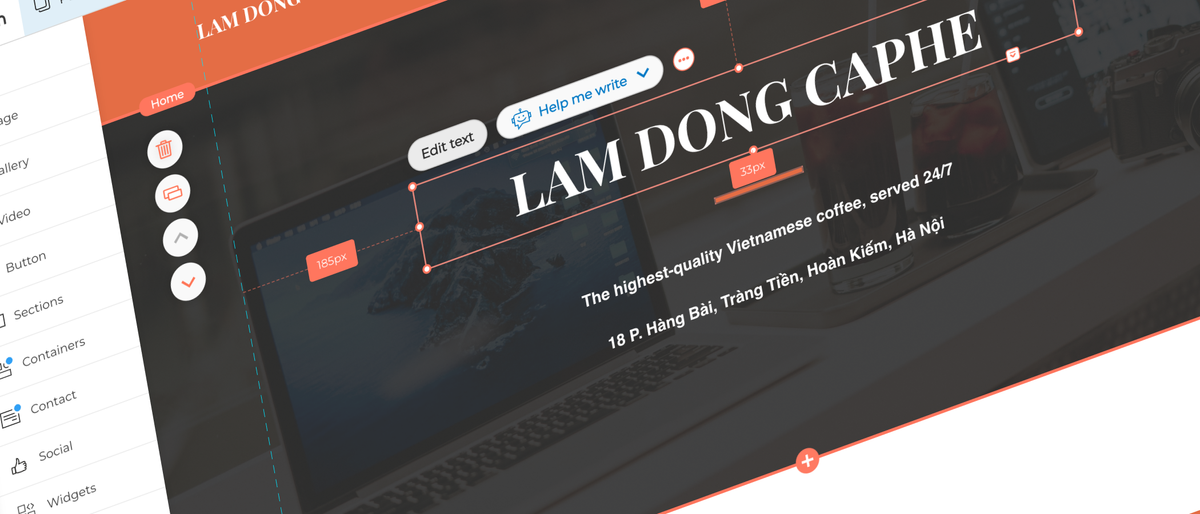
One.com’s primary approach is to generate a website using AI. This process is quite pleasant, with direct questions to help you create your website. For example, when you choose a "Coffee shop" category, you’ll be asked if you want to present yourself as an "I" or a "we." You’ll also get to preview color themes on your impressive AI-generated website.

Templates

The templates range from bad to great, offering some variety. However, many are too simple to be classified, making them perfect for those who want to dig into the design tools and craft something bespoke.

Design Tools

Adding elements to the page and aligning them is easy enough. There are grid lines to snap to, and maintaining consistent spacing is easy thanks to the snapping feature. However, besides the sections themselves, there isn’t much fluidity – elements have fixed dimensions, and while there is a separate mobile version to work with, your desktop version will overflow the viewport at some point, which is disappointing.

Other Features

Some other features include:

  • eCommerce
  • SEO customization
  • Social sharing images
  • Google Analytics integration
  • Facebook Pixel integration
  • Marketing consent collection (despite no email marketing features, which is very odd)
  • Custom code (again, before the or only)

Pricing

  • Starter: £4.99/m, renews at £8.99/m
  • Premium: £4.74/m, renews at £11.48/m
  • Business + eCommerce: £1.99/m, renews at £19.99/m

Who is it for?

One.com is for creatives with simple requirements, although if you happen to not need any of the missing features, you’ll certainly have fun building your website with their fast, responsive, and easy-to-master interface.

Buy it if…

  • You want to get up and running quickly
  • You want the process/your design to feel organized

Don’t buy it if…

  • Good customer support is a must-have
  • Your website needs to be fully responsive
  • You need to accept bookings or engage in email marketing

FAQs:

Q: What is One.com’s AI-powered website builder?
A: One.com’s AI-powered website builder is a tool that uses artificial intelligence to generate a website based on your input.

Q: Can I customize my website’s design?
A: Yes, you can customize your website’s design using One.com’s design tools.

Q: What features does One.com offer?
A: One.com offers features like eCommerce, SEO customization, social sharing images, Google Analytics integration, Facebook Pixel integration, and more.

Q: Is One.com suitable for creatives?
A: Yes, One.com is suitable for creatives with simple requirements who want to build a website quickly and easily.

Q: Is customer support available?
A: No, One.com does not offer good customer support.

Wall Street’s AI ‘Bubble’ Echoes Dotcom Excesses, Ray Dalio Warns

Stay Informed with Free Updates

Investor Exuberance and the AI Bubble

Investor exuberance over artificial intelligence has fuelled a "bubble" in US stocks that resembles the build-up to the dotcom bust at the turn of the millennium, billionaire investor Ray Dalio has warned.

The Warning Comes as Concerns Swirl

The warning from Dalio, the founder of hedge fund Bridgewater Associates and one of the highest-profile figures on Wall Street, comes as concerns swirl over whether the boom in US AI stocks has gone too far. Investors also remain concerned about elevated borrowing costs, which sharpened after Federal Reserve officials in December trimmed their expectations for rate cuts this year.

Comparing the Cycle to 1998-1999

"Where we are in the cycle right now is very similar to where we were between 1998 or 1999," Dalio said. "In other words, there’s a major new technology that certainly will change the world and be successful. But some people are confusing that with the investments being successful."

A Brutal Correction in the Late 1990s

The late 1990s saw a run-up in tech valuations, powered in part by low interest rates and growing adoption of the internet, followed by a brutal correction that came as Alan Greenspan’s Fed tightened monetary policy. The tech-heavy Nasdaq 100 index doubled in 1999, only to fall about 80% by October 2002.

The Current State of the Market

The index has doubled since the beginning of 2023 as stocks such as AI-focused chipmaker Nvidia have powered higher. However, a recent slump in the market has raised concerns about the sustainability of the boom.

DeepSeek’s AI Model Rivals OpenAI’s

Wall Street stocks slumped on Monday after DeepSeek, a Chinese AI company linked to a little-known hedge fund, published a paper claiming its newest AI model rivals those of OpenAI and Meta Platforms in performance, yet at a lower cost and with less sophisticated hardware. Nvidia shed nearly $600bn in market value on Monday.

The Stakes are High

The tech war between China and the US is far more important than profitability, not only for economic superiority, but for military superiority, Dalio warned. Those who are going to pay attention to profitability with sharp pencils are not going to win that race, he added.

Conclusion

The warning from Dalio highlights the risks of investor exuberance and the potential for a bubble in the US AI stocks market. As the stakes are high, it is crucial for investors to remain cautious and consider the long-term implications of the boom in AI stocks.

FAQs

Q: What is the warning from Ray Dalio?
A: Dalio has warned that the boom in US AI stocks has fuelled a "bubble" that resembles the build-up to the dotcom bust at the turn of the millennium.

Q: What are the concerns about the AI market?
A: Investors are concerned about the sustainability of the boom in AI stocks and the potential for a correction.

Q: What is the significance of the "tech war" between China and the US?
A: The tech war between China and the US is crucial for economic and military superiority, Dalio warned.

Expanding robot perception | MIT News

0

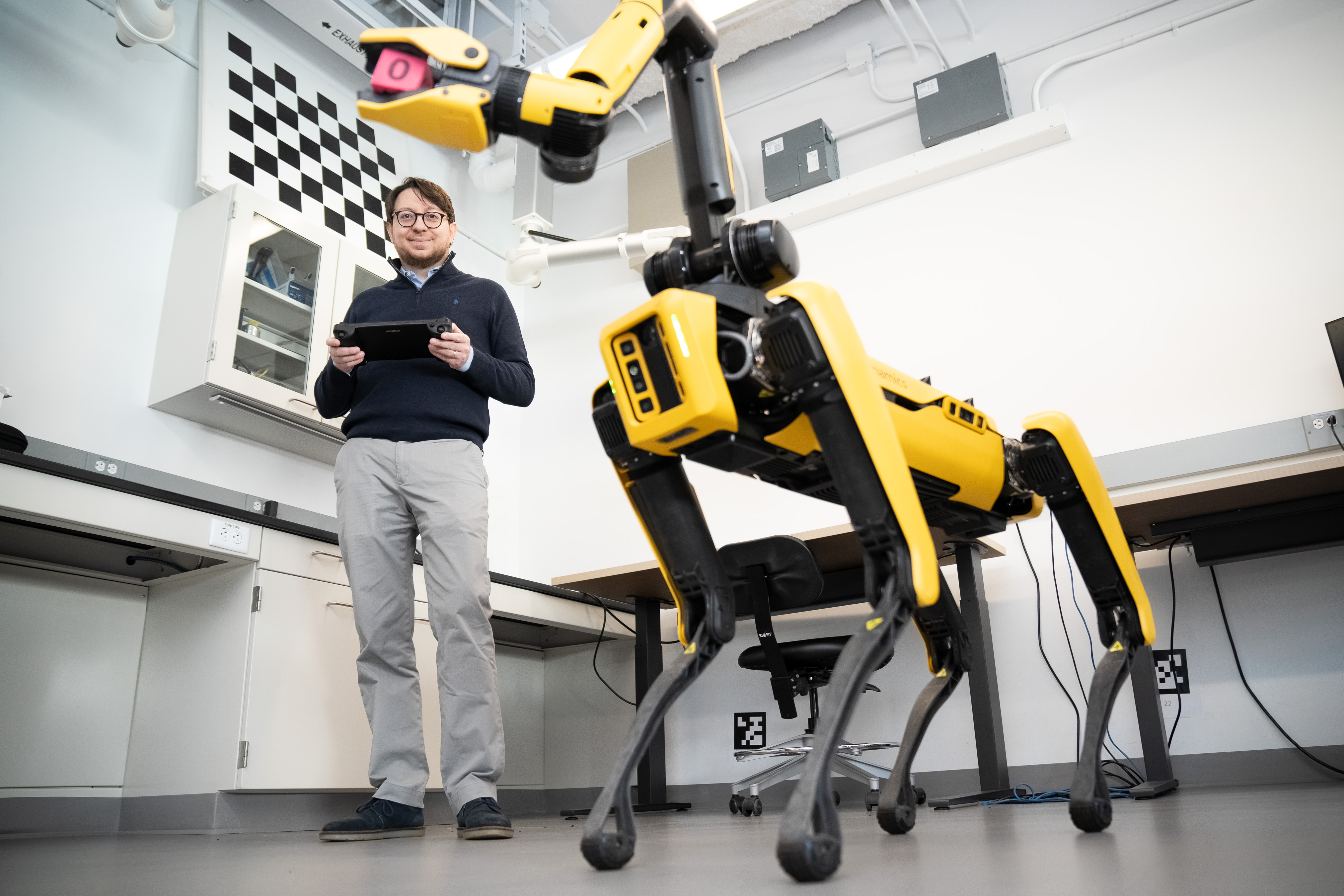
Robots have come a long way since the Roomba. Today, drones are starting to deliver door to door, self-driving cars are navigating some roads, robo-dogs are aiding first responders, and still more bots are doing backflips and helping out on the factory floor. Still, Luca Carlone thinks the best is yet to come.

Carlone, who recently received tenure as an associate professor in MIT’s Department of Aeronautics and Astronautics (AeroAstro), directs the SPARK Lab, where he and his students are bridging a key gap between humans and robots: perception. The group does theoretical and experimental research, all toward expanding a robot’s awareness of its environment in ways that approach human perception. And perception, as Carlone often says, is more than detection.

While robots have grown by leaps and bounds in terms of their ability to detect and identify objects in their surroundings, they still have a lot to learn when it comes to making higher-level sense of their environment. As humans, we perceive objects with an intuitive sense of not just of their shapes and labels but also their physics — how they might be manipulated and moved — and how they relate to each other, their larger environment, and ourselves.

That kind of human-level perception is what Carlone and his group are hoping to impart to robots, in ways that enable them to safely and seamlessly interact with people in their homes, workplaces, and other unstructured environments.

Since joining the MIT faculty in 2017, Carlone has led his team in developing and applying perception and scene-understanding algorithms for various applications, including autonomous underground search-and-rescue vehicles, drones that can pick up and manipulate objects on the fly, and self-driving cars. They might also be useful for domestic robots that follow natural language commands and potentially even anticipate human’s needs based on higher-level contextual clues.

“Perception is a big bottleneck toward getting robots to help us in the real world,” Carlone says. “If we can add elements of cognition and reasoning to robot perception, I believe they can do a lot of good.”

Expanding horizons

Carlone was born and raised near Salerno, Italy, close to the scenic Amalfi coast, where he was the youngest of three boys. His mother is a retired elementary school teacher who taught math, and his father is a retired history professor and publisher, who has always taken an analytical approach to his historical research. The brothers may have unconsciously adopted their parents’ mindsets, as all three went on to be engineers — the older two pursued electronics and mechanical engineering, while Carlone landed on robotics, or mechatronics, as it was known at the time.

He didn’t come around to the field, however, until late in his undergraduate studies. Carlone attended the Polytechnic University of Turin, where he focused initially on theoretical work, specifically on control theory — a field that applies mathematics to develop algorithms that automatically control the behavior of physical systems, such as power grids, planes, cars, and robots. Then, in his senior year, Carlone signed up for a course on robotics that explored advances in manipulation and how robots can be programmed to move and function.

“It was love at first sight. Using algorithms and math to develop the brain of a robot and make it move and interact with the environment is one of the most fulfilling experiences,” Carlone says. “I immediately decided this is what I want to do in life.”

He went on to a dual-degree program at the Polytechnic University of Turin and the Polytechnic University of Milan, where he received master’s degrees in mechatronics and automation engineering, respectively. As part of this program, called the Alta Scuola Politecnica, Carlone also took courses in management, in which he and students from various academic backgrounds had to team up to conceptualize, build, and draw up a marketing pitch for a new product design. Carlone’s team developed a touch-free table lamp designed to follow a user’s hand-driven commands. The project pushed him to think about engineering from different perspectives.

“It was like having to speak different languages,” he says. “It was an early exposure to the need to look beyond the engineering bubble and think about how to create technical work that can impact the real world.”

The next generation

Carlone stayed in Turin to complete his PhD in mechatronics. During that time, he was given freedom to choose a thesis topic, which he went about, as he recalls, “a bit naively.”

“I was exploring a topic that the community considered to be well-understood, and for which many researchers believed there was nothing more to say.” Carlone says. “I underestimated how established the topic was, and thought I could still contribute something new to it, and I was lucky enough to just do that.”

The topic in question was “simultaneous localization and mapping,” or SLAM — the problem of generating and updating a map of a robot’s environment while simultaneously keeping track of where the robot is within that environment. Carlone came up with a way to reframe the problem, such that algorithms could generate more precise maps without having to start with an initial guess, as most SLAM methods did at the time. His work helped to crack open a field where most roboticists thought one could not do better than the existing algorithms.

“SLAM is about figuring out the geometry of things and how a robot moves among those things,” Carlone says. “Now I’m part of a community asking, what is the next generation of SLAM?”

In search of an answer, he accepted a postdoc position at Georgia Tech, where he dove into coding and computer vision — a field that, in retrospect, may have been inspired by a brush with blindness: As he was finishing up his PhD in Italy, he suffered a medical complication that severely affected his vision.

“For one year, I could have easily lost an eye,” Carlone says. “That was something that got me thinking about the importance of vision, and artificial vision.”

He was able to receive good medical care, and the condition resolved entirely, such that he could continue his work. At Georgia Tech, his advisor, Frank Dellaert, showed him ways to code in computer vision and formulate elegant mathematical representations of complex, three-dimensional problems. His advisor was also one of the first to develop an open-source SLAM library, called GTSAM, which Carlone quickly recognized to be an invaluable resource. More broadly, he saw that making software available to all unlocked a huge potential for progress in robotics as a whole.

“Historically, progress in SLAM has been very slow, because people kept their codes proprietary, and each group had to essentially start from scratch,” Carlone says. “Then open-source pipelines started popping up, and that was a game changer, which has largely driven the progress we have seen over the last 10 years.”

Spatial AI

Following Georgia Tech, Carlone came to MIT in 2015 as a postdoc in the Laboratory for Information and Decision Systems (LIDS). During that time, he collaborated with Sertac Karaman, professor of aeronautics and astronautics, in developing software to help palm-sized drones navigate their surroundings using very little on-board power. A year later, he was promoted to research scientist, and then in 2017, Carlone accepted a faculty position in AeroAstro.

“One thing I fell in love with at MIT was that all decisions are driven by questions like: What are our values? What is our mission? It’s never about low-level gains. The motivation is really about how to improve society,” Carlone says. “As a mindset, that has been very refreshing.”

Today, Carlone’s group is developing ways to represent a robot’s surroundings, beyond characterizing their geometric shape and semantics. He is utilizing deep learning and large language models to develop algorithms that enable robots to perceive their environment through a higher-level lens, so to speak. Over the last six years, his lab has released more than 60 open-source repositories, which are used by thousands of researchers and practitioners worldwide. The bulk of his work fits into a larger, emerging field known as “spatial AI.”

“Spatial AI is like SLAM on steroids,” Carlone says. “In a nutshell, it has to do with enabling robots to think and understand the world as humans do, in ways that can be useful.”

It’s a huge undertaking that could have wide-ranging impacts, in terms of enabling more intuitive, interactive robots to help out at home, in the workplace, on the roads, and in remote and potentially dangerous areas. Carlone says there will be plenty of work ahead, in order to come close to how humans perceive the world.

“I have 2-year-old twin daughters, and I see them manipulating objects, carrying 10 different toys at a time, navigating across cluttered rooms with ease, and quickly adapting to new environments. Robot perception cannot yet match what a toddler can do,” Carlone says. “But we have new tools in the arsenal. And the future is bright.”