Home Blog Page 379

Style Is the Whole Game

0

Dreamcore: A Backrooms Puzzle

Developer Montraluz
Publisher Tlön Industries
Release date 23 January 2025
Platform Unreal Engine 5
Formats PS5 (reviewed), Xbox Series X/S, PC (Steam, Epic Games Store)

The Dreamcore aesthetic has swept social media over the past few years, involving images or videos of strange, liminal spaces and surreal, dream-like motifs, such as flying eyes or TV-headed people. It’s closely related to the surge of interest in liminal spaces more generally – eerily abandoned ‘in-between’ places – and in particular the immense popularity of the Backrooms concept, the idea that it’s possible to ‘no-clip’ through reality and end up in an endless expanse of empty rooms.

Dreamcore is a Backrooms Puzzle

Made in Unreal Engine 5 but reducing all that power and capability to rendering simple, stylized spaces, Dreamcore is an interesting premise. One that takes the Backrooms concept and turns it into a puzzle – but it’s simplicity fails to grapple with what makes The Backrooms so engaging.

The Aesthetics of Liminal Spaces

It’s perhaps little surprise that liminal spaces have captured people’s imagination. Images of oddly empty offices and shopping malls were something we were all fascinated with during the COVID lockdowns of 2020, and although such images have always been unsettling, they are doubly so now in the wake of our collective trauma. But the Backrooms also arose directly from video game logic: the act of ‘no-clipping’, slipping beyond the world the player was intended to see. The aesthetic of repeating textures and echoing endless corridors is drawn straight from the gaming realm, and liminal spaces abound in titles like Portal (2007), Control (2019), and Superliminal (2019).

Dreamcore: An Unfulfilled Promise

There are two levels included at launch, although more are in the works. The first level, Dreampools, is styled after a digital series by designer Jared Pike that features endless white-tiled swimming pools leading off into ominous darkened archways. The level sees you exploring a series of vast, increasingly absurd pools until eventually the sound of music leads you to a torch, which you can use to enter a pitch-black doorway and descend to the enormous, dimly lit basement in search of an exit.

All of this is mesmerizing, at first. The surreal landscapes draw you in, and the feeling of slowly getting lost in the maze-like levels is tantalizing, triggering a tingly, subconscious feeling that you’ll never find your way out of this nightmare dream space. But slowly, the shine wears off. The vistas merge together. The realization dawns that there’s nothing to do here, no threat to avoid, nothing to manipulate, no one to speak to.

All Style and No Substance

Tantalization rapidly turns to tedium, and frustration at the slow plod of your nameless character as you trot around in mindless circles, your sole aim to escape. There’s no substance here, other than the realization that getting lost in the Backrooms for real would be really, really boring. Sadly, what you’re left with is all aesthetic, and zero game.

Dreamcore: Verdict

This is a game that embraces a zeitgeist aesthetic without adding any depth or tension to its world to keep you engaged. For it to work, surrealism needs to explore the unexpected and irrational as well as offering a dreamlike state, Dreamcore does one of the three, and so feels like style over substance.

FAQs

Q: What is Dreamcore?
A: Dreamcore is a game that takes the Backrooms concept and turns it into a puzzle.

Q: What is the gameplay like?
A: The gameplay is slow and plodding, with no threats to avoid, nothing to manipulate, and no one to speak to.

Q: Is Dreamcore worth playing?
A: No, not without significant changes to the gameplay and the addition of depth and tension to the world.
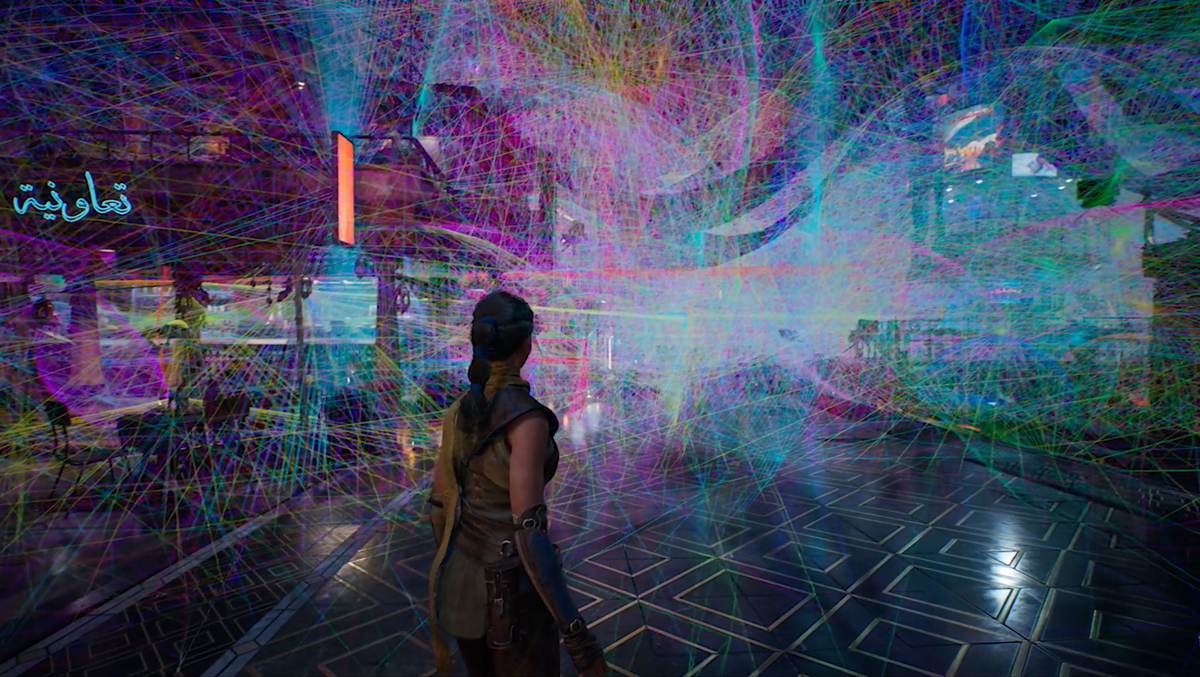

Unreal Engine 5.6: What’s New?

0

Nanite

According to Epic Games’ roadmap, Nanite Foliage may see further improvements in Unreal Engine 5.6 along with support for decals with translucency. This could improve the rendering of moving trees and provide better integration with Lumen.

Lumen

Speaking of Lumen, Arjan said that Epic is working on a 120Hz mode and plans to allow the global lighting and reflection system to support for less capable hardware, which will be good news for those that don’t have the most powerful PC to work on. It also plans updates to the MegaLights system introduced in the last update.

Rendering

We always expect to see general rendering improvements, and Epic has said that it’s working on improving the rendering of player meshes for first-person games with improved support for self-shadowing and reflections. It plans a separate FOV for first-person mode. We can also expect iterative improvements to reduce shader permutations.

World Creation

Enhancements in world creation tools may include World Partition Bookmarks to make navigating big open worlds easier and more practical. While this may be further down the line, Epic is also working on what it calls Megaworlds biomes, a new system of assets with built-in rules for procedural content generation with improve attribute support, versioning and dependency tracking, and on a new terrain system that will provide “Nanite-level detail”.

Animation

We’re told that big changes are on the way for animation, although it’s likely that we won’t see all of these for some time. The biggest but probably also most distant change will be the launch of Anim Next, a planned unified animation pipeline that will integrate the various tools and should be faster than Animation Blueprints.

Elsewhere, the Control Rig system will see improvements in the Deformer Graph and new nodes for creating Physics Rigs and that the cinematic editor Sequencer will get a full branching dialogue system with procedural content-generation capabilities.

Epic also intends to simplify the timeline in its in-engine animation tools, to develop new versions of Tween Tools and Motion Trails and to add a physics sim that will run alongside skeletal animation. We’re told that multi-character Motion Matching is also in development.

Chaos Flesh in nreal Engine’s Chaos Physics will eventually be able “automate musculoskeletal simulation inside the editor itself and new machine learning features are planned, including contact generation.

Niagara

Finally, Arjan also said Unreal will see workflow enhancements in the particle-based VFX system Niagara, which will also be integrated with PCG.

Conclusion

While there is no official news yet on Unreal Engine 5.6, the roadmap provided by Epic Games’ technical director Arjan Brussee at the Unreal Fest in Seattle in September gives us an idea of what to expect. From improvements in Nanite Foliage and Lumen to enhanced rendering and animation tools, there are many exciting changes on the horizon for Unreal Engine.

FAQs

Q: When can we expect Unreal Engine 5.6?
A: There is no official release date yet, but based on past release cycles, we expect it to arrive in the first half of 2025.

Q: What are the main features of Unreal Engine 5.6?
A: The main features include improvements in Nanite Foliage and Lumen, enhanced rendering and animation tools, and workflow enhancements in the particle-based VFX system Niagara.

Q: Will Anim Next be available in Unreal Engine 5.6?
A: It’s likely that Anim Next will not be available in Unreal Engine 5.6, but rather further down the line.

Meta’s Top AI Lawyer on Why He Fired the Company

0

The Ongoing Battle over Generative AI and Copyright

The UMG v. Anthropic Case: A Unique Exception

The one exception to the general trend of generative AI companies being sued for copyright infringement is the UMG v. Anthropic case. In this case, early versions of Anthropic’s AI generated song lyrics for songs, which posed a problem. However, the parties have since agreed to put safeguards in place to prevent this from happening, and the case is pending resolution.

The Hard Question for AI Companies

At the end of the day, the harder question for AI companies is not whether it is legal to engage in training, but rather what do you do when your AI generates output that is too similar to a particular work?

Settlements on the Horizon?

There may well be some settlements. Large players with significant content or valuable content may end up with settlements and licensing deals. For example, OpenAI may pay The New York Times to use their content.

Judgments and Class-Action Lawsuits

There will be significant judgments set by courts, and class-action lawsuits are likely. The defendants will likely resist these cases and aim to win on summary judgment. The Supreme Court’s decision in Google v. Oracle has nudged fair-use law in the direction of being resolved on summary judgment, not in front of a jury. AI companies will try to get these cases decided on summary judgment.

Why Summary Judgment?

It’s quicker and cheaper than going to trial. AI companies are worried that they won’t be viewed as popular if they’re found to have made a copy of the work that should be illegal, and people won’t dig into the details of the fair-use doctrine.

Deals Between AI Companies and Media Outlets

There have been many deals between AI companies and media outlets, content providers, and other rights holders. Most of these deals are about search, not foundational models. This is how it’s been described to me.

Licensing Content for AI Search Engines

If you’re using retrieval-augmented generation on targeted, specific content, your fair-use argument gets more challenging. The risky area is that AI-generated search is more likely to generate text taken directly from one particular source in the output, and that’s much less likely to be a fair use.

What You Need to Know

The thing I hear most often that’s wrong as a technical matter is that these generative AI systems are just plagiarism machines. They’re not. They’re generating new content that nobody could expect or predict. It’s giving us a lot of new content. I think that’s important and valuable.

Conclusion

The battle over generative AI and copyright is ongoing, with many cases pending and some already resolved. As the technology continues to evolve, it’s essential to understand the legal implications of its use.

FAQs

Q: What is the UMG v. Anthropic case about?
A: The UMG v. Anthropic case is a unique exception to the general trend of generative AI companies being sued for copyright infringement.

Q: What is the harder question for AI companies?
A: The harder question for AI companies is what do you do when your AI generates output that is too similar to a particular work?

Q: Will there be settlements on the horizon?
A: Yes, there may be settlements, especially with large players with significant content or valuable content.

Q: Why do AI companies want to win on summary judgment?
A: It’s quicker and cheaper than going to trial, and AI companies are worried about being viewed as popular if they’re found to have made a copy of the work that should be illegal.

Elon’s Official DOGE Logo is Stale Meme Branding at Its Worst

0

The Rise and Fall of a Meme in Government

The Department of Government Efficiency (DOGE) debuted an updated version of its logo – only to swiftly remove it without a trace hours later. It’s no secret that DOGE leader Elon Musk is a fan of meme branding, but with legal troubles mounting, it seems the stale meme is no longer a laughing matter.

A Memetic Legacy

Akin to his infamous X logo, the Doge design is a wholly unoriginal creation. Ripped from the 2010s meme featuring a viral Shiba Inu named Kabosu, the Doge image was appropriated for Musk’s Dogecoin cryptocurrency. Since then, the design has been synonymous with Musk’s meme-oriented personal brand, and now, the future of America’s government.

A Defiance of Convention

The logo itself is fairly unassuming, with an image of Doge supported by a rounded coin border synonymous with crypto logo design. Simplicity aside, the logo stands as a defiance of convention, much like Trump’s recent brooding presidential portrait, showcasing Musk’s rejection of ‘safe’, conventional political imagery.

Legal Troubles

Despite the initial confident logo launch, Musk has been at the centre of multiple lawsuits around the legality of the Doge department. Public interest law firm National Security Counselors claims that Doge qualifies as a “federal advisory committee,” (FACA) and must meet the regulations. FACAs are required to have balanced representation, including allowing the public to attend meetings. They must also keep regular minutes of meetings and file a charter with Congress (among other rules), steps that Musk and co-leader Vivek Ramaswamy have allegedly failed to abide by thus far.

Conclusion

The swift removal of the Doge logo from the DOGE website raises questions about the future of meme branding in government. As the legal troubles surrounding DOGE continue to unfold, it remains to be seen whether the Doge design will make a comeback or fade into the annals of internet history.

FAQs

Q: What is the significance of the Doge logo in the context of DOGE?
A: The Doge logo is a symbol of Musk’s meme-oriented personal brand and has been associated with his cryptocurrency, Dogecoin.

Q: What is the controversy surrounding DOGE?
A: The controversy surrounds the legality of DOGE, with public interest law firm National Security Counselors claiming that DOGE qualifies as a “federal advisory committee,” (FACA) and must meet the regulations.

Q: What is the future of meme branding in government?
A: The swift removal of the Doge logo from the DOGE website raises questions about the future of meme branding in government. As the legal troubles surrounding DOGE continue to unfold, it remains to be seen whether the Doge design will make a comeback or fade into the annals of internet history.

Personalized Customer Journeys with AI

AI Agents: Revolutionizing Online Shopping and Digital Marketing

AI agents are making online shopping and digital marketing more efficient and personalized by understanding, adapting to, and supporting each user’s unique journey. These intelligent systems are poised to turn marketing interactions into valuable customer research data.

Revolutionizing the Relationship between Consumers, Marketers, and Publishers

In this episode of the NVIDIA AI Podcast, Jon Heller, co-CEO and founder of Firsthand, discusses how the company’s Brand Agents are revolutionizing the relationship between consumers, marketers, and publishers. By using a company’s own knowledge, Firsthand Brand Agents act as AI-powered guides that engage customers on a brand’s website and beyond, assisting at every step of the customer’s journey, from finding solutions to making purchases.

Drawing on Decades of Industry Experience

Drawing on decades of industry experience, including leadership roles at advertising companies DoubleClick and FreeWheel, Heller explains Firsthand’s vision of AI as a new medium rather than just a technology.

Use Cases for Generative AI in Retail

AI agents are enabling companies in the retail and consumer-packaged goods (CPG) industries to increase internal efficiency and productivity while improving customer service. Two of the top use cases for generative AI in retail are: personalized marketing and advertising, and digital shopping assistants or copilots. Learn more about AI’s rapid integration across businesses in NVIDIA’s second annual State of AI in Retail and CPG survey report.

Time Stamps

  • 2:10 – How large language models revealed a new approach to digital marketing.
  • 12:46 – How Firsthand Brand Agents can use various AI capabilities beyond traditional chat.
  • 16:33 – How Firsthand Brand Agents create a connected customer journey by maintaining context across touchpoints.
  • 23:57 – The technical challenges in building agents while maintaining brand safety.
  • 30:10 – How AI can generate unprecedented insights into consumer needs and preferences.

You Might Also Like…

  • Imbue CEO Kanjun Qiu on Transforming AI Agents Into Personal Collaborators
  • Media.Monk’s Lewis Smithingham on Enhancing Media and Marketing With AI
  • Snowflake’s Baris Gultekin on Unlocking the Value of Data With Large Language Models

Subscribe to the AI Podcast

Get the AI Podcast through Amazon Music, Apple Podcasts, Google Podcasts, Google Play, Castbox, DoggCatcher, Overcast, PlayerFM, Pocket Casts, Podbay, PodBean, PodCruncher, PodKicker, SoundCloud, Spotify, Stitcher, and TuneIn.

Conclusion

AI agents are transforming the way companies interact with their customers, enabling personalized marketing and advertising, and improving customer service. By leveraging large language models, AI agents can generate unprecedented insights into consumer needs and preferences, turning marketing interactions into valuable customer research data.

Frequently Asked Questions

Q: What is the purpose of AI agents in marketing?
A: AI agents in marketing enable personalized marketing and advertising, improving customer service and generating valuable customer research data.

Q: What are some use cases for generative AI in retail?
A: Personalized marketing and advertising, and digital shopping assistants or copilots are two top use cases for generative AI in retail.

Q: What is the role of large language models in AI agents?
A: Large language models are used to generate unprecedented insights into consumer needs and preferences, turning marketing interactions into valuable customer research data.

Q: How can companies benefit from AI agents?
A: Companies can benefit from AI agents by increasing internal efficiency and productivity, improving customer service, and generating valuable customer research data.

Citizen Sleeper’s Code of Creativity

0

Game development is hard, we all know that. It’s often said that any finished game, no matter how good or bad, represents a kind of miracle, the alchemical intermeshing of disparate elements of art, audio and code to breathe life into something unique (and something that probably only worked properly for the first time a few weeks before release). It’s difficult, and, to the outsider, a bit mysterious. But it’s also getting easier.

Citizen Sleeper 2’s no-code inspiration

Solo developer Gareth Damian Martin revealed to us recently that Citizen Sleeper 2 – along with Gareth’s previous games – was built entirely using visual scripting. In other words, Gareth didn’t have to type out endless strings of code to create this world. Instead, it was made from dropdown menus and flow charts. This game was dragged and dropped into existence.

The broader use of no-code, visual scripting workflows is hugely exciting for a number of reasons. For a start, it shows that someone with very little experience in coding can make a very good game indeed. Gareth’s background is in illustration and writing, but they were able to pick up the elements of game design through the narrative game development tool Twine and later through PlayMaker, a visual scripting tool for Unity. This is hugely inspiring for artists everywhere who perhaps thought game design might be beyond their reach, or who might be scared off by the idea of typing endless pages of arcane code.

Has game development become more accessible?

Visual scripting is often used as a way to learn coding – for example, Scratch is a popular coding tool for kids that helps teach the basics in a visual way. Likewise, adults coming to coding for the first time can teach themselves the rules of how games work through tools like PlayMaker before learning the programming-language equivalents later on. Even those apps that offer no-code workflows, such as GameMaker and its GML code, encourage users to experiment with adapting the pre-made code and so learn how things are made.

But perhaps there’s no need to move on from visual scripting. Perhaps, in the long run, and for most people, it will become the norm, like how the text-based commands of DOS were superseded by the graphical user interface of Windows. There will always be a need for people to dig down into the text trenches, to fix things and create functionality behind the graphical curtain, but perhaps in the future those people will be the minority, while most programmers will be dragging and dropping in their day jobs.

Conclusion

The use of visual scripting in game development is a game-changer. It opens up the possibility for people who may not have thought they had the skills or knowledge to create a game to give it a try. The success of Citizen Sleeper 2 is a testament to the power of visual scripting and the potential it has to democratize game development. As the tools continue to improve, we can expect to see even more innovative and creative games being made using this approach.

FAQs

Q: What is visual scripting?
A: Visual scripting is a way of creating code without writing a single line of text. Instead, you use a visual interface to create a flowchart-like diagram that represents the code.

Q: What are some examples of visual scripting tools?
A: Some examples of visual scripting tools include PlayMaker, GameMaker, and Unreal Engine’s Blueprints.

Q: Can I use visual scripting to learn coding?
A: Yes, visual scripting can be a great way to learn coding. Many visual scripting tools offer a way to experiment with code and learn the basics before moving on to more advanced programming languages.

Q: Will visual scripting replace traditional coding?
A: It’s unlikely that visual scripting will completely replace traditional coding. However, it may become a more common way of creating code, especially for non-technical people or those who want to focus on the creative aspects of game development.

Q: What is Citizen Sleeper 2?
A: Citizen Sleeper 2 is a game that was built entirely using visual scripting. It is a sci-fi RPG that has received critical acclaim for its engaging story and immersive gameplay.

Unlocking AI Potential

Key points:

The Power of Questions in AI-Powered Learning

Several years ago, during a flight from Houston to Paris, I had a conversation with the CEO of a prominent Houston-based company. When I mentioned that I was a teacher, I asked him, “What skills do you value most when hiring?” His response was straightforward yet impactful: “We’re always seeking individuals who know how to ask the right questions.”

How Questions Shape AI Responses

AI tools like ChatGPT and Copilot are designed to respond to the input they receive. A vague question yields a generic response, while a specific and well-constructed question unlocks deeper, more meaningful answers. Consider this example:

Question 1: “What is climate change?”

The response is basic: a general definition of climate change.

Question 2: “How does climate change affect agriculture, and what sustainable practices can farmers adopt to mitigate its impact?”

The response is rich and detailed, offering insights into causes, effects, and potential solutions.

Teaching Students to Ask the Right Questions

The art of questioning is transformative – not just for AI use but for fostering critical thinking and lifelong learning. Here’s how teachers can help students develop this skill:

Start with Specificity

Teach students to avoid vague or overly broad questions. For example, instead of asking “What is pollution?” encourage them to ask, “What are the primary causes of air pollution in urban areas, and how can governments address them?”

Refine through Iteration

Encourage students to improve their questions iteratively. They can start with a general query, analyze the AI’s response, and adjust their question for greater depth or clarity.

Incorporate Real-World Scenarios

Provide examples where asking the right questions is crucial. For instance, during a research project on climate change, students can experiment with different questions to see how specificity affects AI’s responses.

Empower Exploration Across Subjects

Show students how questioning enhances learning in various disciplines. In science, they might ask, “What would happen if we replaced all fossil fuels with renewable energy sources?” In history, they could inquire, “How did World War I impact women’s roles in society?”

Practice with AI Tools

Allow students to use tools like ChatGPT to practice iterative questioning.

A Visual Example

To reinforce these concepts, consider the following visual example of student prompts and AI responses:

Initial question: “What is photosynthesis?”

AI response: “Photosynthesis is the process by which plants convert sunlight into energy.”

Refined question: “How do chloroplasts contribute to photosynthesis, and what role does light play in the process?”

AI response: “Chloroplasts are the organelles in plant cells that capture sunlight. They use this light energy to convert carbon dioxide and water into glucose, a form of sugar, and oxygen. Light provides the energy needed to drive the chemical reactions that produce glucose.”

Conclusion

The conversation with the CEO on that transatlantic flight was a reminder that asking the right questions is more than just a skill – it’s a mindset. Today, as tools like ChatGPT and Copilot become increasingly integral to education, this skill is more critical than ever.

Frequently Asked Questions

Q: What skills do teachers value most in students?

A: Teachers value students who know how to ask the right questions.

Q: How do AI tools like ChatGPT and Copilot respond to questions?

A: AI tools respond to the input they receive. Vague questions yield generic responses, while specific and well-constructed questions unlock deeper, more meaningful answers.

Q: How can teachers help students develop the skill of asking the right questions?

A: Teachers can help students develop this skill by teaching them to start with specificity, refine their questions through iteration, incorporate real-world scenarios, empower exploration across subjects, and practice with AI tools.

Elon Musk: OpenAI deal announced at White House is a sham

0

Elon Musk Takes Aim at OpenAI Again, This Time Over Stargate Project Funding

Musk Questions OpenAI’s Funding for Stargate Project

Elon Musk doesn’t miss an opportunity to take a dig at OpenAI — even when the news item in question is supposed to be favorable to President Trump. Just a few hours after yesterday’s White House presser on The Stargate Project wrapped up, Musk posted on X that "they don’t actually have the money."

The Stargate Project, a collaborative effort between Softbank, OpenAI, Oracle, and MGX, has committed to "deploy" $100 billion now and $500 billion toward the AI data center company over the next four years.

Musk’s Criticism of OpenAI

Musk and OpenAI are embroiled in a legal battle that often veers into public view, with Musk accusing the ChatGPT maker of steering AI in dangerous directions — and OpenAI saying his criticisms are disingenuous and in bad faith. Sam Altman replied to Musk’s allegation on Wednesday morning. At first, he chose to focus on the man himself rather than anything having to do with Stargate. "I genuinely respect your accomplishments and think you are the most inspiring entrepreneur of our time," Altman posted.

But he got more pointed in a later response, telling Musk that "I realize what is great for the country isn’t always what’s optimal for your companies."

The Stargate Project: A Huge Investment in AI

The Stargate Project has a buildout "currently underway" in Texas, and the companies involved say they’re evaluating other sites across the US. Arm, Microsoft, Nvidia, Oracle, and OpenAI have been named as the project’s initial tech partners. "The scale of this investment, obviously, is huge. And what I think that says about the likely progress of the technology, at least what all of us believe, is correspondingly huge," Altman said in a Fox News interview last night.

Update, January 22nd 12:40PM ET:

The article has been updated to reflect a follow-up reply towards Musk from Sam Altman.

FAQs:

Q: What is the Stargate Project?
A: The Stargate Project is a collaborative effort between Softbank, OpenAI, Oracle, and MGX to build an AI data center company.

Q: What is the scale of the investment in the Stargate Project?
A: The project has committed to "deploy" $100 billion now and $500 billion over the next four years.

Q: Why is Elon Musk critical of OpenAI?
A: Musk has accused OpenAI of steering AI in dangerous directions and has made public his disapproval of their business practices.

Q: What is the current status of the Stargate Project?
A: The project has a buildout "currently underway" in Texas, and the companies involved are evaluating other sites across the US.

Unity: Bringing Diverse Stories to Life

0

Greek Mythology in Indie Game Mythmatch

Moo Yu, the creative director at Team Artichoke, stumbled into Greek mythology while working on narrative-based community-building sim Mythmatch, using Unity. The game’s key mechanic involves crafting objects and creatures by merging them in threes, similar to match-three puzzlers like Candy Crush.

Inspiration from Greek Mythology

Moo’s study of food chains led him to explore mythical creatures, which in turn brought him to Greek mythology. He explains, "But once I started looking into Greek mythology, it was so interesting because there’s just so much there. I feel like it’s a style of storytelling that’s very human. The gods are very powerful, but they’re very petty, sad, basic, and predictable, and there was just something really appealing about that."

Intersectionality in Representation

Mythmatch isn’t just preoccupied by the Greek gods but also of the mortals, which represent contemporary dynamics of privilege and power. The team is taking care to ensure the gameplay and narrative doesn’t make it out like you’re a white privileged woman solving the problems of a marginalised community. Moo tells me Penelope’s representation is inspired by the stories he hears from his Black female friends.

Character Designs and Animation

Despite the cosy and cutesy aesthetic, there’s some pretty serious themes that Mythmatch explores in its narrative. The game’s character designs are intended to be enjoyed by all ages, and the team is wary of not including content that might cause complications with age rating boards. The game uses Spine, a 2D animation software, which has come along significantly in the last five or six years.

Development and Unity

Making changes has been relatively smooth while developing Mythmatch in Unity, which is compatible with Spine. Moo explains, "Spine has also come along so much in the last five or six years. For my last game, Knights and Bikes, I remember getting four characters on screen meant a lot of your CPU was already gone, whereas in Mythmatch you can put as many characters on screen as you want and it’s not an issue at all. It’s just a much more optimised, robust, and flexible system."

Conclusion

Mythmatch is an indie game that explores Greek mythology in a unique and thought-provoking way. With its narrative-driven gameplay and intersectional representation, the game is sure to resonate with players of all ages.

FAQs

Q: What inspired the team to use Greek mythology in Mythmatch?
A: Moo Yu, the creative director, stumbled into Greek mythology while working on the game’s narrative.

Q: How does the game represent intersectionality?
A: The game represents contemporary dynamics of privilege and power, with a focus on the mortals and their experiences.

Q: What animation software does the game use?
A: The game uses Spine, a 2D animation software.

Q: Is the game suitable for all ages?
A: Yes, the game’s character designs are intended to be enjoyed by all ages, but the team is wary of not including content that might cause complications with age rating boards.

Taylor Should Take a Peek

0

Eagle-Eyed Swifties Notice Logo Duplication in Toronto Sceptres Branding

Taylor Swift’s Influence on Toronto Sceptres’ Logo

Eagle-eyed Swifties have noticed a logo duplication from none other than the PWHL’s Toronto Sceptres. The hockey team’s logo bears a striking resemblance to Miss Swift’s iconic cheerleader uniform in the Shake it Off music video. The parallels to Taylor’s outfit are hard to deny, with an almost identical colour palette and composition.

Similarities between Logos

The best logos are often famed for their originality and symbolism. While the Toronto Sceptres have carved their own unique identity, the logo’s design elements are undeniably inspired by Taylor’s uniform. The use of the same golden colour palette and bold, varsity-style interwoven lettering adds to the uncanny resemblance.

Team Defends Originality of Design

To commemorate Taylor’s Toronto tour dates in late 2024, the Sceptres created a custom jersey with ‘Swift’ on the back. Despite the similarities, the team isn’t blind to the parallels. In a statement to the Toronto Star, the PWHL defended the originality of the design, stating, "While we welcome the comparison to Taylor, our logo started with the Sceptre symbol at its core, with the top and bottom points of an ornamented rod. From that starting point, the Toronto Sceptres logo was born.”

No Legal Repercussions (Yet)

So far, no legal repercussions have come from the similar logos, suggesting that for now, the Toronto Sceptres have Taylor’s unofficial blessing. It’s not the first time Taylor’s brand has been used as a marketing opportunity, but so far, the hockey team’s reputation remains unscathed.

Conclusion

The Toronto Sceptres’ logo duplication has sparked curiosity and debate among Swifties. While the similarities are undeniable, the team’s defense of their design’s originality seems reasonable. Only time will tell if any legal repercussions arise from this branding move. For now, the Sceptres have Taylor’s unofficial stamp of approval, and the world is left wondering what’s next for this Taylor-inspired logo.

Frequently Asked Questions

Q: Has Taylor Swift or her team made any official comments on the Toronto Sceptres’ logo duplication?
A: No, Taylor Swift or her team has not made any official comments on the Toronto Sceptres’ logo duplication.

Q: Has the Toronto Sceptres’ logo been changed in response to the controversy?
A: No, the Toronto Sceptres have not changed their logo in response to the controversy.

Q: Is the Toronto Sceptres’ logo infringement on Taylor Swift’s intellectual property?
A: The matter remains unclear, but the Toronto Sceptres have defended their design’s originality, stating it was inspired by the Sceptre symbol and not directly from Taylor Swift’s uniform.