Home Blog Page 381

Samsung Integration Makes Google’s Gemini the AI Assistant to Beat

0

One of the most important changes in Samsung’s new phones is a simple one: when you long-press the side button on your phone, instead of activating Samsung’s own Bixby assistant by default, you’ll get Google Gemini.

A Good Thing for Samsung Users

This is probably a good thing. Bixby was never a very good virtual assistant — Samsung originally built it primarily as a way to more simply navigate device settings, not to get information from the internet. It has gotten better since and can now do standard assistant things like performing visual searches and setting timers, but it never managed to catch up to the likes of Alexa, Google Assistant, and now, even Siri. So, if you’re a Samsung user, this is good news! Your assistant is probably better now. (And if, for some unknown reason, you really do truly love Bixby, don’t worry: there’s still an app.)

The Switch to Gemini is a Bigger Deal for Google

The switch to Gemini is an even bigger deal for Google. Google was caught off guard a couple of years ago when ChatGPT launched but has caught up in a big way. According to recent reporting from The Wall Street Journal, CEO Sundar Pichai now believes Gemini has surpassed ChatGPT, and he wants Google to have 500 million users by the end of this year. It might just get there one Samsung phone at a time.

Gemini: The Front-and-Center Feature on the World’s Most Popular Android Phones

Gemini is now a front-and-center feature on the world’s most popular Android phones, and millions upon millions of people will likely start to use it more — or use it at all — now that it’s so accessible. For Google, which is essentially betting that Gemini is the future of every single one of its products, that brings a hugely important new set of users and interactions. All that data makes Gemini better, which makes it more useful, which makes it more popular. Which makes it better again.

Google’s Advantage

Right now, Google appears to be well ahead of its competitors in one important way: Gemini is the most capable virtual assistant on the market right now, and it’s not particularly close. It’s not that Gemini is specifically great; it’s just that it has more access to more information and more users than anyone else. This race is still in its early stages, and no AI product is very good yet — but Google knows better than anyone that if you can be everywhere, you can get good really fast. That worked so well with search that it got Google into antitrust trouble. This time, at least so far, it seems like Google’s going to have an even easier time taking over the market.

The Future of Virtual Assistants

For years, there were three meaningful players in the virtual assistant space. Amazon’s Alexa, Google’s Assistant, and Apple’s Siri all offered similar features and were similarly accessible through speakers and phones and wearables. But now? The much-hyped, AI-first “Remarkable Alexa” is, by all accounts, massively delayed and massively underpowered. The latest versions of Siri shipped with a wackier animation and seemingly no new smarts or capabilities.

The Built-In Option Wins

There are other ascendant AI assistants, of course. ChatGPT, Claude, Grok, and Copilot all have strong underlying models, and some share the same multimodal capabilities as Gemini. There are lots of good reasons to pick them or even something like Perplexity over Gemini. But they’re missing the most important thing: distribution. They’re apps you have to download, log in to, and open every time. Gemini is a button you can press — and that’s a big difference. There’s a reason OpenAI is reportedly working on everything from a web browser to a Jony Ive-designed ChatGPT gadget: the built-in options usually win.

Integration is Key

The built-in options are also the ones that tend to have the best integration across the platform, which might be the whole ball game. Gemini can already change settings on your phone and, with new upgrades, can even do things across apps — grabbing information from your email and dumping it into a text message draft, just to name one example. Because of the way iOS and Android are architected, no other assistant has this kind of access — and again, there’s no indication that Siri’s ever going to be as good as it needs to be. If the future of assistants is this kind of agentic, using-your-apps-for-you behavior, Google’s inherent advantage might be insurmountable.

Google is Practically Spoiled for Places to Put Gemini

Meanwhile, Google is practically spoiled for places to put Gemini. The company recently announced that all paying Workspace customers will get Gemini access. You can access Gemini with one click from your Gmail inbox or summon it with one keystroke in Docs. And the underlying tech is even more pervasive. You can use Gemini to find stuff on YouTube and in Drive, and practically every time you search, a Gemini-powered AI Overview appears at the top of your results. “Today, all seven of our products and platforms with more than two billion monthly users use Gemini models,” Pichai said on Google’s earnings call last fall. (Fun fact: the word “gemini” appears 29 times in that earnings call transcript, only three fewer than “search.”)

The Phone is Still the AI Device of Choice

When it comes to how people actually encounter and interact with these models, though, the phone is still the AI device of choice. And that’s where Google has maybe its largest advantage. “Gemini’s deep integration is improving Android,” Pichai said on that earnings call. “For example, Gemini Live lets you have free-flowing conversations with Gemini; people love it.” For now, smartphones are the most compelling AI devices, and Google can integrate its systems unlike any other. Apple, scrambling to play catch-up with the iPhone, had to launch an awkward handoff with ChatGPT just so Siri could answer more questions.

Conclusion

All of these assistants, including Gemini, still have lots of limitations. They lie; they misunderstand; they lack the necessary integrations to do even some of the basic things Alexa and Assistant have been able to do for years. The Gemini models still occasionally do ridiculous, deal-breaking things like tell people to eat rocks and generate diverse founding fathers. But if you believe the AI era is coming, or is maybe even here, then there is nothing more important right now than getting your AI platform in front of users. People are developing new habits, learning new systems, developing new relationships with their virtual assistants. The more entrenched we become, the less likely we will be to dump our AI friend for another one.

FAQs

Q: What is the significance of the switch to Gemini?
A: The switch to Gemini is a big deal for Google, as it allows the company to offer its AI assistant as the default option on Samsung phones, giving it a major advantage over competitors like Apple and Amazon.

Q: What are the limitations of current virtual assistants?
A: Current virtual assistants, including Gemini, still have lots of limitations, such as lying, misunderstanding, and lacking necessary integrations to perform basic tasks.

Q: What is the future of virtual assistants?
A: The future of virtual assistants is likely to be one of agentic behavior, where assistants are integrated into various apps and platforms, making them more useful and accessible to users.

Q: What is Google’s advantage in the virtual assistant market?
A: Google’s advantage is its ability to integrate its AI assistant, Gemini, into its various products and platforms, giving it a dominant position in the market.


IoT Botnets Drive Record DDoSes

Internet of Things-Driven DDoSes on the Rise

Lax Security, Ample Bandwidth

We’re only three weeks into 2025, and it’s already shaping up to be the year of Internet of Things-driven DDoSes. Reports are rolling in of threat actors infecting thousands of home and office routers, web cameras, and other Internet-connected devices.

A Sampling of Research

Here is a sampling of research released since the first of the year.

A Record-Breaking DDoS

A post on Tuesday from content-delivery network Cloudflare reported on a recent distributed denial-of-service attack that delivered 5.6 terabits per second of junk traffic—a new record for the largest DDoS ever reported. The deluge, directed at an unnamed Cloudflare customer, came from 13,000 IoT devices infected by a variant of Mirai, a potent piece of malware with a long history of delivering massive DDoSes of once-unimaginable sizes.

A Large-Scale, Ongoing Operation

The same day, security company Qualys published research detailing a "large-scale, ongoing operation" dubbed the Murdoc Botnet. It exploits vulnerabilities to install a Mirai variant, primarily on AVTECH Cameras and Huawei HG532 routers. Late Tuesday afternoon, searches like this one indicated devices on more than 1,500 IP addresses were compromised, up from a figure of 1,300 reported a few hours earlier by Qualys. These devices are also waging DDoSes. It’s unknown if Cloudflare and Qualys are reporting on the same botnet.

Another IoT Botnet Discovered

Last week, security company Trend Micro said it also found an IoT botnet. The botnet, which is driven by variants of Mirai and a similar malware family known as Bashlite, has been delivering large-scale DDoSes since the end of last year, primarily to targets in Japan.

A Large Cannon, Poised and Ready

A report early last week from security firm Infoblox revealed a botnet comprising 13,000 devices—mostly routers manufactured by MikroTik—that researchers likened to “a large cannon, poised and ready to unleash a barrage of malicious activities.” The primary activity Infoblox has observed from this botnet is a flood of malicious spam emails that attempt to trick recipients into executing malicious file attachments.

Conclusion

The recent surge in IoT-driven DDoSes highlights the urgent need for improved security measures to protect these devices. With the potential for massive bandwidth and the lack of security, it’s crucial to take steps to mitigate these threats.

FAQs

Q: What is a DDoS attack?

A: A distributed denial-of-service (DDoS) attack is a type of cyber-attack where a single attacker targets a single system or network, overwhelming it with traffic from multiple sources.

Q: What is Mirai?

A: Mirai is a potent piece of malware with a long history of delivering massive DDoSes of once-unimaginable sizes.

Q: What is the Murdoc Botnet?

A: The Murdoc Botnet is a large-scale, ongoing operation that exploits vulnerabilities to install a Mirai variant, primarily on AVTECH Cameras and Huawei HG532 routers.

Q: What is the Bashlite malware family?

A: The Bashlite malware family is a similar malware family to Mirai, used to drive large-scale DDoSes.

Budget Phones Outshine Apple and Samsung

0

Here is the rewritten article:

Their Cameras are Great

The Xiaomi 14 I reviewed last year is simply the greatest camera phone that’s ever existed (so far), I gave it a full 5/5, which I almost never do, and the 14T Pro has come out as a more affordable version of that masterpiece. The latter isn’t quite as powerful as the OG 14 but still sports the impressive Mediatek Dimensity 9300+ chipset, along with 12GB of RAM, a brilliant 4000-nit 6.67-inch AMOLED display, and the same main camera as the parent model’s stunning Leica-engineered masterpiece. The telephoto, ultrawide and selfie camera take a small step down in spec, but still remain better than anything Apple has brought out. And it can shoot 8K video at 30fps and 4K at 60fps. The iPhone 16 Pro can’t do the former.

Add to that the feature-rich photo and video-editing suite, with nifty HD portrait modes and even macro-shooting and animal-portrait features to make your Instagram cat-posting pop. The battery optimisation isn’t fantastic compared to the 14 (or the Galaxy, for that matter), but it easily lasts me through a day of moderate-to-heavy use of the photo and video camera.

They Look More Interesting Too

I know a lot of people actually like, or even love, how the iPhone looks basically the same every year. I get it. I love Porsche 911s, and they have hardly changed a thing, design-wise, in over 50 years. But iPhones just don’t do it for me aesthetically, emotionally, or spiritually. It’s not a knock; they’re just not my vibe. And the Samsung Galaxy, while more interesting to look at, is a bit, shall we say, Volkswagen to me. I don’t know if that makes sense.

But anyway, I like creative design. And the nubia Z70 Ultra certainly ticks that box with aplomb. Highlighted by red flair details against a matte black surface on its power button and around the main camera lens (on a big, bold rear camera notch), its design has started several conversations as I’ve taken the phone out and about.

They’re Also Cheaper

I’ve never been rich. Raised on a farm and taught financial prudence and self-sufficiency since childhood (and working in publishing, which rarely makes anyone wealthy), I have grown up to appreciate a bargain when I see one. And when you can get a true flagship phone for 30-40% less than the big-name (the nubia Z70 Ultra is £749/$829 at the time of writing), or a brilliant midrange camera monster that punches far above its price class (£599 at the time of writing), I welcome anyone joining me in the Fan Club of Alternative Camera Phones.

Conclusion

In conclusion, the nubia Z70 Ultra and Xiaomi 14T Pro offer a combination of great cameras, interesting designs, and affordability that makes them stand out in the market. While they may not have the same level of brand recognition as Samsung or Apple, they offer a compelling alternative for those looking for a great camera phone without breaking the bank.

FAQs

Q: What are the key features of the nubia Z70 Ultra and Xiaomi 14T Pro?
A: The nubia Z70 Ultra features a 6.85-inch screen, 12-24GB of RAM, and Adreno 830 GPU, while the Xiaomi 14T Pro features a 6.67-inch display, Mediatek Dimensity 9300+ chipset, 12GB of RAM, and a brilliant 4000-nit AMOLED display.

Q: What are the camera specs like on the nubia Z70 Ultra and Xiaomi 14T Pro?
A: The nubia Z70 Ultra features a 50MP main camera, 64MP periscope telephoto, and 50MP ultrawide, while the Xiaomi 14T Pro features a 50MP main camera, 12MP telephoto, 12MP ultrawide, and 20MP selfie camera.

Q: Are the nubia Z70 Ultra and Xiaomi 14T Pro affordable?
A: Yes, the nubia Z70 Ultra is priced at £749/$829, while the Xiaomi 14T Pro is priced at £599.

Collibra Bolsters AI Governance Position

The Rise of AI Governance: Collibra’s Path to Leadership

As the market for AI governance begins to take shape, vendors are jostling for position. One of those vendors is Collibra, which is eager to build on its success in data governance and stake out a claim near the top of the heap.

A Leader in Data Governance

Collibra spent the first 15 years of its existence fighting for respect in the nascent data governance market. The company, based in Brussels, Belgium and New York City, fought back against the perception that data governance wasn’t really a thing and that it didn’t deserve its own category.

"We’ve been saying to Gartner for more than a decade, where is your Magic Quadrant for data governance?" says Stijn Christiaens, the company’s co-founder and chief data citizen. "They never had one because it’s a political kerfuffle. Governance was part of metadata. It was part of master data. It was part of data quality quadrants. But now they have one."

From Data Governance to AI Governance

Just as data governance is finally getting the respect that it deserves, along comes another governance-related field. AI governance wasn’t really on anybody’s radar until late November 2022, when OpenAI dropped ChatGPT on the world. As companies began to play around with the technology, they quickly realized that it needed governance, Christiaens says.

"What you’re seeing now is the leaders jump on AI governance first," he tells BigDATAwire. "Governance comes in the beginning, not at the end. So the leaders in data analytics and AI, they’re already taking on AI governance from the start, and we’re seeing that in our customer base."

Collibra AI Governance

Nine months ago, Collibra launched its AI governance product, which is designed to minimize the risk of adoption of AI and maximize the return on investment by increasing visibility into how the AI models work, and automating governance workflows that surround them. Collibra AI Governance was the most popular beta product the company has ever had, Christiaens says, and the product has been selling very well.

Key Features of Collibra AI Governance

  • Manages AI models alongside the same controls used to manage and govern data with the company’s Data Intelligence suite
  • Leverages Collibra’s existing data security and privacy capabilities to ensure that data used to train AI models doesn’t violate policies, and that personally identifiable information (PII) is inaccessible from AI apps
  • Allows data scientists to collaborate, and allows executives and decision-makers to track the risks that AI apps pose to privacy, IP rights, ethics, and compliance

Certifications and Compliance

Collibra has received ISO 42001 certification, the first standard for certifying an AI management system. The company has also signed the European Commission’s AI Pact, demonstrating its commitment to promoting AI transparency, fairness, and accountability. Additionally, Collibra has released an EU AI Act Assessment Tool to help guide customers on their EU AI Act compliance journey.

Conclusion

The market is just starting to heat up in AI governance. IDC predicts that the market will ramp up significantly in 2026, and so the vendors that want to lead in this space, such as Collibra, are preparing now. "We like to think of the future of this category as a unified governance approach, which includes data and which includes AI," Christiaens says.

FAQs

Q: What is AI governance?
A: AI governance refers to the process of managing and governing artificial intelligence (AI) models and applications to ensure that they are used responsibly and in compliance with relevant laws and regulations.

Q: Why is AI governance important?
A: AI governance is important because it helps to minimize the risk of adoption of AI and maximize the return on investment by increasing visibility into how AI models work and automating governance workflows that surround them.

Q: What is Collibra AI Governance?
A: Collibra AI Governance is a product designed to manage AI models alongside the same controls used to manage and govern data with the company’s Data Intelligence suite. It leverages Collibra’s existing data security and privacy capabilities to ensure that data used to train AI models doesn’t violate policies, and that personally identifiable information (PII) is inaccessible from AI apps.

Elon Musk Questions Trump’s $100 Billion Stargate A.I. Announcement

0

Elon Musk Casts Doubt on Major Tech Investment Announcement by President Trump

Musk Questions Finances Behind Trump’s $100 Billion A.I. Initiative

Elon Musk is casting doubt on the first major tech investment announcement made by President Trump, openly questioning the administration he now serves.

The Announcement

On Tuesday, Mr. Trump announced a joint venture between OpenAI, SoftBank and Oracle to create at least $100 billion in computing infrastructure to power artificial intelligence, some of which is already underway.

Musk’s Concerns

But in two late-night messages on X, Mr. Musk said that the venture, dubbed Stargate, did not have the financing to achieve the promised investment levels.

“They don’t have the money,” Mr. Musk wrote in reply to an OpenAI post on the announcement. “SoftBank has well under $10B secured. I have that on good authority.”

Musk’s Background with OpenAI

The dismissal by Mr. Musk, who is one of Mr. Trump’s closest advisers and will head up an agency created to slash the nation’s budget, is one of his first public breaks with the administration. It’s also an unusual move for any senior policy official to question an initiative trumpeted by the president.

Mr. Musk has been battling with OpenAI’s chief executive, Sam Altman. Mr. Musk, who helped found the company, has sued OpenAI and Mr. Altman for antitrust violations.

OpenAI’s Response

Mr. Altman took to X Wednesday morning to refute Mr. Musk’s assertions.

“Wrong, as you surely know,” Mr. Altman wrote. “Want to come visit the first site already under way?”

Conclusion

The exchange highlights the complexities of the technology and the players involved. With such large sums of money and competing interests, it is crucial to ensure that all parties involved have a clear understanding of the initiatives and their capabilities.

Frequently Asked Questions

Q: What is the Stargate initiative?

The Stargate initiative is a joint venture between OpenAI, SoftBank and Oracle to create at least $100 billion in computing infrastructure to power artificial intelligence.

Q: Why is Elon Musk questioning the initiative?

Mr. Musk has questioned the initiative because he claims that SoftBank has not secured the necessary funds to achieve the promised investment levels.

Q: Who is Sam Altman?

Sam Altman is the chief executive of OpenAI.

Q: Why has Elon Musk sued OpenAI?

Elon Musk has sued OpenAI and Sam Altman for antitrust violations.

Q: What is the dispute between Elon Musk and OpenAI about?

The dispute between Elon Musk and OpenAI revolves around the creation of a powerful artificial intelligence that could surpass human intelligence and the potential consequences that could bring.

This Artist’s Alphabet

0

The Artphabet: A Tribute to Modern and Contemporary Artists

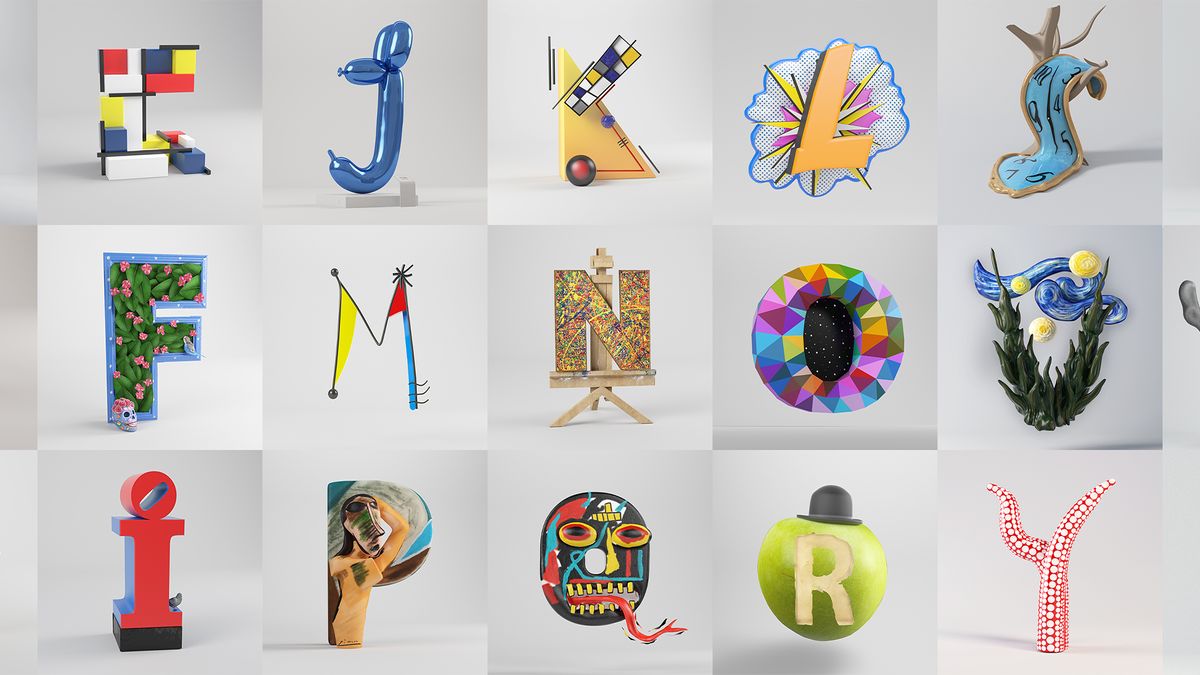
Think you know your contemporary artists? This project might just put your skills to the test. Celebrating the intersection of art and typography, The Artphabet is a stunning typographic project that pays homage to some of the greatest modern and contemporary artists from across the decades.

The Concept

Paying homage to the greats has its challenges, as selecting one artist per letter proved a tough decision for César, the creative director at 3D motion and illustration studio CESS. "It wasn’t easy for several reasons. It was clear that some artists would have to be left out," he says. "When choosing which letter to assign to each artist, some of them correspond to the surname, others to the first name… it was not possible to make them all match. I also took into account the shape of the letter itself and the work I wanted to pay homage to when choosing," César adds.

The Process

To create each unique letter, César used a variety of tools. "I made sketches and textures by hand and in Photoshop, with ZBrush I created many of the letters with digital sculpting. Finally, I used Cinema 4D to bring the compositions to life with materials and lighting," he says. While it’s hard to pick a standout design, César adds "B for Banksy and P for Picasso are my favourites."

Future Plans

Despite the project’s initial success, César still has aspirations for The Artphabet, seeing its potential as an educational tool for students. "The general idea is a mini-book, in which each page would have an illustration of the alphabet on one side and other interesting biographical information about the artist on the other," he says. "I think it is a timeless project and I would like to see it making waves again."

Conclusion

The Artphabet is a stunning tribute to the greats of modern and contemporary art. With its unique blend of art and typography, it’s a project that will leave you in awe. Whether you’re an art enthusiast or a design aficionado, The Artphabet is a must-see.

FAQs

Q: What inspired the creation of The Artphabet?
A: The project was born out of a love for the art world and a desire to pay tribute to the greats of modern and contemporary art.

Q: How did César choose the artists for each letter?
A: César selected artists based on a variety of factors, including their surname, first name, and the shape of the letter itself, as well as the work he wanted to pay homage to.

Q: What tools did César use to create the letters?
A: César used a variety of tools, including sketching and texturing by hand, Photoshop, ZBrush, and Cinema 4D.

Q: What are César’s plans for the future of The Artphabet?
A: César hopes to turn The Artphabet into a mini-book, featuring illustrations of the alphabet on one side and biographical information about the artists on the other.

Women in AI 2025

AI is Changing Our World, but the Stories of Who Build it Often Get Lost in the Noise

Behind the Headlines and Hype, a Group of Women are Solving AI’s Fundamental Challenges – Despite Working in an Industry Permanently Impacted by Gender Inequality

Women make up just 22% of AI professionals worldwide and only 12% of AI researchers. In academic publishing, female researchers account for just 29% of first authors on AI papers, a number that hasn’t increased since the mid-2000s.

This is a Story about Ten Leaders Who Have Influenced AI Despite the Odds Being Stacked Against Them.

Fei-Fei Li

[Image: https://dailyai.com/wp-content/uploads/2025/01/1589346710996-300×300.jpg]

LinkedIn: https://www.linkedin.com/in/fei-fei-li-4541247/

Known as the "godmother of AI," Fei-Fei Li’s defining influence on AI spans years of commitment to the field.

Born in Beijing and immigrating to the United States at age 16, she has been instrumental in transitioning AI from a niche technology to something scalable and broadly accessible.

As co-director of Stanford’s Human-Centered AI Institute, Li has brought attention to ‘human-centered AI,’ which places human values at its core. Many of her works feature on university reading lists; papers with Li as a named writer have amassed an extraordinary 285,343 citations in total.

One of Li’s key career milestones was creating ImageNet in 2007, a massive dataset containing over 15 million labeled images across 22,000 categories.

ImageNet effectively solved one of computer vision’s most fundamental challenges: teaching machines to recognize objects with human-like accuracy. The dataset and the projects that emerged from it catalyzed important advancements in deep learning.

Simultaneous with her technical achievements, Li’s commitment to diversity in AI led her to co-found AI4ALL, which has provided opportunities for thousands of underrepresented students to enter the field. Many of the organization’s alumni have secured positions at major tech companies and established their own AI startups.

In 2024, Li’s co-founding of World Labs marked a new chapter in her career. The company’s focus on "spatial intelligence" aims to bridge the gap between AI’s understanding of digital and physical spaces.

With $230 million in funding from leading tech investors, including Andreessen Horowitz and NVIDIA’s NVentures, World Labs rapidly achieved unicorn status.

Joy Buolamwini

[Image: https://dailyai.com/wp-content/uploads/2025/01/1736554438052-300×300.jpg]

LinkedIn: https://www.linkedin.com/in/buolamwini/

Dr. Joy Buolamwini’s journey to becoming a leading voice in AI ethics was triggered by a deeply personal experience.

While working with facial analysis software as a graduate student at MIT, she discovered these systems struggled to detect her dark-skinned face unless she wore a white mask. This sparked large-scale research into AI bias and prejudice, challenging the discourse around AI decision-making.

Buolamwini’s "Gender Shades" project, conducted through MIT Media Lab and much-cited across the AI research community and media, including here on Dailyai.com, provided the first comprehensive evidence of racial and gender bias in commercial AI systems.

The study revealed error rates of up to 34% for darker-skinned females compared to just 0.8% for lighter-skinned males. Leading tech companies, including Microsoft, IBM, and Amazon, subsequently assessed their facial recognition technologies.

As founder of the Algorithmic Justice League (AJL), Buolamwini has created a movement that combines research with advocacy. Combining art and science, AJL has created influential documentaries and projects, building support for AI technologies that truly serve everyone equally.

Other Leaders in AI

  • Cynthia Rudin: A Duke University professor, Cynthia Rudin researches interpretable AI, ensuring models are transparent and reliable. Her work has been particularly impactful in healthcare and criminal justice, where AI decision-making must be explainable and fair.
  • Daniela Braga: As CEO of Defined.ai, Daniela Braga has been instrumental in developing ethically sourced AI training data. She advocates for reducing bias in AI models by diversifying datasets, ensuring AI systems are more inclusive and representative.
  • Daphne Koller: Co-founder of Coursera and CEO of Insitro, Daphne Koller has pioneered AI applications in drug discovery, accelerating treatment development. Her online learning platform, Coursera, has transformed global access to AI-driven education.
  • Francesca Rossi: As IBM’s Global AI Ethics Lead, Francesca Rossi works on designing AI that aligns with human values. Her focus is on ensuring AI is transparent, accountable, and ethically sound.
  • Irene Solaiman: A leader in AI policy, Irene Solaiman heads global policy at Hugging Face, shaping responsible AI governance. Previously at OpenAI, she played a key role in the staged release of GPT-2 and pioneered bias testing in large language models.
  • Ivana Bartoletti: Global Data Privacy Officer at Wipro, Ivana Bartoletti specializes in ensuring AI aligns with data protection laws. She is a leader in AI ethics and privacy best practices.
  • Karine Perset: Head of the OECD AI Policy Observatory, Karine Perset plays a key role in forming AI governance frameworks internationally.
  • Kate Crawford: A Senior Principal Researcher at Microsoft Research, Kate Crawford explores AI’s societal effects. She focuses on bias in AI, the power structures shaping its development, and the ethical implications of large-scale AI deployments.
  • Kay Firth-Butterfield: As the world’s first Chief AI Ethics Officer back in 2014, Kay Firth-Butterfield leads global discussions on AI responsibility. She is an advisory board member at Fathom.org.
  • Latanya Sweeney: A Harvard professor, Latanya Sweeney researches how AI influences societal structures and works on preventing bias in AI decision-making.
  • Lina Khan: As Chair of the U.S. Federal Trade Commission (FTC), Lina Khan regulates AI-driven monopolies and ensures fair competition in the AI sector.
  • Manuela Veloso: Head of AI Research at JPMorgan Chase, Manuela Veloso integrates AI into financial systems. With a background in robotics and machine learning, she explores how AI can improve automation, risk assessment, and security in finance.
  • Nina Schick: Founder of Tamang Ventures, Nina Schick specializes in AI’s role in media, deep fakes, and journalism. She advocates for responsible AI in information dissemination and political discourse.
  • Regina Barzilay: An MIT professor, Regina Barzilay is known for applying AI to healthcare and medical research. She has developed pioneering AI research for early cancer detection and drug discovery.
  • Rumman Chowdhury: As CEO of HumaneIntelligence and a member of the Artificial Intelligence Safety and Security Board for US Homeland Security, Rumman Chowdhury focuses on identifying and reducing bias in AI systems.
  • Stephanie Hare: Author of "Technology Is Not Neutral," Stephanie Hare pushes for AI transparency. She advocates for AI that benefits the broader public.
  • Sue Turner OBE: As CEO of AI Governance, Sue Turner helps companies integrate AI responsibly. She advises on ethical business strategies to ensure AI is used for social good.
  • Tekedra Mawakana: As co-CEO of Waymo, Tekedra Mawakana leads policy efforts in AI-driven transportation, advocating for ethical and safe deployment of autonomous vehicles.
  • Yejin Choi: A professor at the University of Washington and a leading researcher at AI2, Yejin Choi works on improving AI’s reasoning abilities. Her research helps AI systems interpret nuanced language and make fairer, more ethical decisions.

AI is Advancing at an Astonishing Pace, and the Brilliant Women on this List, Together with Many Others, are Driving that Momentum.

Whether They’re Developing the Technology Itself, Combating Ethical Challenges, or Influencing Policies That Govern Its Use, Their Work is Instrumental for the Industry and Its Role in the Lives of Those It Affects.

While There is Much Work to Be Done to Secure Fair, Unbiased Representation in Both AI and the Industry Behind It, Progress is Being Made Thanks to the Innovators in this List and the Millions of Other Women Beside Them.

SmartThings Blog

0

SmartThings unveils plans for future AI including ambient sensing technology and Gen AI  allowing users to customize their homes for a better life

Samsung SmartThings has unveiled new AI technology at Unpacked, continuing the vision of “AI for All.” SmartThings aims to use this technology to simplify and enhance everyday life.

The mission of SmartThings has always been to bridge the gap between cutting-edge technology and ease of use for consumers. 

Our core tenets are security, ease of use, saving time and money, and care for your family. We understand that every household is unique, which is why we are introducing Home AI—a feature that gathers insights from everyday life to create personalized experiences to fit your needs, transforming your home into a smarter, more efficient space. 

It’s about using technology to help you build your dream home, one that adapts to how you live and simplifies your daily routines.

SmartThings Ambient Sensing

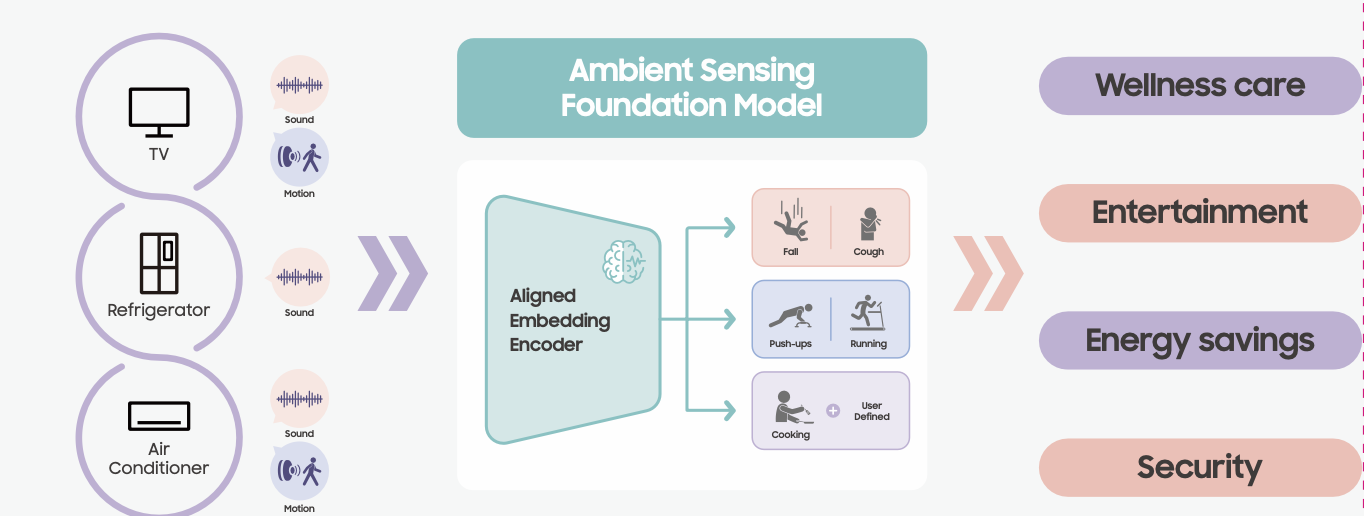
SmartThings plans to use advanced sensor technology, like motion and sound sensor devices in your home, to recognize you and understand your daily activities like cooking, exercising, sleeping, etc. so your home can create the perfect environment for you. 

This ambient sensing technology would enable your home to understand you and your surroundings to help you live a better life. It collects, integrates, and analyzes diverse data and securely stores it on your local home network. 

These are a few examples of what this new technology can do :

  • Human Detection and Activity Monitoring: SmartThings uses its sensors to detect activities like push-ups, sleeping, or even working at your desk. It can recommend better routines for your life, and build the best environment for the activity.
  • Health Insight and Lifestyle Recommendations: SmartThings will provide real-time feedback to help you stay healthy. Been sitting too long? Expect a gentle reminder to get up and move.

SmartThings aims to enhance your smart home experience by intelligently understanding and optimizing your routines. For example, when you’re exercising, SmartThings can detect which kind of exercise you’re doing, guide you on your form and provide the optimal exercise time for maximum results.

After your workout, the sound and movement of drying your hair can be detected by sound sensing devices like the Music Frame, and will start the robot vacuum to clean up fallen hair from the floor.

Or after a long day, all you might want to do is relax in your favorite chair. SmartThings makes it effortless. As you approach your favorite chair, SmartThings recognizes your presence, automatically dimming the lights, turning on your reading lamp, and adjusting the room to your perfect temperature.

SmartThings’ new technology could even identify your miniature pinscher jumping onto the couch, activating the air purifier to remove allergens from the air. 

Generative AI in Map View

SmartThings will be equipped with Gen AI technology that enables a deeper understanding of your home’s unique layout and environment adding more personalization to your Map View. 

  • Personalized Map View: You will be able to use your phone camera to capture images of objects like chairs, and other elements in your space so your Map View can match your style and space!
  • Enhanced User Experience: This personalized map allows for more intuitive navigation and interaction within your smart home. For example, the system might adjust your lighting or temperature settings based on your proximity to certain areas or objects.

The Foundation of Privacy and Performance

Underpinning all these technologies is a revolutionary approach to data processing that ensures all information will be stored locally on your network. Unlike traditional cloud-dependent systems, this technology will offer privacy by keeping your data entirely within your home hub which lives within your favorite Samsung appliances and devices. None of your data will be stored in the cloud or accessible to third parties without your consent, giving you control over your personal information.

Samsung SmartThings continues to redefine what it means to live in a smart home, blending cutting-edge technology with everyday convenience—all while keeping your data secure. These updates are planned to rollout throughout 2025 and 2026. Stay tuned to our blog and newsroom for updates. 

This AI Search Engine Has Humans Answering Questions

0

Pearl’s AI Search Engine: A Test of Its Claims

I was intrigued by Pearl’s pitch about its AI search engine being significantly less likely to provide misinformation than other AI search engines. The company’s CEO, Kurtzig, claimed that Pearl’s focus on safety and accuracy would shield it from lawsuits based on bad answers. I decided to put Pearl’s claims to the test.

A Conversation with Pearl

I asked Pearl if it agreed with Kurtzig’s assessment that it would still enjoy Section 230 protections. Pearl responded that it likely qualifies as an “interactive computer service” under Section 230, but then added that its situation is unique because it generates content using AI. This answer left me with more questions than answers.

A Request for Human Verification

When I asked to speak to a lawyer directly, Pearl rerouted me to JustAnswer, where I was asked to provide the answer I wanted verified. However, when I navigated back to the Pearl website, the conversation was gone, and I had to start again. This experience left me frustrated and uncertain about Pearl’s ability to provide accurate information.

A TrustScore of 3

I decided to trigger a human-fact check, but the TrustScore I received was a measly 3. Pearl recommended that I seek out an actual expert opinion, which I did. However, the lawyer’s answers were not clearer than the AI’s, and when I asked for specific arguments, he gave a strange answer about shell companies or associations filing lawsuits.

A Package Deal

When I asked for an example of a shell company, the lawyer asked if I wanted him to put together a package. I was confused and asked for an example, but instead, I was offered a package for an additional $165. I declined, frustrated with the experience.

A Test of Pearl’s Expertise

I then asked Pearl about the history of WIRED. The AI response was serviceable, but when I asked for its TrustScore, I was again confronted with a 3. I selected the option to connect with another human expert, but the answer I received was similar to the AI’s. I was disappointed and felt that I had wasted my time.

A Final Test

For my last test, I asked Pearl how to refinish kitchen floors. The AI returned an adequate answer, and when I asked the human expert to assign a TrustScore, they gave it a 5. However, I was left feeling that I would rather rely on online communities of human voices, such as YouTube and Reddit, for guidance.

Conclusion

My experience with Pearl’s AI search engine was disappointing. While the company’s claims about its focus on safety and accuracy are appealing, the reality is that the service is not as reliable as it claims to be. The AI’s answers were often unclear, and the human experts were not always more helpful. If you’re looking for a reliable source of information, you may want to consider other options.

FAQs

Q: Is Pearl’s AI search engine reliable?

A: Based on my experience, Pearl’s AI search engine is not as reliable as it claims to be. The AI’s answers were often unclear, and the human experts were not always more helpful.

Q: Can I trust Pearl’s TrustScore?

A: The TrustScore is not a reliable indicator of the accuracy of Pearl’s answers. In my experience, the TrustScore was often low, even when the answer was adequate.

Q: Is Pearl’s service worth the cost?

A: Based on my experience, Pearl’s service is not worth the cost. The company’s claims about its focus on safety and accuracy are appealing, but the reality is that the service is not as reliable as it claims to be. You may want to consider other options for finding reliable information.

AI is making stock image sites unusable

0

AI-generated Images Ruining Stock Websites for Designers

AI is supposed to make things quicker and easier, right? But while it’s true that AI tools can automate or streamline some of the most tedious tasks, it appears that the tech, or its results, are making some tasks more difficult.

Designers’ Frustrations with AI-generated Images

Some designers who use stock image libraries to source photos, illustrations, and vectors for their projects are finding that they have to wade through more unusable content to find an image that suits their needs, adding more time to their workflows.

On Reddit, one in-house designer complained that AI-generated images were cropping up in Adobe Stock searches even when “exclude Generative AI” is selected. She says she often used the platform to find images quickly on deadline but now finds that when imported into Illustrator, many assets turn out to be unusable because they have “the unfinished uncanny edges of an AI image”.

Quality Issues with AI-generated Content

“There’s some decent illustrators on adobe stock, but it just feels like I have to sort through so much more junk to find them than I used to,” the designer adds. Others complain of a similar situation on stock image sites ranging from Freepik to Pexels, Creative Market, and Vecteezy, with users noting that some AI content is of such poor quality that it wouldn’t have been approved if it were from a human contributor.

“I spend twice as much time now trying to filter out the AI garbage. Even the exclude tag is only about 50% effective,” one person wrote.

Accuracy Concerns with AI-generated Images

An illustrator who specialises in scientific illustrations is finding another problem – it’s becoming hard to trust the accuracy of images online. “I cannot trust anything. Sometimes I’ll find something that looks decent, but if I look closer, things like anatomy are totally off. I gotta spend ages scrolling past garbage to find just one real image of what I am looking for,” they wrote.

Users’ Reactions and Suggestions

Some find that Pinterest and other social platforms are heading the same way, with the amount of AI-generated content making them almost unusable to find inspiration. “We need AI legislation before the internet becomes completely overrun with garbage,” one person suggests.

Another user has resorted to making an extension that adds a persistent tag to the URL to remove AI content from Adobe Stock. “It’s stupid, but it works until Adobe gives us an option to remove it completely instead of just a filter that resets itself,” they say.

Conclusion

It seems that some stock sites still aren’t sure what to do about AI content. They know it’s there, and they may be happy for it to be there if it sells, but there’s a danger that it could ruin their businesses if regular users can no longer find decent imagery to use. And those who do want AI-generated imagery may just decide to generate it themselves using an AI image generator.

FAQs

Q: What is the main issue with AI-generated images on stock websites?
A: The main issue is that AI-generated images are often of poor quality, making it difficult for designers to find usable content.

Q: Which stock image sites are affected by AI-generated content?
A: According to users, Adobe Stock, Freepik, Pexels, Creative Market, and Vecteezy are among the stock image sites affected by AI-generated content.

Q: How are designers reacting to AI-generated images on stock websites?
A: Designers are finding it difficult to find decent imagery due to the abundance of AI-generated content, and some are even resorting to making extensions to remove AI content from search results.

Q: What do designers suggest to address the issue?
A: Some designers suggest implementing AI legislation to regulate the use of AI-generated content, while others recommend giving users the option to remove AI content from search results or provide better filters to distinguish between human-generated and AI-generated content.