Home Blog Page 382

Samsung Galaxy Unpacked Highlights

0

Refresh

Samsung Galaxy S25 Ultra Leaked Features

There were some seriously wacky rumours and leaks flying about, including speculation that the S25 Ultra could have a built-in drone. I know Samsung can be innovative, but I very much doubt this will be an S25 Ultra feature.

Samsung Galaxy Unpacked 2025 LIVE

The time is ticking, and we’re nearly closer to the official Samsung Galaxy Unpacked 2025 live stream. To be precise, there’s 2.5 hours to go, as you can see from the timer set on my Samsung Galaxy Watch 6 (I told you I was a Samsung fan).

Camera Phone Shootout: Honor Magic 7 Pro vs Samsung S24 Ultra

In other news, I recently went on a trip to Slovenia and put my Samsung Galaxy S24 Ultra to the test in an ultimate camera phone shoot out against the new Honor Magic 7 Pro smartphone. Both camera phones performed excellently, and are fused with AI imaging power. It was tough to select a winner, but take a look at the article to see the official verdict.

Android XR Platform

While we wait for the main event to start, let me direct you to a piece we wrote recently on Samsung teasing a new mixed-reality headset (in partnership with Google). It’s set for a 2025 launch, so this could be a super interesting year for Samsung fans.

Samsung Galaxy Unpacked 2025 LIVE

I’m on my way right now to Samsung’s Kings Cross headquarters in London for a very special event ahead of Samsung Galaxy Unpacked later this evening. If you’re hoping to tune in, the official Unpacked event is being live-streamed via Samsung’s official website and YouTube platforms and will be kicking off at 6 pm UK time, as well as 1 pm EDT, and 10 am PDT.

Conclusion

As we wait for the Samsung Galaxy Unpacked 2025 event, we’ve seen some exciting leaks and rumors about the new S25 Ultra features. From camera phone shootouts to mixed-reality headsets, it’s going to be an exciting year for Samsung fans.

FAQs

Q: What are the rumored features of the Samsung Galaxy S25 Ultra?
A: There have been rumors of a built-in drone, but it’s unclear if this will be a feature of the S25 Ultra.

Q: When is the Samsung Galaxy Unpacked 2025 event?
A: The event is scheduled to take place later this evening, with a live stream available on Samsung’s official website and YouTube platforms.

Q: What is the Samsung mixed-reality headset?
A: The headset is a new device that Samsung is partnering with Google to launch in 2025. It’s set to be a super interesting year for Samsung fans.

Q: How can I watch the Samsung Galaxy Unpacked 2025 event?
A: The event will be live-streamed via Samsung’s official website and YouTube platforms, and will be available to watch at 6 pm UK time, 1 pm EDT, and 10 am PDT.

Forget the Samsung Galaxy S25 – the S24 Ultra has up to 48% off

0

The Best Samsung Galaxy S24 Deals Today

Unbeatable Discounts on Last Year’s Flagship Phones

If you’ve been waiting to update your phone, now could be the moment. With the Samsung Galaxy S25 range to be announced today, prices have dropped on last year’s models, including both the flagship Samsung Galaxy S24 Ultra and the standard S24. And unlike most of the best phone deals, these are straight discounts with no contract or trade-in.

Flagship Deals

  • Best Buy has the Samsung Galaxy S24 Ultra with a 256GB SSD reduced by $300 from $1,299 to $999.99.
  • Amazon US has the standard model reduced by $150 from $799 to $649 in a limited-time deal.

UK Deals

  • In the UK, the Ultra is available at Amazon UK reduced by a massive 48% from £1,469 to £767.

Why the S24 is Still a Great Choice

The Galaxy S24 range is about to be superseded by the S25, but the S24 Ultra is undoubtedly still one of the best camera phones available and still more than powerful enough for most people’s needs. In our review, we heaped praise on its excellent camera array, the fact that the S Pen stylus comes included, plus the promise of 7 years of OS updates (that’s a rare one nowadays). Our only niggle was the price, which has just become a lot more reasonable now that the phone’s successor has been announced.

The Best Samsung Galaxy S24 Deals Today

Below you’ll find the best Samsung Galaxy S24 prices wherever you are in the world via our clever deals widget, which updates 24/7.

Frequently Asked Questions

Q: What are the benefits of the Samsung Galaxy S24?
A: The Galaxy S24 is a flagship device with an excellent camera array, a stylus included, and 7 years of OS updates.

Q: Why are prices dropping for the S24?
A: The S24 range is being superseded by the S25, making way for new deals on last year’s models.

Q: Are these deals available with contracts?
A: No, these are straight discounts with no contract or trade-in required.

Q: Are the S24 deals available in my region?
A: Check the deals widget to find the best Samsung Galaxy S24 prices in your region.

Advancing Physical AI for Robotics and Autonomous Vehicles

The next frontier of AI is physical AI. Physical AI models can understand instructions and perceive, interact, and perform complex actions in the real world to power autonomous machines like robots and self-driving cars. Similar to how large language models can process and generate text, physical AI models can understand the world and generate actions.

Global leaders in software development and professional services are using NVIDIA Omniverse, powered by OpenUSD, to build new products and services that will accelerate the development of AI and controllable simulations to enable the creation of true-to-reality virtual worlds, known as digital twins, that can be used to train physical AI with unprecedented accuracy and detail.

Generate Exponentially More Synthetic Data With Omniverse and NVIDIA Cosmos

At CES, NVIDIA announced generative AI models and blueprints that expand Omniverse integration further into physical AI applications such as robotics, autonomous vehicles, and vision AI. Among these announcements was NVIDIA Cosmos, a platform of state-of-the-art generative world foundation models, advanced tokenizers, guardrails, and an accelerated video processing pipeline – all designed to accelerate physical AI development.

Developing physical AI models is a costly, resource- and time-intensive process that requires vast amounts of real-world data and testing. Cosmos’ world foundation models (WFM), which predict future world states as videos based on multimodal inputs, provide an easy way for developers to generate massive amounts of photoreal, physics-based synthetic data to train and evaluate AI for robotics, autonomous vehicles, and machines. Developers can also fine-tune Cosmos WFMs to build downstream world models or improve quality and efficiency for specific physical AI use cases.

See Cosmos in Action for Physical AI Use Cases

Cosmos WFMs are revolutionizing industries by providing a unified framework for developing, training, and deploying large-scale AI models across various applications. Enterprises in the automotive, industrial, and robotics sectors can harness the power of generative physical AI and simulation to accelerate innovation and operational efficiency.

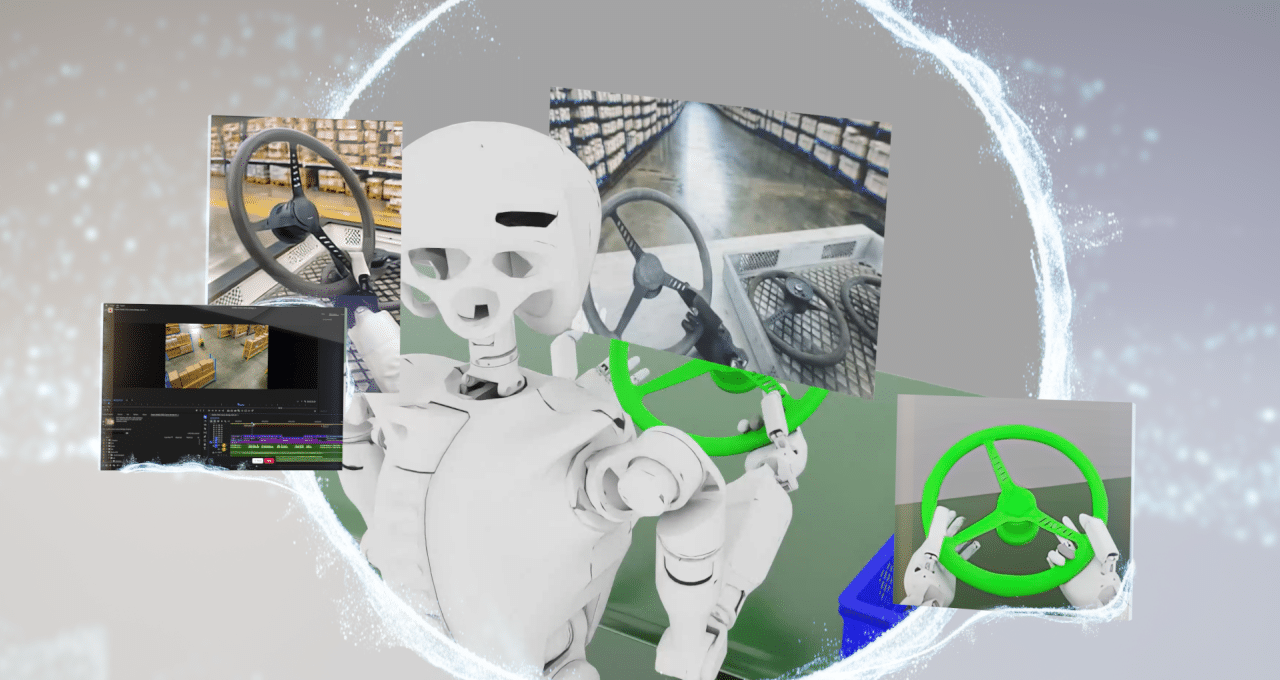
  • Humanoid robots: The NVIDIA Isaac GR00T Blueprint for synthetic motion generation helps developers generate massive synthetic motion datasets to train humanoid robots using imitation learning. With GR00T workflows, users can capture human actions and use Cosmos to exponentially increase the size and variety of the dataset, making it more robust for training physical AI systems.
  • Autonomous vehicles: Autonomous vehicle (AV) simulation powered by Omniverse Sensor RTX application programming interfaces lets AV developers replay driving data, generate new ground-truth data, and perform closed-loop testing to accelerate their pipelines. With Cosmos, developers can generate synthetic driving scenarios to amplify training data by orders of magnitude, accelerating physical AI model development for autonomous vehicles.
  • Industrial settings: Mega is an Omniverse Blueprint for developing, testing, and optimizing physical AI and robot fleets at scale in a USD-based digital twin before deployment in factories and warehouses. The blueprint uses Omniverse Cloud Sensor RTX APIs to simultaneously render multisensor data from any type of intelligent machine, enabling high-fidelity sensor simulation at scale. Cosmos can enhance Mega by generating synthetic edge case scenarios to amplify training data, significantly improving the robustness and efficiency of training robots in simulation.

Get Plugged Into the World of OpenUSD

For more on Cosmos, watch the replay of NVIDIA CEO Jensen Huang’s CES keynote, and get started with Cosmos WFMs available now under an open model license on Hugging Face and the NVIDIA NGC catalog. Join the upcoming livestream on Wednesday, February 5 for a deep dive into Cosmos WFMs and physical AI workflows.

Conclusion

The future of AI is physical AI, and NVIDIA Omniverse and OpenUSD are leading the charge. With the power of generative world foundation models, developers can generate massive amounts of synthetic data to train and evaluate AI for robotics, autonomous vehicles, and machines. The possibilities are endless, and the future is bright.

FAQs

Q: What is physical AI?
A: Physical AI models can understand instructions and perceive, interact, and perform complex actions in the real world to power autonomous machines like robots and self-driving cars.

Q: What is OpenUSD?
A: OpenUSD is a universal scene description language that enables the creation of true-to-reality virtual worlds, known as digital twins, that can be used to train physical AI with unprecedented accuracy and detail.

Q: What is NVIDIA Cosmos?
A: NVIDIA Cosmos is a platform of state-of-the-art generative world foundation models, advanced tokenizers, guardrails, and an accelerated video processing pipeline – all designed to accelerate physical AI development.

Q: How can I get started with Cosmos WFMs?
A: You can get started with Cosmos WFMs available now under an open model license on Hugging Face and the NVIDIA NGC catalog.

Adobe Premiere Pro’s New AI Tool

0

Adobe Unveils AI-Powered Media Intelligence Tool for Premiere Pro

New Features for Video Editors

At Sundance 2025, Adobe announced a new AI-powered Media Intelligence tool that automatically analyzes visuals across thousands of clips in seconds. This tool is available in Premiere Pro in beta and can identify the contents of each clip to make them searchable by text, potentially saving video editors many hours when searching through footage.

What is Media Intelligence?

Media Intelligence automatically recognizes clip content, including people, objects, locations, camera angles, camera type, and more. This allows editors to simply type out the clip type needed in the new Search Panel, which displays interactive visual results, transcripts, and other metadata results from across an entire project.

Other Updates in Premiere Pro Beta

Other updates in Premiere Pro beta include AI-caption translation, which allows editors to translate captions into different languages. Additionally, After Effects gets improved HDR support and improved caching for longer playback footage from Canon C80 and C400 cameras can now be automatically uploaded to Frame.io.

Adobe Film & TV Fund Expansion

In other news, Adobe and the Adobe Foundation have announced an expansion of the Adobe Film & TV Fund, committing an extra $5m in 2025 to support underrepresented creators and filmmakers. Three filmmakers who were supported through its grant to The Latinx House last year have films premiering at Sundance 2025.

Conclusion

The new Media Intelligence tool in Premiere Pro is a significant update for video editors, allowing them to quickly locate the best clips in huge libraries of files without having to manually sift through hours of footage. With its ability to recognize clip content and provide interactive visual results, this tool is sure to speed up workflows and make video editing more efficient.

FAQs

Q: What is Media Intelligence?
A: Media Intelligence is an AI-powered tool that automatically analyzes visuals across thousands of clips in seconds, identifying the contents of each clip to make them searchable by text.

Q: What are the benefits of Media Intelligence?
A: Media Intelligence can save video editors many hours when searching through footage, allowing them to quickly locate the best clips in huge libraries of files.

Q: What other updates are available in Premiere Pro beta?
A: Other updates in Premiere Pro beta include AI-caption translation, improved HDR support in After Effects, and improved caching for longer playback footage from Canon C80 and C400 cameras.

Q: What is the Adobe Film & TV Fund?
A: The Adobe Film & TV Fund is a program that supports underrepresented creators and filmmakers, providing grants and resources to help them bring their projects to life.

Krita: A Powerful Photoshop Alternative

0
  1. Swap Photoshop for PhotoPEA

Not only do these tools exist, I’ve been getting friends and family up and running on them for a while now. Family who may not like to have applications installed on their computers. Friends who have been paying subscriptions for years, for just the occasional use of Photoshop (other photo editing software is of course available).

Just this week, and the impetus for this very article, I told a close friend about one of these cloud based options. Jeff is a musician and uses Photoshop to create his album covers and video thumbnails. But not much else. And yet, that $22/month subscription fee was there every month on his credit card invoice. Right next to all of the plugins he subscribes to for his music applications, like Logic. It all adds up!

I refused to let him off the phone before he went over to his iMac, ran Safari, and typed in PhotoPEA.com. A few moments later, I could hear his jaw dropping over the phone. “Lance” he started, “What is this, it looks just like Photoshop?”

The homepage for Photopea.com, offering just a small inkling of what lays behind.

Photopea’s New Project dialog with the most popular sizes, and premade templates.

As we dove deeper into Photopea, we could see the “New Project” interface with all of our most used formats. And when we actually open a project, Photoshop users are instantly at home. Even more so than we would be when using GIMP or Krita. Photopea offers the same basic functionality, including our most familiar keyboard commands for tool selections. Strike the M key and the Rectangle Select tool becomes active. Strike C and we are ready to Crop. Then V, and we are back at the main Move tool. Add the Shift key to these, and we start selecting the sub-tools (alternatively available with a long-click and hold, just like in PS).

  1. Swap After Effects for Pikimov

Clément Cordier is a developer based in France, who has created what amounts to a cloud-based version of After Effects (AE), the loved timeline based video compositor from Adobe. A video compositor is what editors use when more creative detail is needed, and beyond the abilities of a regular video editor.

Pikimov: Video Compositor

Pikimov.com offers the very same timeline based compositing control as AE does. This is actually very rare, as most industry compositors are nodal based. Which is often a more difficult transition for those accustomed to the more straightforward timeline paradigm. That alone puts Pikimov in its own class of accessibility and ease of use.

Video editing on the cloud

When it comes to straight-up video editing, some might think processing all of those gigabytes would be beyond a cloud based application. But remember, the cloud is downloading the app to our “client” computers. Then it is still our computers that do the heavy-lifting. So none of our content never actually leaves our own computer. At least in most cases. So the more powerful our own computer, the more efficiently the programs will run.

  1. The Bottom Line

Despite claims to the contrary, production tools do NOT need to cost an arm and a leg. And in many cases, they don’t need to cost anything at all. They can simply be called up, when needed, from any computer – with any OS – that you happen to be on.

FAQs:

Q: What are the limitations of using cloud-based production tools?
A: While cloud-based production tools may not have the same level of customization as traditional software, they can still deliver high-quality results. The main limitations are often related to the processing power of the cloud, which may not be as fast as a powerful computer.

Q: Are cloud-based production tools secure?
A: Cloud-based production tools use the same level of security as traditional software. They encrypt your data and ensure that it is only accessible by authorized users.

Q: Can I use cloud-based production tools offline?
A: Most cloud-based production tools require an internet connection to function. However, some tools allow you to download a local copy of your work and edit offline, with the option to upload it later.

Building AI with Ease

About Jesse Williams

Jesse Williams is a seasoned entrepreneur and operator with a passion for building innovative solutions. As the Founder/Operator of his company, he has successfully exited four companies and has worked with prominent brands such as Ex, AWS, Docker, and RedHat.

Professional Background

Jesse is currently the Chief Operating Officer (COO) at Jozu and Founder at Stori. With his extensive experience in the tech industry, he is well-versed in various technologies and has a strong understanding of what it takes to build successful startups.

Personal Life

Jesse is a dad to three kids and is dedicated to his family. His interests outside of work include building things he loves with the people he enjoys.

Location and Work

Jesse is based in Washington, D.C. and is involved in various projects and companies in the region.

Timeline

Jesse joined Dev.to on July 24, 2019.

Get to know more about Jesse’s work and projects by following him on Dev.to.

FAQs

Q: What is Jesse’s current role?

A: Jesse is the Chief Operating Officer (COO) at Jozu and Founder at Stori.

Q: Where is Jesse based?

A: Jesse is based in Washington, D.C.

Q: What are some of his notable exits?

A: Jesse has successfully exited four companies.

Q: What are some of his notable involvements?

A: Jesse has worked with Ex, AWS, Docker, and RedHat.

Squid Game Teaches Brand Design Brilliance

0

The Success of the Squid Game Branding

Plenty of brands have taken advantage of the popularity of Squid Game for their own campaigns, from McDonald’s Squid Game Meals in Australia to a Just Eat collaboration in the UK. The sinister and dystopian theme of the series is perhaps lost on them. But Squid Game’s own branding is a lesson in creating a coherent identity. Let’s delve into the visual communication used in the series.

The Squid Game Logo

The Squid Game logo is a perfect example of a unique and recognizable brand identity. The angular letterforms and geometric shapes feel playful but also a little futuristic and a little cryptic, hinting at the theme of the series. The original Korean logo is particularly clever: the circle, triangle, and square icons form part of the letterforms, allowing the name of the series to be abbreviated to “ojing-eo geim” (OJM or ‘ㅇㅈㅁ’). But in every language, the logotype is distinct from anything else on TV, showing how much meaning and recognition can be achieved with a bespoke typeface.

Squid Game Icons

Speaking of icons, the circle, square, and triangle are a constant throughout the series. The shapes come from the real South Korean children’s game from which the series takes its name, and they appear everywhere, from the card that prospective contestants receive inviting them to participate in the macabre game show to set decor. They also serve to identify the rank of the workers that herd contestants between games: circles for the lower-ranking workers, triangles for the armed soldiers, and squares for the managers. The creators were inspired by worker ants and employed these simple symbols as a way to depersonalize the workers while still communicating their different roles.

The Squid Game Colour Palette

Squid Game also masters the art of colour in branding, and here it shows us the power of simplicity. Clear colour choices were made for the uniforms and sets, with a predominance of pink and teal, colours we might associate with children’s games. Guards wear pink, a colour often associated with childhood, femininity, and glamour but here appropriated to convey danger. In contrast, the contestants’ uniforms are teal. The same colours appear in the sets and corridors in the game, backed up by supporting hues.

What is the Squid Game Font?

The Squid Game logo uses a bespoke typeface that was designed for the Netflix series with variations on its letterforms for different languages. Several type designers have attempted to recreate the look and feel of the typeface. These include Darrell Flood’s Game of Squids font (available for free at Dafont.com). Other type options that have some resemblance to the Squid Game font include The Shape of Things and Mandatory Plaything from Chequered Ink.

Conclusion

Squid Game’s branding is a masterclass in creating a unique and recognizable identity. By using a bespoke typeface, simple yet effective icons, and a bold colour palette, the series has created a visual language that is both memorable and impactful. The series’ use of visual communication is a lesson in creating a coherent brand identity that can be applied to a wide range of contexts, from television and film to advertising and marketing.

FAQs

What is Squid Game?

Squid Game is a Korean survival thriller created by Hwang Dong-hyuk and broadcast on Netflix. The plot involves a secret contest where players facing financial hardship compete in a series of lethal versions of traditional children’s games for the chance to win ₩45.6 billion (US$39.86 million). The games are organized for the entertainment of wealthy viewers and include the squid game of the title.

What is the Squid Game font?

The Squid Game logo uses a bespoke typeface that was designed for the Netflix series with variations on its letterforms for different languages. Several type designers have attempted to recreate the look and feel of the typeface. These include Darrell Flood’s Game of Squids font (available for free at Dafont.com). Other type options that have some resemblance to the Squid Game font include The Shape of Things and Mandatory Plaything from Chequered Ink.

How do I create a unique brand identity?

The Squid Game series is a great example of how a unique brand identity can be created. By using a bespoke typeface, simple yet effective icons, and a bold colour palette, the series has created a visual language that is both memorable and impactful. To create a unique brand identity, consider the following:

* Use a bespoke typeface or font to create a unique visual language
* Use simple yet effective icons to convey meaning and create a sense of recognition
* Use a bold colour palette to create a visually striking brand identity
* Be consistent in your visual communication to create a coherent brand identity

Remember, a unique brand identity is key to standing out in a crowded market. By following the principles outlined above, you can create a brand identity that is both memorable and impactful.

Google Invests $1bn in Anthropic

Unlock the Editor’s Digest for free

Roula Khalaf, Editor of the FT, selects her favourite stories in this weekly newsletter.

Google Invests Over $1bn in OpenAI Rival Anthropic

Google is making a fresh investment of more than $1bn into OpenAI rival Anthropic, boosting its position in the start-up as Silicon Valley titans rush to develop cutting-edge artificial intelligence systems.

Anthropic’s Fundraising

The Alphabet-owned search behemoth had already committed about $2bn to Anthropic and was now increasing its stake in the group, according to four people with knowledge of the situation. The investment is part of Google’s efforts to diversify its AI business and take on deep-pocketed competitors, including Microsoft, Meta, and Amazon.

Anthropic’s Valuation

Anthropic, best known for its Claude family of AI models, is one of the leading start-ups in the new wave of generative AI companies building tools to generate text, images, and code in response to user prompts. The start-up was on the cusp of securing a further $2bn from Silicon Valley venture capital investors, led by Lightspeed Venture Partners, in a separate deal expected to triple the start-up’s valuation to about $60bn, according to several people with direct knowledge of the deal.

AI Start-up Landscape

The start-up is in a fierce competition with rivals OpenAI and Elon Musk’s xAI, both of which raised more than $10bn last year. The new tranche of money from Google into Anthropic adds to a total investment of $8bn from Amazon, the ecommerce group’s largest-ever venture investment, announced over the past 18 months. Amazon is also working to embed the Claude models into the next-generation version of its Alexa speaker.

FTC Investigation

The close relationships between AI start-ups and their Big Tech backers were probed by the Federal Trade Commission during Joe Biden’s administration. Under outgoing commissioner Lina Khan, the FTC had targeted investments from Google and Amazon into Anthropic and Microsoft’s partnership with OpenAI, reviewing the impact of the deals on competition in the nascent sector. But with Khan stepping down in the coming weeks, dealmakers are growing more confident in their ability to forge tie-ups.

Anthropic’s Revenue

Anthropic’s revenue hit an annualised $1bn in December, up roughly 10 times on a year earlier, according to a person with knowledge of the company’s finances. However, investors are not anticipating that Anthropic or its rivals will be profitable in the near future, given the steep costs of developing leading AI models. With new breakthroughs, they believe the technology could ultimately create trillions of dollars in value.

Conclusion

The artificial intelligence market is heating up, with major players like Google, Amazon, and Microsoft investing heavily in the development of AI technology. With the competition intensifying, it’s likely that we’ll see even more significant investments in the coming years.

FAQs

Q: What is Anthropic?
A: Anthropic is an AI start-up that focuses on developing generative AI models, such as Claude, to generate text, images, and code in response to user prompts.

Q: What is the current valuation of Anthropic?
A: The start-up’s valuation is expected to triple to about $60bn following a further $2bn investment from Silicon Valley venture capital investors.

Q: How much has Google invested in Anthropic?
A: Google has invested over $1bn in Anthropic, in addition to its previous investment of about $2bn.

Q: What is the competition like in the AI start-up space?
A: The AI start-up space is highly competitive, with numerous players vying for dominance. Major players like OpenAI, xAI, and Microsoft are also investing heavily in AI technology.

The Stargate Project: $500 Billion AI Agenda

0

The Stargate Project: What We Know and What Concerns Me

What is The Stargate Project?

The Stargate Project is an initiative that has been gaining attention in recent times. While it’s still a relatively new and mysterious project, I’ve managed to gather some information about it. In this article, I’ll share what I’ve learned and my thoughts on what’s good and concerning about it.

What’s Good About The Stargate Project?

From what I’ve gathered, The Stargate Project aims to create a decentralized, AI-powered platform that enables users to access and control various devices and systems. The project’s founders claim that this platform will provide users with unparalleled flexibility and control over their devices, making it easier to automate tasks and streamline processes.

What Concerns Me About The Stargate Project?

While the concept of The Stargate Project is intriguing, I have some concerns about its potential impact on the market. Firstly, the project’s founders have been rather secretive about the details of their platform, which raises questions about its security and stability. Secondly, the project’s reliance on AI technology could lead to unintended consequences, such as job displacement or increased automation bias.

Regulatory Capture

I didn’t get a chance to explore the regulatory capture aspect of The Stargate Project in this article, but it’s an important topic that warrants further discussion. Regulatory capture refers to the phenomenon where corporations or special interest groups exert influence over government regulatory bodies to their advantage. In the context of The Stargate Project, regulatory capture could lead to a lack of oversight and accountability, potentially putting users’ data and security at risk.

Explore AI Tools & News

For those interested in staying up-to-date with the latest AI tools and news, I recommend checking out Future Tools, a website that provides valuable resources and insights on the world of AI. You can also subscribe to their weekly newsletter and listen to their podcast, The Next Wave.

Social Media Links

If you’d like to stay connected with me, you can find me on the following social media platforms:

Conclusion

The Stargate Project is an ambitious initiative that has the potential to revolutionize the way we interact with devices and systems. While there are certainly concerns about the project’s security and regulatory implications, it’s essential to remain open-minded and continue to learn more about it. As always, I’m happy to receive feedback and insights from readers like you.

FAQs

Q: What is The Stargate Project?
A: The Stargate Project is an AI-powered platform that enables users to access and control various devices and systems.

Q: What are the benefits of The Stargate Project?
A: The project aims to provide users with unparalleled flexibility and control over their devices, making it easier to automate tasks and streamline processes.

Q: What are the concerns about The Stargate Project?
A: The project’s secrecy, reliance on AI technology, and potential regulatory capture are all concerns that need to be addressed.

Q: How can I stay updated on The Stargate Project?
A: You can follow me on social media, subscribe to Future Tools’ newsletter, and listen to their podcast, The Next Wave.

Elevated Design

0

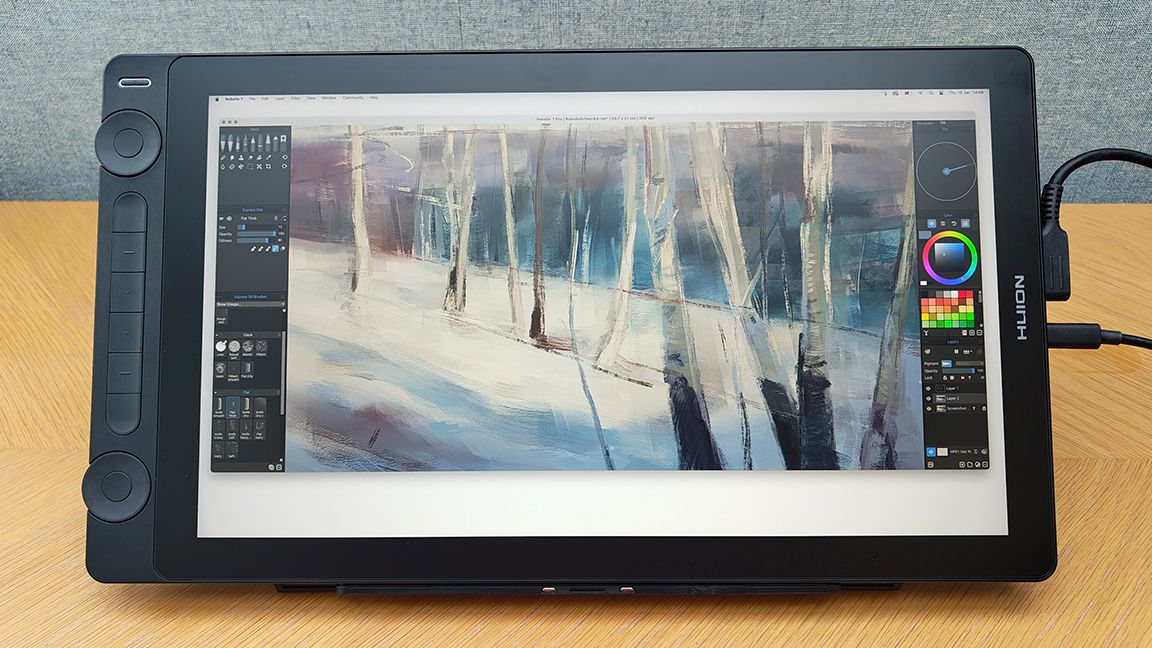
Huion Kamvas 16 (Gen 3) Review: Design and Build

The Huion Kamvas 16 (Gen 3) is a mid-range drawing display that impresses with its unique design and build. The device features a 2.5K resolution display, which matches its rivals, and a 200nits with sRGB: 99% and Adobe RGB: 90% color accuracy. The device also comes with a battery-free stylus, pen holder, and 10 replacement nibs.

In the Box

The Huion Kamvas 16 (Gen 3) comes with a comprehensive set of accessories, including a 3-in-1 cable, USB extension cable, two USB-C to USB-C cables, a drawing glove, cleaning cloth, and a small user manual. The device also comes with a battery-free stylus, pen holder, and 10 replacement nibs.

Design and Build

The Huion Kamvas 16 (Gen 3) has a unique design that buck the trend for a streamlined frame. Instead, the device features a more traditional design with a frame that breaks up the screen. This design choice is deliberate, as it allows for more dials and Quick Keys to be included on the device. The device also features a metal and hard plastic stand that is highly recommended.

Stylus and Display

The Huion Kamvas 16 (Gen 3) features a battery-free stylus that is both accurate and fun to use. The device also comes with a 2.5K resolution display that is good for its price range. The display is smooth and feels lovely to work on, and the brightness is good for this price range.

Who’s it for?

The Huion Kamvas 16 (Gen 3) is a good mid-range drawing display that is suitable for students and digital art beginners. However, pros may want more tech and a larger, higher resolution display.

Buy it if

  • You need an affordable tablet
  • You expect an accurate stylus
  • You want multiple dials

Don’t buy it if

  • You like touch control
  • You want a higher resolution display
  • You need a larger drawing area

Also Consider

  • Ugee 16
  • XPPen Artist Pro 19 (Gen 2)
  • Wacom Movink

Conclusion

The Huion Kamvas 16 (Gen 3) is a good mid-range drawing display that is a step above entry-level tablets like the Ugee 16. The device features a unique design, accurate stylus, and good color accuracy. However, it may not be suitable for pros who want more tech and a larger, higher resolution display.

FAQs

Q: What is the resolution of the Huion Kamvas 16 (Gen 3)?
A: The device features a 2.5K resolution display.

Q: What is the color accuracy of the Huion Kamvas 16 (Gen 3)?
A: The device has a 200nits with sRGB: 99% and Adobe RGB: 90% color accuracy.

Q: Does the Huion Kamvas 16 (Gen 3) come with a stylus?
A: Yes, the device comes with a battery-free stylus.

Q: What is the stand made of?
A: The stand is made of metal and hard plastic.

Q: Is the Huion Kamvas 16 (Gen 3) suitable for pros?
A: No, the device may not be suitable for pros who want more tech and a larger, higher resolution display.