Home Blog Page 383

ChatGPT Uncovers Family Secrets

Using ChatGPT to Explore Genealogy Connections

As I delved into my family tree, I was contacted by a DNA match who used ChatGPT to gain insights into our possible relationship. This sparked a fascinating journey of discovery, and I’d like to share how I used ChatGPT to explore our genealogy connection.

Understanding the DNA Data

I had sent DNA samples to Ancestry and two other companies, hoping to uncover more about my family background. The data revealed that my cousin and I shared 1% of my DNA, indicating a third-cousin relationship. This prompted me to ask: "What does this mean?" ChatGPT provided an explanation:

  • The 95 cM value indicates a second-cousin relationship or greater.
  • The 10 segments of shared DNA suggest a more distant relationship.
  • The longest segment of 16 cM indicates a closer relationship.

Visualizing the Relationship

I asked ChatGPT to create a diagram to help me visualize our connection. The AI responded with an image, which I found difficult to understand. I modified the prompt, asking for a diagram using a different approach. This led to a clear visual representation of our relationship, showing that our families connected through my grandparent’s grandparent.

Identifying the Ancestral Pool

I inquired about the size of the ancestral pool at the third-cousin level. ChatGPT replied that each of us has a pool of 16 great-great-grandparents, with one shared pair. This means that each of us has 15 unique great-great-grandparents.

Refining the Search

Armed with this information, I asked ChatGPT to help me narrow down the search. I provided more context, including my cousin’s description of our shared ancestor living in Russia. ChatGPT estimated the birth and death years of this ancestor, initially suggesting a range of 1847-1861 and 1870-1921. After refining its estimate, it narrowed the range to 1835-1861 and 1870-1880.

Conclusion

In this article, I’ve shown how I used ChatGPT to explore my genealogy connection with a DNA match. By asking the right questions and providing context, ChatGPT was able to provide valuable insights into our relationship, including the size of the ancestral pool and the likely birth and death years of our shared ancestor. This experience has been a fascinating journey, and I’m excited to continue exploring my family tree with the help of AI tools like ChatGPT.

FAQs

Q: What is the purpose of this article?
A: This article aims to demonstrate how to use ChatGPT to explore genealogy connections with a DNA match.

Q: What is the minimum amount of shared DNA required for a third-cousin relationship?
A: According to Ancestry, the minimum amount of shared DNA for a third-cousin relationship is 1%.

Q: Can ChatGPT be used for other genealogy purposes?
A: Yes, ChatGPT can be used to explore other aspects of genealogy, such as identifying potential ancestors, understanding family relationships, and researching historical events.

Q: How accurate is ChatGPT in its estimates?
A: The accuracy of ChatGPT’s estimates depends on the quality and quantity of the data provided, as well as the complexity of the question being asked. In this case, the estimates were refined and refined based on additional context and information.
Tencent’s AI 3D Generator

0

The March of Generative AI

The march of generative AI continues to set new milestones for creative tools. After AI image generators and video generators, 3D visuals are widely seen as the next frontier. And on that front, the Chinese tech giant Tencent has just made a another leap forward.

Hunyuan3D 2.0: A Game-Changer for 3D Generation

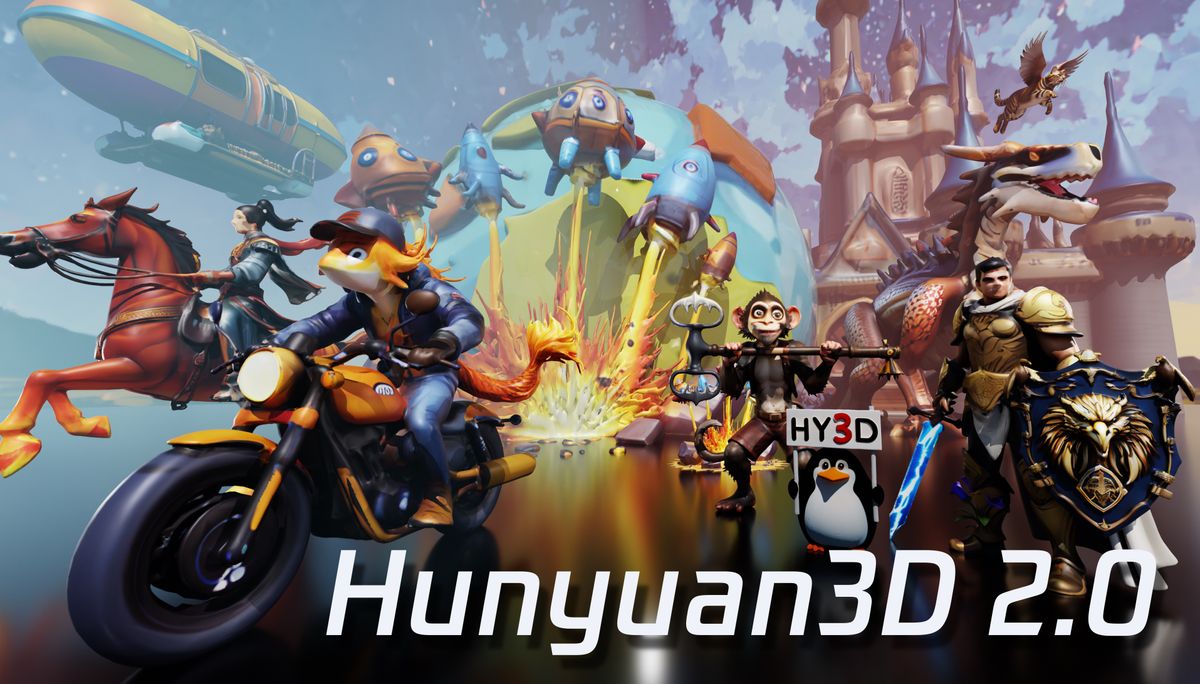
Hunyuan3D 2.0 appears to be able to generate 3D assets from 2D images with much better quality than its predecessor and many other image-to-3D tools. And it can even animate them. Some are already suggesting that it could revolutionise VFX and game development.

How Hunyuan3D 2.0 Works

Hunyuan3D 2.0 uses two AI models: Hunyuan3D-DiT to generate the 3D assets and Hunyuan3D-Paint to add textures for improved surface detail. Users provide a 2D reference image and the tool makes multiple 2D views of the object and builds them into a 3D model.

The Process

Cameras at specific heights capture the maximum visible area, capturing details that may be missed on other models, particularly at the top and bottom of objects. A guidance system is designed to improve consistency by ensuring every view matches up. Finally, Hunyuan3D-Studio will allow meshes to be edited and animated in a single workspace.

Impressive Results

The output appears to be much improved from the previous model, if not as good as Microsoft’s Trellis. It also appears to be very fast, generating a 3D model in around 25 seconds (or 10 seconds with a smaller version). This could make it a game-changer for e-commerce, VFX previews, and game development, where it could allow test versions of characters to be created more quickly. It could also serve for 3D-printable TTRPG assets.

Availability

The files are available on Hugging Face and GitHub.

Conclusion

Tencent’s Hunyuan3D 2.0 is a significant milestone in the development of generative AI, offering improved results and speed. Its potential applications are vast, from e-commerce to VFX and game development. As the technology continues to evolve, we can expect to see even more impressive results.

Frequently Asked Questions

Q: What is Hunyuan3D 2.0?
A: Hunyuan3D 2.0 is a generative AI tool that can generate 3D assets from 2D images.

Q: What are the benefits of Hunyuan3D 2.0?
A: It offers improved results and speed, making it a potential game-changer for e-commerce, VFX, and game development.

Q: How does Hunyuan3D 2.0 work?
A: It uses two AI models: Hunyuan3D-DiT to generate 3D assets and Hunyuan3D-Paint to add textures. Users provide a 2D reference image and the tool makes multiple 2D views of the object and builds them into a 3D model.

Q: Where can I find Hunyuan3D 2.0?
A: The files are available on Hugging Face and GitHub.

Open-Source AI Model Outperforms O1 at a Fraction of the Cost

Open-source AI Reaches New Milestone, Challenging Industry Giants

Open-source artificial intelligence (AI) has reached another milestone — and the cost differences it represents could shake up the industry.

On Par with o1

On Monday, Chinese AI lab DeepSeek announced the release of R1, the full version of its newest open-source reasoning model, which the company launched in preview in November. The company noted that R1 beats or is on par with OpenAI’s o1 in several math, coding, and reasoning benchmarks.

Also: $450 and 19 hours is all it takes to rival OpenAI’s o1-preview

Similar to o1, R1’s reasoning takes more time to answer than other models, but its queries are meant to be more sophisticated and accurate. Alongside the 671-billion-parameter model, DeepSeek also released six smaller “distilled” versions with as few as 1.5 billion parameters, which can be run on a local device.

Pricing

R1’s pricing structure is similarly poised to give OpenAI a run for its money. API access starts at just $0.14 for a million tokens (about 750,000 words analyzed) — a fraction of the $7.50 OpenAI charges for the equivalent tier. OpenAI is currently offering unlimited access to o1 for $2,400 a year through ChatGPT Pro.

Limitations

R1 does have some limitations, however. Models made by Chinese companies are subject to certain censors by the Chinese government, meaning while their abilities are comparable, there are certain queries R1 may simply not answer compared to o1. When tested by ZDNET’s Tiernan Ray, R1-preview struggled to clearly provide its chain of thought when compared with o1-preview, striking Ray as “baffling and tedious in ways o1 is not.”

Conclusion

DeepSeek’s release marks a promising trend in open-source reasoning models. The company’s pricing structure and capabilities are poised to give OpenAI a run for its money, and the trend of open-source AI development is likely to continue. As the industry continues to evolve, it will be interesting to see how OpenAI and other companies respond to the growing competition.

FAQs

Q: What is DeepSeek’s R1 model?
A: R1 is an open-source reasoning model developed by DeepSeek, a Chinese AI lab. It is capable of performing tasks similar to OpenAI’s o1 model, but at a lower cost.

Q: How does R1’s pricing compare to OpenAI’s o1?
A: R1’s pricing starts at $0.14 for a million tokens, while OpenAI charges $7.50 for the equivalent tier. OpenAI also offers unlimited access to o1 for $2,400 a year through ChatGPT Pro.

Q: Are there any limitations to R1?
A: Yes, R1 is subject to certain censors by the Chinese government, which may limit its ability to answer certain queries. Additionally, R1’s reasoning may take more time to answer than other models.

Q: How can I access R1?
A: R1 is available via an MIT license, and users can chat with the model at chat.deepseek.com. The API is also available for developers.

People Clicking Links in ChatGPT Search

0

What Brands Are Observing

A report from Modern Retail shows that people who use ChatGPT and Google Gemini for quick summaries also click the links these tools provide. This is important for marketers, as it suggests that AI-driven search may change product discovery and online traffic.

What To Learn From This

Viv, a period care brand, noticed a trend last summer when its website traffic increased by 400%. Marketing director Kelly Donohue linked this to the rise of AI tools. This spike coincided with a study in Environment International that found harmful heavy metals in popular tampon brands. Viv’s blog posts about product safety gained visibility as people searched for safer options. The increased traffic resulted in more sales, with Viv reporting a 436% rise from these AI-driven referrals. This indicates that users actively clicked through to learn more and make purchases.

What To Learn From This

Viv’s experience highlights the need for brands to create comprehensive content that answers people’s questions. Donohue pointed out that platforms like ChatGPT prefer articles with context, sources, and thorough explanations over keyword-heavy material. Donohue explained, "These AI tools are specifically scraping through content, but looking for more than just keywords. They’re looking for a cohesive response that they can give to people that includes context, sources, and background."

Other Brands Report Similar Trends

Joe & Bella is an adaptive apparel brand that has gained more visitors from ChatGPT recommendations. It makes clothing for older adults and people with mobility challenges, and during the holiday season, it saw an increase in visitors and purchases. Jimmy Zollo, Joe & Bella’s co-founder and CEO, tells Modern Retail, "I don’t really know how or what they would have typed or asked ChatGPT to have found us over the holidays." Zollo speculated that the company’s ongoing investment in SEO and its blog content likely played a role. The brand consistently uses keywords like "adaptive clothing" in its search ads and blog posts, which may have helped position it in AI-driven results.

What This Means for Marketers

These reports show that people engage with links in AI-generated search results rather than just reading summaries. Dan Buckstaff, chief product officer at Spins, compares this to the early days of SEO. Buckstaff said, "Similar to 15 years ago when we were questioning how SEO worked, we’re left with questioning how brands can benefit from AI environments." Spins’ 2025 Industry Trends Report indicates that consumers are increasingly using AI tools like ChatGPT and social media platforms like TikTok to discover products. While advertising on these AI tools is still developing, brands with strong, organized content are benefiting.

Looking Ahead

Consumers are increasingly clicking on links in AI-driven search results, especially younger audiences like Gen Z, who use AI tools for product discovery. For brands like Viv, this change is crucial for content creation. Donohue said, "These searches are top of mind for us now, and the way we’re writing our blogs and the content on our website can play a huge part in people finding us through AI tools." The key takeaway is to focus on straightforward, educational content to improve your chances of being recommended by AI-powered search tools.

Conclusion

The rise of AI-driven search is changing the way consumers discover products online. Brands that create comprehensive, context-rich content are more likely to benefit from these changes. As AI tools like ChatGPT and Google Gemini become more popular, marketers must adapt their content strategies to accommodate these new search habits.

FAQs

Q: What are the benefits of creating comprehensive content for AI-driven search?
A: Comprehensive content can improve your brand’s visibility in AI-powered search results and increase conversions.

Q: Can AI-driven search results impact my brand’s online traffic and sales?
A: Yes, AI-driven search results can increase your brand’s online traffic and sales, as seen in the examples of Viv and Joe & Bella.

Q: How can I optimize my content for AI-driven search?
A: Focus on creating straightforward, educational content that answers people’s questions and provides context, sources, and thorough explanations.

Cut LLM Costs with Smart Query Routing

Optimize Your LLM Deployment Costs with the Adaptive Classifier Library

Introduction

Hey folks! I’m excited to share a new open-source library that can help optimize your LLM deployment costs. The adaptive-classifier library learns to route queries between your models based on complexity, continuously improving through real-world usage.

Key Features and Results

We tested the adaptive classifier on the arena-hard-auto dataset, routing between a high-cost and low-cost model (2x cost difference). The results were impressive:

  • 32.4% cost savings with adaptation enabled
  • Same overall success rate (22%) as baseline
  • System automatically learned from 110 new examples during evaluation
  • Successfully routed 80.4% of queries to the cheaper model

Implementation and Integration

The library integrates easily with any transformer-based models and includes built-in state persistence. This makes it perfect for setups where you’re running multiple LLama models (like Llama-3.1-70B alongside Llama-3.1-8B) and want to optimize costs without sacrificing capability.

Get Involved

Check out the repo for implementation details and benchmarks. We’d love to hear your experiences if you try it out!

Repository Link

https://github.com/codelion/adaptive-classifier

Conclusion

The adaptive classifier library is a powerful tool for optimizing LLM deployment costs without compromising on performance. By learning to route queries based on complexity, it can help reduce costs and improve overall efficiency. We’re excited to see how you’ll use this library to optimize your own LLM deployments.

Frequently Asked Questions

Q: What is the adaptive classifier library?
A: The adaptive classifier library is an open-source library that learns to route queries between your models based on complexity, continuously improving through real-world usage.

Q: How does the library work?
A: The library uses a machine learning algorithm to analyze the complexity of each query and route it to the most appropriate model, based on factors such as computational cost and accuracy.

Q: What are the benefits of using the adaptive classifier library?
A: By using the adaptive classifier library, you can reduce your LLM deployment costs without sacrificing performance. It also allows you to continuously improve the accuracy of your models through real-world usage.

Q: Is the library compatible with my LLM model?
A: The library is compatible with any transformer-based models, including Llama-3.1-70B and Llama-3.1-8B.

Samsung’s Galaxy S25 Event

0

Samsung Galaxy S25 Phones to Be Announced Tomorrow

Samsung is set to announce its Galaxy S25 phones at its Galaxy Unpacked event tomorrow, January 22nd, at 1PM ET. The event typically focuses on its next smartphones and software features, which you can bet includes lots of AI, but there should be other things here and there, too. Here’s what we’re expecting and how you can watch along.

How to Watch the Event

Samsung will stream the event on YouTube, its website, and its newsroom page, and we’ll post about the announcements as they happen right here on The Verge.

Expected Features and Phones

We expect the company to reveal the Galaxy S25, S25 Plus, and S25 Ultra. It sounds like we’re getting more of the same with those phones, except for the S25 Ultra, which is expected to receive design tweaks like slightly rounder corners. That’s at least according to a preview in a set of leaked renders that hit the internet last week. The company has said its 2025 Galaxy devices will have Qi2 wireless charging support, but it’s possible that only means they’re “Qi2 Ready” phones that need a magnetic case to get the full MagSafe-like experience.

Software Features

The phones will run Samsung’s tweaked version of Android 15, One UI 7, which launched in beta last month with features like an iPhone Dynamic Island-like “Now Bar,” a redesigned camera app, and the ability to disable HDR content to avoid being ambushed by overly bright videos in your social feeds. The company said yesterday that One UI 7 “seamlessly integrates AI agents and multimodal capabilities into every touch point.” Expect more along those lines during the event.

Omissions

It seems unlikely Samsung will unveil a Galaxy S25 “Slim” phone. A recent leak suggested the phone won’t launch in the US. There’s also a chance the company will talk more about the “Project Moohan” VR headset my colleague Victoria Song previewed in December.

Conclusion

Samsung is expected to announce its Galaxy S25 phones tomorrow, along with various software features and possibly more details on its Project Moohan VR headset. Stay tuned to The Verge for live coverage of the event and updates on the latest announcements.

FAQs

Q: What time is the Galaxy Unpacked event?

A: The event is scheduled to start at 1PM ET on January 22nd.

Q: How can I watch the event?

A: Samsung will stream the event on YouTube, its website, and its newsroom page. We will also provide live coverage on The Verge.

Q: What phones are expected to be announced?

A: Samsung is expected to reveal the Galaxy S25, S25 Plus, and S25 Ultra.

Q: What software features can I expect?

A: The phones will run Samsung’s tweaked version of Android 15, One UI 7, which features like an iPhone Dynamic Island-like “Now Bar,” a redesigned camera app, and the ability to disable HDR content.

From Terminal to Browser: Turning Ollama into a Browser-Based AI

How to Use Ollama Via a Firefox Extension So You Don’t Have to Use the Command Line

How to Install the Page Assist Extension in Firefox

To make this work, you’ll need Ollama installed and running, as well as the Firefox browser. That’s it. Let’s make some magic.

  1. Open Firefox. If you’re reading this via Firefox, you’re already one step ahead.
  2. Point Firefox to the Page Assist entry in the Add-Ons store and click "Add to Firefox." When prompted, click Add. You’ll notice the Add-Ons store lists Page Assist as not actively monitored for security by Mozilla. Because of that, I tracked down the source for the extension, which is hosted on GitHub. Since the source is available to download and view, I didn’t hesitate to install it.
  3. Do remember, though, that nothing is 100% safe. Also, you can take a look at the reviews and see that no one has complained of malicious activity from the extension.
  4. Finally, you can check out the developer’s website to learn more.

How to Use Page Assist

Before you actually use Page Assist, you need to ensure that Ollama is running. If you’ve already installed it, you can run a local LLM with a command like this:

ollama run llama3.2

If you see the >>> prompt, the LLM is running and ready to accept queries.

Using Page Assist

  1. Pin the extension: The first thing I would do is pin the Page Assist extension to the Firefox toolbar. To do that, click the puzzle piece icon and then click the gear icon associated with Page Assist. From the drop-down, click "Pin to toolbar." You should now see the Page Assist icon in the Firefox toolbar (which looks like a tiny thought balloon).
  2. Open the extension: Click the Page Assist icon, and a new tab will open with the Ollama UI.
  3. Select your model: Before you can run your first query, you need to select a model. Click the "Select a Model" drop-down and choose the model you’ve installed (such as llama3.2:latest).
  4. Type your query: You can now type your query in the bottom section labeled "Type a message." Hit Enter on your keyboard or click Submit, and Ollama will go to work.

Adding a New Model

You can also add new models with Page Assist. To do that, click the gear icon in the upper right of the Page Assist window. Click Manage Models in the left sidebar, and then click Add New Model. In the pop-up window, type the name of the model you want to add and click Pull Model. For a complete list of models available to Ollama, check out this page.

Conclusion

And that, my friends, is how you can more easily interact with Ollama, thanks to a simple-to-use Firefox extension.

FAQs

Q: Is the Page Assist extension safe to use?
A: While the extension is not actively monitored for security by Mozilla, it has been reviewed and no one has complained of malicious activity.

Q: How do I add a new model to Page Assist?
A: To add a new model, click the gear icon in the upper right of the Page Assist window, then click Manage Models, and finally click Add New Model.

Q: Can I use Page Assist with other browsers?
A: Yes, Page Assist works on Firefox, Zen Browser, and other compatible browsers.

Trump Announces $500B AI Infrastructure Boost

Trump Rescinds Biden’s AI Order, Announces $500B Investment in AI Infrastructure

President Donald Trump signed a flurry of executive orders during his first day in office, including one that rescinded his predecessor’s order addressing AI risk. The new president indicated he viewed the old order as unnecessarily stifled an emerging industry.

Biden’s Executive Order on AI

In October 2023, Joe Biden signed an executive order that addressed looming concerns around the use of AI and generative AI in particular. Since Congress failed to establish a law outlining the approach that the United States would take, as the European Commission did with the AI Act, Biden acted unilaterally with an executive order.

Key Provisions of the Order

  • Required the National Institute of Standards and Technology (NIST) to establish standards for “red team safety tests” of AI models
  • Required developers of the foundation model to notify the government when training the model and sharing the results of the tests
  • Ordered the Department of Commerce to develop standards for detecting AI-generated content
  • Required the establishment of a program to use AI to “find and fix” security vulnerabilities
  • Required the National Security Council and White House Chief of Staff to further research AI and security

Trump’s Decision to Rescind the Order

Trump took the view that his predecessor’s regulations posed an unnecessary burden to AI development, as well as a potential national security concern, should it slow down the pace of AI innovation versus adversaries, such as China.

Reactions to the Decision

The end of Biden’s AI regulations spurred immediate cries of alarm, with some people suggesting that “dangerous events such as AI suggesting teens to cut themselves or AI aiding life-threatening explosive attacks are about to become a lot more common,” one source told BigDATAwire.

“The move to revoke Biden’s executive order has led to a climate of regulatory uncertainty for companies operating in AI-driven fields,” writes Aaron K. Tantleff, a partner with the law firm Foley & Lardner LLP. “In the absence of a unified federal framework, businesses could encounter various challenges, such as an inconsistent regulatory landscape as states and international organizations intervene, increased risks related to AI ethics and data privacy, and unfair competition among companies that implement differing standards for AI development and deployment.”

Private Sector Investment in AI Infrastructure

Trump also announced up to $500 billion in private sector investment in AI infrastructure. OpenAI, Softbank, and Oracle have agreed to participate in a joint venture called Stargate that will invest in data centers to power AI.

Stargate Data Centers

Oracle founder Larry Ellison said at a press conference today that 10 Stargate data centers are already under construction in Texas and more are planned.

Conclusion

The decision to rescind Biden’s AI order and announce a significant investment in AI infrastructure has raised concerns about the potential risks and challenges associated with AI development. While some see the move as a necessary step to promote innovation, others are worried about the potential consequences for national security and the ethics of AI development.

FAQs

Q: What was the main purpose of Biden’s executive order on AI?
A: The main purpose of Biden’s executive order was to address concerns about the use of AI and generative AI in particular, and to establish standards for AI development and deployment.

Q: Why did Trump rescind Biden’s executive order?
A: Trump rescinded Biden’s executive order because he viewed it as unnecessarily stifling AI development and posing a potential national security concern.

Q: What is the Stargate joint venture?
A: The Stargate joint venture is a partnership between OpenAI, Softbank, and Oracle to invest in data centers to power AI.

Q: How much investment has been announced in AI infrastructure?
A: Up to $500 billion in private sector investment has been announced in AI infrastructure.

VA Prescribers Exempt from DEA’s Special Telehealth Registration

DEA Extends Provider-Patient Relationships for Telemedicine Services

Key Updates

* The Drug Enforcement Administration (DEA) is extending the provider-patient relationships for telemedicine services to all VA practitioners engaging in telemedicine with patients.
* The new rule requires VA telehealth prescribers to review and update patient electronic health records and review prescription drug-monitoring program data for the state where the patient is located.
* The rule does not require VA practitioners to register for a special registration for controlled substances prescribed in virtual care.

Why it Matters

* The VA has a nationally integrated, closed healthcare system with rigorous internal policies and controls that ensure patient safety, continuity of care, and thorough monitoring of prescriptions.
* The new rule is designed to balance access to virtual care for veterans while ensuring patient safety.

Implementation Details

* VA telehealth prescribers must review and update the patient’s VA electronic health record and review the prescription drug-monitoring program data for the state where the patient is located.
* If either the VA EHR or the state PDMP data is not available, the practitioner must limit the prescription to a seven-day supply until able to access both records.
* The practitioner must also review the patient’s VA electronic health record and review the prescription drug-monitoring program data for the state in which the patient is located.

Exemptions

* The VA exemption from the special registration for telehealth prescribers does not apply to community care network providers or those conducting disability compensation evaluations.

The Larger Trend

* The DEA’s intention is to balance access to virtual care for the long term, as temporary exemptions to the Ryan Haight Act end this year.
* The general rule applies the necessary safeguards against the diversion or misuse of controlled substances across the larger healthcare sector.

Conclusion

The DEA’s new rule aims to strike a balance between access to virtual care and patient safety. By extending provider-patient relationships for telemedicine services, the agency is promoting continuity of care and ensuring that patients receive the treatment they need.

FAQs

Q: What are the new requirements for VA telehealth prescribers?

A: VA telehealth prescribers must review and update the patient’s VA electronic health record and review the prescription drug-monitoring program data for the state where the patient is located.

Q: How long does the exemption from special registration last?

A: The exemption from special registration for telehealth prescribers does not apply to community care network providers or those conducting disability compensation evaluations.

Q: What is the purpose of the new rule?

A: The purpose of the new rule is to balance access to virtual care for veterans while ensuring patient safety.

Q: What is the impact of the new rule on healthcare providers?

A: The new rule may present operational challenges for providers, particularly those who are not part of the VA system.

Microsoft is letting OpenAI get its own AI compute now

0

Microsoft and OpenAI Adjust Partnership, Allowing Access to Competitors’ Compute

New Agreement Includes Changes to Exclusivity

Microsoft and OpenAI have announced an adjustment to their partnership, allowing OpenAI to access competitors’ compute. The new agreement includes changes to the exclusivity on new capacity, moving to a model where Microsoft has a right of first refusal (ROFR). Microsoft has also approved OpenAI’s ability to build additional capacity, primarily for research and training of models.

Foundation of the Relationship Remains the Same

The foundation of their relationship, which runs through 2030, remains largely unchanged. Microsoft will continue to have exclusive rights to OpenAI’s tech for products like Copilot, and OpenAI’s API will remain exclusive to Azure. The two parties will maintain their two-way revenue-sharing setup, with Microsoft receiving 20% of OpenAI’s revenue.

OpenAI’s Computing Needs and Partnership with Oracle

OpenAI has been seeking billions of dollars in compute to build and train its models, which would require large-scale computing resources. In June, OpenAI partnered with Oracle to secure the necessary compute, with the blessing of Microsoft. This move was seen as a way for OpenAI to gain more control over its compute needs, as some shareholders felt Microsoft was not providing sufficient resources.

Tensions and Drama

The relationship between Microsoft and OpenAI has not been without its challenges. In the past, there have been reports of tensions and drama between the two parties, including a brief ousting of OpenAI CEO Sam Altman. The New York Times reported that the relationship has grown increasingly strained due to financial pressures, concerns about stability, and growing friction between employees at both companies. The hiring of Inflection CEO Mustafa Suleyman to lead Microsoft’s consumer AI efforts in March also caused tension, with some OpenAI leadership, including Altman, expressing anger over the move.

Conclusion

The revised agreement between Microsoft and OpenAI marks a significant shift in their partnership, allowing OpenAI to access competitors’ compute and build additional capacity. While the foundation of their relationship remains largely unchanged, the move is seen as a way for OpenAI to gain more control over its compute needs and build out its models. The partnership has faced its challenges in the past, but the two parties will continue to work together to advance the field of artificial intelligence.

FAQs

Q: What is the new agreement between Microsoft and OpenAI?
A: The new agreement allows OpenAI to access competitors’ compute and build additional capacity.

Q: How will the partnership between Microsoft and OpenAI change?
A: The foundation of their relationship will remain largely unchanged, with Microsoft having exclusive rights to OpenAI’s tech for products like Copilot and OpenAI’s API remaining exclusive to Azure.

Q: Why did OpenAI partner with Oracle?
A: OpenAI partnered with Oracle to secure the necessary compute resources to build and train its models.

Q: What caused tensions between Microsoft and OpenAI?
A: Tensions arose due to financial pressures, concerns about stability, and growing friction between employees at both companies, as well as the hiring of Inflection CEO Mustafa Suleyman to lead Microsoft’s consumer AI efforts.