Home Blog Page 385

Developers at Odds with Bosses Over AI Initiatives

0

The Video Game Industry in a Troubled State

Challenges and Concerns

The video game industry has been facing a tumultuous period, with studio closures and job security at the forefront of developer concerns. The past year has seen a surge in layoffs, with no end in sight, painting a bleak picture for the future of the industry. Despite this, companies are investing heavily in AI initiatives, leaving many developers feeling uncertain about their place in the industry.

AI in the Industry

According to a recent report from the Game Developers Conference (GDC), 52% of developers surveyed stated that they work for companies using generative AI in their games. However, half of the 3,000 respondents expressed concern about the technology’s impact on the industry, and an increasing number reported feeling negatively about AI overall.

Industry Trends and Sentiment

The GDC’s "State of the Game Industry" report, released in March, reveals a mix of cultural and economic factors affecting the industry. Despite the success of games like Astro Bot, Helldivers 2, and Balatro, studios like Microsoft and Sony have slashed staff and canceled games. The report also highlights the growing unease among developers about the ethics of AI technology.

Developer Feedback

One developer with a PhD in AI, who worked on developing some of the algorithms used by generative AI, expressed regret over their contributions, stating, "I deeply regret how naively I offered up my contributions."

Negative Sentiment Towards AI

The survey revealed that 30% of developers felt negatively about AI, a significant increase from 18% last year. Only 13% believed AI was having a positive impact on games, down from 21% in 2024. Many developers expressed concerns about the potential negative impact of AI on the industry, with one developer stating, "No matter how you put it, generative AI isn’t a great replacement for real people, and quality will be damaged."

Uses of AI in the Industry

While AI has the potential to help with tasks such as coding, concept art, and 3D model generation, developers were skeptical about its uses in the industry. When asked about the potential uses of AI, "the word used most frequently in their responses was ‘none.’"

Working Hours and Layoffs

Despite the potential benefits of AI, developers are reportedly working longer hours than ever. Thirteen percent of respondents reported working 51+ hour weeks, up from 8% last year. Many developers attributed this to the need to take on additional work to make up for colleagues lost in massive industry-wide layoffs.

Conclusion

The video game industry is facing a challenging period, with developers struggling with job security and the impact of AI technology. While AI has the potential to benefit the industry, many developers are skeptical about its uses and concerned about its impact on the industry.

FAQs

Q: What is the current state of the video game industry?
A: The industry is facing a tumultuous period, with studio closures and job security at the forefront of developer concerns.

Q: What is the current sentiment towards AI in the industry?
A: Many developers are concerned about the impact of AI on the industry, with 30% feeling negatively about it.

Q: What are the potential uses of AI in the industry?
A: While AI has the potential to help with tasks such as coding, concept art, and 3D model generation, many developers are skeptical about its uses in the industry.

Q: What is the current state of layoffs in the industry?
A: Layoffs are a significant concern, with one in 10 developers losing their jobs in the past year.


Trump’s Tech Tribe

The Impact of a Trump Presidency on the Tech Sector

Stay of Execution for TikTok

Incoming president Donald Trump has demonstrated his willingness to take decisive action on tech, with a recent stay of execution for TikTok after the US Supreme Court upheld a ban on the social media platform. But what does this mean for the rest of the tech sector, and how much influence will Elon Musk wield in a Trump presidency?

A New Era for Social Media

The stay of execution for TikTok is just the beginning. With a Trump presidency, the tech sector can expect significant changes in the way social media platforms operate. Will we see stricter regulations and increased scrutiny of online content? Will platforms like Facebook, Twitter, and Instagram face similar threats to their survival? The answers to these questions will have a profound impact on the way we interact online.

Artificial Intelligence and the Future of Work

Artificial intelligence (AI) is another area that will likely be under the microscope in a Trump presidency. As AI continues to transform industries and change the way we work, will the government step in to regulate its use? Will there be new laws and regulations to ensure workers are protected in an increasingly automated job market? The answers to these questions will have a significant impact on the future of work.

Elon Musk’s Role in a Trump Presidency

Elon Musk, CEO of Tesla and SpaceX, is a key figure in the tech sector. With his influential position in the industry, he will likely have a significant role to play in a Trump presidency. Will he be a key advisor to the new administration, helping to shape tech policy and regulations? Or will he be a vocal critic, using his platform to advocate for change? The answer to this question will have a significant impact on the tech sector.

Conclusion

A Trump presidency is likely to have a profound impact on the tech sector, from social media to artificial intelligence. With a stay of execution for TikTok and the potential for stricter regulations, the industry will need to adapt quickly to the new landscape. The role of Elon Musk in this process will be closely watched, as his influence could tip the balance in favor of change. As we navigate this new era, one thing is clear: the tech sector will need to be agile and responsive to the changing landscape.

FAQs

Q: What does a Trump presidency mean for social media?
A: A Trump presidency could lead to stricter regulations and increased scrutiny of online content, potentially changing the way social media platforms operate.

Q: How will AI be impacted by a Trump presidency?
A: The government may step in to regulate AI, ensuring workers are protected in an increasingly automated job market.

Q: What role will Elon Musk play in a Trump presidency?
A: Elon Musk’s influential position in the tech sector could lead to a key advisory role in the new administration, shaping tech policy and regulations.

Q: How will the tech sector adapt to a Trump presidency?
A: The industry will need to be agile and responsive to the changing landscape, adapting to new regulations and challenges as they arise.

NVIDIA AI Reduces Road Delays and Emissions

Taming Traffic in Tuscon, Vancouver and Beyond

More than 90 million new vehicles are introduced to roads across the globe every year, leading to an annual 12% increase in traffic congestion — according to NoTraffic, a member of the NVIDIA Inception program for cutting-edge startups and the NVIDIA Metropolis vision AI ecosystem.

Reducing Unnecessary Congestion and Delays

Still, 99% of the world’s traffic signals run on fixed timing plans, leading to unnecessary congestion and delays. To reduce such inefficiencies, NoTraffic’s AI Mobility platform predicts road scenarios, helps ensure continuous traffic flow, minimizes stops, and optimizes safety at intersections across the U.S., Canada, and elsewhere.

How NoTraffic’s AI Mobility Platform Works

The platform, which enables road infrastructure management at both local-intersection and city-grid scale, integrates NVIDIA-powered software and hardware at the edge, under a cloud-based operating system. It’s built using the NVIDIA Jetson edge AI platform, NVIDIA accelerated computing, and the NVIDIA Metropolis vision AI developer stack.

Success Stories

In Tuscon, Arizona, more than 80 intersections are tapping into the NoTraffic AI Mobility platform, which has enabled up to a 46% reduction in road delays during rush hours — and a half-mile reduction in peak queue length. In Vancouver, Canada, the University of British Columbia (UBC) is using the NoTraffic platform and Rogers Communications’ 5G-connected, AI-enabled smart-traffic platform to reduce both pedestrian delays and greenhouse gas emissions.

Benefits of NoTraffic’s AI Mobility Platform

  • Reduces travel times, saving drivers over $1.6 million in gas and cutting emissions, resulting in the equivalent impact of planting 650,000 trees
  • Frees up to 1.25 million hours of traffic time, representing an economic benefit of over $24.3 million
  • Reduces red-light runners by nearly 80%, improving safety at intersections
  • Decreases pedestrian delays by up to 40%

Conclusion

NoTraffic’s AI Mobility Platform is a game-changer in the fight against traffic congestion and carbon emissions. By leveraging NVIDIA’s edge AI and accelerated computing, the platform is able to predict road scenarios, optimize traffic signals, and reduce delays, resulting in significant economic and environmental benefits.

Frequently Asked Questions

Q: How does NoTraffic’s AI Mobility Platform work?
A: The platform uses NVIDIA-powered software and hardware at the edge, under a cloud-based operating system, to predict road scenarios, optimize traffic signals, and reduce delays.

Q: What are the benefits of using NoTraffic’s AI Mobility Platform?
A: The platform reduces travel times, saves drivers money, reduces emissions, and improves safety at intersections.

Q: How does the platform work in different cities?
A: The platform is deployed in various cities, including Tuscon, Arizona, Vancouver, Canada, and Phoenix, Arizona, among others.

Q: What is the impact of NoTraffic’s AI Mobility Platform on the environment?
A: The platform reduces carbon emissions, resulting in the equivalent impact of planting trees, and decreases the need for fossil fuels.

Balenciaga’s Ugly Game Console

0

The Balenciaga Console: A Retro Gaming Disaster

The great Spanish fashion designer Cristóbal Balenciaga will be rolling in his grave this week. The Kering-owned brand that uses his name today has made a handheld retro gaming console – and it’s as hideous as you might expect.

A Cross Between a Nintendo Game Boy and a Tesla Cybertruck

The Balenciaga console looks like a cross between a Nintendo Game Boy and a Tesla Cybertruck done on the cheap. If anything the limited-edition device reinforces the argument that gaming and hype fashion really don’t mix. One of the best retro games consoles it is not.

A Gift for Important Chinese Customers

The Balenciaga gaming console has been made as a gift for important Chinese customers (or VICs) to celebrate the lunar new year and the start of the Year of the Snake. Yes, you guessed it. The console plays the classic mobile game Snake (which is also available to play online at the Balenciaga website.) And that’s all it does.

Watch the Console in Action

Balenciaga Snake Game – YouTube

A Cheap, Plastic Console with Impactically Shaped Buttons

Just like a Balenciaga T-shirt, the console takes minimalism to its blandest extreme, resulting in a product that looks like a cheap generic with a logo stamped on it. It’s plasticy, has impactically shaped buttons, and, out of the box, it only plays Snake, although I presume someone will find a way to play DOOM on it.

Hype Fashion and Gaming Don’t Mix

These days, much of what Balenciaga does is can be described as hype fashion, the complete opposite of Cristóbal’s traditional approach to haute couture with his emphasis on craftmanship. But, as the Gucci Xbox has already shown us, hype fashion and gaming just don’t work. I wonder how impressed those Chinese VIC’s will be with this dubious New Year gift. They might prefer to wait for the Nintendo Switch 2 release.

Conclusion

The Balenciaga console is a disappointing and uninspired product that fails to impress. It’s a shame that the brand’s name is being used to sell such a subpar product. For those looking for a decent retro gaming console, there are far better options available.

FAQs
Q: What does the Balenciaga console play?

A: The console only plays the classic mobile game Snake.

Q: Is the console worth buying?

A: No, the console is not worth buying due to its poor quality and limited functionality.

Q: Can I play other games on the console?

A: Yes, although it’s unclear if anyone will bother to hack the console to play other games.

Top 7 Free AI Coding Tools

Types of AI Coding Tools

AI-powered coding tools can be categorised into several types based on their functionality:

  • AI Code Completion Tools — Provide real-time suggestions and auto-complete lines of code.
  • AI Code Generators — Generate full scripts, functions, or even applications based on natural language prompts.
  • AI Debugging and Error Detection Tools — Identify syntax errors, logical issues, and security vulnerabilities.
  • AI Test Automation Tools — Create and execute test cases with minimal human intervention.
  • AI Code Optimisation Tools — Improve performance by suggesting better coding practices.
  • AI Security and Compliance Tools — Analyse code for vulnerabilities and help developers follow security best practices.
  • AI Documentation Generators — Automate inline comments, API documentation, and explanations.

Best Free AI Coding Tools for 2025

Below, we explore seven of the best free AI coding tools available today and provide an analysis of their features, benefits, and how they can enhance the software development process.

1. Qodo

Qodo is an AI-powered coding assistant designed to help developers generate, optimise, and debug code easily. It offers real-time code suggestions, detects syntax errors, and improves the overall quality of the codebase.

2. Kite

Kite was a popular AI-powered autocomplete tool that provided developers with real-time code suggestions and documentation assistance. Although it has been discontinued, it significantly influenced modern AI coding assistants.

3. Amazon CodeWhisperer

Amazon CodeWhisperer is a free AI-powered coding assistant that provides intelligent code completions and recommendations based on natural language input. It integrates seamlessly with AWS services, making it an excellent tool for cloud-based development.

4. Ponicode

Ponicode is an AI-powered unit testing and code quality analysis tool that ensures high test coverage and optimised code.

5. IntelliCode

Microsoft IntelliCode enhances coding productivity by offering AI-powered autocomplete, refactoring suggestions, and best coding practices based on thousands of open-source projects.

6. YOGI Bot

YOGI Bot is an AI-powered chatbot that assists developers with debugging, code explanations, and best practice recommendations.

7. CodeT5

CodeT5, developed by Salesforce Research, is an AI-powered code generation and translation model that helps developers write high-quality code efficiently.

Why Use AI Coding Tools?

AI coding tools are gaining popularity due to their ability to streamline development processes, reduce coding errors, and enhance productivity. Here’s why developers should consider integrating AI into their workflow:

Increased Efficiency

AI-powered tools speed up coding by suggesting relevant code snippets, autocompleting functions, and automating repetitive tasks. This allows developers to focus on solving complex problems rather than spending time on boilerplate code.

Improved Code Quality

AI-driven code review tools analyse code for potential errors, security vulnerabilities, and performance issues, ensuring high-quality and optimised code.

Reduced Debugging Time

Manually finding and fixing bugs can be time-consuming. AI debugging tools help detect issues in real-time and provide potential fixes, reducing time spent on troubleshooting.

Enhanced Collaboration

AI-powered tools facilitate team collaboration by providing code suggestions, and documentation, making it easier for teams to work together efficiently.

Automated Testing and Deployment

AI-driven test automation ensures that applications are tested before deployment, reducing manual effort and potentially speeding up the software release cycle.

Better Security

Security-focused AI tools can help identify vulnerabilities and suggest best practices, helping developers write more secure code that complies with industry standards.

Accessibility for Beginners

AI coding assistants help beginners learn programming by providing real-time feedback, suggesting improvements, and simplifying complex coding concepts.

Conclusion

AI coding tools have revolutionised the software development process by providing intelligent recommendations, automating repetitive tasks, and improving code quality. By incorporating these tools into their workflow, developers can write cleaner, more efficient code and reduce the time spent on repetitive tasks.

FAQs

Q: What are the benefits of using AI coding tools?

A: AI coding tools can increase efficiency, improve code quality, reduce debugging time, enhance collaboration, automate testing and deployment, provide better security, and make programming more accessible for beginners.

Q: What types of AI coding tools are available?

A: AI-powered coding tools can be categorised into several types, including code completion tools, code generators, debugging and error detection tools, test automation tools, code optimisation tools, security and compliance tools, and documentation generators.

Q: Are AI coding tools free?

A: Yes, some AI coding tools are free, while others may require a subscription or a one-time payment. The article highlights seven of the best free AI coding tools available today.

Donald Trump Rescinds Biden-Era Executive Order on AI Safety

0

Trump Rescinds Biden’s Executive Order on Generative AI Safety Guidelines

In his executive actions on day one of his presidency, Donald Trump rescinded an executive order Joe Biden signed in 2023 to establish safety guidelines for generative AI.

Biden’s Original Order: Safety Guidelines for Generative AI

The Biden-era order required developers of large AI models like OpenAI’s GPT lineup to share the results of safety tests with the US government. It also directed the National Institute of Standards and Technology to develop standards for safety testing, and it tasked other federal agencies with assessing any potential chemical, biological, radiological, nuclear, cybersecurity, or critical infrastructure risks AI might pose.

Biden’s Action on Worker and Consumer Protection

Biden’s action also included measures meant to protect workers and consumers. It commissioned a report on how AI might affect the labor market and asked agencies to develop practices for addressing AI-enabled fraud and discriminatory algorithms.

Trump’s Rescission of the Order

Donald Trump axed all that yesterday as he signed a flurry of new executive orders. One of his first actions was to rescind 78 Biden-era executive actions, including Executive Order 14110 on “Safe, Secure, and Trustworthy Development and Use of Artificial Intelligence.”

What’s Next for AI Development in the US?

Other measures the Biden administration put in place to boost AI development in the US may have a better shot at surviving. Before leaving office this month, Biden announced a new regulatory framework restricting some international sharing of AI chips and models. Biden also issued an executive order in January meant to speed the development of AI data centers on federal land.

Conclusion

The rescission of the executive order on generative AI safety guidelines is a significant step backward for the development of AI in the US. The move raises concerns about the potential risks associated with AI and the lack of regulation in the field.

FAQs
Q: What was the purpose of the Biden-era executive order on generative AI safety guidelines?

A: The order aimed to establish safety guidelines for the development and use of generative AI models, including the sharing of safety test results with the US government and the development of standards for safety testing.

Q: What was rescinded by Trump?

A: Trump rescinded Executive Order 14110 on “Safe, Secure, and Trustworthy Development and Use of Artificial Intelligence,” which was one of 78 Biden-era executive actions.

Q: What’s next for AI development in the US?

A: The Biden administration’s new regulatory framework and executive order on AI data centers may have a better shot at surviving, but the future of AI development in the US remains uncertain.

Mood Boards vs. Style Reference

0

Understanding the Differences between Style References and Mood Boards in Midjourney

Introduction

As an artist, designer, or creative individual, you’re likely familiar with the importance of visual references in your work. In Midjourney, two features that serve this purpose are Style References and Mood Boards. While they share some similarities, they have distinct differences in implementation and control. In this article, we’ll break down the differences between these two features to help you make informed decisions in your creative process.

Convenience

Style References and Mood Boards can be used interchangeably, but they serve different purposes. Style References are a collection of images that can be easily added to your project, allowing you to quickly reference and explore different styles. Mood Boards, on the other hand, are a curated selection of images that help you establish a visual tone and aesthetic for your project.

Longevity

When it comes to longevity, Style References are more practical. They can be easily updated, modified, or replaced, allowing you to adapt your project to changing trends or styles. Mood Boards, while more static, can be updated, but the process is more labor-intensive.

Control

The level of control you have over your references also differs between the two features. With Style References, you have more flexibility to experiment and explore different styles, while Mood Boards are more rigid, as they’re designed to convey a specific mood or aesthetic. This is because Mood Boards are often used to establish a consistent visual language throughout a project or brand.

How to Test

To determine which feature is best for your project, you can conduct a simple experiment. Create a Style Reference with a few images and a Mood Board with a specific aesthetic in mind. Then, test both references in your project to see which one resonates with your target audience.

Results

By comparing the results, you’ll be able to identify the feature that best aligns with your creative vision. If you find that your audience responds better to the Style Reference, it may be a sign that you should focus on exploring different styles. If they resonate more with the Mood Board, it may indicate that your project requires a more consistent visual identity.

Test #2

For a more in-depth test, try creating two separate projects, one using a Style Reference and the other using a Mood Board. This will give you a more comprehensive understanding of how each feature affects the overall outcome.

Suggestion

If you’re still unsure, consider the following suggestion: use Style References for projects that require flexibility and experimentation, and Mood Boards for projects that demand a consistent visual identity.

Conclusion

In conclusion, while Style References and Mood Boards share similarities, they are distinct tools that serve different purposes in your creative process. By understanding the differences between the two, you can make informed decisions that align with your project’s goals and target audience. Remember to test both features and consider your project’s requirements to determine which one is best for you.

FAQs

Q: What is the main difference between Style References and Mood Boards?
A: Style References are a collection of images for reference, while Mood Boards are a curated selection of images to establish a visual tone and aesthetic.

Q: Can I use both Style References and Mood Boards in a project?
A: Yes, you can use both features in a project, depending on your creative goals and requirements.

Q: How do I choose between Style References and Mood Boards?
A: Test both features in your project and see which one resonates with your target audience.

Mainframe Application Modernization Drives Digital Transformation

0

Digital Transformation and Mainframe Modernization

Rapid advancement of emerging technologies—combined with the increasing demands from customers and ongoing disruptive market forces—are driving organizations to prioritize digital transformation more than ever. According to a recent survey conducted by the IBM Institute for Business Value in cooperation with Oxford Economics, 67% of executive respondents say their organizations need to transform quickly to keep up with the competition, while 57% report current market disruptions are placing unprecedented pressure on their IT.

The Need for Digital Transformation

Digital transformation places significant demands on existing applications and data, which necessitates modernization and integration across an enterprise’s heterogeneous technology landscape, including cloud and mainframe. It’s no wonder that CEOs ranked technology modernization as one of their top priorities for their organizations as they look to reinvent products, services, and operations in order to improve efficiency, agility, and time to market.

The Role of Mainframe in Digital Transformation

Enterprises need flexible, secure, open, and fit-for-purpose platforms to operate and develop services consistently across their hybrid cloud environment. The mainframe remains a critical component in achieving this, as mission-critical applications continue to leverage the strength of mainframes. A hybrid best-fit approach is one that includes mainframes and cloud, supporting the modernization, integration, and deployment of applications. This maximizes business agility and addresses client pain points, including reducing the talent gap, accelerating time to market, improved access to mission-critical data across platforms, and optimizing costs.

Mainframe Modernization: Challenges and Opportunities

The new research from the IBM Institute for Business Value found that nearly 7 in 10 IT executives say mainframe-based applications are central to their business and technology strategies. On top of that, 68% of respondents say mainframe systems are central to their hybrid cloud strategy.

However, modernization can be a complex process, with organizations facing a host of challenges. Almost 70% of executives surveyed report that the mainframe-based applications in their organizations need to be modernized. The study further reveals that organizations are 12x more likely to leverage existing mainframe assets rather than rebuild their application estates from scratch in the next two years, which could be too costly, risky, or time-consuming. For those businesses now pursuing mainframe application modernization, surveyed executives point to the lack of required resources and skills as the top challenge. Mainframe costs, which executives cited as a significant barrier when asked two years ago, is no longer perceived as such, with executives now looking for more sources of value from mainframe such as resilience, optimization, and regulatory compliance.

Actionable Steps for Mainframe Modernization

Given the importance of mainframe modernization, IT leaders looking to reinvigorate their mainframe modernization need to take a few critical actions now:

Adopt an Iterative Approach

As part of your plan to integrate new and existing environments, factor in your industry and workload attributes. Partner with your business counterparts to co-create a business case and a “best-fit” roadmap designed to meet your strategic goals. Adopt an incremental and continuous approach to modernization instead of a big bang, rip, and replace.

Assess Your Portfolio and Build Your Roadmap

Examine the capabilities that define the role of the mainframe in your enterprise today and how those capabilities tie into the greater hybrid cloud technology ecosystem. In addition, prioritize cross-skilling within the organization and lean on your partners to make up for new or existing talent and resource gaps.

Leverage Multiple Application Modernization Entry Points

Help enable easy access to existing mainframe applications and data by using APIs. Provide a common developer experience by integrating open-source tools and a streamlined process for agility. Develop cloud-native applications on the mainframe and containerize applications.

Conclusion

Mainframe modernization is a critical component of digital transformation, and organizations must prioritize it to stay competitive in today’s fast-paced market. By adopting an iterative approach, assessing their portfolio, and leveraging multiple application modernization entry points, IT leaders can successfully navigate the challenges and opportunities presented by mainframe modernization.

FAQs

  • What is the importance of mainframe modernization in digital transformation?
    Mainframe modernization is essential for organizations to stay competitive in today’s fast-paced market. It enables them to integrate new and existing environments, improve efficiency, and reduce costs.
  • What are the challenges of mainframe modernization?
    The main challenges of mainframe modernization include the lack of required resources and skills, as well as the need for a hybrid best-fit approach that includes mainframes and cloud.
  • How can organizations approach mainframe modernization?
    Organizations can approach mainframe modernization by adopting an iterative approach, assessing their portfolio, and leveraging multiple application modernization entry points. They should also prioritize cross-skilling and lean on their partners to make up for new or existing talent and resource gaps.

Winter X Games to Test AI Judging for Snowboarding

0

X Games Introduces AI Judge to Enhance Snowboarding Competition

At this year’s winter X Games in Aspen, Colo., judges will be joined by an artificial intelligence (AI) judge to evaluate snowboarders’ performances in the SuperPipe competition.

How AI Will Assist Judges

The AI system will analyze video footage of each athlete’s run, providing a score based on their tricks, flips, and grabs. While human judges will still determine the official scores and award medals, the AI evaluation will be displayed on TV and online, allowing commentators and audiences to see the AI’s assessment.

AI’s Potential Impact on Judging

Jeremy Bloom, the chief executive of X Games and a former freestyle skier, sees AI as a potential “superpower” for judges. “I would say sometimes humans make mistakes,” Mr. Bloom said. “That’s not to say the AI won’t make mistakes, too, especially in this early form, but our goal is to give this tool to judges, so that they can use it in their booth.”

Technology in Sports

The use of technology in sports is becoming increasingly common, with applications such as electronic calls in tennis, cameras making offside rulings in soccer, and automated strike zones in baseball.

Potential Applications Beyond Snowboarding

The Judging Support System has already been used in gymnastics’ world championships, and AI could potentially be used in a range of judged events, including diving, surfing, and breakdancing. The International Olympic Committee has recognized the potential benefits of AI in judging, citing its ability to reduce human bias and offer real-time analysis.

Future of Judging

While AI has the potential to improve the accuracy of judging, Jeremy Bloom does not believe it will replace human judges entirely. “I don’t think so, personally,” Mr. Bloom said. “But I do think that AI in partnership with judges can bring more objectivity to subjective sports, and that’s what’s really important to me.”

Conclusion

The introduction of AI to the X Games snowboarding competition is a significant step forward in the use of technology in sports. While it remains to be seen how effective AI will be in enhancing the judging process, its potential to provide more accurate and objective scores is undeniable. As the use of AI in sports continues to evolve, it will be interesting to see how it is applied in other events and disciplines.

FAQs

Q: How will AI assist judges at the X Games?

A: The AI system will analyze video footage of each athlete’s run, providing a score based on their tricks, flips, and grabs. While human judges will still determine the official scores and award medals, the AI evaluation will be displayed on TV and online.

Q: Will AI replace human judges entirely?

A: No, according to Jeremy Bloom, the chief executive of X Games, AI will not replace human judges entirely. Instead, it will be used as a tool to enhance the judging process and provide more accurate and objective scores.

Q: How accurate is AI in judging?

A: The accuracy of AI in judging will depend on the specific technology used and the complexity of the sport or event being judged. In the case of the X Games, the AI system is designed to analyze video footage and provide a score based on the athlete’s performance. However, it is likely that human judges will still have the final say in determining the official scores and awarding medals.

Q: Will AI be used in other sports and events?

A: Yes, AI has the potential to be used in a range of sports and events, including gymnastics, diving, surfing, and breakdancing. The International Olympic Committee has recognized the potential benefits of AI in judging and is likely to continue exploring its applications in the future.

Trump’s Patriotic New White House Logo

0

New White House Logo Unveiled: A Symbol of Authority and Patriotism

A Darker, More Authoritative Design

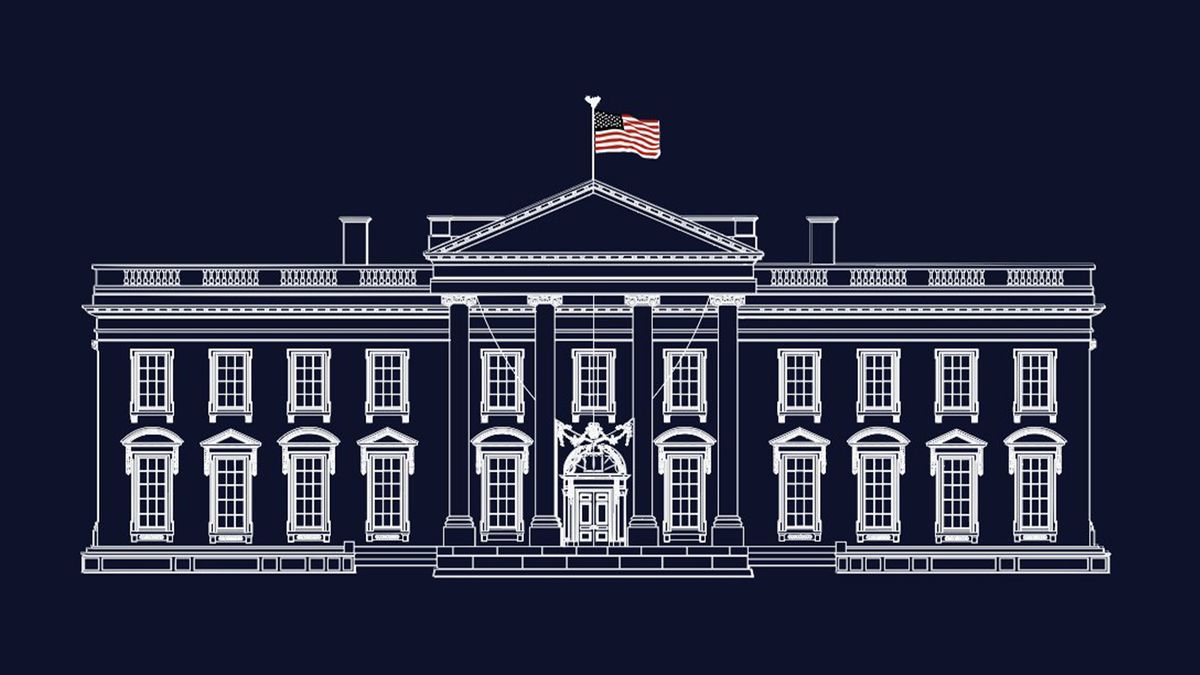
To commemorate Donald Trump’s return to office, the White House has released a new logo design that bucks the trend of previous administrations. A dark twist on the light and breezy appeal of Biden’s White House logo, the new design is intricately detailed and unmistakably patriotic, bringing the promise of a new era for America.

A Statement of Authority

The best logos of all time often make a statement with subtle design details, yet Trump’s new White House logo leaves nothing to interpretation, flying the flag high in a statement of authority. A symbolic strengthening of the institution and its new leadership, Trump’s new White House logo is a wordless reclamation of power.

A New Era for America

The White House got a new logo at NOON ET today. With every administration, a new logo is created and used on everything from official letterhead to the backdrop in the briefing room. The logo for Trump’s second term looks significantly jazzed up. #WhiteHouse [1]

Design Details

During his first presidential run, Trump’s 2017 White House logo followed the typical conventions of previous designs with minimalist bold line work and a deep navy colour palette. While the 2025 design nods to its predecessor, it amplifies the details with intricate linework, creating a stately appearance that recentres the logo as a symbol of the institution. The American flag accents the design in a brash pop of colour, adding a distinctly patriotic embellishment to the logo.

A Shift in Public Persona

As we saw with Trump’s new presidential portrait, this distinct U-turn to darker, more authoritative branding signals a shift in his public persona. Whether the change is simply an attempt to rebrand after his 2017 presidency, or a more serious omen for the future is unclear – what we know for certain is that patriotism and power are at the centre of Trump’s new era.

Conclusion

The new White House logo is a bold statement of authority and patriotism, marking a new era for America under Trump’s leadership. While the design may be a departure from previous logos, it is a reflection of the institution’s commitment to its new leadership and a symbol of the power and authority that comes with it.

FAQs

Q: What is the significance of the new White House logo?
A: The new logo is a symbol of authority and patriotism, marking a new era for America under Trump’s leadership.

Q: How does the new logo differ from previous designs?
A: The new logo is darker and more intricately detailed, with a focus on patriotic embellishments.

Q: Is the change in design a reflection of Trump’s public persona?
A: Yes, the change in design signals a shift in Trump’s public persona, moving towards a darker and more authoritative branding.

Q: What does the future hold for the White House logo?
A: Only time will tell, but the new logo is a bold statement of authority and patriotism, marking a new era for America.