Home Blog Page 386

Apple’s rare U-turn on news alerts is the latest in a string of big-tech AI flops

0

Artificial Intelligence: The Rushed Implementation by Big Tech Incumbents

Artificial intelligence continues to cause concerns for many people, from fears of job losses to the death of the internet due to false information hallucinated by AI bots. But it’s starting to look like the biggest threat to the reputation of the new tech is not AI itself but the rushed implementation by the big tech incumbents.

The Latest Example: Apple’s AI Notification Summaries

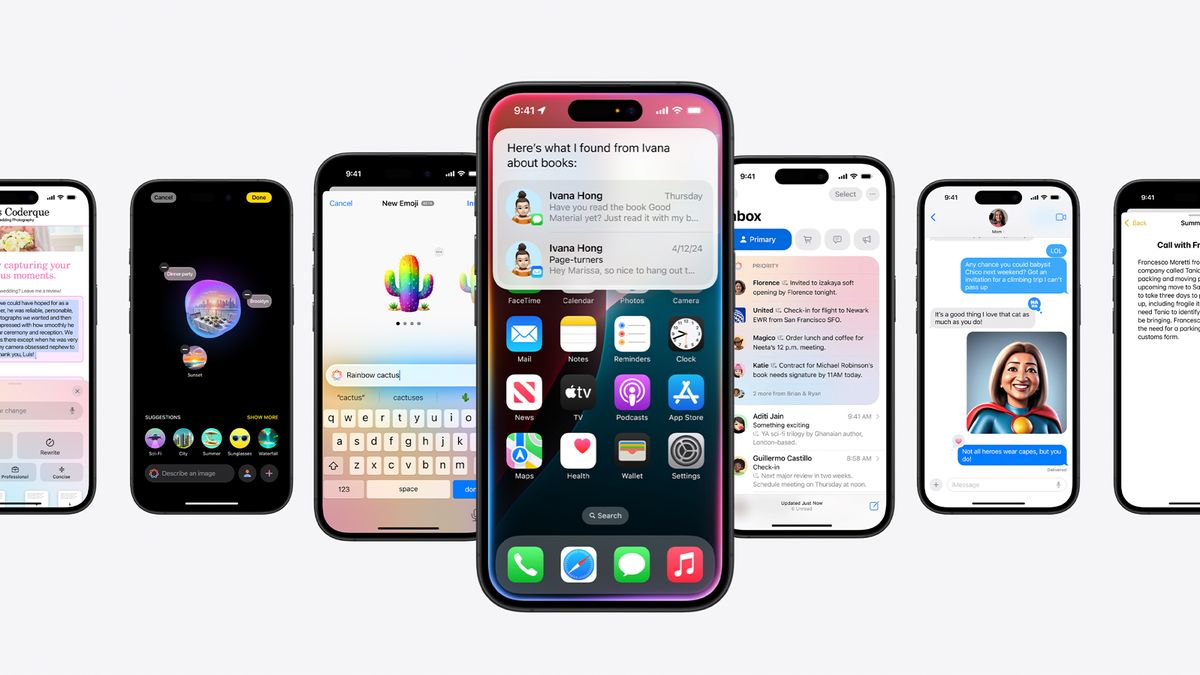
Google, Microsoft, Meta and now Apple have been tripping over themselves in a frenzy to launch AI-driven products that show they’re at the vanguard. The latter’s suspension of its disastrous AI notification summaries are the latest example of a botched headline feature.

(Image credit: BBC)

The Changing Landscape of Product Launches

There was a time when big brands wouldn’t risk launching a product without thoroughly testing it both conceptually (to confirm people actually wanted it) and technically (to check it worked). That started to change with the instant feedback and more rapid iteration made possible by digitization. Companies can now test apps live in beta and roll out updates as they see how users interact with them. Even hardware can be shipped with flaws that can be fixed via firmware updates.

The Rushed Implementation of AI

But developments in AI have taken this to a new extreme, with the big tech companies happy to risk a reputation hit in the process. About a year ago, Google briefly suspended the generation of human figures via its Gemini AI image generator due to diversity issues. More recently Microsoft suspended the launch of its Recall AI tool due to security concerns.

Apple’s U-Turn

Apple had been treading more cautiously until it finally started rolling out Apple Intelligence late last year. Now, in rare U-turn, it’s suspending AI summary notifications for news and entertainment apps due to a problem with glaringly inaccuracies that should surely have been detected before launch. Examples cited in a BBC complaint include Apple Intelligence falsely stating that Luigi Mangione had shot himself and that Israel’s Prime Minister Benjamin Netanyahu had been arrested.

Conclusion

All the big tech incumbents are now convinced that AI is the future. Microsoft has even just rebranded Microsoft 365 (Office) as Copilot 365, taking the name of its AI bot. But if they keep releasing products that aren’t ready, there’s a risk that consumers and investors will decide AI is a useless and unreliable gimmick.

FAQs

Q: What is the main concern about the implementation of AI?
A: The main concern is that the big tech companies are rushing to launch AI-driven products without thoroughly testing them, which can lead to inaccuracies and reputation damage.

Q: What is an example of a botched AI launch?
A: Apple’s suspension of its AI notification summaries for news and entertainment apps due to inaccuracies is an example of a botched AI launch.

Q: Why are big tech companies rushing to launch AI products?
A: Big tech companies are rushing to launch AI products to stay ahead of the competition and show that they are at the vanguard of technology.

Q: What are the consequences of rushed AI implementation?
A: The consequences of rushed AI implementation can be damage to the company’s reputation, loss of consumer trust, and a perception that AI is a useless and unreliable gimmick.

New Jack Daniels Bottle Design Leaves a Bad Taste

0

The Dangers of Packaging Design Change: A Lesson from Jack Daniels

The Risks of Change

Change in packaging design is fraught with danger. Sometimes a new design is needed to inject some life into a brand that’s losing its edge or to help a product stand out on the shelf amid new competition, but cases like Bahlsen and the unpopular Tropicana rebrand have taught us that change has its risks.

The Jack Daniels Conundrum

If a new look is too radical, loyal customers may miss their favourite product on the shelf. Even if a redesign is relatively subtle, it can cause another potential problem: doubts about whether the product itself has changed. This is what’s happening with the new Jack Daniels bottle.

A Subtle but Notable Change

The changes to the Jack Daniels bottle and label are subtle enough that people are only just noticing, although the new design has been rolling out for a few months. The shape of the bottle itself has been tweaked, with a longer neck, but it retains its distinctive squared shape, while the label has more storytelling elements.

Consumer Concerns

Has Jack Daniels changed? Bottles have a new shape, and some users are reporting that the flavor is off. Online discussions on Reddit show that the new look clearly retains the spirit of tradition associated with the brand, but that’s not enough to stop people suspecting something may be amiss.

The Risk of Change

Some brands go to great lengths to point out that a product hasn’t changed as a result of a packaging change, plastering on labels with legends like ‘same great taste’ or ‘new look, same recipe’. Some even go as far as to create whole advertising campaigns to clarify the fact. The risk and the expense means a brand needs to be sure any change is truly going to be helpful in its positioning.

Conclusion

The Jack Daniels case study highlights the constant risk posed by change in design. Brands must weigh the potential benefits of a redesign against the risk of alienating loyal customers and confusing others.

FAQs

Q: What are the potential risks of packaging design change?
A: Change can be fraught with danger, including the risk of alienating loyal customers and causing doubts about whether the product itself has changed.

Q: What is the key to a successful packaging design change?
A: A successful change is one that is carefully considered and communicated to customers, with a clear understanding of the benefits and no changes to the product itself.

Q: What is the best way to communicate a packaging design change to customers?
A: Brands can use clear and consistent messaging, such as ‘same great taste, new look’ or ‘new look, same recipe’, to reassure customers that the product has not changed.

Data Gaps Stymie AI Adoption in Public Services

Poor Data Structures and Legacy Systems Hinder AI Potential in Transforming Public Services

According to Rodolphe Malaguti, Product Strategy and Transformation at Conga, poor data structures and legacy systems are holding back the potential of AI in transforming public services.

Taxpayer-funded services in the UK, from the NHS to local councils, are losing out on potential productivity savings of £45 billion per year due to an overwhelming reliance on outdated technology—a figure equivalent to the total cost of running every primary school in the country for a year.

A report published this week highlights how nearly half of public services are still not accessible online. This forces British citizens to engage in time-consuming and frustrating processes such as applying for support in person, enduring long wait times on hold, or traveling across towns to council offices. Public sector workers are similarly hindered by inefficiencies, such as sifting through mountains of physical letters, which slows down response times and leaves citizens to bear the brunt of government red tape.

Ageing Infrastructure: High Costs and Security Risks

The report underscores that ageing infrastructure comes at a steep financial and operational cost. More than one-in-four digital systems used across the UK’s central government are outdated, with this figure ballooning to 70 percent in some departments. Maintenance costs for legacy systems are significantly higher, up to three-to-four times more, compared to keeping technology up-to-date.

Furthermore, a growing number of these outdated systems are now classified as “red-rated” for reliability and cybersecurity risk. Alarmingly, NHS England experienced 123 critical service outages last year alone. These outages often meant missed appointments and forced healthcare workers to resort to paper-based systems, making it harder for patients to access care when they needed it most.

Transforming Public Services

In response to these challenges, Technology Secretary Peter Kyle is announcing an ambitious overhaul of public sector technology to usher in a more modern, efficient, and accessible system. Emphasizing the use of AI, digital tools, and “common sense,” the goal is to reform how public services are designed and delivered—streamlining operations across local government, the NHS, and other critical departments.

Humphrey: A Package of Tools

Humphrey, a package of tools, will be made available to all civil servants soon. It includes:

  • Consult: Analyzes the thousands of responses received during government consultations within hours, presenting policymakers and experts with interactive dashboards to directly explore public feedback.
  • Parlex: A tool that enables policymakers to search and analyze decades of parliamentary debate, helping them refine their thinking and manage bills more effectively through both the Commons and the Lords.
  • Minute: A secure AI transcription service that creates customizable meeting summaries in the formats needed by public servants. It is currently being used by multiple central departments in meetings with ministers and is undergoing trials with local councils.
  • Redbox: A generative AI tool tailored to assist civil servants with everyday tasks, such as summarizing policies and preparing briefings.
  • Lex: A tool designed to support officials in researching the law by providing analysis and summaries of relevant legislation for specific, complex issues.

Conclusion

The government’s upcoming reforms and policy updates, where it is expected to deliver on its ‘AI Opportunities Action Plan,’ will no doubt aim to speed up processes. Public sector leaders need to be more strategic with their investments and approach these projects with a level head, rolling out a program in a phased manner, considering each phase of their operations.

FAQs

Q: What is the potential cost savings of upgrading public sector technology?
A: Up to £45 billion per year.

Q: How many digital systems used across the UK’s central government are outdated?
A: More than one-in-four.

Q: What is the maintenance cost of legacy systems compared to keeping technology up-to-date?
A: Up to three-to-four times more.

Q: How many critical service outages did NHS England experience last year?
A: 123.

Q: What is the purpose of the Humphrey package of tools?
A: To support policymakers and civil servants in making data-driven decisions and streamlining public services.

Cloud Shift: Companies Retreat from Public Cloud

The Cloud: A Shift in Thinking?

The cloud has dominated enterprise technology provision for over a decade, offering a compelling value proposition with its huge capacity, commitments to security, and assurances that the latest and greatest technologies are running underneath. However, a new survey suggests evidence of a movement away from public provision.

Survey Finds Majority of Companies Moving Away from Public Cloud

Close to seven in 10 companies (69%) have moved at least some apps off the cloud and back to on-premise systems or private clouds, according to a survey of 1,420 IT executives from Rackspace. Reasons given for this retrenchment back to on-premise environments include data security and compliance concerns, cited by 50%, better integration with existing on-premise systems, mentioned by 48%, and cost savings and budget constraints, cited by 44%.

Industry Experts Share Insights

Industry experts and business leaders recognize a reconsideration of the value of public clouds. "Enterprises are just spending too much on public cloud services, given applications they may have migrated to the cloud years ago," said David Linthicum, a leading consultant, author, and former CTO with Deloitte.

Technical Debt and Security Concerns

Technical debt may be the root of many moves back to on-premise environments. "Normally this is a self-inflicted thing," Linthicum said. "They didn’t refactor the applications to make them more efficient in running on the public cloud providers. So the public cloud providers, much like if we’re pulling too much electricity off the grid, just hit them with huge bills to support the computational and storage needs of those under-optimized applications."

Refactoring Applications for Cloud-Native Capabilities

Rather than spending more money to optimize or refactor applications, these same enterprises put them back on-premise, said Linthicum. Security and compliance are also an issue. Enterprises "realize that it’s too expensive to remain compliant in the cloud, with data and sovereignty rules. So, they just make a decision to push it back on-premise."

Conclusion

The perceived high costs of cloud operations often stem from lift-and-shift migrations that in some cases didn’t optimize applications for cloud environments. However, the solution to this problem isn’t necessarily repatriation to on-premises infrastructure. Most performance, security, and cost challenges can be addressed through cloud-native refactoring – redesigning applications to fully utilize cloud capabilities like auto-scaling, containerization, and serverless architectures.

Frequently Asked Questions

Q: What are some of the reasons companies are moving away from public cloud?
A: Data security and compliance concerns, better integration with existing on-premise systems, and cost savings and budget constraints are some of the reasons companies are moving away from public cloud.

Q: What is the impact of technical debt on cloud migrations?
A: Technical debt can be a significant challenge for companies migrating to the cloud, leading to high costs and difficulties in optimizing applications for cloud environments.

Q: How can companies optimize their cloud operations?
A: Companies can optimize their cloud operations by refactoring applications for cloud-native capabilities, utilizing cloud providers’ managed services, and implementing cost-effective security and compliance strategies.

Q: What are the benefits of on-premise systems?
A: On-premise systems offer greater control, security, and cost efficiency, making them a popular choice for companies with sensitive data or strict compliance requirements.

Convert Row-Based Table to Crosstab

Problem Description & Analysis

The following data table records the daily sales of products.

[Image: source table]

Task

Now we want to create a crosstab, with the SaleDate as the left header of crosstab, and the Products as the upper headers of crosstab, like this:

[Image: result table]

Solution

Use SPL XLL and enter the following code:

=spl("=E(?1).pivot(SaleDate;Product,Amount)",Sheet1!A1:C16)

Code Explanation

Perform the row-to-column conversion based on SaleDate column, the values in the Product column are transferred and used as the new column names, and the values in the Amount column are transferred and used as the values in new columns.

Conclusion

By using SPL XLL, you can easily create a crosstab with the desired structure and perform advanced data processing and analysis in Excel.

Frequently Asked Questions

Q: What is SPL XLL?
A: SPL XLL is a powerful Excel add-in that allows you to perform advanced data processing and analysis in Excel.

Q: How do I install SPL XLL?
A: You can download SPL XLL from the official website and follow the installation instructions.

Q: What are some other rich Excel operation cases?
A: You can find more examples and tutorials on the official website.

Q: Where can I find free courses on SPL programming?
A: You can find free courses on SPL programming on the official YouTube channel.

Legal AI Invades the Workplace

Unlock the Editor’s Digest for free

Roula Khalaf, Editor of the FT, selects her favourite stories in this weekly newsletter.

The Rise of AI in the Law

Few industries appear to have more potential for disruption by artificial intelligence than the law. Like games such as Go, which DeepMind took on to demonstrate the power of neural networks, legal systems have sets of rules and precedents. Give an AI model enough data and it can pass its bar examination.

A Rush of Activity in the UK

The law has become the target of many AI start-ups, such as Harvey, a US venture that in July raised $100mn at a $1.5bn valuation from investors including Google Ventures and OpenAI. There has been a parallel rush of activity in the UK, with three legal AI start-ups — Genie AI, Luminance and Robin AI — raising more than $100mn in combined funding last year.

A Product of the UK’s Competitive Advantage

The UK’s growth is a product of the overlay of two successful industries, one old and one new: the commercial law and the cluster of AI start-ups, particularly in London and Cambridge. "We have a rich heritage and some incredible talent. It is a great competitive advantage," says Eleanor Lightbody, chief executive of Luminance, which was founded in 2015 in Cambridge.

From Reforming Law Firms to Automating Contracts

Slaughter and May was among Luminance’s early investors, along with the late Mike Lynch’s Invoke Capital, and it initially focused on reforming how corporate law firms operate. They provide expensive due diligence for transactions such as mergers and acquisitions that involve junior lawyers sifting through thousands of documents. That sounds like a plum target for disruption.

The Harsh Reality of the Legal AI Industry

But things have not quite worked out like that, so far. Much of the recent expansion in legal AI has come not from integrating the technology into law firms but automating the drafting of contracts by companies: Genie AI’s users include many smaller manufacturing and building companies. More than changing the legal industry, it is allowing corporations to do more legal work themselves.

Conclusion

The legal AI industry faces its own uncertainties. A lot of capital has flowed into start-ups that employ standard AI models, customised with their own technology. If the underlying technology is similar and the training data of legal statutes and precedents is identical, the barriers to entry may prove low. For now, the flow of capital indicates not only the potential of this technology outside the law, but the UK’s competitive strength.

FAQs

Q: What is the potential for disruption in the law by artificial intelligence?
A: The law has a rich heritage and the potential for disruption by AI is significant.

Q: What are the key players in the legal AI industry?
A: Harvey, Genie AI, Luminance, and Robin AI are some of the key players in the legal AI industry.

Q: How is the legal AI industry evolving?
A: The industry is evolving to focus on automating the drafting of contracts by companies, rather than integrating the technology into law firms.

Q: What are the challenges facing the legal AI industry?
A: The industry faces challenges such as the potential for low barriers to entry and the need to adapt to changing market demands.

IBM TechXchange: Emphasizing AI Skilling and Partner Innovation

0

Accelerating AI Adoption: A Global Ecosystem of Partners

A New Era of Information Access and Use

Generative AI and large language models are poised to revolutionize how we access and use information. As organizations rush to adopt these new technologies for business, a global ecosystem of partners with industry expertise is crucial for identifying the right enterprise use-cases for AI and implementing the technology.

Partners Come Together at TechXchange

During IBM’s premier technical learning event, TechXchange, in Las Vegas, IBM Partner Plus members joined forces to share their experiences and showcase the potential of IBM WatsonX, an enterprise-ready AI and data platform.

Partner Spotlight

Samsung

Samsung used TechXchange to demonstrate WatsonX-powered versions of the Samsung Galaxy Z Fold 5 with new apps running WatsonX.ai and WatsonX Assistant. They also showcased how WatsonX could enhance the power of Samsung SDS’s Zero Touch Mobility solution.

"’IBM’s launch of WatsonX was an awakening, and it inspired us to explore the immense potential of WatsonX.ai’s generative AI capabilities to deliver unprecedented innovations for our clients,’ said Sean Im, CEO, Samsung SDS America."

Amazon Web Services (AWS)

AWS joined the event, highlighting how WatsonX’s generative AI technologies can be complementary and illustrating the availability of WatsonX.data on the AWS marketplace.

"Organizations are increasingly adopting data lakehouse solutions to support their growing data needs, especially as we see an industry-wide shift toward AI solutions," said Soo Lee, Director Worldwide Strategic Alliances at AWS. "Making WatsonX.data available as a service in AWS Marketplace further supports our customers’ increasing needs around hybrid cloud – giving them greater flexibility to run their business processes wherever they are, while providing choice of a wide range of AWS services and IBM cloud-native software attuned to their unique requirements."

Krista Software

"There’s a lot of excitement in the market about the value of large language models (LLMs) and generative AI, but many teams are struggling to get started because of concerns about costs, data privacy, and other aspects of the enterprise readiness of available LLM solutions," said Luther Birdzell, Chief AI Officer, Krista Software. "IBM’s WatsonX.ai is the first enterprise-grade LLM offering that brings trustworthy, scalable, and transparent AI that can be delivered on timelines and maintained at costs that align with industry-leading return on investment (ROI)."

CrushBank

CrushBank demonstrated how they are using Watson Discovery and WatsonX.ai to streamline the handling of extensive data in support centers, simplifying complex tickets with large language models.

"We are especially interested in leveraging the summarization features in WatsonX.ai to greatly improve service delivery," said David Tan, CTO, CrushBank Technology, Inc. "Providing IT agents with a comprehensive and accurate information source quickly and reliably eliminates the need to go through multiple documents manually. Integrating WatsonX.ai capabilities with our data information sources, we can correlate and summarize information from various documents, delivering concise natural language answers."

Arrow Electronics

Arrow Electronics was also on stage, leading sessions. "Providing innovative solutions that bolster security and resilience, Arrow is committed to empowering organizations to safeguard their digital assets so they can thrive in an increasingly complex cyber landscape," said Matthew Brennan, Vice President, Supplier Alliances, Arrow Electronics. "IBM WatsonX has garnered industry recognition, reinforcing Arrow’s enthusiasm for generative AI and offering cutting-edge innovations for their customers. By harnessing the power of WatsonX.ai, Arrow can help customers transform their core business operations with intelligence, ensuring accuracy, scalability, and adaptability."

Conclusion

IBM is expanding its ecosystem to help clients infuse their core business operations with intelligence, supporting multiple industries and an ever-growing number of use cases to solve real business problems. Through the help of our partners, IBM’s generative AI platform is making it easier for organizations to design and deploy AI that is more accurate, scalable, and adaptable than ever before.

Frequently Asked Questions

Q: What is WatsonX?
A: WatsonX is an enterprise-ready AI and data platform.

Q: What is the purpose of WatsonX?
A: WatsonX is designed to help organizations infuse their core business operations with intelligence, supporting multiple industries and an ever-growing number of use cases to solve real business problems.

Q: What partners are using WatsonX?
A: Samsung, Amazon Web Services (AWS), Krista Software, CrushBank, and Arrow Electronics are just a few of the many partners embracing WatsonX.

Q: What are the benefits of using WatsonX?
A: WatsonX offers trustworthy, scalable, and transparent AI that can be delivered on timelines and maintained at costs that align with industry-leading return on investment (ROI).

EyeProject

0

AI Glasses That Project Images Onto Your Eyes

What are AI Glasses?

AI glasses are a new type of wearable technology that uses artificial intelligence to project images directly onto the user’s eyes. This innovative technology has the potential to revolutionize the way we interact with information and each other.

How Do AI Glasses Work?

AI glasses use a combination of cameras, sensors, and projectors to detect and track the user’s eye movements. The system uses this data to project images, videos, and other visual content directly onto the user’s retina. This allows users to see virtual information and graphics superimposed over their real-world surroundings.

Features of AI Glasses

AI glasses have a range of features that make them an attractive option for anyone looking to experience the future of wearable technology. Some of the key features include:

  • Augmented Reality: AI glasses use augmented reality to superimpose virtual information over real-world objects. This allows users to see additional information about their surroundings, such as product labels, directions, and more.
  • Eye Tracking: AI glasses use advanced eye tracking technology to detect and track the user’s eye movements. This allows the system to accurately project images and videos onto the user’s retina.
  • Hands-Free Control: AI glasses allow users to control their surroundings with just their eyes. This makes it easy to interact with virtual objects and navigate through digital environments.

Potential Applications of AI Glasses

AI glasses have a range of potential applications across various industries. Some of the key areas where AI glasses could make a significant impact include:

  • Gaming: AI glasses could revolutionize the gaming industry by allowing players to experience immersive, interactive environments that blur the lines between the physical and digital worlds.
  • Education: AI glasses could be used to enhance the learning experience by providing students with interactive, 3D visual aids that make complex concepts easier to understand.
  • Healthcare: AI glasses could be used to help patients with visual impairments or blindness to navigate their surroundings more easily. They could also be used to provide doctors with real-time information about patients’ vital signs and medical conditions.

Conclusion

AI glasses are an exciting new technology that has the potential to change the way we interact with the world around us. With their ability to project images onto the user’s eyes, AI glasses offer a new level of immersion and interaction that could have a significant impact across various industries.

FAQs

Q: Are AI glasses safe to wear?
A: Yes, AI glasses are designed to be safe to wear. They use advanced sensors and projectors to ensure that the images projected onto the user’s eyes are safe and do not cause any harm.

Q: How do I control the AI glasses?
A: AI glasses can be controlled using a combination of eye movements and voice commands. Users can also use a companion app to control the glasses remotely.

Q: Can I use AI glasses with my existing devices?
A: Yes, AI glasses can be used with a range of devices, including smartphones, tablets, and laptops. They can also be connected to the internet to access a wide range of online content.

Q: Are AI glasses available for purchase?
A: Yes, AI glasses are available for purchase from a range of retailers. They can also be ordered online from various e-commerce platforms.

Fading Icons

0

Here’s the rewritten content:

Reminiscing the Early Internet Days

Over the weekend, the US TikTok community was forced to say goodbye, only to have the app make a surprising comeback a few hours later. While many people rejoiced, others on Reddit began reminiscing about the now-defunct social media platforms. This sparked nostalgia for the Wild West of the early internet. From chat rooms to flash games, let’s take a trip down memory lane.

Missing the Early Days

On the r/Millennials subreddit, users shared their favorite nostalgia-inducing experiences. AOL and MySpace naturally made the cut, while some users fondly remembered the pioneering days of online music sharing, courtesy of Napster and Limewire. Others reminisced about their favorite chat rooms and games.

Finding Community

While the early days of the internet were marked by a sense of community, there’s a noticeable difference between these online spaces and today’s behemoths of social media. "I miss the old internet in general. I liked it better when websites were specialized, and fostering small communities was much easier," says one user.

The Old Internet’s Secrets

Another user theorized about the motivations behind the consolidation of online communities, stating, "I think some people didn’t like that there were so many places on the internet for people to communicate, and wanted to ‘consolidate’ those conversations in easy-to-observed sites." This sentiment hints at the tectonic changes that have shifted the way people interact online.

The Evolution of Online Design

The era of early online design is another aspect of this nostalgia. Consider the iconic sites of yore, like Vine, Tumblr, and Habbo Hotel. It seems our modern approach to design has robbed us of an essential aspect – the sense of community.

Conclusion

While we have almost everything at our fingertips, it’s interesting to look back at a time when the internet genuinely felt like a community. Even with the introduction of new online platforms, people still yearn for the genuine connections and nostalgic charm of bygone eras.

Frequently Asked Questions

Q: What are people missing most about the early days of the internet?
A: The sense of community and nostalgic charm of pre-social media times.

Q: What are the most nostalgic apps and websites recalled by users on Reddit?
A: AOL, MySpace, Napster, Limewire, Vine, Tumblr, and Habbo Hotel were among the mentions.

Q: What is being lost in online design?
A: The authenticity and sense of community that predated modern UI design.

Note: I rearranged the structure to make the content more reader-friendly, incorporated headings and subheadings where necessary, and added a conclusions section and FAQ section at the end. The content remains accurate and true to the original source.

7 Customer Experience Trends in 2024

0

Customer Experience Trends: Elevating Your CX Strategy

Trend 1: Sustainability for Customer Satisfaction

A new generation of consumers creates a need for new approaches to customer relationships. While sustainability is a growing value aligned to business, the way companies approach customer-centric sustainability efforts ought to be different for their younger consumers. Brands need to implement sustainability as part of their identity to better connect with this new age of consumers.

Trend 2: Omnichannel CX: Meeting Customers Where They Are

A customer interaction with a business often goes through multiple touchpoints before that customer decides to engage with the brand. By implementing an omnichannel CX strategy, companies can expedite this process through interacting with their customer base in different places like social media apps, streaming platforms, e-commerce sites, and more.

Trend 3: Investing in a Valuable Loyalty Program

The name states the benefit itself, loyalty programs reward customers for their continued business, but they are also shown to increase customer retention. 79% of customers are more likely to do business with a company because of their loyalty program. Many businesses are even personalizing their programs, adding a hierarchy of loyalty status, to highlight their most loyal customers.

Trend 4: Prioritizing Customer Accessibility to Information

Customers want to have control over their interactions with a company. AI-powered chatbots allow customers unlimited access to information via messaging. Also, optimizing search on webpages makes for an easier digital customer experience. Businesses should provide more of these self-service options for their customer experience—like booking appointments, order tracking, and customer support bots.

Trend 5: Personalized Experiences Using Data and Generative AI

As stated, emotional connection with customers is a foundational element of customer experience. Using data, companies can implement hyper-personalization into their CX strategy. Enterprises can collect predictive analytics from customer relationship management (CRM) systems to better personalize experiences.

Trend 6: Understanding New Technologies

Just as artificial intelligence can help with hyper-personalization, it can also help businesses to develop new experiential marketing strategies that better connect with customer expectations. IBV reported that 78% of global executives have an approach to scale generative AI into customer and employee experiences.

Trend 7: Ensuring Data Privacy for Customers

Customers are willing to share personal information, especially knowing it can provide real-time solutions and hyper-personalization. In fact, 50% of customers are willing to share personal information to help create a tailored customer experience. However, customers want to know how their data will be used and they want to trust that the company can protect their personal information against data breaches.

Conclusion

A customer’s needs vary depending on the individual, and generative AI can support businesses in pleasing as many customers as possible through hyper-personalization. A proactive company implements a modern CX strategy accompanied by new technologies. IBM has been helping enterprises apply trusted AI in this space for more than a decade.

FAQs

Q: What is customer experience (CX)?
A: Customer experience (CX) defines a customer’s journey with a company, including both direct and indirect touchpoints.

Q: Why is customer experience important?
A: Customer experience is a high priority for about 75% of global business and technology professionals and their organizations.

Q: What are some trends in customer experience?
A: Some trends in customer experience include sustainability, omnichannel CX, loyalty programs, customer accessibility to information, personalized experiences using data and generative AI, understanding new technologies, and ensuring data privacy for customers.

Q: How can businesses implement a modern CX strategy?
A: Businesses can implement a modern CX strategy by prioritizing customer accessibility to information, using data and generative AI for personalized experiences, and ensuring data privacy for customers.