Home Blog Page 407

OpenAI’s ChatGPT Adds Scheduled Tasks Feature in Beta

0

OpenAI Launches Beta Feature in ChatGPT: Scheduled Tasks

A New Era for ChatGPT

OpenAI is rolling out a new beta feature in ChatGPT, called Tasks, which allows users to schedule future actions and reminders. This feature is aimed at making ChatGPT more like a traditional digital assistant, with capabilities similar to Google Assistant or Siri, but with the advanced language abilities of ChatGPT.

How Tasks Work

Tasks enables users to tell ChatGPT what they need and when they need it done. Want a daily weather report at 7AM? A reminder about your passport expiration? Or maybe just a knock-knock joke to tell your kids before bedtime? ChatGPT can now handle all of that through scheduled one-time or recurring tasks.

To use the feature, subscribers need to select "4o with scheduled tasks" in ChatGPT’s model picker. From there, it’s as simple as typing out what you want ChatGPT to do and when you want it done. The system can also proactively suggest tasks based on your conversations, though users have to explicitly approve any suggestions before they’re created.

Managing Tasks

All tasks can be managed either directly in chat threads or through a new Tasks section (available only via the web) in the profile menu, so it’s easy to modify or cancel any task you’ve set up. Upon completion of these tasks, notifications will alert users on web, desktop, and mobile. There’s also a limit of 10 active tasks that can run simultaneously.

Will Tasks Remain a Premium Feature?

OpenAI hasn’t specified when (or if) the feature might come to free users, suggesting Tasks might remain a premium feature to help justify ChatGPT’s subscription costs. The company has monthly $20 and $200 subscription tiers.

Ambitions Beyond Scheduling

OpenAI’s ambitions for Tasks appear to stretch beyond simple scheduling, too. Bloomberg reported that "Operator," an autonomous AI agent capable of independently controlling computers, is slated for release this month. Meanwhile, reverse engineer Tibor Blaho found that OpenAI appears to be working on something codenamed "Caterpillar" that could integrate with Tasks and allow ChatGPT to search for specific information, analyze problems, summarize data, navigate websites, and access documents — with users receiving notifications upon task completion.

Conclusion

The rise of "agentic" AI in 2025 isn’t just about technological advancement — it’s about economics. These agent-like features represent a strategic way to monetize expensive AI infrastructure. While OpenAI’s decision to put this functionality behind ChatGPT’s paywall was predictable, the real question remains: will it deliver reliable results? The coming months will reveal whether the team has solved these fundamental reliability challenges.

FAQs

Q: What is Tasks?
A: Tasks is a new feature in ChatGPT that allows users to schedule future actions and reminders.

Q: How do I use Tasks?
A: To use Tasks, select "4o with scheduled tasks" in ChatGPT’s model picker and type out what you want ChatGPT to do and when you want it done.

Q: Can I manage my tasks?
A: Yes, you can manage your tasks either directly in chat threads or through the new Tasks section in the profile menu.

Q: Will Tasks remain a premium feature?
A: OpenAI hasn’t specified when (or if) the feature might come to free users, suggesting Tasks might remain a premium feature to help justify ChatGPT’s subscription costs.

Healthcare Leaders and NVIDIA CEO Share Industry AI Innovation

AI’s Evolution, From Predicting to Reasoning

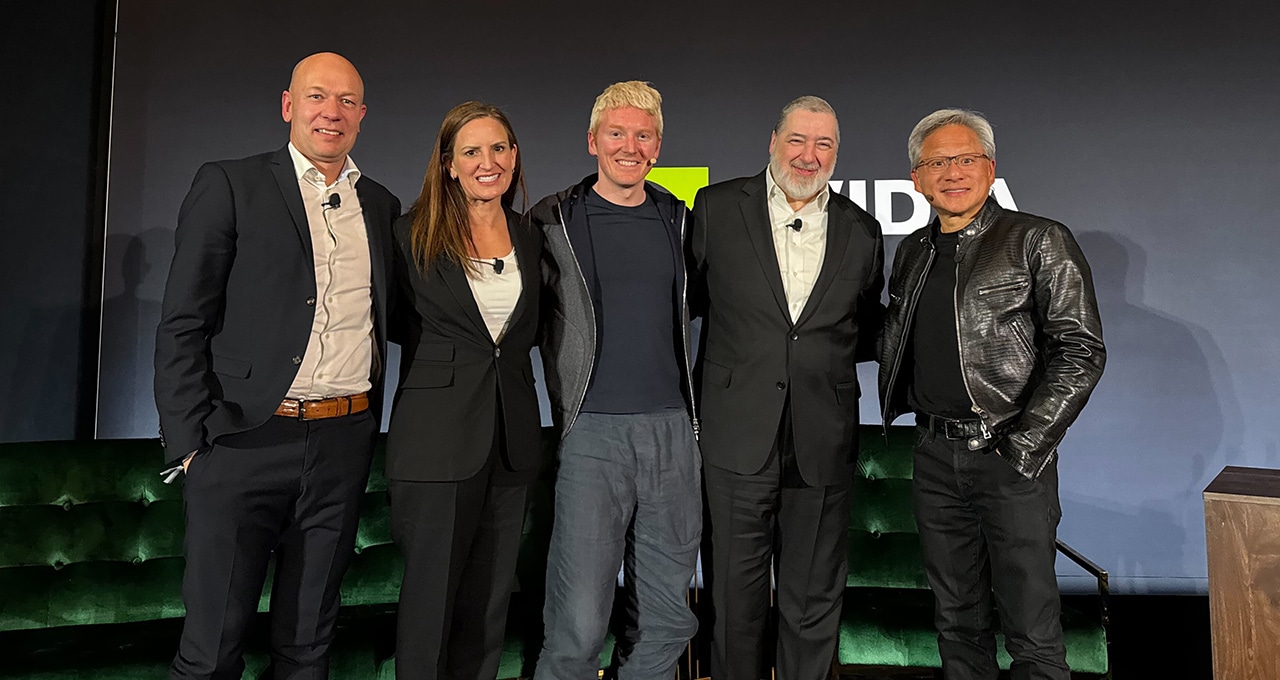
NVIDIA founder and CEO Jensen Huang took the stage at the J.P. Morgan Healthcare Conference in San Francisco to discuss the advancements in AI and its applications in the healthcare industry. The event featured a fireside chat with industry leaders, including Patrick Collison, Christina Zorn, Jacob Thaysen, and Ari Bousbib, who shared their work in deploying AI to advance biomedical science and meet the global demand for patient care.

AI for Every Modality

The event highlighted the potential of AI to transform various aspects of the healthcare industry, from genomic research to drug discovery, clinical trial workflows, and patient care. The four organizations announced partnerships with NVIDIA to advance drug discovery, accelerate pathology, enhance genomic research, and augment healthcare with agentic AI, respectively.

AI’s Evolution, From Predicting to Reasoning

Huang reflected on the progress in AI over the past year, spanning large language models, visual generative AI, and physical AI for robotics. He also outlined a vision for a future involving agentic AI models that can reason and problem-solve.

NVIDIA Cosmos and Foundation Models

Huang introduced NVIDIA Cosmos, a physical AI platform that includes state-of-the-art generative world foundation models. These models apply the same technique as a language model that predicts the next word in a sentence – instead, predicting the next action a robot should take.

Partnerships and Collaborations

The event featured a discussion with the guest speakers, who shared their work in accelerating biomedical research with AI innovation. The Arc Institute, Mayo Clinic, Illumina, and IQVIA all announced partnerships with NVIDIA to advance drug discovery, accelerate pathology, enhance genomic research, and augment healthcare with agentic AI, respectively.

Conclusion

The J.P. Morgan Healthcare Conference demonstrated the vast potential of AI in the healthcare industry, from predicting the next word in a sentence to generating the next frame for a video. The future of AI involves agentic models that can reason, plan, and act, and it is crucial for the industry to harness this technology to meet the global demand for patient care.

Frequently Asked Questions

Q: What is the future of AI in the healthcare industry?
A: The future of AI in the healthcare industry involves agentic models that can reason, plan, and act, which will enable clinicians and researchers to achieve more with their limited time.

Q: How is AI being used in healthcare?
A: AI is being used in various aspects of the healthcare industry, including genomic research, drug discovery, clinical trial workflows, and patient care.

Q: What is NVIDIA Cosmos?
A: NVIDIA Cosmos is a physical AI platform that includes state-of-the-art generative world foundation models, which apply the same technique as a language model that predicts the next word in a sentence – instead, predicting the next action a robot should take.

Q: What are the potential applications of AI in healthcare?
A: The potential applications of AI in healthcare are vast, including predicting the next word in a sentence, generating the next frame for a video, and enabling clinicians and researchers to achieve more with their limited time.

Navigating work and disability benefit rules  

0

Most people with psychiatric disabilities in the United States are not employed in paid work. They rely instead on meager disability benefits from the Social Security Administration (SSA), which leave most living below or just above the Federal Poverty Level (FPL) which is itself extremely low. In many states, people who live at 200 per cent of the FPL can barely afford to pay rent. As a result, this group is more likely than others to have no money at the end of the month, to fall behind on rent and bills and to experience high levels of debt and financial stress. These experiences of financial hardship hinder mental health recovery and negatively impact quality of life.

Why do so few people with psychiatric disabilities work? Studies show that 65–70 per cent of people with psychiatric disabilities would like a job, though fewer than 15 per cent have one. The reasons are varied. At the individual level, it is certainly true that the nature of some people’s disability is such that they simply cannot do any type of job. Those who could do some type of job are limited by significant structural constraints, including stigma and lack of accommodations that make it hard to find and hold a job, and/or by the low wages, low job security and unpredictable hours that characterise the types of jobs that people with psychiatric disabilities tend to get.

There are also barriers to work built into the disability benefits system in the United States, including strict limits on earning income and saving money. If a person goes over those limits they lose all or part of their disability income for the month that they were over the limit. The limits vary depending on the type of benefit received – people who have a work history and have paid into the Social Security system get Social Security Disability Income (SSDI) whereas those with no or little work history get Supplemental Security Income (SSI) – but in all cases, the limits are low, such that a person does not have to earn or save much to go over. Also, the specific rules are complex and hard to follow, which means it is easy for people to go over the limits inadvertently; in some cases the SSA itself makes errors. There is almost always a time lag between the time a person exceeds the limit and the determination of ineligibility. Thus, in most cases, if a person goes over the limits, they face what is called an ‘overpayment’. Typically, a person receives a notice from the SSA after the event – sometimes months or even years later – telling them that due to being over the income or asset limits during a prior month or months, they were not in fact eligible for their full benefits payment that/those month(s) and must now repay the SSA what they owe.

While accurate data is hard to come by, evidence suggests that of the small number – only 4 per cent – of people receiving SSDI who earn over the income-earning limits at some point, a huge 82 per cent end up owing an overpayment, with the median amount owed being more than $9,000; people who are Black, Hispanic and who receive lower disability benefit amounts are more likely to owe. Close to 100,000 people with disabilities may be in debt at any one time, not due to overspending, but perversely due to earning or saving ‘too much’, and perhaps even more perversely, in debt to the very agency responsible for their financial wellbeing. Research has found that significant numbers of people who face an overpayment due to employment stop working after that experience or reduce their work hours.

Yolanda, co-author of this piece, has been dealing with a protracted overpayment situation due to going over-income (allegedly). After receiving SSDI for many years, she returned to work, then after a few years of working, became ill again, left her job and reapplied for benefits. However, she then started to receive communications from the SSA saying that she owed as much as $30,000. The confusing and often contradictory content of those letters (the putative amount owed varied wildly from letter to letter, and the letters sometimes even said that the SSA owed her money) led Yolanda to ask co-author Annie to become her representative payee (a person who takes over control of the benefits income of someone who is deemed ‘incapable’ of managing their funds) to be able to help her make sense of it. After years of confusing and contradictory letters, phone calls and in-person meetings (with Annie being just as confused as Yolanda), Yolanda has eventually settled on repaying the SSA $200 each month for an extended period until the money she ‘owes’ is repaid. Yolanda is one among many. Both of us know many people who are bewildered by communications from the SSA suggesting that they owe an overpayment, or who are struggling to manage an existing overpayment.

While the number of people who are at risk from overpayment due to employment income is low, the effects of these policies go far beyond those directly impacted. Both Annie and Yolanda know numerous people on disability benefits who would like to work but worry that if they get a job, or work more hours than they currently do, they may face an overpayment. After having experienced this, or hearing about it from others, many people decide that it is safer not to work at all, and not to save any money. One study found that 68 per cent of people on disability support reported that fear of losing benefits prevented them from looking for a job, or a better job if they were already working. This behaviour is not irrational or unusual; choosing not to work to maintain receipt of benefits is entirely consistent with established patterns of decision making under risk observed in Prospect Theory, in which individuals are motivated more by anticipated loss than by anticipated equivalent gains. We also know that living with debt that is hard to repay – as it inevitably is for people on such low incomes – is extremely stressful and can harm mental health recovery.

The strict SSA income earning and asset limits may suggest that the agency’s main role is to ensure that only those who are ‘genuinely’ unable to work receive disability benefits. However, while this is indeed one of its key roles, the agency is also, together with numerous organisations across the country, tasked with getting as many benefit recipients as possible ‘back to work’, and has various programmes in place to support that effort. People receiving disability benefits are thus subject to contradictory logics. On the one hand, they are required to prove their deservingness for disability benefits, by demonstrating that they are entirely disabled, completely unable to work – along with the stigma associated with that – and once approved, are subject to regular ‘disability redeterminations’ to make sure that nobody ‘cheats the system’. On the other hand, they are both shamed and ‘encouraged’ to go back to work, trammelled by a neoliberal logic, subscribed to by many disability rights advocates, according to which full citizenship and social inclusion rests on a person being ‘productively’ employed. But, as soon as they take steps towards being the ideal productive citizen, by finding a few hours’ work here and there, or saving any money they are lucky enough to get, they risk becoming indebted to the SSA due to overpayment. Notions of the ideal neoliberal self have combined with older narratives of deservedness (‘worthy versus unworthy poor’) to create a system in which it is almost impossible to survive.

While many people continue to try to make the system work for them, working in ad hoc positions, under the table, if possible, to try to hide their income from the SSA, applying for waivers if they receive an overpayment notice or, like Yolanda, capitulating and paying the SSA, others simply give up. One of Annie’s clients, who had spent years trying to work here and there to supplement his meager disability payment, and who had faced repeated overpayments, told Annie that he simply didn’t bother trying anymore. “Fuck it”, he said. “I’m not playing this game anymore”.

Annie Harper has a PhD in Social Anthropology and is Assistant Professor in the Yale School of Medicine’s Program for Recovery and Community Health where she studies the intersections between finances, poverty and mental health.

Yolanda Herring is a Research Assistant and Recovery Support Specialist working at Yale School of Medicine who has dedicated her life to working with special populations including but not limited to individuals who struggle with addiction, homelessness, and mental health issues.

Image credit: Stewart Munro via Unsplash

Elon Musk’s Global Empire

0

The Global Reach of Elon Musk

From Tunnels to Tesla Factories to SpaceX Launch Facilities

Elon Musk, the CEO of SpaceX and Tesla, has left an indelible mark on the world. His innovative ventures have transformed industries and revolutionized the way we live. But what’s truly remarkable is the sheer scope of his global influence. From tunnels to Tesla factories to SpaceX launch facilities, there’s barely a place on Earth that doesn’t feel the gravitational pull of humanity’s wealthiest reply guy.

Tunnels and Transportation

Musk’s tunneling company, The Boring Company, has been busy digging tunnels across the globe. From Los Angeles to Las Vegas, his team has been working tirelessly to create high-speed transportation systems that will change the way we travel. The Boring Company’s tunnels will reduce traffic congestion, increase efficiency, and make transportation faster and more sustainable.

Tesla Factories and Electric Vehicles

Tesla’s electric vehicles have taken the world by storm, and Musk’s factories are working overtime to meet the demand. With facilities in the United States, China, and Europe, Tesla is leading the charge in the electric vehicle revolution. Musk’s vision for a sustainable future is driving innovation in the automotive industry, and his factories are at the forefront of this movement.

SpaceX Launch Facilities

SpaceX, Musk’s space exploration company, has been pushing the boundaries of space travel. With launch facilities in Florida and California, SpaceX is leading the charge in private space exploration. Musk’s vision for a human settlement on Mars is ambitious, but his team is working tirelessly to make it a reality. From reusable rockets to satellite launches, SpaceX is changing the face of space travel.

The Global Impact

So, what does it mean for the world that Elon Musk is having such a profound impact on so many industries? It means that innovation is happening at an unprecedented pace. It means that sustainable energy, transportation, and space exploration are becoming a reality. And it means that humanity is on the cusp of a new era of technological advancement.

Conclusion

Elon Musk’s global reach is a testament to his innovative spirit and his commitment to making a difference. From tunnels to Tesla factories to SpaceX launch facilities, his influence is felt across the globe. As we look to the future, it’s clear that Musk’s impact will only continue to grow. Whether you’re a fan or a critic, there’s no denying that Elon Musk is changing the world.

FAQs

Q: What is The Boring Company?
A: The Boring Company is a tunneling company founded by Elon Musk to reduce traffic congestion and increase efficiency in transportation.

Q: What is Tesla’s vision for the future of transportation?
A: Tesla’s vision is to create a sustainable future for transportation, with electric vehicles and autonomous driving technology.

Q: What is SpaceX’s goal for space exploration?
A: SpaceX’s goal is to make humanity a multi-planetary species, with a human settlement on Mars and beyond.

Q: How is Elon Musk’s global influence impacting the world?
A: Musk’s influence is driving innovation in sustainable energy, transportation, and space exploration, and is changing the face of industries around the world.

Musk Sued by SEC for Late Twitter Acquisition Disclosure

0

SEC Files Lawsuit Against Elon Musk Over Twitter Acquisition

The Securities and Exchange Commission (SEC) filed a lawsuit against Elon Musk on Tuesday, alleging that he failed to disclose his 5% ownership stake in Twitter, now called X, in a timely manner.

SEC Claims Violation of Federal Securities Law

The SEC claims that Musk waited to disclose his acquisition in order to build up a larger position in Twitter at a discounted price, violating federal securities law. According to the complaint filed in federal court in Washington DC, Musk purchased more than 5% of Twitter on March 24, 2022, but did not file a beneficial ownership report until April 4, 2022, 11 days later.

SEC Seeks Damages and Civil Penalty

The SEC alleges that during the delayed disclosure period, Musk increased his position in Twitter from a 5% stake to a 9% stake. The day Musk disclosed his acquisition with the SEC, Twitter’s stock price increased 27% over the previous day’s closing price. The SEC claims this allowed Musk to underpay for his stake in Twitter by more than $150 million.

In its complaint, the SEC proposed that Musk should return the profits he reaped unjustly, and pay an additional civil penalty. Ultimately, a federal court will decide whether the SEC’s allegations have merit, and determine if Musk should be fined.

Musk’s Response

Musk’s lawyer, Alex Spiro, called the complaint an “admission” that the SEC cannot bring an “actual case,” in a statement to Bloomberg on Tuesday.

“As the SEC retreats and leaves office, the SEC’s multi-year campaign of harassment against Mr. Musk culminated in the filing of a single-count ticky tak complaint against Mr. Musk,” said Spiro to Bloomberg.

New SEC Chairman to Take Office

The lawsuit comes during Gary Gensler’s final week as chairman of the SEC, before he steps down on January 20. Gensler and Musk have had a few spats over the last four years, including just last month when Musk mocked a settlement offer from the SEC’s office on X. However, Musk could face a friendlier SEC commissioner in just a few weeks when Trump’s nominee takes office.

President-elect Donald Trump nominated Paul Atkins, who served as SEC Commissioner during the Bush administration and is expected to be friendlier to Trump’s allies. These days, Musk is about as close to Trump as anyone, and the owner of X could face a different regulatory regime in just a few weeks.

Conclusion

The SEC’s lawsuit against Elon Musk is a significant development in the ongoing saga between the two parties. The outcome of the lawsuit will depend on the findings of the federal court and the determination of whether Musk violated federal securities law. The appointment of a new SEC chairman could also impact the outcome of the case.

FAQs

Q: What is the SEC’s allegation against Elon Musk?

A: The SEC alleges that Musk failed to disclose his 5% ownership stake in Twitter in a timely manner, violating federal securities law.

Q: What is the alleged impact of the delayed disclosure?

A: The SEC claims that during the delayed disclosure period, Musk increased his position in Twitter from a 5% stake to a 9% stake, allowing him to underpay for his stake in Twitter by more than $150 million.

Q: What is the proposed penalty for Musk?

A: The SEC proposed that Musk should return the profits he reaped unjustly, and pay an additional civil penalty.

Q: Who is the new SEC chairman?

A: President-elect Donald Trump nominated Paul Atkins, who served as SEC Commissioner during the Bush administration, to take over as chairman of the SEC.

Samsung Unpacked 2025: Live Stream and Highlights

Samsung Unpacked Event: What to Expect from the S25 Lineup

Introduction

The Unpacked event is just around the corner, and tech enthusiasts are eagerly waiting to see what Samsung has in store for us. The invitation reads, "The new Galaxy S series is about to set the bar once again for mobile AI experiences now and into the future." This suggests that the S25 lineup will be the main attraction at the event.

Snapdragon 8 Elite

When Qualcomm launched the Snapdragon 8 Elite in October, they announced that Samsung would be one of the leading manufacturers to adopt the mobile platform. Given the event’s focus on AI experiences, it’s likely that the S25 lineup will feature Qualcomm’s newest chipset. The Snapdragon 8 Elite brings major improvements to smartphones, particularly in the AI space, with support for on-device processing. This means faster processing speeds, less latency, and increased security, as data doesn’t have to leave the device.

Design and Display

Leaks have given us a good idea of what the phones will look like. An Android Headlines report claims the Galaxy S25 will have a 6.2-inch screen, the Galaxy S25 Plus will have a 6.7-inch screen, and the Samsung Galaxy S25 Ultra will have a 6.9-inch display. The report also suggests that all three will have rounder edges, but other than that, they will be staying very close to their current design.

Color Options

The report also reveals the color options for the base models, which will include Iceblue, Mint, Navy, and Silver Shadow. The Galaxy S25 Ultra will have a wider range of colors, including Titanium Black, Titanium Gray, Titanium Silver Blue, and Titanium White Silver.

Conclusion

The Samsung Unpacked event is just around the corner, and we can expect the S25 lineup to be the main attraction. With the Snapdragon 8 Elite powering the phones, we can expect significant improvements in AI experiences, processing speeds, and security. The design and display options also seem to be a mix of familiar and new, with the addition of rounder edges and a range of color options.

FAQs

Q: What is the expected date of the Samsung Unpacked event?
A: The exact date of the event is not publicly disclosed, but it is expected to take place in February.

Q: What is the expected design of the S25 lineup?
A: Leaks suggest that the phones will have rounder edges and will be similar to their current design.

Q: What are the expected color options for the S25 lineup?
A: The base models will have color options such as Iceblue, Mint, Navy, and Silver Shadow, while the Galaxy S25 Ultra will have a wider range of colors including Titanium Black, Titanium Gray, Titanium Silver Blue, and Titanium White Silver.

Q: What is the expected chipset of the S25 lineup?
A: The S25 lineup is expected to feature Qualcomm’s Snapdragon 8 Elite chipset, which brings significant improvements in AI experiences, processing speeds, and security.

Futures of Work ~ Falling off the benefits cliff 

0

You do not know what you don’t know. I have been working with families who are experiencing homelessness for more than two decades and I thought I had a good understanding of their challenges, but no one ever talked about what happens when their family income goes up. In recent years we have been seeing more and more problems linked to this. Maybe this is new because when we first started working together, the children of the families I know well were young, but we have been together for a long time and all of a sudden, I am now hearing horror stories. For example, a single mother with four kinds of cancer scraped together the money to buy a burial plot and she lost her Husky insurance, the Connecticut version of the nationwide Medicaid programme that provides free health insurance to low-income people. How does this make sense?  

We now know that the problem is called the ‘benefit cliff’. It refers to the fact that if people who are receiving public benefits, such as housing subsidies, Medicaid, food stamps (now known as SNAP – Supplemental Nutritional Assistance Program), welfare for families with children (now known as TANF – Temporary Assistance for Needy Families) or disability benefits (SSDI –Social Security Disability Income or SSI – Supplemental Security Income) earn too much additional income, save too much money or have too many assets, then their benefits are reduced or cut off entirely. While we recognise that people with enough money to support their families don’t need assistance, the income-earning and asset limits are far, far too low, and kick in far too quickly. It is not well-off families who are losing their benefits; it is families who, even with additional income, can barely afford to pay rent. 

Mothers and Others for Justice (MoFJ) is a grassroots New Haven advocacy organisation. The group was started by women living in an emergency family shelter run by the non-profit Christian Community Action. These women came together in the 1990s to advocate against changes that were being made in the welfare reform system under President Clinton. The Personal Responsibility and Work Opportunity Reconciliation Act (PRWORA) of 1996, also known as the Welfare Reform Act, was a bipartisan effort to instil greater ‘individual responsibility’ in people receiving benefits. PRWORA formalised a shift away from providing long-term support, towards a system of short-term aid that was supposed to push people, as indicated by the name, to take individual personal responsibility and find work. 

Since then, MoFJ has expanded the issues that they advocate such as the need for affordable housing, an end to ethnic and racial disparities in healthcare and laws to reduce gun violence. The group believes that the voice of the people most impacted should be heard, and their recommendations should be used in the making of public policy. To that end, MoFJ inspires, trains and mobilises people living in disadvantaged communities to speak out on the need for system change. 

For the last three years, we have been up in Hartford, our state capital, trying to raise awareness of the impact of the benefits cliff on families. We have put up large, bold wall displays in prominent places highlighting people’s stories, data and recommendations. Some examples are as follows: 

“This policy is keeping me in poverty! I am disabled but still, I would like to be able to work part time but then they reduce my benefits and I am worse off financially. I cannot afford to be worse off and so I am stuck between a rock and a hard place.” 

“My 19-year son got a job at Home Depot and I was happy for him. His manager liked him and during Christmas, he got a lot of hours but I have a Section 8 housing subsidy and my rent went up so high that I had to ask my son to not work so many hours. But, it didn’t matter, because after the holiday, they cut his hours way back but they didn’t restore my reduced rent as quickly as they raised it and we were in real trouble. There is no affordable rent and young people can’t move out of their parents’ apartments but they are not working to pay their mother’s rent. They are young and they want to have a car and to save money to move out on their own and so we have a lot of tension in our house and there is no solution in sight.” 

“I have a disability but I work really hard so that people don’t know that I have a neuromuscular disease that is very debilitating. I am not physically able to get a job and I am grateful that I am able to receive government benefits but the benefit cliff always hangs over my head. We can’t make ends meet for my large family and so we are always looking to supplement our income in ways that won’t affect our food stamps. My family signs up to do a lot of studies where we can receive a gift card rather than a check. We accept any invitation to a meeting where they are serving food and my kids know what to do. One of them collects recyclable bottles, and we all look to see if we can bring home left-overs and work the crowd to see if there are any other events coming up. Don’t get me wrong. My family contributes greatly to any event we go to. We participate in the conversation, help clean up, and volunteer to do childcare; we are good citizens. But at the end of the month, I still have trouble feeding my family and that compromises our physical and mental health. Tempers run short and life is challenging enough without adding the stress of being hungry.” 

MoFJ, along with our state partners, believes that expanding asset limits and passing a child tax credit are some steps that would help ease the benefits cliff and improve the quality of life of many of the hard-working citizens of Connecticut. We want to help people to be able to work and not be penalised for their efforts.

 Merryl Eaton is a longtime social justice activist. She is Director of Advocacy and Education at Christian Community Action and works closely with Mothers and Others for Justice (MOFJ), a grassroots advocacy group working to address the lack of affordable housing, healthcare disparities, community safety and other quality of life issues.  

Image credit via Marija Gabaliene Unsplash

Nvidia Backs MetAI

0

Nvidia Backs MetAI in $4 Million Funding Round to Accelerate Digital Twin Development

Nvidia has been doubling down on the opportunity to build robotics and other industrial AI applications, with the launch of its Omniverse platform, and most recently Mega, an Omniverse Blueprint framework to create digital twins to operate these applications. It’s also investing in digital twin startups to get the effort off the ground.

MetAI’s Breakthrough Technology

Taiwan’s MetAI has developed a model that can quickly generate “SimReady” (simulation-ready) digital twins using AI and 3D technology, by converting CAD files into functional 3D environments within minutes.

Nvidia’s Investment

Nvidia is backing MetAI in its first round of funding, a $4 million seed round that becomes the chip giant’s first investment into a Taiwanese startup. Others in the round are a mix of other strategic and financial investors, including Kenmec Mechanical Engineering, Solomo Technology, SparkLabs Taiwan, Addin Ventures, and Upstream Ventures.

Generative Physical AI

The next wave of AI, known as generative physical AI, relies on physically accurate simulated environments to train and validate robots used in autonomous systems, to build operational AI before deployment. MetAI contends that the digital twins that it helps create will be central to that effort.

MetAI’s Unique Approach

“Unlike competitors that prioritize operational efficiencies or IoT integrations, MetAI leverages generative models and AI-driven layouts to create digital twins designed for physical AI training and implementation in real-world operations,” Yu said. “This approach not only accelerates the creation of digital twins but also ensures their direct usability for advanced automation systems like robotics, bridging the gap between simulation and reality.”

Competitors and Market

MetAI believes that it has a unique approach compared to all of these. Its competitors are the range of large and small companies that have built digital twin technologies for manufacturing. They include Siemens Digital Industries, Dassault Systemes, Hexagon AB, Duality AI, and Intagles. In the synthetic data sector, there are scores of companies, including Sky Engine and Scale AI.

Business and Expansion Plans

The two-year-old startup — whose products range from vertical AI agents through to digital twins — has a handful of customers and is already generating revenues by partnering with enterprises in the manufacturing and automation industries, and this year it expects to bring in $3 million from a single project, Yu said. Revenue is derived from project-based income, product subscriptions, and licensing fees from ongoing developments, he added.

With the latest funding, MetAI plans to expand its R&D team for faster development and execution of its go-to-market strategies to meet growing demand. On top of that, the Taiwan-based startup intends to establish a U.S. office and relocate its headquarters in the second half of 2025, Yu told TechCrunch.

Conclusion

MetAI’s innovative approach to digital twin development, backed by Nvidia’s investment, has the potential to revolutionize the way industries approach AI training and implementation. With its unique technology and growing demand, MetAI is poised for significant growth and expansion in the coming years.

FAQs

Q: What is MetAI’s unique approach to digital twin development?

A: MetAI leverages generative models and AI-driven layouts to create digital twins designed for physical AI training and implementation in real-world operations.

Q: Who are MetAI’s competitors?

A: MetAI’s competitors include Siemens Digital Industries, Dassault Systemes, Hexagon AB, Duality AI, and Intagles, among others.

Q: What is MetAI’s revenue model?

A: MetAI generates revenue from project-based income, product subscriptions, and licensing fees from ongoing developments.

Q: What are MetAI’s expansion plans?

A: MetAI plans to expand its R&D team, establish a U.S. office, and relocate its headquarters in the second half of 2025.

Secure APIs with FastAPI and Redis

How to Protect Your APIs from Abuse Using FastAPI and Redis

Hey developers! I just published a new video on TechPrane Youtube Channel that dives into an essential topic: How to Protect Your APIs from Abuse Using FastAPI and Redis.

What You’ll Learn:

  • The importance of rate limiting in API security.
  • How to implement a rate limiter with FastAPI middleware.
  • Why Redis is ideal for managing real-time request limits.
  • Techniques for handling abusive requests gracefully.

API security is critical, and in this video, I’ll guide you step-by-step on how to prevent abuse, safeguard your backend, and ensure optimal performance with rate limiting.

Check it out here

Let’s make your APIs more robust and secure together!

Conclusion:
In this video, we covered the importance of rate limiting in API security, how to implement a rate limiter with FastAPI middleware, and why Redis is ideal for managing real-time request limits. By following these techniques, you can prevent abuse, safeguard your backend, and ensure optimal performance with rate limiting.

Frequently Asked Questions:

Q: What is rate limiting in API security?
A: Rate limiting is a technique used to prevent abuse of APIs by limiting the number of requests that can be made to an API within a certain time period.

Q: Why is Redis ideal for managing real-time request limits?
A: Redis is ideal for managing real-time request limits because it provides low-latency, high-throughput, and high-availability, making it suitable for real-time data processing and caching.

Q: What are some techniques for handling abusive requests gracefully?
A: Some techniques for handling abusive requests gracefully include implementing rate limiting, IP blocking, and request filtering.

Futures of Work ~ Issue 29: Editorial

0

This issue of Futures of Work has been guest edited by Richard Machin, Associate Professor in Social Policy at Nottingham Trent University, and Annie Harper, Assistant Professor in the Yale School of Medicine’s Program for Recovery and Community Health.

This series of articles addresses the intersections between employment, welfare systems, poverty and debt. How do societies address poverty and tackle the shifts taking place in labour markets that make work less attainable, less remunerative and less predictable – particularly for people with disabilities? How do we manage the associated rise in personal debt? Are our welfare systems up to the task of giving people the support they need not simply to survive but also to flourish as our economies change? How have neoliberal political economic norms and policies impacted work and welfare, and what does the future hold as those norms and policies shift? The articles are from writers living and working in both the United Kingdom and the United States. While the contexts are different, there are significant overlaps in experiences and challenges faced, as well as in pathways to a fairer work environment.  

The pieces by Reynolds, Herring and Eaton address the issue of disability benefit systems. All three discuss the experiences that people with disabilities have as they navigate complex systems that have onerous application and redetermination processes, assume throughout that applicants and recipients are malingering to avoid work, and provide too little money for people to live. They explore policies that on the one hand valorise and, in theory at least, support people to return to work, but on the other hand present a financial calculus that makes going back to work extremely difficult. These complex, punitive and contradictory systems not only leave people with incomes that they can barely survive on, but in many cases keep people out of the very work that could improve their quality of life both emotionally and financially, and end up making people more vulnerable due to stress, anxiety and shame.  

Dayaram’s piece addresses the ways in which people survive when they don’t earn enough to live on, through taking on debt and suffering mental health problems as a result. The debt burdening those whom she and other advisors seek to assist is caused by an economic system that leaves a gap between income and expenses. Despite a system that exists in theory to provide guidance and support, even while that debt is increasing and becoming more complex, there are fewer resources available to advise people. Dayaram focuses on the immediate issue of helping people manage debt but recommends more upstream policies to reduce its burden. In their piece, Herring & Harper draw attention to a specific type of debt that arises directly from the contradictory logic of disability benefits, whereby people struggling to navigate the thorny wilderness between reliance on benefits and employment often find themselves having received an ‘overpayment’ of benefits, such that they end up in debt to the government. 

The supported employment programmes that are key to the valorisation of work inherent to these disability benefit systems are themselves deeply problematic. Hall describes how as the disability system in the UK intensifies the demand that people with disabilities ‘go back to work’, the supported employment workforce that is supposed to bring this about is itself poorly supported.  She discusses the potential for a different approach under the newly elected government, which is more holistic and harnesses local knowledge. However, she voices concern that ‘conditionality-led action’ is ineffective and that significant systemic change is required to check economic inactivity (for example, in the National Health Service and social care). Evans addresses this issue in the US context, showing how even the best-supported employment programmes cannot change the fact that the jobs available to people with disabilities typically offer a low wage, with little job security. The premise of supported employment, that working is good for a person’s self-esteem and wellbeing, is not realised in our current economy.    

Evans also draws attention to the larger structural context shaping supported employment programmes, describing the neoliberal economic policies that need a ‘reserve army’ of workers to function, a role that people with disabilities are forced to play.  Atterbury’s piece takes this a step further, considering how the rise in Artificial Intelligence is transforming the neoliberal labour market. Atterbury looks to the future, arguing that the jobs taken by AI will increasingly deny even the precarious jobs that supported employment directed to people with serious mental illness. In theory, having AI take on insecure jobs is a good thing, but when people are demeaned or excluded by the labour market, they need some other way to sustain themselves. And even though precarious jobs are problematic, they do offer people a means of social connection. As AI takes over, this will be lost.  

What is to be done? The articles by Eaton and Cooper & Perry highlight the importance of having people with lived experience play leading roles in advocacy efforts to change policy and create new systems. Eaton describes the ways in which those struggling to navigate so-called benefit cliffs – whereby a person receiving assistance may lose that assistance entirely if their income fluctuates – are engaging in direct advocacy with elected representatives. Cooper & Perry use the example of the Salford Poverty Truth Commission that resulted in important changes in Salford council policy – improved debt-recovery systems, help for people in debt, waiving of the fee for birth certificate copies – came through the leadership of people with lived experience. 

Hall, Dayaram and Cooper & Perry express some hope that as governments change, policies will improve – specifically in the UK, where at the time of writing a new Labour government has just come into power. But Reynolds, also writing in the UK, is less hopeful. And as the articles by Evans and Atterbury make clear, the structural causes of the problems – neoliberalism and, more recently, the rise of AI – cross party lines in both countries.  

Richard Machin is an Associate Professor in Social Policy at Nottingham Trent University. He specialises in social security, financial wellbeing and poverty. Before moving into academia, he managed a local authority welfare rights and money advice service.

Annie Harper has a PhD in Social Anthropology and is Assistant Professor in the Yale School of Medicine’s Program for Recovery and Community Health where she studies the intersections between finances, poverty and mental health.

Image credit Nik via Unsplash