Home Blog Page 408

We Need to Learn How to Build and Win This Race

0

Meta’s Plans to Develop Open-Source AI Models Revealed in Court Documents

Internal Communications Suggest Use of Pirated Data and Efforts to Conceal It

A major copyright lawsuit against Meta has uncovered a trove of internal communications revealing the company’s plans to develop its open-source AI models, including Llama. The messages suggest that Meta used copyrighted data to train its AI systems and worked to conceal it.

"The Goal Needs to be GPT4"

In an October 2023 email, Meta’s vice president of generative AI, Ahmad Al-Dahle, wrote to researcher Hugo Touvron that the company’s goal "needs to be GPT4," referring to the large language model OpenAI announced in March 2023. Meta needed to "learn how to build frontier and win this race."

Using Pirated Data

An undated email from Meta director of product Sony Theakanath to VP of AI research Joelle Pineau discussed the use of Library Genesis (LibGen), a book piracy site, to train its AI systems. Theakanath believed that "LibGen is essential to meet SOTA numbers" and that it was known that OpenAI and Mistral were using the library for their models.

Concealing the Use of Pirated Data

To avoid "media coverage suggesting we have used a dataset we know to be pirated," Theakanath and other Meta employees discussed measures to obscure the copyright information in LibGen’s training data. They suggested removing "more copyright headers and document identifiers" and considering whether to remove a paper’s list of authors "to reduce liability."

Internal Documents

Other internal documents show the measures Meta took to obscure the copyright information in LibGen’s training data. A document titled "observations on LibGen-SciMag" shows comments left by employees about how to improve the dataset. One suggestion is to "remove more copyright headers and document identifiers."

Conclusion

The revelations in these court documents suggest that Meta used copyrighted data to train its AI systems and worked to conceal it. The company’s actions may have been motivated by a desire to stay ahead of rivals like OpenAI and Mistral in the race to develop large language models.

FAQs

Q: What is Meta’s Llama AI model?
A: Meta’s Llama is an open-source AI model developed by the company.

Q: What is Library Genesis (LibGen)?
A: LibGen is a book piracy site that provides access to copyrighted materials.

Q: Did OpenAI and Mistral use LibGen?
A: The companies have not publicly stated whether they use LibGen, but an internal Meta email suggests that they do.

Q: What is the purpose of using pirated data in AI training?
A: The use of pirated data can provide a large amount of training data, which can be beneficial for developing AI models. However, it is illegal and can lead to legal consequences.

Q: What is the current state of AI development?
A: AI development is an active area of research, with companies like Meta, OpenAI, and Google working to develop large language models.

Quantum Computing Breakthroughs Unveiled

Quantum Computing: The Future of Accelerated Computing

Quantum computing is one of the most exciting areas in computer science, promising progress in accelerated computing beyond what’s considered possible today.

The Promise of Quantum Computing

It’s expected that the technology will tackle myriad problems that were once deemed impractical, or even impossible to solve. Quantum computing promises huge leaps forward for fields spanning drug discovery and materials development to financial forecasting.

Breakthroughs in Quantum Hardware, Error Correction, and Algorithms

But just as exciting as quantum computing’s future are the breakthroughs already being made today in quantum hardware, error correction, and algorithms.

NVIDIA’s Quantum Day at GTC 2025

NVIDIA is celebrating and exploring this remarkable progress in quantum computing by announcing its first Quantum Day at GTC 2025 on March 20. This new focus area brings together leading experts for a comprehensive and balanced perspective on what businesses should expect from quantum computing in the coming decades — mapping the path toward useful quantum applications.

Keynote Speakers and Sessions

Discussing the state of the art in quantum computing, NVIDIA founder and CEO Jensen Huang will share the stage with executives from industry leaders, including:

  • Alice & Bob
  • Atom Computing
  • D-Wave
  • Infleqtion
  • IonQ
  • Pasqal
  • PsiQuantum
  • Quantinuum
  • Quantum Circuits
  • QuEra Computing
  • Rigetti
  • SEEQC

Quantum Day at GTC 2025

Quantum Day will feature:

  • Sessions exploring what’s possible and available now in quantum computing, and where quantum technologies are headed, hosted by Huang and representatives from across the quantum community.
  • A developer day session outlining how partners are working with NVIDIA to advance quantum computing.
  • Educational sessions providing attendees with hands-on training on how to use the most advanced tools to explore and develop quantum hardware and applications.
  • A Quantum Day special address, unveiling the latest news and advances from NVIDIA in quantum computing shortening the timeline to useful applications.

Conclusion

Quantum Day at GTC 2025 is the destination for leaders and experts seeking to chart a course into the future of quantum computing.

Frequently Asked Questions

Q: What is Quantum Computing?
A: Quantum computing is a new paradigm in computing that uses the principles of quantum mechanics to perform calculations and operations on data.

Q: What are the benefits of Quantum Computing?
A: Quantum computing promises huge leaps forward for fields spanning drug discovery and materials development to financial forecasting, and can tackle problems that were once deemed impractical or impossible to solve.

Q: Who will be speaking at Quantum Day at GTC 2025?
A: NVIDIA founder and CEO Jensen Huang will share the stage with executives from industry leaders, including Alice & Bob, Atom Computing, D-Wave, Infleqtion, IonQ, Pasqal, PsiQuantum, Quantinuum, Quantum Circuits, QuEra Computing, Rigetti, and SEEQC.

Q: What will be covered at Quantum Day at GTC 2025?
A: Quantum Day will feature sessions exploring what’s possible and available now in quantum computing, and where quantum technologies are headed, as well as educational sessions providing attendees with hands-on training on how to use the most advanced tools to explore and develop quantum hardware and applications.

PhD students and the Futures of Work

0

Anyone who has been through a PhD programme will know how challenging it is to manage the transition from a master’s programme. A PhD requires a new set of skills, and a new level of independence. Master’s programmes include set reading lists, weekly seminars and lectures, coursework deadlines, and marked work. Not so for the PhD; aside, perhaps, from some first-year units which assist with the transition.

Then there is the energy required to complete a doctoral thesis, usually over a four-year period. Maintaining motivation and aiming towards one (very significant) deadline rather than shorter term-based deadlines is not easy. Being unmoored from the structures of a taught programme provides the freedom that makes a PhD such a rewarding experience, but it is also one of its main challenges. The process does not just end with the submission of the thesis, but with its defence in the form of a viva voce followed, in the large majority of cases, by corrections.

All of which is to say that doing a PhD is tough. And that is without considering teaching, which PhD students are increasingly carrying out for universities; publishing, which is now essentially a requirement to secure a research position in academia; attending conferences to share research and make connections with other researchers; and maybe even finding time for a life outside of academic activities.

This is reason enough to celebrate the work that PhD students produce. Of at least equal importance, however, is the fact that they are the next generation of scholars who will continue the tradition of generating important insights into the myriad issues workers face. That being said, no concessions have to be made for the articles in this issue; they are of the same quality we usually receive from more established academics or practitioners. Each author makes a valuable contribution to their respective field and offers fresh insights into the issues they are researching. This ranges from gig work to diamond polishing and call centres to internships and covers South America, India and Europe.

We might continue to worry about the future of work, but we feel this issue shows that we need not worry about the Futures of Work, or in other words the future of scholarship that aims to make sense of, and hopefully address, the issues workers continue to face.

This issue features five articles written by PhD students. First, Angel looks at the scope and impact global institutional responses are having on gig economy workers’ conditions in Spain and Chile. Next, Carlos argues that Colombian call centre workers’ emotions are mediated by their socioeconomic background, creating disparate experiences rooted in social inequalities. Naomi’s article addresses the intersection of class and internships, and asks the question: is removing unpaid internships the answer to levelling the playing field for working-class students, or will this exacerbate existing inequalities? Kavya looks at diamond polishers in India, and the impact a punishing recession is having on their livelihoods, from ‘extended’ unpaid vacations, to pay cuts and underemployment. Finally, Karthika focuses on the accountability of those hiring gig workers via platforms, arguing that the EU’s recent Platform Work Directive could be the basis for addressing existing platform-worker power imbalances.

Image credit: Ulises Peña via Pexels

ImagineFX 249 Resources

0

ImagineFX Issue 249: Download the Accompanying Files

Access the Companion Files

To download the accompanying files for ImagineFX issue 249, head to this link and click download. If you’ve missed this issue or other editions of ImagineFX, start a subscription.

Video Content

Below you will find the videos that accompany this issue.

Downloading Tips

Stay Up-to-Date with ImagineFX

Conclusion

In this article, we have provided you with the necessary information to download the accompanying files for ImagineFX issue 249. We hope you find the content helpful and informative.

FAQs

Q: How do I download the accompanying files?

A: To download the accompanying files, head to the provided link and click download.

Q: What if I have trouble downloading a file?

A: If you have trouble downloading a file, right-click the link and open it in a new browser window. If the issue persists, please email rob.redman@futurenet.com.

Q: Can I access previous issues of ImagineFX?

A: Yes, you can start a subscription to access previous issues of ImagineFX.

Data Security in the Digital Frontier

Cloud computing and AI technologies have revolutionized how businesses operate. Both technologies provide higher levels of flexibility and scalability. Cloud-based infrastructures allow organizations to innovate faster. AI enables advanced data analysis and automation.

But both technologies also introduce significant risk.

A lot of this risk is due to the more data reliance at the network’s edge – and increased dependency on the application programming interfaces, or APIs, needed to make these technologies work. APIs serve as the connective tissue of our modern digital ecosystems.

API Security Risks

While essential, APIs are potential gateways for cyber threats if they are not secure. API-related cyber incidents have become one of the top cybersecurity threats in 2024. Recent research also projects that API attacks will jump nearly 1,000% by 2030. A single API vulnerability can cause serious consequences.

Take the 2023 MGM Resorts cyberattack: attackers exploited a weakness in an API. They gained unauthorized access to critical systems and sensitive customer data. The breach caused a temporary shutdown of MGM’s hotel reservation system. It also resulted in financial losses estimated at over $100 million. This includes the cost to remediate the damage, and the revenue lost during the downtime.

Move Beyond Traditional Security Measures

Here is the challenge many businesses face. API-related threats skirt most companies’ security capabilities. Traditional security measures like firewalls and antivirus software perform best in controlled and predictable environments. They struggle to keep pace with modern IT infrastructure – and this mismatch creates significant risks.

Think about a data journey like water traveling through a pipe. Like water, data is constantly flowing. Traditional security measures protect “the pipe” – or the channels where data exchange happens. Companies put in place authentications and authorization to protect sensitive endpoints.

This is a passive approach to security. It relies on the strength of the pipe to prevent leaks. With the pace of technological innovation, this approach is inadequate. We need a mindset shift to focus on protecting the water – data – as well as the pipes. Data must be secure at its source, but also when it flows through various networks of interconnected systems.

Evolving Threats Need Evolving Security Standards

Industry best practices and security frameworks also help organizations protect their digital assets. This includes zero trust and the NIST Cybersecurity Framework. They offer a comprehensive approach to managing risks in a complex digital environment.

These are dynamic frameworks. They evolve to incorporate lessons learned and address emerging threats. It is critical to stay current with these evolving standards. They enable organizations to better address new threats as technology advances.

Looking Ahead

We must act now to safeguard data. After all, it’s each organization’s most valuable asset. It is important to adopt proactive security measures to address current and future vulnerabilities.

As technologies like quantum computing mature, it is critical to advance our protections. One way to get there is through advanced encryption and rigorous security frameworks that focus on data as well as the infrastructure it flows through.

The next wave of threats is coming. It is time to strengthen defense measures and ensure data integrity at every stage of its journey.

Conclusion

In conclusion, API security risks are a growing concern for businesses. To maintain customer trust, companies must take a proactive approach to safeguard data. This includes implementing encryption, tokenization, and applying strict access controls. Regular monitoring and security protocols are also needed.

FAQs

Q: What are the top cybersecurity threats in 2024?
A: API-related cyber incidents are one of the top cybersecurity threats in 2024.

Q: How will API attacks change by 2030?
A: Recent research projects that API attacks will jump nearly 1,000% by 2030.

Q: What is the significance of quantum computing in API security?
A: Quantum computing will require advanced encryption and rigorous security frameworks to protect data.

Q: What are some proactive security measures to adopt?
A: Implementing encryption, tokenization, and applying strict access controls are some proactive security measures to adopt.

Q: Why is it important to stay current with evolving security standards?
A: Staying current with evolving security standards enables organizations to better address new threats as technology advances.

A Spymaster Sheikh Controls a $1.5 Trillion Fortune, He Wants to Use It to Dominate AI

0

The Rise and Fall of Hydra, the Chess-Playing Supercomputer

The Monster Machine

For a while in the mid-2000s, a refrigerator-sized box in Abu Dhabi was considered the greatest chess player in the world. Its name was Hydra, and it was a small super-computer—a cabinet full of industrial-grade processors and specially designed chips, strung together with fiber-optic cables and jacked into the internet.

The Frenzy of Chess

At a time when chess was still the main gladiatorial arena for competition between humans and AI, Hydra and its exploits were briefly the stuff of legend. The New Yorker published a contemplative 5,000-word feature about its emergent creativity; WIRED declared Hydra “fearsome”; and chess publications covered its victories with the violence of wrestling commentary. Hydra, they wrote, was a “monster machine” that “slowly strangled” human grand masters.

The Isolation of Power

True to form as a monster, Hydra was also isolated and strange. Other advanced chess engines at the time—Hydra’s rivals—ran on ordinary PCs and were available for anyone to download. But the full power of Hydra’s 32-processor cluster could be used by only one person at a time. And by the summer of 2005, even the members of Hydra’s development team were struggling to get a turn with their creation.

The Patron and the Chess Freak

That’s because the team’s patron—the then 36-year-old Emirati man who’d hired them and put up the money for Hydra’s souped-up hardware—was too busy reaping his reward. On an online chess forum in 2005, Hydra’s Austrian chief architect, Chrilly Donninger, described this benefactor as the greatest “computer chess freak” alive. “The sponsor,” he wrote, “loves to play day and night with Hydra.” Under the username zor_champ, the Emirati sponsor would log in to online chess tournaments and, with Hydra, play as a human-computer team. More often than not, they would trounce the competition. “He loved the power of man plus machine,” one engineer told me. “He loved to win.”

The Rise of Sheikh Tahnoun

Hydra eventually got overtaken by other chess computers and was discontinued in the late 2000s. But zor_champ went on to become one of the most powerful, least understood men in the world. His real name is Sheikh Tahnoun bin Zayed al Nahyan. A bearded, wiry figure who’s almost never seen without dark sunglasses, Tahnoun is the United Arab Emirates’ national security adviser—the intelligence chief to one of the world’s wealthiest and most surveillance-happy small nations. He’s also the younger brother of the country’s hereditary, autocratic president, Mohamed bin Zayed al Nahyan. But perhaps most important, and most bizarrely for a spymaster, Tahnoun wields official control over much of Abu Dhabi’s vast sovereign wealth. Bloomberg News reported last year that he directly oversees a $1.5 trillion empire—more cash than just about anyone on the planet.

The Style of a Bond Villain

In his personal style, Tahnoun comes across as one-third Gulf royal, one-third fitness-obsessed tech founder, and one-third Bond villain. Among his many, many business interests, he presides over a sprawling tech conglomerate called G42 (a reference to the book The Hitchhiker’s Guide to the Galaxy, in which “42” is a super-computer’s answer to the question of “life, the universe, and everything”). G42 has a hand in everything from AI research to biotechnology—with special areas of strength in state-sponsored hacking and surveillance tech. Tahnoun is fanatical about Brazilian jiujitsu and cycling. He wears his sunglasses even at the gym because of a sensitivity to light, and he surrounds himself with UFC champions and mixed martial arts fighters.

A World of Surveillance

According to a businessman and a security consultant who’ve met with Tahnoun, visitors who make it past his layers of loyal gatekeepers might get a chance to speak with him only after cycling laps with the sheikh around his private velodrome. He has been known to spend hours in a flotation chamber, the consultant says, and has flown health guru Peter Attia into the UAE to offer guidance on longevity. According to a businessman who was present for the discussion, Tahnoun even inspired Mohammed bin Salman, Saudi Arabia’s powerful crown prince, to cut back on fast food and join him in a quest to live to 150.

Conclusion

Sheikh Tahnoun bin Zayed al Nahyan is a man of mystery and power, with a passion for technology, surveillance, and a unique approach to life. His rise to prominence is a testament to his vision and determination, and his influence extends far beyond the world of chess.

FAQs

Q: Who is Sheikh Tahnoun bin Zayed al Nahyan?
A: Sheikh Tahnoun is the United Arab Emirates’ national security adviser and the younger brother of the country’s hereditary, autocratic president, Mohamed bin Zayed al Nahyan.

Q: What is G42?
A: G42 is a tech conglomerate founded by Sheikh Tahnoun, with interests in AI research, biotechnology, and state-sponsored hacking and surveillance tech.

Q: What are Sheikh Tahnoun’s hobbies?
A: Sheikh Tahnoun is a fanatical about Brazilian jiujitsu and cycling, and he wears his sunglasses even at the gym due to a sensitivity to light.

Q: What is the significance of the number 42 in this article?
A: The number 42 is a reference to the book The Hitchhiker’s Guide to the Galaxy, in which it is the super-computer’s answer to the question of “life, the universe, and everything.”

Beyond the Shattered Veil

0

The Flower of Life

A Study in Contrasts

The flower, clinging tenaciously to a lifeless branch, provides a stark contrast against the inky blackness. The woman, with her flowing hair and vacant expression, exudes an ethereal beauty, her image a study in contrasts.

Composition and Lighting

The composition of the image is a key element in creating this sense of contrast. The flower, positioned at the center of the frame, draws the viewer’s attention, while the woman’s flowing hair and the dark background create a sense of depth and dimension. The lighting is also noteworthy, with the flower and woman bathed in a warm, soft glow, while the surrounding environment is shrouded in darkness.

Kimono and Tradition

The woman’s kimono is a nod to traditional Japanese culture, adding an air of elegance and sophistication to the image. The intricate patterns and colors of the kimono also hint at the rich cultural heritage of Japan, providing a fascinating contrast to the modern, high-tech world we live in.

Floating Hair

The woman’s hair, flowing down her back like a river of gold, is a striking feature of the image. The way it appears to be floating, untethered, adds to the sense of ethereal beauty and otherworldliness. It’s as if the hair is a physical manifestation of the woman’s spirit, free and untamed.

Conclusion

This image is a masterclass in contrast, from the juxtaposition of the flower and the woman to the use of light and shadow. It’s a testament to the power of photography to capture the beauty in the world around us, and the ways in which it can evoke strong emotions and reactions.

Frequently Asked Questions

Q: What is the significance of the kimono in the image?
A: The kimono is a nod to traditional Japanese culture and adds an air of elegance and sophistication to the image.

Q: What is the meaning of the flower in the image?
A: The flower represents life and beauty, and its placement on the lifeless branch creates a sense of contrast and contrast.

Q: What is the significance of the woman’s hair in the image?
A: The woman’s hair is a symbol of her free and untamed spirit, and its flowing, untethered quality adds to the sense of ethereal beauty in the image.

Digital Platforms and the Gig Economy

Digital Work Platforms and the Gig Economy: A Call for Client Accountability

Digital Work Platforms: Reshaping Labour Market Dynamics

Digital work platforms have solidified the ‘gig economy’ as a distinct segment of the labour market by facilitating connections between workers and clients. These platforms reshape work organisation and transaction patterns, influencing global labour market dynamics. While scholarly and media attention has focused on platform accountability, client accountability must also be addressed to mitigate structural imbalances within the gig economy.

Regulatory Developments in Germany and the EU

The 2024 EU Platform Directive (2024/2831) represents a key legislative milestone in gig economy regulation. The Directive mandates that platform work align with the Treaty on European Union 2009’s Article 3: promoting societal wellbeing and sustainable development based on ‘balanced economic growth, competitive social market economies, full employment and social progress’.

Extending Accountability through Due Diligence

Due diligence frameworks, originally developed to safeguard human rights and environmental standards, offer a promising model for extending responsibility to client firms. The German Supply Chain Due Diligence Act (‘Lieferkettensorgfaltspflichtengesetz’ – LkSG) and the EU Corporate Sustainability Due Diligence Directive (2024/1760) require companies to identify, prevent and remedy adverse impacts in their supply chains.

Implementing Shared Responsibility

Building on these frameworks, a model of shared responsibility that distributes obligations between platforms and client firms could address these gaps. For instance, client firms could be required to contribute to workers’ social security accounts based on project value. Germany’s social insurance system offers instructive examples through sector-specific schemes such as the construction sector’s Sozialkassen and the artists’ Künstlersozialkasse.

Conclusion

The path toward mitigating platform-worker power imbalances may lie in the Platform Directive’s ‘groundwork’. The two-year implementation window, combined with growing awareness of worker risks in digital service procurement, presents a crucial opportunity for German trade unions, employers and labour advocates to shape uniform, predictable regulation – avoiding fragmented, burdensome frameworks.

Frequently Asked Questions

Q: What is the gig economy?
A: The gig economy refers to the growing trend of temporary, flexible, and often freelance work arrangements facilitated by digital platforms.

Q: What is the EU Platform Directive?
A: The 2024 EU Platform Directive is a legislative milestone in gig economy regulation, mandating that platform work align with the Treaty on European Union 2009’s Article 3.

Q: What is due diligence?
A: Due diligence refers to the process of identifying, preventing and remedying adverse impacts in business operations, often related to human rights and environmental standards.

Q: How does the German Supply Chain Due Diligence Act affect gig workers?
A: The LkSG establishes due diligence obligations for companies to identify, prevent and remedy adverse impacts in their supply chains, including those related to gig workers.

Q: What is the role of client firms in the gig economy?
A: Client firms play a crucial role in the gig economy, commissioning and paying for work done by freelancers and platform workers. They can also be held responsible for fair compensation and working conditions.

No-Fees Video Doorbell Boosts My Smart Home

ZDNET’s Key Takeaways

  • The Eufy Security Video Doorbell E340 is available now for $180.
  • This doorbell features two cameras to give you complete visibility of the person at your door and any packages left on your porch, all with no monthly fees.
  • Although the doorbell comes with 8GB of built-in local storage (enough for up to 60 days of event recordings), you need to add a Eufy Security HomeBase to get the most out of it.

If you’re looking for a reliable video doorbell that can help protect your home and packages and comes with the bonus of local storage, let me introduce you to the Eufy Security Video Doorbell E340.

Design and Features

This doorbell has two cameras: One camera gives you the traditional visibility of who’s at your front door, and another is pointed downwards to let you know when a package has been delivered.

The latest E340 video doorbell’s two cameras deliver real-time notifications to your mobile device when a person is detected and a package is delivered.

This doorbell camera will also send real-time notifications of motion to your mobile device. It offers the option to use two-way talk to communicate with whoever is at the door from your mobile phone or quick replies to automatically respond when they ring the doorbell.

Camera and Night Vision

The camera above the doorbell button records events in 2048 x 1536 resolution to deliver 2K footage that is clear and gives you a detailed view of whoever is at the door.

The doorbell itself has two motion-activated lights, one at the top and a second one below – where the other camera is – to light the way in the dark, alert visitors or would-be intruders that the camera has been activated, and support the camera’s color night vision recording.

Smart Features

The biggest improvement I’ve seen after replacing my old Eufy Security video doorbell with this dual E340, aside from the package detection, is night vision recordings.

The doorbell can correctly determine what motion is a person, animal, vehicle, or just the wind, with very few false alerts.

Add the HomeBase 3 and the E340 dual doorbell, which can also confidently identify who’s at the door by name. This is powered by AI technology within the HomeBase 3 that allows users to name the faces the camera detects to let you know when “Maria” is detected at the front door instead of just “a person.”

ZDNET’s Buying Advice

You can get the Eufy Security Video Doorbell E340 for $180 at the time of writing.

This doorbell has helped alert us when a package arrives so we can bring it inside promptly. Most drivers don’t ring the doorbell during delivery, which we appreciate with three young kids and an excitable dog.

Conclusion

The Eufy Security Video Doorbell E340 is a reliable and feature-rich option for anyone looking to protect their home and packages. With its two cameras, 2K-resolution video recording, and color night vision, it’s a great choice for those who want a doorbell camera that can give them peace of mind.

FAQs

Q: How much does the Eufy Security Video Doorbell E340 cost?
A: The Eufy Security Video Doorbell E340 is available now for $180.

Q: Does the doorbell come with local storage?
A: Yes, the doorbell comes with 8GB of built-in local storage (enough for up to 60 days of event recordings).

Q: Do I need to add a Eufy Security HomeBase to get the most out of the doorbell?
A: Yes, you need to add a Eufy Security HomeBase to get the most out of the doorbell.

Q: Can I expand the doorbell’s storage?
A: Yes, you can expand the doorbell’s storage by 16GB with the addition of a HomeBase 3, and later add SSDs to expand that to 16TB.

Mastering Performance Reviews: HR Leader Tips

0

The employee performance review has received a lot of criticism in recent years. Traditional performance appraisal processes have caused headaches for HR, managers, and employees alike. And most importantly, they have failed to serve their intended purpose—driving employee growth and development.

There’s still a place for the annual performance review. But success-driven organizations know it must be part of a continuous performance management strategy.

Quantum Workplace research shows that less than half of employees say their organization’s current performance management approach:

  • Is effective use of their time
  • Is easy and efficient
  • Motivates them to improve their performance

HR leaders must lead their organizations through rethinking performance reviews, asking questions such as:

  • How do performance reviews fit within our organization’s broader employee success strategy?
  • How do they impact employee engagement and performance?
  • What do our performance reviews say about our culture?
  • Are they helping us retain our high performers or are they turning them away?
  • How can the review process be more efficient, effective, and engaging for everyone involved?

Before we dive into the tactical side of performance reviews, it’s important to understand what a performance review is and why it is important. This will give you the foundation you need to start using performance reviews more effectively in your organization.


What is a performance review?

A performance review is a formal evaluation of an employee’s performance, skills, and accomplishments in their job. Often rooted in performance ratings, performance reviews are a common practice in organizations. They are typically conducted on an annual basis. While they serve as an opportunity for managers and employees to discuss performance, set goals, provide feedback, and recognize accomplishments, the current state of performance reviews has faced numerous challenges. It’s essential for HR leaders to understand these challenges and improve the process.

A modern performance review should be a two-way, individualized conversation between a manager and an employee about performance impact, development, and growth.

It is a critical component of an organization’s overall performance management strategy. How an organization navigates performance review conversations has a demonstrated impact on employee engagement and retention.


Purpose of an employee performance review

Performance reviews help managers and employees understand progress and areas of improvement. Employees can see where they’re doing great, where they can get better, and what they should aim for next. If wielded well, performance reviews can be a secret weapon in retaining top performers. They serve as a perfect opportunity to summarize an employee’s progress, recognize contributions, and develop a growth plan that is aligned with your organization’s vision and key objectives.


Challenges with traditional annual reviews

Traditional annual performance reviews often fail to capture employees’ performance accurately due to recency bias. This can result in an unfair evaluation and hinder employees’ professional growth. Moreover, the rigid structure of annual reviews may not align with the agile and dynamic nature of today’s workforce, which requires frequent performance management and real-time feedback.

Employees may feel anxious or demoralized leading up to their annual performance review, fearing criticism or potential negative consequences. Additionally, the traditional annual performance review process can be perceived as a one-way communication process, lacking employee input and engagement. Employees miss out on regular and constructive feedback, which are crucial for growth and development.

Quantum Workplace research shows that ongoing feedback and 1-on-1 conversations with their manager are much more effective at improving their performance than a formal review process or performance rating.


The need for a better performance review system

In light of the challenges mentioned above, there is a pressing need for HR leaders to develop more efficient, effective, and engaging performance review systems in their organization. A modern performance management cycle should focus on continuous evaluation, regular feedback, and ongoing coaching. By adopting such a system, organizations can enhance employee engagement, improve performance, and drive organizational growth.

More efficient.

Your managers and employees are busier than ever. They don’t have time for clunky tools and extensive paperwork. HR should focus on simplifying and standardizing the review process to make each step as easy as possible. A user-friendly performance management platform is table-stakes! Find a platform that makes it easy to aggregate performance data and facilitate an effective review conversation.

According to our research, only 48% of employees find their organization’s performance management approach efficient.

More effective.

Are your performance reviews actually improving employee performance? Every conversation should be centered around clear, measurable goals and actionable feedback that helps employees grow.

According to our research, only 49% of employees find their organization’s performance management approach effective.

More engaging.

Your performance review process can have a positive, neutral, or negative impact on employee engagement. Focus on creating a transparent, two-way process where employees feel valued and heard. Conversations should stay focused on growth and improvement, and employees should be active participants in setting goals, assessing performance, and identifying development opportunities.

According to our research, only 48% of employees find their organization’s performance management approach motivating.


Elements of an efficient, effective, and engaging performance review process

Performance reviews give employees and managers a chance to discuss how employees are doing and how they can do better, together. Done right, they can engage and motivate employees to maximize and align their efforts. Done wrong, they can send employees down a disengagement spiral—and even decrease performance. Below are a few important elements to consider in your performance review process.
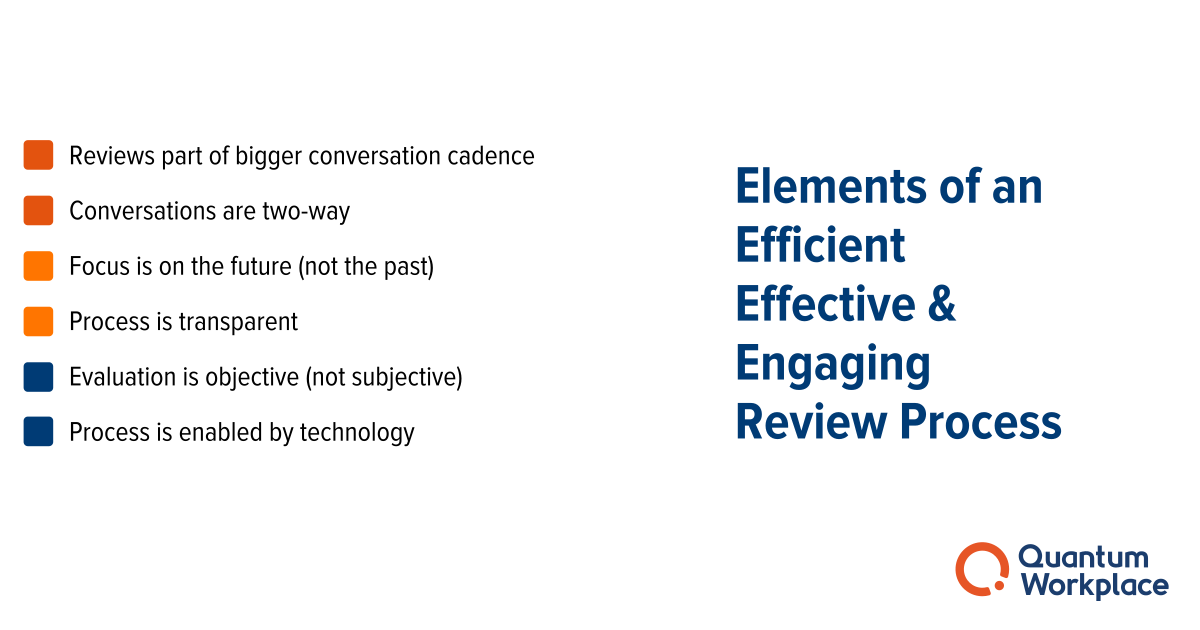
elements of effective performance reviews


Performance reviews should happen frequently.

If you want to cultivate employee success, you must branch beyond the traditional, annual review. So much can change in your organization or with your employees in one year. It’s important to stay aligned and to keep communication going during those changes.

We recommend quarterly or monthly performance conversations, paired with a year-end review of general themes, notes, progress, and next steps. This allows managers and employees to stay on the same page about goals, progress, and performance. It also helps:

  • Employees understand exactly where they stand and what to do to improve
  • Managers provide real-time coaching and help overcome obstacles
  • Organizations benefit from a constant flow of data on individual and team performance

Quantum Workplace research shows that more frequent (monthly) performance conversations result in 21% more effective reviews, 11% more engagement, and 8% more perceptions of fairness, and 5% more improved performance.

Many organizations are turned off by a quarterly or monthly performance review cadence because it feels like a hefty time commitment. But if you’re having frequent conversations, they don’t need to be long, robust, or comprehensive to be effective. Your teams are better equipped to navigate unexpected changes.


Employee reviews should be two-way conversations.

Not only should performance conversations happen more frequently—they should also be more engaging. Managers and employees should equally contribute to the conversation, and employees should be just as invested in the preparation as managers. Constructive criticism helps team members identify areas for improvement and take steps toward personal and professional growth.

While there isn’t a one-size-fits-all solution for all performance discussions, every conversation should promote trust, reduce anxiety, create clarity, and showcase alignment. And these conversations don’t have to be just about performance. They can address:

  • Career growth and development
  • Engagement challenges
  • Alignment to organizational goals
  • Changes or key messages from senior leadership
  • Recognition
  • Peer feedback
  • Customer feedback

Performance reviews should be future-focused.

Traditionally, performance reviews have centered around the past—how the year went, what went well, and what didn’t go well. Employees can’t change the past, so it’s pretty disengaging to be evaluated on situations they have no power to shape.

But employees do have the power to change what happens in the future—and this is where the bulk of your performance conversations should focus. It’s good to reflect on the past, but managers and employees should also spend time looking forward to the next year.

Performance reviews should be transparent.

Performance reviews can be anxiety-inducing. And one of the best ways to reduce anxiety is to bring employees into the process early. Managers should work with each employee to create a clear, shared, and collaborative agenda with main points of discussion.

Both parties should know exactly what to expect—there shouldn’t be any surprises! It is important for performance reviews to be transparent and for managers to gather honest employee feedback to promote professional growth.


Performance reviews should be objective.

Today we have access to mountains of relevant data. There’s no excuse for subjective performance reviews anymore. To prepare for performance reviews, managers should gather data from multiple sources. These sources may include recognition received, feedback from others, ratings from talent reviews, notes from one-on-one meetings, and progress towards goals.

In a performance evaluation, it’s important to focus on specific examples and results rather than generalizations.

Every statement made should be fueled by data—not by the manager’s personal opinion.

Performance reviews should be enabled by technology.

No one will want to participate in the review process if it’s clunky and outdated. Performance review software helps simplify the process and enhance effectiveness across the board.

  • It helps leaders have more visibility into employee performance
  • It helps HR facilitate reviews without the administrative burden
  • It helps managers understand employee performance and have effective conversations 
  • It helps employees feel engaged and invested in the process and outcomes from reviews

You need to get your performance reviews out of spreadsheets and into a digital platform that helps you share agendas, record notes, and document performance all year long. It should help empower your managers with diverse data sources that help them be better coaches, have better reviews, and minimize subjectivity in performance evaluation. 

Quantum Workplace research shows that when managers are rated as effective users of technology, employees perceive them as 3.4X more effective at management.

To recap, here are some key differences between traditional performance reviews and modern performance reviews.


Traditional Performance Review
Modern Performance Review
  • Held annually
  • One-way conversations
  • Review past performance
  • Closed-door policy
  • Little to no transparency
  • Based on subjective manager opinion
  • Result in a rating and minimal follow-up
  • Facilitated by “pen-and-paper” methods
  • Held quarterly or monthly
  • Two-way conversations
  • Review recent performance and coach to impact, development, & growth
  • Open-door policy
  • Transparent and collaborative
  • Based on rich and real-time employee data
  • Conclude with next steps and follow-up
  • Facilitated in a streamlined performance platform


Conducting performance reviews: who and how?

Conducting performance reviews is a crucial aspect of talent management within any organization. The responsibility primarily falls on the shoulders of HR and managers. Together, they should work towards creating a more efficient, effective, and engaging review process.

Tips for preparing for a performance review

Managers should approach any performance conversation with thoughtful preparation and lots of data and examples. In this section, we’ll discuss how to prepare for a performance review by:

Sync performance review criteria, employee goals, and goal progress.

Managers and employees should have a clear understanding of what constitutes good or poor performance—and this starts with organizations clearly communicating performance criteria. Performance criteria and ratings can be difficult to address and digest. Managers should act as interpreters of that data by adding qualitative context (such as goal progress or 360 feedback) to performance. They should approach performance reviews with a coaching mindset, highlighting and distilling information to make it easier for their employees to consume. Additionally, using metrics and measurements can provide valuable clarity and focus for employees and managers, acting as a framework for planning and prioritizing future efforts.


Gather employee data and examples.

Performance conversations used to be based on subjective manager opinions. But in today’s data-driven world, that shouldn’t be the case. Managers should approach performance conversations with rich employee data from a variety of sources. This data should help guide the conversation and build a more meaningful relationship between manager and employee. Bring data and examples from previous 1-on-1 notes, goal progress, role competencies, 360 feedback, and recent recognition.

All of these are great ways to shed light on a variety of different aspects of an employee’s performance. The more data you can provide to add context to any difficult or even positive discussions, the more real your conversations will be. By leveraging performance criteria, specific examples, and employee data, an employee’s opinion of perceived fairness of performance review results will be all the more authentic instead of leaving a bitter taste in their mouth.

Prepare notes and agenda.

No one enjoys walking into a meeting blindly. Performance conversations are no exception. In order to give managers and employees the best opportunity to have a meaningful conversation about performance, both parties should work together to prepare a shared agenda and notes with key talking points. This will relieve some of the anxiety around the conversation and will give employees a chance to contribute their thoughts and prepare for the meeting. It also allows employees to adjust the agenda to fit their needs. When employees are encouraged to bring topics they want to discuss, managers can focus on actively listening rather than lecturing.

Align on expectations with employees.

Performance conversations are sometimes difficult. When employees aren’t achieving goals or objectives, these meetings can help determine why and how to help an employee improve. Start off on the right foot by aligning on expectations for the meeting itself. Here are a few tips:

  • First, an employee should know their role in preparing for the meeting.
  • Second, employees should know what to bring to the meeting and what information might be referenced or pulled into the discussion from the manager’s side.
  • Finally, employees should have a clear idea of what their responsibilities will be after the meeting and how their manager plans to help them succeed.

Above all, managers and employees should have a shared understanding of what good performance looks like. When necessary, managers should provide clarity around each employee’s role and how the organization perceives their contributions. By aligning expectations with your organization’s established performance criteria, your employees won’t feel misguided or alarmed when their review begins.

How to conduct the review: performance review tips

When it comes to how to conduct a performance review effectively your managers need to understand:

  • Why it’s important to review past performance and focus on future success
  • How to ask the right questions
  • How to choose the right phrases
  • The importance of being a good listener
  • Ending the conversation with agreed upon next steps

Reflect on the past but focus on the future.

Traditional performance reviews focus on past behavior and performance. While acknowledging past performance is important, if that’s the only thing you talk about in a performance review, you’re not going to drive future performance. Performance conversations should give employees an opportunity to address and correct performance in real-time and continuously see how their work aligns with organizational goals.

Future-focused performance reviews also align with employee wishes for more feedback and development opportunities. Employees want immediate feedback so they can improve performance on-the-go, rather than waiting for their annual performance review. They also want to know you care about their future—whether that’s with your organization or not.

Ask the right performance review questions.

Asking (and inviting) the right performance review questions is critical. The right questions help keep you focused on the topics that are important to your employees’ and organization’s success.

Pro Tip: Use a performance review template that invites honest, genuine feedback and uncovers actionable ways to improve performance. Here are a few good questions to ask in a performance review:

  • What accomplishment(s) from the last quarter are you most proud of?
  • What goals do you have for the next quarter?
  • What development goals would you like to set for the next 6 months?
  • What obstacles are standing in your way?
  • What impact has your performance had on the team? The organization?
  • How can I improve as your manager?

Managers who approach performance conversations with an evaluation mindset may make employees feel like they’re on trial. Ask these questions to shift your mindset from judge to coach. And always encourage employees to ask questions of you. By coaching your employees and inviting them to contribute to the conversation, you can work together to help them achieve their goals.

Choose your phrases carefully.

Your words carry a lot of power. They can be motivating to your employees or completely deflate their work and value. When meeting with your employees you’ll want to be thoughtful, considerate, and take the time to prepare. While there are many ways you could approach a performance conversation, what not to say in a performance review is just, if not equally, as important as what to say. Here are a few tips for choosing effective performance review phrases:

  • Use specific language
  • Use measurement-oriented language
  • Use powerful action words
  • Stay positive and constructive
  • Focus on solving problems
  • Focus on opportunities for growth
  • Focus on the individual and avoid bias
  • Treat good performance with respect

Be an active listener.

Performance conversations should be two-way, so make sure you’re facilitating a dialogue and actually listening. Listening to your employees helps you learn and understand rather than simply give someone equal talking time. Ask follow-up questions to help you dig deeper and paint a fuller picture.

Participating in the conversation isn’t always about sharing your point of view. After an employee shares their feedback, repeat back what you heard. This gives you the opportunity to check that you accurately understood what the other person said. Be sure to allow enough time for the employee to share their feedback with you and bring a laptop or notebook to record it so that you can follow up later.

Wrap up the conversation with next steps.

A performance conversation shouldn’t end when the meeting is over. For performance review follow up, managers and employees should review notes, define next steps, and follow up with shared comments and feedback. Without these items, performance conversations feel unresolved. If you want your review to actually improve performance, creating an action plan is vital.


Types of performance reviews

There are many types of performance conversations, each with its own purpose and impact on employee engagement and development. HR leaders can use different types of performance reviews based on their organization’s needs and goals. A mix of conversations helps keep up with the pace of change at work, facilitate feedback faster, and keep teams aligned. Here are the most common types of performance reviews:

Annual Performance Review

The annual review is a key time for looking back at what employees have done well and where they can do better. Managers can acknowledge great work, address broader concerns, and offer valuable feedback for employee growth. Managers and employees can reset and align on expectations, adapt to changes, and co-pilot development plans for the coming year.

Mid-Year Performance Appraisal

The mid-year performance review is a great opportunity to check on goal progress and adjust or set new goals. Employees can share obstacles and opportunities relative to agreed upon next steps from the annual review conversation. Managers can help address key challenges and course correct to keep important work on track—helping employees develop new skills and participate in meaningful development opportunities.

Quarterly Performance Conversation

Quarterly performance evaluations are great milestone conversations where managers and employees can focus on continuous improvement. Tracking goal progress and adapting to changes are vital aspects of these reviews. Employees can align their efforts and seek necessary training when they need it, rather than waiting for their annual review to come around. And managers can coach around new obstacles and opportunities ahead.

Monthly 1-on-1 Meetings

Monthly evaluations play a crucial role in providing employees with consistent and actionable feedback. A regular feedback loop helps managers manage performance better, and helps employees feel heard and valued. Managers and employees can talk through specific examples and important data, really digging into the work and it’s challenges. Monthly performance conversations also create a pathway for employees to navigate their own development journey and continuously improve based on consistent and constructive feedback.

Weekly Check-Ins

Weekly performance check ins are the bread and butter of a strong feedback culture. They’re valuable opportunities for quick, timely, and constructive input as important work is in motion. By encouraging two-way dialogue, managers and employees can tackle emerging performance concerns and nurture continuous improvement. Managers can recognize employee accomplishments in real-time, keeping employees motivated to great work. Weekly check ins help improve communication, connect the dots across the team, and promote a supportive and proactive work environment.

360 and Self-Performance Reviews

In this type of review, feedback is collected from various sources, including peers, subordinates, and customers. It provides a holistic view of an employee’s performance and helps identify areas for improvement. These reviews cultivate a growth mindset, encouraging skill enhancement and personal development. In the upcoming year, consider incorporating 360 and self-performance reviews to enhance team dynamics and promote a culture of feedback and continuous improvement.


Performance Review Templates

Crafting effective performance review templates can significantly enhance the feedback process. Leverage performance review templates to elevate performance reviews from a routine administrative task to a strategic initiative that empowers HR to foster a culture of continuous development and high performance.

Streamline & customize

Optimize your performance reviews by both streamlining and customizing with performance review templates. Templates help you streamline the feedback process, ensuring all managers and employees are discussing what’s most important. You can tailor these foundational templates to specific teams and roles, and to ensure they reflect your organizational culture and values. Embrace the efficiency of streamlined and customizable templates to nurture growth, align expectations, and boost employee success across your organization.

Align to employee goals

Clear and attainable performance objectives are critical for effective and fair performance reviews. Employee goals should be in line with the company and team’s overarching goals. Managers and employees should regularly revisit and adapt performance goals as business priorities shift. And goal setting should be a two-way conversation, fostering a sense of ownership and commitment among employees.

Weave in performance competencies

Performance competencies help employees focus on job-specific skills and areas of growth. These competencies should seamlessly align with job roles, goals, and development plans. By utilizing performance competencies as benchmarks, organizations can holistically measure critical behaviors, skills, and attributes necessary for job proficiency. And employees can work toward tangible skills and additional training to help them grow and advance in the organization.


Performance review software for greater efficiency, effectiveness, and engagement

Performance conversations don’t need to be hard. Keep your managers and employees on the same page with engaging performance reviews. Our performance review software gives your teams reliable context to help them have more objective and engaging conversations.

4_performance-reviews_product-imagery

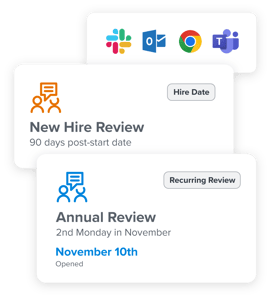
1. Customize reviews to fit your needs. 

Easily measure what you want, when you want with flexible review modules that you can tailor to fit the needs of your culture and the various groups within it. 


2. Help your managers build positive performance habits.

Make it easy for manager to coach to performance by integrating your process into their existing workflows. Set up formal conversation cycles to create the right frequency and consistency of touch points.

1_performance-reviews_product-imagery


2_performance-reviews_product-imagery


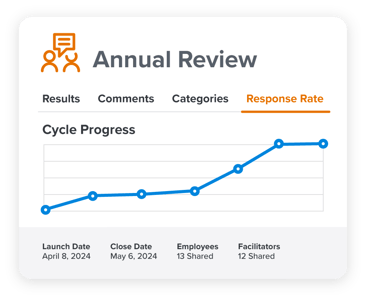
3. Easily track review response rates. 

See the status of each review cycle to help your teams stay accountable and monitor performance ratings in real-time. 


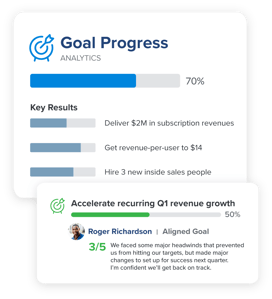
4. Embed performance goals directly into reviews.

Our platform makes it easy to include goals as part of performance evaluations—and helps coach managers have objective, effective, and growth-oriented conversations.

3_performance-reviews_product-imagery


360Feedback_EmployeeMagnetism_7.1


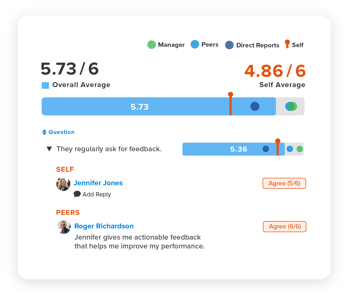
5. Orient reviews around multi-rater feedback.

Incorporate feedback into your review cycles to gain valuable insight from the individuals your people work with most, and better orient  performance conversations around development.


6. Visualize and align on performance data across teams.

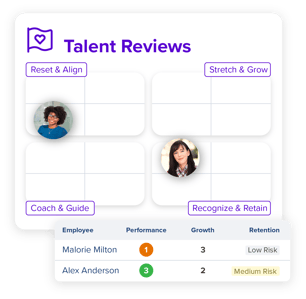
Get a comprehensive view of your organization’s talent with our talent dashboard. Zoom out and see the big picture, to help you make more informed decisions on how to keep and develop your best talent.

TalentReviews_EmployeeImpact_6.3


Conclusion

In conclusion, modernizing performance reviews is crucial for HR leaders to foster a more engaging and efficient system. By understanding the challenges of traditional annual reviews and embracing a dynamic approach, organizations can enhance employee motivation and productivity. Incorporating regular check-ins, setting meaningful goals, and utilizing performance review tools are key strategies for success in today’s workplace. Embracing change and implementing these best practices can lead to a more positive and impactful performance review process. If you’re looking to revolutionize your performance reviews, consider reaching out for a free consultation to explore how to elevate your review process.


Make your performance review process more effective, efficient, and engaging. Quantum Workplace’s performance review software helps your managers and teams prepare for, facilitate, and follow up for better reviews and better performance.


QW-logo-color