Home Blog Page 414

Drawing the Female Form

0

Figure Drawing: A 12-Step Guide to Mastering the Art of Drawing the Human Form

  1. Start with simple shapes
    Roughly drawn nude female figure with small, two-finger wide piece of charcoal, making adjustments as needed.

  2. Add more sophisticated lines
    Line drawing of a female figure with gestural grip for a fluid, dynamic mark.

  3. Exaggerate the curves
    Female figure with more detail added, exaggerating the curves to make the drawing more lively.

  4. Lay in broad tones in charcoal
    Charcoal figure with shading added, using a drawing stump to blend tone into form.

  5. Blend tone into form
    Hand smudging charcoal to form shadows, using a sheet of paper to prevent smudging.

  6. Refine the drawing
    Charcoal figure with more shading and refinement, pushing charcoal around rather than adding more.

  7. Pay attention to proportions
    Charcoal figure with attention to proportions, using a measuring technique to ensure accuracy.

  8. Use a paper stump for adjustments
    Hand using a drawing stump, with paper underneath to prevent smudging, to make adjustments to the drawing.

  9. Create highlights with an eraser
    Charcoal figure with highlights added using a kneadable eraser, thinking of the eraser as another drawing tool.

  10. Take a break
    Charcoal figure, taking a break to clear the mind and approach the drawing with fresh eyes.

  11. Add a background
    Charcoal figure with a background added, using a chamois leather to create abstract marks.

  12. Introduce the elements of fantasy
    Female figure with breastplate and jewelry added, reimagining the figure as a vampire.

Conclusion

Mastering the art of drawing the human form requires patience, practice, and dedication. By following these 12 steps, you can develop the skills necessary to create a well-proportioned and appealing figure drawing.

Frequently Asked Questions

Q: What is the best way to start drawing the human form?
A: Start with simple shapes and gradually add more detail and sophistication.

Q: How do I achieve a more dynamic mark?
A: Use a gestural grip and push charcoal around rather than adding more.

Q: How do I blend tone into form?
A: Use a drawing stump to blend tone into form and create deep shadows.

Q: What is the best way to create highlights?
A: Use a kneadable eraser to create highlights and think of the eraser as another drawing tool.

Listen, Recall

Bee Pioneer Band: An AI-Powered Wristband That Listens to You All Day and Night

The Bee Pioneer Band is an AI-powered wristband that listens to your conversations and interactions, using a dual microphone system to capture and transcribe your conversations. This information is then used to get to know you better, summarize your interactions, and provide feedback and insights.

How it Works

The conversations and summaries are all accessible on the app in a clean, organized, and digestible manner. You can also ask the app questions about your conversations, similar to how you would after recording on Otter.ai. This is the most helpful use case for the band, as it allows you to reference back to what someone said or clarify any misunderstandings.

Using Your Conversations

The Bee Pioneer uses all of your conversations to better answer your questions, similar to ChatGPT’s Memory feature. However, the major difference is that ChatGPT only has the context of your conversations in the chatbot, while the Bee Pioneer has the context of everything in your day, allowing you to ask much deeper questions.

Example Use Cases

For example, you can ask something about your personal life, such as, "How is my parenting approach?" or "What can I do to improve these behaviors?" Based on its transcriptions, it could provide you with feedback, referencing your actions. Beyond answering questions, it provides actionable insights such as suggested to-dos, daily summaries, and reflections.

Privacy and Security

Of course, one big concern remains: privacy. There is a button on the wristband that you can click when you want it to be muted and not have it listen to you. The founders of the product, Maria de Lourdes Zollo and Ethan Sutin, assured me that privacy was a top priority. According to Sutin, no human can see the conversations, and the data will not be sold or used for training. Conversation data would only be shared with law enforcement if required by valid court orders. The company does not store the audio and shares that the data is protected with enterprise-grade encryption and undergoes regular third-party security audits.

Concerns and Future Development

I still have some concerns, such as what makes the wearable equipped to analyze your behaviors and give feedback on your relationships. And, almost more importantly, what about the privacy implications for people who don’t know they are being recorded? However, I see the advantage of having AI that is constantly aware of your actions, as it becomes more of a proactive assistant, always ready to help, rather than an assistant that is reactive and only steps in once you need help.

Availability

The wearable costs $50 and is available for purchase now for iOS only, with an Android offering coming later this month before the official launch. The Bee Pioneer is modular and can also be worn as a pin; however, that attachment is yet to be sold on the site.

Conclusion

The Bee Pioneer Band is an innovative product that has the potential to revolutionize the way we interact with AI. While there are still some concerns about privacy, the benefits of having a constant AI-powered assistant that is always ready to help are undeniable. As the technology continues to evolve, it will be exciting to see how it is used in the future.

Frequently Asked Questions

Q: What is the Bee Pioneer Band?
A: The Bee Pioneer Band is an AI-powered wristband that listens to your conversations and interactions, using a dual microphone system to capture and transcribe your conversations.

Q: How does the Bee Pioneer work?
A: The conversations and summaries are all accessible on the app in a clean, organized, and digestible manner. You can also ask the app questions about your conversations, similar to how you would after recording on Otter.ai.

Q: Is my data private?
A: Yes, the company does not store the audio and shares that the data is protected with enterprise-grade encryption and undergoes regular third-party security audits. Conversation data would only be shared with law enforcement if required by valid court orders.

CEO Bets on AI for AWS

0

Article

Today, I’m talking with Matt Garman, the CEO of Amazon Web Services (AWS). I’m excited to hear his thoughts on the future of cloud computing and how AI is changing the industry.

Matt Garman, CEO of Amazon Web Services (AWS), on the State of Cloud Computing and AI

The Interview

M: I am very excited to talk to you. You are, I believe, a perfect Decoder guest. You are, I be…ite dark:selection:bg-blurple [&_a:hover]:shadow-highlight-franklin dark:[&_a:hover]:shadow-highlight-blurple [&_a]:shadow-underline-black dark:[&_a]:shadow-underline-white">I think it’s a positive ROI. Well, it depends on what you mean by ROI positive. I think there’s a lot of investment in the world.

N: Right. But this is a lot of investment in AI across the industry. When do you think it’s going to start returning?

M: I mean, if you think globally, I think it’s ROI positive now. I think the question is when does it become more evenly distributed? Look, I think the hardest question of that, honestly, is for the model producers. I think that’s the single hardest question. I actually think today, or if not today, very soon, it is going to be ROI positive for the broad swath of customers using AI and building it in, like banks, insurance companies, pharmaceuticals, and others. You can make that ROI-positive story today, and I think it will continue to get better. And I think for infrastructure providers like Nvidia, of course, it’s very …

Conclusion

The interview with Matt Garman, CEO of Amazon Web Services (AWS), provides valuable insights into the current state of cloud computing and the investment in AI across the industry. He believes that AI is already ROI positive globally, but the question is when it will become more evenly distributed. He also highlights the importance of model producers and the potential for AI to become ROI positive for a broad swath of customers, including banks, insurance companies, and pharmaceuticals.

FAQs

Q: What is your take on the current state of cloud computing?
A: I think cloud computing is still in its early days, and there is a lot of investment in the world.

Q: What do you think about the investment in AI across the industry?
A: I think there is a lot of investment in AI, and I believe it will continue to grow.

Q: When do you think AI will start returning?
A: I think AI is already ROI positive globally, but the question is when it will become more evenly distributed.

Q: What do you think about the model producers in the industry?
A: I think they are the single hardest question, and I believe they will continue to play an important role in the development of AI.

Q: What do you think about the potential for AI to become ROI positive for a broad swath of customers?
A: I think it is already possible for a broad swath of customers, including banks, insurance companies, and pharmaceuticals, to make an ROI-positive story with AI.

Why CES is getting predictable, and the 3 products that managed to stand out

0

Is CES Really Innovative?

Outside we have the desert; inside we have the lights and the hyperbole. As I walked around, from stand to stand, I saw brands eagerly showcasing how they use Artificial Intelligence to make every part of our lives smarter and better – from the homes we live in to the TVs we watch. AI was a badge of acceptance at CES, with every other stand offering the promise of enhanced convenience, efficiency, and personalization.

My CES Highlights

However, there are some standout innovations that did feel like they broke the mould and deserve our praise. These products took positive steps in redefining how technology and design intersect to create harmony and a more meaningful, transformative experience.

01. TCL A300 Series: Redefining Television Design

Take TCL’s A300 Series TV. On the surface, it seems like a modest update. But look closer: it’s mounted on a movable stand with wheels – yes, wheels. It might sound retro (Back to the Future, anyone?), but it’s actually a very clever design feature that takes an old notion and reinvents it for the modern world. This design helps transform the TV from a static piece of furniture into something dynamic. An item that feels more integrated into the flow of a modern home.

02. Scout Motors is Electrifying an American Icon

Jaguar, for good or for bad, stole the headlines by electrifying a British icon (although the word British was conspicuously absent in that major rebrand), however, at CES Scout Motors’ debuted the Traveler SUV and Terra Truck.

03. Lenovo Celebrates Flexibility

Lenovo’s ThinkBook Plus Gen 6 Rollable AI PC offers an interesting and somewhat futuristic take on laptop design. Its rollable display moves the device from being a 14-inch to a 16.7-inch screen! This is achieved through a simple button press or gesture, which in turn delivers nearly 50% more screen space on demand. In a literal, swipe of the hand, this creates a device that is functionally better as well as visually captivating.

Is CES Really Innovative?

For all the fanfare and noise, the publicity machines and polished graphics and exhibitions, CES 2025 presents a solid vision of AI integration, but lacking in true innovation within that arena.

Conclusion

As designers, it is our responsibility to push beyond incremental updates and envision products that are as transformative as the technologies driving them. For CES, it may well do good to look at the nearby desert where the horizons feel like they can stretch to infinity.

FAQs

Q: Is AI the only innovative technology on display at CES?
A: No, there were many innovative technologies on display at CES, including rollable displays, electric vehicles, and more.

Q: What is the future of television design?
A: The future of television design is likely to be driven by the integration of AI and other technologies to create more dynamic and interactive viewing experiences.

Q: How can we make CES more innovative?
A: By pushing the boundaries of what is possible and envisioning a future where technology and design intersect to create a more meaningful and transformative experience.

Master Google’s AI Overviews

0

How to Rank in Google’s AI Overviews: 11 Tips for Organic Visibility

Google’s AI Overviews are AI-generated responses that appear at the top of the search engine results page (SERP). These summaries provide direct answers to user queries while offering relevant links. To increase the visibility of your content in AI Overviews, follow these 11 tips:

1. Add More Context to Your Articles

Google rewards content that is well-contextualized and written in a simple, easy-to-read format. Focus on writing in a simple, easy-to-read format and add enough context to answer the query fully.

2. Use Long-Tail Keywords

AI Overviews are more likely to be triggered by specific, long-tail keywords than by generic, short-tail ones. Use tools like Ahrefs to find AIO-triggering keywords with high-traffic potential.

3. Leverage Structured Markup

Implementing structured data, such as Schema.org markup, helps search engines understand the context and structure of your content. This makes your page more likely to be included in AI Overviews.

4. Optimize On-Page SEO

On-page SEO remains foundational for ranking in both traditional SERPs and AI Overviews. Use primary and secondary keywords in titles, headings, and subheadings, and write compelling meta descriptions to boost CTR.

5. Target Keywords with Low Difficulty

Focus on keywords with low competition (Keyword Difficulty < 20). These are often high-intent, long-tail phrases that are easier to rank for and align well with informational search queries.

6. Build Brand Credibility

Frequently mentioned in authoritative publications or regularly cited by others, sources are more likely to be included in AI Overviews. Build your brand’s credibility by engaging in digital PR campaigns and monitoring mentions on platforms like Quora and Reddit.

7. Optimize for Mobile SEO

With mobile-first indexing, Google evaluates your site’s mobile performance when determining rankings. Use responsive design and improve page load speed for mobile users.

8. Format Content for Easy Scanning

Well-structured content – using bullet points, lists, and clear sections – is often favored. Formatting plays a critical role in helping AI parse information quickly.

9. Focus on Simplicity

Content written in plain, accessible language tends to perform better in AI Overviews. Use tools like Hemingway Editor or Grammarly to ensure your content is readable and concise.

10. Acquire High-Quality Backlinks

Strong backlinks are essential for SEO, and our experience suggests they are equally critical for increasing the likelihood of being cited in AI Overviews. Prioritize quality over quantity in link building.

11. Publish Timely, Relevant Content

AI Overviews often favor fresh, up-to-date information. Regularly update your articles and blog posts to ensure they remain current.

FAQs About AI Overviews:

  • Are AI Overviews Accurate?
    • AI Overviews are generally reliable but not 100% accurate. Their accuracy depends on the quality and timeliness of the source content.
  • Where Do AI Overviews Get Their Information?
    • AI Overviews gather information from multiple credible sources across Google’s search results pages, including top-ranking websites, authority websites, and content that directly answers the user’s query.

Key Takeaway for Ranking in Google’s AI Overviews:
Ranking in Google’s AI Overviews requires a multi-faceted approach: creating well-structured, mobile-friendly content, targeting specific long-tail keywords, and building brand credibility. Leveraging tools like structured markup and keeping your content updated can further boost your chances.

Meta’s AI Conundrum

0

Meta’s Latest AI Fiasco: A Cycle of Disappointment

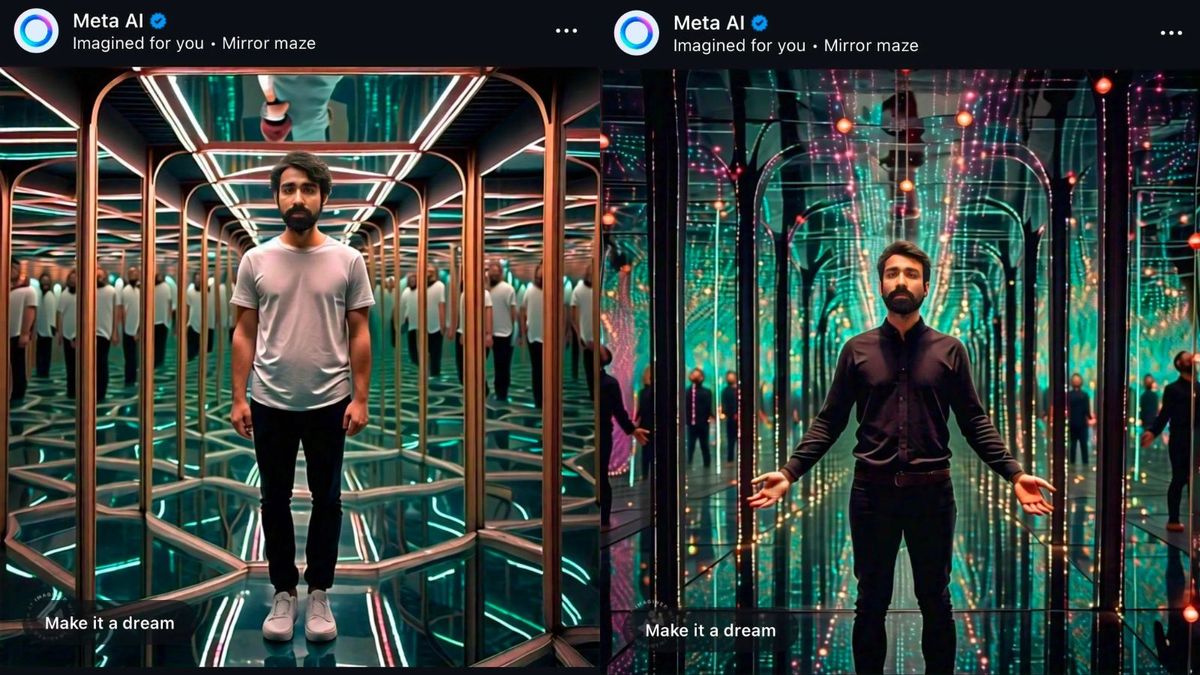
Meta has managed to cause controversy with its AI push once again, this time by introducing AI-generated pictures of users in their feeds.

A Familiar Pattern

When I saw this story, I was alarmed by the revolting tackiness of it all, but I wasn’t surprised. A very clear pattern has emerged in Meta’s behaviour – the company is going all-in on AI, but has no real idea what to do with it, what users want from it, or – crucially – how to make any money off it. But the war to be the best social media platform grinds on, shareholders demand their quarterly treats, and AI is still the hottest buzzword on the block. So, Meta is jamming AI into everything, throwing it all at the wall in the desperate hope that something, anything, manages to stick.

The Cycle

I might be wrong, and if that’s the case then I encourage Mark Zuckerberg to come down here and community note my ass. But I don’t think I am. There’s a cycle that’s been playing out for literal years at this point:

  1. Meta announces a big, splashy new AI feature
  2. Users either revolt, make fun of it, or simply ignore it.
  3. Meta quietly retires the feature.
  4. Go to 1.

A Recent Example: AI Chatbots

By far the biggest boondoggle so far has been the aforementioned celebrity AI chatbots. I wouldn’t blame you if you’ve already forgotten about it, so here’s a refresher. In late 2023, Meta announced that it would be bringing a host of AI assistant chatbots featuring various famous faces. Users would be able to have their questions answered by the likes of Snoop Dogg, MrBeast, Paris Hilton, Kendall Jenner and more. And where are they now, you ask? The whole thing was a disaster, users hated it, and the chatbots were boxed within less than a year.

The Cost of Failure

I confidently predict that this latest feature – the ‘Imagined for You’ selfies that put u/Green_Video_9831 into a hall of mirrors – is going to go the exact same way. I’m not blind to the cute novelty factor of it – I’m sure you can imagine yourself enjoying seeing a pretty realistic-looking photo of yourself on the surface of Mars or in Blade Runner or whatever. But can you imagine yourself enjoying that more than once or twice? Can you imagine enjoying that on a regular enough basis that it significantly juices Meta’s engagement metrics? Can you imagine yourself paying for it?

Conclusion

I firmly believe that Meta has no path to profitability with this stuff. If this all feels like a flailing tech giant desperately seeking to stay on top of the pile by burning money to over-leverage on underdeveloped technology that can’t really do the things they’re saying it can do – well, that’s because it is. And sure, Meta has a lot of money to burn. But nothing is infinite. At some point, they’re going to hit the limits of what they can spend on this stuff without making any return. What comes after that? I don’t know! I don’t think Meta knows either, and I think the company is really, really hoping that it doesn’t have to find out.

FAQs

Q: Why is Meta struggling with AI?
A: Meta is struggling with AI because it has no clear direction or understanding of what users want from it, and it’s throwing too much money at underdeveloped technology in a desperate attempt to stay relevant.

Q: What’s the pattern with Meta’s AI announcements?
A: Meta announces a big, splashy new AI feature, users react negatively, Meta quietly retires the feature, and the cycle repeats.

Q: Is the AI-generated selfie feature a failure?
A: Yes, I confidently predict that this feature will follow the same pattern as previous failed AI features from Meta.

Guiding the Global Spread of A.I.

0

The Biden Administration’s New Rules for Sharing AI Chips and Models

Background
The Biden administration has issued new rules governing the sharing of AI chips and models with foreign countries, aiming to establish a global framework for the spread of artificial intelligence in the coming years.

Why the Rules Matter
The rules are necessary to keep AI under the control of the United States and its allies, preventing adversaries from using it to enhance their military capabilities, carry out cyberattacks, and threaten the United States. The rules are designed to restrict the spread of AI technology to countries that could potentially use it for malicious purposes.

How the Rules Work
The rules divide the world into three categories. The United States and 18 of its closest partners, including the UK, Canada, Germany, Japan, South Korea, and Taiwan, are exempt from any restrictions and can freely buy AI chips. Countries subject to US arms embargoes, such as China and Russia, will continue to face a ban on AI chip purchases. All other nations will be subject to caps on AI chip imports, which can be increased by entering into special agreements with the US government.

Goals and Objectives
The rules are aimed at preventing China from obtaining the technology it needs to produce AI, after the US banned such sales to China in recent years. Additionally, the rules aim to make allied countries the preferred location for building the world’s largest data centers, keeping advanced AI models within the US and its partners.

Reactions from Industry
Companies like Nvidia and Microsoft have protested the limitations, claiming they could hamper innovation and economic growth worldwide. They argue that the restrictions could lead to the development of non-American A.I. products, including those made in China.

Implementation and Enforcement
The rules will be implemented by the Trump administration, which has been consulted on the regulations. The rules also set up a system for companies to apply for special government accreditations, allowing them to trade in AI chips more freely globally. Companies must agree to keep 75% of their total AI computing power within the US or allied countries and locate no more than 7% of their computing power in any single other nation.

Conclusion
The new rules aim to strike a balance between protecting US security interests and allowing companies to compete globally. By implementing these regulations, the US hopes to maintain its leadership in the AI industry while preventing the spread of this technology to potentially hostile nations.

FAQs

Q: What are the new rules for sharing AI chips and models?
A: The rules divide the world into three categories, with the US and its closest partners exempt from restrictions, countries subject to arms embargoes banned from purchasing AI chips, and all other nations subject to caps on imports.

Q: Why are the rules necessary?
A: The rules are necessary to prevent the spread of AI technology to countries that could potentially use it for malicious purposes, such as enhancing military capabilities, carrying out cyberattacks, or threatening the US.

Q: How do the rules affect companies?
A: Companies can apply for special government accreditations to trade in AI chips more freely globally, but must agree to keep 75% of their total AI computing power within the US or allied countries and locate no more than 7% of their computing power in any single other nation.

Q: What are the goals of the rules?
A: The rules aim to prevent China from obtaining the technology it needs to produce AI, make allied countries the preferred location for building the world’s largest data centers, and keep advanced AI models within the US and its partners.

Behold the Horror of Donkey Kong’s Boney Marrow: A Dark Reflection of Iconic Nintendo Characters

0

Unintended Character Design Horror: When Nintendo’s Beloved Characters Meet Donkey Kong’s Skeleton

The Unholy Union of Donkey Kong’s Skeleton and Nintendo’s Iconic Characters

Nintendo’s character designs are renowned for their recognizability and charm. However, when you combine these lovable characters with Donkey Kong’s skeleton, something eerie and unsettling emerges. A curious TikTok user, j0rts_yt, has created a series of unsettling character mashups that will forever change the way we perceive Nintendo’s beloved characters.

The Results are Haunting

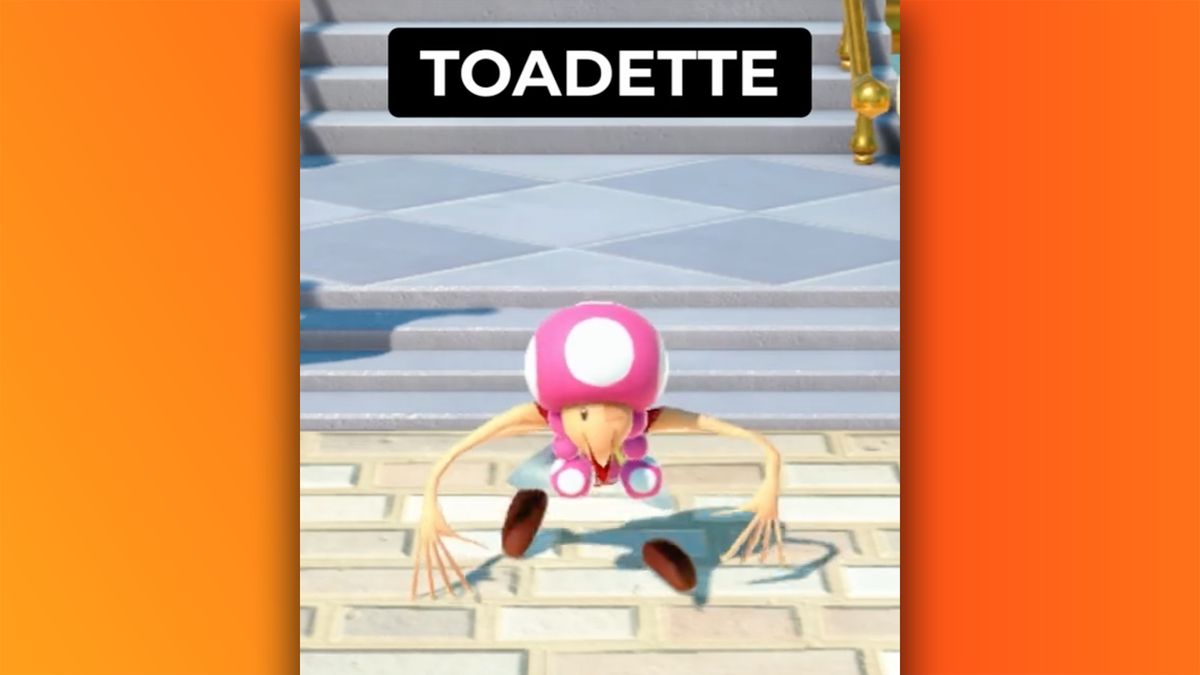
The experiment is simple: j0rts_yt has taken Donkey Kong’s skeleton and superimposed it onto various Mario Party characters, including Princess Peach, Daisy, Toad, Wario, and Bowser. The outcome is a chilling fusion of innocence and abomination. Princess Peach’s skin stretched over DK’s lumbering frame is a particularly haunting image that will linger in your mind long after you’ve stopped looking.

TikTok Users React with Horror

The internet is not surprised by the visceral reaction to these character mashups. Commenters on the TikTok post were equally disturbed, with one user suggesting that the creations would make a great horror game, while another exclaimed, "I audibly gasped at Peach and Daisy!" One commenter simply implored, "Hey, um please don’t do this."

Conclusion

The unintended horror that arises from combining Donkey Kong’s skeleton with Nintendo’s iconic characters serves as a stark reminder of the importance of considered character design. While the results are terrifying, they also demonstrate the ability of the internet to create something truly unsettling and memorable.

Frequently Asked Questions

Q: Can I see more of these character mashups?
A: Unfortunately, the original post has been taken down, but you can try searching for similar content on social media platforms.

Q: Are these character designs meant to be taken seriously?
A: No, the creator of the mashups intended for them to be humorous and unsettling, rather than a serious take on Nintendo’s characters.

Q: Are these character designs a commentary on the importance of character design?
A: Yes, the creator’s experiment serves as a reminder of the significance of well-designed characters in the world of gaming.

NVIDIA Condemns Misguided ‘AI Diffusion’ Rule

American Leadership in AI Under Threat

For decades, leadership in computing and software ecosystems has been a cornerstone of American strength and influence worldwide. The federal government has wisely refrained from dictating the design, marketing and sale of mainstream computers and software — key drivers of innovation and economic growth.

Fostering Competition and Innovation

The first Trump Administration laid the foundation for America’s current strength and success in AI, fostering an environment where U.S. industry could compete and win on merit without compromising national security. As a result, mainstream AI has become an integral part of every new application, driving economic growth, promoting U.S. interests and ensuring American leadership in cutting-edge technology.

The Global Impact of AI

Today, companies, startups and universities around the world are tapping mainstream AI to advance healthcare, agriculture, manufacturing, education and countless other fields, driving economic growth and unlocking the potential of nations. Built on American technology, the adoption of AI around the world fuels growth and opportunity for industries at home and abroad.

The “AI Diffusion” Rule Threatens Innovation and Growth

That global progress is now in jeopardy. The Biden Administration now seeks to restrict access to mainstream computing applications with its unprecedented and misguided “AI Diffusion” rule, which threatens to derail innovation and economic growth worldwide.

Rigging Market Outcomes

In its last days in office, the Biden Administration seeks to undermine America’s leadership with a 200+ page regulatory morass, drafted in secret and without proper legislative review. This sweeping overreach would impose bureaucratic control over how America’s leading semiconductors, computers, systems and even software are designed and marketed globally. And by attempting to rig market outcomes and stifle competition — the lifeblood of innovation — the Biden Administration’s new rule threatens to squander America’s hard-won technological advantage.

Avoiding the Unintended Consequences

While cloaked in the guise of an “anti-China” measure, these rules would do nothing to enhance U.S. security. The new rules would control technology worldwide, including technology that is already widely available in mainstream gaming PCs and consumer hardware. Rather than mitigate any threat, the new Biden rules would only weaken America’s global competitiveness, undermining the innovation that has kept the U.S. ahead.

A Return to Innovation-Fostering Policies

As the First Trump Administration demonstrated, America wins through innovation, competition and by sharing our technologies with the world — not by retreating behind a wall of government overreach. We look forward to a return to policies that strengthen American leadership, bolster our economy and preserve our competitive edge in AI and beyond.

Conclusion

The “AI Diffusion” rule is a misguided attempt to restrict access to mainstream computing applications, threatening innovation and economic growth worldwide. By imposing bureaucratic control and stifling competition, this rule would squander America’s hard-won technological advantage and undermine the very innovation that has kept the U.S. ahead. We hope for a return to policies that foster innovation and competition, benefiting both the American economy and global progress.

FAQs

Q: What is the purpose of the “AI Diffusion” rule?
A: The rule aims to restrict access to mainstream computing applications, allegedly for national security concerns.

Q: How would the rule affect the global spread of AI technology?
A: The rule would impose bureaucratic control over the global spread of AI technology, restricting access and stifling innovation.

Q: Can the rule effectively enhance U.S. security?
A: The rule would have no tangible benefits for U.S. security and would instead undermine America’s competitive edge in AI and beyond.

Q: What is NVIDIA’s stance on the “AI Diffusion” rule?
A: As expressed by Ned Finkle, Vice President of Government Affairs at NVIDIA, the organization opposes the “AI Diffusion” rule for its potential to stifle innovation and undermine the U.S.’s competitive edge in AI technology.

Q: What actions can be taken to address concerns about the rule?
A: Advocating for a return to policies that foster innovation and competition, and addressing the rule through proper legislative review and public dialogue.

Q: What will happen if the rule is enacted?
A: The rule’s enactment would weaken America’s global competitiveness, stifling innovation and undermining the progress made in the field of AI technology.

US Rule Aims to Block China’s Access to AI Chips and Models

0

Biden Administration Unveils Controversial AI Export Control Scheme

New Rule Aims to Prevent Advanced Chips and AI Models from Reaching Adversaries

The Biden administration has announced a bold and controversial new export control scheme designed to prevent the advanced chips and artificial intelligence models from ending up in the hands of adversaries such as China.

Key Provisions of the AI Diffusion Rule

  • The rule divides the world into nations that are allowed relatively unfettered access to America’s most advanced AI silicon and algorithms, and those that will require special licenses to access the technology.
  • The rule seeks to restrict the movement of the most powerful AI models for the first time.
  • Supply chain activities, including the design, manufacturing, and storage of chips, are exempt from the rule.
  • The rule will not restrict open source AI models such as Meta’s Llama.

List of Trusted Nations

  • The UK
  • Canada
  • Australia
  • Japan
  • France
  • Germany
  • Belgium
  • Denmark
  • Finland
  • Ireland
  • Italy
  • Netherlands
  • New Zealand
  • Norway
  • Republic of Korea
  • Spain
  • Sweden
  • Taiwan

How the Rule Will Work

  • Companies in other nations not subject to arms controls will be able to obtain up to 1,700 of the latest AI chips without special permission.
  • They will be able to apply for a special license to acquire more chips, to build very large scale data centers using US technology, or to gain access to the most powerful closed model "weights" made by US firms.
  • Companies will be required to have adequate physical and cyber-security to obtain a license.

Controversy and Criticism

  • The rule is sure to stoke controversy, as it may throttle international sales of AI at a critical moment for the industry.
  • Nvidia, the world’s leading manufacturer of AI chips, has called the rule "unprecedented and misguided" and claims it will weaken America’s global competitiveness.

Conclusion

The new AI diffusion rule is a significant step by the US government to prevent the spread of advanced AI technology to potential adversaries. While some critics argue that the rule will stifle innovation and hurt international sales of AI, the administration believes it is necessary to protect national security and maintain the US lead in AI development.

FAQs

Q: Who is exempt from the rule?

A: Supply chain activities, including the design, manufacturing, and storage of chips, are exempt from the rule.

Q: What is the list of trusted nations?

A: The list includes the UK, Canada, Australia, Japan, France, Germany, Belgium, Denmark, Finland, Ireland, Italy, Netherlands, New Zealand, Norway, Republic of Korea, Spain, Sweden, and Taiwan.

Q: How many AI chips can companies obtain without special permission?

A: Companies in other nations not subject to arms controls can obtain up to 1,700 of the latest AI chips without special permission.

Q: What is the purpose of the rule?

A: The rule aims to prevent the spread of advanced AI technology to potential adversaries and maintain the US lead in AI development.