Home Blog Page 423

Elon Musk’s xAI is quietly taking over X

0

The Unconventional Union of xAI and X

Musk’s AI Ambitions

When Elon Musk launched his own AI startup, xAI, he touted a key advantage over his competitors: access to the vast trove of data from his newly acquired social media platform Twitter. By implementing new API fees on the network, now renamed X, Musk locked out other AI companies, maintaining exclusive access for his own models. And he began using X’s millions of users to test the results.

New AI Features Coming to X

Musk has been using this distribution channel since xAI launched its first version of the Grok large language model, adding features like trending story summaries and AI-generated questions on posts. The chatbot is also releasing the Grok chatbot (initially) to X users exclusively. Now, a slew of new AI features is coming. Per the findings of reverse engineer Nima Owji, the platform appears to be developing AI-powered post enhancements, including a feature that lets Grok modify your tweets. The chatbot also appears to be adding location-based queries, letting users ask about things nearby, like grocery stores.

xAI’s Takeover of X

xAI’s takeover of the platform once known as Twitter is so unmistakable that even its branding has crept into X’s most visible real estate, with "xAI Grok" now commanding prominent placement in the app’s main toolbar – a striking symbol of how Musk’s AI ambitions have come to dominate the social network. An xAI employee poked fun at their company’s expanding presence, sharing an image of X’s timeline overrun with the xAI logo.

The Complex Relationship Between xAI and X

The relationship between X and xAI is complex, with varying levels of collaboration between their teams. While Musk holds separate meetings with both X and xAI engineers, the extent of day-to-day cooperation between the companies remains unclear. For six months, xAI brought on ex-Meta and Discord product leader Nikita Bier to guide AI implementation on X’s platform, including the addition of AI-generated questions to posts – notably, Bier worked exclusively with xAI, rarely engaging with X’s team.

The Funding Structure

The funding raised for xAI is separate from what is raised for X, a setup that highlights their stark difference in value. xAI has seen meteoric growth, reportedly securing a $50 billion valuation and effectively doubling its worth in mere months. Meanwhile, X has struggled to maintain value. Its most recent employee stock grants in October 2023 valued the company at $19 billion, less than half of Musk’s $44 billion purchase price.

The Benefits and Drawbacks

While xAI benefits tremendously from its link to X, it’s unclear whether X users have benefited much from xAI. Not long after X rolled out the Grok-powered Stories feature, it began spitting out garbage: it produced headlines that claimed Vice President Kamala Harris was shot after the attempted assassination of Donald Trump; misunderstood a bunch of shitposts about New York Mayor Eric Adams, saying he deployed 50,000 police officers to an earthquake; and erroneously claimed in an AI-generated headline "Iran Strikes Tel Aviv with Heavy Missiles."

Conclusion

Despite the unconventional entangling of the two companies, it’s unlikely that the two will fully merge anytime soon. The ideology behind xAI is the familiar starry-eyed futurism that runs deep in the tech scene: open-source superintelligence, meteoric growth, and SpaceX-level dominance in AI (or, at least, that’s what Musk pitched at an xAI recruiting party a few months ago). It’s exactly the kind of audacious moonshot that makes Silicon Valley’s top talent and deepest pockets lean forward in their chairs.

FAQs

Q: Do you work at xAI or X?
I’d love to chat. You can reach me securely on Signal @kylie.01 or via email at kylie@theverge.com.

Q: What is the current state of the relationship between xAI and X?
The relationship is complex, with varying levels of collaboration between their teams.

Q: How does the funding structure work for xAI and X?
The funding raised for xAI is separate from what is raised for X, with xAI seeing meteoric growth and X struggling to maintain value.

Q: What are the benefits and drawbacks of the union between xAI and X?
While xAI benefits from its link to X, it’s unclear whether X users have benefited much from xAI.

How I Set ChatGPT as Siri’s Backup

How to set up and use ChatGPT on your iPhone or iPad

Available in iOS/iPadOS 18.2

Trying to use Siri on an iPhone or iPad can be a frustrating experience. That’s because Apple’s voice assistant too often fails to understand or correctly respond to your requests. And in this age of generative AI, Siri can’t handle the same types of tasks easily tackled by advanced AI bots. To skirt Siri’s limitations and add a dose of AI, you can now use ChatGPT directly on your iPhone and iPad.

Prerequisites

Before you proceed, keep in mind that you need the right type of device, one that supports Apple Intelligence. That means any iPhone 16, an iPhone 15 Pro, an iPhone 15 Pro Max, any iPad model with an M1 or later chip, or an iPad mini with an A17 Pro chip.

Setting Up ChatGPT

To set up ChatGPT, update your device to iOS or iPadOS 18.2. Go to Settings, select General, and then tap Software Update. Select the Update Now button to install the latest version.

Next, enable Apple Intelligence. Go to Settings, tap the setting for Apple Intelligence & Siri, and turn on the switch for Apple Intelligence if it’s not already enabled.

To set up ChatGPT, swipe down the Apple Intelligence & Siri screen and select ChatGPT in the Extensions section. Turn on the option for Setup Prompts if it’s turned off. Doing so tells Siri to suggest using ChatGPT if you submit a question or request that Siri can’t handle.

Tap Set Up next to the option to use ChatGPT. The next screen describes how to use the AI on your device. Tap Next. The Privacy and ChatGPT screen then explains the privacy implications of integrating ChatGPT.

Using ChatGPT

You can coax Siri to use ChatGPT a couple of different ways. First, ask Siri a question that you think is better suited for generative AI. For example, say: "Siri, create an essay to explain how and why the Korean War started." Siri should tell you that it needs to use ChatGPT and ask for your permission. Say Yes, and ChatGPT steps in to write the content you need.

If you want to turn to ChatGPT right off the bat, then your best bet is to tell Siri to use it followed by your request. For example, you could say: "Siri, use ChatGPT to give me a recipe for butternut squash soup." Siri then automatically uses ChatGPT to respond to your request.

Writing Tools

Another way to use ChatGPT is with the Writing Tools that are part of Apple Intelligence. Here, you can ask the AI to help you write or edit a specific piece of content. Open an app such as Mail, Messages, or Notes. Press down on the spot where you want to enter text. From the menu, choose Writing Tools, select Compose, and then tap the option for Compose with ChatGPT. Describe the subject or topic of your content. After ChatGPT writes it for you, you’re then able to review, refine, and rewrite the draft and add specific details to it. When finished, tap Done.

Visual Intelligence

Another AI-powered feature that works with ChatGPT is Visual Intelligence. This one provides information on objects you discover through your iPhone’s camera. For this, you’ll need an iPhone 16 with the new physical Camera Control button. Aim your phone at an object that strikes your interest and curiosity. Press down on the Camera Control, and the Visual Intelligence screen pops up. Tap Continue and then select Search. ChatGPT then runs a search to provide details about the mysterious object. Select Ask and you can then ask a specific question about the item.

Managing Your ChatGPT Settings

Finally, you can manage certain settings for the ChatGPT integration. Go to Settings, navigate to Apple Intelligence & Siri, and then select ChatGPT. Here, you’re able to turn off ChatGPT and sign in or out of your ChatGPT account. You can also disable the option to confirm ChatGPT requests if you no longer want Siri to ask for permission when it tries to call on the AI.

Conclusion

In conclusion, ChatGPT on your iPhone and iPad is a powerful tool that can help you with a range of tasks. By following these steps, you can set up and use ChatGPT on your device.

FAQs

Q: What devices are compatible with ChatGPT on iOS/iPadOS 18.2?
A: The devices compatible with ChatGPT are iPhone 16, iPhone 15 Pro, iPhone 15 Pro Max, iPad model with an M1 or later chip, or iPad mini with an A17 Pro chip.

Q: Can I use my own ChatGPT account on my device?
A: Yes, you can use your own ChatGPT account on your device. Just select the option for Use ChatGPT with an Account during the setup process.

Q: Can I turn off ChatGPT on my device?
A: Yes, you can turn off ChatGPT on your device. Just go to Settings, navigate to Apple Intelligence & Siri, and then select ChatGPT. Here, you’re able to turn off ChatGPT and sign in or out of your ChatGPT account.

Constellation Energy to Buy Calpine

0

Constellation Energy Acquires Calpine in $16.4 Billion Deal

Biggest Power Sector Deal in History

Constellation Energy, the nation’s largest nuclear power plant operator, has agreed to buy another electricity producer, Calpine, for $16.4 billion. The cash-and-stock deal, announced Friday, is one of the power sector’s biggest and indicates that natural gas is likely to play a larger role than many expected a few years ago in meeting the nation’s electricity needs.

Growing Demand for Power

The demand for power is rising rapidly due to the growing use of data centers for artificial intelligence and other services. Microsoft, Google, and Amazon are among the companies scrambling to secure energy for their data centers, which are fueling the need for more electricity. Additionally, the building of new factories in the United States and the greater use of electric vehicles and heat pumps are contributing to the surge in demand.

Constellation’s Portfolio Expanded

The acquisition would broaden Constellation’s portfolio, which includes a large fleet of natural gas power plants and the Geysers geothermal energy complex in California. Constellation expects Calpine’s natural gas assets to help ensure the reliability of the electric grid, and the combination would add more renewable energy to its portfolio.

CEO’s Comments

Constellation’s CEO, Joseph Dominguez, stated that the company believes natural gas and geothermal, along with nuclear, will be critically important for the nation. He added that it’s essential to ensure that energy resources are not only sustainable but also reliable. "We believe that natural gas and clean energy, blended together, will be very attractive to customers," he said.

Share Price Soars

Constellation’s stock price soared more than 20 percent in early trading on Friday, an unusually large jump for an acquiring company. Its shares had already more than doubled over the past year as expectations for U.S. power demand growth rose.

Financial Terms

The deal would require Constellation to pay $4.5 billion in cash and assume roughly $12.7 billion of Calpine’s debt.

Natural Gas and Nuclear Power

Natural gas power plants, which can operate around the clock without releasing planet-warming emissions, have been among the early beneficiaries of booming investment in artificial intelligence. Constellation has agreed to spend $1.6 billion to restart a nuclear reactor at Three Mile Island near Harrisburg, Pa. – a project for which Microsoft is effectively footing the bill.

Challenges in Addressing Climate Change

While nuclear power is a clean energy source, natural gas is not. The increased use of natural gas could undermine efforts to address climate change unless companies quickly figure out how to capture and store emissions from gas power plants. "It’s going to be hard for the utilities to provide the power that these data centers need without gas," said Andrew Gillick, an energy strategist for the analytics firm Enverus.

Conclusion

The acquisition of Calpine by Constellation Energy marks a significant development in the energy sector, reflecting the growing demand for power and the increasing role of natural gas in meeting that demand. The deal highlights the challenges in addressing climate change, as companies are forced to choose between sustainability and reliability.

FAQs

Q: Why is Constellation Energy acquiring Calpine?
A: Constellation Energy is acquiring Calpine to expand its portfolio and meet the growing demand for power.

Q: What does the deal involve?
A: The deal involves Constellation paying $4.5 billion in cash and assuming roughly $12.7 billion of Calpine’s debt.

Q: How will the deal impact the environment?
A: The increased use of natural gas could undermine efforts to address climate change unless companies quickly figure out how to capture and store emissions from gas power plants.

Q: What does the deal mean for Constellation’s stock price?
A: Constellation’s stock price soared more than 20 percent in early trading on Friday, an unusually large jump for an acquiring company.

Driver Plotted Attack with ChatGPT

The Tragic Incident: Tesla Cybertruck Explosion and the Role of Artificial Intelligence

The new year was only beginning, but technology had already taken centre stage in a tragic event that shocked many.

The Explosion

Just outside the Trump International Hotel in Las Vegas, a Tesla Cybertruck erupted in an explosion, leaving one person dead and seven others with minor injuries. The devastating incident, confirmed by Las Vegas Sheriff Kevin McMahill, has sparked discussions about the role of artificial intelligence and its darker implications in today’s world.

The Investigation

The Las Vegas Metro Police Department said that the truck’s bed had an alarming mix of gasoline canisters, camp fuel, and large firework mortars. Authorities believe these items were tied to a detonation system controlled by the driver, who appeared to have meticulously planned the attack. The combination of materials painted a chilling picture of a calculated and premeditated act.

The Driver

The driver, identified as 37-year-old Matthew Livelsberger, was an active-duty soldier in the US Army. Investigators found a "possible manifesto" saved on his phone, along with emails to a podcaster and other documents outlining his intentions. Surveillance footage revealed him preparing for the explosion by pouring fuel onto the truck at a stop before driving to the hotel. Despite all of the preparations, officials confirmed that Livelsberger had no prior criminal record and was not under surveillance at the time of the incident.

The Role of ChatGPT

One revelation drew significant public attention: Livelsberger had used ChatGPT to aid in his plans. Law enforcement reported that he queried the AI tool for information about assembling explosives, calculating how fast a round would need to be fired to detonate the materials, and understanding which legal loopholes might allow him to acquire the components. Sheriff McMahill addressed this unsettling development, stating, "We know AI was going to change the game for all of us at some point or another, in really all of our lives. I think this is the first incident that I’m aware of on US soil where ChatGPT is utilised to help an individual build a particular device."

Conclusion

The Las Vegas explosion is a grim reminder of technology’s double-edged nature. While AI has enormous potential, its darker applications are forcing society to consider how to prevent such tragedies in the future.

Frequently Asked Questions

Q: What was the cause of the explosion?
A: The cause of the explosion is still under investigation, but authorities believe it was a deliberate act.

Q: How did ChatGPT play a role in the incident?
A: Livelsberger used ChatGPT to aid in his plans, querying the AI tool for information about assembling explosives and understanding legal loopholes.

Q: What is the response of OpenAI, the company behind ChatGPT?
A: OpenAI has expressed their sorrow and emphasized their commitment to responsible AI use, stating that their models are designed to refuse harmful instructions and minimize harmful content.

Q: What are the implications of this incident?
A: The incident highlights the need for responsible AI development and use, as well as the importance of monitoring and regulating the use of AI tools to prevent such tragedies in the future.

This Temperature Regulating Office Chair for Gamers

0

New Tech at CES: Razer’s Heating and Cooling Gaming Chair

This year’s CES event is nearly at an end, and we’ve heard lots of weird and wonderful tech announcements come out of it. But among the battery toasters and tea-cooling cat robots, there’s new tech that looks useable, effective, and promises to solve real life problems.

The Problem: Uncomfortable Gaming Sessions

Razer’s heating and cooling gaming chair, named Project Arielle, is such a proposition. The ‘problem’ is that gamers can get uncomfortably hot while gaming for hours on end. Through a wider lens, all office workers can feel too warm or too cold during the year. Well this chair offers easy temperature regulation to its users, using some very impressive looking tech. If it delivers on ergonomics (which, based on the press images, it will), it just might be the newest addition to my list of the best office chairs for back pain.

The Tech Behind the Chair

The Arielle chair has a fan at the base of it, which pumps cooled or warmed air through the frame of the upper chair and the seat. It’s a simple idea that – by the look of the souped-up press images – is expertly done.

A Stylish and Familiar Design

What’s more, and just as important to me, is that the chair itself looks great! I hear ‘gaming chair’, and I prepare myself for the inevitable racing car-designed foundation with LED light flourishes. Well, project Arielle looks stylish and cool… and also familiar. That’s because Razer have simply added its new temp tech onto their existing mesh gaming chair, the Razer Fujin Pro chair. I haven’t tested the Razer Fujin Pro chair yet, but looking at reviews, it’s highly regarded.

Conclusion

In short: I’m excited to test and review Project Arielle… preferably in the depths of our next sweltering summer!

Frequently Asked Questions

Q: Is the chair available for purchase?
A: Not yet. Although a prototype, and currently with no official on sale date, you can request updates on the product from Razer’s dedicated page.

Q: How does the temperature regulation work?
A: The chair has a fan at the base of it, which pumps cooled or warmed air through the frame of the upper chair and the seat.

Q: Are there other chairs like this on the market?
A: Yes, there are already chairs out there – X-Chair’s chairs for example – that offer heating, cooling and massage features (though admittedly, through more basic means).

Superintelligence’ will take time to generate super returns

Stay Informed with Free Updates

The Quest for Artificial General Intelligence

Any company, like OpenAI, which has lost $5 billion last year on $3.7 billion of revenue, needs a compelling story to keep the funding flowing. And stories don’t come much more compelling than saying your company is on the cusp of transforming the world and creating a "glorious future" by developing artificial general intelligence.

What is Artificial General Intelligence?

Definitions vary about what AGI means, given that it represents a theoretical rather than a technological threshold. But most AI researchers would say it is the point at which machine intelligence surpasses human intelligence across most cognitive fields. Attaining AGI is the industry’s holy grail and the explicit mission of companies such as OpenAI and Google DeepMind, even though some holdouts still doubt it will ever be achieved.

The Striking Progress in the Industry

Most predictions of when we might reach AGI have been drawing nearer due to the striking progress in the industry. Even so, Sam Altman, OpenAI’s chief executive, startled many on Monday when he posted on his blog: "We are now confident we know how to build AGI as we have traditionally understood it." The company, which triggered the latest investment frenzy in AI after launching its ChatGPT chatbot in November 2022, was valued at $150 billion in October. ChatGPT now has more than 300 million weekly users.

Skepticism and Criticism

There are several reasons to be skeptical about Altman’s claim that AGI is essentially a solved problem. OpenAI’s most persistent critic, the AI researcher Gary Marcus, was quick off the mark. "We are now confident that we can spin bullshit at unprecedented levels, and get away with it," Marcus tweeted, parodying Altman’s statement. In a separate post, Marcus repeated his assertion that "there is zero justification for claiming that the current technology has achieved general intelligence", citing its lack of reasoning power, understanding, and reliability.

The Industry’s Holy Grail

But OpenAI’s extraordinary valuation seemingly assumes that Altman may be right. In his post, he suggested that AGI should be seen more as a process towards achieving superintelligence than an end point. Still, if the threshold ever were crossed, AGI would probably count as the biggest event of the century. Even the sun god of news that is Donald Trump would be eclipsed.

The Concerns and Debates

Investors reckon that a world in which machines become smarter than humans in most fields would generate phenomenal wealth for their creators. Used wisely, AGI could accelerate scientific discovery and help us become vastly more productive. But super-powerful AI also carries concerns: excessive concentration of corporate power and possibly existential risk.

The Future of AI: Agentic AI

Diverting though these debates may be, they remain theoretical, and from an investment perspective unknowable. But OpenAI suggests that enormous value can still be derived from applying increasingly powerful but narrow AI systems to a widening number of real-world uses. The industry phrase of the year is agentic AI, using digital assistants to achieve specific tasks. Speaking at the CES event in Las Vegas this week, Jensen Huang, chief executive of chip designer Nvidia, defined agentic AI as systems that can "perceive, reason, plan, and act".

Conclusion

The returns from AI will also have to be spectacular to justify the colossal investments being made by the big tech companies and VC firms. How long will impatient investors hold their nerve?

FAQs

Q: What is artificial general intelligence?
A: Artificial general intelligence (AGI) is the point at which machine intelligence surpasses human intelligence across most cognitive fields.

Q: Is AGI a solved problem?
A: There are several reasons to be skeptical about the claim that AGI is essentially a solved problem, including the lack of reasoning power, understanding, and reliability of current technology.

Q: What is agentic AI?
A: Agentic AI is the use of digital assistants to achieve specific tasks, such as perceiving, reasoning, planning, and acting.

Q: What are the concerns surrounding AGI?
A: The concerns surrounding AGI include the potential for excessive concentration of corporate power and possibly existential risk.

Most Retailers Adopting AI

Artificial Intelligence in Retail and CPG: 2025 Trends

Introduction

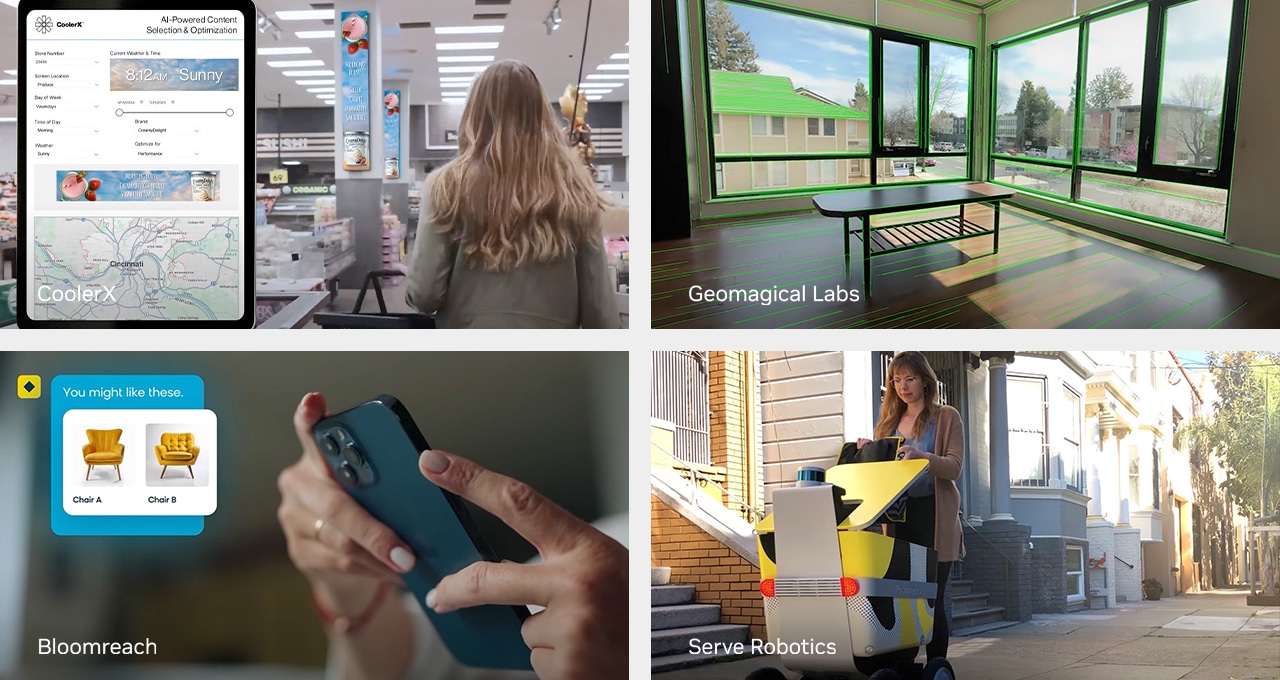
Artificial intelligence is rapidly becoming the cornerstone of innovation in the retail and consumer packaged goods (CPG) industries. Forward-thinking companies are using AI to reimagine their entire business models, from in-store experiences to omnichannel digital platforms, including ecommerce, mobile and social channels.

State of AI in Retail and CPG

NVIDIA’s second annual "State of AI in Retail and CPG" survey provides insights into the adoption, investment, and impact of AI, including generative AI; the top use cases and challenges; and a special section this year examining the use of AI in the supply chain. It’s an in-depth look at the current ecosystem of AI in retail and CPG, and how it’s transforming the industries.

Key Highlights

  • 89% of respondents said they are either actively using AI in their operations or assessing AI projects, including trials and pilots (up from 82% in 2023)
  • 87% said AI had a positive impact on increasing annual revenue
  • 94% said AI has helped reduce annual operational costs
  • 97% said spending on AI would increase in the next fiscal year

Generative AI in Retail Takes Center Stage

Generative AI has found a strong foothold in retail and CPG, with over 80% of companies either using or piloting projects. Companies are harnessing the technology, especially for content generation in marketing and advertising, as well as customer analysis and analytics.

Top Use Cases for Generative AI

  • Content generation for marketing (60%)
  • Predictive analytics (44%)
  • Personalized marketing and advertising (42%)
  • Customer analysis and segmentation (41%)
  • Digital shopping assistants or copilots (40%)

AI Across the Retail Landscape

AI use cases have proliferated across nearly every line of business in retail, with over 50% of retailers using AI in more than six different use cases throughout their operations.

AI in the Supply Chain

Managing the supply chain has always been a challenge for retail and CPG companies, but it’s become increasingly difficult over the last several years. Companies are feeling the pressure, with 59% of respondents saying that their supply chain challenges have grown in the last year.

Conclusion

The retail and CPG industries are at the forefront of the AI revolution, with leading companies harnessing advanced technologies to enhance efficiency and drive revenue. The findings from the latest survey underscore a pivotal shift in how businesses operate in a complex new landscape, and will be a key driver of innovation and growth in the years to come.

Frequently Asked Questions

Q: What is the state of AI in retail and CPG?
A: According to the survey, 89% of respondents are using AI in their operations or assessing AI projects, and 97% expect to increase spending on AI in the next fiscal year.

Q: What are the top use cases for generative AI in retail?
A: The top use cases are content generation for marketing, predictive analytics, personalized marketing and advertising, customer analysis and segmentation, and digital shopping assistants or copilots.

Q: How is AI impacting the supply chain?
A: AI is helping to improve operational efficiency and throughput (58%), reduce supply chain costs (45%), and meet shifting customer expectations (42%).

Meta Accused of Using Pirated Data for AI Development

0

Plaintiffs in Kadrey et al. vs. Meta File Motion, Accuse Firm of Knowingly Using Copyrighted Works in AI Model Development

The plaintiffs in the case of Kadrey et al. vs. Meta have filed a motion alleging that the firm knowingly used copyrighted works in the development of its AI models. The motion, which was filed in the United States District Court in the Northern District of California, accuses Meta of systematically torrenting and stripping copyright management information (CMI) from pirated datasets, including works from the notorious shadow library LibGen.

Internal Memo Reveals LibGen’s True Nature

According to documents recently submitted to the court, evidence reveals highly incriminating practices involving Meta’s senior leaders. A December 2024 memo from internal Meta discussions acknowledged LibGen as "a dataset we know to be pirated," with debates arising about the ethical and legal ramifications of using such materials. Documents also revealed that top engineers hesitated to torrent the datasets, citing concerns about using corporate laptops for potentially unlawful activities.

Meta’s Practices Raise Concerns

The allegations against Meta paint a portrait of a company knowingly partaking in a widespread piracy scheme facilitated through torrenting. According to a string of emails included as exhibits, Meta engineers expressed concerns about the optics of torrenting pirated datasets from within corporate spaces. One engineer noted that "torrenting from a [Meta-owned] corporate laptop doesn’t feel right," but despite hesitation, the rapid downloading and distribution – or "seeding" – of pirated data took place.

Legal Ramifications

The case originally began as an intellectual property infringement action on behalf of authors and publishers claiming violations relating to AI use of their materials. However, the plaintiffs are now seeking to add two major claims to their suit: a violation of the Digital Millennium Copyright Act (DMCA) and a breach of the California Comprehensive Data Access and Fraud Act (CDAFA).

Impact on Emerging Legislation

The unfolding case of Kadrey et al. vs. Meta could have far-reaching ramifications for the development of AI models moving forward, potentially setting legal precedents in the US and beyond. At the heart of this expanding legal battle lies growing concern over the intersection of copyright law and AI. Plaintiffs argue that the stripping of copyright protections from textual datasets denies rightful compensation to copyright owners and allows Meta to build AI systems like Llama on the financial ruins of authors’ and publishers’ creative efforts.

Conclusion

The case of Kadrey et al. vs. Meta highlights the need for clearer guidance at an international level to protect both creators and innovators. As AI becomes the central focus of Meta’s future strategy, the allegations of reliance on pirated libraries are unlikely to help its ambitions of maintaining leadership in the field.

FAQs

Q: What is the case about?
A: The case is about Meta’s alleged use of copyrighted works in the development of its AI models.

Q: What is LibGen?
A: LibGen is a shadow library of pirated datasets.

Q: What are the allegations against Meta?
A: Meta is accused of systematically torrenting and stripping copyright management information (CMI) from pirated datasets, including works from LibGen.

Q: What are the potential implications of this case?
A: The case could have far-reaching ramifications for the development of AI models and the intersection of copyright law and AI.

“The Creator of Trek to Yomi’s New VR Game is an Extremely Indie Project

0

Path of Fury: Episode I – Tetsuo’s Tower features film VFX tech, the stunt team behind Gladiator 2 and No Time To Die combined with developer Leonard Menchiari’s passion for 1980s martial arts movies and Sega games – it’s kind of wacky, but also very classy.

Choreographing Cinematic Martial Arts Sequences

It wasn’t very easy. At first I just wanted to make a quick workout-type game in which you punched enemies rather than simple bubbles. The evolution into kung-fu and specifically wing-chun felt natural as I dived into production. It felt perfect as a combat style for a game like this: very close enemies, fast-paced precise strikes, minimal energy with maximum outcome.

Most of it felt right from the very beginning. Making it immersive at that point wasn’t the real challenge – the real challenge was how to make this whole fight setup approachable and user-friendly without having players wonder why on earth they would have to fight enemies so close to them (without even being able to dodge). Many first-time players end up crouching on the floor, being beaten up to death. This is pretty realistic as a natural reaction when you don’t know how to fight.

However, balancing isn’t too tough though: it should be just enough to make you go through the whole experience in a way that feels empowering rather than frustrating and discouraging.

Balancing Player Perspective with Cinematic Framing

The cinematic framing was quite straightforward in a game like this. Since there isn’t any exploration, each encounter is like a film-shot. Rather than having a bunch of camera angles, the player would instantly teleport to the next enemy in front of them after defeating the previous one.

I learned this technique from Half-Life Alyx [one of the best VR apps], which brilliantly was able to achieve that immersive feeling of moving through space without having to move your feet. The illusion of movement was given by the intensity of the footsteps sound, and by a simple quick eye blink.

Despite not feeling intuitive or logical at all, in the end it works more than one could imagine. If someone is used to VR they might disagree (since they might be used to moving around with the controller and are now immune to motion sickness), but for most users I believe it’s the best approach to give fast-paced immersion with no motion sickness whatsoever. This of course applies for both experts and people who have never used a headset before.

Influences from Martial Arts Films and Choreographers

Absolutely. Films like The Raid and Ip Man heavily influenced the visual style, especially their fast-paced, close-quarters intensity. The focus on efficiency and minimal wasted movement in Wing Chun naturally aligns with these films’ approach to fight choreography.

However, while I appreciate the grand spectacle of martial arts cinema, Path of Fury in the end, ended up more like an actual combat training tool. The aesthetic I created owes more to places like the Kowloon Walled City – these dense, organic structures where every space tells a story of survival as a background environment, showing how messed up the world you’re fighting in really is.

On top of that, rather than going in the direction of let’s say Jackie Chan (using a bunch of environment elements in favor of fighting), I decided to go just with your bare fists. This made the approach much more intimate and made the character feel way more resilient. If you make it to the top, it is just because of you, your hands, and how much stamina you actually have in real life.

Game Engine and Additional Tools

Unreal Engine was what I used to create the game. Not easy thing to do, considering that in VR you need to render two 4K resolution images, which requires quite some effort to render, at least 72-90 times per second, on what’s basically a very basic Android device that you’re holding in front of your face (the Meta headset).

The headset is fantastic, don’t get me wrong, but also in order to be that affordable it also means that it’s not the most powerful Android device out there. Developing such a device turned out to be extremely challenging. That’s where Noxnoctis games stepped in during the last month of production and helped me out "optimising" (making the game more light on performance – run faster) and cleaning up the remaining lighting issues we had in the game.

The other main tool was Blender. You can use it for basically everything. And if you don’t know how to use it, just go on YouTube or even ask any AI out there, you will probably end up learning it in no time. We’re in a time where so much can be done, and I’m very grateful to be able to say that I was born in a time like this when it comes to things like these.

Share Tech and Approaches from the Film Industry

Unreal Engine as an engine has been used in filmmaking as well, and I think for a good reason: it’s designed to mimic the film-feel, the look and structure of how light goes through the lens and mimics the real-life camera result. This doesn’t mean that if you place something in the scene it’s going to look real of course, but it does make a difference when a software keeps that in mind as a high priority. If you care about achieving a certain vibe, it’s easier to get there this way.

Of course because this game was made for VR, 90% of the effects and filters that I wish I could use had to be removed. I still got to what I wanted more or less, but it was mainly through hacks and cheats instead of a few clicks like it could’ve been if I was making a regular game.

The beauty of film is that you don’t have to deal with any of these technical details, you just place the camera, the subject, and it already looks real – because it is. On the other hand, lighting in filmmaking can be quite challenging (moving cables, generators, power boxes, etc).

In a virtual environment, as long as you’re a bit cautious about performance issues (not putting too many lights or the frame rate will drop), you can place lights wherever you want – which means you have way more control over the way the scene looks.

Groundbreaking Features

Not really. The simplicity of the gameplay is also its strength. You don’t have to think or focus on too many things, mainly where to hit and in which order. Each enemy has its own unique strike-sequence, which means that instead of spending an eternity in front of each enemy, once you learn the sequence you can defeat them within a few seconds or less.

Increased precision does more damage, more powerful punches do more damage. Fight fast, fight precisely, and you’ll beat the game in no time. If your skills are below average however, you might never reach the top of the tower, nor will you ever get the chance to meet Tetsuo himself.

Conclusion

Path of Fury: Episode I – Tetsuo’s Tower is a martial arts VR game that combines film VFX tech, stunt team expertise, and developer Leonard Menchiari’s passion for 1980s martial arts movies and Sega games. The game’s simplicity is also its strength, with a focus on close-quarters combat and unique strike-sequences. The game’s visuals and lighting are also noteworthy, with a focus on creating an immersive and cinematic experience.

FAQs

Q: What is Path of Fury: Episode I – Tetsuo’s Tower?
A: It is a martial arts VR game that combines film VFX tech, stunt team expertise, and developer Leonard Menchiari’s passion for 1980s martial arts movies and Sega games.

Q: What is the gameplay like?
A: The gameplay is simple and focused on close-quarters combat, with a focus on unique strike-sequences and precision.

Q: What is the visual style of the game?
A: The visual style is inspired by 1980s martial arts movies and Sega games, with a focus on creating an immersive and cinematic experience.

Q: What engine did you use to create the game?
A: I used Unreal Engine to create the game.

Q: What additional tools did you use to create the game?
A: I used Blender to create the game’s 3D models and textures.

Q: What was the biggest challenge in developing the game?
A: The biggest challenge was creating an immersive and cinematic experience while also ensuring the game ran smoothly on a VR headset.

Rainbow Wool’s Vibrant Identity

0

One of the most unexpected stories we’ve seen this year…

Rainbow Wool: A Project to Help Gay Rams

One of the most unexpected stories we’ve seen this year so far is all about a project that helps gay rams. Did you know that around 1 in 12 sheep are gay? Me neither. And those gay rams often meet a sad end, as they can’t be used for breeding.

The Solution: Rainbow Wool

Enter Rainbow Wool, a new German initiative that makes wool from gay rams into fashion products, with the profits supporting projects for the queer community. The branding was designed by Barcelona-agency, Hey Studio, and like many of Hey’s vibrant projects, it’s pure joy.

Branding and Identity

The branding features brightly colored curved shapes that work perfectly for this project – emulating the ram’s wool as well as symbolizing the LGBTQ+ community. A series of fun assets and videos bring a light-hearted positivity to the table, rather than focusing on any negatives, as we sometimes see in stories of animal welfare. The rounded curves of the project and use of soft, wooly textures also help make this a welcoming and inviting identity.

Video Campaign

The video invites people to adopt a sheep as well as buy products created from the gay rams’ wool.

The Story Behind the Branding

"The identity of Rainbow Wool is deeply rooted in the symbolism of the flock, representing unity, diversity, and resilience," says Hey on its website. "By centring the concept around a herd of gay sheep, we highlight the strength found in community and the beauty of embracing our differences."

Behind the Scenes

The project was created in partnership with Serviceplan, who worked on the product design, web development, and more, based on Hey’s brand assets.

Conclusion

It’s hard not to be charmed by this project, which feels like the sort of wooly, warm hug we all need this January. Rainbow Wool is a heartwarming initiative that not only supports the queer community but also gives a new life to gay rams.

Frequently Asked Questions

Q: What is Rainbow Wool?
A: Rainbow Wool is a German initiative that makes wool from gay rams into fashion products, with the profits supporting projects for the queer community.

Q: How does Rainbow Wool help gay rams?
A: By using wool from gay rams, Rainbow Wool gives a new life to these animals that would otherwise meet a sad end.

Q: What does the branding symbolize?
A: The branding features curved shapes that emulated the ram’s wool and symbolize the LGBTQ+ community, representing unity, diversity, and resilience.

Q: How can I get involved?
A: You can learn more about Rainbow Wool and find out how to get involved at their website.