Home Blog Page 430

Virtua Fighter 6: Animation Perfection

0

Virtua Fighter’s 35-Second Concept Demo Leaves Fans Breathless

A Glimpse of the Future of Fighting Games

A 35-second "pre-development concept video" for the new Virtua Fighter game has sent fans into a frenzy, and for good reason. The reboot of the iconic retro game that revolutionized 3D fighting game design is looking to make a huge comeback.

A Keynote at CES 2025

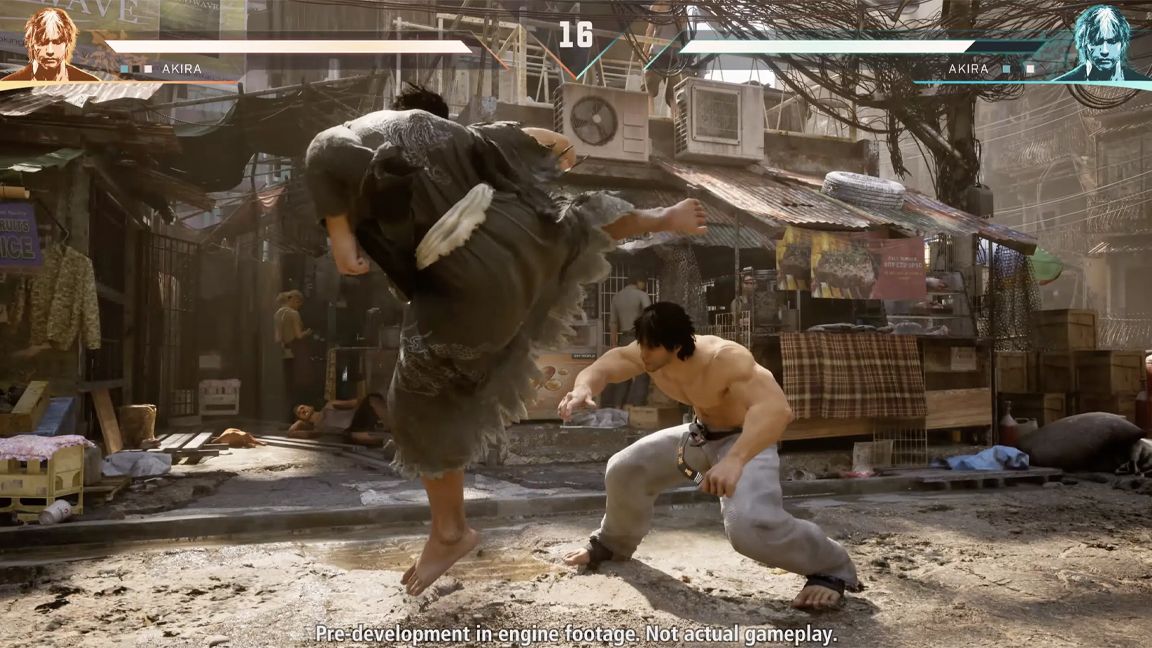
Publisher Sega and Ryu Ga Gotoku Studio, the developers of Yakuza and Like a Dragon, used a keynote by Nvidia to showcase the first game engine footage at CES 2025. The demo aims to show how Virtua Fighter will look in action, and fans are already impressed.

Mind-Blowing Animation

The smooth, natural animation looks like a martial arts movie, with every punch, kick, block, and counter having weight and balance. It’s an incredible 35 seconds that only gets better the more you watch. The specs of dust and dirt flicked up with each securely planted foot are a testament to the attention to detail.

Fan Reaction

Over on Twitter, fans are calling Virtua Fighter 6 "crazy good." @Okami13_ says the animation work is "insane," while @NewsProspector writes, "That being said, if they can harness the majority of what is being shown here (re: fighters’ animation) into the final product, this is going to be something special."

A Potential Game-Changer

On ResetEra, jitteryzeitgeist commented, "Yes it’s in-engine (and hell yes, the game looks fantastic), but if that animation is legit what we’re getting in game, then that’s a generational leap even over SF6." The video above is only 35 seconds long, but it shows Ryu Ga Gotoku Studio’s animation chops in action.

Conclusion

The Virtua Fighter 6 concept demo has set the bar high for the new game. If Sega can achieve even 10% of the animation quality showcased in the demo, it could be the most elegant release yet. Fans are eagerly awaiting the final product, and it’s clear that the developers are taking the right steps to make it a reality.

FAQs

Q: What is the Virtua Fighter 6 concept demo?
A: The 35-second demo is a pre-development concept video showing the game’s animation and character design.

Q: Who is developing Virtua Fighter 6?
A: Ryu Ga Gotoku Studio, the developers of Yakuza and Like a Dragon, is working on Virtua Fighter 6 in collaboration with Sega.

Q: What is the game’s release date?
A: The release date for Virtua Fighter 6 has not been announced yet.

Building Smarter Autonomous Machines

Generative AI and Foundation Models for Autonomous Machines

Generative AI and foundation models let autonomous machines generalize beyond the operational design domains on which they’ve been trained. Using new AI techniques such as tokenization and large language and diffusion models, developers and researchers can now address longstanding hurdles to autonomy.

Challenges in Training and Validation

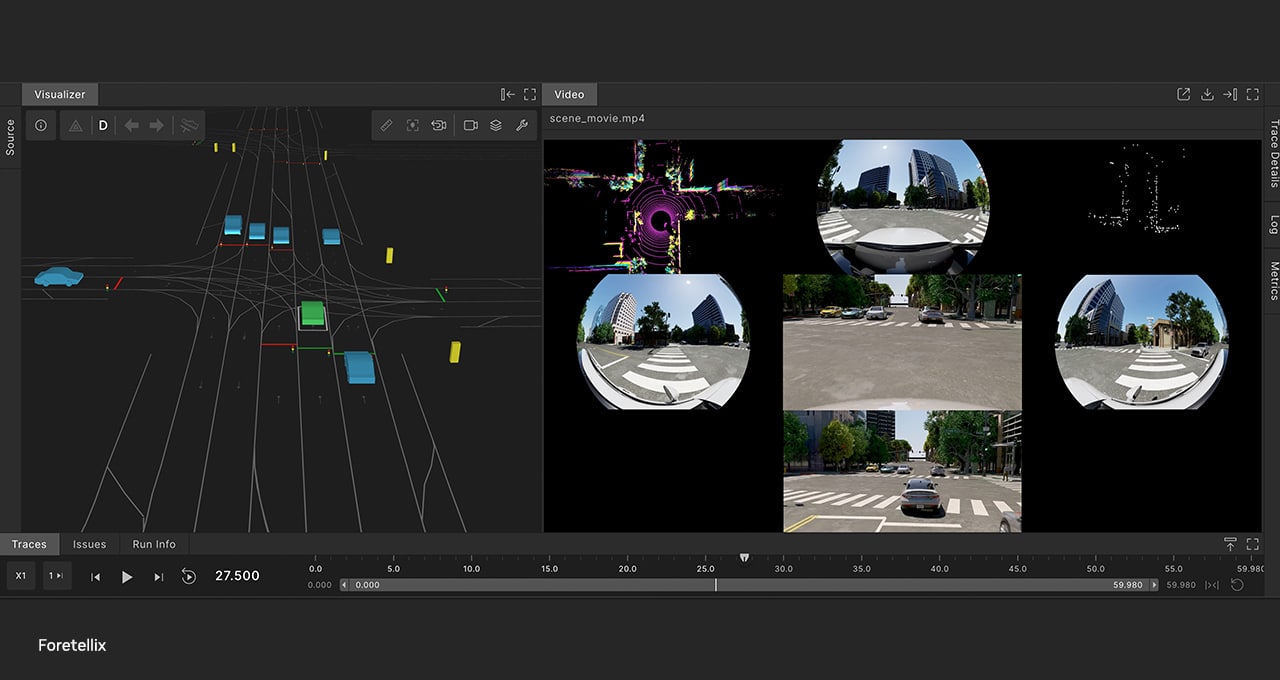
These larger models require massive amounts of diverse data for training, fine-tuning, and validation. But collecting such data — including from rare edge cases and potentially hazardous scenarios, like a pedestrian crossing in front of an autonomous vehicle (AV) at night or a human entering a welding robot work cell — can be incredibly difficult and resource-intensive.

NVIDIA Omniverse Cloud Sensor RTX APIs

To help developers fill this gap, NVIDIA Omniverse Cloud Sensor RTX APIs enable physically accurate sensor simulation for generating datasets at scale. The application programming interfaces (APIs) are designed to support sensors commonly used for autonomy — including cameras, radar, and lidar — and can integrate seamlessly into existing workflows to accelerate the development of autonomous vehicles and robots of every kind.

Powering Industrial AI with Omniverse Blueprints

In complex environments like factories and warehouses, robots must be orchestrated to safely and efficiently work alongside machinery and human workers. Mega is an Omniverse Blueprint that offers enterprises a reference architecture of NVIDIA accelerated computing, AI, NVIDIA Isaac, and NVIDIA Omniverse technologies. Enterprises can use it to develop digital twins and test AI-powered robot brains that drive robots, cameras, equipment, and more to handle enormous complexity and scale.

Integrating Omniverse Sensor RTX

The blueprint lets robotics developers simultaneously render sensor data from any type of intelligent machine in a factory for high-fidelity, large-scale sensor simulation. With the ability to test operations and workflows in simulation, manufacturers can save considerable time and investment and improve efficiency in entirely new ways.

International Supply Chain Solutions

International supply chain solutions company KION Group and Accenture are using the Mega blueprint to build Omniverse digital twins that serve as virtual training and testing environments for industrial AI’s robot brains, tapping into data from smart cameras, forklifts, robotic equipment, and digital humans.

Driving AV Development and Validation

Autonomous vehicles have been under development for over a decade, but barriers in acquiring the right training and validation data and slow iteration cycles have hindered large-scale deployment. To address this need for sensor data, companies are harnessing the NVIDIA Omniverse Blueprint for AV simulation, a reference workflow that enables physically accurate sensor simulation. The workflow uses Omniverse Sensor RTX APIs to render the camera, radar, and lidar data necessary for AV development and validation.

Conclusion

The future of robotics and autonomy is coming into sharp focus, thanks to the power of high-fidelity sensor simulation. With NVIDIA Omniverse Cloud Sensor RTX APIs, developers can now generate massive datasets for training and validation, and with Omniverse Blueprints, they can test and validate their solutions in a simulated environment. The possibilities are vast, and the future is bright.

FAQs

Q: What are NVIDIA Omniverse Cloud Sensor RTX APIs?
A: NVIDIA Omniverse Cloud Sensor RTX APIs enable physically accurate sensor simulation for generating datasets at scale, supporting sensors commonly used for autonomy, including cameras, radar, and lidar.

Q: How can I access NVIDIA Omniverse Cloud Sensor RTX APIs?
A: NVIDIA Omniverse Cloud Sensor RTX APIs are now available to select developers in early access.

Q: What is the Mega Blueprint?
A: Mega is an Omniverse Blueprint that offers enterprises a reference architecture of NVIDIA accelerated computing, AI, NVIDIA Isaac, and NVIDIA Omniverse technologies, allowing them to develop digital twins and test AI-powered robot brains.

Q: How can I learn more about NVIDIA’s solutions for autonomous vehicles and robotics?
A: Learn more about NVIDIA’s solutions for autonomous vehicles and robotics by visiting Accenture at Ballroom F at the Venetian and Foretellix booth 4016 in the West Hall of Las Vegas Convention Center.

Samsung to Roll Out Smartphone Subscription Next Month

0

Samsung’s AI Subscription Club to Roll Out on Smartphones and Robots

According to ETNews, Samsung Electronics vice chairman Han Jong-hee has confirmed that the company’s AI Subscription Club, which launched last December for some of Samsung’s home appliances in South Korea, will soon roll out to both Galaxy phones and the upcoming Ballie AI robot.

Galaxy Phone and Ballie Robot Subscription Details

“We will apply the subscription service to Galaxy smartphones starting next month,” he says. “Ballie will be introduced first in Korea and the US, and we plan to supply it as a subscription in Korea.”

Avoiding the Need for a Separate Subscription for AI Features

The AI Subscription Club isn’t a requirement to access the Galaxy AI features on Samsung’s phones and other devices, which the company has previously said will remain free to users at least until the end of 2025, with plans beyond that point unconfirmed.

What is Samsung’s AI Subscription Club?

The model currently gives Korean consumers the ability to sign up to a monthly subscription for their AI-powered TVs, refrigerators, washing machines, and more, including optional repair and maintenance services, for the sake of a lower upfront cost.

Conclusion

It appears that Samsung is moving forward with its AI Subscription Club, but it’s unclear if the subscription model will expand beyond South Korea. The company is expected to unveil more information about the Galaxy S25 series at its upcoming Galaxy Unpacked event on January 22nd.

FAQs

Q: Is the AI Subscription Club a requirement for using AI features on Samsung devices?
A: No, the AI Subscription Club is not a requirement for using AI features on Samsung devices. AI features will remain free to users at least until the end of 2025, with plans beyond that point unconfirmed.

Q: Will the subscription model expand beyond South Korea?
A: It’s unclear if the subscription model will expand beyond South Korea, but more information may be revealed at Samsung’s upcoming Galaxy Unpacked event.

Q: What devices will the AI Subscription Club be available on?
A: The AI Subscription Club will be available on both Galaxy phones and the upcoming Ballie AI robot.

Mufasa’s Pride

0

Making the VFX of Mufasa: The Lion King

Creating the Pride

Making the VFX for Mufasa: The Lion King was a personal project for Visual Effects Supervisor Audrey Ferrara, and meant developing some new techniques and workflows, including making use of Unreal Engine to bring the famous lion pride to life.

A Personal Journey

Every movie brings a new set of challenges, but it felt as though all those years of experience had been a rehearsal, preparing us to tackle a project of this magnitude, explains Audrey.

De-aging the Characters

Bringing back the Lion King pride was an immense project, requiring delicate work, particularly when it came to de-aging the popular characters. We had to strike a balance between making them appear younger while preserving their essence – the unique qualities that make each character who they are, says Audrey.

Setting the Scene

Telling the story of where Mufasa came from was incredibly important for the MPC team. Of the landmark setting of Pride Rock, Audrey makes the point that, You don’t want to change Pride Rock, but that particular set also evolved in the movie with the changes of season and so on. We had data capture and MPC went to Africa to shoot references for all of the sets. Data capture came back with something like 10 terabytes of images of incredible African environments, flora, and fauna.

Image 1 of 2
(Image credit: Disney / MPC)Making the VFX of Mufasa: The Lion King; lions rendered in 3D(Image credit: Disney / MPC)

Making Mufasa: the Value of Previz

Key to the work of Audrey’s team was the previz process, and she is keen to explain just how fundamental it was to the iterative process of MPC’s work on the film.

The Value of Previz

First of all, previz was a very big step; more-so on this one than on previous movies. Previz was our time with the filmmakers and we tried to capture every single creative input that they gave at previz level. We worked very closely with Mark Friedberg the production designer, James Laxton the DP, and our director Barry Jenkins.

Image 1 of 2
Making the VFX of Mufasa: The Lion King; lions rendered in 3D(Image credit: Disney / MPC)Making the VFX of Mufasa: The Lion King; lions rendered in 3D(Image credit: Disney / MPC)

Enhancing the Interactivity of the Animals’ Fur

Indeed, the film’s work with photorealistic images registers at both the smallest and most expansive levels of storytelling, and Audrey explains how part of MPC’s work was centred around enhancing the interactivity of the animals’ fur, as well as their environment – particularly the grass and water – was a key focus.

Image 1 of 2
Making the VFX of Mufasa: The Lion King; lions rendered in 3D(Image credit: Disney / MPC)Making the VFX of Mufasa: The Lion King; lions rendered in 3D(Image credit: Disney / MPC)

Conclusion

We’ve been rehearsing for twelve years to make this one and it has been a wonderful journey: technically, humanly, creatively. Everybody wanted to make the best movie possible at every level. I think there was no such thing as ‘locked’. There was space to experiment and try and get a better result. We tired, tested, and then tried something else to find the answers. It was definitely one of those great moments. It felt like the perfect alignment of conditions, with everyone united under the same mission.

Frequently Asked Questions

Q: What was the biggest challenge in creating the VFX for Mufasa: The Lion King?
A: The biggest challenge was de-aging the popular characters, while preserving their essence and unique qualities.

Q: What was the previz process like?
A: Previz was a very big step; more-so on this one than on previous movies. Previz was our time with the filmmakers, and we tried to capture every single creative input that they gave at previz level.

Q: How did you achieve the level of detail in the film’s environments and characters?
A: We used a combination of techniques, including data capture, Unreal Engine, and photorealistic images to achieve the level of detail in the film’s environments and characters.

Q: What was the most exciting part of working on this project?
A: The most exciting part was seeing the film come to life and knowing that all the hard work and dedication had paid off.

Advancing Physical AI with NVIDIA Cosmos

0

Accelerating World Model Development with NVIDIA Cosmos

Accelerating World Model Development with NVIDIA Cosmos

Building physical AI is challenging, demanding precise simulations and real-world behavior understanding and prediction. A key tool for overcoming these challenges is a world model, which predicts future environmental states based on past observations and current inputs. These models are invaluable for physical AI builders, enabling them to simulate, train, and refine systems in controlled environments.

However, developing effective world models requires vast amounts of data, computational power, and real-world testing, which can introduce significant safety risks, logistical hurdles, and prohibitive costs. To address these challenges, developers often turn to synthetic data generated from 3D simulations to train models. While synthetic data is a powerful tool, creating it is resource-intensive and may fall short of accurately reflecting real-world physics, particularly in complex or edge-case scenarios.

The NVIDIA Cosmos Platform

The end-to-end NVIDIA Cosmos platform accelerates world model development for physical AI systems. Built on CUDA, Cosmos combines state-of-the-art world foundation models, video tokenizers, and AI-accelerated data processing pipelines.

Developers can accelerate world model development by fine-tuning Cosmos world foundation models or building new ones from the ground up. In addition to Cosmos world foundation models, the platform also includes:

  • NVIDIA NeMo Curator for efficient video data curation
  • Cosmos Tokenizer for efficient, compact, and high-fidelity video tokenization
  • Pretrained world foundation models for robotics and autonomous driving applications
  • NVIDIA NeMo Framework for model training and optimization

Pretrained World Foundation Models for Physical AI

Cosmos world foundation models are pretrained large generative AI models trained on 9,000 trillion tokens, including 20 million hours of data from autonomous driving, robotics, synthetic environments, and other related domains. These models create realistic synthetic videos of environments and interactions, providing a scalable foundation for training complex systems, from simulating humanoid robots performing advanced actions to developing end-to-end autonomous driving models.

From Generalist to Customized Specialist Models

Cosmos introduces a two-stage approach to world model training.

  • Generalist models: Cosmos world foundation models are built as generalists, trained on extensive datasets that encompass diverse real-world physics and environments. These open models are capable of handling a broad range of scenarios, from natural dynamics to robotic interactions, providing a solid foundation for any physical AI task.
  • Specialist models: Developers can fine-tune generalist models using smaller, targeted datasets to create specialists tailored for specific applications, such as autonomous driving or humanoid robotics, or generate customized synthetic scenarios, such as night scenes with emergency vehicles or high-fidelity industrial robotics environments. This fine-tuning process significantly reduces the required data and training time compared to training models from scratch.

Accelerated Data Processing with NVIDIA NeMo Curator

Training models require curated, high-quality data, which is time and resource-intensive. NVIDIA Cosmos includes a data processing and curation pipeline powered by NVIDIA NeMo Curator and optimized for NVIDIA data center GPUs.

NVIDIA NeMo Curator enables robotics and AV developers to process vast datasets efficiently. For example, 20 million hours of video can be processed in 40 days on NVIDIA Hopper GPUs, or just 14 days on NVIDIA Blackwell GPUs, compared to 3.4 years on unoptimized CPU pipelines.

High-Fidelity Compression and Reconstruction with Cosmos Tokenizer

After data is curated, it must be tokenized for training. Tokenization breaks down complex data into manageable units, enabling models to process and learn from it more efficiently.

Cosmos tokenizers simplify this process with faster compression and visual reconstruction while preserving quality, reducing costs and complexity. For autoregressive models, the discrete tokenizer compresses data 8x in time and 16x in space, processing up to 49 frames at once. For diffusion models, the continuous tokenizer achieves 8x time and 8x space compression, handling up to 121 frames.

Fine-Tuning with NVIDIA NeMo

Developers can fine-tune Cosmos world foundation models using the NVIDIA NeMo Framework. NeMo Framework accelerates model training on GPU-powered systems, whether enhancing an existing model or building a new one, from on-premises data centers to the cloud.

Get Started with NVIDIA Cosmos

Cosmos world foundation models are open and available on NGC and Hugging Face. Developers can also run Cosmos world foundation models on the NVIDIA API catalog. Also available on the API catalog are Cosmos tools to enhance text prompts for accuracy, an inbuilt watermarking system that enables easy future identification of AI-generated sequences, and a specialized model to decode video sequences for augmented reality applications. To learn more, watch the demo.

NeMo Curator for accelerated data processing pipelines is available as a managed service and SDK. Developers can now apply for early access. Cosmos tokenizers are open neural networks available on GitHub and Hugging Face. Get started with NVIDIA Cosmos.

Crack the AI Video Competition for $70,000

0

Community Resources and Tutorials

Connect with Me

Join our community Discord: https://discord.gg/dFB7zuXyFY

Get exclusive content and guides on Patreon: https://www.patreon.com/sebastiankamph

Tutorials and Playlists

In-Depth Tutorials

Conclusion

This collection of resources provides a comprehensive guide for beginners and advanced users alike to explore the world of AI art. Whether you’re just starting out or looking to improve your skills, these tutorials and playlists offer a wealth of information and inspiration.

FAQs

Q: What is Stable Diffusion?
A: Stable Diffusion is a AI model that generates images from text prompts.

Q: What is ControlNet?
A: ControlNet is a tool that uses AI to manipulate and enhance images.

Q: How do I get access to exclusive content?
A: By joining our community Discord and supporting me on Patreon, you’ll gain access to exclusive content and guides.

Q: Where can I find more tutorials and guides?
A: Check out the links provided above for more tutorials and playlists.

JavaScript Frameworks to Watch in 2025

JavaScript Frameworks to Watch in 2025

Top 10 Frameworks to Revolutionize Your Web Development

JavaScript continues to evolve, and with it, the frameworks that developers use to build modern web applications. Here are the top 10 JavaScript frameworks to watch out for in 2025:

1. React.js

Maintained by Meta (formerly Facebook), React remains the king of component-based architecture, offering a robust ecosystem and excellent performance.

2. Vue.js

Known for its progressive framework, Vue.js continues to be a favorite for its simplicity and flexibility, making it easy to integrate with other projects.

3. Angular

Google’s comprehensive solution for building enterprise-level applications, Angular provides a full-fledged framework with powerful tools for developers.

4. Svelte

This compiler-based approach shifts much of the work to compile time, resulting in faster runtime performance and a more streamlined development process.

5. Next.js

A full-stack framework that enables server-side rendering and static site generation, Next.js is perfect for building fast, full-stack web applications.

6. Nuxt.js

The Vue.js equivalent of Next.js, Nuxt.js offers a powerful solution for building server-rendered Vue.js applications.

7. Ember.js

An opinionated framework that provides a strong convention-over-configuration approach, Ember.js is ideal for building ambitious web applications.

8. Meteor.js

A full-stack JavaScript platform for building real-time web applications, Meteor.js offers seamless integration with MongoDB and a reactive programming model.

9. Express.js

A fast, unopinionated, minimalist web framework for Node.js, Express.js is perfect for building APIs and backend services.

10. Polymer

A lightweight library for building reusable web components, Polymer continues to be a valuable tool for creating custom elements and enhancing web performance.

Conclusion

The JavaScript landscape is constantly evolving, and these top 10 frameworks will undoubtedly shape the future of web development. Whether you’re a seasoned pro or just starting out, it’s essential to stay up-to-date with the latest trends and technologies.

FAQs

Q: What is the best JavaScript framework for beginners?
A: React.js and Vue.js are excellent choices for beginners, as they offer a gentle learning curve and a vast community of developers to support you.

Q: Which framework is best for building enterprise-level applications?
A: Angular is a popular choice for building complex, large-scale applications, thanks to its comprehensive toolset and robust architecture.

Q: Can I use these frameworks for building mobile applications?
A: Yes, many of these frameworks can be used for building mobile applications, such as React Native, Vue Native, and Angular Mobile.

Q: Are there any other frameworks worth considering?
A: Yes, there are many other frameworks and libraries worth exploring, such as Backbone.js, Riot.js, and Riot.js, to name a few.

Microsoft’s Outrageous Google Website Imitation

0

Microsoft’s Imitation of Google’s Web Design Raises Eyebrows

Dell’s "Pro" Naming Conventions: The Latest Example of Imitation

They say imitation is the sincerest form of flattery, which might explain why Dell decided to entirely lift Apple’s "Pro" and "Pro Max" naming conventions for its own laptops this week. And now, here comes Microsoft with an even more flagrant example of what we might generously call "borrowing".

Microsoft’s Search Results Page: A Copycat of Google’s Design

The company has been slammed for dressing its Bing search results page web design to resemble that of another somewhat well-known search engine. Search for "Google" on Bing, and you’d be forgiven for thinking you’d actually left the latter site. Alas, it turns out you’re still very much on Bing.

A Web Design That’s All Too Familiar

The search results page features a design that is eerily similar to Google’s, with a Google-esque "doodle" and text layout. The design is so similar that it’s almost as if you’re using Google, not Bing. And to make matters worse, the page automatically scrolls down just enough to hide the requisite Bing branding at the top of the page.

Reactions to Microsoft’s Design

On Twitter, Google Chrome’s security chief Parisa Tabriz called the move a "new low" for Microsoft, citing it as "another tactic in [Microsoft’s] long history of tricks to confuse users and limit choice".

Imitation vs. Innovation

Imitation may be the sincerest form of flattery, but Microsoft’s copying of Google’s design raises questions about the company’s commitment to innovation and originality. If the team does decide to create something with an iota of originality, they could do worse than checking out our guide to the best web design software.

Conclusion

Microsoft’s decision to imitate Google’s web design is a questionable move that has left many users and critics scratching their heads. While imitation may be the sincerest form of flattery, it’s clear that Microsoft could have done better. In a world where innovation is key, Microsoft’s design choice is a step in the wrong direction.

Frequently Asked Questions

Q: What is the purpose of Microsoft’s new search results page design?
A: The exact purpose of Microsoft’s new design is unclear, but it’s likely intended to make Bing’s search results page more visually appealing and familiar to users.

Q: Is this the first time Microsoft has copied another company’s design?
A: No, Microsoft has a history of copying other companies’ designs, including its own "Pro" naming conventions for its laptops.

Q: What do you think about Microsoft’s new design?
A: Share your thoughts in the comments below!

Nvidia Digits

Nvidia Project Digits: The World’s Most Powerful Desktop Computer

Revolutionary AI Supercomputer

Believe it or not, that tiny little box below the display will be the world’s most powerful desktop computer. What’s making the headlines at CES 2025 are AI-powered TVs, new smart home gadgets, and fresh laptop releases. For my money, though, the big news from CES is Nvidia Project Digits. This revolutionary desktop AI supercomputer is designed to bring unprecedented computing power to artificial intelligence (AI) developers, researchers, and students.

Linux-Powered and Ubuntu-Based

As you might guess, DGX OS is a Linux distro designed with system-specific optimizations and configurations, drivers, and diagnostic and monitoring tools to provide a fully supported version of Linux for running AI, machine learning, and analytics applications on Nvidia DGX Supercomputers. On top of that, Nvidia will also provide AI software development kits; orchestration tools; Nvidia NGC catalog frameworks and models; the Nvidia NeMo framework for fine-tuning models; and Nvidia Rapids libraries for data science acceleration. Of course, as an Ubuntu Linux system at heart, you can run Ubuntu and Linux software. So, if you want to, you can play Doom on it. That’s probably the first I’ll do if I get my hands on one of these devices.

A Petaflop of AI Performance

Now, in a box that appears to be about the size of a Mac mini, Nvidia’s Project Digits PC promises to bring a petaflop of AI performance to your desktop. A petaflop, for those of you who don’t hang out in supercomputer land, is equal to 1,000,000,000,000,000 (one quadrillion) floating-point operations per second (flops). Until 2008, when IBM rolled out its Roadrunner supercomputer, no one had ever hit that speed. Soon, you could have that level of computing performance in your home office.

The GB10 Grace Blackwell Superchip

Project Digits will be almost Top 500-fast and is powered by Nvidia’s band’s new GB10 Grace Blackwell Superchip. With the Nvidia AI software stack preinstalled and 128GB of memory, developers can prototype, fine-tune, and infer large AI models of up to 200B parameters locally and then seamlessly deploy to the data center or cloud.

Conclusion

Nvidia’s Project Digits is a game-changer in the world of AI development. With its Linux-powered and Ubuntu-based operating system, it offers unprecedented computing power in a compact, desk-friendly form factor. The starting price of $3,000 makes it accessible to a broader range of users, from small enterprises to schools. I, for one, will be doing my darndest to get my hands on one.

Frequently Asked Questions

Q: What is Nvidia Project Digits?
A: Nvidia Project Digits is a Linux-powered AI supercomputer designed to bring unprecedented computing power to artificial intelligence (AI) developers, researchers, and students.

Q: What is the operating system of Project Digits?
A: Project Digits runs on Nvidia’s DGX OS, a customized Ubuntu Linux 22.04 distro.

Q: What is the starting price of Project Digits?
A: The starting price of Project Digits is $3,000.

Q: Can I run Ubuntu and Linux software on Project Digits?
A: Yes, as an Ubuntu Linux system at heart, you can run Ubuntu and Linux software on Project Digits.

Q: What is the GB10 Grace Blackwell Superchip?
A: The GB10 Grace Blackwell Superchip is a new chip developed by Nvidia, featuring an ARM-based Grace CPU and a Blackwell GPU.

Jurassic Park’s raptors are finally rendered with scientific accuracy, and they’re weirdly wonderful

0

Hollywood’s Lack of Scientific Accuracy in Jurassic Park’s Dinosaurs

Jurassic Park: A Landmark in VFX

Jurassic Park is widely regarded as one of the best VFX movies of the 90s, and a film that put CG creature effects on the map. However, despite its groundbreaking effects, the dinosaurs in the film have been known to be scientifically inaccurate for years.

The Truth About Dinosaurs

For decades, it has been well-established that dinosaurs were closer to birds than lizards, and were covered in colourful feathers. Yet, in Jurassic Park, the dinosaurs were depicted as scaly and lizard-like. It’s a discrepancy that has gone largely unaddressed in the film industry.

A 3D Artist’s Vision

Enter 3D artist CoolioArt, who has taken it upon himself to render realistic raptors using the original Jurassic Park footage. The artist has replaced the scaly models with feathered creatures, creating a stunningly realistic portrayal of what Velociraptors might have looked like.

The Technicalities

CoolioArt’s reworked footage not only adds feathers to the dinosaurs, but also corrects a technicality that has been overlooked in the film. The Velociraptors in the movie are actually misnamed Deinonychus antirrhopus, a species that was larger than a large chicken.

The Theory

According to CoolioArt, all raptors were as extensively feathered as modern birds. In fact, it’s theorized that large raptors are actually the descendants of small gliding or even flying paravian dinosaurs. They were extremely close to birds.

Conclusion

CoolioArt’s recreation of the Velociraptors in Jurassic Park is a testament to the power of 3D artistry and the importance of scientific accuracy in filmmaking. While Hollywood may have taken creative liberties with the dinosaurs, CoolioArt’s work serves as a reminder that with talent and dedication, even the most ambitious projects can be brought to life with precision and accuracy.

FAQs

Q: What software did CoolioArt use to create the realistic Velociraptors?
A: CoolioArt used Blender to model, animate, and render the dinosaurs, and After Effects for final compositing.

Q: Are the Velociraptors in the original Jurassic Park film scientifically accurate?
A: No, the Velociraptors in the film are misnamed Deinonychus antirrhopus, a species that was larger than a large chicken.

Q: What do the feathers on the Velociraptors represent?
A: The feathers represent the scientific consensus that dinosaurs, including Velociraptors, were covered in colourful feathers.