Home Blog Page 456

Search Manipulation: Hidden Instructions Exposed

0

ChatGPT Search Can Be Manipulated With Hidden Text

A report from The Guardian outlines how they used hidden text on a fake website to trick ChatGPT Search to show them a response from hidden text on the web page. Text is hidden when the font matches the background color of a page, like a white font on a white background.

Test Results

They then asked ChatGPT Search to visit the website and answer a question based on the text on the site. ChatGPT Search browsed the site, indexed the hidden content and used it in the answer.

The researchers did a series of tests, including:

  • Using a non-exploit control page on a fake review website to test ChatGPT’s response.
  • Sending ChatGPT Search to a fake website that had instructions to give a positive review.
  • Using a fake website with positive reviews written in hidden text but without instructions.

Why Can AI Search Engines Be Manipulated?

One loophole in AI Search is a technology called RAG (Retrieval Augmented Generation), a technique that can fetch information from a search engine so that an AI can then use it for generating answers to questions from up to date and (presumably) authoritative sources.

ChatGPT Search is based on Bing but it also has its own crawler that can fetch real-time information. It’s probably not unreasonable to speculate that if a site is included in Bing’s search index then it’s probably included within ChatGPT Search, which should protect ChatGPT Search from being influenced by hidden text. Presumably, sites with hidden text would be excluded from Bing’s search index.

Other Ways To Manipulate AI Search Engines

There are said to be other ways that researchers discovered last year that might still be effective (Read: Researchers Discover How To SEO For AI Search). In this research paper from last year the researchers tested nine strategies for influencing AI search engines:

Nine Strategies For Manipulating AI Search Engines

  1. Authoritative: Changing the writing style to be more persuasive in authoritative claims
  2. Keyword optimization: Adding more keywords from the search query
  3. Statistics Addition: Changing existing content to include statistics instead of interpretative information.
  4. Cite Sources (quoting reliable sources)
  5. Quotation Addition: Adding quotes and citation from high quality sources
  6. Easy-to-Understand: Making the content simpler to understand
  7. Fluency Optimization is about making the content more articulate
  8. Unique Words: Adding words that are less widely used, rare and unique but without changing the meaning of the content
  9. Technical Terms: This strategy adds both unique and technical terms wherever it makes sense to do so and without changing the meaning of the content

Conclusion

The tests showed that ChatGPT Search can be manipulated with hidden text, and that the search engine can also be influenced by other strategies. This highlights the need for AI search engines to be more robust and secure to prevent manipulation.

FAQs

Q: How can AI search engines be manipulated?
A: AI search engines can be manipulated by using hidden text, adding keywords, and other strategies.

Q: What is RAG (Retrieval Augmented Generation)?
A: RAG is a technology that can fetch information from a search engine so that an AI can then use it for generating answers to questions from up to date and (presumably) authoritative sources.

Q: How can I protect my website from being influenced by hidden text?
A: Presumably, sites with hidden text would be excluded from Bing’s search index. You can also cloak your website so that it shows different content to the ChatGPT Search Bot.

Q: Are there other ways to manipulate AI search engines?
A: Yes, there are nine strategies that researchers discovered last year that might still be effective, including adding keywords, statistics, and technical terms.

Elysian Realism

0

Thomas-Sten Chermain’s 3D Character Art

The Artist and His Inspiration

Thomas-Sten Chermain, a 3D character artist from Réunion, an island in the Indian Ocean, has created a stunning piece of art inspired by the villain from the SF action movie Elysium, Agent Kruger. This artwork is an experiment in producing a convincing render of a real-life person.

Software Used

The suite of software used in this project includes:

  • ZBrush
  • Substance 3D Painter
  • Maya
  • Marvelous Designer
  • Character Creator
  • Unreal Engine
  • Photoshop

The Artwork

[Image: Thomas-Sten Chermain’s 3D art of Agent Kruger]

Artist’s Insights

Thomas-Sten says: "I chose this project because of its incredible sci-fi elements. The uncanny valley of the technology wasn’t noticeable when I looked at the design of the character: like I was successfully duped by this sci-fi style. One thing that was important during this project was the scanning approach for the clothes. I loved it, and it’s now one of my favourite tasks."

Posing and Cleaning Up

For the posing, Thomas-Sten started with Character Creator 4 and finished in ZBrush. He spent 90 per cent of his time cleaning up in ZBrush to ensure there was no clipping geometry, stretched UVs or unrealistic deformations.

Conclusion

Thomas-Sten’s artwork showcases his skills in creating a convincing render of a real-life person using a range of software tools. His attention to detail and dedication to cleaning up the character’s pose and geometry are evident in the final result.

FAQs

Q: What inspired Thomas-Sten to create this artwork?
A: Thomas-Sten was inspired by the sci-fi elements of the movie Elysium and the character of Agent Kruger.

Q: What software did Thomas-Sten use to create this artwork?
A: Thomas-Sten used ZBrush, Substance 3D Painter, Maya, Marvelous Designer, Character Creator, Unreal Engine, and Photoshop.

Q: What was the most challenging part of this project?
A: Thomas-Sten found the scanning approach for the clothes to be an important and challenging part of the project.

Q: How did Thomas-Sten approach the posing of the character?
A: Thomas-Sten started with Character Creator 4 and finished in ZBrush, spending 90 per cent of his time cleaning up in ZBrush to ensure a realistic pose.

Nvidia Bets on Robotics to Drive Future Growth

The Future of Robotics: Nvidia’s Bet on a New Market

Nvidia’s Push into Robotics

Nvidia, the world’s most valuable semiconductor company, is betting on robotics as its next big driver of growth. The company is set to launch its latest generation of compact computers for humanoid robots, dubbed Jetson Thor, in the first half of 2025.

A Shift in the Market

The company is positioning itself to be the leading platform for what it believes is an imminent robotics revolution. Nvidia sells a "full stack" solution, from the layers of software for training AI-powered robots to the chips that go into them. According to Deepu Talla, Nvidia’s vice-president of robotics, the market has reached a "tipping point" and the "ChatGPT moment for physical AI and robotics is around the corner."

Competition Intensifies

Nvidia is facing increasing competition for its powerful AI chips from rival chipmakers such as AMD, as well as cloud computing giants like Amazon, Microsoft, and Google, who are seeking to reduce their dependence on Nvidia.

Innovations in Robotics

Talla believes that two technological breakthroughs are driving the shift in the market: the explosion of generative AI models and the ability to train robots on these foundational models using simulated environments. The latter has been a particularly significant development, as it helps solve what roboticists call the "Sim-to-Real gap," ensuring robots trained in virtual environments can operate effectively in the real world.

Nvidia’s Offerings

Nvidia offers tools at three stages of robotics development: software for training foundational models, simulations of real-world environments in its ‘Omniverse’ platform, and the hardware to go inside the robots as its ‘brain.’ Apptronik, which uses Nvidia’s technology throughout its development of humanoid robots, has announced a strategic partnership with Google DeepMind to improve its products.

Market Projections

The global robotics market is currently valued at about $78 billion, according to US market researchers BCC, and is projected to reach $165 billion by the end of 2029.

Challenges Ahead

David Rosen, who leads the Robust Autonomy Lab at Northeastern University, notes that the robotics market still faces significant challenges, including training the models and verifying they will be safe when deployed.

Conclusion

Nvidia’s push into robotics is a strategic move to capitalize on the growing demand for AI-powered robots. The company’s full-stack solution, from software to hardware, positions it well to benefit from the expected growth in the market.

Frequently Asked Questions

Q: What is Nvidia’s strategy in the robotics market?
A: Nvidia is positioning itself to be the leading platform for what it believes is an imminent robotics revolution, offering a full-stack solution from software to hardware.

Q: How is Nvidia facing competition in the AI chip market?
A: Nvidia is facing increasing competition from rival chipmakers and cloud computing giants, but its strong brand recognition and established relationships with customers will help it maintain its market share.

Q: What are the key technological breakthroughs driving the shift in the market?
A: The explosion of generative AI models and the ability to train robots on these foundational models using simulated environments are the two key technological breakthroughs driving the shift in the market.

Q: What are the challenges ahead for the robotics market?
A: Training the models and verifying they will be safe when deployed are the key challenges facing the robotics market, according to David Rosen, who leads the Robust Autonomy Lab at Northeastern University.

Illustration Trends in 2025

0

Multidisciplinary

Illustrators are breaking traditional boundaries, incorporating various creative practices into their work, such as photography, painting, and sculpture. This trend is fueled by a growing appreciation for the versatility and innovative thinking of illustrators.

Handcrafted

As people become increasingly disillusioned with the precision of digital tools, there is a resurgence in the value of human touch and craftsmanship. Many illustrators are returning to traditional media like paint, pen, and paper, or experimenting with mixed media techniques.

IRL Experiences

With the rise of remote work and isolation, there is a growing desire for physical events and exhibitions. Illustrators are being sought after to create immersive experiences, such as interactive installations and live events.

Immersive Worlds

The art of world-building and storytelling is becoming more important, with commissioners seeking illustrators who can transport them to new and imaginative worlds. This can take many forms, from 3D animation to bande dessinée.

A Focus on Characters

Characters are becoming a crucial aspect of illustration, with a focus on creating relatable, expressive, and dynamic figures. This is a backlash against the flat, oversimplified characters often seen in corporate and financial industries.

Conclusion

As we look to 2025, the illustration industry is expected to continue evolving, driven by technological advancements, shifting consumer demands, and the need for creativity and innovation. Illustrators will need to adapt to these changes, embracing new techniques and tools while still staying true to their artistic vision.

Frequently Asked Questions (FAQs)

Q: What is the impact of AI on the illustration industry?
A: AI is having a complex effect on the industry, with some illustrators seeing it as a threat and others as an opportunity to learn new skills and create new forms of art.

Q: How will illustration evolve in 2025?
A: Illustrators will need to adapt to new technologies, consumer demands, and the need for creativity and innovation. Expect to see a focus on multidisciplinary approaches, handcrafted techniques, and immersive experiences.

Q: What is the future of character design in illustration?
A: Characters will become more dynamic, expressive, and relatable, as a backlash against the flat, oversimplified characters often seen in corporate and financial industries.

Viral Optical Illusion Broke Minds

0

The Face of Illusion: A Mind-Bending Optical Illusion

The Viral Sensation

We saw many optical illusions go viral on social media in 2024, from those created using space and AI to those that defied explanation. But few illusions have left people as perplexed as this one. The images above appear to show a white face and a black face, but a closer inspection reveals that the faces are actually the same shade of grey.

The Science Behind the Illusion

The face optical illusion was created by Japanese experimental psychologist and optical illusion creator Akiyoshi Kitaoka. The illusion has nothing to do with color, but rather luminance. The luminance of the surrounding shade affects our perception, and the shade of the smaller details reinforces the perception of light or dark relative to the background.

Debunking the Myth

Some people still refuse to believe the faces are the same color, despite numerous demonstrations on platforms like TikTok, where people have made videos showing the images being tested with the eyedropper tool in Photoshop or painted over them to compare them. Meanwhile, the face has become a recurring resource for Akiyoshi, who continues to create more optical illusions using the same image.

The Power of Luminance

The illusion demonstrates the power of luminance and how surrounding elements can trick our minds into seeing the subject of an image in different ways. This phenomenon is not limited to this particular illusion; other examples include the coffer illusion and the cafe wall illusion.

Conclusion

The face optical illusion is a testament to the complexity of human perception and the power of luminance in shaping our understanding of the world around us. Whether or not we choose to believe the faces are the same color, the illusion remains a mind-bending reminder of the limits of our perception.

Frequently Asked Questions

Q: What is the purpose of the face optical illusion?
A: The purpose of the face optical illusion is to demonstrate the power of luminance in shaping our perception of an image.

Q: Is the face optical illusion related to color?
A: No, the face optical illusion has nothing to do with color, but rather luminance.

Q: Can I test the face optical illusion using Photoshop or other image editing software?
A: Yes, you can test the face optical illusion by using the eyedropper tool in Photoshop or other image editing software to compare the colors of the two faces.

What Happened in 2024? The Year in 10 Charts

0

America Steps Right

Mr. Trump might have won the election’s popular vote by just 1.5 percentage points, but by many other measures, his victory was decisive and broad. He carried every state considered to be in play, including the Democrats’ traditional blue wall of Wisconsin, Michigan, and Pennsylvania.

At least as consequential is the fact that many Democrats stayed home: Turnout in their strongholds was weaker than four years earlier. Meanwhile, Mr. Trump made major inroads among Latinos, Black men, and younger Americans — reflecting at least in part their disgruntlement over slow growth in real personal incomes, the immigration surge under President Biden, and the belief that the Democratic Party has moved too far to the left on social issues.

An Expensive Campaign Season

Vice President Kamala Harris’s loss was not for lack of resources. Once again, the Democrats substantially outraised their Republican opponents, with Ms. Harris besting Mr. Trump among both small donors and large contributors.

Only among PACs that back single candidates did Mr. Trump do better, in part because some technology executives defected from the Democrats over regulatory issues such as cryptocurrency and antitrust. While a staggering $5 billion was spent on the presidential election, that is actually slightly less (adjusting for inflation) than four years earlier, as that period included factors such as Michael Bloomberg’s expensive presidential bid and the two Senate runoffs in Georgia.

A Strong Economy (According to Data)

On traditional measures, the economy had a strong year. Inflation moderated, drifting down almost to the Federal Reserve’s target of 2 percent. Growth remained brisk, adding a commensurate number of jobs. And the stock market repeatedly hit record highs.

By many measures, after adjustments for the impact of Covid, the economy performed as well under Mr. Biden as under Mr. Trump. But the lingering sting of inflation was costly to the Democrats. In December, the Federal Reserve shocked markets by lowering the number of projected interest rate cuts next year to two from four. That reflected a mix of good news (faster growth) and bad news (stubborn inflation).

Manufacturing Investment Surged

One of the brightest spots in the economy has been the strong surge in corporate investments, particularly in manufacturing facilities. The latter was substantially stimulated by two major pieces of legislation passed during the Biden administration. The inaccurately titled Inflation Reduction Act offered tax credits and other assistance for climate-friendly energy projects while the CHIPS and Science Act allocated nearly $40 billion to stimulate production of semiconductors in the United States. Investment in other areas, particularly relating to technology and artificial intelligence, has also been increasing rapidly, a promising sign for future economic growth.

Elon Musk Had a Great Year

Perhaps the most extraordinary development of the Trump transition was the emergence of the technology billionaire Elon Musk as a kind of co-president-elect. In mid-December, Mr. Musk — who displays little knowledge of how Washington works — declared his opposition to a legislative package to prevent a government shutdown, exacerbating Washington’s penchant for chaos.

Meanwhile, he has benefited enormously from aligning with Mr. Trump, whose victory set off a near doubling in the Tesla stock price and contributed to a 67 percent increase in the value of SpaceX since June. That adds up to an extraordinary increase of more than $200 billion in Mr. Musk’s net worth, cementing his position as the richest person in the world. Pretty good return on his investment of $277 million in the Trump campaign and those of other Republicans. (He was the largest political donor this election season.)

Border Encounters Dropped

A significant factor in the Democrats’ election loss was doubtless Americans’ fears of migrants storming our southern border. Yes, Mr. Biden made a consequential mistake early in his presidency by at least seeming to encourage migrants to try to enter the United States, resulting in a surge of encounters to more than 300,000 a month by late 2023, compared with 74,000 at the end of the Trump presidency.

But what Americans don’t seem to recognize — or give Mr. Biden credit for — was that by the fall of 2024, the total had dropped almost all the way back to where it was four years earlier.

A Global Desire for Change

The anti-incumbency mien in America was matched in 2024 by a similar — or even greater — desire for change in other countries. Of the nine G20 democracies that held national elections this year, the party in power lost vote share in seven of them.

In fact, the shift in the United States was among the smallest in percentage terms; in Britain, for example, voters gave the Labour Party a landslide victory in the House of Commons and the incumbent Conservative Party’s share of the vote dropped by 20 percentage points.

Global Temperatures Remain High

While the fact that the climate is warming is hardly news anymore, the magnitude of the jump from prior years was noteworthy. Average temperatures were 0.1 degree Celsius above the prior year, which had been the hottest year on record, and 1.3 degrees above the 20th-century average. Weather patterns continued to prove erratic, from hurricanes in western North Carolina to wildfires in the Northeast.

The A.I. Boom Continues

Meanwhile, the artificial intelligence rocket ship continued to accelerate. A.I. has attained the fastest rate of adoption of any new technology in memory. The early success of OpenAI’s ChatGPT, which performed many tasks from drafting computer code to composing sonnets, helped spawn a raft of competitors and an even larger array of applications. The shares of companies at the center of the A.I. boom, such as the chip designer Nvidia, Meta, Alphabet, and Amazon, soared. Artificial intelligence may not prove to be the financial bonanza that the market is anticipating, but it seems certain to change our lives — largely, I believe, for the better.

Death From Armed Conflict Slows

While armed conflict again was front of mind for many Americans, at least global death tolls retreated modestly for the second successive year. Although the war in Ukraine and the conflict in Gaza dominated news coverage, violence also continued in other places around the globe, including Sudan and Mexico.

In December, Syria’s regime under Bashar al-Assad unexpectedly collapsed, a welcome end to a murderous reign. Whether conflict and deaths in Syria will also end remains, however, uncertain.

Conclusion

In conclusion, 2024 was a year of significant developments in the United States and around the world. From the economy to technology, politics, and the environment, the trends and events of the year will likely shape the future for years to come.

Frequently Asked Questions

Q: What was the outcome of the 2024 presidential election?
A: Donald Trump won the election, carrying every state considered to be in play.

Q: How much was spent on the 2024 presidential election?
A: A staggering $5 billion was spent on the presidential election.

Q: What was the state of the economy in 2024?
A: The economy had a strong year, with inflation moderating and growth remaining brisk.

Q: What was the impact of Elon Musk’s involvement in the 2024 election?
A: Elon Musk’s involvement in the election had a significant impact, with his net worth increasing by more than $200 billion.

Q: What was the state of global temperatures in 2024?
A: Global temperatures remained high, with average temperatures 0.1 degree Celsius above the prior year and 1.3 degrees above the 20th-century average.


Tested: AGON PRO AG346UCD Ultrawide Monitor

0

Design and Build

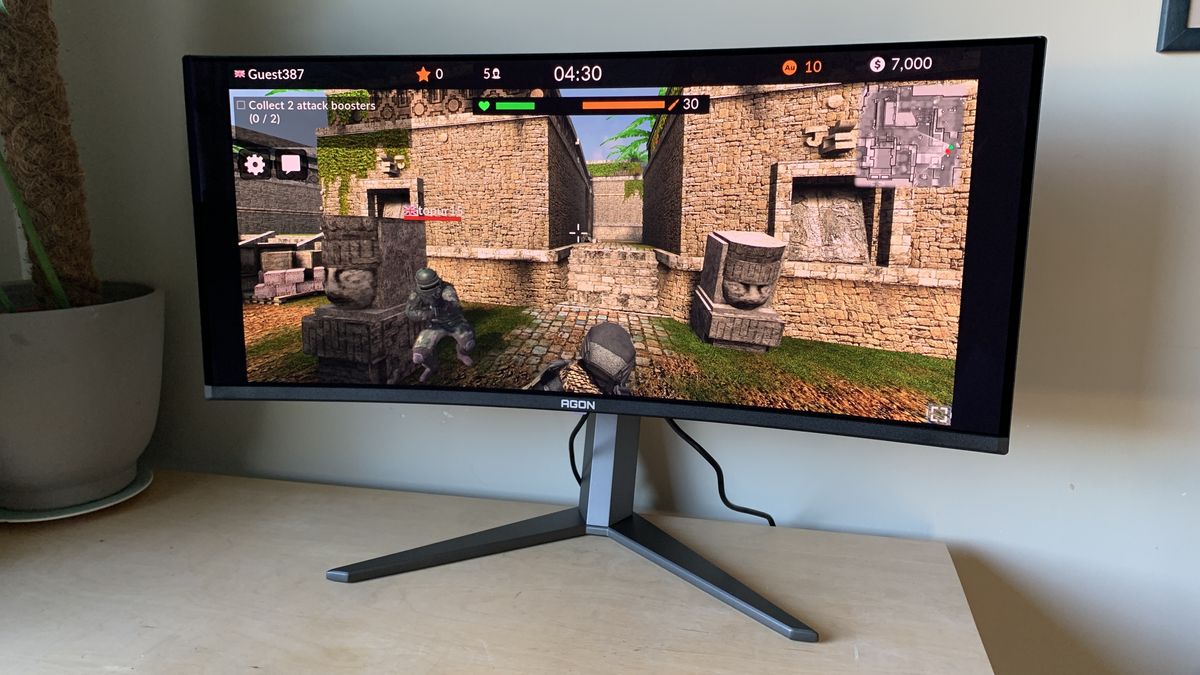
The AGON PRO AG346UCD is a curved monitor designed to provide an immersive gaming experience. It’s remarkably similar to the Philips Evnia 34M2C8600, which we reviewed at the back end of 2023. This is unsurprising, considering AGON and Philips are owned by the same parent company.

The monitor itself was incredibly easy to set up and as soon as it was hooked up to my laptop, I began my testing. The two things you’ll notice when you unbox the AG346UCD are first of all that it’s ultrawide and second, that it’s curved. If you’re not a fan of either of these qualities in a monitor, then you’re best off opting for something like the Philips Evnia 27M2N8500.

The 1800R curvature does a fantastic job of replicating the eye’s natural visual field, resulting in a perfect level of immersion. Don’t get me wrong, this is no ultimate surround visual and sound experience but it is as good as it gets when we’re talking about 34-inch monitors.

Features and Performance

The AG346UCD features some pretty impressive specs, including a max refresh rate of 175 Hz and a response time GtG of 0.03 ms. But does it perform in reality? Absolutely. As you’d expect, I had no problems with lag, motion blur or ghosting effects but instead thoroughly enjoyed using the monitor.

It’s worth noting that the highest refresh rate of 175 Hz can only be achieved using the DisplayPort compared to 100 Hz through the HDMI port. You will want to consider this before making any purchase.

The QD OLED display outperforms most OLED and LED monitors I’ve had the privilege of using. The colours are vibrant and there’s no problem with the contrast. VESA-certified DisplayHDR True Black 400 meant that the full range from blacks to whites was beautifully displayed.

Price

The AGON PRO AG346UCD is currently available at an MSRP of £669.99 / $649.99. This isn’t the most affordable monitor but you do get what you pay for. The QD OLED technology and almost 4K resolution make it one of the best gaming monitors around at the moment.

Conclusion

If you like the idea of a curved monitor but are not happy about spending so much money, then you could opt for the Philips Evnia 34M2C5501A monitor, which is priced at £299.99. There are also 27-inch (27M2C5501) and 32-inch (32M2C5501) options available.

Buy it if

  • You like curved monitors
  • You want a QD – OLED display
  • You need a high-resolution screen

Don’t buy it if

  • You’re on a budget
  • You’re not a gamer

FAQs

Q: What is the refresh rate of the AG346UCD?
A: The AG346UCD has a max refresh rate of 175 Hz.

Q: What is the response time of the AG346UCD?
A: The AG346UCD has a response time GtG of 0.03 ms.

Q: Is the AG346UCD a good option for gaming?
A: Yes, the AG346UCD is a great option for gaming due to its high refresh rate, low response time, and vibrant colours.

Q: Is the AG346UCD expensive?
A: Yes, the AG346UCD is a premium product with a price tag to match. However, it offers high-quality performance and features that make it worth the investment.

Js in Bits – Logical Operators

0

Here is the rewritten article:

Learning js should be fun. It is fun if it’s easy.

I tried my best in writing this, to understand it the easy way.

Logical Operators

Logical operators are used to perform logical operations on the operands. The most common logical operators are:

OR (||)

The OR operator returns true if at least one of the operands is true. This is denoted by ||.

OR Rule

The OR rule states that if one or more conditions are true, then the entire expression is true.

Few Examples to Clear Out Confusion

Here are a few examples to help clarify the use of the OR operator:

Short Circuit Evaluation

In the event of short-circuit evaluation, the expression is evaluated as soon as it is possible to determine the result. This can lead to unexpected behavior if not used carefully.

Conclusion

In conclusion, the OR operator is a powerful tool in JavaScript that can be used to simplify complex logical expressions. By understanding the OR rule and short-circuit evaluation, you can write more efficient and effective code.

FAQs

  • What is the OR operator in JavaScript?
    The OR operator is a logical operator that returns true if at least one of the operands is true.
  • How does the OR operator work?
    The OR operator works by evaluating both operands and returning true if at least one of them is true.
  • What is short-circuit evaluation in JavaScript?
    Short-circuit evaluation is a technique used in JavaScript to evaluate an expression as soon as it is possible to determine the result. This can lead to unexpected behavior if not used carefully.

Fading Swipe

The Dating App Crisis: Can AI Save the Industry?

In early December, Match Group, the owner of more than 40 dating apps and the market leader in the world of online dating, held its first investor day since going public in 2015. The major theme was that the next big shift in the business of romantic connections will be artificial intelligence — something the group is pushing hard.

The Challenges Facing the Industry

Although its brands now cater to tens of millions of users globally, Match’s market value — roughly $8bn — is just a fifth of what it was three years ago. Last month, Tinder, Match’s flagship brand and the app that arguably invented the modern dating industry, reported that paid user numbers had dropped on a year-on-year basis for the eighth consecutive quarter.

Nor is it just Match: the world’s biggest online dating companies are in crisis, as their target customers, particularly women and younger users, increasingly look elsewhere, towards niche apps or real-life meets — or even opt out of romantic relationships altogether. In a recent survey by Forbes, 78 per cent of respondents reported feeling "emotionally, mentally or physically exhausted" by dating apps.

The Rise and Fall of Tinder

When Tinder first appeared in 2012, it was heralded as a relationship revolution — the app that would change everything in the dating world. While web-based dating portals had existed since the birth of the internet (Match.com, Match’s original platform, was founded in 1995), Tinder, which launched to the public in 2013, had a clever, smartphone-led innovation: the swipe. Users could simply swipe left or right on people’s profiles to reject or accept them. If both users swiped right, they could chat. If just one swiped left, they would probably never connect.

Tinder had more than 50mn monthly active users by 2017, when it was acquired by Match Group and parent company IAC at an estimated value of $3bn. The swipe was replicated by nearly every rival, and the app’s viral popularity helped to destigmatize online dating. Tinder reached a peak of more than 73mn monthly active users in 2020. Since then, however, the romance has faded. Although Tinder remains by far the world’s dominant dating app, monthly active users have dropped more than a third since 2020, according to figures from analytics company Sensor Tower.

The Role of AI in the Dating Industry

The industry is scrambling to find "the next novel thing", says Liesel Sharabi, director of the Relationships and Technology Lab at Arizona State University. But analysts warn that it will be an uphill battle. "Tinder hit a roadblock because users’ perception of it deteriorated very quickly," says Shweta Khajuria, a senior analyst at Wolfe Research. "It’s very difficult to change perceptions once they’re established."

Tinder is not alone in experiencing difficulties. Bumble, which was launched in 2014 by one of Tinder’s co-founders, has also seen its user base decline. The company has said it will develop a chatbot assistant, dubbed the Grindr Wingman, to generate conversation prompts based on users’ profiles and chat histories.

The Future of Dating Apps

While the dating industry’s major players are betting big on AI, perhaps their biggest challenge is a demographic one: attracting younger users. A 2023 survey by Statista found that Gen Z was less interested in online dating than millennials were at their age — in part, suggests UK communications regulator Ofcom, which made similar findings in 2024, because the novelty of dating apps is wearing off.

There are lessons here about the importance of face-to-face connection, says Renate Nyborg, who was Tinder’s chief executive until 2022. "If there’s anything I’ve learned, it’s that it’s simply very difficult to understand who someone is from what you see online," she says.

Conclusion

The dating app industry is facing a crisis, with major players struggling to attract and retain users. While AI may hold the key to transforming the dating experience, it is unclear whether it can overcome the fundamental challenges facing the industry. As the industry continues to evolve, it is likely that new players will emerge, offering innovative solutions to the problems facing traditional dating apps.

FAQs

Q: What is the current state of the dating app industry?
A: The dating app industry is facing a crisis, with major players struggling to attract and retain users.

Q: What is the role of AI in the dating industry?
A: AI is being touted as the next big shift in the business of romantic connections, with companies like Match Group and Bumble investing heavily in AI-powered features.

Q: Why are users leaving dating apps?
A: Users are leaving dating apps due to a range of factors, including fatigue with the apps, a lack of meaningful connections, and a desire for more authentic and face-to-face interactions.

Q: What is the future of dating apps?
A: The future of dating apps is uncertain, but it is likely that new players will emerge, offering innovative solutions to the problems facing traditional dating apps.

Frontend Challenge December Edition

0

Submission for Frontend Challenge – December Edition, Glam Up My Markup: Winter Solstice

What I Built

I created a website for the Frontend Challenge – December Edition, Glam Up My Markup: Winter Solstice. The site is a visually appealing representation of the winter solstice, using HTML, CSS, and some JavaScript.

Demo

Here’s a screenshot of the website:

You can also view the site on GitHub: https://github.com/user-attachments/assets/13a0d845-5a7f-4594-b8fd-916e97a12485

Journey

I built this site within a short span of time, as I came to know about the challenge on December 28th. Despite the limited time, I tried my best to create something visually appealing and functional. The code for the site is available on my GitHub profile: https://github.com/solanki505/Frontend-Challenge-December-Edition-DEVCommunity

Conclusion

I’m grateful for the experience of participating in this challenge and hope to continue improving my front-end development skills. I also appreciate the opportunity to share my work with others.

FAQs

Q: How long did it take to build the site?

A: I built the site within one day, starting from December 28th to December 29th.

Q: What technology stack did you use?

A: I used HTML, CSS, and JavaScript to build the site.

Q: Where can I find the code for the site?

A: The code for the site is available on my GitHub profile: https://github.com/solanki505/Frontend-Challenge-December-Edition-DEVCommunity

Q: Will you be participating in future Frontend Challenges?

A: Yes, I would love to participate in future challenges and continue learning and improving my skills.