Home Blog Page 457

Typography Trends to Watch in 2025

0

Anti-Minimalist

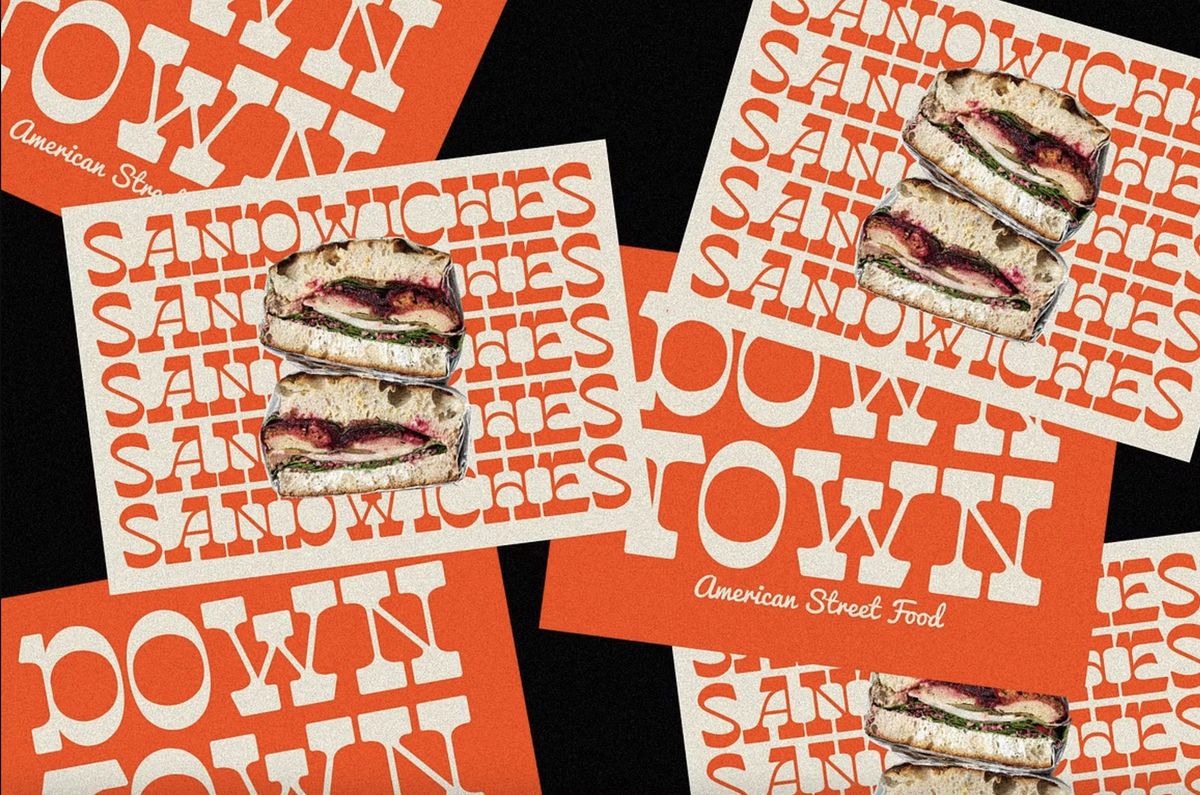
The impending typography landscape of 2025 signals a decisive shift away from minimalism’s long-standing dominance, with momentum building toward a fascinating resurrection of 1960s psychedelic aesthetics. Rejection of minimalist design principles has transcended mere irritation to become a powerful countermovement, particularly evident in the widespread criticism of recent corporate rebrands that feel out of step.

Nuanced Nouveau

The appeal of antique was high on our list for type trends in 2024, with late-19th century decorative grandeur influencing a turn away from sans serif types that had been dominating branding. And it’s a trend that looks set to develop throughout 2025.

Experimental

I suspect that there will be many more sans-serif publications in 2025. Sans-serifs are here to stay, and I’m excited to see the new developments. On the other hand, I expect to see very experimental and playful type designs that will find more and more relevance in branding.

Skeuomorphism

This next entry uses visual cues to imitate or infer familiar real-world objects and materials, and is part of the anti-flat design trend that looks set to grow in popularity in 2025. Elements such as texture, depth, and shadow, can be used to communicate emotion, incite intrigue, or create a fantasy.

Lo-Fi

Anti-fashion and anti-design, this next trend took hold in 2024 and is expected to further impact design and typography in 2025. Techniques such as deliberate "ugliness", distortion, excess, clashing colors, and seemingly random elements all aim to directly challenge the idea that design must be conventionally attractive to be impactful. It’s a flaws-and-all, divisive trend that often hopes to resonate authenticity.

Super-Rounded

If David is right, what are these futuristic new fonts likely to bring in 2025? Abigail points to the recent Jaguar rebrand as a prime example, thanks to its super-rounded, clean font. The design team switched out its former squared all-cap type for this lowercase design, bar the ‘G’. With an emphasis on symmetry and the mirrored ‘j’ and ‘r’ also appearing in its new monogram, it’s a "complete reset" the company says, to mark its move into electric-only vehicles.

Conclusion

The typography trends of 2025 are expected to be a reflection of the ongoing shift away from minimalism and towards a more ornate, human-centered approach. With the rise of anti-minimalist, nuanced Nouveau, experimental, skeuomorphic, lo-fi, and super-rounded fonts, designers and typographers will have a wide range of options to choose from in the coming year.

FAQs

Q: What is the anti-minimalist trend in typography?

A: The anti-minimalist trend is a backlash against the dominance of minimalism in design, characterized by a return to more ornate and decorative typography.

Q: What is the key characteristic of the super-rounded font?

A: The key characteristic of the super-rounded font is its use of rounded shapes and curves, which gives it a soft and gentle appearance.

Q: What is the lo-fi trend in typography?

A: The lo-fi trend is a design approach that deliberately incorporates imperfections and imperfections, such as deliberate "ugliness", distortion, and excess, to create a more authentic and emotional connection with the audience.


Artificial Authenticity?

0

Artificial Intelligence in News: The Future of Journalism

Livestream Now Available

Watch the livestream here: https://www.youtube.com/watch?v=ANdPTXbNUa0

Stay Connected with Me

Follow me on X: https://x.com/mreflow

#AINews #AITools #ArtificialIntelligence

The Rise of AI in News

In today’s digital age, the way we consume news is changing rapidly. With the advent of artificial intelligence (AI), the news industry is evolving to incorporate innovative tools and technologies to enhance the way we gather, process, and present information. In this livestream, we will explore the future of journalism and how AI is revolutionizing the way we get our news.

The Benefits of AI in News

AI can significantly improve the efficiency and accuracy of news gathering and reporting. It can help journalists to:

  • Analyze vast amounts of data to identify patterns and trends
  • Automate the process of data entry and research
  • Identify and verify the credibility of sources
  • Provide real-time updates and breaking news notifications

The Role of AI in News

AI is not just limited to the gathering and reporting of news. It can also be used to enhance the presentation of the news, making it more engaging and interactive. For example, AI-powered chatbots can be used to provide personalized news recommendations, while AI-generated graphics can be used to enhance the visual presentation of news stories.

Conclusion

In conclusion, AI is transforming the news industry, and its potential benefits are vast. From improving efficiency and accuracy to enhancing the presentation of the news, AI is an essential tool for the future of journalism.

FAQs

Q: What is the potential impact of AI on the news industry?
A: AI has the potential to significantly improve the efficiency and accuracy of news gathering and reporting, as well as enhance the presentation of the news.

Q: How can AI be used in news gathering and reporting?
A: AI can be used to analyze vast amounts of data, automate data entry and research, identify and verify the credibility of sources, and provide real-time updates and breaking news notifications.

Q: What are the potential benefits of using AI in news?
A: The potential benefits of using AI in news include improved efficiency, accuracy, and presentation of the news, as well as the ability to provide personalized news recommendations and enhance the visual presentation of news stories.

Create Realistic Jelly Material in Blender

0

Creating a Realistic Jelly Material in Blender

Introduction

This project is a quick and easy way to create a realistic jelly material in Blender. You’ll need to provide the strawberries and cream yourself, but the recipe itself is straightforward and can be completed in just three minutes. To get started, make sure the render engine in Blender is set to Cycles for more realistic lighting.

Expert Tip: Get More Reflections

To make your jelly even more interesting, you can use a Glass BSDF shader. Mix it with the main material we’ve already created, set the Roughness to 0.115, and adjust the Mix shader to 0.500. This will give your jelly an even more appealing look.

Step 1: Create the Jelly Shape

Begin by adding a circle and editing the vertices to make it a jelly shape.

Step 2: Apply the Material

Now we want to apply a new material to the model. Give it a suitable name and then enable the Use Node option in the Shader panel. We’ll need the following nodes: Fresnel, Voronoi Texture, Color Ramp, Normal Map, Translucent, and Add Shader, with the default Principled BSDF too.

Step 3: Set Up the Nodes

Start with the Fresnel node, which needs an IOR value of 1.500, and must be connected to the Color Ramp. Give the Color Ramp a shade of red and then link it to the Translucent node, and the Base Color of the Principled BSDF. Next, hook the Voronoi Texture to the Normal Map, which then connects to the Normal input of the Principled BSDF. For the parameters of these elements, set the Voronoi Scale to 300.000 and Details to 1.000, with the Strength of the Normal Map at 0.050. This will add a soft, realistic surface texture to make our jelly look extra tasty.

Step 4: Finalize the Material

The final connection is linking the Principled BSDF to the Translucent by using the Add Shader, which then links to the Material Output. Set the Metallic of the Principled BSDF to 0.500 for depth and better reflections, the Roughness to 0.025, and the Transmission and the Coat to 1.000. Lastly, the Sheen should be 0.500. These are my recommendations, but feel free to have fun experimenting with different parameters.

Conclusion

With these steps, you can create a realistic jelly material in Blender that looks like it just came straight from the fridge. Don’t forget to experiment with different parameters to make it your own.

Frequently Asked Questions

Q: What render engine should I use for this project?
A: Cycles is recommended for more realistic lighting.

Q: How do I give my jelly a more appealing look?
A: You can use a Glass BSDF shader and adjust the Roughness and Mix shader.

Q: What are the key nodes I need for this project?
A: Fresnel, Voronoi Texture, Color Ramp, Normal Map, Translucent, and Add Shader, with the default Principled BSDF too.

Q: How long does this project take to complete?
A: This project can be completed in just three minutes.

The Future of AI: 4 Predictions for 2025

Unlock the Editor’s Digest for free

Roula Khalaf, Editor of the FT, selects her favourite stories in this weekly newsletter.

Will AI development hit a wall?

In 2025, that momentum will fade. Even some of the tech industry’s biggest optimists have conceded in recent weeks that simply throwing more data and computing power into training ever-larger AI models — a reliable source of improvement in the past — is starting to yield diminishing returns. In the longer term, this robs AI of a dependable source of improvement. At least in the next 12 months, though, other advances should more than take up the slack.

What are the promising developments?

The most promising developments look like those coming from models that carry out a series of steps before returning an answer, allowing them to query and refine their first responses to deliver more “reasoned” results. It is debatable whether this is really comparable to human reasoning, but systems such as OpenAI’s o3 still look like the most interesting advance since the emergence of AI chatbots.

Will AI’s ‘killer app’ emerge?

For most people, the rise of generative AI has meant constantly seeing prompts offering to complete your writing for you or edit your photos in ways you had not thought of — unsought, occasionally useful tools that fall well short of transforming your life.

What can we expect from killer apps?

Next year is likely to bring the first demonstrations of apps that can intervene more directly: absorbing all your digital information and learning from your actions so that they can act as virtual memory banks or take over entire aspects of your life. But, concerned about the unreliability of the technology, tech companies will be wary about rushing these out for mass use — and most users will be equally wary about trusting them.

Will Nvidia’s GPUs still rule the tech world?

The chipmaker’s huge profits have made it the target of the most powerful tech companies, most of which are now designing their own AI chips. But Nvidia has been moving too fast for rivals, and while a quarter or two could be bumpy as it goes through a major product transition, its Blackwell product cycles should carry it through the year comfortably ahead.

What are the challenges facing Nvidia?

That does not mean others will not make inroads. According to chipmaker Broadcom, three of the biggest tech companies are to use their in-house chip designs for supercomputing “clusters” with 1mn chips each in 2027. That is 10 times the size of Elon Musk’s Colossus system, thought to be the largest cluster of AI chips currently in use.

Will the stock market’s AI boom continue? 

With Big Tech in the midst of an AI race that its leaders believe will determine the future shape of their industry, one of the main forces behind the AI capital spending boom will remain in place. Also, as some companies start to claim big — if unproven — results from applying the technology in their own businesses, many others will feel they have to keep spending, even if they have not worked out yet how to use AI productively.

What are the factors influencing the stock market?

Whether this is enough for investors to keep throwing their money at AI is another matter. That will depend on other factors, such as the stock market’s confidence in the deregulatory and tax-cutting intentions of the new Trump administration and the readiness of the Federal Reserve to continue with monetary policy easing.

Conclusion

The article highlights the potential challenges and developments in the AI industry in 2025. While some optimists predict continued growth and innovation, others believe that the momentum will fade due to diminishing returns. The article also touches on the emergence of new technologies and the challenges facing Nvidia in the GPU market.

FAQs

Q: What are the promising developments in AI?
A: The most promising developments look like those coming from models that carry out a series of steps before returning an answer, allowing them to query and refine their first responses to deliver more “reasoned” results.

Q: Will AI’s ‘killer app’ emerge in 2025?
A: Yes, next year is likely to bring the first demonstrations of apps that can intervene more directly: absorbing all your digital information and learning from your actions so that they can act as virtual memory banks or take over entire aspects of your life.

Q: Will Nvidia’s GPUs still rule the tech world?
A: While Nvidia has been moving too fast for rivals, it may face challenges from other tech companies designing their own AI chips.

Q: Will the stock market’s AI boom continue?
A: Whether the AI boom will continue depends on factors such as the stock market’s confidence in the deregulatory and tax-cutting intentions of the new Trump administration and the readiness of the Federal Reserve to continue with monetary policy easing.

Mastering GIMP 3.0 for Professional Results

0

Working with GIMP: Can it Get the Job Done?

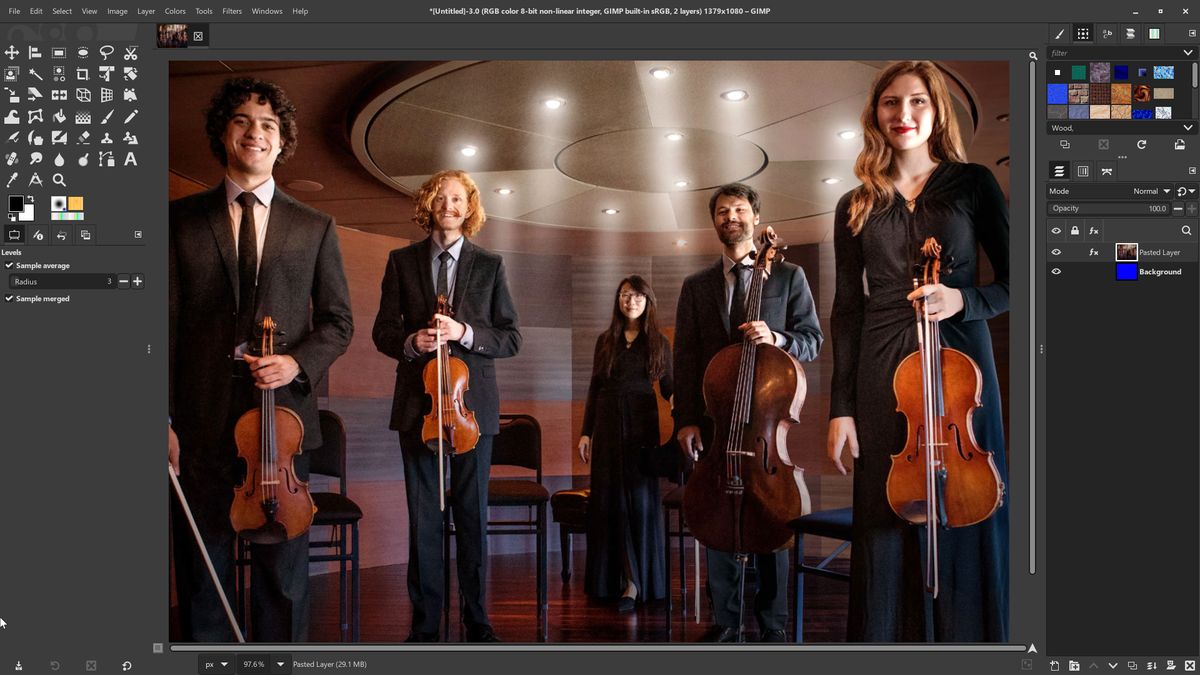
As a professional image-maker in the NYC advertising market since 1990, I’ve had experience with various photo-editing software. Given GIMP’s improvements, I set out to assess its capabilities, focusing on several key aspects that are essential in my line of work.

Object Selection & Masking
GIMP has several tools designed for object selection and masking. I found "Select by Color" and "Fuzzy Select" tools useful, but had some issues with the "Background Select" tool. It proved challenging to duplicate selections and perform complex selections efficiently.

Channels
GIMP’s Channel view is not compatible with my working style, displaying channels in colored overlays instead of grayscale. To work around this, I copied and pasted the R, G, and B channels onto new layers or alpha channels and viewed them in grayscale.

Floating Layers
GIMP’s "Cut and Float" command creates a new layer, making it invisible until I press "Create new layer." I encountered issues with invisible floating layers, which hindered my workflow. I would like to see these layers displayed temporarily.

Non-Destructive Editing (NDE)
GIMP includes some NDE controls, with more planned for future updates. However, NDE is crucial for me; I save frequent backups and store them at the bottom of my Layers panel to ensure flexibility during editing.

Windows Open/Save Issues
The open and save dialogs in Windows have significant drawbacks, lacking critical features such as directory path navigation and thumbnail view.

THE BOTTOM LINE

While GIMP can get some tasks done efficiently, its kludgy interfaces and limitations pose challenges. With some adjustments to my workflow and patience, I can complete certain projects on GIMP, albeit with some discomfort. However, for complex work, I often find myself desiring more professional-grade tools found in Photoshop.

AI Art Scandals of 2024

0

AI Art: The Good, the Bad, and the Ugly in 2024

Brands Get Pilloried for Using AI Art

Brands such as Lego, Skechers, Netflix, Anthropologie, and Transport for Ireland have faced fierce backlashes online for using AI-generated art. While AI art can be used for practical reasons, some brands may be using it as a shortcut, which can lead to a loss of brand equity.

Artist Complains People are Stealing His AI Art

Jason Allen, a digital artist, won a fine art competition at the Colorado State Fair in 2022, but the US Copyright Office rejected his application for the image, citing lack of "human authorship." Allen claims that the piece required 110 hours of human work and that unauthorized use of his artwork has resulted in him losing "several million dollars" due to people "stealing" his work.

The AI Artist Botto Rakes in $351,600 at Sotheby’s

Botto, a fully autonomous AI artist, has generated images based on its own ideas without human prompting. In October, it sold over $351,600 worth of AI art at Sotheby’s, making it one of the most profitable AI artists of the year.

Tesla Rips Off Blade Runner

In a surprising move, Elon Musk, the CEO of Tesla, launched an AI art development studio, xai, after previously criticizing the use of AI art. When Alcon refused to let him use imagery from Blade Runner 2049 for the Tesla Robotaxi reveal, Musk had Grok mock up some blatant copycat AI art instead, leading to a lawsuit for copyright infringement.

Gamers Don’t Like AI Art Either

Gamers have also criticized AI-generated content in games, including an alleged AI-generated zombie Santa in Call of Duty Black Ops 6 and an AI game development studio launched by Netflix.

The Good Side of AI Art

While AI art can be controversial, it’s not all bad. Some artists use AI as a tool, creating unique and interesting works. For example, Ouchhh Studio used a cognitive headset to capture the brain waves of seven key cultural figures and fed them through an AI algorithm to create a living canvas for the V&A’s Exhibition Road Courtyard.

Conclusion

AI art has had a whirlwind year, with both positive and negative developments. While some artists and brands have used AI-generated art to create new and interesting works, others have been criticized for using it as a shortcut or plagiarizing human art. As the field continues to evolve, it’s essential to consider the ethical implications of AI art and how it can be used responsibly.

FAQs

Q: What is AI art?

A: AI art is a broad term that can refer to any art made using machine learning algorithms, from collaborative tools to full AI-generated works.

Q: Is AI art the future of art?

A: It’s too early to say. While AI can be a powerful tool for artists, it’s up to human artists to decide how they want to use it.

Q: Is AI art original?

A: The answer depends on how one defines originality. Some AI art can be entirely generated by machines, while other works may be collaborations between humans and AI.

Q: Is AI art a threat to human artists?

A: Not necessarily. AI art can be seen as a new medium for human artists to explore, rather than a replacement for human creativity.

Crossbow of Brutal Efficiency

0

3D Art of the Week: PK Crossbow by Oleksandr Vasylenko

Inspiration and Concept

Oleksandr Vasylenko, a 3D artist from Chernivtsi, Ukraine, has created a stunning piece of art, PK Crossbow, based on a concept by Marek Kaplita. This lavishly detailed render showcases Vasylenko’s exceptional skills in 3D modeling and rendering.

Tools Used

Vasylenko used a combination of tools to bring the concept to life, including:

  • Blender for modeling
  • ZBrush for sculpting
  • Unreal Engine for rendering
  • Substance 3D Painter for texture and material creation

Design Process

Vasylenko’s design process was meticulous, with a focus on realism. He studied the crossbow and its components, ensuring that each part was modeled to function in a realistic way. "I was inspired to create this work after playing Dying Light 2: Stay Human and seeing a post by Marek Kaplita on ArtStation, which led me to make my own version of a crossbow. Studying the crossbow and understanding how it works and how to improve its details was the most engaging part," he says.

Challenges and Achievements

The main challenge was to maintain the original design while adding new elements. Vasylenko overcame this by creating high-poly details and sculpting in ZBrush. "The Dying Light setting implies an apocalypse, so depicting material wear and detail interaction was crucial. Working on this project was incredibly interesting and educational," he notes.

Conclusion

PK Crossbow is a testament to Vasylenko’s skill and attention to detail. His use of various tools and techniques has resulted in a stunning piece of 3D art that showcases the beauty of crossbows in a post-apocalyptic world.

FAQs

Q: What tools did Oleksandr Vasylenko use to create the PK Crossbow?
A: Vasylenko used Blender, ZBrush, Unreal Engine, and Substance 3D Painter to create the PK Crossbow.

Q: What inspired Oleksandr Vasylenko to create the PK Crossbow?
A: Vasylenko was inspired by a post by Marek Kaplita on ArtStation, which led him to create his own version of a crossbow.

Q: What was the most challenging part of the design process?
A: The main challenge was to maintain the original design while adding new elements.

Q: What is the significance of the Dying Light setting in the PK Crossbow?
A: The Dying Light setting implies an apocalypse, so depicting material wear and detail interaction was crucial in creating a realistic and immersive experience.

Ethics is AI’s Biggest Challenge

0

AI Ethics: The New Frontier

Many organizations are either delaying or pulling the plug on generative AI due to concerns about its ethics and safety. This is prompting calls to move AI out of technology departments and involve more non-technical business stakeholders in AI design and management.

More Challenging than Technology Issues

More than half (56%) of businesses are delaying major investments in generative AI until there is clarity on AI standards and regulations, according to a recent survey from the IBM Institute for Business Value. At least 72% say they are willing to forgo generative AI benefits due to ethical concerns.

The challenge for development teams at this stage is "to recognize that creating ethical AI is not strictly a technical problem but a socio-technical problem," said Phaedra Boinodiris, global leader for trustworthy AI at IBM Consulting, in a recent podcast. This means extending AI oversight beyond IT and data management teams across organizations.

AI Teams Should Ask Themselves These Questions

To build responsibly curated AI models, "you need a team composed of more than just data scientists," Boinodiris said. "For decades, we’ve been communicating that those who don’t have traditional domain expertise don’t belong in the room. That’s a huge misstep."

The ideal AI team should include "linguistics and philosophy experts, parents, young people, everyday people with different life experiences from different socio-economic backgrounds," she urged. "The wider the variety, the better." Team members are needed to weigh in on the following types of questions:

  • Is this AI solving the problem we need it to?
  • Is this even the right data according to domain experts?
  • What are the unintended effects of AI?
  • How can we mitigate those effects?

Very Important Strategically

Business leaders may be growing more cautious about the ethical implications of AI, but they also see a strong embrace of ethics as a source of competitive strength. Seventy-five percent of executives view AI ethics as an important source of competitive differentiation, and a majority — 54% — expect AI ethics to be "very important strategically." It’s an important signal to stakeholders: more than 85% of surveyed consumers, citizens, and employees value AI ethics.

A Holistic AI Ethics Framework

A holistic AI ethics framework identifies three types of ROI that can result from AI ethics investments, the IBM report states:

  • Economic Impact (Tangible ROI): The tangible or direct financial benefits of AI ethics cover measurable factors such as cost savings, increased revenue, or reduced cost of capital.
  • Capabilities Impact (Long-term ROI): This alludes to the long-term benefits of an AI ethics effort. Examples may include technical infrastructure or specific platforms for ethics that may allow organizations to modernize in ways that lead to further cost savings and innovation.
  • Reputational Impact (Intangible ROI): The intangible or difficult-to-quantify benefits coming out of a strong AI ethics effort cover factors such as brand and culture that positively affect an organization’s reputations with shareholders, governments, employees, and customers.

Conclusion

The importance of AI ethics cannot be overstated. As organizations continue to invest in AI, it is crucial that they prioritize ethical considerations and involve a diverse range of stakeholders in the design and management of these systems. By doing so, they can mitigate the risks associated with AI and unlock its full potential.

FAQs

Q: What percentage of businesses are delaying investments in generative AI due to ethical concerns?
A: At least 72% of surveyed businesses are willing to forgo generative AI benefits due to ethical concerns.

Q: What is the most important aspect of AI ethics, according to executives?
A: Seventy-five percent of executives view AI ethics as an important source of competitive differentiation.

Q: What is the role of linguistics and philosophy experts in AI ethics?
A: Linguistics and philosophy experts can provide valuable insights on the unintended effects of AI and help identify potential biases in AI models.

Q: What are the three types of ROI that can result from AI ethics investments?
A: The three types of ROI are economic impact, capabilities impact, and reputational impact.

Crafting Better in 2025

0

As we enter the new year, a lot of us are probably thinking about what big things we might hope to achieve in 2025. Whether that’s more achievable tasks like signing up for the gym, reading more books, or for creatives – planning larger and more intense projects that leave us feeling fulfilled.

For me personally, I’m hoping to expand my skills in 3D printing and modelling by mastering resin printing for the first time, as well as learning some new digital crafting skills by investing in a Cricut machine to help with wedding DIY.

Printing with Resin

The first thing I’m excited to learn in 2025 is how to 3D print using liquid resin materials as opposed to the filament-based FDM 3D printer that I’m used to. I’ve been getting more confident with 3D printing lately which is a skill I’ve only been learning for a year, but I want to up my game and try printing with resin (which I’m told is a much more difficult but very rewarding process) for the first time.

This desire was brought about by seeing just how detailed models printed using resin can be, without the infuriating errors such as stringing and layer lines to worry about. I also recently wrote about the ELEGOO With Her program which is very encouraging and has piqued my interest in the potential of 3D printing beyond plastic spools. But, before I get too carried away – I’ve done my research in advance and learned that with a different method of printing comes a new array of obstacles, and resin printing can be pretty toxic if you don’t know how to use it safely.

Thankfully, not only have I got an air purifier, and a dedicated station for washing and curing the prints on the way, but I’m also in the process of converting my garage into my own little workstation (my fiancé has his drum kit and other tools taking up most of the space) to ensure that there is correct ventilation and its safely stored away for whenever my niece and nephew come to visit. I plan to keep you all updated on my resin printing journey along the way, but for now, wish me luck.

Learning to Use Cricut Machines

I’m getting married in 2026, and I’m quickly realising just how expensive wedding stationery can be. With this in mind, and with plenty of time ahead of me, I thought why not learn how to create some of these things myself?

Some of the best Cricut machines are very beginner-friendly, and I’ve already been excitedly watching plenty of tutorials on TikTok to learn how to make my own stickers, name decals, and welcome signs using this clever craft machine.

The real question is which one should I buy? I spotted an incredible deal (which is still live at the time of writing) on the Cricut Explore Air 2 over at Amazon, and from what I’ve read, I think this is a great Cricut machine for a beginner like myself to start off with, especially given the affordable price too.

If things go according to plan, I hope to be sharing some Cricut tutorials with you all in the new year over on our Creative Bloq TikTok channel, so head over there and give us a follow (pretty please) to stay in the loop.

Conclusion

As we start the new year, I hope to be sharing my progress and experiences with you all, whether it’s mastering resin printing or creating beautiful crafts with my new Cricut machine. If you’re also interested in learning a new craft for 2025, take a look at the deals I’ve rounded up below on popular printers, Cricut machines, and some of the best laser cutters and engravers too.

Frequently Asked Questions

Q: What is resin printing?
A: Resin printing is a type of 3D printing that uses liquid resin materials to create detailed and accurate models.

Q: Is resin printing difficult?
A: Yes, resin printing can be a challenging process, especially for beginners. It requires a good understanding of the printing process and the use of special safety equipment.

Q: What are the benefits of using a Cricut machine?
A: Cricut machines are versatile and can be used to create a wide range of crafts, from stickers and decals to custom signs and designs.

Q: How do I get started with Cricut machines?
A: To get started with Cricut machines, you can start by watching tutorials and online classes to learn the basics of using the machine. You can also join online communities and forums to connect with other Cricut users and get tips and advice.

Software Engineering Cheatsheet I Always Wanted to Have

0

Important Software Engineering Principles

The foundation of software engineering lies in its core principles, which guide the design, development, and maintenance of software systems. Here are the essential principles you should familiarize yourself with:

  • SOLID Principles: A set of five design principles that help in writing more maintainable, flexible, and scalable code.
  • ACID Properties: A set of properties that ensure database transactions are processed reliably and securely.
  • YAGNI (You Aren’t Gonna Need It): A principle that suggests writing only what is necessary, avoiding unnecessary code and complexity.
  • KISS (Keep It Simple, Stupid): A principle that advocates for simplicity and elegance in software design.
  • DRY (Don’t Repeat Yourself): A principle that emphasizes the importance of avoiding duplicate code and promoting maintainability.
  • Design Patterns: Reusable solutions to common problems that can improve the maintainability and scalability of software systems.
  • Separation of Concerns: A principle that advocates for dividing software into smaller, independent components, each with its own specific responsibility.
  • Modularity: A principle that promotes the decomposition of software systems into smaller, self-contained modules.

System Design Resources

Designing and developing large-scale systems requires a solid understanding of architecture, scalability, and performance. Here are some essential resources to help you excel:

  • System Design Primer: A comprehensive guide to system design, covering topics such as scalability, latency, and distributed systems.
  • System Design Resources: A collection of resources and tools to help you design and develop scalable systems.
  • Low-Level Design (LLD) Resources: A set of resources and tutorials to help you design and implement low-level systems.

Coding Interview Resources

Preparing for coding interviews requires practice, patience, and persistence. Here are some essential resources to help you solidify your understanding and sharpen your coding skills:

  • (None listed)

Conclusion

With these resources, you’ll be well-prepared to tackle even the toughest software engineering interviews. Remember to solidify your understanding of important software engineering principles, system design resources, and coding interview resources.

Frequently Asked Questions (FAQs)

Q: What are the most important software engineering principles I should know?
A: Familiarize yourself with SOLID principles, ACID properties, YAGNI, KISS, DRY, design patterns, separation of concerns, and modularity.

Q: What are the most important system design resources I should know?
A: Study system design primer, system design resources, and low-level design resources to improve your understanding of system architecture and scalability.

Q: What are the most important coding interview resources I should know?
A: Practice with coding interview platforms, study algorithm and data structures, and learn to write efficient and readable code.

Q: How can I prepare for coding interviews?
A: Practice with coding interview platforms, study algorithm and data structures, learn to write efficient and readable code, and prepare common interview questions.

Q: How can I improve my understanding of software engineering principles?
A: Study and implement software engineering principles in your own projects, attend workshops and conferences, and collaborate with other software engineers.