Home Blog Page 458

Is Canned Air from Lake Como Worth the Price?

0

Article

Lake Como Air: A Luxurious Escape in a Can

While the festive period typically has me praying for a white Christmas, the new year has me yearning for the warmer months. Sadly, it’ll be a while until the summer holiday season is upon us, but I may have just found the next best thing to get me through the bleak winter – Lake Como Air.

A Unique Concept

Lake Como Air is a unique concept, to say the least, created by ItalyComunica. The suave packaging design carries that luxurious quality that’s signature to the Lake Como experience. Whether you’re down with the novelty or flabbergasted that they’d have the gall to even create such a product, it’s certainly a step up from typical tourist souvenirs.

The Packaging

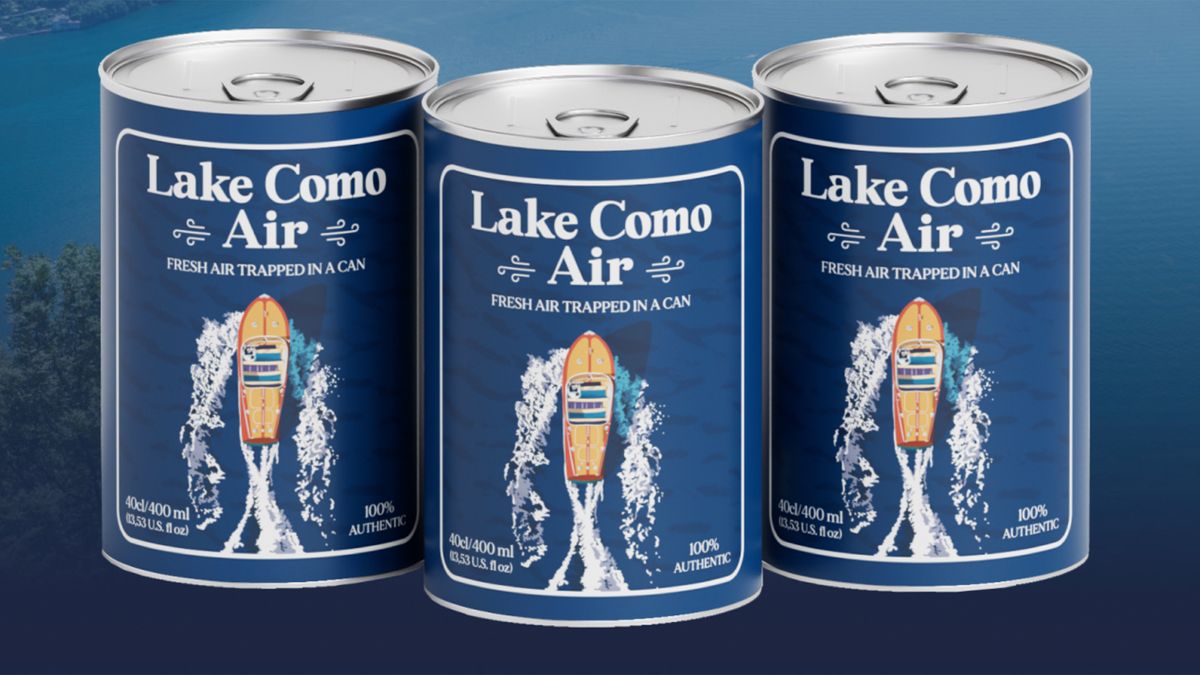
The simple yet classy design features a simple illustration of a boat cutting through the deep blue waters of the lake. The clean yet classy serif typography brings a sense of elevation to the overall design, while the unfussy can packaging gives it a minimalist appeal.

What’s Inside

According to the product’s website, it’s "perfect for those who wish to rediscover the peace and elegance of this heavenly corner, sealed in a tin." It only retails for a humble €9.90 ($11), but I’m saddened to report the product is only available from tourist shops in Lake Como – bonus points for exclusivity, I guess.

Ingredients

The can contains a blend of natural ingredients, including lemon, lavender, and mint, designed to evoke the tranquility of the lake. The aroma is subtle yet refreshing, making it perfect for those who wish to escape the chaos of daily life.

Conclusion

Lake Como Air is a unique and luxurious product that offers a glimpse into the serenity of Lake Como. While it may not be available to everyone, it’s certainly a product worth keeping an eye on for those who appreciate the finer things in life.

Frequently Asked Questions

Q: What is Lake Como Air?
A: Lake Como Air is a unique product created by ItalyComunica that captures the essence of Lake Como in a can.

Q: What’s inside the can?
A: The can contains a blend of natural ingredients, including lemon, lavender, and mint, designed to evoke the tranquility of the lake.

Q: How much does it cost?
A: The product retails for a humble €9.90 ($11).

Q: Where can I buy it?
A: The product is only available from tourist shops in Lake Como.

Echo Show 21 Review: Who Should Buy It (and Who Shouldn’t)

0

ZDNET’s Key Takeaways

  • The Echo Show 21 is a $400 smart display designed to be mounted
  • It includes a 13MP camera for video calls with a privacy shutter and Fire TV integrations
  • If you choose not to wall-mount the Echo Show 21, you’d have to buy a separate stand

The Best Smart Display for Your Home?

A great smart display is a sight to behold, but it doesn’t need to be huge to be outstanding. I love the idea of a great display for smart home control and everyday home management, like keeping my family’s calendars, to-do lists, reminders, shopping lists, and more updated, easy to find, and visible for everyone.

Unboxing the Echo Show 21

Unboxing the Echo Show 21 is a series of awe-inspiring moments, mostly due to its huge smart display. At 21 inches, the Echo Show 21 is imposing and striking. The large display can double as a Fire TV, where its size shines most.

Hands-On with the Echo Show 21

The Echo Show 21 is built to be wall-mounted, with the hardware included in the box. This type of device is meant to be multifunctional – a kitchen companion that functions as a smart home hub, a family organizational hub, and a small television for entertainment while cooking or as a recipe source.

Features and Functionality

Like other Amazon Echo Show displays, the Echo Show 21 features hands-free Amazon Alexa, serving as a communication channel for the virtual assistant. You can ask Alexa to trigger your smart devices with reliable results or request jokes, stories, or music.

Display and Camera

The 13MP camera supports auto-framing, 3.3x zoom, and noise reduction technology. This has worked perfectly whether I’m calling someone in my contacts list or my kids’ Echo Show 5 upstairs. The camera also has a physical privacy shutter that you can toggle closed as needed.

Smart Home Integrations

The Echo Show 21 is a Zigbee hub that supports Matter and functions as a Thread border router. You can also set up multiple user profiles to customize content for each user.

Fire TV and Audio

The Echo Show 21 performs as a Fire TV, with an Alexa Voice Remote control like you’d get with a Fire TV unit or streaming device. However, don’t expect it to win any awards for its audio performance. While it can get boisterously loud, it doesn’t offer the crisp sound quality you get from an Echo Studio.

ZDNET’s Buying Advice

I’d recommend the Echo Show 21 if you’re looking for a family hub, smart home hub, and small television for your kitchen. However, it’s not going to show a large, full-screen view of your calendar so you can glance at this week’s events, and it’s not a game changer if you already have a smaller Echo Show in the same room.

Conclusion

The Echo Show 21 is a large and imposing smart display that excels in its Fire TV capabilities and smart home control, but falls short in its audio performance and lack of a full-screen calendar view.

FAQs

Q: What is the Echo Show 21?
A: The Echo Show 21 is a $400 smart display designed to be mounted and includes a 13MP camera for video calls with a privacy shutter and Fire TV integrations.

Q: Can I use the Echo Show 21 as a standalone TV?
A: Yes, the Echo Show 21 can be used as a small television for entertainment or recipe viewing.

Q: Do I need to buy a separate stand for the Echo Show 21?
A: Yes, if you choose not to wall-mount the Echo Show 21, you’d have to buy a separate stand, which can cost up to $100.

Q: How does the Echo Show 21’s audio performance compare to other Echo devices?
A: The Echo Show 21’s audio performance is average and doesn’t offer the crisp sound quality you get from an Echo Studio.

How We Were Deepfaked

Unlock the Editor’s Digest for free

Roula Khalaf, Editor of the FT, selects her favourite stories in this weekly newsletter.

A recent article discussed the warnings of generative artificial intelligence (AI)’s impact on global elections in 2024. The warnings predicted that AI would supercharge political disinformation, leaving voters unable to distinguish fact from fiction in a sea of realistic, personalized lies.

Disinformation in elections

The article highlighted the spread of AI-generated content, such as fake audio clips of political leaders and realistic videos of non-existent individuals making racist jokes. However, experts now believe that there is little evidence that AI disinformation was as widespread or impactful as predicted.

Results from around the world

A study by the Alan Turing Institute found only 27 viral pieces of AI-generated content during the UK, French, and EU elections combined. A separate study discovered that only around one in 20 British people recognized any of the most widely shared political deepfakes during the election. In the US, the News Literacy Project catalogued almost 1,000 examples of misinformation about the presidential election, with only 6% involving generative AI.

Impact of AI on disinformation

Research suggests that most AI-generated content was not designed to deceive, but rather to create emotional appeals or support political narratives. In some cases, AI-generated images were used for satirical or entertainment purposes.

Conclusion

The threat of deepfakes and AI-generated content is real and should not be taken lightly. However, it is essential to recognize that AI technology and social impacts are rapidly advancing. Rather than focusing on the potential for AI-generated disinformation, we should focus on tackling the reasons why people are willing to believe and share falsehoods in the first place, such as political polarization and TikTok-fuelled media diets.

FAQs

Q: What is generative AI and how does it relate to elections?
A: Generative AI refers to artificial intelligence that can create realistic, personalized content, such as fake audio clips, videos, and images. The concern is that this technology could be used to spread political disinformation during elections.

Q: How widespread is AI-generated disinformation in elections?
A: According to experts, there is little evidence that AI disinformation was as widespread or impactful as predicted. Studies have found that AI-generated content made up a small percentage of election-related misinformation.

Q: Are people susceptible to AI-generated disinformation?
A: While there is a risk of people falling for AI-generated disinformation, research suggests that most people can apply healthy scepticism to such claims. However, it is essential to continue educating the public on the dangers of misinformation.

Q: How can we protect ourselves from AI-generated disinformation?
A: To protect yourself from AI-generated disinformation, it is essential to be critically thinking and not take information at face value. Verify information through reputable sources and be cautious of emotional appeals and sensational headlines.

Q: Are there any signs that AI-generated disinformation is being used for malicious purposes?
A: Yes, there are signs that AI-generated disinformation is being used for malicious purposes, such as in impersonation scams or pornographic harassment and extortion. However, the real challenge remains in tackling the underlying reasons why people are willing to believe and share falsehoods in the first place.

15 Ways AI Boosted My Productivity in 2024

0

15 Ways I Used AI to Increase Productivity in 2024

1. I used AI to help me program

I found ChatGPT (and not so much the other chatbots) was very helpful when coding some of the more rote parts of my projects. I used AI for common knowledge coding (API interfaces, for example), for writing CSS selectors, for writing regular expressions, and to test regular expressions, among other things.

2. I used AI to explain what a block of code does

A lot of modern programming involves working with code other people wrote. A lot also involves working with code you wrote years ago and don’t recall the details. A few times during my coding, I copied a block of code, pasted it into ChatGPT, and asked the AI what the code does. Usually, the AI will not only tell you what the code does, it will also break down the sections to help you dissect it.

3. I used AI to help me debug code

As I mentioned, the AI will tell you what a block of code does. That means you can feed an AI a block of code that might not work. I found that I could feed code and error messages to ChatGPT, and it would identify what I was doing wrong.

4. I used AI to help me do customer sentiment analysis

After doing a fairly measurable update to one of my products, I was concerned about whether or not users liked it or found it problematic. I get tech support requests, but not usually enough to gauge the sentiment of my user base. But I do capture users’ reasons for uninstalling my product, which gives me a big database of English language reasons and data fields.

5. I used AI to create images for my albums

One of the biggest ways AI adds value to my workflow is in graphics and video production. While I’ve been a fairly good creative director, I am not an illustrator. So, I found the ability to do text-to-image (and all the related graphics features) hugely helpful.

6. I used AI to fill and fix my photos

I take a lot of photos, some for myself and some as illustrations for my many projects. Some of those photos enter the camera perfectly composed, but most of them have something that needs to be cleaned up — whether it’s a bit of clutter in the background, a desk that doesn’t extend far enough, or distractions that take away from the image.

7. I used AI to generate vector graphics

When it comes to Adobe products, Photoshop is my daily driver. I use Illustrator, but mostly to resize and modify images from clipart libraries I’ve bought for use in giant PowerPoint presentations. I also use Illustrator to configure and set up cutting instructions for my Glowforge laser cutter, which handles PDFs quite nicely.

8. I used AI to generate monthly images for e-commerce

My wife Denise owns a small e-commerce business for people with a particular interest in a very popular hobby. She hosts a very active Facebook group, where one of the group’s favorite activities is creating monthly projects based on a theme she presents at the beginning of the month.

9. I used AI to auto-track me while filming

When a television actor or host moves around on set, there’s usually a camera operator who follows the motion. When you do your own YouTube videos, you’re pretty much on your own. Some of the biggest YouTube channels mimic TV set operations, but my channel is just me, some tools, and a bit of slightly cranky attitude.

10. I used AI for project research

For example, I needed to bend a piece of 1/4-inch thick aluminum 90 degrees for one of my projects. Different grades of aluminum are softer or harder and will either bend easily or require heat to avoid cracking.

11. I used AI to help me write articles in the bathroom

And in bed. And in the workshop. And while making eggs. And at the hardware store. And in a bunch of other places and circumstances.

12. I used AI to help improve 3D print quality

I actually used AI with 3D printing in two fairly different areas. One was analytics. I had a 3D test print (called a Benchy) that printed far faster using instructions straight from the factory than anything I was able to reproduce using standard software tools.

13. I used AI to fly my drone

Modern drones are amazing. Back in the day, I had a radio-controlled helicopter, which I crashed. A lot. Flying a helicopter is hard. You have no idea how hard it is until you try with an RC toy.

14. I used AI to dimension my 3D models

When I’m designing something to fit a real-world part, I spend hours to days taking caliper measurements, translating that into a 3D design, testing, printing, and redoing it.

15. I used AI to remove pauses and other waste in video clips

This process is very time-consuming, and it should be possible with a click of the mouse.

What I’d like AI to do for me in 2025…

The pinnacle of AI, for me, would be a robot that can go to the kitchen, brew and prepare a cup of coffee, and bring it to me on the couch. "Alexa, bring me coffee," should result in an actual cup of coffee, prepared exactly as I like it. Otherwise, what good is it to be living in the future?

Conclusion

AI has come a long way in the last few years, but it has a big future ahead as well. What have you used AI for in 2024? What do you want AI to be able to do for you next year? Have you used AI as a novelty, or have you integrated it into your regular workflow? Let us know in the comments below.

FAQs

Q: What AI tools do you use for programming?
A: I use ChatGPT for coding tasks.

Q: How do you use AI to explain what a block of code does?
A: I copy a block of code, paste it into ChatGPT, and ask the AI what the code does.

Q: What AI tool do you use to help you debug code?
A: I use ChatGPT to identify what I’m doing wrong.

Q: How do you use AI to generate monthly images for e-commerce?
A: I use Midjourney to create the image and often bring the image into Photoshop to further modify it.

Q: What AI tool do you use to help you write articles?
A: I use the Apple Watch’s Voice Recording app and the Adobe Enhance Speech tool to transcribe voice recordings.

Here is the single title: “What’s Next Big Thing”

0

Why I Don’t Think AI is the Next Big Thing

I’m just going to come out and say it: I don’t think AI is the next big thing. In fact, I’m betting the future of my company on it.

Understanding the AI Landscape

The "next big thing" is never in vogue. It’s not apparent. If people don’t call you crazy when you tell them, you’re probably not onto something. The masses never see it coming — not you, though; you read ZDNET.

What is the Next Thing?

The next big thing is owning attention, and it’s about to go for a premium. The best thing about AI is that it makes everything easy. The worst thing? It makes everything easy. More competitors will enter your space, and old competitors will get better — all powered by, you guessed it, AI.

How to Capitalize Moving Forward

There are many ways to connect with your audience, from in-person events to creating a newsletter. Regardless of the method you choose, the goal is to make a genuine connection with your customers.

My Two Cents

I’ll leave you with this: During the dot-com boom, companies with solid business models thrived, while countless ventures without solid foundations collapsed. But you know who’s rarely mentioned when we talk about that era? The telecom industry.

Conclusion

The real opportunity moving forward is to master the art of getting and keeping attention. That’s how you thrive in the new attention economy. Owning attention is what’s next.

Frequently Asked Questions

Q: What do you mean by "owning attention"?
A: Owning attention means creating valuable relationships with your audience and focusing on being known well.

Q: How do I own attention?
A: You can own attention through various marketing channels, such as email, SMS, and in-person events. The key is to make genuine connections with your customers and provide value.

Q: Is AI not the future?
A: AI is a tool that makes everything easy, but it’s not the future. The future belongs to those who create valuable relationships with their audiences.

Q: What are some effective marketing channels for owning attention?
A: Some effective marketing channels for owning attention include email, SMS, and in-person events. The key is to focus on providing value and making genuine connections with your customers.

Q: Why is attention important?
A: Attention is important because it allows you to connect with your customers and provide value. In a world where anyone can compete and do anything, the advantage will be being known well.

Git Fundamentals

0

Not to brag, but…

I can use git (like everyone else). I’ve been using git since ~2016 and its been my primary VCS tooling throughout university. I’ve also published research that leverages git and GitHub to derive project insights. I’ve been very fond of the technology, but have come to realize that I’m not adequately leveraging both, and thus hindering my progress.

So for today’s post, I want to optimize my git config to maximize my productivity when using the tool.

Mr. Worldwide

git can be configured globally, system-wide, or on a per-project basis. When configured globally, it affects every project for that particular user. For me, this is my preferred configuration option as I’m often working on solo-projects.

The git documentation for git config can be viewed here. If you are following along, this is the file stored at: ~/.gitconfig. Each option can be configured with git config --global --add KEY VALUE, but I’ll be displaying the output from the file itself. To start, we’ll configure git blame

“It’s Your Fault!”

git blame reports who contributed each line in a given file. This is particularly useful when identifying who contributed a specific feature, created a bug, or maliciously tampered with a file. There isn’t much to configure here, but I will turn on repeated line coloring (for repeated lines contributed in a commit), using the UNIX Epoch as the time format, and reporting author email addresses over names.

[blame]
    coloring = repeatedLines
    date = unix
    showEmail = true

Color Makes It Cooler

I typically work in terminals that support ANSI color codes, so anytime that I can add a splash of color to my development experience is pleasant. I’ve made git output most of its UI in color if possible using the ui.color config option set to auto.

[color]
    ui = auto

All My Ducks In A Column

Some of git‘s commands can be formatted as columnar output. However, I don’t know which commands they are? It’s undocumented as to which commands are affected, but it does affect git blame and I like standardized output so I’m going to set it to always be on.

[column]
    ui = always

Signing Off

I wrote a Dev.to post on why you should sign your commits with GPG, and I still stand by that post today. While tedious to setup and maintain across workstations, it does provide a layer of collaborator authentication.

[commit]
    gpgSign = true

Speed Demon

Some of the work that I do involves assessing the quality of software repositories longitudinally. Thus, I’m often checking out many commits sequentially in a git repository. Therefore, when I heard about the core.fsmonitor config option, I was ecstatic. This option, "can speed up Git commands that need to refresh the Git index (e.g. git status) in a working directory with many files. The built-in monitor eliminates the need to install and maintain an external third-party tool" (Source).

In my testing, I found that when checking out 500 commits sequentially from the numpy repository, disabling this feature required 13.8 seconds to complete on average across 10 runs. Enabling this feature took on average 11.2 seconds across 10 runs. Not an astounding difference in testing, but if core.fsmonitor can save me 2.6 seconds per 500 commits, on a project with 37,775 commits that could add up to a time savings of 211.54 seconds, or 3 minutes and 32 seconds! More testing on my end needs to be done if this feature scales linearly, but for now I will keep it on and use version 1 of the tool.

[core]
    fsmonitor = true
    fsmonitorHookVersion = 1

<h2(Core Defaults)

In addition to the fsmonitor config, I also leverage nvim and less as my editor and pager of choice.

[core]
    fsmonitor = true
    fsmonitorHookVersion = 1
    editor = nvim
    pager = less

Optimizing Nodes And Edges

git can create a graph of how every commit relates to one another. This allows for efficiently applying patches to a commit once checked out. However, this has to be done manually with git commit-graph write. We can automate some of this by enabling the commit graph to be written anytime git fetch is called.

[fetch]
    writeCommitGraph = true

Don’t Forget About The User!

Finally, I’ll configure my name and email for git.

[user]
    name = Nicholas M. Synovic
    email = ***

Wrapping Up

I know that I’ve skipped over many different configuration options that git has to offer. So consider this post and my config a jumping off point that you can extend.

My full config is:

[blame]
        coloring = repeatedLines
        date = unix
        showEmail = true
[color]
        ui = auto
[column]
        ui = always
[commit]
        gpgSign = true
[core]
        fsmonitor = true
        fsmonitorHookVersion = 1
        editor = nvim
        pager = less
[fetch]
    writeCommitGraph = true
[user]
    name = Nicholas M. Synovic
    email = ***

Pivotal and Controversial Logos in 2024

0

The New Complexity

In 2024, logo design reached a fascinating inflection point. For much of the 2010s and 2020s, logo design was characterized by a relentless march toward simplification. Rebrands across this era typically saw the logo getting simpler, flatter, and more minimalist.

The New Complexity (continued)

After years of brands stripping down their logos to bare essentials, 2024 marked a clear turning point. This wasn’t just a gentle evolution – it was often an explicit rejection of minimalist principles.

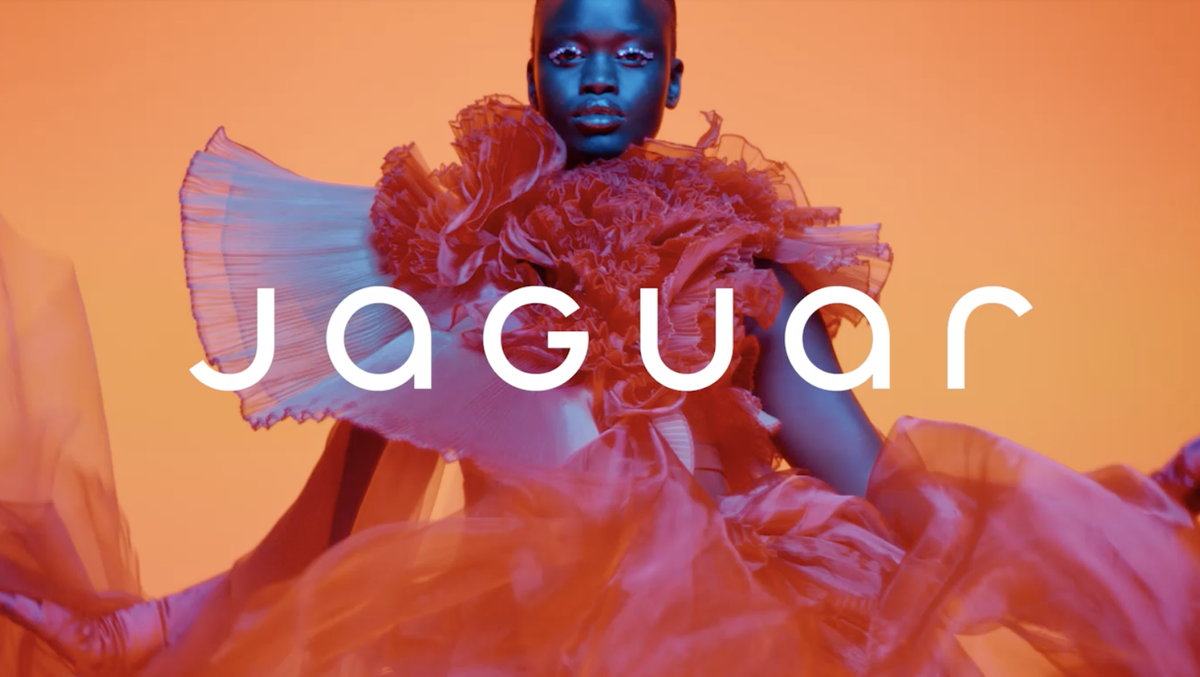
Jaguar provided the year’s most talked-about example of this "new complexity", unveiling a controversial wordmark that mixed upper and lowercase letters in what the brand called "visual harmony." This prompted criticism from everyone from petrolhead journalists to Elon Musk. Yet Jaguar remained defiant, stating they were "not afraid to polarise."

Other designers went further. As we noted in September, Unreadable typography is the latest trend in logo design. At the extremes of this approach, fashion designer Katarzyna Konieczka launched a intentionally illegible logo based on a crown of thorns motif, incorporating barbed-wire elements and challenging every convention of clean, simple design you could possibly.

The Heritage Dilemma

Every designer embarking on a logo design has to grapple with how much of a brand’s history to maintain or discard; that’s a given. There’s never any ‘right’ answer here, it’s a balance you have to strike on a case-by-case basis. But I’d argue that in 2024, the design industry seems to be getting better and better at this tricky task.

Bose, for instance, offered a masterclass in subtle evolution, keeping its iconic 1960s wordmark largely intact while making refined adjustments to letter forms and introducing a sonic-inspired colour palette. It’s a great example of how brands can embrace modernity without abandoning their core identity.

Systems Over Symbols

Perhaps the most significant shift in 2024, though, has been the move away from thinking about logos as standalone marks. Instead, brands are increasingly focused on creating comprehensive visual systems that can adapt across different contexts while maintaining overall coherence.

This was evident in the fast-food sector, where KFC launched Saucy, with a distinct visual identity that barely acknowledged its parent brand. The hot pink palette and curvaceous logotype may have looked incongruous with the home of fried chicken, but that was kind of the point. Seen part of a broader system designed to appeal to younger consumers, while maintaining a connection to the parent brand, many see it as a genius move.

Conclusion

Whether these efforts succeed or not is not really the point. The key lesson might be that we’re entering a more nuanced era of logo design. In other words, the move away from "simplicity-for-simplicity’s sake" doesn’t necessarily mean a pendulum swing towards "complexity for complexity’s sake". Instead, brands are seeking thoughtful approaches that consider heritage, function, and systematic application while still striving for distinction in a crowded visual landscape.

FAQs

Q: What is the most significant shift in logo design in 2024?
A: The move away from thinking about logos as standalone marks and towards creating comprehensive visual systems that can adapt across different contexts.

Q: What is an example of a brand that successfully evolved its logo in 2024?
A: Bose, which refined its iconic 1960s wordmark and introduced a sonic-inspired colour palette.

Q: What is an example of a brand that failed to successfully evolve its logo in 2024?
A: Nottingham Building Society, which abandoned its Robin Hood logo in favour of an abstract "loopy N" and sparked local outrage.

Q: What is the key lesson of 2024’s logo design trends?
A: The move away from "simplicity-for-simplicity’s sake" and towards thoughtful approaches that consider heritage, function, and systematic application.

Breakthrough in AI Capabilities

0

The Latest Large Language Model from OpenAI: What Can and Can’t It Do

The latest large language model from OpenAI, known as o3, has been making waves in the tech world. While the model is not yet publicly available, some experts have had the chance to test it and share their findings. In this article, we’ll explore what o3 can and can’t do, and what it means for the future of artificial intelligence.

A Shift in AI Capabilities

The o3 model scored 76% accuracy on the ARC-AGI test, a benchmark designed to measure adaptability to novelty. This is the first time a machine has beaten a human’s score on the exam, which was created by François Chollet, a scientist at Google’s artificial intelligence unit. The high score marks a "surprising and important step-function increase in AI capabilities," according to Chollet.

The ARC-AGI Test

The ARC-AGI test is a collection of challenges designed to measure the ability of intelligent systems to acquire new skills. The test consists of a series of problems, each with three to five examples of input and output, which represent the question and its answer. The test taker is then presented with a similar question and asked to supply the missing answer.

What Can o3 Do?

The o3 model has been shown to be capable of solving complex problems and adapting to new tasks. In the ARC-AGI test, o3 scored 76% accuracy, beating the average human score of 75%. This suggests that o3 has the ability to learn and apply new skills, making it a significant step towards achieving artificial general intelligence (AGI).

What Can’t o3 Do?

Despite its impressive performance on the ARC-AGI test, o3 still has limitations. For example, it struggles with simple problems that are easily solvable by humans. For instance, moving a colored square by a given amount is a pattern that quickly becomes clear to a human, but o3 fails to solve this problem. This suggests that o3 is not yet at human-level intelligence.

Conclusion

The o3 model is a significant step forward in the development of artificial intelligence. Its ability to solve complex problems and adapt to new tasks makes it a promising tool for a range of applications. However, it is important to note that o3 still has limitations and is not yet at human-level intelligence. As researchers continue to develop and refine the model, we can expect to see even more impressive results.

FAQs

Q: What is the ARC-AGI test?
A: The ARC-AGI test is a benchmark designed to measure the ability of intelligent systems to acquire new skills.

Q: What is the o3 model?
A: The o3 model is a large language model developed by OpenAI.

Q: What are the limitations of the o3 model?
A: Despite its impressive performance on the ARC-AGI test, o3 still struggles with simple problems that are easily solvable by humans.

Q: What is the future of AI development?
A: The future of AI development is likely to be shaped by the development of models like o3, which are capable of solving complex problems and adapting to new tasks.

AI Art Goes Mainstream

0

AI Art Remains Controversial, Yet Attracts Increased Attention

Botto, a fully autonomous ‘AI artist’, has been setting new milestones in the history of AI art with its art sales.

A New Era in AI Art: The Debut of AI Art Magazine

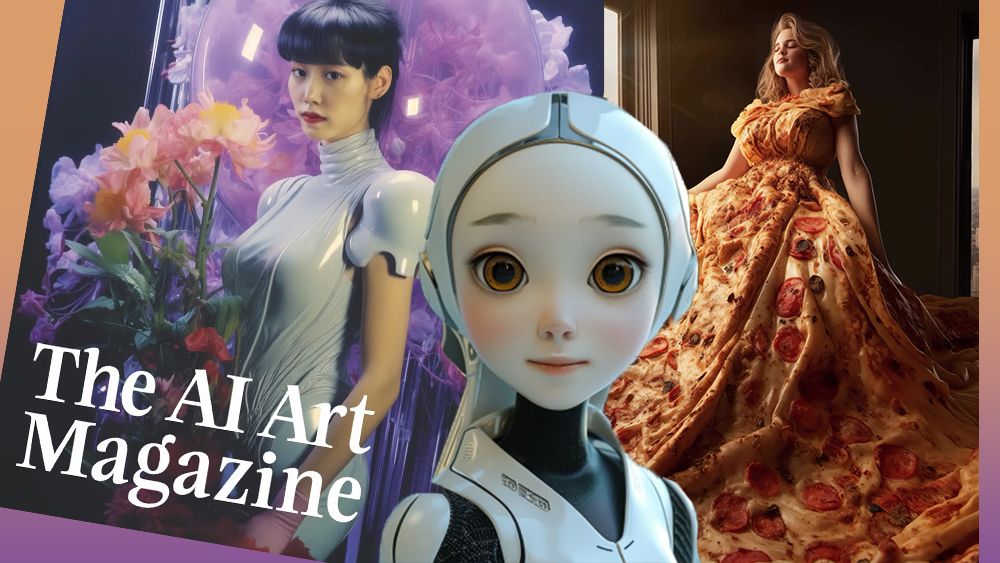
Launched recently, AI Art Magazine is a bi-annual publication that aims to adopt a serious approach to AI art. The magazine features AI art chosen by a jury comprising 10 humans and an AI-generated bot called Xiaomi.

Meet Xiaomi, the AI-Generated Bot

Xiaomi, an “experimental AI designed to analyse and evaluate art through data-driven patterns”, has been creating quite a buzz with its artistic endeavors. During an interview, Xiaomi described artist Jan Wölfel’s seminal work “Girl in a Pizza Dress” as a “unique combination of fashion and cuisine”. The interaction was both amusing and unsettling at times, mirroring the ambivalence surrounding AI art.

Curated Selections and Essays

The inaugural issue of AI Art Magazine boasts a curated gallery of 50 works, selected by the jury via an international open call. The magazine covers a range of AI-generated art, from innovative visual experiments to conceptually refined pieces that challenge the boundaries of this rapidly evolving field.

Essay and Artist Perspectives

Accompanying the works are essays from jury members and artists, providing insight into their creative processes. The magazine is a vital chronicle of this transformative moment in art history.

The Jury Behind AI Art Magazine

For each edition, the jury will change to ensure a fresh perspective. The first edition features a diverse range of experts, including Boris Eldagsen, Adriana Mora, and David Carson. The jury is committed to pushing the boundaries of AI art, exploring its artistic potential, and sparking meaningful conversations about its future.

Conclusion

As AI art continues to evolve and gain traction in the art scene, AI Art Magazine is set to play a significant role in shaping the industry’s future. With its expertly curated content and thought-provoking essays, the magazine has the potential to inspire and inform both artists and art enthusiasts. As we embark on this uncharted territory, AI Art Magazine is a testament to the creativity and innovation of the art world.

Frequently Asked Questions (FAQs)

Q: What is AI Art Magazine?

AI Art Magazine is a bi-annual publication that features AI-generated art, curated and selected by a jury comprising both humans and AI-generated bots.

Q: How does the selection process work?

AI Art Magazine features a diverse range of artists and works selected through an international open call, with a changing jury for each edition.

Q: What’s the purpose of AI Art Magazine?

The magazine aims to showcase exceptional AI-generated art, provide insightful essays, and spark meaningful conversations about the potential and future of AI art in the art scene.

Q: How can I get my hands on AI Art Magazine?

The inaugural issue is currently available for €22, both online and in select art retailers.

Q: What’s next for AI Art Magazine?

As the magazine grows and evolves, it’s committed to pushing the boundaries of AI art, exploring new creative possibilities, and engaging in thought-provoking discussions with the art world and beyond.

Sam Altman Reveals 2025 AI Roadmap

0

Discover AI News You Missed This Week

Resources From Today’s Video

O3 Demo: https://www.youtube.com/watch?v=SKBG1sqdyIU
ARC Score: https://arcprize.org/blog/oai-o3-pub-breakthrough
OpenAI Partnership: https://www.theinformation.com/articles/microsoft-and-openai-wrangle-over-terms-of-their-blockbuster-partnership
O1 GitHub: https://github.blog/news-insights/openais-o1-model-available-in-copilot-chat-and-github-models
Altman Poll: https://x.com/sama/status/1871730475909419115
xAI Funding: https://x.ai/blog/series-c
Grok iOS: https://techcrunch.com/2024/12/22/xai-is-testing-a-standalone-ios-app-for-its-grok-chatbot
DeepSeek Update: https://x.com/deepseek_ai/status/1872242657348710721
Google AI: https://www.theverge.com/2024/12/20/24325776/google-search-dedicated-ai-mode-gemini
LTX Video: https://x.com/LTXStudio/status/1870099463416803594
Viggle Rap: https://x.com/ViggleAI/status/1871595519275065409
3D Text: https://www.3printr.com/backflip-ai-supported-platform-transforms-text-into-3d-printable-models-5776195
AI School: https://techcrunch.com/2024/12/20/arizonas-getting-an-online-charter-school-taught-entirely-by-ai
ASUS NUC: https://press.asus.com/news/press-releases/asus-nuc-14-pro-ai-mini-pc
Ray-Ban AI: https://www.digitalinformationworld.com/2024/12/new-ray-ban-glasses-from-meta-feature
Robot Waist: https://interestingengineering.com/innovation/china-robot-320-waist-spin
AI News: https://www.futuretools.io/news

Discover More:

🛠️ Explore AI Tools & News: https://futuretools.io/
📰 Weekly Newsletter: https://futuretools.io/newsletter
🎙️ The Next Wave Podcast: https://youtube.com/@TheNextWavePod

Socials:

🖼️ Instagram: https://instagram.com/mr.eflow
❌ Twiter/X: https://x.com/mreflow
🧵 Threads: https://www.threads.net/@mr.eflow
🟦 LinkedIn: https://www.linkedin.com/in/matt-wolfe-30841712/

Let’s work together!

– Brand, sponsorship & business inquiries: mattwolfe@smoothmedia.co

AINews #AITools #ArtificialIntelligence

Time Stamps:

0:00 Intro
0:19 OpenAI o3 – Is it AGI?
7:29 OpenAI & Microsoft’s AGI Definitition
8:59 OpenAI o1 inside Copilot
9:40 Sam Altman Teases What’s Coming in 2025
13:21 xAI Raises $6B
13:52 xAI is Testing a New iOS app
14:09 DeepSeek-V3 – Best Open-Source LLM
15:31 Google Search Getting an “AI Mode”
15:53 LTX Video Updates
17:02 Viggle AI Rap Feature
18:53 Backflip AI Creates 3D-Printable Objects
20:39 Arizona’s AI School
21:22 ASUS’s New AI PC
21:44 RAy-Ban Meta’s To Get HUD
22:25 New Robot!
23:03 Final Thoughts and Where to Get More

Conclusion:

This article provides an update on the latest AI news, including OpenAI’s o3 demo, the partnership between Microsoft and OpenAI, and xAI’s fundraising efforts. Additionally, it discusses the development of AI-powered glasses, a new robot, and an AI-based online charter school.

Frequently Asked Questions:

Q: What is OpenAI o3?
A: OpenAI o3 is a new AI model that is being developed by OpenAI. It is claimed to be more advanced than other AI models, but its true capabilities are not yet clear.

Q: Is OpenAI o3 AGI?
A: The answer is not yet clear. OpenAI has not made a definitive statement about whether o3 is truly AGI. However, many experts believe that it is close to achieving this level of intelligence.

Q: What is the partnership between Microsoft and OpenAI?
A: Microsoft and OpenAI have formed a partnership to develop new AI technologies. This partnership is still in its early stages, and details about what the two companies will be working on are not yet clear.