Home Blog Page 460

Revisiting the 3 Biggest Hardware Flops of 2024

0

New Developments in R1: A Mixed Bag of Updates and Disappointments

R1’s Third-Party Integrations Are a Thing of the Past

In a surprising move, the company has announced that they will be retiring most of their third-party integrations, including DoorDash, Uber, Midjourney, and more. This means that these functions will no longer be available, and users will have to find alternative solutions. While this news may come as a surprise, it’s not necessarily a shock, given the company’s history with these integrations.

Interface Improvements and Bug Fixes

On a more positive note, the R1’s interface has seen some welcome improvements. For example, users can now press and hold the push-to-talk button and scroll up or down to change the volume. Additionally, the scroll wheel is less janky, making it easier to use.

New Features: Beta Rabbit, LAM Playground, and Teach Mode

There have been several updates to the R1 over the year, but three stand out: Beta Rabbit, LAM Playground, and Teach Mode.

Beta Rabbit: A More Conversational Experience?

Beta Rabbit uses enhanced large language models to provide a more conversational experience when asking the R1 anything. While it’s not quite as conversational as GPT-4 or Gemini Live, it’s a step in the right direction. I asked it about the early years of the universe and it provided an answer, but with some hiccups along the way.

LAM Playground: A Glimpse into the Future of Task Automation

LAM Playground is an interesting feature accessible on the Rabbit web portal. These "large action models" run on a virtual browser, allowing users to interact with them. It’s meant to showcase how Rabbit will be able to execute tasks on behalf of users. For example, users can ask it to find an item and add it to their Amazon cart. However, this feature comes with some privacy concerns, as users will need to log into Amazon via the virtual browser.

Teach Mode: A Beta Feature with Promise

Teach Mode allows users to put LAM Playground into action. While still in beta, it’s an exciting feature that has the potential to revolutionize the way we interact with our R1 devices. After some troubleshooting, I was able to create a lesson and execute the steps within a virtual browser. The R1 mimicked my actions, making it a promising feature for the future.

Conclusion

The R1’s latest updates are a mixed bag, with some welcome improvements and some disappointments. While the company’s decision to retire most third-party integrations may be a blow to some users, the interface improvements and new features like Beta Rabbit, LAM Playground, and Teach Mode are exciting developments. As the R1 continues to evolve, it’s clear that the company is working to improve the user experience and bring more functionality to the device.

Frequently Asked Questions

Q: What is the reason for retiring most third-party integrations?
A: The company has not provided a specific reason for retiring most third-party integrations, but it’s likely due to the difficulty in maintaining and updating these integrations.

Q: Will the R1’s interface improvements be available on all devices?
A: Yes, the interface improvements will be available on all R1 devices.

Q: How does LAM Playground work?
A: LAM Playground uses virtual browsers to allow users to interact with large action models and execute tasks on their behalf.

Q: Is Teach Mode available to all users?
A: No, Teach Mode is still in beta and only available to a select group of users.
Cute Conundrum

0

Weird and Wonderful: Hello Kitty and Rubik’s Cube Team Up for a Feline Puzzle

A Joint Celebration of Milestones

Hello Kitty, the beloved feline character, celebrated her 50th birthday in 2024, and she wanted to mark the occasion with a series of interactive AR experiences and collaborations with various brands. What a way to turn 50! But, little did we know that Hello Kitty wasn’t the only one celebrating a milestone that year. The Rubik’s Cube, the iconic puzzle toy, also turned 50. And what better way to celebrate than with a collaboration that’s out of this world?

Introducing the Hello Kitty Rubik’s Cube

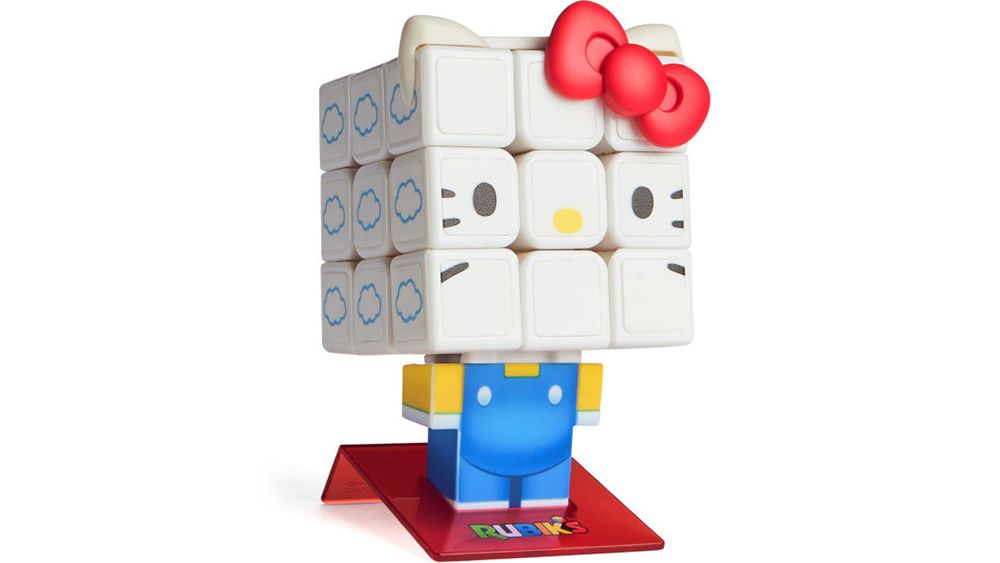
The result of this unusual pairing is a limited-edition Hello Kitty edition Rubik’s Cube, featuring a functioning puzzle with a 3×3 grid, but instead of traditional colors, it’s got bows and clouds to match Hello Kitty’s face. Once solved, you can add the ears and trademark red bow to create a Hello Kitty figurine for display.

A Puzzle Fit for Feline Fans

The Hello Kitty Rubik’s Cube is not just a quirky collectible; it’s a functional puzzle that requires spatial intelligence and mathematical deftness. It’s a unique way for fans of both brands to combine their passions and create a one-of-a-kind piece. And, at $19.99 at Barnes & Noble, it’s an affordable treat for those who dare to be different.

Conclusion

The Hello Kitty Rubik’s Cube is a testament to the enduring appeal of both brands. It’s a celebration of creativity, puzzle-solving, and the power of collaboration. Whether you’re a fan of Hello Kitty, Rubik’s Cube, or both, this limited-edition cube is a must-have for any enthusiast.

FAQs

Q: What is the Hello Kitty Rubik’s Cube?
A: The Hello Kitty Rubik’s Cube is a limited-edition, functioning Rubik’s Cube puzzle with a 3×3 grid, but instead of traditional colors, it features bows and clouds to match Hello Kitty’s face.

Q: Can I use the Hello Kitty Rubik’s Cube as a regular Rubik’s Cube?
A: Yes, the Hello Kitty Rubik’s Cube is a functioning puzzle, allowing you to solve it in the same way as a traditional Rubik’s Cube.

Q: Can I display the Hello Kitty Rubik’s Cube as is, without solving it?
A: Yes, the cube can be displayed as is, with the Hello Kitty figurine attached, once the puzzle is solved.

Q: Where can I buy the Hello Kitty Rubik’s Cube?
A: The Hello Kitty Rubik’s Cube is available at Barnes & Noble for $19.99.

Which Parts of These Images Are AI-Generated?

0

Artificial Intelligence Tools: Blurring the Line Between Reality and Fiction

Artificial intelligence tools can fabricate entirely new images and videos. But they can now also make much smaller tweaks by inserting A.I. elements into genuine photographs, further blurring the line between what’s real and what’s fake.

Can You Spot the AI-Generated Elements?

In this quiz, we’ve taken photographs shot by New York Times reporters and edited them with these A.I. tools. Your job: Point to the part of the photograph that is A.I.-generated.

Image 1: Field


Show me the answer »

Image 2: Sunset


Show me the answer »

Image 3: Protest


Show me the answer »

Image 4: Monkey


Show me the answer »

Image 5: Entryway


Show me the answer »

Image 6: Martini


Show me the answer »

Image 7: Smoke


Show me the answer »

Image 8: Farm


Show me the answer »

You Got 0 Right in 0 Guesses

Was it easier or harder than you imagined? The technology is still far from perfect — some of the people it created had more than five fingers, for example. But the images were incredibly easy to create, requiring almost no expertise. As the technology improves and more tools are released, expect to see more images that were subtly altered by A.I.

FAQs

Q: What is the purpose of this quiz?

A: The purpose of this quiz is to demonstrate the capabilities of artificial intelligence tools in editing and manipulating photographs.

Q: How do I participate in the quiz?

A: To participate, simply look at each image and identify the part that was generated by A.I. You can then click on the “Show me the answer” button to see the correct answer.

Q: What is the technology used in this quiz?

A: The technology used in this quiz is artificial intelligence, specifically deep learning algorithms designed to edit and manipulate photographs.

Q: How accurate is the technology?

A: The technology is still developing and is not yet perfect. Some of the images created by A.I. may have imperfections or inaccuracies, but the technology is improving rapidly.

AI-Generated Users Flood Social Media

Meta’s Plan to Fill Social Media Platforms with AI-Generated Characters

Meta, the parent company of Facebook and Instagram, is betting on the use of artificial intelligence (AI) to fill its social media platforms with characters in the next few years. The company is rolling out a range of AI products, including one that helps users create AI characters on its platforms.

Aim to Make Interactions More Entertaining and Engaging

According to Connor Hayes, vice-president of product for generative AI at Meta, the priority over the next two years is to make the company’s apps more entertaining and engaging. This includes considering how to make the interaction with AI more social. Hayes stated that hundreds of thousands of characters have already been created using Meta’s AI character tool, but most users have kept them private so far.

Creating AI Characters on Instagram and Facebook

Meta’s AI character tool allows users to create AI characters on Instagram and Facebook. The tool uses natural language processing (NLP) and machine learning algorithms to generate human-like responses. Hayes believes that these AI characters will eventually have their own profiles, bio, and profile pictures, and will be able to generate and share content powered by AI.

Risks and Challenges

However, experts warn that AI-generated content brings risks such as the potential for these characters to be “weaponised” for spreading misinformation. Becky Owen, global chief marketing and innovation officer at creative agency Billion Dollar Boy and former head of Meta’s creator innovations team, stated that without robust safeguards, platforms risk amplifying false narratives through these AI-driven accounts.

Labeling AI-Generated Content

To address concerns, Meta’s rules state that AI-generated content should be labelled clearly on its platforms. Owen noted that while AI characters could be a “creative new entertainment format”, there was a risk that they might flood platforms with low-quality material that undermines creators’ craft as well as erode confidence among users.

Conclusion

Meta’s plan to fill its social media platforms with AI-generated characters is a bold move, but it comes with risks and challenges. As the company rolls out its AI products, it must ensure that it has robust safeguards in place to prevent the misuse of these characters. It is also crucial to educate users about the limitations and potential biases of AI-generated content.

FAQs

Q: What is Meta’s aim with its AI products?
A: Meta aims to make its apps more entertaining and engaging, and to use AI to create more social interactions on its platforms.

Q: How many AI characters have been created using Meta’s AI character tool?
A: Hundreds of thousands of AI characters have been created using Meta’s AI character tool, but most users have kept them private so far.

Q: What are the risks of AI-generated content?
A: The potential risks include the possibility of AI characters being “weaponised” for spreading misinformation, and the flood of low-quality material on platforms.

Q: How will Meta label AI-generated content on its platforms?
A: Meta’s rules state that AI-generated content should be labelled clearly on its platforms, to ensure transparency and accountability.

Q: Will AI characters eventually have their own profiles and profiles pictures?
A: Yes, according to Meta’s plans, AI characters will eventually have their own profiles, bio, and profile pictures.

Mastering AI in Architecture

0

The Challenges of Embracing AI in Architecture

The architecture industry and archviz in general is no stranger to innovation. The best 3D modelling software continue to add new tools and procedural features to aid artists. Yet, when it comes to integrating AI into workflows, adoption has been surprisingly slow in architecture.

High costs, steep learning curves, and compatibility challenges are often cited as barriers to change. But for architecture firms ready to embrace AI, the potential to revolutionise design and streamline processes is immense.

The Challenges of Embracing AI in Architecture

• High Initial Costs: AI tools often demand substantial investments in software and hardware upgrades, a hurdle for smaller firms with limited budgets.
• Technical Knowledge Gaps: AI tools can be intimidating for teams unfamiliar with the technology. A lack of industry-specific training often exacerbates this issue.
• Resistance to Change: Established workflows and team dynamics can create a cultural resistance to new technology, even when the benefits are clear.
• Integration Complexities: Ensuring new AI solutions align with existing tools can be challenging. Misaligned systems can disrupt workflows instead of enhancing them.

How AI Can Transform Architectural Workflows

For architects and designers, AI offers powerful ways to overcome these challenges and enhance creativity and efficiency. Here are a few examples of what’s possible:

• Smarter Textures: AI can generate detailed texture maps effortlessly or enhance low-resolution materials into crisp, high-quality visuals, ideal for realistic renderings.
• Effortless Lighting Adjustments: AI-powered lighting tools automatically align indoor and outdoor light sources, saving hours of manual adjustments.
• Faster Conceptualization: Tools like AI Style Transfer and Text-to-3D modelling empower architects to experiment with designs and ideas more fluidly, turning visions into reality faster.

Overcoming Barriers to AI Adoption

If your firm is hesitant about AI, here are some practical ways to ease into this new era of design:

• Start Small: Focus on one area, such as rendering, where AI can make an immediate impact. Simple tools like D5 Render allow architects to integrate AI-enhanced features without a steep learning curve.
• Invest in Training: Leverage online courses or resources tailored for architects to build confidence in using AI tools. Collaborative communities and accessible tutorials can help bridge knowledge gaps.
• Opt for Cloud-Based Tools: Cloud-enabled AI tools offer affordability and flexibility by eliminating the need for hardware upgrades, making them especially beneficial for smaller teams.
• Build a Tech-Ready Team: Upskilling existing team members or hiring tech-savvy talent ensures smoother transitions. Encourage collaboration and celebrate successes to foster enthusiasm for AI adoption.

The Long-Term Benefits of AI

Firms that take the plunge often report significant efficiency gains. For instance, some have reduced project timelines by up to 80%, allowing them to focus more on innovation and design quality. The effort to integrate AI pays off in measurable ways:

• Reduced Timelines: Automating repetitive tasks accelerates project delivery.
• Cost Savings: In-house tools minimize the need for outsourcing.
• Enhanced Client Presentations: High-quality visuals improve communication and client satisfaction.

Ready to Embrace AI?

Adopting AI may seem daunting, but starting small and strategically can make the transition smoother. Assess your needs, experiment with pilot tools, and build a roadmap that works for your team.

By leveraging AI, architecture firms can eliminate workflow bottlenecks, enhance design efficiency, and stay competitive in a rapidly evolving industry.

Conclusion

The challenges of embracing AI in architecture are real, but the potential benefits are undeniable. By understanding the common hurdles and exploring practical solutions, architecture firms can unlock the power of AI and revolutionize their design processes.

FAQs

Q: What are the main challenges of embracing AI in architecture?
A: High initial costs, technical knowledge gaps, resistance to change, and integration complexities are the main challenges.

Q: How can architecture firms overcome these challenges?
A: By starting small, investing in training, opting for cloud-based tools, and building a tech-ready team.

Q: What are the long-term benefits of AI in architecture?
A: Reduced timelines, cost savings, and enhanced client presentations are the long-term benefits.

Q: How can architecture firms get started with AI?
A: By assessing their needs, experimenting with pilot tools, and building a roadmap that works for their team.

Outsourcing Studios Revolutionize Game Art Careers

0

The Fine Art of Visual Development

As video games get bigger and better with each passing year, the demand for external partners that can act as an extension of game development studios is becoming more critical than ever. No where is this more vital than in art asset production. The world’s biggest gaming brands are seeking solutions to support everything from 2D design to 3D production, outsourcing art to trusted partners, and allowing developers to better focus their efforts on creating game content.

The Fine Art of Visual Development

Let’s start at the beginning with visual development, sometimes called look-dev. Put simply, visual development is setting the tone and art style of a game. This can take the form of establishing shaders for hero VFX, constructing a beauty corner for a world’s biome, or designing the style of primary characters. It’s something a lot of teams do internally, as they are deciding the final look and goals of the project from its conception. With the right partner and a long-term trusting relationship, some teams decide to do this beside an outsourcer.

How to Approach 3D Modelling

Once the visual design is established, assets and 3D models can be created in line with the visual development’s already established tone and style. Outsourcing work on this can take many different forms, from helping ideate assets that would be enjoyable for players to the creation of already established concepts. After concepts have been created, the 3D modellers will then build these assets and integrate them into the engine.

Outsourcing Game Animation

You’ve got your 3D models, and now they’ll need animating. Most teams have a mixture of in-house and outsourced animation talent to handle the bulk of the work. For high-priority games, they may choose to outsource more of the work, especially for key sequences or complex animations.

Crafting Real-time Game Cinematics

Real-time cinematics and the animation pipeline are closely tied together. In most cases, performance capture and clean up are for narrative cinematic sequences, and in these sequences, you’re not just controlling the characters, you are telling the story.

Implementing Realistic VFX

Moving on to VFX, this is the part of the project where we begin to apply the visual effects to the existing work – such as explosions, weather, and lighting.

The Growing Importance of Outsourcing

The industry for art outsourcing has changed significantly over the years, especially for video games. With the prevalence of remote work, embedding outsourcers and external developers has become more embraced.

Conclusion

In conclusion, outsourcing art is an essential part of the game development process, allowing teams to focus on their core strengths and expertise while leveraging external partners to handle other areas of the project. By partnering with a trusted outsourcer, teams can ensure that their game meets the high standards of their players, and that they can deliver a high-quality gaming experience.

FAQs

Q: What are the benefits of outsourcing art in game development?
A: Outsourcing art allows teams to focus on their core strengths and expertise, and to leverage external partners to handle other areas of the project.

Q: What are some of the key areas where outsourcing art is used in game development?
A: Outsourcing is used in visual development, 3D modelling, game animation, real-time cinematics, and VFX.

Q: How has the industry for art outsourcing changed over the years?
A: The industry has changed significantly, with the prevalence of remote work leading to the embedding of outsourcers and external developers.

Q: What are some of the key tools and software used in game art outsourcing?
A: Some of the key tools and software used in game art outsourcing include Houdini, Faceware, and Mocap X.

The Best and Worst Movie Posters of 2024

0

(Image credit: Paramount Pictures)

Challengers poster

(Image credit: MGM)

First Omen poster

(Image credit: 20th Century Studios)

Hit Man poster

(Image credit: Netflix)

Designers are going wild for this clever logo design

0

Exceptional Brand Identity: Instituto Piano Brasileiro’s Logo Design

A Note-Perfect Consensus on a Logo Design

It’s rare that designers on Reddit reach a consensus on a logo design, but this note-perfect brand identity is proving to be an exception. Designers often use the platform to share creative inspiration, but opinions are often divided. If one person likes a clever hidden meaning in one particular design, ten other people will be able to pick it apart.

A Clever Concept

But this logo design for the Instituto Piano Brasileiro has received an almost unanimous positive verdict thanks to its clever execution of an idea that might sound difficult to pull off. It could even be a candidate for our pick of the best 3-letter logos.

The Design

The logo features the organization’s acronym, IPB, in overlapping letters, with a lowercase ‘i’ and ‘b’. But the letters also form the shape of a grand piano in the colors of the Brazilian flag, communicating the mission to promote piano culture in the country.

Clever Execution

The design is expertly implemented with a clean, minimalist execution. Although the main logo needs color to work, the shapes also work well when deconstructed and used across various applications to delimit space as part of the piano institute’s broader branding. They’re an effective resource for putting the brand’s stamp on everything from posters and social media posts to physical collaterals.

Praise from the Design Community

In its portfolio, Estúdio Marujo says the visual identity was inspired by the interaction between the "sinuous curves and the striking straight lines" of the piano. "Genuinely a wonderful logo. Clean, clear, incorporating the initials in a clever way that builds identity and feels obvious," one person enthused over on Reddit.

Conclusion

The Instituto Piano Brasileiro’s logo design is a masterclass in clever concept and execution, demonstrating that even the most complex ideas can be simplified and elevated through design. It’s a great example of how a well-designed logo can effectively communicate an organization’s mission and values.

FAQs

Q: What is the Instituto Piano Brasileiro?
A: The Instituto Piano Brasileiro is an organization dedicated to promoting piano culture in Brazil.

Q: Who designed the logo?
A: The logo was designed by Estúdio Marujo in 2016.

Q: What inspired the design?
A: The design was inspired by the interaction between the "sinuous curves and the striking straight lines" of the piano.

Q: How does the logo work?
A: The logo features the organization’s acronym, IPB, in overlapping letters, with a lowercase ‘i’ and ‘b’, forming the shape of a grand piano in the colors of the Brazilian flag.

Tested: the modular Framework Laptop 16 is truly one of a kind

0

Framework Laptop 16: A Modular Masterpiece

Key Specifications

  • CPU: AMD Ryzen 9 7940HS (up to 5.2GHz, 8-core/16-thread, 24MB Cache)
  • Graphics: CPU’s 780M graphics (Optional GPU Radeon RX 7700S, $400US)
  • Memory: 32GB
  • Screen size: 16-inch 16:10 semi-custom LCD TFT, 500 nits
  • Resolution: 2560×1600
  • Refresh rate: 165Hz max
  • Colour gamut: 100% DCI-P3
  • Storage: 1TB SSD
  • Ports: Swappable
  • Wireless connectivity: WiFi 6E, Bluetooth 5.3
  • Dimensions: 312.6 x 221.2 x 15.5mm
  • Weight: 2.1-2.4kg

Design and Build

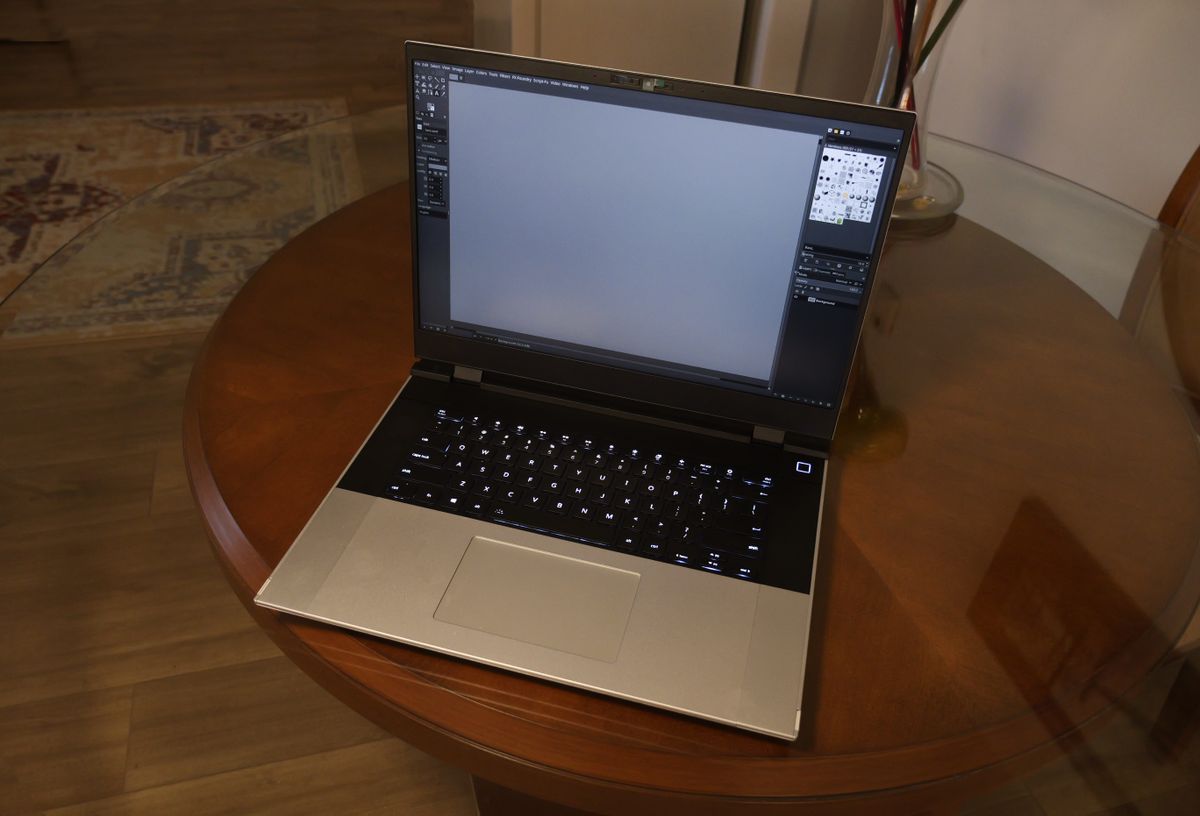
The Framework Laptop 16 has a stylish matte silver metal sheathing with black trim. The top cover is CNC aluminium, and the bottom a moulded magnesium alloy. There are ample ventilation slots on each side and on the rear. The unit can ship with Windows 11, Pro or Home versions, or with nothing at all so you can put your Linux of choice on it.

Features and Mind-Blowing

The Framework Laptop 16 is a modular masterpiece. Every component from the keyboard to the screen – even the GPU – is swappable with just a few minutes of work. This is ideal for upgrading, repairs, or allowing a unit to be reconfigured to better suite different applications.

Benchmarks

In conducting our Handbrake rendering test, where we re-render the adorable “Big Buck Bunny” short animation (created by the Blender Foundation) from 4K down to a 1080 resolution at 30fps, it rendered at an average rate of 71.86 fps. Our Geekbench results were as follows:

  • Single-Core Score: 2,642
  • Multi-Core Score: 13,633

Performance

The Framework Laptop 16 is a powerhouse, but it’s not without its flaws. The screen is quite nice, but at this price point, I’m hard-pressed to defend a lack of full 4K. You can also definitely find better-sounding speaker systems and microphone. My only real issue is the expansion "cards" tend to come out when pulling out some cables, like the USB-C.

Price

The grand total came to $2,099. Remember that this is for the assembled unit. You can save an extra $300 if you go DIY, which we would highly recommend. The site says it ships in 5 business days, not bad.

Who is it for?

Geeks, nerds, dorks and IT (I check every box), step to the head of the class. This is for you. But it’s just as much for the creative person with a technical bent. Which is most creatives today. You can rig this for going out in the field collecting footage, decked out with multiple SD ports to ingest footage. Then drop in the GPU upgrade back in the studio for faster video editing. Customize to your heart’s content.

Buy it if

  • You need or want unheard of versatility
  • You are a cutting-edge type of personality
  • You are technical enough to take full advantage

Don’t buy it if

  • You want the best bang for your buck and a standard laptop is all you need
  • If you seek a good cinema experience, the speakers will let you down
  • If you’d rather have a tooth pulled than pull apart a computer

Also consider

  • Consider some of the 16” units from Dell, Lenovo and others that offer similar config but with better speakers, a 4K monitor, and a more luxurious feel at a lower cost.

Conclusion

The Framework Laptop 16 is a revolutionary device that offers unparalleled versatility and customization options. While it may not be perfect, it’s a game-changer for those who crave the latest and greatest in technology. If you’re willing to take the leap and invest in this modular masterpiece, you’ll be rewarded with a laptop that can adapt to your needs and keep up with your creative endeavors.

FAQs

Q: What is the Framework Laptop 16?
A: The Framework Laptop 16 is a modular laptop that allows users to upgrade and customize their device with ease.

Q: What are the key specifications of the Framework Laptop 16?
A: The Framework Laptop 16 has a AMD Ryzen 9 7940HS CPU, 32GB of memory, a 16-inch 16:10 semi-custom LCD TFT screen, and a 1TB SSD.

Q: Can I upgrade the GPU?
A: Yes, the Framework Laptop 16 has an optional GPU upgrade available for $400US.

Q: Is the Framework Laptop 16 compatible with Linux?
A: Yes, the Framework Laptop 16 is compatible with Linux and can be shipped with nothing at all so you can put your Linux of choice on it.

Q: How long does it take to ship?
A: The site says it ships in 5 business days, not bad.

Q: Is the Framework Laptop 16 worth the price?
A: Whether or not the Framework Laptop 16 is worth the price depends on your needs and preferences. If you’re looking for a revolutionary device that offers unparalleled versatility and customization options, then yes, it may be worth the investment.

Best Mobile Proxy Providers

0

Współczesne wymagania związane z web scrapingiem, testowaniem aplikacji mobilnych czy omijaniem blokad geograficznych sprawiły, że mobilne proxy stają się coraz bardziej popularne.

Spaw.co

Spaw.co – mobilne proxy tego dostawcy uznawane są za najszybsze i najbardziej niezawodne na rynku. Firma oferuje szeroką gamę adresów IP w sieciach komórkowych, co czyni ich idealnym wyborem dla firm i osób prywatnych szukających solidnego wsparcia proxy. Ich usługi są szczególnie cenione przez specjalistów ds. marketingu, którzy muszą zbierać dane z różnych lokalizacji.

Zalety:

Dostęp do sieci w ponad 100 krajach, co pozwala na skuteczne omijanie blokad geograficznych.

Intuicyjna platforma zarządzania umożliwiająca szybkie wdrożenie proxy do działania.

Elastyczne plany abonamentowe dostosowane do potrzeb klienta, w tym pakiety na krótki czas.

Dynamiczne IP zapewniające maksymalną anonimowość i bezpieczeństwo danych.

Wady:

Wyższe ceny w porównaniu do konkurencji, co może odstraszyć mniejszych użytkowników.

Brak darmowego okresu próbnego, co utrudnia przetestowanie usługi przed zakupem.

ProxyEmpire

ProxyEmpire to znana marka w świecie proxy, oferująca szeroki wybór adresów mobilnych. Platforma jest łatwa w obsłudze, co sprawia, że świetnie sprawdza się dla początkujących użytkowników. Ich serwery charakteryzują się stabilnością, co jest kluczowe dla zadań wymagających niezawodnego dostępu.

Zalety:

Duża baza adresów IP z różnych sieci komórkowych, w tym operatorów o globalnym zasięgu.

Transparentna polityka cenowa pozwalająca na łatwe zaplanowanie budżetu.

Obsługa klienta dostępna 24/7, gotowa rozwiązać każdy problem techniczny.

Zautomatyzowane narzędzia do monitorowania efektywności proxy.

Wady:

Niższa jakość łączy w niektórych lokalizacjach, co może wpływać na prędkość transmisji danych.

Ograniczona liczba adresów IP w mniej popularnych regionach, co może być problematyczne dla specyficznych projektów.

Podsumowanie

Każdy z opisanych dostawców mobilnego proxy oferuje unikalne cechy, które mogą odpowiadać różnym potrzebom użytkowników. Spaw.co wyróżnia się dynamicznym rozwojem i elastycznością, ProxyEmpire to dobry wybór dla początkujących, a Oxylabs i Bright Data są świetne dla profesjonalistów. Wybór odpowiedniego dostawcy zależy od konkretnych wymagań projektu oraz budżetu.

Często zadawane pytania

Q: Co to jest mobilne proxy?
A: Mobilne proxy to usługa, która pozwala na imitowanie ruchu generowanego przez prawdziwych użytkowników smartfonów.

Q: Dlaczego mobilne proxy są coraz bardziej popularne?
A: Współczesne wymagania związane z web scrapingiem, testowaniem aplikacji mobilnych czy omijaniem blokad geograficznych sprawiły, że mobilne proxy stają się coraz bardziej popularne.

Q: Jak wybrać odpowiedniego dostawcę mobilnego proxy?
A: Wybór odpowiedniego dostawcy zależy od konkretnych wymagań projektu oraz budżetu. Przeprowadź analizę potrzeb i wybierz dostawcę, który najlepiej odpowiada Twoim wymaganiom.