Home Blog Page 472

Who Faces Liability Exposure for Faulty AI-Generated Code?

0

Liability and Exposure: The Dark Side of AI-Generated Code

To frame this discussion, I turn to attorney and long-time Internet Press Guild member Richard Santalesa. With his tech journalism background, Santalesa understands this stuff from both a legal and a tech perspective. (He’s a founding member of the SmartEdgeLaw Group.)

Functional Liability

“Until cases grind through the courts to definitively answer this question, the legal implications of AI-generated code are the same as with human-created code,” he advises.

Keep in mind, he continues, that code generated by humans is far from error-free. There will never be a service level agreement warranting that code is perfect or that users will have uninterrupted use of the services.

Send in the Trolls

Sean O’Brien, a lecturer in cybersecurity at Yale Law School and founder of the Yale Privacy Lab, points out a risk for developers that’s undeniably worrisome:

The chances that AI prompts might output proprietary code are very high, if we’re talking about tools such as ChatGPT and Copilot, which have been trained on a massive trove of code of both the open source and proprietary variety.

Who is at Fault?

None of the lawyers, though, discussed who is at fault if the code generated by an AI results in some catastrophic outcome.

For example: The company delivering a product shares some responsibility for, say, choosing a library that has known deficiencies. If a product ships using a library that has known exploits and that product causes an incident that results in tangible harm, who owns that failure? The product maker, the library coder, or the company that chose the product?

Conclusion

As every attorney has told me, there is very little case law thus far. We won’t really know the answers until something goes wrong, parties wind up in court, and it’s adjudicated thoroughly.

We’re in uncharted waters here. My best advice, for now, is to test your code thoroughly. Test, test, and then test some more.

FAQs

Q: Who is responsible if AI-generated code results in a catastrophic outcome?
A: The company delivering the product, the library coder, or the company that chose the product may share responsibility.

Q: Can AI-generated code be used in proprietary projects?
A: Yes, but the risk of proprietary code being generated is high, and the legal implications are unclear.

Q: Will AI-generated code be subject to cease-and-desist claims by enterprising firms?
A: Yes, it’s possible that AI-generated code may be subject to cease-and-desist claims, creating a new type of “troll” industry.

Q: What is the best course of action for developers using AI-generated code?
A: Test your code thoroughly. Test, test, and then test some more.

Q: Will there be a regulatory agency to oversee AI-generated code?
A: There is currently no regulatory agency specifically focused on AI-generated code, but it’s possible that one may be established in the future.

Creating a Real-Life Plushie with AI

0

Exclusive Livestream: A Deep Dive into Artificial Intelligence

Watch the livestream here: https://www.youtube.com/watch?v=4R9kaZAtxlE

Introduction to AI

In this exclusive livestream, we explore the world of Artificial Intelligence (AI) and its vast potential to transform industries and revolutionize the way we live. From machine learning to natural language processing, AI is rapidly becoming an integral part of our daily lives.

Key Takeaways

* The current state of AI and its applications
* The future of AI and its potential impact on society
* The role of AI in various industries, including healthcare, finance, and education

Artificial Intelligence in Healthcare

AI is being used in healthcare to improve patient outcomes, streamline clinical workflows, and reduce costs. From diagnosing diseases to developing personalized treatment plans, AI is revolutionizing the way healthcare professionals work.

Artificial Intelligence in Finance

AI is being used in finance to improve risk management, automate trading, and enhance customer service. From predictive analytics to chatbots, AI is transforming the way financial institutions operate.

Artificial Intelligence in Education

AI is being used in education to personalize learning, improve student outcomes, and enhance teacher productivity. From adaptive learning systems to intelligent tutoring systems, AI is revolutionizing the way we learn.

Conclusion

In conclusion, AI has the potential to transform industries and revolutionize the way we live. From healthcare to finance to education, AI is rapidly becoming an integral part of our daily lives. As we continue to explore the vast potential of AI, we must also consider the ethical implications of its development and deployment.

FAQs

Q: What is Artificial Intelligence?
A: Artificial Intelligence (AI) is a branch of computer science that focuses on creating intelligent machines that can perform tasks that typically require human intelligence.

Q: What are the applications of AI?
A: AI has a wide range of applications, including healthcare, finance, education, and more.

Q: What are the benefits of AI?
A: The benefits of AI include improved efficiency, reduced costs, and enhanced decision-making.

Q: What are the challenges of AI?
A: The challenges of AI include data quality, algorithm bias, and ethical considerations.

Q: How can I get involved in AI?
A: You can get involved in AI by taking online courses, attending conferences, and participating in AI-related projects.

Follow me on X: https://x.com/mreflow

#AINews #AITools #ArtificialIntelligence

What is Java?

0

Java: A Powerful Object-Oriented Programming Language

State and Behavior

Java is an object-oriented programming language that is based on the concept of objects that contain both state and behavior. Objects are instances of classes, which define the properties and behavior of the object. This allows for a more efficient and organized way of writing code, making it easier to maintain and update.

Simple and Easy to Learn

Java is considered a simple language to learn, with a syntax that is easy to read and write. It has a consistent syntax and a minimal number of keywords, making it a great language for beginners and experienced programmers alike.

Secure

Java is a secure language, with built-in features to prevent common errors and vulnerabilities. It also has a robust security framework that allows for secure coding practices and secure communication with external systems.

Platform Independent

Java is a platform-independent language, meaning that programs written in Java can run on any platform that has a Java Virtual Machine (JVM) installed, without the need for recompilation. This makes it a great choice for developing cross-platform applications.

High Performance

Java is designed to be a high-performance language, with features such as just-in-time compilation and dynamic loading of classes. This allows for fast execution and efficient resource allocation.

Distributed and Dynamic

Java is designed to be a distributed and dynamic language, with features such as multithreading and network sockets. This allows for efficient communication and data exchange between systems.

Extensible and Portable

Java is an extensible language, with a large community of developers and a wide range of libraries and frameworks available. It is also a portable language, with programs written in Java being easily deployable on different platforms.

Open Source

Java is an open-source language, with open-source implementations and a community-driven development process. This allows for active maintenance and improvement of the language, as well as a wide range of third-party libraries and frameworks available.

Conclusion

In conclusion, Java is a powerful and versatile programming language that offers a unique combination of simplicity, security, and performance. Its platform independence, extensibility, and portability make it a great choice for developing a wide range of applications, from small scripts to large enterprise systems.

FAQs

Q: What is the purpose of Java?

A: The purpose of Java is to provide a platform-independent, object-oriented programming language that is easy to learn and use, with a focus on simplicity, security, and performance.

Q: What are the key features of Java?

A: The key features of Java include its object-oriented programming model, simplicity, security, platform independence, high performance, distributed and dynamic capabilities, and extensibility.

Q: Is Java a widely used language?

A: Yes, Java is a widely used language, with a large community of developers and a wide range of applications, from Android apps to enterprise software.

Q: Is Java open-source?

A: Yes, Java is an open-source language, with open-source implementations and a community-driven development process.

IBM’s AI Models Surpass OpenAI and Google

0

IBM Releases Granite 3.1 Large Language Models with Enhanced Capabilities

Outperforming the Competition

IBM’s latest release, Granite 3.1, boasts an impressive 128K token context window, a significant increase from its predecessors. This expansion enables the models to process and understand much larger amounts of text, equivalent to approximately 85,000 English words, enabling more comprehensive analysis and generation tasks.

Improved Graphics and Language Capabilities

The new release introduces image-in/text-out functionality, broadening the models’ applicability for businesses working with graphics. Granite 3.1 also offers improved foreign language proficiency, now working with a dozen languages, including German, Spanish, French, Japanese, Portuguese, Arabic, Czech, Italian, Korean, Dutch, and Simplified Chinese.

MoE Models and Dense Models

The Granite 3.1 family includes dense models and Mixture of Experts (MoE) variants. IBM states its Granite 2B and 8B models are text-only dense LLMs trained on over 12 trillion data tokens. The dense models are designed to support tool-based use cases and for retrieval augmented generation (RAG), streamlining code generation, translation, and bug fixing. The MoE models are trained on over 10 trillion tokens of data and are ideal for deployment in on-device applications with low latency.

Powerful, Trustworthy AI for Enterprises

Granite 3.1 models are available on IBM’s Watsonx platform, cloud service providers like Google Vertex AI, and AI platforms including Hugging Face, NVIDIA (as NIM microservices), Ollama, and Replicate. The release of Granite 3.1 is poised to accelerate AI adoption in enterprise settings, providing businesses with powerful, efficient, and trustworthy AI tools to drive innovation and solve complex business challenges.

Conclusion

IBM’s Granite 3.1 represents a significant step forward in providing enterprises with powerful, efficient, and trustworthy AI tools. By combining these models with proprietary data using techniques like IBM’s InstructLab, businesses can potentially achieve task-specific performance rivaling larger models at a fraction of the cost.

Frequently Asked Questions

Q: What are the key features of Granite 3.1?
A: Granite 3.1 offers enhanced capabilities, improved graphics and language capabilities, and expanded MoE models and dense models.

Q: How does Granite 3.1 outperform its rivals?
A: According to IBM, Granite 3.1 outperforms its rivals on HuggingFace’s OpenLLM Leaderboard benchmarks.

Q: What is the context window size of Granite 3.1?
A: Granite 3.1 boasts an impressive 128K token context window, allowing it to process and understand much larger amounts of text.

Q: Which languages does Granite 3.1 support?
A: Granite 3.1 supports a dozen languages, including English, German, Spanish, French, Japanese, Portuguese, Arabic, Czech, Italian, Korean, Dutch, and Simplified Chinese.

Multimodal Retrieval-Augmented Generation for Video and Audio

0

Building a Multimodal Retrieval-Augmented Generation (RAG) System

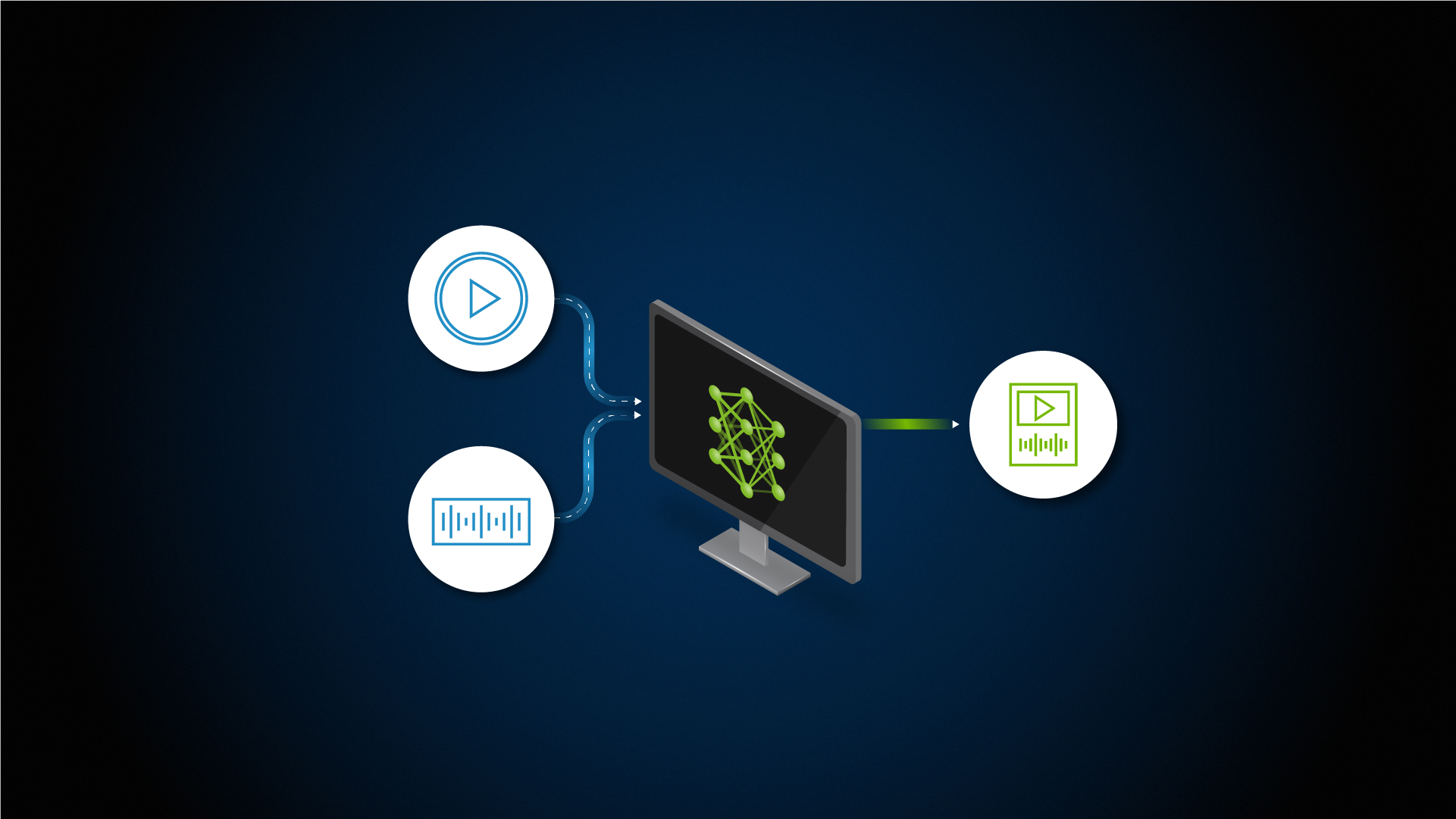
Building a multimodal RAG system is challenging. The difficulty comes from capturing and indexing information from across multiple modalities, including text, images, tables, audio, video, and more. In our previous post, An Easy Introduction to Multimodal Retrieval-Augmented Generation, we discussed how to tackle text and images. This post extends this conversation to audio and videos. Specifically, we explore how to build a multimodal RAG pipeline to search information in videos.

Building RAG for Text, Images, and Videos

Building on first principles, we can say that there are three approaches for building a RAG pipeline that works across multiple modalities, as detailed below and in Figure 1.

Using a Common Embedding Space

The first approach for building a RAG pipeline that works across multiple modalities is using a common embedding space. This approach relies on a single model to project representations of information stored across different modalities in the same embedding space. Using models like CLIP that have encoders for both images and text falls into this category. The upside for using this approach is reduced architectural complexity. Depending on the diversity of data used to train the model, the flexibility of applicable use cases can also be considered.

Building N Parallel Retrieval Pipelines (Brute Force)

A second method is to make a modality or even a submodality native search and query all pipelines. This will result in multiple sets of chunks that spread across different modalities. In this case, two issues arise. First, the number of tokens that need to be ingested by a large language model (LLM) to generate an answer has been massively increased, thus increasing the cost of running the RAG pipeline. Second, an LLM that can absorb information across multiple modalities is needed. This approach simply moves the problem from the retrieval phase to the generation phase and increases the cost, but in turn simplifies the ingest process and infrastructure.

Grounding in a Common Modality

Lastly, information can be ingested from all modalities and grounded in one common modality, such as text. What this means is that all the key information from images, PDFs, videos, audio, and so on, needs to be converted into text for setting up the pipeline. This approach incurs some ingestion cost, and can lead to lossy embeddings, but can be used to unify all modalities effectively for both retrieval and generation.

Figure 1. Three different approaches that can be adopted to build a multimodal retrieval pipeline

Complexities with Retrieving Videos

When it comes to retrieving videos, there are several complexities to consider. One of the main challenges is dealing with the sheer volume of data. A single minute of video can contain up to 3,600 frames, making it difficult to process and retrieve relevant information.

Structural Similarity Index (SSIM) calculated for successive frames.

Figure 5. Structural Similarity Index plotted across a scene

Blending Audio and Video Information

Once the representative frames are extracted, the next step is to extract all possible information from them. For this, we use a Llama-3-90B VLM NIM. We prompt the VLM to generate transcription for all the text and information on the screen as well as generate a semantic description.

Setting up the Retriever

Post text grounded audio-visual blending, we now have a coherent text description of the video. We also retain the timestamps for word-level utterances and frames along with file level metadata, such as the name of the file. Using this information, we create chunks augmented with the metadata and generate embeddings using an embedding model. These embeddings are stored in a vector database along with chunk-level timestamps as metadata.

Generating Answers

With the vector store set up, it’s now possible to talk to your videos. With an incoming user query, embed the query to retrieve, and then rerank to get the most relevant chunk. These chunks are then served to the LLM as context, to generate an answer. Appropriate metadata attached to the chunks can help provide the referenced videos and the timestamps, which were referred to answer the question.

Digital Satori: A Neon Noir

0

Exploring the Anime-Inspired Short Film for Warframe’s 1999 Narrative Update

Boutique animation studio THE LINE has applied its love of anime to refreshing the world of video game Warframe, with the creation of a short film that shows players what they can expect from the game’s risky direction. Risky because in 10 years Warframe has never undergone a stylistic change of direction quite like the recently released 1999 narrative update.

Collaboration and Inspiration

With a specialism in both 3D animation and 2D animation styles, as well as a passion for the past, THE LINE’s 1999 project neatly anticipates the big nostalgia art trend for 2025. While developer Digital Extremes worked on the game’s new content, that includes a visual makeover, new story content and gameplay ideas, animation studio THE LINE created the 90s anime short, called The Hex.

Drawing on a love of Ghost in the Shell and 90s aesthetic, the animators crafted a punchy short that recalls the heyday of anime as well as serving as a hype film for the new Warframe release. Here, we speak with THE LINE’s veteran animation director, Venla Linna, who explains how those influences came together, and how Digital Extremes’ vision was interpreted.

Interview with Venla Linna

“Exploring a world like Warframe through 2D animation was an incredibly fulfilling experience,” says Venla Linna. “We were immediately drawn to the vastness of the universe that has been built, the depth of its storytelling, and the unapologetic stylishness of its characters.”

Art Direction and Style

CB: Were there particular 90s anime studios that influenced the art direction?

Venla Linna: It wouldn’t be so much particular studios, but particular directors, or films in this case – Ghost in the Shell and Jin-roh Wolf Brigade in particular: not only in mood, but even down to the way they handled colour and grade.

Challenges and Techniques

CB: Did the change in tone require any significant changes because of the 90s influence?

Venla Linna: Not from our side – I think both sides of the collaboration (as in The Line and Digital Extremes) were incredibly aligned from the start down to the references, so I found all the material already spoke to that when I received it.

CB: What tools or techniques did you use to achieve a nostalgic style?

Venla Linna: Desaturate, desaturate, throw some light bloom on it and grain. That honestly was the trick. Our art director Simon Dumonceau made a gorgeous colourscript that leaned heavily into greys and greens in the underground, and cold pinks and blues in the Mall sections – the colours themselves needed to be designed a little desaturated down to the modelsheets in order to achieve this look.

Character Design

CB: How did the design of Warframe’s characters fit into the anime look?

Venla Linna: I think they were made to be drawn! I was, either way, striving for a style that remained more naturalistic both as a style choice and in order to keep a likeness that would not oversimplify character specific facial features. It’s a huge pet peeve of mine when a style homogenises the characters – and this was the first time we were giving these guys faces, so it was extra important to make them look like themselves.

Proud Moment

CB: Is there any particular element of the design that you’re most proud of?

Venla Linna: It has to be the faces! High-fidelity, high detail is a risk, always. The more lines and complexity you introduce the higher the chance someone can’t do it. My assist team were absolute troopers and completely brought it home on this one despite the challenge. There’s really nothing I would change about it – I’m super happy with the whole team and our result.

Conclusion

The collaboration between THE LINE and Digital Extremes has resulted in a unique and captivating short film that showcases the game’s new direction. With its blend of anime influences and nostalgic style, The Hex is a must-watch for fans of Warframe and anime alike.

FAQs

Q: What inspired the creation of The Hex?

A: The Hex was inspired by the 90s anime aesthetic and the desire to create a unique and captivating short film that showcases Warframe’s new direction.

Q: How did the collaboration between THE LINE and Digital Extremes work?

A: The collaboration was incredibly aligned from the start, with both sides working together to bring the vision to life.

Q: What tools or techniques were used to achieve the nostalgic style?

A: Desaturation, light bloom, and grain were used to achieve the nostalgic style.

Q: How did the design of Warframe’s characters fit into the anime look?

A: The characters were designed to be drawn, with a focus on naturalistic styles and likeness to the original characters.

AI and Collaboration at the Forefront

The Pace of Data Creation: A Staggering 149 Zettabytes by the End of the Year

Data Generation Continues to Accelerate

The pace with which data is created, analyzed, and shared continues to accelerate. The relentless flow of data contributes to a growing torrent of information, shaping how individuals and businesses engage with the world.

Domo’s "Data Never Sleeps" Report Highlights the Volume of Data Generation

Domo, the AI and data products platform, has released its annual "Data Never Sleeps" report, offering a fascinating snapshot of the staggering volume of data generated every minute.

Key Statistics

Each year, Domo adds new features to the colorful wheel. The 12th edition of the report includes additional data points on artificial intelligence (AI), alongside insights from social media, gaming, and other online activities.

  • Zoom sees 288 downloads per minute, while Microsoft Teams logs 229 million meeting minutes. Additionally, Slack makes its mark with over one million messages sent every minute.
  • Streaming giant Netflix saw a decline in viewership. It is down 19% from 2021. However, other entertainment platforms, such as Snapchat and TikTop, have seen an uptick in engagement. Snapchat uploads have risen by 37% since 2022, while TikTok uploads 16,000 videos every minute. Despite the rise of alternative platforms, Facebook and Instagram are still playing 138.9 million reels every minute.
  • One alarming statistic from the latest Domo report reveals that 4,080 records are compromised in data breaches every minute. The growing frequency and scale of breaches emphasize the critical need for stronger data protection protocols.
  • DoorDash diners made an appearance in the report, placing $126,763 in orders every 60 seconds during Cyber Week. Additionally, shoppers worldwide spent $43.6 million on purchases in the same timeframe.

AI and Data Generation

Domo reports that the total volume of data created, captured, copied, and consumed globally is projected to reach 149 zettabytes by the end of this year. As the volume and complexity of data grow rapidly, organizations are increasingly focusing on their ability to transform this information into actionable insights.

A pivotal technology driving this transformation is GenAI. "The phenomenal acceleration of generative AI over the past two years has dominated the digital conversation, and this year’s Data Never Sleeps shows how we’ve reached a new tipping point – AI is primed to dethrone competitive mainstays of the internet era," said Josh James, founder and CEO of Domo.

Comparison to Previous Reports

Introduced in 2013, the Data Never Sleeps report has tracked the world’s data usage over the last decade, revealing shifts in activity across various online platforms. Comparing the stats from last year’s report, Google searches have decreased by 6%, from 6.3 million to 5.9 million. This shift may reflect changes in user behavior, including the rise of AI-powered tools that provide direct answers, reducing the need for traditional searches.

Conclusion

As the pace of data generation continues to accelerate, businesses must prioritize their ability to transform this information into actionable insights. With the growth of AI and its impact on daily life, organizations must make their data and technology ready to leverage its advantages with speed and confidence.

FAQs

Q: What is Domo’s "Data Never Sleeps" report?
A: Domo’s annual report provides a snapshot of the staggering volume of data generated every minute.

Q: What is the total volume of data created, captured, copied, and consumed globally?
A: The total volume is projected to reach 149 zettabytes by the end of this year.

Q: What is the impact of AI on data generation?
A: AI has had a significant impact on data generation, with the acceleration of generative AI driving the transformation of data into actionable insights.

Behr’s Bizarre Climate Change Paint

0

Pantone’s Mocha Mousse and Behr’s Climate Change: A Tale of Two Colors

We were quick to poke fun when Pantone declared its colour of the year 2025 to be Mocha Mousse. But at least the icky hue sounds more palatable than it looks. When it comes to selling colours, the usual convention is to give hues evocative poetic names that elicit positive feelings, not the death of a planet.

Behr’s Climate Change: A Colour with a Controversial Name

So why does the paint brand Behr have a moss-tinged white called Climate Change? It’s been five years since people first noticed it, and there’s still no explanation, although Home Depot appears to have now removed the hue from its website amid the controversy.

A Colour with a Warmth to It

Behr describes its Climate Change paint hue as an “icy green-gray with a tonal richness”. That sounds nice enough, but why connect it with a global environmental crisis? The hue has a warmth to it. Perhaps Behr wanted to suggest that the shade can make interiors feel warmer and it was somehow oblivious to the fact that the term ‘climate change’ already has another, catastrophically negative meaning.

A Possible Connection with Behr’s Polar Bear Logo

Or maybe it’s an ironic riposte to Benjamin Moore’s similar Glacier White, which is not the colour of any glacier I’ve ever seen. Or perhaps we’re supposed to make a connection with Behr’s polar bear logo. Is it a warning to the world about the plight of the species as its habitat melts, the pristine white ice turning to a green-grey slush? If that’s the aim, perhaps Climate Change white should be the real colour of the year; a true colour for our times.

A Lack of Explanation

It seems strange that if Behr wanted to make a statement, it didn’t provide an explanation. Climate Change is buried away in a library of over 4,000 colours with no explanation, and the name makes it seem as if Behr thinks climate change is a good thing.

What Others Think

“Climate Change” seems like a really scary name for a paint chip of a wispy, moss-tinted white that would look great in my bathroom,” someone wrote on Reddit five years ago. “Is this about polar bears darkening their coats because of declining sea ice?”, Zoë Schlanger, a writer at the Atlantic wondered back in 2022.

Conclusion

The controversy surrounding Behr’s Climate Change paint hue raises questions about the thought process behind naming colours. While Behr may have intended to create a unique and evocative name, the result has been a colour with a name that is jarring and insensitive. It’s unclear whether Behr will continue to sell Climate Change, but one thing is certain: the colour has sparked a conversation about the importance of considering the impact of our words and actions on the world around us.

FAQs

Q: Why did Behr name a colour Climate Change?

A: The reason behind the name is unclear, and Behr has not provided an explanation.

Q: Is the colour Climate Change still available?

A: Home Depot appears to have stopped stocking the colour, but it is still listed on the Behr website.

Q: What does the colour Climate Change look like?

A: Behr describes it as an “icy green-gray with a tonal richness”.

Digital Twin Development: A 5-Stage Journey

0

Digital Twin Technology: A "Flight Simulator" for Business

Perhaps the simplest explanation for digital twin technology is as a ‘flight simulator’ for business. Sophisticated flight simulators have been in use in the aircraft industry for some time, and anyone who’s seen the movie Sully saw them in action, with members of the National Transportation Safety Board recreating alternate scenarios for the pilot’s famous controlled crash landing on the Hudson which saved 155 lives.

The concept of a flight simulator for business is emerging, enabling managers and professionals to look across the systems and facilities within their enterprises, planning what-if scenarios, and viewing the impacts of real-time events. This simulation could involve digital twins of a technology infrastructure, an entire building, or a supply chain network.

Digital Twins in Various Industries

"We are seeing increasing adoption of digital twin technology across industries, but there are a few that are experiencing particularly rapid growth," Bill Quinn, futurist with TCS, told ZDNET. "For example, manufacturing and production is an area showing strong growth. The need for demand forecasting, inventory management, and real-time visibility into manufacturing processes make digital twins particularly attractive to this segment."

Quinn said the highest level of adoption of digital twin technology is still ahead of us: "Healthcare, mobility, and retail are the top areas expected to see the greatest adoption within the next three years."

Challenges in Implementing Digital Twins

While those developments are significant, the challenge is that implementing a business digital twin is not as quick and easy as implementing a piece of software like Microsoft Flight Simulator. These challenges were described in a recent paper published by Elsevier, in which the team of co-authors, led by Akram Hakiri of the University of Carthage, pointed out that "existing work on DT focuses primarily on the modeling perspective, and pays less attention to simplifying the control and management of industrial IoT networks."

Building a Digital Twin

"At a basic level, digital twins require IoT sensors, connectivity, modeling software, compute, and reporting tools," Quinn said.

The sensors measure the real-world person, or object, for which the twin is being created; the connectivity transmits the data collected by sensors to a central computer; the modeling software, aided by processing power, creates the digital twin within the central computer; and the reporting tools provide actionable outputs to the owners of the digital twin.

Enhancing Digital Twins with AI, AR, and 5G

In addition, Quinn said adding other technologies can enhance modeling and usability: "For example, AI will make it possible to run thousands or even millions of simulations on the digital twin to identify novel designs, use cases, or optimizations of the physical object. Virtual and augmented reality will create more realistic and immersive experiences of the digital twin. This is critical for users, such as maintenance technicians, surgeons, and product designers. 5G/6G and other advanced connectivity technology will allow digital twins to be leveraged in remote locations."

Digital Twin Maturity Model

To map out the route to digital twin development, the Digital Twin Consortium recently published a maturity model that identifies the stages of progress toward well-functioning digital twins:

1. Passive

  • Vision and digital ambition: Lacking. "The need for a digital vision and strategy isn’t clearly understood at a senior level," the report states. There is "little or no awareness of digital technologies."
  • UX and modeling: The authors suggest there is "post-reality monitoring and capturing," likely involving "sketched maps for design, no models of behaviors or dynamics."
  • Technology integration: Are you kidding?

2. Starter

  • Vision and digital ambition: "Some awareness of the need for a digital vision and of the major technologies that shape the industry."
  • UX and modeling: "Physical entities modeled to have a similar visual appearance and rendered in 2D or 3D drawings or models. Processes modeled but only within silos and without any consistency across the business."
  • Technology integration: There is "some integration between systems such as enterprise systems or collaboration platforms."

3. Progressive

  • Vision and digital ambition: "Aware of the broad technologies that shape the industry including digital twins but not clear on the business outcomes."
  • UX and modeling: "Quasi-real-time monitoring and capture — only within the constraints of how real-time the data is modeling of behaviors and dynamics."
  • Technology integration: "Linked interactive data, especially common data: GIS, BIM, IoT data, Systems data, etc. Flow of data unidirectional and bidirectional with real-time analytics."

4. Mature

  • Vision and digital ambition: "Understand the impact and importance of digital twin technology with defined business outcomes but not making full use of its potential."
  • UX and modeling: "Near real-time synchronized, federated, and interactive operations using digital thread (two-way integration and interaction). Visualization and simulation are incorporated into the models."
  • Technology integration: "Frequency of synchronization between systems are predictable and deterministic. Connected and interoperable systems using System of Systems."

5. Master

  • Vision and digital ambition: "Digital twin technology is used to shape and continue to update and communicate the vision and achieve business outcomes."
  • UX and modeling: "Autonomous operations and maintenance. Real-time synchronization — that is defined by the use case."
  • Technology integration: "Data in the business context is linked throughout the lifecycle — upstream and downstream. Communication protocols allow for interchangeable systems — exchange between a simulation and real system or between different systems."

Conclusion

Digital twins will evolve gradually as standards and business cases coalesce. You can’t go from here to there without building foundational digital competencies.

FAQs

Q: What are the challenges in implementing digital twins?
A: Implementing a business digital twin is not as quick and easy as implementing a piece of software like Microsoft Flight Simulator. There are several challenges, including security risks, need for new business models and practices, and prohibitive complexity with network deployments.

Q: What are the benefits of digital twins?
A: Digital twins can provide real-time visibility into manufacturing processes, enable demand forecasting and inventory management, and optimize supply chain networks.

Q: How do I get started with digital twins?
A: Start by identifying the areas where digital twins can bring the most value to your business, such as manufacturing or supply chain management. Then, assess your current technology infrastructure and identify the necessary upgrades or changes to support digital twin implementation. Finally, develop a clear plan and timeline for implementation, and secure necessary budget and resources.

Kling 1.6: A New Standard

0

What is

?

is an HTML element that is used to define a paragraph of text. It is a fundamental element in HTML, and is used to wrap a block of text in a web page.

History of

The

element has been a part of the HTML standard since the early days of the web. It was first introduced in HTML 1.0 in 1992, and has been a part of every version of HTML since then.

How to Use

To use the

element, simply wrap your text in the tags. For example:

<p>This is a paragraph of text.</p>

This will render as:

This is a paragraph of text.

Attributes of

The

element has several attributes that can be used to customize its behavior. Some of the most common attributes include:

  • align: This attribute is used to align the text within the paragraph. For example:

    <p align="left">This text will be left-aligned.</p>
  • class: This attribute is used to add a class to the paragraph. For example:

    <p class="important">This text has the class "important".</p>

Best Practices for Using

Here are a few best practices to keep in mind when using the

element:

  • Use it for blocks of text: The

    element is best used for blocks of text, rather than individual sentences or short phrases.

  • Avoid overusing it: While the

    element is useful, it’s easy to overuse it. Try to use it sparingly, and use other HTML elements to break up the content.

Conclusion

The

element is a fundamental element in HTML, and is used to define a paragraph of text. It has been a part of the HTML standard for over 25 years, and is supported by all modern web browsers.

FAQs

Q: What is the purpose of the

element?

A: The purpose of the

element is to define a paragraph of text.

Q: How do I use the

element?

A: To use the

element, simply wrap your text in the tags. For example: <p>This is a paragraph of text.</p>

Q: What are some common attributes of the

element?

A: Some common attributes of the

element include align, class, and style. For example, you can use the align attribute to align the text within the paragraph:

<p align="left">This text will be left-aligned.</p>

Q: What are some best practices for using the

element?

A: Some best practices for using the

element include using it for blocks of text, and avoiding overusing it. Try to use it sparingly, and use other HTML elements to break up the content.