Home Blog Page 473

Deciphering the Sounds of the Wild

0

A New Era in Understanding Animal Communication: AI and Machine Learning Make Breakthroughs

In 2025, we will see significant advancements in leveraging AI and machine learning to make real progress in understanding animal communication, answering a question that has puzzled humans as long as we have existed: “What are animals saying to each other?” The recent Coller-Dolittle Prize, offering cash prizes up to half-a-million dollars for scientists who “crack the code,” is an indication of a bullish confidence that recent technological developments in machine learning and large language models (LLMs) are placing this goal within our grasp.

The Power of Machine Learning

Many research groups have been working for years on algorithms to make sense of animal sounds. Project Ceti, for example, has been decoding the click trains of sperm whales and the songs of humpbacks. These modern machine learning tools require extremely large amounts of data, and up until now, such quantities of high-quality and well-annotated data have been lacking.

The Role of Large Language Models

Consider LLMs such as ChatGPT that have training data available to them that includes the entirety of text available on the internet. Such information on animal communication hasn’t been accessible in the past. It’s not just that human data corpora are many orders of magnitude larger than the kind of data we have access to for animals in the wild: More than 500 GB of words were used to train GPT-3, compared to just more than 8,000 “codas” (or vocalizations) for Project Ceti’s recent analysis of sperm whale communication.

Challenges and Opportunities

When working with human language, we already know what is being said. We even know what constitutes a “word,” which is a huge advantage over interpreting animal communication, where scientists rarely know whether a particular wolf howl, for instance, means something different from another wolf howl, or even whether the wolves consider a howl as somehow analogous to a “word” in human language.

New Data and Algorithms

Nonetheless, 2025 will bring new advances, both in the quantity of animal communication data available to scientists, and in the types and power of AI algorithms that can be applied to those data. Automated recording of animal sounds has been placed in easy reach of every scientific research group, with low-cost recording devices such as AudioMoth exploding in popularity.

Making Sense of the Data

Massive datasets are now coming online, as recorders can be left in the field, listening to the calls of gibbons in the jungle or birds in the forest, 24/7, across long periods of time. There were occasions when such massive datasets were impossible to manage manually. Now, new automatic detection algorithms based on convolutional neural networks can race through thousands of hours of recordings, picking out the animal sounds and clustering them into different types, according to their natural acoustic characteristics.

The Future of Animal Communication Research

Once those large animal datasets are available, new analytical algorithms become a possibility, such as using deep neural networks to find hidden structure in sequences of animal vocalizations, which may be analogous to the meaningful structure in human language.

The Coller Dolittle Prize

The Coller Dolittle Prize is a little more sophisticated, looking for a way “to communicate with or decipher an organism’s communication.” Deciphering is a slightly less ambitious goal than translating, considering the possibility that animals may not, in fact, have a language that can be translated. Today we don’t know just how much information, or how little, animals convey between themselves. In 2025, humanity will have the potential to leapfrog our understanding of not just how much animals say but also what exactly they are saying to each other.

Conclusion

In conclusion, 2025 promises to be a groundbreaking year for understanding animal communication, with AI and machine learning playing a key role. The availability of large datasets and advanced algorithms will allow scientists to decipher and decode animal communication in ways previously unimaginable, potentially shedding light on the complex and fascinating world of animal social behavior.

FAQs

Q: What is the goal of the Coller-Dolittle Prize?
A: The Coller-Dolittle Prize is offering cash prizes up to half-a-million dollars for scientists who can decipher or translate animal communication.

Q: What are some of the challenges of interpreting animal communication?
A: One of the main challenges is that we don’t know what animals are saying to each other, unlike human language. Additionally, we don’t know if animals have a language or if they use vocalizations in the same way as humans do.

Q: How will AI and machine learning be used in animal communication research?
A: AI and machine learning will be used to analyze large datasets of animal sounds, detect patterns, and identify meaningful structure in sequences of animal vocalizations.

Q: What is the potential outcome of deciphering animal communication?
A: The potential outcome is a deeper understanding of animal social behavior and communication, potentially leading to breakthroughs in fields such as conservation, animal welfare, and ecology.
The Feel of Type

0

What Is Font Psychology?

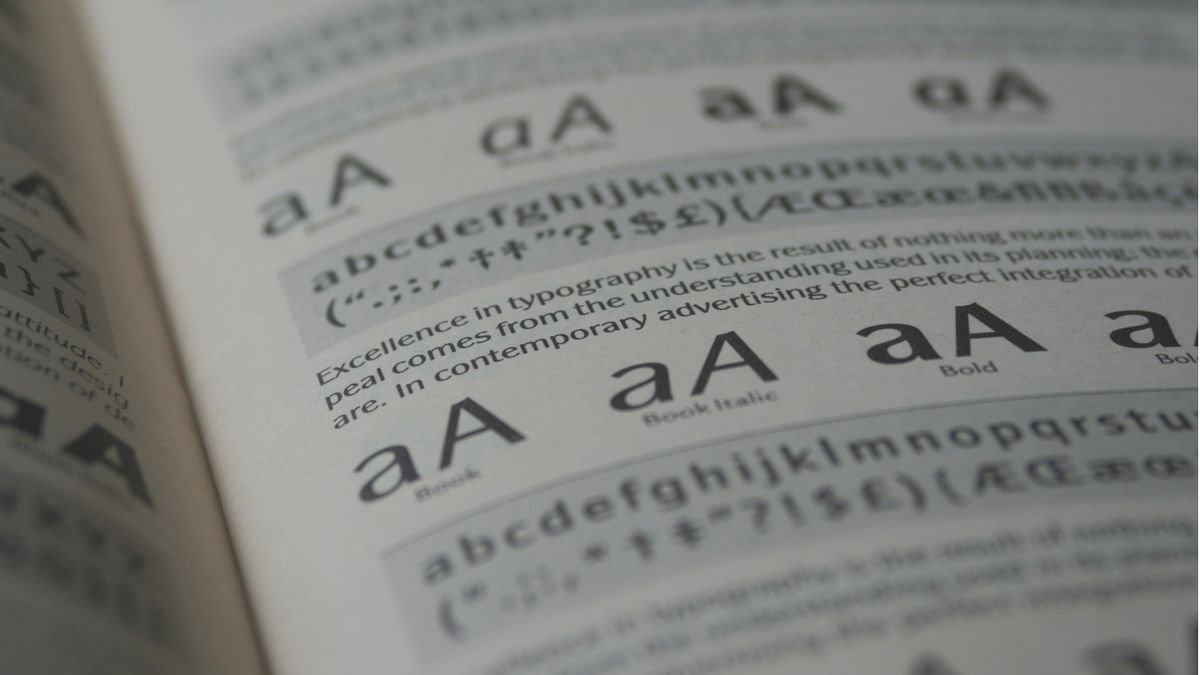
We all know words have power – but the fonts those words are written in can have just as much. Font psychology is the study of how fonts and typefaces make us feel, and while it may not be something you’ve thought too much about before, it is a huge aspect of design and branding.

Someone might have some understandable scepticism regarding how much choosing the best fonts can really matter. After all, the meanings of words don’t change because of what the letters look like, do they? It’s not like a globally recognised brand could instantly and devastatingly alter how people perceive it, simply by changing the font of a single word, is it?

What is Font Psychology?

Take a look at the below paragraph. Interrogate how you feel as you read it:

[Insert image]

It’s not the most egregious thing in the world, but in both cases it feels… off, right? It’s weird to read the opening paragraph of Moby-Dick in the kind of clean sans serif font you’re used to seeing used for social media posts and Google search results. And similarly, the Laser Quest marketing copy in the serif font just doesn’t look right at all – a complete mismatch of content and style, as though somebody accidentally sent the wrong text to a printer.

That is font psychology. It’s the study of how people react to typographical choices – the thoughts, emotions and behaviours that are elicited by certain font choices.

Types of Fonts

The infamous Comic Sans, for instance, is actually a script font, designed to look like a child’s handwriting. Depending on the nature of the script, a script font can have all sorts of uses. The more fluid and cursive styles tend to be used for wedding invites, luxury brands, posh restaurants and that sort of thing – they communicate sophistication without feeling austere.

The childish styles, meanwhile, are great for anything to do with kids, from toy branding to sweets. They evoke a sense of childlike simplicity, a straightforward and playful way of looking at the world.

Modern

Examples: Ambroise, Bodoni, Walbaum
Associations: style, sophistication, functionality, calm, elegance, poise

Despite the name, modern typefaces have been around for centuries, with their invention credited to French author Firmin Didot in 1784. This is why you’ll also hear them referred to as ‘didones’, though that term was coined much later. Modern typefaces are characterised by pronounced contrast between thick and thin strokes, as well as slim, unbracketed serifs.

A modern typeface isn’t the best for long running copy, but for headers and logos it can be just the thing, conveying the kind of elegance and sophistication that high-fashion brands are always chasing. Open a fashion magazine and you won’t have to flip through many pages before you find an example of a modern typeface.

[Insert image]

Slab-Serif

Examples: Clarendon, Rockwell, Memphis
Associations: strength, boldness, confidence, assertiveness, impact, energy

Slab-serifs, as the name implies, are essentially a spin-off of serifs, though they also owe a great debt to didones. They still retain those distinctive little serif tails, but give them a blocky thickness that is immediately striking and distinctive. Slab-serifs are strong fonts, often used to give something impact or punch, rather than for longform text. A 4,000-word London Review of Books article in a slab-serif would be quite wearing to read, but in smaller doses it’s a font style that’s attention-getting without being tacky or gimmicky.

Automotive brands gravitate towards slab-serifs and the associations of boldness, independence and confidence that come with them. The famous Marlboro cigarettes wordmark is also a slab-serif, and some tech companies use the style too — most notably Sony.

[Insert image]

Looking Forward

Something that’s important to stress about font psychology is that it’s an ongoing, evolving discipline. People in 2025 won’t necessarily respond the same way to a font as they would have in 2015, or 2005. The point is not to trend-chase, but to maintain an awareness of how different styles of font are currently being perceived.

‘I think trying to keep up is futile. Type is culture and changes all the time,’ says Marie Boulanger. ‘Ultimately a custom typeface project is something which has to fulfil a brief for the client. That can mean a lot of things to different people, depending on needs, but also lived experiences and references. There’s no magic recipe!’

Conclusion

Font psychology is a complex and multifaceted field that can greatly impact how we perceive and interact with different brands, products, and services. By understanding the associations and emotions evoked by different font styles, designers and marketers can create more effective and engaging designs that resonate with their target audiences.

FAQs

Q: What is font psychology?
A: Font psychology is the study of how fonts and typefaces make us feel, and how we react to typographical choices.

Q: How can font psychology be applied in design and marketing?
A: Font psychology can be applied by understanding the associations and emotions evoked by different font styles, and using this knowledge to create more effective and engaging designs that resonate with target audiences.

Q: Are font psychology and typography the same thing?
A: No, font psychology is a subset of typography that focuses on the emotional and psychological impact of fonts, while typography is the broader field of study that encompasses the design and use of typefaces.

Q: How does font psychology change over time?
A: Font psychology is an ongoing, evolving discipline that changes as cultural and social trends shift. Designers and marketers must stay aware of these changes to create effective and engaging designs.

Agents are the ‘third wave’ of the AI revolution

0

Agentic AI: The Third Wave of Artificial Intelligence

Agentic AI may be the next step in the rapid evolution of artificial intelligence (AI), with the same characteristics and challenges — but also with some notable distinctions.

What is Agentic AI?

Agentic AI is a type of AI that uses intelligent agents to perform tasks autonomously, often without human intervention. These agents are designed to serve as digital coworkers, assistants, or customer service representatives, communicating via natural language processing. They have the potential to augment human capabilities in ways previously unimaginable, according to Marc Benioff, CEO of Salesforce.

The Third Wave of AI

Benioff calls agentic AI the "third wave" of AI, following predictive models and generative AI. "In just a few years, we’ve already witnessed three generations of AI," he observed in a recent piece in the New York Times. "First came predictive models that analyze data. Next came generative AI, driven by deep-learning models like ChatGPT. Now, we are experiencing a third wave — one defined by intelligent agents that can autonomously handle complex tasks."

Key Features of Agentic AI

Agentic AI is designed to be more focused than generative AI, with a narrower scope and a greater emphasis on autonomy. It is intended to be used in specific environments and contextual situations, making decisions without human intervention. This is different from generative AI, which can be used across various capabilities and industries.

Benefits and Challenges

Agentic AI has the potential to bring significant benefits, including increased productivity, improved customer service, and enhanced decision-making. However, it also presents challenges, such as the need for clear ethical and operational guidelines, as well as the risk of unintended consequences if agents are misapplied.

Preparing for Agentic AI

To prepare for the shift from generative AI to agentic AI, organizations should start by identifying high-impact use cases, such as customer service, and running pilot programs to test and refine agent capabilities. It is also important to focus on the user journey and associated workflows, reducing mundane tasks, improving productivity, and creating better human-machine collaboration.

Conclusion

Agentic AI is a rapidly evolving field that has the potential to revolutionize the way we work and interact with technology. As with any new technology, there are both benefits and challenges, and it is important to address these challenges head-on. By understanding the key features, benefits, and challenges of agentic AI, we can unlock its full potential and create a brighter future for all.

Frequently Asked Questions

Q: What is agentic AI?
A: Agentic AI is a type of AI that uses intelligent agents to perform tasks autonomously, often without human intervention.

Q: What are the benefits of agentic AI?
A: Agentic AI has the potential to bring significant benefits, including increased productivity, improved customer service, and enhanced decision-making.

Q: What are the challenges of agentic AI?
A: Agentic AI presents challenges, including the need for clear ethical and operational guidelines, as well as the risk of unintended consequences if agents are misapplied.

Q: How can organizations prepare for agentic AI?
A: Organizations should start by identifying high-impact use cases, running pilot programs, and focusing on the user journey and associated workflows.

Q: What is the future of agentic AI?
A: Agentic AI has the potential to revolutionize the way we work and interact with technology, bringing significant benefits and challenges. By understanding the key features, benefits, and challenges, we can unlock its full potential and create a brighter future.

HunYuan FP8 and FAST Model with ComfyUI Nodes

0

The Importance of HTML Tags: A Guide to Understanding

and

HTML, the backbone of the web, relies heavily on the use of tags to structure and format content. Among the many available tags, two of the most fundamental are

and
. In this article, we will delve into the world of these two essential HTML tags, exploring their uses, advantages, and best practices.

What is the Purpose of the

Tag?

The

tag, also known as the paragraph tag, is used to define a paragraph of text. It is often used to wrap around a block of text, such as a paragraph of text in an article, a blog post, or a webpage. The

tag is typically used to:

* Define a block of text
* Provide structure to the content
* Improve readability
* Increase accessibility for users

When to Use the

Tag

The

tag is ideal for use in the following situations:

* Writing paragraphs of text
* Breaking up large blocks of text
* Creating a clear structure to the content
* Providing a clear separation between sections

What is the Purpose of the
Tag?

The
tag, also known as the line break tag, is used to insert a line break within a paragraph or block of text. It is often used to:

* Add a line break between lines of text
* Improve readability
* Create a clear separation between lines
* Add a visual cue to the content

When to Use the
Tag

The
tag is ideal for use in the following situations:

* Adding line breaks within a paragraph
* Creating a clear separation between lines
* Improving readability
* Adding a visual cue to the content

Conclusion

In conclusion, the

and
tags are fundamental building blocks of HTML, providing structure and organization to web content. By understanding when and how to use these tags, web developers and content creators can create more effective and engaging content that is accessible to all users.

FAQs

Q: What is the difference between the

and
tags?

A: The

tag is used to define a block of text, while the
tag is used to insert a line break within a block of text.

Q: Can I use the

tag to create a line break?

A: No, the

tag is used to define a block of text, not to create a line break. For line breaks, it is recommended to use the
tag.

Q: Can I use the
tag to define a block of text?

A: No, the
tag is used to insert a line break, not to define a block of text. For blocks of text, it is recommended to use the

tag.

Linux Commands Every DevOps Engineer Should Know

0

Here is the rewritten article:

1. File and Directory Management

Managing files and directories is a fundamental task in any Linux-based environment. These commands allow you to navigate, create, delete, and manage files and directories efficiently.

1.1. ls

Lists files and directories in the current directory.

1.2. cd

Changes the current directory.

1.3. mkdir

Creates a new directory.

1.4. rm

Removes files or directories.

2. File Operations

These commands are essential for creating, viewing, copying, moving, and searching files. They allow you to manage file content and organization effectively.

2.1. cat

Displays the content of a file.

2.2. touch

Creates an empty file.

2.3. cp

Copies files or directories.

2.4. mv

Moves or renames files or directories.

3. Package Management

Managing software packages is an integral part of maintaining a Linux environment. These commands allow you to install, update, and manage software efficiently.

For Debian-based systems (e.g., Ubuntu):

  • apt
  • apt-get

For Red Hat-based systems (e.g., CentOS):

  • yum or dnf

4. SSH and Remote Access

Securely accessing and transferring data between remote servers is a core aspect of DevOps work. These commands are indispensable for remote operations.

4.1. ssh

Connects to a remote server.

4.2. scp

Copies files between servers.

Conclusion

Mastering these Linux commands will significantly boost your efficiency as a DevOps engineer. They form the backbone of many day-to-day tasks, from managing files to debugging server issues. While this list is by no means exhaustive, it’s a solid starting point to build your Linux toolkit.

FAQs

Q: What is the best way to learn Linux commands?
A: Practice is key. Try out different commands and experiment with different scenarios to become proficient.

Q: What are some essential Linux commands for a DevOps engineer?
A: The commands listed above are a good starting point, but it’s always a good idea to familiarize yourself with the entire range of Linux commands.

Q: How can I customize my Linux environment?
A: You can customize your Linux environment by modifying configuration files, installing additional software, and using various tools and utilities.

NVIDIA Jetson Orin Nano Developer Kit Gets a “Super” Boost

0

The New Jetson Orin Nano Super Developer Kit

The new Jetson Orin Nano Super Developer Kit 

The Jetson Orin Nano Super Developer Kit now offers the following improvements:

  • 1.7x higher generative AI model performance
  • 67 Sparse TOPs, a significant increase from the previous 40 Sparse TOPs
  • 102 GB/s of memory bandwidth, a significant leap from the previous 65 GB/s memory bandwidth
  • 1.7 GHz of CPU clock speed, up from 1.5 GHz
  • New reduced price of $249, down from $499

Jetson Orin Nano Super Developer Kit configuration 

NVIDIA Jetson Orin Nano Developer Kit
(original)
NVIDIA Jetson Orin Nano Super Developer Kit
GPU  NVIDIA Ampere architecture

1,024 CUDA Cores

32 Tensor Cores

635 MHz

NVIDIA Ampere architecture

1,024 CUDA Cores

32 Tensor Cores

1,020 MHz

AI PERF 40 INT8 TOPS (Sparse)

20 INT8 TOPS (Dense)

10 FP16 TFLOPs 

67 TOPS (Sparse)

33 TOPS (Dense)

17 FP16 TFLOPs 

CPU 6-core Arm Cortex-A78AE v8.2 64-bit CPU

1.5 GHz

6-core Arm Cortex-A78AE v8.2 64-bit CPU

1.7 GHz

Memory 8GB 128-bit LPDDR5 

68 GB/s

8GB 128-bit LPDDR5 

102 GB/s

MODULE POWER 7W | 15W 7W | 15W | 25W

Runs a wide range of LLMs, VLMs, and ViTs

The NVIDIA Jetson Orin Nano Super Developer Kit offers performance that is a game-changer if you want to bring generative AI capabilities to your embedded applications or experience cutting-edge generative AI models in an affordable computer.

Advancing generative AI with Jetson AI Lab

The Jetson AI Lab is the hub for discovering and experimenting with the latest generative AI technologies optimized for edge devices.

All Jetson Orin Nano series and Jetson Orin NX series modules gets a super performance boost 

NVIDIA is also refreshing the performance across the Jetson Orin Nano series and Jetson Orin NX series. From small AI cameras to large autonomous machines, every edge device needs the compute capability to run generative AI models.

Jumpstart your generative AI developer today

The Jetson Orin Nano Super Developer Kit is your ultimate platform for leading the way in generative AI development for edge computing. Now is the perfect time to get started and join the vibrant and diverse community of advanced developers and researchers working together with NVIDIA to address real-world challenges with physical AI.

Conclusion

The Jetson Orin Nano Super Developer Kit is a powerful and affordable platform for developing and deploying generative AI models on edge devices. With its boosted performance, advanced AI capabilities, and reduced price, it is the ideal choice for developers and researchers looking to bring cutting-edge AI technology to their applications.

FAQs

Q: What is the new price of the Jetson Orin Nano Super Developer Kit?
A: The new price of the Jetson Orin Nano Super Developer Kit is $249.

Q: What are the improvements in the Jetson Orin Nano Super Developer Kit compared to the original Jetson Orin Nano Developer Kit?
A: The Jetson Orin Nano Super Developer Kit offers 1.7x higher generative AI model performance, 67 Sparse TOPs, 102 GB/s of memory bandwidth, 1.7 GHz of CPU clock speed, and a reduced price of $249.

Q: Can I upgrade my existing Jetson Orin Nano Developer Kit to the Jetson Orin Nano Super Developer Kit?
A: Yes, you can upgrade your existing Jetson Orin Nano Developer Kit to the Jetson Orin Nano Super Developer Kit by upgrading your JetPack SDK.

Q: What is the Jetson AI Lab?
A: The Jetson AI Lab is the hub for discovering and experimenting with the latest generative AI technologies optimized for edge devices.

Q: Can I use the Jetson Orin Nano Super Developer Kit for deploying generative AI models on edge devices?
A: Yes, the Jetson Orin Nano Super Developer Kit is designed for deploying generative AI models on edge devices and is ideal for developing and deploying AI-powered applications.

Tested: High-End Laser Cutter and Engraver for Production Use

0

Set-up and Build Quality

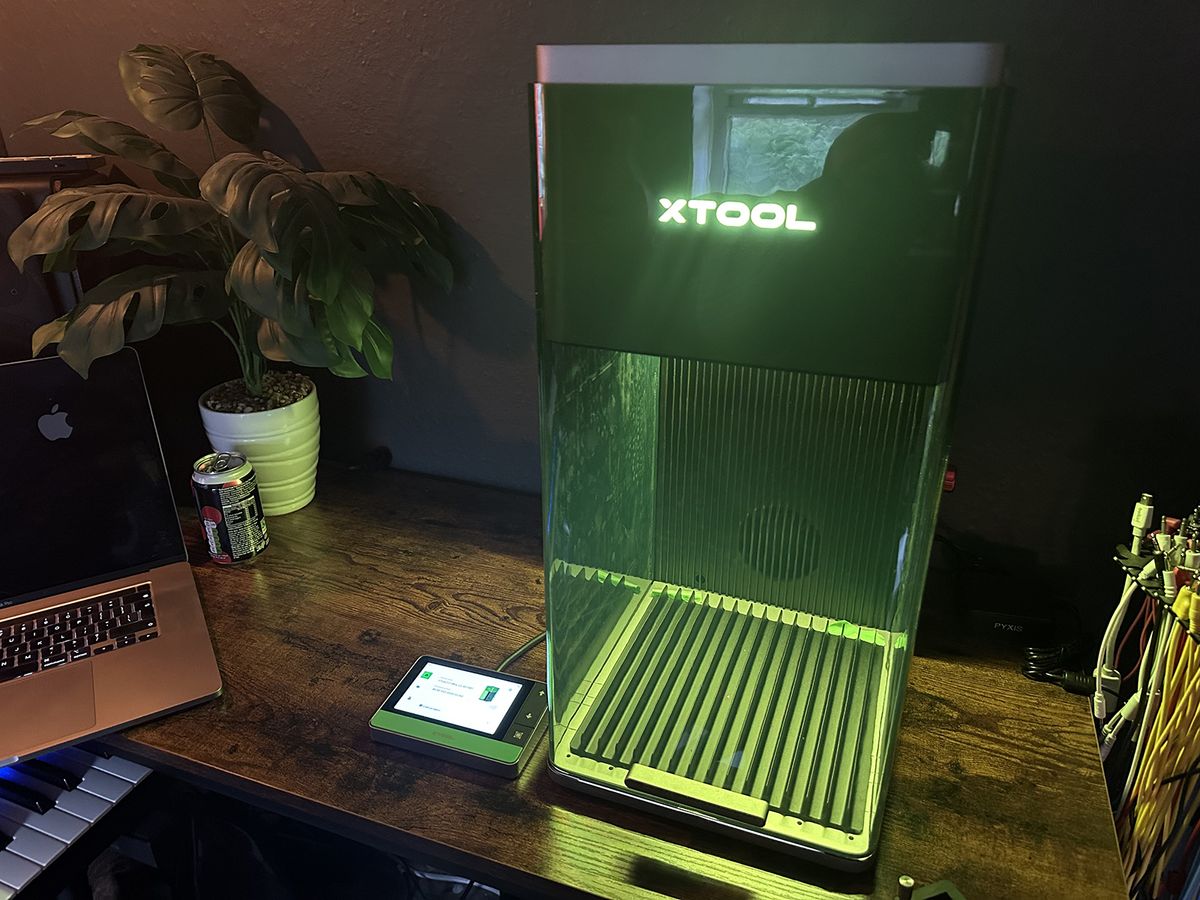
Unlike many laser cutters, the XTool F1 Ultra is pretty much ready to go as soon as you take it out of the box. There is no construction needed at all. Simply remove the packaging, not forgetting the interior, which houses some components, plug it in, along with the extraction tube and controller plus the USB lock key and it is ready.

There are a couple of first steps like initial calibration but this takes seconds. Just remember to remove the lens cover, or you’ll be scratching your head. Other than that and connecting the power and USB-C cables, plus the exhaust tube, there’s really nothing to it. Boot up the Tool software and you are ready to go.

Build quality is second to none. The F1 Ultra is incredibly well built, and made from solid materials that will last for years. Even the handle on the green plastic cover is made from metal and the ports for connecting peripherals feel good quality.

What Can It Do?

At the most basic level, the F1 Ultra performs admirably. It is accurate, pretty quiet and very fast. It can work at up to 10,000mm/per second. That sounds a lot but watching a business card design being engraved on a metal card it’s even more impressive. One of those blink-and-you’ll-miss-it moments.

Another very useful feature of the F1 Ultra is that it can work on curved surfaces, thanks to the motorised height adjustment. If it wasn’t for this, like a traditional XY gantry-style machine the laser would lose focus at certain points of the material.

The F1 Ultra can be bought with some accessories that take things to a whole new level. Rotary add-ons aren’t new and the F1’s is no different. It allows you to attach syndical items, like glasses and bottles, so you can engrave designs on them without any warping. The XTool rotary is made with the same attention to detail and quality of materials as the F1 and I would highly recommend it.

Software and User Experience

XTool’s software for the F1 Ultra is called XCS. It’s a fairly intuitive application, with options for designing using standard operations and shapes, an area for doing layout, setting laser parameters and so on.

A click of the camera icon displays an image of the current state of the machine, which makes it easy to line up a design with your chosen material. Combined with the framing tool, this works really well.

You can also jump to the design find community/store where you’ll find a bunch of projects in all sorts of styles, pre-made with settings for materials, which can be imported directly to XCS.

Price

The F1 Ultra ranges from £4,579 – £6,112, although XTool regularly runs sales with significant discounts.

Who Is It For?

The F1 Ultra is for anybody looking for a laser engraver/cutter that can handle multiple material types, cuts fast and has the option for batch processing. Embossing is a pretty new option but adds an exciting opportunity for the creative.

Buy It If…

* You work across varied materials
* Accuracy is important
* You’d like to produce bulk orders
* You have limited space

Don’t Buy It If…

* You’re on a limited budget
* You need to cut larger sheet material

Conclusion

The XTool F1 Ultra is a powerful and versatile laser cutter that can handle a wide range of materials and tasks. Its compact size and quiet operation make it suitable for use in a variety of settings, from a home office to a small business. With its advanced features and user-friendly software, the F1 Ultra is an excellent choice for anyone looking to get started with laser cutting and engraving.

FAQs

Q: What materials can the F1 Ultra cut and engrave?
A: The F1 Ultra can cut and engrave a wide range of materials, including wood, metal, plastic, and more.

Q: How fast can the F1 Ultra cut and engrave?
A: The F1 Ultra can cut and engrave at speeds of up to 10,000mm/per second.

Q: What is the maximum working area of the F1 Ultra?
A: The maximum working area of the F1 Ultra is 22cm x 22cm.

Q: Can the F1 Ultra be used for batch processing?
A: Yes, the F1 Ultra can be used for batch processing with the optional conveyor add-on.

Q: Is the F1 Ultra easy to use?
A: Yes, the F1 Ultra is designed to be easy to use, with a user-friendly interface and intuitive software.

You Can Access the Latest DALL-E 3 Model for Free

0

AI-Powered Image Generation: Microsoft Unveils Upgrades to Bing Image Creator

Introduction

One of the most exciting applications of AI is generating images. OpenAI’s DALL-E 2 kicked off the image generation craze, but since then, it has paywalled unlimited access to its latest model, DALL-E 3. Microsoft is now offering a workaround, introducing several upgrades to its Bing Image Generator.

Improved Performance and Features

The biggest upgrade is that Bing Image Generator is now powered by OpenAI’s latest DALL-E 3 model, PR16, ensuring users an improved experience that is twice as fast and of higher quality. The experience is free and accessible on the Image Creator standalone site, which has been redesigned with a more intuitive, clean, and minimalistic UI for easier navigation.

Direct Image Creation from Search Bar

Users can now create images directly from the Bing and Microsoft Edge search bar, making image creation even more accessible. Simply type a prompt such as "create an image of [insert what you want generated]" into the search bar to get results.

Sharing Made Easier

To make it easier to share your creations, Microsoft has added sharing capabilities for more social media platforms, including Facebook, WhatsApp, and Instagram messages.

Safety Features

The company has implemented guardrails to create a safe experience, including:

  • Blocking prompts for potentially harmful images
  • Adding a watermark in the bottom corner of each image
  • Adding content credentials for each image

Comparison with Other Models

While DALL-E 3 renders outputs that adhere to the prompt, ZDNET’s testing found that it is not the most realistic, especially compared to other models, such as Google’s Imagen 3, while being more expensive.

Conclusion

If you want to try DALL-E 3, the best alternative is Microsoft Image Creator, as the subscription doesn’t seem worth it. The major advantage of Bing Image Creator is that it offers access to DALL-E 3 through an OpenAI offering without the need for a paid subscription.

Frequently Asked Questions

Q: How do I access Bing Image Creator?
A: Bing Image Creator is free and accessible on the Image Creator standalone site or directly from the Bing and Microsoft Edge search bar.

Q: What are the benefits of using Bing Image Creator?
A: Bing Image Creator offers improved performance, higher quality, and ease of use, with features like direct image creation from the search bar and sharing capabilities for social media platforms.

Q: Is there a limit to the number of images I can create?
A: No, there is no limit to the number of images you can create. However, free users are limited to two per day, while paid subscribers can access unlimited renditions.

Q: Is DALL-E 3 the most realistic model?
A: No, DALL-E 3 is not the most realistic model, especially compared to other models like Google’s Imagen 3. However, it is a powerful tool for generating images.

Stemming AI’s Intellectual Property Invasion

Stay Informed with Free Updates

Sign up for the Artificial Intelligence myFT Digest — delivered directly to your inbox.

A Personal Connection to AI

In 1989, we bought a tiny house in the shadow of the medieval city walls of Carcassonne. It was the beginning of my love affair with Languedoc — the history, the arcane mysteries hidden in the landscape, the endless blue sky, the light over the mountains at dusk. It would inspire my first historical adventure novel, Labyrinth, which would go on to be translated into 38 languages and sold in more than 40 countries. Its global success is the reason I could give up my day job and become a full-time writer.

The Disillusionment

Imagine my dismay, therefore, to discover that those 15 years of dreaming, researching, planning, writing, rewriting, editing, visiting libraries and archives, translating Occitan texts, hunting down original 13th-century documents, becoming an expert in Catharism, apparently counts for nothing. Labyrinth is just one of several of my novels that have been scraped by Meta’s large language model. This has been done without my consent, without remuneration, without even notification. This is theft.

The Threat to Creativity

I’m excited by artificial intelligence and its possibilities. Using technology to enhance, develop, experiment and innovate is part of any artist’s toolkit. We need time to create and, potentially, AI can give us breathing space to do the things we love. But stealing intellectual property is an assault on creativity and copyright, and will undermine the UK’s world-leading creative economy. The time has come to group together and act.

The Debate in Parliament

This has been a busy month in parliament for AI. On December 3, the Authors’ Licensing and Collecting Society launched the report “A Brave New World?” at a meeting of the All-Party Parliamentary Writers Group. This survey of some 13,500 authors’ attitudes to AI threw a hand-grenade into the one-sided debate about the illegal scraping and crawling of authors’ work and the misconceptions surrounding it.

A Call to Action

I believe that the government should support the Kidron amendments and ensure that AI companies are held accountable for their actions. We need a fair and enforceable system that protects creators’ rights and allows them to thrive in the digital age. The UK has one of the most thriving, innovative and profitable creative industries in the world, worth some £108bn per annum. The publishing industry alone contributes £11bn each year and has the potential to grow another £5.6bn in the next decade.

Conclusion

The time has come for creators to stand together and demand that their rights are respected. We are not against change, but we are against the theft of our work. We believe that a fair and balanced approach is needed to ensure that the UK remains a global leader in the creative industries. We urge the government to reconsider its plans and work with us to create a system that benefits both creators and AI companies.

Frequently Asked Questions

Q: What is the current state of copyright law in the UK?
A: The UK has a robust and fair system of copyright law, which has been in place for centuries.

Q: How does this relate to AI?
A: The rise of AI has raised new questions about the ownership and use of intellectual property, and the UK government is consulting on how to update its laws to reflect these changes.

Q: What are the Kidron amendments?
A: The Kidron amendments are a set of proposed changes to the data (use and access) bill that would make UK copyright law enforceable in the age of generative AI.

Q: What is the current debate about in parliament?
A: The current debate is about whether AI companies should be required to obtain permission from creators before using their work for AI training, or if creators should have to "opt out" of their work being used for AI training.

The Window to Apply for Perplexity’s 2025 College AI Program is Closing

0

Perplexity’s Campus Strategist Program: A Unique Opportunity for College Students

If you’re a college student looking to get hands-on experience in the world of AI, collaborate with other students around the world, and learn from industry leaders passionate about AI, you’ll want to be aware of Perplexity’s Campus Strategist program.

About Perplexity

Perplexity is a leading name in AI these days, and the company says this free program provides not only real-world experience but also mentorship from top minds.

The Program

The window to apply for the 2025 strategist program is open now, but if you want in, you’ll need to move quickly as the deadline to apply is Dec. 28, 2024.

What’s in it for You?

You’ll get:

  • Monthly virtual meetings with Perplexity’s leadership team
  • Experience co-creating an on-campus marketing campaign and applying for marketing budgets to run your own campus events
  • A free Perplexity Pro account
  • Early access to new features
  • Perplexity merch
  • The top performers will earn a trip to the Perplexity office in San Francisco

Recap of the 2024 Program

In a recap of the 2024 program, Perplexity highlighted the different ways strategists brought AI to the forefront — including flying a banner over a highly-anticipated football game.

Eligibility and Application

To apply, you must:

  • Attend a university full-time
  • Be a current Perplexity user
  • Be a campus leader with strong communication skills, an entrepreneurial spirit, and a passion for technology

The program is open to any major, but Perplexity will only choose three strategists per campus.

You’ll need to commit only 2 to 3 hours a month.

How to Apply

The application itself is simple. You’ll be asked:

  • Your name
  • What campus you attend
  • Your current year in school
  • Your social media handles
  • Your activities or clubs involvement
  • A brief explanation as to why you want to join the program

You can apply here.

Conclusion

The Perplexity Campus Strategist program is a unique opportunity for college students to gain hands-on experience in AI, collaborate with other students, and learn from industry leaders. Don’t miss out on this chance to take your skills to the next level.

FAQs

Q: What is the deadline to apply?

A: The deadline to apply is Dec. 28, 2024.

Q: What are the eligibility requirements?

A: You must attend a university full-time, be a current Perplexity user, and be a campus leader with strong communication skills, an entrepreneurial spirit, and a passion for technology.

Q: How much time will I need to commit?

A: You’ll need to commit only 2 to 3 hours a month.

Q: What are the benefits of the program?

A: You’ll get monthly virtual meetings with Perplexity’s leadership team, experience co-creating an on-campus marketing campaign, a free Perplexity Pro account, early access to new features, Perplexity merch, and the top performers will earn a trip to the Perplexity office in San Francisco.