Home Blog Page 487

Traditional Art of Darko Stojanovic

0

Darko Stojanovic: A Painter of Mighty Heroes and Epic Scenes

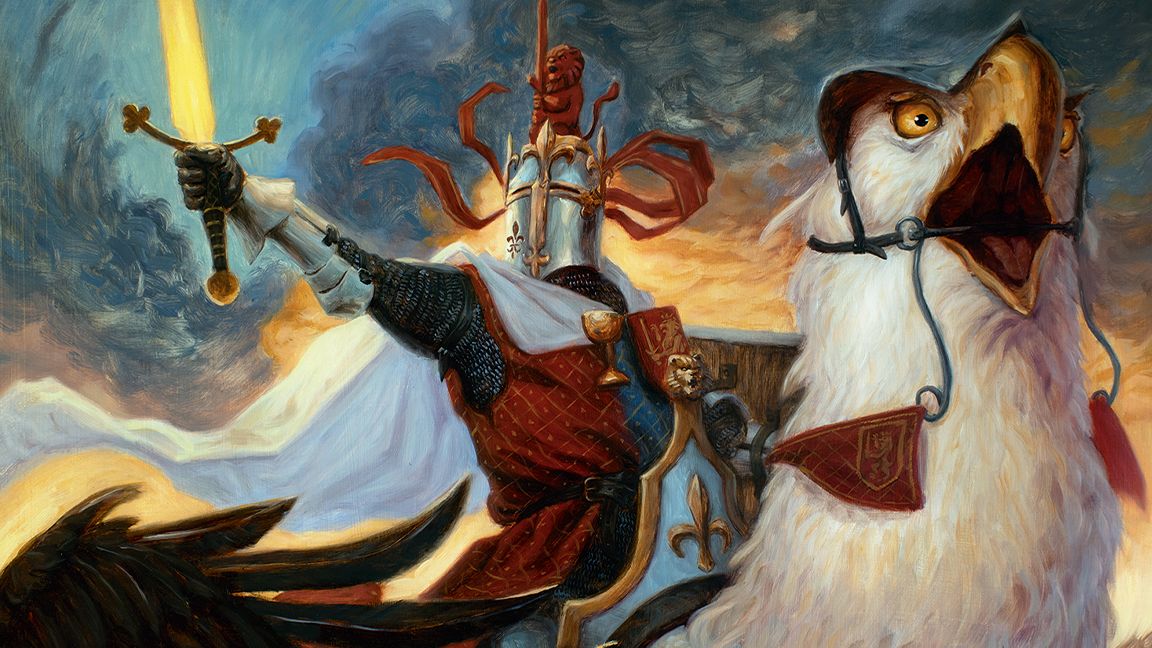
Darko Stojanovic is a painter of mighty heroes and epic scenes with a particular love of painting portraits and fearsome knights in armour. He also finds a lot of enjoyment in painting faces, fur, and anything that features shiny metal.

Painting in oils and pencil, Darko began drawing at the age of six, inspired by Star Wars and The Hobbit. He also works digitally. His clients now include some of the biggest around, such as HarperCollins, Renegade Game Studios / Paradox Interactive and Paizo Publishing.

Leoncoeur

(Image credit: Darko Stojanovic)

Todbringer

Traditional art of the week; paintings of knights

(Image credit: Darko Stojanovic)

Vojin Jugovic

Traditional art of the week; paintings of knights

(Image credit: Darko Stojanovic)

Fafnir Rann

Traditional art of the week; paintings of knights

(Image credit: Darko Stojanovic)

Conclusion

Darko Stojanovic’s artwork is a testament to his passion for painting mighty heroes and epic scenes. With a range of styles and subjects, his work is sure to captivate fans of fantasy and science fiction.

FAQs

Q: What inspires Darko Stojanovic’s artwork?
A: Darko’s artwork is inspired by his love of Star Wars and The Hobbit, as well as his passion for fantasy and science fiction.

Q: What

How These 4 Tax Implications Affect Automation Contracts – Robotics & Automation News

0

Taxes and automation might not seem connected, but they intersect in surprising ways. Contracts involving robotics introduce unique financial considerations, especially with independent contractors or freelancers.

Tax implications aren’t just legal obligations; they influence decision-making in drafting agreements. Businesses must factor in how tax codes treat equipment usage, R&D credits, and even foreign partnerships.

What about individual workers managing 1099s for tech-driven gigs? Or companies grappling with compliance as their workforce evolves alongside innovation? The automation era transforms how taxes work.

Read on as we untangle these complexities together.

1. Tax Rules for Independent Contractors in Automation and Robotics

1099 workers or self-employed professionals often encounter unique tax responsibilities when engaged in automation projects.

Robotics contracts might involve nuances like withholding, expense deductions for specialized equipment, or even intellectual property considerations tied to automation development. From filing requirements to classification accuracy, understanding the intersection of tech innovation with labor taxation matters greatly.

Here’s a breakdown of rules independent contractors working in automation and robotics should understand when it comes to taxation.

Defining Contractor Classification

First things first, the IRS categorizes workers based on behavioral, financial, and relationship factors. Independent contractors in automation often fall under 1099 rules. Misclassification risks lead to penalties or audits.

Clear terms outlining responsibilities and independence are crucial for robotics contracts to align with federal tax guidelines while avoiding legal complications.

Tax Reporting Obligations

When April rolls around, Uncle Sam expects accuracy. Robotics and automation contracts often involve multiple income streams, which means precise reporting is vital for avoiding errors or audits.
Tools like digital accounting software simplify tracking expenses and payments throughout the year. Using a tax calculator for independent contractors helps streamline 1099 forms, ensuring smoother IRS compliance within tech-driven projects.

Intellectual Property and Taxation

Ownership of innovations adds a tax layer to robotics contracts. Royalties, licensing fees, or asset transfers linked to intellectual property generate taxable income.

Automation professionals should recognize how IP-related earnings affect annual filings. Strategic structuring in contracts ensures compliance while maximizing potential deductions tied to development rights or proprietary technology use.

Handling State-Level Taxes

State taxes add another layer of complexity for automation professionals. Robotics projects spanning multiple states may trigger varied income tax obligations based on where work occurs.

Understanding each state’s policies is critical for proper filings. Adjusting contracts to address cross-border operations helps mitigate confusion, ensuring smooth compliance with diverse jurisdictional requirements.

2. Research and Development Tax Credits with Automation Projects

Bringing innovation to life in automation often comes with a financial silver lining. R&D tax credits reward businesses pushing the boundaries of technology through eligible development efforts. These incentives encourage investment by reducing taxable income or offering direct refunds in some cases.

Qualifying activities may include:

  • Developing advanced robotics systems or software algorithms
  • Improving production processes using autonomous technologies
  • Prototyping equipment for enhanced manufacturing precision

These credits aren’t just beneficial, they’re essential for sustaining progress while managing costs. Contracts involving robotics often outline responsibilities tied to qualifying projects, ensuring compliance while optimizing access to these tax-saving opportunities.

3. Depreciation of Equipment in Automation Contracts

In any business, assets do lose value over time. Automation introduces high-cost equipment like robotics systems and AI-driven machinery, making depreciation a vital consideration. This accounting method reflects the wear-and-tear or obsolescence of assets while offering tax advantages.

Examples include:

  • Robotics arms used in manufacturing lines
  • Machine-learning hardware for data processing
  • Autonomous vehicles within warehousing operations

Depreciation affects contracts by influencing ownership terms or maintenance agreements between parties. Structuring deals to account for asset lifespan ensures compliance with financial regulations.

It also maximizes financial efficiency by leveraging potential deductions tied to declining equipment values across project timelines.

4. Cross-Border Taxation Concerns for Global Collaborations

Robotics and automation companies often seek opportunities across borders. This opens up a Pandora’s box, with questions such as where taxes should be paid and how treaties impact earnings.

Income derived from foreign projects can trigger complex reporting rules tied to international agreements or withholding requirements.

For instance, contracts involving software licensing or robotics exports may incur dual taxation if not carefully structured. Currency fluctuations also influence tax outcomes, adding another layer of complexity to global ventures.

Businesses need clear terms in agreements that account for these challenges, ensuring compliance while protecting profits from unnecessary tax burdens worldwide.

5. One More Consideration: Understanding IRS Treatment of AI-Driven Contract Work

With artificial intelligence being at the frontline of today’s automation technology, it’s only natural to examine its impact on tax obligations. Besides, the taxman now uses AI to curb tax evasion.

The IRS evaluates how payments tied to AI-related projects align with standard income classifications, especially for contractors developing proprietary algorithms or training datasets.

AI-specific work often involves nontraditional compensation models like profit-sharing agreements or licensing revenues. These unique arrangements demand clarity in contracts to ensure proper taxation without unexpected liabilities.

As innovation accelerates, staying informed about IRS guidance surrounding emerging technologies is crucial for robotics firms and professionals structuring agreements around these cutting-edge contributions to modern industries.

Automation and robotics redefine how taxes intersect with innovation. Understanding these implications safeguards compliance while fostering growth.

Strategic planning in contracts ensures financial efficiency, empowering businesses and professionals to navigate the complexities of a rapidly evolving technological landscape with confidence.

Main image: AI-generated through Microsoft Copilot. 

Eurovision Logo Sparks Design Debate

0

The Controversial Eurovision Logo Reveal: What’s Behind the Standardization?

The Eurovision Song Contest has always been a breeding ground for controversy, but this year’s logo reveal for Basel 2025 has sparked a different kind of debate. The newly unveiled logo, designed by art director Artur Deyneuve, is essentially the same as the one used for Malmö 2023, but with a different flag. This has left fans wondering if the tradition of a big logo reveal has lost its relevance.

A Shift in Branding Strategy

The Eurovision organizers argue that the logotype is no longer the branding of the event, but rather a symbol of the entity itself. The real branding is in the elements around the logo, such as the color palette, backgrounds, motion graphics, and stage designs. This approach allows for a consistent and recognizable identity, but some fans are missing the novelty of a new logo design each year.

The Problem with Standardization

The big reveal of the Eurovision logo was once a highly anticipated event, with fans eagerly awaiting the unveiling of a new design. However, the standardization of the logo has taken away from this excitement. The public is left wondering what’s new and what’s changed, and whether the event has lost its creative edge.

The Challenge for Designers

Designers face the challenge of creating a consistent brand while also making each event stand out. The goal is to obtain brand consistency while creating something novel and different enough to give each event its own identity. The Basel 2025 identity, with its motion graphics and stage design, achieves this, but many will disagree.

Conclusion

The Eurovision logo reveal has sparked a new kind of controversy, one that goes beyond the songs and voting. The standardization of the logo has taken away from the excitement and novelty of the event, leaving fans wondering what’s new and what’s changed. The challenge for designers is to find a balance between brand consistency and creative differentiation, a task that is not easy to accomplish.

FAQs

Q: What is the name of the art director behind the Eurovision 2025 logo design?
A: Artur Deyneuve

Q: What is the central guiding theme for the Eurovision 2025 concept?
A: Listening, inspired by the Swiss tradition of direct democracy.

Q: Why has the Eurovision logo been standardized?
A: To create a consistent and recognizable identity for the event, rather than treating each event as a new entity.

Q: What is the reaction to the standardization of the Eurovision logo?
A: Fans are divided, with some missing the novelty of a new logo design each year and others appreciating the consistency and recognizability of the event.

Consumers Now Consider ChatGPT a Real Google Alternative

0

In Just Two Years, ChatGPT Has Managed to Do Something No Company Has Done in the Last 20 Years: Present a Viable Challenge to Google

There’s evidence that people are using it instead of traditional search in an increasing number of cases.

Key Survey Findings

  • While Google is dominant, consumers use multiple sites to make purchase decisions.
  • 44% of U.S. adults have used AI applications at least once (100% of respondents had).
  • 77% of survey respondents said it had become easier to find things on Google.
  • 57% use AI daily; roughly half of them use it multiple times a day.
  • 49% see AI and search as essentially interchangeable.
  • 67% think AI will likely replace traditional search engines within three years.

Search Is Fragmenting

It’s important to point out that the often binary discussion of Search vs. AI misses the fact that people have been using numerous other sites for search and discovery for some time.

Search Today Is ‘Much Easier’

The general consensus in the SEO community and tech press is that Google’s search quality has declined for several years.

Search and AI Are ‘Interchangeable’

As mentioned, we disqualified potential respondents who said they’d never used an AI application.

Conclusion: AI Inevitability?

More than two-thirds of these consumers answered “likely” or “very likely” to the question, “Will AI replace search in the next three years?”

FAQs

Q: Is Google still the dominant search engine?

A: Yes, according to the survey, Google is still the dominant search engine, but ChatGPT is presenting a viable challenge.

Q: Is AI replacing search engines?

A: According to the survey, 67% of respondents think AI will likely replace traditional search engines within three years, but Google is still the preferred choice of most respondents.

Q: Will Google remain competitive?

A: Yes, Google is rapidly evolving and leaning on AI to beat back the ChatGPT threat, and the search experience will continue to change profoundly in the future.

Q: Will marketers need to adapt?

A: Yes, marketers will need to be flexible and ready for the changing search landscape, as the customer journey will become even more complex.

Unreliable Reasoning: The Dangers of LLM Hallucinations

I. What is LLM Hallucination?

An LLM hallucination occurs when a large language model produces something seemingly true or reasonable that is false, fabricated, or logically flawed. Unlike human hallucinations (sensory perceptions), LLMs simply fail to grasp the reference points, becoming disoriented and presenting text that does not exist as fact.

II. Types of LLM Hallucinations

LLM hallucinations can be distinguished based on their etiology and the false information involved. Understanding how these hallucinations work allows us to see why they happen and what might mitigate them. The main types of hallucinations observed in LLMs and their specifics are as follows.

1. Factual Hallucination

During a factual hallucination, an LLM produces data that is not true, or that has been entirely made up. This happens when the model has no external knowledge base or live data, and the responses are generated based on its training data.

2. Logical Hallucination

A logical hallucination is an output where the response is internally inconsistent or illogical despite being grammatically correct. This occurs when the model generates a sequence of words or ideas that don’t logically follow the input prompt or contradict basic rules of logic or reasoning.

III. Why LLM Hallucinations Happen

LLM hallucinations arise largely from interpolation and extrapolation. The model tries to complete missing information by interpolating from learned patterns in the training or extrapolating, predicting relationships it has never seen. This may fail to achieve an accurate answer, particularly with more complicated or niche subjects.

IV. How to Prevent LLM Hallucinations

1. Improved Training Techniques

2. Real-Time Data Access and Integration

3. Human-in-the-Loop (HITL) Systems

4. Confidence Scoring and Calibration

5. Prompt Engineering

6. Multimodal Learning

7. Reinforcement Learning from Human Feedback (RLHF)

V. Conclusion

LLM hallucinations are more than just tech hiccups—they can lead to misinformation, bad decisions, and people losing trust in AI. Whether you’re in healthcare, finance, or customer service, relying on incorrect AI outputs can cause serious problems. That’s why stopping LLM hallucinations should be a top concern for anyone using AI.

VI. FAQs

Q: What is an LLM hallucination?
A: An LLM hallucination occurs when a large language model produces something seemingly true or reasonable that is false, fabricated, or logically flawed.

Q: Why do LLM hallucinations happen?
A: LLM hallucinations arise largely from interpolation and extrapolation.

Q: How can I prevent LLM hallucinations?
A: You can prevent LLM hallucinations by using improved training techniques, real-time data access and integration, human-in-the-loop systems, confidence scoring and calibration, prompt engineering, multimodal learning, and reinforcement learning from human feedback.

Q: What are the consequences of LLM hallucinations?
A: LLM hallucinations can lead to misinformation, bad decisions, and people losing trust in AI.

OpenAI Releases Slew of Developer Features in Mini Dev Day

0

What are the ’12 days of OpenAI’?

OpenAI, a leading artificial intelligence (AI) research organization, has announced a special holiday event series called "12 days of OpenAI". Starting on December 5, the company will host 12 days of live streams, releasing "a bunch of new things, big and small" every day.

What has been dropped so far?

Here’s a rundown of the releases so far:

Tuesday, December 17

  • The o1 model is now available in the API with support for function calling, structured outputs, developer messages, vision capabilities, and lower latency.
  • The Realtime API now supports WebRTC, making it easier for developers to build and scale real-time voice products across platforms.
  • The fine-tuning API now supports Preference Fine-Tuning, allowing users to optimize the model to favor desired behavior.
  • OpenAI introduced new Go and Java SDKs in beta.

Monday, December 16

  • The AI search engine is now available to all users, including free users who are signed in.
  • The search experience has been improved on mobile and now includes image-rich visual results.
  • Search is integrated into Advance Voice mode, allowing users to search as they talk to ChatGPT.

Friday, December 13

  • OpenAI released a new organizational feature called "Projects", which allows users to organize and customize their chats in ChatGPT.

Thursday, December 12

  • Advanced Voice Mode now has screen-sharing and visual capabilities, allowing it to assist with the context of what it is viewing.
  • The feature is rolling out to Team users and most Pro and Plus subscribers.

Wednesday, December 11

  • Apple released iOS 18.2, which includes integrations with ChatGPT across Siri, Writing Tools, and Visual Intelligence.

Tuesday, December 10

  • Canvas is now available to all web users, regardless of plan, in GPT-4o.
  • Canvas has been built into GPT-4o natively, allowing users to access it directly.

Monday, December 9

  • OpenAI released its video model, Sora Turbo, which can generate video-to-video, text-to-video, and more.
  • Sora features an explore page where users can view each other’s creations.

Friday, December 6

  • OpenAI expanded access to its Reinforcement Fine-Tuning Research Program.

Thursday, December 5

  • OpenAI unveiled two major upgrades to its chatbot: a new tier of ChatGPT subscription, ChatGPT Pro, and the full version of the company’s o1 model.

Where can you access the live stream?

The live streams are held on the OpenAI website, and posted to its YouTube channel immediately after. To make access easier, OpenAI will also post a link to the live stream on its X account 10 minutes before it starts, which will be at approximately 10 a.m. PT/1 p.m. ET daily.

Conclusion

OpenAI’s "12 days of OpenAI" event series has been a treat for AI enthusiasts and developers alike. With new features and updates being released every day, it’s been an exciting time for those interested in AI and its applications. Whether you’re a developer, a researcher, or just someone curious about AI, there’s something for everyone in this event series.

FAQs

Q: What is the "12 days of OpenAI" event series?
A: The "12 days of OpenAI" is a holiday event series hosted by OpenAI, featuring 12 days of live streams and releases of new features and updates.

Q: What has been released so far in the event series?
A: A variety of new features and updates have been released, including the o1 model, Realtime API, fine-tuning API, Projects, Advanced Voice Mode, Canvas, Sora Turbo, and more.

Q: How can I access the live streams?
A: The live streams are held on the OpenAI website, and posted to its YouTube channel immediately after. A link to the live stream will also be posted on OpenAI’s X account 10 minutes before it starts.

Q: Is the "12 days of OpenAI" event series only for developers?
A: No, the event series is open to anyone interested in AI and its applications. Whether you’re a developer, a researcher, or just someone curious about AI, there’s something for everyone in this event series.

Amazon’s new Nova AI models could be ground-breaking

0

Amazon Unveils Nova, a New Generation of State-of-the-Art Foundation Models

Amazon’s re:Invent conference this year brought new chips and data centers, but it also introduced its first frontier models in generative artificial intelligence, competing with OpenAI and Google.

Introducing Nova and Reel

Amazon debuted Nova, a "new generation of state-of-the-art foundation models that deliver frontier intelligence and industry-leading price performance." The models come in flavors suited to video generation (akin to OpenAI’s Sora) and image generation, which has become standard fare for large language models that integrate text and images. The models come with snappy names, too: "Reel" is the name of the video-generation model, and "Canvas" is the name of the image-generation flavor.

Demonstrations and Features

Reel, a video-generation model, generated a video using the keyword "A snowman in a Venetian gondola ride, 4k, high resolution." Canvas, the image-generation model, created a photorealistic image of an interior with the prompt, "A very fancy French restaurant."

How it Works

Nova makes extensive use of the retrieval-augmented-generation (RAG) approach to tap into databases, as well as "chain of thought," a process for producing output that is treated as a kind of reasoning exercise by the AI model. The training data to build the models is not disclosed, with Amazon stating only that the models were trained on data from a variety of sources, including licensed data, proprietary data, open-source datasets, and publicly available data where appropriate.

Responsible AI

The most remarkable part of the work is the extensive discussion of "responsible AI" — that is, avoiding things such as adversarial attacks on AI models by malicious threat actors. Amazon’s engineers made extensive use of so-called red teaming, where they sought to break the models by creating various kinds of attacks such as "prompt injection," crafting a language model’s prompt with keywords or phrases that would encourage the model to break its guardrails.

Conclusion

Amazon’s Nova models are an exciting development in the world of generative AI, but the details are hidden behind intellectual property safeguards. It remains to be seen whether Amazon has broken ground in the reliability and safety testing of Gen AI. The field will have to wait until the proper evaluations — benchmarks, metrics, etc. — to compare Amazon’s red-teaming against the competing methods out there, both open and closed-source.

FAQs

Q: What is Amazon’s Nova?
A: Nova is a new generation of state-of-the-art foundation models that deliver frontier intelligence and industry-leading price performance.

Q: What are the features of Amazon’s Nova?
A: Nova models come in flavors suited to video generation (Reel) and image generation (Canvas).

Q: How does Nova work?
A: Nova makes extensive use of the retrieval-augmented-generation (RAG) approach to tap into databases, as well as "chain of thought," a process for producing output that is treated as a kind of reasoning exercise by the AI model.

Q: What is responsible AI?
A: Responsible AI refers to the avoidance of things such as adversarial attacks on AI models by malicious threat actors.

Best Drawing Tablets with a Screen

0

Best Drawing Tablets with a Screen: A Guided Review

Best Overall: XPPen Artist Pro 24 (Gen 2)

Xencelabs Pen Display 16 and Ugee 16 are also great options for those on a budget.

Who are drawing tablets with a screen for?

Digital artists who want to draw directly onto the artboard without brush strokes needing to be transferred onto another monitor. This is ideal for artists who want to use the digital art software, such as Adobe Photoshop, Rebelle 7 or Corel Painter.

How to choose a drawing tablet with a screen

  • Look for a tablet with a high-resolution display and a stylus with good ergonomics and features.
  • Consider the size of the tablet and the weight of the stylus.
  • Check the compatibility of the tablet with your computer and operating system.
  • Read reviews and do research to find the best tablet for your needs and budget.

Frequently Asked Questions

  • What are drawing tablets with a screen?
    • Drawing tablets with a screen are a type of graphics tablet that has a built-in display and stylus, allowing users to draw directly onto the screen.
  • Why wouldn’t I use a drawing tablet with a screen?
    • Some users may prefer traditional drawing tablets or may not need the features of a drawing tablet with a screen.
  • What are the best brands for drawing tablets with a screen?
    • Wacom, Xencelabs, XPPen, Huion, and Ugee are all popular brands that make drawing tablets with screens.

Conclusion

In this article, we have reviewed and compared the best drawing tablets with a screen, highlighting their features, pros, and cons. Whether you’re a professional artist or a hobbyist, there’s a drawing tablet with a screen that’s right for you. Choose the one that best fits your needs and budget.

Expandir, Cópia, Merge e Rest

0

Simple Operations with Objects and Arrays

Olá pessoal! A seguir, estão apresentados alguns exemplos simples de operações como cópia, expandir, merge e resto com objetos e arrays.

Expanding Arrays

const arr1 = [1, 2, 3];
console.log(arr1); // [1 2 3]
const arr2 = [...arr1, 4, 5, 6];
console.log(...arr2); // [1 2 3 4 5 6]

O exemplo acima demonstra a utilização do spread operator (… ) para expandir um array.

Expanding Objects

const obj1 = { a: 1, b: 2, c: 3 };
console.log(obj1); // { a: 1, b: 2, c: 3 }
const obj2 = {...obj1, d: 4, e: 5, f: 6 };
console.log(obj2); // { a: 1, b: 2, c: 3, d: 4, e: 5, f: 6 }

O exemplo acima demonstra a utilização do spread operator (… ) para expandir um objeto.

Making Copies

const obj1 = { a: 1, b: 2, c: 3 };
const obj2 = {...obj1 };
console.log(obj2); // { a: 1, b: 2, c: 3 }
console.log(obj1 == obj2); // false

O exemplo acima demonstra como fazer uma cópia de um objeto usando o spread operator (… ).

Merging Arrays

const arr1 = [1, 2, 3];
const arr2 = [4, 5, 6];
const arr3 = [...arr1,...arr2];
console.log(arr3); // [1, 2, 3, 4, 5, 6]

O exemplo acima demonstra como merge dois arrays usando o spread operator (… ).

Merging Objects

const obj1 = { a: 1, b: 2, c: 3 };
const obj2 = { d: 4, e: 5, f: 6 };
const obj3 = {...obj1,...obj2 };
console.log(obj3); // { a: 1, b: 2, c: 3, d: 4, e: 5, f: 6 }

O exemplo acima demonstra como merge dois objetos usando o spread operator (… ).

Rest Operator (Resto)

let p = {
  name: 'John',
  age: 30,
  city: 'New York',
  country: 'USA'
};
let { name, age,...restoDoObjeto } = p;
console.log(name, age);
console.log("restoDoObjeto: ", restoDoObjeto); // resposta: John 30
// restoDoObjeto:  { city: 'New York', country: 'USA' }

O exemplo acima demonstra como utilizar o rest operator (… ) para extrair propriedades de um objeto e coletar as propriedades restantes em um novo objeto.

Conclusion

Essas operações são importantes para lidar com dados em um programa e podem ser facilmente realizadas usando os operadores de spread (… ) e resto (… ).

Frequently Asked Questions (FAQs)

  1. What is the spread operator?

    The spread operator is a new feature in JavaScript that allows you to spread an array or object into individual arguments or properties.

  2. How do I use the spread operator?

    You can use the spread operator to expand an array or object into individual arguments or properties by prefixing it with three dots (… ).

  3. What is the rest operator?

    The rest operator is used to extract a specific portion of an object and leave the rest as it is.

  4. How do I use the rest operator?

    You can use the rest operator by prefixing a property name with the rest operator (… ) followed by the name of the property you want to extract.

Nvidia’s $249 dev kit promises cheap, small AI power

0

Nvidia Announces Jetson Orin Nano Super Developer Kit

The Jetson Orin Nano line has been a low-cost way for hobbyists and makers to power AI and robotics projects since its introduction in 2019. Nvidia says the Nano Super’s neural processing is 70 percent higher, at 67 TOPS, than the 40 TOPS Nano. It also has 50 percent more memory bandwidth, at 102GB/s, which should speed up those operations.

What’s New in the Jetson Orin Nano Super

The Jetson Orin Nano Super kit uses essentially the same hardware as the original Orin Nano kit, and the company says it will get the same performance gains with a new JetPack update. Nvidia says the boost comes from “a new power mode which increases the GPU, memory, and CPU clocks.”

Features and Specifications

The developer kit includes a reference carrier board and a Jetson Orin Nano 8GB system-on-module, comprised of an Nvidia Ampere GPU with tensor cores and 6-core Arm CPU. Nvidia calls the Nano Super Developer Kit “an ideal solution” for building chatbots or visual AI agents, as well as AI-based robots.

Availability and Pricing

The Jetson Orin Nano Super Developer Kit is available to buy now for $249, which is half the price of the previous kit.

Conclusion

The Jetson Orin Nano Super Developer Kit is a powerful and affordable tool for those looking to build AI and robotics projects. With its increased neural processing and memory bandwidth, it’s an ideal solution for a variety of applications.

FAQs

Q: What is the main difference between the Jetson Orin Nano Super and the original Orin Nano kit?
A: The main difference is the increased neural processing and memory bandwidth of the Jetson Orin Nano Super kit.

Q: What kind of projects can I build with the Jetson Orin Nano Super Developer Kit?
A: You can build a variety of projects, including chatbots, visual AI agents, and AI-based robots.

Q: Is the Jetson Orin Nano Super Developer Kit compatible with the original Orin Nano kit?
A: Yes, the Jetson Orin Nano Super kit is compatible with the original Orin Nano kit, and you can use the same software and tools.

Q: What is the price of the Jetson Orin Nano Super Developer Kit?
A: The Jetson Orin Nano Super Developer Kit is priced at $249.