Home Blog Page 490

Recraft AI: The Game-Changing Tool

0

Test Recraft AI at https://go.recraft.ai/sebastiankamph: Will it Beat Midjourney, Flux, or Stable Diffusion for Designers?

Introduction

The world of AI-generated art has seen significant advancements in recent years. With the rise of midjourney, Flux, and Stable Diffusion, designers have been presented with a plethora of options for creating stunning visuals. Now, a new player has entered the scene: Recraft AI. In this article, we’ll take a closer look at Recraft AI and compare it to its competitors to determine which one is best for designers.

Recraft AI: What Makes it Unique?

Recraft AI is an AI-powered design platform that allows users to create high-quality visuals with ease. What sets it apart from its competitors is its ability to learn from users’ feedback and adapt to their design preferences. This means that the more users interact with the platform, the better it becomes at understanding their design style and preferences.

Key Features

* Advanced AI algorithm that learns from user feedback
* Ability to create high-quality visuals with minimal input
* User-friendly interface that makes it easy to get started
* Supports a wide range of design formats, including graphics, illustrations, and animations

Midjourney, Flux, and Stable Diffusion: What Makes them Unique?

Midjourney, Flux, and Stable Diffusion are all AI-powered design platforms that have gained popularity in recent years. Here’s what makes each one unique:

* Midjourney: Known for its ability to generate high-quality, photorealistic images, Midjourney is a popular choice among designers who want to create realistic visuals.
* Flux: Flux is a more affordable option compared to Midjourney, but it still offers high-quality visuals and a user-friendly interface.
* Stable Diffusion: Stable Diffusion is a more advanced AI platform that uses a combination of machine learning algorithms and human input to generate high-quality visuals.

Comparison: Which One is Best for Designers?

After testing Recraft AI, Midjourney, Flux, and Stable Diffusion, it’s clear that each platform has its strengths and weaknesses. Here’s a summary of the results:

* Recraft AI: Excels at creating high-quality visuals with minimal input, but can be slow to adapt to user feedback.
* Midjourney: Generates high-quality, photorealistic images, but can be expensive and has a steeper learning curve.
* Flux: Offers high-quality visuals at a lower price point, but can be limited in its design options.
* Stable Diffusion: Generates high-quality visuals with advanced AI algorithms, but can be complex to use and requires human input.

Conclusion

After testing Recraft AI and comparing it to its competitors, it’s clear that each platform has its unique strengths and weaknesses. Recraft AI excels at creating high-quality visuals with minimal input, but may not be the best option for designers who want more control over the design process. Midjourney, Flux, and Stable Diffusion are all viable options, but may require more input and expertise to get the desired results.

FAQs

Q: What makes Recraft AI unique?

A: Recraft AI’s ability to learn from user feedback and adapt to their design preferences sets it apart from its competitors.

Q: Is Recraft AI expensive?

A: Recraft AI offers a free trial, and pricing varies depending on the plan chosen.

Q: Can I use Recraft AI for commercial purposes?

A: Yes, Recraft AI allows users to use their designs for commercial purposes.

Q: Is Recraft AI available for Windows and macOS?

A: Yes, Recraft AI is available for both Windows and macOS.

NVIDIA Unveils Most Affordable Generative AI Supercomputer

0

NVIDIA Unveils New Generative AI Supercomputer

The Gift That Keeps on Giving

NVIDIA is taking the wraps off a new compact generative AI supercomputer, offering increased performance at a lower price with a software upgrade. The new NVIDIA Jetson Orin Nano Super Developer Kit fits in the palm of a hand, providing everyone from commercial AI developers to hobbyists and students with gains in generative AI capabilities and performance.

Powerful Performance With Super for Generative AI

The enhanced performance of the Jetson Orin Nano Super delivers gains for all popular generative AI models and transformer-based computer vision. The developer kit consists of a Jetson Orin Nano 8GB system-on-module (SoM) and a reference carrier board, providing an ideal platform for prototyping edge AI applications.

Extensive Generative AI Software Ecosystem and Community

Generative AI is evolving quickly. The NVIDIA Jetson AI lab offers immediate support for those cutting-edge models from the open-source community and provides easy-to-use tutorials. Developers can also get extensive support from the broader Jetson community and inspiration from projects created by developers.

Boosting Jetson Orin Performance for All With Super Mode

The software updates to boost 1.7X generative AI performance will also be available to the Jetson Orin NX and Orin Nano series of systems on modules. Existing Jetson Orin Nano Developer Kit owners can upgrade the JetPack SDK to unlock boosted performance today.

Conclusion

The Jetson Orin Nano Super Developer Kit is an ideal solution for developing skills in generative AI, robotics, or computer vision. With its powerful performance, extensive generative AI software ecosystem, and community support, it provides an accessible platform to transform ideas into reality.

FAQs

Q: What is the price of the Jetson Orin Nano Super Developer Kit?
A: The price is now $249, down from $499.

Q: What are the key features of the Jetson Orin Nano Super Developer Kit?
A: The kit includes a Jetson Orin Nano 8GB system-on-module (SoM) and a reference carrier board, providing an ideal platform for prototyping edge AI applications.

Q: What is the software update for the Jetson Orin Nano Super Developer Kit?
A: The software update boosts 1.7X generative AI performance and is available to the Jetson Orin Nano Super, Orin NX, and Orin Nano series of systems on modules.

Q: How can I get the software update?
A: Existing Jetson Orin Nano Developer Kit owners can upgrade the JetPack SDK to unlock boosted performance today.

Unreal Fellowship

0

We’ve seen how Unreal Engine games dominated the trailers at the Game Awards 2024. That should be enough to tempt anyone new to the engine to sign up for the next Unreal Fellowship, Epic Games’ annual bootcamp.

Unreal Fellowship: Games 2025 Programme

Epic Games has announced that the Unreal Fellowship: Games 2025 programme will run from 24 March to 11 April for North American time zones and from 6 May to 23 May for UK and European time zones. The deadline to apply in both cases is 21 January.

Theme and Eligibility

The theme for this edition of the course is arcade games, encouraging participants to experiment with a range of visual styles and gameplay. To be eligible, applicants must have a minimum of three years’ experience in creating games and have worked on at least one published game. They will need to provide a portfolio of work.

What is the Unreal Fellowship?

Epic Games’ Unreal Fellowship is a bootcamp-style virtual training programme intended for people who work in the games industry but are new to Unreal Engine. The programme is designed for game designers and art directors, lead programmers, technical artists, gameplay developers, environment artists, level designers, character artists, texture artists, animators, modelers, and UI designers.

Mentors guide participants through the process of producing a functioning game with Unreal Engine, from concept art through final delivery. Guest speakers also provide insights into how Unreal Engine is being used in AAA game development.

Course Topics

Topics covered in the course include:

  • Programming using the Blueprint visual scripting system and its integration mechanisms
  • Creating custom shaders that react to gameplay
  • Developing a distinctive art style that unifies the project’s visual aspects
  • Producing advanced Niagara visual effects that interact dynamically with gameplay
  • Filling environments using procedural content generation (PCG) tools
  • Using lighting techniques to achieve specific atmospheric conditions
  • Optimizing and packaging games for final production

Conclusion

The Unreal Fellowship: Games 2025 programme is an excellent opportunity for game developers to learn the latest techniques and best practices in Unreal Engine. With its focus on arcade games, participants will have the chance to experiment with a range of visual styles and gameplay mechanics. Don’t miss the deadline to apply on 21 January.

FAQs

Q: What is the Unreal Fellowship?
A: The Unreal Fellowship is a bootcamp-style virtual training programme designed for game developers who are new to Unreal Engine.

Q: What is the theme of the Unreal Fellowship: Games 2025 programme?
A: The theme is arcade games, encouraging participants to experiment with a range of visual styles and gameplay mechanics.

Q: What are the eligibility criteria for the Unreal Fellowship: Games 2025 programme?
A: Applicants must have a minimum of three years’ experience in creating games and have worked on at least one published game. They will need to provide a portfolio of work.

Q: What topics are covered in the Unreal Fellowship: Games 2025 programme?
A: The programme covers a range of topics, including programming, art style, visual effects, environment design, lighting, and game optimization.

Q: How do I apply for the Unreal Fellowship: Games 2025 programme?
A: Applications can be submitted through the Unreal Engine blog. The deadline is 21 January.

Revenge of the Savage Planet

0

Revenge of the Savage Planet details

Publisher: Maximum Games, Raccoon Logic Studios Inc
Developer: Raccoon Logic Studios
Format: PC, Xbox Series X/S, PlayStation 5, PS4, Xbox One
Platform: Unreal Engine 5
Release date: May 2025

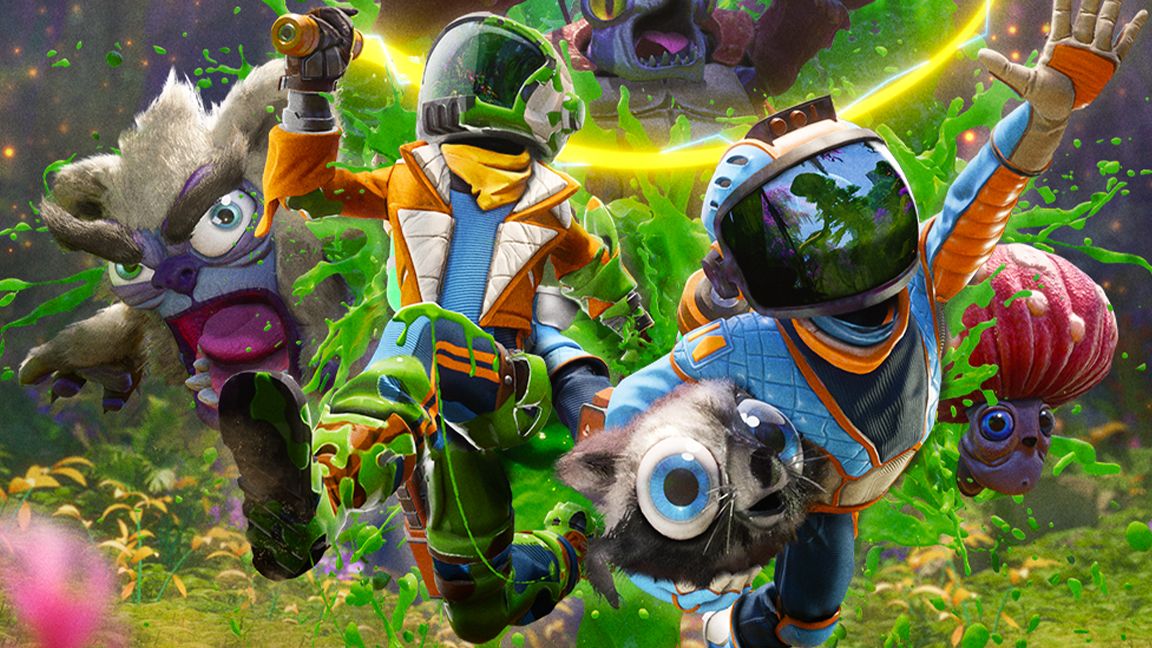
The protagonist in Revenge of the Savage Planet is a goofy, bobble-headed lanky klutz who runs like a Looney Tune and isn’t averse to chaotically slipping and sliding about the game’s sprightly-coloured alien worlds on patches of alien slime.

Revenge of the Savage Planet: Exploring Comedy

The world of Revenge of the Savage Planet is just as fun and wonderfully detailed. Built in Unreal Engine 5, the game’s environments feels alive and complex. In my demo, Reid Schneider, Raccoon Logic’s studio head and co-founder, takes me on a tour of two of the game’s ‘savage planets’, one an acid-green forest layered with pink-leafed trees and a desert world that manages to splash colour into its sandy nooks.

So now we have two pillars, a protagonist that’s a joy to spend time with and a world that’s ripe for exploration. So what do you do in Revenge of the Savage Planet? Essentially, it’s a game that celebrates its main strengths and challenges you to explore these worlds, scanning life forms, shooting critters and gathering resources to craft new gadgets to open up the world to more exploration, blasting and gathering.

Revenge of the Savage Planet has found its voice

There are layers to the game’s world design that shine in my demo. It’s said that good level design is about distracting you from your goals, teasing you off the beaten path with new rewards. It’s something Revenge of the Savage Planet is doing incredibly well.

Conclusion

Herein lies the balance being pitched with Revenge of the Savage Planet, it’s both a visually arresting game that offers unusual alien worlds ripe for exploration while underpinning everything with biting satire and broad comedy. And we’re back to simply enjoying moving in the game, watching the protagonist slide on slime (at one point the character shoots slime out ahead of himself to slip down dunes and slopes, alluding to the physics-based game design) and running in a gangly, chaotic ‘knees-up’ manner through deep water (animation that’s inspired by the Californian surf running subculture).

FAQs

Q: What is the release date of Revenge of the Savage Planet?
A: The release date of Revenge of the Savage Planet is May 2025.

Q: Who is the developer of Revenge of the Savage Planet?
A: The developer of Revenge of the Savage Planet is Raccoon Logic Studios.

Q: What is the platform of Revenge of the Savage Planet?
A: The platform of Revenge of the Savage Planet is Unreal Engine 5.

Q: What is the genre of Revenge of the Savage Planet?
A: The genre of Revenge of the Savage Planet is action-adventure.

Q: Is Revenge of the Savage Planet a single-player game?
A: Yes, Revenge of the Savage Planet is a single-player game.

Safer GenAI Tools

0

CrowdStrike Survey: GenAI in Cybersecurity – 5 Key Findings

CrowdStrike commissioned a survey of 1,022 cybersecurity professionals worldwide to assess their views on generative AI (GenAI) adoption and its implications. The findings reveal enthusiasm for GenAI’s potential to bolster defences against increasingly sophisticated threats, but also trepidation over risks such as data exposure and attacks on GenAI systems.

Platform-based GenAI is Favored

80% of respondents indicated a preference for GenAI delivered through integrated cybersecurity platforms rather than standalone tools. Seamless integration is cited as a crucial factor, with many preferring tools that work cohesively with existing systems.

GenAI Built by Cybersecurity Experts is a Must

Security teams believe GenAI tools should be specifically designed for cybersecurity, not general-purpose systems. 83% of respondents reported they would not trust tools that provide "unsuitable or ill-advised security guidance."

Augmentation, Not Replacement

Despite growing fears of automation replacing jobs in many industries, the survey’s findings indicate minimal concerns about job displacement in cybersecurity. Instead, respondents expect GenAI to empower security analysts by automating repetitive tasks, reducing burnout, onboarding new personnel faster, and accelerating decision-making.

ROI Outweighs Cost Concerns

For organizations evaluating GenAI investments, measurable return on investment (ROI) is the paramount concern, ahead of licensing costs or pricing model confusion. Respondents expect platform-led GenAI deployments to deliver faster results, thanks to cost savings from reduced tool management burdens, streamlined training, and fewer security incidents.

Guardrails and Safety are Crucial

GenAI adoption is tempered by concerns around safety and privacy, with 87% of organizations either implementing or planning new security policies to oversee GenAI use. Key risks include exposing sensitive data to large language models (LLMs) and adversarial attacks on GenAI tools. Respondents rank safety and privacy controls among their most desired GenAI features, highlighting the need for responsible implementation.

Conclusion

The CrowdStrike survey concludes that GenAI is not a silver bullet but has tremendous potential to improve cybersecurity outcomes. As organizations evaluate its adoption, they will prioritize tools that integrate seamlessly with existing platforms, deliver faster response times, and ensure safety and privacy compliance.

FAQs

Q: What is the primary concern for organizations evaluating GenAI investments?
A: Measurable return on investment (ROI)

Q: How do security teams view the role of GenAI in their work?
A: GenAI will empower security analysts by automating repetitive tasks, reducing burnout, and accelerating decision-making

Q: What are the key risks associated with GenAI adoption?
A: Data exposure, attacks on GenAI systems, and lack of safety and privacy controls

Q: What is the expected ROI from GenAI deployments?
A: 31% from cost optimisation, 30% from fewer incidents, and 26% from reduced management time

The Biggest Logo Design Trends for 2025

0

Logo Design Trends in 2025

01. Wordmarks with a Twist

Let’s start with some welcome positivity. Beth Andlaw, co-founder of FORM Brands Studio, is upbeat about how logo design is evolving as we enter the second half of the 2020s. "As we move towards 2025, it’s a great time for logo design. The industry is becoming braver, and the result is some weird and wonderful designs starting to emerge. Minimalism is still leading the way, but the focus is shifting. The best designs aren’t just sleek; they’re clever and meaningful, telling a story with as little as possible."

What might that look like in practice? "A trend I hope to see carry on into next year are stripped-back wordmarks with a clever twist," says Callum Richards, senior designer at How&How. "A good example is Koto’s new logo for Kit, the email-first operating system for creators previously known as ConvertKit. These are always a nice surprise and manage to pack so much into so little."

02. Breaking Away from Cliché

For many years, we’ve heard the same complaint from readers when we showcase new logo designs: "it’s too generic." But Mike Goldsworthy, creative lead at ilk agency, believes that’s starting to change. "Companies and organisations have been ditching the same-old-same-old recently, and I think that’s only going to grow," he says. "Take the automotive world, for example. For years, brands have leaned into a fleet of masculine, angular, chiselled logos – designs that wouldn’t look out of place on a men’s razor brand. Enter Jaguar’s in-house design team. Jaguar’s latest rebrand is one of the most talked-about this year, and they’ve fully embraced a more approachable and inclusive design. Though, in doing so, some might say they’ve left the heart and soul of Jaguar on the back seat."

03. Experimental Typography

Katy Hopkins, executive creative director at Iris, predicts that a lot more bold, expressive fonts will make their way into logo design in 2025. "I think we’ll see different experimental typography bring personality to brand identities," she says. "Playing with shape, weight, and motion to create unconventional fonts. Creating stretched effects and fluid formations. It’s a great way to catch attention and make a statement."

04. Human Connection

Whichever direction designers go with their logos in 2025, Beth believes that at the heart of all this is a focus on human connection. "A great logo isn’t just about looking good; it’s about feeling right," she reasons. "Whether it’s through simplicity, bespoke details, or a nostalgic touch, logos that are thoughtful and idea-driven will stand the test of time."

05. Two Paths to Choose

Some of these logo trends seem to run counter to each other, so it’s clear that the future is not all going in the same direction. However, Lucas Luz, art director at &Walsh, believes that they basically boil down to two possible paths for logos in 2025. "At &Walsh, we see two possible paths for logos in the coming years," he explains. "One sees them becoming highly intricate, drawing on historical elements of the brand to evoke a sense of nostalgia and credibility. For example, we designed an intricate logo for full-service agency QX, which is a great example of a brand unafraid to embrace a logo with rich details and personality. It becomes even more elaborate in its three-dimensional version.

06. Making the Logo Smaller

Finally, we’ve talked about how logos are designed. But the ways they are used is also changing, believes Kate Moldan, account manager at Redpill. "The days of showcasing large, bold logos across digital content are coming to an end," she says. "Brands are increasingly prioritizing the expression of their identity through language, behavior, and authentic storytelling rather than relying heavily on logo visibility. Some examples are some recent examples are: Dove’s The Code and LEGO’s Play is Your Superpower campaign."

Conclusion

In conclusion, logo design is more than just a visual identifier; it’s the cornerstone of a brand’s identity. As we move into 2025, it’s clear that the industry is becoming bolder and more experimental, blending tradition with modernity to craft logos that connect on a deeper level.

FAQs

Q: What are the key trends in logo design in 2025?
A: Wordmarks with a twist, breaking away from cliché, experimental typography, human connection, and making the logo smaller.

Q: What is the focus of logo design in 2025?
A: Human connection, simplicity, and idea-driven design.

Q: What are some examples of logo design trends in 2025?
A: Koto’s logo for Kit, Jaguar’s rebrand, and Dove’s The Code campaign.

Q: What is the future of logo design?
A: More experimentation, boldness, and connection with the audience.

UK to Force Greater Transparency on AI Training Models

UK Consultation Seeks to Open Up Copyrighted Material for AI Training

Tech companies may be forced to open their artificial intelligence models to greater scrutiny in the UK, in an effort to stop the creative industries having their work being reproduced without compensation.

New Exemption to Copyright Laws

In a consultation announced on Tuesday, the UK government will offer an exemption to copyright laws, letting tech companies use material ranging from music and books to media and photos to train their AI models unless the rights holder objects under a so-called “rights reservation” system.

Anger Among Creative Industries

The plans to open up copyrighted material for training purposes are likely to anger many in the creative industries, with executives warning that the UK is at risk of undermining one of the country’s largest and most successful drivers of economic growth.

Having in effect to “opt out” of the use of their work in AI models could be costly, difficult to monitor and time-consuming for artists and creatives, they argue.

Tech Sector Concerns

However, the consultation will also alarm parts of the tech sector, given the plans include AI firms having to be more transparent on the data they use to train models and on how the content they then generate is labelled.

The UK government said on Tuesday that tech companies could be “required to provide more information about what content they have used to train their models . . . to enable rights holders to understand when and how their content has been used in training AI”.

Culture Minister’s Remarks

Culture minister Sir Chris Bryant said the government would force through transparency over both AI input and output — making clear what a model was trained on, and whether something was produced by AI.

“This can deliver for the creative industries if we get this right. All these parts are contingent on each other. We want to be able to deliver legal clarity and legal certainty because both sides say that doesn’t exist at the moment,” he said.

Conclusion

The UK government’s consultation aims to strike a balance between the creative industries and the tech sector, while ensuring that AI models are transparent and accountable. While the plans may face opposition from both sides, officials believe that a rights reservation regime could deliver legal certainty and benefits for both creators and AI firms.

FAQs

What is the purpose of the consultation? The consultation aims to introduce an exemption to copyright laws, allowing tech companies to use copyrighted material for AI training purposes unless the rights holder objects.

How will the exemption work? Tech companies will need to use a rights reservation system, where they disclose what copyrighted material they use to train their AI models, and label the content generated by those models.

What are the concerns of the creative industries? Artists and creatives are worried that having to “opt out” of the use of their work in AI models could be costly, difficult to monitor and time-consuming.

What are the concerns of the tech sector? Tech companies are concerned about the potential for increased regulation and the need to disclose sensitive information about their AI models.

What is the expected outcome of the consultation? The government hopes to introduce a rights reservation regime that balances the needs of the creative industries and the tech sector, while ensuring legal certainty and transparency.

Creatives are more optimistic about AI

0

AI Technology in the Creative Sector: A Shift Towards Acceptance

Despite its rapid advancement over the past few years, AI technology is still a highly divisive topic in the creative sector. While there are tools to help refine and streamline creative practices, concerns around copyright and artistic authenticity often outshine the practical uses of AI in the industry, leading to an understandable sense of mistrust.

A Recent Study Suggests a Shift in Perspective

Despite this, it seems creatives are slowly becoming more AI agnostic after a recent study from type and technology company Monotype revealed that designers are feeling increasingly optimistic about AI tools. From photo editing software to productivity tools, AI is slowly creeping into creative practice and perhaps Monotype’s study is a promising reflection that resistance is easing.

Monotype’s Study: A Promising Reflection

Monotype commissioned the study from independent market research company Censuswide which surveyed 4,777 graphic designers, type designers, and brand leaders across the world. In a shocking revelation, it was revealed that “91% of designers and creatives surveyed believe that AI and AI tools can be useful for their work in the type industry.” Results also showed that designers were more likely to be optimistic (34%) or neutral (23%) about AI being used in their roles, with 21% still feeling pessimistic towards the advancing technology.

How Creatives are Using AI

What’s important to note is how creatives are using AI, and what tools they prioritize in their practice. The most valuable use was “being able to visualize typography in real-world scenarios”, which 45% of creatives agreed with alongside “suggesting font pairings”. Speeding up typical design workflows and discovering new fonts both resulted in 43% agreement among creatives revealing that some creatives are open to embracing AI to streamline their workflow.

AI in the Creative Process

“At Monotype, we are leveraging AI to give creatives and designers great new user experiences and remove some of the more laborious, repetitive tasks so they can focus on accomplishing their goals,” says Mary Catherine Pflug, senior director of partner experience & inventory lifecycle at Monotype.

“Our research reveals that, to the contrary, most creatives and designers are positive about the potential of AI and AI-enabled tools for their work when they understand its power to democratize design through enhancing, amplifying, and accelerating human creativity, ” adds Monotype’s CEO Ninan Chacko. “By leveraging the power of AI judiciously, we are making great typography more accessible and helping design professionals around the world elevate brands with career-defining work,” he adds.

Conclusion

It’s interesting to see a shift towards more AI acceptance in the creative industries after a year of such intense AI contention. With Adobe’s AI backlash back in June and tons of creatives flocking to Cara amidst Instagram’s controversial AI scraping drama, it seemed that the creative community was staunchly against AI. As the technology develops and regulations increase, it seems we could see a future where AI and human creativity can coincide.

FAQs

Q: What is the main takeaway from Monotype’s study?
A: The study reveals that 91% of designers and creatives believe AI and AI tools can be useful for their work in the type industry.

Q: How are creatives using AI in their practice?
A: According to the study, the most valuable use of AI is “being able to visualize typography in real-world scenarios”, followed by “suggesting font pairings”, speeding up typical design workflows, and discovering new fonts.

Q: What does Monotype plan to do with the data from the study?
A: Monotype plans to leverage AI to give creatives and designers great new user experiences and remove some of the more laborious, repetitive tasks so they can focus on accomplishing their goals.

Sandboxing Agentic AI Workflows with WebAssembly

0

Structuring the Agent Workflow

In the simplest agentic workflow, your LLM may generate Python that you eventually pass to eval. For example, a prompt equivalent to generate the python code to make a bar chart in plotly would return:

import plotly.graph_objects as go
fig = go.Figure(data=go.Bar(x=["A", "B", "C"], y=[10, 20, 15]))
fig.update_layout(title="Bar Chart Example")

Your agent would pass this into eval to generate the plot as shown in Figure 1.

Using Python in the Browser

Pyodide is a port of CPython into Wasm to create a sandbox that may be used inside existing JavaScript virtual machines. This means that we can execute Python client-side to inherit all of the security benefits of a browser sandbox.

By designing the application to serve HTML with the Pyodide runtime and the LLM-generated code as shown in Figure 2, application developers can shift the execution into the users’ browsers, gaining the security of sandboxing and preventing any cross-user contamination.

Improving Application Security with Wasm

Imagine a scenario where the LLM returns malicious code, either as a result of prompt injection or error. In the case of the simplest agentic workflow, the call to eval results in the compromise of the application, potentially impacting the host operating system and other users as shown in Figure 3.

However, after applying the Wasm flow, there are two possible cases illustrated in Figure 4. First, the application may throw an error because the malicious Python code cannot be executed in the narrowly scoped Pyodide runtime (that is, a missing dependency).

Second, if the code does execute, it is restricted to the browser sandbox which greatly limits any potential impact to the end user’s device.

Get Started

Sandboxing LLM-generated Python with WebAssembly offers a convenient approach, requiring minimal changes to existing prompts and architectures. It is cost-effective by reducing compute requirements, and provides both host and user isolation with improved security of the service and its users. It is more robust than regular expressions or restricted Python libraries, and lighter weight than containers or virtual machines.

To get started improving application security for your agentic workflows using Wasm, check out this example on GitHub. Learn more about AI agents and agentic workflows.

Conclusion

Using Pyodide with WebAssembly provides a powerful and secure way to execute LLM-generated Python in the browser, while ensuring the security of the service and its users. With minimal changes to existing architectures and prompts, you can improve application security and reduce the risk of malicious code execution.

FAQs

Q: What is Pyodide?
A: Pyodide is a port of CPython into Wasm to create a sandbox that may be used inside existing JavaScript virtual machines.

Q: What are the benefits of using Pyodide with Wasm?
A: Using Pyodide with Wasm provides both host and user isolation with improved security of the service and its users, while reducing compute requirements and being more robust than regular expressions or restricted Python libraries.

Q: How do I get started with using Pyodide with Wasm?
A: Check out this example on GitHub and learn more about AI agents and agentic workflows.

Mastering Angular: Top 10 Topics for Building Scalable Web Applications

0

Angular Essentials

1. Angular Architecture

Key Concepts:

  • Modules (NgModule): Organizes an application into cohesive blocks.
  • Components: Define UI and handle logic for specific views.
  • Templates: HTML that includes Angular’s syntax for dynamic views.
  • Directives: Modify HTML elements.
  • Services: Encapsulate business logic, reusable across components.
  • Dependency Injection (DI): Inject services into components to manage dependencies.

Graph Example:

Modules (NgModule)
     |
 Components <--> Templates
     |
 Directives (Structural, Attribute)
     |
 Services --> Injected into Components

2. Components and Templates

Key Features:

  • Component Lifecycle Hooks: Define behavior during component creation, updates, and destruction.
  • Data Binding:
    • Interpolation ({{}}): Display data dynamically.
    • Property Binding ([property]): Bind DOM properties to component data.
    • Event Binding ((event)): Listen to user actions like clicks.
    • Two-Way Binding ([(ngModel)]): Sync data between the view and the component.
    • Template Reference Variables: Define reusable DOM elements using #var.

Graph Example:

Component (Logic + Data) <-- Data Binding --> Template (View)
Lifecycle Hooks: Init -> Update -> Destroy

3. Modules

Key Types:

  • Root Module (AppModule): Entry point for the application.
  • Feature Modules: Focus on specific features like user management or product display.
  • Shared Modules: Contain reusable components, directives, and pipes.
  • Lazy Loading: Load modules only when needed to reduce the initial load time.

Graph Example:

AppModule (Root)
  |
Feature Modules (Lazy Loaded) --> Shared Module

4. Routing and Navigation

Key Features:

  • Router Module Configuration: Map URLs to components.
  • Route Guards: Control access to routes.
  • Example: Use CanActivate to prevent unauthorized users.
  • Lazy Loading: Load routes and their modules on-demand.
  • Query Parameters and Route Parameters:
    • Query Params: /products?category=electronics
    • Route Params: /products/:id

Graph Example:

Router Module
  |
Routes --> Guards (Access Control)
  |
Child Routes

5. Dependency Injection

Key Concepts:

  • Hierarchical Injector: Angular maintains a tree of injectors for modules, components, and services.
  • Singleton Services: A service that is instantiated once and shared across the app.
  • Injection Tokens: Custom identifiers for dependencies.

Benefits:

  • Reduces coupling.
  • Increases code reuse.

Graph Example:

Module Injector --> Component Injector --> Child Injector
  |
 Services (Shared Logic)

6. Forms

Key Concepts:

  • Template-Driven Forms: Simple and declarative.
  • Reactive Forms: More control using FormBuilder and FormGroup.
  • Common Features:
    • Validators: Built-in (required, minLength) and custom.
    • Dynamic Forms: Generate form controls programmatically.

Graph Example:

Template-Driven Forms  <---> Form Template
Reactive Forms         <---> Component Logic

7. Observables and RxJS

Key Concepts:

  • Observables: Streams of data.
  • Subjects: Multicast streams.
  • Operators:
    • map: Transform data.
    • filter: Filter data based on conditions.
    • switchMap: Handle nested Observables.

Example Use Case: Handle real-time search results by emitting data from a search input box.

Graph Example:

Observable Stream --> Operators (Filter, Map) --> Subscriber (View/Logic)

8. HTTP Client

Key Features:

  • CRUD Operations: Perform GET, POST, PUT, DELETE.
  • Interceptors: Modify requests globally or handle errors.
  • Observables: Use RxJS to handle async HTTP requests.

Example: A GET request to fetch user data: /api/users. Use an interceptor to attach authentication tokens.

Graph Example:

HTTP Client --> Interceptor (Modify Request) --> API Server

9. Pipes

Key Concepts:

  • Built-in Pipes: Predefined transformations.
  • DatePipe: Format dates.
  • CurrencyPipe: Format currency.
  • Custom Pipes: Create specific transformations.
  • Pure vs. Impure Pipes:
    • Pure Pipes: Efficient, run only when inputs change.
    • Impure Pipes: Recalculate on every change detection.

Graph Example:

Data (Input) --> Pipe --> Formatted Data (Output)

10. Angular CLI

Key Features:

  • Generate: Create components, services, etc., using CLI commands.
  • Build and Serve: Run the application locally or for production.
  • Configuration: Customize builds using angular.json.

Graph Example:

Developer --> Angular CLI --> Code Generation, Building

Conclusion

Angular is a powerful framework for building complex web applications. By mastering these essential concepts, you’ll be well on your way to building scalable, maintainable, and efficient applications.

FAQs

Q: What is the difference between a component and a directive?
A: A component is a self-contained piece of UI, while a directive is a small piece of code that modifies the behavior of an element.

Q: How do I handle errors in Angular?
A: Use the trycatch block or the error property in the component lifecycle hooks.

Q: What is the purpose of dependency injection in Angular?
A: Dependency injection helps to decouple components from services and promotes loose coupling.

Q: How do I use Observables in Angular?
A: Use the Observable class from RxJS and subscribe to the observable stream in your component.

Q: What is the difference between a pure and impure pipe?
A: A pure pipe runs only when the input changes, while an impure pipe recalculates on every change detection.