Home Blog Page 489

The New WWE RAW Logo Isn’t as Bad as I Thought

0

WWE RAW Logo Revamp: A Masterclass in Design

Back in November, wrestling fans were pretty disappointed when the potential new WWE RAW logo was revealed during the Mike Tyson vs Jake Paul fight. Thankfully, the wrestling Gods (a.k.a WWE’s execs) were listening, blessing us with a new logo that’s a vast improvement on the old clunky monstrosity we could’ve had.

A New Era for RAW

Admittedly, the bar was pretty low, but the new RAW logo is a total KO, bringing back fond memories for classic wrestling fans. With a mix of old designs and contemporary slickness, the new wordmark is a masterclass in how to design a logo with fans at its heart.

The Reveal

In typical dramatic WWE style, the new RAW logo was revealed by CCO Paul “Triple H” Levesque in a brooding video. “A logo is an identity,” Triple H says, “It’s real. Rebellious. Raw”. A bright flood of light unveils the sleek new design, which seems to take inspiration from the 2002 and 2016 RAW logos. It’s the first design to feature white typography, likely to contrast with the Netflix logo due to the brands’ partnership.

Fan Reaction

Love the modern hybrid between the 2016 and 2002 WWE RAW logos, one X user wrote, while another added The new RAW logo is kinda like a modern Ruthless Aggression RAW logo in reverse. I like it! Others were just grateful to see the hugely unpopular potential design laid to rest. I can say that this new WWE RAW logo is way better than the other one we got, another fan on X chimed in.

Conclusion

The new WWE RAW logo is a welcome change, blending classic design elements with modern flair. It’s a testament to the power of listening to fans and incorporating their feedback into the design process. With this new logo, WWE has set a high standard for future branding decisions.

FAQs

Q: What inspired the new WWE RAW logo?
A: The new logo takes inspiration from the 2002 and 2016 RAW logos, blending classic design elements with modern flair.

Q: Why is the new logo a departure from the previous design?
A: The previous design was met with widespread criticism, leading WWE to re-evaluate and create a new logo that better represents the brand.

Q: Will the new logo be used across all WWE platforms?
A: Yes, the new logo will be used across all WWE platforms, including TV, social media, and merchandise.

Q: Can I use the new logo for personal or commercial purposes?
A: No, the new logo is copyrighted by WWE and should only be used for official purposes. Any unauthorized use may be subject to legal action.

Doctor Support for Virtual Care

0

New Report Highlights Physicians’ Preference for Permanent Telemedicine Integration

Why It Matters

A recent report from Doximity, a telemedicine platform for healthcare providers, reveals that 83% of physician telemedicine users prefer that virtual care remain a permanent part of their clinical practice. The study also explores the views of telehealth patients, with 96% reporting equivalent or superior overall medical care and 78% indicating that telehealth visits improved their access to healthcare services.

Physician and Patient Perspectives

The research analyzed how digital applications contributed to patient outcomes and physician workflows by studying how physician members across all specialties and practice areas utilized telemedicine tools throughout 2023. Physicians credited virtual care for reducing patient wait times and missed appointments, addressing patients’ social determinants of health, and improving continuity of care for patients with chronic or complex conditions.

Demographics and Utilization

Physicians of all age groups utilized telehealth, with those under the age of 50 accounting for nearly three-fourths (74%) of Doximity’s telemedicine users last year. The report also found that 77% of physician telemedicine users surveyed reported using telemedicine at least weekly, and 35% reported using it daily.

Patient Feedback

Among patients surveyed, 96% emphasized telehealth’s role as a complement to or replacement for in-person care. A strong majority of patients (82%) also said they believe telemedicine helps them stay up to date with their care.

Conclusion

The findings from this study indicate that telemedicine and in-person care are allies, not competitors, in providing timely, comprehensive, and patient-focused care. With virtual visits, physicians can maintain regular touch points with their patients, and the majority of physicians reported telemedicine has contributed to better disease management and improved patient satisfaction.

FAQs

Q: What percentage of physician telemedicine users prefer permanent telemedicine integration?
A: 83%

Q: What percentage of telehealth patients reported equivalent or superior overall medical care?
A: 96%

Q: What percentage of telehealth patients indicated that telehealth visits improved their access to healthcare services?
A: 78%

Q: What specialties are most likely to use telehealth for ongoing care management?
A: Endocrinology, urology, gastroenterology, rheumatology, and neurology

Q: What percentage of physicians reported telemedicine has helped to improve patient outcomes in their practices?
A: 64%

Q: What percentage of patients believe telemedicine helps them stay up to date with their care?
A: 82%

People Don’t Want AI Phones

0

Apple Enters AI Race, but Survey Reveals Disillusionment with AI Features

Apple has finally entered the AI race with the rollout of Apple Intelligence across its range of products, but it seems like an uphill battle. A new survey by Sellcell reveals that most smartphone users are unsatisfied with AI features, despite their device’s capabilities.

A Disillusioned Majority

According to the survey, 73% of iPhone users and 87% of Samsung users agree that AI features add little or no value to their daily lives. This finding suggests that even the most advanced AI features may not be enough to sway consumer opinions.

Samsung Users’ Higher Expectations

Interestingly, Samsung users, on the other hand, show higher expectations from their device’s AI capabilities. Only 47.6% of iPhone users believe AI is a key factor in deciding on a new phone, whereas 65% of Samsung users think so.

Paid AI Features Not an Attractive Option

The survey also revealed that most smartphone users are unwilling to pay for AI features. Only 11.6% of Apple users and 4% of Samsung users are willing to pay for AI-related subscriptions. This lack of interest in paid AI features suggests that users do not see AI as a significant selling point.

Why Users are Disillusioned

The survey uncovered several reasons for users’ dissatisfaction with AI features. Most users (57.6%) stated that they did not have the latest software installed, making it difficult to utilize AI capabilities. Additionally, 36.7% of users reported that AI features are not useful, and 18.2% did not trust AI or its accuracy.

The Way Forward

The survey suggests that educating users about AI features and their benefits could be a key factor in changing perceptions. As it stands, 46.7% of iPhone users are unsure about AI and how it compares to Galaxy AI, highlighting the need for improved education and awareness.

Conclusion

The survey presents a bleak picture for AI adoption in the smartphone industry. With most users disenchanted with AI features, it is essential for manufacturers to reevaluate their approach and focus on delivering tangible benefits that enhance user experiences.

Frequently Asked Questions

Q: What was the methodology used in the survey?

A: The survey was conducted by Sellcell and involved over 2,000 smartphone users.

Q: Which percentage of iPhone users and Samsung users agree that AI features add little or no value to their daily lives?

A: 73% of iPhone users and 87% of Samsung users agree that AI features add little or no value to their daily lives.

Q: How many Apple users are willing to pay for AI-related subscriptions?

A: 11.6% of Apple users are willing to pay for AI-related subscriptions.

Q: What was the main reason for users not using AI features, according to the survey?

A: The main reasons were lack of latest software installed (57.6%), lack of usefulness (36.7%), and lack of trust in AI or its accuracy (18.2%).

Amazon Doubles Anthropic Investment to $8B

0

Amazon Announces Additional $4 Billion Investment in Anthropic, Strengthening AI Strategy

Amazon has announced an additional $4 billion investment in Anthropic, bringing the company’s total commitment to $8 billion, part of its expanding artificial intelligence strategy. The investment was announced on November 22, 2024, and strengthens Amazon’s position in the AI sector, building on its established cloud computing services in the form of AWS.

AWS’s Competitive Edge

The continuing partnership provides Amazon with several strategic advantages in the competitive cloud computing and AI services market:

  • Hardware Innovation: The commitment to use AWS Trainium and Inferentia chips for Anthropic’s advanced AI models validates Amazon’s investment in custom AI chips and positions AWS as a serious competitor to NVIDIA in the AI infrastructure space.
  • Cloud Service Enhancement: AWS customers will receive early access to fine-tuning capabilities for data processed by Anthropic models. This benefit alone could attract more enterprises to Amazon’s cloud platform.
  • Model Performance: Claude 3.5 Sonnet, Anthropic’s latest model available through Amazon Bedrock, has demonstrated exceptional performance in agentic coding tasks, according to Anthropic.

Amazon’s Multi-Faceted AI Strategy

While the increased investment in Anthropic is impressive in monetary terms, it represents just one component of Amazon’s broader AI strategy. The company appears to be pursuing a multi-pronged approach:

  • External Partnerships: The Anthropic investment provides immediate access to cutting-edge AI capabilities from third-parties.
  • Internal Development: Amazon continues to develop its own AI models and capabilities.
  • Infrastructure Development: Ongoing investment in AI-specific hardware like Trainium chips demonstrates a commitment to building AI-focussed infrastructure.

Conclusion

The expanded partnership signals Amazon’s long-term commitment to AI development yet retains flexibility thanks to its minority stakeholding. This approach allows Amazon to benefit from Anthropic’s innovations while preserving the ability to pursue other partnerships with external AI companies and continue internal development initiatives.

Frequently Asked Questions

Q: What is the total investment Amazon has made in Anthropic?
A: Amazon has made a total investment of $8 billion in Anthropic.

Q: What is the significance of Amazon’s investment in Anthropic?
A: The investment strengthens Amazon’s position in the AI sector and provides access to cutting-edge AI capabilities from third-parties.

Q: What are the benefits of using AWS Trainium and Inferentia chips for AI model development?
A: The chips provide improved performance and efficiency for AI model training and deployment.

Q: What is Amazon’s approach to AI development?
A: Amazon is pursuing a multi-pronged approach, including external partnerships, internal development, and infrastructure development.

CryptoCrossover

0

AI-Driven Tools Revolutionize Business Operations

Watch the livestream here: https://www.youtube.com/watch?v=4R9kaZAtxlE&t=6644s

Transforming Business with AI

The world of business is undergoing a significant transformation, driven by the power of Artificial Intelligence (AI). AI-powered tools are revolutionizing the way companies operate, from automating routine tasks to making data-driven decisions. In this livestream, we explored the latest advancements in AI-driven tools and their impact on businesses.

Key Takeaways

* AI-powered tools are increasing efficiency and reducing costs for businesses
* AI-driven decision-making is improving accuracy and reducing biases
* AI-powered automation is freeing up human resources for more strategic tasks

Real-World Examples

We showcased several real-world examples of businesses that have successfully implemented AI-driven tools. From predictive maintenance to customer service chatbots, AI is being used to improve operations and drive growth.

Conclusion

The potential of AI-driven tools is vast, and it’s clear that businesses that adopt these technologies will be the ones that thrive in the future. By automating routine tasks, making data-driven decisions, and freeing up human resources, AI-powered tools are revolutionizing the way we do business.

FAQs
Q: What are AI-driven tools?

A: AI-driven tools are software applications that use Artificial Intelligence to automate tasks, make decisions, and improve operations.

Q: How can AI-powered tools benefit my business?

A: AI-powered tools can increase efficiency, reduce costs, and improve decision-making accuracy, leading to increased revenue and growth.

Q: What are some examples of AI-powered tools?

A: Examples include chatbots, predictive maintenance software, and data analytics platforms.

Q: How can I get started with AI-driven tools?

A: Start by exploring the latest advancements in AI-driven tools and identifying areas where they can benefit your business. Consult with industry experts and implement pilot projects to test the effectiveness of these tools.

Follow me on X: https://x.com/mreflow

#AINews #AITools #ArtificialIntelligence

Source

Meta Ray-Ban Smart Glasses Get AI Upgrade

0

Meta’s Ray-Ban Glasses Get Smarter with New AI Features

Meta’s Ray-Ban smart glasses are getting a boost with the introduction of three new features, including live AI, live translation, and Shazam integration. These features are rolling out to Early Access program members first, with the live AI feature available to all US and Canadian users.

Live AI

The first new feature is live AI, which adds video support to the existing AI capabilities of the glasses. With live AI, you can ask questions about what you’re seeing and get more natural responses. For example, if you’re cooking, you can ask, "How much salt did you say I needed for that stew recipe?" or "Do you see a substitute for butter, and how much would I need?" The feature can also be used to ask follow-up questions or change the topic.

Live Translation

The second feature is live translation, which allows you to translate speech in real-time between English and Spanish, French, or Italian. When someone is speaking in one of these languages, you’ll hear an English translation through your glasses’ speakers or see it as a transcript on your phone. To use this feature, you’ll need to download the languages you want to translate and select the language you want to translate.

Shazam Integration

The third feature is Shazam integration, which allows you to identify a song that’s playing nearby. Simply ask, "Hey Meta, what is this song?" and you’ll get your answer hands-free.

How It Works

Here’s how the features work together:

  • Live AI uses video support to understand what you’re seeing and provide more natural responses.
  • Live translation allows you to translate speech in real-time between English and Spanish, French, or Italian.
  • Shazam integration identifies songs playing nearby and provides the title and artist.

Frequently Asked Questions

Q: How do I get started with live AI?
A: Sign up for the Early Access program to get started with live AI.

Q: How do I use live translation?
A: Download the languages you want to translate and select the language you want to translate.

Q: How do I use Shazam integration?
A: Ask, "Hey Meta, what is this song?"

Q: Are these features available to all users?
A: Live AI is available to all US and Canadian users, while live translation and Shazam integration are available to Early Access program members.

Google Refreshes Generative AI Prohibited Use Policy

0

Google Updates Generative AI Prohibited Use Policy

The update simplifies the language, and lists prohibited behaviors with examples of unacceptable conduct.

Key Updates To Policy

The updated policy clarifies existing rules without adding new restrictions.

It specifically bans using Google’s AI tools to create or share non-consensual intimate images or to conduct security breaches through phishing or malware.

The policy states:

“We expect you to engage with [generative AI models] in a responsible, legal, and safe manner.”

Prohibited Activities

The policy prohibits using Google’s generative AI for an expansive range of dangerous, illegal, and unethical activities:

  • Illegal Activities: Engaging in or facilitating child exploitation, violent extremism, terrorism, non-consensual intimate imagery, self-harm, or other illegal activities.
  • Security Violations: Compromising security through phishing, malware, spam, infrastructure abuse, or circumventing safety protections.
  • Explicit and Harmful Content: Generating sexually explicit content, hate speech, harassment, violence incitement, or other abusive content.
  • Deception and Misinformation: Impersonation without disclosure, misleading claims of expertise, misrepresenting content provenance, or spreading misinformation related to health, governance, and democratic processes.

Exceptions Allowed

New language in the policy carves out exceptions for some restricted activities in particular contexts.

Educational, documentary, scientific, artistic, and journalistic uses may be permitted, as well as other cases “where harms are outweighed by substantial benefits to the public.”

Why This Matters

The policy update addresses the rapid advancement of generative AI technologies that create realistic text, images, audio, and video.

This progress raises concerns about ethics, misuse, and societal impact.

Looking Ahead

Google’s updated policy is now in effect, and the old and new versions are publicly available.

Leading AI companies like OpenAI and Microsoft have released their own usage rules. However, raising awareness and consistently enforcing these rules still need to be improved.

As generative AI becomes more common, creating clear usage guidelines is essential to ensure responsible practices and reduce harm.

Conclusion

Google’s updated Generative AI Prohibited Use Policy aims to promote responsible use of its generative AI products and services. The policy clarifies prohibited behaviors and provides exceptions for specific contexts. As generative AI continues to advance, it is crucial for companies to establish clear usage guidelines to ensure responsible practices and reduce harm.

FAQs

What is the purpose of the updated policy? The purpose of the updated policy is to promote responsible use of Google’s generative AI products and services.

What activities are prohibited under the updated policy? The updated policy prohibits using Google’s generative AI for illegal activities, security violations, explicit and harmful content, and deception and misinformation.

Are there any exceptions to the prohibited activities? Yes, there are exceptions for educational, documentary, scientific, artistic, and journalistic uses, as well as cases where harms are outweighed by substantial benefits to the public.

Why is the policy update important? The policy update is important because it addresses the rapid advancement of generative AI technologies and the need for clear usage guidelines to ensure responsible practices and reduce harm.

Featured Image: Algi Febri Sugita/Shutterstock

Switch 2 Leak Chaos: Separating Fact from Fiction

0

Nintendo Switch 2 Leaks and Rumors

Rumors and Leaks Galore

Rumours and leaks have been flying around about the official name, logo, and release date for the upcoming Nintendo Switch 2 console, and with a build-up of anticipation surrounding the Nintendo Switch’s mighty successor, it’s no wonder that the internet is so excited about it (and so are we).

The Latest Rumors

We’ve only had vague rumours to rely on so far, but it seems that we’re finally getting closer to the truth thanks to one anonymous Reddit user. If you’ve been following our updates on everything we know about the Nintendo Switch 2, then you’ll know that most of the tips we’ve reported on so far have been contradictory and a little silly. But this recent post from user NextHandheld in the r/NintendoSwitch2 Reddit thread might be the real deal.

Proof and Confirmation

The person claims to have got their hands on the official Switch 2 console, and its dock, with proof sent privately to Reddit moderators who are satisfied with its legitimacy. They have also confirmed a few things within the thread by responding to user questions – such as the official name being Nintendo Switch 2, the fact that a new button exists next to the home button with the letter ‘C’ (our guess would be a capture button?) and a description of the Switch 2 logo on the front panel of the dock which has led to user mockups of the logo being created.

Release Date and Timeline

Updates to the Reddit thread above state that the anonymous user was not allowed to turn the console on when viewing it, so we only have the physical hardware details for now and nothing new on the spec front. As for a release date, the internet can’t seem to agree on when we’ll get official word from Nintendo. The Reddit tipster has heard word that there will be details in January, which is much sooner than we initially predicted, with Nintendo’s fiscal year ending in March.

Accessory Brands and Product Listings

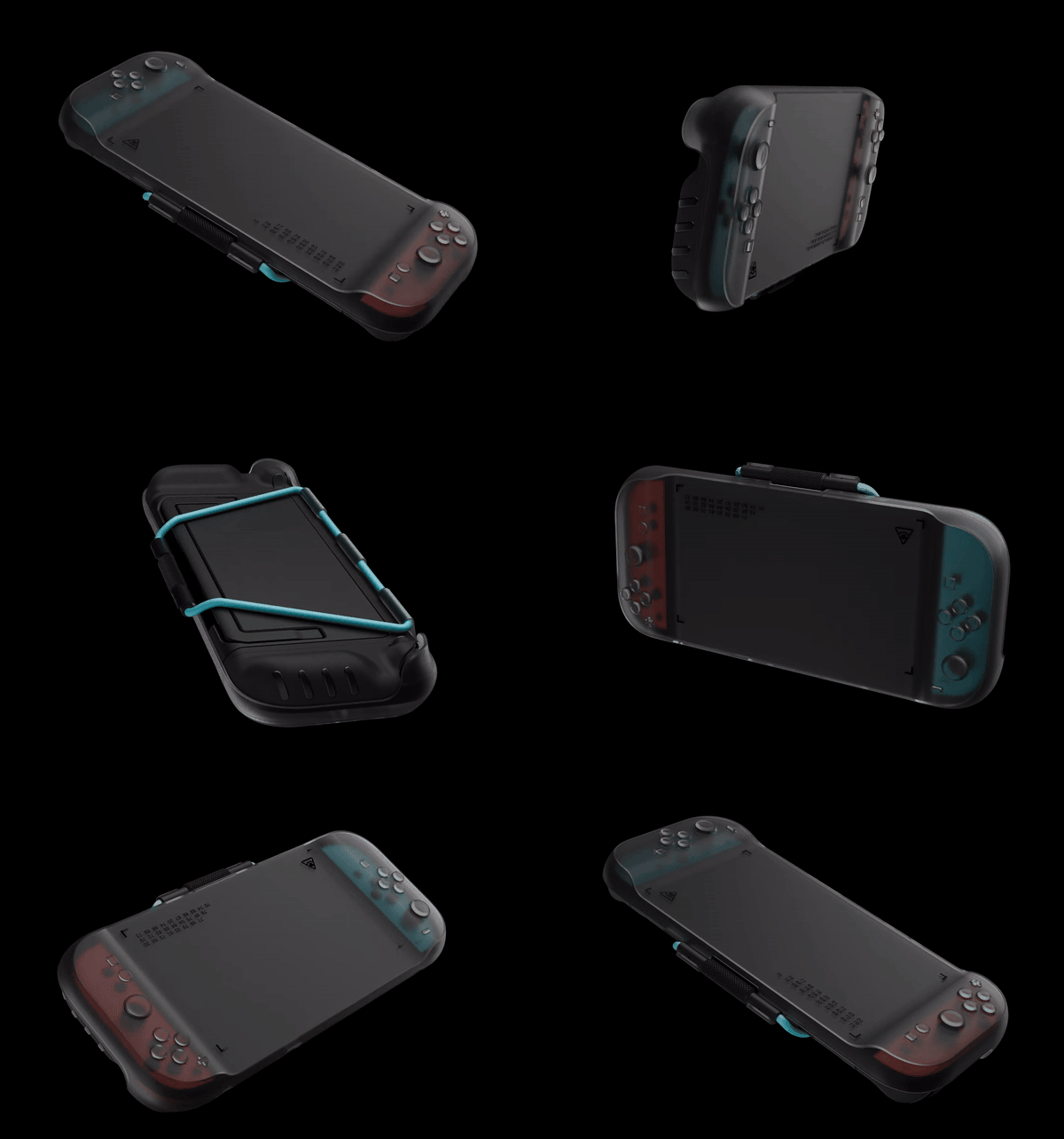
A lot of the leaks concerning the Nintendo Switch 2 have originated from accessory brands and product listings, with dbrand all but confirming the design of the console with a product render for its Killswitch case. Whether or not this was an intentional leak is unclear, but the company certainly has not held back on sharing some details in an interview with The Verge.

New Console Features

These new details from dbrand, as well as NextHandheld via Reddit, suggest that the Switch 2 console will be larger and taller than the Nintendo Switch OLED console, with slightly bigger buttons and sticks, plus magnetic-style joycons and a new C button on the right Joy-Con beneath the home button. There’s also something hinted about lasers within these new Joy-cons, and the accompanying dock has been described as curved on the edges and the back, without covering the top of the console screen.

Special Edition and New Game

Lastly, the Reddit tipster stated that there will be a special edition of the console released alongside a new game, with a hint that there is a number 9 in the title – our money is on Mario Kart 9. Before we get ahead of ourselves here, it’s worth remembering that nothing is official until we hear it directly from the horse’s mouth. The horse in this case being Nintendo. While it’s certainly worth getting excited about, we should aim to take this new information with a pinch of salt.

Conclusion

While the rumors and leaks are certainly exciting, we should remember to keep a level head and wait for official confirmation from Nintendo. The company has a reputation for surprising us, so it’s possible that we’ll see something entirely different when the Switch 2 is finally announced.

FAQs

Q: What is the release date of the Nintendo Switch 2?
A: The release date of the Nintendo Switch 2 is currently unknown, but rumors suggest that we might hear more about it in January.

Q: What are the new features of the Nintendo Switch 2?
A: According to rumors, the Switch 2 console will be larger and taller than the Nintendo Switch OLED console, with slightly bigger buttons and sticks, plus magnetic-style joycons and a new C button on the right Joy-Con beneath the home button.

Q: Is the information in the article official?
A: No, the information in the article is based on rumors and leaks from anonymous sources. It’s not official until confirmed by Nintendo.

Google’s Vision for Gemini, AI, and XR

0

Google’s Big Announcements: What’s Behind the Noise?

Google announced a bunch of new stuff last week, from Gemini 2.0 and Project Mariner to Android XR and Project Moohan. As ever with Google, it feels like a lot of stuff without necessarily a coherent plan behind it. But if you look closely enough, and start to put some of the pieces together, the combination of those announcements might add up to something like Google’s vision for the future of everything.

Episode of The Vergecast

On this episode of The Vergecast (our last Tuesday episode of the year), The Verge’s Kylie Robison and Victoria Song join the show to do some Google puzzling. They describe their experiences with all of Google’s new projects and experiments, and explain why Google thinks XR could be the killer app for AI — and vice versa.

Gaming News

After that, Chris Grant, group publisher for The Verge and Polygon, joins to talk about the two biggest 2025 stories in gaming: the impending launches of Grand Theft Auto VI and the Nintendo Switch 2. He explains why GTA is such an important and enduring gaming franchise, why he’s confident the Switch 2 won’t be like the Wii U, and why the whole gaming world is waiting for these two things so intently.

Helen’s Figma Garden

Finally, we answer a question from the Vergecast Hotline (call 866-VERGE11 or email vergecast@theverge.com!), with some help from The Verge’s publisher Helen Havlak. Helen mentioned last week that she uses Figma to manage her garden, and let’s just say you all had some follow-up questions about that. So Helen came back to explain her whole system.

Conclusion

In this episode, we dive into Google’s latest announcements, explore the world of gaming, and peek into Helen’s unique Figma garden. If you want to know more about everything we discuss, here are some links to get you started, beginning with Google.

FAQs

Q: What is Figma?
A: Figma is a design tool used to create and collaborate on user interfaces.

Q: What is Google’s vision for the future of everything?
A: Google’s vision is still unclear, but the combination of their latest announcements might add up to something like their vision for the future of everything.

Q: Why is GTA an important and enduring gaming franchise?
A: GTA is an important and enduring gaming franchise because of its engaging storyline, memorable characters, and innovative gameplay mechanics.

Q: Will the Nintendo Switch 2 be like the Wii U?
A: Chris Grant is confident that the Switch 2 will not be like the Wii U, as it will likely offer significant improvements in terms of hardware and software.

Q: How does Helen use Figma to manage her garden?
A: Helen uses Figma to create a to-scale model of her garden, allowing her to plan and manage it more effectively.

Creating a Static Website with Terraform and AWS S3

0

Here is the rewritten article:

What I’m Building

I wanted to create a simple setup where:

  • An S3 bucket hosts my website
  • Anyone can view the website (public access)
  • It shows a nice portfolio page
  • Has error handling (you know, for 404s and stuff)

The Code and What I Learned

Let me show you the code I used and explain what I learned about each part!

Setting Up the S3 Bucket

resource "aws_s3_bucket" "mybucket" {
  bucket = var.bucket_name
}

This creates our basic S3 bucket. Pretty simple start, right?

Bucket Ownership Settings

resource "aws_s3_bucket_ownership_controls" "example" {
  bucket = aws_s3_bucket.mybucket.id

  rule {
    object_ownership = "BucketOwnerPreferred"
  }
}

I learned that this part is important because it helps manage who owns the objects in the bucket. Trust me, I had some confusion about this at first!

Making the Bucket Public

resource "aws_s3_bucket_public_access_block" "example" {
  bucket = aws_s3_bucket.mybucket.id

  block_public_acls = false
  block_public_policy = false
  ignore_public_acls = false
  restrict_public_buckets = false
}

This was tricky! By default, AWS makes everything private (which is good for security). But since we want people to see our website, we need to make it public.

Setting Up the Website Files

resource "aws_s3_object" "index" {
  bucket = aws_s3_bucket.mybucket.id
  key    = "index.html"
  source  = "index.html"
  acl     = "public-read"
  content_type = "text/html"
}

resource "aws_s3_object" "error" {
  bucket = aws_s3_bucket.mybucket.id
  key    = "error.html"
  source  = "error.html"
  acl     = "public-read"
  content_type = "text/html"
}

resource "aws_s3_object" "profile" {
  bucket = aws_s3_bucket.mybucket.id
  key    = "setchuko.jpg"
  source  = "setchuko.jpg"
  acl     = "public-read"
}

This part uploads our website files to S3. I created a simple portfolio page with some dummy content and an image.

Configuring Website Hosting

resource "aws_s3_bucket_website_configuration" "website" {
  bucket = aws_s3_bucket.mybucket.id

  index_document {
    suffix = "index.html"
  }

  error_document {
    key = "error.html"
  }
}

This tells S3 to act like a web server. Pretty cool that a storage service can host websites, right?

What I Learned

  • S3 is actually pretty awesome for hosting static websites
  • Making things public in AWS requires a few steps (they really care about security!)
  • Terraform makes it easy to recreate the whole setup
  • Content types are important – got some weird issues when I forgot to set them!