Home Blog Page 507

5 Pinterest Trends to Watch in 2025

0

Rococo Revival

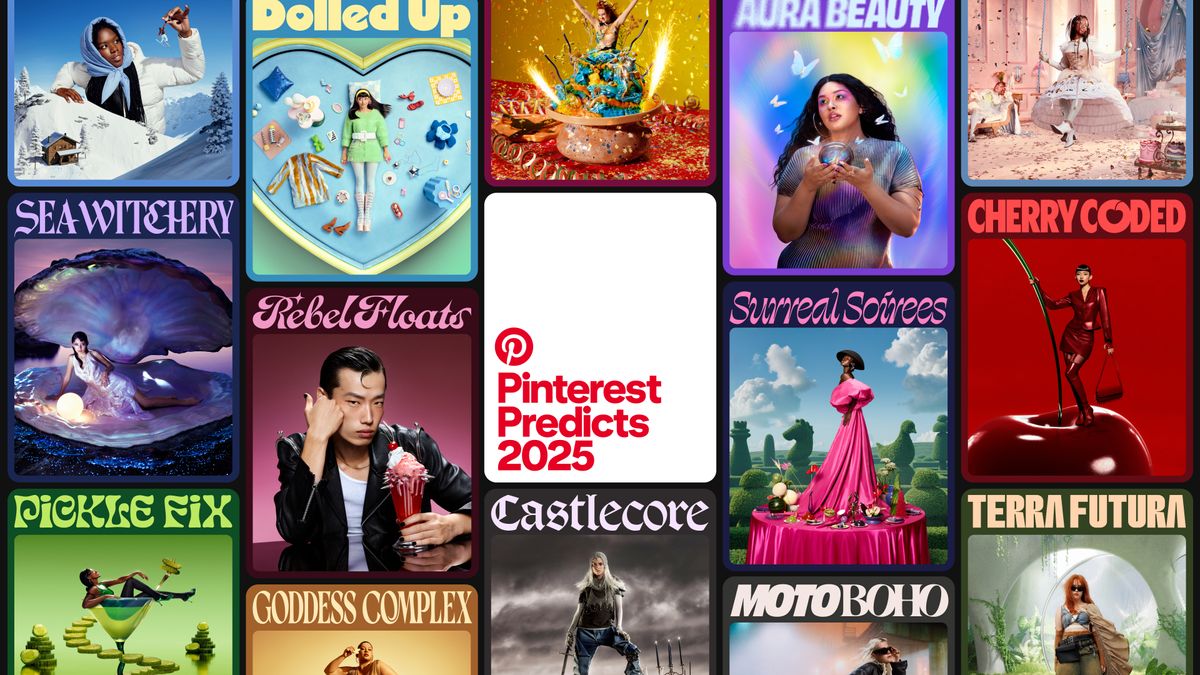
Let them eat cake! 2025 brings the promise of a Rococo-era revival – think pastel tones, frills, and over-the-top ornate design. Inspired by the late Baroque period, the Rococo revival is a celebration of the opulent and ultra-feminine. From intricate tablescapes to luxurious accessories, catch this trend cropping up across all design genres from interior to fashion.

Castlecore

Castlecore is a badass blend of medieval aesthetics and gothic imagery. With chainmail accessories, silver goblets, and worn metal hardware, this punchy trend blends contemporary style with Middle Age motifs, making for a truly unique contrast of styles. Gothic candelabras will creep into interior design while silver knightcore accessories make their way into fashion.

Pickle Fix

2025 will (supposedly) be the year of the pickle. Yes, you read that right. According to Pinterest, pickle-based searches have seen a steep rise, with ‘pickle margarita’ up by +100%. While it’s not the most glam food item, the Gen Z and Millennial infatuation towards the humble gherkin marks an era of exploration, proving that 2025 is a perfect year for experimentation and unexpected infatuations.

Moto Boho

Moto Boho is set to take over the fashion world, blending traditional flowy bohemian style with the rugged appeal of the Moto aesthetic (think big chunky boots and leather jackets). This convergence of soft and structured styles shows a move towards stylish contrast, playing with texture, color, and tone to create a unique blend of aesthetics.

Mix & Maximalist

I’m delighted to announce that minimalism is on the decline – according to Pinterest maximalism is in and it’s more eclectic than ever. Mix and Maximalist is all about combining bold patterns, prints, and textures to create a uniquely colorful array of contrasting styles that marry together for a chic eccentric look. In 2025, our decor is set to get unapologetically bold and bright with a fearless approach to layering and pattern mixing.


In conclusion, Pinterest’s 2025 design trends are a reflection of the ever-changing landscape of creative expression. From the Rococo Revival’s opulence to the Pickle Fix’s unexpected infatuation, there’s something for everyone in this eclectic mix of styles. Whether you’re a fan of bold and bright or soft and structured, 2025 is shaping up to be a year of exploration and experimentation in the world of design.


Q: What is the Rococo Revival?
A: The Rococo Revival is a design trend inspired by the late Baroque period, characterized by pastel tones, frills, and over-the-top ornate design.

Q: What is Castlecore?
A: Castlecore is a design trend that blends medieval aesthetics and gothic imagery, featuring chainmail accessories, silver goblets, and worn metal hardware.

Q: Why is 2025 the year of the pickle?
A: According to Pinterest, pickle-based searches have seen a steep rise, with ‘pickle margarita’ up by +100%. This marks an era of exploration and unexpected infatuations.

Q: What is Moto Boho?
A: Moto Boho is a fashion trend that blends traditional flowy bohemian style with the rugged appeal of the Moto aesthetic, featuring big chunky boots and leather jackets.

Q: What is Mix & Maximalist?
A: Mix & Maximalist is a design trend that combines bold patterns, prints, and textures to create a unique blend of contrasting styles, characterized by a fearless approach to layering and pattern mixing.


The Ongoing AI Revolution is Reshaping the World, One Algorithm at a Time

0

The Rise of AI: A Transformative Force

The Global Impact of AI

In just a few years, the realm of AI has transcended its initial computational boundaries, emerging as one of the transformative forces of the 21st century, permeating virtually every major economic sector.

The Global AI Market

The global AI market was valued at $638.23 billion during Q4 2024, and is projected to reach a valuation of $3.6 trillion by 2034, largely because AI has the potential to gain widespread adoption in multiple industries.

AI in Various Sectors

For instance, in healthcare, 38% of all major medical providers use advanced AI diagnostic tools. Similarly, the financial sector has also demonstrated impressive integrations, with AI projected to contribute approx. $15.7 trillion to the global economy by 2030.

Retail and Cybersecurity

The retail industry has also set its sights on anywhere between $400 billion and $660 billion annually thanks to AI-driven customer experiences, while the cybersecurity sector is set to register a 23.6% growth rate – by 2027 – because of AI-powered intelligent security technologies.

AI as a Strategic Priority

It is estimated that about 83% of companies have already begun considering AI as a strategic priority, recognizing its potential to drive innovation, enhance efficiency, and create competitive advantages.

Simplifying Everyday Life with AI

With the global tech landscape having transformed over the last couple of years, we are now at a point where AI is starting to automate various mundane and time-consuming everyday tasks.

AI Twins

The concept of ‘AI twins’ has gained traction recently, allowing individuals to manage scheduling, respond to emails, conduct research, and handle complex administrative tasks efficiently. These digital companions represent more than just a caricature of a person’s real-world identity; they offer productivity accelerators designed to liberate anyone from repetitive work cycles (thus allowing them to focus on more creative, strategic, or emotionally nuanced tasks).

Twin Protocol

Leading this revolution is Twin Protocol, a platform that seeks to redefine how humans interact with AI, primarily via the creation of secure, dynamic digital representations that can learn, adapt, and evolve alongside their human counterparts. By using the power of trained machine learning algorithms and decentralized ledgers, Twin Protocol allows individuals to develop digital twins that can capture not just information, but individual expertise and personality traits.

The Potential of AI Twins

The platform’s potential spans industries, ranging from healthcare to manufacturing and finance. Imagine possessing the ability to deploy a perpetually-available AI twin that can provide personalized healthcare advice, or a digital representation of a financial advisor offering real-time, context-aware investment strategies. These twins aren’t designed to serve as mere information repositories but as intelligent and dynamic tools capable of understanding context, learning continuously, and providing nuanced, personalized interactions.

Conclusion

AI’s potential is still uncharted, and its applications are likely to grow exponentially in the coming decade. With offerings like Twin Protocol demonstrating next-generation technology, users can explore new concepts like digital twins. From personalized education to industrial optimization, AI is moving beyond the category of being a tool, becoming a transformative partner capable of extending individual capabilities. AI’s journey and symbiosis is likely to push the boundaries of what’s possible today. Some of the most exciting innovations emanating from the field will lie not in the technology, but in how its potential is applied to other fields. Interesting times are ahead!

FAQs

Q: What is the current value of the global AI market?
A: The global AI market was valued at $638.23 billion during Q4 2024.

Q: What is the projected value of the global AI market by 2034?
A: The global AI market is projected to reach a valuation of $3.6 trillion by 2034.

Q: What is the estimated growth rate of the cybersecurity sector by 2027?
A: The cybersecurity sector is set to register a 23.6% growth rate by 2027.

Q: What is the potential contribution of AI to the global economy by 2030?
A: AI is projected to contribute approx. $15.7 trillion to the global economy by 2030.

Google AI Overviews Appear In 47%

0

A new study shows that Google’s AI Overviews appear in nearly half of all search results and take up to 48% of mobile screen space.

Conducted by Botify and DemandSphere

Conducted between August and September, the research analyzed over 120,000 keywords across 22 websites. The study finds that traditional SEO metrics like click-through rates may no longer give a complete picture of search performance.

AI Overviews and Featured Snippets

When AI Overviews show up with featured snippets—which happens 60% of the time—these can occupy up to 76% of mobile screens, pushing regular listings out of view. While strong organic rankings remain crucial, with 75% of AI Overview mentions coming from top-12 ranked pages, businesses need to adapt their strategies to the rise of AI in search.

Highlights from the Study

Zero-Click Search

The study highlights a trend toward zero-click searches, with 60% of searches now resolved without users clicking links. This shift creates a new challenge for businesses dependent on organic search traffic.

Search Volume & Keyword Length

Key findings about search patterns include:

  • Keywords with under 1,000 monthly searches triggered AI Overviews 55% of the time
  • Long-tail keywords (5+ words) generated AI Overviews in 73.6% of cases
  • Commercial intent queries showed AI Overviews 19.4% of the time
  • Informational queries triggered the feature 58.7% of the time

Crawlability Issues

The research showed that Google misses crawling about 50% of pages on large websites, while Bing misses 20% of pages that get organic traffic from Google.

Content Quality & Relevance

The study introduced a new way to measure content relevance using cosine similarity analysis. It found that websites cited in AI Overviews often closely match the AI-generated summaries, indicating that higher quality content is linked to better visibility in AI search results.

What This Means

The study suggests several strategic priorities for businesses:

  • Measure visual SERP metrics like pixel depth to quantify true organic visibility
  • Analyze semantic similarity between page content and AI Overview summaries
  • Prioritize earning, growing, and defending top 12 organic ranking positions
  • Maintain strong SEO fundamentals to support organic performance
  • Develop a broader AI search strategy encompassing new platforms like Bing, ChatGPT Search, and Meta AI

Methodology & Scope

The research, conducted from August 15 to September 1, analyzed:

  • 36,000 commercial keywords
  • 85,638 informational keywords
  • 22 websites across e-commerce, publishing, and branded sectors
  • Both desktop and mobile search results

Looking Ahead

The study reveals changes in how users view search results and how businesses should manage their online visibility. AI Overviews pose challenges for organic search but also present opportunities for adaptable businesses.

Conclusion

AI Overviews have become a significant aspect of search results, taking up a significant portion of mobile screen space. Businesses must adapt their strategies to prioritize AI-focused search and maintain strong organic rankings. By understanding the trends and challenges presented by AI Overviews, businesses can optimize their online visibility and stay ahead of the competition.

FAQs

Q: What is the significance of AI Overviews in search results?
A: AI Overviews appear in nearly half of all search results and take up to 48% of mobile screen space, making them a crucial aspect of search engine results.

Q: What are the key findings of the study?
A: The study found that AI Overviews appear with featured snippets 60% of the time, occupy up to 76% of mobile screens, and are often linked to top-12 ranked pages.

Q: What are the implications of zero-click searches for businesses?
A: Zero-click searches create a new challenge for businesses dependent on organic search traffic, as users are resolving their searches without clicking links.

Q: How can businesses adapt to the rise of AI in search?
A: Businesses can adapt by prioritizing AI-focused search, maintaining strong organic rankings, and developing a broader AI search strategy encompassing new platforms.

Russia Hacks Starlink-Connected Devices in Ukraine

0

Secret Blizzard Malware: A Sophisticated Espionage Operation

Overview

Microsoft has uncovered a sophisticated malware operation, dubbed "Secret Blizzard," which has been using various tactics to target victims and gather sensitive information. The malware is believed to be linked to a group of threat actors who have been using the tools and infrastructure of at least six other threat groups over the past seven years.

Amadey Malware

The Amadey malware is believed to have been used by Secret Blizzard to download a PowerShell dropper on target devices. The PowerShell dropper contained a Base64-encoded Amadey payload, which was then used to install Tavdig, a backdoor used for conducting reconnaissance on targets of interest.

Tavdig Backdoor

Tavdig is a backdoor used by Secret Blizzard to collect information from device clipboards and harvest passwords from browsers. The malware would then install a custom reconnaissance tool on devices of further interest, such as those egressing from STARLINK IP addresses, a common signature of Ukrainian front-line military devices.

Storm-1837 Malware

Microsoft also discovered that Secret Blizzard used tools belonging to the Storm-1837 group to target Ukrainian military personnel. The malware was configured to use the Telegram API to launch a cmdlet with credentials for an account on the file-sharing platform Mega.

KazuarV2 Backdoor

The Tavdig backdoor was used to import a registry file, which was used to install and provide persistence for the KazuarV2 backdoor. The KazuarV2 backdoor was observed launching on affected devices, allowing Secret Blizzard to maintain control and access the compromised systems.

Conclusion

Secret Blizzard is a sophisticated malware operation that has been using various tactics to target victims and gather sensitive information. The group’s use of multiple threat groups’ tools and infrastructure highlights the complexity and adaptability of modern cyber threats. As cyberattacks continue to evolve, it is essential for organizations and individuals to stay vigilant and take measures to protect themselves from these threats.

Frequently Asked Questions

Q: What is the primary objective of the Amadey malware?
A: The primary objective of the Amadey malware is to download a PowerShell dropper on target devices, which contains a Base64-encoded Amadey payload and installs Tavdig, a backdoor used for conducting reconnaissance on targets of interest.

Q: What is the Tavdig backdoor used for?
A: The Tavdig backdoor is used to collect information from device clipboards and harvest passwords from browsers. It also installs a custom reconnaissance tool on devices of further interest.

Q: How does the Storm-1837 malware work?
A: The Storm-1837 malware is configured to use the Telegram API to launch a cmdlet with credentials for an account on the file-sharing platform Mega. It is likely that the malware is used to download commands or files for launch on the target device.

Q: What is the KazuarV2 backdoor used for?
A: The KazuarV2 backdoor is used to install and provide persistence for the malware on compromised devices, allowing Secret Blizzard to maintain control and access the affected systems.

Visualizing Features

0

Feature Visualization by Optimization

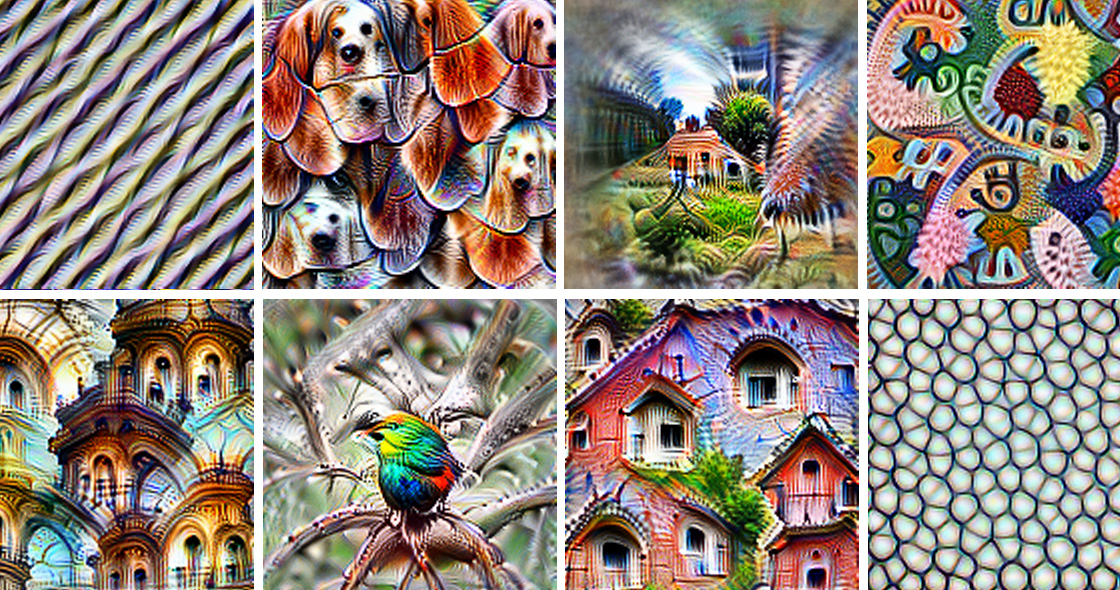
Neural networks are, generally speaking, differentiable with respect to their inputs. If we want to find out what kind of input would cause a certain behavior, whether that’s an internal neuron firing or the final output behavior, we can use derivatives to iteratively tweak the input towards that goal.

Starting from random noise, we optimize an image to activate a particular neuron (layer mixed4a, unit 11).

While conceptually simple, there are subtle challenges in getting the optimization to work. We will explore them, as well as common approaches to tackle them in the section “The Enemy of Feature Visualization”/>.

Optimization Objectives

What do we want examples of? This is the core question in working with examples, regardless of whether we’re searching through a dataset to find the examples or optimizing images to create them from scratch. We have a wide variety of options in what we search for:

Different optimization objectives show what different parts of a network are looking for.

n layer index
x,y spatial position
z channel index
k class index

If we want to understand individual features, we can search for examples where they have high values—either for a neuron at an individual position, or for an entire channel. We used the channel objective to create most of the images in this article.

Conclusion

Neural feature visualization has made great progress over the last few years. As a community, we’ve developed principled ways to create compelling visualizations. We’ve mapped out a number of important challenges and found ways of addressing them.

In the quest to make neural networks interpretable, feature visualization stands out as one of the most promising and developed research directions. By itself, feature visualization will never give a completely satisfactory understanding. We see it as one of the fundamental building blocks that, combined with additional tools, will empower humans to understand these systems.

There remains still a lot of important work to be done in improving feature visualization. Some issues that stand out include understanding neuron interaction, finding which units are most meaningful for understanding neural net activations, and giving a holistic view of the facets of a feature.

lucid.

FAQs

Q: What is the goal of feature visualization?
A: The goal of feature visualization is to understand what a neural network is looking for by generating examples of what the network is trying to find.

Q: What are the two main threads of research in neural network interpretability?
A: The two main threads of research in neural network interpretability are feature visualization and attribution.

Q: How do we optimize the input to activate a particular neuron?
A: We can use derivatives to iteratively tweak the input towards that goal, allowing us to find out what kind of input would cause a certain behavior.

Q: What are the different optimization objectives in feature visualization?
A: The different optimization objectives in feature visualization include searching for examples of individual features, entire channels, or output classes from a classifier.

Q: What is the difference between maximizing class logits and class probabilities?
A: Maximizing class logits before the softmax can produce images of better visual quality, but it can also be prone to the issue of pushing down evidence for other classes, whereas maximizing class probabilities can be more effective in terms of the final output.

Q: What is the role of preconditioning in feature visualization?
A: Preconditioning can change the direction of descent, making the optimization problem easier, and can be used to deal with issues such as high-frequency patterns or correlated features.

Google’s New Flagship AI Model

0

Google’s Latest AI Model: A Game-Changer in the Making?

Building the Future of AI

Google is frantically building AI into practically every product it owns, trying to build products other developers want to use, and racing to set up all the infrastructure to make those things possible without being so expensive it runs the company out of business. But is the latest effort, Gemini 2.0, the answer to Google’s AI prayers?

A Major Upgrade

Demis Hassabis, the CEO of Google DeepMind and the head of all the company’s AI efforts, is excited about the new Gemini 2.0 model. It’s still in an "experimental preview," but Hassabis says it’s a big deal. "Effectively, it’s as good as the current Pro model is. So you can think of it as one whole tier better, for the same cost efficiency and performance efficiency and speed. We’re really happy with that."

New Capabilities

Gemini 2.0 can now natively generate audio and images, and it brings new multimodal capabilities that lay the groundwork for the next big thing in AI: agents. Agentic AI, as everyone calls it, refers to AI bots that can actually go off and accomplish things on your behalf. Google has been demoing one, Project Astra, since this spring — it’s a visual system that can identify objects, help you navigate the world, and tell you where you left your glasses. Gemini 2.0 represents a huge improvement for Astra.

Agents and More

Google is also launching Project Mariner, an experimental new Chrome extension that can quite literally use your web browser for you. There’s also Jules, an agent specifically for helping developers find and fix bad code, and a new Gemini 2.0-based agent that can look at your screen and help you better play video games. Hassabis calls the game agent "an Easter egg" but also points to it as the sort of thing a truly multimodal, built-in model can do for you.

The Future of AI

"We really see 2025 as the true start of the agent-based era," Hassabis says, "and Gemini 2.0 is the foundation of that." He’s careful to note that the performance isn’t the only upgrade here; as talk of an industrywide slowdown in model improvements continues, he says Google is still seeing gains as it trains new models, but he’s just as excited about the efficiency and speed improvements.

Conclusion

Google’s plan for Gemini 2.0 is to use it absolutely everywhere. It will power AI Overviews in Google Search, which Google says now reach 1 billion people and which the company says will now be more nuanced and complex thanks to Gemini 2.0. It’ll be in the Gemini bot and app, of course, and will eventually power the AI features in Workspace and elsewhere at Google. The multimodality, the different kinds of outputs, the features — the goal is to get all of it into the foundational Gemini model.

FAQs

Q: What is Gemini 2.0?
A: Gemini 2.0 is a new AI model from Google that can natively generate audio and images, and brings new multimodal capabilities that lay the groundwork for the next big thing in AI: agents.

Q: What is agentic AI?
A: Agentic AI refers to AI bots that can actually go off and accomplish things on your behalf.

Q: What are some examples of agentic AI?
A: Google has demoed Project Astra, a visual system that can identify objects, help you navigate the world, and tell you where you left your glasses. There’s also Project Mariner, an experimental new Chrome extension that can quite literally use your web browser for you. There’s also Jules, an agent specifically for helping developers find and fix bad code, and a new Gemini 2.0-based agent that can look at your screen and help you better play video games.

Q: What are the risks of agentic AI?
A: There are new and old problems to solve. The old ones are eternal, about performance and efficiency and inference cost. The new ones are in many ways unknown. Just to name one: what safety risks will these agents pose out in the world operating of their own accord? Google is taking some precautions with Mariner and Astra, but Hassabis says there’s more research to be done.

Celebrating 50 Years of Dungeons & Dragons: A Commemorative Art Book

0

50 Years of Dungeons & Dragons: A Legacy of Fantasy and Adventure

The Origins of a Legend

In the early 1970s, Gary Gygax and Dave Arneson created Dungeons & Dragons (D&D), a game that would go on to become a global phenomenon. This year marks the 50th anniversary of its launch, and what a journey it has been.

The Game’s Early Years

When D&D was first published in 1974, the original box set featured black and white illustrations that brought the game’s fantasy world to life. The artwork, created by Keith Parkinson, Clyde Caldwell, Tony DiTerlizzi, David C. Sutherland III, and Daniel R. Horne, has become iconic in the world of fantasy art.

When Larry Met Gary

The story of D&D’s creation is one of collaboration and innovation. "To show this, we leaned a lot on a slender serpentine body plan," says Alexander Ostrowski, an artist who has worked on various D&D projects. "This design is all about levels of reveals layered on top of each other."

Girls Kick Arse in Armour

Anne Stokes, an artist who has worked on core rule books, supplements, and miniatures, has been called upon to illustrate female characters for D&D. "I was enthralled by the art of Larry Elmore and Jeff Easley, and wanted to be like them," she reflects. "I drew and drew to improve my skills, and when I started working, I sent many submissions off for portfolio reviews. One amazing day, I was phoned by the D&D head art director to ask if I’d work on their new release. I was over the moon!"

Conclusion

Dungeons & Dragons has become a beloved game, inspiring generations of gamers and artists alike. Its impact on popular culture cannot be overstated, and its influence can be seen in countless forms of media, from film and television to literature and music.

Frequently Asked Questions

Q: How did D&D come to be?
A: The game was created by Gary Gygax and Dave Arneson in the early 1970s.

Q: What is the significance of D&D’s 50th anniversary?
A: This milestone marks the game’s half-century mark, celebrating its enduring popularity and influence on popular culture.

Q: Who are some notable artists who have worked on D&D projects?
A: Keith Parkinson, Clyde Caldwell, Tony DiTerlizzi, David C. Sutherland III, Daniel R. Horne, and Alexander Ostrowski are just a few of the many talented artists who have contributed to the game’s iconic artwork.

RTX AI PCs Enhance Creating, Gaming and More

0

AI Decoded: Unlocking the Power of AI with NVIDIA and GeForce RTX GPUs

NVIDIA and GeForce RTX GPUs are built for the era of AI.

RTX GPUs feature specialized AI Tensor Cores that can deliver more than 1,300 trillion operations per second (TOPS) of processing power for cutting-edge performance in gaming, creating, everyday productivity, and more. Today, there are more than 600 deployed AI-powered games and apps that are accelerated by RTX.

RTX AI PCs can help anyone start their AI journey and supercharge their work.

Every RTX AI PC comes with regularly updated NVIDIA Studio Drivers – fine-tuned in collaboration with developers – that enhance performance in top creative apps and are tested extensively to deliver maximum stability. Download the December Studio Driver today.

The Importance of Large Language Models (LLMs)

The importance of LLMs continues to grow. Two benchmarks were introduced this week to spotlight LLM performance on various hardware: MLPerf Client v0.5 and Procyon AI Text Generation. These LLM-based benchmarks, which internal tests have shown accurately replicate real-world performance, are easy to run.

#WinterArtChallenge

This holiday season, content creators can participate in the #WinterArtChallenge, running through February. Share winter-themed art on Facebook, Instagram, or X with #WinterArtChallenge for a chance to be featured on NVIDIA Studio social media channels.

Advanced AI

With NVIDIA and GeForce RTX GPUs, AI elevates everyday tasks and activities, as covered in our AI Decoded blog series. For example, AI can enable:

  • Faster creativity: With Stable Diffusion, users can quickly create and refine images from text prompts to achieve their desired output. When using an RTX GPU, these results can be generated up to 2.2x faster than on an NPU. And thanks to software optimizations using the NVIDIA TensorRT SDK, the applications used to run these models, like ComfyUI, get an additional 60% boost.
  • Greater gaming: NVIDIA DLSS technology boosts frame rates and improves image quality, using AI to automatically generate pixels in video games. With ongoing improvements, including to Ray Reconstruction, DLSS enables richer visual quality for more immersive gameplay.
  • Enhanced entertainment: RTX Video Super Resolution uses AI to enhance video by removing compression artifacts and sharpening edges while upscaling video quality. RTX Video HDR converts any standard dynamic range video into vibrant high dynamic range, enabling more vivid, dynamic colors when streamed in Google Chrome, Microsoft Edge, Mozilla Firefox, or VLC media player.
  • Improved productivity: The NVIDIA ChatRTX tech demo app connects a large language model, like Meta’s Llama, to a user’s data for quickly querying notes, documents, or images. Free for RTX GPU owners, the custom chatbot provides quick, contextually relevant answers. Since it runs locally on Windows RTX PCs and workstations, results are fast and private.

Decisions, Decisions

More than 200 powerful RTX AI PCs are capable of running advanced AI.

RTX AI PCs Available

  • ASUS’ Vivobook Pro 16X comes with up to a GeForce RTX 4070 Laptop GPU.
  • Dell’s Inspiron 16 Plus 7640 comes with up to a GeForce RTX 4060 Laptop GPU.
  • GIGABYTE’s AERO 16 OLED comes with up to a GeForce RTX 4070 Laptop GPU.
  • MSI’s Creator M14 comes with up to a GeForce RTX 4070 Laptop GPU.

Conclusion

AI is transforming gaming, videoconferencing, and interactive experiences of all kinds. Make sense of what’s new and what’s next by subscribing to the AI Decoded newsletter.

Frequently Asked Questions

Q: What is AI?
A: AI is a type of machine learning that enables computers to perform tasks that typically require human intelligence, such as visual recognition, natural language processing, and decision-making.

Q: What is NVIDIA and GeForce RTX?
A: NVIDIA is a leading technology company that specializes in graphics processing units (GPUs) and AI computing. GeForce RTX is a line of GPUs designed for gaming, creating, and everyday productivity.

Q: What are the benefits of using an NVIDIA and GeForce RTX GPU?
A: NVIDIA and GeForce RTX GPUs can deliver faster performance, improved image quality, and enhanced AI capabilities for gaming, creating, and everyday productivity.

Harvard Is Releasing a Massive Free AI Training Dataset

0

Harvard University Releases Massive Public Domain Book Dataset for AI Training

Harvard’s Institutional Data Initiative Announces New Dataset

Harvard University announced Thursday that it is releasing a high-quality dataset of nearly one million public-domain books that can be used by anyone to train large language models and other AI tools. The dataset was created by Harvard’s newly formed Institutional Data Initiative with funding from both Microsoft and OpenAI.

A Game-Changer for AI Research and Development

The dataset, which is around five times the size of the notorious Books3 dataset, spans genres, decades, and languages, with classics from Shakespeare, Charles Dickens, and Dante included alongside obscure Czech math textbooks and Welsh pocket dictionaries. According to Greg Leppert, executive director of the Institutional Data Initiative, the project aims to "level the playing field" by giving the general public, including small players in the AI industry and individual researchers, access to highly-refined and curated content repositories that normally only established tech giants have the resources to assemble.

Using the Dataset for AI Development

Leppert believes that the new public domain database could be used in conjunction with other licensed materials to build artificial intelligence models. "I think about it a bit like the way that Linux has become a foundational operating system for so much of the world," he says, noting that companies would still need to use additional training data to differentiate their models from those of their competitors.

Microsoft’s Support for the Project

Burton Davis, Microsoft’s vice president and deputy general counsel for intellectual property, emphasized that the company’s support for the project was in line with its broader beliefs about the value of creating "pools of accessible data" for AI startups to use that are "managed in the public’s interest." Davis noted that Microsoft uses publicly available data for the purposes of training its own models and does not plan to swap out all of its AI training data with public domain alternatives like the books in the new Harvard database.

The Future of AI Development

As dozens of lawsuits filed over the use of copyrighted data for training AI wind their way through the courts, the future of how artificial intelligence tools are built hangs in the balance. If AI companies win their cases, they will be able to keep scraping the internet without needing to enter into licensing agreements with copyright holders. But if they lose, AI companies could be forced to overhaul how their models are made. A wave of projects like the Harvard database are plowing forward under the assumption that there will be an appetite for public domain datasets.

Additional Initiatives

In addition to the trove of books, the Institutional Data Initiative is also working with the Boston Public Library to scan millions of articles from different newspapers now in the public domain, and it is open to forming similar collaborations down the line. The exact way the books dataset will be released is not settled, but Harvard has asked Google to work together on public distribution, although the search giant has not publicly agreed to host it yet.

Conclusion

The release of this massive public domain book dataset is a significant step forward in making high-quality training data more accessible to the AI community. As the future of AI development hangs in the balance, projects like this one are crucial in providing a foundation for innovation and progress in the field.

FAQs

Q: What is the size of the dataset?
A: The dataset is around five times the size of the notorious Books3 dataset.

Q: What kind of content is included in the dataset?
A: The dataset includes books from various genres, decades, and languages, with classics from Shakespeare, Charles Dickens, and Dante included alongside obscure Czech math textbooks and Welsh pocket dictionaries.

Q: How will the dataset be released?
A: The exact way the books dataset will be released is not settled, but Harvard has asked Google to work together on public distribution, although the search giant has not publicly agreed to host it yet.

Q: What is the significance of this project?
A: The project aims to "level the playing field" by giving the general public, including small players in the AI industry and individual researchers, access to highly-refined and curated content repositories that normally only established tech giants have the resources to assemble.

Xiaomi G Pro 27i: A Near-Pro Monitor for a Budget Price

0

Xiaomi G Pro 27i Review: Key Specifications

  • Screen: 27in mini-LED backlit HDR IPS
  • Resolution: 2560 x 1440
  • Max refresh rate: 180Hz (variable)
  • Response time: 1ms
  • HDR: HDR1000
  • Connectivity: 2x DisplayPort 1.4, 2x HDMI 2.0, 3.5mm audio
  • Dimensions: 613 x 169.5 x 526.5mm including base
  • Weight: 6.8kg including base

Design & Build

Everything that makes the G Pro 27i interesting is contained on the inside of the package. Mini-LED backlights are relatively rare in PC monitors, though Apple has used the tech in its iPad Pro and MacBook Pro displays, especially as OLED is currently conquering the upper reaches of the price range. Mini-LED screens also tend to be quite expensive, which is another reason this monitor stands out.

On the outside, it’s unremarkable. A rectangle on a stand with a foot on the bottom. It mixes things up a bit by not being black all over – the rear of the stand and screen are picked out in off-white plastic. Ours came in a wooden crate that we needed a hammer and screwdriver to open, but we hope retail stores won’t be delivering them that way. Get it open, and you’ll find that the stand clips into the back of the screen in the same way we’ve seen countless times before, but the foot attaches to the bottom with four screws rather than the single thumb-turned bolt we’ve seen elsewhere.

Features & Performance

Placed on a desk next to a standard IPS screen and connected to the same PC, the extra contrast provided by the mini-LED backlight is immediately apparent. The colours from the Quantum Dots in the Xiaomi also appear warmer than our everyday monitor, but that could be a calibration matter. What we do know is that the brightness and colour space the G Pro 27i is capable of displaying are excellent, with it hitting 690 nits when asked nicely by our colorimeter, which is better than lots of other screens, including OLEDs, and proving capable of displaying 98% of P3, 100% of sRGB, and 95% of AdobeRGB – more excellent results.

Price

At £300 in the UK, and showing up at $370 in the US, this is a well-priced monitor. Similar screens from the likes of AOC and Cooler Master are available for almost twice the price, and the level of performance the G Pro 27i is capable of belies its low cost.

Who is it for?

While named and marketed as a gaming screen, like many that fall into that category this is a display that is going to appeal to content creators as well. A pair of them side-by-side would make an excellent dual-screen setup for the price of a single OLED, too.

Buy it if

  • You want excellent contrast and brightness
  • With a wide colour response too
  • All for a very reasonable price

Don’t buy it if

  • You really want a 4K OLED
  • With a USB hub built-in
  • And which makes the coffee too

Also consider

  • Other monitors with similar specs and features
  • Monitors with higher refresh rates or other features that may be important to you

FAQs

Q: What is the G Pro 27i’s refresh rate?
A: The G Pro 27i has a maximum refresh rate of 180Hz, which can be adjusted to 144Hz or 120Hz depending on the content being displayed.

Q: What is the response time of the G Pro 27i?
A: The response time of the G Pro 27i is 1ms.

Q: What is the G Pro 27i’s HDR support?
A: The G Pro 27i supports HDR1000, which is a high dynamic range (HDR) format that offers better contrast and color accuracy than standard dynamic range (SDR) displays.

Q: What is the G Pro 27i’s connectivity options?
A: The G Pro 27i has two DisplayPort 1.4 ports, two HDMI 2.0 ports, and a 3.5mm audio jack.