Home Blog Page 511

Advanced Math Modeling for Academia and Industry

0

Mathstral: Revolutionizing Education with Advanced AI

What is Mathstral?

Mathstral is a cutting-edge AI model designed to enhance the learning of math, engineering, and science. Developed from the ground up, this advanced AI model is capable of delivering superior performance and catering to the needs of students, educators, and researchers.

Key Features of Mathstral

Mathstral is equipped with the following key features:

  • Multimodal learning: Mathstral can learn and process information from various sources, including text, images, and audio.
  • Contextual understanding: The AI model is capable of understanding the context in which a problem or concept is presented, allowing for more accurate and effective learning.
  • Generative capabilities: Mathstral can generate new mathematical problems, equations, and solutions, making it an ideal tool for educators and researchers.
  • Real-time feedback: The AI model provides real-time feedback, enabling students to track their progress and identify areas for improvement.

Benefits of Mathstral

Mathstral offers several benefits, including:

  • Improved learning outcomes: By providing personalized and adaptive learning experiences, Mathstral can significantly improve learning outcomes for students.
  • Increased accessibility: The AI model can be used by individuals with disabilities, making it an inclusive and accessible tool for education.
  • Enhanced research capabilities: Mathstral’s advanced capabilities make it an ideal tool for researchers, allowing them to explore new frontiers in math, engineering, and science.

Conclusion

Mathstral is a revolutionary AI model that has the potential to transform the way we learn and teach math, engineering, and science. With its advanced features and capabilities, Mathstral is poised to make a significant impact on the education sector. By providing personalized and adaptive learning experiences, Mathstral can improve learning outcomes, increase accessibility, and enhance research capabilities.

Frequently Asked Questions

Q: What is the purpose of Mathstral?
A: Mathstral is designed to enhance the learning of math, engineering, and science by providing advanced AI-powered learning experiences.

Q: How does Mathstral work?
A: Mathstral uses multimodal learning, contextual understanding, and generative capabilities to process and generate mathematical problems, equations, and solutions.

Q: Who can use Mathstral?
A: Mathstral is designed for students, educators, and researchers in the fields of math, engineering, and science.

Q: Is Mathstral accessible for individuals with disabilities?
A: Yes, Mathstral is designed to be accessible for individuals with disabilities, making it an inclusive and equal opportunity for education.

Artist’s Fascinating Sketches Show How He Designed Arcane Posters

0

The Art of Traditional Poster Design: A Behind-the-Scenes Look

From Sketches to Final Designs: A Glimpse into the Arcane Poster Design Process

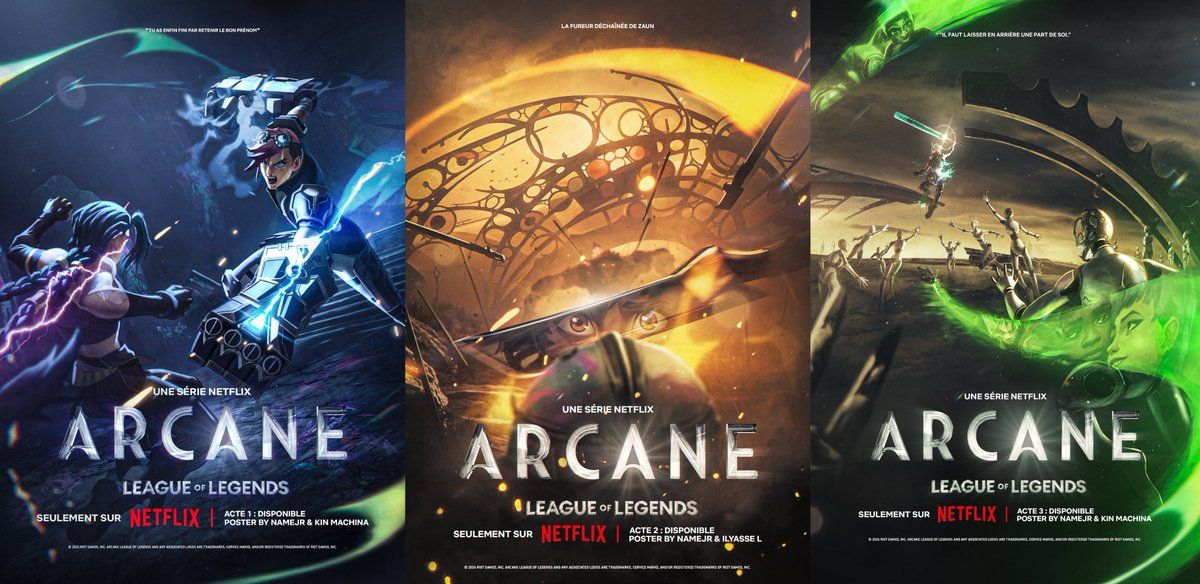
After the controversy surrounding Netflix’s AI-modified Arcane poster, it’s refreshing to see the skill involved in traditional poster design. A digital artist, Name Jr, has gone viral after sharing his initial sketches for two official Arcane posters for Netflix France. This behind-the-scenes look into the design process offers a fascinating insight into the art of poster design.

The Process of Design

The rough sketches, which have been shared online, show how Jr planned the fundamental aspects of the poster design, including composition. The simple images reveal the intentions for placing the main points of interest, such as Ekko in the center and a broken cog in the background in the first design.

Collaboration and Evolution of Designs

The second design for a poster featuring Isha was created in collaboration with Ilyasse L. It’s clear that a lot more happened between the rough sketches and the final designs, with certain decisions being changed and refined along the way.

A Seasoned Designer’s Portfolio

Name Jr is a seasoned designer with a portfolio that includes posters for popular movies such as Up, Kung Fu Panda 4, WALL-E, and Oppenheimer. For more inspiration, check out our pick of the best movie posters.

Conclusion

This behind-the-scenes look into the design process of the Arcane posters highlights the importance of traditional design skills and the value of collaboration. It’s a reminder that even in the age of digital design, traditional techniques and methods still have a place.

Frequently Asked Questions

Q: What is the name of the designer behind the Arcane posters?
A: The designer’s name is Name Jr.

Q: What is the name of the animation studio behind the Arcane series?
A: The animation studio is Fortiche.

Q: What is the name of the agency that represents Name Jr?
A: The agency is Iconics Agency.

Q: What other movies has Name Jr designed posters for?
A: Name Jr has designed posters for movies such as Up, Kung Fu Panda 4, WALL-E, and Oppenheimer.

Microsoft’s AI Health Unit Hires Ex-DeepMind Staff

Unlock the Editor’s Digest for free

Microsoft’s AI Head Builds Team Focused on Consumer Health

Roula Khalaf, Editor of the FT, selects her favourite stories in this weekly newsletter.

Microsoft’s artificial intelligence head Mustafa Suleyman is building a team focused on consumer health by hiring staff from a similar unit he once led at Google DeepMind, as the rival companies race to create lucrative applications from the cutting-edge technology.

The New Team

Suleyman, a British entrepreneur who co-founded DeepMind in 2010, has hired Dominic King, the former head of DeepMind’s health unit and a UK-trained surgeon, as vice-president of Microsoft AI’s new London-based health team. He has also poached Christopher Kelly, a clinical research scientist at DeepMind and a neonatal intensive care doctor at Evelina Children’s Hospital in London, as well as two others from his time at the AI start-up.

The Focus on Health

Health has become one of the growth areas in the AI boom. Consumers have often turned to the web for health-related queries, and a Deloitte survey this year found that 48% of respondents asked generative AI chatbots such as ChatGPT, Gemini, Copilot, and Claude health-focused questions. These include questions about specific health conditions, symptoms, and mental health. Microsoft AI’s health unit will focus on these types of consumer health applications using generative AI.

The Vision

The US tech group, which hired Suleyman this year, confirmed the creation of its new unit. “In our mission to inform, support, and empower everyone with responsible AI, health is a critical use case,” said Microsoft. “We continue to hire top talent in support of these efforts.”

Controversy and Departure

Google DeepMind’s health operation, founded by Suleyman in 2016, grew to a team of more than 100 people based in London. The unit had signed a five-year partnership with 10 UK NHS hospitals to process the medical data of 1.6 million patients and launched an app to monitor patients’ vital signs. However, DeepMind was later embroiled in controversy over its work for the UK health sector amid concerns about the security of patient data. This led to Suleyman’s unit being spun off in 2019 by parent company Alphabet into a Google unit in California led by David Feinberg, the former chief executive of Geisinger, one of the US’s largest private health groups.

Conclusion

Microsoft’s new consumer AI health division is a significant development in the rapidly growing field of health technology. The company’s focus on consumer health applications using generative AI is likely to drive significant revenue and transform the way people access healthcare.

FAQs

Q: What is the focus of Microsoft AI’s new London-based health team?
A: The team is focused on consumer health applications using generative AI.

Q: Who is leading the team?
A: Mustafa Suleyman, the former head of Google DeepMind, is leading the team.

Q: What is the goal of Microsoft AI’s health unit?
A: The goal is to create lucrative applications from generative AI in the healthcare sector.

Q: What is the current state of the health technology market?
A: The health technology market is rapidly growing, with a focus on consumer health applications and generative AI.

Reddit’s latest AI update makes finding the answers you want much easier

0

Reddit Rolls Out AI-Powered Conversational Interface to Enhance Search Experience

Reddit’s search engine alternative continues to gain popularity as millions of users contribute answers, perspectives, and summaries on hot topics. To further enhance the search experience, the social platform has introduced an AI-powered conversational interface called Reddit Answers.

### A New Way to Ask Questions and Receive Answers

Reddit Answers allows users to ask questions and receive AI-curated summaries of relevant conversations and details from content across Reddit. The platform uses artificial intelligence to gather information from various sources and provide users with a condensed version of the answers.

### How It Works

Users can ask questions through the Reddit Answers interface and receive AI-generated answers that include links to related posts and snippets. The experience is designed to provide a faster, smarter, and more relevant search experience for users.

### Advantages Over Traditional Search Engines

The advantage of using Reddit Search over traditional search engines like Google is that it provides answers from real people’s posts and discussions. This can be especially handy when asking for recommendations or everyday perspectives on hot topics.

### Availability

The Reddit Answers experience is currently only available in early access and is rolling out to a limited number of users in the US in English. Users can click the “Keep me updated” button on the Reddit Answers webpage to receive the latest availability updates.

### A Long-Term Vision to Improve Search Experience

Reddit shares that this experience is part of a longer-term vision to improve the search experience on the platform, making it “faster, smarter, and more relevant.” The company believes that AI-powered conversational interfaces like Reddit Answers can help users find the insights they need more efficiently and effectively.

### Conclusion

Reddit’s introduction of AI-powered conversational interface is a significant step towards improving the search experience on the platform. By providing users with a faster, smarter, and more relevant way to find answers, Reddit is poised to continue growing in popularity as a search engine alternative.

### Frequently Asked Questions

Q: What is Reddit Answers?
A: Reddit Answers is an AI-powered conversational interface that allows users to ask questions and receive curated summaries of relevant conversations and details from content across Reddit.

Q: How does Reddit Answers work?
A: Reddit Answers uses artificial intelligence to gather information from various sources and provide users with a condensed version of the answers.

Q: Is Reddit Answers available worldwide?
A: No, the Reddit Answers experience is currently only available in a limited number of users in the US in English. More languages and regions will be added in the future.

Q: Can I use Reddit Answers to search for specific topics?
A: Yes, Reddit Answers can be used to search for specific topics and receive answers from real people’s posts and discussions.

Q: Will Reddit Answers improve my search experience on Reddit?
A: Yes, Reddit Answers is designed to provide a faster, smarter, and more relevant search experience for users.

Blockchain Innovation Will Put an AI-Powered Internet Back Into Users’ Hands

0

The Doomers Have It Wrong. AI is Not Going to End the World—but it is Going to End the Web as We’ve Known It.

AI is already upending the economic covenant of the internet that’s existed since the advent of search: A few companies (mostly Google) bring demand, and creators bring supply (and get some ad revenue or recognition from it). AI tools are already generating and summarizing content, obviating the need for users to click through to the sites of content providers, and thereby upsetting the balance.

The Rise of AI-Powered Deepfakes and Bots

Meanwhile, an ocean of AI-powered deepfakes and bots will make us question what’s real and will degrade people’s trust in the online world. And as big tech companies—who can afford the most data and compute—continue to invest in AI, they will become even more powerful, further closing off what remains of the open internet.

The Need for Change

The march of technology is inevitable. I’m not calling attention to this to cry that the sky is falling or to hold back progress. We need to help individual users gain some control of their digital lives. Thoughtful government regulation could help, but it often slows innovation. Attempting a one-size-fits-all solution can create as many problems as it solves. And, let’s face it, users are not going to retreat from living their lives online.

The Role of Blockchain-Enabled Computing

Major technology movements often come together—think of the rise of social, cloud, and mobile computing in the 2000s. This time is no different: AI needs blockchain-enabled computing. Why? First, blockchains enforce ownership. Blockchains can make credible commitments involving property, payouts, and power. A decentralized network of computers—not a big company, nor any other centralized intermediary—validates transactions, ensuring that the rules and records cannot be altered without consensus. Smart contracts automate and enforce these ownership rights, creating a system that ensures transparency, security, and trust, giving users full control and ownership of their digital lives. For creators, this means the ability to decide how others—including AI systems—can use their work.

Blockchain-Enabled Computing: A Solution for the Future

Another basic ownership right that blockchains can enforce is identity. If you are who you say you are, you can sign a statement, cryptographically, attesting as much. We could carry our identities around the web without relying on third parties. Onchain identities could also help separate real users from bots and imposters. In the 1990s, no one on the internet knew if you were a dog. Now, people can know for sure if you’re a dog—or a bot. In 2025, I expect to see more “proof of humanity” on the internet, thanks to recent advances in these technologies.

Tamper-Resistant Records of Original Digital Content

In 2025, blockchains will be used to create tamper-resistant records of original digital content, a bulwark against deepfakes. When a video, photo, or audio recording is created, blockchains can provide and store a unique digital fingerprint. Any changes to the content alter that signature, making it easy to detect tampering. Blockchains can also store metadata and verification attestations from trusted sources, further ensuring content authenticity.

A More Creative, Open, Diverse Web

Finally, in 2025, blockchains will help achieve the original ideals of the internet, fostering a more creative, open, diverse web. Right now, users depend on a few internet giants—the same ones that are investing so heavily in AI (and asking for regulation to keep smaller competitors out). Websites and apps that were once open have added paywalls, restricted or closed their APIs, removed their archives, edited past content without permission, and added intrusive banners and ads. In 2025, blockchain alternatives will offer more choice, open source innovation, and community-controlled options. They will carry the torch of the open internet. Crypto will start taking power away from big tech companies, putting it back in the hands of users.

Conclusion

The future of the web is not a dystopian nightmare, but a bright and open landscape where users have control over their digital lives. Blockchain-enabled computing is the key to achieving this vision. By embracing this technology, we can create a more transparent, secure, and trustworthy online environment, where creators can thrive and users can enjoy a more authentic and fulfilling experience.

FAQs

Q: What is the main problem with AI on the internet?

A: AI is already generating and summarizing content, obviating the need for users to click through to the sites of content providers, and thereby upsetting the balance.

Q: How will blockchain-enabled computing solve this problem?

A: Blockchains can enforce ownership, identity, and tamper-resistant records of original digital content, giving users full control and ownership of their digital lives.

Q: What are the benefits of blockchain-enabled computing?

A: It ensures transparency, security, and trust, giving users full control and ownership of their digital lives. It also allows for more choice, open source innovation, and community-controlled options, carrying the torch of the open internet.

Q: Will blockchain-enabled computing solve all the problems of the internet?

A: No, but it is a step in the right direction towards creating a more transparent, secure, and trustworthy online environment, where users have control over their digital lives.

Traditional Art of the Week: COTOH

0

COTOH: A Pioneering Illustrator Challenging Traditional Perceptions in Japan

COTOH (aka Cotoh Sumi) has been an illustrator since 2017 and transitioned into contemporary art after collaborating with musicians and apparel companies. By using mass production techniques, COTOH challenges the traditional perception of commercial art in Japan.

Mixing Traditional and Digital Techniques

COTOH uses a mixture of oils and acrylic paints to create their striking portraits. If you want to try traditional art, read our advice in how to mix traditional art and digital art techniques. We’ve also found some good deals on Moleskins for sketching. See more art and learn about upcoming gallery exhibitions on COTOH’s Instagram.

(Image credit: COTOH)

Traditional art of the month; COTOH artwork

(Image credit: COTOH)

Traditional art of the month; COTOH artwork

(Image credit: COTOH)

Traditional art of the month; COTOH artwork

(Image credit: COTOH)

Traditional

</p>
                </div>
            </div>

        </div>
            <div class=

Alien: Rogue Incursion’s Art Director’s Rookie Mistake

0

Balancing Art and Ideas in Alien: Rogue Incursion

Rookie Mistakes and the Importance of Holistic Game Development

Game development can be harsh, with artists often spending four or five years on a game that never releases. Studio Art Director Tate Mosesian of Survios has shared an insight into game development that everyone can learn from: the importance of balancing art and ideas. According to Mosesian, "that’s the humbling part… You can create something that is visually stellar, something that is just stunning and beautiful, but if the game isn’t there, no one’s going to play it, and your work is never going to get seen."

Balancing Art and Ideas in Alien: Rogue Incursion

Mosesian reflects on his early career, when he didn’t place enough importance on the other aspects of game development – design, tech, and the game as a holistic thing. "Which was just a rookie mistake," he recalls. "Understanding my place as an artist, I am here to make the game, if a game exists better through the visuals [that’s good], but I will never make a game strictly through visuals."

The Importance of Holistic Game Development

Mosesian emphasizes the importance of understanding when to roll back on blue-sky ideas. "There have been games that have just been beautiful, stunning, that never seemed to get a fan base for whatever reason, and they never got another chance to make another one, which is sad, but it is business, so you can’t take too many risks."

Balancing Art and Ideas in Alien: Rogue Incursion

In the case of Alien: Rogue Incursion, Mosesian and his team have had to make tough decisions about what to prioritize. The game is full of era-accurate Alien details and design, and the team has had to balance the need for visual fidelity with the need for a functional and fun game. "You have to determine where you have to put your bang for the buck," Mosesian says. "Those things take engineering time and design time and tweaking and massaging to make sure that it actually elevates the experience [and] it doesn’t inhibit or take away from it."

Conclusion

Mosesian’s insights into game development are valuable for anyone working in the industry. By balancing art and ideas, developers can create games that are both visually stunning and engaging to play. Alien: Rogue Incursion is shaping up to be one of the year’s best VR games, and its success is a testament to the importance of holistic game development.

Frequently Asked Questions

Q: What are the key takeaways from Tate Mosesian’s insights on game development?
A: The importance of balancing art and ideas, understanding the limitations and advantages of developing a game, and prioritizing the needs of the game over individual artistic ambitions.

Q: What is the main takeaway from Mosesian’s discussion of his early career?
A: The importance of understanding one’s place in the development team and recognizing the need for a holistic approach to game development.

Q: What is the release date of Alien: Rogue Incursion?
A: December 19th.

Q: Where can I find more information about Alien: Rogue Incursion?
A: Visit the Survios website for more details.

Boss character design for gun-fu game SPINE is visually striking

0

Creating Boss Characters for SPINE

When creating a boss, we focus on the core principles of the project, says Dmitry Oshchepkov, Senior Core Gameplay Designer at Nekki. These four key pillars are: gun-fu combat, impressive and realistic animations, cinematic aesthetics, a captivating combat system, and a strong sense of ‘I am the hero’.

Creating Boss Characters for SPINE

The team of artists and gameplay designers add unique pillars to make them stand out from the fodder players beat and shoot through. This includes the “wow factor”, adding: “the boss should create moments that impress and surprise the player”; Memorability – “the boss should leave a lasting impression on the player”; Unique behaviour and mechanics – “each boss introduces new elements, making every fight feel fresh and distinct”; Competence – “the boss needs to feel like a skilled and dangerous opponent”; and Challenge and fun – “the fight should be challenging but also rewarding and enjoyable”.

Storytelling and Character Design for SPINE

Each boss design begins with the development of their lore, telling me how the writer develops the boss’s backstory, motivation, and character. This is then aligned with the game designer, producer, and artists to ensure everyone is on the same page.

Creating Boss Animation in SPINE

Creating the animation is a collaboration between the game’s designer and animator. It starts with brainstorming the boss’s mechanics, and the animator and game designer work together to decide what the boss should do to match the narrative and gameplay pillars. We define key gameplay elements like attack sets, abilities, and movement patterns.

The Challenge of Designing for Gun-fu Gameplay

The challenges include creating a boss that is visually memorable and impressive, balancing difficulty and clarity, and combining realism and physicality with original mechanics and visual indicators that remain functional without feeling too artificial.

How Cerebras Boosted Meta’s Llama to Frontier Model Performance

0

Cerebras Makes Breakthrough in AI with Chain of Thought

Cerebras Systems Announces Major Advancement in Generative AI

Cerebras Systems has made a significant announcement at the annual NeurIPS conference on AI, demonstrating the ability to make a smaller AI model equal to or better than a larger model using the increasingly popular "chain of thought" approach in generative AI. The company achieved this breakthrough by training Meta’s Llama 3.1 open-source AI model, which uses only 70 billion parameters, to match the accuracy of the much larger 405-billion parameter version of Llama.

Chain of Thought for Explainable AI

The concept of chain of thought is based on making the AI model detail the sequence of calculations performed to arrive at a final answer, aiming to achieve "explainable" AI. This approach could potentially increase human confidence in AI’s predictions by revealing the basis for the answers. OpenAI has popularized the chain-of-thought approach with its recently released "o1" large language model.

Cerebras’s Solution: CePO

Cerebras’s response to o1, dubbed "Cerebras Planning and Optimization" (CePO), operates by requiring Llama to produce a plan to solve the given problem step-by-step, execute the plan repeatedly, analyze the responses to each execution, and then select a "best of" answer. Unlike a traditional LLM, CePO looks at its own code and checks for syntax errors, logic, and whether it accomplishes what the user asks for, and then runs a logic loop of plan execution and cross-checking multiple times.

Breakthrough Results

The company was able to match or exceed the 405B model of Llama 3.1 in various benchmark tests, including the CRUX test of complex reasoning tasks and the LiveCodeBench for code generation challenges. Additionally, Cerebras was able to take the latest Llama version, 3.3, and make it perform at the level of frontier large language models such as Anthropic’s Claude 3.5 Sonnet and OpenAI’s GPT-4 Turbo.

Advantages of Cerebras’s Approach

The chain-of-thought version of 3.1 70B is the only reasoning model that runs in real-time on Cerebras’s CS-3 machines. In contrast, OpenAI’s o1 runs in minutes. Cerebras claims that its CS-3 machines are 16 times faster than the fastest service on GPU chips, processing 2,100 tokens per second.

Training a Trillion-Parameter Model

Cerebras also announced that it has shown "initial" training of a large language model with one trillion parameters in a research project conducted with Sandia National Laboratories. The work was done on a single CS-3 machine, combined with Cerebras’s purpose-built memory computer, the MemX. The MemX was boosted to 55 terabytes of memory to hold the parameter weights of the model, which were then streamed to the CS-3 over Cerebras’s dedicated networking computer, the SwarmX.

Programming and Memory Efficiency

The CS-3 system, Cerebras claims, would replace 287 of Nvidia’s top-of-the-line "Grace Blackwell 200" combo CPU and GPU chips needed to access equivalent memory. The combination of the one CS-3 and the MemX takes up two standard telco racks of equipment, using less than one percent of the space and power of the equivalent GPU arrangement. The MemX device uses commodity DRAM, known as DDR-5, in contrast to the GPU cards that have more expensive "high-bandwidth memory," or HBM.

Conclusion

Cerebras’s breakthrough in chain of thought demonstrates the potential for smaller AI models to equal or surpass larger models, while also showcasing the company’s innovative approach to programming and memory efficiency. The implications of this technology are significant, as it could potentially increase human confidence in AI’s predictions and reduce the need for large, complex models.

FAQs

Q: What is chain of thought in AI?
A: Chain of thought is an approach in generative AI that makes the AI model detail the sequence of calculations performed to arrive at a final answer, aiming to achieve "explainable" AI.

Q: What is Cerebras’s response to OpenAI’s o1?
A: Cerebras’s response is called "Cerebras Planning and Optimization" (CePO), which operates by requiring Llama to produce a plan to solve the given problem step-by-step, execute the plan repeatedly, analyze the responses to each execution, and then select a "best of" answer.

Q: What are the advantages of Cerebras’s approach?
A: Cerebras’s chain-of-thought version of 3.1 70B is the only reasoning model that runs in real-time on Cerebras’s CS-3 machines, and the company claims that its CS-3 machines are 16 times faster than the fastest service on GPU chips.

Building Your Own AI: Convolutional Neural Networks for Image Processing

0

1. What Are CNNs?

Convolutional Neural Networks (CNNs) are a class of deep neural networks specifically designed to process grid-like data, such as images. Unlike traditional neural networks, CNNs excel at extracting spatial hierarchies and patterns, making them ideal for image-related tasks.

2. CNN Architecture

The architecture of a CNN typically consists of several layers:

  • Convolutional Layers: Apply filters to input images, detecting features like edges or textures.
  • Pooling Layers: Reduce the spatial dimensions of feature maps, speeding up computation and reducing overfitting.
  • Fully Connected Layers: Connect every neuron from the previous layer to the next, used for making final predictions or classifications.
  • Activation Functions: Non-linear functions applied after each layer to introduce complexity.

3. How CNNs Work

The process can be summarized as follows:

  1. Input: An image (e.g., a 28×28 grayscale digit image).
  2. Convolution: Filters extract features (e.g., edges, corners).
  3. Pooling: Reduce feature map size, retaining important features.
  4. Flattening: Convert feature maps to a 1D array.
  5. Classification: Fully connected layers predict the output class.

4. Real-World Applications

CNNs have numerous real-world applications, including:

  • Image Classification: Identifying objects in an image.
  • Object Detection: Detecting and localizing objects within images.
  • Face Recognition: Matching or verifying identities.
  • Medical Imaging: Identifying anomalies like tumors in X-rays or MRIs.

5. Implementing a CNN: Image Classification Example

Here’s a step-by-step guide to implementing a CNN for image classification:

Step 1: Install Libraries

pip install tensorflow

Step 2: Import Libraries

import tensorflow as tf
from tensorflow.keras.models import Sequential
from tensorflow.keras.layers import Conv2D, MaxPooling2D, Flatten, Dense

Step 3: Load and Prepare Data

(X_train, y_train), (X_test, y_test) = mnist.load_data()

Step 4: Compile and Train the Model

model.compile(optimizer='adam', loss='categorical_crossentropy', metrics=['accuracy'])
model.fit(X_train, y_train, epochs=10, validation_data=(X_test, y_test))

Step 5: Evaluate the Model

loss, accuracy = model.evaluate(X_test, y_test)
print(f'Test Accuracy: {accuracy:.2f}')

6. Tips for CNN Training

  • Data Augmentation: Use techniques like rotation, flipping, and zooming to increase dataset size.
  • Early Stopping: Monitor validation loss to avoid overfitting.
  • Batch Normalization: Normalizes outputs, speeding up training.

7. Challenges and Limitations

  • Computational Resources: CNNs require GPUs for efficient training on large datasets.
  • Overfitting: Can occur if the model is too complex for the dataset.
  • Data Dependency: CNNs need large amounts of labeled data for optimal performance.

Conclusion

In conclusion, CNNs are a powerful tool for image processing and analysis. By understanding their architecture, applications, and challenges, you can effectively implement and train CNNs for a wide range of tasks.

FAQs

Q: What is a CNN?
A: A Convolutional Neural Network is a type of deep neural network designed to process grid-like data, such as images.

Q: What are the advantages of CNNs?
A: CNNs excel at extracting spatial hierarchies and patterns, making them ideal for image-related tasks.

Q: What are some common challenges in training CNNs?
A: Overfitting, computational resources, and data dependency are common challenges in training CNNs.