Home Blog Page 537

AWS Takes On Google Spanner with Atomic Clock-Powered Distributed DBs

AWS Unveils Two New Database Services for Low-Latency Data Processing

AWS today announced two new database services aimed at providing low-latency data processing that can support transactions anywhere on the globe. The new services, including the Postgres-flavored Aurora DSQL and DynamoDB global tables, put AWS in head-to-head competition with Google Cloud’s Spanner, which also uses atomic clocks to ensure that far-flung transactions don’t get out of order.

The Challenge of Distributed Databases

For years, Google Cloud has been the dominant force in a small but important niche of the relational database market that requires low latency as well as transactional consistency for database operations that take place anywhere on the planet (or off of it). The tough architectural challenge has always been how to account for the time lag between nodes in a globally distributed database. While the speed of light–nearly 300 million meters per second–is definitely fast, it’s not fast enough to support distributed nodes in a database in the manner that is required.

AWS’s Solution: Aurora DSQL and DynamoDB Global Tables

For certain use cases, such as banking, companies have gotten around the physical limits by using clever mechanisms to ensure that the order of database transactions get out of synch. Google Cloud famously uses atomic clocks, which other databases, such as CockroachDB and YugabyteDB, have used software, such as the Raft consensus algorithm, to guarantee consistency.

AWS has adopted new technologies and techniques to overcome the twin challenges of distributed databases: how to achieve strong consistency with low latency in geographically distinct nodes, and syncing servers with microsecond accuracy around the globe. The company explains:

“To achieve multi-Region strong consistency with low latency, Aurora DSQL decouples transaction processing from storage to overcome the limitations of the current approaches, which were constrained by information being passed back and forth multiple times at the speed of light,” the company says in its press release.

“To overcome this, Aurora DSQL only checks each transaction at commit time and, on commit, parallelizes all the writes across all regions to provide a multi-Region database with strong consistency and fast writes,” it continues. “To ensure each Region sees every database operation in the exact order they occurred, Aurora DSQL uses Amazon Time Sync Service, which added hardware reference clocks on every [EC2] instance, synchronizing them to satellite-connected atomic clocks to provide microseconds level accurate time within anywhere in the world.”

Aurora DSQL and DynamoDB Global Tables: Key Features

Aurora DSQL is a serverless offering, which requires minimal operational overhead for customers. AWS says it provides 99.999% availability across multiple regions, virtually limitless scalability, and compatibility with existing applications that use a Postgres database.


AWS rolled out a similar capability with DynamoDB, its popular NoSQL database.

“It turns out that relational databases are not the only ones that benefit from multi-region, strongly consistent, low latency capabilities,” AWS CEO Matt Garman said during today’s keynote address. “So I’m also pleased to announce that we’re adding the same multi-region, strong consistency to DynamoDB global tables. So now whether you’re running SQL or NoSQL, you get the best of all worlds—active-active, multi-region databases.”

Comparison with Google Cloud’s Spanner

AWS pitted Aurora DSQL against Google’s Spanner to see how it compares. The company says that, for a basic 10-transaction SQL statement, Aurora DSQL was able to deliver 4x the throughput for both reads and writes. It will be interesting to see how the two databases compete in more complex workloads in the future.

Conclusion

AWS’s new database services, Aurora DSQL and DynamoDB global tables, provide a powerful solution for low-latency data processing and transactional consistency across multiple regions. With its focus on serverless architecture and compatibility with existing applications, Aurora DSQL is a compelling option for customers looking for a scalable and highly available database solution.

FAQs

Q: What is Aurora DSQL?
A: Aurora DSQL is a serverless, Postgres-flavored database service that provides low-latency data processing and transactional consistency across multiple regions.

Q: What is DynamoDB global tables?
A: DynamoDB global tables is a feature of AWS’s popular NoSQL database service that provides multi-region, strongly consistent, low-latency capabilities.

Q: How does Aurora DSQL compare to Google Cloud’s Spanner?
A: According to AWS, Aurora DSQL delivers 4x the throughput for both reads and writes compared to Google Cloud’s Spanner for a basic 10-transaction SQL statement.

Q: What are the key features of Aurora DSQL?
A: Aurora DSQL provides 99.999% availability across multiple regions, virtually limitless scalability, and compatibility with existing applications that use a Postgres database.

The Louis Vuitton x Takashi Murakami Revamp is Underwhelming

0

Anniversary Re-Editions: The Next Big Thing in Brand Collabs?

Just when you thought brand collabs couldn’t get any more tired, along comes the concept of anniversary re-editions. Hurrah! That’s the pipeline sorted for the next decade.

A Blast from the Past: Takashi Murakami x Louis Vuitton

Back in 2003, Takashi Murakami x Louis Vuitton dropped a range of luggage at a time when such fashion collabs still felt kind of fresh and novel. Now the Japanese pop artist is teaming up with the fashion giant again for a follow-up 20th anniversary (or 22nd anniversary) collection.

A Lackluster Re-Release?

The fun little animation above, featuring Murakami’s panda character and a flowered-up Louis Vuitton logo, was released to drum up interest in the late encore. Alas, it looks set to be the most interesting thing about the re-collab. The products? Basically the same as last time, it seems: a bunch of bags with gaudy repetitions of one of the best fashion logos all over them. Who said fashion was fickle? If it ain’t broke don’t fix it, I guess.

A Special Leather Tag, At Least

Of course, I’m being facetious. LV wouldn’t release exactly the same product again. Instead, we’re told that each new item will be stamped with a special leather tag to distinguish it from pieces from the original drop. Thank goodness for that.

A Skateboard, Too?

Of course, I’m still being facetious. Below, the Tiktokker Fishmeatdie provides a fascinatingly detailed comparison of the new drop with the original. It appear that there’s a skateboard too. I dare you to hit the local skatepark on that, sir.

Waiting for the Drop

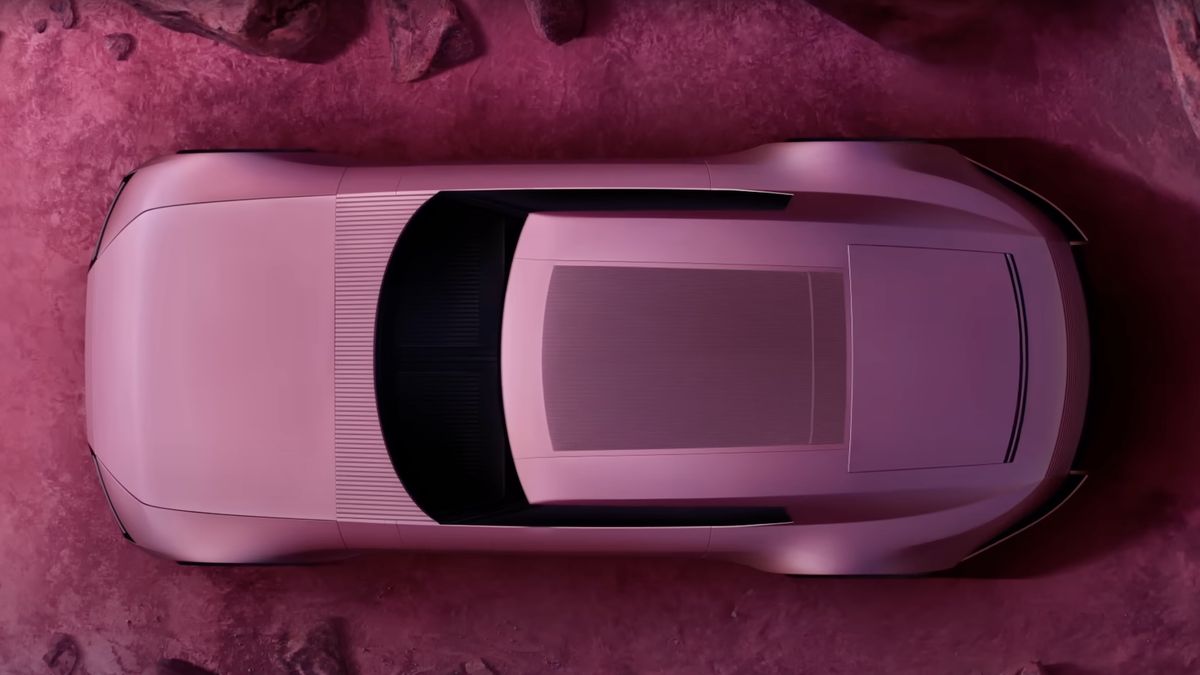
LV diehards are invited to join the waitlist. For more radical branding news, check out the new Jaguar Type 00 EV design concept.

Conclusion

It seems that anniversary re-editions are the next big thing in brand collabs. While some might see it as a lackluster re-release, others might appreciate the nostalgic value and the chance to own a piece of history. Only time will tell if this trend will take off or fizzle out.

FAQs

Q: What is the significance of the anniversary re-edition?
A: It marks the 20th (or 22nd) anniversary of the original Takashi Murakami x Louis Vuitton collaboration.

Q: Are the products the same as the original drop?
A: No, each new item will be stamped with a special leather tag to distinguish it from pieces from the original drop.

Q: Is there a skateboard in the new drop?
A: Yes, according to the comparison video by Fishmeatdie, there is a skateboard included in the new collection.

Q: Can I join the waitlist?
A: Yes, LV diehards are invited to join the waitlist for the new drop.

NVIDIA AI Infrastructure and Operations Certifications

As Generative AI Continues to Grow, NVIDIA Introduces Two Professional-Level Certifications for Infrastructure and Operations Practitioners

Implementing and managing the right infrastructure becomes even more critical to ensure the secure and efficient development and deployment of AI-based solutions.

To meet these needs, NVIDIA has introduced two professional-level certifications that offer structured paths for infrastructure and operations practitioners to enhance and validate the skills needed to work effectively with advanced AI technologies.

NVIDIA-Certified Professional: AI Infrastructure Certification

The NVIDIA-Certified Professional: AI Infrastructure certification is designed for practitioners seeking to showcase advanced skills in deploying AI infrastructure. Candidates must demonstrate expertise in GPU and DPU installation, hardware validation and system optimization for both AI and HPC workloads. The exam also tests proficiency in managing physical layers, configuring MIG, deploying the NVIDIA BlueField operating system, and integrating NVIDIA’s cloud-native stack with Docker and NVIDIA NGC.

To prepare for this professional-level certification, candidates are encouraged to attend the AI Infrastructure Professional Workshop. This hands-on training covers critical AI data center technologies, including compute platforms, GPU operations, networking, storage solutions, and BlueField DPUs. The workshop is recommended for professionals aiming to elevate their AI infrastructure expertise.

NVIDIA-Certified Professional: AI Operations Certification

The NVIDIA-Certified Professional: AI Operations certification is tailored for individuals seeking proficiency in managing and optimizing AI operations. The exam tests expertise in managing AI data centers, including the use of Kubernetes, Slurm, MIG, BCM, NGC containers, storage configuration, and DPU services.

To prepare for this professional-level certification, candidates are encouraged to attend the AI Operations Professional Workshop, where they will gain hands-on experience in managing AI data centers, including compute platforms, networking, storage, and GPU virtualization. The workshop also provides practical experience with NVIDIA AI software and solutions, including NGC containers and the NVIDIA AI Enterprise software suite, making it ideal for professionals looking to deepen their AI operations expertise.

Foundational Knowledge and Career Advancement

Both of these professional-level certifications build upon the foundational knowledge covered in the NVIDIA-Certified Associate: AI Infrastructure and Operations certification. All NVIDIA certifications are part of a comprehensive learning path that offers foundational courses, advanced training, and hands-on labs to thoroughly prepare candidates for real-world applications.

Real-World Impact

Saleh Hassan, an embedded software engineer at Two Six Technologies, successfully completed three NVIDIA certification exams at the NVIDIA AI Summit in Washington, D.C., earlier this year.

"The knowledge I gained has definitely made me a better developer when it comes to integrating AI," said Hassan, who encourages others to pursue certifications as a key milestone for advancing their AI careers.

Frequently Asked Questions

Q: What is the NVIDIA-Certified Professional: AI Infrastructure certification?
A: The NVIDIA-Certified Professional: AI Infrastructure certification is a professional-level certification designed for practitioners seeking to showcase advanced skills in deploying AI infrastructure.

Q: What is the NVIDIA-Certified Professional: AI Operations certification?
A: The NVIDIA-Certified Professional: AI Operations certification is a professional-level certification tailored for individuals seeking proficiency in managing and optimizing AI operations.

Q: How can I prepare for these certifications?
A: Candidates are encouraged to attend the AI Infrastructure Professional Workshop and AI Operations Professional Workshop to gain hands-on experience and practical knowledge in deploying and managing AI infrastructure and operations.

Q: What is the benefit of obtaining these certifications?
A: These certifications build upon foundational knowledge and offer advanced skills in deploying and managing AI infrastructure and operations, enhancing career prospects and giving professionals a competitive edge in the job market.

MHRA pilots ‘AI Airlock’ to accelerate healthcare adoption.

0

Safely Enabling AI Healthcare Innovation

The Medicines and Healthcare products Regulatory Agency (MHRA) has announced the selection of five healthcare technologies for its ‘AI Airlock’ scheme. AI Airlock aims to refine the process of regulating AI-driven medical devices and help fast-track their safe introduction to the UK’s National Health Service (NHS) and patients in need.

AI Airlock: A ‘Sandbox’ Environment

The AI Airlock, as described by the MHRA, is a "sandbox" environment – an experimental framework designed to help manufacturers determine how best to collect real-world evidence to support the regulatory approval of their devices. Unlike traditional medical devices, AI models continue to evolve through learning, making the establishment of safety and efficacy evidence more complex. The Airlock enables this exploration within a monitored virtual setting, giving developers insight into the practical challenges of regulation while supporting the NHS’s broader adoption of transformative AI technologies.

Selected Technologies

The deployment of AI-powered medical devices requires meeting stringent criteria to ensure innovation, patient benefits, and regulatory challenge readiness. The five technologies selected for this inaugural pilot offer vital insights into healthcare’s future:

  • Lenus Stratify: Analyzes patient data to predict severe lung disease outcomes, reducing unscheduled hospital admissions.
  • Philips Radiology Reporting Enhancer: Enhances the efficiency and accuracy of critical radiology reports by automating the preparation of the "Impression" section.
  • Federated AI Monitoring Service (FAMOS): Monitors AI models in real-time, flagging degradation and enabling rapid corrections.
  • OncoFlow Personalised Cancer Management: Speeds up clinical workflows through its intelligent care pathway platform, reducing waiting times for cancer treatment.
  • SmartGuideline: Simplifies complex clinical decision-making processes by providing verified, precise answers to routine questions.

Broader Implications

The influence of the AI Airlock extends beyond its current applications. The MHRA expects pilot findings, due in 2025, to inform future medical device regulations and create a clearer path for manufacturers developing AI-enabled technologies.

Conclusion

The work on AI Airlock by the MHRA addresses one of the report’s major recommendations for enabling regulatory solutions and "unlocking the AI revolution" for healthcare advancements. If successful, the initiative could redefine how pioneering technologies like AI are adopted in healthcare, balancing the need for speed, safety, and efficiency. With the NHS under immense pressure from growing demand, AI’s ability to augment clinicians, predict illnesses, and streamline workflows may well be the game-changer the system urgently needs.

FAQs

Q: What is the AI Airlock scheme?
A: The AI Airlock scheme is a "sandbox" environment designed to help manufacturers determine how best to collect real-world evidence to support the regulatory approval of their AI-driven medical devices.

Q: What are the selected technologies for the AI Airlock pilot?
A: The five selected technologies are Lenus Stratify, Philips Radiology Reporting Enhancer, Federated AI Monitoring Service (FAMOS), OncoFlow Personalised Cancer Management, and SmartGuideline.

Q: What are the broader implications of the AI Airlock scheme?
A: The scheme is expected to inform future medical device regulations, create a clearer path for manufacturers developing AI-enabled technologies, and contribute to shaping post-Brexit UKCA marking processes.

Q: What is the expected outcome of the AI Airlock pilot?
A: The pilot is expected to provide findings that will inform future medical device regulations and create a clearer path for manufacturers developing AI-enabled technologies.

Moons of Darsalon: A Gamble That Paid Off

0

Moons of Darsalon Details

Publisher: Dr. Kucho! Games

Developer: Dr. Kucho

Release Date: 6 February 2025

Platform: Steam (out now), PlayStation 5, Xbox Series S/X, Nintendo Switch

Format: Unity

Indie Game Moons of Darsalon

Moons of Darsalon has been in development for over eight years, and is certainly a passion project for solo developer Dr. Kucho who has battled temperamental AI, publisher small print and depression to bring the game to the best consoles, following its 10/10 rated release on Steam.

Inspiration and Design

Inspired by classic retro games, comics and films from his childhood – a bit of Lemmings here, a nod to Dan Dare there, a glimpse of Barbarella: Queen of the Galaxy – Dr Kucho reveals the game, its art direction and design, is actually a blend of old and new.

Gameplay and Features

The game’s core loop of venturing to pixel-art planets to rescue stranded explorers, shepherding them Lemmings-style using simple commands feels comforting, but the new tech gives the nostalgia a boost. The environments can be tunnelled into and broken apart, built on and destroyed.

Development Challenges

Developed using Unity – "Because when I started messing around with engines about 10 years ago, Unity was way better than the others – and it was free" – Moons of Darsalon has been in development for over eight years. The solo dev readily admits Unity isn’t built for pixel art, "at least for proper pixel art," he says, which has meant coding everything to stop pixels from distorting. "And even then, you’re battling different resolutions, GPUs, and decimal rounding issues across hardware. It’s insane," comments Dr Kucho.

Conclusion

Moons of Darsalon has taken so long to make, but the end result is a game that combines retro nostalgia with modern tech. The game’s unique art style, gameplay mechanics, and level design make it a standout title that is sure to appeal to fans of retro games and indie gaming.

FAQs

Q: What inspired the game’s art direction and design?
A: The game’s art direction and design were inspired by classic retro games, comics, and films from Dr. Kucho’s childhood.

Q: How long has the game been in development?
A: The game has been in development for over eight years.

Q: What challenges did the developer face during development?
A: The developer faced challenges such as temperamental AI, publisher small print, and depression.

Q: What is the game’s release date?
A: The game’s release date is 6 February 2025.

Q: What platforms will the game be available on?
A: The game will be available on Steam (out now), PlayStation 5, Xbox Series S/X, and Nintendo Switch.

Jaguar’s Bold Rebranding Move

0

Jaguar’s Radical Repositioning: A Bold Move or a Risky Roll of the Dice?

In a world where big brands often play it safe, Jaguar’s radical repositioning was a bold move that dominated the news cycle and ensured all eyes were on its Miami EV unveiling. The brand’s partnership with Skepta, a renowned British rapper, was a significant departure from its traditional associations with the likes of Sir Ian McKellen. This pivot was aimed squarely at a younger, more "progressive" audience, but it also raised questions about the brand’s commitment to its heritage and traditional customers.

A Risky Roll of the Dice?

While the rebranding effort was undoubtedly attention-grabbing, it also drew scrutiny. This wasn’t just a minor design refresh or a tweak to a feline tail; it was a radical repositioning aimed at a new audience. Differentiation is crucial in the crowded luxury EV market, but without a clear connection between heritage and future vision, the rebranding effort may feel hollow.

The Question Remains: Does Jaguar Have the Substance to Match the Style?

For me, the question remains: does Jaguar have the substance to match the style? Was this a bold strategic play at redefining its brand, or a risky roll of the dice? The brand’s goal is to be relevant in the luxury EV market, but to achieve this, it must differentiate itself without alienating its traditional customer base.

A Concern for Core Audience

Alienating a core audience, those who see Jaguar as a timeless symbol of classic British luxury, is a significant risk. For decades, the Jaguar brand has been synonymous with elegance and high-performance engineering. While all brands should plan for new customers, they should also remember that younger buyers may not be the ones driving immediate sales. The traditional customers who have sustained Jaguar for decades may feel like an afterthought.

Geographic Focus and Brand Activation

The brand’s geographic focus is another area of concern. While the shift from a UK-centric perspective may be necessary, it’s crucial not to forget the value of "Britishness" in the luxury car market. With Italian and German brands dominating the market, it’s essential to find a way to bring this heritage to the fore.

The Story of the Brand

A rebrand is an opportunity for a company to tell its story to the world, to show up on people’s radars, and reframe perceptions. With Jaguar, we’ve seen plenty of showing up, but very little storytelling. The brand’s pivot should be accompanied by a clear narrative, but instead, it seems to rely on clichés of originality and lean heavily into a representation of originality that gets lost in the culture wars.

Conclusion

Jaguar’s radical repositioning is a bold move, but it’s crucial for the brand to match the style with substance. The test isn’t just whether people notice the change but whether they believe in it enough to invest. As Marty Neumeier, an American author and brand strategist, might say: "don’t just zig when others zag – make sure the zig leads somewhere worth going."

FAQs

Q: What is Jaguar’s goal with its radical repositioning?
A: Jaguar aims to be relevant in the luxury EV market, but differentiating itself without alienating its traditional customer base.

Q: Is this repositioning a risk for Jaguar?
A: Yes, it’s a risk, as it alienates a core audience and may not be cohesive with its heritage and traditional customers.

Q: What is the concern about the brand’s geographic focus?
A: The brand’s shift from a UK-centric perspective may forget the value of "Britishness" in the luxury car market, allowing Italian and German brands to dominate.

Q: How should Jaguar approach its rebranding effort?
A: Jaguar should focus on telling its story, showing up on people’s radars, and reframing perceptions, rather than relying on clichés of originality.

Enhancing employee experience with robotics and automation at DHL – Robotics & Automation News

0

By Sally Miller, global CIO, DHL Supply Chain

As the deployment of robotics and automated solutions accelerates, we are seeing supply chain and logistics operations transform.

Over time, initial concerns that robotics would replace the human workforce have gradually given way to a deeper understanding of how these technologies complement and enhance human roles.

The integration of robotics and automation into supply chains is proving to be a powerful tool which works alongside employees to drive efficiency while reducing manual strain and creating new career development opportunities.

Across the sector, the introduction of robotics has been a catalyst for innovation and process improvement which goes far beyond simply adding new technology to an existing operation.

By stepping back and assessing their supply chains holistically, businesses can effectively identify the areas where automation can make the most impact, keeping in mind that, at its core, optimising operations means optimising human performance.

Relieving strain and reducing stress

In a logistics setting, automation has the potential to drastically improve operational efficiency within logistics, from tackling driver fatigue with in-truck automation and data-driven route planning to ensuring safer, more accurate movement of pallets, bins and cages in warehouses with indoor robotic transport such as Automated Guided Vehicles (AGV) or Autonomous Mobile Robots (AMR).

The introduction of robotics solutions also helps to improve workplace safety by reducing physical strain and heavy lifting.

For example, collaborative robots or “cobots” are designed to work alongside the human workforce, assisting with repetitive, mundane tasks such as container unloading.

These robots work seamlessly with their human counterparts, promoting a collaborative – not competitive – dynamic in the workplace while also reducing bottlenecks and minimising human error.

Beyond transport and the warehouse floor, automation also has a key role to play in back office functions, streamlining time-consuming, high-volume tasks.

From admin to transport, the shift to automated solutions doesn’t just boost productivity: it reduces stress and creates a more balanced, engaging workload for colleagues.

The appeal of a tech-driven workplace

As industry-wide labour shortages persist, robotics and automation are critical tools for attracting and retaining talent.

The deployment of advanced technological solutions is especially appealing to younger members of the workforce, with one survey showing that 80 percent of Gen Z workers aspire to work with cutting-edge technology while 91 percent say technology influences their job choice when considering similar employment offers.

The appeal of robotics and automated solutions isn’t exclusive to Gen Z, however. Another study found that 89 percent of workers across generations reported higher job satisfaction when automation was part of their work environment.

With robotics helping to free up time for colleagues and increase productivity, employees working at sites which utilise automation often feel a stronger sense of gratification as a result of contributing more value-adding work.

Employees increasingly view automation as a career-enhancing tool, with the ​​International Federation of Robotics reporting that 70 percent of workers believe automation will create opportunities to qualify for higher-skilled roles.

This avenue to unlock new learning and development opportunities is one of the most valuable aspects of automation. With robotics and automation handling more labour-intensive tasks, employees can focus on upskilling or even exploring leadership opportunities.

This transition not only helps colleagues to develop professionally but also ensures that businesses have a prepared and enduring workforce equipped to manage and optimise new and evolving technologies.

Prioritising training

As supply chain organisations seek to establish these strong and lasting workforces, it’s critical that they turn their attention to providing high-quality training opportunities. A recent study by the National Skills Coalition revealed that 92 percent of jobs now require digital skills, even those that traditionally didn’t.

Yet, according to a PwC survey, only 40 percent of employees feel their companies are offering the upskilling opportunities they need.

To stay competitive in recruitment and retention, supply chain businesses will benefit from helping their workforce acquire the technical, digital, and analytical skills that will enable them to thrive in an increasingly automated environment.

By focusing on both nurturing the right talent and investing in the right technological solutions, businesses can ensure an innovative and effective operation which benefits from both the irreplaceable critical analysis of a human workforce and the precision and efficiency of robotics and automation.

About the author: Sally Miller is the global CIO for DHL Supply Chain, where she has been for almost 20 years, starting with the role of vice president IT Americas in 2005. Miller believes in driving digitalization forward by “continuously testing new technologies and staying alert to the next big innovation in logistics”.

Print Friendly, PDF & Email

Mira Murati Quits OpenAI, She’s as Optimistic as Ever About AGI

0

Artificial General Intelligence: A Decades-Long Journey

Former OpenAI Executive Predicts AI Systems Will Reach Human-Level Cognitive Abilities

Mira Murati, a former OpenAI executive, believes that it could take decades, but AI systems will eventually perform a wide range of cognitive tasks as well as humans do—a milestone widely known as artificial general intelligence, or AGI.

Current Progress and Optimism

In her first interview since resigning as OpenAI’s chief technology officer in September, Murati expressed optimism about the progress being made in developing more powerful generative AI models. "Right now, it feels quite achievable," she said. "Current evidence shows that progress will likely continue. There’s not a lot of evidence to the contrary. Whether we need new ideas to get to AGI-level systems, that’s uncertain. I’m quite optimistic that the progress will continue."

New Venture and Uncertainty

Murati is currently founding her own AI startup, which is expected to raise over $100 million in venture capital funding. However, she declined to elaborate on the venture, stating, "I’m figuring out what it’s going to look like. I’m in the midst of it."

Career Highlights and OpenAI Departure

Murati’s career in AI began in the aerospace industry, followed by stints at Tesla and Leap Motion. She joined OpenAI in 2018, overseeing services such as ChatGPT and Dall-E. Her departure from OpenAI was met with praise from CEO Sam Altman, who credited her with providing support during challenging times and instrumental in the company’s growth.

Reflections on Recent Departures and Obsession with AI Development

Murati acknowledged that there has been "too much obsession" over departures from OpenAI and not enough focus on the substance of AI development. She emphasized the importance of breakthroughs in areas such as producing synthetic data to train models and investing in computing infrastructure to power them, which will eventually enable AGI.

The Responsibility of Steering AI Development

Murati stressed that AI technology is not intrinsically good or bad and that it’s up to society to collectively steer the models toward good outcomes. "This technology is not intrinsically good or bad. It comes with both sides. It’s up to society to keep steering the models toward good—so we’re well prepared for the day AGI comes."

Conclusion

Mira Murati’s views on the potential of AI systems to reach human-level cognitive abilities are a testament to the rapid progress being made in the field. As she embarks on her new venture, she remains optimistic about the future of AI development, emphasizing the importance of collaboration and responsible innovation.

FAQs

Q: What is artificial general intelligence (AGI)?
A: AGI refers to AI systems that can perform a wide range of cognitive tasks as well as humans do.

Q: What is Mira Murati’s current role?
A: Mira Murati is currently founding her own AI startup, which is expected to raise over $100 million in venture capital funding.

Q: Why did Mira Murati leave OpenAI?
A: Murati didn’t publicly specify why she left OpenAI, only stating that the moment felt right to pursue personal exploration.

Q: What are the key areas of focus in AI development?
A: Murati highlighted the importance of producing synthetic data to train models and investing in computing infrastructure to power them, which will eventually enable AGI.

Global AI Computing to Consume Power of Multiple NYCs by 2026

AI’s Compute Appetite Continues to Grow, Requiring Massive Data Centers

New York City-sized Data Centers to Support AI Deployment

Thomas Graham, co-founder of chip startup Lightmatter, told Mandeep Singh of Bloomberg Intelligence that data centers equivalent to eight times the power draw of New York City will be under construction come 2026 to serve deployment of AI.

Nvidia and Its Partners Build Larger Data Centers to Meet AI Compute Needs

Nvidia and its partners and customers have steadily built larger and larger computer facilities around the world to handle the compute-intensive needs of training giant artificial intelligence (AI) programs such as GPT-4. This effort will gain continued importance as more AI models are put into production, says one startup serving the tech giants.

The Next Stage of AI’s Compute Appetite: Inference

Graham turned the question around, suggesting that the next stage of AI’s compute appetite is putting trained neural nets into production. "If you view training as R&D, inferencing is really deployment, and as you’re deploying that, you’re going to need large computers to run your models," said Graham.

Lightmatter’s Optical Computing Technology

Lightmatter, founded in 2018, is developing a chip technology that can join multiple processors together on a single semiconductor die using optical connections — which can replace conventional network links between dozens, hundreds, or even thousands of chips needed to build AI data centers. Optical interconnects can move data faster than copper wires at a fraction of the energy draw.

The Future of AI Data Centers

For a sense of the scale of the deployment, Graham pointed out that there are at least a dozen new AI data centers planned or in construction now that require a gigawatt of power to run. "Just for context, New York City pulls five gigawatts of power on an average day. So, multiple NYCs." By 2026, it’s expected the world’s AI processing will require 40 gigawatts of power "specifically for AI data centers, so eight NYCs."

Conclusion

The growth of AI’s compute appetite is expected to continue, with massive data centers needed to support the deployment of AI models. As the demand for AI computing infrastructure increases, innovative companies like Lightmatter are working to develop new technologies to support this growth.

FAQs

Q: What is the next stage of AI’s compute appetite?
A: Putting trained neural nets into production.

Q: What is Lightmatter’s chip technology?
A: A chip technology that can join multiple processors together on a single semiconductor die using optical connections.

Q: How much power will AI data centers require in 2026?
A: 40 gigawatts of power, equivalent to eight NYCs.

Q: What is the scale of the deployment of AI data centers?
A: At least a dozen new AI data centers are planned or in construction, requiring a gigawatt of power to run.

The Forgotten Legacy of PlayStation’s Final Fantasy

0

In 1997, was there a sense that Final Fantasy VII was going to be something special?

Massively so. We were absolutely thrilled to be working on the title and knew it was going to be one of the most exciting video games ever released. Hype around the game was huge – and when we were supplied the assets for the campaign we were so impressed with the quality of the renders; we’d never seen anything like it before and were blown away by them. At that point, we knew it would be a special job to be working on.

With FFVII the series jumped to 3D and embraced a futuristic, cyberpunk aesthetic. Was it a challenge to convey this new look while staying true to the series’ roots?

The key art had already been done at that point in time but it was very clean and simple which we really liked. We knew we’d have to produce something very special for this, and at the time bricks-and-mortar retail was the absolute king, so translating the key art into in-store point of sale was a massive responsibility.

With artwork created in Japan, we had a suite of assets supplied and a huge range of restrictions about what we could and couldn’t do artistically – a big part of the brand building was to ensure total consistency, so we had to adhere to some very tight brand guidelines. Of course, that consistency paid off over the decades as Final Fantasy grew into one of the most beloved brands of all time.

The next game, Final Fantasy VIII, was the first time that the series’ characters were realistically proportioned – how did this change inform the Fluid team’s work on the ad art?

As the direction moved towards more realistic proportions, the emotional connection between gamer and character became stronger, and I think that’s reflected in the direction of the campaign. There’s a sense of resonance and affinity which could be developed in a more meaningful way, through an emotional, evocative, simple approach.

In 2008, Fluid team returned to the world of FFVII for Crisis Core: Final Fantasy VII. Before, the likes of Cloud, Aerith, Zack and Sephiroth had been unknown – now, they were iconic. Did this affect how the team approached the ad art?

As the brand grew, gamers’ sense of affinity with the characters began to explode. Cloud, for example, was developing into an iconic character, and the fact they were recognisable allowed us to position them as the heroes or icons they were becoming. It was a show of faith in the characters and a testament to the growing love the passionate community had for the game.

Finally, in 2024 we have Final Fantasy VII Rebirth, and another set of media kits. I love the choices made, especially incorporating the classic Shinra Electric Power Company logo. Can you take us through them?

Thank you! We looked to create a bold tactile kit – of the gameworld – that visually represented the travel into the wilderness and search for Sephiroth storyline.

As usual, we wanted the kit to be an immersive unboxing experience: a collectible keepsake with exquisite attention to detail that gave the 250 recipients insight into the game’s creation and storyline – whilst delivering kit-exclusive content, based on actual in-game items. A kit to honour both the FFVII Rebirth game and Final Fantasy franchise.

The box was embellished with an inner gatefold panel featuring localised marketing copy and stories from Creative Director Tetsuya Nomura, Director Naoki Hamaguchi and Producer Yoshinori Kitase, introducing the game and acknowledging its place in gaming lore. These three stories were randomly distributed across the recipients, to create buzz of “Which did you receive?”.

The kit was designed to look distressed, like it could have been found in the wilderness (of the planet) on Cloud’s travels. We also referenced the main characters being part of eco-terrorist insurgent group Avalanche – utilising an array of eco-credential materials: 100% recycled kraft paper; papers sourced from sustainable forests and/or produced using 100% green energy; recycled card; energy efficient LED neon; recyclable eco-bubble wrap; and biodegradable mailers.

Conclusion

The Fluid team has had the privilege of working on various Final Fantasy games, starting from the iconic Final Fantasy VII in 1997. Over the years, the team has developed a deep understanding of the franchise and its characters, which has allowed them to create memorable and impactful ad art. From the early days of 3D gaming to the modern era of Final Fantasy VII Rebirth, the team has consistently delivered high-quality work that has helped to shape the franchise into what it is today.

FAQs

Q: What was the biggest challenge in working on Final Fantasy VII’s ad art?
A: The biggest challenge was translating the key art into in-store point of sale, while adhering to tight brand guidelines and ensuring consistency.

Q: How did the team approach the ad art for Final Fantasy VIII?
A: The team approached the ad art by focusing on the emotional connection between the gamer and character, using a simple yet evocative approach to convey the game’s story.

Q: What was the inspiration behind the design of the Final Fantasy VII Rebirth media kits?
A: The inspiration was to create a bold tactile kit that visually represented the game’s storyline and gave recipients insight into the game’s creation and storyline.