
Home Blog Page 538

AI-Powered Learning for Dyslexic Students

Key points:

The Challenge of Dyslexia in Traditional Learning

Dyslexia is one of the most common learning differences, affecting approximately 10-15 percent of students worldwide. It impairs a person’s ability to read and process written text, leading to struggles with comprehension, confidence, and academic achievement.

The Role of AI in Personalized Learning for Dyslexic Students

Artificial intelligence is increasingly recognized for its potential to transform educational accessibility. By analyzing individual learning patterns, AI-powered tools can tailor content to meet each student’s specific needs.

Step-by-Step Guide for Closing Reading Gaps

This must-read guide offers 4 key components and a step-by-step guide for transitioning to a Science of Reading-based literacy program that closes reading gaps and fast-tracks literacy success. Read Guide »

Visual Mind Mapping and Customized Summaries

Visual mind mapping is another AI-powered tool that has proven effective for dyslexic learners. By visualizing information in mind maps, students can break down complex topics into smaller, more digestible parts, building understanding and memory retention.

Moving Beyond One-Size-Fits-All Approaches

AI’s biggest contribution to educational accessibility is its ability to move beyond one-size-fits-all solutions. For dyslexic learners, technology that adapts to their unique needs and learning styles is a game-changer.

The Future of Accessible Learning

The development and implementation of AI in education is just beginning, but its impact on accessibility is already evident. For dyslexic students, these tools represent a chance to learn without the constraints imposed by traditional methods.

Conclusion

The journey toward a fully accessible education system is ongoing, but with AI as a driving force, we are moving closer to creating classrooms that embrace every learner’s potential.

FAQs

Q: What is the prevalence of dyslexia?
A: Dyslexia affects approximately 10-15% of students worldwide.

Q: How can AI help dyslexic learners?
A: AI-powered tools can tailor content to meet each student’s specific needs, providing customized support and accommodations.

Q: What are some examples of AI-powered tools for dyslexic learners?
A: Visual mind mapping, text summarization, and text-to-speech options with customizable pacing and tone are all examples of AI-powered tools that can aid dyslexic learners.

Q: How can educators support dyslexic learners in the classroom?
A: By integrating AI-driven tools and providing personalized support and accommodations, educators can help dyslexic learners feel more engaged and confident in their learning.
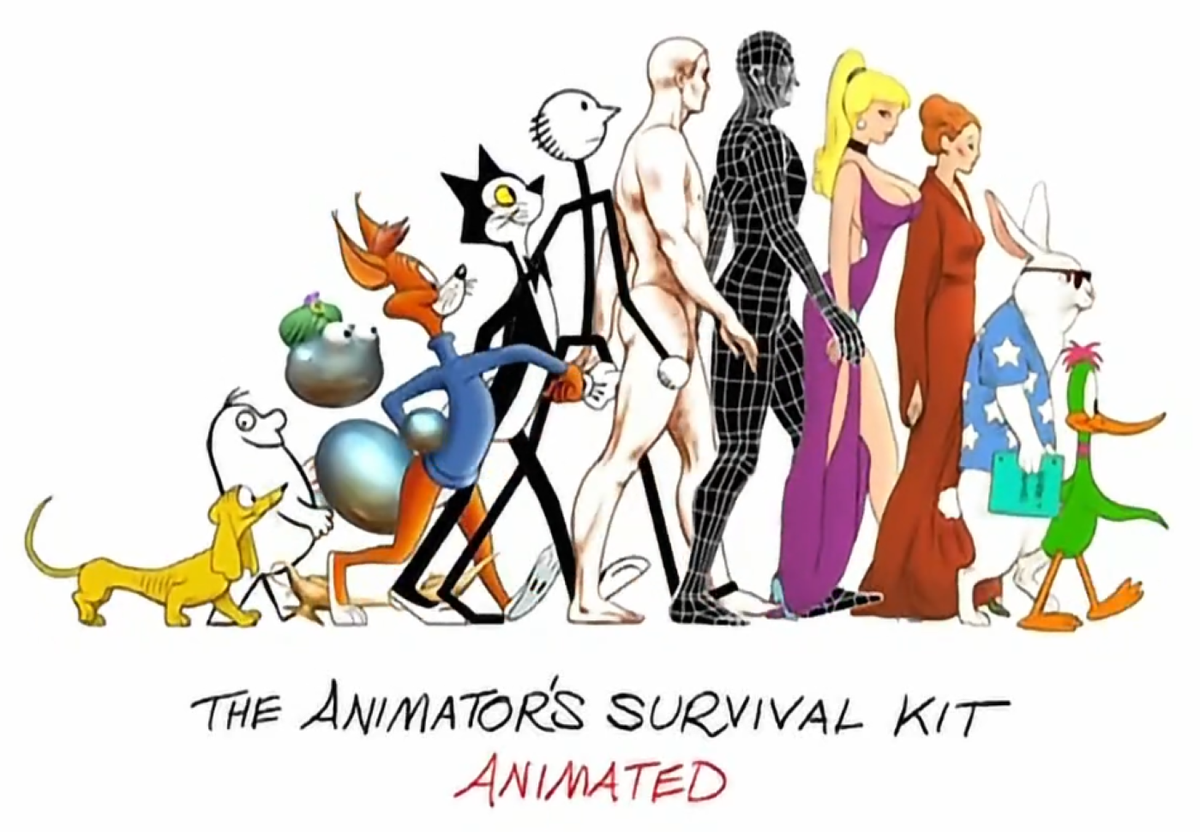
The Classic Animator’s Survival Kit for a New Generation

0

Richard Williams’ Animator’s Survival Kit Animated: A Game-Changer for Aspiring Animators

Richard Williams’ Animator’s Survival Kit is a seminal book that every animator should read. It provides insights and masterclasses from the multi-Oscar-winning animator most famous for Who Framed Roger Rabbit?, A Christmas Carol, The Little Island and Ziggy’s Gift.

A New Way to Access the Valuable Resource

Now the invaluable resource is being presented in a new way for a new generation of animators. The book itself is being animated (see our guide to the best 2D animation software if you’re wondering what program to use for your own work).

An Animation from the Animator’s Survival Kit Animated

(Image credit: Bloomsbury Publishing)

The Animator’s Survival Kit Animated Coming to Bloomsbury Video Library

The move will provide budding animators with online, on-demand access to practical and creative insights. The original Animator’s Survival Kit Animated has been a cornerstone of animation education for over 20 years, providing 16 masterclass videos and over 400 specially animated examples to demonstrate core principles, from how things move and specific methods to make characters live, breathe, think and give a sustained commanding performance.

Practical Insights for Budding Animators

The videos demonstrate longstanding animation principles and techniques that are as relevant to CGI animation as they are to traditional hand-drawn and stop-motion methods (also see the Disney animation principles).

Access to the Collection

The streamed Animator’s Survival Kit Animated collection will follow the same structure as the original DVD set, allowing users to play the masterclasses in sequence or explore specific techniques at their own pace. It will be available to academic institutions worldwide via subscription and perpetual access. A subscription option for individuals will follow later in the year, with more details to come.

What Anna Wright, Digital Portfolio Director at Bloomsbury, Says

“Richard Williams is a giant in the world of animation and his teachings have shaped the careers of countless professionals. We’re thrilled to bring these dynamic video masterclasses to a new generation of animators, students, teachers and enthusiasts, and help Richard’s legacy live on. This collection will be a game-changer for anyone looking to deepen their understanding of the art of animation.”

What Jan Pinkava, Oscar-Winning Director and Animator, Says

“When an animation great like Richard Williams offers you the fruits of his experience packed into a box and fully illustrated with moving pictures, just say ‘thank you’ and hand over the cash. Then use it.”

Conclusion

The Animator’s Survival Kit Animated is a valuable resource for aspiring animators, providing practical insights and creative masterclasses from a multi-Oscar-winning animator. With its new animated format, it will be accessible to a new generation of animators, students, teachers, and enthusiasts.

FAQs

Q: When will the Animator’s Survival Kit Animated be available?
A: The collection will be available to academic institutions worldwide via subscription and perpetual access from January 2025. A subscription option for individuals will follow later in the year.

Q: What will the collection include?
A: The collection will include 16 masterclass videos and over 400 specially animated examples to demonstrate core principles, from how things move and specific methods to make characters live, breathe, think and give a sustained commanding performance.

Q: How will the collection be accessed?
A: The collection will be available as a streaming collection on the Bloomsbury Video Library, allowing users to play the masterclasses in sequence or explore specific techniques at their own pace.

Building a Generative AI-Enabled Synthetic Data Pipeline for Perception AI

0

Accelerating the Data Generation Process with Generative AI

Training physical AI models used to power autonomous machines, such as robots and autonomous vehicles, requires huge amounts of data. Acquiring large sets of diverse training data can be difficult, time-consuming, and expensive. Data is often limited due to privacy restrictions or concerns, or simply may not exist for novel use cases. Additionally, the available data may not apply to the full range of potential situations, limiting the model’s ability to accurately predict and respond to diverse scenarios.

Synthetic data, generated from digital twins through computer simulations, offers an alternative to real-world data, enabling developers to bootstrap physical AI model training. You can quickly generate large, diverse datasets by varying many different parameters such as layout, asset placement, location, color, object size, and lighting conditions. This data can then be used to aid in the creation of a generalized model.

Accelerating the Data Generation Process with Generative AI

Achieving physical accuracy is crucial for bridging the sim-to-real domain gap in training perception AI models. A typical synthetic data generation (SDG) process begins by meticulously recreating objects in a virtual environment, and then accurately replicating the materials, textures, and other attributes of their real-world counterparts.

Once the initial 3D scene is constructed, developers employ domain randomization techniques to systematically vary aspects such as lighting, colors, and textures. This randomization generates a diverse set of annotated images, enhancing the model’s ability to generalize. The process iterates, continuously refining the synthetic data and training the model until the desired key performance indicators (KPIs) are achieved.

Despite the effectiveness of traditional SDG methods, many steps – from scene construction to parameter randomization – remain manual and time-consuming. Generative AI offers a powerful solution to streamline this process significantly.

Prompt 1

white tiled linoleum floor
green shiny new counterbalance forklift
wooden pallet light colored pine wood, softwood
garbage container

Prompt 2

dark cracked dirty concrete floor
yellow counterbalance forklift
wooden pallet light colored pine wood, softwood
black garbage container

Prompt 3

cracked concrete floor
white counterbalance forklift
wooden pallet light colored pine wood, softwood
garbage container

Prompt 4

green chipped linoleum floor
blue rusty counterbalance forklift
wooden pallet light colored pine wood, softwood
garbage container

Reference Workflow Overview

The reference workflow is suitable for developers who are training computer vision models in robotics, as well as computer vision applications for smart spaces. The following section describes the key steps of the reference workflow and its core technologies.

Reference Workflow

  • Scene Creation: A comprehensive 3D warehouse scene serves as the foundation, incorporating essential assets like shelves, boxes, and pallets. This base environment can be dynamically enhanced using 3D NIM microservices, enabling the seamless addition of diverse objects and the integration of 360° HDRI backgrounds.
  • Domain Randomization: Developers can leverage USD Code NIM, a cutting-edge large language model (LLM) specialized in OpenUSD, to perform domain randomization. This powerful tool not only answers OpenUSD-related queries but also generates USD Python code to make changes in the scene, streamlining the process of programmatically altering various scene parameters within Omniverse Replicator.
  • Data Generation: The third step involves exporting the initial set of annotated images. Replicator offers a wide array of built-in annotators, including 2D bounding boxes, semantic segmentation, depth maps, surface normals, and numerous others. The choice of output format (such as bounding boxes or segmentation masks) depends on the specific model requirements or use case. Data can be exported using various writers: the BasicWriter for standard output, the KittiWriter for KITTI format, or custom writers for COCO format.
  • Data Augmentation: In the final stage, developers can leverage generative AI models like SDXL and Edify with ComfyUI, a versatile open-source platform for constructing and executing diffusion model pipelines.

Core Technologies

  • Edify 360 NIM: Shutterstock Early Access preview of Generative 3D service for 360 HDRI (High Dynamic Range Image) generation. Trained on NVIDIA Edify using Shutterstock’s licensed creative libraries.
  • Edify 3D NIM: Shutterstock Generative 3D service for 3D asset generation, used for additional 3D objects for scene dressing. Trained on NVIDIA Edify using Shutterstock’s licensed creative libraries.
  • USD Code: A language model that answers OpenUSD knowledge queries and generates USD Python code.
  • USD Search: An AI-powered search for OpenUSD data, 3D models, images, and assets using text or image-based inputs.
  • Image Generation Models plus ComfyUI: Fast generative text-to-image models that can synthesize photorealistic images from a text prompt in a single network evaluation with a graph and nodes interface for advanced developers.
  • Omniverse Replicator: A framework for developing custom SDG pipelines and services and is integrated as an extension in NVIDIA Isaac Sim.

Conclusion

Using this workflow guide, you’ll be able to develop your custom SDG pipeline that can be used for training various types of perception AI models, from detection to classification and segmentation. By implementing this reference workflow, you or your client will benefit from:

  • Accelerated AI Model Training: Overcome the data gap and accelerate AI model development while reducing the overall cost of acquiring and labeling data required to train text, visual, and physical AI models.
  • Privacy and Security: Address privacy issues and reduce bias by generating diverse synthetic datasets to represent the real world.
  • Increased Model Accuracy: Create highly accurate, generalized AI models by training with diverse data that includes rare but crucial corner cases that are otherwise impossible to collect.
  • Scalability: Procedurally generate data with an automated pipeline that scales with your use case across manufacturing, automotive, robotics, and more.

FAQs

  • Q: What is synthetic data generation? A: Synthetic data generation is the process of generating artificial data that mimics the real-world data, but is generated using computer simulations, algorithms, and other digital tools.
  • Q: What are the benefits of synthetic data generation? A: Synthetic data generation offers several benefits, including accelerated AI model training, improved model accuracy, and increased scalability.
  • Q: How does generative AI fit into the synthetic data generation process? A: Generative AI models, such as SDXL and Edify, can be used to generate high-quality synthetic data that is more diverse and realistic than traditional methods.
  • Q: What are the core technologies involved in the reference workflow? A: The core technologies involved in the reference workflow include Edify 360 NIM, Edify 3D NIM, USD Code, USD Search, Image Generation Models plus ComfyUI, and Omniverse Replicator.
  • Q: How do I get started with the synthetic data generation process? A: You can get started by following the reference workflow guide, which outlines the key steps and technologies involved in the process.

Stay up to date by subscribing to our newsletter, and following NVIDIA Robotics on YouTube, Discord, and the NVIDIA Developer forums.

Saving Your Life

0

Every time I visit the Apple Park campus, my mind flashes to a tour I took months before construction was finished, when there was dust on the terrazzo floors and mud where lush vegetation now flourishes. My guide was Tim Cook, Apple’s CEO. With a proprietor’s pride, he ushered me through the $5 billion circular colossus, explaining that committing to the new campus was a “100-year decision.”

A Visit to Apple Park

Today I am returning to the Ring—pulsing with energy seven years after it opened—to see Cook again. The tech world is at an inflection point. The mightiest companies will either stumble or secure their dominance for decades. We are here to discuss Cook’s big move in this high-stakes environment: the impending release of Apple Intelligence, the company’s first significant offering in the white-hot field of generative AI.

Belated or Not?

Some consider it belated. All year, Apple’s competitors have been gaining buzz, dazzling investors, and dominating the news cycle with their chatbots, while the world’s most valuable company (as I write) was showing off an expensive, bulky augmented-reality headset. Apple has to get AI right. Corporations, after all, are less likely than buildings to stand proud for a century.

A Classic Apple Approach

Cook didn’t panic. Like his predecessor Steve Jobs, he doesn’t believe that first is best. “Classic Apple,” as he puts it, enters a cacophonous field of first-movers and, with a strong grasp of novelty versus utility, unveils products that make the latest technologies relatable and even sexy. Think back to how the iPod rethought digital music. It wasn’t the first MP3 player, but its compactness, ease of use, and integration with an online store thrilled people with a new way to consume their tunes.

A Focus on AI

Cook also contends that Apple has been preparing for the AI revolution all along. As far back as 2018, he poached Google’s top AI manager, John Giannandrea, for a rare expansion of the company’s senior vice president ranks. Then he pulled the plug on a long-running smart-car program (an open secret never publicly acknowledged by Apple) and marshaled the company’s machine-learning talent to build AI into its software products.

A New Era of AI

In June, Apple announced the results: a layer of AI for its whole product line. Cook had also brokered a deal with the gold standard in chatbots, OpenAI, so that his users could have access to ChatGPT. I’d gotten a few demos of what they were planning to reveal, including a tool to create custom emoji with verbal prompts and an easy-to-use AI picture generator called Image Playground.

Privacy First

Perhaps what most distinguishes Apple’s AI—at least according to Apple—is its focus on privacy, a hallmark of the Cook regime. The AI tools, which are rolling out through software updates on the latest iPhone and relatively recent Macs, will largely run on the device itself—you don’t send your data to the cloud. The computation for more complicated AI tasks, Cook assures, occurs in secure regions of Apple’s data centers.

A Conversation with Tim Cook

Another thing I’m reminded of on my return to the Ring is how skillful Cook is at touting the results of his big decisions, from the Apple Watch to his bet on custom silicon chips, which unleashed innovations that boost Apple phones and laptops. (And not mentioning decisions that didn’t pan out, like that multibillion-dollar smart-car project.) When he strolls into the conference room where we’re meeting, I know Cook will be meticulously cordial, displaying manners honed during his Alabama boyhood, while calmly hyperbolizing the virtues of Apple’s products and fending off criticisms of his very powerful company.

Conclusion

The ultimate assessments, of course, will come from users. But if 40 years of covering Apple has taught me anything, it is this: Should this first iteration of AI fall short, an unrepentant Cook will show up at a future pretaped keynote hailing a new version as “the best Apple Intelligence we’ve ever built.” Despite all the pressure, Tim Cook never lets you see him sweat.

FAQs

Q: What is Apple Intelligence?
A: Apple Intelligence is the company’s first significant offering in the white-hot field of generative AI.

Q: Why is Apple’s approach to AI different from its competitors?
A: Apple’s focus on AI is centered around privacy, with the AI tools running on the device itself and not sending data to the cloud.

Q: What kind of AI tools is Apple releasing?
A: Apple is releasing a layer of AI for its whole product line, including tools to create custom emoji and an easy-to-use AI picture generator called Image Playground.

Q: Is Apple’s AI technology secure?
A: According to Cook, the computation for more complicated AI tasks occurs in secure regions of Apple’s data centers.

Incredible Weather Visualisation in Unreal Engine 5

0

Unreal Engine 5: The Future of Game Development and 3D Visualization

Real-time Weather Visualisation in Unreal Engine 5

Unreal Engine 5, the popular game development and 3D visualization tool, has been pushing the boundaries of creative possibilities. Its latest innovation is the creation of a system that combines multiple APIs to generate real-time weather visualization and time-of-day effects. This system allows users to enter a city and view real-time visuals based on the current weather conditions.

How it Works

Technical artist Nils Bakker developed the system, which combines OpenWeather API to obtain real-time weather conditions, World Time API for time synchronization, and OpenAI 4o mini for processing longitude and latitude coordinates. Once the location is established, the photorealistic 3D environment is created using Cesium’s photorealistic 3D tiles. Real-time weather data from OpenWeather is used to add clouds, rain, or snow, along with appropriate lighting for the time of day as per World Time API.

Smooth Transitions

When moving from one city to another, the weather and lighting transition smoothly thanks to cloud transitions built with the Ultra Dynamic Sky plug-in available in Epic’s new Fab Store. This impressive demonstration of creative possibilities could have great applications for weather apps.

Conclusion

Unreal Engine 5’s real-time weather visualization system showcases the potential of combining different technologies to create innovative solutions. As the game development and 3D visualization landscape continues to evolve, we can expect to see more groundbreaking creations like this one.

FAQs

Q: What is Unreal Engine 5?

A: Unreal Engine 5 is a game development and 3D visualization tool used for creating interactive 3D content.

Q: How does the real-time weather visualization system work?

A: The system combines multiple APIs, including OpenWeather, World Time, and OpenAI 4o mini, to generate real-time weather visualization and time-of-day effects.

Q: Can I try the system?

A: While the system is not publicly available, Nils Bakker has shared a breakdown of how he built it, and the tools can be found online, allowing anyone to recreate the system.

Error: Fetch Request Failed

The Strange World of Throwing Errors on Non-OK HTTP Responses

The Hypnotic Trend

Can anyone think of a good reason why the masses of JavaScripters decided that the norm is to throw an error on non-OK HTTP responses? Because I can’t. To me, this is a terrible practice, and everyone just seems hypnotized by it, like moths to the flame.

The Consequences of Throwing Errors

When a non-OK HTTP response is received, the browser throws an error, which can have severe consequences. For instance, it can:

  • Crash the application: When an error is thrown, the application may crash, taking the user’s progress and unsaved work with it.
  • Freeze the browser: If the error is not handled properly, the browser may freeze, leaving the user stuck in an endless loading loop.
  • Leak memory: Unhandled errors can lead to memory leaks, causing the browser to consume more and more memory, leading to poor performance and eventual crashes.

Why Not Just Ignore the Error?

Why not just ignore the error and move on? Ignoring the error would allow the application to continue running, minimizing the risk of crashing or freezing. This approach would also:

  • Improve user experience: By ignoring the error, the application can continue to function, providing a better user experience.
  • Reduce errors: Ignoring the error reduces the likelihood of errors propagating up the call stack, making it easier to debug and maintain the application.

The Misconception of "Error-First" Approach

The "error-first" approach, where errors are thrown on non-OK HTTP responses, is often justified by the need to "fail fast" and "fail early." However, this approach is misguided. Failure is not the goal; it’s how we handle failure that matters.

Conclusion

The practice of throwing errors on non-OK HTTP responses is a relic of the past, a holdover from a time when error handling was not as sophisticated. It’s time to rethink this approach and adopt a more modern, user-centric approach to error handling. By ignoring errors and moving on, we can improve the user experience, reduce errors, and create more robust applications.

Frequently Asked Questions

Q: Why do developers still throw errors on non-OK HTTP responses?
A: Many developers are stuck in the "error-first" mindset, believing that throwing errors is the best way to handle non-OK HTTP responses.

Q: Is it possible to ignore errors and move on?
A: Yes, it is possible to ignore errors and move on, providing a better user experience and reducing the risk of errors propagating up the call stack.

Q: What are the benefits of ignoring errors?
A: Ignoring errors can improve user experience, reduce errors, and make it easier to debug and maintain the application.

OpenAI Unveils Realtime API and Other Features for Developers

OpenAI Unveils New API Features at Dev Day Event

OpenAI has had a tough few weeks, with its CTO and other head researchers joining the list of former employees. The company is under pressure from other flagship models, including open-source models, which offer developers cheaper and highly capable options. Despite this, OpenAI has unveiled new API features that will excite developers who want to use their models to build powerful apps.

Realtime API

The Realtime API is the most exciting new feature, albeit in beta. It enables developers to build low-latency, speech-to-speech experiences in their apps without using separate models for speech recognition and text-to-speech conversion. With this API, developers can create apps that allow for real-time conversations with AI, such as voice assistants or language learning tools, all through a single API call. It’s not quite the seamless experience that GPT-4o’s Advanced Voice Mode offers, but it’s close. However, it’s not cheap, at approximately $0.06 per minute of audio input and $0.24 per minute of audio output.

Vision Fine-Tuning

Vision fine-tuning within the API allows developers to enhance their models’ ability to understand and interact with images. By fine-tuning GPT-4o using images, developers can create applications that excel in tasks like visual search or object detection. This feature is already being leveraged by companies like Grab, which improved the accuracy of its mapping service by fine-tuning the model to recognize traffic signs from street-level images.

Prompt Caching

To improve cost efficiency, OpenAI introduced prompt caching, a tool that reduces the cost and latency of frequently used API calls. By reusing recently processed inputs, developers can cut costs by 50% and reduce response times. This feature is especially useful for applications requiring long conversations or repeated context, like chatbots and customer service tools. Using cached inputs could save up to 50% on input token costs.

Model Distillation

Model distillation allows developers to fine-tune smaller, more cost-efficient models, using the outputs of larger, more capable models. This is a game-changer because, previously, distillation required multiple disconnected steps and tools, making it a time-consuming and error-prone process. Developers can now automatically store output pairs from larger models like GPT-4o and use those pairs to fine-tune smaller models like GPT-4o-mini. The whole process of dataset creation, fine-tuning, and evaluation can be done in a more structured, automated, and efficient way.

Conclusion

OpenAI’s new API features will make it easier and more cost-effective for developers to build powerful apps. The Realtime API, vision fine-tuning, prompt caching, and model distillation will enable developers to create innovative applications that interact with users in new and exciting ways. As the company continues to develop and refine its models, it will be interesting to see which applications the multi-modal features make possible.

FAQs

Q: What is the Realtime API?

A: The Realtime API is a new feature that enables developers to build low-latency, speech-to-speech experiences in their apps without using separate models for speech recognition and text-to-speech conversion.

Q: What is vision fine-tuning?

A: Vision fine-tuning is a feature that allows developers to enhance their models’ ability to understand and interact with images. By fine-tuning GPT-4o using images, developers can create applications that excel in tasks like visual search or object detection.

Q: What is prompt caching?

A: Prompt caching is a tool that reduces the cost and latency of frequently used API calls by reusing recently processed inputs. This feature can cut costs by 50% and reduce response times.

Q: What is model distillation?

A: Model distillation is a feature that allows developers to fine-tune smaller, more cost-efficient models, using the outputs of larger, more capable models. This enables developers to create applications that are more efficient and cost-effective.

Six Nations Logo Sparks Outrage

0

The New Six Nations Logo: A Love-Hate Relationship

A Divisive Design

New logos for sports teams and tournaments are often among the most divisive. After all, sport tends to inspire more vehement passion than, say, a fashion brand or a consumer product, and rightly so. Nevertheless, organisers may have been surprised by the scale of the backlash against the new Six Nations logo.

The New Design

The new identity is intended to represent the tournament’s "electrifying action" and its "vital spark of connection". But that spark has landed on the dry tinder that is social media and caught light to form a blazing pyre of derision that now threatens to engulf the men’s tournament.

What’s So Bad About the New Logo?

Well, the clever ball in a number six has been dropped completely. Instead, the design comprises an orange rugby ball that looks like it’s formed from molten material extracted from the Earth’s core. The type reads M6N, which sounds like a postcode or the name of a television news channel, but stands for Men’s Six Nations. "The modern brand signifies the optimism fans feel when they come together at the end of winter to experience the Six Nations," we’re told by organisers. "The ugliest thing I’ve ever seen" we’re told by fans on Twitter, who have compared it to everything from Mars bar branding to the credits for the 1996 comedy Space Jam.

Fan Reactions

"Decision to rebrand – good. Calling it M6N with a clip art logo – weak AF," one person wrote on Instagram. "No issues having men’s and women’s in the title, I’m not fragile and insecure in my masculinity. But the logo looks like it should be for Crash Bandicoot," was another opinion.

The Old Logo

But is it really that bad? Like any new logo, it’s going to take a bit of getting used to, but it fits with the logos for the Women’s Six Nations and the Under 20s Six Nations (U6N), creating a more consistent branding for the overall competition.

Conclusion

The Men’s Six Nation begins in Paris with France vs Wales on 31 January, so we’ve got almost two months to get used to it. If the aim is to reach a new demographic, a radical departure could be just what the Men’s Six Nations needed. Just like the controversial new Jaguar Type 00, it polarises, but it has people talking and it may just reach the target its after.

FAQs

Q: What does the new logo represent?
A: The new logo is intended to represent the tournament’s "electrifying action" and its "vital spark of connection".

Q: Why is the logo so divisive?
A: The logo’s unusual design and typography have sparked a strong reaction from fans, with some loving it and others hating it.

Q: Is the logo a departure from the previous design?
A: Yes, the new logo is a radical departure from the previous design, with a more modern and abstract approach.

Q: Will the logo grow on fans?
A: It’s possible that fans will grow accustomed to the new logo over time, but for now, opinions are sharply divided.

OpenAI Poaches 3 Top Engineers From DeepMind

0

OpenAI Hires Three Senior Researchers from Rival Google DeepMind

New Hires to Work on Multimodal AI in Zurich Office

OpenAI announced today that it has hired three senior computer vision and machine learning engineers from rival Google DeepMind. Lucas Beyer, Alexander Kolesnikov, and Xiaohua Zhai will be joining the company to work on multimodal AI, artificial intelligence models capable of performing tasks in different mediums ranging from images to audio.

Background on New Hires

Lucas Beyer, Alexander Kolesnikov, and Xiaohua Zhai are all well-known researchers in the field of AI. They have worked together on various projects and have a deep understanding of the capabilities and limitations of multimodal AI. Beyer, in particular, has a strong track record of predicting the future of AI and has been vocal about the potential risks and benefits of AI.

Why OpenAI is Hiring from Rival DeepMind

OpenAI has been at the forefront of multimodal AI and has released several products that showcase its capabilities. However, the company is not immune to the intense competition in the AI space. To stay ahead of the curve, OpenAI is hiring top talent from rival companies like DeepMind. The company is willing to offer competitive salaries, often worth up to seven figures, to attract the best researchers.

The State of OpenAI

OpenAI has had a tumultuous year. The company’s CEO, Sam Altman, was briefly ousted by the board of directors, and several key figures have left the company to join rivals or launch their own ventures. Despite these challenges, OpenAI remains a leader in the AI space and is committed to developing the most advanced AI models.

Global Expansion

In addition to the new Zurich office, OpenAI plans to open new outposts in New York City, Seattle, Brussels, Paris, and Singapore. The company already has offices in London, Tokyo, and other cities, in addition to its San Francisco headquarters. This global expansion will allow OpenAI to tap into new talent pools and accelerate the development of its AI models.

Conclusion

The hiring of three senior researchers from Google DeepMind is a significant move for OpenAI. The company is committed to developing the most advanced AI models and is willing to invest in the best talent to achieve this goal. With the new Zurich office, OpenAI is positioned to take its multimodal AI capabilities to the next level and maintain its position as a leader in the AI space.

FAQs

Q: Why is OpenAI hiring from rival Google DeepMind?
A: OpenAI is hiring from DeepMind to gain access to top talent in the field of AI.

Q: What is the role of the new hires at OpenAI?
A: The new hires will be working on multimodal AI, developing AI models capable of performing tasks in different mediums ranging from images to audio.

Q: Why is OpenAI expanding globally?
A: OpenAI is expanding globally to tap into new talent pools and accelerate the development of its AI models.

Surreal Noir Motion

0

Well3eyond

I’m an independent artist who has devoted my life to the world of creativity and design. My wealth of experience as a graphic designer, UX designer, and photographer helps me bring a unique perspective to my art. My passion for artistic expression remains as vibrant as ever, capturing the essence of both what I see around me and what I envision.

About My Artistic Vision

I use digital images to transcend traditional boundaries, merging various styles and mediums to create a truly eclectic portfolio. My work ranges from realism to mind-bending surrealism and captivating abstract compositions.

My Creative Process

My creative process is a fusion of inspiration, experimentation, and attention to detail. I draw from my experiences, emotions, and observations to craft unique pieces that resonate with audiences. I’m always pushing the boundaries of what’s possible, exploring new techniques, and refining my skills to bring my vision to life.

My Artistic Style

From vibrant colors to striking contrasts, my artistic style is a reflection of my curiosity and passion for the world around me. I’m constantly seeking new ways to express myself, incorporating various styles and mediums to create a visual language that’s both personal and universal.

What You Can Expect from My Art

My art is a reflection of my soul, a journey of self-discovery, and a celebration of the beauty in the world around me. I invite you to explore my portfolio, and I hope you find something that resonates with you, inspires you, or challenges your perspective.

Frequently Asked Questions

Q: What inspires your art?

A: My art is inspired by the world around me, my emotions, and my imagination. I find inspiration in everything from nature to technology, and I’m always seeking new sources of inspiration.

Q: How do you approach your creative process?

A: I approach my creative process with an open mind, a willingness to take risks, and a passion for experimentation. I believe that embracing uncertainty is key to creating something truly unique and innovative.

Q: What do you hope people take away from your art?

A: I hope that my art inspires people to see the world from a different perspective, to question their assumptions, and to find beauty in the unexpected. Ultimately, I hope that my art leaves a lasting impression and sparks a sense of curiosity in those who experience it.