Home Blog Page 564

Adaptive Testing in Action

0

Understanding Multi-Armed Bandits

Understanding Multi-Armed Bandits

Imagine being in a casino and standing in front of a row of slot machines offering different rewards. The question is a classic dilemma: should you continue with the one which seems to give you the most, out of exploitation, or should you try others in hopes of finding an even better one, out of exploration?

Mathematical Foundation

The reward optimization over time is the problem that MAB solves. Mathematically speaking, ideally identify the optimal distribution of the arm and then focus the remaining time in gaining rewards from that arm. The most concrete implementation, epsilon-greedy, makes this a concrete concept with one simple rule: with probability 0.9, exploit-the best performing arm; with probability 0.1, explore-all other arms.

MAB Testing vs. A/B Testing: A Detailed Comparison

In classical A/B testing, there is a fixed division in an audience, analysis of metrics after a test period, and a rollout of the winning variant to the whole audience. While it is simple, it may be inefficient. MAB testing starts with equal-sized audiences, while it dynamically adjusts the sizes of each group based on the performance metrics. And instead of waiting for the complete rollout, MAB stops at the time it would show 95% of users the best-performing variation, retaining 5% for exploration.

Key Advantages of MAB

  • Real-Time Adaptation: in a dynamic environment, MAB really shines. For instance, when the quality of traffic fluctuates, such as Variant A being better for two weeks followed by Variant B, MAB self-corrects the distribution ratio
  • Reduced Opportunity Cost and Downtime: in smaller companies or very important tests, having mediocre performance in some A/B test groups can really dent the monthly metrics. MAB reduces this risk by dialing down traffic very fast to the poorly performing variants.

Limitations and Considerations

Despite its advantages, MAB has some marked shortcomings:

  • Implementation Complexity: Technical and conceptual as well as mathematical complexity introduce a larger possibility for mistakes.
  • Limited Applicability: Some scenarios, such as testing customer support systems with multi-day interactions or performances of taxi drivers, are not appropriate for rapid reassignment.

Optimal Use Cases

MAB can be exceptionally effective in the following cases:

  • E-commerce Dynamic Pricing: Companies like Amazon use MAB algorithms for real-time price adjustments, based on customer behavior, demand, and competitor pricing.
  • Media Buying and Traffic Allocation: The underlying variability of ad auctions and market conditions makes MAB perfectly appropriate for dynamic learning and real-time budget allocation across media sources.
  • Gaming Monetization: Perfect to optimize in-game purchases and pricing strategies across different player segments.

Real-World Implementation: A GameDev Case Study

Imagine there is a space farming game that seems optimized for marketing yet still fails to get it right. Here’s the challenge: increase lifetime value without simply raising the price across the board-a surefire way to drive away players and hurt retention rates.

Results and Performance

The production implementation showed stellar results over a 100-day period with the following milestone events:

  • Initial stabilization occurred within 30 days
  • Successfully adapted to multiple traffic quality shifts
  • Maintained stable churn rates
  • Achieved 20% ARPU increase compared to the previous fixed-price version
  • Automatically optimized for different traffic sources without human intervention

Key Takeaways and Best Practices

  • Test Duration: MAB can converge 2-3 times faster than A/B testing in appropriate cases.
  • Use Case Selection: One should refrain from over-engineering simple tests, such as button color changes, with MAB implementation. Choose your tools based upon specific needs and potential returns.
  • Synthetic Testing: Heavy backtesting before production deployment on synthetic examples emulating what is anticipated to be seen online.
  • Simplicity vs. Complexity: Whereas there are indeed many complex variants of MAB, sometimes simpler approaches work better. One should always consider whether extra complexity really serves one’s particular needs.

Conclusion

If implemented correctly, Multi-Armed Bandits are an extremely powerful optimization technique. The key to success is knowing what it can and cannot do, selecting appropriate problems to apply it to, and finding a balance in the degree of implementation complexity. Sophisticated mathematics can bring great power but does demand great care in its implementation not to make expensive mistakes. Consider that not every test requires the complexity of MAB, but where dynamic environments and the need for real-time optimization arise, MAB can offer great benefits over traditional methods of testing.

FAQs

Q: What is a Multi-Armed Bandit?

A: A Multi-Armed Bandit is a mathematical concept that solves the problem of optimization over time, where the goal is to identify the optimal distribution of a reward-generating process.

Q: What is the difference between MAB and A/B testing?

A: MAB testing is a dynamic testing approach that adjusts the distribution of users based on their performance, while A/B testing is a traditional approach that divides the audience into fixed groups.

Q: What are the advantages of MAB?

A: The advantages of MAB include real-time adaptation, reduced opportunity cost and downtime, and the ability to optimize in dynamic environments.

Q: What are the limitations of MAB?

A: The limitations of MAB include implementation complexity, limited applicability, and the need for careful tuning.

No, Microsoft isn’t using your Office docs to train its AI

0

Microsoft Clarifies AI Training Practices Amidst Customer Data Concerns

Microsoft says it isn’t using customer data from its Microsoft 365 apps to train its AI models. The clarification addresses reports circulating online in the last few weeks claiming Microsoft required Word and Excel users to opt out of training the company’s AI systems.

Confusion Arises from Microsoft Office Settings

The confusion arose from a privacy setting in Microsoft Office that toggles “optional connected experiences” — a feature that helps users “search for online pictures” or “find information available online,” according to Microsoft. This toggle is switched on by default, and fails to mention AI training in the disclosure. Similarly, a Microsoft learning document posted on October 21st, 2024 seems to have contributed to the confusion by describing a long list of connected experiences in Office that “analyze your content” without explicitly excluding AI training.

Microsoft’s Official Statement

“In the M365 apps, we do not use customer data to train LLMs,” the Microsoft 365 X account said, responding to claims. “This setting only enables features requiring internet access like co-authoring a document.” Microsoft’s communications head Frank Shaw also chimed in on Bluesky to debunk the claims.

A Trend of Concerns over AI Training

The Adobe and Microsoft incidents suggest that people are increasingly concerned with their personal data being used by tech companies to train their AI models without express permission. It’s an understandable concern given companies like Meta, X, and Google opt their users into AI training by default, and the vast quantities of online content being scraped for that purpose.

Conclusion

Microsoft’s clarification on AI training practices is a welcome move, as it addresses concerns over the use of customer data for AI model training. As the tech industry continues to grapple with the implications of AI, it’s crucial for companies to be transparent about their practices and respect user data.

FAQs

Q: Is Microsoft using customer data to train its AI models?

A: No, according to Microsoft’s official statement, the company does not use customer data to train its AI models.

Q: What is the purpose of the “optional connected experiences” feature in Microsoft Office?

A: This feature helps users “search for online pictures” or “find information available online,” according to Microsoft.

Q: Why did the confusion arise?

A: The confusion arose from the lack of explicit mention of AI training in the disclosure and the unclear description of the “optional connected experiences” feature.

Q: What does Microsoft’s official statement say about AI training?

A: According to the statement, Microsoft does not use customer data to train LLMs, and the “optional connected experiences” setting only enables features requiring internet access like co-authoring a document.

YeagerAI’s Intelligent Oracle

Blockchain AI Research Lab YeagerAI Launches Intelligent Oracle for Decentralized Applications

A New Era of Blockchain Use Cases

YeagerAI has announced the launch of the Intelligent Oracle, an AI-powered oracle that aims to provide decentralized applications (DApps) with online data on-chain. This innovative solution can revolutionize how data is collected, offering new possibilities and use cases for blockchain DApps.

How It Works

The Intelligent Oracle is built on the GenLayer blockchain, a brainchild of YeagerAI, and is designed to support a new generation of DApps. It can fetch any type of online data and deliver it on-chain. The oracle is powered by LLMs integrated in GenLayer’s Optimistic Democracy consensus mechanism, which is ‘governed’ by validators that connect to LLMs, verifying and securing the data.

Unresolved Issues in Blockchain Oracles

While blockchain oracles have evolved rapidly in the past few years, there remain several unresolved issues. One of the primary concerns is the inability of blockchains to access external data, and blockchains only being able to access what is available on-chain. The lack of broader oracles has limited the emerging uses of blockchains, with most futuristic DApps requiring immediate, accurate, and sometimes subjective data from the internet.

Intelligent Oracle: A Solution

The Intelligent Oracle offers an autonomous solution, providing a virtually unlimited range of data types to dApp builders. Unlike traditional oracles, which only provide pre-defined datasets or require manual intervention, the Intelligent Oracle is fast, cost-effective, and flexible. It enables the resolution of prediction markets, insurance, and financial derivatives, among other use cases.

Benefits and Features

  • Autonomous data collection: The Intelligent Oracle can fetch data from online sources and deliver it on-chain.
  • Cross-chain compatibility: The oracle can integrate with multiple blockchain ecosystems.
  • Scalable, efficient, and future-proof: The Intelligent Oracle is designed to support a new generation of DApps.
  • Fast data resolution: The oracle can achieve transaction finality in less than an hour at a cost of under $1 per market.

Partnerships and Adoption

YeagerAI has seen rapid adoption of its new Oracle service, with several partners committed to integrating the technology. Early partners include Radix DLT, Etherisc, PredX, Delphi Bets, and Provably.

Conclusion

The launch of the Intelligent Oracle marks a significant milestone in the development of blockchain technology. This innovative solution has the potential to unlock new use cases and applications, enabling the creation of more complex and sophisticated DApps. As the blockchain ecosystem continues to evolve, the Intelligent Oracle is poised to play a critical role in shaping the future of decentralized applications.

Frequently Asked Questions

Q: What is the Intelligent Oracle?
A: The Intelligent Oracle is an AI-powered oracle that provides decentralized applications (DApps) with online data on-chain.

Q: How does the Intelligent Oracle work?
A: The Intelligent Oracle is built on the GenLayer blockchain and is powered by LLMs integrated in GenLayer’s Optimistic Democracy consensus mechanism.

Q: What are the benefits of the Intelligent Oracle?
A: The Intelligent Oracle offers autonomous data collection, cross-chain compatibility, scalability, and fast data resolution.

Q: Who are the partners committed to integrating the Intelligent Oracle?
A: Radix DLT, Etherisc, PredX, Delphi Bets, and Provably are among the early partners committed to integrating the Intelligent Oracle.

Echoes of Elegance

0

The Timeless Beauty of Japanese Aesthetics

In the hushed tranquility of a traditional Japanese room, a beautiful Oiran in Kimono costume as a silhouette against the soft glow of a distant light. Her kimono, a masterpiece of silk and embroidery, is a canvas of contrasts – the vibrant colors of her attire against the muted tones of her surroundings. The interplay of light and shadow creates an ethereal aura, emphasizing her delicate features and the timeless beauty of the Japanese aesthetic.

The Art of Kimono

The kimono, a traditional Japanese garment, is a symbol of elegance and refinement. The intricate designs and patterns on the kimono are a reflection of the wearer’s status, occupation, and personality. The Oiran, a high-ranking courtesan in Japan’s feudal era, wore kimonos that were a testament to her beauty and charm.

The Japanese Aesthetic

The Japanese aesthetic is characterized by simplicity, elegance, and subtlety. It is a philosophy that emphasizes the importance of natural materials, minimal ornamentation, and a focus on the beauty of the everyday. The Oiran’s kimono, with its intricate designs and vibrant colors, is a perfect example of this aesthetic.

The Power of Light and Shadow

The use of light and shadow is a powerful tool in the Japanese aesthetic. The soft glow of the distant light in the room creates a sense of intimacy and tranquility, while the Oiran’s silhouette against the light emphasizes her beauty and elegance. The interplay of light and shadow adds depth and dimension to the image, creating a sense of mystery and allure.

A Closer Look

The Oiran’s kimono is a masterpiece of silk and embroidery. The intricate designs and patterns on the kimono are a testament to the skill and craftsmanship of the Japanese artisans who created it. The kimono is a symbol of the Oiran’s status and beauty, and it is a reflection of the Japanese aesthetic’s emphasis on simplicity, elegance, and subtlety.

Conclusion

The Oiran’s kimono is a beautiful example of the Japanese aesthetic’s emphasis on simplicity, elegance, and subtlety. The use of light and shadow adds depth and dimension to the image, emphasizing the Oiran’s beauty and elegance. The kimono is a symbol of the Oiran’s status and beauty, and it is a reflection of the Japanese aesthetic’s emphasis on the beauty of the everyday.

FAQs

Q: What is the Oiran?
A: The Oiran was a high-ranking courtesan in Japan’s feudal era. They were known for their beauty, charm, and cultural refinement.

Q: What is the Japanese aesthetic?
A: The Japanese aesthetic is a philosophy that emphasizes the importance of natural materials, minimal ornamentation, and a focus on the beauty of the everyday.

Q: What is the significance of the kimono in Japanese culture?
A: The kimono is a traditional Japanese garment that is a symbol of elegance and refinement. It is often worn on special occasions and is a reflection of the wearer’s status, occupation, and personality.

Q: What is the role of light and shadow in the Japanese aesthetic?
A: Light and shadow are used to add depth and dimension to the image, emphasizing the beauty and elegance of the subject. The Japanese aesthetic emphasizes the importance of subtlety and restraint, and the use of light and shadow is a key element in achieving this effect.

Arcana Generator

0

The List of Generative AI Image Models Just Keeps Growing

SoftBank to Boost OpenAI Stake with Up to $1.5B Investment

SoftBank to Buy Up to $1.5bn Worth of Stock in OpenAI

SoftBank’s Ambition to Bolster Its Position in the Artificial Intelligence Company

SoftBank is planning to buy up to $1.5 billion worth of stock in OpenAI, the $150 billion artificial intelligence company, to bolster its position in the company. The deal is set to close early next year.

How the Deal Will Work

SoftBank will buy the shares through a tender offer, a mechanism that allows current and former OpenAI employees who have held their stock for more than two years to sell. The deal will price employee stock according to OpenAI’s last funding round, which was completed last month, valuing the company at $150 billion.

SoftBank’s Investment in OpenAI

SoftBank’s second Vision Fund, its tech-heavy investment vehicle, invested $500 million in OpenAI during that round. The same fund, in which SoftBank’s CEO Masayoshi Son has a substantial stake, is also buying the $1.5 billion in shares.

AI Start-Ups’ Valuations Soar

AI start-ups have raised tens of billions of dollars in debt and equity this year, as investors look past eye-watering valuations for lossmaking companies to make bets on the technology. Elon Musk’s AI start-up xAI is expected to close a $5 billion funding round this week, valuing the company at $45 billion, while OpenAI’s valuation has nearly doubled this year. Last week, rival Anthropic received a second $4 billion investment from Amazon.

Masayoshi Son’s Ambition

Son has publicly expressed his admiration for OpenAI’s CEO Sam Altman and has said he frequently talks to him. The tech investor has been seeking a larger stake in the company, according to people familiar with the matter.

Key Backers of OpenAI

SoftBank is one of OpenAI’s largest backers, alongside Josh Kushner’s Thrive Capital, which has poured more than $1 billion into the group. Tiger Global, Altimeter Capital, Coatue Management, and Abu Dhabi-based tech investment firm MGX have also made substantial bets on the company.

Conclusion

SoftBank’s investment in OpenAI is a significant move to bolster its position in the artificial intelligence company. The deal will help to further solidify SoftBank’s position in the AI industry and demonstrate its commitment to the technology.

Frequently Asked Questions

Q: What is the value of OpenAI after the funding round?
A: OpenAI is valued at $150 billion after the latest funding round.

Q: How much will SoftBank invest in OpenAI?
A: SoftBank will invest up to $1.5 billion in OpenAI.

Q: Who are the key backers of OpenAI?
A: SoftBank, Josh Kushner’s Thrive Capital, Tiger Global, Altimeter Capital, Coatue Management, and Abu Dhabi-based tech investment firm MGX are among the key backers of OpenAI.

Q: What is Masayoshi Son’s ambition for SoftBank?
A: Son is seeking to position SoftBank as a leader in the artificial intelligence industry, with a focus on realizing "Artificial Super Intelligence".

Dairy Brand’s Superhero-Inspired Rebrand

0

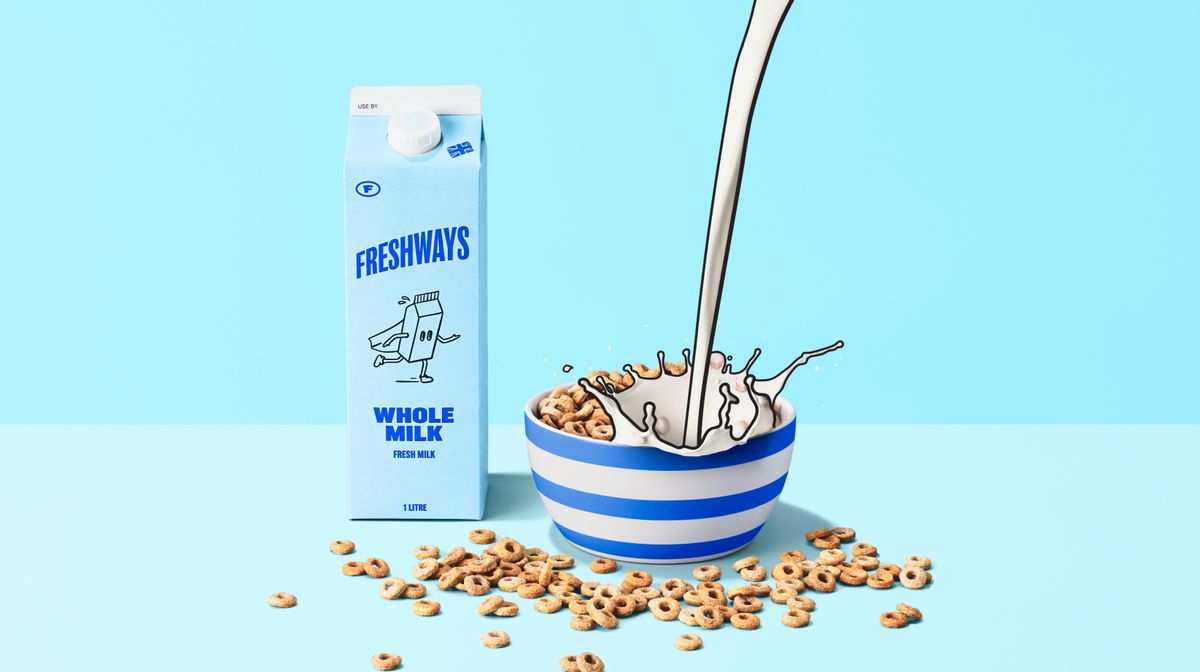
Cruising under the radar for some time now, UK-based dairy supplier Freshways was in need of a revamp that could showcase its unique identity in the milk manufacturing industry. Recently unveiling a playful new look, the refreshing rebrand is packed with personality, bringing the brand into a stylish new era with speed and innovation at its core.

The Best Rebrands Bring a Brand to Life

The best rebrands bring a brand to life by showcasing its unique appeal, and Freshways’ charming new identity is no different. With a new logo, vibrant color palette, and revamped packaging, Freshways demonstrates how breaking away from conventional design can shake things up for the better.

The Design Challenge

When branding agency White Bear set about reinvigorating the brand, the immediate challenge was finding a way "to bridge the gap between Freshways’ popularity and its brand awareness" while transcending its humble dairy origins. "The design deliberately avoided the traditional imagery of cows in fields, instead using illustration, pastel colors, and a playful tone of voice to create something fresh and unique," Kelly Mackenzie, creative director at White Bear, tells Creative Bloq. "Where competitors often take a more serious approach, this rebrand embraced challenger thinking to stand out," Kelly adds.

A New Logo and Brand Identity

At the center of the rebrand is the new logo featuring a dynamic reimagining of the brand’s sans-serif typeface. "The new logo was designed to feel dynamic and modern, moving towards the top-right corner in the style of a superhero emblem. This contrasts with the previous static, uppercase logo, bringing energy and relevance to the brand identity," Kelly explains.

A New Marque and Visual Language

A new marque was also introduced: a small ‘f’ within a roundel used across packaging and uniforms to create standout visuals. This detail, inspired by the Superman logo, reinforces the superhero theme while adding a cohesive element to the brand’s visual language.

Illustrations and the Concept "Think Fresh, Act Fresh, Sell Fresh."

Bringing a playful characterisation to Freshways’ unique branding is a series of charming illustrations. "The superhero characters were developed to give Freshways a distinctive identity and a strong personality that extends beyond just being a dairy brand. The concept leverages Freshways’ core strengths: speed and reliability, reimagining these features as those of a superhero team," Kelly explains.

Conclusion

The fresh brand identity will be rolled out across all key touchpoints while revamps to the website and Freshways app make it easier for wholesalers, retailers, independents, and cafe chains to place orders quickly and efficiently. Reflecting on the most rewarding part of the design process, Kelly tells Creative Bloq "The collaborative process with Freshways really enabled us to push creative boundaries and deliver a disruptive brand identity that remains true to the company’s core values. The new identity not only reinforces Freshways’ commitment to growth but also provides a fresh approach within the category."

FAQs

Q: What was the main challenge in rebranding Freshways?
A: The main challenge was finding a way to bridge the gap between Freshways’ popularity and its brand awareness while transcending its humble dairy origins.

Q: What is the inspiration behind the new logo and brand identity?
A: The new logo is inspired by the concept "Think Fresh, Act Fresh, Sell Fresh." and the design deliberately avoided traditional imagery of cows in fields, instead using illustration, pastel colors, and a playful tone of voice to create something fresh and unique.

Q: What is the significance of the new marque and visual language?
A: The new marque is a small ‘f’ within a roundel used across packaging and uniforms to create standout visuals. This detail, inspired by the Superman logo, reinforces the superhero theme while adding a cohesive element to the brand’s visual language.

Q: What is the goal of the rebrand?
A: The goal of the rebrand is to showcase Freshways’ unique identity in the milk manufacturing industry, bringing the brand into a stylish new era with speed and innovation at its core.

Sora Model LEAKED: How BAD is this?

0

Sora Video LEAKED – How BAD is it? Is this a huge blunder of OpenAI? And why are the Artists so angry about OpenAI? Let’s have a look at the Videos and Arguments

What is Sora?

Sora is a video generated by OpenAI, a popular AI model that uses machine learning to create videos. The video has been widely shared on social media platforms, but not everyone is happy about it.

What’s wrong with Sora?

The video has been met with criticism from the artistic community, with many artists expressing their discontent about the use of AI-generated content. Some of the concerns include:

  • Lack of originality: Many artists feel that Sora’s video is too similar to existing works, and that it lacks the creativity and originality that is expected from human creators.
  • Stealing credit: Some artists believe that Sora’s video is a form of plagiarism, as it uses existing visual effects and animation techniques without giving credit to the original creators.
  • Threat to human jobs: There is a concern that AI-generated content like Sora could eventually replace human workers, including artists and animators, which could have a negative impact on the industry.

The Reactions from the Artists Community

The reaction from the artistic community has been swift and fierce, with many artists taking to social media to express their disappointment and frustration. Some of the reactions include:

  • "I’m shocked and appalled by the lack of creativity and originality in this video. It’s just a copycat of existing work." – @artist1
  • "This is a slap in the face to all the hardworking artists and animators out there. AI-generated content has no place in our industry." – @artist2
  • "I’m all for innovation, but this is just lazy. Where’s the creativity? Where’s the passion?" – @artist3

Conclusion

The leak of Sora has sparked a heated debate about the use of AI-generated content in the artistic community. While some see it as a natural progression of technology, others view it as a threat to their livelihoods and a lack of originality. As the debate continues to unfold, it’s clear that the use of AI-generated content will be a topic of discussion for years to come.

FAQs

Q: What is OpenAI?
A: OpenAI is a popular AI model that uses machine learning to generate videos.

Q: What’s the problem with Sora?
A: Many artists feel that Sora’s video lacks originality, steals credit from existing works, and threatens human jobs in the industry.

Q: What’s the reaction from the artistic community?
A: The reaction has been fierce, with many artists expressing their disappointment and frustration on social media.

Q: Is AI-generated content the future of art?
A: The debate is ongoing, with some seeing it as a natural progression of technology and others viewing it as a threat to human creativity.

Lessons from the Wicked Poster Controversy

0

The Wicked Saga: How a Movie Poster Controversy Revealed the Changing Nature of Marketing and Celebrity

So, if the reviews are to be believed, it turns out the new Wicked movie is pretty good. Critics left, right and centre are waxing lyrical about the musical – whilst also sounding a little surprised. This might be because of the sheer amount of behind-the-scenes drama that preceded its release, perhaps the most notable example being the furore around the movie poster.

A Controversial Poster

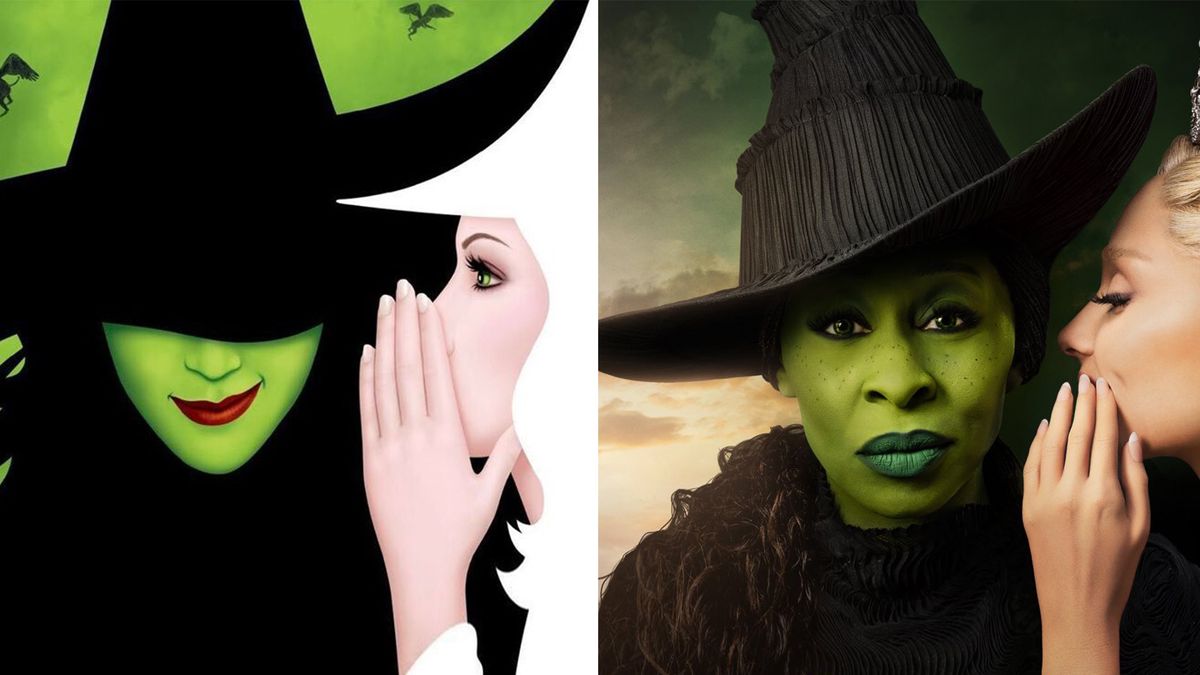
There are few musical theatre posters more iconic than the original 2008 West End design for Wicked. The famous ‘whisper’ design is instantly recognisable, and many were wondering when the 2024 movie would finally tip its pointy hat to the original. But when it finally did, fans were disappointed that Cynthio Erivo’s Elphaba wasn’t wearing lipstick, and didn’t have her eyes covered by her hat. It might not be one of the best movie posters ever, but the whole drama could have been a standard twenty-four hour online furore – if Erivo hadn’t responded.

The Furore Ensues

Erivo eventually hit out on Instagram, describing the fan-made poster designs as "the wildest, most offensive thing I have seen equal to that awful AI." She went on to say: "None of this is funny, none of this is cute. It degrades me. It degrades us" and that "To edit my face and hide my eyes is to erase me, and that is just deeply hurtful." All fairly valid points, but the mere fact that she responded turned the whole thing into a bonafide ‘controversy’, drawing far, far more attention to the fan art and prompting a fair amount of mockery.

Reflection and Regret

Erivo eventually reflected on the furore, seeming a little embarrassed by her initial reaction. "“Having that passion for what this piece is and loving it so much and knowing how much I want to communicate through Elphaba, that’s probably where that came from,” She told LA Times. “And so in my little human moment I had … I fell out on the internet, when really I should have just picked up my phone and called a friend."

The Impact on Marketing

Now that the film is out, its actual merits are already overshadowing any pre-release drama, which will soon be entirely forgotten. But when it comes to the marketing of the next big, family-friendly blockbuster, there are learnings to take on board from Wicked Postergate. The first is simple from a design perspective. If branding is going to pay homage to something iconic, it needs to do it properly, lest it draw the ire of fans. Paying lip-service isn’t enough. Heritage branding is everywhere right now, particularly in logos – but the danger here is that viewers often already have an emotional connection to pre-existing designs. A fresh take on an old classic can provoke joy and delight, but it can just as easily miss the mark.

The Rise of Fan-Made Posters

The furore also reveals the changing nature of movie marketing, and celebrity. To know that Erivo saw those fan-made posters is to know that she scrolls on social media like the rest of us, and that whether or not she had any input into the film’s marketing materials, she certainly has opinions about them. By making it much easier to talk to fans, social media shows that there’s every chance the Hollywood elite are seeing your five-minute Photoshop jobs.

Conclusion

Are we entering an era when amateur designers are doing movie studios’ jobs for them? The Wicked saga has shown us that fan-made posters can make as much, if not more, impact than their genuine counterparts. As the lines between professional and amateur design continue to blur, it’s clear that the way we think about movie marketing is due for a shake-up.

Frequently Asked Questions

Q: What was the controversy surrounding the Wicked movie poster?
A: The controversy surrounded the release of the movie poster, which some fans felt did not accurately represent the original West End design.

Q: How did Cynthio Erivo respond to the fan-made poster designs?
A: Erivo responded on Instagram, describing the designs as "the wildest, most offensive thing I have seen equal to that awful AI" and expressing hurt and degradation.

Q: What were the learnings from Wicked Postergate?
A: The learnings were that branding needs to pay homage to something iconic properly, lest it draw the ire of fans, and that fan-made posters can have a significant impact on the marketing of a film.

Enhancing Insights with ChatGPT’s Data Analysis

0

How to Use ChatGPT to Make Charts and Tables

I’m thrilled to share my enthusiasm for charts and graphs. Give me a cool chart to dig into, and I’m unreasonably happy. Is that weird? I don’t think so.

As it turns out, ChatGPT does an excellent job of creating charts and tables. And given that this ubiquitous generative AI chatbot can synthesize a ton of information into something chart-worthy, what ChatGPT gives up in pretty presentation it more than makes up for in informational value.

How to Use ChatGPT to Make Charts and Tables

Using the Advanced Data Analysis

Earlier, we discussed which charting tools are available in which versions of ChatGPT. But there’s more to it than simply charting tools. To use ChatGPT productively, you need to understand what the various editions can do.

A Guideline for Free and Paid Users

Historically, OpenAI has introduced major new features into its Plus version ($20/month) and then, after a time, rolled them out to free users. As such, it’s often challenging to tell you which features exist in the free version vs. the Plus version.

Here’s a general guideline, especially as it pertains to the rest of this article. The free version is generally more limited than the Plus version. That means fewer queries per session, less data to analyze, possibly a slightly older LLM version available, longer wait times for responses, and so on. Basically, you’re in the cheap seats if you use the free version, and you get a more premium experience if you pay for the Plus version.

Creating Charts and Tables with ChatGPT

Let’s start with an example. For this demonstration, we’ll be working with the top five cities in the world by population.

List the Top Five Cities in the World by Population, Including Country

I asked this question to ChatGPT, and here’s what I got back:

The resulting chart is simple to create. Just tell ChatGPT you want a table:

### Make a Table of the Top Five Cities in the World by Population, Including Country

Notice that it also provided population data, even though I didn’t explicitly ask for a population column.

You can manipulate and customize a table by giving ChatGPT more detailed instructions. Using the free version, we’ll add a population count field. Of course, that data is out of date, but it’s presented anyway:

### Specify Certain Details for the Table, like Field Order and Units

Here, I’m moving the country first and compressing the population numbers.

### Making a Bar Chart

ChatGPT can make line charts, bar charts, histograms, pie charts, scatter plots, heatmaps, box plots, area charts, bubble charts, Gantt charts, Pareto charts, network diagrams, Sankey diagrams, choropleth maps, radar charts, word clouds, treemaps, and 3D charts.

In this example, we’re going to make a simple bar chart.

### Make a Bar Chart of the Top Five Cities in the World by Population

### Uploading a Dataset

One of Advanced Data Analytics’ superpowers is the ability to upload a dataset. For our example, I downloaded the Popular Baby Names dataset from Data.gov. This is a comma-separated file of New York City baby names from 2011-2014. Even though it’s a decade out of date, it’s fun to play with.

### Creating a Pie Chart

Look at ChatGPT’s response carefully. Here’s where we see inaccuracies in its response. I asked for the male wedge to be green and the female wedge to be yellow. In the chart, the AI reversed that, but in the descriptive text, it got it right. Don’t be afraid to correct the AI.

### Grouping Data

As we saw earlier, the data collected includes ethnicity. Here’s how to see the distribution of the various ethnicities New York recorded in the early 2010s:

### Show the Distribution of Ethnicity in the Dataset using a Pie Chart, Using Only Light Colors

Apparently, New York didn’t properly normalize its data. It used “WHITE NON HISPANIC” and “WHITE NON HISP” together, “BLACK NON HISPANIC” and “BLACK NON HISP” together, and “ASIAN AND PACIFIC ISLANDER” and “ASIAN AND PACI” together. This resulted in inaccurate representations of the data.

### Conclusion

As we saw, ChatGPT is capable of creating charts and tables from various data sources. With its ability to import datasets and create a wide range of visualizations, it’s an excellent tool for data analysis and presentation.

**FAQ**

### Is the Data Uploaded to ChatGPT for Charting Kept Private or is There a Risk of Data Exposure?

Assume that there’s always a privacy risk.

I asked this question to ChatGPT, and this is what it told me:

Data privacy is a priority for ChatGPT. Uploaded data is used solely for the purpose of the user’s current session and is not stored long-term or used for any other purposes. However, for highly sensitive data, users should always exercise caution and consider using the Enterprise version of ChatGPT, which offers enhanced data confidentiality.

**Also: Generative AI Brings New Risks to Everyone. Here’s How You Can Stay Safe**

My recommendation: Don’t trust ChatGPT or any generative AI tool. The Enterprise version is supposed to have more privacy controls, but I would recommend you only upload data that you won’t mind finding its way to public visibility.