Home Blog Page 573

Worst Logo Redesigns Ever

0

The Minefield of Branding: Separating Serious from Satirical Reactions

The Perils of Social Media Feedback

Branding is a minefield these days, with social media ensuring that everybody can share their immediate gut reaction to anything from a new logo to an advert or poster design. Consider the reaction to the Jaguar rebrand and the AI Coca-Cola Christmas ad as a just couple of recent examples.

The Blurred Lines between Serious and Ironic Responses

But sometimes the vehemence of public reactions to rebrands is so strong, it can be hard to tell if people are being serious or ironic. Take this recent viral Twitter thread, for instance. A user has shared a list of "the worst redesigns." But while they may not be the best rebrands ever, the list contains so many sensible ones that I’m not sure if the post is intended to be serious or a satirical take on the usual outcry that greets some new identities.

The Debate: Good or Bad Redesigns?

At the top of the list is the recent Jaguar rebrand, obviously. This is probably what prompted the post, and it’s well-justified as a candidate. If ever a car logo redesign was unnecessary, this was it. The Kia logo, one of our pet hates at Creative Bloq, is also on the list, quite deservedly.

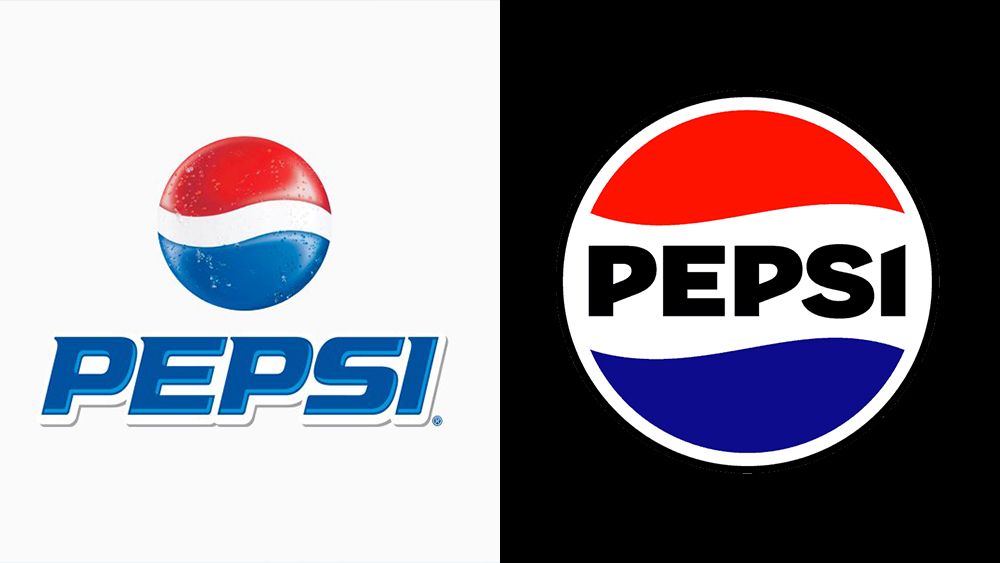
However, things quickly become less clear-cut. The new Pepsi logo, for instance, is a downgrade? I’d disagree (although we can certainly debate Pepsi’s redesigns of other brands’ logos). The same for the Coca-Cola logo and Burger King logo, both of which were made cleaner and simpler without sacrificing their distinctiveness.

The Case for Simplicity in Logo Design

But it’s this simplification that a lot of people seem to take issue with. Simplicity has several benefits in logo design, aiding interpretation and memorability as well as the practicality of actually applying the logo in different locations. And often the simplification has involved stripping out elements that were very much of a certain time, like drop shadows or gradients, thus making the identity feel more timeless. But it seems that for some people this equates to soulless.

A Question of Taste: When Satire Takes Over

It’s when someone brings up the "redesign" of the Japanese flag that I start to wonder how seriously people are taking this thread!

Conclusion

The world of branding is a complex and often fraught one, with opinions on what makes a good or bad redesign varying widely. Whether or not one agrees with the author’s assessments, it’s clear that the debate will continue to rage on social media.

Frequently Asked Questions

Q: What are some examples of recent rebrands that sparked controversy?
A: The Jaguar rebrand, the AI Coca-Cola Christmas ad, and the simplification of logos like Pepsi, Coca-Cola, and Burger King.

Q: What are the benefits of simplification in logo design?
A: Simplification aids interpretation and memorability, making the logo more practical to apply in different locations, and can make the identity feel more timeless.

Q: How can I stay up-to-date with the latest branding trends and inspiration?
A: Follow Creative Bloq for the latest news, trends, and inspiration on branding and design.

Neural Cellular Automata

0

Contents

Thread Nav

This article is part of the Differentiable Self-organizing Systems Thread, an experimental format collecting invited short articles delving into differentiable self-organizing systems, interspersed with critical commentary from several experts in adjacent fields.

Differentiable Self-organizing Systems Thread
Self-classifying MNIST Digits

Model

Those in engineering disciplines and researchers often use many kinds of simulations incorporating local interaction, including systems of partial derivative equation (PDEs), particle systems, and various kinds of Cellular Automata (CA). We will focus on Cellular Automata models as a roadmap for the effort of identifying cell-level rules which give rise to complex, regenerative behavior of the collective.

Cell State

We will represent each cell state as a vector of 16 real values (see the figure above). The first three channels represent the cell color visible to us (RGB). The target pattern has color distribution is so strong it allowed us to build Neural CA models using components readily available in popular ML frameworks.

Discussion

Embryogenetic Modeling

Regeneration-capable 2-headed planarian, the creature that inspired this work

Reproduce in a Notebook

Swarm Robotics

One of the most remarkable demonstrations of the power of self-organisation is when it is applied to swarm modeling. Back in 1987, Reynolds’ Boids simulated the flocking behaviour of birds with just a tiny set of handcrafted rules. Nowadays, we can embed tiny robots with programs and test their collective behavior on physical agents, as demonstrated by work such as Mergeable Nervous Systems and Kilobots .

Conclusion

This article describes a toy embryogenesis and regeneration model. This is a major direction for future work, with many applications in biology and beyond.

Frequently Asked Questions

Q1: What is the main topic of this article?

A1: The main topic of this article is the concept of self-organisation and its applications in different fields, including biology and machine learning.

Q2: What are some examples of self-organising systems?

A2: Some examples of self-organising systems include flocks of birds, schools of fish, and social networks.

Q3: What are the benefits of self-organising systems?

A3: The benefits of self-organising systems include their ability to adapt to changing environments and to self-organise and self-repair.

Q4: What are the potential applications of self-organising systems?

A4: The potential applications of self-organising systems include biology, medicine, and engineering, among others.

Q5: How can self-organising systems be modelled?

A5: Self-organising systems can be modelled using a variety of methods, including cellular automata, agent-based models, and differential equations.

VIDEO AI with Special Guest: Purz

0

Getting Started with Music Production: Tips and Tricks

Setting Up Your Studio

Follow PURZ here: https://www.youtube.com/@PurzBeats Support me on Patreon & get my WORKFLOWS:

When it comes to music production, having the right setup is crucial for creating high-quality tracks. In this article, we’ll cover the essential steps to get started with music production.

Choosing the Right DAW

The first step in music production is choosing the right digital audio workstation (DAW). Popular DAWs include Ableton Live, FL Studio, and Logic Pro. Each DAW has its own unique features and workflow, so it’s essential to choose one that fits your production style.

Organizing Your Files

Once you’ve chosen your DAW, it’s time to organize your files. This includes creating folders for your projects, samples, and plugins. It’s also a good idea to create a backup system to ensure your files are safe.

Creating a Workflow

A good workflow is essential for producing music efficiently. This includes creating a routine for your production process, such as setting aside dedicated time for mixing and mastering.

Tips for Better Sound Quality

Here are a few tips for improving the sound quality of your tracks:

  • Use high-quality samples and plugins
  • Experiment with different effects and processing techniques
  • Pay attention to your gain staging and levels

Conclusion

Music production can be a complex and overwhelming process, but by following these tips and tricks, you can get started with confidence. Remember to choose the right DAW, organize your files, create a workflow, and focus on improving your sound quality.

Frequently Asked Questions

Q: What is the best DAW for beginners?
A: The best DAW for beginners is often a matter of personal preference. Ableton Live and FL Studio are popular choices for beginners.

Q: How do I organize my files in my DAW?
A: Organizing your files in your DAW is crucial for efficiency. Create folders for your projects, samples, and plugins, and consider creating a backup system.

Q: What are some tips for improving my sound quality?
A: Some tips for improving your sound quality include using high-quality samples and plugins, experimenting with different effects and processing techniques, and paying attention to your gain staging and levels.

Personalization Unlocked: Leveraging AI for Customer Engagement

What is AI in Marketing Analytics?

AI-driven analytics refers to using artificial intelligence technologies to collect, analyze, and interpret large datasets associated with marketing. Using AI, businesses can automate their marketing processes, explore new insights, and make data-driven decisions at a speed and scale that was earlier unimaginable through manual work.

Key Technologies

Before understanding the benefits of AI-based analytics, let’s first understand the key technologies behind artificial intelligence that allow for such efficient, customized marketing in real time. Three major AI technologies are discussed below: machine learning, natural language processing, and predictive analytics. Each of these contributes to marketing analytics when businesses integrate artificial intelligence into their platforms and processes.

How is AI Used in Marketing Analytics?

The capabilities of artificial intelligence make it an extremely valuable tool in marketing analytics. Below are some of the ways in which AI can be used in this area. We have also explained how you can implement AI in marketing and examples of how to use it.

Personalization with AI

Personalization is among the key pillars of modern marketing. By providing customized experiences, companies can form deeper relations with their customers, resulting in maximum satisfaction, revenue, and loyalty. It is AI analysis today that can attain this level of personalization.

Benefits of AI in Marketing

Among the most significant advantages of using AI for marketing is the ability of AI to improve accuracy. Conventional methods of data analysis usually require human interpretation and manual processes. This may lead to decisions and marketing strategies based on poorly analyzed data.

AI algorithms are capable of analyzing huge datasets at a pace that is beyond the capabilities of humans. This enables ventures to delve deeper into consumer data, recognize patterns, and predict future behavior more accurately.

Another crucial advantage of artificial intelligence in marketing is the substantial improvement in efficiency. Marketing companies are usually burdened with repetitive tasks that are monotonous and time-consuming. These include campaign optimization, data reporting, and customer segmentation. Using AI, businesses can now automate these processes, further freeing up the time of marketing team members.

Challenges and Considerations

Despite the numerous benefits and great potential of AI-based marketing optimization, businesses must be mindful of the practices they are performing and how they use AI in marketing analytics. There are severe challenges concerning data privacy and bias, as well as ethical considerations regarding trust and transparency.

Common Challenges

* Data Privacy: Since AI-driven analytics heavily relies on data, the use of customer data and its privacy are major challenges. Businesses using AI must comply with data privacy regulations like the California Consumer Privacy Act (CCPA) and the General Data Protection Regulation (GDPR).
* Bias and Fairness: AI algorithms work according to the data on which they are trained. Hence, the AI model may generate unfair results if there is a hint of bias or unfairness in the training data.
* Ethical Considerations: Finally, ethical considerations are crucial when running a business, and this is no different in the case of implementing AI in marketing analytics. Businesses must be entirely transparent with the customers and ensure that the AI models are working in their best interests.

Conclusion

Integrating AI in marketing has proven to be successful in improving business processes and customer response. The technology has allowed companies to personalize their marketing content to best suit customer preferences and needs, further enhancing engagement and sales. From social media monitoring to chatbots to recommendation engines, AI has completely transformed the ways in which customers interact with businesses.

Wrapping Up

So, if you are a business owner who wasn’t sure about adopting AI for marketing, now is the time. Consider hiring LITSLINK to help you choose the right technology and tools and integrate AI into your existing business systems and processes. Remember that the right, experienced group of professionals can also help you avoid major implementation challenges.

Frequently Asked Questions

Q: What is AI-driven marketing analytics?
A: AI-driven marketing analytics refers to using artificial intelligence technologies to collect, analyze, and interpret large datasets associated with marketing.

Q: What are the benefits of using AI in marketing analytics?
A: The benefits of using AI in marketing analytics include improved accuracy, efficiency, scalability, and personalization.

Q: What are the common challenges of using AI in marketing analytics?
A: Common challenges of using AI in marketing analytics include data privacy, bias, and ethical considerations.

Q: What is the importance of ethics in AI-powered marketing?
A: The importance of ethics in AI-powered marketing is crucial as it can lead to trust issues if not implemented properly.

Note: The above content has been rewritten based on the provided text. It does not include the title.

Basic Camera Motion LoRA for AnimateDiff

0

Motion LoRA for AnimateDiff: Basic Camera Movements

Introduction

In this post, we will explore the Motion LoRA designed to be used in conjunction with AnimateEiff, which emulate basic camera movements like zoom in/out, pan right/left, and crane up/down. These Motion LoRA have been trained by Tamás Cseh and are available for download.

What are Motion LoRA?

A Motion LoRA would hook onto the AnimateDiff Loader in the motion_lora input and is loaded using the Load AnimateDiff LoRA node.

Features of Motion LoRA

The Motion LoRA provide a very nice movement in your animation and generally work well when a strength of 0.7-1.0 is used. They are designed with v2 version of AnimateDiff, so they won’t work with v3 version, and were trained with a context window of 16, making them ideally suited for Stable Diffusion 1.5 models.

Download

You can grab the various motion LoRAs via the links below, which are hosted by the creator on their HuggingFace page. Links are provided for ease of download.

Basic Workflow

Download the basic workflow that will let you test these above motion LoRA in AnimateDiff. You will need to download some custom nodes, which can be easily done via ComfyUI Manager.

Video Preview

I also put together a video preview and walkthrough of my workflows that showcase these basic camera motion LoRA for AnimateDiff. In the video, I show a larger, more complex workflow that can be built easily by expanding the above workflow and copying the necessary nodes to review multiple motion LoRAs together.

Conclusion

In conclusion, these Motion LoRA provide a convenient way to add basic camera movements to your AnimateDiff animations. By downloading and using these motion LoRAs, you can enhance the visual quality of your animations and create more engaging content.

Frequently Asked Questions

Q: What are the limitations of these Motion LoRA?
A: These Motion LoRA are designed for use with v2 version of AnimateDiff and may not work with v3 version. They were also trained with a context window of 16 and are ideally suited for Stable Diffusion 1.5 models.

Q: Can I use these Motion LoRA with other AI models?
A: The compatibility of these Motion LoRA with other AI models is not guaranteed. They were specifically designed for use with Stable Diffusion 1.5 models and may not work with other models.

Q: Can I customize these Motion LoRA?
A: While the Motion LoRA provided are designed to be used as-is, you may be able to customize them to some extent by adjusting the strength and other parameters. However, any customization may affect the overall quality and performance of the Motion LoRA.

OpenAI and Wharton Launch Free ChatGPT Course for Teachers

0

AI in Education: Leveraging ChatGPT for Teaching

A New Course for Educators

When ChatGPT launched, concerns about atrophying children’s intelligence and education, with some school districts even blocking access. However, many schools soon decided to unblock the technology and began leveraging it within their classrooms. This new course is meant to help teachers make the most of ChatGPT.

Course Details

On Thursday, OpenAI partnered with Wharton Online to launch a new course, AI in Education: Leveraging ChatGPT for Teaching, available on Coursera for free. The course has been designed to teach generative AI essentials to higher education and high school staff to help them better implement the technology in their classrooms.

Course Structure

The course is self-paced and split into four modules, which take about an hour to complete. The topics covered in the modules include:

  • How to use AI in the classroom
  • Creating GPTs
  • Building AI exercises and tests
  • Prompting AI
  • Learning about the risks of the technology

Expert Guidance

The course features experts in the field, including Wharton professor Ethan Mollick, who was one of the first instructors to find ways to incorporate generative AI into the syllabus and classroom to promote learning. Time magazine named Mollick one of 2024’s most influential people in AI. Lilach Mollick, co-director of Wharton Generative AI Labs, also guides the course.

Certificate and Availability

Once the course is completed, users will earn a Wharton Online and OpenAI certificate issued by Coursera, which they can share with their networks to show they understand AI. The course, accessible on Coursera, starts on November 21 and users can enroll for free.

Other Course Options

If you are interested in pursuing other courses, there are many options. On Wednesday, OpenAI launched a free online course called ChatGPT Foundations for K-12 Educators.

Best Free AI Courses in 2024

ZDNET rounded up the best free AI courses in 2024, which you can find here.

Conclusion

The new course, AI in Education: Leveraging ChatGPT for Teaching, is a great opportunity for educators to learn about generative AI and how to implement it in their classrooms. With the guidance of expert instructors, participants can earn a certificate and enhance their teaching experience.

FAQs

Q: Is the course free?
A: Yes, the course is available on Coursera for free.

Q: Who can take the course?
A: The course is designed for higher education and high school staff.

Q: How long does the course take?
A: The course is self-paced and split into four modules, which take about an hour to complete.

Q: What is the certificate awarded after completing the course?
A: Users will earn a Wharton Online and OpenAI certificate issued by Coursera, which they can share with their networks to show they understand AI.

A Glowing Example of Heritage Design

0

WOMEN | Bayer: A Transformative New Women’s Health Brand

A Beacon for Health

German pharmaceutical and life science company Bayer AG has launched WOMEN | Bayer – a transformative new women’s health brand. Created to "dispel myths and misconceptions, simplify complexities, research in the unknown, and cast a light on the overlooked and misunderstood," WOMEN | Bayer is a brand of action with ambitions to close the gender health gap.

Designing a New Identity

The new identity was created by award-winning global brand design agency Design Bridge and Partners. The design process began by dissecting the gender health gap. "Women receive healthcare in a man’s world, a world filled with taboos, misconceptions, and shame due to huge gaps in research, data, information, care, and trust," reveals Katherina Tudball, senior creative director at Design Bridge and Partners. "Half the world’s population – from every walk and stage of life – feel ignored by medical professionals and are all united by what is missing. So, we set about exploring ways to visualise the gaps."

The Logo

Central to the brand identity is its logo, which embraces the iconic ‘Bayer Cross’, widely regarded as "a beacon for health." Katherina tells Creative Bloq "The logo itself has been lighting up the sky in Bayer’s hometown in Germany for over 90 years in the form of a huge, illuminated sign. The ‘Leverkusen Bayer Cross’ is 51 meters in diameter, making it the biggest trademark in the world."

Enlightenment

The design is informed by the motif of ‘enlightenment’, which appears in the ‘O’ of the new logo. "A subtle glow on the edge of the ring nods to the concept of enlightenment and is echoed in glowing graphic devices, bespoke typographic assets, and illuminating motion behaviors," Katherina says. "Overall, the identity uses the visual language of light across graphics, animation, and photography. Highlighting bright, positive solutions as well as exposing the shadowy gaps and problems."

Color Palette

At one stage, the design team experimented with a lot of different color palettes before finally settling on the right balance of depth and optimism. The final gradient color palette of purples and golds avoids stereotypically gendered tones and "Once all the elements fell into place conceptually, the design itself flowed quite naturally as we had a very single-minded point of focus," she adds.

Conclusion

WOMEN | Bayer is a brand that is not only visually striking but also has a deep sense of purpose. The design team’s commitment to creating a brand that is both informative and empowering is evident throughout the identity. As Katherina Tudball reflects, "Working on WOMEN | Bayer has really highlighted to me just how little we, as women, understand our own bodies and how badly we are being let down by institutionally sexist healthcare systems and norms."

FAQs

Q: What is the purpose of WOMEN | Bayer?
A: WOMEN | Bayer is a brand that aims to dispel myths and misconceptions, simplify complexities, research in the unknown, and cast a light on the overlooked and misunderstood.

Q: Who designed the WOMEN | Bayer brand identity?
A: The brand identity was created by award-winning global brand design agency Design Bridge and Partners.

Q: What is the significance of the Bayer Cross in the logo?
A: The Bayer Cross is a beacon for health and has been lighting up the sky in Bayer’s hometown in Germany for over 90 years.

Q: What is the color palette of the WOMEN | Bayer brand?
A: The final gradient color palette of purples and golds avoids stereotypically gendered tones and provides a balance of depth and optimism.

OpenStable: A Free Open-Source Alternative to Midjourney

0

August 2024: Black Forest Labs Releases Flux.1 Models

New Models and Features

On August 1, 2024, Black Forest Labs released three new models, Flux.1 – Pro, Dev, and Schnell. The Pro version is not open source and is available through their API, while DEV and Schnell are both open source and available to download via Huggingface page.

Model Comparison

The DEV model is a higher quality model than Schnell, but Schnell is much faster, with a generation time of 4 steps. Both models are large, weighing in at 23.8GB each, and require a high level of VRAM to run. It is recommended that you have 32GB RAM. However, it is possible to run them on lower VRAM GPUs, as demonstrated by the author, who uses an RTX4080 with 16GB of RAM.

Comparison to Midjourney

The buzz around these models is that they are at par with Midjourney, and in the author’s testing, they agree that they are much better. The Flux.1 models excel in several areas, including:

  • Resolution: The model can handle any image size, from extremely wide to extremely tall, with no set resolution required.
  • Prompts: The model is much better at handling prompts and adhering to the nuances of the prompt.
  • Quality: The quality of the generated images is higher, with better-formed hands, composition, and facial features.
  • Text: The model renders text better than any other model, even SD3.

What Sets Flux.1 Apart

One of the key differences between Flux.1 and Midjourney is that Flux.1 doesn’t apply its own recipe or sauce to make the image better, staying closer to the original prompt. This makes it easier to control the output with a text prompt.

Downloading and Running the Models

To run the Flux.1 models, you need ComfyUI (update to the latest version) and then download the necessary files. Place the Model in the models\unet folder, VAE in models\VAE, and Clip in models\clip folder of ComfyUI directories. Make sure to restart ComfyUI and refresh your browser.

Workflows and Sample Results

The author provides two workflows, Text 2 Image and Image 2 Image, which can be downloaded and used with ComfyUI. The Image 2 Image workflow utilizes Florence 2 LLM and Clip Interrogator to generate an accompanying prompt to help guide Flux.

Sample Results

The article includes several sample results from the Flux.1 models, showcasing their high-quality and coherent output.

Conclusion

The release of Flux.1 models has been a welcome addition to the AI art community, offering high-quality and coherent results. While it’s still early days, the author is excited to see what other developments await us in the coming months.

FAQs

Q: What is the difference between Flux.1 and Midjourney?
A: Flux.1 doesn’t apply its own recipe or sauce to make the image better, staying closer to the original prompt, making it easier to control the output with a text prompt.

Q: Can I run Flux.1 on a lower VRAM GPU?
A: Yes, it is possible to run Flux.1 on a lower VRAM GPU, but it may take longer to generate images.

Q: What is the recommended RAM for running Flux.1?
A: 32GB RAM is recommended, but it is possible to run it on lower RAM configurations.

Q: Can I download the Flux.1 models?
A: Yes, the DEV and Schnell models are available to download via Huggingface page.

Enabling AI-Powered Learning: A Taxonomy for K-12 and Higher Education

Key Points:

  • No use of generative AI tools by students
  • Partial ban of generative AI tools by students
  • No comment or decision on the use of generative AI by students
  • Allow for initial creation of prototypes, outlines, idea generation
  • Allow for AI generation of materials that then require human review
  • Allow for AI tools without a requirement for human review

Generative AI in Education: A Taxonomy of Options

As generative AI continues to advance, its potential applications in education grow increasingly varied and complex. Educators and institutions are grappling with how best to integrate these tools into the learning environment while balancing innovation with ethical considerations, assessment concerns, and instructor comfort.

Restrictive Approaches

  • No use of generative AI tools by students: At the most restrictive end of the spectrum, some institutions may opt for a complete ban on the use of generative AI tools by students (and potentially by teachers). This approach stems from concerns about academic integrity, originality, and the potential for AI to undermine the development of critical thinking and problem-solving skills.
  • Partial ban of generative AI tools by students: In this case, the use of generative AI tools is restricted in specific contexts or for certain tasks. For instance, AI might be prohibited during exams or in assignments where personal creativity and original thought are paramount.

Permissive Approaches

  • Allow for initial creation of prototypes, outlines, idea generation: Students are permitted to use generative AI tools for the initial stages of their work, such as brainstorming, creating prototypes, or generating outlines.
  • Allow for editing and revision of student-generated materials: Students can use AI tools for editing and revising their work, helping to improve grammar, structure, and coherence in their writing.
  • Allow for AI generation of materials but require human review: Students can use generative AI to produce complete materials, such as essays or reports, which then undergo human review.
  • Allow for AI tools without a requirement for human review: At the most permissive end of the spectrum, some institutions might allow the unrestricted use of AI tools without requiring subsequent human review.

Conclusion

The expansion of generative AI tools within the educational environment illustrates the diverse ways in which these tools can be integrated into learning environments. From complete bans to unrestricted use, each approach has potential. As educators and institutions navigate this evolving landscape, it is crucial to consider the implications of each policy on student learning, assessments, academic integrity, and the future of education.

FAQs

Q: What are the benefits of using generative AI tools in education?
A: Generative AI tools can help students overcome writer’s block, explore new ideas, and improve the quality of their work.

Q: What are the potential drawbacks of using generative AI tools in education?
A: Generative AI tools can undermine the development of critical thinking and problem-solving skills, and may lead to over-reliance on technology.

Q: How can educators balance innovation with ethical considerations when using generative AI tools?
A: Educators can strike a balance by setting clear guidelines and expectations for the use of generative AI tools, and by ensuring that students understand the importance of original thought and critical thinking.

Q: What are the potential implications of allowing unrestricted use of generative AI tools in education?
A: Allowing unrestricted use of generative AI tools in education may lead to a lack of original thought and critical thinking, and may undermine the integrity of academic work.

A Quiet Place: The Road Ahead

0

A Quiet Place: The Road Ahead Details

Publisher Sabre Interactive
Developer Stormind Games
Formats PS5 (reviewed), Xbox Series X/S, PC (Steam)
Platform Unreal Engine 5
Release date Out now

A Quiet Place: The Road Ahead has some good ideas

Moments into A Quiet Place: The Road Ahead, a game based on the clever horror movie-verse, and it dawns on me this is a stealth horror that throws out everything we’ve come to expect from post-apocalyptic creature shocks.

The lively banter of The Last Of Us is dropped for silence, the eerie and playful unnatural surrealism of Silent Hill 2 Remake and Alan Wake 2 replaced by the mundane; at one point I slowly shuffle through a jumble of broken, stacked train carriages and this impresses, because generally, A Quiet Place: The Road Ahead is singularly unimpressive in its presentation of what comes after the world is overrun by sound-tracking aliens.

But the slow boil fumbles stakes

The early stages of the game impress, and I genuinely take slow nervous steps, as the merest sound – treading on broken glass, a heavy footstep on wooden floorboards and the crunch of scree underfoot – can call down a creature and the hunt begins. If one of these aliens gets too close Alex’s breathing quickens, causing an asthma attack, and a coughing fit that will, more often than not, lead to an early coffin.

Conclusion

Overall, A Quiet Place: The Road Ahead is a solid, if unremarkable, horror game that relies too heavily on slow, deliberate pacing to build tension. While it has some interesting ideas, such as using sound to detect and evade enemies, these are not enough to make up for the game’s lack of depth and character development.

Frequently Asked Questions

Q: What is A Quiet Place: The Road Ahead?
A: A Quiet Place: The Road Ahead is a stealth horror game based on the A Quiet Place franchise, developed by Stormind Games and published by Sabre Interactive.

Q: What are the game’s core mechanics?
A: The game’s core mechanics involve using stealth and strategy to evade and defeat creatures that hunt by sound, with a focus on silence and caution to survive.

Q: Is the game suitable for horror fans?
A: While A Quiet Place: The Road Ahead does have some tense and frightening moments, its slow pace and lack of jump scares may not be enough to satisfy some horror fans.

Q: Is the game worth playing?
A: If you’re a fan of the A Quiet Place franchise or enjoy slow-paced, atmospheric horror games, you may find A Quiet Place: The Road Ahead to be an enjoyable experience. However, those looking for a more action-packed or fast-paced horror game may want to look elsewhere.