Home Blog Page 58

Meta Resumes AI Training Using EU User Data

Meta Resumes Harvesting EU User Data to Train AI Models

After a Year-Long Pause, Meta Begins Collecting EU User Data

After nearly a year’s pause due to regulatory concerns, Meta has begun harvesting public content from its European users to train its AI models, just as EU officials prepare to issue the first-ever fines under the bloc’s Digital Markets Act (DMA).

EDPB Approves Rollout

Meta announced Monday it will start using public posts, comments, and AI interactions from adult users across Facebook, Instagram, and WhatsApp in the EU to improve its generative AI systems. The European Data Protection Board (EDPB) approved the rollout.

Meta’s Statement on Data Collection

"This training will better support millions of people and businesses in Europe, by teaching our generative AI models to better understand and reflect their cultures, languages, and history," Meta said in its official announcement.

History of Data Collection

Meta was previously barred from using EU data, stating in 2024 "Without EU user data Meta says “we’d only be able to offer people a second-rate experience. This means we aren’t able to launch Meta AI in Europe at the moment.”

User Opt-Out Options Available

European users will begin receiving notifications this week, both in their apps and via email, explaining exactly what data will be collected and how it will be used. These notifications will include a link to an objection form where users can opt out.

"We have made this objection form easy to find, read, and use, and we’ll honor all objection forms we have already received, as well as newly submitted ones," Meta’s press release stated.

What Data Will Not Be Collected

The company emphasized that “we do not use people’s private messages with friends and family to train our generative AI models.” Additionally, “public data from the accounts of people in the EU under the age of 18 is not being used for training purposes.”

Following Industry Examples

Meta also pointed out it’s “following the example set by others including Google and OpenAI,” noting both companies have already used data from European users to train their AI models.

DMA Fines on the Horizon

The timing of Meta’s announcement is noteworthy, coming just as the European Commission prepares to issue what are expected to be substantial fines against both Meta and Apple for alleged violations of the new Digital Markets Act.

Competition Commissioner’s Warning

Competition Commissioner Teresa Ribera reinforced the Commission’s enforcement intentions Tuesday, telling the European Parliament: “If we do not see willingness to cooperate we will not shy away from imposing the fines identified by the law.”

DMA Fines

Companies found in breach of the DMA can be fined up to 10% of their total worldwide turnover, increasing to 20% for repeated infractions.

Conclusion

While the EU wants to enforce fines against Big Tech, preventing model training on citizens’ data has proved not to be possible. For European users who don’t want their data harvested by Meta, keep an eye out for Meta’s notifications.

FAQs

Q: What data will be collected by Meta?
A: Meta will collect public posts, comments, and AI interactions from adult users across Facebook, Instagram, and WhatsApp in the EU.

Q: Will private messages be used to train AI models?
A: No, Meta does not use people’s private messages with friends and family to train its generative AI models.

Q: Will data from users under 18 be used?
A: No, public data from the accounts of people in the EU under the age of 18 is not being used for training purposes.

Q: Can I opt out of data collection?
A: Yes, European users will receive notifications with a link to an objection form where they can opt out.

Q: What companies have already used EU user data to train AI models?
A: Google and OpenAI have already used data from European users to train their AI models, following a similar approach to Meta.

TDK Breaks Through AI Bottleneck with Optical Innovation

Breakthrough in Optical Technology to Revolutionize AI Processing

A New Era in Data Transfer

Japan’s TDK has made a groundbreaking discovery in optical technology that could significantly speed up data transfer rates, solving a major bottleneck in the growth of generative artificial intelligence. The company claims to have created the world’s first "spin photo detector," which combines optical, electronic, and magnetic elements to achieve response times of 20 picoseconds, or 20 trillionths of a second.

The Current Challenge

The current method of transferring data between processors using electrical signals is not sufficient to meet the demands of AI processing. The high volumes of data required for AI applications make it necessary to shift towards optical technology, as light travels faster. However, existing semiconductor-based photo detectors are not able to keep up with the required speeds.

The Solution

TDK’s new device uses a combination of optical, electronic, and magnetic elements to achieve faster data transfer rates. Hideaki Fukuzawa, senior manager of TDK’s next-generation products development centre, explained that the speed at which AI processors can transfer data is the biggest bottleneck, and that the new technology could be a game-changer for the AI and data centre industry.

Potential Impact

The spin photo detector has been tested by Arata Tsukamoto, an electrical engineering professor at Tokyo’s Nihon University, who believes that it holds "remarkable promise" both scientifically and technologically. TDK plans to further test the device to confirm its ability to transfer data continuously at ultra-high speeds, with the aim of providing samples to customers by the end of March 2026 and entering mass production in the next three to five years.

Cost Advantage

TDK believes that its device could have a cost advantage over other solutions by reducing the number of wafer processes. The technology is still in its infancy, and there are significant challenges to be overcome, including building an ecosystem for integrated circuit designers. However, TDK is confident that its device could be a cost-effective solution for the industry.

Potential Applications

The new device has potential applications in various fields, including smart glasses for augmented and virtual reality, high-speed image sensors, and data centre expansion. The photonic integrated circuits market is set to expand more than tenfold over the next decade to $54.5bn due to generative AI’s demands.

Conclusion

TDK’s breakthrough in optical technology has the potential to revolutionize the field of AI processing by solving the bottleneck of data transfer speeds. The company’s spin photo detector could be a game-changer for the industry, providing a cost-effective solution that meets the demands of AI applications.

Frequently Asked Questions

Q: What is the significance of TDK’s new device?

A: The device is a spin photo detector that combines optical, electronic, and magnetic elements to achieve faster data transfer rates, solving a major bottleneck in the growth of generative artificial intelligence.

Q: How fast is the new device?

A: The device has response times of 20 picoseconds, or 20 trillionths of a second.

Q: What is the current challenge in data transfer?

A: The current method of transferring data between processors using electrical signals is not sufficient to meet the demands of AI processing.

Q: What are the potential applications of the new device?

A: The device has potential applications in various fields, including smart glasses for augmented and virtual reality, high-speed image sensors, and data centre expansion.

Q: What is the potential market size for photonic integrated circuits?

A: The photonic integrated circuits market is set to expand more than tenfold over the next decade to $54.5bn due to generative AI’s demands.

CAD Design and Engineering Software

0

Best CAD Software: A Comprehensive Guide

Best overall

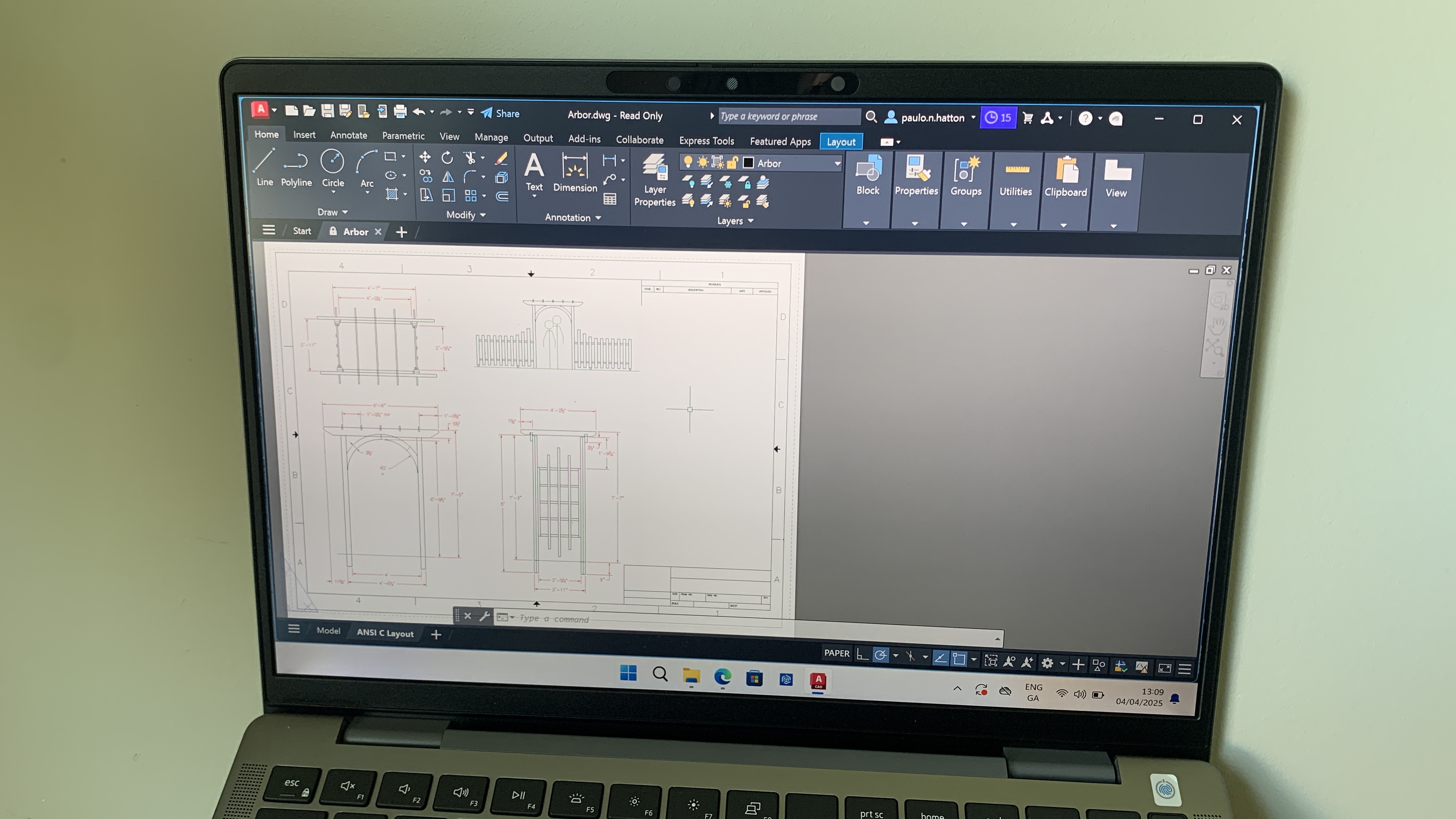
There is no bigger name in the CAD world than AutoCAD. With over 40 years of development, this software from Autodesk is the complete package. It features 2D drafting, 3D modelling and industry-specific tools. It does have a steep learning curve.

AutoCAD

(Image credit: AutoCAD)

01. Autodesk AutoCAD

The industry standard CAD software is best for pros and students.

Specifications

Platforms: Windows and limited macOS support

Cost : $250 / £252 per/month

Reasons to buy

+

Easy to use

+

Comprehensive package

+

Perfect for professionals

Reasons to avoid

Expensive

Lacks 3D tools

Buy it if

✅ You work with CAD professionally There just isn’t anything better.

✅ You’re working in architecture Dedicated tools make design a breeze.

You need the industry standard With most people using it you won’t have compatibility issues.

Don’t buy it if:

❌ You’re on a budget AutoCAD is not cheap and with a subscription model, it should be avoided by those with limited money.

❌ You want 3D tools AutoCAD does have these but they’re not very good.

The bottom line

🔎 Autodesk AutoCAD is the most complete CAD software available and has been trusted by users for over four decades. It’s not so great for 3D functionality but for 2D CAD work there isn’t anything better. ★★★★

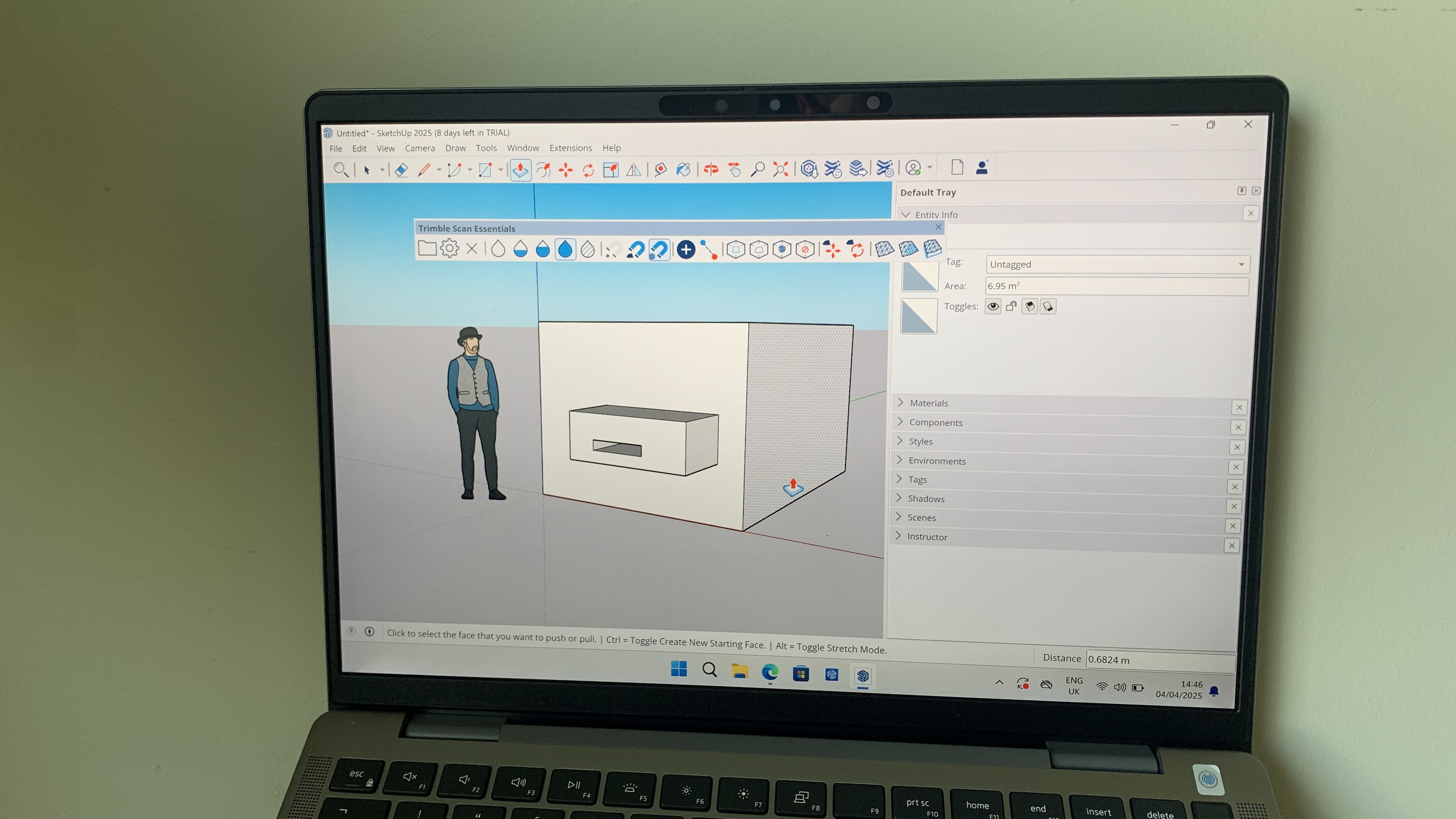
SketchUp

(Image credit: Future)

02. SketchUp

The ideal for CAD software for beginners.

Specifications

Platforms: Windows, macOS, iPad, web

Cost : $49.99 / £38.99 per/month

Reasons to buy

+

East to learn

+

2D and 3D tools

Futures of Work ~ Why do companies abuse their foreign workers?

0

In Canada, there is a significant public backlash against companies that hire temporary foreign workers (TFWs), partly because the mistreatment of TFWs across the country is well documented, and partly because of persistent anti-immigrant sentiment. Accusations that these workers are depressing wages and stealing jobs persist. Why, then, do companies hire TFWs? And why do these companies mistreat these workers, if they rely on them so much? To better understand these issues, I conducted over 100 interviews with workers, employers and others who are associated with the programme in Canada.

Why do companies hire TFWs? Although there is a public perception that companies hire TFWs to reduce payroll costs, the evidence from my interviews with managers who are using the Canadian TFW programme suggests that wage costs are not the only consideration. These companies are considering several factors. The TFW programme is expensive and time consuming to use, and recent changes in regulation mean that employers must pay TFWs at least the average median wage usually paid to Canadians in that specific occupation and in the specific province and region. However, many managers believe that using the TFW programme can still provide the employer with overall cost savings, based on the assumption that TFWs are more productive. This assessment is not surprising: in many instances where TFWs fill jobs with lower skill requirements, TFWs are overqualified for the work they are doing. Most managers also report that TFWs offer a lower turnover than Canadian workers. TFWs have what is known as a ‘closed’ work permit; they can only work for the company that has brought them to Canada. Essentially, companies who hire TFWs hire an overqualified worker who cannot easily quit. These workers are an attractive proposition for the employer.

Unfortunately, some employers fail to treat TFWs fairly. There have been many reports of workers who are forced to perform additional tasks without compensation or who do not receive appropriate holiday or overtime pay. These workers also frequently report unsafe working or living conditions, with threats of termination or deportation. I spoke to several employers who had been ‘blacklisted’ or found to be non-compliant with the TFW guidelines after being audited by the government. Companies that are non-compliant may pay a monetary penalty, and they may also be banned from hiring TFWs in the future; this, of course, will vary with currently envisaged law relaxation. At the time of my research, approximately 945 companies had been found to be non-compliant, and the largest fine levied so far to any company in Canada is $365,750. Moreover, from speaking to a government employee and reviewing some internal government documents regarding how non-compliant organisations are investigated, I realised that the emphasis tends to be on closing files quickly rather than on identifying cases of fraud or worker mistreatment. In other words, the ‘blacklisted’ companies are a small tip of the iceberg.

But why then, do companies keep abusing temporary foreign workers? This question is complicated. Most – but not all – of the managers who spoke with me were, in fact, completely compliant with the TFW programme. The evidence from my interviews suggests that compliance is time consuming yet still achievable. However, some managers had a highly short-term orientation, were disdainful of the government’s authority over the TFW programme and felt that circumstances beyond their control were to blame for their staffing problems. These managers minimised the hardships faced by TFWs in Canada and were more likely to be non-compliant with the TFW guidelines. Managers who planned ahead, took responsibility for their organisation’s staffing challenges, and acknowledged the hardships faced by TFWs in Canada, were much less likely to be non-compliant. Problematic managers tended to rationalise their non-compliance. Each factor was insufficient, by itself, to guarantee that a manager would be non-compliant, but a picture emerges of two general types of managers: reluctant users of the programme, who were resigned to following all its rules no matter how inconvenient, and reckless users, who saw their use of a TFW programme as their right as business owners who needed to solve their staffing problems. The reluctant users of the programme fully recognised the need for close oversight of how they managed their TFWs. Many would have preferred to hire Canadians, and most had made ongoing efforts to do so, but they had also realistically assessed the feasibility of relying exclusively on Canadians. These managers often tried to support the efforts of their employees who were TFWs to become permanent residents. They considered the expense and time that they spent on the TFW programme bureaucracy to be normal costs of doing business in their region or industry. There was also a sense that non-compliant competitors were receiving an unfair advantage; the reluctant users felt that better enforcement of the guidelines would result in a level playing field where the rules would apply equally to everyone.

In contrast, the reckless users of the programme tended to feel that public scrutiny of the TFW programme was overblown and that the programme had been unnecessarily curtailed in recent years. They believed that it was impossible to hire qualified Canadians, and they felt that TFWs were much easier to manage. These managers asserted that the bureaucracy of the TFW programme was so complicated that no one could comply with it.

So, how can workers be protected? The reason TFWs are so vulnerable to mistreatment is that it is very difficult for them to quit their jobs and find new ones. The introduction of ‘open’ work permits so the TFWs can work for a set period for any employer anywhere in Canada would enable workers to proactively quit a job at the first sign of mistreatment, rather than waiting for a situation to become egregiously unsafe. Moreover, the possibility that a TFW could quit their job (just like a Canadian) would put pressure on employers to maintain their pay and working conditions.

Catherine Connelly is a Professor and Business Research Chair in Organisational Behaviour, in the Human Resources and Management department of the DeGroote School of Business at McMaster University, Canada. Her research focuses on the attitudes, behaviours and experiences of workers with non-traditional employment contracts (e.g. temporary agency workers, independent contractors, temporary foreign workers, part-time workers, gig workers), middle managers, workers with disabilities and workers who engage in or experience knowledge-hiding in their organisations. A more comprehensive account of the findings presented here can be found in her recent book, Enduring Work: Experiences with Canada’s Temporary Foreign Worker Program, published in 2023 by Mc Gill-Queen’s University Press.

Image credit: Rezli via Unsplash

Quebec’s Hidden Charm

Overcoming Labour Shortages: The Temporary Migrant Worker Program in Canada

The Issue

Over the past decades, Canada has encouraged international mobility and the use of temporary migrant workers to overcome quantitative and qualitative labour shortages. However, the country was put on the spot last year by a United Nations Special Rapporteur who provided unfavourable findings regarding certain work and employment management practices that placed these workers in a highly vulnerable position.

The Program

The temporary foreign workers (TFW) program governs the arrival, stay, and working conditions of migrant workers in Canada. Under this program, employers are required to obtain a Labour Market Impact Assessment (LMIA) before hiring a foreign worker. The LMIA ensures that the employer has made reasonable efforts to hire a Canadian citizen or permanent resident for the job.

The Criticism

The United Nations Special Rapporteur’s criticism lies with the employer-specific work permit, which he believes constitutes a breeding ground for modern slavery. The rapporteur argues that the program creates a power imbalance between employers and workers, making it difficult for workers to negotiate fair wages and working conditions.

The Response

In response to the criticism, the Quebec government has tightened rules and criteria to reduce the use of temporary migrant workers. However, some labour market actors have expressed concerns that this move may exacerbate labour shortages and make it more difficult for employers to access the labour they need.

The Impact on Workers

Migrant workers settling in Canada through work-related migration pathways face varied realities and cannot be seen as a homogenous population. While they are mostly classified as skilled and non-skilled labourers, within these two groups, we find differentiated sub-categories. Workers face issues such as francisation, adaptation to employment conditions, health and safety problems, psychological abuse, exploitation, discrimination, and racism.

The Need for Change

To overcome the challenges faced by temporary migrant workers, there is a need to address the fundamental problem facing businesses, which is to rely on a production model that has great difficulty recruiting Canadian workers. The abolition of the closed permit could certainly reduce the vulnerability of TFWs to abuse and exploitation. However, it would not address the fundamental problem of relying on a flexible migrant workforce.

Conclusion

The temporary migrant worker program in Canada has been criticized for creating a power imbalance between employers and workers, leading to exploitation and abuse. To overcome the challenges faced by temporary migrant workers, there is a need to address the fundamental problem facing businesses and to ensure that workers are treated fairly and with dignity.

FAQs

Q: What is the temporary foreign workers (TFW) program?
A: The TFW program governs the arrival, stay, and working conditions of migrant workers in Canada.

Q: What is the Labour Market Impact Assessment (LMIA)?
A: The LMIA is a requirement for employers to obtain before hiring a foreign worker. It ensures that the employer has made reasonable efforts to hire a Canadian citizen or permanent resident for the job.

Q: What are the concerns regarding the employer-specific work permit?
A: The employer-specific work permit has been criticized for creating a power imbalance between employers and workers, making it difficult for workers to negotiate fair wages and working conditions.

Q: What are the issues faced by temporary migrant workers in Canada?
A: Migrant workers in Canada face issues such as francisation, adaptation to employment conditions, health and safety problems, psychological abuse, exploitation, discrimination, and racism.

Q: What is the solution to the challenges faced by temporary migrant workers?
A: The solution lies in addressing the fundamental problem facing businesses and ensuring that workers are treated fairly and with dignity.

How to Use AI in Windows Paint and Notepad

0

AI in Windows Notepad

Microsoft has added several features to Notepad in recent years, transforming it from a basic code editor to a more comprehensive tool. One of these features is Copilot, a powerful AI tool that can help with text composition. However, this feature is not as robust as its web-based counterpart and is limited to rewriting and tweaking existing text.

Using Copilot in Notepad

To use Copilot in Notepad, you need to select a portion of text and then click on the Copilot button in the top-right corner of the interface. This will open a menu with various options:

  • Make shorter and Make longer: These options allow you to change the length of the selected text.
  • Change tone: This option enables you to modify the tone of the text to be more inspirational, formal, casual, or humorous.
  • Change format: This option allows you to put the selected text into a different structure, such as a list, marketing speak, or poetry.
  • Rewrite: This option opens a new pop-up window with more comprehensive options for changing the length, tone, and format of the text. You can also choose between different variations and apply the changes with the Replace button.

Limitations and Costs

At the time of writing, Notepad is offering a few AI-powered rewrites for free. However, if you want to use this feature extensively, you will need AI credits, which are part of a Microsoft 365 or Copilot Pro subscription. These credits cannot be purchased separately.

Turning Off Copilot

If you do not want to use Copilot and would prefer not to see the Copilot button, you can turn it off by clicking the gear icon in the top-right corner of the interface and disabling the Copilot toggle switch.

Conclusion

While Copilot in Notepad is a useful feature, its limitations and the requirement for AI credits may be a drawback for some users. Nevertheless, it is always exciting to see new features being added to basic tools like Notepad, and it is likely that this feature will continue to evolve in the future.

Frequently Asked Questions

  • What is Copilot in Notepad?
    Copilot is a feature in Notepad that uses AI to help with text composition.
  • What can I do with Copilot in Notepad?
    You can use Copilot to rewrite and tweak existing text, change the length, tone, and format of the text, and apply different variations.
  • Do I need a subscription to use Copilot in Notepad?
    Yes, you will need a Microsoft 365 or Copilot Pro subscription to use Copilot extensively.

Samsung Unveils XCover7 Pro and Galaxy Tab Active5 Pro

0

Samsung has unveiled two new additions to its ‘ruggedised Enterprise Edition’ product line, which is essentially another way of saying super durable military-grade tech designed for harsher workplace environments. Rugged phones and tablets are nothing new, but it seems that this type of hardware is becoming increasingly popular – though I’m not entirely sure why.

New Devices Unveiled

The new Galaxy XCover7 Pro smartphone and Galaxy Tab Active5 Pro tablet from Samsung expand on the company’s existing rugged product lineup and have been built with upgraded processors, increased memory, and infused with AI features (of course). The standout feature of both devices, however, is the new dual-battery design – allowing users to swap out the battery for a fully charged replacement without the device powering down.

Dual-Battery Design

This could be a game-changer for creatives with more demanding workloads, as even some of the best tablets with a stylus pen will lose charge pretty quickly when used for extensive projects. The Galaxy XCover 7 Pro will be available from May 8th at a price of $693 / £559, but we’ll have to wait a little longer for the Galaxy Tab Active5 Pro (priced at $793 / £769), which is expected sometime in June 2025.

Who are Rugged Devices for?

According to Samsung, rugged hardware is essential for industries like retail, logistics, healthcare, and manufacturing, and these two new devices are packed with features like programmable keys for assigning shortcuts and emergency alerts, as well as seamless use with compatible gloves which is great for hygienic environments.

Conclusion

While rugged devices might not be for everyone, they certainly have their place in the market. The dual-battery design of the Galaxy XCover7 Pro and Galaxy Tab Active5 Pro is a major draw for creatives who need a device that can keep up with their demanding workloads. Whether or not rugged devices will catch on with the majority remains to be seen, but they’re certainly an interesting addition to Samsung’s product lineup.

FAQs

Q: What is the price of the Galaxy XCover7 Pro?

A: The Galaxy XCover7 Pro will be available from May 8th at a price of $693 / £559.

Q: What is the price of the Galaxy Tab Active5 Pro?

A: The Galaxy Tab Active5 Pro is expected to be released in June 2025 at a price of $793 / £769.

Q: Can I buy a rugged device for personal use?

A: While rugged devices are primarily designed for industrial and commercial use, there’s no reason why you can’t buy one for personal use if you need a device that can withstand harsh environments.

Apple Leans on Synthetic Data to Upgrade AI Privately

Apple is taking a new approach to training its AI models – one that avoids collecting or copying user content from iPhones or Macs.

According to a recent blog post, the company plans to continue to rely on synthetic data (constructed data that is used to mimic user behaviour) and differential privacy to improve features like email summaries, without gaining access to personal emails or messages.

Improving Genmoji and other Apple Intelligence features

The company already uses differential privacy to improve features like Genmoji, where it collects general trends about which prompts are most popular without linking any prompt with a specific user or device. In upcoming releases, Apple plans to apply similar methods to other Apple Intelligence features, including Image Playground, Image Wand, Memories Creation, and Writing Tools.

For Genmoji, the company anonymously polls participating devices to determine whether specific prompt fragments have been seen. Each device responds with a noisy signal – some responses reflect actual use, while others are randomised. The approach ensures that only widely-used terms become visible to Apple, and no individual response can be traced back to a user or device, the company says.

Curating synthetic data for better email summaries

While the above method has worked well with respect to short prompts, Apple needed a new approach for more complex tasks like summarising emails. For this, Apple generates thousands of sample messages, and these synthetic messages are converted into numerical representations, or ’embeddings,’ based on language, tone, and topic. Participating user devices then compare the embeddings to locally stored samples. Again, only the selected match is shared, not the content itself.

Apple collects the most frequently-selected synthetic embeddings from participating devices and uses them to refine its training data. Over time, this process allows the system to generate more relevant and realistic synthetic emails, helping Apple to improve its AI outputs for summarisation and text generation without apparent compromise of user privacy.

Available in beta

Apple is rolling out the system in beta versions of iOS 18.5, iPadOS 18.5, and macOS 15.5. According to Bloomberg’s Mark Gurman, Apple is attempting to address challenges with its AI development in this way, problems which have included delayed feature rollouts and the fallout from leadership changes in the Siri team.

Whether its approach will yield more useful AI outputs in practice remains to be seen, but it signals a clear public effort to balance user privacy with model performance.

Conclusion

Apple’s new approach to training its AI models is a significant step towards balancing user privacy with model performance. By relying on synthetic data and differential privacy, the company can improve its AI outputs without collecting or copying user content. This approach is expected to improve features like email summaries and other Apple Intelligence features.

FAQs

Q: What is synthetic data?
A: Synthetic data is constructed data that is used to mimic user behaviour.

Q: What is differential privacy?
A: Differential privacy is a method that introduces randomised data into broader datasets to help protect individual identities.

Q: How does Apple collect data for its AI models?
A: Apple collects synthetic data and uses differential privacy to improve its AI models without collecting or copying user content.

Q: What features will be improved using this new approach?
A: Apple’s new approach will improve features like email summaries, Genmoji, Image Playground, Image Wand, Memories Creation, and Writing Tools.

Q: Is this approach available for public use?
A: The system is currently available in beta versions of iOS 18.5, iPadOS 18.5, and macOS 15.5.

HP Omnibook X 14: The New Battery Life Champ

0

Why you can trust Creative Bloq

Our expert reviewers spend hours testing and comparing products and services so you can choose the best for you. Find out more about how we test.

HP Omnibook X 14 Review

Key specifications

  • CPU: Qualcomm Snapdragon X Elite
  • NPU: Qualcomm Hexagon
  • Graphics: Qualcomm Adreno
  • Memory: 16GB LPDDR5x
  • Storage: 1TB SSD
  • Screen size: 14in
  • Screen type: IPS touchscreen
  • Resolution: 2240 x 1400
  • Refresh rate: 60Hz
  • Colour gamut (measured): 81% P3
  • Brightness (measured): 306 nits
  • Ports: 1x USB-C 40Gbps, 1x USB-C 10Gbps, 1x USB-A 10Gbps, 1x 3.5mm headphone jack
  • Wireless connectivity: Wi-Fi 6E, Bluetooth 5.3
  • Dimensions: 31.29 x 22.35 x 1.43 cm
  • Weight: 1.34kg

Design, build and display

The Omnibook X isn’t overburdened with ports, but what’s there is just enough. You get two USB-C ports, one capable of 40Gbps, though telling it apart from its neighbour, which transfers at 10Gbps, is a matter of squinting at some very small logos printed next to them. They’re both used for charging, and both can hook up to an external monitor, which means you’ll want a dock or be left reliant on the lone USB-A 10Gbps port, which is a clever folding slimline model to avoid making the laptop any thicker.

Features

The Omnibook X isn’t overburdened with ports, but what’s there is just enough. You get two USB-C ports, one capable of 40Gbps, though telling it apart from its neighbour, which transfers at 10Gbps, is a matter of squinting at some very small logos printed next to them. They’re both used for charging, and both can hook up to an external monitor, which means you’ll want a dock or be left reliant on the lone USB-A 10Gbps port, which is a clever folding slimline model to avoid making the laptop any thicker.

Benchmark scores

Benchmark Omnibook X 14
Geekbench 6 2371 (CPU Single-core), 12433 (CPU Multi-core)
Cinebench 2024 106 (CPU single-core), 627 (CPU multi-core), GPU: not compatible
UL Procyon not compatible
Topaz Video AI error
ON1 Resize 158,250ms (200% resize time)
PugetBench for Photoshop 6415 (Overall), 58.5 (General), 70.4 (Filter)
PugetBench for DaVinci Resolve not compatible

Performance

In the demanding Cinebench 2024 rendering benchmark, the Omnibook posts a multi-core CPU score that’s lower than we’re used to seeing from laptops with the same chip in them. Its score of 627 is beaten by the Surface Laptop 7, Asus Vivobook S 15 and Lenovo Slim 7x, both of which score in the 800s.

Price

£1,349.99

Who is it for?

  • Home workers
  • Those who want to jot down ideas or do a quick sketch at an ungodly hour before the inspiration evaporates
  • Those who work out of their cars, cafes, hotel bars or their beds

Score card

Attributes Notes Rating
Design Smart, portable and businesslike 4/5
Features Well specced, but an extra port would have been nice 3/5
Performance Good CPU, weak GPU 3/5
Value With lots of competition, it sits in the middle 3/5

Buy it if…

  • You’re often away from a plug socket for a few days
  • You’re not pushing high-bitrate video files around
  • You love Copilot

Don’t buy it if…

  • You need more graphics power
  • Your studio has lots of chargers
  • You secretly want a Mac

Also consider

  • Surface Laptop 7
  • Asus Vivobook S 15
  • Lenovo Slim 7x

Futures of Work ~ Precariousness at its worst: A union perspective

0

In recent years, institutional measures at both the federal and provincial government levels have been geared towards a clear direction in favour of temporary migration in Canada. The increased use of temporary migrant workers is now a major trend in Canadian migration policies, as is the case in many Western countries. For approximately two decades, the expansion of temporary foreign worker programmes (TFWPs) as well as the multiplication of entry routes into Canada and Quebec have had the effect of reorientating certain fundamental principles regarding migration in the country. 2006 was a turning point. That year, the number of temporary migrant workers admitted to Canada exceeded the number of those present under permanent status. Even if historically, Canada has been among the countries with the most significant level of permanent immigration, new statistics reflect a specific orientation and vision regarding migration policy in this specific context.

But what does this imply in terms of fundamental principles? If there had been hope for a migration model that would allow each migrant worker to be recognised as a future Canadian citizen, the current migration system, which above all has been linked to economic needs, has cast a heavy shadow on this hope. Structural disequilibrium is not eschewed but embraced.

In my current role within a union organisation, I am required to visit our local sections and meet migrant workers who are increasingly arriving in Canada through the TFWP. My fieldwork allows me to observe that these individuals come to Canada with a temporary status, an employer-specific permit, but with a long-term project. This is why, as union officials, we find that our analysis leads to an urgent need to rethink the migratory process beyond work.

In recent years, there has been a significant militant movement in Quebec and Canada aimed at speaking out against the injustice and abuse that have resulted from the TFWP. We have observed migrant workers’ agency: many of them have played an active part in defending their rights and contributing to awareness campaigns that have highlighted these workers’ hard conditions: precariousness, discrimination at work, and in some cases, enactments of racism.

These issues raise concerns and new questions for union organisations. Unions will have to adjust their practices to new realities and learn more from real-life experiences that will allow them to rethink their ideational posture regarding justice and solidarity. Our objective is not to allow the percolation of differentiated categories of workers in our membership, and inclusive solidarity will have to be at the heart of our union work and renewal agenda.

From a union perspective, so-called temporary work calls for a revision of its premise: temporary as a status and work condition. While the migration status of a group of foreign workers is classified as temporary, these workers come to Canada to fill in permanent work. Labour shortage is currently decried in Quebec and Canada; this is fertile ground to question the rationales that hinder more access to permanent residency for these migrant workers. TFWPs imply that workers are separated from their families – temporarily, but for those filling less qualified occupations, for a long time. In fact, whether to render family members eligible to join the individual worker in Canada remains an ongoing debate and an unresolved case at different government levels. Whenever improvement in this respect is announced, selective eligibility persists; only workers belonging to some occupation groups may henceforth have the privilege of bringing their families more rapidly to Canada. How these occupation groups and their respective values are institutionally defined, and whether such categorising is devoid of unconscious bias has been questioned by academic research.

With a closer lens on the phenomenon, we observe a series of diversion. To start with, the TFWP seems to be serving a purpose that distances it from its essence and definition. It has generated a permanent situation of precariousness for a specific group of individuals who continue to arrive, join others or replace each other, within Canadian society. In a similar vein, economic migration endeavours are subordinate submissive to companies’ economic objectives, this in turn reducing social protections that in some cases were guarantees of health and safety and other social benefits for migrant workers. The availability of an external pool of workers has significantly altered employment supply mechanisms. In our union organisation, our analysis is based on fieldwork and visits where we observe a circular movement in the labour market: less qualified workers are granted temporary status; more qualified workers are carefully selected in view of employee retention, and this is supplemented with variegated and punctual use of asylum seekers as ‘back-up’ labour. The problem is that the phenomenon I describe here is to date underpinned by government institutions in Canada and its provinces and economically managed by Canadian employers. In other words, Canada is nurturing work and employment regimes that are systemically discriminatory, while tailor-made programmes for temporary migration persist as an economic solution. The phenomenon will have to constitute a core debate within Canadian society that is witnessing the legitimacy of industrial relations that are failing to maintain an individual’s fundamental rights as the social justice threshold.

In sum, our challenges as union organisations will pertain to constantly redefining our practices and actions in favour of inclusive solidarity and equal rights for all. The democratic principle will require recurring reinforcement based on new societal content and new consequences. This will not only require more activist and institutional work, but also the assertion of a legitimacy principle. To us unionists, this principle can only be that of the rule of fundamental rights above all. This is the only way through which we will be able to build stronger work and employment institutions for all in Canada.

Mouloud Idir is a union official at the Syndicat des Métallos. His current role focuses exclusively on the temporary migration question in the Quebec labour market.

Image credit: Claudio Schwarz via Unsplash