VR animated film MAYA: The Birth of a Superhero has already garnered praise for digital artist and filmmaker Poulomi Basu, with a nomination at Festival de Cannes Compétition Immersive 2024 as well as earning a Winner Special Jury Mention Prize 2023 Tribeca Festival. Released for the best VR headsets, MAYA: The Birth of a Superhero is boundary-pushing art as much as it is a ‘game’.
VR can affect change
Poulomi’s work has mostly been based around photography, and she has particularly focused on the marginalisation of women, motivated by her own family’s experiences. “My mother and my grandmother were both child brides, and my mother then became a child mother, and then they both became young widows, so they lived a life of restrictions,” she says.
Her 2013 photographic collection Blood Speaks: A Ritual of Exile documented the Nepalese practice of Chhaupadi, in which women who are menstruating or bleeding after childbirth are considered ‘impure’ and exiled to makeshift huts. “Then I made 360-degree VR documentary films which were about being in that spatial confinement with the women,” recalls Poulomi.
A new law issuing fines or jail terms for people forcing women into menstrual confinement was passed in Nepal in 2017. “But I just kind of realised that even though laws change and things change. people’s hearts and minds don’t easily change,” Poulomi says. “And I realised, after living in the UK for so many years, that this element of taboo and shame [around periods] is so big: it just manifests in different societies in different ways.”
MAYA: The Birth of a Superhero
This led her to create the interactive VR experience MAYA: The Birth of a Superhero. “MAYA is about a South Asian girl growing up in Tower Hamlets, and how her life changes with her first period,” she says. “It’s about the sexual awakening and navigating this world of intergenerational trauma and period violence.” After overcoming her shame and fear, Maya unlocks her true superpowers.
BAFTA Breakthrough
Poulomi says that being chosen as a BAFTA Breakthrough is a significant moment in her career. “It’s hard to quantify what these things mean, because sometimes they’re so big that it just feels surreal and unreal, right? Growing up with my background and everything, I’ve had so little of being important and powerful… It feels absurdist and surreal in some ways, but also, at the same time, it makes me feel great that I belong, and I have been welcomed, and I’ve been chosen because I deserve it.”
After feeling like an outsider for much of her life, Poulomi hopes that being chosen as a BAFTA Breakthrough will open up previously unattainable spaces, allowing her to meet producers and directors, as well as gaining valuable mentoring.
Conclusion
Poulomi’s work is a testament to the power of VR in telling stories that need to be told. Her experiences as a woman of colour have shaped her perspective and inspired her to create art that challenges societal norms. As she continues to push boundaries in the world of VR, it will be exciting to see what the future holds for her.
FAQs
Q: What inspired Poulomi to create MAYA: The Birth of a Superhero?
A: Poulomi was inspired by her own experiences as a woman of colour and her desire to challenge societal norms around menstruation and period shame.
Q: What does being chosen as a BAFTA Breakthrough mean to Poulomi?
A: Being chosen as a BAFTA Breakthrough is a significant moment in Poulomi’s career, as it opens up new opportunities for her to meet producers and directors, and gain valuable mentoring.
Q: What does Poulomi hope to achieve with her work?
A: Poulomi hopes to use her work to challenge societal norms and create a more inclusive and accepting world for women and people of colour.
Decision-makers at brands and agencies know that the new AI-generated holiday ads from Coca-Cola have attracted a lot of criticism.
Others have described the three new AI versions of the classic “Holidays Are Coming” campaign as “a soulless and creepy, dystopian nightmare” and “the biggest branding blunder of the year,” with others saying the AI campaign “destroyed the spirit of Christmas” and “earns Coca-Cola a lump of coal.”
Strong words. But has Manuel “Manolo” Arroyo, the executive vice president and global chief marketing officer for the company, just made a career-damaging move?
Testing the Ads
In testing for festive campaigns globally by DAIVID, none of Coke’s new AI-generated holiday ads made the top 30 most effective holiday campaigns of 2024 against 90 other Christmas ads.
The Ads
Secret Santa
Secret Level created “Coca-Cola – Secret Santa (AI-Generated Christmas Ad 2024).”
Holidays Are Coming
Silverside created “Coca Cola – Holidays Are Coming.”
Unexpected Santa
Wildcard created “Coca-Cola – Unexpected Santa (AI-Generated Christmas Ad 2024).”
Holidays Are Coming 2020
While you’re reviewing these new versions, you should also watch the version that was uploaded to Coca-Cola Great Britain & Ireland’s YouTube channel back in 2020.
Comparison to the Classic 2020 Ad
What do you notice? What do you wonder?
Attention
All the new AI versions generated above-average attention from the start.
However, the classic version, which starts with a boy ringing a bell, captures more attention than any of the AI versions, which mostly start with shots of snowy landscapes.
People will generally attract more attention than images of trees and lakes.
Prevalence of Intense Emotions
According to testing by DAIVID, none of the AI ads generate the same levels of intense positive emotions as the 2020 version, and all of them are below the industry average.
The 2020 version generates almost twice as much warmth as the norm, while the AI versions are level or slightly above.
The AI version that generated the most warmth was still 38% less likely to make people feel warmth than the 2020 version.
The AI versions were less relatable and less – for want of a better word – real.
Brand Recall
All of the new AI versions predictably scored above the industry average for correct brand recall.
This is not surprising, considering that people know the ad well, and the brand is present throughout and integral to the storyline (Coke Trucks).
The classic scores higher than the AI versions, though. This, again, is possibly due to the familiarity of the ad, but also the fact the famous “Holidays Are Coming” track kicks in much quicker.
Next Step Intents
One of the emotions that the AI versions consistently scored higher than the 2020 ad for is feelings of craving. All are around two to three times higher than average.
This is probably due to the close-ups of someone opening a cold bottle of Coke, which wasn’t included in the 2020 version.
What Was the Most Effective AI Version?
Ian Forrester of DAIVID reported:
“The AI versions of Coke’s classic ‘Holidays Are Coming’ campaign were strong for attention in the first second and brand recall, but were let down by their evocation of intense positive emotions, which were all below the industry norm.
The difference between the AI and the original was most stark in their evocation of warmth, a mainstay of Christmas advertising. The original evoked intense warmth among 33.0% of viewers, whereas the AI versions were significantly below this.
So, while the AI is producing images which on the face of it seem cute and heart-warming, the human viewer to some degree discerns their synthetic nature, which detracts from their impact.”
How Can Brands Avoid AI Negative Backlash?
After analyzing the data published by DAIVID, I reached out directly and spoke to their Chief Growth Officer, Barney Worfolk-Smith:
Interview with Barney Worfolk-Smith
GJ: Why does AI have such a negative perception?
BWS: It’s not surprising that the use of generative AI, especially jazzing up familiar Christmas traditions like Coke’s truck, garners some negative opinions.
As the introduction of generative AI into processes is nascent and messy at best, none of us really know exactly how it will play out.
So, some in the advertising community who feel a sense of ominous threat will instantly adopt a negative stance. I don’t blame them, but the reality is, the toothpaste is out of the tube, so we should all have a hand on the wheel of a human-AI hybrid Christmas Coke truck to have a stake in the future.
GJ: Can brands navigate carefully to avoid backlash?
BWS: Generative AI is present – or at least coming down the chimney – in almost all aspects of advertising. It’s actually incumbent upon brands to try bits of it out.
Sure, it’s going to be bumpy, but the backlashes will frequently be confined to the advertising community.
As a result, as long as they’re doing measured introductory human AI experiments and not dismissing the agency of record, I think they’ll avoid a hit on the share price.
GJ: Why was the original video such a classic?
BWS: The original was a glorious confluence: strong, familiar emotions, which Coca-Cola evokes generally, the shared history of Santa and Coca-Cola’s colors, and a palpable, relatable sense of anticipation that even the “Grinchiest” of us feel in the run-up to Christmas.
GJ: Why has AI failed to replicate the success of the first campaign?
BWS: At DAIVID, we understand the importance emotions play in advertising effectiveness – and the AI versions all garnered below-average U.S. positive emotional responses.
Without a doubt, the uncanny valley plays a part here, especially with an advert that is so recognizable to so many of us.
GJ: What must marketers do when using AI in video or images?
BWS: Marketers need to take their eyes off the spreadsheet and on to the creative process.
Of course, AI can drive efficiencies, but it can also open up new avenues of creativity, and that will happen when creatives are empowered to use AI, not be threatened with it.
Conclusion
Holiday ads are notoriously tricky to navigate and strike the right sentiment, with the best intention often missing the mark.
Feelings of warmth and nostalgia are at the heart of the festive season. Perhaps AI just can’t replicate the nuance of human emotion – or more likely, humans don’t like the idea of AI trying to replicate that.
Coca-Cola’s new ads emphasizes the challenge for brands to cultivate emotional authenticity when engaging with their audience as AI becomes more integrated into advertising campaigns.
It reminds us to embrace AI cautiously while upholding the human elements that underpin marketing campaigns – holiday ads, in particular.
Frequently Asked Questions
Q: What was the methodology used to test the ads?
A: DAIVID used its AI-powered platform that predicts the emotions an ad will generate, and its likely impact on brand and business metrics – enabling advertisers to measure the effectiveness of their ad campaigns at scale.
Q: What were the results of the testing?
A: None of Coke’s new AI-generated holiday ads made the top 30 most effective holiday campaigns of 2024 against 90 other Christmas ads.
Q: Why did the AI versions fail to replicate the success of the original campaign?
A: According to DAIVID, the uncanny valley plays a part here, especially with an advert that is so recognizable to so many of us. The AI versions were less relatable and less – for want of a better word –
World’s Largest Electronics Maker Plans With Omniverse and AI
To meet demands at Foxconn, factory planners are building physical AI-powered robotic factories with Omniverse and NVIDIA AI.
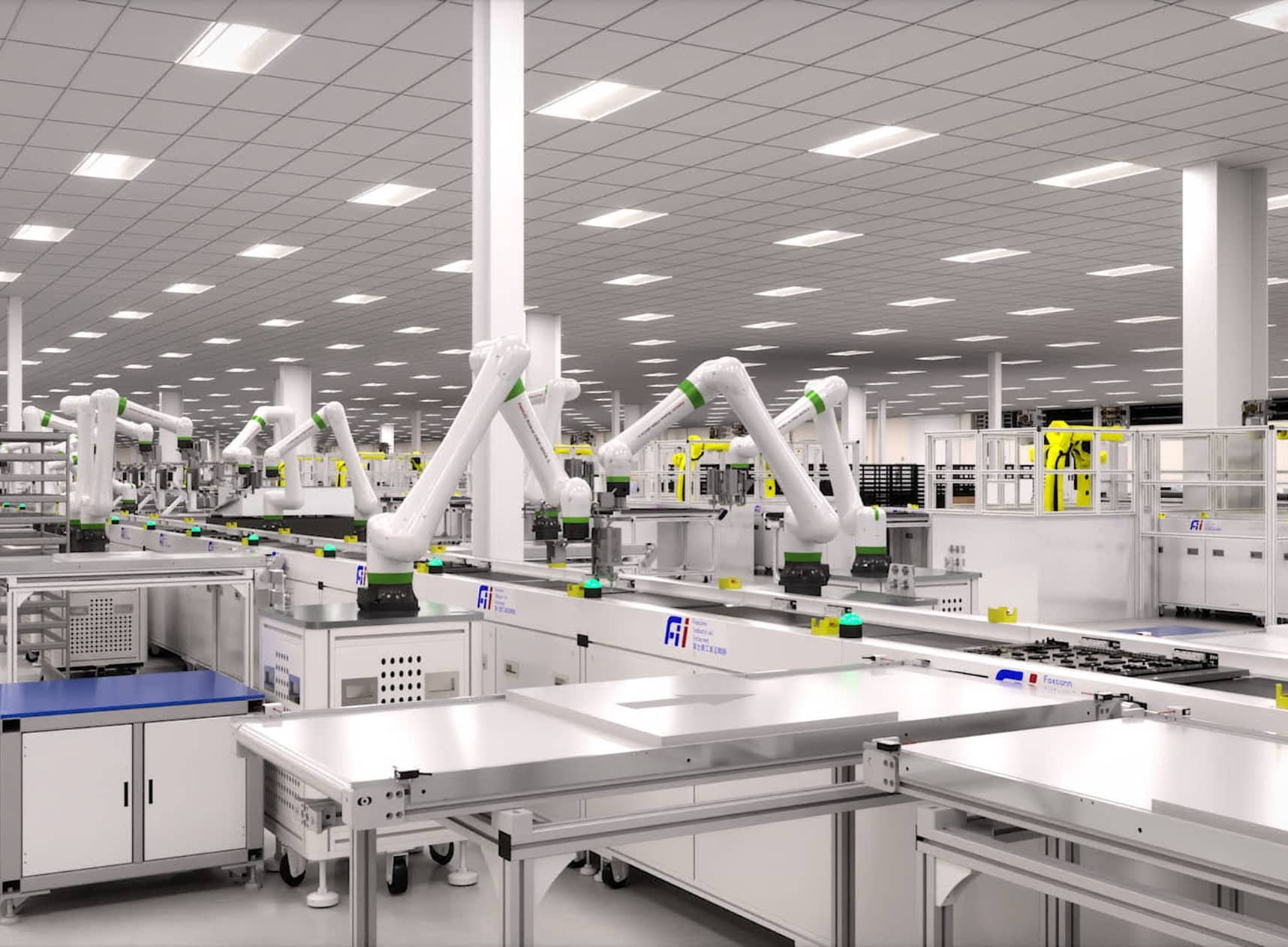
Foxconn uses NVIDIA Omniverse to virtually integrate their facility and equipment layouts, NVIDIA Isaac Sim for autonomous robot testing and simulation, and NVIDIA Metropolis for vision AI.
Virtual Integration for Efficient Factory Operations
Omniverse enables industrial developers to maximize efficiency through test and optimization in a digital twin before deploying costly change-orders to the physical world. Foxconn expects its Mexico facility alone to deliver significant cost savings and a reduction in kilowatt-hour usage of more than 30% annually.
Built on Omniverse and AI
The company has built digital twins with Omniverse that allow their teams to virtually integrate facility and equipment information from leading industry applications, such as Siemens Teamcenter X and Autodesk Revit. Floor plan layouts are optimized first in the digital twin, and planners can locate optimal camera positions that help measure and identify ways to streamline operations with Metropolis visual AI agents.
Delivering Robotics for Manufacturing With Omniverse Digital Twin
Once the digital twin of the factory is built, it becomes a virtual gym for Foxconn’s fleets of autonomous robots, including industrial manipulators and autonomous mobile robots. Foxconn’s robot developers can simulate, test, and validate their AI robot models in NVIDIA Isaac Sim before deploying to their real-world robots.
Simulation and Testing
Using Omniverse, Foxconn can simulate robot AIs before deploying to NVIDIA Jetson-driven autonomous mobile robots. On assembly lines, they can simulate with Isaac Manipulator libraries and AI models for automated optical inspection, object identification, defect detection, and trajectory planning.
Creating Efficiencies While Building Resilient Supply Chains
Using NVIDIA Omniverse and AI, Foxconn plans to replicate its precision production lines across the world. This will enable it to quickly deploy high-quality production facilities that meet unified standards, increasing the company’s competitive edge and adaptability in the market.
Replicating Precision Production Lines
Foxconn’s ability to rapidly replicate will accelerate its global deployments and enhance its resilience in the supply chain in the face of disruptions, as it can quickly adjust production strategies and reallocate resources to ensure continuity and stability to meet changing demands.
Conclusion
Foxconn is leveraging NVIDIA Omniverse and AI to build the world’s most advanced manufacturing facilities, enabling it to quickly meet demand and deliver high-quality products. The company’s use of Omniverse and AI is expected to bring significant cost savings and efficiency improvements, while also enhancing its resilience in the face of supply chain disruptions.
Q: What is Omniverse?
A: Omniverse is a platform for developing industrial AI simulation applications.
Q: How is Foxconn using Omniverse?
A: Foxconn is using Omniverse to virtually integrate their facility and equipment layouts, NVIDIA Isaac Sim for autonomous robot testing and simulation, and NVIDIA Metropolis for vision AI.
Q: What are the benefits of using Omniverse?
A: Omniverse enables industrial developers to maximize efficiency through test and optimization in a digital twin before deploying costly change-orders to the physical world, resulting in significant cost savings and efficiency improvements.
Nvidia GeForce RTX 5090: Rumored January Release Date and Price
Anticipation is mounting for a rumored January release of the Nvidia GeForce RTX 5090. The next-gen GPU is expected to supersede Nvidia’s current RTX 4090 as the best graphics card for gaming and indeed the best graphics card full stop.
Performance and Price
The one thing we’re all wondering about is naturally the cost. The latest rumor is that the Nvidia GeForce RTX 5090 price may be lower than we initially expected, although it will still be eye-wateringly expensive.
Rumored Specs and Price
The Nvidia GeForce RTX 5090 is rumored to have 680 tensor cores, 32 GB of GDDR7 memory (up from 24GB in the 4090) and a base frequency of 2,235 MHz. The new Blackwell architecture means the GPU is set to be driven by AI, with DLSS and Frame Generation expected to play a bigger part.
According to Bits And Chips, the price will be around €1,800 ($1,890) for the base configuration of the GPU, according to “several Chinese and Japanese journalists.” This is lower than the previously rumored base price of $2,000 or even $2,500.
Impact on the Current Top-of-the-Range GPU
If the 5090 does launch at a price that’s more similar to that of the 4090, there’s more of a chance that we’ll see bigger discounts come up on the current top-of-the-range GPU, which has proved to be stubbornly resistant to deals so far.
Conclusion
The Nvidia GeForce RTX 5090 is rumored to be an impressive graphics card, but its price is still unknown. If the latest rumor is true, the base price will be around $1,890, making it still an expensive but potentially more accessible option compared to previous rumors. Whether or not it will change your mind about whether you can afford it remains to be seen.
FAQs
When is the Nvidia GeForce RTX 5090 release date?
Rumored to be released in January 2023.
What are the rumored specs of the Nvidia GeForce RTX 5090?
Rumored specs include 680 tensor cores, 32 GB of GDDR7 memory, and a base frequency of 2,235 MHz.
What is the rumored price of the Nvidia GeForce RTX 5090?
The latest rumor suggests a price of around €1,800 ($1,890) for the base configuration of the GPU.
Will there be discounts on the Nvidia GeForce RTX 4090 if the 5090 is released?
Yes, if the 5090 launches at a similar price to the 4090, we may see bigger discounts come up on the current top-of-the-range GPU.
Microsoft Releases First Preview of Recall AI Feature for Copilot Plus PCs
What is Recall?
Microsoft is releasing the first preview of its Recall AI feature for Copilot Plus PCs today. Recall takes screenshots of almost everything you do on a Copilot Plus PC to make it searchable and easy to recall a memory or retrace your steps. If you enable snapshots to be recorded by Recall, you can use the Recall app to search for what you were working on previously with natural language queries. There is also a scrollable timeline so you can skip back to a specific date and find the apps or websites you were using. Recall’s search results use AI to match text and visual elements from the snapshots.
How Does Recall Work?
Recall is an entirely optional experience, so you have to opt in and enable it. If you decide to try it out using the Dev Channel, the models for Recall and Click to Do will start downloading in the background once you’ve installed the latest build. The preview is only available on Qualcomm-powered Copilot Plus PCs at first, with support for Intel- and AMD-powered Copilot Plus PCs coming soon.
Control and Security
You can control what snapshots are saved and easily delete them. Microsoft also provides a way to exclude apps and websites from Recall, and the feature should also automatically detect sensitive information like credit card details, passwords, and personal ID numbers and not save those snapshots. Microsoft won’t have access to any Recall snapshots, and they’re not sent to the cloud or used to train Microsoft’s AI models. "We do not send your snapshots off your PC to Microsoft or third parties, and don’t use them for training purposes," says Microsoft’s Windows Insider team. "Microsoft can’t access the keys to view your encrypted data, so we can’t restore your snapshots if you remove Windows Hello or restore your snapshots if you need to reset your PC or move to a new PC."
Click to Do
Click to Do is also part of Recall in this new test build of Windows 11. Click to Do is designed to recognize text and images in Recall snapshots so you can use AI-powered actions on them like copying text or saving images out of old snapshots. Click to Do will eventually also work outside of Recall by hitting the Windows key on a keyboard and left-clicking on a mouse to see an interactive overlay appear on your screen. This interface will let you select images or text to perform clickable actions. In the future, you’ll also be able to use Click to Do on things like a YouTube video to perform a visual search on an item that appears in the video using Bing.
Conclusion
Recall will be a big test of Microsoft’s AI ambitions in Windows. The controversial feature was originally supposed to debut alongside Copilot Plus PCs in June, but Microsoft was forced to hold back Recall after security concerns were raised. Microsoft then delayed Recall multiple times, choosing to overhaul its security, making it an opt-in experience, and allowing Copilot Plus PC owners to fully uninstall it. Security researchers will now be taking a closer look at Recall in its preview state ahead of a broader release to Copilot Plus PC owners.
FAQs
Q: What is Recall?
A: Recall is a feature that takes screenshots of almost everything you do on a Copilot Plus PC to make it searchable and easy to recall a memory or retrace your steps.
Q: How does Recall work?
A: Recall is an entirely optional experience, and you have to opt in and enable it. The preview is only available on Qualcomm-powered Copilot Plus PCs at first, with support for Intel- and AMD-powered Copilot Plus PCs coming soon.
Q: Is my data safe with Recall?
A: Microsoft won’t have access to any Recall snapshots, and they’re not sent to the cloud or used to train Microsoft’s AI models. You can control what snapshots are saved and easily delete them.
Seasonal Festivities at Apple HQ: 3 Tips to Boost Your Creative Productivity
I got invited to Apple HQ at London’s Battersea Power Station yesterday, along with our staff writer Natalie Fear, and we got fully immersed in seasonal festivities – with fun product demos, top app recommendations, quick content creation tips, and mocktails next to the cosy Christmas tree. I hate to say it, but my icy heart might be warming up to Apple slightly (but I’m still not a convert).
Tip 1 – iPhone Slow-Mo Capture
Plenty of the best camera phones can shoot in high-quality slow motion now (including my Samsung S24 Ultra), which is very cool if you’re creating fun content. But have you ever wanted to see an existing video in slow motion? Or did you forget to set up slow-mo settings before you hit record? You’re not alone.
We were given a demo at Apple that taught us how to adjust the frame rate of a specific section of pre-recorded video on the iPhone 16, with just a few small tweaks. This involved shooting a video, and then selecting a portion of the video to be played back at a different speed/frame rate.
Take a look at our video below and let Apple’s expert do the explaining.
[Video]
Tip 2 – Procreate Colour Drag
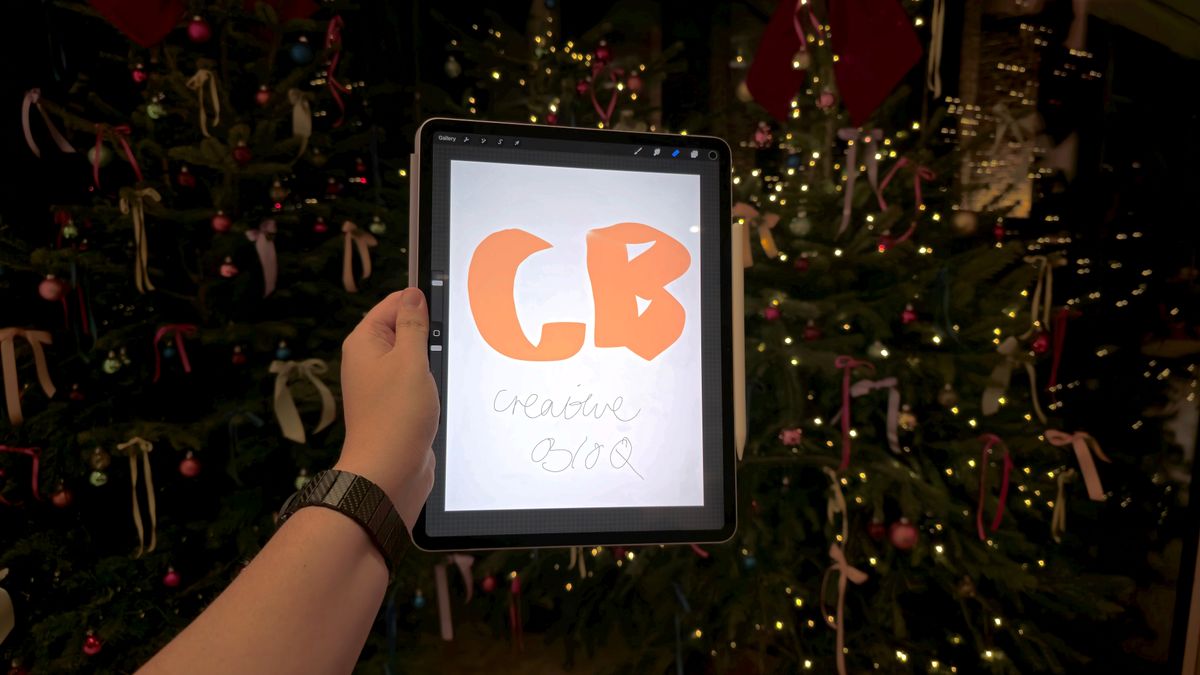
This might be a very obvious tip for our readers who are pro digital artists, but we had no idea that there was an option to drag and drop colours and autofill sections when drawing in the Procreate app. Fittingly, Apple had us use the iPad Air 13-inch M2 model and an Apple Pencil Pro for this demo, where we coloured in some festive jumpers using tools within Procreate.
You can select a colour in the top-right circle, and drag this onto sections that you wish to fill – BUT, if you hold the pen there for a second or two, you should see a blue icon pop up called Continue filling in the top bar. This allows you to fill other areas with the same colour simply by tapping. It was like magic.
Tip 3 – Apple TV Controls
I’ll feel silly if this is common knowledge to most people, but I had no idea that you can actually control your Apple TV 4K box (and other Apple devices too) using a Playstation 5 DualSense Wireless controller.
This is extremely cool, and convenient too if you have your Playstation 5 console already set up in your living room space. One of Apple’s experts, Skye, was extremely helpful and gave us a quick demo showing exactly how to do this.
First off, you’ll need to put your controller in pairing mode by holding down the PS button and the create/share button (the one on the top left of the touchpad) at the same time to enter pairing mode. Next, enter the Bluetooth and connectivity settings on your Apple TV device, and then select the controller. It’s that easy!
Conclusion
It was great to get hands-on with Apple products like the iPad Air M2 models and dive into Procreate to understand how it can be used for specific creative tasks. With these three tips, you can boost your creative productivity and get the most out of your Apple devices.
FAQs
Q: Can I use any controller to control my Apple TV?
A: No, you need a Playstation 5 DualSense Wireless controller to control your Apple TV.
Q: How do I adjust the frame rate of a pre-recorded video on my iPhone?
A: You can adjust the frame rate by selecting a portion of the video and using the "slow-mo" feature.
Q: Can I use Procreate on any device?
A: Yes, Procreate is available on iPad and iPhone devices.
Having been reviewing the Samsung Frame TV for around two months now, I’d say I’m pretty familiar with what it is, and who it is aimed for. Short answer: it’s a beautiful TV that is custom made for art lovers, like me!
Who is it for?
The Samsung Frame TV is designed for those who appreciate art and want to bring a touch of elegance to their living room. If you’re someone who loves to have limitless art showing on your TV screen, as soon as you walk into the room, this is the TV for you.
Current Price
Right now, the Samsung Frame TV is selling for a record low price of $899 down from $1,499 for the 55-inch model over at Samsung. I actually reported a couple months ago on the best then deal on the 55-inch model – $1,099 – so this is a genuine Black Friday deal in my eyes.
Features
The Samsung Frame TV is a stunning piece of technology that combines the latest TV technology with a beautiful, frame-like design. It’s a TV that can seamlessly transition between TV mode and art mode, allowing you to enjoy your favorite shows and movies, as well as stunning works of art.
Best Prices
Here is a range of the best prices on the Samsung Frame TV in different sizes:
43-inch: $699
49-inch: $799
55-inch: $899
65-inch: $1,099
Conclusion
If you’re an art lover looking for a beautiful TV that can add a touch of elegance to your living room, the Samsung Frame TV is the perfect choice. With its stunning design and seamless transition between TV mode and art mode, it’s a TV that will impress your friends and family. And with its current price of $899, it’s a steal!
FAQs
Q: What is the Samsung Frame TV?
A: The Samsung Frame TV is a beautiful TV that combines the latest TV technology with a frame-like design.
Q: Who is the Samsung Frame TV for?
A: The Samsung Frame TV is designed for art lovers who want to bring a touch of elegance to their living room.
Q: What is the current price of the Samsung Frame TV?
A: The current price of the Samsung Frame TV is $899 for the 55-inch model.
Q: Is this a genuine Black Friday deal?
A: Yes, this is a genuine Black Friday deal, as the price is lower than the previous best deal of $1,099.
Apple may be late to the generative AI party, but that doesn’t mean it’s standing still. The company is developing a new version of Siri that would work more like popular AI bots such as ChatGPT and Google Gemini, according to Bloomberg’s Mark Gurman.
Goal: More Advanced and Conversational Skills
The goal is to catch up with other AIs by equipping Siri with more advanced and conversational skills, Gurman said in a story published Thursday, citing "people with knowledge of the matter."
LLM Siri: A Standalone App
Dubbed "LLM Siri" by Apple employees (LLM standing for large language model), the new Siri is already being tested internally on iPhones, iPads, and Macs as a standalone app. But if all goes well, the new assistant will eventually replace the Siri we all know and have a hard time loving.
Features and Functionality
Like ChatGPT, Gemini, and Microsoft Copilot, the new Siri would use advanced LLMs to foster more natural back-and-forth conversations. LLMs are trained on a huge amount of data to learn how to handle and process human language to sound human in their responses.
Quick Response to Sophisticated Requests
The new Siri would also be able to quickly respond to more "sophisticated" requests.
Work Across Third-Party Apps
LLM Siri will also use an Apple framework called App Intents to work across third-party apps, Gurman added. Further, the new Siri would be able to use key features of Apple Intelligence, such as writing and summarizing text.
Job Listing: Siri and Information Intelligence
As further evidence of Apple’s AI efforts, Gurman pointed to a job listing seeking an engineer in the area of Siri and information intelligence:
"We are seeking a high caliber Senior Machine Learning Engineer to join our dynamic team," the listing says. "The ideal candidate will play a pivotal role in the evaluation and enhancement of our Apple Intelligence products. They will work with large amounts of real-world data to analyze and propose changes to the Siri user experience."
Conclusion
Apple’s new Siri, LLM Siri, is expected to be a major improvement over the current Siri, with advanced and conversational skills that will allow it to better understand and respond to user requests. While it may take some time to reach the market, the potential for a more sophisticated and helpful AI assistant is exciting.
FAQs
Q: When can we expect to see LLM Siri?
A: The new Siri is expected to debut in the spring of 2026.
Q: Will LLM Siri replace the current Siri?
A: Yes, the new Siri is expected to eventually replace the current Siri.
Q: What will LLM Siri be able to do?
A: LLM Siri will be able to use advanced LLMs to foster more natural back-and-forth conversations, quickly respond to more "sophisticated" requests, work across third-party apps, and use key features of Apple Intelligence, such as writing and summarizing text.
MassRobotics, in collaboration with Chewy, a pet food and care products retailer, has launched the CHAMP (Chewy Autonomous Mobile Picking) Challenge.
This innovation challenge invites robotics developers and innovators to tackle a pressing issue in warehouse automation: designing a system that efficiently grasps, lifts, and places heavy, awkwardly shaped items in confined warehouse spaces.
The CHAMP Challenge focuses specifically on the challenges of grasping and picking large, bulky items, such as bags, boxes, and pails of dog food and cat litter.
The goal is to improve operational efficiency, support worker safety, and advance the robotics solutions available in modern logistics.
With a prize pool of $30,000 and the chance to collaborate further with Chewy, the CHAMP Challenge encourages participants to push the boundaries of robotic handling solutions.
Challenge details
The CHAMP Challenge addresses the physical demands of handling large, heavy products within confined warehouse environments. Robots are required to:
Grasp and lift various items from standard pallets.
Place items accurately into open cardboard boxes, maximizing space use and ensuring stability.
Operate autonomously and collaborate safely with human employees in close quarters.
Tom Ryden, executive director of MassRobotics, says: “We are thrilled to partner with Chewy on the CHAMP Challenge, inviting innovators to address one of the most complex challenges in robotics today.
“By bringing together fresh perspectives and advanced technology, we aim to inspire solutions that will push the boundaries of automation in warehouse logistics.”
Tim Foley, senior director of fulfillment technology at Chewy, says: “At Chewy, innovation isn’t just a goal – it’s in our DNA.
“We’re embarking on a transformative journey to reshape warehouse operations while creating a better experience for our customers and team members alike.”
The CHAMP Challenge is open for applications; an information session takes place on December 4, 2024 where participants can learn more about requirements, application details, and key dates. Applications will close on December 16.
Finalists will have the opportunity to demonstrate their robotic solutions in mid-2025, with the winning team awarded a $30,000 prize and the potential for direct collaboration with Chewy.
Critical Component of OpenAI’s Safeguarding Process: Red Teaming
A critical part of OpenAI’s safeguarding process is "red teaming" – a structured methodology using both human and AI participants to explore potential risks and vulnerabilities in new systems.
The Human Touch
Historically, OpenAI has engaged in red teaming efforts predominantly through manual testing, which involves individuals probing for weaknesses. This was notably employed during the testing of their DALL·E 2 image generation model in early 2022, where external experts were invited to identify potential risks. Since then, OpenAI has expanded and refined its methodologies, incorporating automated and mixed approaches for a more comprehensive risk assessment.
Automated Red Teaming
Automated red teaming seeks to identify instances where AI may fail, particularly regarding safety-related issues. This method excels at scale, generating numerous examples of potential errors quickly. However, traditional automated approaches have struggled with producing diverse, successful attack strategies.
Introducing a New Method for Automated Red Teaming
OpenAI’s research introduces "Diverse And Effective Red Teaming With Auto-Generated Rewards And Multi-Step Reinforcement Learning," a method which encourages greater diversity in attack strategies while maintaining effectiveness. This method involves using AI to generate different scenarios, such as illicit advice, and training red teaming models to evaluate these scenarios critically. The process rewards diversity and efficacy, promoting more varied and comprehensive safety evaluations.
Limitations and Future Directions
Red teaming does have limitations. It captures risks at a specific point in time, which may evolve as AI models develop. Additionally, the red teaming process can inadvertently create information hazards, potentially alerting malicious actors to vulnerabilities not yet widely known. Managing these risks requires stringent protocols and responsible disclosures.
Conclusion
Red teaming continues to be a pivotal component in risk discovery and evaluation. OpenAI acknowledges the necessity of incorporating broader public perspectives on AI’s ideal behaviors and policies to ensure the technology aligns with societal values and expectations.
FAQs
Q: What is red teaming?
A: Red teaming is a structured methodology using both human and AI participants to explore potential risks and vulnerabilities in new systems.
Q: How does OpenAI engage in red teaming?
A: OpenAI engages in red teaming efforts through a combination of manual testing and automated approaches.
Q: What is the benefit of automated red teaming?
A: Automated red teaming excels at scale, generating numerous examples of potential errors quickly, while encouraging diversity in attack strategies.
Q: What are the limitations of red teaming?
A: Red teaming captures risks at a specific point in time, which may evolve as AI models develop, and can inadvertently create information hazards.



/cdn.vox-cdn.com/uploads/chorus_asset/file/25456809/Gen_AI_feature3_VP5_1842x1036.jpg "You can try Microsoft’s Recall AI feature on a Copilot Plus PC")