
Home Blog Page 579

AI-Powered Learning Collaborations

Key points:

The Advantages and Limitations of AI in Education

In the realm of education, the integration of technology–particularly artificial intelligence (AI)–with traditional human-led instruction is a topic of increasing relevance and debate. As educators and technologists, we must critically assess the strengths and limitations of both AI and human educators to optimize educational outcomes.

The Advantages of AI in Education

AI in education brings numerous advantages, such as personalization, accessibility, and scalability. AI excels at delivering personalized learning experiences by analyzing extensive data on a student’s performance to tailor educational content to individual learning paces and styles, potentially boosting engagement and efficacy.

The Limitations of AI in Education

However, AI instruction also has its limitations. AI lacks emotional intelligence, often struggling to engage in empathetic interactions, motivate students during challenging periods, or adapt its teaching style based on emotional cues. Its content generation, while informative, typically lacks the creativity and nuanced explanations that skilled educators provide, which are crucial for teaching complex or abstract concepts. Additionally, the use of AI in education raises significant ethical issues, including concerns about data privacy and the potential for algorithmic bias.

The Strengths of Human Educators

Human educators are unparalleled in their ability to provide emotional support and foster an environment conducive to social learning. They excel at motivating students, managing classroom dynamics, and offering personalized feedback based on nuanced observations. Teachers’ adaptability and creativity allow them to modify their instructional strategies dynamically, providing creative and contextually rich explanations that resonate with diverse student groups.

The Challenges of Human Educators

Despite these strengths, human educators face several challenges, including scalability issues and variability in teaching quality. Human resources are finite, and educators can only engage with a limited number of students at a time, which may affect the consistency and reach of educational delivery. Moreover, the quality of instruction can vary significantly between educators, influenced by factors such as training, experience, and personal attributes.

Proposing a Hybrid Model

To maximize the benefits of both AI and human educators, a hybrid approach is recommended. AI should be used as a support tool to handle administrative tasks such as grading and scheduling, and to provide supplementary personalized learning aids like simulations and adaptive quizzes. Human educators should remain the primary facilitators of learning, using their unique skills to deliver complex content, inspire students, and build relationships. The curriculum should be designed to integrate AI tools seamlessly with human-led sessions, enhancing interactivity and engagement through multimedia resources and real-time analytics.

Conclusion

The future of education lies not in choosing between AI and human educators but in effectively integrating both to serve the diverse needs of students. By embracing a balanced approach, we can create a more inclusive, efficient, and effective educational system that not only imparts knowledge but also fosters a holistic developmental environment that prepares students to succeed in an increasingly complex world.

FAQs

Q: What are the benefits of using AI in education?
A: AI can provide personalized learning experiences, improve educational equity, and offer scalability and accessibility.

Q: What are the limitations of AI in education?
A: AI lacks emotional intelligence, may struggle to adapt to emotional cues, and can raise ethical concerns about data privacy and algorithmic bias.

Q: What are the strengths of human educators?
A: Human educators provide emotional support, foster social learning, and offer nuanced explanations.

Q: What are the challenges of human educators?
A: Human educators face scalability issues, variability in teaching quality, and limited resources.

Q: What is the proposed hybrid model?
A: The hybrid model integrates AI and human educators to provide personalized learning aids, administrative support, and complex content delivery.

PS5 Fans’ Dream SSD: Fast Storage for Your Console

0

Design & Build

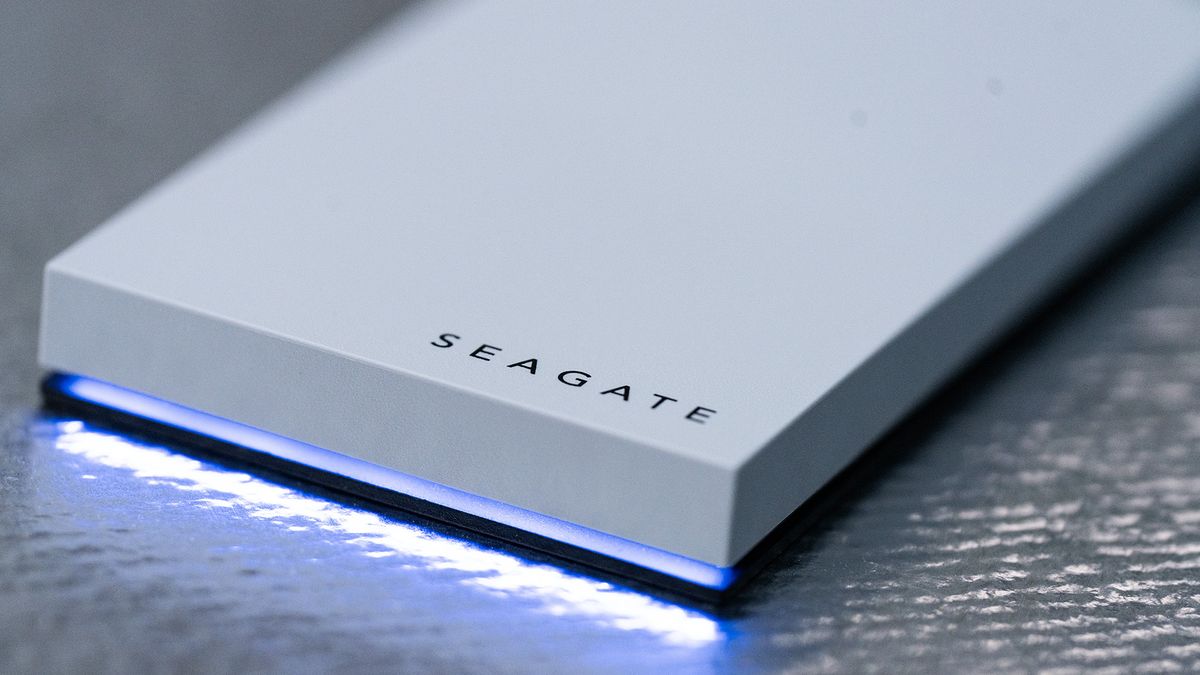
The drive is PlayStation-branded, which means you get a 14-day trial of PlayStation Plus in the box and that it comes in the sort of greyish-white colour of the PlayStation 5 console’s default cover (if you’re not familiar with the latest Sony console, it’s not too dissimilar to the colour of Canon’s L-series telephoto lenses) with a PS logo at the top. There’s an Xbox version too, if your gaming sympathies lie with Microsoft. Apart from the external branding and colour, from the outside they all look the same, and this is a standard USB 3.2 SSD, powered by its USB cable, so it will mount and work with just about anything.

The casing is plastic, and larger than both the Kingston XS1000R and Crucial X9. The one sent to us is a 2TB model, but one of 5TB capacity is also available, and represents pretty good value as it’s less than twice the price of the smaller model. When plugged in, a blue LED strip illuminates at the front of the drive (orange in Xbox models) and there’s also an activity LED at the back, near the USB-C port. Neither of them blinks while data is being transferred, simply allowing you to tell if the drive is receiving power or not and, in the case of the blue strip, looking cool.

Features

Apart from the outside of the casing, there’s little to say about the Game Drive itself. It’s an officially licensed product, so has firmware on-board that enables it to work seamlessly with Sony’s PS4 and PS5 consoles, but there’s nothing stopping you from hooking it up to a PC or Mac, and it comes formatted as EXFAT for easy transfer between systems.

The packaging is a nice example of cardboard engineering, keeping the drive solidly contained and unable to flop about inside. Two USB cables are included, both Type-C and Type-A, rather than one and an adapter, and there’s also a warning document telling you to keep the drive at least four inches away from your console.

Performance

While the drive doesn’t perform anything like as quickly as an internal SSD would, it still acquits itself well, and is pretty fast for a USB 3.2 external SSD, though at these speeds we’re hitting the maximum that the USB 3.2 Gen 2 data bus can cope with, so we’re not going to see anything better without moving up to USB 4 or some flavour of Thunderbolt.

PCMark 10 Row 0 – Cell 1
Bandwidth 214MB/s
Average access time 111µs
CrystalDiscMark Row 3 – Cell 1
Read 1021.48Mb/s
Write 1057.42Mb/s

Price

At $90/£110 on Seagate’s online store, the Seagate Game Drive undercuts the Kingston XS1000R, WB My Passport Portable SSD and Crucial X9 slightly on price, while hitting data transfer speeds that are broadly similar to the best those drives can offer. If you’re transferring large files to them, you’re not going to notice the difference outside of a second to two’s change in the waiting time, so you may as well buy on price. Seagate is a known and trusted name in the data storage business, which makes this a keenly priced unit.

Who is it for?

It may be aimed squarely at gamers with its branding and design, but this useful portable SSD will be useful to just about anyone who wants something to store data on that’s faster than the average USB flash drive. The 5TB model in particular is larger than most other portable SSD offerings, which tend to top out at 2TB or 4TB (Sandisk’s Desk Drive will hit 8TB, but requires a power connector) and is a lot of storage to put in your pocket.

Buy it if…

  • You need fast portable storage
  • You don’t mind (or indeed welcome) the PlayStation branding
  • USB 3.2 speeds are enough

Don’t buy it if…

  • You’re more of an Xbox fan
  • You need more than 5TB
  • You’d rather have a NAS

TCS Boosts Automotive Software Testing Speeds 2x with NVIDIA Generative AI

0

Generative AI Transforms the Automotive Industry

Generative AI is transforming every aspect of the automotive industry, including software development, testing, user experience, personalization, and safety. With the automotive industry shifting from a mechanically driven approach to a software-driven one, generative AI is unlocking a world of possibilities.

Building Features to Enhance Customer Experience

Generative AI is the key to realizing fully autonomous vehicles (AVs) by enhancing AI-based algorithms for better decision-making. It generates and synthesizes datasets across all possibilities, from limited real-time data to training and testing data. This technology is instrumental in delivering vehicle personalization and user experiences. This can encompass a range of capabilities, including advanced search functionalities, language translations, in-car personal assistants, and intuitive recommendations for video and audio entertainment.

Accelerating the Software Engineering Lifecycle

The goal of a software-defined vehicle (SDV) is to provide more flexibility and enrich the user experience, enabling customers to upgrade and update vehicle features based on their convenience. This has increased vehicle complexity, resulting in millions of lines of code. There is high demand for enabling feature-as-a-service models, where automotive features need to be developed and deployed within a few weeks.

Test Case Generation from Unstructured Requirements

Creating test cases from unstructured system requirements is one of the most time-consuming steps within the software engineering lifecycle.

Conclusion

With the expertise in the generative AI and automotive domains, TCS has developed a highly efficient automotive test case generation pipeline using NVIDIA DGX H100 systems and software including NVIDIA NIM and NVIDIA NeMo. This model, fine-tuned with the NVIDIA NeMo framework, along with faster inference possible with NIM, resulted in accuracies and coverage higher than that of existing models available with low latency. TCS has observed ~2x acceleration in its overall test case generation pipeline.

Frequently Asked Questions

Q: What is the primary goal of using generative AI in the automotive industry?
A: The primary goal is to enhance customer experience and accelerate the software engineering lifecycle.

Q: How does generative AI generate test cases from unstructured requirements?
A: Generative AI uses large language models (LLMs) to generate test cases from unstructured system requirements.

Q: What are the benefits of using NVIDIA NIM and NVIDIA NeMo in the automotive test case generation pipeline?
A: NVIDIA NIM and NVIDIA NeMo provide faster inference and higher accuracy and coverage in the test case generation pipeline.

Q: What are the potential applications of generative AI in the automotive industry?
A: Generative AI has the potential to be used in various applications, including advanced search functionalities, language translations, in-car personal assistants, and intuitive recommendations for video and audio entertainment.

Two Free Ways to Get a Perplexity Pro Subscription for One Year

0

Free Year of Perplexity Pro: How to Get It

Perplexity is a free AI chatbot and internet search tool that operates like other AI chatbots. ZDNET senior contributing editor Steven Vaughan-Nichols called it his favorite chatbot, beating out ChatGPT and Copilot.

What is Perplexity Pro?

Perplexity Pro gives you several advantages over a free account, including:

  • Increased usage of Pro Search, which breaks down queries with multi-step reasoning and programming
  • The option to choose which AI model you want to use
  • File analysis, which lets you upload documents for summaries or insights
  • Multimodal capabilities, where you can capture a picture or screenshot and asking questions about it
  • Image generation from Access Playground v3, OpenAI DALL-E 3, Flux, and Stable Diffusion XL

Usually, the service costs $20 a month or $200 a year, but there are currently several ways to get a free subscription.

How to Get a Free Subscription

1. Free Perplexity Pro for Xfinity Customers

Xfinity has a customer rewards program that’s free to join. A few months ago, Perplexity announced a partnership with Xfinity to offer a free year subscription of Perplexity Pro to Xfinity customers.

Here’s how to claim your free Perplexity Pro subscription:

  • Join Xfinity’s customer rewards program
  • Look for the Perplexity Pro offer in the rewards catalog
  • Subscribe to Perplexity Pro and enjoy a free year of service

2. Free Perplexity Pro for Eligible College Students

Earlier this year, Perplexity ran a competition in which any college student with an .edu email address could claim a free month of Perplexity Pro. If more than 500 students from the same campus signed up, the entire campus got a free year of Perplexity Pro. Forty-five schools reached that mark, including Arizona State University, the University of California, Berkeley, New York University, and the University of Southern California.

If you’re a student at one of the universities on the list, all you have to do is enter your student email address to claim your free year.

Frequently Asked Questions

  • Q: What is Perplexity Pro?
    A: Perplexity Pro is a paid subscription service that offers advanced features and capabilities over the free version of Perplexity.
  • Q: How much does Perplexity Pro usually cost?
    A: Perplexity Pro usually costs $20 a month or $200 a year.
  • Q: How can I get a free subscription to Perplexity Pro?
    A: You can get a free subscription through Xfinity’s customer rewards program or by being a student at one of the eligible colleges listed.
  • Q: What are the benefits of Perplexity Pro?
    A: Perplexity Pro offers increased usage of Pro Search, the ability to choose which AI model to use, file analysis, multimodal capabilities, and image generation.

Amazon Pours Another $4B into Anthropic

0

Anthropic’s Partnership with Amazon: Shaking the Money Tree

Background: Anthropic’s History

Anthropic, founded by former OpenAI executives Dario and Daniela Amodei in 2021, has continued to grow its partnership with Google’s cloud services and Amazon’s infrastructure. This collaboration has been reviewed by the UK Competition and Markets Authority, which concluded that it did not have jurisdiction to investigate further, clearing the way for the partnership to continue.

Shaking the Money Tree

The renewed investment in Anthropic comes at a time of intense competition between cloud providers Amazon, Microsoft, and Google. Each company has made strategic partnerships with AI model developers, with Microsoft partnering with OpenAI for $13 billion and Google partnering with Anthropic for $2 billion over time. These investments also encourage the use of each company’s data centers as demand for AI grows.

The Size of the Investments

The size of these investments reflects the current state of AI development. OpenAI raised an additional $6.6 billion in October, potentially valuing the company at $157 billion. Anthropic has been eying a $40 billion valuation during a recent investment round.

The Cost of Training and Running AI Models

Training and running AI models is very expensive. While Google and Meta have their own profitable mainline businesses that can subsidize AI development, dedicated AI firms like OpenAI and Anthropic need constant infusions of cash to stay afloat. In other words, this won’t be the last time we hear of billion-dollar-scale AI investments from Big Tech.

Frequently Asked Questions

Q: What is Anthropic?
A: Anthropic is a company founded by former OpenAI executives Dario and Daniela Amodei in 2021.

Q: What is the partnership between Amazon and Anthropic?
A: Amazon has partnered with Anthropic to provide cloud services and infrastructure to the company.

Q: Why is the investment in AI so large?
A: The size of the investments reflects the current state of AI development, with OpenAI raising $6.6 billion and Anthropic eyeing a $40 billion valuation.

Q: What is the competition like in the AI market?
A: The AI market is competitive, with Amazon, Microsoft, and Google making strategic partnerships with AI model developers.

Como eu reduzi o tempo de resposta da minha API

0

Inexperiência

Esse projeto foi feito no início da minha jornada com Java, onde pude aplicar o pouco conhecimento que eu havia adquirido em um projeto real, com pressão real e expectativas reais. Como era minha primeira experiência, fui aprendendo ao longo do projeto e em alguns momentos isso levava a algumas práticas questionáveis, incluindo duas mais impactantes.

Banco de dados

A API foi construída utilizando Java, PostgreSQL e JPA como ORM para facilitar a comunicação com o banco de dados.

Design da API

Devido ao projeto ter um prazo de entrega curto e um MVP muito grande devido a falta de experiência na coleta de requisitos, fui obrigado a tomar algumas decisões de arquitetura que não eram muito escaláveis. A pior decisão foi utilizar o retorno de todos os objetos aninhados partindo do objeto pai. Isso significava que um recurso consultado possuía vários objetos aninhados, e esses objetos também possuíam vários objetos aninhados, até chegar no último objeto possível associado ao recurso. Isso causou um gargalo no processamento de respostas JSON em consultas e outras interações com retorno e, dentre várias outras otimizações, optei por solucionar esse problema aplicando (parcialmente) o princípio HATEOAS, substituindo os recursos aninhados por links relevantes para consultar esses recursos associados. Esse pequeno ajuste garantiu uma escalabilidade maior, já que agora os retornos da API não cresciam exponencialmente.

Solução Definitiva

Após várias otimizações em consultas custosas ao banco de dados, redução de roundtrips da aplicação ao banco de dados utilizando operações em batch e criação de índices no banco de dados, chegou o dia da implantação dessa refatoração. Estava ansioso para testar essas funcionalidades, mas precisava de um teste confiável. Para garantir isso repliquei o banco de dados de produção para o ambiente de stage, abri a aplicação, testei e…

Conclusão

ORM’s são uma ferramenta poderosa, mas você precisa saber muito bem o que está fazendo. Mesmo após dezenas de otimizações, o gargalo em sua maioria estava em uma única propriedade do JPA. Eu obteria o mesmo resultado caso tivesse alterado isso e não realizasse nenhuma outra melhoria? Nunca saberemos.

FAQs

Q: Qual foi o problema principal que você enfrentou no seu projeto?

A: O problema principal foi o alto volume de processamento de JSON em uma só requisição, causado pelo uso de recursos aninhados.

Q: Como você resolveu o problema?

A: Eu resolvi o problema aplicando o princípio HATEOAS, substituindo os recursos aninhados por links relevantes para consultar esses recursos associados.

Q: Qual foi o resultado final?

A: O resultado final foi um tempo de resposta reduzido em 99% para o sistema em produção.

Q: Qual é a lição que você aprendeu com esse projeto?

A: A lição que eu aprendi é que é fundamental saber muito bem o que está fazendo ao trabalhar com ORM’s, pois pequenas alterações podem ter grandes impactos no desempenho do sistema.

AI’s Creative Spark

0

Introduction

Support me on Patreon: https://www.patreon.com/sarikas

What is Patreon?

Patreon is a subscription-based platform that allows creators to earn money from their fans and supporters by offering exclusive content, early access, or other perks in exchange for a monthly fee. It’s a great way for artists, writers, musicians, and other creatives to monetize their work and build a loyal community of supporters.

How Does Patreon Work?

When you sign up for Patreon, you create a profile and set up a page that showcases your work and offers rewards to your patrons. Patrons can then choose to support you by pledging a monthly amount, which can range from a few dollars to hundreds of dollars. In return, you provide exclusive content, updates, or other perks to your patrons.

Benefits of Supporting Creators on Patreon

By supporting creators on Patreon, you’re not only getting access to exclusive content, but you’re also helping to sustain their creative work. Many creators rely on Patreon to fund their projects, and your support can make a big difference. Additionally, Patreon provides a direct way for fans to support their favorite creators, without having to go through intermediaries like record labels or publishers.

How to Support Creators on Patreon

To support a creator on Patreon, simply click on their page and choose a pledge level that suits your budget. You can then set up a recurring payment, which will be charged to your credit card each month. In return, you’ll receive exclusive content, updates, and other perks from the creator.

Conclusion

Patreon is a great way for creators to earn money from their fans and supporters, and for fans to support their favorite creators. By supporting creators on Patreon, you’re helping to sustain their creative work and get access to exclusive content. So why not join the Patreon community and start supporting your favorite creators today?

FAQs

Q: What kind of content can I expect to get from creators on Patreon?
A: The type of content you receive will depend on the creator and their rewards. Some creators may offer exclusive music tracks, while others may provide early access to their latest writing projects.

Q: How much does it cost to support a creator on Patreon?
A: The cost to support a creator on Patreon varies depending on the creator and their rewards. You can pledge as little as a few dollars per month or as much as hundreds of dollars.

Q: Is Patreon only for artists and musicians?
A: No, Patreon is for any type of creator who wants to monetize their work and build a loyal community of supporters. This can include writers, podcasters, comedians, and more.

Q: Can I cancel my Patreon pledge at any time?
A: Yes, you can cancel your Patreon pledge at any time. You can do this by going to your account settings and clicking on "Cancel Subscription".

AI-Powered Assessments for Education Equity

What’s Being Called the Craziest College Admission Season Ever? A Natural Experiment for the American Education System

What’s being called the craziest college admission season ever is also proving to be a natural experiment for the American education system. Test-optional and test-blind admissions in recent years could mean a radical expansion of access to selective colleges. Yet, despite well-intentioned efforts to disrupt systemic inequities in who gets admitted, universities are reverting back to standardized assessments in the hopes of being able to better predict which students will be successful in their environment and graduate on time.

Artificial Intelligence to Personalize, Not Standardize Assessments

Technology has long shaped schools’ approach to assessment. In the early 2000s, I gained first-hand experience in how large districts make decisions about edtech adoption and the rollout of AI-enabled personalized learning. At that time, adoption of adaptive learning and diagnostic solutions such as DreamBox, i-Ready, IXL, and even NWEA Map was exploding across the nation. These edtech tools were viewed as a breakthrough technology that offered classrooms real-time reporting and analytics to track and adjust teaching as students play. Since then, online learning continues to shatter the boundaries of traditional, monolithic approaches to K-12 teaching and learning. Digital Promise’s work on digital equity and safety and Getting Smart’s synthesis of the evolution of AI-enabled innovations shaping teaching and learning are a testament to just how much progress we have made.

Expanding Our Efforts in Three Areas

This raises a special challenge to system leaders: How can we unleash AI to enable measurement of the things we know matter but we’re not yet good at measuring? How can we leverage AI to personalize, not standardize, assessments so every student is supported in equitable ways for success inside and outside the classroom?

To achieve this, we need to expand our efforts in at least three areas:

1. Develop Learner-Centered Assessments Aligned with Learner-Centered Systems

The skills that make us uniquely human are the skills that a learner-centered framework champions. They are also the skills that will be very difficult, if not impossible, for technology to replicate reliably. Instead of focusing our energy on teaching kids what robots can do, we need to focus on teaching them what only humans can do.

For example, to become better writers, readers, and critical thinkers, Quill.org offers low-income students an AI-powered literacy tutor that provides students real-time coaching and feedback on literacy activities that pair nonfiction reading with informational writing. In addition, Quill’s new Reading for Evidence tool offers students the opportunity to demonstrate their comprehension of nonfiction texts by writing arguments based on feedback from Quill’s AI tool on how to strengthen the logic, evidence, and syntax in their responses. As a result, students are equitably receiving the feedback they need, particularly those coming from under-resourced communities or multi-lingual learners who may benefit from additional scaffolding.

2. Shift from Pen and Paper Assessments to Integrated, Invisible Assessments

Assessment methods that are woven into the fabric of learning and invisible to students offer another opportunity to leverage AI to transform how we measure student progress. During COVID, particularly in the first year when school doors remained shut, stealth assessments became the lifeline for most families. Stealth assessments have also been found to reduce test anxiety and increase student engagement. This type of assessment offers unbounded opportunities to measure for higher-order thinking skills. Video game-based assessments, for example, are particularly attractive as a means to cultivate skills that are unique to the human brain and can help increase engagement.

3. Disaggregate Data to Shift the Focus from the Average Student to Every Student

From an equity lens, norm-referenced tests – essentially all standardized tests – are particularly problematic. First, rarely are they appropriate for students with limited English proficiency, or any speakers of dialects other than General American English. The format of these tests can also introduce bias because they are reflective of traditional Western values. Those with access to resources may be able to work around these challenges through the use of tutors or test prep services.

Leveraging AI to employ analytic techniques that allow for disaggregated data can shift the focus from the dominant group to ensuring every kid – including those that are Black, Hispanic, low-income, immigrants, English learners, and students with special needs – is viewed from an asset-based lens by understanding their expertise and strengths relative to their own reference group.

A Call to Invest in Assessment R&D to Eliminate Inequities

For students not served well by the limited lens offered by standardized tests, particularly for predicting success outside the classroom, amplifying the power of AI-driven assessments can be a game-changer.

These new approaches hold immense disruptive potential: at first blush, this growing list of AI-powered opportunities in assessments may seem "lower quality" compared to the tried and tested standardized assessments dominating the current education market. But they can get a foothold in the vast pockets of nonconsumption of assessment, where the only alternative is not to measure these outcomes at all.

However, to ensure that AI-powered assessments don’t scale in ways that reinforce the status quo, weaken human relationships, or worsen inequality, R&D dollars should help these disruptive approaches take root, and ensure that measures are created with fairness and transparency, and that they align with the programs that exist to support students.

Conclusion

As schools continue to develop roadmaps and policies to drive the best use of technology and technology-integration tools, this is an emerging opportunity for educators, policymakers, and technologists to work together – and alongside students and their families – to harness the opportunities offered by AI to re-imagine what personalized assessments can look like at a time when students need them the most.

FAQs

Q: What is the purpose of AI in education?
A: The purpose of AI in education is to leverage technology to personalize, not standardize, assessments so every student is supported in equitable ways for success inside and outside the classroom.

Q: How can AI be used to measure student progress?
A: AI can be used to measure student progress by developing learner-centered assessments aligned with learner-centered systems, shifting from pen and paper assessments to integrated, invisible assessments, and disaggregating data to shift the focus from the average student to every student.

Q: What are the potential benefits of AI-powered assessments?
A: The potential benefits of AI-powered assessments include increased student engagement, reduced test anxiety, and more accurate measurement of student skills and knowledge.

Mastering Flux Redux for Seamless State Management

0

Installing and Using Flux Redux, an IP Adapter for Flux

What is Flux Redux?

Flux Redux is an IP adapter for Flux, a powerful tool for generating images using artificial intelligence. It allows you to control Flux using a user-friendly interface, making it easier to create stunning images.

Installing Flux Redux

To install Flux Redux, follow these steps:

  1. Download the Flux Redux installer: Go to the Flux Redux Patreon page (https://www.patreon.com/posts/flux-redux-best-116505097) and download the installer.
  2. Run the installer: Run the installer and follow the prompts to install Flux Redux.
  3. Launch Flux Redux: Once installed, launch Flux Redux and follow the instructions to set up your account.

Using Flux Redux

To use Flux Redux, follow these steps:

  1. Launch Flux Redux: Launch Flux Redux and log in to your account.
  2. Choose your settings: Choose your settings, such as the resolution and aspect ratio of your image.
  3. Upload your prompt: Upload your prompt, which is the text that will be used to generate your image.
  4. Generate your image: Click the "Generate" button to generate your image.
  5. Customize your image: Use the various tools and options in Flux Redux to customize your image.

Tips and Tricks

  • Use high-quality prompts: The quality of your prompt will greatly affect the quality of your image. Try to use high-quality prompts that are specific and descriptive.
  • Experiment with settings: Experiment with different settings, such as resolution and aspect ratio, to find what works best for you.
  • Use the undo feature: Flux Redux has an undo feature that allows you to undo changes to your image. Use this feature to experiment with different settings and options.

Conclusion

Flux Redux is a powerful tool for generating images using artificial intelligence. With its user-friendly interface and advanced features, it’s easy to create stunning images. By following the steps outlined in this article, you can install and use Flux Redux to create amazing images.

Frequently Asked Questions

Q: What is Flux Redux?
A: Flux Redux is an IP adapter for Flux, a powerful tool for generating images using artificial intelligence.

Q: How do I install Flux Redux?
A: To install Flux Redux, download the installer from the Flux Redux Patreon page and follow the prompts to install.

Q: How do I use Flux Redux?
A: To use Flux Redux, launch the software, choose your settings, upload your prompt, and generate your image. You can then customize your image using the various tools and options.

Q: What are some tips and tricks for using Flux Redux?
A: Some tips and tricks for using Flux Redux include using high-quality prompts, experimenting with different settings, and using the undo feature.

Q: Is Flux Redux free?
A: Flux Redux is not free, but it is available for a subscription fee on the Flux Redux Patreon page.

Amazon Invests $4bn in AI Start-up Anthropic

Amazon Doubles Down on Artificial Intelligence with $4B Investment in Anthropic

Big Tech’s Race to Dominate Generative AI Intensifies

Amazon has invested a further $4 billion in artificial intelligence start-up Anthropic, doubling its total investment in the company to $8 billion. This deal is the largest venture investment made by Amazon to date, following an initial $1.25 billion investment in September last year, which was increased to $4 billion in March.

Hyperscalers and AI Start-Ups Form Strategic Partnerships

The funding is part of a growing trend of investment partnerships between AI start-ups and hyperscalers, or large cloud service providers. Microsoft has invested over $13 billion in OpenAI, while Google has partnered with Cohere, providing cloud infrastructure to train the Canadian start-up’s AI software.

Anthropic’s Breakthroughs and Future Plans

Anthropic’s AI software, Claude, has seen a "breakout year of growth," according to co-founder and CEO Dario Amodei. The company has been working closely with Amazon to bring Claude’s capabilities to millions of end users across tens of thousands of customers. Amodei expressed his enthusiasm for working with Amazon to train and power the company’s most advanced AI model.

Consolidation in the AI Space

The capital-intensive nature of AI technology has led to consolidation in the space, with founders and staff at AI start-ups being hired by Big Tech companies. Amazon, Microsoft, and Alphabet have made significant investments in AI start-ups, absorbing the best talent without fully acquiring the companies.

Big Tech’s Growing Investment in AI

Capital expenditure at the four largest hyperscalers – Amazon, Microsoft, Meta, and Google – grew 62% year-on-year to $60 billion in the quarter, according to recent financial filings. Meta and Amazon have signaled further increases in spending next year, reassuring the market of the demand for generative AI infrastructure and services.

Regulatory Scrutiny and Concerns

The deal comes at a time of deepening scrutiny from regulators in the US, UK, and EU over concerns that deals between Big Tech and the most prominent AI start-ups may pose anti-competitive risks. The UK’s competition authority recently reviewed Google’s deal with Anthropic but did not flag it for further investigation.

Conclusion

Amazon’s $4 billion investment in Anthropic solidifies its position as a major player in the AI space, while reinforcing the trend of Big Tech companies partnering with AI start-ups to develop more powerful AI systems. As the race to build generative AI accelerates, the competition for talent and resources is likely to intensify, with significant implications for the future of the industry.

FAQs

Q: What is the significance of Amazon’s $4 billion investment in Anthropic?
A: The deal is Amazon’s largest-ever venture investment and cements its position as a major player in the AI space.

Q: What is the current trend in AI investment partnerships?
A: Hyperscalers and AI start-ups are forming strategic partnerships, with Big Tech companies investing heavily in AI start-ups to develop more powerful AI systems.

Q: What is the status of regulatory scrutiny on Big Tech’s AI investments?
A: Regulators are reviewing deals between Big Tech and AI start-ups, with concerns over anti-competitive risks. However, the UK’s competition authority has cleared Google’s deal with Anthropic.