Home Blog Page 593

Elden Ring Locations Recreated in Stunning Minecraft Detail

0

Minecraft Art Meets Elden Ring: Stunning Recreations

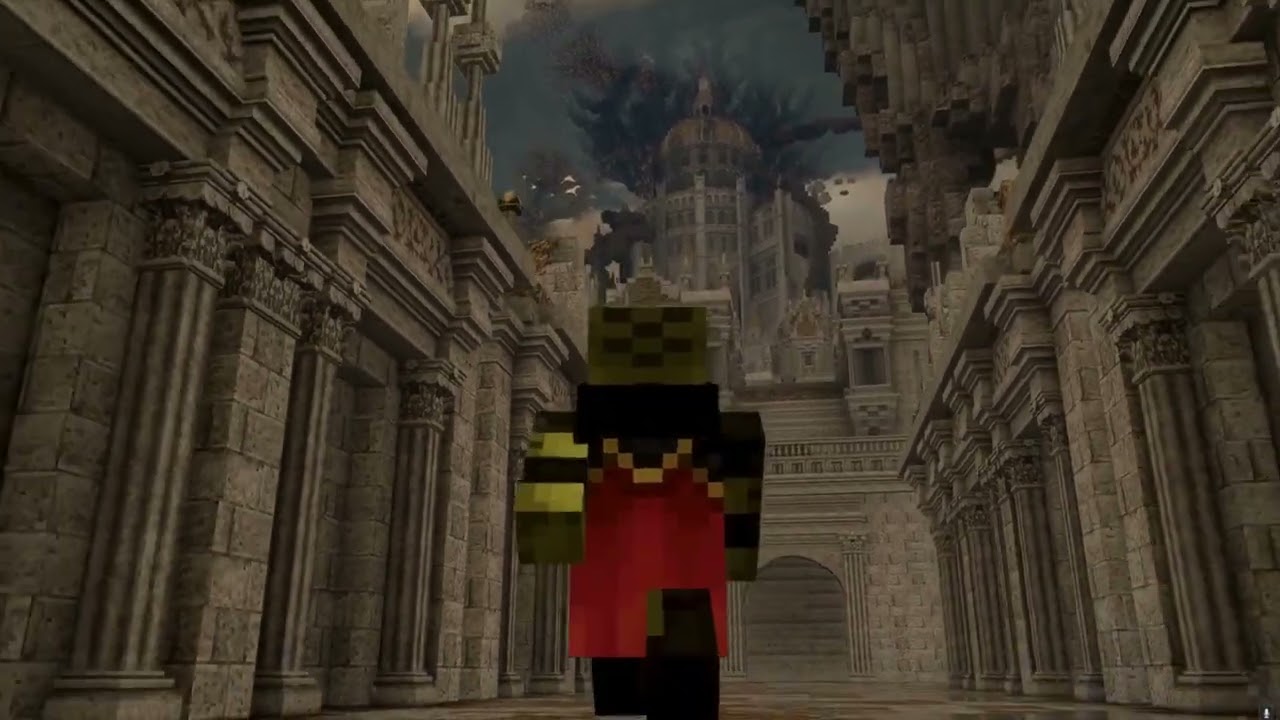
We’ve talked before about the beauty of Minecraft art, but we’ve rarely seen anything quite as pretty as these recreations of Elden Ring locations. In fact, it’s hard to believe these dreamy softly lit landscapes are Minecraft at all since they look more like paintings than blocky pixel art.

The Artist Behind the Masterpieces

Manofdutch has created incredible Minecraft artworks inspired by real places like Corvin Castle in Romania as well as locations from Elden Ring and Bloodborne. He’s even brought Silent Hill fog into the world-building game.

Building with Conquest Reforged Mod

He builds his creations in Minecraft with the Conquest Reforged mod. He uses custom maps made by RedLikeRanger and Bliss Shaders to polish his work.

A Closer Look at the Recreations

One of his most impressive creations is a recreation of Leyndell, the royal capital from Elden Ring. The video below shows the stunning attention to detail and realism of the build.

Minecraft Eldenring – Leyndell royal capital! (tiny short) – YouTube

Conclusion

Manofdutch’s Minecraft artworks are a testament to the creativity and skill of the Minecraft community. His use of the Conquest Reforged mod and custom maps has allowed him to create stunning recreations of real-world locations and fictional worlds. Whether you’re a fan of Minecraft, Elden Ring, or just great art, these creations are definitely worth checking out.

FAQs

Q: What mod does Manofdutch use to build his Minecraft artworks?
A: Manofdutch uses the Conquest Reforged mod to build his Minecraft artworks.

Q: Who makes the custom maps that Manofdutch uses?
A: Manofdutch uses custom maps made by RedLikeRanger and Bliss Shaders.

Q: Can I play the map myself?
A: Yes, you can play the map yourself by downloading it from the link provided.

Without Data Context, There is No AI

Unlocking the Power of Location Data in Real Estate

The Challenge

Approximately 80% of data has a location attribute associated with it – and that location data provides a connection with the physical world. For Generali Real Estate, the addition of alternative forms of data, such as spatial data, created greater context for its data and helped to power highly accurate AI-driven insights for data-driven decision-making.

The Journey

Generali Real Estate is one of the world’s leading real estate asset managers. Headquartered in Italy and with operations across Europe, the company has €36.9 billion assets under management (Q2 2024). When Generali Real Estate became one of the first real estate asset managers to establish a dedicated division for AI and machine learning (ML) innovation, its first task was to disrupt the traditional decision-making processes that usually inform investment strategies.

The Solution

To address these challenges, Generali Real Estate developed City Forward®, an innovative cloud-based location intelligence platform that helps real estate professionals and others make smarter decisions powered by highly accurate AI-driven insights. The City Forward platform leverages the Precisely portfolio of market-leading geo addressing solutions, alongside data from other third-party providers, to deliver comprehensive information on business locations, leisure hot spots, and other geographic features – revealing hyper-local insights on real estate assets and more.

The Benefits

The City Forward platform uses more than 800 variables and more than 30 ML models, bringing unprecedented granularity to forecasts. Beyond real estate, City Forward is scalable across industries and geographies where it’s used in more than a dozen use cases to shed light on sociodemographic information, consumer habits, web data, ESG (environmental, social, and governance) reporting, and more.

Conclusion

The use of alternative forms of data, such as spatial data, has the potential to revolutionize the way we make decisions in the real estate industry. By leveraging the power of location intelligence, Generali Real Estate has been able to drive highly accurate AI-driven insights and make data-driven decisions. As the company continues to explore new use cases and applications, it’s clear that the future of real estate is bright with the power of location data.

Frequently Asked Questions

Q: What is City Forward?
A: City Forward is a cloud-based location intelligence platform developed by Generali Real Estate to help real estate professionals and others make smarter decisions powered by highly accurate AI-driven insights.

Q: What is the primary benefit of using City Forward?
A: The primary benefit of using City Forward is the ability to reveal hyper-local insights on real estate assets and more, using more than 800 variables and more than 30 ML models.

Q: Who is Precisely?
A: Precisely is a global leader in location intelligence and data enrichment, providing comprehensive information on business locations, leisure hot spots, and other geographic features.

Q: How does City Forward use Precisely’s data?
A: City Forward uses Precisely’s portfolio of market-leading geo addressing solutions, alongside data from other third-party providers, to deliver comprehensive information on business locations, leisure hot spots, and other geographic features.

Can robots learn from machine dreams? | MIT News

0

For roboticists, one challenge towers above all others: generalization — the ability to create machines that can adapt to any environment or condition. Since the 1970s, the field has evolved from writing sophisticated programs to using deep learning, teaching robots to learn directly from human behavior. But a critical bottleneck remains: data quality. To improve, robots need to encounter scenarios that push the boundaries of their capabilities, operating at the edge of their mastery. This process traditionally requires human oversight, with operators carefully challenging robots to expand their abilities. As robots become more sophisticated, this hands-on approach hits a scaling problem: the demand for high-quality training data far outpaces humans’ ability to provide it.

Now, a team of MIT Computer Science and Artificial Intelligence Laboratory (CSAIL) researchers has developed a novel approach to robot training that could significantly accelerate the deployment of adaptable, intelligent machines in real-world environments. The new system, called “LucidSim,” uses recent advances in generative AI and physics simulators to create diverse and realistic virtual training environments, helping robots achieve expert-level performance in difficult tasks without any real-world data.

LucidSim combines physics simulation with generative AI models, addressing one of the most persistent challenges in robotics: transferring skills learned in simulation to the real world. “A fundamental challenge in robot learning has long been the ‘sim-to-real gap’ — the disparity between simulated training environments and the complex, unpredictable real world,” says MIT CSAIL postdoc Ge Yang, a lead researcher on LucidSim. “Previous approaches often relied on depth sensors, which simplified the problem but missed crucial real-world complexities.”

The multipronged system is a blend of different technologies. At its core, LucidSim uses large language models to generate various structured descriptions of environments. These descriptions are then transformed into images using generative models. To ensure that these images reflect real-world physics, an underlying physics simulator is used to guide the generation process.

The birth of an idea: From burritos to breakthroughs

The inspiration for LucidSim came from an unexpected place: a conversation outside Beantown Taqueria in Cambridge, Massachusetts. ​​“We wanted to teach vision-equipped robots how to improve using human feedback. But then, we realized we didn’t have a pure vision-based policy to begin with,” says Alan Yu, an undergraduate student in electrical engineering and computer science (EECS) at MIT and co-lead author on LucidSim. “We kept talking about it as we walked down the street, and then we stopped outside the taqueria for about half-an-hour. That’s where we had our moment.”

To cook up their data, the team generated realistic images by extracting depth maps, which provide geometric information, and semantic masks, which label different parts of an image, from the simulated scene. They quickly realized, however, that with tight control on the composition of the image content, the model would produce similar images that weren’t different from each other using the same prompt. So, they devised a way to source diverse text prompts from ChatGPT.

This approach, however, only resulted in a single image. To make short, coherent videos that serve as little “experiences” for the robot, the scientists hacked together some image magic into another novel technique the team created, called “Dreams In Motion.” The system computes the movements of each pixel between frames, to warp a single generated image into a short, multi-frame video. Dreams In Motion does this by considering the 3D geometry of the scene and the relative changes in the robot’s perspective.

“We outperform domain randomization, a method developed in 2017 that applies random colors and patterns to objects in the environment, which is still considered the go-to method these days,” says Yu. “While this technique generates diverse data, it lacks realism. LucidSim addresses both diversity and realism problems. It’s exciting that even without seeing the real world during training, the robot can recognize and navigate obstacles in real environments.”

The team is particularly excited about the potential of applying LucidSim to domains outside quadruped locomotion and parkour, their main test bed. One example is mobile manipulation, where a mobile robot is tasked to handle objects in an open area; also, color perception is critical. “Today, these robots still learn from real-world demonstrations,” says Yang. “Although collecting demonstrations is easy, scaling a real-world robot teleoperation setup to thousands of skills is challenging because a human has to physically set up each scene. We hope to make this easier, thus qualitatively more scalable, by moving data collection into a virtual environment.”

Who’s the real expert?

The team put LucidSim to the test against an alternative, where an expert teacher demonstrates the skill for the robot to learn from. The results were surprising: Robots trained by the expert struggled, succeeding only 15 percent of the time — and even quadrupling the amount of expert training data barely moved the needle. But when robots collected their own training data through LucidSim, the story changed dramatically. Just doubling the dataset size catapulted success rates to 88 percent. “And giving our robot more data monotonically improves its performance — eventually, the student becomes the expert,” says Yang.

“One of the main challenges in sim-to-real transfer for robotics is achieving visual realism in simulated environments,” says Stanford University assistant professor of electrical engineering Shuran Song, who wasn’t involved in the research. “The LucidSim framework provides an elegant solution by using generative models to create diverse, highly realistic visual data for any simulation. This work could significantly accelerate the deployment of robots trained in virtual environments to real-world tasks.”

From the streets of Cambridge to the cutting edge of robotics research, LucidSim is paving the way toward a new generation of intelligent, adaptable machines — ones that learn to navigate our complex world without ever setting foot in it.

Yu and Yang wrote the paper with four fellow CSAIL affiliates: Ran Choi, an MIT postdoc in mechanical engineering; Yajvan Ravan, an MIT undergraduate in EECS; John Leonard, the Samuel C. Collins Professor of Mechanical and Ocean Engineering in the MIT Department of Mechanical Engineering; and Phillip Isola, an MIT associate professor in EECS. Their work was supported, in part, by a Packard Fellowship, a Sloan Research Fellowship, the Office of Naval Research, Singapore’s Defence Science and Technology Agency, Amazon, MIT Lincoln Laboratory, and the National Science Foundation Institute for Artificial Intelligence and Fundamental Interactions. The researchers presented their work at the Conference on Robot Learning (CoRL) in early November.


Microsoft Announces AI Security Hacking Event with Rewards

0

Microsoft Launches In-Person Hacking Event, Zero Day Quest

Microsoft is creating an in-person hacking event, Zero Day Quest, which it says will be the largest of its kind. The event will build upon Microsoft’s existing bug bounty program and incentivize research into high-impact security flaws that can affect the software powering cloud and AI workloads.

About Zero Day Quest

“This new hacking event will be the largest of its kind, with an additional $4 million in potential awards for research into high-impact areas, specifically cloud and AI,” explains Tom Gallagher, VP of engineering at Microsoft’s security response center. “Zero Day Quest will provide new opportunities for the security community to work hand in hand with Microsoft engineers and security researchers — bringing together the best minds in security to share, learn, and build community as we work to keep everyone safe.”

Submission and Awards

The Zero Day Quest starts today, with Microsoft accepting submissions for research that is eligible for bounty awards. These submissions will qualify security researchers for a spot at the in-person hacking event at Microsoft’s headquarters in Redmond, Washington, in 2025.

Awards and Incentives

Microsoft is doubling the awards that it pays out for AI bounties, and it’s also offering security researchers direct access to Microsoft AI engineers and the company’s AI Red Team — a group of experts that probe Microsoft’s AI systems for failures.

Commitment to Transparency

“As part of our ongoing commitment to transparency, we will share the details of the bugs once they are fixed so the whole industry can learn from them — after all, security is a team sport,” says Vasu Jakkal, corporate vice president of security at Microsoft. Any critical vulnerabilities will be shared through the Common Vulnerabilities and Exposures (CVE) program, and Microsoft plans to share any learnings across Microsoft to improve its cloud and AI security.

Background

This new security event comes after Microsoft has embarked on its largest-ever security transformation. Microsoft made security its number one priority for every employee earlier this year, following years of security issues and a scathing report from the US Cyber Safety Review Board.

Microsoft Security Exposure Management

Microsoft Security Exposure Management is also launching today, providing defenders with a graph-based view of a business’s login credentials, permissions, and other security-related elements that can identify potential attack vectors.

Conclusion

Microsoft’s Zero Day Quest is a significant step in the company’s commitment to security and transparency. By incentivizing research into high-impact security flaws and providing a platform for security researchers to collaborate with Microsoft engineers and security researchers, the company is taking a proactive approach to improving the security of its cloud and AI workloads.

FAQs

Q: What is Zero Day Quest?
A: Zero Day Quest is an in-person hacking event launched by Microsoft, which aims to incentivize research into high-impact security flaws that can affect the software powering cloud and AI workloads.

Q: What are the awards for participating in Zero Day Quest?
A: Microsoft is offering an additional $4 million in potential awards for research into high-impact areas, specifically cloud and AI.

Q: How can security researchers participate in Zero Day Quest?
A: Security researchers can submit their research for eligibility for bounty awards, which will qualify them for a spot at the in-person hacking event at Microsoft’s headquarters in Redmond, Washington, in 2025.

Q: What is Microsoft Security Exposure Management?
A: Microsoft Security Exposure Management is a new tool that provides defenders with a graph-based view of a business’s login credentials, permissions, and other security-related elements that can identify potential attack vectors.

Dreamstep

0

Support me on Patreon: https://www.patreon.com/sarikas

Introduction

In today’s digital age, creators are constantly looking for ways to monetize their work and connect with their audience. One popular platform for doing so is Patreon, a subscription-based service that allows fans to support their favorite artists, writers, and other creatives.

Patreon: A Platform for Creators

Patreon was founded in 2013 with the goal of helping artists and creators earn a sustainable income from their work. The platform allows fans to support their favorite creators by pledging a monthly amount in exchange for exclusive content, early access, or other rewards.

How Patreon Works

Here’s how Patreon works:

  • Creators set up a Patreon page and describe the rewards they offer in exchange for support.
  • Fans pledge a monthly amount to support their favorite creators.
  • Creators receive the pledged amount each month and can use it to fund their work.
  • In return, creators provide the promised rewards, which can include exclusive content, early access, or other perks.

Benefits of Patreon

So why should creators use Patreon? Here are some benefits:

  • Sustainable Income: Patreon provides a steady stream of income for creators, allowing them to focus on their work without worrying about where their next paycheck will come from.
  • Exclusive Content: Patreon allows creators to offer exclusive content to their fans, such as behind-the-scenes material, early access to new work, or exclusive discounts.
  • Community Building: Patreon fosters a sense of community among creators and their fans, allowing for direct communication and connection.

Conclusion

Patreon is a powerful platform for creators looking to monetize their work and connect with their audience. By providing a sustainable income, exclusive content, and community building, Patreon has become a go-to destination for many artists, writers, and other creatives.

FAQs

Q: How do I get started with Patreon?

A: To get started with Patreon, simply sign up for an account on their website and create a page for your work. Describe the rewards you offer and set your monthly pricing.

Q: What kind of rewards can I offer on Patreon?

A: You can offer a wide range of rewards, including exclusive content, early access, discounts, or even personalized messages or sketches.

Q: How do I receive my pledged income?

A: Patreon sends your pledged income to your bank account each month, minus a small transaction fee.

Q: Can I cancel my Patreon pledge at any time?

A: Yes, fans can cancel their Patreon pledge at any time, but they will still receive the rewards they’ve earned for the current month.

Q: How do I track my Patreon earnings?

A: Patreon provides detailed analytics and tracking tools, allowing you to monitor your earnings and adjust your rewards and pricing accordingly.

Squid Game Surprises with Cartoon Art

0

Netflix’s Squid Game: Unleashed Wins Over Critics with Unique Art Style

Netflix isn’t in gamers’ good books right now after it fired developers and promptly announced plans to make games with AI, but the opening of preregistration for Squid Game: Unleashed may be winning some critics over.

A Refreshing Change

The video game will be released just over a week before Squid Game Season Two. And it looks refreshingly different with its cartoon art style.

Preregistration Now Open

Squid Game: Unleashed is based on the Korean drama-thriller series that became an international hit in 2021 and will be available to play on the Netflix app. The trailer shows characters that may not be based on those from the series, but the lethal games will look familiar.

A Unique Combination

The combination of a cartoon art style with acts of random violence almost feel reminiscent of South Park, which is not something I was expecting. We see contestants squashed by vehicles, sliced by saws and bludgeoned by wrecking balls. The response seems to be largely positive, with many fans expressing surprise but excitement for the game.

Storyline

“Three years after winning Squid Game, Player 456 gave up going to the States and comes back with a new resolution in his mind. Gi-hun once again dives into the mysterious survival game, starting another life-or-death game with new participants gathered to win the prize of 45.6 billion won,” the text on the official site reads.

Release Date

Squid Game: Unleashed will be released on 17 December, just nine days before the much-anticipated release of Squid Game Season 2 on 26 December.

Conclusion

Squid Game: Unleashed may be a turning point for Netflix in the gaming world, as it seems to be winning over critics with its unique art style and engaging storyline. With its release date just around the corner, fans of the series are eagerly awaiting the game’s launch.

FAQs

Q: What is Squid Game: Unleashed?
A: Squid Game: Unleashed is a video game based on the Korean drama-thriller series Squid Game, available to play on the Netflix app.

Q: What is the release date of Squid Game: Unleashed?
A: Squid Game: Unleashed will be released on 17 December.

Q: Will Squid Game: Unleashed be available on all platforms?
A: No, Squid Game: Unleashed will only be available to play on the Netflix app.

Q: Is Squid Game: Unleashed a sequel to the series?
A: No, Squid Game: Unleashed is a standalone game, but it will be released just before the second season of the series.

New Dawn for Cheap Android Laptops

0

When ChromeOS Flex Brought New Life to Aging Hardware

When I first explored ChromeOS Flex, it felt like a minor miracle. Here was a platform that breathed new life into aging x86 hardware, transforming dusty laptops into lightweight, secure, and efficient devices. At the time, I saw it as a solution with great potential — not just for reducing e-waste but for extending the usability of older systems in an increasingly fast-paced tech world.

The Flaws of ChromeOS Flex

But even then, I recognized its flaws. As innovative as ChromeOS Flex was, the lack of native Android app support stood out as a glaring limitation. Google’s extensive ecosystem couldn’t be fully leveraged, and for many users, that was a dealbreaker. On top of that, its reliance on x86 architecture made it feel like a relic in a market shifting rapidly toward Arm-based computing. These shortcomings left me wondering whether ChromeOS Flex could ever be more than a niche solution.

Reports of Consolidation and Mergers

With reports seemingly confirming Google’s plans to consolidate ChromeOS and Android, the company clearly is pivoting to address these issues. Having observed Google’s strategies for years, I view this merger as both a necessity and a chance for the company to redefine its position in the Arm-based laptop and tablet market. This comes in light of reports this week that the DOJ is seeking to break up Google’s monopoly on web browsers and search by requiring it to divest Chrome.

Why the Merger Makes Sense

The reality is simple: Google can’t afford to cede the Arm-based laptop and tablet market to Apple. The iPad has been an undeniable juggernaut, and Apple’s M-series-powered MacBook Air set new expectations for what laptops under $800 can deliver. For years, I’ve watched Apple dominate this space with a mix of innovation and ecosystem synergy.

AI as the X-Factor

As I’ve watched the industry evolve, one thing has become clear: AI is becoming the defining differentiator in personal computing. Google knows this, and integrating Gemini across its product portfolio highlights how seriously it’s taking this shift. From Android to Workspace and beyond, Gemini powers everything from conversational AI to productivity-enhancing features, seamlessly embedded into Google’s ecosystem.

The Arm-Qualcomm Dispute: Ripples in the Ecosystem

While Apple continues its dominance in the Arm space, I’ve closely monitored Qualcomm’s legal battle with Arm Holdings. The stakes in this dispute could reshape the entire Arm ecosystem. Arm’s claim that Qualcomm’s acquisition of Nuvia invalidates its architecture license — and Qualcomm’s insistence otherwise — has created significant uncertainty.

Google’s Custom Silicon: The Long Road Ahead

Google’s efforts to build custom silicon have been fascinating to watch. The upcoming Tensor G5, expected alongside the Pixel 10 in 2025, represents a critical step in its journey. Designed using TSMC’s second-generation 3nm process and InFO-POP packaging, the Tensor G5 is expected to bring improved thermal efficiency, smaller chip size, and better power management — all key elements for next-gen Arm laptops.

A Pivotal Moment for Google

For years, I’ve seen Google’s hardware efforts oscillate between bold ambition and strategic missteps. The merger of ChromeOS and Android feels like a turning point — a chance for Google to address long-standing flaws and redefine its vision for personal computing. But success isn’t guaranteed. Apple’s dominance in the Arm space is unmatched, and Microsoft’s Copilot-enhanced Arm laptops are gaining traction. Google must execute flawlessly and innovate in ways that differentiate its products from those of its competitors.

Conclusion

This is Google’s moment to prove it can deliver on its vision. If it succeeds, we could see the rise of a new era for Android-powered laptops. If not, it might be another chapter in Google’s history of unrealized potential.

Frequently Asked Questions

Q: Why is Google consolidating ChromeOS and Android?

A: Google is consolidating ChromeOS and Android to address the limitations of ChromeOS Flex, such as the lack of native Android app support, and to redefine its position in the Arm-based laptop and tablet market.

Q: What are the benefits of the merger?

A: The merger will allow Google to integrate Gemini’s AI capabilities more seamlessly, improve performance and efficiency, and differentiate its products from those of its competitors.

Q: What are the challenges Google faces in the Arm-based laptop market?

A: Google faces challenges from Apple’s dominance in the Arm space, as well as from Microsoft’s Copilot-enhanced Arm laptops. Google must execute flawlessly and innovate in ways that differentiate its products from those of its competitors.

Q: What is the significance of the Arm-Qualcomm dispute?

A: The Arm-Qualcomm dispute has significant implications for the Arm ecosystem, with Arm’s claim that Qualcomm’s acquisition of Nuvia invalidates its architecture license creating uncertainty.

Google Gemini Can Remember Things Now

0

Google Gemini Can Now “Remember” Your Interests and Preferences

Google Gemini, the AI chatbot, can now “remember” certain things about you, such as your interests and personal preferences. This change is rolling out to subscribers with access to Gemini Advanced, and it will allow the chatbot to tailor its responses based on your needs, according to Gemini’s most recent release notes.

Sharing Your Interests and Preferences

As noted by Google, you can share your interests, as well as details about your work, hobbies, or aspirations, while chatting with Gemini. You can also enter relevant details about yourself within the bot’s “Saved Info” page, such as telling it to only suggest vegetarian recipes, or that you work as an accountant.

Accessing and Managing Your Data

You can view, edit, or delete data Gemini has collected from the “Saved Info” page as well. Gemini will note when it incorporates your information in its responses. You can access Gemini Advanced through a Google One AI Premium subscription, and it’s only available in English for now.

Similar Feature Rolled Out by OpenAI

OpenAI first rolled out its Memory feature to ChatGPT Plus subscribers in April. Just like with Gemini, ChatGPT can keep track of things you’ve mentioned in previous conversations, such as your favorite food, or the kinds of pets you have.

Conclusion

Google Gemini’s new feature allows users to share their interests and preferences with the chatbot, which will then tailor its responses based on their needs. This feature is rolling out to subscribers with access to Gemini Advanced, and users can access and manage their data through the “Saved Info” page.

Frequently Asked Questions

Q: What is Gemini Advanced?
A: Gemini Advanced is a feature of Google Gemini that allows users to share their interests and preferences with the chatbot, which will then tailor its responses based on their needs.

Q: How do I access Gemini Advanced?
A: You can access Gemini Advanced through a Google One AI Premium subscription.

Q: Is Gemini Advanced available in multiple languages?
A: No, Gemini Advanced is only available in English for now.

Q: Can I delete the data Gemini has collected about me?
A: Yes, you can view, edit, or delete data Gemini has collected from the “Saved Info” page.

Q: Is this feature similar to OpenAI’s Memory feature?
A: Yes, OpenAI’s Memory feature, rolled out to ChatGPT Plus subscribers in April, also allows the chatbot to keep track of things you’ve mentioned in previous conversations.

AI’s Nocturnal Odyssey

0

Support me on Patreon: https://www.patreon.com/sarikas

Introduction

As a creator, I am constantly working on new and exciting projects. From writing articles to creating content, I am always looking for ways to improve and expand my work. That’s why I am excited to announce that I am now on Patreon, a platform that allows fans and supporters to support their favorite creators.

What is Patreon?

Patreon is a membership platform that allows creators to earn money from their fans and supporters. By becoming a patron, you can support my work and receive exclusive rewards and benefits. Whether you’re a fan of my writing, art, or other creative endeavors, Patreon is a great way to show your support and get involved in the creative process.

What kind of rewards can I expect?

As a patron, you can expect to receive a variety of rewards and benefits. These may include:

* Exclusive access to new content, such as articles, videos, or podcasts
* Behind-the-scenes insights into my creative process
* Discounts on merchandise and other products
* Personalized messages and shoutouts
* And more!

How does it work?

Becoming a patron is easy! Simply click the link above and sign up for a Patreon account. Once you’ve created your account, you can search for me and become a patron. You can choose from a variety of tier levels, each with its own set of rewards and benefits.

Conclusion

I am thrilled to be joining the Patreon community and I hope you will consider supporting me on this journey. Whether you’re a long-time fan or just discovering my work, I am grateful for your support and look forward to sharing my latest projects and creations with you.

Frequently Asked Questions

Q: What kind of content can I expect to receive as a patron?

A: As a patron, you can expect to receive a variety of content, including articles, videos, podcasts, and more!

Q: How often will I receive new content?

A: As a patron, you can expect to receive new content on a regular basis, depending on the tier level you choose.

Q: Can I cancel my patronage at any time?

A: Yes, you can cancel your patronage at any time. Simply log in to your Patreon account and cancel your subscription.

Q: How do I contact you?

A: You can contact me through my Patreon page or by sending me a message on social media. I would be happy to hear from you and answer any questions you may have!

Snapdragon Laptop is All-Round Good Performer

0

HP EliteBook Ultra G1Q Laptop Review

Design & Build

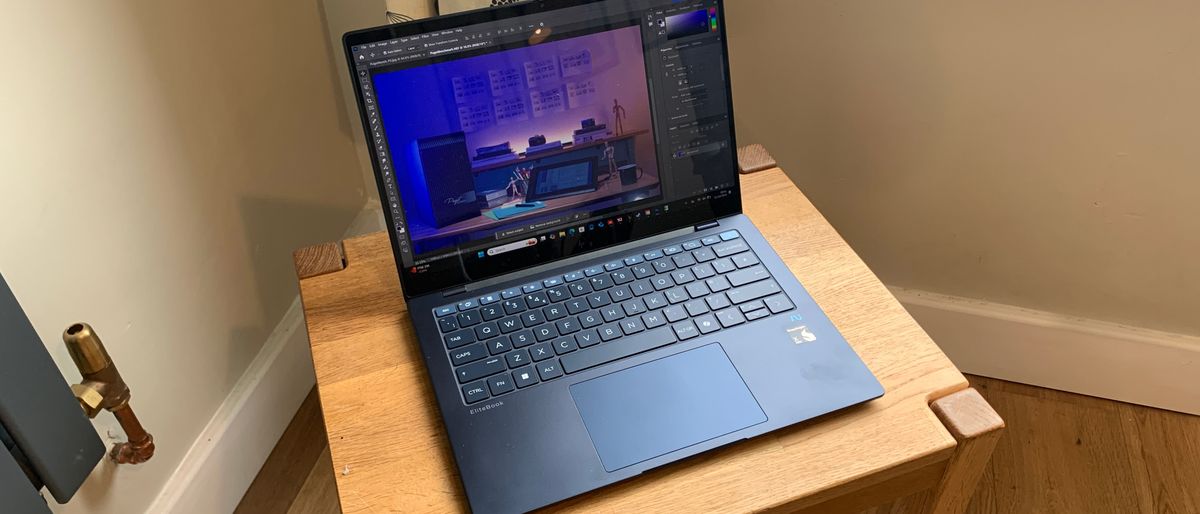
The HP EliteBook Ultra G1Q laptop is reminiscent of the MacBook Air design, although not quite as thin at the front end. The 18mm super-slim profile looks incredible and gives the instant feel of a laptop that is designed to be carried around. You would be forgiven for thinking that the thin frame would mean a lack of strength, but this is not the case. The aluminium chassis delivers all the toughness required for a laptop that is going to be thrown into a bag and used here, there and everywhere.

Key Specifications

  • CPU: Snapdragon X Elite X1E-78-100
  • Graphics: Qualcomm Adreno GPU
  • Memory: 16 GB LPDDR5x-8400 MT/s
  • Screen size: 14-inch (touch)
  • Resolution: 2.2K (2240 x 1400)
  • Refresh rate: Not specified
  • Storage: 1 TB SSD
  • Connectivity: 1x USB Type-C 40Gbps, 1x USB Type-C 10Gbps, 1x USB Type-A 5Gbps, 1x stereo headphone/microphone combo jack
  • Dimensions: 31.29 x 22.35 x 1.12 cm
  • Weight: 1.34 kg

Benchmark Scoring

  • Geekbench 6: CPU single-core: 2,422, CPU multi-core: 14,129, GPU OpenCL: 20,550
  • Cinebench: CPU not supported
  • Handbrake: 7m5s
  • PugetBench Photoshop: 5,709

Price

The HP EliteBook Ultra G1Q is available for purchase at a range of retailers as well as on the HP website. The laptop has a price of £1,499.99 and will be delivered for free within two working days. There is also a pay monthly finance option if you want to spread your payments.

Who is it for?

The HP EliteBook Ultra G1Q is one of those laptops that doesn’t have a clear target audience. We therefore have to look more closely at the specs to see who it might suit. One thing we can be sure about is the laptop’s credentials for portability. The 14-inch size makes it light and easy to carry around while the incredible battery life means you can work anywhere without bringing your charger along for the ride.

Should I buy the HP EliteBook Ultra G1Q laptop?

  • Buy it if: You want the latest AI technology in a laptop, you value portability, you need outstanding battery performance.
  • Don’t buy it if: You’re a high-end creative professional, you don’t have a dedicated second monitor, you need an NVIDIA GPU.

Also Consider

  • If you’re looking for a more powerful laptop, consider the MSI Titan 18 HX.
  • If you’re on a budget, consider the 14-inch Acer Swift 14 AI.

Conclusion

The HP EliteBook Ultra G1Q is a great option for those who want the latest AI technology in a laptop. Its portability and battery life make it an excellent choice for those who are always on the go. However, it may not be the best option for high-end creative professionals who require more powerful processing and graphics capabilities.

FAQs

Q: What is the CPU of the HP EliteBook Ultra G1Q?
A: The CPU is Snapdragon X Elite X1E-78-100.

Q: What is the graphics processing unit of the HP EliteBook Ultra G1Q?
A: The graphics processing unit is Qualcomm Adreno GPU.

Q: What is the storage capacity of the HP EliteBook Ultra G1Q?
A: The storage capacity is 1 TB SSD.

Q: Is the HP EliteBook Ultra G1Q suitable for high-end creative professionals?
A: No, it may not be the best option for high-end creative professionals who require more powerful processing and graphics capabilities.