Home Blog Page 597

Fur Dance Runway

0

Benefits of Supporting Me on Patreon

Support me on Patreon:

A Token of Appreciation

As an individual content creator, I am constantly working to bring you high-quality content and valuable insights. Your support on Patreon is a testament to the value you find in my work, and I am grateful for the encouragement.

In-Depth Content

By supporting me on Patreon, you can expect exclusive content that takes your knowledge and understanding of my subject matter to the next level. This might include:

* In-depth tutorials on specific topics
* Access to expert-level guides and resources
* Insider tips and tricks not available anywhere else

Early Access to Content

As a patron, you’ll receive early access to my content, allowing you to stay ahead of the curve and be among the first to know about the latest developments in my area of expertise.

Recognition and Feedback

Your support also enables me to continually improve and refine my content. I value your input and feedback, and through our private community, I’ll be able to have a direct dialogue with you to better understand your needs and preferences.

Exclusive Perks and Bonuses

Depending on the level of support you choose, you’ll receive exclusive perks and bonuses, such as:

* Personalized attention and feedback on your work or projects
* VIP access to live events or Q&A sessions
* Priority access to new courses, guides, or workshops

Join the Community

By supporting me on Patreon, you’ll join a community of like-minded individuals who share your interest in my subject matter. This is a unique opportunity to connect with others, ask questions, and gain valuable insights from experts.

Conclusion

Your support means the world to me, and I am dedicated to delivering high-quality content that meets your expectations. I look forward to this new chapter in our collaborative journey.

FAQs

Q: What does it mean to support you on Patreon?

A: Supporting me on Patreon enables me to continue creating and sharing high-quality content. Your support helps me pay for software, equipment, and other expenses necessary to produce and distribute my content.

Q: What kind of exclusive content can I expect to receive?

A: As a patron, you’ll receive early access to in-depth content, including tutorials, guides, and resources. The type of content will depend on your level of support and my current projects.

Q: Can I cancel my subscription at any time?

A: Yes, you can cancel your subscription at any time through the Patreon platform. This allows you to adjust your support level or cancel altogether at your discretion.

Q: How often will I receive new content?

A: I aim to post new content on a regular basis, depending on your level of support and the type of content. As a patron, you’ll have early access to all new content, ensuring you stay ahead of the curve.

Automated MNIST Digit Classification

0

Contents

This article is part of the
Differentiable Self-organizing Systems Thread,
an experimental format collecting invited short articles delving into
differentiable self-organizing systems, interspersed with critical
commentary from several experts in adjacent fields.

Growing Neural Cellular Automata
Self-Organising Textures

Growing Neural Cellular Automata demonstrated how simple cellular automata (CAs) can learn to self-organise into complex shapes while being resistant to perturbations. Such a computational model approximates a solution to an open question in biology, namely, how do cells cooperate to create a complex multicellular anatomy and work to regenerate it upon damage? The model parameterizing the cells’ rules is parameter-efficient, end-to-end differentiable, and illustrates a new approach to modeling the regulation of anatomical homeostasis. In this work, we use a version of this model to show how CAs can be applied to a common task in machine learning: classification. We pose the question: can CAs use local message passing to achieve global agreement on what digit they compose?

Our question is closely related to another unsolved problem in developmental and regenerative biology: how cell groups decide whether an organ or tissue pattern is correct, or whether current anatomy needs to be remodeled (anatomical surveillance and repair toward a specific target morphology). For example, when scientists surgically transplanted a salamander tail to its flank, it slowly remodeled into a limb – the organ that belongs at this location . Similarly, tadpoles with craniofacial organs in the wrong positions usually become normal frogs because they remodel their faces, placing the eye, mouth, nostrils, etc. in their correct locations. Cell groups move around and stop when the correct frog-specific anatomical configuration has been achieved . All of these examples illustrate the ability of biological systems to determine their current anatomical structure and decide whether it matches a species-specific target morphology . Despite the recent progress in molecular biology of genes necessary for this process, there is still a fundamental knowledge gap concerning the algorithms sufficient for cell collectives to measure and classify their own large-scale morphology. More broadly, it is important to create computational models of swarm intelligence that explicitly define and distinguish the dynamics of the basal cognition of single cells versus cell collectives .

The self-classifying MNIST task

Suppose a population of agents is arranged on a grid. They do not know where they are in the grid and they can only communicate with their immediate neighbors. They can also observe whether a neighbor is missing. Now suppose these agents are arranged to form the shape of a digit. Given that all the agents operate under the same rules, can they form a communication protocol such that, after a number of iterations of communication, all of the agents know which digit they are forming? Furthermore, if some agents were to be removed and added to form a new digit from a preexisting one, would they be able to know which the new digit is?

Because digits are not rotationally invariant (i.e. 6 is a rotation of 9), we presume the agents must be made aware of their orientation with respect to the grid. Therefore, while they do not know where they are, they do know where up, down, left and right are. The biological analogy here is a situation where the remodeling structures exist in the context of a larger body and a set of morphogen gradients or tissue polarity that indicate directional information with respect to the three major body axes. Given these preliminaries, we introduce the self-classifying MNIST task.

A visualisation of a random sample of digits from MNIST, each shaded by the colour corresponding its label.

Each sample of the MNIST dataset consists of a 28×28 image with a single monochrome channel that is classically displayed in greyscale. The label is an integer in [0,9][0,9].

Our goal is for all cells that make up the digit to correctly output the label of the digit. To convey this structural information to the cells, we make a distinction between alive and dead cells by rescaling the values of the image to [0, 1]. Then we treat a cell as alive if its value in the MNIST sample is larger than 0.1. The intuition here is that we are placing living cells in a cookie cutter and asking them to identify the global shape of the cookie cutter. We visualize the label output by assigning a color to each cell, as you can see above. We use the same mapping between colors and labels throughout the article. Please note that there is a slider in the interactive demo controls which you can use to adjust the color palette if you have trouble differentiating between the default colors.

Model

In this article, we use a variant of the neural cellular automata model described in Growing Cellular Automata . We refer readers unfamiliar with its implementation to the original ”Model” section. Here we will describe a few areas where our model diverges from the original.

Target labels

The work in Growing CA used RGB images as targets, and optimized the first three state channels to approximate those images. For our experiments, we treat the last ten channels of our cells as a pseudo-distribution over each possible label (digit). During inference, we simply pick the label corresponding to the channel with the highest output value.

Alive cells and cell states

In Growing CA we assigned a cell’s state to be “dead” or “alive” based on the strength of its alpha channel and the activity of its neighbors. This is similar to the rules of Conway’s Game of Life . In the Growing CA model, “alive” cells are cells which update their state and dead cells are “frozen” and do not undergo updates. In contrast to biological life, what we call “dead” cells aren’t dead in the sense of being non-existent or decayed, but rather frozen: they are visible to their neighbors and maintain their state throughout the simulation.

Conclusion

In this article, we have demonstrated the ability of neural cellular automata to self-classify MNIST digits. This model can be seen as a simple, yet effective, approach to solving the problem of digit recognition, and can be used as a building block for more complex models. We believe that this work has the potential to contribute to the development of new algorithms for pattern recognition and classification, and to provide insights into the nature of biological systems.

Frequently Asked Questions

Q: What is the self-classifying MNIST task?
A: The self-classifying MNIST task is a problem in machine learning where a population of agents is arranged on a grid and must communicate with each other to identify the shape of a digit.

Q: How does the model work?
A: The model uses a variant of the neural cellular automata model described in Growing Cellular Automata. It treats the last ten channels of the cells as a pseudo-distribution over each possible label (digit) and uses a simple protocol to determine the label of the digit.

Q: What are the limitations of the model?
A: The model

Interactive Collaborative Learning Platform

Key Points

The Power of Student Recordings in Online Education

Late on a recent Friday night, I received a text from one of my community college students, Stephen, who had completed both U.S. History I and II online with me last academic year as a high school junior, 1,000 miles away in Texas.

The Lest We Forget Project

The texts were about a tutorial video for my next class, which Stephen had created along with his friends. This was not the first time Stephen and his friends had recorded videos for my classes. Last year, I encouraged my group of dual credit high school learners to get together and take videos of a New Deal-era CCC or WPA project or site and post them to our online discussion board.

The Evolution of Student Recordings

I have been asking online learners to record and share their Lest We Forget presentations for twelve years. It has always felt risky to do this, but the quality of the student recordings has improved significantly over the years. The medium has expanded to allow for unexpected creativity, and the number of classmates involved in the recording and editing process has grown.

The Benefits of Student Recordings

Student recordings have become a conduit through which many online students openly share their genuine hopes, fears, frustrations, and successes with me throughout the semester. They have also become a flexible and creative means by which understanding can be demonstrated.

Conclusion

As online education continues to evolve, I believe that the future will concern itself much more with students’ expressions of genuine intelligence than it does with students’ use of artificial intelligence. Student recordings have the power to reveal a brighter future for online education, and I am excited to see where this trend will take us.

FAQs

Q: What is the Lest We Forget project?
A: The Lest We Forget project is a biographical video research presentation that asks students to research and create a video about an American historical figure.

Q: How do you encourage students to create videos?
A: I encourage students to get creative and have fun with the project. I also provide them with guidelines and resources to help them get started.

Q: What are the benefits of student recordings?
A: Student recordings allow students to express their understanding of the material in a creative and flexible way. They also provide a unique opportunity for students to share their thoughts and feelings with the instructor and their peers.

Q: How do you assess student recordings?
A: I assess student recordings based on their creativity, clarity, and overall understanding of the material. I also provide feedback to students on their recordings to help them improve.

Q: What is the future of online education?
A: I believe that the future of online education will concern itself much more with students’ expressions of genuine intelligence than it does with students’ use of artificial intelligence. Student recordings have the power to reveal a brighter future for online education, and I am excited to see where this trend will take us.

WWE RAW Logo Overkill

0

The New WWE RAW Logo: A Mixed Reaction from Fans

The new logo for WWE RAW made its subtle debut at last weekend’s Mike Tyson vs Jake Paul fight and already fans aren’t happy. Promoting the wrestling show’s Netflix debut in 2025, the logo is seemingly a homage to past designs, but it’s not quite the knockout that fans anticipated, leading to some rather scathing reviews.

A Messy, Overcomplicated Design?

While the best logos often have an element of heritage woven into their design, the new RAW logo demonstrates how combining too many concepts can lead to a messy, overcomplicated design. While I’m all for rejecting minimalism where appropriate, the new RAW logo is a prime example of an overambitious design that’s more clunky than clever.

A Look Back at Past Designs

Looking back at past designs, the new logo appears to take its main inspiration from the 2006 logo. With framing details on the ‘R’ and ‘W’, the grungy design had a more industrial, textured appeal that gave it an appropriate dose of character. The new logo also appears to mimic the shape of the Netflix logo to reference the brand collaboration, yet the strong graphic style of lettering leaves it feeling bulky and over-engineered.

Fan Reaction on Reddit

Redditors on the r/graphic_design subreddit were quick to voice their opinions. Many felt that the design read incorrectly as “BAW”, with one user suggesting “The R looks ugly because they didn’t choose to adjust the A.” Another added “Given the historically boxy and pointy nature of the history of RAW logos I’m not huge on the bottom curve but I get why they would want to go with it as a fresh coat of paint and a cute idea of branding synergy. I think If they would have started with the 90s logo and worked from there you could also better incorporate the WWE logo into the top banner too, as the original logo did.”

Conclusion

The new WWE RAW logo has received a mixed reaction from fans, with some criticizing its design as messy and overcomplicated. While it’s not the first instance of a brand trying to get too clever with its redesign, there’s still a chance it could be subject to some design tweaks if fans get their way.

FAQs

Q: What is the inspiration behind the new WWE RAW logo?
A: The new logo appears to take its main inspiration from the 2006 logo, with framing details on the ‘R’ and ‘W’, and a nod to the Netflix logo to reference the brand collaboration.

Q: What is the reaction from fans?
A: Fans have been quick to voice their opinions, with many criticizing the design as messy and overcomplicated, and some feeling that it reads incorrectly as “BAW”.

Q: Will the logo be subject to changes?
A: While the logo hasn’t been officially confirmed, there’s still a chance it could be subject to some design tweaks if fans get their way.

DEA and HHS Extend Virtual Prescribing for Controlled Substances

0

Temporary Extension of COVID-19 Telemedicine Flexibilities

Third Temporary Extension of COVID-19 Telemedicine Flexibilities for Prescription of Controlled Medications

The U.S. Drug Enforcement Agency (DEA) and Health and Human Services (HHS) announced the Third Temporary Extension of COVID-19 Telemedicine Flexibilities for Prescription of Controlled Medications, preventing some patients from losing access to their telehealth-prescribed medications.

Why it Matters

With an end-of-year deadline looming, and Congress and telehealth industry groups urging DEA and HHS to jointly extend prescribing flexibilities allowed under the original COVID-19 public health emergency, the agencies agreed to grant a third temporary extension through December 31, 2025. The agencies want to "ensure a smooth transition for patients and practitioners that have come to rely on the availability of telemedicine for controlled medication prescriptions."

The Larger Trend

Last year, when the COVID-19 Public Health Emergency was set to expire, the DEA extended telemedicine flexibilities around the prescription of certain controlled medications while it reviewed a deluge of comments on its proposed plans for post-PHE remote prescribing guardrails. The DEA’s initial draft rule would require affected patients to have in-person exams, and many were concerned that restrictions would result in a return to access barriers many patients experienced before the pandemic.

On the Record

"This third temporary rule will allow adequate time for providers to come into compliance with any new standards or safeguards eventually adopted in a final set of regulations," the agency said in its notice.

Conclusion

The temporary extension of COVID-19 telemedicine flexibilities will allow patients to continue receiving telehealth-prescribed medications without interruption. The DEA and HHS will continue to develop the final rule governing the virtual prescribing of controlled substances in the post-pandemic era to ensure public health and safety and mitigate drug diversion risks.

FAQs

Q: What is the purpose of the temporary extension of COVID-19 telemedicine flexibilities?
A: The temporary extension is to prevent patients from losing access to their telehealth-prescribed medications.

Q: Why did the DEA and HHS agree to grant a third temporary extension?
A: The agencies want to ensure a smooth transition for patients and practitioners that have come to rely on the availability of telemedicine for controlled medication prescriptions.

Q: What is the next step for the DEA and HHS in developing the final rule governing the virtual prescribing of controlled substances?
A: The agencies will continue to develop the final rule, carefully considering the input received and working to promulgate a final set of telemedicine regulations.

AI to Drive Scientific Breakthroughs

0

NVIDIA Kicks Off SC24 with AI and Supercomputing Tools

Transforming Industries through Accelerated Computing

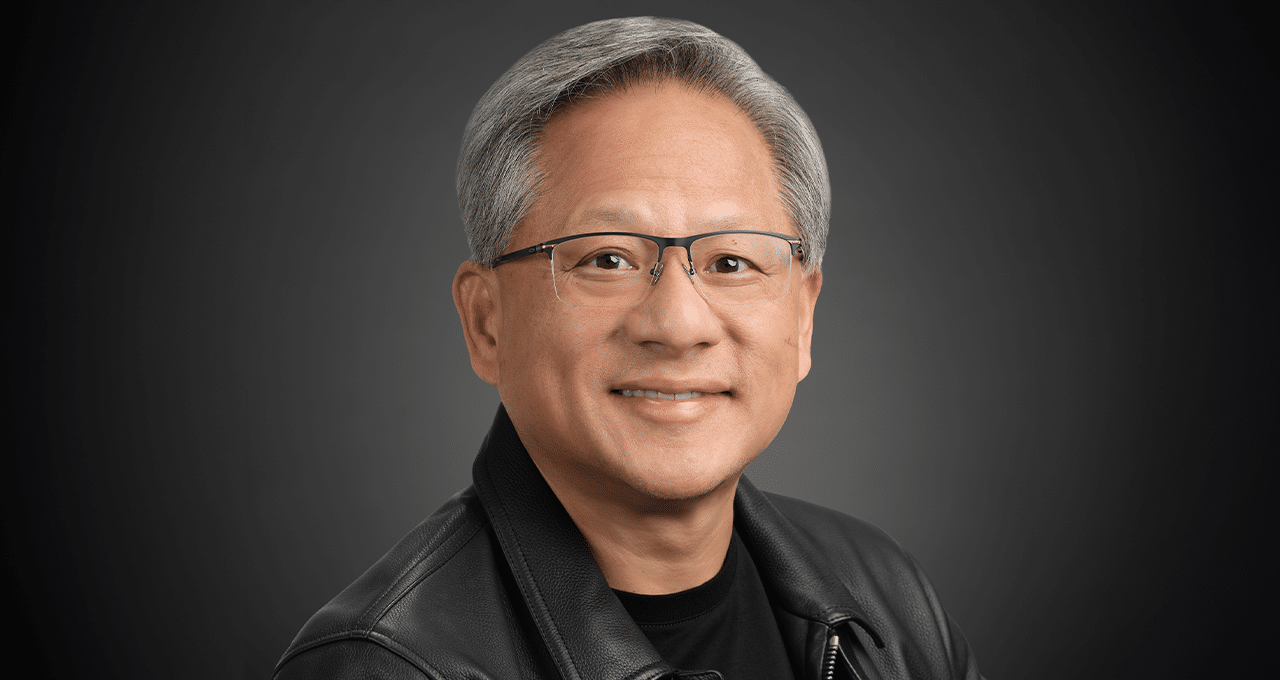
NVIDIA kicked off SC24 in Atlanta with a wave of AI and supercomputing tools set to revolutionize industries like biopharma and climate science. The announcements, delivered by NVIDIA founder and CEO Jensen Huang and Vice President of Accelerated Computing Ian Buck, are rooted in the company’s deep history in transforming computing.

Reinventing Computing

"Supercomputers are among humanity’s most vital instruments, driving scientific breakthroughs and expanding the frontiers of knowledge," Huang said. "Twenty-five years after creating the first GPU, we have reinvented computing and sparked a new industrial revolution."

CUDA-X Libraries Power New Frontiers

At SC24, NVIDIA announced the new cuPyNumeric library, a GPU-accelerated implementation of NumPy, designed to supercharge applications in data science, machine learning, and numerical computing. With over 400 CUDA-X libraries, including cuDNN for deep learning and cuQuantum for quantum circuit simulations, NVIDIA continues to lead in enhancing computing capabilities across various industries.

Real-Time Digital Twins with Omniverse Blueprint

NVIDIA unveiled the NVIDIA Omniverse Blueprint for real-time computer-aided engineering digital twins, a reference workflow designed to help developers create interactive digital twins for industries like aerospace, automotive, energy, and manufacturing. Built on NVIDIA acceleration libraries, physics-AI frameworks, and interactive, physically based rendering, the blueprint accelerates simulations by up to 1,200x, setting a new standard for real-time interactivity.

Quantum Leap with CUDA-Q

NVIDIA’s focus on real-time, interactive technologies extends across fields, from engineering to quantum simulations. In partnership with Google, NVIDIA’s CUDA-Q now powers detailed dynamical simulations of quantum processors, reducing weeks-long calculations to minutes. Buck explained that with CUDA-Q, developers of all quantum processors can perform larger simulations and explore more scalable qubit designs.

AI Breakthroughs in Drug Discovery and Chemistry

With the open-source release of BioNeMo Framework, NVIDIA is advancing AI-driven drug discovery as researchers gain powerful tools tailored specifically for pharmaceutical applications. BioNeMo accelerates training by 2x compared to other AI software, enabling faster development of lifesaving therapies. NVIDIA also unveiled DiffDock 2.0, a breakthrough tool for predicting how drugs bind to target proteins – critical for drug discovery.

Earth-2 NIM Microservices: Redefining Climate Forecasts in Real Time

Buck also announced two new microservices – CorrDiff NIM and FourCastNet NIM – to accelerate climate change modeling and simulation results by up to 500x in the NVIDIA Earth-2 platform. Earth-2, a digital twin for simulating and visualizing weather and climate conditions, is designed to empower weather technology companies with advanced generative AI-driven capabilities.

Conclusion

These innovations demonstrate how NVIDIA is harnessing AI to drive breakthroughs in science, transforming industries, and enabling faster solutions to global challenges. From real-time digital twins to quantum simulations, and from drug discovery to climate forecasting, NVIDIA’s tools are revolutionizing the way we work and live.

FAQs

Q: What is NVIDIA’s focus on real-time, interactive technologies?

A: NVIDIA’s focus on real-time, interactive technologies extends across fields, from engineering to quantum simulations, enabling faster and more accurate results.

Q: What is the purpose of the NVIDIA Omniverse Blueprint?

A: The NVIDIA Omniverse Blueprint is a reference workflow designed to help developers create interactive digital twins for industries like aerospace, automotive, energy, and manufacturing.

Q: What is CUDA-Q and how does it improve quantum simulations?

A: CUDA-Q is a GPU-accelerated implementation of quantum circuit simulations, reducing weeks-long calculations to minutes and enabling larger simulations and more scalable qubit designs.

Q: What is the significance of the BioNeMo Framework in AI-driven drug discovery?

A: The BioNeMo Framework accelerates training by 2x compared to other AI software, enabling faster development of lifesaving therapies.

Q: What is the purpose of the Earth-2 NIM microservices?

A: The Earth-2 NIM microservices are designed to accelerate climate change modeling and simulation results by up to 500x, empowering weather technology companies with advanced generative AI-driven capabilities.

Accelerating Discovery with cuEquivariance

0

AI Models for Science: Accelerating Equivariant Neural Networks

AI models for science are often trained to make predictions about the workings of nature, such as predicting the structure of a biomolecule or the properties of a new solid that can become the next battery material. These tasks require high precision and accuracy. What makes AI for science even more challenging is that highly accurate and precise scientific data is often scarce, unlike the text and images abundantly available from multiple resources.

Given the high demand for solutions and limited resources, researchers turn to innovative approaches such as embedding the laws of nature into AI models, increasing their accuracy, and reducing their reliance on data.

Embedding Symmetry into AI Models

One such approach that gained success last year is embedding the symmetry of the scientific problem into the AI model. Popularized under equivariant neural networks (ENNs), these neural network architectures are built using the mathematical concept of equivariance under symmetry-related transformations.

In simple terms, ENNs are designed to be aware of the underlying symmetries of the problem. For example, if the input to an ENN is rotated, the output will also rotate correspondingly. This means the model can recognize the same object or pattern even if presented in different orientations.

Challenges of Equivariant Neural Networks

Many AI models—including Tensor Field Networks, LieConv, Cormorant, SE(3)-Transformer, NequIP, and others like DiffDock and Equiformer—use a unique approach to ensure that they handle changes in input data consistently. They use the basic elements of a symmetry group called irreducible representations (irreps) or variations of these elements. These irreps are mathematically represented as tensors, and they are combined in specific ways, often involving tensor algebra such as tensor products, to make sure the model’s output appropriately reflects any symmetrical transformations applied to the input.

One bottleneck in adopting ENNs that use irreps has been the theoretical complexity of building and working with these irrep objects for a given symmetry group. Lack of existing primitives or extensible APIs combined with theoretical complexity have made it challenging to innovate with ENNs using the irreps formalism. Reusing existing implementations even when they are not optimal has been the more accessible choice in the field.

Furthermore, there are computational complexities when working with irreps-based ENNs. The mathematical foundations determine matrix representations of irreps. For the most used symmetry operations, such as rotations in 3D, these sizes can be unusual for computational optimization, such as 5×5 or 7×7 matrices. This does not allow for leveraging existing optimization techniques, such as tensor cores in mathematical operations, with these objects out of the box.

Accelerating Equivariant Neural Networks

To address these challenges, NVIDIA developed the new cuEquivariance math library that introduces a set of optimized primitives for working with irreps and their tensor products. These primitives are designed to take advantage of the sparsity patterns inherent in the Clebsch-Gordan coefficients, which describe how irreps combine.

cuEquivariance provides a significant acceleration of equivariant neural networks, enabling researchers to build more accurate and efficient models for various scientific applications. As demonstrated by its successful integration into widely used models like DiffDock and MACE, cuEquivariance is poised to drive innovation and accelerate discoveries in fields like drug discovery, materials science, and beyond.

Conclusion

The development of cuEquivariance marks a significant step forward in accelerating AI for science. By addressing the theoretical and computational challenges of equivariant neural networks, cuEquivariance empowers researchers, scientists, and academics to build more accurate, efficient, and generalizable models for various scientific applications.

FAQs

Q: What is cuEquivariance?
A: cuEquivariance is a new math library developed by NVIDIA that introduces a set of optimized primitives for working with irreps and their tensor products.

Q: What are the benefits of cuEquivariance?
A: cuEquivariance provides a significant acceleration of equivariant neural networks, enabling researchers to build more accurate and efficient models for various scientific applications.

Q: How does cuEquivariance address the challenges of equivariant neural networks?
A: cuEquivariance addresses the challenges of equivariant neural networks by introducing a set of optimized primitives for working with irreps and their tensor products, taking advantage of the sparsity patterns inherent in the Clebsch-Gordan coefficients.

Q: What are the potential applications of cuEquivariance?
A: cuEquivariance has the potential to drive innovation and accelerate discoveries in fields like drug discovery, materials science, and beyond.

AI-Powered Product Purchaser

0

Perplexity Introduces New Feature for Seamless Shopping Experience

Perplexity is rolling out a new feature that will let Pro subscribers purchase a product without leaving its AI search engine. When searching for a product using Perplexity, Pro members based in the US can now choose a “Buy with Pro” button that will automatically order the product using saved shipping and billing information.

What to Expect

Perplexity says all products purchased through Buy with Pro come with free shipping. For products that don’t support Buy with Pro, Perplexity will redirect users to the merchant’s website to complete their purchase. Perplexity’s product cards will show whether you can “Buy with Pro.”

No Commercial Element Involved

When asked whether Perplexity gets any kickback from sales made through its Buy with Pro button, Perplexity spokesperson Sara Platnick said, “As of now, we do not,” adding that “there’s no commercial element” to the feature.

New AI Shopping Features for All Users

Users who aren’t subscribed to Perplexity’s $20 / month Pro option will still see other updated AI shopping features, including new product cards that will appear for product-related searches. For users in the US, these cards show a product image and its price, along with AI-written summaries of key features and reviews.

Additional Features for Pro Users

Perplexity is also launching a new AI-powered “Snap to Shop” search tool that will let all users take a picture of a product and ask questions about it, similar to Google Lens. This feature will only be available to Pro users at launch. Perplexity also already lets Pro users make visual searches unrelated to shopping.

Expanding Shopping Tools for Merchants

It seems that Perplexity is looking to expand shopping tools for merchants as well. The company is rolling out a new merchant program that will give sellers “insights into search and shopping trends that surface their products.” It also increases the chance that Perplexity will recommend their products.

Conclusion

Perplexity is continuously striving to improve its AI-powered search engine, making it easier for users to find and purchase products. With the new Buy with Pro feature, Pro subscribers can now seamlessly purchase products without leaving the search engine.

Frequently Asked Questions

Q: Is Perplexity getting any kickback from sales made through its Buy with Pro button?
A: No, according to Perplexity spokesperson Sara Platnick, there is no commercial element involved in the feature.

Q: Will all products be available for purchase through Buy with Pro?
A: No, only products that support Buy with Pro will be available for purchase through this feature.

Q: Will users who aren’t subscribed to Perplexity’s Pro option still see AI shopping features?
A: Yes, users who aren’t subscribed to Perplexity’s Pro option will still see new product cards and AI-written summaries of key features and reviews.

Amazon’s Black Friday Laptop Deals

0

The Best Early Amazon Black Friday Laptops Deals

Black Friday 2024 has begun at Amazon UK, and the site has some massive ‘Early Black Friday’ deals on laptops. Highlights include a massive saving of over £1,700 on a powerful MSI Stealth 16 AI laptop with Nvidia’s industry-leading RTX 4090 graphics card, and over £650 off an Asus Vivobook Pro 15, also with a dedicated GPU. There’s even up to £299 off brand-new M4 MacBook Pros.

General Home Use Laptops

  • Acer Aspire 3 Laptop**: £249.99 (save £100) – A budget-friendly option with an Intel Core i3 processor, 8GB RAM, and 256GB SSD storage.
  • Lenovo IdeaPad 3 Laptop**: £299.99 (save £100) – A slim and lightweight laptop with an AMD Ryzen 3 processor, 8GB RAM, and 256GB SSD storage.

Power User Laptops

  • MSI Stealth 16 AI Laptop**: £1,699.99 (save £1,700) – A powerful laptop with an Intel Core i9 processor, 16GB RAM, 512GB SSD storage, and Nvidia RTX 4090 graphics card.
  • Asus Vivobook Pro 15**: £749.99 (save £650) – A gaming laptop with an AMD Ryzen 7 processor, 16GB RAM, 512GB SSD storage, and dedicated NVIDIA GeForce GPU.

MacBook Deals

  • MacBook Pro M4 (2024 model)**: £1,499.00 (save £299) – A brand-new MacBook Pro with an M2 chip, 8GB RAM, and 256GB SSD storage.
  • MacBook Air M2 (2024 model)**: £999.00 (save £150) – A lightweight MacBook Air with an M2 chip, 8GB RAM, and 256GB SSD storage.

Conclusion

Amazon UK has started its Black Friday sales early, offering some fantastic deals on laptops. Whether you’re a general user or a power user, there’s something for everyone. Be sure to act quickly, as these deals are likely to sell out quickly.

Frequently Asked Questions

Q: Is this Black Friday sale exclusive to Amazon UK?

A: Yes, this Black Friday sale is exclusive to Amazon UK, but not Amazon US.

Q: Are these deals available in-store or only online?

A: These deals are only available online, but you can check your local Amazon UK store for any in-store deals or promotions.

Q: Can I return or exchange a laptop if it’s defective or not as expected?

A: Yes, Amazon UK has a returns and exchanges policy in place. If you’re not satisfied with your purchase, you can return or exchange it within a certain time frame.

Q: Do I need to sign up for Amazon Prime to take advantage of these deals?

A: No, you don’t need to be an Amazon Prime member to take advantage of these deals. However, Prime members may receive additional benefits, such as free one-day shipping and same-day delivery in some areas.

Transforming Payment Processing with AI

Redefining the Future of Financial Transactions with AI

Recent advancements in artificial intelligence (AI) have sparked a technological revolution that promises to transform numerous industries and areas of society. From healthcare to education to transportation to security, AI can quickly change how businesses operate and succeed. Nowhere is the potentially transformative power of AI more evident than in the world of payment processing.

Financial institutions already leverage machine learning (ML) algorithms and predictive analytics to reduce operational costs and increase efficiency. AI advances are also helping institutions strengthen fraud detection, enhance transaction processing efficiency, and improve customer experiences through personalized services. For all of AI’s advantages, there are also risks that, if not dealt with, could lead to AI advancements doing more harm than good by putting data at risk, creating compliance issues, and even making the customer experience worse instead of better. This is why it is imperative for the payment processing industry to strive to understand AI’s ever-evolving benefits and risks while developing a comprehensive strategy to unleash its full potential.

The Risk-Reward Ratio of AI

One issue is AI systems rely on massive amounts of data, including sensitive data, which can lead to data breaches, identity theft, and compliance issues. In addition, AI algorithms trained on biased data can perpetuate those biases. Making matters worse, many AI systems lack transparency, so the bias may grow and lead to unequal access to financial services. Another issue is the potential dependence on outside vendors, which is common with many AI technologies. Giving an outside vendor access to a private network can lead to compliance issues and security attacks.

Reducing the Risks of AI in Payment Processing

To reduce the current risks associated with AI and safely unleash its full potential to improve payment processing, it is imperative for organizations to take a multi-layered approach that includes technical safeguards, organizational policies, and regulatory compliance. For example, to enhance data privacy, organizations can implement strong encryption protocols for data when at rest and being transmitted. Another positive step is to implement strict access controls, such as role-based access controls (RBAC) and multifactor authentication (MFA), to limit sensitive data access. Companies can also reduce AI risk by performing the following tasks:

• Regular audits
• Diverse training
• Human oversight
• Regular updates
• Simulated attacks
• Fraud detection
• Due diligence
• Staying informed
• Ethical guidelines

Risk Mitigation Is Key to Unleashing AI’s Full Potential

As AI grows in popularity and capabilities, it is vital for organizations to recognize the risks associated with the new technology and take steps to reduce those risks while still establishing an environment that promotes innovation. Organizations that prioritize AI integration and build a protective framework will best position themselves for long-term success. This is not the time for companies to charge headfirst into change without a plan. Instead, companies can perform due diligence and cultivate a safe and responsible AI environment that allows them to minimize risk and maximize the benefits they receive from their AI adoption.

Conclusion

AI’s potential to transform payment processing is undeniable, but its risks must be addressed head-on. By understanding AI’s benefits and risks and implementing a comprehensive strategy to reduce those risks, payment processing organizations can safely harness the power of AI and unlock new opportunities for efficiency, innovation, and success.

FAQs

Q: What are some of the benefits of using AI in payment processing?

A: AI can reduce operational costs, increase efficiency, strengthen fraud detection, enhance transaction processing efficiency, and improve customer experiences through personalized services.

Q: What are some of the risks associated with using AI in payment processing?

A: AI systems rely on massive amounts of data, including sensitive data, which can lead to data breaches, identity theft, and compliance issues. AI algorithms trained on biased data can perpetuate those biases.

Q: How can organizations reduce the risks associated with AI in payment processing?

A: Organizations can implement technical safeguards, such as strong encryption protocols and access controls, and organizational policies, such as regular audits and due diligence.