Home Blog Page 608

I’m even more excited about the Half-Life 2 RTX remake

0

Half-Life 2 RTX: A Nostalgic Trip with Cutting-Edge Technology

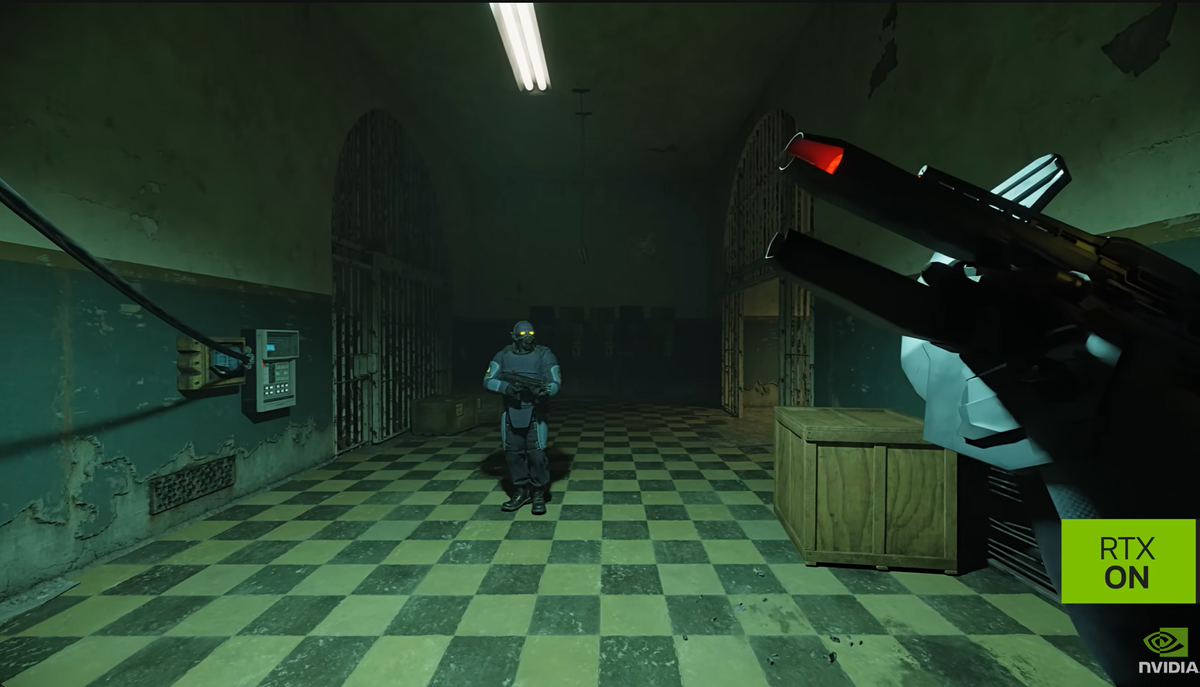
We already commented after Gamescom 2024 that the Half-Life 2 RTX: An RTX Remix Project looked like it was shaping up to be one of the best retro game remasters we’ve seen. Over 100 contributors are working on the project. And now Nvidia’s given us another glimpse in a video that pays tribute to the original game.

A Tribute to the Original Game

Orbifold Studios is making use of Nvidia’s RTX Remix generative AI abilities to update the game for RTX more quickly than could have been possible before. The latest video has us even more excited. showing a game that looks set to recreate the ideal memory of half-life 2 on cutting edge tech.

What’s New in Half-Life 2 RTX?

The Half-Life 2 20th Anniversary Tribute Video shows developers including project lead Wormslayer talk about what made the original Half-Life 2 so special, highlighting the impact that the game had on them at the time and praising the groundbreaking pointing emotional range of the characters.

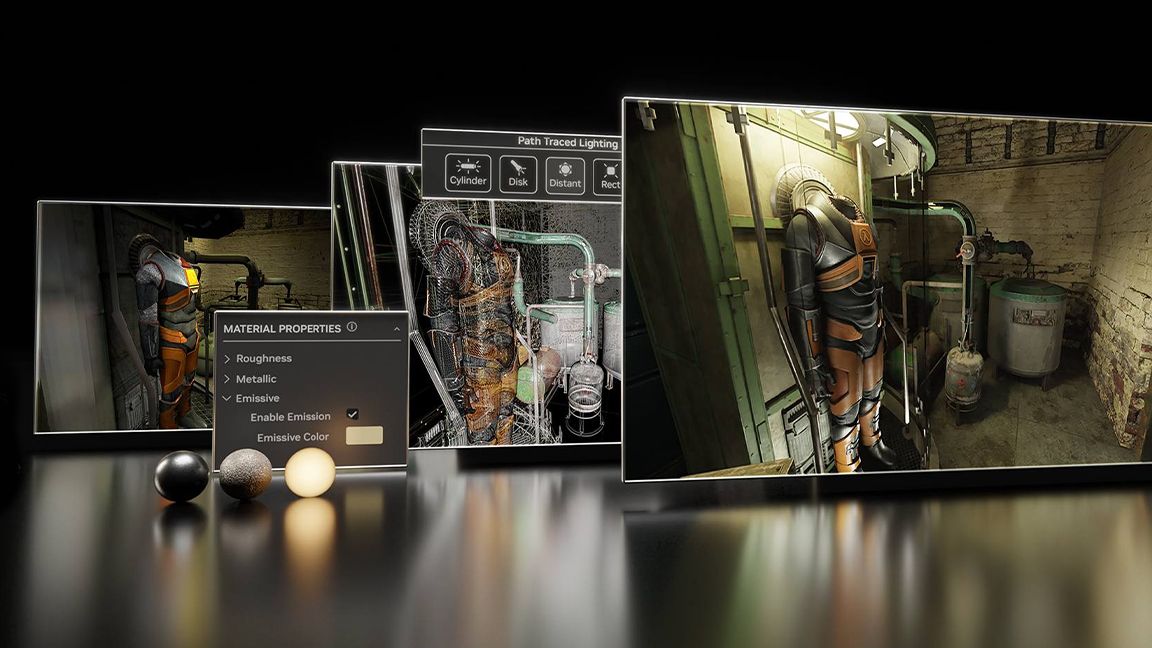
Wormslayer says the team wanted to “recapture that sense of awe that we all had 20 years ago playing it for the first time” while overcoming the technical limitations imposed by the original game engine back in 2004. Using the RTX Remix modding platform, the developers have added:

  • Self-shadowing 3D details
  • Physically based rendering material to give metal realistic reflections
  • Volumetric fog with cool lighting and shadows
  • Ray-traced reflections and refractions on water and glass
  • Hanging lights, for example, now have their own physically accurate light source attached to them
Watch the Tribute Video

Watch the Half-Life 2 RTX | Half-Life 2 20th Anniversary Tribute Video on YouTube:

Half-Life 2 RTX | Half-Life 2 20th Anniversary Tribute Video – YouTube
Wishlist Half-Life 2 RTX on Steam

You can Wishlist Half-Life 2 RTX on Steam. In the meantime, here are the best prices on the best games consoles.

Conclusion

The Half-Life 2 RTX project is shaping up to be a nostalgic trip with cutting-edge technology. With the help of Nvidia’s RTX Remix, the developers are able to recreate the ideal memory of Half-Life 2 on modern tech. We can’t wait to see the final result.

FAQs

Q: What is the Half-Life 2 RTX project?
A: The Half-Life 2 RTX project is a retro game remaster of Half-Life 2 using Nvidia’s RTX Remix generative AI abilities.

Q: Who is working on the project?
A: Over 100 contributors are working on the project, including project lead Wormslayer.

Q: What new features will be added to Half-Life 2 RTX?
A: The developers will add self-shadowing 3D details, physically based rendering material, volumetric fog, ray-traced reflections and refractions, and more.

Q: Can I watch the tribute video?
A: Yes, you can watch the Half-Life 2 RTX | Half-Life 2 20th Anniversary Tribute Video on YouTube.

Robot Motion Planning Optimization Framework

MIT Researchers Develop Algorithm to Help Robots Navigate Complex Environments

It isn’t easy for a robot to find its way out of a maze. Picture the machines trying to traverse a kid’s playroom to reach the kitchen, with miscellaneous toys scattered across the floor and furniture blocking some potential paths. This messy labyrinth requires the robot to calculate the most optimal journey to its destination, without crashing into any obstacles. What is the bot to do?

Introducing the Graphs of Convex Sets (GCS) Trajectory Optimization Algorithm

MIT Computer Science and Artificial Intelligence Laboratory (CSAIL) researchers have developed the “Graphs of Convex Sets (GCS) Trajectory Optimization” algorithm, a scalable, collision-free motion planning system for robotic navigational needs. The approach marries graph search (a method for finding discrete paths in a network) and convex optimization (an efficient method for optimizing continuous variables so that a given cost is minimized), and can quickly find paths through maze-like environments while simultaneously optimizing the trajectory of the robot.

Key Features of the Algorithm

The CSAIL-led project consistently finds shorter paths in less time than comparable planners, showing GCS’ capability to efficiently plan in complex environments. The algorithm can map out collision-free trajectories in as many as 14 dimensions (and potentially more), with the aim of improving how machines work in tandem in warehouses, libraries, and households.

Real-World Applications

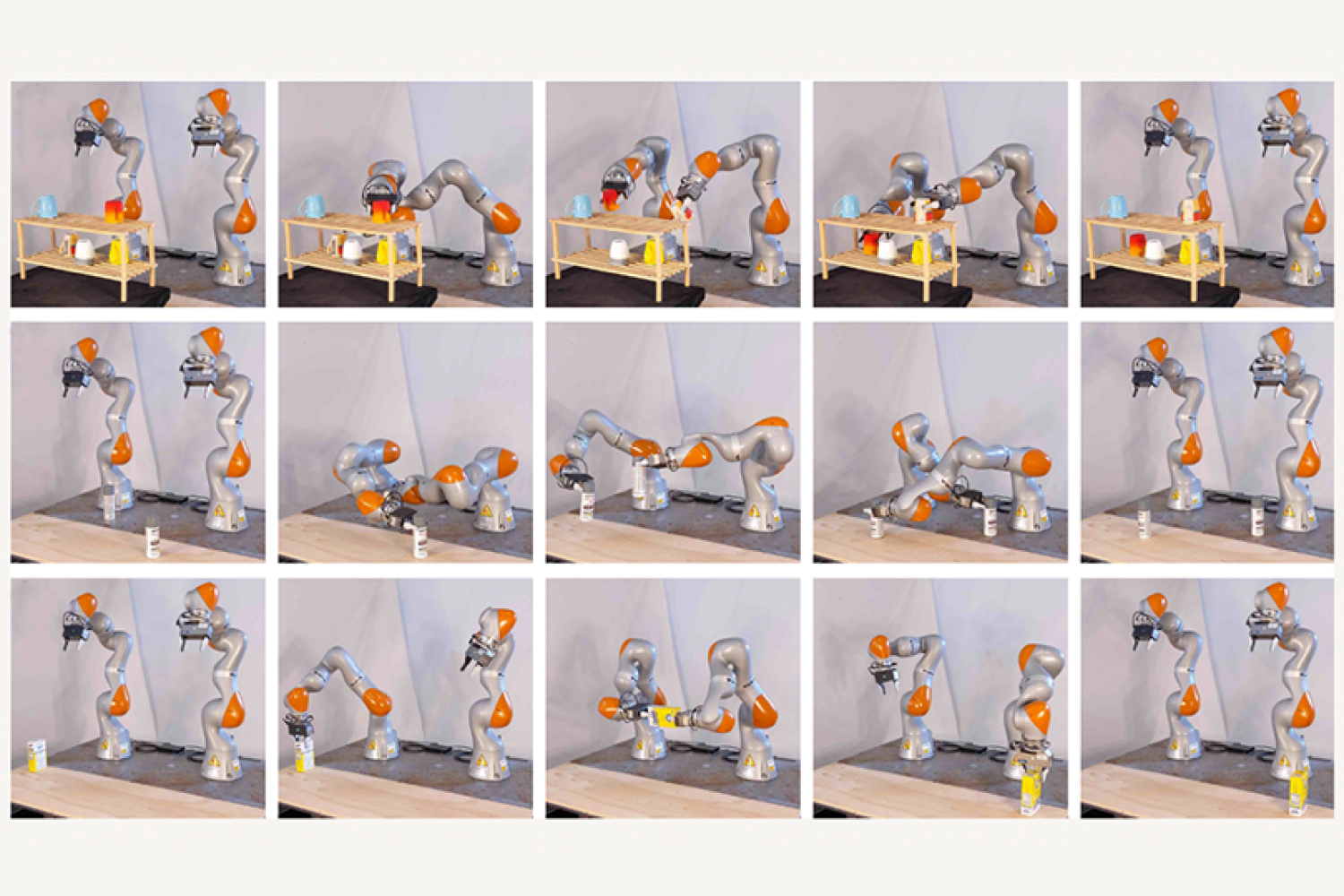
The success of the algorithm was demonstrated in real-world tests, where two robotic arms holding a mug navigated around a shelf while optimizing for the shortest time and path. The duo’s synchronized motion resembled a partner dance routine, swaying around the bookcase’s edges without dropping objects. In subsequent setups, the researchers removed the shelves, and the robots swapped the positions of spray paints and handed each other a sugar box.

Conclusion

The GCS algorithm has the potential to dramatically enhance the speed and efficiency of robot motions and their ability to adapt to novel environments. The team is exploring applications of GCS trajectory optimization to robot task and motion planning, and is also looking into more involved problems where robots have to make contact with their environment, such as pushing or sliding objects out of the way.

FAQs

Q: What is the Graphs of Convex Sets (GCS) Trajectory Optimization algorithm?
A: The GCS algorithm is a scalable, collision-free motion planning system for robotic navigational needs, combining graph search and convex optimization to find paths through maze-like environments while optimizing the trajectory of the robot.

Q: What are the key features of the algorithm?
A: The algorithm consistently finds shorter paths in less time than comparable planners, and can map out collision-free trajectories in as many as 14 dimensions (and potentially more).

Q: What are the potential applications of the algorithm?
A: The algorithm has the potential to improve how machines work in tandem in warehouses, libraries, and households, and could be used in manufacturing, where two robotic arms working in tandem could bring down an item from a shelf.

Q: What is the future direction of the research?
A: The team is exploring applications of GCS trajectory optimization to robot task and motion planning, and is also looking into more involved problems where robots have to make contact with their environment, such as pushing or sliding objects out of the way.

Here are three title options: 1. “Unlocking Creative Potential” 2. “Nvidia App Boosts Artistic Output” 3. “Creative Flow Unleashed”

0

The new Nvidia app is a must-have for PC gamers and creators alike, especially those involved in 3D visualization, modding games, and using AI image generators. According to Nvidia, the app optimizes games and applications, captures your favorite moments with recording tools, and enables creatives to discover the latest Nvidia tools and software.

01. Unlock AI-powered creativity

Not only does the Nvidia app keep all your drivers up-to-date but it also provides access to AI creator tools such as Broadcast and RTX Remix. These apps supercharge creativity by directly utilizing the AI technology on your GPU.

If you find yourself regularly live streaming or video conferencing, then you’ll love Nvidia Broadcast’s features. Not only will it replace background noise so you don’t have to find a quiet location but it’ll also replace your background with anything you want. And if you’re concerned about camera tracking during recording, Broadcast has you covered for that too.

Game modders will be blown away by RTX Remix, which provides an intuitive interface for bringing game mods to life. It’s open-source and powered by Nvidia Omniverse, which delivers unmatched potential. Mods can benefit from full ray tracing and DLSS 3.5 with Ray Reconstruction. Your mods will look better than ever.

02. Get AI-enhanced game visuals

Filters have long been a part of cameras and camera apps. They enhance visuals and improve the dynamic range of any game you’re playing. What is possible with cameras is now possible with games.

With Nvidia Freestyle, gamers can apply powerful new AI filters like RTX Dynamic Vibrance and RTX HDR. Everything is filtered in real-time on your GPU and at the driver level so compatibility is never an issue.

03. Capture your games like never before

It isn’t always possible to know ahead of time when you are going to want to record gameplay. It’s also unlikely that you’ll want to record the entire length of a game just on the chance you may have something worthy of capturing. Nvidia ShadowPlay has been designed specifically to overcome this dilemma.

The Nvidia ShadowPlay tool features DVR-style Instant Replay, which enables users to instantly save the last 30 seconds of gameplay. This is an incredibly helpful tool that means you’ll never miss a moment.

Additionally, users can manually record at up to 8K HDR at 30fps or 4K HDR at 120fps with minimal impact on performance. Gamers will also love Nvidia Highlights, which automatically capture key moments, clutch kills, and match-winning plays so you can focus on gaming.

Conclusion

The Nvidia app is a powerful tool that offers a range of features that can enhance the gaming and creative experience. From AI-powered creativity tools to AI-enhanced game visuals and game capture features, the app has something for everyone.

FAQs

Q: Do I need an RTX GPU to use the Nvidia app?
A: Yes, you need an RTX GPU to take advantage of all the new tools the Nvidia app has to offer.

Q: Can I use the Nvidia app on my laptop?
A: Yes, the Nvidia app is compatible with laptops that have an RTX GPU.

Q: How do I get the Nvidia app?
A: You can download the Nvidia app from the Nvidia website.

Q: Is the Nvidia app free?
A: Yes, the Nvidia app is free to download and use.

MIT engineers design a robotic replica of the heart’s right chamber | MIT News

0

MIT engineers have developed a robotic replica of the heart’s right ventricle, which mimics the beating and blood-pumping action of live hearts.

The robo-ventricle combines real heart tissue with synthetic, balloon-like artificial muscles that enable scientists to control the ventricle’s contractions while observing how its natural valves and other intricate structures function.

The artificial ventricle can be tuned to mimic healthy and diseased states. The team manipulated the model to simulate conditions of right ventricular dysfunction, including pulmonary hypertension and myocardial infarction. They also used the model to test cardiac devices. For instance, the team implanted a mechanical valve to repair a natural malfunctioning valve, then observed how the ventricle’s pumping changed in response.

They say the new robotic right ventricle, or RRV, can be used as a realistic platform to study right ventricle disorders and test devices and therapies aimed at treating those disorders.

“The right ventricle is particularly susceptible to dysfunction in intensive care unit settings, especially in patients on mechanical ventilation,” says Manisha Singh, a postdoc at MIT’s Institute for Medical Engineering and Science (IMES). “The RRV simulator can be used in the future to study the effects of mechanical ventilation on the right ventricle and to develop strategies to prevent right heart failure in these vulnerable patients.”

Singh and her colleagues report details of the new design in an open-access paper appearing today in Nature Cardiovascular Research. Her co-authors include Associate Professor Ellen Roche, who is a core member of IMES and the associate head for research in the Department of Mechanical Engineering at MIT; along with Jean Bonnemain, Caglar Ozturk, Clara Park, Diego Quevedo-Moreno, Meagan Rowlett, and Yiling Fan of MIT; Brian Ayers of Massachusetts General Hospital; Christopher Nguyen of Cleveland Clinic; and Mossab Saeed of Boston Children’s Hospital.

A ballet of beats

The right ventricle is one of the heart’s four chambers, along with the left ventricle and the left and right atria. Of the four chambers, the left ventricle is the heavy lifter, as its thick, cone-shaped musculature is built for pumping blood through the entire body. The right ventricle, Roche says, is a “ballerina” in comparison, as it handles a lighter though no-less-crucial load.

“The right ventricle pumps deoxygenated blood to the lungs, so it doesn’t have to pump as hard,” Roche notes. “It’s a thinner muscle, with more complex architecture and motion.”

This anatomical complexity has made it difficult for clinicians to accurately observe and assess right ventricle function in patients with heart disease.

“Conventional tools often fail to capture the intricate mechanics and dynamics of the right ventricle, leading to potential misdiagnoses and inadequate treatment strategies,” Singh says.

To improve understanding of the lesser-known chamber and speed the development of cardiac devices to treat its dysfunction, the team designed a realistic, functional model of the right ventricle that both captures its anatomical intricacies and reproduces its pumping function.  

The model includes real heart tissue, which the team chose to incorporate because it retains natural structures that are too complex to reproduce synthetically.

“There are thin, tiny chordae and valve leaflets with different material properties that are all moving in concert with the ventricle’s muscle. Trying to cast or print these very delicate structures is quite challenging,” Roche explains.

A heart’s shelf-life

In the new study, the team reports explanting a pig’s right ventricle, which they treated to carefully preserve its internal structures. They then fit a silicone wrapping around it, which acted as a soft, synthetic myocardium, or muscular lining. Within this lining, the team embedded several long, balloon-like tubes, which encircled the real heart tissue, in positions that the team determined through computational modeling to be optimal for reproducing the ventricle’s contractions. The researchers connected each tube to a control system, which they then set to inflate and deflate each tube at rates that mimicked the heart’s real rhythm and motion.

To test its pumping ability, the team infused the model with a liquid similar in viscosity to blood. This particular liquid was also transparent, allowing the engineers to observe with an internal camera how internal valves and structures responded as the ventricle pumped liquid through.

They found that the artificial ventricle’s pumping power and the function of its internal structures were similar to what they previously observed in live, healthy animals, demonstrating that the model can realistically simulate the right ventricle’s action and anatomy. The researchers could also tune the frequency and power of the pumping tubes to mimic various cardiac conditions, such as irregular heartbeats, muscle weakening, and hypertension.

“We’re reanimating the heart, in some sense, and in a way that we can study and potentially treat its dysfunction,” Roche says.

To show that the artificial ventricle can be used to test cardiac devices, the team surgically implanted ring-like medical devices of various sizes to repair the chamber’s tricuspid valve — a leafy, one-way valve that lets blood into the right ventricle. When this valve is leaky, or physically compromised, it can cause right heart failure or atrial fibrillation, and leads to symptoms such as reduced exercise capacity, swelling of the legs and abdomen, and liver enlargement.

The researchers surgically manipulated the robo-ventricle’s valve to simulate this condition, then either replaced it by implanting a mechanical valve or repaired it using ring-like devices of different sizes. They observed which device improved the ventricle’s fluid flow as it continued to pump.

“With its ability to accurately replicate tricuspid valve dysfunction, the RRV serves as an ideal training ground for surgeons and interventional cardiologists,” Singh says. “They can practice new surgical techniques for repairing or replacing the tricuspid valve on our model before performing them on actual patients.”

Currently, the RRV can simulate realistic function over a few months. The team is working to extend that performance and enable the model to run continuously for longer stretches. They are also working with designers of implantable devices to test their prototypes on the artificial ventricle and possibly speed their path to patients. And looking far in the future, Roche plans to pair the RRV with a similar artificial, functional model of the left ventricle, which the group is currently fine-tuning.

“We envision pairing this with the left ventricle to make a fully tunable, artificial heart, that could potentially function in people,” Roche says. “We’re quite a while off, but that’s the overarching vision.”

This research was supported, in part, by the National Science Foundation.

NVIDIA Tops Forbes ‘America’s Best Companies 2025’ List

0

NVIDIA Ranked No. 1 on Forbes’ America’s Best Companies List

NVIDIA has been recognized as the top company on Forbes magazine’s new list of America’s Best Companies, based on more than 60 measures in nearly a dozen categories that cover financial performance, customer and employee satisfaction, sustainability, remote work policies, and more.

Employee Satisfaction a Key Factor

Forbes stated that NVIDIA thrived in numerous areas, particularly employee satisfaction, earning high ratings in career opportunities, company benefits, and culture. The company has created systemic opportunities to listen to its staff, including quarterly surveys, CEO Q&As, and a virtual suggestion box, and then takes action on concerns ranging from benefits to cafe snacks.

Free Days and Employee Well-being

NVIDIA has also championed Free Days, two days each quarter where the entire company closes. “It allows us to take a break as a company,” said Beau Davidson, vice president of employee experience at NVIDIA. The company provides counselors onsite and a careers week that provides programs and training for workers to pursue internal job opportunities.

Low Employee Turnover Rate

NVIDIA enjoys a low rate of employee turnover, widely viewed as a sign of employee happiness, according to People Data Labs, Forbes’ data provider on workforce stability.

Conclusion

NVIDIA’s ranking as the top company on Forbes’ America’s Best Companies list is a testament to its commitment to its employees and its focus on creating a positive work environment. The company’s innovative approach to employee satisfaction and well-being has paid off, resulting in a low employee turnover rate and a high level of job satisfaction.

FAQs

Q: What are the criteria for Forbes’ America’s Best Companies list?
A: The list is based on more than 60 measures in nearly a dozen categories that cover financial performance, customer and employee satisfaction, sustainability, remote work policies, and more.

Q: What sets NVIDIA apart from other companies on the list?
A: NVIDIA’s focus on employee satisfaction and well-being, including its innovative approach to listening to its staff and taking action on concerns, sets it apart from other companies on the list.

Q: How does NVIDIA’s employee turnover rate compare to other companies?
A: NVIDIA’s employee turnover rate is low, according to People Data Labs, Forbes’ data provider on workforce stability.

Q: How can I learn more about NVIDIA’s employee experience and job opportunities?
A: You can visit NVIDIA’s Careers page and learn more about NVIDIA Life, the company’s approach to employee experience and well-being.

AI Policies Are Already Obsolete

The End of AI Policies?

For the past two years, a lot of us have written course, program, and university policies about generative artificial intelligence. Maybe you prohibited AI in your first-year composition course. Or perhaps your computer science program has a friendly disposition. And your campus information security and academic integrity offices might have their own guidelines.

But Does It Matter?

Our argument is that the integration of AI technology into existing platforms has rendered these frameworks obsolete.

A World of Jagged Integration

We all knew this landscape was going to change. Some of us have been writing and speaking about “the switch,” wherein Gemini and Copilot are embedded in all the versions of the Google and Microsoft suites. A world where when you open up any new document, you will be prompted with “What are we working on today?”

When AI is Everywhere

This world is here, sort of, but for the time being, we are in a moment of jagged integration. A year ago, Ethan Mollick started referring to the current AI models as a “jagged frontier,” with models being better suited to some tasks while other capabilities remained out of reach. We are intentionally borrowing that language to refer to this moment of jagged integration where the switch has not been flipped, but integration surrounds us in ways it was difficult to anticipate and impossible to build traditional guidance for.

Reframing the Conversation

Nearly every policy we have seen, reviewed, or heard about imagines a world where a student opens up a browser window, navigates to ChatGPT or Gemini, and initiates a chat. Our own suggested syllabus policies at California State University, Chico, policies we helped to draft, conceptualize this world with guidance like, “You will be informed as to when, where, and how these tools are permitted to be used, along with guidance for attribution.” Even the University of Pennsylvania guidelines, which have been some of our favorites from the start, have language like “AI-generated contributions should be properly cited like any other reference material”—language that assumes the tools are something you intentionally use.

But What About Unintentional Use?

That is how AI worked for about a year, but not in an age of jagged integration. Consider, for example, AI’s increasing integration in the following domains:

Research

When we open up some versions of Adobe, there is an embedded “AI assistant” in the upper right-hand corner, which is ready to help you understand and work with the document. Open a PDF citation and reference application, such as Papers, and you are now greeted with an AI assistant ready to help you understand and summarize your academic papers. A student who reads an article you uploaded, but who cannot remember a key point, uses the AI assistant to summarize or remind them where they read something.

Development

The new iPhone was purpose-built for the new Apple Intelligence, which will permeate every aspect of the Apple operating system and text input field and often work in ways that are not visible to the user. Apple Intelligence will help sort notes and ideas. According to CNET, “The idea is that Apple Intelligence is built into your iPhone, iPad, and Mac to help you write, get things done, and express yourself.”

Production

Have you noticed the autocomplete features in Google Docs and Word have gotten better in the last 18 months? It is because they are powered by improved machine learning that is AI adjacent. Any content production we do includes autocomplete features.

Beyond Policy

We don’t mean to be flippant; these are incredibly difficult questions that undermine the policy foundations we were just starting to build. Instead of reframing policies, which will likely have to be rewritten again and again, we are urging institutions and faculty to take a different approach.

A Framework for Understanding

We propose replacing AI policies, especially syllabus policies, with a framework or a disposition. The most seamless approach would be to acknowledge that AI is omnipresent in our lives in knowledge production and that we are often engaging with these systems whether we want to or not.

Conclusion

There continues to be a mismatch between the pace of technological change and the relatively slow rate of university adaptation. Early policy creation followed the same frameworks and processes we have used for centuries—processes that have served us well. But what we are living through at the moment cannot be solved with Academic Senate resolutions or even the work of relatively agile institutions.

FAQs

Q: What is jagged integration?
A: Jagged integration refers to the moment when AI technology is integrated into existing platforms in ways that are difficult to anticipate and impossible to build traditional guidance for.

Q: Why do AI policies need to be rewritten?
A: AI policies need to be rewritten because the integration of AI technology into existing platforms has rendered these frameworks obsolete.

Q: Can we still use traditional syllabus policies?
A: No, traditional syllabus policies are no longer relevant in an age of jagged integration. Instead, we need to think about AI as an omnipresent technology that is part of our daily lives.

Q: What is the future of AI policies?
A: The future of AI policies is to move beyond policy and adopt a framework or disposition that acknowledges AI as an integral part of our lives and work.

Q: What should we do instead of policy?
A: Instead of policy, we should engage in ongoing conversations with students and colleagues about AI integration, acknowledging its omnipresence and encouraging responsible use.

Q: Is it still possible to encourage students to work independently of AI?
A: Yes, it is still possible to encourage students to work independently of AI, but this will require framing the conversation in a way that acknowledges AI as an integral part of our lives and work.

Q: What about Google NotebookLM?
A: Google NotebookLM is a remarkable platform that allows the user to upload a large volume of data and then the system generates summaries in multiple formats and answers questions. However, it is not designed to produce full essays; instead, it generates what we would think of as study materials.

Q: Is AI becoming too integrated into our lives?
A: Yes, AI is becoming too integrated into our lives, making it difficult to separate what we do with AI from what we do without it.

Q: What can institutions do to adapt to these changes?
A: Institutions can adapt to these changes by acknowledging the omnipresence of AI in knowledge production and engaging in ongoing conversations with students and colleagues about AI integration.

Biggest Writers Rely on AI Writing Tools

0

Substack and the Use of AI in Writing

Substack, a platform that allows writers to create and publish newsletters, does not have an official policy governing the use of AI. However, several writers on the platform have spoken out about their use of AI tools to assist with their writing.

Polishing Prose with AI

Several of the Substack authors WIRED spoke to emphasized that they use AI to polish their prose rather than to generate entire posts whole cloth. David Skilling, a sports agency CEO who runs the popular soccer newsletter Original Football (over 630,000 subscribers), told WIRED he sees AI as a substitute editor. “I proudly use modern tools for productivity in my businesses,” says Skilling. “AI-detection tools may detect the use of AI, but there’s a huge difference between AI-generated and AI-assisted.”

Assistive Medium

Subham Panda, one of the writers of Spotlight by Xartup (over 668,000 subscribers), which covers news about startups around the world, said that his team uses AI as an “assistive medium to help us curate high-quality content faster.” He stressed that the newsletter primarily relies on AI to create images and to aggregate information and that writers are responsible for the “details and summary” contained in their posts.

Streamlining the Writing Process

Max Avery, a writer for the financial newsletter Strategic Wealth Briefing With Jake Claver (over 549,000 subscribers), says he uses AI writing software like Hemingway Editor Plus to polish his rough drafts. He says the tools help him “get more work done on the content-creation front.”

Customized AI Solutions

Financial entrepreneur Josh Belanger says he similarly uses ChatGPT to streamline the writing process for his newsletter, Belanger Trading (over 350,000 subscribers), and relies on the chatbot Claude to help him copyedit. “I will write out my thoughts, research, things that I want included, and I will plug it in,” he says. Belanger also creates custom GPTs (versions of ChatGPT tailored for specific tasks) to help polish more technical writing that includes specific jargon, which he says reduces the number of hallucinations the chatbot produces. “For publishing in finance or trading, there are a lot of nuances … AI’s not going to know, so I need to prompt it,” he says.

A Comparison to Other Platforms

Compared to some of its competitors, Substack appears to have a relatively low amount of AI-generated writing. For example, two other AI-detection companies recently found that close to 40 percent of content on the blogging platform Medium was generated using artificial intelligence tools. But a large portion of the suspected AI-generated content on Medium had little engagement or readership, while the AI writing on Substack is being published by powerhouse accounts.

Conclusion

While Substack does not have an official policy governing the use of AI, many of its writers are using AI tools to assist with their writing. These tools are being used to polish prose, streamline the writing process, and create customized solutions for specific tasks. As the use of AI in writing continues to evolve, it will be interesting to see how Substack and other platforms respond to the changing landscape.

FAQs

Q: Does Substack have an official policy governing the use of AI?

A: No, Substack does not have an official policy governing the use of AI.

Q: How are Substack writers using AI?

A: Substack writers are using AI tools to polish their prose, streamline the writing process, and create customized solutions for specific tasks.

Q: Is AI-generated content being published on Substack?

A: Yes, AI-generated content is being published on Substack, but it appears to be a relatively low amount compared to other platforms.

Q: How does Substack compare to other platforms in terms of AI-generated content?

A: Compared to other platforms, Substack appears to have a relatively low amount of AI-generated writing. For example, two other AI-detection companies recently found that close to 40 percent of content on the blogging platform Medium was generated using artificial intelligence tools.

Mastering Cosmos: A Beginner’s Guide

0

The Rise of Cosmos: A New Social Media Platform for Creatives

A Breath of Fresh Air in the World of Social Media

With traditional social media becoming oversaturated with fake news, ads, and engagement bait, it’s no surprise that creatives are looking to migrate to new online platforms. One of the most promising rising stars is Cosmos – the "unfiltered, streamlined platform designed to serve artists, designers, and creators."

A Unique User Experience

While there are plenty of social media platforms for creatives, Cosmos boasts the added appeal of sleek UI, user-friendly curation, and an ad-free environment to get inspired. Free from the noise of typical social media, Cosmos is the perfect serene space to curate and connect ideas – an experience that prioritizes "calm and curiosity over distraction."

Key Features

(Image credit: Cosmos)

Cosmos allows you to curate static, video, and written content from online articles, Instagram, Pinterest, and X. These ‘Elements’ get saved into curated clusters which can be labelled for easy mood board-style collections. From there, you can explore similar elements to add to your cluster or explore other users’ connections for more inspiration.

**AI-Powered Search**

With Cosmos’ AI-powered search feature, you can easily find more creative content to inspire your next project, refining by color, phrase, or subject. The video below showcases Cosmos’ sleek design and meditative UI, demonstrating how to use the platform’s key features.

**A Community for Creativity**

With no traditional ‘like’ features, Cosmos cuts the competitiveness of typical social media, building a calm community for creativity to thrive. This Pinterest alternative for creatives is a promising rekindling of social media’s positive uses, and I’m excited to see how it develops.

**Conclusion**

Cosmos is a refreshing change from the usual social media landscape, offering a serene space for creatives to curate and connect ideas. With its sleek UI, user-friendly curation, and ad-free environment, it’s no wonder that creatives are flocking to this new platform.

**Frequently Asked Questions**

Q: What types of content can I curate on Cosmos?
A: You can curate static, video, and written content from online articles, Instagram, Pinterest, and X.

Q: How do I find more creative content on Cosmos?
A: You can use Cosmos’ AI-powered search feature to find more creative content, refining by color, phrase, or subject.

Q: Is Cosmos a free platform?
A: Yes, Cosmos is a free platform with no ads or traditional ‘like’ features.

Q: Can I connect with other users on Cosmos?
A: Yes, you can explore other users’ connections and clusters for more inspiration and collaboration.

Revolutionize Trip Planning with Amazon Bedrock and Amazon Location Service

0

Have You Ever Stumbled Upon a Breathtaking Travel Photo and Instantly Wondered Where It Was and How to Get There?

With 1.3 billion international arrivals in 2023, international travel is poised to exceed pre-pandemic levels and break tourism records in the coming years. Each one of these millions of travelers needs to plan where they’ll stay, what they’ll see, and how they’ll get from place to place. This is where AWS and generative AI can revolutionize the way we plan and prepare for our next adventure.

Amazon Bedrock: The Key to Building Generative AI Applications

Amazon Bedrock is the place to start when building applications that will amaze and inspire your users. Amazon Bedrock is a fully managed service that empowers developers with an uncomplicated solution to build and scale generative AI applications by offering a choice of high-performing foundation models (FMs) from leading companies like AI21 Labs, Anthropic, Cohere, Meta, Stability AI, and Amazon through a single API, along with a broad set of capabilities that you need to build generative AI applications with security, privacy, and responsible AI.

Architecture

The following figure shows the architecture of the solution.

The workflow of the solution uses the following steps.

  1. A user interacts with an AWS Amplify frontend to initiate a trip planning request, either through text or by uploading an image. The user can access and interact with the generated trip itinerary through the frontend application, which includes visualizations on maps powered by Amazon Location Service and Amplify.
  2. If an image is uploaded, it is stored in Amazon Simple Storage Service (Amazon S3), and a custom AWS Lambda function will use a machine learning model deployed on Amazon SageMaker to analyze the image to extract a list of place names and the similarity score of each place name. It will then return the place name with the highest similarity score. The user’s request is sent to AWS API Gateway, which triggers a Lambda function to interact with Amazon Bedrock using Anthropic’s Claude Instant V1 FM to process the user’s request and generate a natural language response of the place location.
  3. If the user interacts using text, it will trigger the Amazon Bedrock FM directly, providing the natural language response of the place location.
  4. Amazon Location Service is integrated to provide precise location (location coordinates) data based on the place name. If the user prompt consists of suggestions such as searching for places of interests (POIs), it will pinpoint these POIs on the map within the chat interface as well.
  5. A Lambda function combines the generative AI response from Amazon Bedrock with the location data from Amazon Location Service to create a personalized and context-aware trip itinerary.
  6. The conversation history of the user is stored in Amazon DynamoDB.

Core Benefits of Amazon Bedrock and Amazon Location Service

Amazon Bedrock provides capabilities to build generative AI applications with security, privacy, and responsible AI practices. Being serverless, it allows secure integration and deployment of generative AI capabilities without managing infrastructure.

Amazon Location Service offers cost-effective, high-quality location-based services. It provides geospatial data based on coordinates, enabling accurate mapping, geofencing, and tracking capabilities for various applications. With a single API across multiple providers, it offers seamless integration, flexibility, and efficient application development with built-in health monitoring and AWS service integration.

Key Features

Other currently available search engines often require multiple customer touch points and actions to gather information; this virtual trip planner streamlines the process into a seamless, intuitive experience. With a few clicks, users can access location coordinates, personalized itineraries, and real-time assistance, eliminating the need for cumbersome navigation across various sites and internet tabs. These features are presented in a web UI that was designed as a one-stop solution for our users.

Conclusion

Harnessing the power of generative AI enables this web solution to interpret user queries and dynamically generate personalized travel itineraries. This application offers a user-friendly experience, where users can interact with the system through a chat-based interface providing relevant responses based on context. This application serves as a transformative tool that seamlessly guides users to discover more information about locations and explore additional points of interest. To get started on building your own innovative solutions, explore Amazon Bedrock now and start your journey today.

About the Authors

Yao Cong (YC) Yeo is a Solutions Architect at Amazon Web Services, empowering Singapore’s ISVs and SMBs in their cloud transformation journeys, guiding customers to optimize workloads and maximize their AWS cloud potential.

Loke Jun Kai is an AI/ML Specialist Solutions Architect in AWS. He works on Go-To-Market motions and Strategic Opportunities in the ASEAN Region.

Abhi Fabhian is a Solutions Architect at Amazon Web Services based in Indonesia, providing expert technical guidance on cloud technologies to clients across various sectors in Indonesia.

Tung Cao is a Solutions Architect at Amazon Web Services based in Vietnam, covering Vietnam’s SMB and ISVs on their journey to the cloud, helping them optimize and innovate their business processes.

Siraphop (Fufu) Thaisangsa-nga is a Solutions Architect at Amazon Web Services based in Thailand, dedicated to guiding local businesses through their cloud transformation journeys.

FAQs

Q: What is Amazon Bedrock?
A: Amazon Bedrock is a fully managed service that empowers developers with an uncomplicated solution to build and scale generative AI applications by offering a choice of high-performing foundation models (FMs) from leading companies like AI21 Labs, Anthropic, Cohere, Meta, Stability AI, and Amazon through a single API.

Q: What is Amazon Location Service?
A: Amazon Location Service offers cost-effective, high-quality location-based services. It provides geospatial data based on coordinates, enabling accurate mapping, geofencing, and tracking capabilities for various applications.

Q: How does the virtual trip planner work?
A: The virtual trip planner uses a chat-based interface to interact with users, providing relevant responses based on context. It combines the generative AI response from Amazon Bedrock with the location data from Amazon Location Service to create a personalized and context-aware trip itinerary.

Q: What are the key features of the virtual trip planner?
A: The virtual trip planner offers a user-friendly experience, where users can access location coordinates, personalized itineraries, and real-time assistance, eliminating the need for cumbersome navigation across various sites and internet tabs.

MIT Generative AI Week fosters dialogue across disciplines | MIT News

0

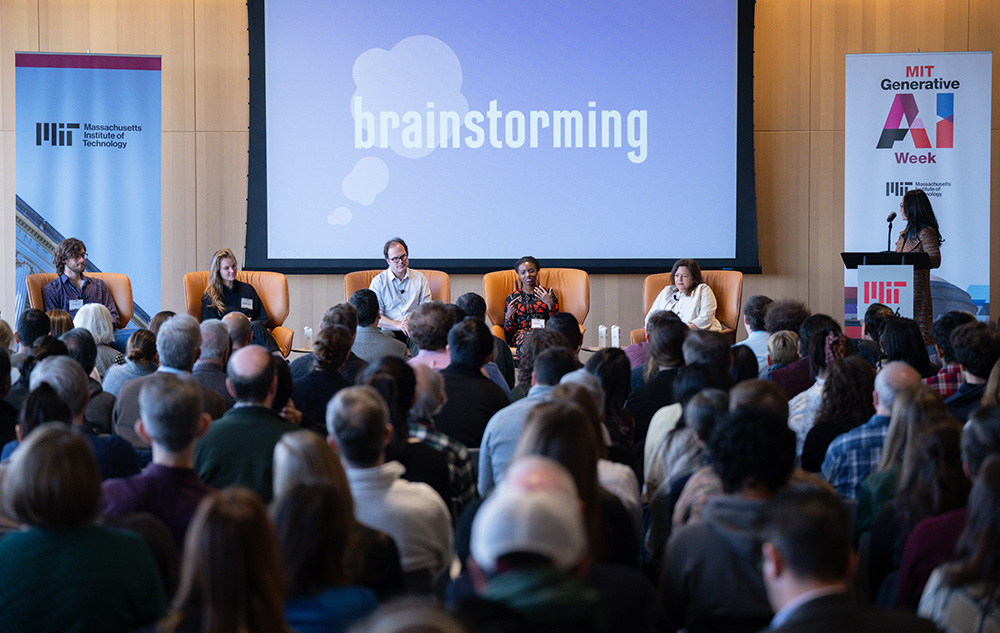
In late November, faculty, staff, and students from across MIT participated in MIT Generative AI Week. The programming included a flagship full-day symposium as well as four subject-specific symposia, all aimed at fostering a dialogue about the opportunities and potential applications of generative artificial intelligence technologies across a diverse range of disciplines.

“These events are one expression of our conviction that MIT has a special responsibility to help society come to grips with the tectonic forces of generative AI — to understand its potential, contain its risks, and harness its power for good,” said MIT President Sally Kornbluth, in an email announcing the week of programming earlier this fall.

Activities during MIT Generative AI Week, many of which are available to watch on YouTube, included:

MIT Generative AI: Shaping the Future Symposium

The week kicked off with a flagship symposium, MIT Generative AI: Shaping the Future. The full-day symposium featured welcoming remarks from Kornbluth as well as two keynote speakers. The morning keynote speaker, Professor Emeritus Rodney Brooks, iRobot co-founder, former director of the Computer Science and Artificial Intelligence Laboratory (CSAIL), and Robust.AI founder and CTO, spoke about how robotics and generative AI intersect. The afternoon keynote speaker, renowned media artist and director Refik Anadol, discussed the interplay between generative AI and art, including approaches toward data sculpting and digital architecture in our physical world.

The symposium included panel and roundtable discussions on topics such as generative AI foundations; science fiction; generative AI applications; and generative AI, ethics, and society. The event concluded with a performance by saxophonist and composer Paul Winter. It was chaired by Daniela Rus, the Andrew (1956) and Erna Viterbi Professor of Electrical Engineering and Computer Science (EECS) and director of CSAIL, and co-chaired by Cynthia Breazeal, MIT dean for digital learning and professor of media arts and sciences, and Sertac Karaman, professor of aeronautics and astronautics and director of the Laboratory for Information and Decision Systems.

“Another Body” Screening

The first day of MIT Generative AI Week concluded with a special screening of the documentary “Another Body.” The SxSW Special Jury Award-winning documentary follows a college student’s search for answers and justice after she discovers deepfake pornography of herself circulating online.

After the viewing, there was a panel discussion including the film’s editor, Rabab Haj Yahya; David Goldston, director of the MIT Washington Office; Catherine D’Ignazio, associate professor of urban science and planning and director of the Data + Feminism Lab; and MIT junior Ananda Santos Figueiredo.

Generative AI + Education Symposium

Drawing from the extended MIT community of faculty, research staff, students, and colleagues, the Generative AI + Education Symposium offered thought-provoking keynotes, panel conversations, and live demonstrations of how generative AI is transforming learning experience and teaching practice from K-12, post-secondary education, and workforce upskilling. The symposium included a fireside chat entitled, “Will Generative AI Transform Learning and Education?” as well as sessions on the learner experience, teaching practice, and big ideas from MIT.

This half-day symposium concluded with an innovation showcase where attendees were invited to engage directly with demos of the latest in MIT research and ingenuity. The event was co-chaired by Breazeal and Christopher Capozzola, senior associate dean for open learning and professor of history.

Generative AI + Health Symposium

The Generative AI + Health Symposium highlighted AI research focused on the health of people and the health of the planet. Talks illustrated progress in molecular design and sensing applications to advance human health, as well as work to improve climate-change projections, increase efficiency in mobility, and design new materials. A panel discussion of six researchers from across MIT explored anticipated impacts of AI in these areas.

This half-day symposium was co-chaired by Raffaele Ferrari, the Cecil and Ida Green Professor of Oceanography in the Department of Earth, Atmospheric and Planetary Sciences and director of the Program in Atmospheres, Oceans, and Climate; Polina Golland, the Sunlin and Priscilla Chou Professor in the Department of EECS and a principal investigator at CSAIL; Amy Keating, the Jay A. Stein Professor of Biology, professor of biological engineering, and head of the Department of Biology; and Elsa Olivetti, the Jerry McAfee (1940) Professor in Engineering in the Department of Materials Science and Engineering, associate dean of engineering, and director of the MIT Climate and Sustainability Consortium.

Generative AI + Creativity Symposium

At the Generative AI + Creativity Symposium, faculty experts, researchers, and students across MIT explored questions that peer into the future and imagine a world where generative AI-enhanced systems and techniques improve the human condition. Topics explored included how combined human and AI systems might make more creative and better decisions than either one alone; how lifelong creativity, fostered by a new generation of tools, methods, and experiences, can help society; envisioning, exploring, and implementing a more joyful, artful, meaningful, and equitable future; how to make AI legible and trustworthy; and how to engage an unprecedented combination of diverse stakeholders to inspire and support creative thinking, expression, and computation empowering all people.

The half-day symposium was co-chaired by Dava Newman, the Apollo Program Professor of Astronautics and director of the MIT Media Lab, and John Ochsendorf, the Class of 1942 Professor, professor of architecture and of civil and environmental engineering, and founding director of the MIT Morningside Academy for Design.

Generative AI + Impact on Commerce Symposium

The Generative AI + Impact on Commerce Symposium explored the impact of AI on the practice of management. The event featured a curated set of researchers at MIT; policymakers actively working on legislation to ensure that AI is deployed in a manner that is fair and healthy for the consumer; venture capitalists investing in cutting-edge AI technology; and private equity investors who are looking to use AI tools as a competitive advantage.

This half-day symposium was co-chaired by Vivek Farias, the Patrick J. McGovern (1959) Professor at the MIT Sloan School of Management and Simon Johnson, the Ronald A. Kurtz (1954) Professor of Entrepreneurship at the MIT Sloan School of Management.