Home Blog Page 616

MIT Edgerton Center’s Third Annual Showcase

MIT Student Teams Showcase Innovation and Collaboration

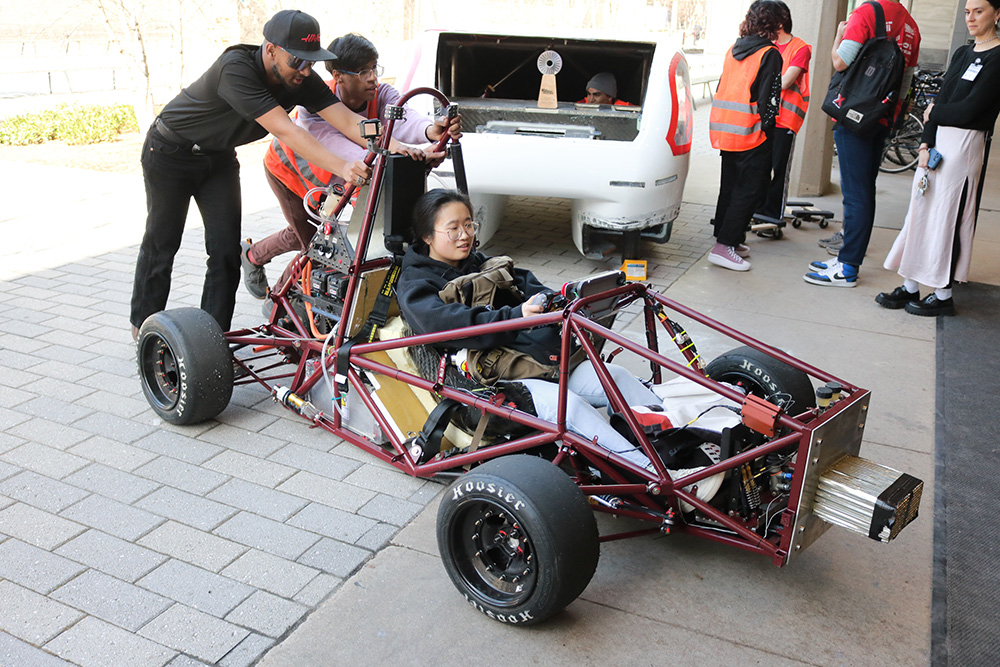
On April 9, a trailer with the words “Born by Fire” emblazoned on the back pulled down MIT’s North Corridor (a.k.a. the Outfinite). Students, clad in orange construction vests, maneuvered their futuristic creation out of the trailer, eliciting a surge of curious bystanders.

The Solar Electric Vehicle Team’s Gemini

The aerodynamic shell is covered by 5 square meters of solar panels. This multi-occupancy solar car, Gemini, designed and built by the Solar Electric Vehicle Team (SEVT), is slated to race in the 2024 American Solar Challenge. Positioned just outside Building 13, Gemini made its inaugural public appearance at this year’s Edgerton Center Student Teams Showcase. The team’s first-place trophy from an earlier competition sat atop, glistening in the sunlight.

MIT Motorsports and Camaraderie

Next, MIT Motorsports arrived with their shiny red electric race car, MY24. SEVT, embodying MIT’s spirit of collaboration, paused their own installation to assist the Motorsports team in transporting MY24 into Lobby 13. Such camaraderie is commonplace among Edgerton teams. MY24 is slated to compete in two upcoming events: the FSAE Hybrid event in Loudon, New Hampshire on May 1, followed by the FSAE Motorsports event in Michigan, later in June.

A Showcase of Innovation and Creativity

At the Third Annual Edgerton Center Showcase, Lobby 13 was abuzz with students, faculty, and visitors drawn in by the passion and excitement of members of 14 Edgerton Center student teams. Team members excitedly unveiled a wide range of technologies, including autonomous waterborne craft, rockets, wind turbines, assistive devices, and hydrogen-powered turbine engines.

Teams and Projects

In one corner, children congregated around the Combat Robotics table, captivated by clips of the team competing on the Discovery channel’s Battlebots series. Nearby, towering rockets almost brushing the ceiling captured the gaze of onlookers. Suddenly, a symphony of electrical crackles filled the air. Visitors quickly discovered the source was not an AV malfunction, but a Tesla coil created by MITERS, where lightning danced to the pitch input using a computer keyboard.

Adjacent to MITERS, students on the Spokes team dished ice cream into a bike-powered blender. A quick ride down the street created milkshakes for many to enjoy. Spokes is an Edgerton team of students who will bike across the country this summer, teaching STEM outreach classes along the way.

The Assistive Technology Club showed an array of innovations poised to revolutionize lives. Their blind assistance team is designing an app that uses machine learning to describe the most relevant features of the environment to visually impaired users. Their adaptive game controller team is designing a one-handed game controller for a user who is paralyzed on one side of her body due to a stroke.

Conclusion

The Edgerton Center Student Teams Showcase is a testament to the innovative spirit and collaboration of MIT students. The event not only showcased the impressive projects of the 14 teams but also served as a forum for idea exchange and collaboration. As Edgerton Center Director and Professor Kim Vandiver notes, participation in an engineering team is great professional preparation, and these leaders are unafraid of hard problems, rapidly rising in project management roles upon graduation.

FAQs

Q: What is the Edgerton Center?

A: The Edgerton Center is a development office at MIT that supports and sponsors student teams in various fields, including engineering, robotics, and technology.

Q: What is the purpose of the Edgerton Center Student Teams Showcase?

A: The purpose of the showcase is to provide a platform for Edgerton Center student teams to showcase their projects and innovations, as well as to foster collaboration and idea exchange among the teams.

Q: What kind of projects are showcased at the event?

A: The event features a wide range of projects, including autonomous waterborne craft, rockets, wind turbines, assistive devices, and hydrogen-powered turbine engines, among others.

Q: Who can participate in the Edgerton Center Student Teams Showcase?

A: The event is open to all Edgerton Center student teams, and participation is encouraged.

Q: What is the Edgerton Center’s role in the development of its student teams?

A: The Edgerton Center provides support and resources to its student teams, including funding, mentorship, and access to facilities and equipment.

Critical Opportunities in AI-Driven Education

How AI in Education Can Help Schools Overcome Resource Limitations and Tackle Pressing Challenges

While schools have a responsibility to introduce AI thoughtfully, they shouldn’t let this overshadow their thinking about AI. The applications of AI in education extend well beyond student use of generative AI chatbots. For example, AI tools can help teachers focus more on teaching and supporting students by automating tedious and time-consuming tasks, such as grading multiple choice quizzes, adapting curriculum and materials to personalize learning, and creating supplementary instructional content.

It may surprise you to learn that AI can also help resource-constrained school teams in other ways, including:

  • Detecting safety threats
  • Identifying student mental health needs
  • Assessing school climate
  • Supporting the whole student

Read on to learn about two revolutionary AI tools that are helping schools overcome resource limitations and tackle some of their most pressing challenges.

How AI in Education Can Help Schools Overcome the Shortage of Mental Health Providers

The shortage of mental and behavioral health professionals is a nationwide issue, and among those hardest hit are K-12 students. School psychologists, who typically provide psychological services to support students’ mental health, are in particularly short supply. Only one state (Utah) meets the recommended student-to-psychologist ratio of 500:1, with the national average sitting at 1,119:1.

While the resources to support students are dwindling, the concerns around student mental health are not. Given the incidence of suicide, cyberbullying, and other threats, ensuring student safety and wellness is a paramount concern. However, with limited resources to address the issue, the traditional methods of identifying and supporting students who are struggling emotionally often fall short.

AI-powered student wellness monitoring helps schools effectively support student safety and wellness with the resources they currently have. Securly Aware uses AI and machine learning technologies to scan students’ online activities for signs of distress, including suicidal ideation, self-harm, depression, grief, cyberbullying, and violence. As it detects risk signals, it alerts school teams so they can respond quickly to critical situations and investigate looming concerns before they get worse.

How AI in Education Can Give Schools the Reliable and Timely Data They Need to Drive Meaningful Improvements

School and district leaders need access to timely and reliable data to move the needle on strategic priorities and school improvement plans. However, gathering and analyzing this data is easier said than done.

K-12 teams can overcome traditional data challenges with AI-powered data collection and analysis. Securly Discern is a revolutionary AI that continually gathers data from students’ online activities. Discern can also analyze this data in any number of ways. From MTSS and SEL screeners, to school climate surveys and safety threat assessments, Discern gives schools access to the real-time insights they need to make data-driven decisions and effectively support student needs.

Conclusion

Generative AI chatbots are stealing a lot of attention, but they’re just one example of how AI can be used in education. By taking on the heavy lifting associated with supporting student safety, wellness, and school improvement initiatives, AI tools like Securly Aware and Securly Discern can help K-12 administrators fill critical gaps and gain the peace of mind that they’re tackling their most pressing issues.

FAQs

Q: How can AI help schools overcome the shortage of mental health providers?
A: AI-powered student wellness monitoring can help schools identify students who are struggling emotionally and alert school teams so they can respond quickly to critical situations.

Q: What are some examples of AI-powered data collection and analysis in education?
A: Securly Discern is a revolutionary AI that continually gathers data from students’ online activities and analyzes it in any number of ways, providing real-time insights to support student needs.

Q: How can AI help schools overcome traditional data challenges?
A: AI-powered data collection and analysis can automate data collection and analysis, eliminate time- and labor-intensive student surveys, and provide immediate insights and actionable data.

Enhancing AI Interactions with 2D and 3D Digital Human Avatars

0

When Interfacing with Generative AI Applications, Users Have Multiple Communication Options

Traditional chatbot or copilot applications have text interfaces where users type in queries and receive text-based responses. For hands-free communication, speech AI technologies like automatic speech recognition (ASR) and text-to-speech (TTS) facilitate verbal interactions, ideal for scenarios like phone-based customer service. Moreover, combining digital avatars with speech capabilities provides a more dynamic interface for users to engage visually with the application. According to Gartner, by 2028, 45% of organizations with more than 500 employees will leverage employee AI avatars to expand the capacity of human capital.

Types of Digital Avatars

Digital avatars can vary widely in style—some use cases benefit from photorealistic 3D or 2D avatars, while other use cases work better with a stylized, or cartoonish avatar.

  • 3D Avatars offer fully immersive experiences, showcasing lifelike movements and photorealism. Developing these avatars requires specialized software and technical expertise, as they involve intricate body animations and high-quality renderings.
  • 2D Avatars are quicker to develop and ideal for web-embedded solutions. They offer a streamlined approach to creating interactive AI, often requiring artists for design and animation but less intensive in terms of technical resources.

How to Add a Talking Digital Avatar to Your Agent Application

In the AI Blueprint for digital humans, a user interacts with an AI agent that leverages NVIDIA ACE technology (Figure 1).


Figure 1. Architecture diagram for the NVIDIA AI Blueprint for digital humans

The audio input from the user is sent to the ACE agent which orchestrates the communication between various NIM microservices. The ACE agent uses the Riva Parakeet NIM to convert the audio to text, which is then processed by a RAG pipeline. The RAG pipeline uses the NVIDIA NeMo Retriever embedding and reranking NIM microservices, and an LLM NIM, to respond with relevant context from stored documents.

Finally, the response is converted back to speech via Riva TTS, animating the digital human using the Audio2Face-3D NIM or Audio2Face-2D NIM.

Considerations When Designing Your AI Agent Application

In global enterprises, communication barriers across languages can slow down operations. AI-powered avatars with multilingual capabilities communicate across languages effortlessly. The digital human AI Blueprint provides conversational AI capabilities that simulate human interactions that accommodate users’ speech styles and languages through Riva ASR, neural machine translation (NMT) along with intelligent interruption and barge-in support.

One of the key benefits of digital human AI agents is their ability to function as “always-on” resources for employees and customers alike. RAG-powered AI agents continuously learn from interactions and improve over time, providing more accurate responses and better user experiences.

For enterprises considering digital human interfaces, choosing the right avatar and rendering option depends on the use case and customization preferences.

  • Use Case: 3D avatars are ideal for highly immersive use cases like in physical stores, kiosks or primarily one-to-one interactions, while 2D avatars are effective for web or mobile conversational AI use cases.
  • Development and Customization Preferences: Teams with 3D and animation expertise can leverage their skillset to create an immersive and ultra-realistic avatar, while teams looking to iterate and customize quickly can benefit from the simplicity of 2D avatars.
  • Scaling Considerations: Scaling is an important consideration when evaluating avatars and corresponding rendering options. Stream throughput, especially for 3D avatars, is highly dependent on the choice and quality of the character asset used, the desired output resolution and the rendering option of choice (Omniverse Renderer or Unreal Engine) can play a critical role in determining per stream compute footprint.

Getting Started with Digital Avatars

For hands-on development with Audio2Face-2D and Unreal Engine NIM microservices, apply for ACE Early Access or dive into the digital human AI Blueprint technical blog to learn how you can add digital human interfaces to personalize chatbot applications.

1Gartner®, Hype Cycle for the Future of Work, 2024 by Tori Paulman, Emily Rose McRae, etc., July 2024
GARTNER is a registered trademark and service mark of Gartner, Inc. and/or its affiliates in the U.S. and internationally and is used herein with permission. All rights reserved.

Conclusion

Digital human AI agents offer a wide range of benefits, including the ability to communicate across languages, provide 24/7 support, and continuously learn and improve over time. By choosing the right avatar and rendering option, enterprises can create a personalized and immersive experience for their users.

FAQs

Q: What are the benefits of using digital human AI agents?
A: Digital human AI agents offer a wide range of benefits, including the ability to communicate across languages, provide 24/7 support, and continuously learn and improve over time.

Q: What are the different types of digital avatars?
A: Digital avatars can vary widely in style, including photorealistic 3D or 2D avatars, as well as stylized or cartoonish avatars.

Q: How do I get started with digital avatars?
A: For hands-on development with Audio2Face-2D and Unreal Engine NIM microservices, apply for ACE Early Access or dive into the digital human AI Blueprint technical blog to learn how you can add digital human interfaces to personalize chatbot applications.

NVIDIA Blackwell Achieves Next-Level MLPerf Training Performance

0

Generative AI applications that use text, computer code, protein chains, summaries, video, and even 3D graphics require data-center-scale accelerated computing to efficiently train the large language models (LLMs) that power them.

Leaps and Bounds With Blackwell

The first Blackwell training submission to the MLCommons Consortium highlights how the architecture is advancing generative AI training performance. For instance, the architecture includes new kernels that make more efficient use of Tensor Cores. Kernels are optimized, purpose-built math operations like matrix-multiplies that are at the heart of many deep learning algorithms.

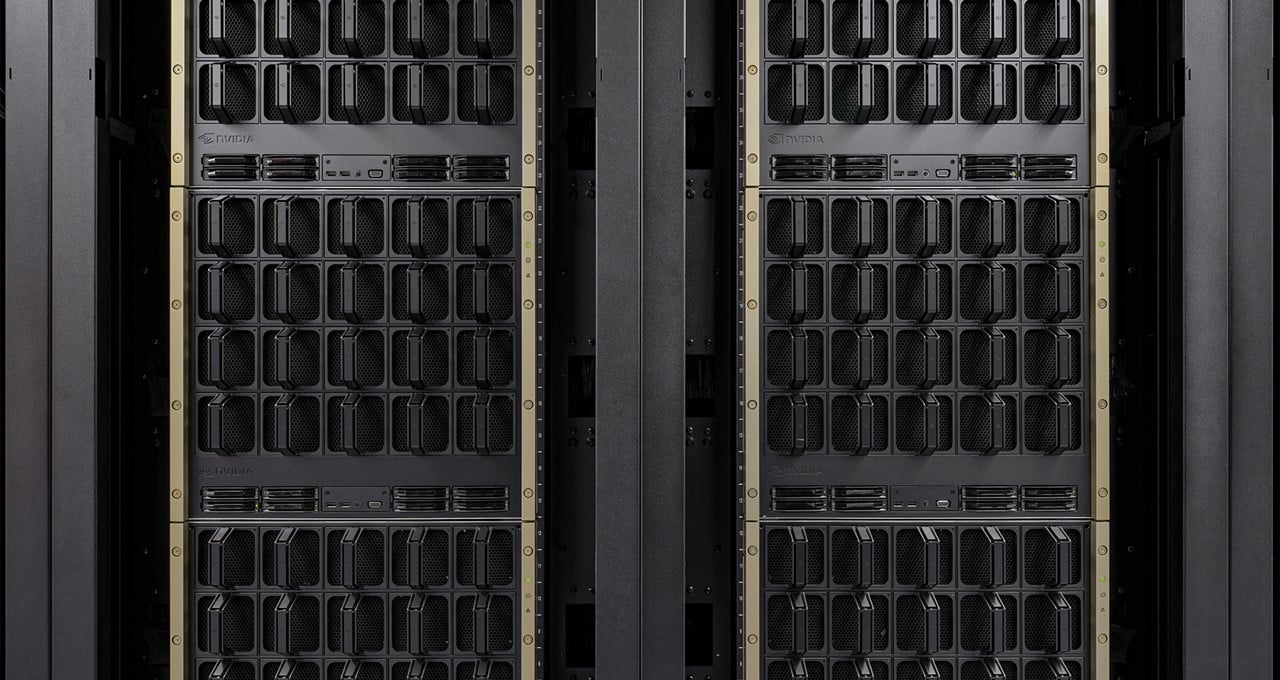
Blackwell’s higher per-GPU compute throughput and significantly larger and faster high-bandwidth memory allows it to run the GPT-3 175B benchmark on fewer GPUs while achieving excellent per-GPU performance. Taking advantage of larger, higher-bandwidth HBM3e memory, just 64 Blackwell GPUs were able to run in the GPT-3 LLM benchmark without compromising per-GPU performance. The same benchmark run using Hopper needed 256 GPUs.

Relentless Optimization

NVIDIA platforms undergo continuous software development, racking up performance and feature improvements in training and inference for a wide variety of frameworks, models, and applications. In this round of MLPerf training submissions, Hopper delivered a 1.3x improvement on GPT-3 175B per-GPU training performance since the introduction of the benchmark.

NVIDIA also submitted large-scale results on the GPT-3 175B benchmark using 11,616 Hopper GPUs connected with NVIDIA NVLink and NVSwitch high-bandwidth GPU-to-GPU communication and NVIDIA Quantum-2 InfiniBand networking. NVIDIA Hopper GPUs have more than tripled scale and performance on the GPT-3 175B benchmark since last year. In addition, on the Llama 2 70B LoRA fine-tuning benchmark, NVIDIA increased performance by 26% using the same number of Hopper GPUs, reflecting continued software enhancements.

Partnering Up

NVIDIA partners, including system makers and cloud service providers like ASUSTek, Azure, Cisco, Dell, Fujitsu, Giga Computing, Lambda Labs, Lenovo, Oracle Cloud, Quanta Cloud Technology, and Supermicro also submitted impressive results to MLPerf in this latest round. A founding member of MLCommons, NVIDIA sees the role of industry-standard benchmarks and benchmarking best practices in AI computing as vital.

Conclusion

The latest MLPerf results demonstrate the impressive performance and capabilities of NVIDIA’s Blackwell and Hopper platforms in training large language models. With continuous software development and optimization, NVIDIA’s platforms are well-positioned to meet the demands of the growing AI ecosystem.

FAQs

Q: What is the Blackwell platform?
A: The Blackwell platform is a new architecture that is advancing generative AI training performance.

Q: What is the GPT-3 175B benchmark?
A: The GPT-3 175B benchmark is a standardized test that measures the performance of large language models.

Q: What is the difference between Blackwell and Hopper platforms?
A: Blackwell has higher per-GPU compute throughput and larger and faster high-bandwidth memory compared to Hopper.

Q: What is the significance of the MLCommons Consortium?
A: The MLCommons Consortium is an industry organization that creates standardized, unbiased, and rigorously peer-reviewed testing for industry participants.

Julie Shah named head of the Department of Aeronautics and Astronautics | MIT News

0

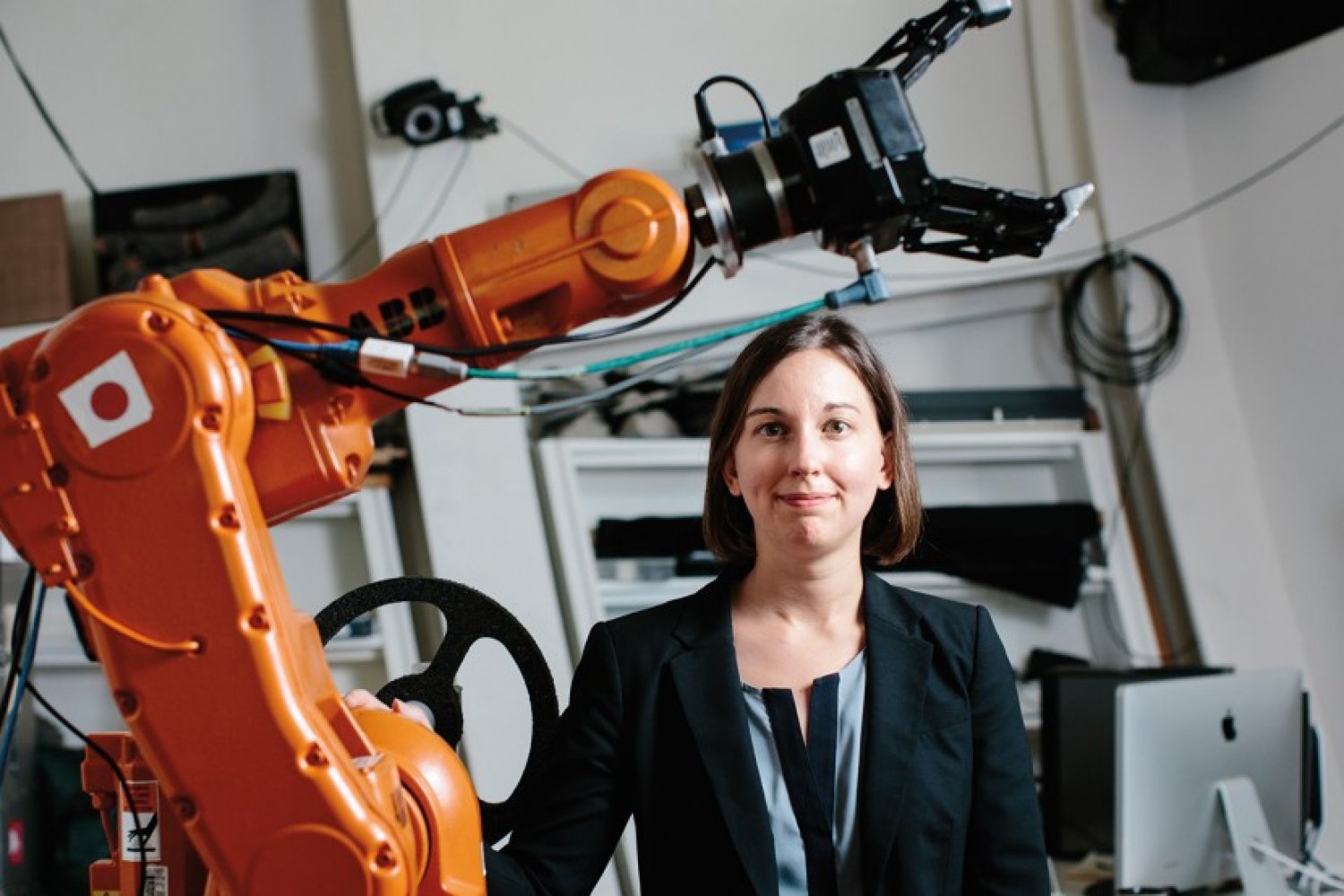
Julie Shah ’04, SM ’06, PhD ’11, the H.N. Slater Professor in Aeronautics and Astronautics, has been named the new head of the Department of Aeronautics and Astronautics (AeroAstro), effective May 1.

“Julie brings an exceptional record of visionary and interdisciplinary leadership to this role. She has made substantial technical contributions in the field of robotics and AI, particularly as it relates to the future of work, and has bridged important gaps in the social, ethical, and economic implications of AI and computing,” says Anantha Chandrakasan, MIT’s chief innovation and strategy officer, dean of the School of Engineering, and the Vannevar Bush Professor of Electrical Engineering and Computer Science.

In addition to her role as a faculty member in AeroAstro, Shah served as associate dean of Social and Ethical Responsibilities of Computing in the MIT Schwarzman College of Computing from 2019 to 2022, helping launch a coordinated curriculum that engages more than 2,000 students a year at the Institute. She currently directs the Interactive Robotics Group in MIT’s Computer Science and Artificial Intelligence Lab (CSAIL), and MIT’s Industrial Performance Center.

Shah and her team at the Interactive Robotics Group conduct research that aims to imagine the future of work by designing collaborative robot teammates that enhance human capability. She is expanding the use of human cognitive models for artificial intelligence and has translated her work to manufacturing assembly lines, health-care applications, transportation, and defense. In 2020, Shah co-authored the popular book “What to Expect When You’re Expecting Robots,” which explores the future of human-robot collaboration.

As an expert on how humans and robots interact in the workforce, Shah was named co-director of the Work of the Future Initiative, a successor group of MIT’s Task Force on the Work of the Future, alongside Ben Armstrong, executive director and research scientist at MIT’s Industrial Performance Center. In March of this year, Shah was named a co-leader of the Working Group on Generative AI and the Work of the Future, alongside Armstrong and Kate Kellogg, the David J. McGrath Jr. Professor of Management and Innovation. The group is examining how generative AI tools can contribute to higher-quality jobs and inclusive access to the latest technologies across sectors.

Shah’s contributions as both a researcher and educator have been recognized with many awards and honors throughout her career. She was named an associate fellow of the American Institute of Aeronautics and Astronautics (AIAA) in 2017, and in 2018 she was the recipient of the IEEE Robotics and Automation Society Academic Early Career Award. Shah was also named a Bisplinghoff Faculty Fellow, was named to MIT Technology Review’s TR35 List, and received an NSF Faculty Early Career Development Award. In 2013, her work on human-robot collaboration was included on MIT Technology Review’s list of 10 Breakthrough Technologies.

In January 2024, she was appointed to the first-ever AIAA Aerospace Artificial Intelligence Advisory Group, which was founded “to advance the appropriate use of AI technology particularly in aeronautics, aerospace R&D, and space.” Shah currently serves as editor-in-chief of Foundations and Trends in Robotics, as an editorial board member of the AIAA Progress Series, and as an executive council member of the Association for the Advancement of Artificial Intelligence.

A dedicated educator, Shah has been recognized for her collaborative and supportive approach as a mentor. She was honored by graduate students as “Committed to Caring” (C2C) in 2019. For the past 10 years, she has served as an advocate, community steward, and mentor for students in her role as head of house of the Sidney Pacific Graduate Community.

Shah received her bachelor’s and master’s degrees in aeronautical and astronautical engineering, and her PhD in autonomous systems, all from MIT. After receiving her doctoral degree, she joined Boeing as a postdoc, before returning to MIT in 2011 as a faculty member.

Shah succeeds Professor Steven Barrett, who has led AeroAstro as both interim department head and then department head since May 2023.

Responsible Access to Demographic Data

Following our review into bias in algorithmic decision-making, the CDEI has been exploring challenges around access to demographic data for detecting and mitigating bias in AI systems, and considering potential solutions to address these challenges.

Today we are publishing our report “Enabling responsible access to demographic data to make AI systems fairer”, which explores the potential of novel approaches to overcome some of these challenges. This work, part of our responsible data access work programme, explores solutions with the potential to assist service providers to responsibly access data on the demographics of their users to assess for potential bias.

The Importance of Addressing Fairness in AI Systems

The use of AI, and broader data-driven systems, is becoming increasingly commonplace. With this, the risks associated with bias in these systems has become a growing concern. Where AI systems produce unfair outcomes for individuals on the basis of these protected characteristics and are used in a context in scope of the Equalities Act 2010 (e.g. the provision of a service), this might result in unlawful discrimination.

The importance of addressing fairness in AI systems has also been recognised in the government’s recent white paper “A pro-innovation approach to AI regulation”. The white paper proposes fairness as one of five potential cross-cutting principles for AI regulation. Fairness encompasses a wide range of issues, one of which is avoiding unfair bias, which can lead to discrimination.

Challenges in Accessing Demographic Data

Many approaches to detecting and mitigating bias require access to demographic data about users, including characteristics that are protected under the Equality Act 2010 – such as age, sex, and race – as well as other socioeconomic attributes.

For example, if an insurer wants to understand the impact of their risk pricing model on different ethnic groups, it needs data about the ethnicity of their customers (and potential customers). However, collection of such data is not common practice in most sectors.

Organisations building or deploying AI systems often struggle to access the demographic data they need. There are a number of reasons for this including:

  • Legal issues (both real and perceived), such as the misconception that collecting demographic data is not permitted under data protection law and the challenge of ensuring data is collected and used only for bias monitoring purposes.
  • Ethical issues, including the belief that service users do not want their data collected for this purpose, and concerns around privacy and surveillance, representation, transparency, and public trust.
  • Organisational barriers, such as the reputational risks associated with revealing organisational biases and inadequate resource and/or expertise.
  • Practical challenges like ensuring data quality and representativeness.
  • Difficulties in mitigating against risks that arise when collecting this data, such as data theft or misuse.

Potential Solutions

Our work focuses on two contrasting sets of promising approaches to help address some of these challenges: data intermediaries and proxies.

In simple terms, for the purposes of this report, a demographic data intermediary can be understood as an entity that facilitates the sharing of demographic data between those who wish to make their own demographic data available and those who are seeking to access and use demographic data they do not have. Intermediaries could help organisations navigate regulatory complexity, better protect user autonomy and privacy, and improve user experience and data governance standards. However, the overall market for data intermediaries in the UK remains nascent, and the absence of intermediaries offering this type of service may reflect the difficulties of being a first mover in this complex area, where demand is unclear and the risks around handling demographic data require careful management.

If gathering demographic data is difficult, another option is to attempt to infer it from other proxy data already held. For example, an individual’s forename gives some information about their gender, with the accuracy of the inference highly dependent on context, and the name in question. There are already some examples of service providers using proxies to detect bias in their AI systems.

Proxies have the potential to offer an approach to understanding bias where direct collection of demographic data is not feasible. In some circumstances, proxies can enable service providers to infer data that is the source of potential bias under investigation, which is particularly useful for bias detection.

However, significant care is needed. Using proxies does not avoid the need for compliance with data protection law. Further, use of proxies without due care can give rise to damaging inaccuracies and pose risks to service users’ privacy and autonomy. Therefore, we argue that inferring demographic data for bias monitoring using proxies should only be considered in certain circumstances, such as when bias can be more accurately identified using a proxy than information about an actual demographic characteristic, where inferences are drawn at a level of aggregation that means no individual is identifiable, or where no realistic better alternative exists. In our paper, we suggest risk mitigations and safeguards that organisations should consider if using proxies.

Next Steps

Our report reflects on what needs to happen to enable an ecosystem to emerge that offers better options for the responsible use of demographic data to improve the fairness of AI systems.

In the short term, direct collection of demographic data is likely to remain the best option for many service providers seeking to understand bias. Where this isn’t feasible, use of proxies may be an appropriate alternative, but significant care is needed. However, there is an opportunity for an ecosystem to emerge that offers better options for the responsible use of demographic data to improve the fairness of AI systems. This ecosystem would be characterised by increased activity in the development and deployment of different solutions that best meet the needs of service providers and service users, as well as ongoing efforts to develop a robust data assurance ecosystem, ensure regulatory clarity, support research and development, and amplify the voices of marginalised groups.

Conclusion

Our report highlights the challenges and complexities associated with accessing demographic data for the purpose of detecting and mitigating bias in AI systems. We propose two potential solutions – data intermediaries and proxies – that could help organisations navigate these challenges. However, significant care is needed to ensure that these solutions do not compromise user autonomy, privacy, and data protection.

FAQs

Q: What is the main challenge in accessing demographic data for AI systems?
A: The main challenge is that many approaches to detecting and mitigating bias require access to demographic data about users, but collection of such data is not common practice in most sectors.

Q: What are the potential solutions proposed by the report?
A: The report proposes two potential solutions: data intermediaries and proxies.

Q: What are the benefits of using data intermediaries?
A: Data intermediaries could help organisations navigate regulatory complexity, better protect user autonomy and privacy, and improve user experience and data governance standards.

Q: What are the benefits of using proxies?
A: Proxies have the potential to offer an approach to understanding bias where direct collection of demographic data is not feasible. In some circumstances, proxies can enable service providers to infer data that is the source of potential bias under investigation.

WSJ Tests AI Article Summaries

0

The Wall Street Journal Tests AI-Generated Article Summaries

The Wall Street Journal is experimenting with AI-generated article summaries that appear at the top of its news stories. The summaries appear as a “Key Points” box with bullets summarizing the piece. The Verge spotted the test on a story about Trump’s plans for the Department of Education, and the Journal confirmed it’s trialing the feature to see how readers respond.

A New Way to Present Information

The “Key Points” box has a message explaining that an “artificial intelligence tool created this summary” and that the summary was checked by an editor. The box also points to a page about how the WSJ and Dow Jones Newswires use AI tools.

Behind the Experiment

“We are always assessing new technologies and methods of storytelling to provide more value to our subscribers,” Taneth Evans, head of digital at the WSJ, says in a statement to The Verge. “To that end, we are currently running a series of A/B tests to understand our users’ needs with regards to summarization. The newsroom does this hand-in-hand with colleagues in technology and while speaking with readers at every step of the way. We also disclose how we leverage artificial intelligence tools to support our journalism whenever it’s used.”

Conclusion

The Wall Street Journal’s experiment with AI-generated article summaries is a step towards providing better user experience and value to its subscribers. The company’s commitment to transparency and disclosure about the use of AI tools is commendable, and it will be interesting to see how readers respond to this new feature.

FAQs

Q: Why is the Wall Street Journal experimenting with AI-generated article summaries?
A: The WSJ is testing this feature to understand its readers’ needs with regards to summarization and to provide more value to its subscribers.

Q: How will the WSJ use AI tools in its journalism?
A: The WSJ will use AI tools to support its journalism, and it will disclose how it leverages these tools to readers.

Q: What kind of information will be summarized?
A: The “Key Points” box will summarize the main points of the article, using AI-generated bullets.

Q: Will the WSJ continue to use AI-generated article summaries if the experiment is successful?
A: The WSJ has not confirmed whether it will continue to use AI-generated article summaries if the experiment is successful, but it is running a series of A/B tests to understand reader response.

Dungeons & Dragons Turns 50

0

Dungeons & Dragons Turns 50

This month, we celebrate the art of Dungeons & Dragons, now in its 50th year! We have insight from some of the artists behind the iconic fantasy worlds, advice from Larry Elmore, and plenty more.

Merging Worlds of 2D and 3D Art

Our news feature this issue talks about the merging worlds of 2D and 3D art. We spoke with industry experts, who have worked on the likes of The Wild Robot, Nimona and Puss in Boots: The Last Wish, to get their views on how the art forms are merging in their working lives.

15 Tips to Shape Your Character Designs

Concept artist and illustrator Francois Bourdin shares a collection of tips to help you improve your stylized character designs. He covers color, shape, and posing among his advice, which you won’t want to miss.

Dungeons & Dragons Turns 50!

We celebrate the 50th anniversary of one of fantasy’s most iconic IPs with a deep dive into the history of the art and design of Dungeons & Dragons, including an interview and video lessons from much-loved artist Larry Elmore, plus insight from Tony DiTerlizzi, Ralph Horsley, and more.

Expert Reviews

Our experts review the latest art tech. This issue we cover everything from tablets to chairs and also look at ZBrush for iPad.

Draw an Epic Battle in Scene

Thomas Elliott explains his approach to drawing an epic science fiction battle scene. Not only has he written a detailed tutorial, there’s also an accompanying video to follow along with.

Conclusion
In this issue, we’ve explored the art and design of Dungeons & Dragons, the merging worlds of 2D and 3D art, expert reviews of the latest art tech, and a guide to drawing an epic battle scene. Whether you’re a seasoned artist or just starting out, we hope you’ve found something of interest and value in these pages.

Frequently Asked Questions

Q: What is the significance of Dungeons & Dragons turning 50?
A: This milestone marks a significant chapter in the history of Dungeons & Dragons, and our issue celebrates the art and design that has made this iconic IP so beloved by fans worldwide.

Q: What can I expect in the expert reviews section of this issue?
A: Our expert reviews cover a range of art tech products, from tablets to chairs and software, giving you the inside scoop on what to look for when investing in your art supplies.

Q: How can I access the tutorial on drawing an epic battle scene?
A: The tutorial is accompanied by a video, available online, and can also be found in the physical issue of ImagineFX.

Q: Are there more tutorials and workshops available on the ImagineFX website?
A: Yes, you can find a wealth of tutorials, workshops, and resources on the ImagineFX website, covering a wide range of art topics.

Natural language boosts LLM performance in coding, planning, and robotics | MIT News

0

Large language models (LLMs) are becoming increasingly useful for programming and robotics tasks, but for more complicated reasoning problems, the gap between these systems and humans looms large. Without the ability to learn new concepts like humans do, these systems fail to form good abstractions — essentially, high-level representations of complex concepts that skip less-important details — and thus sputter when asked to do more sophisticated tasks.

Luckily, MIT Computer Science and Artificial Intelligence Laboratory (CSAIL) researchers have found a treasure trove of abstractions within natural language. In three papers to be presented at the International Conference on Learning Representations this month, the group shows how our everyday words are a rich source of context for language models, helping them build better overarching representations for code synthesis, AI planning, and robotic navigation and manipulation.

The three separate frameworks build libraries of abstractions for their given task: LILO (library induction from language observations) can synthesize, compress, and document code; Ada (action domain acquisition) explores sequential decision-making for artificial intelligence agents; and LGA (language-guided abstraction) helps robots better understand their environments to develop more feasible plans. Each system is a neurosymbolic method, a type of AI that blends human-like neural networks and program-like logical components.

LILO: A neurosymbolic framework that codes

Large language models can be used to quickly write solutions to small-scale coding tasks, but cannot yet architect entire software libraries like the ones written by human software engineers. To take their software development capabilities further, AI models need to refactor (cut down and combine) code into libraries of succinct, readable, and reusable programs.

Refactoring tools like the previously developed MIT-led Stitch algorithm can automatically identify abstractions, so, in a nod to the Disney movie “Lilo & Stitch,” CSAIL researchers combined these algorithmic refactoring approaches with LLMs. Their neurosymbolic method LILO uses a standard LLM to write code, then pairs it with Stitch to find abstractions that are comprehensively documented in a library.

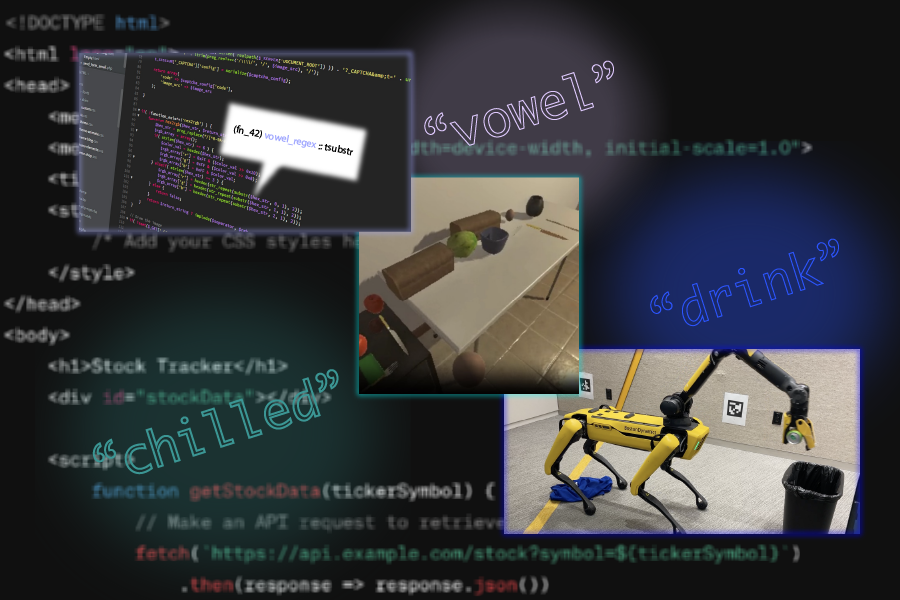
LILO’s unique emphasis on natural language allows the system to do tasks that require human-like commonsense knowledge, such as identifying and removing all vowels from a string of code and drawing a snowflake. In both cases, the CSAIL system outperformed standalone LLMs, as well as a previous library learning algorithm from MIT called DreamCoder, indicating its ability to build a deeper understanding of the words within prompts. These encouraging results point to how LILO could assist with things like writing programs to manipulate documents like Excel spreadsheets, helping AI answer questions about visuals, and drawing 2D graphics.

“Language models prefer to work with functions that are named in natural language,” says Gabe Grand SM ’23, an MIT PhD student in electrical engineering and computer science, CSAIL affiliate, and lead author on the research. “Our work creates more straightforward abstractions for language models and assigns natural language names and documentation to each one, leading to more interpretable code for programmers and improved system performance.”

When prompted on a programming task, LILO first uses an LLM to quickly propose solutions based on data it was trained on, and then the system slowly searches more exhaustively for outside solutions. Next, Stitch efficiently identifies common structures within the code and pulls out useful abstractions. These are then automatically named and documented by LILO, resulting in simplified programs that can be used by the system to solve more complex tasks.

The MIT framework writes programs in domain-specific programming languages, like Logo, a language developed at MIT in the 1970s to teach children about programming. Scaling up automated refactoring algorithms to handle more general programming languages like Python will be a focus for future research. Still, their work represents a step forward for how language models can facilitate increasingly elaborate coding activities.

Ada: Natural language guides AI task planning

Just like in programming, AI models that automate multi-step tasks in households and command-based video games lack abstractions. Imagine you’re cooking breakfast and ask your roommate to bring a hot egg to the table — they’ll intuitively abstract their background knowledge about cooking in your kitchen into a sequence of actions. In contrast, an LLM trained on similar information will still struggle to reason about what they need to build a flexible plan.

Named after the famed mathematician Ada Lovelace, who many consider the world’s first programmer, the CSAIL-led “Ada” framework makes headway on this issue by developing libraries of useful plans for virtual kitchen chores and gaming. The method trains on potential tasks and their natural language descriptions, then a language model proposes action abstractions from this dataset. A human operator scores and filters the best plans into a library, so that the best possible actions can be implemented into hierarchical plans for different tasks.

“Traditionally, large language models have struggled with more complex tasks because of problems like reasoning about abstractions,” says Ada lead researcher Lio Wong, an MIT graduate student in brain and cognitive sciences, CSAIL affiliate, and LILO coauthor. “But we can combine the tools that software engineers and roboticists use with LLMs to solve hard problems, such as decision-making in virtual environments.”

When the researchers incorporated the widely-used large language model GPT-4 into Ada, the system completed more tasks in a kitchen simulator and Mini Minecraft than the AI decision-making baseline “Code as Policies.” Ada used the background information hidden within natural language to understand how to place chilled wine in a cabinet and craft a bed. The results indicated a staggering 59 and 89 percent task accuracy improvement, respectively.

With this success, the researchers hope to generalize their work to real-world homes, with the hopes that Ada could assist with other household tasks and aid multiple robots in a kitchen. For now, its key limitation is that it uses a generic LLM, so the CSAIL team wants to apply a more powerful, fine-tuned language model that could assist with more extensive planning. Wong and her colleagues are also considering combining Ada with a robotic manipulation framework fresh out of CSAIL: LGA (language-guided abstraction).

Language-guided abstraction: Representations for robotic tasks

Andi Peng SM ’23, an MIT graduate student in electrical engineering and computer science and CSAIL affiliate, and her coauthors designed a method to help machines interpret their surroundings more like humans, cutting out unnecessary details in a complex environment like a factory or kitchen. Just like LILO and Ada, LGA has a novel focus on how natural language leads us to those better abstractions.

In these more unstructured environments, a robot will need some common sense about what it’s tasked with, even with basic training beforehand. Ask a robot to hand you a bowl, for instance, and the machine will need a general understanding of which features are important within its surroundings. From there, it can reason about how to give you the item you want. 

In LGA’s case, humans first provide a pre-trained language model with a general task description using natural language, like “bring me my hat.” Then, the model translates this information into abstractions about the essential elements needed to perform this task. Finally, an imitation policy trained on a few demonstrations can implement these abstractions to guide a robot to grab the desired item.

Previous work required a person to take extensive notes on different manipulation tasks to pre-train a robot, which can be expensive. Remarkably, LGA guides language models to produce abstractions similar to those of a human annotator, but in less time. To illustrate this, LGA developed robotic policies to help Boston Dynamics’ Spot quadruped pick up fruits and throw drinks in a recycling bin. These experiments show how the MIT-developed method can scan the world and develop effective plans in unstructured environments, potentially guiding autonomous vehicles on the road and robots working in factories and kitchens.

“In robotics, a truth we often disregard is how much we need to refine our data to make a robot useful in the real world,” says Peng. “Beyond simply memorizing what’s in an image for training robots to perform tasks, we wanted to leverage computer vision and captioning models in conjunction with language. By producing text captions from what a robot sees, we show that language models can essentially build important world knowledge for a robot.”

The challenge for LGA is that some behaviors can’t be explained in language, making certain tasks underspecified. To expand how they represent features in an environment, Peng and her colleagues are considering incorporating multimodal visualization interfaces into their work. In the meantime, LGA provides a way for robots to gain a better feel for their surroundings when giving humans a helping hand. 

An “exciting frontier” in AI

“Library learning represents one of the most exciting frontiers in artificial intelligence, offering a path towards discovering and reasoning over compositional abstractions,” says assistant professor at the University of Wisconsin-Madison Robert Hawkins, who was not involved with the papers. Hawkins notes that previous techniques exploring this subject have been “too computationally expensive to use at scale” and have an issue with the lambdas, or keywords used to describe new functions in many languages, that they generate. “They tend to produce opaque ‘lambda salads,’ big piles of hard-to-interpret functions. These recent papers demonstrate a compelling way forward by placing large language models in an interactive loop with symbolic search, compression, and planning algorithms. This work enables the rapid acquisition of more interpretable and adaptive libraries for the task at hand.”

By building libraries of high-quality code abstractions using natural language, the three neurosymbolic methods make it easier for language models to tackle more elaborate problems and environments in the future. This deeper understanding of the precise keywords within a prompt presents a path forward in developing more human-like AI models.

MIT CSAIL members are senior authors for each paper: Joshua Tenenbaum, a professor of brain and cognitive sciences, for both LILO and Ada; Julie Shah, head of the Department of Aeronautics and Astronautics, for LGA; and Jacob Andreas, associate professor of electrical engineering and computer science, for all three. The additional MIT authors are all PhD students: Maddy Bowers and Theo X. Olausson for LILO, Jiayuan Mao and Pratyusha Sharma for Ada, and Belinda Z. Li for LGA. Muxin Liu of Harvey Mudd College was a coauthor on LILO; Zachary Siegel of Princeton University, Jaihai Feng of the University of California at Berkeley, and Noa Korneev of Microsoft were coauthors on Ada; and Ilia Sucholutsky, Theodore R. Sumers, and Thomas L. Griffiths of Princeton were coauthors on LGA. 

LILO and Ada were supported, in part, by ​​MIT Quest for Intelligence, the MIT-IBM Watson AI Lab, Intel, U.S. Air Force Office of Scientific Research, the U.S. Defense Advanced Research Projects Agency, and the U.S. Office of Naval Research, with the latter project also receiving funding from the Center for Brains, Minds and Machines. LGA received funding from the U.S. National Science Foundation, Open Philanthropy, the Natural Sciences and Engineering Research Council of Canada, and the U.S. Department of Defense.

Exclusive Metal Hurlant Excerpt on Kickstarter

0

Fifty Years of Iconic Sci-Fi: Metal Hurlant Returns

A Legendary Anthology Revived

Fifty years after its debut in France, the seminal sci-fi anthology Metal Hurlant is returning in English. Now on Kickstarter, Humanoids’ iconic publication is bigger than ever, promising 270+ pages packed with work from international stars in comic writing and art.

Contributors and Archives

Contributors include Brian Michael Bendis, Matt Fraction, Aimée de Jongh, James Stokoe, Toru Terada, Fabien Vehlmann, and Mark Waid. There’s also archival content from the original French publication from the likes of Philippe Druillet and Jean-Pierre Dionnet and long out-of-print short stories from Mœbius.

The Story of Metal Hurlant

The story of Metal Hurlant began back in 1974, when the filmmaker and poet Alejandro Jodorowsky was working in Paris on an adaptation of Frank Herbert’s Dune with the assistance of Mœbius on concept art and storyboards, alongside H.R. Giger and Dan O’Bannon. Mœbius, along with fellow bande dessinée creators Jean-Pierre Dionnet and Philippe Druillet, wanted to push the boundaries of comics to tell mature, cerebral stories that embraced punk attitude. Metal Hurlant was born as a cutting-edge anthology published under publishing house Les Humanoïdes Associés (Humanoids).

Influence and Legacy

Jodorowsky’s Dune never materialized, but Metal Hurlant took the sci-fi world by storm, and it has influenced generations of artists, including filmmakers like Jemaine Clement, Guillermo Del Toro, George Lucas, Hayao Miyazaki, Ridley Scott, Denis Villeneuve, and Taika Waititi, who’s now adapting Jodorowski and Mœbius’s The Incal for the big screen.

The Revival

The Spring 2025 issue of the revived Metal Hurlant will be available through newsstands, comic book shops, bookstores, by subscription, and via the Kickstarter campaign. In the meantime, an exclusive excerpt from Robert Crumb’s iconic comic about Philip K. Dick will be shared.

Original Content and Archives

The return of Metal Hurlant in English will also include editorial features independent journalists, such as cultural commentaries, personal essays, and interviews with top talents from across the arts including Ted Chiang, William Gibson, Alan Moore, and Denis Villeneuve.

Conclusion

The revival of Metal Hurlant is a testament to the power of innovative storytelling and the enduring influence of the anthology. With new and archival content, Humanoids aims to enthrall readers and explore new paths, publishing bold and transgressive storytellers for a new generation.

FAQs

Q: What is Metal Hurlant?
A: Metal Hurlant is a legendary sci-fi anthology that was first published in France in 1974.

Q: Who are the contributors to the new edition?
A: The new edition features work from international stars in comic writing and art, including Brian Michael Bendis, Matt Fraction, Aimée de Jongh, James Stokoe, Toru Terada, Fabien Vehlmann, and Mark Waid.

Q: What kind of content can I expect?
A: The new edition will include original comic strips, archival content from the original French publication, and editorial features, such as cultural commentaries, personal essays, and interviews with top talents from across the arts.

Q: How can I get the new edition?
A: The Spring 2025 issue of the revived Metal Hurlant will be available through newsstands, comic book shops, bookstores, by subscription, and via the Kickstarter campaign.